-

OT Tips for Infant Feeding Therapy
One area of daily functional tasks that pediatric occupational therapy providers support family and caregivers, is by addressing infant feeding challenges. When we receive an occupational therapy referral for a newborn, we are definitely going to be addressing infant feeding therapy in both the evaluation and probably the OT interventions. This means we support new…
-
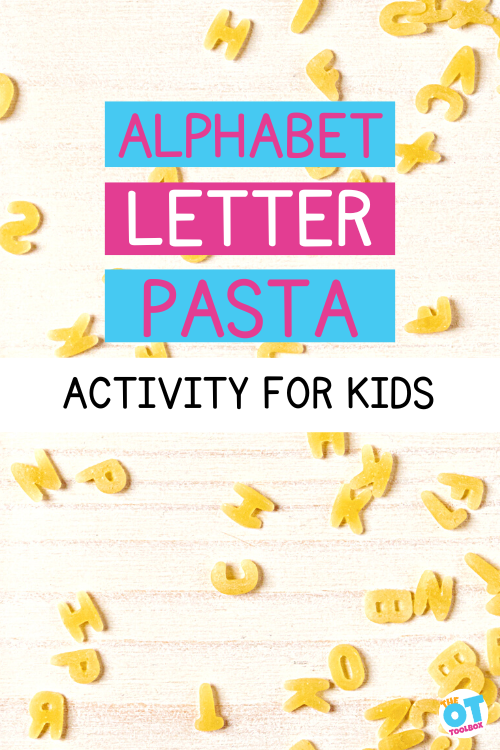
Learning with Dyed Alphabet Pasta
Grab a box of alphabet noodles for a fun multisensory learning activity that builds skills in many areas. We used letters pasta to create a sensory bin that incorporates fine motor skills and a letter learning activity. Alphabet Noodles You might remember eating alphabet noodles as a child in soup. But if you have a…
-

Free Therapy Planner for Back-to-School
Below, you will find a free printable therapy planner calendar that is an awesome resource to add to your therapy planner. Use the planning calendar to dream up and create an action plan for occupational therapy themes during the upcoming school year. Just pop in themes from our weekly therapy themes list and make the…
-

Crayon Play Dough Harold and the Purple Crayon Activity
Many years ago (Aug 26, 2014 to be exact!) we made this Harold and the Purple Crayon Play Dough activity because it was one of our FAVORITE books. My kids loved that book and the fact that there is now a movie…we are going to see this movie even though my kids are now teenagers!…
-

Fine Motor Skills with Building Blocks
As a pediatric occupational therapist, I’ve used wooden building blocks in occupational therapy many times. For my own children, I’ve used regular wooden blocks as a fine motor tool too! In fact, building with blocks is a fine motor skills that kids need in order to fine motor development many, many, (MANY) times. Wooden blocks…
-

10 Reasons Why Every Kid Needs to Play With Stickers
In this blog post, originally written on November 13, 2015 and updated on July 18, 2024, we are talking all about the benefits of playing with stickers. Occupational therapy providers love stickers as a fine motor tool! Let’s break down the benefits of sticker play with kids… When you were a kid, did you have…
-

Learn with Board Games You Already Own
One of the ways that pediatric occupational therapy practitioners help their clients is by using everyday items and toys to support development. Sometimes, OT practitioners go into a setting and support skill achievement with whatever is available in the home or classroom. We love to do this in the environment the individual is in because…
-

Emotional Regulation Games
If you are looking for tools to support and develop self-regulation skills, then you are in the right place. In this post, you’ll find emotional regulation games for self-regulation and specifically, Zones of Regulation games. These children’s games for emotional awareness and self-regulation were selected because they are fun ways to support emotional regulation, self-control, and…
-

Work on Tripod Grasp (and Pencil Grasp) with Everyday Items
If you are a pediatric occupational therapy practitioner then you know all about tripod grasp and the role it plays in fine motor skills. This precision grasp is part of precision, finger dexterity, and coordination of the hands. Did you know you can work on tripod grasp using everyday items found around the home? There are…
-

Types Of Communication
Communication is a vital part of livelihood, so these types of expressive language are a huge part of everything we do. It starts at birth and continues until almost our final breath. Infants cry from the moment they are born, signaling some sort of need or distress. Their needs are met based on the type,…