-
Fine Motor Strength Piper Cleaner Activity
This pipe cleaner activity is a quick and easy hand strengthening activity that can be beneficial for developing the muscles of the hands needed for small motor tasks like manipulating objects, clothing fasteners, and pencil grasp. Activities like this one can help with fine motor skills that are necessary for so many tasks. Use this fine motor…
-
Fine Motor Strength Foil Activity
Strength in the hand muscles is a fine motor skill that is necessary for so many tasks. Strength in the intrinsic muscles of the hands allow for a curved palm which is used for cupping the palm in order to hold items such as coins or beads. The intrinsic muscles are needed for pencil grasp…
-
Occupational Therapy Daily Professional Self-Reflection Journal
There are a lot of free resources available online for Occupational Therapists. Imagine if as therapists, we were able to use those online tools to advance our development and knowledge. Using online searches and tools like The OT Toolbox Community, we can apply information to our practice of client’s, facilitating professional independent development. BUT,…
-

The Research on Cursive Handwriting
If you have a school aged child, then you might have seen them learn cursive in schools…or maybe not. In recent years, cursive seems to have dropped from the radar in school curriculum. But why is that? What does the research tell us about cursive handwriting, and what is the science behind cursive? Should cursive…
-
Cursive Slime
Adding movement and sensory input to teaching letters and handwriting is key for learning the motor plan, identifying letters, and carryover of learned skills. This cursive slime activity is a fun way to encourage letter formation, letter identification, and letter matching using slime as a fine motor and sensory medium to make the activity fun…
-
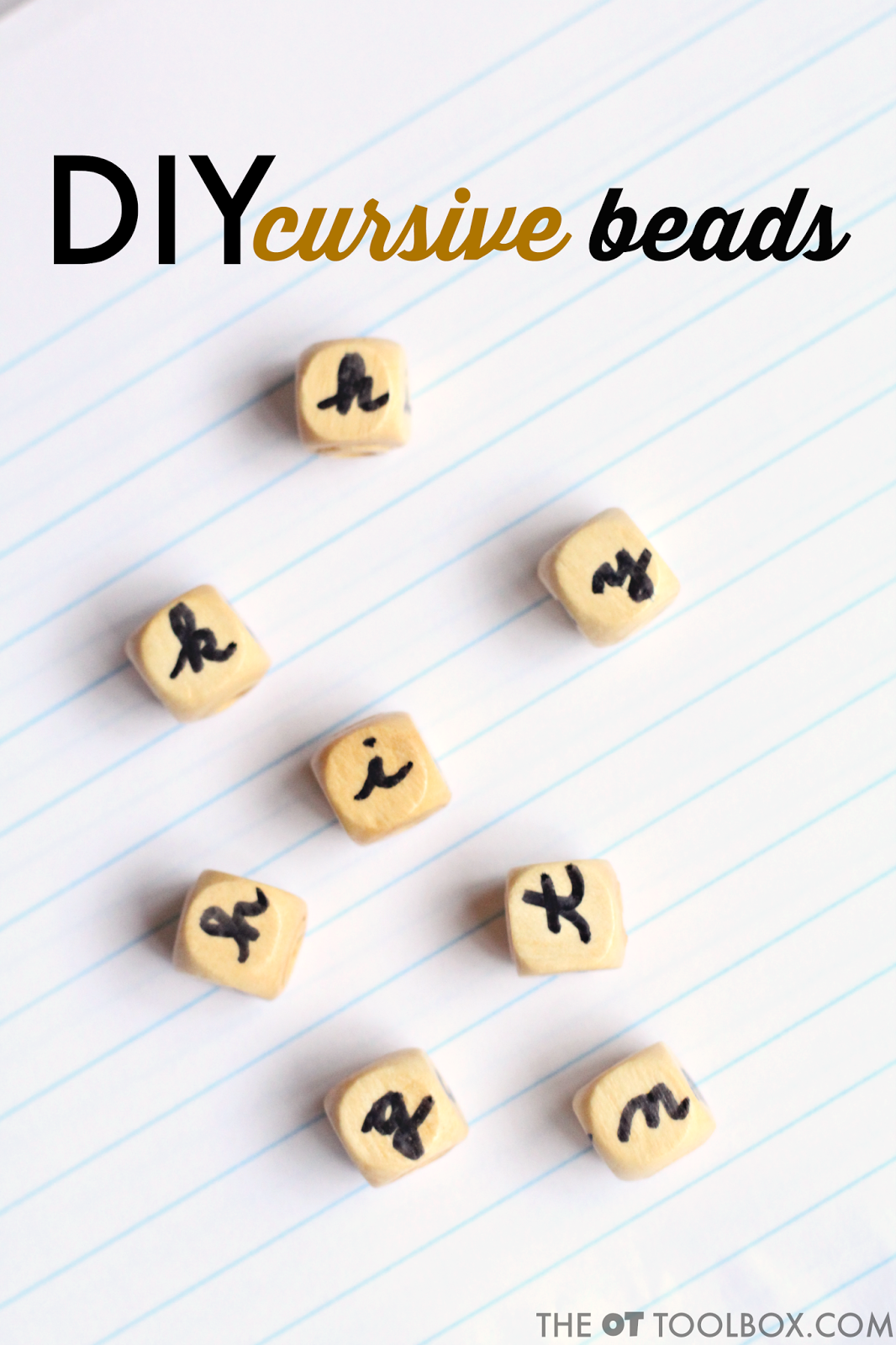
Cursive Activity Beads
Coming up with creative activities that can help kids learn to identify and write cursive letters can be fun. This cursive activity uses beads as a tool for forming letters, copying cursive letters, and learning to identify cursive letters. The best thing about these cursive activity beads is that they can be used in a…
-
The Secret to Cursive Legibility is…
When it comes to handwriting, legibility is a big issue. Students can work on letter formation, speed, copying skills, pencil pressure, and other components of handwriting…but there is one focus that can make all the difference in cursive legibility: letter size! Letter size is a huge area to address if you are concerned with cursive…
-
Teach Cursive Tree Letters
Here on The OT Toolbox, we’ve been sharing lots of ideas on how to teach cursive writing. Today, you’ll find creative activities and tips for teaching cursive letter formation of tree letters. Cursive tree letters are those ones that start with a line up followed by a traced line back down. Lowercase cursive letters i, j,…
-
Cursive Letter Identification Activity
This fun handwriting activity is a fun way to practice cursive letter identification. Practicing cursive handwriting is one of the best strategies to helping kids carryover the skills that they’ve learned in cursive writing instruction. It makes sense, right? You practice more, you get better at it! But there is actually more to it. The…
-
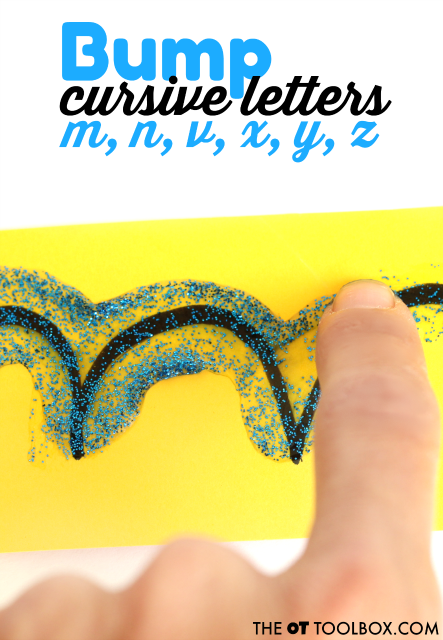
Teach Cursive Letter Formation Bump Letters
Try this creative activity for teaching cursive letter formation. By breaking letters down into cursive families, students can benefit from the parts that make up formation of cursive letters. Below, you will find information on how to teach cursive letter formation of “bump letters”. Bump letters are those cursive letters that form with a bump…