As colder weather rolls in, it’s the perfect time to revisit an important self-care skill: zipping up a jacket. While many kids prefer the ease and comfort of pull-over hoodies, learning how to start a zipper and zip a jacket independently is a functional life skill that deserves focused attention.
In today’s world, children often have limited exposure to zippers in their everyday clothing, which makes intentional teaching even more important. This simple dressing task supports fine motor development, bilateral coordination, and growing independence. Let’s break down how to help kids master the skill of zipping up their own coat with confidence.
This blog post on teaching a child how to zip a jacket is a resource in supporting functional skills. Zippering a coat, or learning to zipper a jacket can be a challenge for many kids, and there’s a good reason why this is a multistep task that we work on in occupational therapy sessions! This daily life skill is one that kids need to learn themselves because they might put the jacket on at home before school but they will need to zip their own jacket at school before they leave for the day.
Teach a child to Zip a jacket
Zipping a jacket can be a complicated task for a lot of kids. However, this is such an important life skill, so it’s worth spending some time to learn it.
Here are a few tips and tricks to teaching this skill:
- Practice on clothing that the child is not wearing first. However, place it in front of the child so that they are pulling the zipper up toward them, oriented the same as if they were wearing it.
2. Start with the easiest kind of zipper- one that is a larger, “chunkier” zipper.
3. DON’T practice zipping while you are trying to race out the door for the day. Pick a time of day that is more relaxed with plenty of time to practice.
4. Add a visual cue by placing a sticker or a piece of tape to the bottom of the jacket to show your child where to hold the fabric.
5. Adding a key ring or a cute charm to the zipper pull may help children with a weaker grasp be able to pull up the zipper easier. We made this zipper pull craft and it was a fun way to incorporate fine motor skills into a functional item.
6. Use of a contrasting color on the tip of the zipper on one side and around the zipper opening on the other side gives a visual cue for where to connect the 2 sides together.
7. Some children may need repeated hand over hand assistance to help them learn how to zip. Then assistance can be faded as they become more independent.
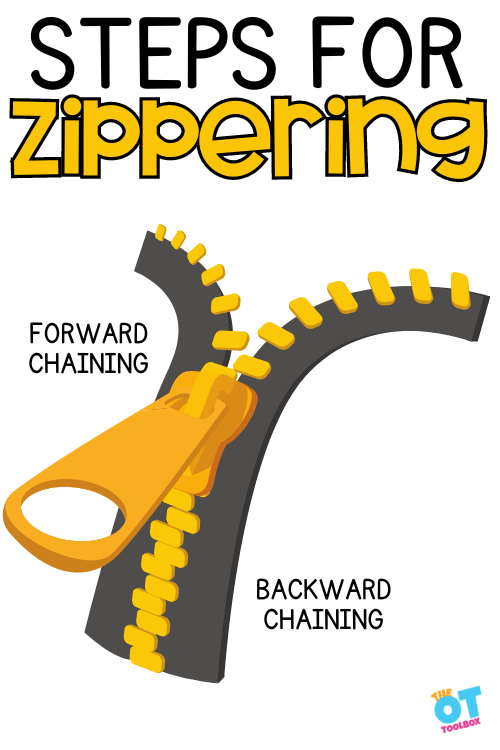
Steps for Zippering a Jacket
One of the easiest ways to teach kids to zipper is to go through the steps to zippering a jacket. This takes into account the task analysis for zipping jacket, which is what an occupational therapy provider will do when coming up with strategies to support the student each step of the way.
When we do a zipper task analysis, we can help the student with underlying skills like bilateral coordination, motor planning, etc. and help with supports for each specific step of zippering.
Teaching students to zipper a jacket can be done with either forward chaining or backward changing. This just means that you work from step one and progress to the last step or you start at the last step to achieve mastery and then add another step on to complete the whole task.
Whether you work in forward or reverse, the steps of zippering a jacket are:
- Hold both sizes of the zipper.
- Pull the zipper champer down to the bottom of the zipper.
- Hold the zipper chamber in place while inserting the zipper into the chamber (this is often the most difficult step, due to separation of the sides of the hand)
- Hold the bottom of the zipper with one hand and pull the zipper chamber up with the other hand.
Work in steps to teach zippering a jacket- Sometimes teaching the last step first helps children experience success sooner and improves motivation. Have them zip it up while you hold it in place. Then have them hold the zipper in place and zip it up after you connect the 2 sides of the zipper. Finally, work on attaching the 2 sides of the zipper together.
Here is a link to a simple “how-to” zipper video:
Check out this link to a cute video using a train “story” to teach zipping.
Zipping a Jacket Independently: Building Functional Skills
Zipping a jacket independently is more than just a convenience—it’s a key self-dressing skill that builds confidence, independence, and fine motor coordination in young children. For many kids, especially those in preschool or early elementary school, zipping can be tricky due to the need for bilateral coordination, grasp strength, and visual-motor control. That’s why occupational therapy plays an important role in helping kids learn this essential task.
Zipper Skill Tips from an OT
From an OT perspective, teaching zipper skills starts with understanding the foundational components:
-
Stabilizing the fabric with one hand
-
Aligning and inserting the zipper pieces
-
Pulling the zipper tab with appropriate pressure and control
-
Maintaining posture while coordinating hand movements
Break the task down into steps and provide visual or tactile cues to reduce frustration. Keep in mind that zipping a jacket may require targeted practice, especially for children with fine motor delays or motor planning challenges.
Fun Ways to Teach Zipper Skills
Learning to zip doesn’t have to be boring! Try these fun ways to teach zipper skills:
-
Use a favorite stuffed animal wearing a zippered hoodie
-
Make a DIY zipper board using old jackets or pencil cases
-
Sing a short song or rhyme while zipping to build rhythm and engagement
-
Play dress-up with zippered dress-up clothes during pretend play
These methods turn practice into play, which is key for keeping young children motivated and confident.
Zipper Practice Ideas at Home or in the Classroom
Here are some practical zipper practice ideas that work in both school and home settings:
-
Practice zipping on a coat that’s placed flat on a table before trying it while wearing it
-
Attach a beaded zipper pull for easier grasp
-
Practice starting the zipper (the trickiest part) with adult hand-over-hand assistance
-
Use visual prompts or cue cards for sequencing
These ideas help children build consistency and transfer the skill into real-world situations.
Preschool OT Dressing Skills & IEP Goals
For therapists, preschool OT dressing skills often include zipping, buttoning, and putting on coats. Use a zipper skill checklist for IEPs to track progress:
-
Aligns zipper parts
-
Inserts zipper into clasp
-
Pulls zipper up with one hand stabilizing
-
Completes the task with minimal assistance
By including dressing goals in the IEP, we reinforce independence in self-care routines, an essential part of participation in the school day.
Zipper Hacks for Kids with Fine Motor Delays
For children with coordination or strength challenges, try these zipper hacks:
-
Use jackets with large zippers or oversized pulls
-
Add a keyring or ribbon to the zipper for easier grip
-
Start by having the adult align the zipper and let the child finish the motion
-
Use looped elastic bands to hold the bottom of the coat still during practice
These strategies reduce frustration and give kids the confidence to practice more often.

How to Teach Kids to Zip a Jacket (Even If They Only Wear Hoodies)
When kids only wear hoodies, they often don’t get daily practice with zippering, which is why explicit teaching is so important. Here are some OT-approved tricks and strategies to help teach zipping a jacket as a functional life skill, even if it’s not part of their daily routine:
Practice with a Jacket Off the Body
Start by laying a zip-up jacket flat on a table or the floor. This allows kids to focus on the mechanics of aligning and pulling the zipper without the added challenge of wearing the jacket (which requires postural control and body awareness).
Use Dolls or Stuffed Animals
Practice zipping a jacket on a stuffed animal or doll. This makes the task more fun and lowers pressure while still targeting fine motor coordination, bilateral hand use, and sequencing. You can find many toys to teach self-dressing skills out there.
Create a Zipper Station in the Classroom or Home
Designate a practice jacket that stays in a cubby, therapy room, or classroom center. You can add a zipper pull (keyring, ribbon, or bead) to make it easier to grasp. Let kids “visit the station” once or twice a week for quick 1-minute practice sessions.
Work It into Other Functional Routines
Use zippers on:
- Backpacks
- Lunch boxes
- Pencil cases
- Pouches in therapy kits
These are real items kids already use and can give them zipper exposure even if they avoid coats.
Break Down the Hardest Part: Inserting the Zipper
The starting step is the hardest for most kids. Use hand-over-hand assistance, verbal prompts like “line it up, push it down, pull it up,” and visual cues like stickers or colored tape to help them understand the parts of the zipper.
Use Visual Cue Cards
Create or print a step-by-step visual guide showing the zipper process. Use photos or simple drawings that break it down:
- Hold the two sides
- Line them up
- Push into the base
- Pull the zipper tab
Hang this in their cubby, therapy room, or send it home for practice.
Tie It to IEP or Independence Goals
Even if a child doesn’t need to wear a jacket every day, zipping a jacket is still a key life skill. Include it in OT sessions or classroom routines as a functional goal. You can call it part of a “get ready for the bus” routine or “weather practice day” so it feels relevant.
You’ll love these DIY self-care hacks:

Colleen Beck, OTR/L has been an occupational therapist since 2000, working in school-based, hand therapy, outpatient peds, EI, and SNF. Colleen created The OT Toolbox to inspire therapists, teachers, and parents with easy and fun tools to help children thrive. Read her story about going from an OT making $3/hour (after paying for kids’ childcare) to a full-time OT resource creator for millions of readers. Want to collaborate? Send an email to contact@theottoolbox.com.