
Next up in our free printable series is this Free Anger Thermometer Printable for occupational therapy. An anger meter is not a new concept. However, we wanted to take this visual imagery to support areas that impact daily functional performance and the underlying areas we address in occupational therapy sessions that do impact occupational participation: Emotional regulation, Executive functioning, Self-awareness, Social participation, Impulse control, Conflict resolution, Interoception, and of course, Occupational performance.
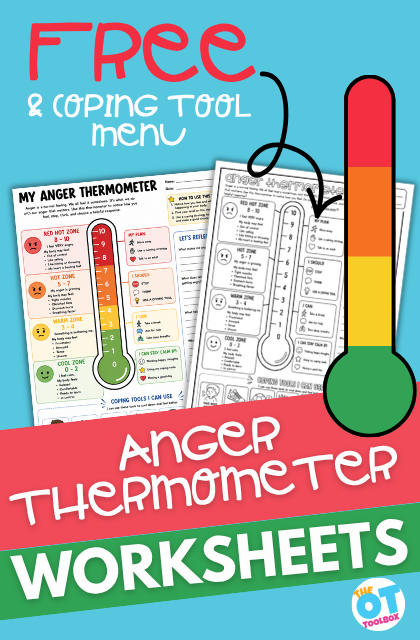
Measuring Anger with an Anger Thermometer
Anger is a normal human emotion. Everyone experiences frustration, irritation, disappointment, and anger at times. The challenge is how we recognize those feelings and respond to them. Without self-awareness and regulation strategies, anger can interfere with relationships, school performance, work participation, daily routines, and overall well-being.
This free anger thermometer printable helps children, teens, and adults identify their emotional intensity, recognize warning signs, and develop a plan for responding to anger in healthier ways. By visualizing emotions along a thermometer scale, individuals can begin to notice when feelings are building and practice stopping, thinking, and choosing an appropriate response before reaching a breaking point.
The anger thermometer can be used as a self-monitoring tool, an emotional regulation activity, or an executive functioning support that helps individuals build greater awareness of how emotions affect participation in daily life.
For our some clients, we need to work on naming emotions and this thermometer tool is a great way to do that.
What Is an Anger Thermometer?
Ok, let’s break this down. An anger thermometer is a visual tool that helps individuals identify the intensity of their emotions. Similar to how a thermometer measures temperature, an anger thermometer measures emotional intensity from calm to overwhelmed.
Instead of viewing emotions as simply “good” or “bad,” the anger thermometer teaches that emotions occur along a continuum. This visual representation helps individuals recognize that anger often builds gradually rather than appearing suddenly.
For example, we like to use numbers on the thermometer to grade levels of feelings:
- Calm (0–2)
- Irritated (3–4)
- Agitated (5–6)
- Angry (7–8)
- Overwhelmed or Rage (9–10)
Recognizing these levels helps individuals develop emotional awareness and identify opportunities to use coping strategies before reaching the highest levels of distress.
It’s another option to naming how we feel in the moment, a lot like using the levels of how our engine is running in the Alert Program. Another example is the red, yellow, blue, or green colors of the Zones of Regulation. The difference is that with this particular emotions thermometer, we are talking about anger.
Why Self-Awareness Matters
One of the most important components of emotional regulation is self-awareness.
Many children, teens, and adults do not recognize early signs of anger until emotions become overwhelming. They may notice the emotion only after yelling, arguing, shutting down, withdrawing, or engaging in impulsive behaviors.
The anger thermometer encourages individuals to pause and ask:
- How am I feeling right now?
- What is happening in my body?
- What thoughts am I having?
- What behaviors do I want to do?
- What choices can I make instead?
This process develops metacognition, or the ability to think about one’s own thoughts and actions.
The Executive Functioning Connection
The anger thermometer is also a powerful executive functioning tool.
Executive functioning skills help individuals monitor emotions, control impulses, solve problems, and make thoughtful decisions. When emotions become intense, executive functioning skills often become less efficient.
The anger thermometer supports:
Self-Monitoring– Recognizing changes in emotional intensity.
Inhibitory Control– Stopping before reacting impulsively.
Emotional Control- Managing strong feelings appropriately.
Cognitive Flexibility- Considering alternative responses.
Metacognition– Reflecting on thoughts, behaviors, and reactions.
Problem Solving– Choosing strategies that help improve a situation.
For many individuals, emotional regulation difficulties are closely tied to executive functioning challenges. Teaching children and adults to monitor emotional intensity helps strengthen these important cognitive skills.
Understanding Body Clues
Anger often appears in the body before it appears in behavior.
The anger thermometer encourages individuals to identify physical warning signs that occur as emotions increase.
Examples may include:
- Tight muscles
- Clenched fists
- Jaw tension
- Increased heart rate
- Feeling hot
- Stomach discomfort
- Restlessness
- Rapid breathing
These body clues act as early warning signals that emotions are beginning to escalate.
When individuals learn to recognize these signals, they can begin using coping tools sooner.
Identifying Triggers
Triggers are situations, demands, interactions, or experiences that increase emotional intensity.
Common triggers may include:
- Conflict with peers
- Changes in routine
- Academic demands
- Sensory overload
- Feeling misunderstood
- Being corrected
- Waiting
- Transitions
- Difficult conversations
- Work-related stress
The anger thermometer worksheet includes space to identify personal triggers and reflect on patterns that contribute to emotional escalation.
This awareness helps individuals prepare for situations that may require additional coping supports.
Coping Strategies for Anger
Once individuals recognize their anger level, the next step is choosing an appropriate coping strategy.
The most effective coping tools are often used before anger reaches the highest levels.
Strategies may include:
- Deep breathing
- Heavy work
- Taking a break
- Breathing exercises
- Physical movement
- Journaling
- Listening to music
- Talking with a trusted person
- Problem solving
- Mindfulness exercises
- Drinking water
- Using self-talk strategies
The goal is not to eliminate anger. The goal is to respond in a way that supports participation and prevents negative consequences.
How Occupational Therapists Use an Anger Thermometer
Occupational therapists frequently address emotional regulation because emotions influence participation across occupations.
The Occupational Therapy Practice Framework, Fourth Edition (OTPF-4), recognizes that emotional regulation, social interaction skills, and environmental factors influence occupational performance.
The anger thermometer can support intervention in:
Social Participation
Managing peer interactions, friendships, family relationships, and community participation.
Education
Following classroom expectations, handling frustration, participating in learning activities, and managing transitions.
Work
Maintaining professional relationships, accepting feedback, managing stress, and responding appropriately to workplace demands.
Activities of Daily Living
Completing self-care tasks despite frustration or emotional challenges.
Instrumental Activities of Daily Living
Managing IADL responsibilities, household routines, finances, and community participation.
By helping clients recognize emotional intensity and develop regulation strategies, occupational therapists can support improved participation across daily activities.
Anger and Social Interaction Skills
Strong emotions can significantly impact social relationships.
When anger increases, individuals may:
- Interrupt others
- Argue
- Withdraw
- Blame others
- Become defensive
- Avoid problem-solving
- Misinterpret social situations
The anger thermometer provides a framework for discussing social situations and helping individuals identify alternative responses.
It can be especially helpful during social skills groups, counseling sessions, school-based occupational therapy, and executive functioning interventions.
Reflecting on Occupational Performance
One of the most valuable sections of the anger thermometer worksheet asks individuals to self-reflect on how anger affects participation in meaningful activities.
Questions may include:
How does anger affect my:
- Relationships?
- School performance?
- Work responsibilities?
- Daily routines?
- Community participation?
- Health and well-being?
These reflections help individuals connect emotions with real-life participation and identify areas where additional supports may be helpful.
Creating an Anger Action Plan
The worksheet also includes an anger action plan that helps individuals prepare coping strategies before they are needed.
For example:
When my anger is at a 3–4:
I will take a short break and use deep breathing.
When my anger is at a 5–6:
I will step away and talk to a trusted adult.
When my anger is at a 7–8:
I will use my coping toolbox and avoid making important decisions.
When my anger is at a 9–10:
I will move to a safe space and seek support.
Planning ahead increases the likelihood that coping strategies will be used successfully during emotionally challenging situations.
Building Lifelong Emotional Regulation Skills
The free anger thermometer printable helps individuals develop self-awareness, executive functioning skills, emotional regulation strategies, and problem-solving abilities that support participation across daily occupations.
Whether used in occupational therapy, counseling, school settings, mental health programs, or at home, this tool encourages individuals to pause, recognize their emotions, and make thoughtful choices that support meaningful participation in everyday life.
Learning to recognize emotions before they become overwhelming is a skill that can strengthen relationships, improve school and work performance, and promote greater independence throughout the lifespan.
This printable is in the OT Toolbox Membership Level 1 and in the Level 2 membership, we have a version just for teens/college age students/adults.

Colleen Beck, OTR/L has been an occupational therapist since 2000, working in school-based, hand therapy, outpatient peds, EI, and SNF. Colleen created The OT Toolbox to inspire therapists, teachers, and parents with easy and fun tools to help children thrive. Read her story about going from an OT making $3/hour (after paying for kids’ childcare) to a full-time OT resource creator for millions of readers. Want to collaborate? Send an email to contact@theottoolbox.com.

Comments are closed.