Moving the pencil within the tips of the fingers to switch from writing to erasing.
Passing small beads from the palm of the hand to the finger tips.
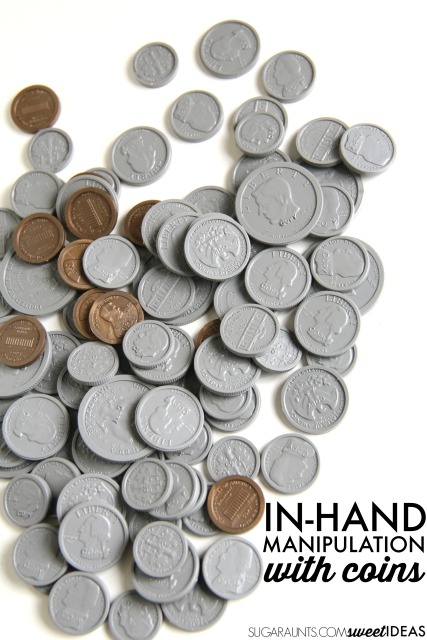
Holding a stack of coins in the palm while counting out the amount needed to pay for an item.
These are all in-hand manipulation tasks, and can be a problem when it comes to performing functional tasks related to these fine motor tasks. Sometimes a child appears clumsy with their small motor movements. They use two hands for tasks that normally require just one. Today, I’ve got a fun way to help with these difficulties by working on in-hand manipulation skills using coins.

The Three types on In-hand Manipulation
There are different types of movements which allow us to manipulate objects within the hand. Every task that we do within the hand uses a combination of these movements. These are the three different types or components of in-hand manipulation:
- Translation
- Shift
- Rotation
Translation is using your fingers to moving a little item from your palm to your finger tips (or your fingertips to squirrel the item into the palm). When you hold a coin in your palm and manipulate it to your finger tips to push it into a piggy bank or vending machine, you are demonstrating palm-to-finger translation.
Shift is moving an object using the pads of your fingers…adjusting the pencil grip is demonstrating finger shift. Another example might be manipulating a button or a zipper with the finger tips.
Rotation is rolling an object using the fingertips. Examples of rotation are rolling a pencil in your fingertips, turning a pencil over to use the eraser, or opening a bottle top by rotating the lid on your finger tips.
These fine motor skills are needed for functional tasks like managing a pencil or crayon during handwriting, opening containers, managing coins or small items, manipulating a spoon/knife/fork, adjusting the paper when cutting with scissors, and fastening buttons or shoe laces.
In-Hand Manipulation Activity with Coins
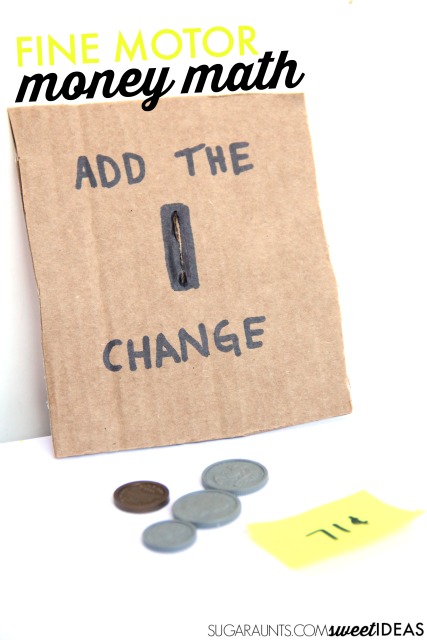
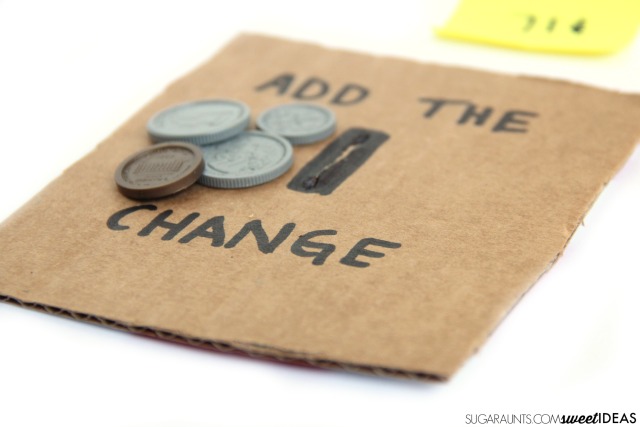
I grabbed a piece of cardboard from a pizza box lid. Cut the cardboard into a manageable sized rectangle and use a sharp knife to cut a slit. Make sure the slit is vertical as this is similar to a coin machine and encourages efficient positioning of the wrist and fingers for functional use.
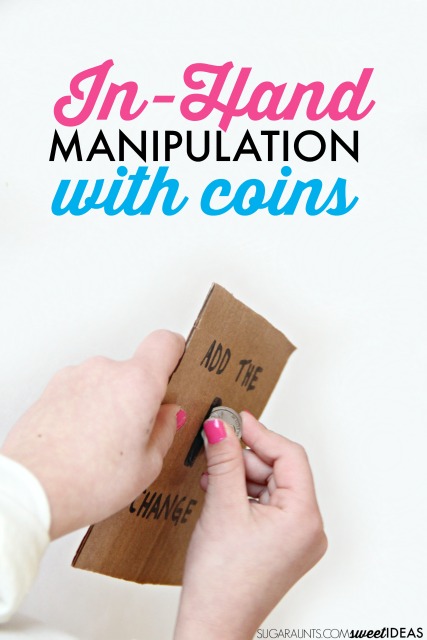
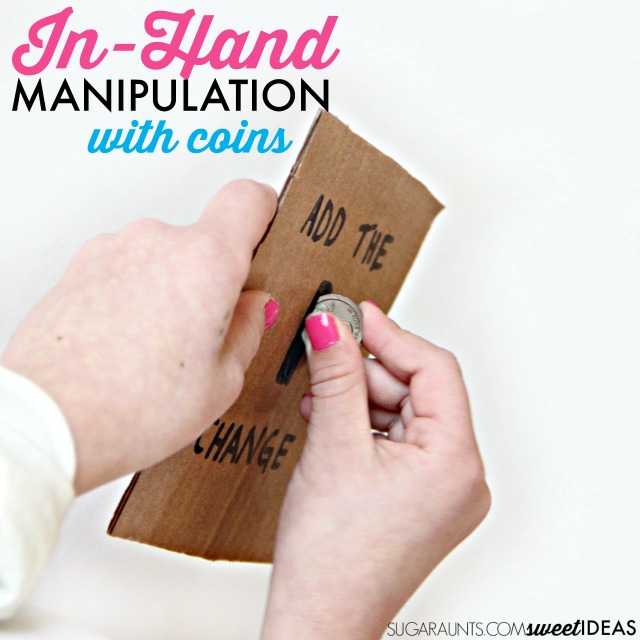
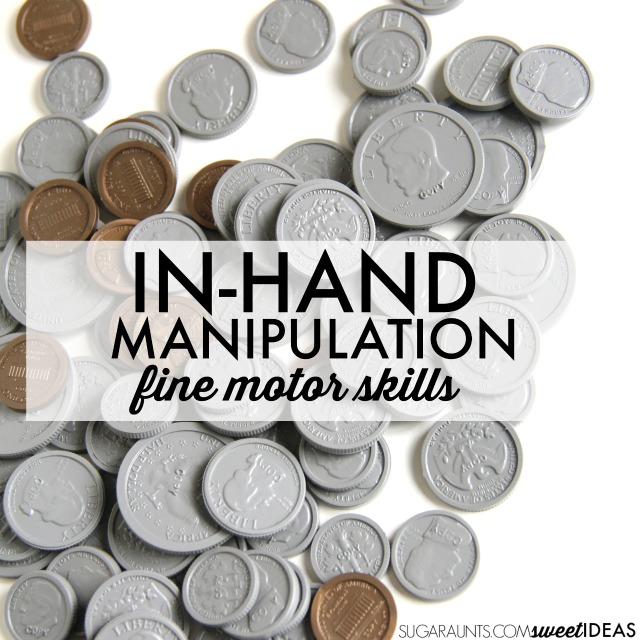
To work on in-hand manipulation needed for functional tasks, use play money to press the money through the slot. Ask your child to grab up a handful of the coins and push them through the slot one at a time. Using the non-dominant hand to hold the cardboard is an exercise in bilateral hand coordination, making this a great pre-handwriting exercise. (Use this activity as a writing warm-up exercise!)
How to use coins to work on in-hand manipulation:
- Rotate the coins between the pads of the thumb and pointer finger/middle finger.
- Grab a handful of coins and place them into a slotted container.
- Pick up coins one at a time and “squirrel away” into the palm.
- Push coins into a piggy bank or slotted lid (Slice a hole in a recycled plastic container like a yogurt container)
- Slice a slit in a piece of cardboard like we did below. Using a small piece of cardboard allows you to hold the cardboard when pushing the coin through the slot. Read on:
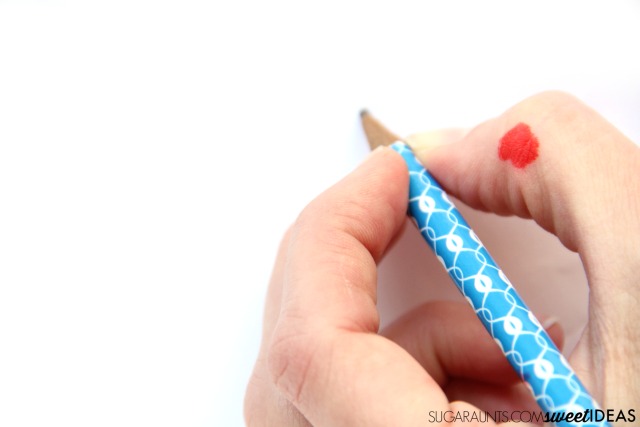
When a person writes, they need to hold the paper steady with their non-dominant hand while manipulating the pencil with only their dominant hand. They need to adjust the pencil motions, twirl it around to erase, pinch and “crawl” up the pencil to adjust small movements in the hand as they write on the paper. Holding the cardboard in the non-dominant hand prevents the child from managing the money with both hands.
While pressing the coins into the cardboard, work on money and change making skills like we shared here.
3 Fun & Practical Coin-Based Fine Motor Exercises
All you need is a handful of coins to start working on fine motor skills, including in-hand manipulation. Here are some ideas:
1. Coin Flip and Store– Place a pile of coins on the table. Have the child pick up one coin at a time, flip it from palm to fingertips (translation), and place it into a small container.
- Skills targeted: In-hand translation, isolated finger movement, dexterity.
- Challenge upgrade: Use smaller coins or require the child to sort coins by size after flipping.
2. Coin Stack Race– Give the child a handful of coins to hold in their palm. Using just one hand, have them move each coin to their fingertips (one by one) and stack them into a tower without dropping any.
- Skills targeted: In-hand manipulation, precision control, fine motor endurance.
- Therapist tip: Time the child or challenge them to beat their own record.
3. Coin Slot Shoebox Game– Cut narrow slots into the lid of a shoebox labeled with coin values. Have the child sort and insert coins using only one hand, pulling them from their palm to fingertips before dropping into the correct slot.
- Skills targeted: Translation and rotation, finger strength, visual-motor integration.
- Home version: Use piggy banks or DIY coin banks made with containers and lids (a yogurt container or small butter container works well.
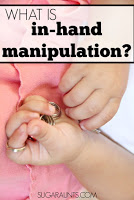
Here are more ideas to work on in-hand manipulation skills:
Struggling with pencil grasp development? Try this pencil grasp trick that encourages thumb IP flexion to build better handwriting skills.
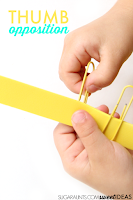
Learn how to support functional grasp and object control with this guide to thumb opposition activities for kids.
For more engaging fine motor work, explore these creative in-hand manipulation ideas for kids that make skill-building fun and practical.
Activities to Improve In-Hand Manipulation
Besides using just coins, you can add other fine motor ideas to improve the coordination and dexterity needed for the three types of movements of in-hand manipulation. In our Yearlong Fine Motor and Data Collection Bundle, we have a full year of activities.
Looking for a consistent way to support fine motor skills all year?
This yearlong fine motor system includes seasonal activity kits and monthly data collection tools to support planning and progress monitoring.
If fine motor planning and data collection feel overwhelming, you’re not alone.
This done-for-you yearlong bundle organizes seasonal activities and monthly screening tools in one system.
Get the Yearlong Fine Motor and Data Collection Bundle today!


Colleen Beck, OTR/L has been an occupational therapist since 2000, working in school-based, hand therapy, outpatient peds, EI, and SNF. Colleen created The OT Toolbox to inspire therapists, teachers, and parents with easy and fun tools to help children thrive. Read her story about going from an OT making $3/hour (after paying for kids’ childcare) to a full-time OT resource creator for millions of readers. Want to collaborate? Send an email to contact@theottoolbox.com.