Inhibitory control is one of the foundational building blocks of executive function. Executive functions are the higher-level cognitive processes that allow a person to plan, organize, problem-solve, regulate emotions, and engage in goal-directed behavior. Among these processes, inhibitory control acts as the mental “brake system” that makes all the others possible.
At its core, executive function requires three primary components: (1) working memory, (2) cognitive flexibility, and (3) inhibitory control.

Inhibitory control allows an individual to pause before acting, resist distractions, and suppress automatic responses. Without this pause, the brain cannot effectively use working memory to hold instructions in mind or apply cognitive flexibility to adjust strategies. In other words, inhibition creates the space for thoughtful decision-making.
In everyday life, inhibitory control supports the ability to ignore irrelevant stimuli, delay gratification, regulate emotional reactions, and choose behavior that aligns with expectations.
For a child in school, this may look like raising a hand instead of blurting out, completing an assignment carefully rather than rushing, or staying seated during instruction. These behaviors are not separate from executive function; they are visible outcomes of it.
From a developmental perspective, inhibitory control often emerges as one of the earliest executive function challenges observed in young children. Difficulties may initially appear as impulsivity or hyperactivity.
As children grow, the outward behaviors may decrease, but the executive demand remains. Adolescents and adults with inhibition challenges may struggle more internally, with racing thoughts, distractibility, or impulsive decision-making.
In occupational therapy, understanding inhibitory control as part of executive function shifts the focus from managing behavior to strengthening cognitive processes.
When we support inhibition, we are strengthening the broader executive system that enables purposeful participation in learning, social interaction, and daily routines.
What is inhibitory control?
Inhibitory control in occupational therapy refers to the ability to suppress an automatic, impulsive, or dominant response in order to engage in purposeful, goal-directed activity. It is a core component of executive functioning and supports participation in daily occupations across home, school, and community environments.
From an occupational therapy perspective, inhibitory control is not simply about behavior management. It is a cognitive process that allows an individual to pause, filter distractions, regulate emotional responses, and choose actions that align with task demands and social expectations. This skill underlies successful performance in occupations such as classroom learning, self-care routines, social interaction, and play.
In practice, inhibitory control supports:
- Waiting before acting or speaking
- Ignoring irrelevant stimuli
- Following multi-step directions without rushing
- Managing emotional reactions during challenging tasks
- Regulating motor output, such as controlling force and movement speed
When inhibitory control is impaired, children may demonstrate difficulty with impulse control, task persistence, attention, and social participation. These challenges can interfere with fine motor tasks, classroom routines, peer interactions, and independence in daily living skills.
Occupational therapy intervention targets inhibitory control through structured routines, environmental modifications, movement-based strategies, cognitive scaffolding (such as “stop and think” cues), and activities that promote self-regulation and flexible thinking. The goal is to strengthen the child’s ability to pause, evaluate, and respond intentionally in meaningful occupations.
Inhibition is one of the most important, and most misunderstood, executive functioning skills in children and teens.
It is the brain’s ability to pause before acting, speaking, or reacting. In young children, difficulties with inhibition often look like constant movement, blurting out answers, grabbing toys, or acting without thinking about consequences.
As kids grow into adolescence, the outward hyperactivity may decrease, but the challenge does not disappear. Instead, it often shifts inward, showing up as racing thoughts, impulsive decision-making, difficulty filtering distractions, or reacting emotionally before considering the bigger picture.
Understanding inhibition across development helps parents, educators, and therapists recognize that these behaviors are not simply willful misbehavior, but reflect a maturing executive functioning system that supports purposeful activity, learning, and relationships.
What Does Inhibitory Control Look Like?
Inhibition is a core executive functioning process. It refers to the brain’s ability to suppress or delay an automatic response. It is the mental “brake system” that allows a person to pause before acting, speaking, or reacting.
Inhibition operates at multiple levels:
- Motor inhibition – stopping a physical action
- Verbal inhibition – stopping speech or blurting
- Cognitive inhibition – blocking distracting thoughts
- Emotional inhibition – moderating an emotional reaction
Inhibition is the internal neurological mechanism that allows regulation to happen.
Is Inhibition the same as Impulse Control?
Impulse control is the observable behavior that results from effective inhibition.
When someone demonstrates impulse control, we see that they:
- Wait their turn
- Think before speaking
- Resist grabbing something they want
- Pause before reacting emotionally
Impulse control is what we see on the outside. Inhibition is the brain process that makes it possible.
One way we explain this from the OT perspective…
Inhibition is the internal skill.
Impulse control is the external outcome.
You could think of inhibition as the brake pedal in a car. Impulse control is the car actually slowing down when the brake is pressed.
If the braking system (inhibition) is weak or immature, the car (behavior) does not slow down effectively.
Why the Difference Matters for Parents and Therapists
When we say a child “has poor impulse control,” we are describing behavior.
When we talk about “inhibition deficits,” we are describing executive function development.
This distinction matters because:
- Punishment alone does not strengthen inhibition.
- Skill-building strategies can improve inhibition over time.
- Movement, structure, visual supports, and scaffolding help build the internal pause.
They are connected but not identical.
In younger children, inhibition challenges may look like hyperactivity, blurting, or grabbing. In adolescents or adults, it may show up as difficulty filtering thoughts, interrupting others, or making quick decisions without considering long-term consequences.
Inhibition is the brain-based executive function.
Impulse control is the behavioral expression of that function.
Understanding this helps shift the focus from “Why won’t they stop?” to “How can we strengthen their ability to pause?”
Inhibition and Executive Functioning: Why It Matters
Inhibition is the ability to pause before acting, speaking, or reacting. It allows a child to stop, think, and then choose a response that fits the situation.
This skill is foundational for purposeful activity at home, in school, and in social settings. When inhibition is weak, children often act before thinking, respond impulsively, or struggle to manage their physical and verbal behavior.
For parents and occupational therapists, inhibition is often one of the earliest executive functioning challenges noticed in preschool or kindergarten.
How Inhibition Challenges Show Up in Young Children
In early childhood, difficulty with inhibition may look like constant motion or exaggerated energy. A child may move quickly from one activity to the next, rush through fine motor tasks, or handle materials with excessive force. Their grasp may appear immature or inefficient because they are moving too fast to refine their motor control.
Verbal inhibition may also be affected. Some children interrupt frequently, call out answers, yell, or make noises during quiet activities. They may struggle to wait their turn, maintain personal space, or respond appropriately in group settings. Socially, this can lead to grabbing toys, acting without considering consequences, or reacting physically during frustration.
These behaviors are not intentional misbehavior. They reflect difficulty slowing down long enough to evaluate what is happening and what response is most appropriate.
The Impact on Purposeful Activity and Participation
Inhibition supports successful engagement in daily tasks. When this skill is underdeveloped, it can interfere with:
- Completing schoolwork carefully
- Participating in group learning
- Following classroom routines
- Managing peer interactions
- Making thoughtful choices
For example, a child may take something they want without considering the outcome. They may begin a task before listening to directions fully. They may rush through assignments and make avoidable mistakes. Each of these challenges affects participation and learning.
Occupational therapy intervention often includes strategies to build body awareness, incorporate movement before seated work, and teach structured “stop and think” routines to support impulse control.
Restlessness and the Need for Movement
Some children with inhibition challenges appear constantly in motion. They may fidget, tap their feet, shift in their seats, or seek movement opportunities. Even when seated, their bodies may appear busy.
Movement-based strategies can be helpful. Activities that involve heavy work or structured physical effort before academic tasks may improve focus and engagement.
While supports such as lap weights or movement breaks can reduce visible restlessness, the need for internal regulation may still be present. Research has shown that structured physical activity can improve attention and learning outcomes for students with attention and inhibition challenges.
How Inhibition Changes Over Time
As children grow, overt hyperactive behaviors often decrease. By adolescence, many are no longer climbing furniture or running through rooms impulsively. However, the difficulty with inhibition may shift internally.
Instead of constant physical motion, older students and adults may experience racing thoughts, difficulty filtering distractions, or trouble prioritizing what deserves attention. This internal distractibility can affect academic performance, work productivity, and relationships.
Understanding this developmental shift helps parents and therapists recognize that inhibition challenges do not simply disappear. They evolve.
What Does Lack of Inhibitory Control Look Like?
Because impulse control and inhibitory control are so similar, we want to reiterate that this executive function skill is the piece that lets us suppress automatic or dominant responses to stimuli.
This helps us to manage those impulsive actions and maintain focus, so we CAN do daily functional and purposeful tasks.
Impulse control refers to the ability to resist an immediate urge or temptation. Inhibitory control, on the other hand, is the broader executive skill that allows a person to regulate attention, thoughts, and actions in order to pause and prevent an automatic or inappropriate response.
Here is a developmentally organized list of examples showing how difficulty with inhibition may present at different ages. These examples focus on functional participation at home, school, and in social situations.
Preschool (Ages 3–5)
- Grabs toys from peers without waiting
- Runs in indoor spaces despite reminders
- Has difficulty stopping when told “freeze” or “wait”
- Blurts out unrelated comments during group time
- Touches everything within reach
- Struggles to keep hands to self
- Moves quickly between activities without completing tasks
- Hits or pushes when frustrated
- Climbs on furniture impulsively
- Has trouble sitting for short structured activities
Early Elementary (Ages 6–8)
- Calls out answers without raising a hand
- Interrupts conversations frequently
- Rushes through schoolwork and makes careless errors
- Leaves seat repeatedly during class
- Difficulty waiting in line
- Invades personal space of peers
- Acts before fully listening to directions
- Reacts emotionally before thinking
- Difficulty stopping preferred activities
- Grabs materials without asking
Upper Elementary (Ages 9–11)
- Talks excessively in class
- Struggles to filter comments that may be socially inappropriate
- Begins assignments before reading all instructions
- Difficulty delaying gratification
- Acts on dares without thinking through consequences
- Interrupts group discussions
- Trouble managing frustration during games or competition
- Makes impulsive online comments or messages
- Difficulty resisting distractions during independent work
- Overreacts quickly to peer conflict
Middle School (Ages 12–14)
- Interrupts teachers or peers during discussions
- Reacts emotionally before considering social impact
- Makes snap decisions in friendships
- Difficulty prioritizing important tasks over immediate interests
- Engages in risky behavior without fully weighing consequences
- Struggles to ignore phone notifications
- Has trouble regulating tone or volume in social situations
- Blurting sarcastic or inappropriate remarks
- Difficulty pausing during disagreements
- Rushes through homework to get it done quickly
High School (Ages 15–18)
- Impulsive decision-making in social or academic situations
- Difficulty filtering thoughts before speaking
- Reacts strongly in arguments without reflection
- Trouble managing digital communication appropriately
- Difficulty prioritizing long-term goals over short-term rewards
- Acts before evaluating risks
- Struggles with emotional restraint in relationships
- Makes quick commitments without planning
- Difficulty resisting distractions during studying
- Feels mentally restless with racing thoughts
young Adulthood
- Interrupts colleagues or dominates conversations
- Impulsive spending decisions
- Difficulty filtering thoughts during meetings
- Reacts quickly to stress without reflection
- Trouble distinguishing important from unimportant information
- Difficulty waiting before responding to emails or texts
- Struggles with emotional restraint in workplace settings
- Makes snap career or relationship decisions
- Experiences constant mental chatter that interferes with focus
Occupational therapy Interventions for Inhibitory Control
Supporting Inhibition Through Occupational Therapy
Intervention focuses on helping children build the ability to pause, reflect, and respond intentionally. Strategies may include:
- Structured movement before seated work
- Visual reminders to stop and think
- Clear, consistent consequences paired with teaching moments
- Explicit teaching of problem-solving steps
- Practice waiting, turn-taking, and flexible thinking
Inhibition is not about forcing compliance. It is about strengthening the mental pause that allows a child to choose purposeful action over impulsive reaction.
When children learn to pause, they gain greater independence, stronger relationships, and improved participation in the meaningful occupations of daily life.
Next, let’s go over some ideas to support this executive functioning skill.
Preschool (Ages 3–5)
At this age, inhibitory control is emerging. Therapy should focus on playful, movement-based activities that require stopping, waiting, and shifting.
Session ideas:
- Freeze dance or “stop and go” games
- Red light, green light
- Simon Says
- Turn-taking board games
- Obstacle courses with built-in pause points
- “Wait hands” practice during snack prep
OT focus:
- Teaching the concept of pause
- Practicing waiting for a cue
- Supporting motor inhibition
- Using visual signals (stop signs, colored cards)
Short, repetitive practice builds the brain’s braking system in a fun and structured way.
Early Elementary (Ages 6–8)
Children at this stage can begin connecting inhibition to school performance and social participation.
Session ideas:
- Games requiring impulse control (Uno, Spot It, Jenga)
- Timed tasks where the goal is accuracy over speed
- “Think it or say it?” social scenarios
- Writing tasks that require slowing down and self-checking
- Movement breaks followed by structured seated work
OT focus:
- Teaching “stop–think–do” strategies
- Increasing awareness of rushing
- Practicing waiting before answering
- Building emotional pause skills
This is the age to introduce simple metacognitive language: “What does your brain need to do before your body moves?”
Upper Elementary (Ages 9–11)
Students can now reflect on behavior and connect inhibition to consequences.
Session ideas:
- Role-playing peer conflict scenarios
- Planning tasks with delayed reward
- Multi-step cooking or craft projects
- Self-monitoring checklists
- Strategy games (chess, checkers, logic puzzles)
OT focus:
- Helping students recognize triggers
- Practicing delayed gratification
- Strengthening flexible thinking
- Encouraging internal dialogue before action
Sessions may include brief discussion about how pausing improves performance in school, sports, and friendships.
Middle School (Ages 12–14)
Inhibition shifts more toward emotional and cognitive control.
Session ideas:
- Goal-setting and reflection activities
- Social problem-solving tasks
- Structured debates with pause rules
- Mindfulness exercises
- Executive functioning planners
OT focus:
- Teaching cognitive filtering (Is this helpful? Is this important?)
- Managing emotional reactions
- Practicing response delay in conversations
- Using self-talk strategies
Movement may still be necessary, but discussion and insight become more central.
High School (Ages 15–18)
Inhibitory control at this age often involves decision-making and long-term planning.
Session ideas:
- Scenario-based decision mapping
- Time management planning
- Risk vs reward analysis tasks
- Stress-management routines
- Study strategies that reduce distraction
OT focus:
- Strengthening delay of gratification
- Improving digital impulse control
- Developing internal pause strategies
- Building independence in executive functioning
This stage emphasizes applying inhibition to real-life responsibilities.
Across All Ages: Sensory and Regulation Supports
Because inhibition is closely tied to regulation, sessions should include:
- Heavy work before seated tasks
- Deep pressure activities
- Structured movement breaks
- Visual cues for pausing
- Calm-down strategies
Supporting the nervous system strengthens the brain’s ability to inhibit impulses.
Inhibitory Control: The Big Picture in Occupational Therapy
Working on inhibitory control is not about telling a child to “try harder.” It involves:
- Teaching the pause
- Practicing it in meaningful occupations
- Strengthening regulation
- Embedding support into real tasks
When inhibition improves, participation improves. Children can think before acting, manage frustration, and engage more successfully in school, play, and home routines.
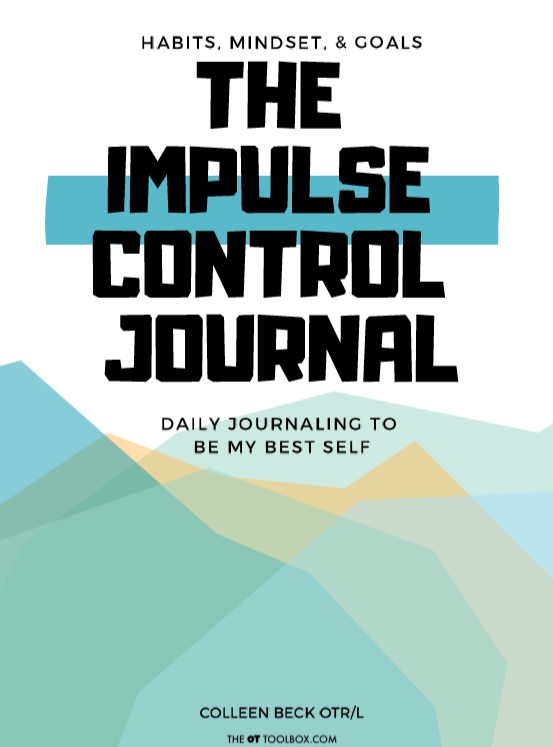
The Impulse Control Journal…a printable resource for helping kids strategize executive functioning skill development. When saying “calm down” just isn’t enough…
When a child is easily “triggered” and seems to melt down at any sign of loud noises or excitement…
When you need help or a starting point to teach kids self-regulation strategies…
When you are struggling to motivate or redirect a child without causing a meltdown…
When you’re struggling to help kids explore their emotions, develop self-regulation and coping skills, manage and reflect on their emotions, identify their emotions, and more as they grow…
Grab the Impulse Control Journal to build organizational strategies, planning, prioritization, habits, and mindset in kids.

Colleen Beck, OTR/L has been an occupational therapist since 2000, working in school-based, hand therapy, outpatient peds, EI, and SNF. Colleen created The OT Toolbox to inspire therapists, teachers, and parents with easy and fun tools to help children thrive. Read her story about going from an OT making $3/hour (after paying for kids’ childcare) to a full-time OT resource creator for millions of readers. Want to collaborate? Send an email to contact@theottoolbox.com.