You may have seen a “wellness wheel” before. This graphic is a description of all of the wellness concepts that make up the components of a well-balanced lifestyle. While there are different versions of a wellness wheel, and some illustrations that have differing number of wellness components, the wheel imagery is powerful. Check out our Wellness Challenge for ways to encourage wellness for kids and families using all aspects of well-being. A wellness wheel can be pivotal in defining needs and areas of strength that can be addressed through holistic well being strategies.
The graphic of the wheel shows the balance and integration that occurs among all of the wellness components. Each pie piece is important and works together to create an integrated and well-balanced lifestyle.
Dimensions of the Wellness Wheel
The dimensions of the wellness wheel represent the different areas of life that contribute to overall well-being. Rather than focusing on just physical health, the wellness wheel recognizes that wellness is a combination of multiple interconnected areas of life. When one area is out of balance, it can affect other areas of daily functioning, emotional health, and participation in meaningful activities.
Most models of the wellness wheel include several core dimensions that work together to support overall health and quality of life. These dimensions help individuals understand how habits, environments, relationships, and personal choices influence well-being. By reflecting on the different dimensions, people can identify areas where they feel balanced and areas where they may need additional support.
Common dimensions of the wellness wheel include physical wellness, emotional wellness, social wellness, intellectual wellness, occupational wellness, environmental wellness, financial wellness, and spiritual wellness. These are all areas we address in occupational therapy!
Each dimension represents a unique part of well-being, but they are all connected and influence one another.
For example, emotional wellness can affect motivation and participation in work or school activities, while physical wellness supports energy levels and daily functioning. Social connections can improve mental health and resilience, and intellectual wellness supports learning, creativity, and personal growth. When individuals take time to reflect on the different dimensions of wellness, they can develop strategies that support a more balanced and healthy lifestyle.
Using a wellness wheel can be a helpful visual tool for identifying strengths and areas for growth. By considering the different dimensions of the wellness wheel, individuals can create goals that support overall well-being and promote healthier habits across multiple areas of life.
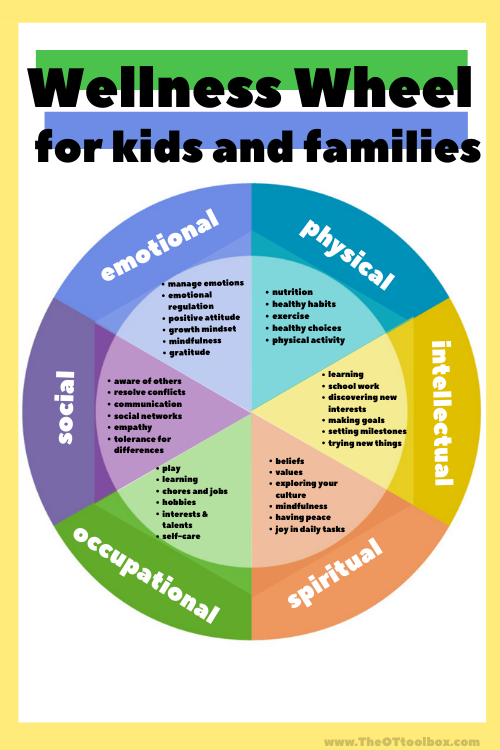
Wellness Wheel
Each person’s personal wellness wheel will look different. Each individual has their own interests, strengths, needs, occupations, background experiences, etc. Each lifestyle is intrinsically different. One child may have an occupation component that requires participation in a specific sport and the required practices and participation. Another individual may have a heavier component of spiritual impact. Another may have a job that requires performance participation.
While every single individual will view the wheel as an individualized graphic of the life they live, the “spokes” or pie sections of the wellness chart integrate to allow for a healthy and balanced life.
What is a wellness wheel?
A wellness wheel is a visual that helps identify aspects of wellbeing. The representation indicates all of the subcategories of wellness that contribute to your overall well-being. When one of these categories is off-balance, you may sense or feel that your health is “off”. You may notice that you are simply not thriving in various daily tasks, or occupations.
A wellness wheel is a tool to self-analyze personal wellness.
When the wheel is off balanced, you can lack balance in life. Stress can be overwhelming. Productivity lacks. Performance of daily tasks is “off”.
It’s possible to look at the wellness wheel and identify areas that are lacking or need more nurturing. By identifying areas of need and areas where you are overwhelmed, you can make necessary changes.
The wellness wheel is a tool to help one become more aware of the various factors that influence overall well being. It’s a means to make positive changes that contribute to functioning, and quality of life. By being aware of these different facets of a balanced life, it’s possible to let go of the things that are out of your control and foster more focus on areas that are under your control, including choices, actions, thoughts, and emotions.
This wellness wheel was created to cover the family and child, individually or as a whole. You can also adjust this wheel to meet specific occupations such as in the classroom or clinic. You can see the individual components described in the wellness wheel below. The concepts that we will discuss in our wellness challenge include concepts of well being in emotional, spiritual, physical, social, intellectual, and occupational forms.
Understanding the Dimensions of Wellness
The dimensions of wellness describe the different areas of life that influence overall wellness and personal well-being.
Rather than focusing on just one area of health, the wellness wheel offers a visual representation of multiple areas of wellness that work together to support a balanced life. Each dimension contributes to a person’s ability to grow, respond to life events, and navigate life’s challenges.
Many wellness models use this wheel as an assessment tool or a self-screening tool to help individuals reflect on their current habits, behaviors, and priorities.
When people review the different dimensions, they can identify areas that feel balanced and areas that may need attention. This reflection helps individuals develop an action plan for strengthening different parts of their wellness journey and reaching their full potential.
Physical Wellness
Physical wellness focuses on the health of the body and the daily choices that support energy and functioning. This dimension includes nutrition, physical activity, sleep habits, and other lifestyle choices that influence long-term health. Regular movement, healthy eating, and routines that support rest allow the body to function efficiently and handle daily demands.
Maintaining physical wellness helps individuals stay energized, manage stress, and remain active throughout the day.
Healthy habits related to exercise, hydration, and balanced nutrition support both the body and brain, which contributes to better focus, productivity, and resilience when facing challenges.
Emotional Wellness and Mental Health
Emotional wellness refers to the ability to understand and manage emotions while maintaining positive mental health. This dimension includes recognizing feelings, coping with stress, and developing strategies for navigating difficult situations.
Strong emotional wellness allows individuals to maintain a healthy perspective during challenging moments and respond to life’s challenges with resilience. Practices such as mindfulness, meditation, journaling, and self-reflection can help individuals better understand their emotional responses and strengthen their emotional well-being.
Emotional wellness also involves practicing acceptance, setting healthy boundaries, and seeking feedback from trusted individuals. When people have tools for emotional regulation, they are better prepared to navigate stress, change, and unexpected life events.
Social Wellness
Social wellness focuses on building and maintaining supportive relationships with family, friends, and peers. Humans naturally seek connection, and strong social networks help create a sense of belonging and a sense of connection with others.
Individuals who maintain a well-developed support system often experience greater life satisfaction and emotional resilience. Social wellness includes communication skills, collaboration, and the ability to maintain healthy relationships while respecting personal boundaries.
Strong relationships contribute to personal growth, community involvement, and opportunities for advocacy and mutual support.
Intellectual Wellness
Intellectual wellness involves engaging in lifelong learning, exploring new ideas, and nurturing curiosity. This dimension encourages individuals to develop their creative abilities, explore new interests, and seek opportunities for personal growth.
Activities that support intellectual wellness include reading, learning new skills, problem solving, creative expression, and participating in discussions that broaden understanding. Intellectual enrichment allows individuals to remain mentally stimulated and open to new perspectives.
Maintaining intellectual wellness helps individuals stay adaptable and motivated as they pursue personal goals and develop new skills.
Spiritual Wellness
Spiritual wellness refers to developing a sense of purpose, meaning, and values in life. For some individuals, this dimension may involve religious practices, while for others it may include personal reflection, mindfulness, or practices such as yoga or meditation.
Spiritual wellness encourages individuals to reflect on personal ethics, values, and the things that bring fulfillment and personal satisfaction. Developing appreciation for life experiences and cultivating gratitude can strengthen this dimension of wellness.
This dimension also supports a deeper understanding of one’s role in the world and fosters a sense of connection to something greater than oneself.
Environmental Wellness
Environmental wellness involves creating safe, supportive, and healthy surroundings. This includes both the physical environment and the spaces where individuals live, work, and learn.
Practices that support environmental wellness include organizing living spaces, reducing trash and waste, and creating environments that support productivity and relaxation. A healthy environment can improve mood, reduce stress, and increase comfort in daily routines.
Environmental wellness also includes awareness of how surroundings influence behaviors and well-being.
Occupational Wellness
Occupational wellness relates to finding purpose and personal satisfaction in work or daily activities. This dimension includes career development, meaningful work experiences, and maintaining a healthy balance between work responsibilities and personal life.
Individuals with strong occupational wellness often feel motivated, productive, and connected to their work. Positive relationships with coworkers and colleagues, opportunities for growth, and recognition of contributions support this dimension.
Occupational wellness also involves identifying goals that align with personal values and maintaining balance between professional responsibilities and other areas of wellness.
Financial Wellness
Financial wellness focuses on managing money in ways that support long-term security and financial stability. This dimension includes budgeting, saving, planning for future expenses, and making informed financial decisions.
Healthy financial habits can reduce stress and support other areas of well-being. When individuals feel confident managing their finances, they are better able to focus on personal goals, relationships, and overall life satisfaction.
Using the Wellness Wheel as a Tool for Growth
The wellness wheel provides a visual representation of how different dimensions of health work together to support overall wellness. By reviewing the wheel regularly, individuals can reflect on their habits, identify areas for improvement, and create strategies for strengthening their well-being.
Many people use the wellness wheel as an assessment tool to evaluate how balanced their current lifestyle feels. This reflection can help guide an action plan that encourages enrichment, healthier routines, and ongoing personal growth throughout the wellness journey.
When individuals focus on strengthening each dimension over time, they move closer to achieving balance, resilience, and the ability to live life with greater purpose and fulfillment.
How to use a wellness wheel
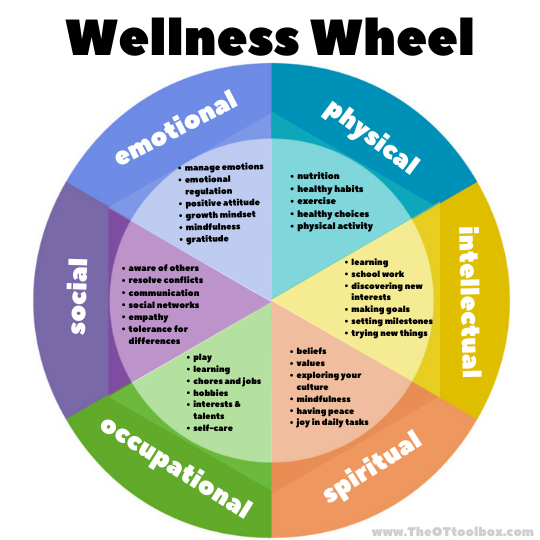
Consider the following subcategories on the wellness wheel: Emotional, Physical, Intellectual, Spiritual, Occupational, and Social. The goal is to take an inventroy of overall wellbeing to see where areas of imbalance may lie. You can use the wellness wheel to identify areas that are off-balance or are bigger or smaller than onther pie piece on the wheel.
If you imagine the wheel as a rolling wheel, would it be a round circle? Or would it be off-centered and roll off to the side? You want to see balance in the pie pieces so the wheel would roll smoothly.
Ask yourself these questions based on the wellness wheel
Ask yourself the following questions on how you are managing various aspects of your overall life:
1. Does any one of these areas impact your stress? Your health? Your performance of tasks?
2. Are there any spokes of the wellness wheel that are off-balance? Are they bigger than another spoke, causing the wheel to shift off-center?
3. Is it possible to adjust to make positive changes in those areas that are off-balance?
4. How can you address the things that you CAN change?
5. Is it possible to let go of the areas where you CAN NOT make changes because they are out of your control?
6. What improvements would you like to see in obtaining a balanced wheel?
Emotional Well being on the Wellness Wheel
- manage emotions
- emotional regulation
- positive attitude
- growth mindset
- mindfulness
- gratitude
Spiritual Well being on the wellness wheel
- beliefs
- values
- exploring your culture
- mindfulness
- having peace
- joy in daily tasks
Physical Well being on the wellness wheel
- nutrition
- healthy habits
- exercise
- healthy choices
- physical activity
Social Well being on the wellness wheel
- aware of others
- resolve conflicts
- communication
- social networks
- empathy
- tolerance for differences
Intellectual Well being on the wellness wheel
- learning
- school work
- discovering new interests
- making goals
- setting milestones
- trying new things
Occupational Well being on the wellness wheel
- play
- learning
- chores and jobs
- hobbies
- interests & talents
- self-care
Other wellness wheels can include aspects of financial well being, environmental well being, nutritional well being.
Free Wellness Wheel Printable

Colleen Beck, OTR/L has been an occupational therapist since 2000, working in school-based, hand therapy, outpatient peds, EI, and SNF. Colleen created The OT Toolbox to inspire therapists, teachers, and parents with easy and fun tools to help children thrive. Read her story about going from an OT making $3/hour (after paying for kids’ childcare) to a full-time OT resource creator for millions of readers. Want to collaborate? Send an email to contact@theottoolbox.com.