Today we are covering a list of coping skills for anxiety. This includes a printable strategies list to help you or the person you are working with in a professional manner find strategies that really help. We decided to create this coping strategies list specifically to target coping for anxiety after working on a side project, our Daily Cup Reset Project, a social media tool for simple strategies for nervous system regulation and self regulation. You can find this on Facebook, Instagram, and integrated into our TikTok account.
Coping Skills for Anxiety
Anxiety looks different for every person. Some people experience racing thoughts and difficulty concentrating. Others notice physical symptoms such as muscle tension, headaches, stomach discomfort, restlessness, or fatigue. Anxiety can affect sleep, social participation, work performance, executive functioning, and daily routines. Because anxiety can present differently from person to person, coping strategies that work for one individual may not work for another.
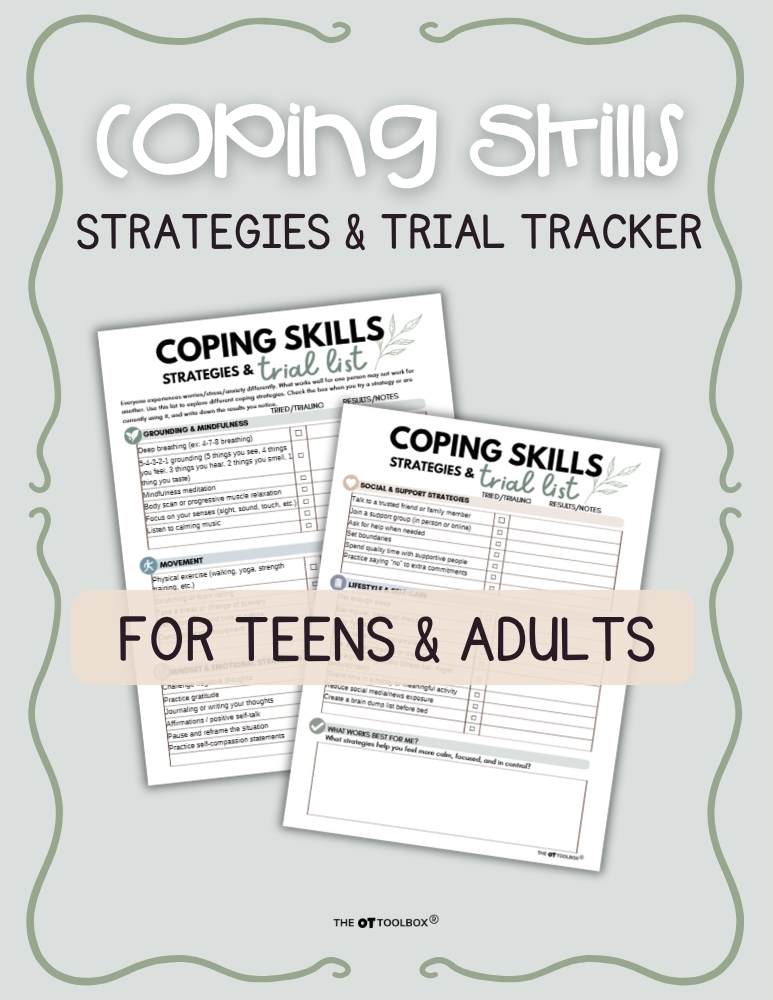
This free coping skills for anxiety printable is designed to help individuals explore strategies, trial them intentionally, and document what actually works.
Rather than trying random techniques and hoping something helps, this worksheet encourages a more structured approach. It allows you to identify strategies you have tried, notice patterns, and create a personalized coping toolbox.
For occupational therapists, counselors, educators, and adults using the worksheet independently, this printable can become a practical tool for self-reflection and emotional regulation.
Why Coping Skills Matter
Coping skills are actions, routines, and strategies that help manage stress responses and support regulation. Effective coping skills do not eliminate anxiety completely. Instead, they can help lower the intensity of symptoms and improve participation in meaningful activities.
Coping strategies can support:
- Emotional regulation
- Executive functioning
- Self-awareness
- Interoception
- Sleep routines
- Attention and concentration
- Stress management
- Social participation
- Daily functioning
The goal is building awareness of what helps your body and mind function at their best.
Grounding and Mindfulness Strategies
Grounding strategies help bring attention back to the present moment. Anxiety often pulls thoughts into future worries or repetitive thinking patterns, and grounding activities can interrupt that cycle.
Deep breathing helps regulate the autonomic nervous system and may reduce physical symptoms associated with stress responses. You could add in any other relaxation breathing techniques as well.
The 5-4-3-2-1 grounding technique asks individuals to identify:
- 5 things you see
- 4 things you feel
- 3 things you hear
- 2 things you smell
- 1 thing you taste
This technique works because it redirects attention toward sensory information and away from racing thoughts.
Mindfulness activities encourage awareness without judgment and can help individuals notice emotions and body signals before they become overwhelming.
Movement and Physical Well-Being Strategies
Physical movement influences emotional regulation and nervous system functioning.
Exercise increases endorphins and may reduce physical tension associated with stress. Movement does not have to mean intense exercise. Walking, stretching, yoga, or even changing environments can provide regulation support.
Movement strategies may include:
- Walking
- Stretching
- Yoga
- Heavy work activities
- Outdoor movement
- Gentle exercise
Heavy work activities can be particularly helpful because they provide proprioceptive input that often supports calming and body awareness.
These are types of things that can be used then within a sensory lifestyle or sensory diet.
Thinking and Emotional Regulation Strategies
Anxiety frequently affects thinking patterns, or mindset. Individuals may experience catastrophizing, repetitive worries, negative self-talk, or difficulty shifting attention. All of this is part of emotional regulation. We use these tools to improve a growth mindset.
Journaling can help organize thoughts and externalize worries. Writing often reduces the mental effort required to hold multiple thoughts at one time.
Positive self-talk helps challenge automatic negative thinking.
Gratitude exercises can shift attention toward positive experiences and strengths.
Cognitive reframing involves asking:
- Is this thought completely true?
- What evidence supports this?
- Is there another way to view this situation?
Social and Support Strategies
Humans regulate through relationships. Supportive social connections can reduce emotional load and increase feelings of safety.
Strategies may include:
- Talking with a trusted person
- Asking for help
- Setting boundaries
- Spending time with supportive people
- Joining support groups
Many adults feel pressure to handle stress independently, but social support remains one of the strongest protective factors for emotional well-being.
Lifestyle and Self-Care Strategies
Daily routines significantly affect anxiety symptoms.
Sleep patterns, hydration, nutrition, and routines all influence nervous system functioning.
Strategies might include:
- Consistent sleep routines
- Balanced meals
- Drinking enough water
- Limiting caffeine
- Creating bedtime routines
- Building regular movement into the day
These routines may appear simple, but foundational habits often create meaningful improvements over time.
Trialing Strategies: How Long Should You Try Them?
One of the most common challenges is trying a strategy once and deciding it does not work.
Some coping tools provide immediate effects, while others need repeated practice before benefits become noticeable.
Immediate strategies often include:
- Deep breathing
- Grounding activities
- Movement breaks
- Sensory tools
These may create changes within minutes.
Other strategies often require repeated use:
- Journaling
- Mindfulness
- Exercise routines
- Sleep routines
- Gratitude practices
For longer-term strategies, trialing for approximately one to two weeks may provide more useful information before deciding whether the strategy helps.
Consistency matters. A strategy used once during an overwhelming moment may feel ineffective even if it could become helpful through repeated practice.
What to Notice While Trialing Coping Strategies
As individuals trial strategies, encourage them to notice both emotional and functional changes.
Questions to consider include:
- Did I feel calmer afterward?
- Did I focus better?
- Did I fall asleep more easily?
- Did I feel less overwhelmed?
- Did my body feel different?
- Did I recover from stress more quickly?
- Did I complete daily tasks more easily?
- Did I participate more comfortably in work, school, or social situations?
Sometimes the effects are subtle.
A strategy may not remove anxiety entirely but may help someone feel slightly more regulated, more focused, or more able to continue participating in daily activities.
How to Document Results on the Printable
The Results/Notes section of the worksheet helps transform the printable into a personalized data collection tool.
Instead of writing:
“It helped.”
Encourage specific observations such as:
“Felt calmer after five minutes.”
“Still worried but I focused better afterward.”
“Felt less tension in my shoulders.”
“Helped me fall asleep faster.”
“Did not notice much change.”
“Worked better when I paired it with walking.”
Over time, patterns begin to emerge. Individuals may discover that movement strategies help more than breathing techniques, or that sensory tools work better than journaling.
The goal is to build an individualized coping toolbox based on real experiences rather than guessing.
Free Coping Skills Strategy Tool
There is no single coping strategy that works for everyone. Emotional regulation and anxiety management often involve exploration, flexibility, and self-awareness.
This coping skills for anxiety printable provides a structured way to try strategies, notice patterns, and build a personalized toolbox that supports participation in daily life.
Use it in therapy sessions, counseling, classrooms, or independently. This printable can help transform coping strategies from a long list of ideas into meaningful tools that support emotional well-being and everyday functioning.
This is one of the tools in our Coping Skills Toolbox.

Colleen Beck, OTR/L has been an occupational therapist since 2000, working in school-based, hand therapy, outpatient peds, EI, and SNF. Colleen created The OT Toolbox to inspire therapists, teachers, and parents with easy and fun tools to help children thrive. Read her story about going from an OT making $3/hour (after paying for kids’ childcare) to a full-time OT resource creator for millions of readers. Want to collaborate? Send an email to contact@theottoolbox.com.