In this blog post, we are talking all about a nervous system reset, using a simple printable reset menu we’ve created…much like picking a meal, you can pick regulation strategies that help to calm your body in everyday situations.
What’s A Nervous System Reset?
Our nervous system is constantly taking in information from the environment. Noise, schedules, social interactions, school demands, work responsibilities, and even excitement can impact how regulated we feel.
When the nervous system becomes overloaded, we may notice:
- Difficulty focusing
- Irritability
- Emotional outbursts
- Increased anxiety
- Restlessness
- Fatigue
- Difficulty completing tasks
- Trouble transitioning between activities
A nervous system reset helps bring the body and brain back into a more regulated state so that learning, participation, and meaningful activities can happen more successfully.
It’s like this; Have you ever had one of those days when everything feels overwhelming? Maybe your thoughts are racing, your body feels tense, or you find yourself becoming frustrated over small things. Children experience these feelings too. In fact, many kids struggle to recognize when their nervous system is overloaded and need support finding effective ways to regulate.
That’s what a nervous system reset is. It helps to calm down your body and thoughts so you can do what you have to do.
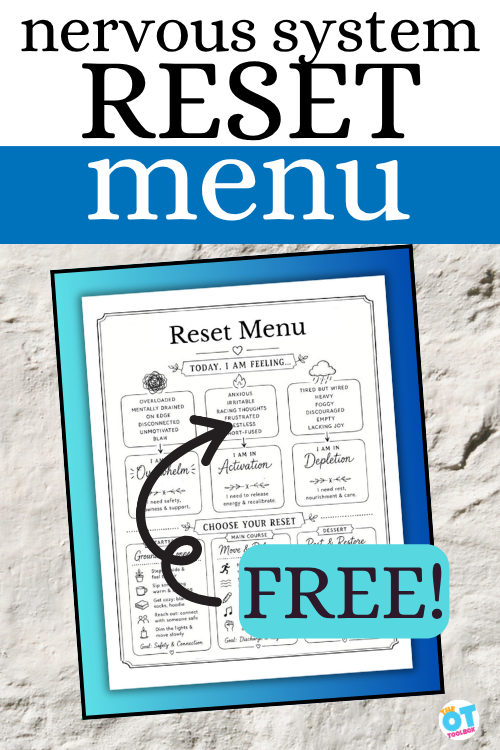
Let’s talk about a Reset Menu
That’s where a reset menu can help.
A reset menu is a collection of simple activities that help support resetting your nervous system, improving self-regulation, and creating opportunities to return to a calm, organized state. Think of it like a restaurant menu. Instead of choosing food, you’re choosing activities that help your body and brain feel more balanced.
You’ve probably heard the term, sensory diet. It’s kind of like using those sensory diet tools that work for the individual to help meet sensory needs. With a reset menu, we’re talking about a similar strategy…just different terms.
Whether you are a parent, teacher, therapist, or someone looking for strategies to support emotional well-being, a reset menu can provide practical tools for managing stress and improving regulation throughout the day.
What Is a Reset Menu?
A reset menu is a visual list of sensory and regulation activities that individuals can select when they need a break, feel overwhelmed, or want to improve focus and attention.
Unlike a checklist that requires completing every item, a reset menu offers choices. The goal is to help children and adults learn which strategies work best for their unique nervous systems.
One day you may like one strategy, another you may like a different one.
Some people feel better after movement. Others need quiet, deep breathing, or a few minutes outdoors. A reset menu encourages self-awareness and independence by allowing individuals to choose the activities that help them feel their best.
You can self-reflect on what works, what you need in the moment and make choices based on what you see about yourself.
Understanding Regulation Through the Nervous System
From an occupational therapy perspective, regulation is not simply about behavior. It is about how the nervous system responds to experiences and whether a person feels safe, organized, and ready to engage.
When we are regulated, we are more likely to:
- Learn new information
- Problem solve
- Communicate effectively
- Participate in daily activities
- Connect with others
When we are dysregulated, the brain shifts its focus toward protection and survival rather than learning and engagement.
A reset menu helps bridge that gap by offering activities that support the nervous system and encourage regulation.
Creating Your Own Reset Menu
The most effective reset menus include a variety of sensory and regulation strategies. Consider organizing activities into categories so individuals can choose what feels helpful in the moment.
Movement Menu
Movement is one of the fastest ways to support nervous system regulation.
Try:
- Jumping jacks
- Animal walks
- Wall push-ups
- Stretching
- Dance breaks
- Yoga poses
- Obstacle courses
- Taking a walk
- Climbing stairs
- Marching in place
Heavy Work Menu
Heavy work activities provide proprioceptive input that many people find organizing and calming.
Try:
- Carrying books
- Pushing a laundry basket
- Pulling a wagon
- Moving chairs
- Wheelbarrow walks
- Resistance bands
- Bear hugs
- Tug-of-war
- Kneading play dough
- Building with large blocks
Calm and Relaxation Menu
These strategies help slow the body and support emotional regulation.
Try:
- Deep breathing
- Listening to calming music
- Guided imagery
- Reading
- Progressive muscle relaxation
- Looking at nature
- Coloring
- Journaling
- Quiet time
- Meditation
Sensory Reset Menu
Sensory activities can help organize the nervous system and improve attention.
Try:
- Drinking cold water
- Chewing crunchy foods
- Using a fidget tool
- Wrapping up in a blanket
- Smelling calming scents
- Playing with sensory bins
- Using textured materials
- Taking a warm shower
- Looking at calming visuals
- Using a weighted lap pad
Social Connection Menu
Co-regulation is one of the most powerful regulation tools available.
Try:
- Talking with a trusted adult
- Playing a game with a friend
- Reading together
- Sharing a joke
- Asking for help
- Taking a walk with someone
- Giving a hug
- Spending time with family
How Occupational Therapists Use Reset Menus
Occupational therapists frequently use reset menus to support self-regulation and sensory processing. Rather than telling a child what they must do, therapists often help children identify which activities help them feel calm, alert, focused, or organized.
Over time, children learn to recognize their own needs and independently select strategies that support participation in school, home, and community activities.
This self-awareness is a critical component of lifelong regulation skills.
Teaching Kids to Use a Reset Menu
Introducing a reset menu works best when children practice using it before they become overwhelmed.
Some helpful tips include:
- Review the menu during calm moments.
- Model using the strategies yourself.
- Allow children to personalize their menu.
- Offer choices instead of directives.
- Reflect on which strategies helped after using them.
The goal is not perfection. The goal is helping children build a toolbox of regulation strategies they can use throughout life.
Free Reset Menu Printable
Our free Reset Menu printable provides a simple way to introduce sensory and regulation strategies at home, in the classroom, or during therapy sessions.
Use it as:
- A visual support for self-regulation
- A classroom brain break menu
- A calming corner resource
- A sensory diet planning tool
- A family wellness resource
Remember that every nervous system is unique. What works for one person may not work for another. The power of a reset menu is that it encourages exploration, choice, and self-awareness.
When children learn how to support their own regulation, they develop skills that can improve participation, learning, emotional well-being, and independence for years to come.

Colleen Beck, OTR/L has been an occupational therapist since 2000, working in school-based, hand therapy, outpatient peds, EI, and SNF. Colleen created The OT Toolbox to inspire therapists, teachers, and parents with easy and fun tools to help children thrive. Read her story about going from an OT making $3/hour (after paying for kids’ childcare) to a full-time OT resource creator for millions of readers. Want to collaborate? Send an email to contact@theottoolbox.com.
The Sensory Lifestyle Handbook walks you through sensory processing information, each step of creating a meaningful and motivating sensory diet, that is guided by the individual’s personal interests and preferences.
The Sensory Lifestyle Handbook is not just about creating a sensory diet to meet sensory processing needs. This handbook is your key to creating an active and thriving lifestyle based on a deep understanding of sensory processing.