How to Help Kids Manage Big Feelings

how to help kids manage big feelings

Today we have a resource on helping kids manage big feelings. We have a lot of content on The OT Toolbox related to regulation, emotions, self regulation strategies,  emotional regulation and behavioral regulation.

This is actually a post from our email newsletter Lunch & Learn series. If you are not already a newsletter subscriber, be sure to do that.
how to help kids manage big emotions

How to help kids manage big feelings

hildren experience strong emotions every day, but they do not always have the skills to understand or manage those feelings on their own. Helping kids navigate big feelings means teaching them how to recognize emotions, understand what their body is telling them, and learn strategies to respond in safe and productive ways. Whether a child is feeling frustrated, overwhelmed, excited, or anxious, these moments are opportunities for learning and growth.

When parents, teachers, and therapists provide support and guidance, children can begin to build the emotional awareness and regulation skills they need to handle challenging situations at home, in school, and with peers.

We work with kids in homes, classrooms, the community and can sometimes see big emotions during the day to day tasks. For kids navigating social situations with peers, this might mean breakdowns that impact participation and learning.

I wanted to bring you some ideas and resources to support kids in these opportunities for teaching social emotional skills.

The interesting thing about running The OT Toolbox is that we get a lot of questions from parents and caregivers needing support ideas…and we get similar questions from therapy providers on how to support kids and parents!

Understanding Big Feelings Through the Nervous System

When children experience big emotions, it can help to look beyond behavior and consider what is happening in the nervous system. Emotions are closely connected to how the body detects safety or threat in the environment. One framework that helps explain this is Polyvagal Theory, developed by neuroscientist Dr. Stephen Porges. This perspective helps caregivers understand that children’s reactions are often reflections of their physiological state rather than intentional misbehavior.

From this viewpoint, a child’s nervous system is constantly scanning the environment for cues of safety or danger. When the body senses safety, children are more likely to feel calm, curious, and connected to the people around them. In this state, they are able to explore, learn new skills, and participate in daily activities. This is the state where growth, learning, and emotional regulation develop most effectively.

However, when the nervous system detects a signal of danger, the body may move into a fight-or-flight response. The heart rate increases, breathing becomes faster, and the body prepares to protect itself. In this state, children may appear restless, argumentative, impulsive, or emotionally reactive. They may have difficulty listening, thinking clearly, or solving problems because their nervous system is focused on safety rather than learning.

There is also a third possible response. When a child feels overwhelmed and the nervous system cannot resolve the threat through action, the body may shift into a shutdown state. In this state, children may appear withdrawn, quiet, or emotionally disconnected. Some children become limp, avoid interaction, or seem to “zone out.” This response is not defiance or stubbornness—it is the nervous system trying to protect itself by conserving energy.

These physiological states are not rigid categories. Instead, they exist along a continuum. A child might show subtle signs of nervous system activation, such as muscle tension, irritability, or increased sensitivity to touch or sound. Learning to notice these cues helps adults understand when a child may be moving out of a regulated state.

Why Regulation Comes Before Problem Solving

When children are in a heightened fight-or-flight state, the parts of the brain responsible for reasoning, planning, and learning do not work as efficiently. The brain’s survival systems take priority. This means that teaching, correcting behavior, or expecting logical thinking may not be effective in the moment.

For children to learn how to manage emotions, their nervous system must first feel safe. When the body is calm enough to move out of survival mode, higher brain regions involved in thinking, sensory processing, and emotional understanding can function more effectively. This is why helping children regulate their nervous system is often the first step in supporting emotional development.

The Role of Co-Regulation

Children do not learn to regulate emotions entirely on their own. They develop these skills through co-regulation with supportive adults. Co-regulation occurs when a calm adult helps a child move from a heightened emotional state back toward a regulated state.

This may involve using a soothing voice, offering predictable routines, providing physical comfort, or creating a calm environment. Through repeated experiences of being supported during emotional moments, children begin to internalize these strategies and gradually develop their own self-regulation skills.

Building Modulation Skills Through Meaningful Participation

One of the most effective ways to support emotional regulation is through meaningful daily activities. Participating in routines such as play, movement, creative activities, and everyday tasks provides opportunities for children to practice managing their emotions in real contexts.

Activities that involve movement, sensory exploration, and social interaction help children learn how their bodies respond to different situations. Over time, these experiences support the development of modulation skills, which allow children to adjust their emotional and physiological responses to meet the demands of a task.

Rather than focusing only on behavior, this approach emphasizes helping the child’s nervous system feel safe enough to engage, explore, and learn.

How Neuroplasticity Supports Emotional Growth

The brain has the remarkable ability to change and adapt through experience, a process known as neuroplasticity. Each time a child successfully moves from a state of overwhelm back toward calm with the help of a supportive adult, new neural pathways are strengthened.

These repeated experiences gradually build the brain’s capacity for emotional resilience. Over time, children become better able to recognize their own feelings, regulate their responses, and navigate big emotions with increasing independence.

Helping kids navigate big feelings is not about eliminating emotions. It is about supporting the nervous system so children can experience emotions safely, understand them, and learn how to move through them in healthy ways.

Here are four common questions we hear from parents, teachers, and therapists, and answers that incorporate Social Emotional Learning (SEL) principles:

Q1: What do I do when a toddler grabs a toy from a sibling and says, “It’s mine!”, even if they weren’t playing with it?

SEL Response:
This is a teachable moment! Narrate what’s happening in a calm tone:

“I see you wanted that toy because your brother was using it. It’s hard to wait, isn’t it?”

Help them name the emotion (jealousy, frustration) and guide them to use respectful language:

“Let’s ask your brother for a turn when he’s done. We can play with something else while we wait.”

This helps build empathy, impulse control, and communication. These are core SEL skills.

Responding to the moods of others and reaching out to others as a support system (both an aspect of co-regulation skills)

Q2: How can we manage sharing in a classroom where toys are used in groups or in close parallel play?

SEL Response:
Group settings are rich with opportunities to teach cooperation and problem-solving. Set expectations early (“We take turns,” “We use kind words”) and use visual supports when possible.

When conflicts arise, help children brainstorm:

“It looks like you both want that toy. What can we do? Take turns? Play together? Find a similar toy?”

Praise positive social interactions, reinforcing that collaboration is part of the play process. Help the child come up with ideas to problem solve the situation.

Q3: How can I help kids learn the words to use when sharing?

SEL Response:
Model simple sharing phrases and practice during play or storytime:

  • “Can I have a turn when you’re done?”
  • “You go first, and then I’ll go.”
  • “Let’s play together!”

Role-play these situations with puppets or toys to help the language stick. When kids use these phrases, offer encouragement:

“That was such a kind way to ask!”

This supports self-expression, empathy, and emotional confidence.

Q4: How do I help kids redirect their attention while waiting for a toy?

SEL Response:
Help kids build flexible thinking and patience by giving them choices:

“You’re waiting for the truck. What else can your hands do right now? Want to build with blocks or color while you wait?”

Try using a “waiting box” (coping tools or a sensory toolbox) or visual chart of alternate activities. You can also introduce simple waiting games or set a timer. Over time, kids will learn that they can handle waiting, an essential regulation skill!

Looking for support? We’ve got resources for you!

The OT Toolbox is filled with hands-on strategies, free printables, and creative activities that support SEL every step of the way.

Blog Posts to Start With:

Top Membership Resources for Social Emotional Learning

These tools are ready to print and use, perfect for therapy sessions, classroom use, or home routines.

Members: Log in.

For Younger Learners (Preschool – Early Elementary):

  • Emoji Emotions
  • Turkey Emotions
  • Color By Emotion Sets (Snowman, Winter Hat, Unicorn, Christmas, etc.)
  • Emotion Matching Cards (Popsicles, Hearts, Bugs)
  • I Spy Emotion Games (Pumpkins, Penguins, Santa, Elf)
  • Star Feelings Poster & Journal Prompts

For Skill Building and Regulation:

  • Self Regulation Bundle
  • Zones of Regulation Activities (Cootie Catchers, Calm Down Toolbox Craft, Mood Monster)
  • Emotional Regulation Toolbox
  • Feelings Sorting Cards
  • Write About Feelings Worksheets
  • Emotions Play Dough Mats
  • Emotions Motor Skills Wheel

For Educators and Parents:

  • Emotional Intelligence Guide for Parents
  • Social Emotional Skills Observation Notes
  • Social Emotional Learning Activities Handout
  • Exploring Books Through Play: 50 Activities Based on Books About Friendship & Empathy

Action Step:
Start small. Choose one resource or strategy above to use this week. Whether it’s modeling turn-taking language or trying a feelings check-in during transitions, every small step supports big SEL growth.

Want full access to the tools listed above?
Join The OT Toolbox Membership for instant access to hundreds of therapy tools and SEL resources.

Colleen Beck, OTR/L has been an occupational therapist since 2000, working in school-based, hand therapy, outpatient peds, EI, and SNF. Colleen created The OT Toolbox to inspire therapists, teachers, and parents with easy and fun tools to help children thrive. Read her story about going from an OT making $3/hour (after paying for kids’ childcare) to a full-time OT resource creator for millions of readers. Want to collaborate? Send an email to contact@theottoolbox.com.
Tactile Defensiveness

Tactile defensiveness and what you need to know about tactile sensitivities

Today, I have an update on a very old blog post for a specific reason. This fake snow messy sensory play activity is a valuable tool in addressing tactile defensiveness, or tactile sensitivity. In general descriptions, this simply means an over-sensitivity to touch, or over-responsiveness to touch sensations. For kids with sensory issues, this can be a very big deal. Tactile defensiveness can mean poor tolerance to certain clothing, textures, food sensitivities, closeness of others, wearing socks or the feel of seams or clothing. Sensitivity to these touch sensations can look like many different things! Today we are discussing all about tactile sensitivity, what that looks like in children, and a sensory challenge that can be used for tactile sensitivity.

If you are looking for more information on sensory processing, start here with our free sensory processing information booklet.

tactile sensitivity sensory challenge with fake snow

What is Tactile Defensiveness

I briefly explained the meaning of tactile defensiveness above, but let’s break this down further.

The tactile system is one of our 8 sensory systems: touch, taste, smell, sight, hearing, proprioception, vestibular, and interoception. The sense of touch is a very big piece of the whole picture.

The Tactile Sensory System is one of the earliest developed senses of the body, with studies telling us this sensory system begins to develop at around 8 weeks in utero. The sense of touch completes its development at around 30 weeks in utero when pain, temperature, and pressure sensations are developed.

Understanding Tactile Defensiveness

Tactile defensiveness is often discussed within the broader concept of sensory modulation, which refers to how the nervous system organizes and responds to sensory information.

In some individuals, the nervous system reacts more intensely to everyday sensations than expected. This pattern is often described in the research literature as sensory over-responsivity, a type of sensory modulation difficulty in which reactions to sensory input may be stronger, last longer, or feel overwhelming compared to what the situation typically requires.

It is important to understand that this is not simply a matter of a child noticing sensations more easily than others. Current understanding suggests that the nervous system itself is responding with a heightened emotional, physiological, and behavioral reaction to certain stimuli.

In other words, the child is not choosing to overreact; their nervous system is reacting in a way that signals discomfort or threat.

Some clinicians and organizations have begun using the term heightened sensory responsivity when discussing these patterns. This language reflects a shift toward more respectful and person-centered terminology. While the research base still frequently uses the term sensory over-responsivity, both phrases are generally referring to the same nervous system pattern, an amplified response to sensory input.

What Is Tactile Defensiveness?

When this heightened response occurs specifically in reaction to touch, it is commonly referred to as tactile defensiveness. Children who experience tactile defensiveness may react strongly to everyday sensations that others barely notice. Clothing seams, tags, certain fabrics, unexpected touch, or messy textures may trigger discomfort or distress.

The word “defensiveness” is helpful because it reflects what the child’s nervous system is doing. Instead of interpreting touch as neutral or pleasant information, the brain may interpret it as something that needs to be protected against. The body then moves into a defensive response, which can look like pulling away, avoiding certain clothing, refusing messy play, or becoming upset when touched unexpectedly.

How the Nervous System Contributes

The tactile system plays an important role in helping the brain determine whether touch is safe, alerting, or potentially threatening. For some children, this system sends signals that lead the brain to respond quickly and intensely to certain types of touch. As a result, everyday sensory experiences, such as getting dressed, standing in line, or participating in art activities, can become challenging.

When the nervous system reacts in this way, children may appear sensitive to textures, avoid certain fabrics, dislike grooming routines, or become distressed when their skin is touched unexpectedly. These responses are not simply behavioral choices; they reflect how the child’s nervous system is processing sensory input.

Types of touch

The skin performs unique duties for the body, based on different types of touch input, and tactile sensitivity can be considered to occur in the various aspects of touch. These types of touch include: light touch, pressure, discrimitive touch, pain, temperature.

Most importantly for our ancient ancestors, especially, the skin protects and alerts us to danger and discriminates sensation with regard to location and identification. This is important because touch sensations alerts us to both discrimination and danger. These two levels of sensation work together yet are distinctively important. And furthermore, the skin is the largest and the most prevalent organ.


Touch discrimination- Discrimination of touch allows us to sense where on our body and what is touching us. With discrimination, we are able to
discern a fly that lands on our arm. We are able to sense and use our fingertips in fine motor tasks. We are able to touch and discern temperatures, vibrations, mount of pressure, and textures and shapes of objects.

Danger perception– The second level of the tactile system alerts us to danger. It allows us to jump in response to the “fight or flight” response
when we perceive a spider crawling on our arm. With this aspect of touch, we are able to discern temperature to ensure skin isn’t too hot or cold. We can quickly identify this temperature or sharpness of an object and quickly move away to avoid burning, freezing, or sharp objects.

When either of these levels of sensation are disrupted, tactile
dysfunction can result. This presents in many ways, including
hypersensitivity to tags in clothing, a dislike of messy play,
difficulty with fine motor tasks, a fear of being touched by
someone without seeing that touch, a high tolerance of pain, or a
need to touch everything and everyone.

Sensitivity to touch can mean over responding to touch input in the form of textures, temperatures, or pressure. Touch sensitivities mean that the body perceives input as “too much” in a dangerous way. The touch receptors that perceive input are prioritized because the brain believes we are in danger. The body moves into a state of defensiveness, or safe-mode in order to stay safe from this perceived danger. This is tactile defensiveness.

What does Tactile Defensiveness looks like?

Hyper-responsiveness of the tactile sense may include a variety of things:

  • Overly sensitivity to temperature including air, food, water, or
  • objects
  • Withdrawing when touched
  • Avoids certain food clothing textures or fabrics
  • Dislikes wearing pants or restrictive clothing around the legs
  • Refusing certain foods due to food texture issues
  • Dislike of having face or hair washed
  • Dislikes hair cuts
  • Dislikes having fingernails cut
  • Dislike seams in clothing
  • Excessively ticklish
  • Avoidance to messy play or getting one’s hands dirty
  • Avoidance of finger painting, dirt, sand, bare feet on grass, etc.
  • Avoids touching certain textures
  • Clothing preferences and avoidances such as resisting shoes
  • Resistance to nail clipping, face washing
  • Resists haircuts, hair brushing
  • Dislikes or resists teeth brushing
  • Overreacts to accidental or surprising light touches from
  • others
  • Avoids affectionate touch such as hugs
  • Dislikes closeness of other people

As a result of this avoidance, development in certain areas can be delayed, in a way that functional performance of daily tasks is impacted. What you see in as a result of a poorly integrated tactile sensory system:

  • Delayed fine motor skills
  • Rigid clothing preferences
  • Behavioral responses to tasks such as putting on shoes or coat
  • Impaired personal boundaries
  • Avoids tactile sensory activities
  • Poor body scheme
  • Difficulty with praxis
  • Poor hand skill development

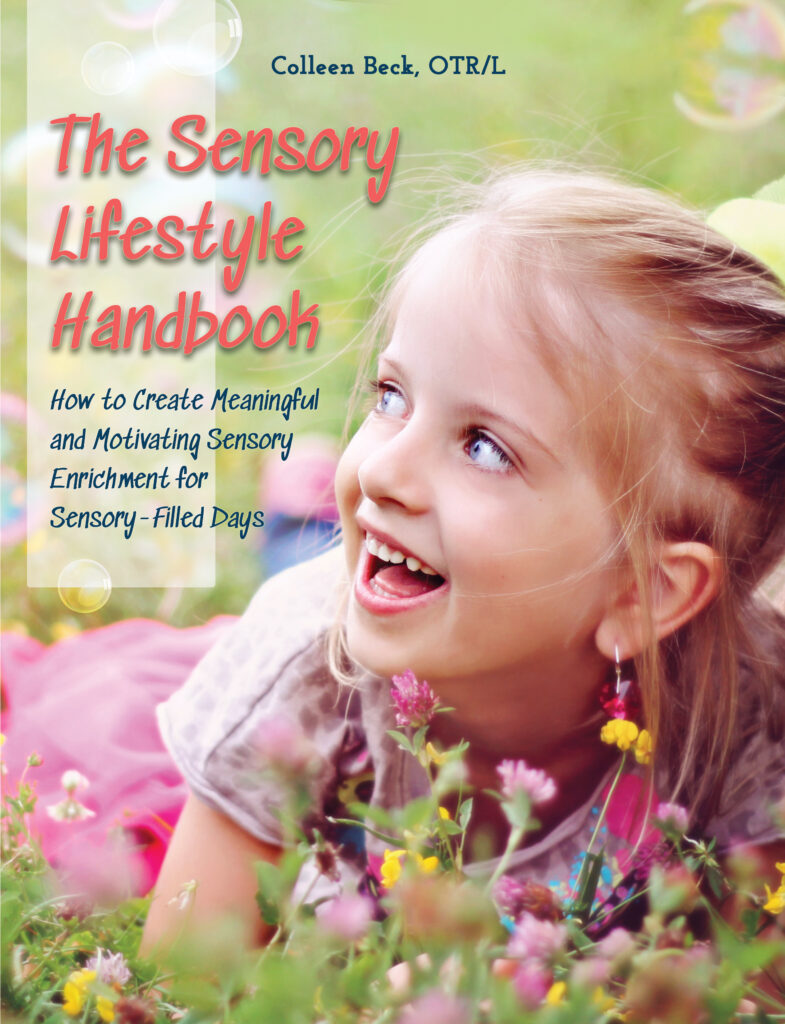
More information on sensory processing of each of the sensory systems and how that impacts daily life can be found in The Sensory Lifestyle Handbook. You’ll also find practical strategies for integrating sensory diets into each part of every day life, in motivating and meaningful ways. Check out The Sensory Lifestyle Handbook for moving from sensory dysfunction to sensory function!

Supporting Children with Tactile Sensitivities

Understanding tactile defensiveness as a nervous system response helps shift the focus from correcting behavior to supporting regulation. When adults recognize that a child’s reaction is rooted in sensory processing, they can begin to create supportive strategies that gradually build tolerance and comfort with different tactile experiences.

Occupational therapy approaches often include providing predictable sensory experiences, respecting the child’s comfort level, and introducing new textures in ways that feel safe and controlled. Over time, this supportive approach helps the nervous system learn that touch can be experienced without triggering a defensive response.

Recognizing tactile defensiveness through this lens helps parents, educators, and therapists respond with understanding, empathy, and effective support strategies that promote participation in daily activities.

How to help with tactile sensitivity

There are ways to help address these areas, so that the child is safe and can function and perform tasks in their daily life. While addressing tactile sensitivities doesn’t mean changing the child’s preferences, it can mean understanding what is going on, what the child does and does not prefer in the way of sensory processing, and it can mean providing tools and resources to help the child.

This should involve an occupational therapist who can take a look at sensory processing and integration and make specific recommendations.

Some strategies that can impact tactile sensitivity include:

  • Understanding the child’s sensory systems, and integration in the daily life of the child. Grab the Sensory Lifestyle Handbook to read more on sensory diets that are meaningful and motivating. These are sensory activities that can be integrated right into tasks like baths, tooth brushing, hair brushing, dentist visits, clothing changes, etc.
  • Take a look at clothing sensitivity red flags for areas of sensitivity to clothing that stand out for the individual child.
  • Read more on proprioception and the connection of heavy work input as a calming and regulatory tool for sensitivities.
  • Work on touch discrimination with activities at the level of the child.
  • Provide verbal input to warn the child prior to light touch
  • Provide visual cues and schedules for tasks that must be completed such as tooth brushing or hair brushing.
  • Trial tactile experiences at a graded level, introducing various sensory experiences in a “safe space” at a just right level for the child.

Tactile Defensiveness Sensory Activity

That’s where this messy sensory play activity comes in. By taking out the “messy” part of this sensory experience, children who dislike messy play or touching certain textures can explore the sensory activity and challenge tactile exposure. In this way, they are experiencing a new and novel texture (temperature and squishy, messy experiences), but at a safe level, or “just right” level for them.

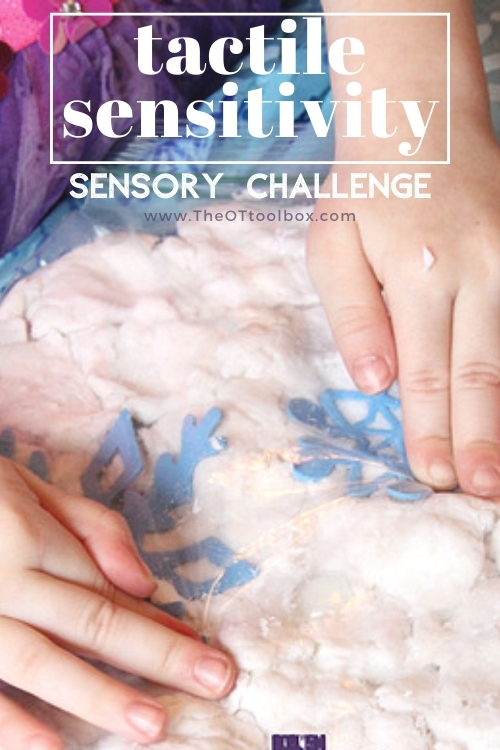
This snow sensory play activity has the opportunity for tactile challenges, but it uses a plastic bag to contain the actual mess, allowing for a mess-free sensory experience, at different grades of texture exposure.

Fake snow for sensory play

Fake Snow Recipe

We made fake snow one recent weekend, when we had a big cousin sleep over.  There were six kids aged five and under staying overnight at our house.  I had this activity planned for us to do together, (because I procrastinated ) and had to get it together to take to a Winter Festival at our church the next day.  It was a fun messy play idea for indoor snow.

We’ve made this fake snow before and I have the recipe listed on our Messy Play Day post.  

This fake snow is easy, because it includes only 2 ingredients:

  • Toilet paper
  • Ivory soap

With these two ingredients, there are many opportunities for tactile sensitivity challenges, and each child can experience sensory exploration at a level that suits their preferences. Some children may enjoy experiencing the dry texture of the toilet paper. (See the kids below…they sure enjoyed this texture.)

Other children may prefer (or avoid) the tactile experience of touching and manipulating the squishy, warm soap texture.

Others may tolerate mixing the two textures together.

Still others, may prefer none of these textures. In this case, move to the last level of this tactile experience, which is placing the fake snow into the plastic baggie. Then, they can squeeze and touch the sensory fake snow with a barrier in place. they will still experience the warm temperature and firm, heavy work of squeezing through their hands, but they will experience this sensory input in a “safe” level with that plastic bag barrier.

Fake Snow Dry sensory Bin

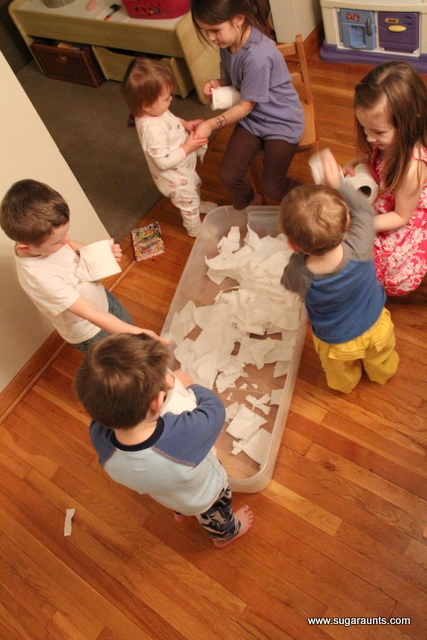
Step 1: Tear the toilet paper into shreds. Keep this in a bin or large container. We used an under-the bed storage bin because I was making a large quantity of fake snow for our Winter Festival.

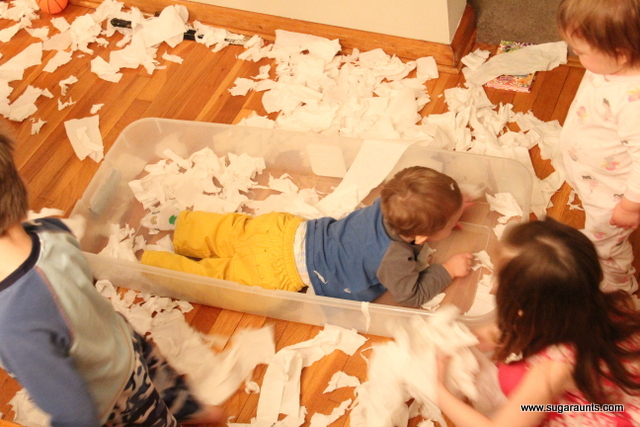
We shredded the toilet paper and the kids had a BLAST! It started out so neat and kind.  Tearing the toilet paper is a fantastic fine motor activity for those hands, too. It offers heavy work input through the hands which can have a regulating, calming impact on the joints of the hands. This can be a nice “warm up” exercise for the tactile challenge of exploring and manipulating the dry toilet paper texture.

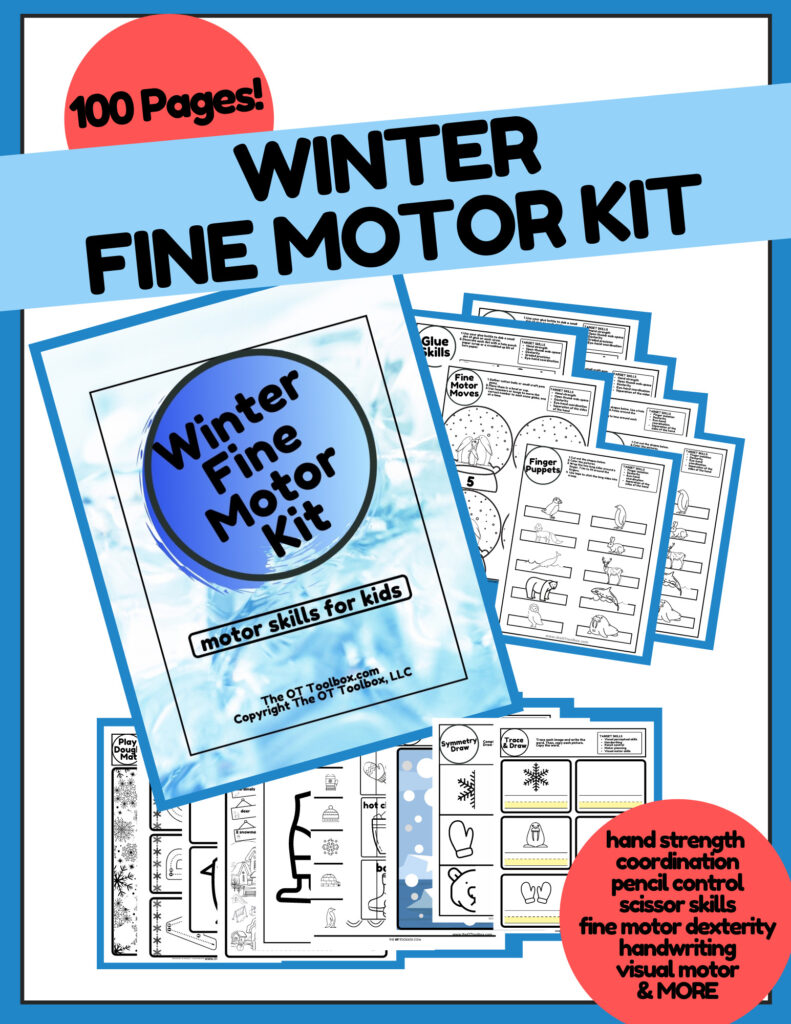
For kids with tactile sensitivities, this might be “too much” for them to handle. Try using tongs and ask them to explore the toilet paper shredding sensory bin to find hidden items. Some of the paper cards and winter words in our Winter Fine Motor Kit are great additions to this sensory bin.

How to make fake snow using toilet paper for a fun sensory challenge to the hands.
Kids can make fake snow for a tactile sensory experience.

 And then turned in to this.  

Use toilet paper in a dry sensory bin for tactile sensitivity and fine motor strengthening.

  And this.  

Slightly off-course in our sensory bin, but of course it did.   Why wouldn’t it when you have 6 cousins together?  ((Ok, that part of this post was NOT mess-free…the end result is mess-free. I promise.)) So, then we popped the Ivory soap into the microwave…

Fake Snow Wet Sensory Experience

Step 2 in the tactile sensory experience is the wet fake snow portion. Following the fake snow recipe, we popped a bar of ivory soap into the microwave and ended up with a cloud of sensory material.

Ivory soap in the microwave for a tactile defensiveness sensory challenge and to use in making fake snow.

Children can touch and explore this sensory material for a warm, sensory experience.

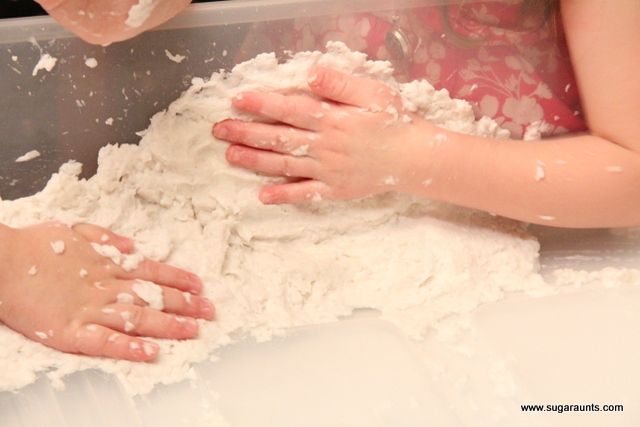
Step 3 in the tactile challenge is mixing the dry material with the wet material. This can definitely be a challenge for those with tactile defensiveness or touch sensitivities.

If it is too much of a sensory challenge, invite the child to mix with a large spoon or to touch with a finger tip.

Other children may enjoy this part of making fake snow. The melted soap can be mixed with the toilet paper…to make fake snow!    

How to make fake snow with ivory soap and toilet paper


Fake Snow Sensory Play for Tactile Sensitivities

THIS is the mess-free part that many children with tactile defensiveness may enjoy. 🙂

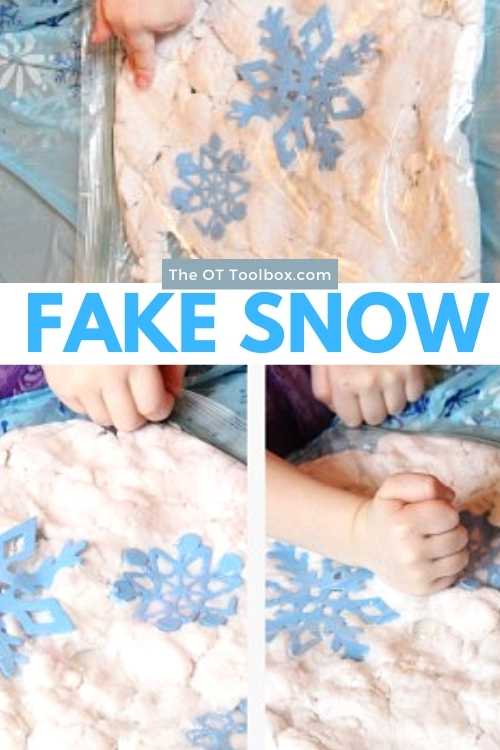
Simply place some of the fake snow material into a zip top plastic bag. You can tape the top shut to keep the material in the bag.

By manipulating the fake snow in a safe sensory manner, kids get exposure to a calming warm temperature. This is one low-level challenge to the tactile system. The warm temperature is a calming, regulating aspect that can be powerful in self-regulation.

Children can also squeeze, manipulate, pound, and spread the fake snow within the plastic baggie. This offers heavy work input through the hands and upper body in a way that is calming and regulating.

By placing the fake snow into a bag for sensory play, kids are exposed to tactile experinces in a way that may help with tactile discrimination by incorporating the proprioceptive sense.

Challenge motor skills further by adding items such as foam snowflake stickers, glass gems, and glitter.  This was so much fun for my crew of kids and nieces and nephews and I hope it’s a tactile experience you get to play with as well!

Make fake snow for a mess free sensory experience that kids with tactile defensiveness will enjoy
Fine motor sensory experience with fake snow.


Products mentioned in this post:

The Sensory Lifestyle Handbook

The Sensory Lifestyle Handbook The Sensory Lifestyle Handbook is your strategy guide for turning sensory diets and sensory activities into a sensory lifestyle.

A Sensory Diet Strategy Guide The Sensory Lifestyle Handbook is a strategy guide for sensory processing needs. With valuable insight to the sensory system and the whole child, the book details how sensory diets can be incorporated into a lifestyle of sensory success. The thoughtful tools in this book provide intervention strategies to support and challenge the sensory systems through meaningful and authentic sensory diet tactics based on the environment, interests, and sensory needs of each individual child.

winter fine motor kit

The Winter Fine Motor Kit Done-for-you fine motor plans to help kids form stronger hands.

This print-and-go winter fine motor kit includes no-prep fine motor activities to help kids develop functional grasp, dexterity, strength, and endurance. This 100 page no-prep packet includes everything you need to guide fine motor skills in face-to-face AND virtual learning. Includes winter themed activities for hand strength, pinch and grip, dexterity, eye-hand coordination, bilateral coordination, endurance, finger isolation, and more. 

Colleen Beck, OTR/L has been an occupational therapist since 2000, working in school-based, hand therapy, outpatient peds, EI, and SNF. Colleen created The OT Toolbox to inspire therapists, teachers, and parents with easy and fun tools to help children thrive. Read her story about going from an OT making $3/hour (after paying for kids’ childcare) to a full-time OT resource creator for millions of readers. Want to collaborate? Send an email to contact@theottoolbox.com.