Colleen Beck, OTR/L is a pediatric occupational therapist and the owner and author of The OT Toolbox website. She manages all of The OT Toolbox social media accounts and runs the popular newsletter.
Read about Colleen's experience and career as an occupational therapist, including how The OT Toolbox began on our About The OT Toolbox page: https://www.theottoolbox.com/about-us/
Colleen created The OT Toolbox in 2011 and since then has written thousands of blog posts designed to support therapy providers, educators, parents, counselors, admin, and caregivers in promoting the healthy development of kids.
Check out Colleen's blog posts below:
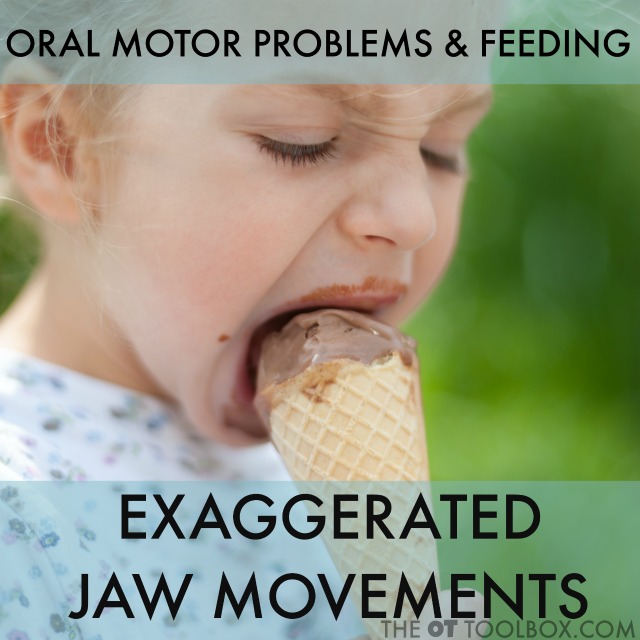
You might be following along with our series related to oral motor problems that relate to feeding. In it, we are covering all of the specifics about oral motor problems that translate to difficulty with eating and drinking. So far, we’ve covered jaw thrust but have more oral motor problems that will be covered in the coming days. Today, exaggerated jaw movements are addressed, along with the cause of these movements and how they relate to feeding issues.
Exaggerated jaw movements are different from jaw thrust in that the movements are not forceful. When exaggerated jaw closure occurs, it can be a compensation strategy for jaw instability or
There are several reasons for these exaggerated jaw movements:
Fluctuations in muscle tone Impaired oral control Decreased muscle tone Exaggerated excursions can be an overflow or organizing movement Increased oral tone Oral hypersensitivity to the teeth touching teeth, utensils, tongue, food, straw, or a drinking cup Poor sustained jaw closing Jaw instability Poor graded movement patterns
Feeding issues related to exaggerated jaw movements:
Exaggerated jaw movements interfere with stability needed for drinking from a straw, cup, or bottle, removing food from a spoon, biting, or chewing.
Stability in the jaw is necessary for efficient swallowing and controlled eating.
When the jaw’s movement patterns are exaggerated, an individual spills food and is at risk for aspiration due to difficulty with swallowing.
Graded movements on a cup or utensil are difficult, resulting in food spillage or drooling.
Oral Motor Exercises for the Jaw
If you are looking for exercises related to common oral motor problems, this FREE printable pack of oral motor exercises goes along perfectly with the series I have planned for you. Get your free printable packet of 20 different feeding therapy ideas AND 20 oral motor exercises. These are treatment ideas for oral motor problems that professionals can utilize over and over again.
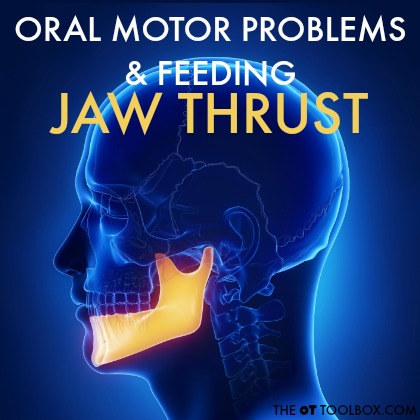
You might have seen the last post put up here on the site where I shared a list of common oral motor problems. These issues are the underlying areas that cause kids to have trouble with eating and look like food falling from a child’s mouth, trouble moving food within the mouth, difficulty sucking on a straw or many other common feeding issues. Below you’ll find more information on jaw thrust and how this oral motor problem relates to difficulty in eating and drinking in kids.
Jaw Thrust Oral Motor Problem
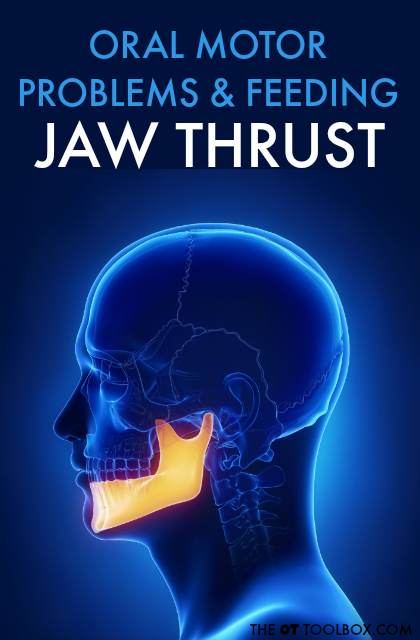
Jaw thrust is an abnormal movement pattern of the jaw and occurs when the jaw and mouth opens or moves
suddenly and with force. Typically, the jaw is able to move up and down, shift, move laterally, rotate, and hold patterns in various graded positions and strengths.
These movements enable sucking, biting, chewing, and develops to more defined movement patterns. As a result, we are able to bite with graded motions, hold jaw positioning, move food within the mouth, manage various food textures, and control the tongue, lips, and cheeks. When jaw thrust is present, the jaw is held in a downward and outward position.
A strong
jaw thrust can occur for several reasons:
· Increased patterns of muscle tone
· Poor sitting posture
· Neck hyperextension
· Impaired breathing patterns leading to
compensatory positioning resulting in jaw thrust
· Over-stimulating sensory environment
·Hyper-reaction to input from teeth contacting
each other during biting and chewing
Feeding issues related to jaw thrust:
Jaw thrust impacts components of eating,
including sucking, biting, swallowing, and chewing food.
Jaw thrust impacts the movement and use of the tongue, cheeks, and lips as a result of jaw thrust.
When a child eats, jaw thrust interferes with
the rhythm of eating and drinking.
Children may present with a strong jaw thrust during meals and the
person who is feeding the child views the jaw thrust as food refusal or being
through with eating.
Jaw thrust may result in drooling, food droppage or spilling, spilling or leaking of fluids.
Thanks for signing up for Handwriting Help Email Series. We’re excited to get started! You also should check out a special deal we created JUST for you…
Make letter learning fun, not boring!
Access these A-Z sensory playmats and BUILD letters while kids learn letter formation through sensory-based play. Print them off, laminate and use them as playdough mats, multimedia play spaces, while strengthening fine motor skills. Kids can gain the motor plan needed for each letter’s formation WHILE engaging spatial awareness and size awareness, using color-coded sky and ground lines.
Get the playmats HERE for just $7.00 and start playing and learning.
When kids are in a meltdown mode and the behaviors are going full force, try some of these techniques to help kids calm down and move out of a harmful or ineffective status. Meltdowns are oftentimes a result of sensory systems that aren’t quite right, causing an overload of sensations.
Meltdown Mode
When the body is so overwhelmed or underwhelmed by sensory input, it turns to meltdown mode.
So, what is “meltdown mode” and what does this look like? More importantly, how can we help the child that is in a state of dysregulation so they can function? We’ll explain all of these things below.
What does meltdown mode look like?
Meltdown mode is that episode of overwhelming feelings, emotions, and behaviors that result in a breakdown.
Meltdowns occur when sensory input is overloading a child’s sensory system. This might happen fast and result in overwhelming emotions or behaviors.
Meltdowns look like different things to different kids:
You might see kicking, hitting, punching, or other sensory responses.
For another child, it might be fleeing or bolting.
For another child, a meltdown might look like screaming or hurtful actions.
Still another child might be quiet and hum to block out sensory input.
For some, it might be laying on the floor and not moving.
How does a meltdown happen?
Kids can shut down when the sensory overload is a slower input. When a meltdown happens, kids need to reset themselves and their sensory systems.
The child who is in midst of a sensory overload may have difficulty getting their attention on the strategies outlined below, but they do need to know that they are safe, loved, and that it will be ok.
Just like a meltdown looks different for each individual, so do the strategies that can help move out of that mode.
When a meltdown is occurring, it’s best to have an arsenal of tools available in mind. Most important though, is keeping the child’s safety and best interests in mind.
Below is a list of meltdown mode tricks and tips to try.
Try the following sensory strategies are tips and tricks to help kids when they are having a meltdown:
Proprioceptive Input to help with meltdowns
Some of these meltdown strategies can occur as part of a sensory diet, and others can be used on a whim. The goal here is to support sensory needs and regulate emotions and behaviors.
For example, a student might use a school sensory room or it might be part of the day.
Distractions or a change in environment can help when meltdown mode is in full effect. Add slow movements to these activities such as slow swinging or calmly walking.
Take a nap
Move to another space or room
Practice deep breathing in a quiet space
Go outside
Take a walk
Run at a park or play at a playground
Turn on music (loud or quiet)
Roll down hills (fast or slow)
Play on swings
Rock in a rocking chair
Slowly spin in an office chair (limit time in spinning as indicated)
Refocus attention from the biggest cause of the meltdown with multiple-system sensory input:
Act out frustrations with puppets, figures, or dolls
Get in water: take a shower, bath, play in water, swim
Calming Tactile Sensory Input to help with meltdowns
Incorporate calming tactile sensory input into a calm down space or room:
Fidget toys
Sand box
Rub on lotion
Brush your hair
Heated microwave (scented or unscented) bag
Write or draw with a vibrating pen
Use a vibrating toothbrush
Calming foods to help with meltdowns
Try some of these oral sensory motor calming foods:
Suck a smoothie through a straw
Chew on fruit chews or licorice
Chew gum
Chamomile tea
If any or some of these tips and tricks help, it can be beneficial to talk over the successes with your child. Address things like impulse control in a way that they are able to understand and relate to the meltdown they just experienced. A good way to do this is with the Impulse Control Journal.
What are your best strategies for addressing meltdown mode?
Colleen Beck, OTR/L has been an occupational therapist since 2000, working in school-based, hand therapy, outpatient peds, EI, and SNF. Colleen created The OT Toolbox to inspire therapists, teachers, and parents with easy and fun tools to help children thrive. Read her story about going from an OT making $3/hour (after paying for kids’ childcare) to a full-time OT resource creator for millions of readers. Want to collaborate? Send an email to contact@theottoolbox.com.
Thank you for grabbing the Daily Professional Self-Reflection Journal Pages for Occupational Therapists. The freebie email should be in your inbox right now.
Use the printable pages to self-reflect on daily interactions, to grow and develop as an occupational therapist, and to guide professional development. It’s our hope that you will join us in The OT Toolbox Community when it launches on November 8th. For now, here are a few other tools you may find helpful:
Thank you for grabbing the Cursive Flashcards. Right now, you should have an email with the freebie in your email inbox. There, you will be able to access the cursive writing assessment checklist. Use the flashcards to match, sort, identify, and practice letter formation.
Laminate them and trace over the letters with a dry erase marker.
How will you use the flashcards?
If you arrived on this page by search and would like to grab the free printable cursive handwriting assessment checklist, get it HERE. Use these cursive writing activities to further address needs such as letter formation, progression, and practice:
Use the Cursive Writing Certificate as a way to celebrate completion of a cursive writing program at home or at school.
If you arrived on this page by search and would like to download the free printable cursive handwriting assessment checklist, grab it HERE. Use these cursive writing activities to further address needs such as letter formation, progression, and practice:
I’ve had a few questions and comments recently about PANDAS. I wanted to put together a collection of resources for PANDAS and PANS so that families, teachers, therapists, grandparents, and caregivers can easily find everything they need to know about this disorder. The links below are sites that describe more about PANDAS and PANS, including diagnostic information, signs and symptoms of PANDAS, information on clinical trials, and places to find more help. PANDAS/PANS can be a confusing diagnosis, happening overnight and with dramatic and substantial outcomes. Use the information below as a starting point when looking for information on PANDAS.
This information is not meant to be a diagnostic tool or means for intervention. It is essential that concerned individuals seek consult from the child’s pediatrician. This information is strictly a collection of information and a starting point when seeking out resources.
What is PANDAS?
PANDAS is an acronym standing for pediatric autoimmune neuropsychiatric disorders associated with streptococcal infections. The disorder appears suddenly following a strep infection like strep throat or scarlet fever and results in obsessive compulsive disorder, behaviors, tics, and similar symptoms.
PANS, or pediatric acute-onset neuropsychiatric syndrome, refers to children with sudden onset of obsessive–compulsive and other neurobehavioral symptoms, including children with PITAND (pediatric infection-triggered autoimmune neuropsychiatric disorder), children with PANDAS, and children with exacerbations that are due to environmental or metabolic triggers.
Symptoms of PANDAS and PANS
There is not a predictable sequence of symptoms, but a child with a diagnosis of PANDAS/PANS may present with the following symptoms:
Separation anxiety (child is “clingy” and has difficulty separating from his/her caregivers; for example, the child may not want to be in a different room in the house from his or her parents)
Restricted eating or changes to eating patterns
Mood changes, such as irritability, sadness, emotional lability
Trouble sleeping, night-time bed-wetting, day-time frequent urination or both
Changes in motor skills (e.g. changes in handwriting)
Marked deterioration in handwriting
or math skills
Urinary frequency/enuresis
Joint pain or stiffness
Sleep problems
Slow processing speed
How to Help a child with PANDAS/PANS:
Occupational Therapy can help with these symptoms and the difficulties as a result of PANDAS/PANS, as outlined here.
More information about PANDAS and PANS
This fact sheet breaks down diagnosis and treatment strategies.
This research library has a comprehensive collection of references and published works related to PANDAS. This is a great source for recent research and work related to PANDAS/PANS.
An overnight transition from a typical child to high emotional temperament changes can be overwhelming and scary! The NIHM website has information that answers the question ‘What is PANDAS?”.
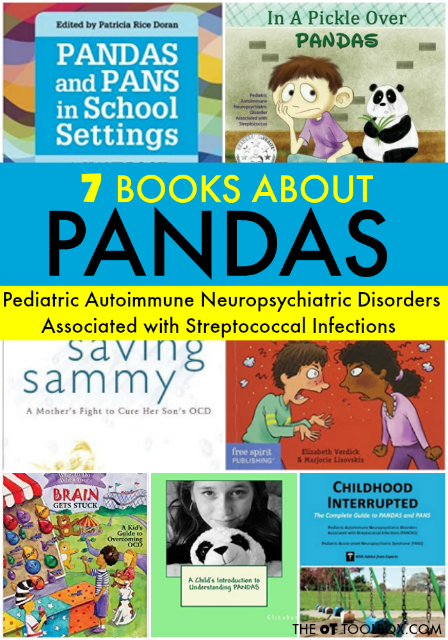
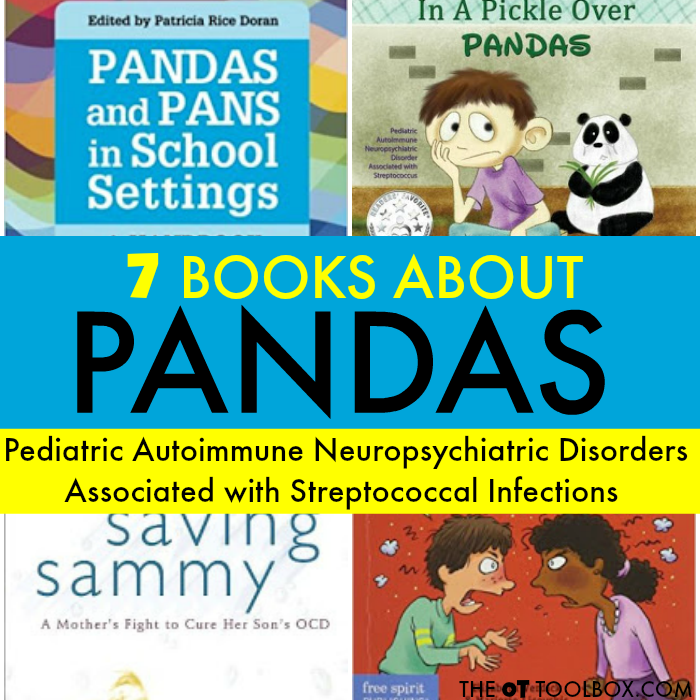
These books may help kids with PANDAS or PANS to better understand the disorder and symptoms. Children with siblings or friends who are experiencing symptoms of PANDAS or PANS would benefit from information relayed in easy-to-understand children’s books with pictures. Also included in this list of books about PANDAS are books that can be referred to parents and teachers of children who are experiencing PANDAS or PANS.
Affiliate links are included in this post.
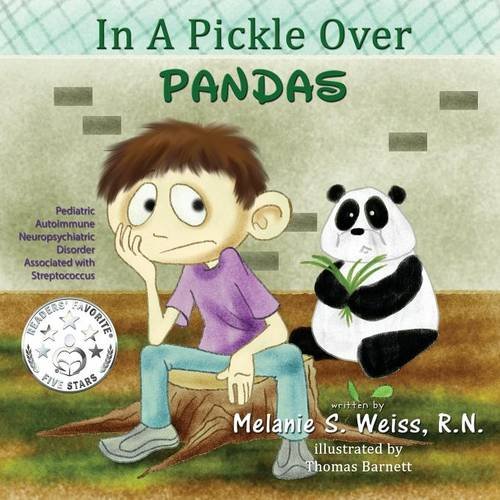
In a Pickle Over PANDAS is a children’s book about a young boy who wakes up one morning with new and strange things happening in his body. They symptoms of PANDAS are described in a way that kids will understand and relate to. This book is a great resource for kids who are struggling to understand what PANDAS is and that they are not alone.
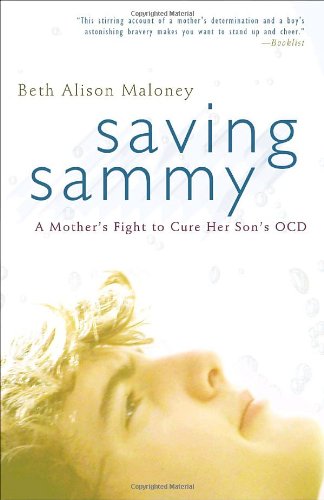
Saving Sammy is a book written by a mother of a boy with a sudden onset of PANDAS and describes her fight against the medical establishment to prove the link between infection-triggered PANDAS and her son’s sudden-onset OCD and Tourette syndrome.
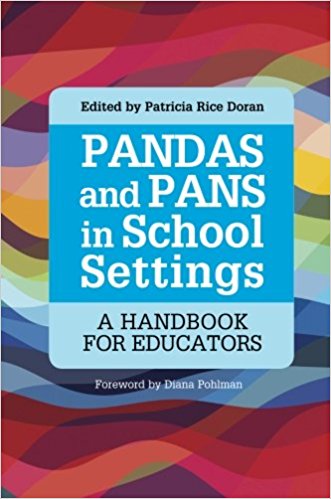
PANDAS and PANS in School Settings is a handbook for teachers, administrators, school professionals, school based Occupational Therapists, and anyone who works with a child who is struggling with PANDAS or PANS. This handbook can help identify challenges and offers strategies to incorporate into the learning environment.
Childhood Interrupted: The Complete Guide to PANDAS and PANS is a guide for parents of children who are experiencing PANDAS/PANS and are seeking information related to behaviors, treatment interventions, therapy, support, and interventions.
A Child’s Introduction to Understanding PANDAS is a book that parents can work through with their kids as they struggle to explain what exactly PANDAS is and how it’s affecting the child. This workbook is a resource for identifying a individualized strategy plan using the book’s journal sheets and strategy plans.
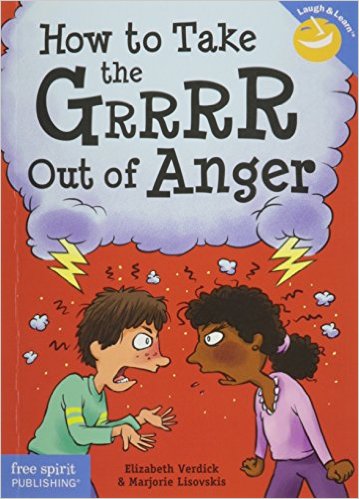
How to take the Grrr out of Anger is a book that can address one of the common symptoms of PANDAS and PANS. For kids that are experiencing behavior and emotional challenges as a result of PANDAS/PANS, the new feeling changes can be confusing and overwhelming. This book is a guide to helping kids understand anger-management tips strategies that can be used in healthy ways. This book can help kids understand and deal with the anger and emotions they feel.
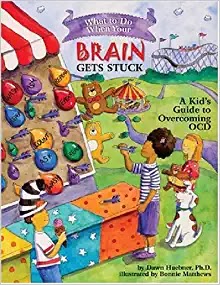
What to Do When Your Brain Gets Stuck is a book that addresses the obsessive compulsive tendencies that are common with PANDAS and PANS. This book helps kids understand the obsessions or compulsions they may feel and act on and guides kids and parents through strategies that can help. The book has a lot of activities, tools, and guided instructions that can help kids take control of their OCD actions or thoughts.
References:
Janice Trigilio Tona, Sutanuka Bhattacharjya, Denise Calaprice; Impact of PANS and PANDAS Exacerbations on Occupational Performance: A Mixed-Methods Study. Am J Occup Ther 2017;71(3):7103220020P1-7103220020P9. doi: 10.5014/ajot.2017.022285.
Tona, J., & Posner, T. (2011, November). Pediatric Autoimmune Neuropsychiatric Disorders: A New Frontier for
Occupational Therapy
Intervention. OT Practice, 14-19.
PANDAS—Questions and Answers. (2016, Sept) Retrieved from: https://www.nimh.nih.gov/health/publications/pandas/index.shtml
A child is over responding to sensory input from the classroom environment. The fluorescent lights are too bright, the janitor is rolling his cart down the hallway, a new pair of socks are too tight, and a fly is buzzing near a window. The combined sensations are too much.
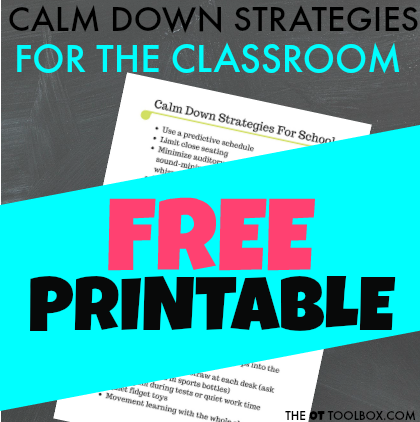
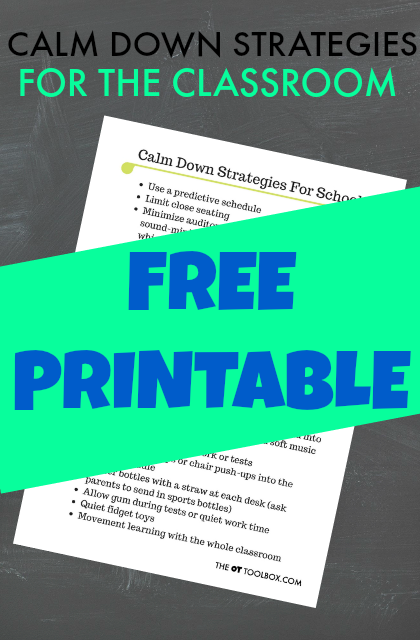
Calm down strategies for school might look different for each student. Also, there are many different reasons why a calm down tool is needed by children in the classroom.
Calm Down Strategies for School
The classroom is an environment that is a place where over-responsiveness can easily interfere with learning, self-confidence, or social emotional development.
Having a toolbox of sensory strategies to address over-responsiveness can be invaluable in the classroom.
Calm Down Strategies for School
Below are sensory strategies for school that can be used with children who over-respond to sensory input, have difficulties with anxiety, or struggle with attention or executive functioning difficulties. Check out our resource on executive functioning in schools.
A child who needs self-regulation strategies to better learn or function in the classroom can benefit from one or more of these strategies. Every child is different and each will respond in different ways. Not all of these sensory strategies will help every child. Consider underlying issues and consult a school-based occupational therapist for assessment and interventions.
You’ll also want to check out our resource on back to school sensory activities because the back-to-school transition period is a time when calm down strategies might be needed.
How to help children calm down at school:
Incorporating specific activities into daily school transitions can be a big help. Unpredictable transitions for children are one of the main reasons a tantrum or sensory meltdown may occur. Some of these ideas include:
Need more information on sensory processing, grab the Sensory Processing Disorder Handbook below.
Colleen Beck, OTR/L has been an occupational therapist since 2000, working in school-based, hand therapy, outpatient peds, EI, and SNF. Colleen created The OT Toolbox to inspire therapists, teachers, and parents with easy and fun tools to help children thrive. Read her story about going from an OT making $3/hour (after paying for kids’ childcare) to a full-time OT resource creator for millions of readers. Want to collaborate? Send an email to contact@theottoolbox.com.