Teach Cursive Writing

teach cursive letter formation

So often, teachers are challenged to teach cursive writing without a curriculum or without training. Maybe they have students who struggle with printed handwriting, are challenged with difficulties such as dysgraphia or fine motor problems. These teachers may be trying to fit cursive handwriting practice into an already packed school day. That’s you will love the strategies for cursive writing alphabet tricks, all about teaching cursive letters in ways that kids will love.

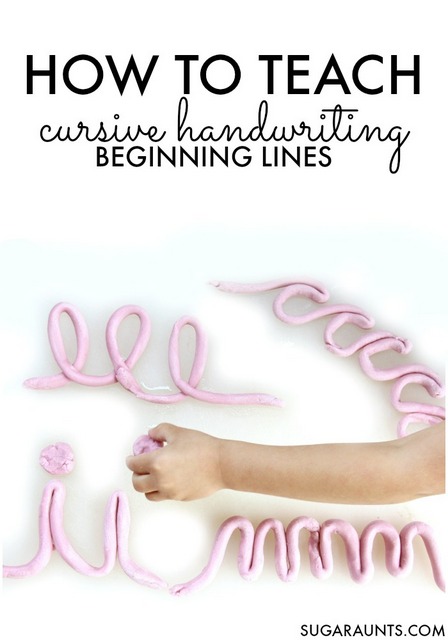
Teach kids cursive writing with these tips and tricks to make cursive fun.

Teach Cursive Writing (the fun way!)

This cursive handwriting series will be a collection of articles on teaching cursive letters in easy steps, using hands-on activities, simple verbal cues, fun visual prompts, and with video tools. It will be an extension of previous cursive handwriting activities found here on The OT Toolbox. For now, start with this post on How to Teach Cursive Letters for resources and cursive writing activities.

The links below will be helpful for teaching cursive letters for use in the classroom, homeschool dining room, or as additional handwriting practice at home.

Teaching cursive writing is easy with these handwriting tricks, verbal prompts, visual cues, and writing strategies for learning cursive handwriting.


Teach Cursive Writing

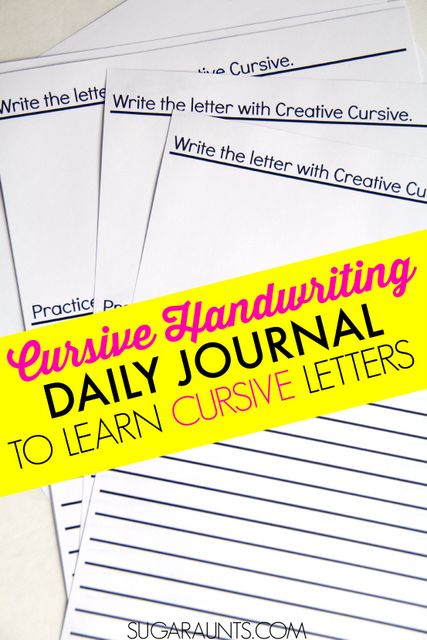
One of the struggles that teachers have mentioned in the Sweet Ideas for Handwriting Help Facebook group is finding time in the school day to teach cursive handwriting. This teaching cursive letters series can help with that struggle. Each letter will have an accompanying video that can be played on loop while students complete worksheets related to that cursive letter. This is a nice morning work activity that students can complete on their own. Simply have the video playing as students walk into the room. They can then follow along to complete the practice sheets.

Start by grabbing this cursive writing order free printable sheet. There, you can read more about why this particular order is recommended.

Be sure to stop back for more cursive handwriting posts here as this series is completed.

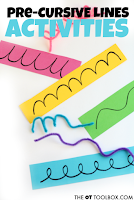
This series will be addressed through our 31 days of cursive writing challenge. Letters will be added throughout the series. Join us each day over a 31 day span to learn cursive writing tips, tools, activities, and pre-cursive exercises.


Cursive Writing A-Z

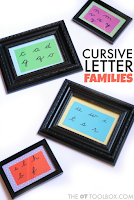
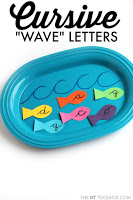
Wave Family Letters

These cursive letters are part of the “wave family”. Each letter in this group starts with a curved upward line that looks like a wave. The pencil traces back down over that wave and curves to the bottom. Here are tips and tricks to teach wave cursive letters.

Lowercase cursive letter c 
Lowercase cursive letter a
Lowercase cursive letter d
Lowercase cursive letter g
Lowercase cursive letter q

Tree Family Letters

The cursive letters in this group are part of the “tree family”. These are letters that swing upward and then back down over that same line, like a tree or a stick. Here are tips and tricks to teach tree cursive letters.

Lowercase cursive letter i
Lowercase cursive letter t
Lowercase cursive letter p
Lowercase cursive letter u
Lowercase cursive letter w
Lowercase cursive letter j
Lowercase cursive letter r

Lowercase cursive letter s

Loop Family Letters

These cursive letters all begin with a loop, making them part of the “loop family”. Here are tips and tricks to teach loop family letters.

Lowercase cursive letter e
Lowercase cursive letter l
Lowercase cursive letter f
Lowercase cursive letter h
Lowercase cursive letter k
Lowercase cursive letter b
Lowercase cursive letter o

Bump Family Letters

All of these cursive letters are part of the “bump family”. The letters begin with a bump. Here are tips and tricks to teach the bump cursive letters

Lowercase cursive letter v
Lowercase cursive letter m
Lowercase cursive letter n
Lowercase cursive letter y
Lowercase cursive letter x
Lowercase cursive letter z


Teaching Upper Case Cursive Writing

Uppercase cursive letter A
Uppercase cursive letter C
Uppercase cursive letter O
Uppercase cursive letter U
Uppercase cursive letter V
Uppercase cursive letter W
Uppercase cursive letter X
Uppercase cursive letter Y
Uppercase cursive letter Z
Uppercase cursive letter P
Uppercase cursive letter R
Uppercase cursive letter B
Uppercase cursive letter H
Uppercase cursive letter K
Uppercase cursive letter N
Uppercase cursive letter M
Upperase cursive letter I
Uppercase cursive letter J
Uppercase cursive letter E
Uppercase cursive letter L
Uppercase cursive letter Q
Uppercase cursive letter D
Uppercase cursive letter T
Uppercase cursive letter F
Uppercase cursive letter G
Uppercase cursive letter S

Teaching cursive letters and need them in alphabetical order? 
a | b | c | d | e | f | g | h | i | j | k| l | m | n | o | p | q | r | s | t | u | v | w | x | y | z 
A | B | C | D | E | F | G | H | I | K | L | M | N | O | P | Q | R | S | T | U | V | W | X | Y | Z

Teach kids cursive writing with these cursive handwriting tips and tools.

More creative cursive writing practice

Looking for more ways to work on cursive letters? Try these cursive writing ideas:

 
Teach cursive writing a-z with these cursive handwriting tips.

Thank Brain Breaks Download

Thank you for downloading the Squirrel Brain Break printable. Your printable will be delivered to your email inbox (and it may be there as we speak.)


Use your squirrel themed brain break activities to address movement needs in the classroom when reading books with a squirrel theme or during the Fall months. 


Found this page by accident and want to grab your copy of squirrel themed brain breaks? Get them by clicking and grabbing the squirrel themed brain breaks printable sheet.


Extend the activity with these brain break tools:
(affiliate links are included in this post.)

         Cranium Brain Breaks Game

Cranium Brain Break Game  challenges your ability to complete creative activities with 200 one-minute mini-games. This is a fast-moving, thinking game that challenges the brain!


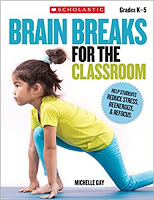
Brain Breaks for the Classroom is a book of 40 fun exercises designed to help students take a quick break and return to their work refreshed and ready to learn. These brain break ideas can help students in grades K-5 to improve motivation, cooperation, and learning. This book has a nice full-color poster with five easy moves all kids can do when they need a “brain break” to promote independence with movement and learning. 


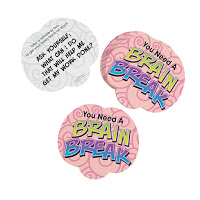
Brain Break Cards are cardboard, brain-shaped activity cards  the classroom.


Looking for more brain break ideas? You’ll love adding these resources to the classroom or therapy clinic:

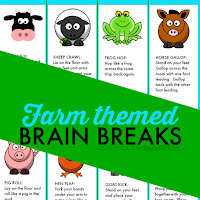
Apple theme brain breaksBear brain break ideas for kidsLittle Blue Truck and farm themed brain breaks for attention, focus and sensory needs in the classroom based on farm animals.

Looking for something more specific? 


JOIN over 200,000 Occupational Therapy subscribers and followers on social media and newsletter:

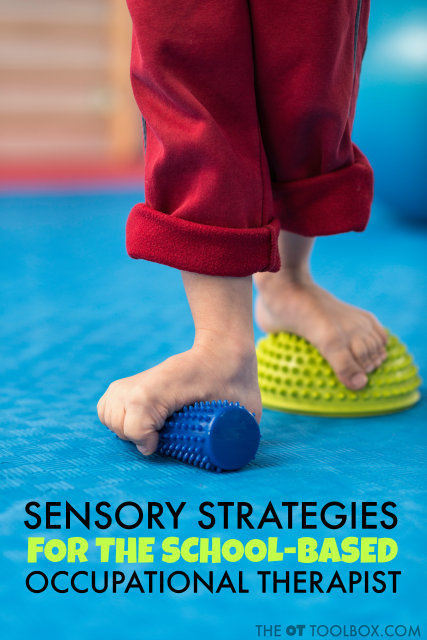
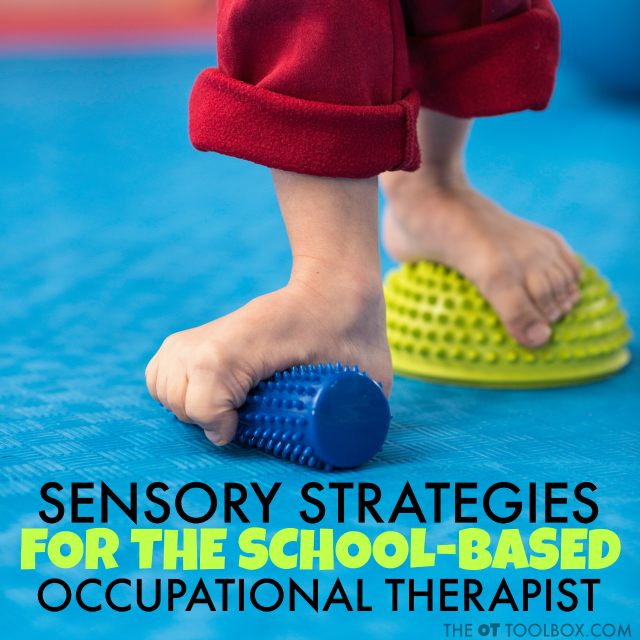
Sensory Strategies for the School Based OT

For the child with sensory challenges, the classroom can be an overwhelming place.  All of the sensory systems are touched on in the classroom.  When sensory systems are challenged, learning is a struggle.  School based OTs are often times consulted when students struggle with physical or sensory issues that result in educational deficits.  


Previously, The OT Toolbox has shared free ways to incorporate sensory motor experiences into the classroom.   You might be looking for more resources that can be used to address many sensory needs in the classroom.  Below are sensory resources for the school based occupational therapist and strategies that can be incorporated into OT in the school. 


These are strategies to fill your therapy toolbox and address everything from inattention to sensory meltdowns.


School-based OTs can utilize this resource of sensory strategies for school based OT and occupational therapy intervention in schools.
 
These tong activities would be a great addition to summer occupational therapy activities and home programs!

Sensory Resources for the School Based OT

This post includes affiliate links.
 

This is a great article written on sensory integration practices in the school setting.  It includes the clinical reasoning and practices that go along with sensory practice in the school.  Of interest are sensory screening and evaluation recommendations for school settings, sensory intervention and treatment delivery options, and recommendations.  Also included is a table with approaches and sensory strategies for Occupational Therapy intervention in the classroom or school setting.  

Case studies include IEP goals or 504 accommodations related to sensory processing interventions.


Assessments for sensory needs can include direct observation of the child’s performance in the school setting.  Observing a variety of tasks during the school day can be helpful to analyze the demands of specific activities, including needs and strengths in tool use, fatigue, sequencing, spatial concepts, social interactions, physical requirements, cognitive abilities, etc.  A child transitions through a variety of settings during a school day and is challenged in various environments which might present differing needs or abilities.  The school-based OT should assess a student’s sensory and neuromuscular functioning in these various environments.  


Many students who struggle with sensory challenges benefit from a sensory diet during the school day.  This specialized diet of sensory activities and input should be designed by an occupational therapist who assesses and identifies the student’s particular needs and strengths or interests.  Sensory diets in the school can include many different tools, not limited to fidget tools, specialized seating, movement breaks, weighted lap pads or vests, calming scents, limited or structured visual adjustments, chewing tools, or other activities.  Read more about the goals of a sensory diet


Use this free Sensory Processing Disorder booklet for passing on sensory processing information to parents and teachers. 

Fidgeting Tools for the Classroom

Fidgeting with items can help with attention, regulation, and focus.  Try these fidgeting options in the classroom:

Adapted Seating in the Classroom

Adapted seating can be a sensory strategy that helps with fidgeting as well.  Sensory needs can overflow to wiggling, poor posture, slouching, and decreased focus.  An altered seating system is sometimes used to address a weak core strength and resulting inefficient posture as well.  Try these sensory-based seating ideas:

  • Cheap Alternative Seating Option
  • Movement seats like a disk cushion are great for allowing movement for improved attention.
  • Wobble Seat uses the idea of a therapy or stability ball in the form of a stool.  This is great for classroom use because the giant therapy balls tend to roll away from desks.
  • This Guide to Alternate Seating is a resource that can benefit many individuals in the school, including teachers, administrators, paraprofessionals, and school-based therapists. 
  • Special cushions
  • Bean bags
  • Intertubes
  • Therapy balls
  • Wedge seats
  • Support added to the seat
  • Etc.

Self-Regulation in the Classroom

For the child who struggles with sensory processing disorder or is challenged with impaired responsiveness, interventions in regulation can be used in the classroom:

Sensory-Based Interventions for the School Based OT

Here on The OT Toolbox site, we have a huge collection of sensory-based play and sensory experiences that meet various needs.  Find all of the sensory activities here and how these experiences can address discrimination needs, improve participation, and address sensory modulation. 


Sensory Integration Approach to School Based OT

A sensory integrative approach is based on the work of A. Jean Ayres, PhD, OTR, and identified as Ayres Sensory Integration.  For school-based practice, sensory integration and praxis needs are addressed by assessment and interventions occurring in natural sensory-rich spaces.   A sensory integration approach utilizes interactions between the OT and the student in a sensory-rich environment in a playful approach that allows for adaptation to novel challenges addressing reactivity, postural skills, praxis, and perceptual skills.  
 
Read more about sensory-based interventions and sensory integration approaches to school based OT and how these approaches look in meeting needs of students here.


Chewing Tools for Classroom Sensory Needs

  • Pencil Topper Chews come in a variety of textures and toughness to meet sensory needs.
  • Chewable jewelry  is often times appropriate for the classroom, because the variety of necklace or bracelet styles on the market are discreet while meeting sensory needs. 
  • Here is information on how to choose the right chew tool for addressing sensory needs.

Push In or Pull Out OT Services in the School

Sensory needs can be addressed by strategies from the school based OT both in and out of the classroom.  For the child who receives occupational therapy services at school, therapy can occur in any aspect of the child’s day where needs are limiting educational abilities.  
 
OT services completed with a “push in” model allow the therapist to identify needs in the classroom. Therapists can then intervene, and provide adaptations, modifications, and tools during classroom activities.  Consultation with teachers and professionals can occur right in the classroom during daily tasks and in a natural setting.  Sensory strategies can easily be a collaborative nature with teachers and paraprofessionals when performed right in the classroom and in the natural environment of the child’s day.  
 
Therapy being competed in a “pull out” model can address sensory diet needs and development that is then utilized throughout and within the student’s daily activities at school.  Specific skill assessment and development can occur in pull out services.  
 
References:
Occupational Therapy for Children and Youth Using Sensory Integration Theory and Methods in School-Based Practice. Am J Occup Ther 2015;69(Supplement_3):6913410040p1-6913410040p20. doi: 10.5014/ajot.2015.696S04.
School-based OTs can utilize this resource of sensory strategies for school based OT and occupational therapy intervention in schools.
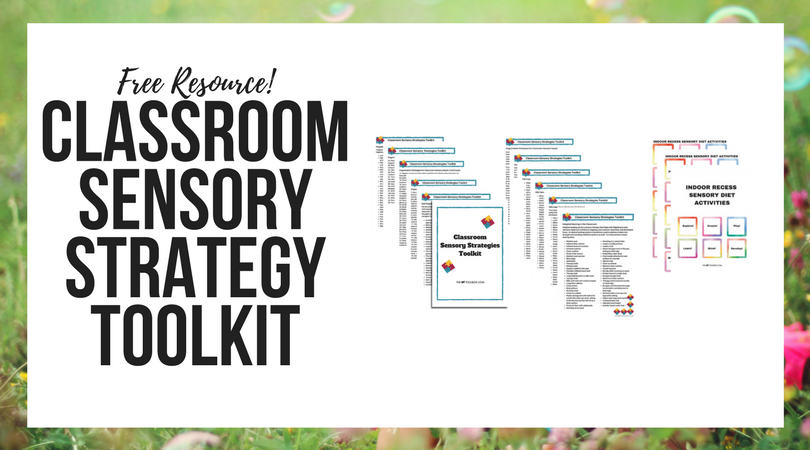
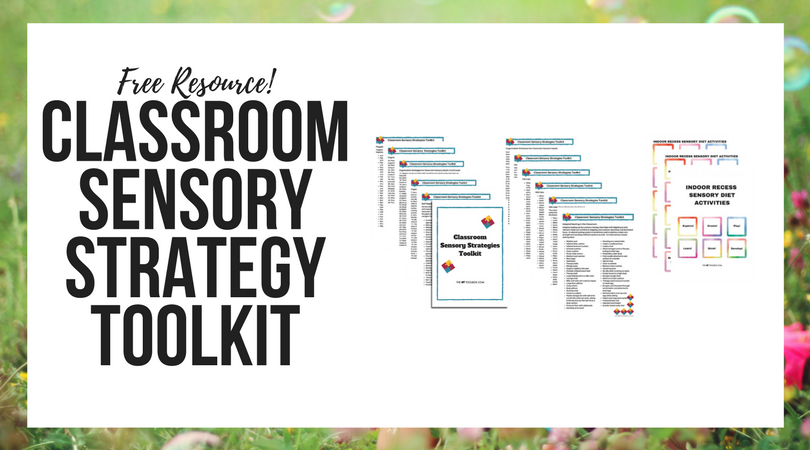
You may also be interested in the free printable packet, The Classroom Sensory Strategy Toolkit.
 
The Classroom Sensory Strategy Toolkit is a printable packet of resources and handouts that can be used by teachers, parents, and therapists. Whether you are looking for a handout to explain sensory strategies, or a tool for advocating for your child, the Classroom Sensory Strategy Toolkit has got you covered.
 
And it’s free for you to print off and use again and again.
 
In the Classroom Sensory Strategy Toolkit, you’ll find:
 
  • Fidgeting Tools for the Classroom
  • Adapted Seating Strategies for the Classroom
  • Self-Regulation in the Classroom
  • 105 Calm-down Strategies for the Classroom
  • Chewing Tools for Classroom Needs
  • 45 Organizing Tools for Classroom Needs
  • Indoor Recess Sensory Diet Cards
 
Sensory Strategies for the Classroom
 

Free Classroom Sensory Strategies Toolkit

    We respect your privacy. Unsubscribe at anytime.

    Colleen Beck, OTR/L has been an occupational therapist since 2000, working in school-based, hand therapy, outpatient peds, EI, and SNF. Colleen created The OT Toolbox to inspire therapists, teachers, and parents with easy and fun tools to help children thrive. Read her story about going from an OT making $3/hour (after paying for kids’ childcare) to a full-time OT resource creator for millions of readers. Want to collaborate? Send an email to contact@theottoolbox.com.
    Jaw Clenching Oral Motor Problems

    You may have seen some of the oral motor problems posts in a recent series we’ve had here on The OT Toolbox.  We’ve been talking all about oral motor skills and today brings another in that series.  If you missed any of those posts, you can find all of the past posts on oral motor skills and how they relate to feeding here.   

     
    Below you’ll find information related to jay clenching oral motor issues and the reasons that this particular oral motor problem occurs.  You’ll also find feeding issues that may ensue from jaw clenching.


    Jaw clenching is an oral motor problem that interferes with feeding and eating. Help to understand jaw clenching and reasons it might occur.
    Start by reading more about development of oral motor skills.
     

    Jaw Clenching Oral Motor Problems

    Jaw clenching occurs when the jaw moves into a tight position as a result of body movements and the ability to open the mouth occurs. Jaw clenching can result in shortening of jaw musculature and contractures.  This leads to anatomical inability to open the mouth.


    It’s possible that the observation of a clenched jaw in feeding may be confused with stability biting and tonic bite response. 


    Teeth grinding can occur as a result of a clenched jaw.


    Jaw clenching occurs because of several reasons:


    Poor posture with overall flexion

    Over-Stimulating sensory environment

    Increased stress

    Impaired control of jaw movements


    Feeding issues related to jaw clenching:

    When a child presents with a clenched jaw, their ability to
    develop the skills needed for feeding are greatly impacted.  
     
    They cannot utilize rhythm in eating and
    drinking. 
     
    Initiation or sustained movement patterns during eating and drinking
    are impacted.
     
    Oral Motor Exercises


    Jaw clenching is an oral motor problem that interferes with feeding and eating. Help to understand jaw clenching and reasons it might occur.
     

    Productivity Hacks for Occupational Therapists

    productivity for occupational therapy

    These hacks for productivity for occupational therapy professionals are easy ways to make your life easier. School based Occupational Therapists are busy bees!  The jobs of a school based OT are many: supporting academic, lunchtime success, development of skills needed throughout the day, social skills development, math, reading and writing (i.e., literacy), behavior management, recess participation, participation in sports, organization and executive functioning skills, self-help skills, prevocational/
    vocational participation, transportation, and more.


    One of the biggest strategies to improve productivity is organization for the school based occupational therapist.  The ideas listed below are designed to help with organization in order to help the school based OT through their day.

    Productivity for occupational therapists

    Most school based OTs have a full caseload that involves several or many school buildings within a school district and/or a variety of school districts.  Each building has it’s own schedule, lunch times, special events, and holidays that must be tracked.


    Within each building, the students who receive therapy services have a schedule of classes, special scheduling needs, and teacher preferences that require specific scheduled OT treatment timing.  parents, school principals, and other professionals have input into therapy scheduling as well.


    Scheduling for the school based OT is a yearly nightmare of charts, calendars, lists, erasers, and crumbled papers.


    Once schedules are finished, it’s time to begin treatment as each week and month brings new intervention minute requirements.  However, there are school delays, special assemblies, and sick kids to keep in mind.  Fitting make-up times into those already jammed schedules is a continual round of nightmares!


    Some school based OTs are lucky to have a designated space to house all of their supplies, tools, charting, and supplies.  Others need to cart their intervention from school to school and work from the trunk of their vehicle as they think ahead to the needs of that particular day’s student needs.  Then they drop their supplies at a hidden desk in the stairwell and make their way through the schedule, pushing into classrooms, intervening in gym class, or addressing needs in the lunchroom or playground.


    The school based OT’s day is never the same and always changing.


    With all of these scheduling, planning, equipment, and space issues that interfere with productivity standards, any hack that makes us more organized can help!


    These tools for productivity may help keep the school based OT organized and on track for a successful school year..  They are intervention strategies, productivity ideas, and generally tricks to help the school based OT get through their day in an easier way.

    School based Occupational Therapists can use these productivity hacks to help with organization and productivity during the school day when treating students in the school environment.

    Tools for Getting Organized as a School Based OT

    Organization Tricks for the School Based OT A therapist who travels from classroom to classroom or building to building needs to stay organized! Try these tricks to stay sane.


    Use Google Drive to create folders for each student as a way for students to save multiple documents to a folder in Google drive.

    Create an organized caseload list and adjust to fit workload with time for consult services.


    Create tracking tools for therapy attendance, contact information, assessment dates, consult records, daily and weekly schedules, school contact information (secretaries, teacher extension numbers and emails), equipment records, data sheets, goal sheets, etc.  Use Google Docs to create record sheets that meet specific needs.


    These Google Sheets Caseload Management, Lesson Planning, and Data collection were made for SLP, but they could work for the OT, too. 

    Printable Sheets for the School Based OT:

    Create a file of regularly used printable sheets like:

    Visual Processing Problems School Checklist


    Tools for help the school based Occupational Therapist with monitoring goal achievement:

    Amazon affiliate links:

    Using Rubrics to Monitor Outcomes in Occupational Therapy  -Improve Critical Thinking and Clinical Reasoning by Adding Rubrics to Assess Goal Progress with this book to improve data collection methods and documentation style with teachers in order to enable concise development of the IEP and goals targeted toward the student’s individual needs.  

    The book provides rubrics but also shows how to design your own for improved organization planning and data collection. When annual review time comes around, goal progress is also easy to report.

    Also check out our blog post on handwriting rubrics to support handwriting goals with data collection.

    Sensory Strategies for the School Based Occupational Therapist:

    Provide parents, teachers, and paraprofessionals with this Sensory Processing Disorder information packet (free printable)


    A Buffet of Sensory Interventions provides solutions for older children in middle school and high school age ranges.  The book emphasizes the importance of fostering independence, self-advocacy and self-regulation in a period of growth that transitions into adulthood. 


    Free Sensorimotor Classroom Activities (free printable)

    Handwriting Tools for the School Based Occupational Therapist:

    Handwriting Speed Norms by Grade Level


    Keyboarding Speed Norms


    The Ultimate Free List of Printable Adaptive Paper


    Google Chrome Extensions for Struggling and Special Needs Students


    Activities for Handwriting Problems– Tons of creative ideas to work on handwriting skills 


    Additional Information for the School Based OT:


    Productivity Tricks for the School Based OT on scheduling from Tx Source

    School based Occupational Therapists can use these productivity hacks to help with organization and productivity during the school day when treating students in the school environment.

    Colleen Beck, OTR/L has been an occupational therapist since 2000, working in school-based, hand therapy, outpatient peds, EI, and SNF. Colleen created The OT Toolbox to inspire therapists, teachers, and parents with easy and fun tools to help children thrive. Read her story about going from an OT making $3/hour (after paying for kids’ childcare) to a full-time OT resource creator for millions of readers. Want to collaborate? Send an email to contact@theottoolbox.com.
    Thank you for Cursive Writing Checklist

    Thank you for grabbing the Cursive Writing Assessment Checklist. 


    Right now, you should have an email with the freebie in your email inbox. There, you will be able to access the cursive writing assessment checklist.


    Use the checklist as a way to assess cursive handwriting needs to to monitor progress. 


    Be sure to use the notes area of each section to describe and record the development of specific skills, strategies, and accommodations. There is space to record anecdotal notes and comments related to each area within the checklist. 


    Consider using assessment strategies such as:
    Mark and identify skills they would like to improve within the assessment checklist. 
    Mark or identify more difficult areas of cursive handwriting for the individual. 
    Mark of identify current accommodations.


    If you arrived on this page by search and would like to access the free printable cursive handwriting assessment checklist, grab it HERE.


    Use these cursive writing activities to further address needs such as letter formation, progression, and practice:


    Ideas to Incorporate Movement into the Classroom

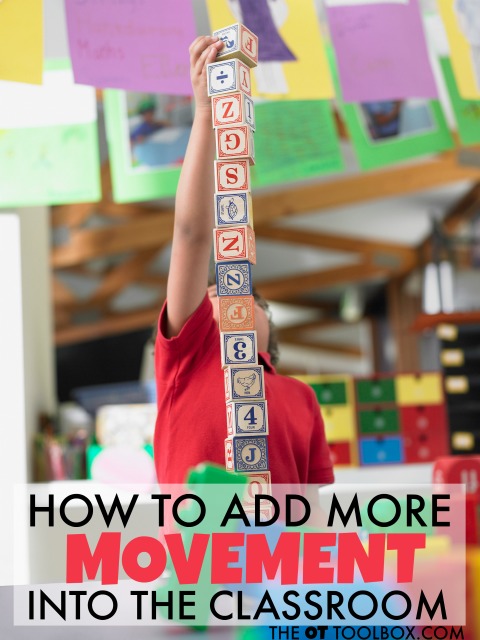
    Children today are experiencing less and less physical activity and more and more sedentary lifestyles that limit participation in many motor experiences. Children are spending more time in front of screens and less time climbing trees, rolling down hills, and in general less time outdoors.  Physical activity is a vital part of health but for the student, movement in the classroom can have a big impact on learning.  Gross motor games and activities can help. 


    There is much evidence of the link between movement and learning.  For some students, movement breaks in the classroom are an essential part of regulation of sensory needs.  Most students need a quick energizer to beat lethargy in a long school day at some point and brain breaks are a great answer to meet that need.   


    Below, you’ll find easy ways to incorporate movement into the classroom.  


    These are easy strategies that can be added at little cost.  As much as most teachers and school based professionals would love extensive equipment or alternative seating and cushions in their classroom, these ideas are not always feasible.  For these and other reasons, I’ve put together this list of ideas to add movement into the classroom environment.

    These are great ideas for how to incorporate movement into the classroom for movement and learning, perfect ideas for teachers to help kids with attention or sensory needs, and any student who needs more movement in the classroom and throughout the school day.


    Easy Ideas to Add Movement into the Classroom


    You may have seen this video depicting movement in the classroom floating around on Facebook. Check it out. Does this sound familiar?


    Add movement into learning- Incorporate gross motor movement into math when repeating math facts by incorporating whole-body games such as Simon Says (Students can perform specific motions when math facts are true, and perform other motor tasks when math facts are false.)


    Daily Stretches


    Afternoon Yoga Stretches


    Dance Party Breaks


    Brain break videos- Here are the best brain break videos on YouTube.


    Themed Brain Breaks- Some ideas are these Bear Brain Breaks or these Farm Brain Breaks


    Role Play Activities for history, science, geometry, etc.


    Large item manipulatives- Use creative items such as large cardboard boxes, printer paper boxes filled with newspapers, old phone books, etc.


    Add in walks during the day.


    Incorporate action rhymes into the morning routine or circle time. 


    Try these sensory motor activities for the classroom.


    As students to move around the room to learn about specific items.  Fall back on those places by asking the students to recall the part of the room they were in when they learned about that particular topic.


    Move books or other items from the desk to a different part of the room so that students need to get up and walk to the back of the room to get their math workbook.


    Try inexpensive seating tools such as this DIY sensory seating idea


    Utilize extra recess as a reward.


    Create a fidget toolbox in the classroom for movement needs while sitting at desks. 


    Try a ball toss game with partners when working on learning facts or spelling. 


    Ask students to perform jumping jacks, clapping, running in place, or hopping when spelling words as a group.


    Add movement requirements within a multi-step project- Students can complete a worksheet, then get up and place it in a bin across the room, then walk to another center to gather materials needed for their next assignment, then return to their desk.


    Ask students to assist in handing out materials and papers.


    Place a math problem at each student’s desk.  Each child can copy the problem to another sheet of paper and complete the problem.  Then, they can move to the next desk and complete that problem.  Ask them to move to each desk until they have solved all of the problems.


    Students can place their chairs on their desks at the end of each day and remove them at the beginning of each day.


    When walking from classroom to classroom, students can all walk on their toes.  Other ideas: walk toe to heel (for short trips down the hall), penguin waddle, walk with extra large steps, or other creative movement ideas.


    Students can carry bins of materials needed for each day from their cubby to their desk.


    Borrow a swivel seat from the computer lab or office.  Use the seat as an alternative seat for different students throughout the day.


    Try Indoor Ice Skating before a learning task- In the classroom, use a sheet of paper under each foot as students “skate” in the classroom for 5 minutes. 


    Raise the desks and allow students to stand for reading/writing/worksheets/learning activities.


    Use easels in the classroom.


    Encourage wall writing by taking paper to the walls and asking students to write at the wall.


    Allow prone writing and reading (lay on stomach on the floor).


    Use a therapy ball as a seat or as a movement area in the classroom.


    What are your favorite ways to add movement to the classroom?

    You may also be interested in the free printable packet, The Classroom Sensory Strategy Toolkit.

    The Classroom Sensory Strategy Toolkit is a printable packet of resources and handouts that can be used by teachers, parents, and therapists. Whether you are looking for a handout to explain sensory strategies, or a tool for advocating for your child, the Classroom Sensory Strategy Toolkit has got you covered.


    And it’s free for you to print off and use again and again.


    In the Classroom Sensory Strategy Toolkit, you’ll find:


    • Fidgeting Tools for the Classroom
    • Adapted Seating Strategies for the Classroom
    • Self-Regulation in the Classroom
    • 105 Calm-down Strategies for the Classroom
    • Chewing Tools for Classroom Needs
    • 45 Organizing Tools for Classroom Needs
    • Indoor Recess Sensory Diet Cards
     
    Sensory Strategies for the Classroom
     

    Free Classroom Sensory Strategies Toolkit

      We respect your privacy. Unsubscribe at anytime.

      Colleen Beck, OTR/L has been an occupational therapist since 2000, working in school-based, hand therapy, outpatient peds, EI, and SNF. Colleen created The OT Toolbox to inspire therapists, teachers, and parents with easy and fun tools to help children thrive. Read her story about going from an OT making $3/hour (after paying for kids’ childcare) to a full-time OT resource creator for millions of readers. Want to collaborate? Send an email to contact@theottoolbox.com.
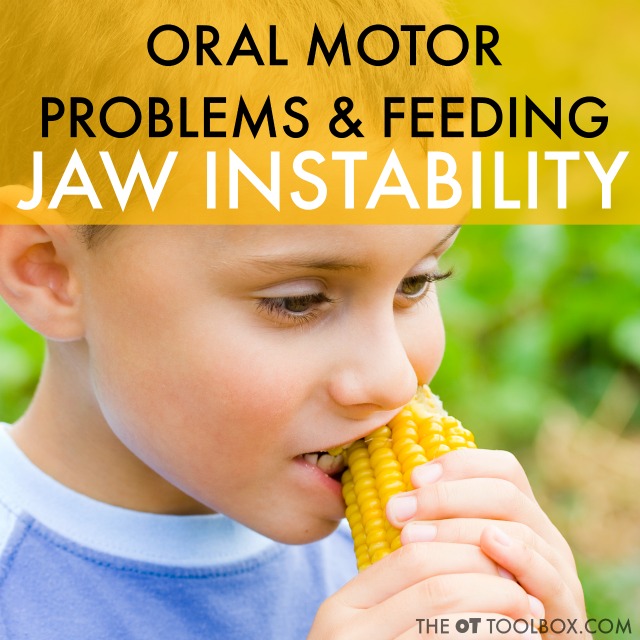
      Jaw Instability Oral Motor Problems

      jaw instability

      Have you been following along on our oral motor series this past week? You can find all of the posts related to oral motor skills and how they relate to feeding on the site. Each area will be addressed along with reasons why abnormal oral motor problems occur and their influence on eating and drinking. Be sure to check out the past oral motor problem posts and come back as the remaining areas are addressed in upcoming posts.

      Jaw instability is an oral motor problem that results in impaired eating and drinking skills.

      Jaw Instability and Oral Motor Problems

      Jaw instability is observed when the jaw slips and shifts due to inefficient tone and control, resulting in a child who opens and closes the mouth to reset positioning.  Jaw instability is also observed in the child who holds their mouth closed in a tense open position or closed by biting.

      Jaw instability occurs because of several reasons:

      • Laxity of the temporomandibular joint
      • Delayed development of jaw stability due to hypotonia
      • Structural problems at the temporomandibular joint
      • Poor control of the jaw
      • Poor grading of movement patterns
      • Poor isolation of jaw movements from the body

      Read more about development of oral motor skills.

      Feeding issues related to jaw instability:

      When a child presents with jaw instability, every aspect of eating and drinking are affected.

      • Difficulties present in the use of cheeks, lips, and tongue in coordinated eating and drinking when jaw instability is present.
      • Controlled biting and chewing occur.
      • Positioning the jaw when not chewing can be uncomfortable, painful, or difficult.
      • Graded biting and chewing can be difficult.
      • The child might experience more stability with biting and chewing motions when approaching food from the side of the mouth.

      Looking for ways to address jaw instability?

      Oral Motor Exercises for the Jaw

      Be sure to check out this resource on oral motor exercises to begin.

      Specifically with the jaw, certain oral motor exercises can support mobility and motor coordination to support eating, drinking, and overall jaw instability:

      1. Vibrating toothbrush
      2. Vibrating toys
      3. Sensory chew tools
      4. Baby teethers
      5. Mesh feeding bags with sour, sweet, and cold foods
      6. Foods that offer heavy feedback through the jaws: fruit leather, licorice, dry fruit, cranberries, raisins, etc.
       
       
      Jaw instability is an oral motor problem that results in impaired eating and drinking skills.
       

      Exaggerated Jaw Movements Oral Motor Problems

      You might be following along with our series related to oral motor problems that relate to feeding. In it, we are covering all of the specifics about oral motor problems that translate to difficulty with eating and drinking. So far, we’ve covered jaw thrust but have more oral motor problems that will be covered in the coming days. Today, exaggerated jaw movements are addressed, along with the cause of these movements and how they relate to feeding issues.


      Exaggerated jaw movements are an oral motor problem that interfere with feeding including eating and drinking. Here are reasons why this oral motor issue happen and how it relates to feeding in kids.


      Start by reading more about development of oral motor skills


      Exaggerated Jaw Movements Oral Motor Problems


      Exaggerated jaw movements are different from jaw thrust in that the movements are not forceful.  When exaggerated jaw closure occurs, it can be a compensation strategy for jaw instability or 

      There are several reasons for these exaggerated jaw movements:

      Fluctuations in muscle tone
      Impaired oral control
      Decreased muscle tone
      Exaggerated excursions can be an overflow or organizing movement
      Increased oral tone
      Oral hypersensitivity to the teeth touching teeth, utensils, tongue, food, straw, or a drinking cup
      Poor sustained jaw closing
      Jaw instability
      Poor graded movement patterns


      Feeding issues related to exaggerated jaw movements:

      Exaggerated jaw movements interfere with stability needed for drinking from a straw, cup, or bottle, removing food from a spoon, biting, or chewing. 


       Stability in the jaw is necessary for efficient swallowing and controlled eating. 


       When the jaw’s movement patterns are exaggerated, an individual spills food and is at risk for aspiration due to difficulty with swallowing.


      Graded movements on a cup or utensil are difficult, resulting in food spillage or drooling. 


      Oral Motor Exercises for the Jaw

      http://classes.yourkidstable.com/pages/oralmotor?ref=f6bd0d


      If you are looking for exercises related to common oral motor problems, this FREE printable pack of oral motor exercises goes along perfectly with the series I have planned for you.  Get your free printable packet of 20 different feeding therapy ideas AND 20 oral motor exercises.  These are treatment ideas for oral motor problems that professionals can utilize over and over again.  


      Exaggerated jaw movements are an oral motor problem that interfere with feeding including eating and drinking. Here are reasons why this oral motor issue happen and how it relates to feeding in kids.