Teach Kids to Cut with Scissors Using this Simple Trick
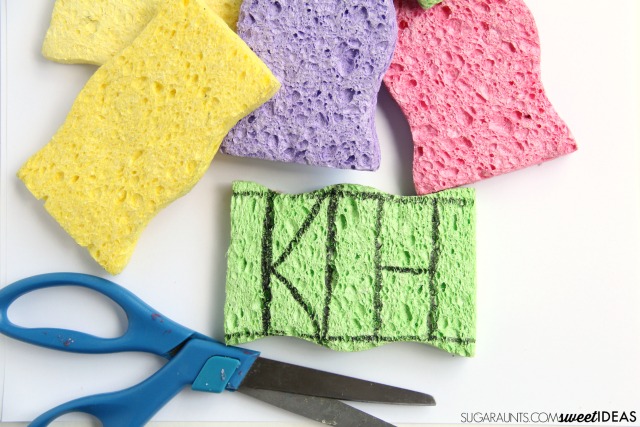
Help kids turn the paper when cutting with scissors.


Getting four kids tucked into bed is a nightly circus. There are lost toothbrushes, smears of toothpaste, pajama shenanigans, and one last bounce on the beds. Then, it’s lights out and always a few calls for one last hug from mom or dad.
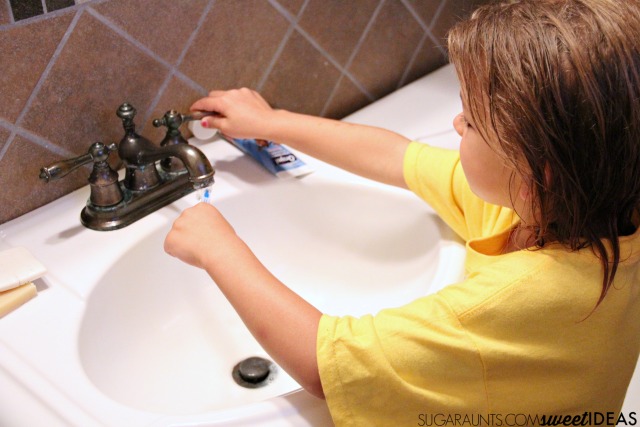
But one thing that helps with my kids is to have a routine in place. A bedtime tooth brushing visual schedule works when there are small kids in the house!
When the kids know what to expect, they know what is happening next. When kids know what is coming up, behaviors can improve. It’s a phenomenon that I’ve seen in potty training three of my children, and it’s something I’ve witnessed with back-to-school morning routines.
So, when things get a little out of control and the bedtime sillies become contagious, there is no better way to round up the sleepy troupes and go over our bedtime routine.
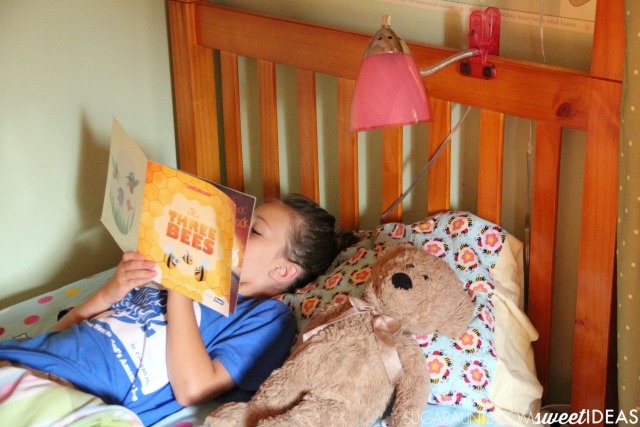
This bedtime routine schedule is kid-made and hands-on (literally!) and the perfect way to get kids to brush their teeth each night as part of the family routine, and an easy way to encourage parents to read out loud with the kiddos…even when getting the kids into bed seems more circus-like than calm!

Since we’ve had so much luck with our back to school morning schedule story stones, and potty training visual schedule, we decided to try this Finger Print Bedtime Schedule. The fact that kids get to create the schedule manipulatives and use the stickers each night allows kids to really visualize and comprehend each step of their bedtime routine.
When you make your bedtime schedule stickers with your kids, they can see that each step of the family routine happens in a certain order. Use the crafting time as an opportunity to talk about the steps that happen before bed, why it’s important to brush their teeth, and favorite family bedtime stories.
You’ll need just a few materials to make your own hands-on bedtime routine schedule:
Yellow washable paint
Black marker
White label sheet (Sticky back paper that is used to create labels)
Paper for making the chart
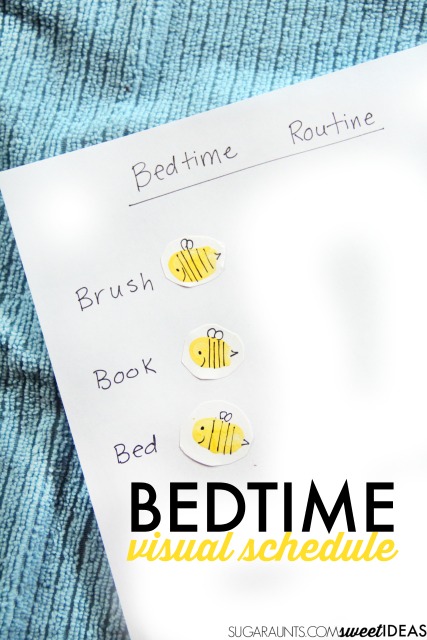
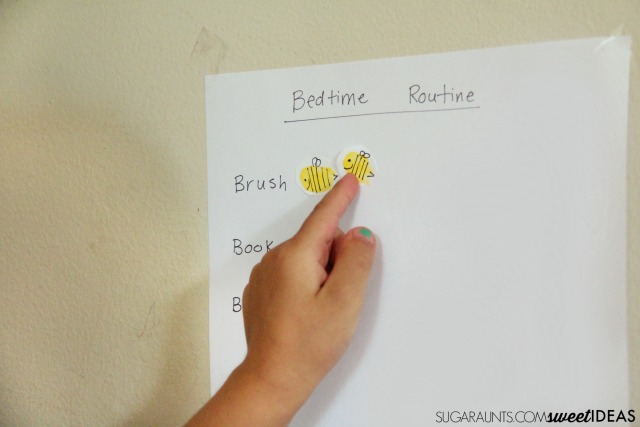
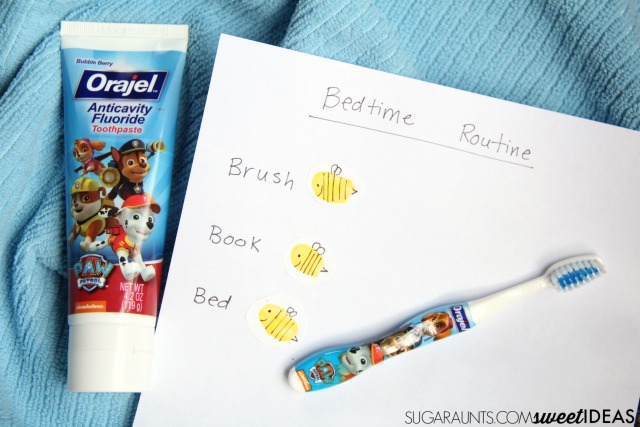
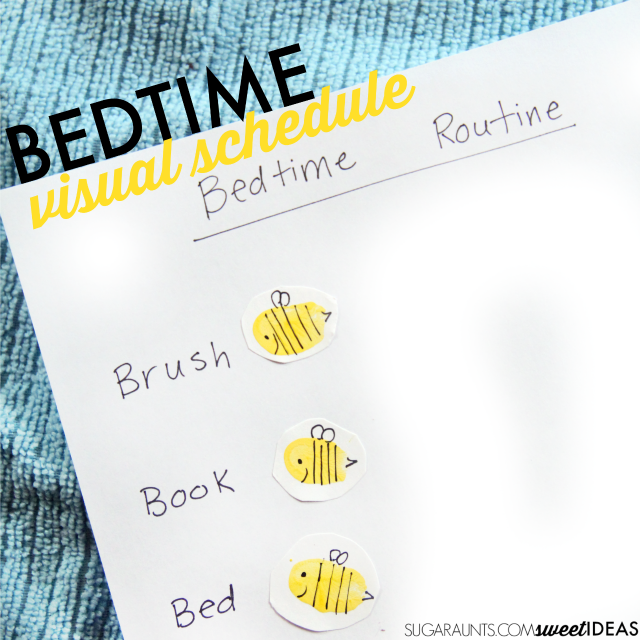
On the paper, write out the steps of the family’s bedtime routine. We followed the three steps in our The Three Bees book and wrote out “Brush”, “Book”, and “Bed”.

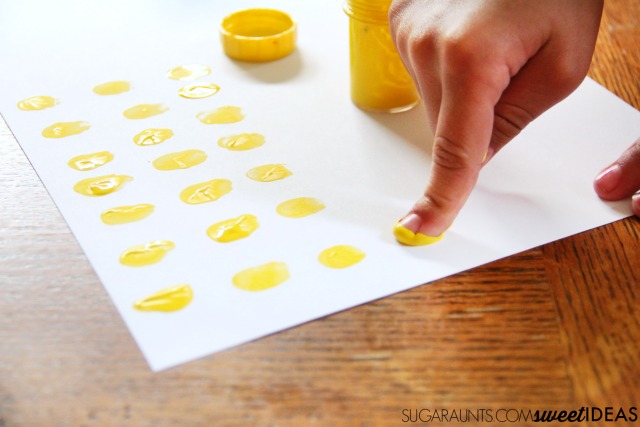
Next, use yellow paint to create fingerprints on the label sheet. Fingerprint projects are an excellent way to sneak in fine motor skills, especially finger isolation.
Once the fingerprints are dry, use the black marker to draw on a smile and bee details. This was a simple job that my eight year old loved to do.
Cut the bees from the label paper and you’ve got instant bee stickers! All you need to do now is wait until bedtime to work your way through the night time routine as a family.

We hung our bedtime routine schedule on the bedroom wall. I had my kids stick a bee sticker after they brushed their teeth and then after we read a book as a family. As they were tucked into bed, my husband and I stuck one last bee sticker beside “Bed” and we turned out the lights.

My kids got the chance to try out Orajel™ PAW Patrol™ products and were excited for a fun toothbrush and toothpaste to add to our nighttime routine. I was happy to see their smiles and know that Orajel™ PAW Patrol™ products are a great way to transition your little one(s) to fluoride toothpaste to help protect against cavities to keep young teeth and gums healthy.”
Schedule charts are great for kids of all ages and all developmental levels, but they work especially well with children who demonstrate difficulties in the following areas:

When children are sleepy at the end of the day, it can be overwhelming to follow through with the night time routine. A kid-made visual schedule like these bees is the perfect way to encourage healthy oral hygiene and family time through nightly books. When it becomes routine, it’s easy to turn the night time circus into peace!
I’ve got something fun to share: Scholastic and Orajel are teaming up to encourage parents to make reading out loud to their children and brushing their teeth part of their families’ bedtime routines.
You can visit Scholastic.com/read2me to find tons of resources that are designed to get parents excited about including reading in the nighttime routine. There is even a FREE Scholastic e-book called The Three Bees. This is the book that we read and based our bee routine schedule on.
By visiting scholastic.com/Read2Me, you’ll also find the 100 Best Read-Aloud Books and essential articles from the editors of Scholastic Parents.
Best of all, you can join in on the Read2Me Tonight Challenge where parents take a photo or video of them reading out loud to their children as part of their bedtime routine for a chance to win all 100 Best Read-Aloud Books and a PAW Patrol™ “Brushers Bundle” from Orajel.
Then, simply share that entry via the site to social media, earning an extra chance to win!
When you add reading to your night time routine, you are building a bond and memories that will last a lifetime.
Be sure to visit scholastic.com/read2me and check out the resources there. Use them to help make reading and brushing part of your child’s nighttime routine!

This is a sponsored conversation written by me on behalf of ORAJEL. The opinions and text are all mine.
var ts=document.getElementById(‘ti-pixel-tracker’); var axel = Math.random() + “”; var num = axel * 1000000000000000000; var ti=document.createElement(“img”); ti.style.display=”none”; ti.src=”https://tracking.tapinfluence.com/trk/RMHsA/gvH2S/p.png?p=3OwVP” + String.fromCharCode(38) + “i=DYRFE” + String.fromCharCode(38) + “ord=”+ num + String.fromCharCode(38) + “s=” + encodeURIComponent(document.referrer); ts.parentNode.replaceChild(ti,ts); new TAP.CogFrame(‘/v1/cogs/ded5f9e2-dcb9-11e5-8573-22000a7d00a4/comments’).drop({“program_id”:”333b62e2-a281-11e5-a23d-22000a66c666″,”post_id”:”789611be-3f3b-11e6-acbb-22000a7d00a4″,”host”:”api.tapinfluence.com”,”apiHost”:”api.tapinfluence.com”,”sort_order”:”desc”,”limit”:”20″,”offset”:”0″,”sort_by”:”created_at”,”protocol”:”https://”});
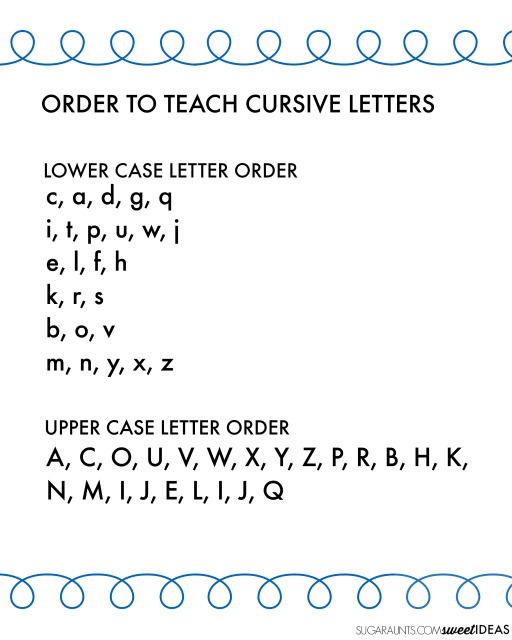
Get the cursive handwriting letter order sheet here. Print it out for handing out to parents, other therapists, or to use in an Occupational Therapy home exercise program or education.
We do love to share creative ways to teach cursive letters and letter order is just a starting point when parents or teachers are wondering where to begin.
Read the full post for therapeutic reasoning for this cursive letter order.
Here is more information about teaching cursive letters in groups or cursive letter families.
Please contact Colleen at theottoolbox@gmail.com with any inquiries about using this handout in group education.
Print out your handout here.


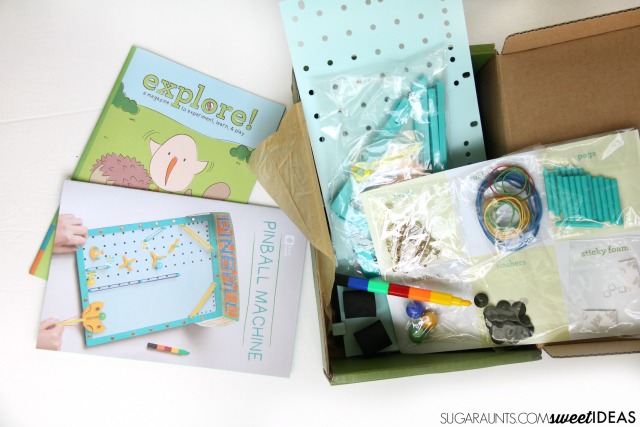
Kiwi Crates, and any of the monthly project boxes are
perfect gift ideas for kids who need to develop skills or just want to build
and create while learning and inspiring creative problem solving. It’s a great way to create as a family and
would make an excellent gift for birthdays or holidays from Aunts,
Grandparents, Friends, and Parents.
Children with attention or behavior difficulties can flounder when they are out in the community. There are so many unknowns when a child steps out of his front door and into an unpredictable environment that is the community.
A child has typical routines in his home or classroom. He has predictable and familiar habits in the car or school bus. But, when it is time to move to unfamiliar locations in his community, it can overwhelm the child with attention or behavior problems.

This post contains affiliate links.
Children are guided by parents and adults as they function in the community. They are led through the grocery store, overseen in the library, accompanied across streets, and attended to in the public restroom.
But sometimes, kids have difficulties that prevent an effortless outing.
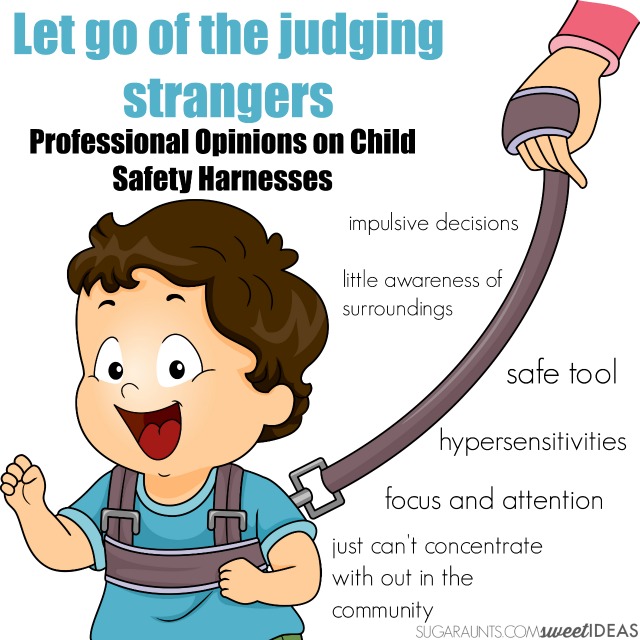
Inability to focus, impulsive actions, lack of awareness of one’s self, of others, or the surroundings, risky behaviors, and hypersensitivity to sensory input from the environment might lead to difficulties in the community.
Behaviors in public spaces can be considered obnoxious or inappropriate and while they might be easily corrected through a behavior plan and recurrent within the family, they could be misconceived by the public who are also sharing the space. Sometimes, behaviors in the community lead to unsafe situations.
Attention concerns in the community can also lead to safety issues. A child who has difficulties maintaining attention could put themselves at risk. Attention requires an ability to respond to priority information while disregarding and inhibiting simultaneous sensory input.
This concept of attentional ability coincides with an individual’s cognitive, sensory, and physical abilities. Constantly forgetting things or difficulty focusing can be a result of several diagnoses or learning issues.
Attention problems can result in poor processing of information or difficulty with filtering out important information.
Behavior and attention difficulties that limit ease in the community could be a result of sensory issues.
Neighborhood
Friends’ or family’s homes
Playgrounds
Sidewalks
Public restrooms
Shopping centers
Grocery Stores
Libraries
Mall hallways
Retail stores
Public transportation
Museums
Play spaces
Schools
Zoos
Office spaces or places of business
Restaurants
There are endless possibilities of public spaces that make up child’s community. Each situation will be different and the way that the child interacts with that location will be unique. Therefore, it is essential that a community assessment be preformed for each individual child. Given a through evaluation of the child’s community environment, modifications and adjustments can be put into place.
Bolting into a crowded street
Impulsivity
Yelling out in a quiet space
Lack of assertiveness to ask for help or modifications
Frustration with rules and consequential acting out
Poor attention when crossing a street
Lack of sustained attention to count change
Social barriers limiting interaction with community workers
Difficulty organizing or sequencing tasks in a grocery store
Difficulty retaining information when distracted by the environment
Trouble processing information in a timely manner
Poor ability to concentrate on one task at a time when in a crowd
For adults with attention or behavior issues, there is much work to be done following an assessment of the community. Many goals can be written regarding community reintegration for functional independence in the community.
For the child, concerns of safety for the child and others are a primary concern. Functional independence may be limited by behavior and attention difficulties. As they age, kids should be expected to perform more and more community skills on their own. The older child with attention or behavior problems will need strategies designed to maximize independence.
All community environments should be assessed according to the individual’s needs. Some strategies that may help with attention and behavior concerns:


For the child with attention or behavior difficulties, they might use the above strategies to improve safety when crossing the street.

Be sure to stop by and see recommendations for Attention difficulties at home and at school, part of a recent Organization series that we’ve shared:



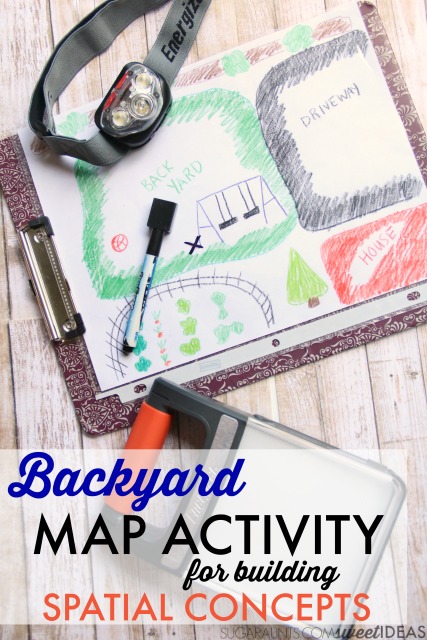
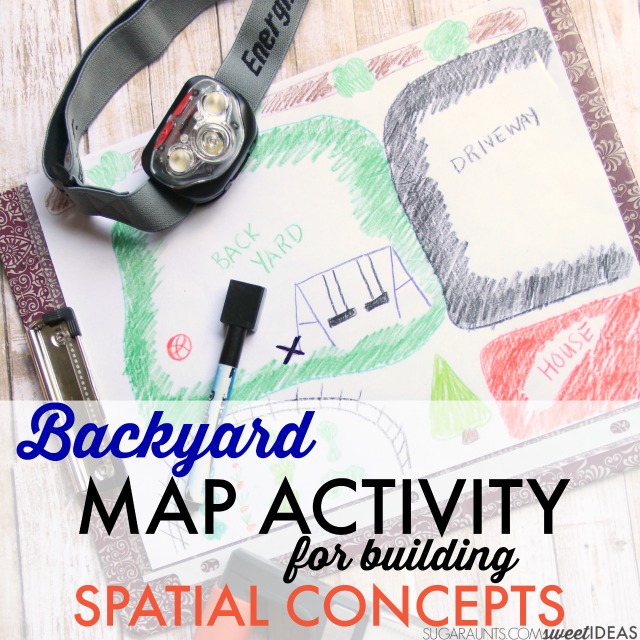
This map skills game for spatial concepts uses the ability to integrate spatial relations with what the eyes see with motor skills, or eye-hand coordination. It’s a fun map activity for occupational therapy or play!
Similarly, a drawing mind map incorporates spatial awareness on paper with complex thoughts and ideas, just like using a map as a skill-building game might in real life!
Summertime fun in our house means a lot of nights in the backyard with the family. We catch fireflies, play basketball in the driveway, play baseball on the lawn as the sun sets, have fires in the fire pit, and play heated games of tag, hide-and-go-seek, and make lots of summer memories. Most important of all, summer means time with family.
One thing that we love to do as a family is come up with fun games with a lot of running and active play. This backyard map game for building spatial concepts was a great way to play together as a family at the end of a hot summer day.
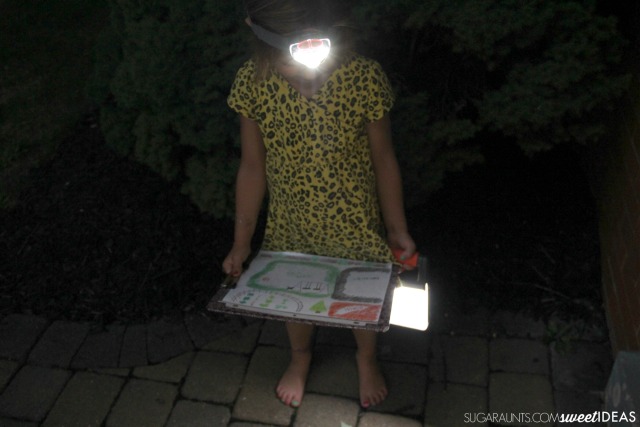
When the sun starts to set and the fireflies start twinkling, it is so much fun to create family adventures right in the backyard. We used our Energizer headlight and lantern in a family map game that added a directionality learning opportunity to play.
Drawing and creating maps is a great skill for kids to practice. Similarly, the process of using drawing mind maps builds on these visual motor skills, as well.
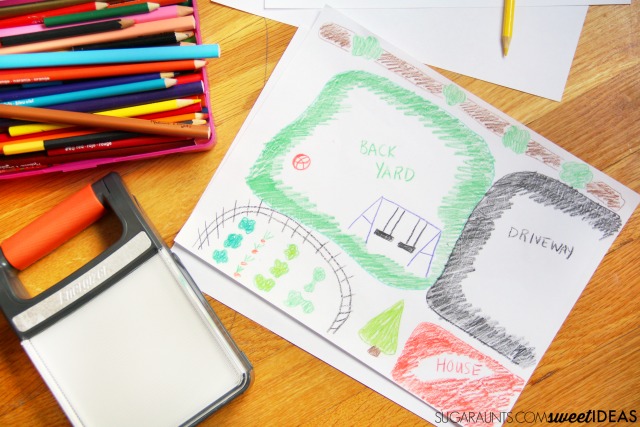
When kids picture a scene in their mind’s eye and use that image to draw a map on paper, they are using higher thinking skills and directional concepts like over, under, around, and through.

To play an outdoor map game that builds spatial concepts with the family, first ask your kids to picture their backyard.
Imagining a space and where items are in relation to others allow the child to use spatial relations as they draw them onto paper.

While drawing, kids can decide how to draw aspects of the backyard. They might sketch out a tree or a sandbox area or they might use geometric shapes to represent the items.
A circle could become a tree and a square could become a play area. Kids will have to picture the layout of the backyard and draw the features in relation to one another.
Spatial reasoning is an essential skill needed for tasks such as maneuvering down a crowded hallway, placing words on a line when writing, and understanding spatial concepts such as “left”, “right”, and “next to”.
Once the map is drawn, slip it into a plastic page protector and attach it to a clipboard. Grab your headlight, flashlight, or lantern and take the whole family outside to play a map game in the backyard.
1. To play the game, have one person hide a small toy like a rubber ball somewhere in the backyard.
2. Then, that person can use a dry erase marker to mark an “X” on the sheet protector to show where the item is hidden.
3. The kids can then use the map to locate the item by determining where the object is on the map. Doing this map game in the dark with a headlight or lantern is a great way to build map reading skills and spatial concepts because the child can’t just scan around the lawn to find the hidden object.
4. They must find the “X” on the map and read the map to locate the physical object hidden in the backyard.
5. Take the learning and spatial concepts a little further by asking your child to verbalize where the object is hidden and ask them to use directionality terms like “to the left”, “beside”, and “right”. They can describe the routes they would take to get to the hidden object.

Using the clipboard to follow a map allows the child to focus on where they are going. My kids loved having a headlamp on for our backyard map game because it freed their hands to hold the clipboard, find and hide the hidden ball, and use the dry erase marker to draw an “X” for the other people in our family.
We played this game over and over again so the erasable dry erase marker and sheet protector allowed us to keep playing long after the sun went down!
I loved playing this backyard map game with my kids and we were excited to use our flashlights to play. The versatile lanterns can be used for so many memory-making activities with the whole family.
From filling up a homemade jar with fireflies in a lit area to lighting a S’more making tray, backyard flashlight games can help make the summer nights full of family memories. Add this outdoor activity to your list of backyard lawn games!


Colleen Beck, OTR/L has been an occupational therapist since 2000, working in school-based, hand therapy, outpatient peds, EI, and SNF. Colleen created The OT Toolbox to inspire therapists, teachers, and parents with easy and fun tools to help children thrive. Read her story about going from an OT making $3/hour (after paying for kids’ childcare) to a full-time OT resource creator for millions of readers. Want to collaborate? Send an email to contact@theottoolbox.com.
I stepped into the backyard. There were hockey sticks strewn about the driveway, shoes in the grass (must they ALWAYS take off their shoes when they are outside??), and a baby doll stroller hanging from a tree.
The kids are on summer vacation and our lawn shows it.

Besides the toy tornado that has hit the yard, Summer is good to my kids. They’ve got neighborhood friends to play with at the drop of a hat (a hat which most likely lands in the lawn with the rest of the kids’ possessions), are hitting the pool every other day, and are just enjoying the carefree days of summer!
But sometimes, a mom gets tired of removing toy baby strollers from tree branches.
Sometimes we need to get out of the house and go on some summer adventures.
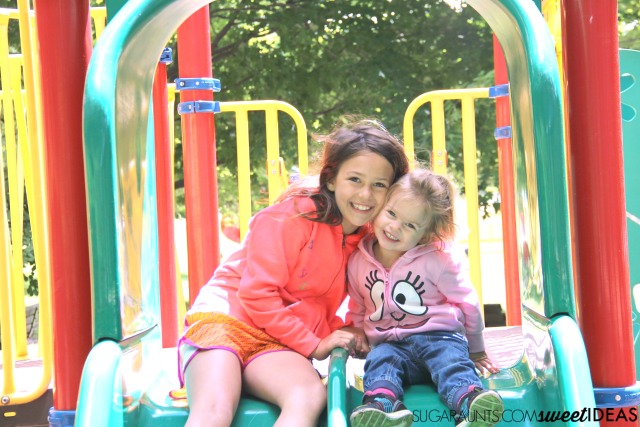
I was excited when I had the chance to meet up with some of my closest friends for a playdate at the park. The kids could run around and get their energy out on the playground while us Moms (and one Dad) chatted all things Summer. Like, how to keep the kids active and having fun while creating a summer of memories with the whole family.
We chatted about ways to Hack the Summer and get out of the toy-nado funk and into local Summer fun. What better way to make the most of summer than to build summer memories in our city? We came up with a few fun ideas to visit and places to play in Pittsburgh as a family.
Here’s what we came up with:
Best Ways to Cool Off in Pittsburgh On a Hot Day:
Pittsburgh’s Water Steps- The North Side’s fountain is a place to
cool down on a hot day. Kids can wear water shoes and get right into the water
feature while enjoying a great view of the city’s skyline.The water fountain in the South Side Works just calls out to kids!
They can run through the water on a hot day. There is free live music on
weekends for the whole family to enjoy.Mellon Park’s spray park is a fun way to cool off that doesn’t
involve swimming. Pack a picnic lunch and eat it on the large lawn.Fall Run Park in Shaler (North Hills) is a mile long hike along a
rocky creek that is perfect for kids of all ages. Kids (and adults!) can
play in the creek and will find a beautiful large waterfall at the end of the
hike.
Best Parks in Pittsburgh:Blue Slide Park in Frick park is a unique playground with it’s
cement slide. Bring a piece of cardboard to slide down the slide that is
built right into the hillslide or play on the multi-level playground.Squall Run Playground in Fox Chapel has two playground areas that
are great for different ages. Kids love to play in the sand volleyball
court too, so bring your sand toys!Highland Park’s Super Playground is a huge wooden playground with
passages, play features, and a castle-like appearance.
Best Indoor Activities in Pittsburgh (for rainy or super hot days):Shaler Library has the best children’s librarians and programming
for kids. People come from all over to attend story times, STEM
activities, hands-on learning programs, and interactive themed activities.
There is something for everyone and something happening every day.Sorgels Orchards has a great play area and mom can pick up a
couple of groceries in the market after play time. They have great ice
cream for a treat, too!

While we chatted about things to do in Pittsburgh this summer, we had a great lunch from Chick-fil-A and got to talk about Chick-fil-A’s new app called Chick-fil-A One. It’s a GREAT app for busy parents who have kids in tow as they try to grab a meal. We’ve shared our love of Chick-fil-A before and how the restaurant is perfect for busy families who NEED to get out and enjoy a meal while creating memories. Chick-fil-A has taken ease for families a step further with their new app!
Look at all it can do:

This is a sponsored post written by me on behalf of National Mobility Equipment Dealers Association for IZEA. All opinions are 100% mine.
As an Occupational Therapist, I’ve worked with individuals of all ages. I was lucky to start my career in a way that allowed me to gain experience in a variety of settings. I saw individuals whose long-term disabilities kept them in the home. I saw patients at the hospital who were struggling with a new diagnosis of Guillain-Barre syndrome. The school environment showed me how persistent a child with Cerebral Palsy could be as they mobilized throughout the building alongside their peers in a wheelchair mobilized by only their chin. I saw geriatric folks in skilled nursing facilities who had lived their adult life with a diagnosis of Multiple Sclerosis.
Thinking back to these hard-working, strong individuals reminds me how far a person can go when heart is involved. I’ve seen many clients over the years but these folks who never gave up were the ones who stand out. They are the people who inspire others and can do anything they put their heart to; even if the only part of their body they are able to control is a chin.

One of my favorite ways to build function in individuals is by helping people to reach their own goals. When a client has a role in making their goal, it makes goal-making especially meaningful and motivating. Many clients have a goal for mobility. Each of those individuals that stand out in my mind were strong, with big hearts, and bigger goals. They had goals of mobility and independence.

Today, I’m excited to share information about the National Mobility Equipment Dealers Association as they work to improve the lives of individuals with disabilities. By providing members with the best and most beneficial solutions for increased mobility, the NMEDA is the best source for wheelchair accessible vehicles and mobility equipment.

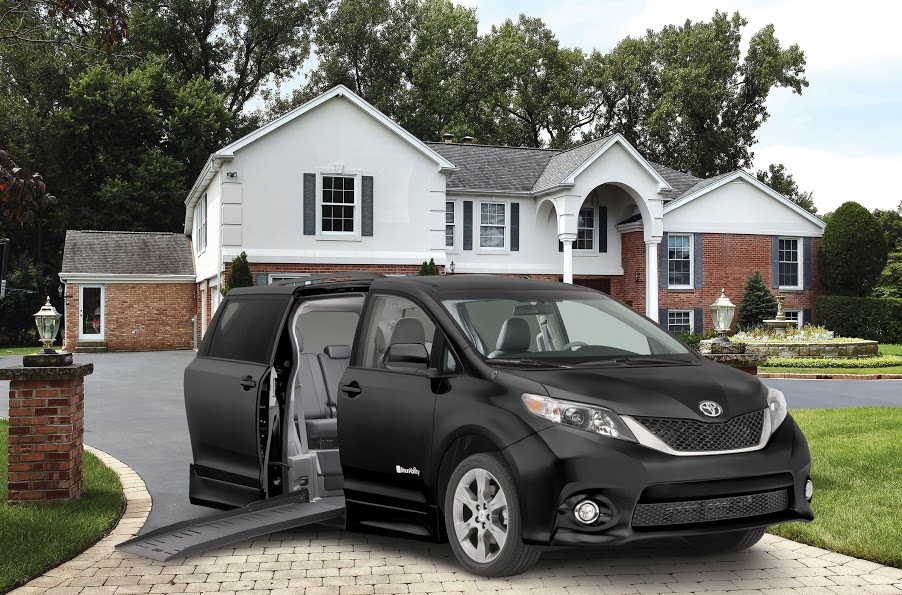
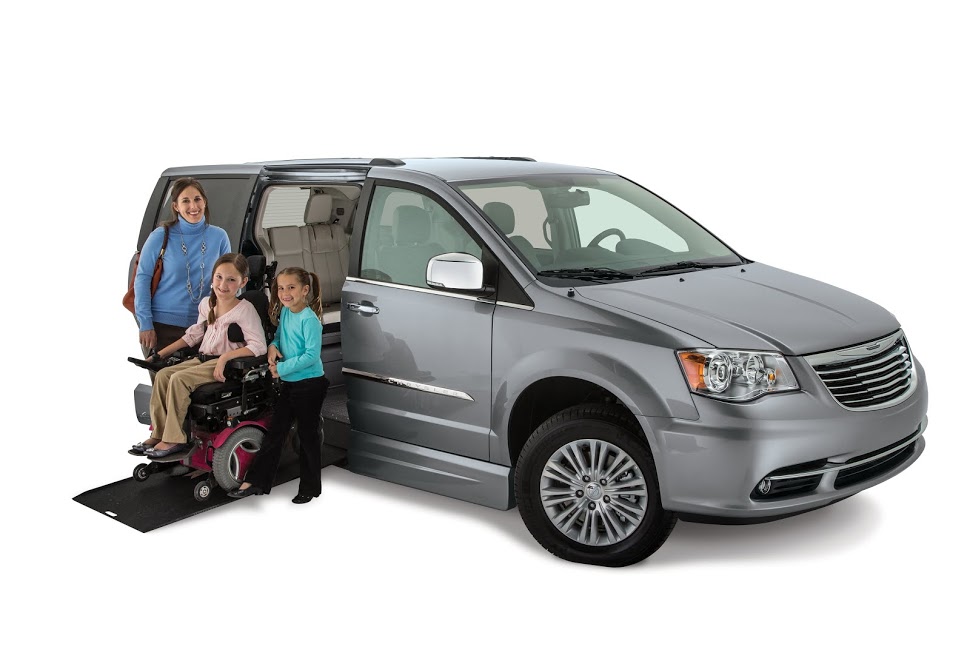
Most of us take independence and mobility along with the freedom to move about within our day for granted. The freedom to move around a classroom, apartment, or grocery store are luxuries those with physical disabilities struggle with. Wheelchair accessible vehicles and mobility equipment are tools that enable those with disabilities to take back their independence.

When looking for a way to improve mobility, the NMEDA is the program to meet any mobility challenge. NMEDA’s Quality Assurance Program (QAP) guarantees you a personal Accredited Dealer, in order to receive the expert attention you deserve. You’ll find in-person evaluations, specialized training of equipment, 24-hour local emergency roadside services and so much comfort knowing that your loved-one has support and reliable safety.

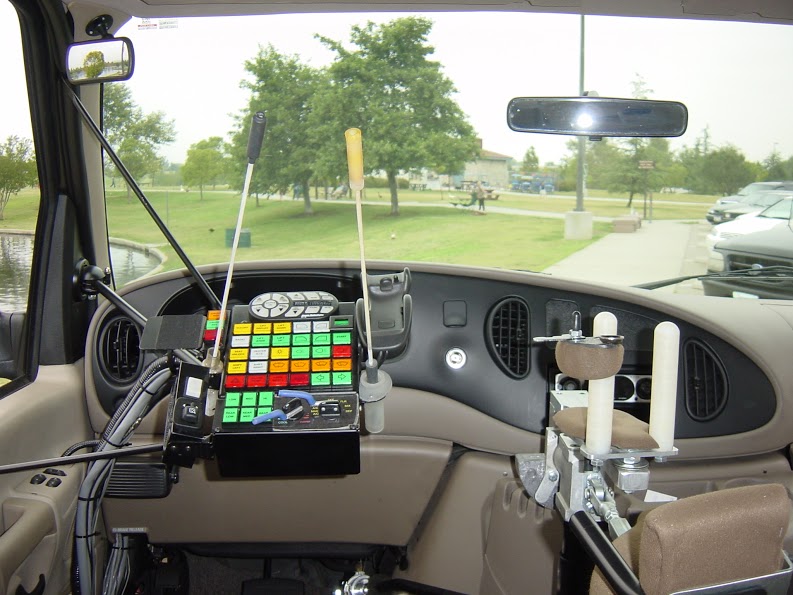
NMEDA QAP mobility equipment dealers offer modifications and adaptations such as wheelchair ramps, hand controls and steering aids, transfer seats and seating solutions, wheelchair securement and tie downs, scooter lifts and special acceleration and braking solutions for adaptive vehicles. This is a truly individualized way to ensure safety while meeting customized mobility needs.

Thinking about all of the strong individuals that I’ve worked with, I can’t help but recognize the ways that a customized wheelchair mobility system could have helped families and their loved ones. A wheelchair accessible vehicle can help the son who must make his outpatient doctor’s appointments. It can help the student whose mother wants to drive him to school each day for a little more one-on-one time. It can help the family whose live-in grandfather wants to watch his grandson’s baseball game.

Check out a NMEDA dealer near you today to find out more about the ultimate safety and reliability offered in the vehicle modification industry.