A Day at the Farm

A Day at the Farm
Fall is here!  I love this time of year…the leaves changing color…the cool breeze…the smell of pumpkin latte 🙂
We went to the local pumpkin farm last weekend and had so much fun I had to share some pictures.  My little guy is looking so big!  He is so funny making animal sounds at every animal.  I think his favorite sound is “moo” at the moment.

 
Warning…this is a picture overload!

 Jacob was a little excited (as if you couldn’t tell, lol)

 He thought this goat was HILARIOUS!
 So did Gwen. My kids love kids, what can I say!
 This little donkey didn’t move the whole time..Jacob was very interested.
I got my husband to take all of one photo.  He is not into taking pictures, I gotta work on getting him used to using my new camera. 
Me and my little man.

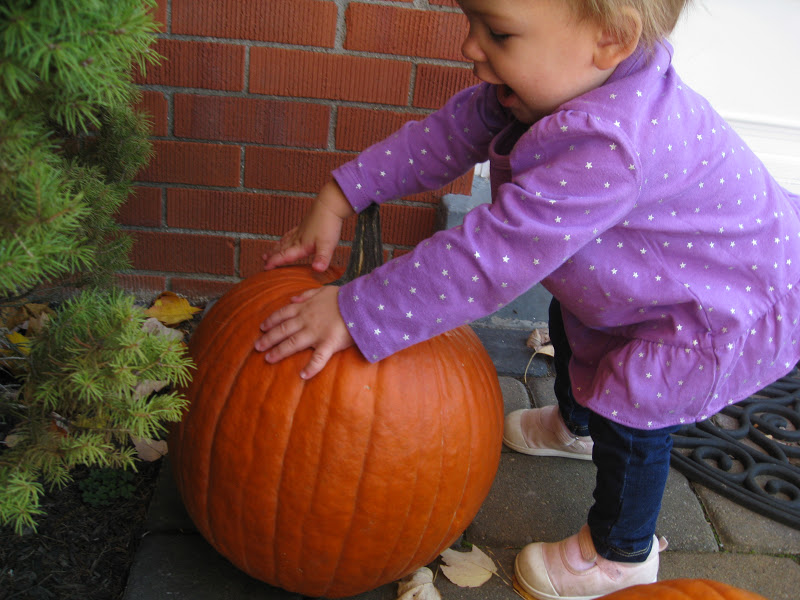
When did he get so big? I love it when babies stand on their tip toes. 

The following week we checked out another pumpkin patch (can’t get enough!!!).  Check out this “corn box”.  The kids loved this…a huge box of dried corn with cups, shovels, rakes, and pails.  This was a hit. 

Such concentration!  He was pushing the corn all around, shoveling, pouring, just having a blast. 

Thanks for letting me share!  Happy pumpkin picking!
~Leanne

Learning Red, Apples

I love this apple balance beam that we made years ago. It’s a gross motor coordination activity that targets areas like motor planning, balance, coordination, core strength, and sensory motor input, all needed for development! This gross motor apple activity would go really well with our apple sensory bin and our Apple Therapy Kit.

Apple Tree Balance Beam

Making an apple tree balance beam is an easy activity that you can do at home to work on skills with young kids!

This Apple Gross Motor Activity is the perfect way to introduce learning about the color Red and Apples this Fall with toddlers, preschoolers, and babies.  We made our own life-size apple tree (well, make that Toddler-life size!) that kids can really climb and develop gross motor skills while learning.  We’ve recently update our Toddler Play page with all of our play ideas in one place.  Your Toddler will love some of the other creative play ideas we’ve shared in the past.
 
Gross Motor Apple Tree activity for learning red and apples with toddlers and preschool children. Kids love this in the Fall!


Gross Motor Apple Activity for Toddlers and Preschoolers

So, two days a week, I have my nephew here with us while my sister is working.  That makes a 5 year old, 3 year old, 1 year old, and 11 and 1/2 month old.  We had a Red/Apple play day one afternoon, with something for each age to love! (This post contains affiliate links.)
 
Even with two children in two different stages of preschool (3 y/o class and Pre-K), it is easy to supplement school lessons at home (and keep the babies occupied).  Keeping the activities PLAY makes learning fun.  They never know that you are actually teaching so many ideas (turn taking, manners, colors, handwriting, developing motor skills…& so much more)!
 

 This time of year, it is all about apples in preschool. My 3 year old is learning all about red, apples, and circles in his class. We pulled those concepts into our play with this fun apple tree activity.  I placed this set up on our living room floor and had the kids pick ‘apples’. We counted them as we put them into baskets.  My 5 year old loves writing when I spell out a word, and so we worked on writing the words “red”, “apple”, “circle”, and “tree”.  She was “in charge” of  simple math ideas (We have two apples in the basket. Adding one more apple makes 3 apples).


The babies loved putting the red balls into baskets, taking them back out and then putting them into a different basket.  They are learning through exploring!


We did some Gross Motor balance beam play on the “trunk” of the tree. This was a hit for all of the kids.  These babies WATCH the big kids and try their hardest to keep up!


Gross Motor Apple Tree activity for learning red and apples with toddlers and preschool children. Kids love this in the Fall!
 
Gross Motor skills are tasks that require the large movements of the body.  Development of gross motor movement is important for so many play skills of childhood (riding a bike, throwing and catching a ball, hopping, skipping, climbing).  Developmentally, we refine our fine motor skills after and as a result of, appropriate gross motor skills. For example: Stable shoulder girdle strength is needed to produce controlled fine motor control needed to hold the pencil and write in a small area.
 

Baby Apple Theme and Red Learning Activities

The big kids did a few more motor tasks including tossing the balls into the baskets.  The controlled balance needed to stand on the balance beam, while tossing the ball into the basket is really working their eye hand coordination and can be a challenge for many kids!  
 
(The babies had a blast carrying the baskets around).
 
We went on a search for red toys, keeping with the red theme. These were put into a pretzel tub that we keep to store the baby pop-beads.
 
Babies love to manipulate objects, explore how they can move objects…love to see what they can do to a toy (chew it, bang it, throw it…).  And then see if they can do it again!  
Baby Girl is always putting these stacking rings onto her wrist. She’ll walk all over the house with one on her wrist, just like a bracelet. My other two never did that at this age! Is she a future fashionista??? Have your babies done this???
 
The babies loved pulling red objects out of the bin, chewing on a few, putting them back in (…pulling them away from each another, grabbing it back with a screech…these two cousins are more like siblings…LOL)
 
This is a great opportunity for language development.  Say each item that baby has.  Babies, at this age, love to hear your voice in different pitches.  Describe to baby the details of a toy, pointing out interesting parts.  Talking constantly to baby truly does wonders for their language development.


We finished up with a snack of sliced apples for the big kids and applesauce for the babies.
 
This post was originally posted in 2012.  We’ve recently updated to share with you again!
 

Our favorite ways to work on gross motor skills:

National Cookie Month!

Anyone who knows me, knows that I love cookies. I love to bake them. I love to make them for people I love. I love love love to eat them!
My husband laughs at me because one of the highlights for me at any wedding, is the cookie table 🙂
So, when I found out that October is National Cookie Month, I knew I needed to celebrate in the ways that I love the best! I thought I would share what I have been baking up in the kitchen over the last year or so. Some of these have been for my own kids birthdays, some have been for nieces and nephews birthdays, and some have been actual cookie orders!
I love taking new orders and working on custom ideas, so if you see something that you like, or have a party theme you would love cookies to coordinate with, just message Colleen at sugaraunts.gmail.com
Check out this cookie picture overload….
Circus theme party, I wrote about here
Snowman cookies
Snowman snow globe cookies
Manger scene and stars cookies
Cars Party cookies
Baby Girl Baptism cookies
Baby Boy Baptism cookies
Fish party cookies
Minnie Mouse party cookies
Sesame Street Party cookies
Cars and Candyland Party cookies, see it all here
Butterfly party cookies
Sports and Dress-Up party cookies
We had a busy day with TWO birthday parties (a certain superhero-obsessed nephew turned 3, and a sweet little friend of ours turned 4) but I’ve had an original cookie recipe on my mind I am hoping to try out (and share if it tastes ok…) in the next few days. Think: pudding/cream cheese/fudge cakeballs with a surprise coating….I’ll let ya know how it goes!
~Colleen

Lemon-Raspberry Cupcakes

Lemon-Raspberry Cupcakes

With summer coming to an end, I decided to bake something to remind me of the hot days- what could be more summery than raspberry lemonade? These little minis were such a hit at my work bake-sale. People bought them two for a dollar!

I went the easy way and bought a lemon cake mix- whipped these up and baked them according to to the box.  I watched them a little closer making sure not to over bake since they are minis.
I found some cute cupcake liners with little lemons on the bottom of them.  They were on sale which made them even better!

 Voila!

The icing recipe was a buttercream that I added a few drops of red food coloring and a teaspoon of Raspberry Extract instead of vanilla.

 I didn’t have a pastry bag so I used a Ziploc and cut off a corner…this made a big mess.  This works in a pinch, but next time I will make sure I have a pastry bag handy. 

These little yummies were so fun to decorate.
Aren’t they so cute?

 Here they are all dressed up!
   The fresh raspberry on top really added a nice pop of flavor.
Delicious!

~Leanne

Recycle Bin Project

Many years ago, we created this recycle bin project, using materials found in our recycle bin. You could create practically anything from our recycled crafts list using items that are going to be thrown away or recycled. The benefit is that these items are free and they develop all of the skills that kids crafting does. As a therapy tool this is great for building fine motor skills, visual motor skills, and more.

Let’s see what we made…

Recycle Bin Project

We used a few items from the recycle bin:

  • Empty cereal box
  • Paper tube
  • Empty cracker boxes

We also used a few items from our craft supplies: masking tape and markers

The nice thing about a recycle bin project is that the sky is the limit! All you need is the items in the recycling container and your imagination.

Develop Skills with a Recycling Bin Project

Just look at the skills kids develop with an activity as simple as building with cardboard and tape.


Child writing on paper by cardboard creation made from old cereal box, cardboard tube, and cracker boxes


Multi-step planning, Handwriting, Cutting, Coloring, Painting, Taping, Tearing, Creativity, Imagination…this one’s got it all 🙂

Big Sister and I had a couple of hours to ourselves when the other kids were napping one afternoon. We went on a hunt for crafting materials in an interesting place…the recycle bin!

I pulled the boxes out and Big Sister used her imagination to decide what to make with them. She came up with a plan…a castle for barbie!


Child drawing on a notebook

Cardboard castle made from recycling bin materials


She helped me to tear the tape and construct the castle, instructing me what we needed to do first, and second, and third…We decided to work on a list. Big Sister wrote each word on a page in her notebook and she would turn the page as we did that part. (This was such a great planning project!) 
 
She said we needed to make a flag for the castle, so I told her how to spell “flag”. 
This age is so much fun. She asks all the time how to spell words as she writes them out. 
 
After she wrote the word, she drew her flag and colored it in. She cut out the shape and taped it to her flag pole (paper towel tube).


Child painting a paper blue and a notebook with "moat" written in child's writing

Child tearing blue paper in half


The moat: strips of water colored paper taped together. Tearing paper is a fantastic fine motor activity.
 
It works on the intrinsic muscles of the hands to hold the paper while using a Tripod Grasp to hold the paper.
 
Child tearing blue paper into strips
 
Babies woke up…They played a fun game of  “put some markers into a box and then take them out”.
 
Babies putting markers into a cardboard box
 
Babies reaching into a cardboard box to grab colorful markers
 
They loved it.
 
 
We took the whole thing outside and painted it, added stickers, and stuck on gems.
 
 
Cardboard castle made from Cheerios cereal box, pasta box, cracker box, and cardboard tube.
 
 
And played.
 
Cardboard castle with barbies and Ken
 
 
The bad guys even showed up…This is The Green Lantern sneaking into the castle.
 
Child reaching their hand into the door of a cardboard castle
 
 
Not bad for some old boxes. Lots of creativity in that trash!
 

Colleen Beck, OTR/L has been an occupational therapist since 2000, working in school-based, hand therapy, outpatient peds, EI, and SNF. Colleen created The OT Toolbox to inspire therapists, teachers, and parents with easy and fun tools to help children thrive. Read her story about going from an OT making $3/hour (after paying for kids’ childcare) to a full-time OT resource creator for millions of readers. Want to collaborate? Send an email to contact@theottoolbox.com.

Golf Tees and a Hammer

This hammering golf tees activity is one of our oldest blog posts here on the website. I loved showing my toddlers how to use a toy hammer with golf tees in an egg carton. This is a wonderful fine motor activity for kids, and one that is very motivating for all ages!

Hammering Golf Tees

Counting Manipulatives and Fine Motor Skills 
 
I picked these golf tees up earlier this year during a shopping trip, figuring we would use them for some activity…or actual golfing 😉 They were only a buck for 100 tees. We have these hammers from a Melissa and Doug toy and I thought we could use that to hammer the tees into some egg cartons. 


Little Guy used the golf tees (or Golf Teeth, as he called them), to count out how many he needed for the egg carton, learning to count out manipulatives. 
 
He’s working that tripod grasp to hold the tees, pushing them into the egg carton for resistance, building those intrinsic muscles for fine motor dexterity. 


Little Guy LOOOOVED this activity! He said, “Mom, when I grow up, I am going to do this because I’m going to be a Dad and Dads hammer.”  He has been asking to do the “Golf Teeth Hammer Game” every day, several times a day, ever since. 


Look at that Tripod Grasp. This is such a great activity for pre-writing and working on the correct and most efficient way to hold a pencil.


Holding the tee and the hammer provides awesome bilateral coordination (using two sides of the body together) and eye hand coordination.
 
These are needed for so many functional skills in play, dressing, handwriting, shoe tying.


You could do this with a cardboard box or Styrofoam. Putting it on an incline or vertical incline would add an extended wrist for improved grasp on the tee. 


We will be doing this activity again, for sure!
 
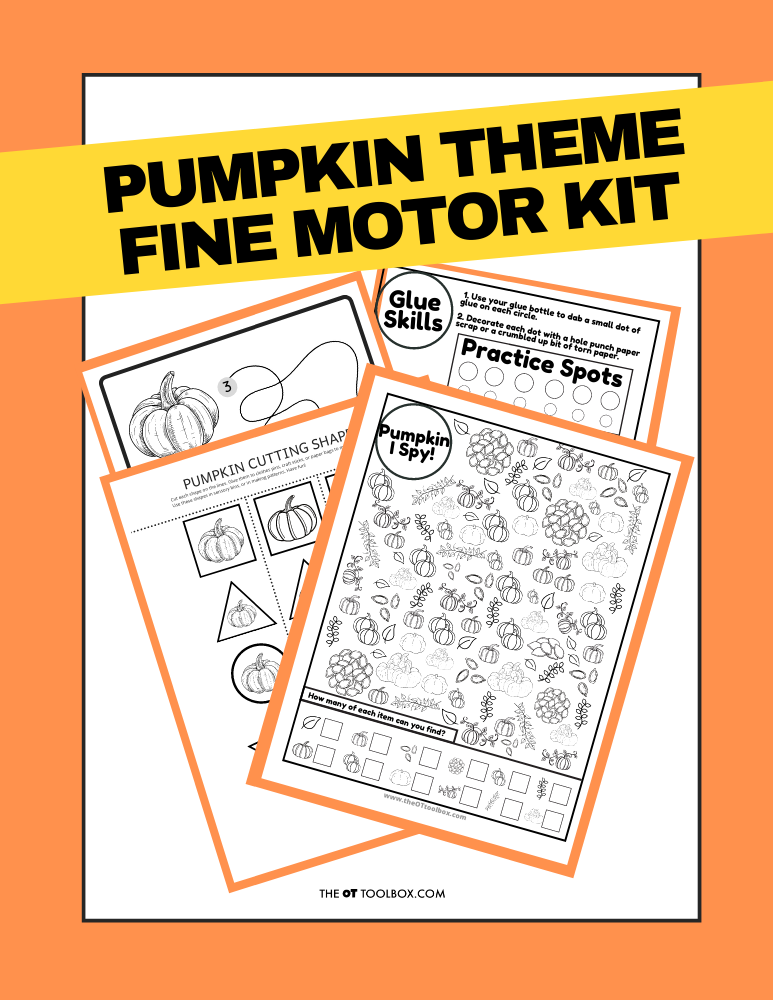
Want to work on more fine motor skills with fun and engaging play activities? Grab one of our fine motor kits!


Working on fine motor skills, visual perception, visual motor skills, sensory tolerance, handwriting, or scissor skills? Our Fine Motor Kits cover all of these areas and more.

Check out the seasonal Fine Motor Kits that kids love:

Or, grab one of our themed Fine Motor Kits to target skills with fun themes:

Want access to all of these kits…and more being added each month? Join The OT Toolbox Member’s Club!

Healthy Double Chocolate Chip Muffins

double chocolate chip muffins on a cooling rack

These healthy double chocolate chip muffins are a delicious recipe that kids can help to make. Getting kids active in the kitchen in cooking with kids recipes supports development of skills, and this muffin recipe does the job! Here’s how you make this healthy treat.

Healthy Double Chocolate Chip Muffins

If you like chocolate, this double chocolate muffin is for you.

 
This recipe is one I have made so many times for my kids. They LOVE banana muffins, especially when they are mini versions. The original recipe is from here. I have made this so many times and modified it to what I think is the best banana muffins. It can’t get much healthier than this.
 
There is so much protein in these little buggers, you won’t feel bad about grabbing two (or four). My kids love them with breakfast, lunch, or as a snack. I make a double batch and freeze most of them, pulling out a dozen or so when we need them. Baby Girl even loves them frozen (feels great on teething gums). 
 
We had a rainy day on Friday and certain wild children needed to do something (besides jump off of couches). We decided to make some of these banana muffins, with a few extras added in. They LOVE to help me in the kitchen.  
 
They love to scoop, stir, spill… 
 
The benefits of scooping and pouring is that you can use kitchen tasks like helping to make these muffins as a fine motor and visual motor activity.


I added flax seed, wheat germ, and a scoop of protein powder to make these double chocolate muffins. We were out of chocolate chips but I found some Hershey kisses and chopped them up into big chunks.


I usually use apple sauce instead of oil, but was out of apple sauce. I looked through the fridge and found yogurt. That works! Plain Greek yogurt would be even better.  What else do these muffins need?

Peanut Butter!


Healthy Double Chocolate Chip Muffins Recipe

Our recipe includes bananas to help hold the ingredients together.

 
4 Ripe bananas
1 cup whole wheat flour
1 cup oats
1/2 cup peanut butter
1/2 cup ground flax seed
1/2 cup wheat germ
1 scoop chocolate protein powder
1/2 cup brown sugar
1/2 cup apple sauce (or plain Greek yogurt)
2 Tbsp light butter
1 tsp vanilla extract
1 tsp baking soda
1/2 tsp baking powder
1 egg
1/4 tsp salt
12 chopped Hershey kisses
 
Directions:
  1. Preheat oven to 350 degrees.
  2. Cream butter with sugar and peanut better.
  3. Add egg and beat lightly. Add mashed bananas, vanilla, and yogurt.
  4. Then add all dry ingredients and mix well.
  5. Spoon into lined mini muffin tins.
  6. Bake 10 minutes. Enjoy!


Colleen Beck, OTR/L has been an occupational therapist since 2000, working in school-based, hand therapy, outpatient peds, EI, and SNF. Colleen created The OT Toolbox to inspire therapists, teachers, and parents with easy and fun tools to help children thrive. Read her story about going from an OT making $3/hour (after paying for kids’ childcare) to a full-time OT resource creator for millions of readers. Want to collaborate? Send an email to contact@theottoolbox.com.

Super Cool Ice Play

Child's feet and hands in a bathtub with water and ice as the child grasps ice cube. Text reads Sensory ice play

One super “cool” and fun way to encourage sensory motor exploration is with ice play! You might be thinking, “What is ice play?!” Well, many years ago, we shared a blog post about playing with ice in the bath tub as a sensory and fine motor activity for kids. This idea was designed to build skills and add a fun component to the bath tub. That simple sensory activity still stands today!

ice play

Ice Play

Ice play simply means playing with ice! Ice is a readily available tool for building skills in several areas:

Ice play can be anything! We’ve used ice to develop sensory motor skills in several different ways:

Scooping Ice- All you need is a few bowls, some ice, and some spoons to work on scooping and pouring skills.

Smashing Ice- Smashing ice is a great proprioceptive activity that fosters motor planning and hand-eye coordination skills.

Ice Bath- The ice bath is all the rage right now for health reasons, but we aren’t talking about the traditional ice bath used by athletes. When my kids were younger, we used this sensory and motor activity to play in the bathtub. Fill the bath as you normally would and add a few ice cubes to target motor skills.

ice cube sensory play

Tonight we filled the tub with warm water, added children, and ice???!!!
 
We threw in a few ice cubes and added some cups to catch the ice cubes for a fun change to the typical bath time.
 
This is such a great game to work on baby’s eye-hand coordination. She watched the ice slip around and chased after it with her hands. She was able to catch it most of the time.
 
Crossing midline (reaching the right hand over to the left side of the body and vice versa) is crucial for so many functional skills of a child. Crossing midline builds neural pathways of the brain and is needed for learning. 


(that’s a lot of ice…we didn’t use it all…only a handful of ice cubes!)


The big kids used cups to catch the ice cubes, transfer them cup-to-cup, and kid-to-kid! 
 
 
We warmed up the water once, but a few ice cubes didn’t make the bath too cool. Keep a close eye on baby to make sure any caught ice cubes don’t become choking hazards. 
 
Baby Girl loves her bath time and ice only made it better today!


More sensory play activities that are built right into everyday functional tasks:


The Sensory Lifestyle Handbook walks you through sensory processing information, each step of creating a meaningful and motivating sensory diet, that is guided by the individual’s personal interests and preferences.

The Sensory Lifestyle Handbook is not just about creating a sensory diet to meet sensory processing needs. This handbook is your key to creating an active and thriving lifestyle based on a deep understanding of sensory processing.

Fine Motor Water Bead Activities

Purple water beads on a table. Text reads water bead activities

We love water bead activities and just like our water bead sensory bin, the activities in this blog post are fun ways to target fine motor skills through play. You’ll also find a list of fun water bead ideas to support sensory play and multisensory learning.

water bead activities

Have you ever experienced the unique fun and sensory experience that water beads provide? From creating colorful creations with your hands to exploring a squishy, mesmerizing texture between your fingers – there are plenty of incredible ways to explore the wonderful world of water beads. Let’s dive right in and explore some of the exciting possibilities of this activity!

What are Water Beads

Have you heard of water beads? Traditionally used as a vase filler, over the years, these expandable beads have been introduced as a sensory play medium.

Water beads, also known as non-edible beads, are composed of a water-absorbing polymer mixture. This polymer is comprised of minute particles that adhere to one another, forming elongated chains, which holds the form of the waterbead.

Dry water beads have the capacity to absorb water, expanding and filling up like a sponge when immersed in water. This is the form that is used in sensory play activities.

Benefits of Waterbead Activities

Water bead activities have become increasingly popular with children and adults alike as these activities offer a host of benefits. Not only are water bead activities fun and engaging, but they also help build physical and mental skills.

One of the best things about waterbead activities is that they help to develop hand-eye coordination. Children can use their hands to manipulate the beads into different shapes and patterns that require a certain amount of skill and concentration. This helps strengthen their motor skills, as well as their ability to think spatially and problem solve.

Waterbead activities also encourage creative thinking. When playing with the beads, children are encouraged to come up with new ways to use the beads and create unique designs. This helps to build their imagination and increase their confidence in their own creative abilities.

Finally, water bead activities are a great way to teach children about the properties of water. By playing with the beads, children learn about the properties of water, such as viscosity and surface tension. In addition, they can explore the different effects that different temperatures and amounts of pressure can have on the beads.

Before we get to our water bead activity below, think of all of the ideas you can do with water beads. These are activities to support several aspects of development:

  • Fine motor skills– pincer grasp, separation of the sides of the hand, thumb opposition
  • Eye-hand coordination
  • Tactile sensory exploration
  • Benefits of playing with a sensory bin: self-confidence, problem solving, creativity, etc.
  • Learning opportunities

Beside the benefits of using this sensory material, water beads should be used with caution. They should only be used under the supervision of an adult and never with children who may put the water beads into their mouth.

Water Bead Activities

There are SO many creative ideas for using waterbeads! Some of our favorite fun ways to use water beads include:

  1. Sensory play: Let your hands sink into a container filled with water beads and enjoy the unique tactile sensation.
  2. Water bead sensory bin: Create a large sensory bin filled with water beads and let children explore and play. After using them, they can be used for other sensory bins like in this purple sensory bin.
  3. Make water bead shapes: Use the beads to form different shapes such as squares, circles, and triangles. Once the shape is complete, ask your children to draw the shape on a piece of paper. This activity is great for developing hand-eye coordination and spatial awareness.
  4. Color mixing: Use water beads of different colors and mix them together to create new color combinations.
  5. Water bead patterns: Give your children a handful of beads in different colors and ask them to arrange them in an interesting pattern. This activity encourages creativity and problem solving.
  6. Sorting and counting: Sort water beads by color, size, or shape. Practice counting and organizing them into different groups. This activity is great for encouraging your children to think critically about the properties of the beads.
  7. Water bead art: Glue water beads onto a canvas or paper to create unique textured art pieces.
  8. Water bead ice: Freeze water beads in ice cube trays to create colorful, sensory ice cubes for water play.
  9. Make a sensory mat- Fill a gallon sized baggie with water beads. Seal the edge and tape. Then tape to the floor or table surface to create a water bead sensory mat.
  10. Water bead balloons: Fill balloons with water beads and then inflate them. Squishing and playing with these squishy balloons is lots of fun.
  11. Water bead sensory bags: Fill resealable plastic bags with water beads and a little bit of water, then seal them tightly. Children can squeeze, squish, and explore the beads through the bag.
  12. Water bead sensory bottles: Fill empty water bottles with water beads and water to create calming sensory bottles. Add glitter or other small objects for added visual interest.
  13. Water bead bath: Add water beads to a bathtub filled with warm water for a unique sensory bath experience.
  14. Fill a clear plastic container to make a water bead sensory box. Seal the edges and shake!
  15. Water bead shooters: Use plastic syringes or turkey basters to shoot water beads across a table or into targets.
  16. Water bead slime: Mix water beads into homemade slime or play dough to create a textured and colorful sensory experience.
  17. Water bead excavation: Freeze water beads in a block of ice and let children excavate them using warm water or tools like spoons and small hammers.
  18. Water bead planters: Fill small pots or vases with water beads and place small plants or flowers in them. The beads will help keep the plants hydrated.
  19. Water bead sensory letters or numbers: Glue water beads onto large foam letters or numbers to create a tactile learning experience.
  20. Water bead stress balls: Fill balloons with water beads and tie them off tightly. Squeeze and squish the stress balls to relieve stress and promote relaxation.
  21. Water bead marbles: Use water beads as a substitute for traditional marbles in games or marble runs.
  22. Water bead sensory jars: Fill clear jars or bottles with water beads of different colors and sizes. Children can shake, tilt, and observe the beads as they move and settle.
  23. Water bead target practice: Set up targets or containers and try to toss or shoot water beads into them, testing your aim and coordination.

Remember to always supervise children during water bead play and ensure they do not put them in their mouths, as they can be a choking hazard.

 
I’ve seen Water Bead play all over Pinterest and the web. We had to try them! They are the beads you see in vases with flower arrangements and you can find them in the floral aisle of Walmart. I’ve even heard that  Dollar Tree carries them. They are non-toxic and stay squishy long enough for fun sensory play once they are hydrated when out in the open air. If covered with a lid, they won’t dehydrate and will stay hydrated for much longer.
 

how to hydrate water beads

Hydrating water beads is easy to do (and fun for little hands). It’s a great motor skills activity in and of itself.
 
1. Pour the packet of water beads into a large container. Select a container that has a lid so you can keep your water beads hydrated for some time.
 
2. Add water…This is a great activity for little ones to work on scooping and pouring as a gross motor and coordination activity.

3. Allow the water beads to sit in the water for a few hours. You will see them start to expand as they soak up the water. 

4. Drain the water beads into a colander to remove the excess water. Or, if there is just a small amount of water still in the container, you can keep the water in the bin for added sensory input.

5. Now it’s time to play!


Drain the water in a colander and PLAY!

We left them over night but they hydrate in about 6 hours.
 
 
We LOOOOOVED playing with these things! We had them sitting in this bin on the counter the other day and every time she caught a glimpse, she got all excited and wanted to play.


Use a flashlight and make them shine.
 
 
Dinosaurs MAY have been caught stomping, kicking, eating, and fighting the water beads…
 
 
So squishy on bare toes! Our neighbor came over with her little guy to get in on the fun.

 
This was so fun and water beads are so cool to play with. The imagination really emerged  when dinosaurs came onto the table. We have the water beads in a bin with a lid now. What to do with them next….hmmmm… 🙂


Working on fine motor skills, visual perception, visual motor skills, sensory tolerance, handwriting, or scissor skills? Our Fine Motor Kits cover all of these areas and more.

Check out the seasonal Fine Motor Kits that kids love:

Or, grab one of our themed Fine Motor Kits to target skills with fun themes:

Want access to all of these kits…and more being added each month? Join The OT Toolbox Member’s Club!