Sensory Strategies in Schools

Here on The OT Toolbox, we’ve shared a lot of information about addressing sensory processing needs in the classroom environment. We’ve shared sensory strategies for the school-based OT. We’ve talked about sensory diets in the classroom. So often, kids with sensory processing challenges struggle in the school environment. And, we’ve talked about calm-down strategies that can be used in the classroom.
 
Today, we’ve got a big resource for anyone who lives with, loves, or works with a child with sensory processing needs. These sensory strategies can be used in schools by occupational therapists, teachers, parents, administrators, or anyone who advocates for a child with sensory needs.
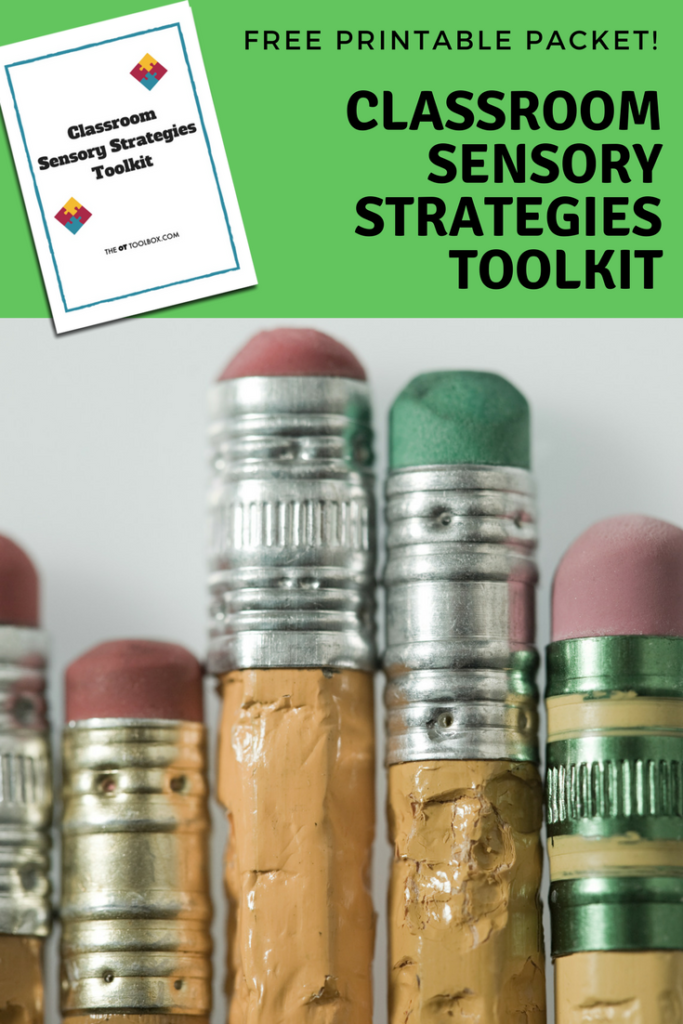
 

Use these classroom sensory strategies to help kids with sensory processing needs to learn, pay attention, self-regulate, focus, and address sensory needs within the classroom or learning environment to address educational goals and sensory needs. Perfect for occupational therapists in the schools..


Sensory Strategies in Schools

As a caregiver or parent, it is exhausting to see the challenges your child faces, while ticking through the laundry list of strategies and still witnessing the sensory breakdowns. Parents are the advocate for addressing their child’s needs. They are looking for resources to share.


Therapists are challenged to find tactics that will be carried over while meeting functional goals. We strive to create streamlined suggestions that will be used at home and in the midst of a busy classroom.


Often times, teachers are the middleman when it comes to sensory issues. They are dealing with curriculum requirements, little time, and demands of a full classroom. Time, space, and resources are limited in the classroom. Teachers struggle with meeting sensory needs and children who “feed off” other students.


Strategies for addressing or preventing sensory meltdowns are needed before they happen!
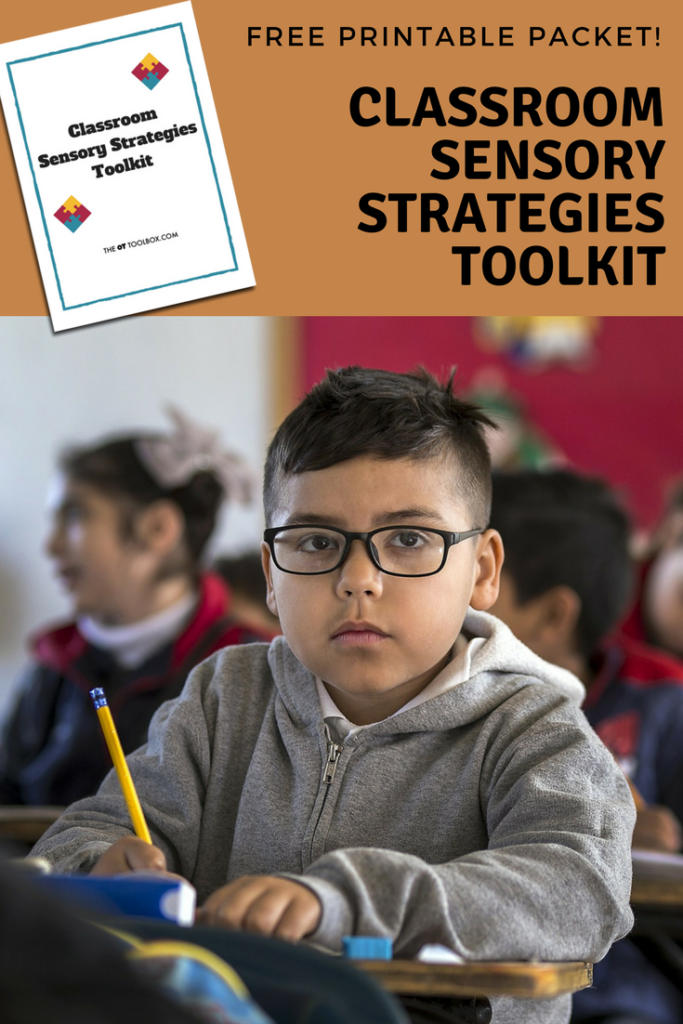
 
Use these classroom sensory strategies to help kids with sensory processing needs to learn, pay attention, self-regulate, focus, and address sensory needs within the classroom or learning environment to address educational goals and sensory needs. Perfect for occupational therapists in the schools. Use these classroom sensory strategies to help kids with sensory processing needs to learn, pay attention, self-regulate, focus, and address sensory needs within the classroom or learning environment to address educational goals and sensory needs. Perfect for occupational therapists in the schools.


Because of these challenges, the classroom can be a tricky environment for addressing the needs of students, incorporating strategies, and addressing behaviors related to sensory needs. If any of these struggles sound familiar, know that you are not alone!


You’re striving to find and use the sensory strategies that students need and to put them into place in easy-to-understand handouts where recommended tools can be highlighted. You’re seeking information about why students are acting the way they are and how to help them to improve learning, attention, regulation, and emotional needs so that educational needs are met.


That’s where the Classroom Sensory Strategy Toolkit comes in.
 
Use these classroom sensory strategies to help kids with sensory processing needs to learn, pay attention, self-regulate, focus, and address sensory needs within the classroom or learning environment to address educational goals and sensory needs. Perfect for occupational therapists in the schools. Use these classroom sensory strategies to help kids with sensory processing needs to learn, pay attention, self-regulate, focus, and address sensory needs within the classroom or learning environment to address educational goals and sensory needs. Perfect for occupational therapists in the schools.


The Classroom Sensory Strategy Toolkit is a printable packet of resources and handouts that can be used by teachers, parents, and therapists. Whether you are looking for a handout to explain sensory strategies, or a tool for advocating for your child, the Classroom Sensory Strategy Toolkit has got you covered.


And it’s free for you to print off and use again and again.


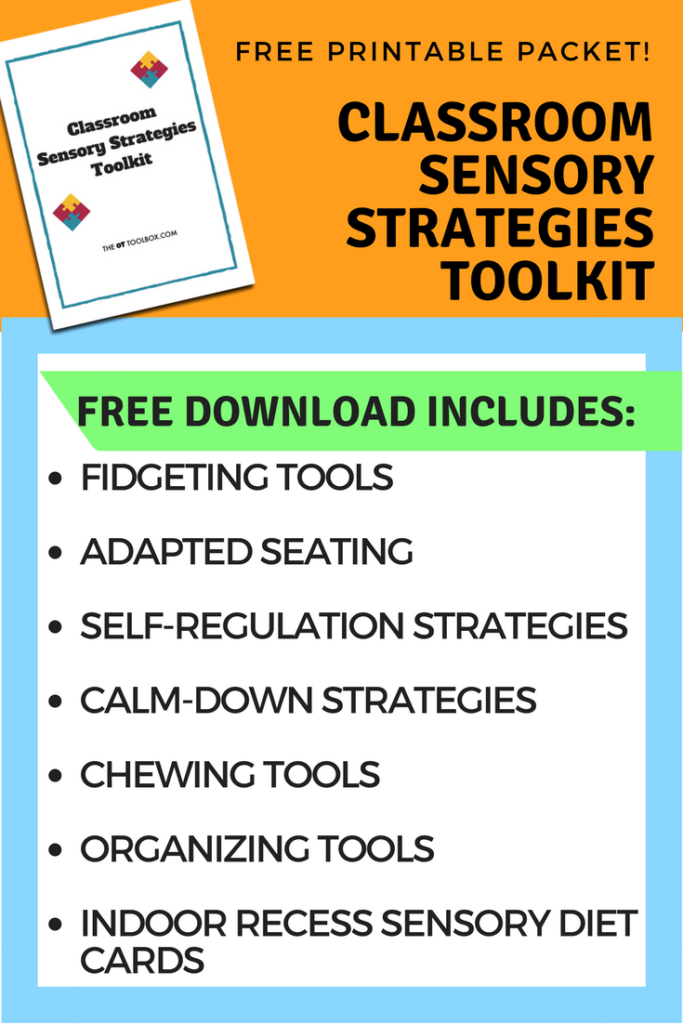
In the Classroom Sensory Strategy Toolkit, you’ll find:


  • Fidgeting Tools for the Classroom
  • Adapted Seating Strategies for the Classroom
  • Self-Regulation in the Classroom
  • 105 Calm-down Strategies for the Classroom
  • Chewing Tools for Classroom Needs
  • 45 Organizing Tools for Classroom Needs
  • Indoor Recess Sensory Diet Cards
 
Use these classroom sensory strategies to help kids with sensory processing needs to learn, pay attention, self-regulate, focus, and address sensory needs within the classroom or learning environment to address educational goals and sensory needs. Perfect for occupational therapists in the schools.


Here are a few ways that the Classroom Sensory Strategy Toolkit can address much-needed skills of our children/students/clients with sensory needs:


  • Science tells us there are more kids with processing needs than ever before. Schools are responding with a better understanding of how to help students using sensory input within the school day.
 
  • The Sensory Strategy Toolkit is a helpful tool for incorporating sensory needs within the educational environment as supports and tools that kids need.
 
  • Sensory processing challenges in kids are baffling! Having a set of sensory tools that can be used in the classroom is powerful to teachers, parents, and therapists.
 
  • Sensory processing issues cause stress, motivation, and challenges for the whole family. Having a toolkit of sensory strategies for the classroom can help.
 
  • Self-regulation in the school environment can derail the whole classroom from effective learning. Use the calm-down strategies and self-regulation pieces in the toolkit and have the information you need to address these challenges.
 
  • Those who work in the school environment struggle with a limited budget for addressing sensory needs. These strategies use equipment that is on hand in the classroom.
 
  • The toolkit is appropriate for preschool through teenage years and older and the strategies can be modified to meet the needs of each individual.
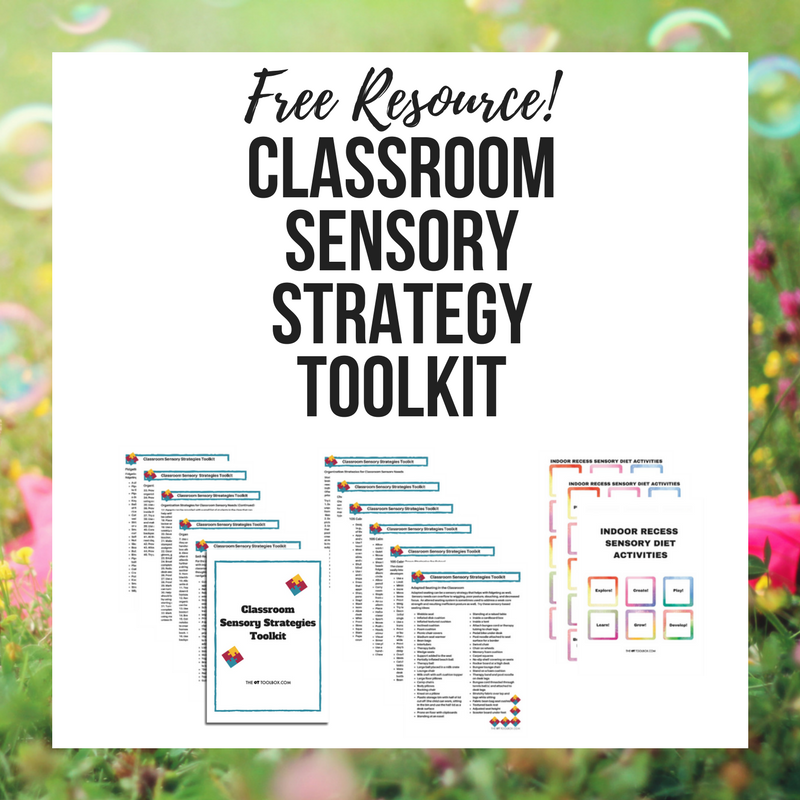

Use these classroom sensory strategies to help kids with sensory processing needs to learn, pay attention, self-regulate, focus, and address sensory needs within the classroom or learning environment to address educational goals and sensory needs. Perfect for occupational therapists in the schools.
 
Be sure to grab the Classroom Sensory Strategy Toolkit and start addressing those classroom sensory challenges!
 
CLICK HERE to get the Classroom Sensory Strategy Toolkit.
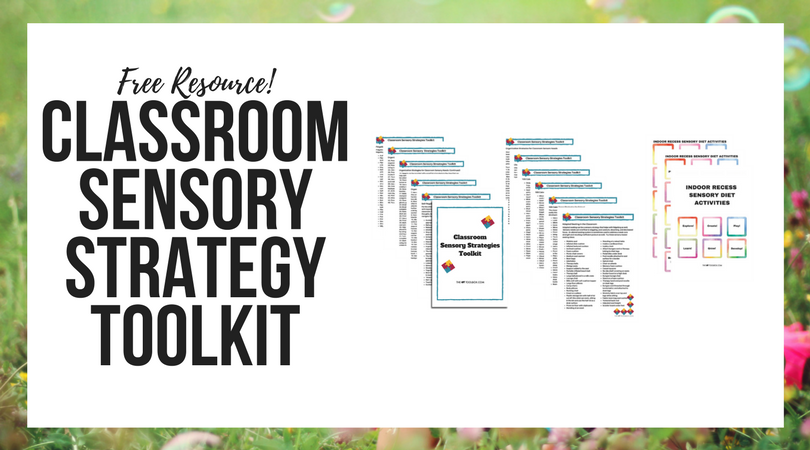

Use these classroom sensory strategies to help kids with sensory processing needs to learn, pay attention, self-regulate, focus, and address sensory needs within the classroom or learning environment to address educational goals and sensory needs. Perfect for occupational therapists in the schools.
 
P.S. Stay tuned because in just a couple of days, we’ll have another free resource for you. It’s all about sensory activities like those in a sensory diet and how they can be used to address attention and focus in kids. And what’s awesome is that the free printable resource coming your way will help the kids you parent, teach, or serve in therapy to work on attention using sensory strategies, even if they don’t have a sensory diet in place.


Free Classroom Sensory Strategies Toolkit

    We respect your privacy. Unsubscribe at anytime.

    Colleen Beck, OTR/L has been an occupational therapist since 2000, working in school-based, hand therapy, outpatient peds, EI, and SNF. Colleen created The OT Toolbox to inspire therapists, teachers, and parents with easy and fun tools to help children thrive. Read her story about going from an OT making $3/hour (after paying for kids’ childcare) to a full-time OT resource creator for millions of readers. Want to collaborate? Send an email to contact@theottoolbox.com.
    Quiet Fidget Toys for School

    Looking for quiet fidget toys to support self regulation needs in a classroom setting? These quiet fidgets are the perfect occupational therapy toy that supports needs through play.

    The fidget tools listed below are those that are quiet in nature. You’ve probably spun a fidget spinner or two in your days (the last year or so that fidget spinners where a “thing”, anyway). They make a noise, right? Those fidget clicker boxes? They make a noise too. For the classroom environment where a click or a spin can be distracting to others, quiet fidget tools are a must. 


    Scroll on to find out more about quiet DIY fidget tools for school that can be a valuable tool for kids with attention challenges, regulation needs, sensory processing issues, or other needs that require a fidget tool for concentration and inclusion in the classroom setting. 


    Note that fidgets of any type should be used with caution and based on the individual skills and level of each child. It’s up to the educator/therapist/etc. working with the child to select appropriate and safe fidget tools for the child. Also note that The OT Toolbox is not liable for any fidget or recommendation used with children.


    Quiet fidget tools for kids in the classroom to help with attention, fidgeting, or sensory needs.


    Quiet Fidget Tools for School


    Here’s the thing about fidget tools in the classroom setting. They can get a bad rap. But, have you ever stopped to think that we ALL need a fidget tactic of some sort when we need to really concentrate? We jiggle our leg. We tap the desk. We doodle. We talk with our hands. We mess with a pen. We tap our phone. We twirl our hair. We all do something that is an overflow of motor actions with concentration. 


    So, when we ask our kids (who are getting less time outdoors, less recess, and are experiencing more sensory processing needs) to sit still at their desk and NOT fidget, wiggle, twirl, move, slouch, or jump…it’s a messy classroom!


    Fidget tools for students in a classroom don’t need to be a pricey. 


    They don’t need to be obtrusive. 


    They don’t need to be a tool that is unnatural in the classroom. 


    Fidget tools can be used by any student and can be items that are a natural part of the classroom. 


    Try using some of these quiet fidget tools in a classroom. It may be helpful to go over rules of fidget tools with the whole class. Do that before handing over the fidget. Set up guidelines for use, and inappropriate use of fidget tools. Instruct students that they are to be used when concentrating and at all other times should be placed in pencil box or pencil pouch, with crayons, scissors, and other “tools”. Just like those items have a place and a use in the classroom, the fidget tool should be used at certain times and in certain ways!

    Quiet Fidget Tools for School


    Affiliate links are included below. 


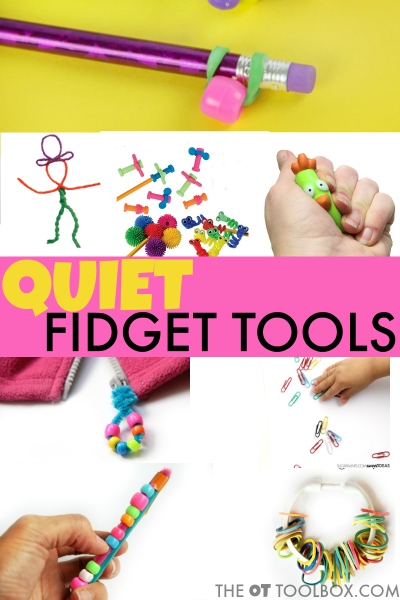
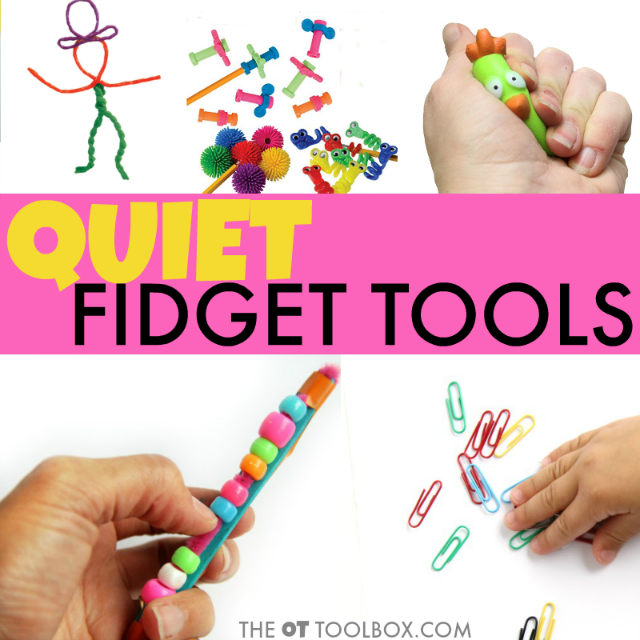
    Fun pencil topper
    DIY pencil topper
    Small koosh ball (tuck this in the palm of the hand for younger students to encourage a functional pencil grasp and separation of the sides of the hand.)
    Two or three paper clips linked together
    Paper brad with paperclip clipped into a folder or notebook cover
    Pencil grip
    Beads on a pipe cleaner
    Keychain
    Small stress ball
    Marble sewn into a cotton glove
    Sliced pool noodle (Very cost efficient! A whole class can be outfitted with a quiet fidget tool for about $1)
    Wikki Stix (an effective tool for a writing or reading guide too. Read about all of our favorite Wikki Stix activities)
    Rubber bands on a ring 
    Craft pom poms
    DIY Zipper pull

    Sensory strategies like these can be a big help for many children. 


    You may also be interested in the free printable packet, The Classroom Sensory Strategy Toolkit.

    The Classroom Sensory Strategy Toolkit is a printable packet of resources and handouts that can be used by teachers, parents, and therapists. Whether you are looking for a handout to explain sensory strategies, or a tool for advocating for your child, the Classroom Sensory Strategy Toolkit has got you covered.


    And it’s free for you to print off and use again and again.


    In the Classroom Sensory Strategy Toolkit, you’ll find:


    • Fidgeting Tools for the Classroom
    • Adapted Seating Strategies for the Classroom
    • Self-Regulation in the Classroom
    • 105 Calm-down Strategies for the Classroom
    • Chewing Tools for Classroom Needs
    • 45 Organizing Tools for Classroom Needs
    • Indoor Recess Sensory Diet Cards
     
    Sensory Strategies for the Classroom
     

    Quiet fidget tools for kids in the classroom to help with attention, fidgeting, or sensory needs.

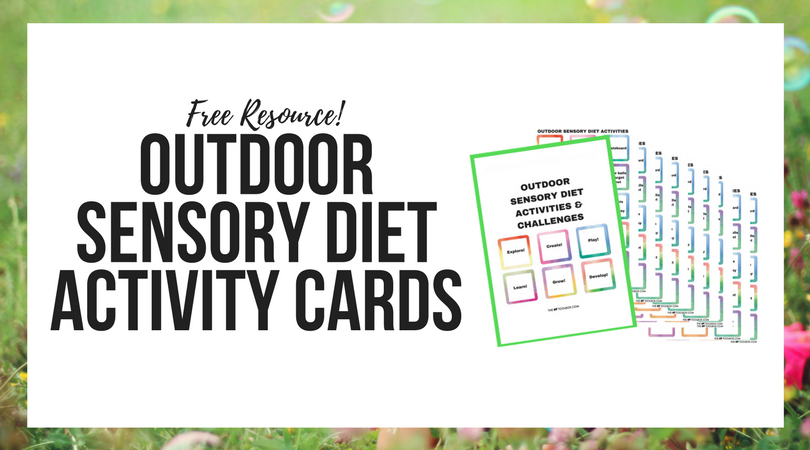
    Outdoor Sensory Diet Activity Cards

    Outdoor sensory diet cards

    The outdoors are the ultimate sensory experience for kids! It is possible to create the “right kind” of sensory experiences to improve regulation, attention, focus, body awareness, motor development, and sensory processing. Outdoor play provides sensory input in all planes, directions, and with multiple senses.  This printable packet all about taking sensory diet activities into the outdoors. Outdoor sensory diets are the perfect way to add sensory input that kids need!

    Be sure to grab the Outdoor Sensory Diet Cards and use them with a child or when creating a sensory diet for an adult with sensory processing needs!

    Outdoor sensory diet cards for families

    Outdoor Sensory Diet Activity Cards

    Research tells us that outdoor play improves attention and provides an ideal environment for a calm and alert state, perfect for integration of sensory input. In fact, outdoor play provides input from all the senses, allows for movement in all planes, and provides a variety of strengthening components including eccentric, concentric, and isometric muscle contractions. The outdoors are a vestibular, proprioceptive, tactile, and overall sensory-enriched goldmine!
     
    There’s more: Providing opportunities for sensory diet activities in the outdoors encourages open-ended play, imagination, creativity, body awareness, learning skills, self-confidence, gross and fine motor development, attention, and social-emotional skill development.
     
    It can be a real struggle to help kids manage tricky sensory-related challenges.
     
    Parents find it  difficult to weed through all of the information and pull out what will work for their child.
     
    Teachers may struggle with kids who fall out of their chairs, can’t focus, and feed off other students. They may feel compelled to help these students but lack resources, time, or tactics.
     
    Therapists may search for fresh ideas that provide the right kind of sensory input and will be carried over at home and at school, all while fitting into the child’s occupational performance sweet spot.


    Do one or more of the categories described above sound familiar?
     
    Maybe you are trying sensory strategies, searching for information, and creating sensory diets that just aren’t working. You’re doing all of the right things, but struggle to meet the sensory needs of an individual child.
    outdoor sensory diet activity cards
     
    That’s where the Outdoor Sensory Diet Cards and Sensory Challenge Cards come into play.
     
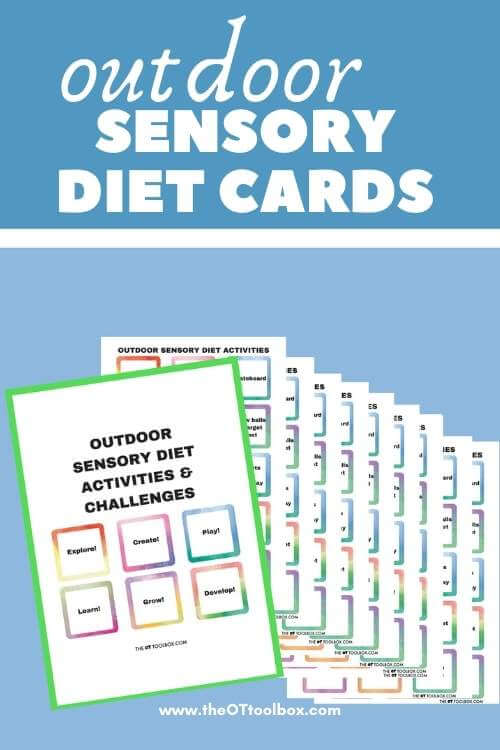
    They are a printable resource that encourages sensory diet strategies in the outdoors. In the printable packet, there are 90 outdoor sensory diet activities, 60 outdoor recess sensory diet activities, 30 blank sensory diet cards, and 6 sensory challenge cards. They can be used based on preference and interest of the child, encouraging motivation and carryover, all while providing much-needed sensory input.
     
    Here’s a little more information about the Outdoor Sensory Diet Cards:
     
      • 90 outdoor sensory diet activities
      • 60 outdoor recess sensory diet activities
      • 30 blank sensory diet cards, and 6 sensory challenge cards
      • They can be used based on preference and interest of the child, encouraging motivation and carryover, all while providing much-needed sensory input.
      • Research tells us that outdoor play improves attention and provides an ideal environment for a calm and alert state, perfect for integration of sensory input.
      • Outdoor play provides input from all the senses, allows for movement in all planes, and provides a variety of strengthening components including eccentric, concentric, and isometric muscle contractions.
      • Great tool for parents, teachers, AND therapists!
     
    Here’s the thing: Outdoor play is the ideal setting for incorporating the “right kind” of sensory input. A child who uses a therapy band in the classroom receives just one direction of proprioceptive input. Outdoor play provides sensory input in all planes, directions, and with multiple senses. The sensory diet cards in this free printable pack can be used in SO many ways to help individuals with specific sensory needs.


    Check out more about outdoor activities…like play…and sensory diets:

    There’s more:
    • Outdoor sensory diet activities are easy, fun, and motivating…and they make memories for the whole family while meeting the needs of a child with sensory processing challenges.
    • Outdoor sensory activities can be completed as a group or on an individual basis, and learning can be incorporated right into the tasks.
    • Teachers will find the outdoor recess sensory diet cards appropriate for the right kind of sensory-based brain breaks throughout the day.
    • The great outdoors is the biggest sensory gym you can imagine…and all of the sensory equipment is already there! From tree stumps, to hills, to pebbles, to pavement…outdoor sensory diet strategies can occur with little or no equipment.
    • Parents will love these outdoor sensory strategies that make memories for the whole family.
    • The whole family can join in on these sensory brain breaks! They provide the best kind of calming proprioceptive input, alerting movement, and sensory-based play that we ALL need!
    • The outdoor sensory diet strategy cards include a section of outdoor recess activities. These are perfect for the parent advocating for more sensory input for their child at school. The school playground is a powerful source of calming and organizing input!
    • Therapists will find the Outdoor Sensory Diet Cards a valuable tool in creating home programs. Every child needs more of this type of play!
     
    • Sometimes therapists run into issues with sensory diet carryover at home or in the classroom. These are sensory-based activities that kids will love and WANT to do!
     
    • As an added bonus, the Outdoor Recess Sensory Diet Cards included in this free packet can be used at any neighborhood playground, making a quick stop at a park a motivating means of incorporating much-needed sensory exercise.
     
    • The Sensory Diet Challenge Cards incorporate all of the senses and are a quick checklist of activities that can be used for easy sensory activities.


    Colleen Beck, OTR/L has been an occupational therapist since 2000, working in school-based, hand therapy, outpatient peds, EI, and SNF. Colleen created The OT Toolbox to inspire therapists, teachers, and parents with easy and fun tools to help children thrive. Read her story about going from an OT making $3/hour (after paying for kids’ childcare) to a full-time OT resource creator for millions of readers. Want to collaborate? Send an email to contact@theottoolbox.com.
    Recess Sensory Diet Activities

    Here, we’ll discuss how to make a recess sensory diet for school. Kids are spending less time playing outdoors. From after-school schedules to two working parents, to unsafe conditions, to increased digital screen time, to less outdoor recess time…there is just less time for kids to get outside and PLAY! 
     
    Teachers and school based occupational therapy professionals know the profound power of a recess break on the daily functioning of students. But, even as the adults in the school, we know how essential a break to walk on the recess area, or to sit and relax with a cup of tea during a (albeit still busy) planning period can be. A sensory diet for adults is just the same as a child’s need for movement or sensory input within the day!


    When it comes to sensory play, using the outdoors in meeting sensory needs and through sensory challenges is perfect for those looking for easy and fun ways to meet sensory needs in kids!


    Use these outdoor recess sensory diet activities for kids who need sensory input throughout the school day or crave sensory activities. The sensory diet activities can be used in various settings in the school environment, providing sensory challenges and activities that occupational therapists might recommend.


    Recess Sensory Diet


    For the child in school, it’s known that recess time helps with attention, sensory needs, motor development, learning skills, language, executive functioning, and so much more. In fact, research about outdoor play tells us a lot about development in kids! 


    The activities below are just some ways to encourage sensory input through outdoor recess. The fact is that plain old outdoor play will expand a child’s developmental needs and provide the kind of sensory input that kids need to learn and grow. 


    But sometimes, a child who has a need for a specific sensory diet will benefit from a prescribed list of sensory diet activities. And using the playground at the school is a great way to do this! 


    We’ve talked about sensory integration on the playground before and also sensory diet activities that can be used on a playground or park setting. 


    But the sensory diet activities listed below are those that can be combined with other outdoor sensory diet activities and completed on a blacktop surface or a schoolyard setting. 

    Outdoor Recess Sensory Diet Activities


    These outdoor recess sensory diet activities can be used at a recess setting or within a sensory diet that allows for an outdoor movement break. 


    Using the natural setting of the playground is perfect for allowing a student to use the setting within the school to get the sensory input he or she needs. 

    The Outdoor Sensory Diet Cards are activities that can be done with little or no special equipment, making carryover easier.


    The outdoor sensory diet activities below are GAMES and PLAY that kids naturally love! That means other students can participate in activities that come natural to recess time…while providing the much needed sensory diet activity that is necessary for meeting sensory needs of specific students. 


    These activities are part of our Outdoor Sensory Diet Cards packet. It’s a resource that uses natural and therapeutic play activities that can be done in the great outdoors. 


    The Outdoor Sensory Diet Cards packet includes sensory diet cards that meet a variety of needs and can be used for any child, based on specific needs. Therapists will love the variety of cards that can work for any child and can be adjusted to meet specific needs of clients. 


    Part of the packet is outdoor recess sensory diet activities that come in card form for easy scheduling and recommendation of activities.


    This is a free resource. Just click on the link below, enter your email, and access the file that is delivered to your inbox. 


    If you use these sensory diet cards, share it with others! Share the link so others can grab it too. Be sure to catch a pic of your use of the cards and tag @theottoolbox on social media! 

    Outdoor Recess Sensory Diet Activities

    Teach the child to ask if they can push another child on the swing
    Utilize playground equipment 
    Walk or run on the perimeter of the playground area.
    Bounce balls
    Kickball
    Stress ball in hand during playground play
    Chewing tool for sensory overload
    Running games
    “I Spy” scavenger hunts for colors or shapes
    Keychain fidget tool
    Obstacle courses
    Tug of war activities
    Carry equipment bins onto playground area and back in after recess
    Organize one-on-one play with a buddy


    The Outdoor Sensory Diet Cards printable packet includes A TON more ideas for outdoor sensory diet activities and outdoor recess sensory diet activities. 


    In fact, there are 90 outdoor sensory diet activities, 60 outdoor recess sensory diet activities, 30 blank sensory diet cards, AND 6 sensory challenge cards.


    They can be used based on preference and interest of the child, encouraging motivation and carryover, all while providing much-needed sensory input.


    Get the Outdoor Sensory Diet Activity Cards HERE.

    Use these outdoor recess sensory diet activities for kids who need sensory input throughout the school day or crave sensory activities. The sensory diet activities can be used in various settings in the school environment, providing sensory challenges and activities that occupational therapists might recommend.


    Sensory diets and specific sensory input or sensory challenges are a big part of addressing sensory needs of children who struggle with sensory processing issues. Incorporating a schedule of sensory input (sensory diet) into a lifestyle of naturally occurring and meaningful activities is so very valuable for the child with sensory needs. 
     
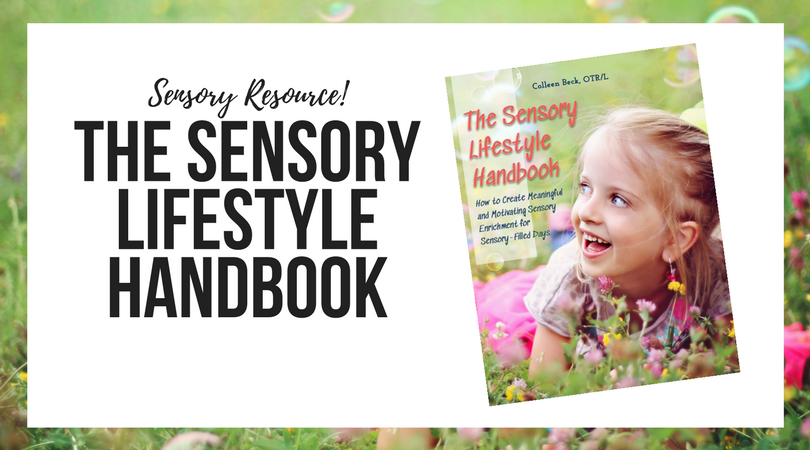
    That’s why I’ve worked to create a book on creating an authentic and meaningful sensory lifestyle that addresses sensory needs. The book is now released as a digital e-book or softcover print book, available on Amazon. 
     
    The Sensory Lifestyle Handbook walks you through sensory diet creation, set-up, and carry through. Not only that, but the book helps you take a sensory diet and weave it into a sensory lifestyle that supports the needs of a child with sensory processing challenges and the whole family.
     
     
    The Sensory Lifestyle Handbook is a resource for creating sensory diets and turning them into a lifestyle of sensory success through meaningful and motivating sensory enrichment.
     

    Colleen Beck, OTR/L has been an occupational therapist since 2000, working in school-based, hand therapy, outpatient peds, EI, and SNF. Colleen created The OT Toolbox to inspire therapists, teachers, and parents with easy and fun tools to help children thrive. Read her story about going from an OT making $3/hour (after paying for kids’ childcare) to a full-time OT resource creator for millions of readers. Want to collaborate? Send an email to contact@theottoolbox.com.
    Sensory Diet Activities at the Playground

    The outdoors is a goldmine for play! Kids can be creative, build healthy bodies, and develop the skills that they NEED through playing outdoors. For the child who requires a sensory diet, the outdoors is a goldmine for acquiring the right kind of sensory input. The activities below are those sensory diet activities that can be accomplished through play at the playground. Also check out our resource on playground therapy.

    Even a sensory diet for adults can include a walk in the park as a movement and sensory break!


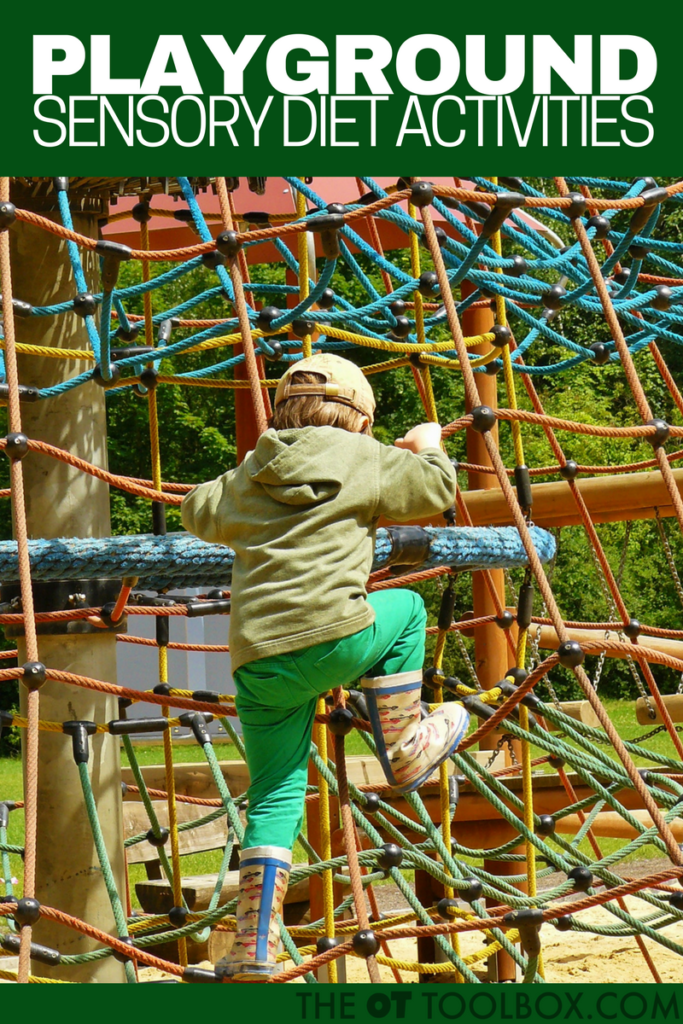
    Playground sensory diet activities that kids can use for sensory needs, perfect for occupational therapists who are creating sensory diets for kids with sensory processing needs.


    A while back, we shared information about sensory processing at the playground and sensory input that can be provided at the playground. Today, we wanted to share a few quick lists for sensory diet activities that can be implemented at an outdoor (or indoor) playground or play area. 


    These are sensory diet activities that an occupational therapist can prescribe based on evaluation of a child’s specific sensory needs. Use the playground sensory diet activities listed below as part of a list of specific activities and sensory tools that meet certain sensory processing needs or a home program for children with sensory processing challenges. 


    There is a lot of research on playing outdoors and about the benefits of just playing outside! 


    Disclaimer: When therapists develop a specific and highly individualized sensory diet, it’s not just throwing together a day filled with sensory input. A sensory diet  is a specific set of sensory tools used to meet and address certain needs of the individual based on sensory need and strategizing. Each of the sensory diet activities above should meet specific needs of the child. Every child is different so applying sensory input to one child may look very different than that of another. Parents should use the tactics below along with your child’s occupational therapist.


    Playground Sensory Diet Activities


    Climb the slide
    Swing on the swings (side to side, forward-back, twist, superman fly, or even upside down!)
    Go down the slide (forward, backwards, on belly, on back)
    Roll a ball up the slide and catch it before it hits the cround
    Ramps
    Balance beams
    Monkey bars
    Rope equipment
    Elevated surfaces
    Uneven surfaces
    Sound tubes and equipment
    Teeter totters or bouncy equipment
    Merry go rounds or spinning equipment
    Climbing walls
    Sandbox play
    Playground scavenger hunt
    Tunnels (Crawl through, army crawl through)
    Playground “I Spy”
    Bouncing a ball against a wall
    Textured sensory scavenger hunt
    Climbing surfaces

    Accommodations for addressing sensory needs in the backyard

    For kids with sensory needs, it can be overwhelming on a playground with running children, background noises, or other sensory input. Try these accommodations for addressing sensory needs in backyard play:
     
    Proprioceptive input such as firm touch to the shoulders


    Calming vestibular sensory input such as side to side or forward-front slow swinging


    Throw and play catch with a weighted ball 


    Baby wipes to clean hands if child is sensitive to messy hands or dirt
    Sheltered area if child is sensitive to wind blowing on skin
    Wear a lightweight wind jacket
    Hat with brim to reduce bright light or intense light in eyes or on face
    Sunscreen with firm touch before going outdoors
    Wear sunglasses
    Wear headphones to reduce background noise
    Sports bottle with straw
    Calming, chewy snacks


    More about outdoor sensory diet activities


    Sensory diets and specific sensory input or sensory challenges are a big part of addressing sensory needs of children who struggle with sensory processing issues. Incorporating a schedule of sensory input (sensory diet) into a lifestyle of naturally occurring and meaningful activities is so very valuable for the child with sensory needs. 

     
    That’s why I’ve worked to create a book on creating an authentic and meaningful sensory lifestyle that addresses sensory needs. The book is now released as a digital e-book or softcover print book, available on Amazon. 


    The Sensory Lifestyle Handbook walks you through sensory diet creation, set-up, and carry through. Not only that, but the book helps you take a sensory diet and weave it into a sensory lifestyle that supports the needs of a child with sensory processing challenges and the whole family.


    The Sensory Lifestyle Handbook is a resource for creating sensory diets and turning them into a lifestyle of sensory success through meaningful and motivating sensory enrichment.


    Colleen Beck, OTR/L has been an occupational therapist since 2000, working in school-based, hand therapy, outpatient peds, EI, and SNF. Colleen created The OT Toolbox to inspire therapists, teachers, and parents with easy and fun tools to help children thrive. Read her story about going from an OT making $3/hour (after paying for kids’ childcare) to a full-time OT resource creator for millions of readers. Want to collaborate? Send an email to contact@theottoolbox.com.
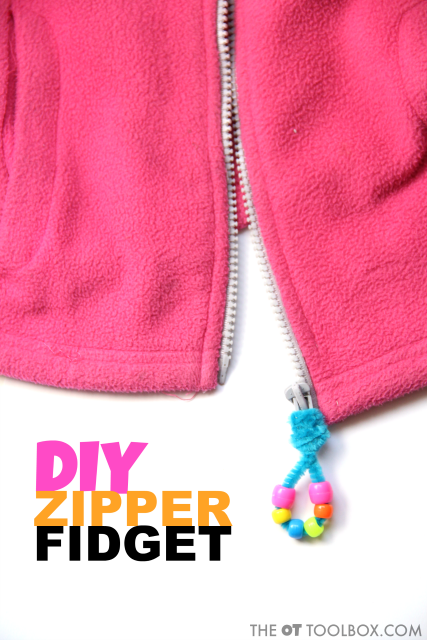
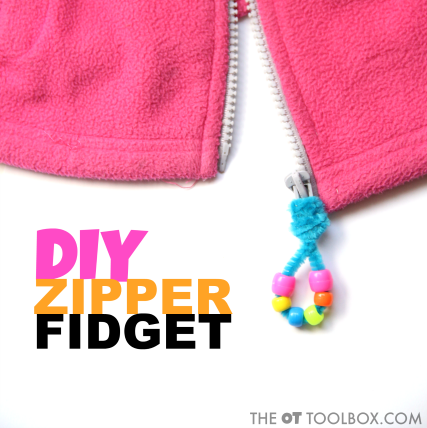
    DIY Fidget Tool Zipper Pull

    This DIY Fidget Tool is a good one to add to your therapy toolbox! A fidget tool attached to a zipper pull can be helpful for kids who struggle with wiggles, over or under responsiveness to sensory input, those who have worries or sensory challenges on the school bus or while out in the community. Using a zipper fidget tool can be helpful when waiting in line and it’s hard to keep little hands to oneself. 
     
    This DIY fidget tool is also a fine motor powerhouse for kids to make. I love adding crafts like this one to the therapy line up because not only does it work on essential fine motor skills, it also creates a functional tool that kids can wear and be proud of. When they have made a colorful and fun zipper pull fidget tool, they will be proud to wear it, show it off, and use it to address needed sensory processing struggles!


    Kids can use this DIY fidget tool zipper pull for addressing sensory needs that result in worry or anxiety, sensory meltdowns, or other issues as a result of sensory processing challenges. Read how to make a DIY fidget tool for sensory needs and how to use a fidget tool.

    DIY Fidget Tool Zipper Pull

     
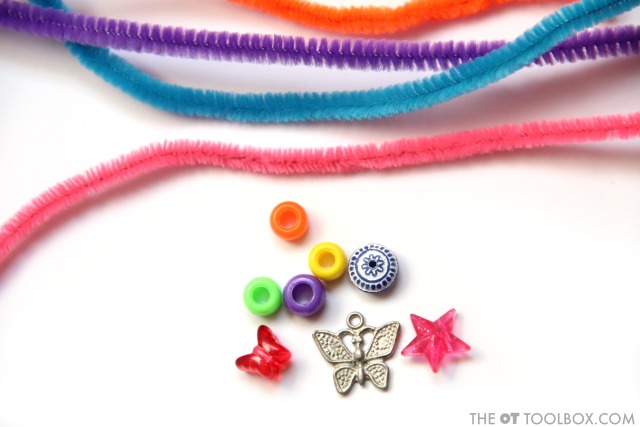
    This DIY Fidget Tool Zipper Pull is very easy to make. You’ll need just a couple of materials:
     
    Pony beads
    Fuzzy craft sticks (pipe cleaners)
     
    We received both of these items from www.craftprojectideas.com
     
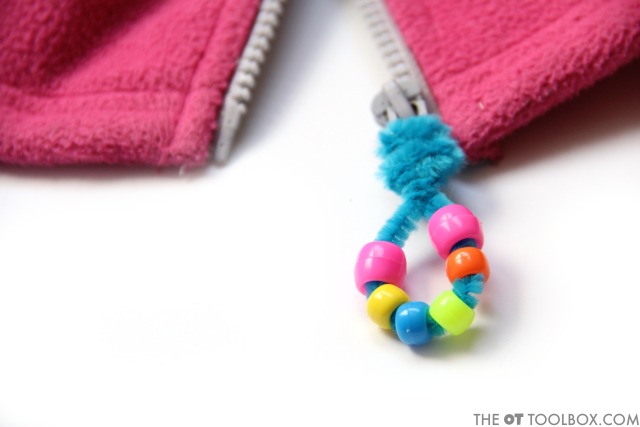
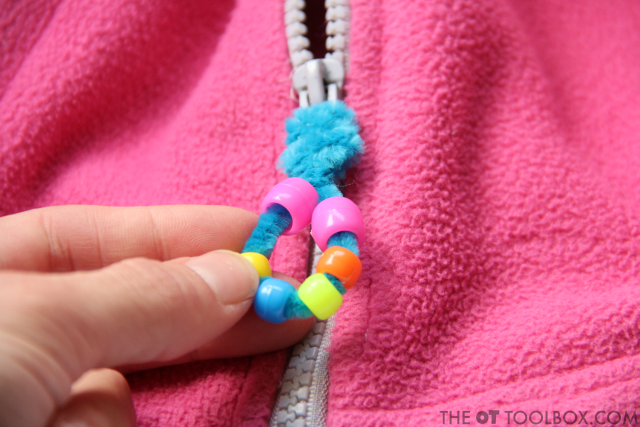
    To make the fidget tool, thread the beads onto a whole pipe cleaner. Bend the pipe cleaner in half and create a small loop. There should be enough space between each bead and at the top of the loop to allow for movement when the bead is wiggled. 
     
    Kids can use this DIY fidget tool zipper pull for addressing sensory needs that result in worry or anxiety, sensory meltdowns, or other issues as a result of sensory processing challenges. Read how to make a DIY fidget tool for sensory needs and how to use a fidget tool.
     
    Twist the top shut and loop the end through a zipper pull. Use the ends of the pipe cleaner around the zipper pull. 
     
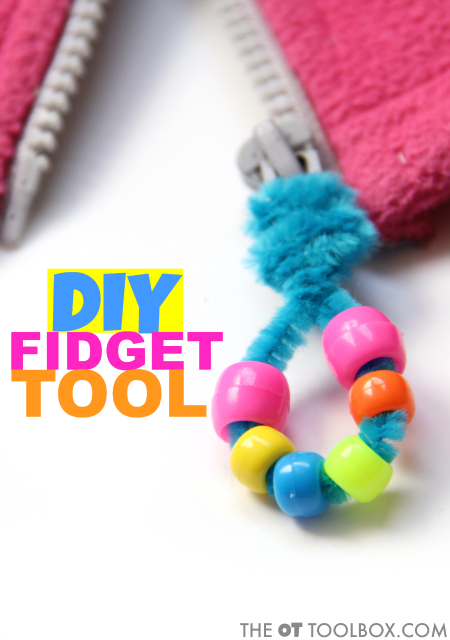
    And that’s it! The diy fidget tool zipper pull is done!
     
    Kids can use this DIY fidget tool zipper pull for addressing sensory needs that result in worry or anxiety, sensory meltdowns, or other issues as a result of sensory processing challenges. Read how to make a DIY fidget tool for sensory needs and how to use a fidget tool.
     

    So, why would a child need a fidget tool on their jacket?

     
    When kids have difficulty with self-regulation, emotions, anxiety, sensory processing, or other concerns, they may act out or end up in meltdown mode. This can be especially true in settings where environmental stimulation is on overload. 
     
    A situation such as on the noisy school bus where students are jostled around among other loud students and a lot of other children sitting nearby can be overwhelming to the child with sensory needs. 
     
    Standing in line at school as students wait to go outside to recess or to come indoors after recess can be a time when students have trouble keeping their place or keeping their hands to themselves. 
     
    A child who becomes overwhelmed by worry and anxiety heading into new situations can find comfort in movement that a fidget tool offers. 
     
    All of these are situations when a zipper pull fidget tool would be a great sensory diet accommodation to keep on hand. 
     
    Kids can use this DIY fidget tool zipper pull for addressing sensory needs that result in worry or anxiety, sensory meltdowns, or other issues as a result of sensory processing challenges. Read how to make a DIY fidget tool for sensory needs and how to use a fidget tool.
     

    A Fidget Tool is a Sensory Diet Tool

    Children who have a sensory diet in place or utilize sensory strategies to address specific needs may have other accommodations or tools in place such as a fidget tool. A keychain fidget tool can be just the item that provides children with a grounding point and gives them the ability to focus, attend, or participate in activities. 
     
    This DIY Fidget Tool would be great alongside our DIY Fidget Tool for School, allowing kids to wiggle and move those fingers!
     
    This jacket fidget tool is inconspicuous, making it a great fidget tool for school, much like this DIY weighted fidget tool.
     
    Kids can use this DIY fidget tool zipper pull for addressing sensory needs that result in worry or anxiety, sensory meltdowns, or other issues as a result of sensory processing challenges. Read how to make a DIY fidget tool for sensory needs and how to use a fidget tool.
     
    Want to know more about what a sensory diet is or how to implement one? Check out some of our recent posts on sensory diets and be on the watch for our upcoming book, The Sensory Lifestyle Handbook. 
     
     
    Kids can use this DIY fidget tool zipper pull for addressing sensory needs that result in worry or anxiety, sensory meltdowns, or other issues as a result of sensory processing challenges. Read how to make a DIY fidget tool for sensory needs and how to use a fidget tool.

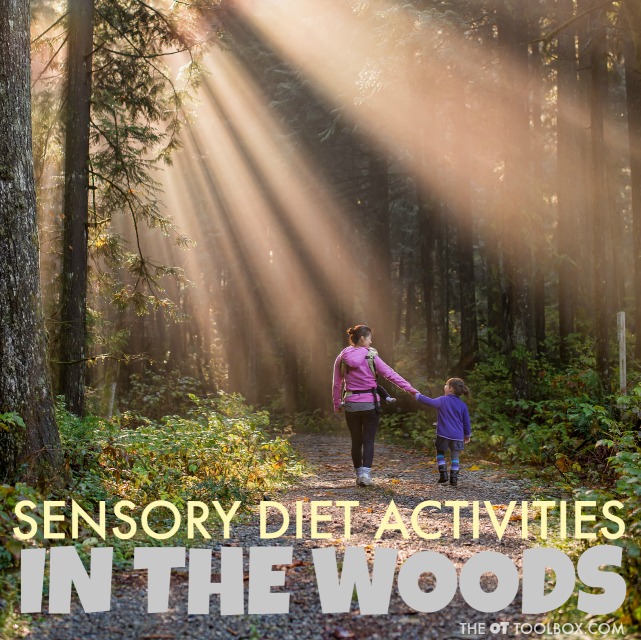
    Outdoor Sensory Diet Activities for Playing in the Woods

    Kids just don’t get much time to play outdoors anymore. We talked about the impact that reduced outdoor play has to do with sensory processing needs in kids in our recent Outdoor Sensory Diet Activities post. We chatted about the benefits of outdoor play in a typically developing child as well as those with sensory processing needs. This post covers the benefits of playing in the woods or a wooded area of a backyard or park. This might be a great recommendation for families who are going camping this summer and need some sensory strategies. Playing in the woods offers so many opportunities for sensory input, movement, gross and fine motor work. Not only that, but playing in the woods is a calming and organizing way to play! 


    These activities can be used as part of a sensory diet of specific activities and sensory tools designed to meet specific needs of an individual. 


    This will help when explaining about what a sensory diet is and what a sensory diet looks like for kids with sensory needs. 


    These ideas would be a great addition to all of our summer occupational therapy activities here on The OT Toolbox! 

    Occupational therapists can use these sensory diet activities for wooded areas to recommend sensory diet activities for outdoors or as part of a home program for children with sensory processing needs or SPD.

    Disclaimer: When therapists develop a specific and highly individualized sensory diet, it’s not just throwing together a day filled with sensory input. A sensory diet  is a specific set of sensory tools used to meet and address certain needs of the individual based on sensory need and strategizing. Each of the sensory diet activities above should meet specific needs of the child. Every child is different so applying sensory input to one child may look very different than that of another. Parents should use the tactics below along with your child’s occupational therapist.

    Wooded Area Sensory Diet

    Fallen tree balance beam
    Jump in leaves
    Climb small trees
    Look Up scavenger hunt
    Bird watch
    Touch tree trunks
    Natrue collection
    Picnic in the woods
    Magnifying glass to find bugs
    Lift rocks and inspect what’s underneith
    Hike
    Climb rocky areas
    Play in streams
    Climb steap hills
    Ride bikes on a trail
    Bug hunt
    Collect sticks
    Build a fort
    Climb trees
    Scent scavenger hunt
    Carry a backpack full of supplies


    Accommodations for addressing sensory needs in a wooded area

    For kids with sensory needs, the sensations of the outdoors and a wooded area can be too much for the child to tolerate. Try these accommodations for addressing sensory needs in backyard play:

    Calming snacks for a picnic
    Drink water from a sports bottle with a straw
    Wear sunglasses
    Wear a brimmed hat
    Wear high top shoes or shoes that provide proprioceptive input
    Wear shoes that the child is able to tolerate
    Compression clothing
    Wear a lightweight wind jacket
    Be cognizant of the scent of bug spray
    Recognize early signs of sensory overload and head back to the house or car before a meltdown occurs (Leave on a happy note)


    How to incorporate sensory play into playing outside

    Sensory diet activities can be specific to sensory system like these vestibular sensory diet activities. Sensory activities can be prescribed according to need along with environment in order to maximize sensory input within a child’s day such as within the school day. Using authentic sensory input within the child’s environment plays into the whole child that we must understand when focusing on any goal toward improved functional independence. 


    Many sensory diet activities can naturally be found outdoors. In fact, outdoor sensory diet activities are a fun way to encourage sensory input in a child’s environment and without fancy therapy equipment or tools. 


    It’s a fact that kids are spending less time playing outdoors. From after-school schedules to two working parents, to unsafe conditions, to increased digital screen time, to less outdoor recess time…kids just get less natural play in the outdoors. Some therapists have connected the dots between less outdoor play and increased sensory struggles and attention difficulties in learning. 

    Knowing this, it can be powerful to have a list of outdoor sensory diet activities that can be recommended as therapy home programing and family activities that meet underlying needs.

    That’s where the Outdoor Sensory Diet Cards and Sensory Challenge Cards come into play.

    They are a FREE printable resource that encourages sensory diet strategies in the outdoors. In the printable packet, there are 90 outdoor sensory diet activities, 60 outdoor recess sensory diet activities, 30 blank sensory diet cards, and 6 sensory challenge cards. They can be used based on preference and interest of the child, encouraging motivation and carryover, all while providing much-needed sensory input.

    Here’s a little more information about the Outdoor Sensory Diet Cards
    • 90 outdoor sensory diet activities
    • 60 outdoor recess sensory diet activities
    • 30 blank sensory diet cards, and 6 sensory challenge cards
    • They can be used based on preference and interest of the child, encouraging motivation and carryover, all while providing much-needed sensory input. 
    • Research tells us that outdoor play improves attention and provides an ideal environment for a calm and alert state, perfect for integration of sensory input.
    • Outdoor play provides input from all the senses, allows for movement in all planes, and provides a variety of strengthening components including eccentric, concentric, and isometric muscle contractions. 
    • Great tool for parents, teachers, AND therapists!


    Be sure to grab the Outdoor Sensory Diet Cards and use them with a child (or adult) with sensory processing needs!

    Outdoor sensory diet activity cards for parents, teachers, and therapists of children with sensory processing needs.

    More about outdoor sensory diet activities

    Sensory diets and specific sensory input or sensory challenges are a big part of addressing sensory needs of children who struggle with sensory processing issues. Incorporating a schedule of sensory input (sensory diet) into a lifestyle of naturally occuring and meaningful activities is so very valuable for the child with sensory needs. 

    That’s why I’ve worked to create a book on creating an authentic and meaningful sensory lifestyle that addresses sensory needs. The book is now released as a digital e-book or softcover print book, available on Amazon. 

    The Sensory Lifestyle Handbook walks you through sensory diet creation, set-up, and carry through. Not only that, but the book helps you take a sensory diet and weave it into a sensory lifestyle that supports the needs of a child with sensory processing challenges and the whole family.

    The Sensory Lifestyle Handbook is a resource for creating sensory diets and turning them into a lifestyle of sensory success through meaningful and motivating sensory enrichment.
    Occupational therapists can use these sensory diet activities for wooded areas to recommend sensory diet activities for outdoors or as part of a home program for children with sensory processing needs or SPD.

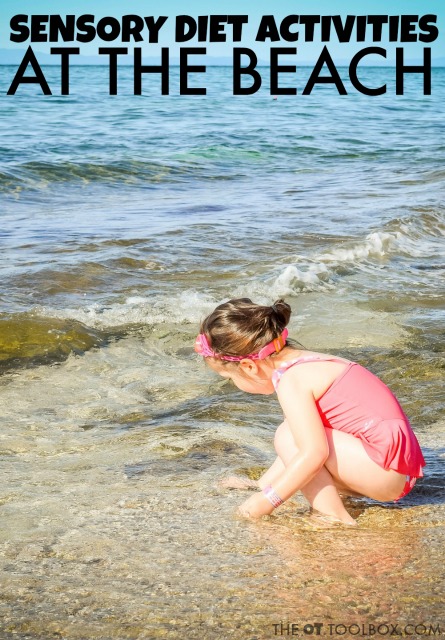
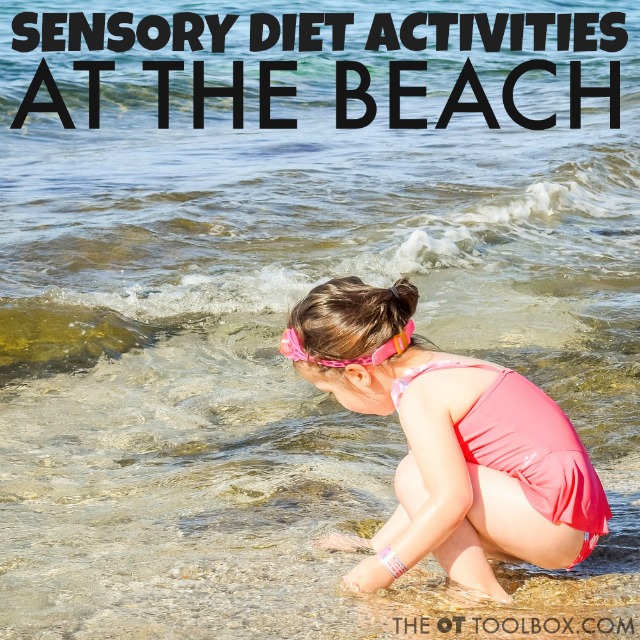
    Sensory Diet Activities at the Beach

    Whether you live at the beach or just travel to the beach for an annual family trip, it can be overwhelming for a child with sensory needs to cope with the sensory input that a trip to the beach can cause. The beach has so many sights, sounds, scents, and textures that can be used to meet sensory needs. For the family that is travelling with a child with sensory processing challenges, the beach can be both a blessing and a source of sensory overload. Use the strategies listed below to address sensory needs on a trip to the shore and the tactics to address hypersensitivity during a beach trip. These sensory diet activities at the beach can be a powerful tool or recommendation by occupational therapists and part of an outdoor sensory diet


    Knowing what a sensory diet is and how it can be used within a sensory lifestyle is a big part of integrating sensory activities and sensory play, even while travelling or for the family who lives at the beach or water area. 


    Kids with sensory processing challenges or SPD can use these sensory diet activities at the beach, perfect for Occupational Therapists to recommend as a home program for beach play or for families travelling to the beach for vacation.


    Sensory Diet Activities at the Beach

    Make a sandcastle
    Rake the sand (for pulling and pushing proprioceptive input)
    Bury feet or hands
    Sprinkle sand on hands or toys
    Fill a bucket with water
    Carry water from the shore to dry sand
    Dig wet sand 
    Dig dry sand
    Make a “wet castle” using wet sand
    Firm pressure massage with sunscreen
    Carry a bucket of sand
    Scoop and pour sand
    Scoop and pour water
    Inspect tide pools
    Pick up, scoop, and carry pebbles
    Jump low waves
    Sit at water’s edge for sand play
    Bury a toy and then find it
    Play visual discrimination games with sand toys: Child can look at a collection of toys then one is removed and the child needs to determine which is missing
    Play beach “I Spy”
    Roll up in a beach towel burrito with heavy input
    Fill a gallon sized bag with sand for a DIY weighted lap pad or shoulder pad
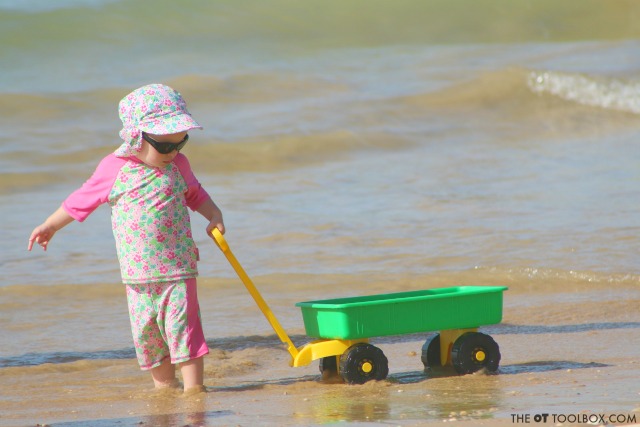
    Pull or push a bin or wagon of beach toys
    Carry a beach bag
    Fly a kite (great for visual motor skills, visual scanning, and proprioception)
    Catch and toss a beach ball
    Play beach ring toss
    Chase waves
    Look for seashells
    Rinse and clean seashells


    Kids with sensory processing challenges or SPD can use these sensory diet activities at the beach, perfect for Occupational Therapists to recommend as a home program for beach play or for families travelling to the beach for vacation.


    Accommodations for addressing sensory needs at the beach

    Children with sensory processing challenges can be overwhelmed given all of the sights, sounds, scents, and textures that the beach provides. Try these accommodations for addressing sensory needs in backyard play:
     

    Play in a baby pool to enjoy water without the waves
    Use a large beach blanket and weight down edges
    Be cognizant of hot sand
    Provide calming snacks
    Wear long sleeved sun clothing

    Wear water shoes instead of sandals or bear feet
    Proprioceptive input such as firm touch to the shoulders
    Bucket of water to rinse hands if child is sensitive to sand
    Sheltered area such as a wind tent or low umbrella if child is sensitive to wind blowing on skin
    Wear a lightweight wind jacket
    Use baby powder to remove sand
    Hat with brim to reduce bright light or intense light in eyes or on face
    Wear sunglasses
    Wear headphones to reduce background noise
    Be aware of certain sunscreens which as a strong scent
    Bring extra dry towels
     

    How to incorporate sensory play into playing at the beach

    Sensory diet activities can be specific to sensory system like these vestibular sensory diet activities. Sensory activities can be prescribed according to need along with environment in order to maximize sensory input within a child’s day such as within the school day. Using authentic sensory input within the child’s environment plays into the whole child that we must understand when focusing on any goal toward improved functional independence. 


    Many sensory diet activities can naturally be found outdoors. In fact, outdoor sensory diet activities are a fun way to encourage sensory input in a child’s environment and without fancy therapy equipment or tools. 

    It’s a fact that kids are spending less time playing outdoors. From after-school schedules to two working parents, to unsafe conditions, to increased digital screen time, to less outdoor recess time…kids just get less natural play in the outdoors. Some therapists have connected the dots between less outdoor play and increased sensory struggles and attention difficulties in learning. 
     
    Knowing this, it can be powerful to have a list of outdoor sensory diet activities that can be recommended as therapy home programing and family activities that meet underlying needs.
     
    That’s where the Outdoor Sensory Diet Cards and Sensory Challenge Cards come into play.
     
    They are a FREE printable resource that encourages sensory diet strategies in the outdoors. In the printable packet, there are 90 outdoor sensory diet activities, 60 outdoor recess sensory diet activities, 30 blank sensory diet cards, and 6 sensory challenge cards. They can be used based on preference and interest of the child, encouraging motivation and carryover, all while providing much-needed sensory input.
     
    Here’s a little more information about the Outdoor Sensory Diet Cards
    • 90 outdoor sensory diet activities
    • 60 outdoor recess sensory diet activities
    • 30 blank sensory diet cards, and 6 sensory challenge cards
    • They can be used based on preference and interest of the child, encouraging motivation and carryover, all while providing much-needed sensory input. 
    • Research tells us that outdoor play improves attention and provides an ideal environment for a calm and alert state, perfect for integration of sensory input.
    • Outdoor play provides input from all the senses, allows for movement in all planes, and provides a variety of strengthening components including eccentric, concentric, and isometric muscle contractions. 
    • Great tool for parents, teachers, AND therapists!
     
     
    Outdoor sensory diet activity cards for parents, teachers, and therapists of children with sensory processing needs.


    The Sensory Lifestyle Handbook is a resource for creating sensory diets and turning them into a lifestyle of sensory success through meaningful and motivating sensory enrichment.
     
     
    Kids with sensory processing challenges or SPD can use these sensory diet activities at the beach, perfect for Occupational Therapists to recommend as a home program for beach play or for families travelling to the beach for vacation.

    Be sure to grab the Outdoor Sensory Diet Cards and use them with a child (or a sensory diet for adults) with sensory processing needs!

    Sensory diets and specific sensory input or sensory challenges are a big part of addressing sensory needs of children who struggle with sensory processing issues. Incorporating a schedule of sensory input (sensory diet) into a lifestyle of naturally occurring and meaningful activities is so very valuable for the child with sensory needs. 

    That’s why I’ve worked to create a book on creating an authentic and meaningful sensory lifestyle that addresses sensory needs. The book is now released as a digital e-book or softcover print book, available on Amazon. 

    The Sensory Lifestyle Handbook walks you through sensory diet creation, set-up, and carry through. Not only that, but the book helps you take a sensory diet and weave it into a sensory lifestyle that supports the needs of a child with sensory processing challenges and the whole family.

    Get The Sensory Lifestyle Handbook here.

    Colleen Beck, OTR/L has been an occupational therapist since 2000, working in school-based, hand therapy, outpatient peds, EI, and SNF. Colleen created The OT Toolbox to inspire therapists, teachers, and parents with easy and fun tools to help children thrive. Read her story about going from an OT making $3/hour (after paying for kids’ childcare) to a full-time OT resource creator for millions of readers. Want to collaborate? Send an email to contact@theottoolbox.com.
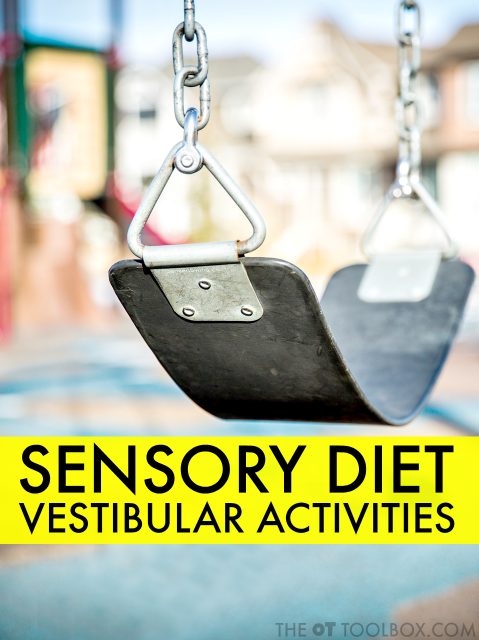
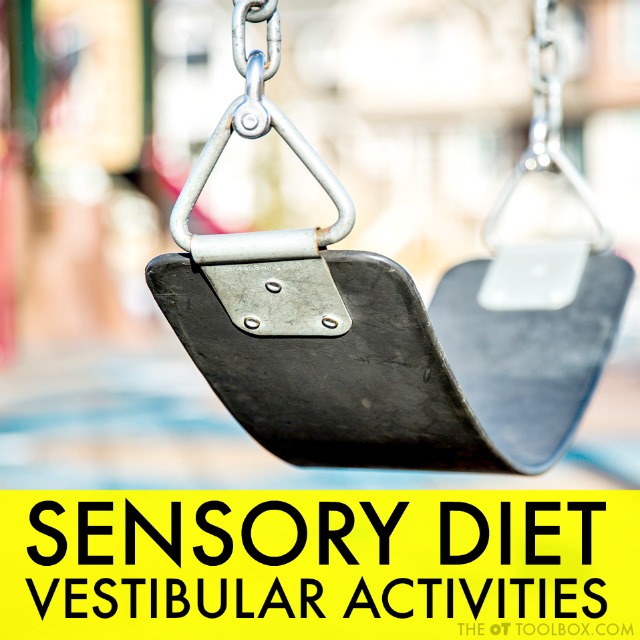
    Sensory Diet Vestibular Activities

    The vestibular system is a powerful one! It can be a confusing one when we consider how it impacts our body’s ability to regulate. The vestibular system is one of the three systems that impact all of the others and therefore all learning, cognition, and occupational performance. the vestibular system develops early in life and plays a very important role in early development. for these reasons, today we’re talking about Sensory Diet Vestibular Activities. These are vestibular activities that can be used in a sensory diet and a sensory lifestyle full of meaningful sensory activities. The vestibular activities listed below are those that impact an individual in many ways.


    Use these sensory diet vestibular activities to address sensory needs such as hyperresponsiveness or hyperresponsiveness to vestibular sensory input, creating a functional and meaningful sensory lifestyle for kids.


    The Vestibular System


    Understanding the vestibular system can help explain how and why we need to incorporate vestibular activities into our daily life.


    Here is an explanation of the vestibular system from a neurological focus.


    Here are vestibular red flags indicating a problem with the vestibular system and how that looks in a child’s day.


    Check out those two links above to get a good background on the vestibular system and how it impacts every activity and function that we perform. In fact, the vestibular system plays a huge part in coordination of our head movements with the stimulation in the environment. 


    + We are then able to copy words and phrases from the board in the classroom by shifting our vision from the table surface to the overhead board without losing our place.


    + We are able to watch a moving object like a soccer ball as it travels across a field.


    + We are able to read a speech while looking up at our audience, without losing our place on the cue cards.


    + We are able to hold our body in a specific position such as a downward dog yoga position while concentrating on deep breathing.


    + We are able to maintain our head positioning while cutting with scissors or while riding a bicycle.


    The vestibular system plays such a huge part in our daily tasks in a manner that happens naturally and without effort!


    It is easy to see how a problem with the vestibular system could result in major issues with functioning!

    Sensory Diet Vestibular Activities

    The sensory vestibular activities listed below are playful ways to promote performance and tolerance to movement activities. They are also challenges against gravity to help kids with difficulties in equilibrium, balance, self-regulation, and adjusting to typical sensory input. The vestibular system operates through receptors in the inner ear and in conjunction with position in space, input from the eyes, and feedback from muscle and joint receptors, is able to contribute to posture and appropriate response of the visual system to maintain a field of vision. This allows an individual to detect movement and changes in the position of the head and body. Dysfunction in the vestibular system may result in hypersensitivity to movements or hyposensitivity to movements.

    When
    providing vestibular input as an intervention strategy for sensory needs,
    various movement patterns should be considered. Depending on the individualized
    needs of the child, activities can be designed to include movements such as:

    Prone swinging
    Seated swinging
    Standing swinging
    Linear movements
    Vertical
    movements
    Rotary movements
    Angular movements
    Upside down
    movements
    Horizontal
    movements
    Challenges to
    balance
    Inverted head
    Unstable base of
    support
    Starts and stops
    in motion
    Changes in
    direction

    Changes in speed

    Vestibular Hyperresponsiveness

    Some children may present with vestibular hyperresponsiveness.


    This looks like a variety of things in children. As we know, every child is uniquely different. The indicators of sensory hyperresponsiveness listed here are only just a few ways that vestibular hyperresponsiveness may present in kids: 

    • Overly dizzy with motions
    • Resistant to moving activities such as
      swings, slides, elevators, or escalators
    • Fear of unstable surfaces
    • Unable to tolerate backward motions
    • Unable to tolerate side to side motions
    • Illness in moving vehicles
    • Avoids swings or slides
    • Gets motion sick easily
    • Gravitational insecurity
    • Challenges with unstable surfaces
    • Dislike of moving surfaces 

    Try adding some of these vestibular activities into a sensory diet or sensory lifestyle. (These are just a FEW activities that can be used by children. Activities can be modified to include all of the movement planes listed above.)


    Sensory Diet Vestibular Activities for Hyperresponsiveness: 

    • Skipping
    • Prone activates with arms supporting the upper body at the shoulders and elbows
    • Slowly adding activities in the quadruped positioning
    • Adding a support for jumping, hopping, balance activities
    • Crawling
    • Walking
    • Sliding
    • Rolling
    • Being pulled on a blanket or sled (indoor works, too!)
    • Throwing bean bags at a target
    • Throwing/catching a ball
    • Movement obstacle courses
    • Wheelbarrow races

    Vestibular Hyporesponsiveness

    On the flip side, a child can present with hyporesponsiveness of the vestibular system. Hypo-responsiveness of the vestibular sense may present in a child as an under-responsiveness or underreaction to vestibular sensation. This may look like the actions listed below. Remember that every child is different. This list is only a sample of the various ways a child can present when they are impacted by hyporesponsive vestibular system.

     
    Hyporesponsiveness of the vestibular system examples:
    • Constant movement including jumping,
      spinning, rocking, climbing
    • Craves movement at fast intervals
    • Craves spinning, rocking, or rotary
      motions
    • Poor balance on uneven surfaces
    • Constantly fidgeting
    • Increased visual attention to spinning
      objects or overhead fans
    • Bolts or runs away in community or group
      settings, or when outdoors or in large open areas such as shopping malls
    • Difficulty maintaining sustained
      attention
    • Impulsive movement
    • Constantly getting up and down from desk
      in the classroom
    • Walks around when not supposed to (in the
      classroom, during meals, etc.)
    • Loves to be upside down

    Sensory Diet Vestibular Activities for Hyporesponsiveness: 

    Children with hyporesponsiveness of vestibular input may benefit from a variety of activities. Below are just a jew of these ideas. Try using these sensory diet vestibular activities when addressing hyporesponsiveness of vestibular sensation: 

    • Therapy ball
    • Fidget tools
    • Cushion or partially deflated beach ball on the floor under feet at a desk or chair. 
    • Tie therapy band (TheraBand) or a resistive cord around the legs of a student’s chair for use as a foot fidget
    • Provide appropriate play-based opportunities for movement needs (sit and spin toy, see saw toy, rocking chair, trampoline)
    • Weave vestibular input throughout the day and prior to fine motor/visual motor activities
    • Ensure the feet touch the ground or have support when seated in a chair or on the toilet

    Sensory diets and specific sensory input or sensory challenges are a big part of addressing sensory needs of children who struggle with sensory processing issues. Incorporating a schedule of sensory input (sensory diet) into a lifestyle of naturally occuring and meaningful activities is so very valuable for the child with sensory needs. That’s why I’ve worked to create a book on creating an authentic and meaningful sensory lifestyle that addresses sensory needs. You can watch for more information on this book coming very soon. If you would like to be the first to know more about this book (and want to grab some upcoming freebies related to sensory lifestyles and sensory diet activities, sign up here. You’ll be the first to get some awesome tools for addressing sensory needs in motivating and meaningful ways.

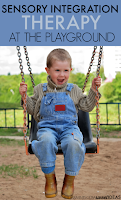
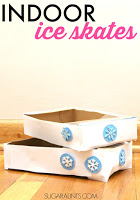
    The vestibular system is one of the bodys senses and responsible for awareness of our body in space and gravitational insecurity during tasks.  Kids can use balance beams to work on integration of the vestibular sense, perfect for children who seek movement, run into objects, fear certain positions, have trouble visually tracking items in reading and written, and more. Occupational Therapy with a balance beam activities. Try these vestibular sensory activities with the family this Fall Try these sensory integration therapy ideas at the playground for vestibular and proprioceptive sensory input. Indoor Ice Skates proprioception and vestibular sensory play activity


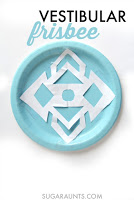
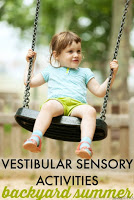
    Vestibular sensory play activity for indoor play. This shot put game is a great way to incorporate the vestibular system into play. Super easy and fun Frisbee Vestibular activity for indoor play this winter.  Get the kids moving! Try these backyard vestibular sensory activities for summerMake a wobble balance disc from ice for sensory input and balance training. This helps kids with attention, strengthening, and fidgeting while incorporating sensory needs like proprioception and vestibular integration.
    These vestibular activities for a sensory diet are great sensory ideas for addressing hyperresponsiveness or hyporesponsiveness to vestibular input as well as adding vestibular sensory input into a sensory diet or sensory lifestyle.