Sensory Processing Spanish Resource

Spanish Occupational Therapy Resource

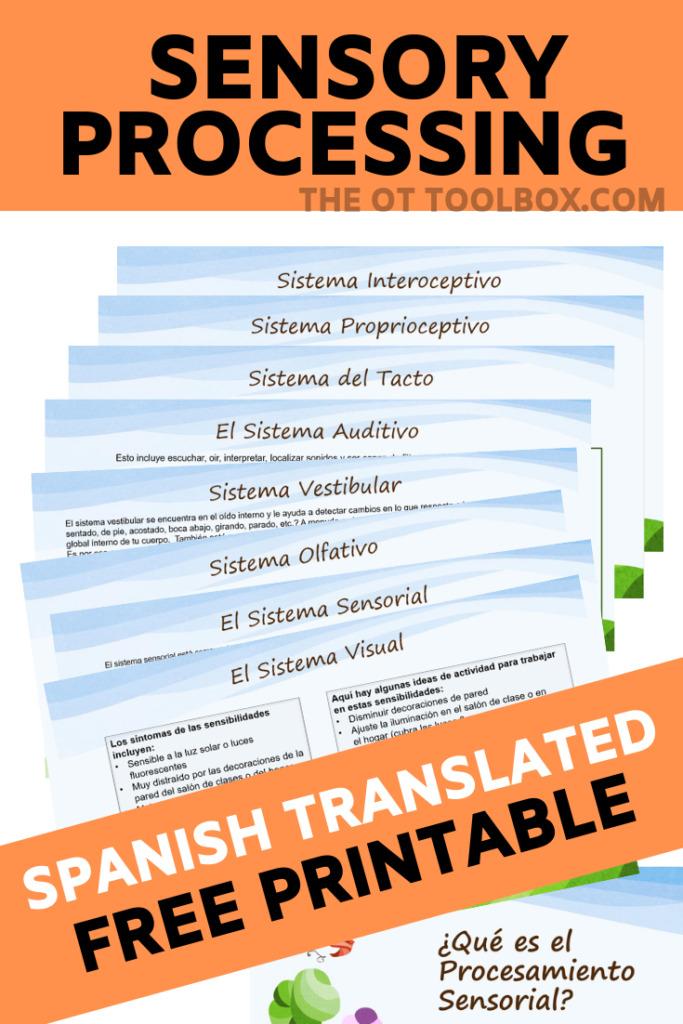
Here on The OT Toolbox, we’ve had a Sensory Processing Disorder information packet available for a long time. The booklet is a free handout that offers an understanding on sensory processing concerns. It’s a handout that can be used to advocate for sensory needs and is one of our top sensory processing resources here on the site. I’m excited to say that this booklet has been translated into Spanish! Below, you will find a Spanish resource on Sensory Processing that can be used by therapists working with Spanish-speaking clients and families.

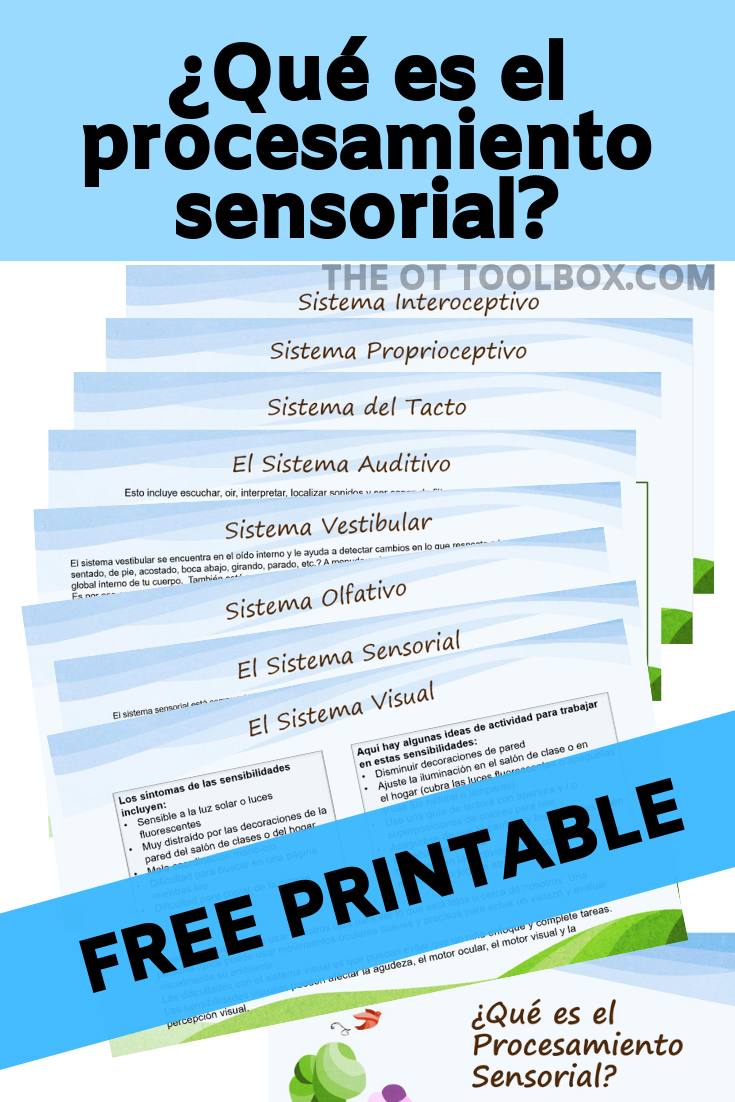
Sensory processing information resource in Spanish for printing and educating in Spanish resources for occupational therapy

Sensory Processing Disorder Resource in Spanish

Sensory processing resources in Spanish can be hard to come by. For the client working in the Spanish-speaking community or for those looking for resources for their caseload, having a go-to booklet can make all the difference. Therapists need resources that don’t take time to create while supporting the clients they serve. 
This booklet can be used to help and educate adults with sensory processing concerns too. ,
Many times, therapists use conversational Spanish, but a sensory resource translated into Spanish would be an asset to their therapy toolbox. The specific terms used in describing and understanding SPD and the sensory systems can be tricky to portray in translation.


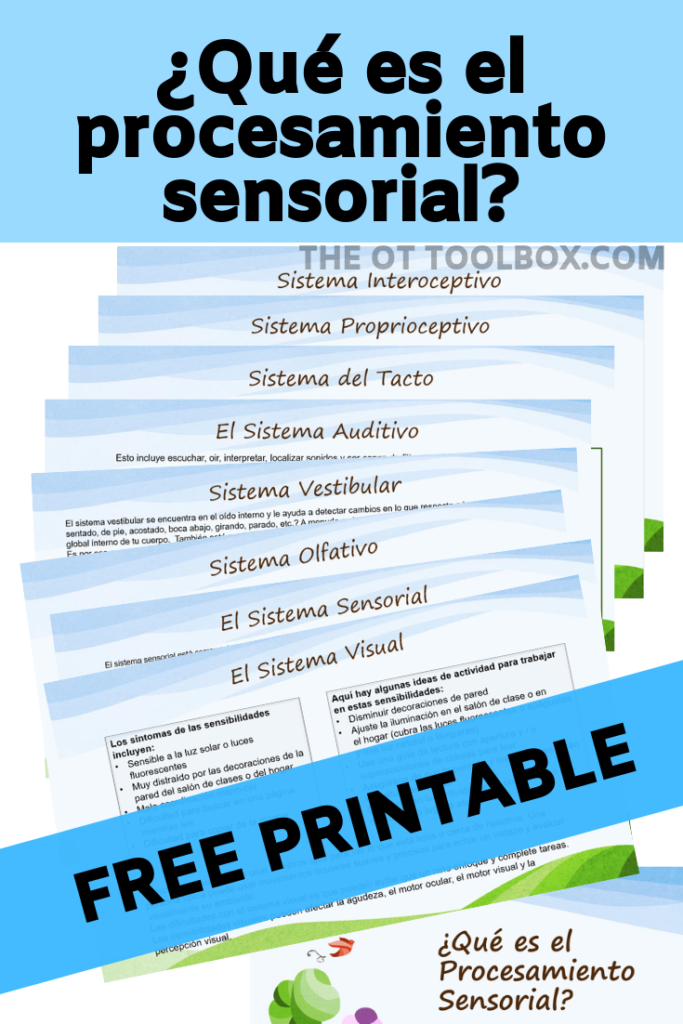
Que es procesamiento sensorial free printable resource for sensory processing information with a Spanish translation for Spanish speaking clients


This Spanish Sensory Processing information booklet is perfect for the therapist needing resources to educate parents and teachers.

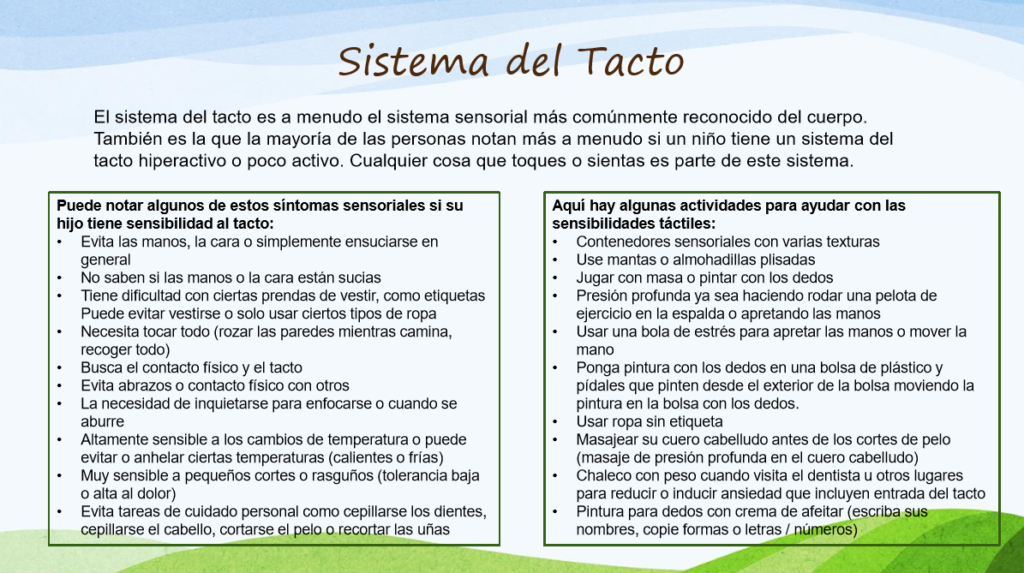
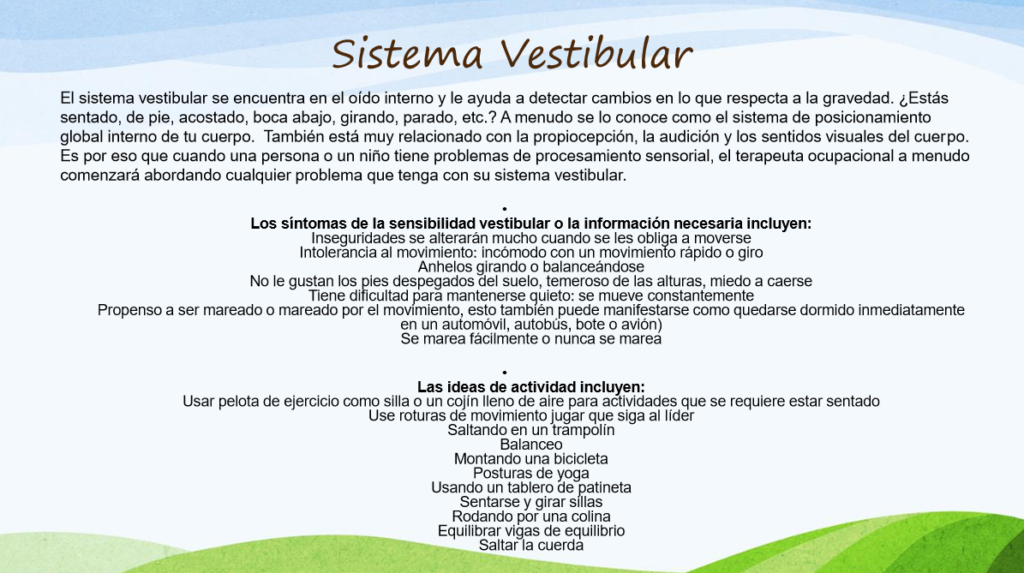
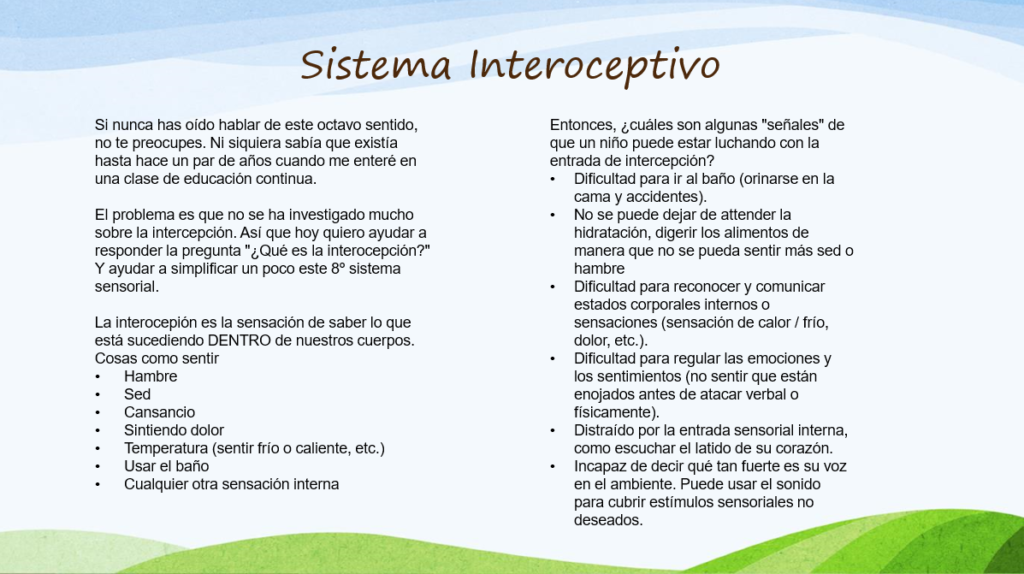
You’ll find information on sensory processing, including each of the sensory systems and how these sensory systems present when sensory processing is a challenge. You’ll find each sensory system covered on its own page, including interoception, vestibular sense, tactile sense, and proprioception…all of which are big topics and can be difficult to portray in translating sensory information during occupational therapy sessions.

Sensory processing information in spanish for educating and helping Spanish speaking occupational therapy clients

Pages in the sensory processing information booklet are easy to read and broken own by sensory system. For the full printable booklet, scroll below to enter your email.


In this sensory resource, you’ll find each of the sensory systems broken down and information telling how the sensory systems are related to behaviors, actions, and specific needs that we see. This resource is a powerful way to get the information across! 


Print this free Spanish resource for explaining sensory processing with a spanish translation.

Occupational Therapy Resources in Spanish

Let me know if this resource is helpful to you! Would you be interested in more Occupational Therapy resources in Spanish?

Free Sensory Processing Disorder Booklet in SPANISH!

 
Use this sensory processing resource for understanding sensory processing and the sensory systems


Celebrate “Sensory”

These sensory memes are perfect for advocating for sensory and sharing sensory processing information.
If there’s one thing that is certain, it’s that we are ALL “sensory”! So often, therapists or teachers hear the term “sensory” in the classrooms and clinics. The term sensory can sometimes be used as a noun to describe a child or behaviors that are a result of sensory processing needs. Today, I wanted to offer a handful of sensory memes that can help us to better understand that we are all sensory creatures. It’s the way we are wired as humans!

While there definitely are behaviors and actions that are connected or as a result of unmet sensory needs or in direct relation to an unregulated sensory system, sometimes the word “sensory” is just that. A word. So, let’s celebrate the sensory beings that we all are with a few sensory memes!

 
Sensory meme: We are ALL Sensory in one way or another!
 

Sensory Memes

The sensory memes here are part of a Celebrating Sensory …celebration! If you would like a file with these memes delivered right to your inbox, scroll to the bottom of this post. You can get them as well as two sensory processing disorder packets for celebrating and advocating for sensory processing. They are free files for you!
 

We are all “Sensory”

 
Here’s the thing: we are ALL sensory! We all have ways that we keep ourselves regulated whether it’s by taking a deep breath when you’re feeling stressed, or by getting up and pacing during a phone call. You’ve seen so many forms of self-regulation in action:
 
  • Clicking a pen during a meeting
  • Quickly tapping a toe or wiggling one leg
  • Stretching
  • Taking a moment to take a deep breath and refresh
  • Needing to step away and sip cold water
  • Naps!
Sensory regulation comes in all forms. And, sensory processing needs can be met in so many ways. We are all different and in that, comes so many means of self-regulating.
 
For our kids who struggle with regulation, yes; The term “sensory” applies. But, we are ALL sensory!


For ideas to add sensory input into everyday play, try these sensory play ideas.

For information on sensory diets, we’ve got a lot here on The OT Toolbox. This article on What is a Sensory Diet can get you started.

HUGE Sensory Resource


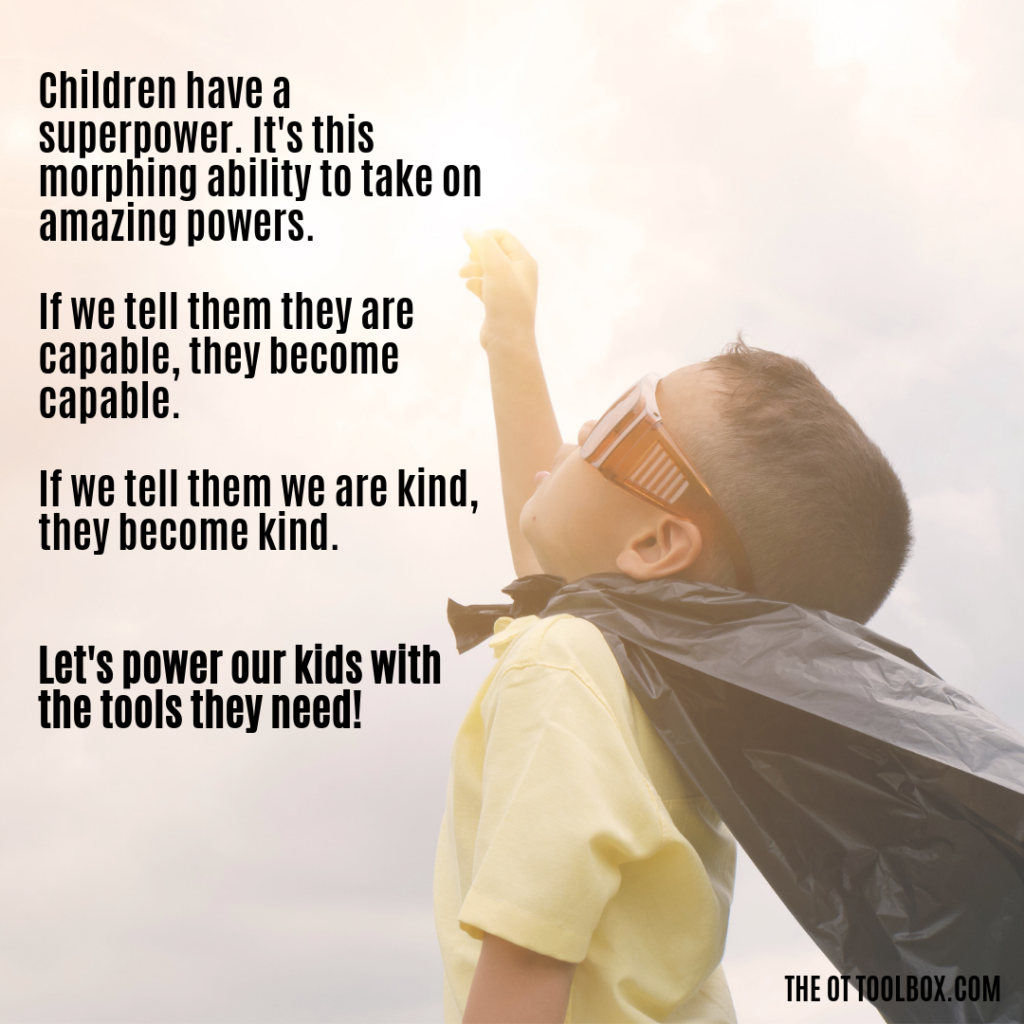
Sensory meme: Child super powers. Kids are capable!
 
Celebrate ability and kindness. Our kids are capable. Let’s power them by telling them.
Sensory meme: You are strong, capable, loved, and so much more!
 
You are strong, capable, loved, and so much more!
Sensory meme: Celebrate differences!
 
Celebrate what makes us different!
Sensory meme: Difficult roads often lead to beautiful destinations.
 
Difficult roads often lead to beautiful destinations.
 
Want to get these memes? These pics AND our Sensory Processing Disorder Booklet and the NEW Spanish version of the Sensory Processing Disorder Booklet are available in a massive printable file. Print off the booklets to start advocating for sensory processing today. Simply print and hand out! The memes can be used on social media.
 
Grab them by entering your email below. If you are using a school system’s email or an email on a .us, .edu, .gov or other email on a large system, the email delivering these files may be blocked as the email contains a file to access. You may want to enter a personal email address here to ensure delivery. For any issues with accessing these files, simply email contact@www.theottoolbox.com

Free Sensory Processing Disorder Booklet

    We respect your privacy. Unsubscribe at anytime.

    Colleen Beck, OTR/L has been an occupational therapist since 2000, working in school-based, hand therapy, outpatient peds, EI, and SNF. Colleen created The OT Toolbox to inspire therapists, teachers, and parents with easy and fun tools to help children thrive. Read her story about going from an OT making $3/hour (after paying for kids’ childcare) to a full-time OT resource creator for millions of readers. Want to collaborate? Send an email to contact@theottoolbox.com.

    Sensory Meltdown or Tantrum: Which one is it?

    When working with sensory kids and their families, one of the number one questions that is asked is—is this a sensory meltdown or a tantrum? It’s often hard to tell the difference between the two, and takes some detective work to figure out which one it is. Determining if a sensory meltdown is occurring is especially difficult because sensory thresholds for these children can vary day to day. So often we hear, “Is it sensory or a behavior” that is causing an action in a child. Here are the clues to help you discern the difference.

    For more information on sensory processing, you’ll want to grab our free sensory processing disorder information packet. This is a handy printable designed to better understand SPD and what that looks like in our kids.

    How to know if a chil is having a sensory meltdown or tantrum. These clues will tell the difference.

    Behaviors of Sensory Meltdowns and Tantrums Look Similar

    The challenge in determining whether behaviors are the result of a sensory meltdown or a tantrum, is that the child’s behaviors in both instances, are usually the same.

    Behaviors that are observed during both a sensory meltdown and a tantrum may include:
    • Screaming
    • Hitting
    • Kicking
    • Name calling
    • Hiding or avoidance
    • Crying

    The difference between a meltdown and tantrum however, can be often times, be found in the events prior to the behaviors.

    For information on sensory play ideas, you’ll find a lot here on The OT Toolbox.

    Tantrums

    Tantrums are usually in response to the child not receiving a want/desire out of a situation, or not achieving a goal as they had planned. In these instances behaviors typically occur for an audience, and may cease when the child has achieved their goal. This may be a way of testing boundaries with the authority figure in the situation.

    Tantrums can usually be resolved with consequences, reminders of the boundaries, removal from the situation, or distraction to the upset child. Children are also not typically emotionally drained after a tantrum and can resume their routine with ease. This is not necessarily the case when a sensory meltdown occurs.

    What is a sensory meltdown and how to tell if a child's behaviors and actions are a sensory meltdown or a tantrum

    Sensory Meltdowns

    Sensory Meltdowns are the result of sensory overload, and reaction to the big feelings that overloads cause.

    When in the throes of the sensory meltdown, the child is not able to control their reactions, behaviors, or emotions.  These episodes may also leave the child inconsolable, even when distraction or preferred items are offered, or even when the parent ‘gives’ into what the child is demanding.

    Meltdowns may appear happen without a trigger, or may be in response to an event that seems otherwise innocuous to the parent.

    The main clue that the behaviors the child is exhibiting is sensory meltdown related is that the behavior does not achieve a want, need or goal.

    In the case of a sensory meltdown, having a set of strategies available through use of a sensory diet can help with sensory overload, big feelings, and reactions.

    Clues a Behavior is a Sensory Meltdown

    • Reaction to event, feeling or overload of sensory input
    • Is not to achieve a want, need, or goal
    • Continues even without an audience
    • Ends only when the child has calmed down and the feelings are out
    • The child is very tired after the meltdown or appears ‘spent’
    • The child may feel embarrassment or shame as a result of their actions—typically this is seen in older children.

    These signs can show up at home, in the community, or in the classroom. Here are strategies for using a sensory diet in the classroom.

    What can Trigger a Sensory Meltdown?

    Sometimes, we can see a meltdown coming, and other times it seems to hit out of the blue. This is particularly true of children who are a little bit older, and understand what is acceptable and what is not. Because of this, parent’s often report that their children do GREAT at school, and then lose it at home.

    Some clues that it might be a meltdown include:

    • Being over tired or hungry
    • Illness or general unwellness—allergies can be a trigger to this sense of general unwellness. This may include food allergies or sensitivities.
    • “Holding it together” for long periods of time—going to school, camp, play dates, etc.
    • Change in routines—extra day off of school, vacation, or parent traveling. Essentially, anything outside of the child’s daily routine being off may result in a sensory overload and meltdown.

    It may take several hours, or several days before a meltdown occurs as a result of these triggers. As a result, it can appear as though there is no cause for the meltdown until the events prior to the event are examined. If you go back far enough into the past few days, a trigger is usually able to be found.

    Whether it’s a tantrum, or a meltdown, behavior is a direct form of communication from kids to adults about what is going on in their life. Knowing the difference between the two can lead to recognition of triggers and patterns, implementation of prevention strategies and successful emotional recovery in both situations.

    Create a sensory lifestyle to address sensory meltdowns or tantrums in a way that fits into the daily life of a child with sensory needs.

    Tools for Sensory Meltdowns

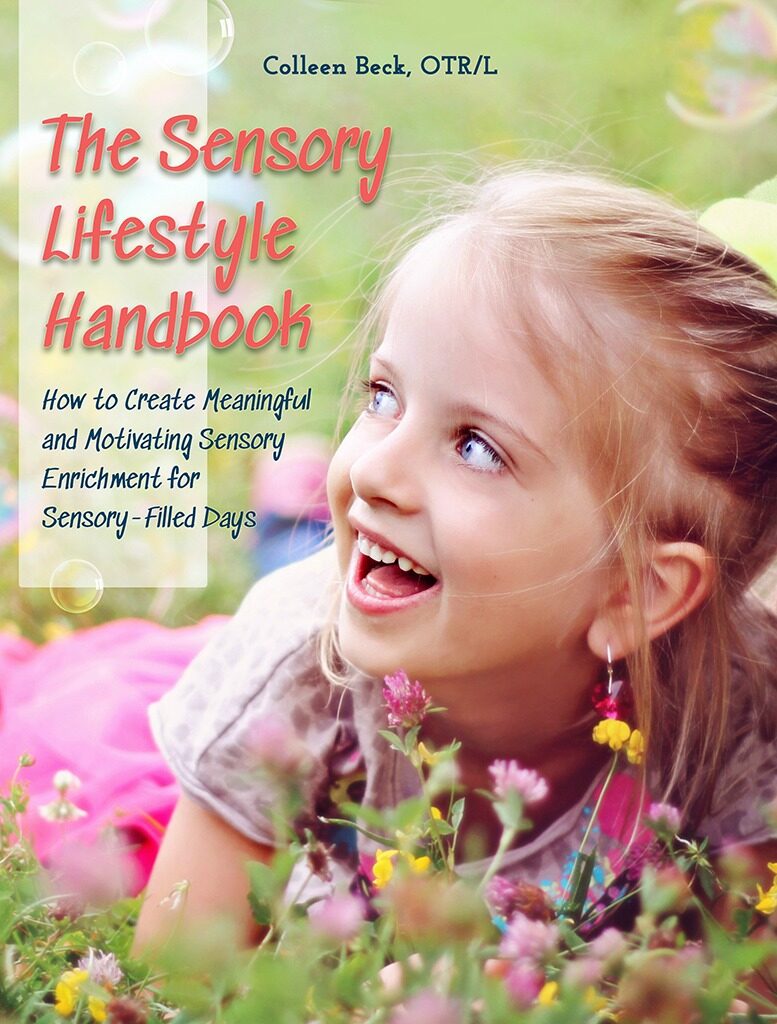
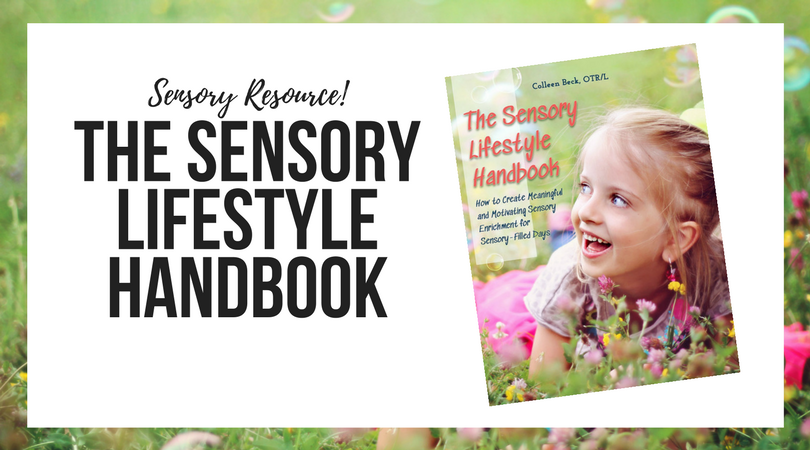
    The Sensory Lifestyle Handbook is a guidebook in strategies to help with sensory meltdowns. Taking the specific and individualized activities that make up a Sensory Diet and transitioning them into a lifestyle of sensory modifications, strategies, and techniques is a Sensory Lifestyle!

    This book is for therapists, parents, teachers, or anyone who works with kids with sensory needs.

    If you struggle with creating a sensory diet that WORKS…
    If you are tired of trying sensory tools that just don’t seem to fit within a child’s busy day…
    If you are overwhelmed and don’t know where to start with understanding sensory processing…
    If you are a therapist struggling to set up sensory programs that are carried out and followed through at home and in the classroom…
    If you are a teacher looking for help with regulation, attention, or sensory meltdowns and need ideas that mesh within the classroom schedule…
    If you are looking for sensory techniques that kids WANT to use…
    If you are striving to create a sensory lifestyle that meets the needs of a child and family…

    The Sensory Lifestyle Handbook is for you!

    Sensory Lifestyle Handbook book by The OT Toolbox author, Colleen Beck, OTR/L

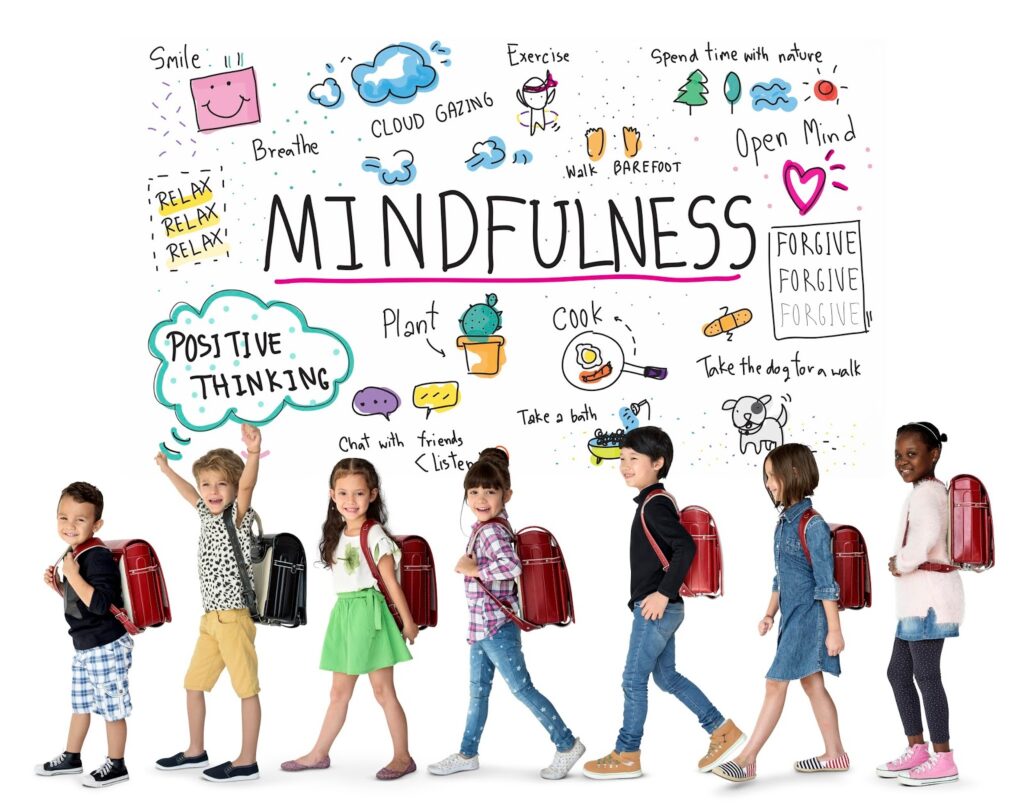
    Fun Mindfulness Activities

    Here, you will find fun mindfulness activities to help kids with creative mindfulness exercises that can help kids feel better, reduce stress, address anxiety, and have a greater awareness of their body and mind. Mindfulness activities for kids can be used as a self-regulation tool or a coping strategy. The sky’s the limit!
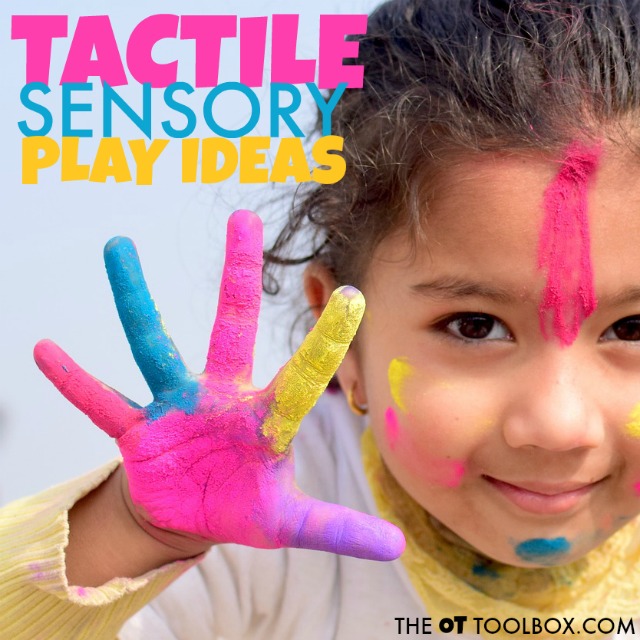

    Looking for more ways to teach mindfulness? Here are winter themed mindfulness activities that kids will love. 

    These FUN Mindfulness activities are helpful self-regulation tools for kids.


    Fun Mindfulness Activities


    First, let’s talk about what mindfulness means.

    Mindfulness activities for kids can help kids with attention coping, learning, self-regulation, and more!

    What is mindfulness?


    Mindfulness is the ability to bring your attention to the events happening in the moment. It allows us to carefully observe our thoughts and feeling, to develop a sense of self awareness.  Mindfulness can be done anywhere. It does not require special equipment. It can be as easy as sitting and thinking or visualizing a place in your mind.

    Who is mindfulness good for?


    Mindfulness is great for any age, including kids. School can be a very overwhelming experience with expectations, rules, noises, crowds. Being able to do fun mindfulness activities can be a good way for children to self-regulate, focus and feel better emotionally and physically. Learning how to self-regulate (being able to manage your own emotions) is an important skill to learn at a young age.


    Mindfulness is a helpful tool in addressing executive functioning skills needs in kids.


    Mindfulness activities for kids


    Listed below are some easy, beginning mindfulness activities to try with kids.
    Looking for more ideas? Here are some mindfulness videos on YouTube.

    Mindfulness Activity #1: Mindful Breathing- 

    Taking deep breaths is so important in relaxation it brings awareness to your body. There are many different ways to teach kids to take deep breaths and then blow out. Using a pinwheel, blowing bubbles, blowing out candles, picturing a balloon opening and closing with breath. Even having your child breath in while you count to 5 and then breath out.

    Mindfulness Activity #2: Body Scan- 

    Have your child lay on his/her back. Tell them to tense up all muscles from head to toe and hold for 10-15 seconds. Then have them release and relax, ask them how they feel. This exercise helps kids to recognize how their body is feeling in a tense vs. Calm state.

    Mindfulness Activity #3: Visualization or Guided Imagery–

    This is a relaxation technique that is used to promote positive mental images. You can find guided imagery scripts online, pertaining to many different subjects from nature to emotions. Start by having your child close their eyes, while seated or lying down. Slowly read the script and have them visualize the image in their minds, then have them draw a picture of that place and keep it in their desk or at home as a reference to a calm place for them.

    Mindfulness Activity #4: Take a Walk- 

    Being outside and taking a walk is a great way for your child to be present in the moment. Point out the different sounds heard from birds chirping to leaves rustling. Notice the smell of the fresh cut grass or flowers. Feel the different textures of sand and rocks. Notice the sun, wind and clouds. Bring a blanket and lay on the grass, look up at the trees, look at the clouds.   Walk over to a pound and listen for frogs, look for fish and throw rocks in to make a splash.

    Mindfulness Activity # 5: Stretching/Yoga- 

    Taking deep breaths and stretching can be a very calming and teaches you to be aware of how your body is feeling.  Turn the lights down, put on relaxing music and help guide your child through bedtime relaxation stretches for kids.


    Use these mindfulness strategies for kids as a coping strategy, to help with attention in the classroom, to impact learning, or to address self-regulation needs. What’s very cool is that each awareness activity could be themed to fit classroom or homeschool lessons, the curriculum, or seasons. Make these mindfulness activities fit the needs of your classroom, clients, and kids!


    Mindfulness is a coping strategy used in The Impulse Control Journal.

    The Impulse control journal is a printable journal for kids that helps them to identify goals, assess successes, and address areas of needs. The Impulse Control Journal is a printable packet of sheets that help kids with impulse control needs.

    Read more about The Impulse Control Journal HERE.

    The Impulse Control Journal has been totally revamped to include 79 pages of tools to address the habits, mindst, routines, and strategies to address impulse control in kids.

    More about the Impulse Control Journal:

    • 30 Drawing Journal Pages to reflect and pinpoint individual strategies
    • 28 Journal Lists so kids can write quick checklists regarding strengths, qualities, supports, areas of need, and insights
    • 8 Journaling worksheets to pinpoint coping skills, feelings, emotions, and strategies that work for the individual
    • Daily and Weekly tracking sheets for keeping track of tasks and goals
    • Mindset,Vision, and Habit pages for helping kids make an impact
    • Self-evaluation sheets to self-reflect and identify when inhibition is hard and what choices look like
    • Daily tracker pages so your child can keep track of their day
    • Task lists to monitor chores and daily tasks so it gets done everyday
    • Journal pages to help improve new habits
    • Charts and guides for monitoring impulse control so your child can improve their self-confidence
    • Strategy journal pages to help kids use self-reflection and self-regulation so they can succeed at home and in the classroom
    • Goal sheets for setting goals and working to meet those goals while improving persistence
    • Tools for improving mindset to help kids create a set of coping strategies that work for their needs
    This is a HUGE digital resource that you can print to use over and over again.  


    These fun mindfulness activities for kids can help kids in so many ways!
    About Christina:
    Christina Komaniecki is a school based Occupational Therapist. I graduated from Governors State University with a master’s in occupational therapy.   I have been working in the pediatric setting for almost 6 years and have worked in early intervention, outpatient pediatrics, inpatient pediatrics, day rehab, private clinic and schools. My passion is working with children and I love to see them learn new things and grow. I love my two little girls, family, yoga and going on long walks.

    Toys to Improve Tactile Sensory Awareness

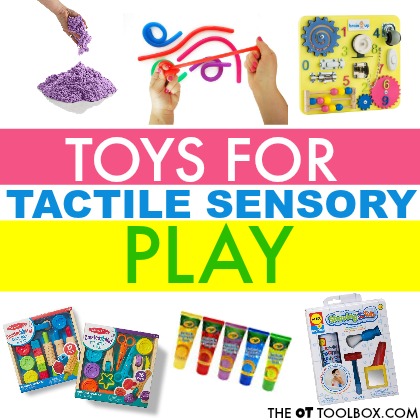
    This resource on toys for tactile sensory play support sensory processing. A child that has challenges with tactile sensory experiences, tactile discrimination, and sensory touch can benefit from these toys for tactile sensory awareness.

    So often, therapists are asked for occupational therapy toy recommendations this time of year. Parents are looking for toys that promote skills like fine motor work, sensory benefits, or motor skill development. Today, we’re sharing toys that improve tactile sensory awareness. These are great toy recommendations for sensory needs and just fun ways to challenge the tactile sensory system through play!

    These are great ideas to add to a sensory diet, depending on the child’s specific needs.


    Need toys ideas to improve tactile sensory awareness? These toys are a fun way to help kids with sensory defensiveness or expereince sensory play while challenging tactile sensory input through the hands.


    Toys to Improve Tactile Sensory Awareness

    With all the shopping going on, people are always asking what types of toys I should get my toddler. A really great section of toys, are toys that make the child more aware of tactile sensory awareness.

    What is tactile defensiveness?

    When children don’t get to explore different textures, they can develop a sensory tactile defensiveness.

    Tactile defensiveness is when a person is very resistance to touch certain materials due to the feel of them. Some examples would be: textured items, messy items (shaving cream, playdoh, seams or tags on clothes, hands or face being dirty, bare feet touching grass. You will often see a child with tactile defensiveness resist playing with finger paint, or complain if they get food on their hands. They may barely touch at item or will refuse completely.

    These tactile sensory play ideas are great for encouraging tactile sensory awareness and learning through play.


    Why is tactile sensory play so important?

    It is so important for children to explore different tactile items at a young age through play so that they don’t develop a tactile defensiveness. Providing children opportunities for tactile play is easy with a wide variety of what you can use. Check out these ideas for having a Messy Play Day.

    When introducing a child to textures, who may be defensive, start with dry textures or items that won’t stick to hands. Then move to wet items (water, paint) and then sticky. Take it slow and don’t force a child to stick with a texture that they don’t like. You can always come back to the texture a different time and try again.

    Toys/ items to help improve tactile sensory awareness

    Amazon Affiliate links are included below. Access Amazon by clicking the link or the image. Affiliate links earn this website a few cents at no cost to you.

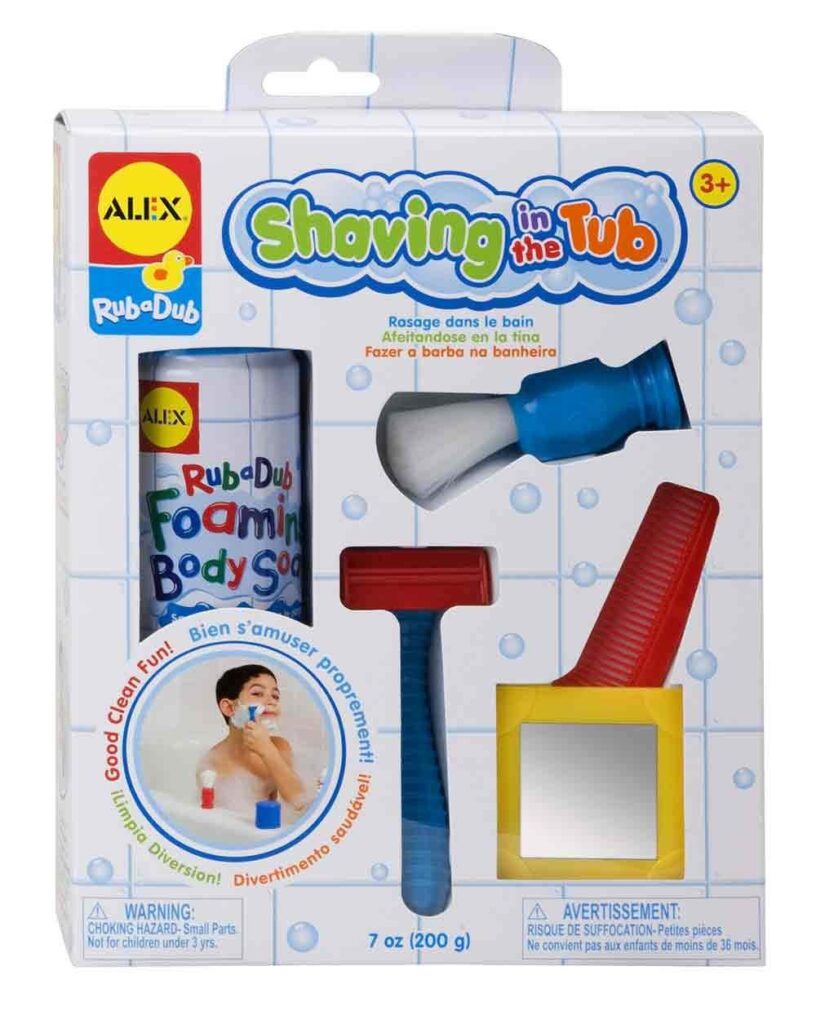
    Shaving cream is a great medium to have children “drive” cars through and use as snow. On amazon there is a kit called, Rub a Dub Shaving in the Tub by Alex toys. Which includes shaving cream, plastic razor and a mirror. This is a great way to have kids engage in “messy play” but be able to get clean right away.

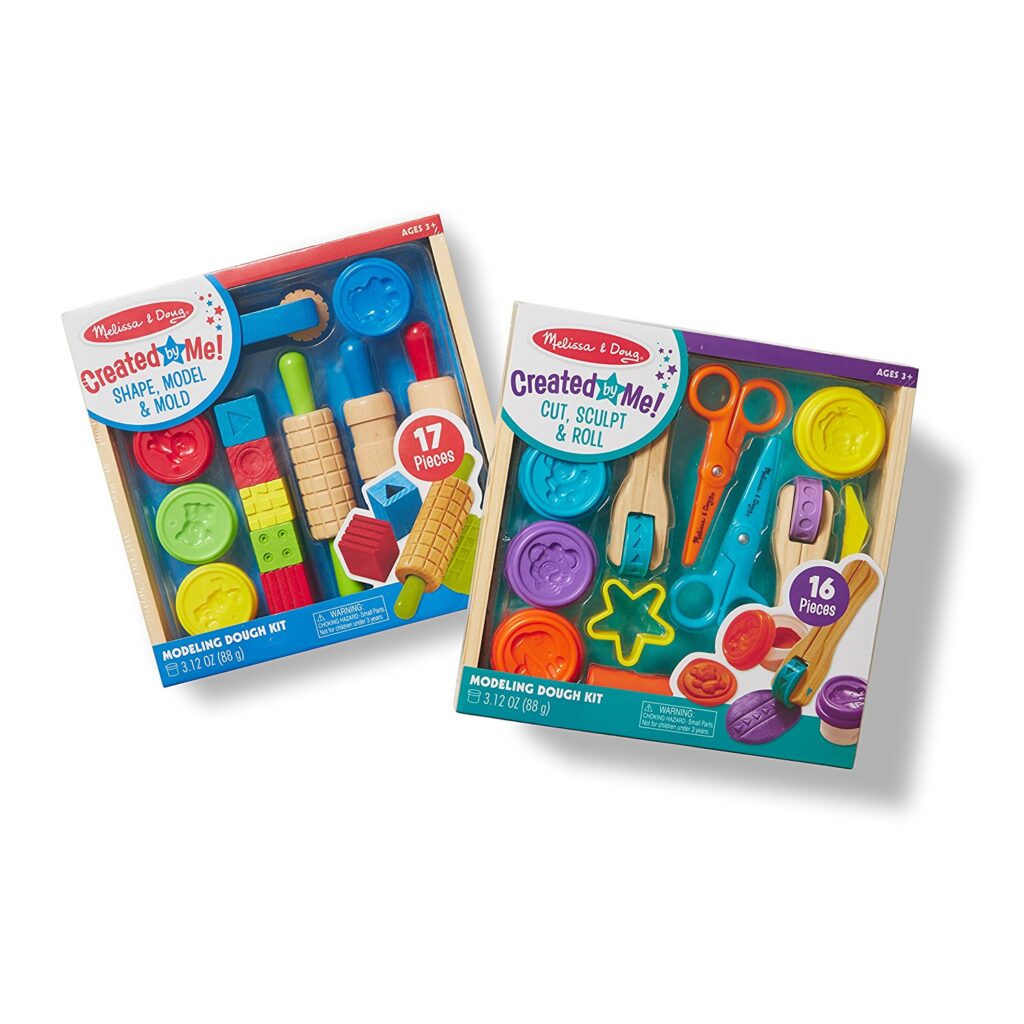
    Playdoh can be used just by rolling it, making shapes with cookie cutters, and placing coins/beads in and having child pull them out. There are a lot of great kits like this Melissa and Doug set you can buy that come with the play dough and cookie cutters, or play dough tools.

    Check out this link for fun ideas to do with playdoh and Christmas, Scented Snowman Play Dough, part of our 25 days of Christmas Play series here on The OT Toolbox.

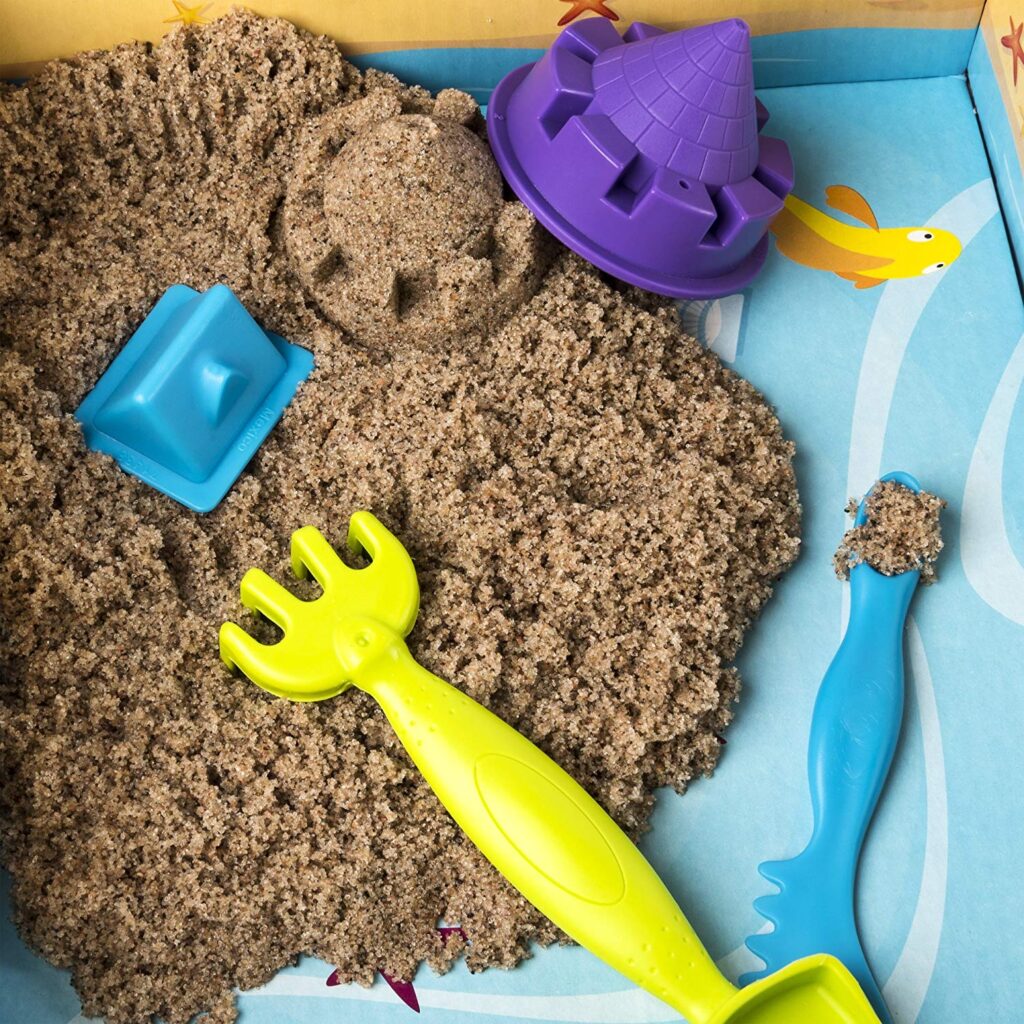
    Moon sand– is a moldable sand that will never dry out. It has a unique texture and won’t stick to your hands. Here is an easy 3 ingredient kinetic sand recipe to make at home.


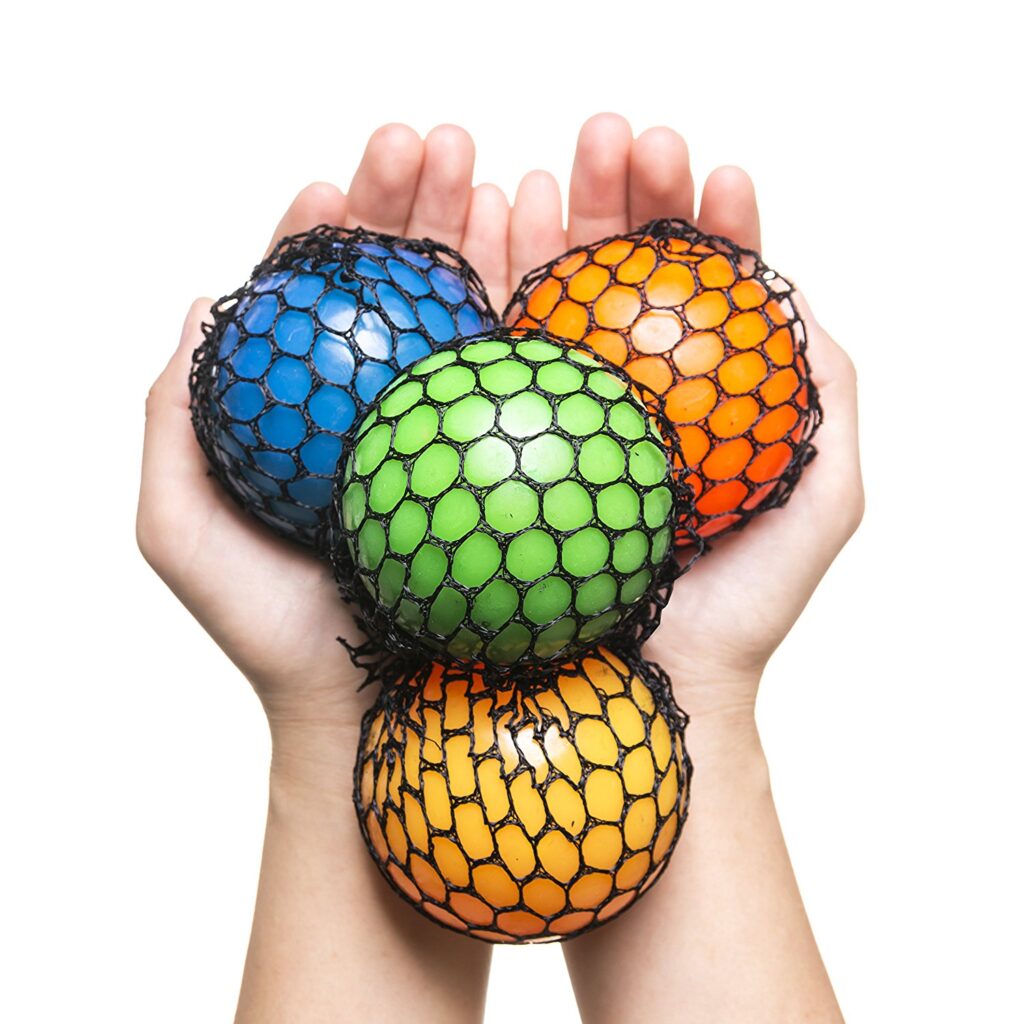
    Squish balls– come in many varieties. Some have textures inside-sand, beads or beans. The outside of the squish balls can be pointy, smooth or bumpy. These stress balls with a mesh covering are a popular fidget tool that kids love to squeeze. You can even make your own by taking a balloon, water bottle and sand. Pour sand into an empty water bottle, place balloon over the top and then pour the sand into the balloon.

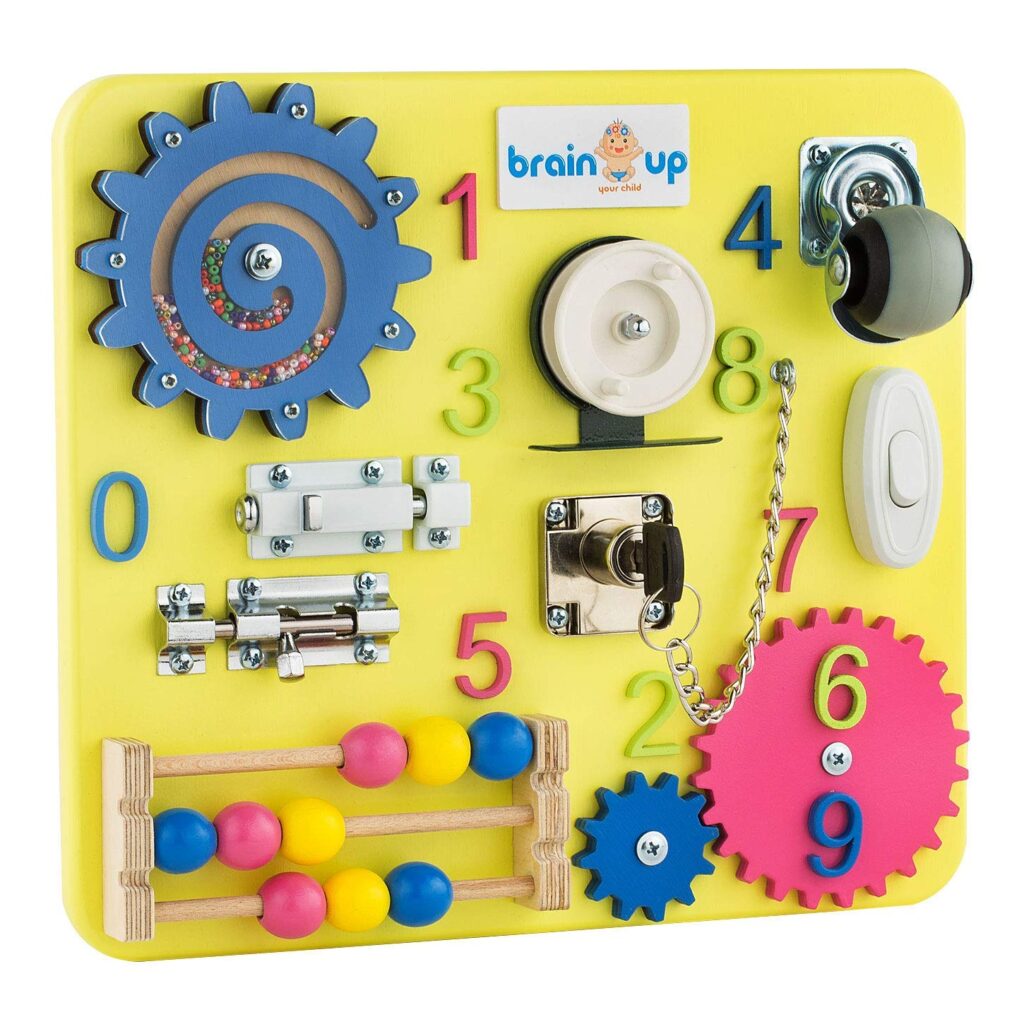
    Tactile board– a board with different fabrics, sandpaper, smooth or rough textures, glue corn or beans on paper can promote motor skills too!  Allow child to explore the different textures. A tactile board can be hung high or low to promote different motor skills. Or try a table top version.


    Scented bathtub Finger paint– Crayola Crayons- kids can use as a body wash or color the walls of the bathtub with. It’s great because they can get messy and then easily clean. Plus it’s scented which is great for the olfactory system.

    Sensory bin- fill a bin or container with rice, beans or another dry material. Hide toys that the child has to shift thought the material to find. Have cups and spoons in the bin so that they can pour.


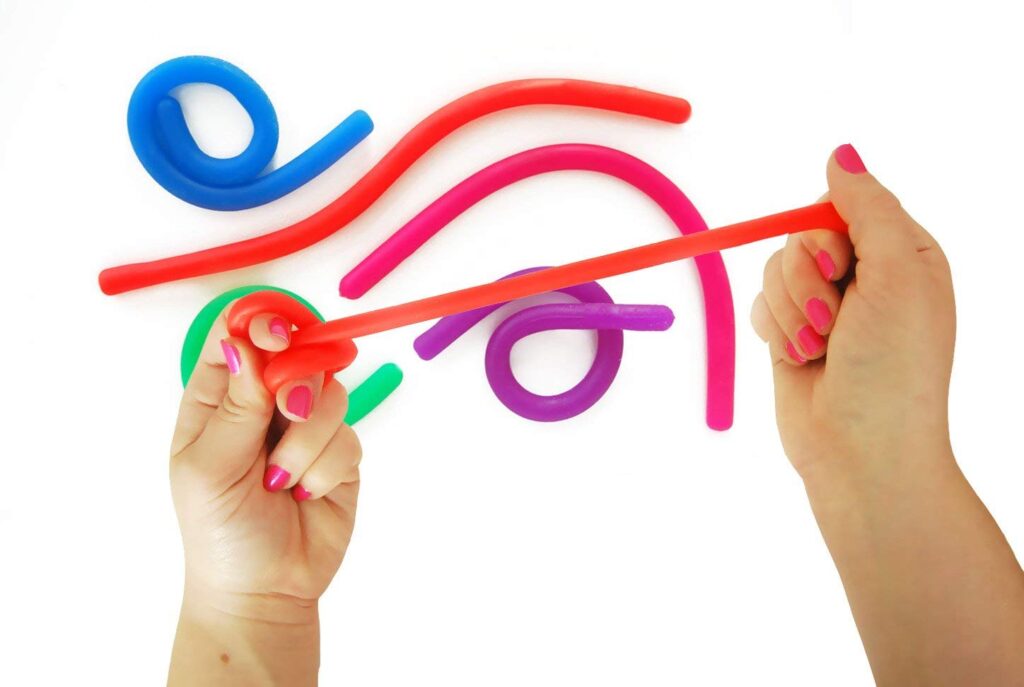
    Monkey noodle– found on amazon. You can pull the stretchy string from 10 inches to 8 feet.
    There are so many fun toys that keep children engaged and also help with developing tactile tolerance.

    Try these toys to improve tactile sensory awareness and address tactile defensiveness or to use in sensory play experiences with kids to improve fine motor skills, eye-hand coordination, through tactile sensory play!


    Sensory Input Through Play 

    Looking for even more ways to encourage tactile sensory awareness through play and activities? Grab our Sensory Diet Cards for a complete packet of sensory activities. You’ll find 24 pages of 345 sensory diet activities including:
    • Calming and alerting movement activities
    • Heavy work fine motor activities for pre-writing needs or fidgeting needs
    • Sensory activities
    • Sensory support cards
    These sensory diet cards can be used in the home, classroom, or clinic. They are available now for $9.99 on The OT Toolbox shop
    Use printable sensory diet cards to encouraging sensory input through play
     
    Tactile sensory awareness can happen through play and learning!


    About Christina:

    Christina Komaniecki is a school based Occupational Therapist. I graduated from Governors State University with a master’s in occupational therapy.   I have been working in the pediatric setting for almost 6 years and have worked in early intervention, outpatient pediatrics, inpatient pediatrics, day rehab, private clinic and schools. My passion is working with children and I love to see them learn new things and grow. I love my two little girls, family, yoga and going on long walks. 


    Christmas Sensory Activities

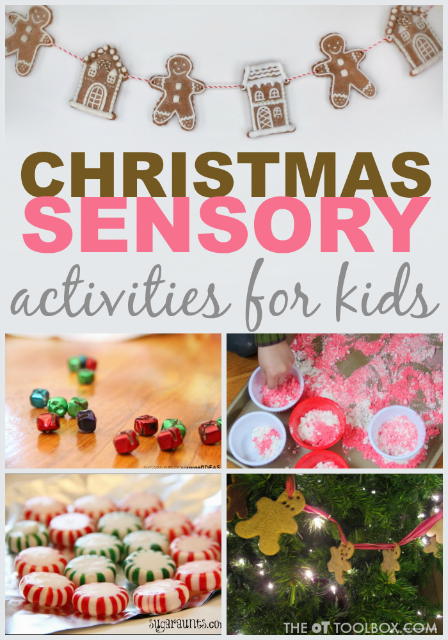
    Whew, what a week this has been! We’ve been talking all about Christmas occupational therapy activities for kids here on The OT Toolbox and today ends the week of Christmas activities in this series. We’ve talked about all the ways to make this holiday season special while working on underlying skill areas and incorporating occupational therapy goals. Today, it’s all about Christmas Sensory Activities that can be used in the classroom, clinic, or home programs over the holiday break. Use these Christmas play ideas in sensory diets, to create sensory bin ideas or sensory bottles!


    Our Christmas sensory bins are a great place to start when it comes to sensory play activities during the holidays.

    Use these Christmas sensory activities to promote development, play, learning, and fun this holiday season while working on occupational therapy activities.


    Christmas Sensory activities

    If you’ve missed any of the blog posts this week, you might want to catch up on all of the ideas! You can check out all of the Christmas Activities for Kids here on our main Christmas page. 


    Some of the ideas we’ve covered are Christmas activities for preschoolers, Christmas activities for toddlers, Christmas crafts for kids, and Christmas party ideas. All of these activities have a therapy mindset where they encourage movement, play, and motor development with a Christmas theme!


    With the upcoming holiday season, kids can be all over the place when it comes to excitement for holiday events. Try incorporating some of the Christmas sensory activities listed below to encourage sensory play with a learning twist.

    Christmas activities for kids

    First, you’ll want to check out a previous post here on The OT Toolbox where we shared sensory processing activities and sensory experiences perfect for the month of December.
     
    Try this scented peppermint sorting activity to work on fine motor skills and eye-hand coordination. Add motor skills like finger isolation to count the peppermints or use tongs to move the peppermints and strengthen the hands.
     
    Mix up a batch of candy cane moon dough for sensory play with a fresh scent! Moon dough can be used as a writing tray to practice letter and number formation or to work on eye-hand coordination  in scooping and pouring. 
     
    Have you ever let the kids play with cooked pasta as a sensory play experience? It’s a tactile challenge for some! This noodle sensory activity can boost fine motor skills. Try cutting them to sneak in some scissor work, too.
     
    We shared this Christmas tree sensory experience the other day on our Christmas activities for preschoolers post, but it’s worth mentioning again. There’s a reason why: manipulating wet pieces of foam is a fantastic tactile sensory experience that doubles as a fine motor activity, too. 
     
    For a sensory recipe, try this scented playdough for creating miniature snowmen. Add a few manipulatives to make it a fine motor powerhouse. This is an OLD post here on the website. Beware, the pictures are small and dark!! That doesn’t stop the play dough from being fun though! Add this activity to your holiday lineup.
     
    Another sensory recipe is this DIY snow recipe, perfect for play and fine motor work. This would make a great addition to a home program for the holiday break!
     
    Add a few colored ice cubes and scoops, spoons, and ladles to a big bowl for eye-hand coordination and fine motor precision with a Christmas theme. Kids love water play and this Christmas water activity is no different!
     
    This easy Christmas sensory bin can be a go-to activity for settling holiday excitement in the days leading up to Christmas. Use materials you have in your home to work on fine motor skills, eye-hand coordination, crossing midline, and more through sensory play.
     
    Getting the kids into the kitchen is a great way to work on so many skills with kids! Direction following, executive functioning skills, motor skills, strengthening, and more are developed through cooking with kids. Make a batch of this Gingerbread Salt Dough for sensory play and ornament-making. These ornaments are still on our tree years later! Check out the pictures on this OLD blog post. This takes me back to those busy days as a mom of toddlers and preschools! Tears!
     
    Colder weather doesn’t mean outdoor play needs to stop. Take a sensory potpourri hike outside with the kids and explore nature by creating a potpourri. Add bits and pieces such as various pine needles, pine cones, and add in orange peels or cinnamon sticks. Kids can cut pine needles with scissors and add them to the scented collection. 
     
    For many more Christmas sensory activities, check out this round up of activities from all over the internet.
     
    Need another scented DIY play dough recipe? This one is a peppermint scented play dough, perfect for rolling, needing, and strengthening those hands!


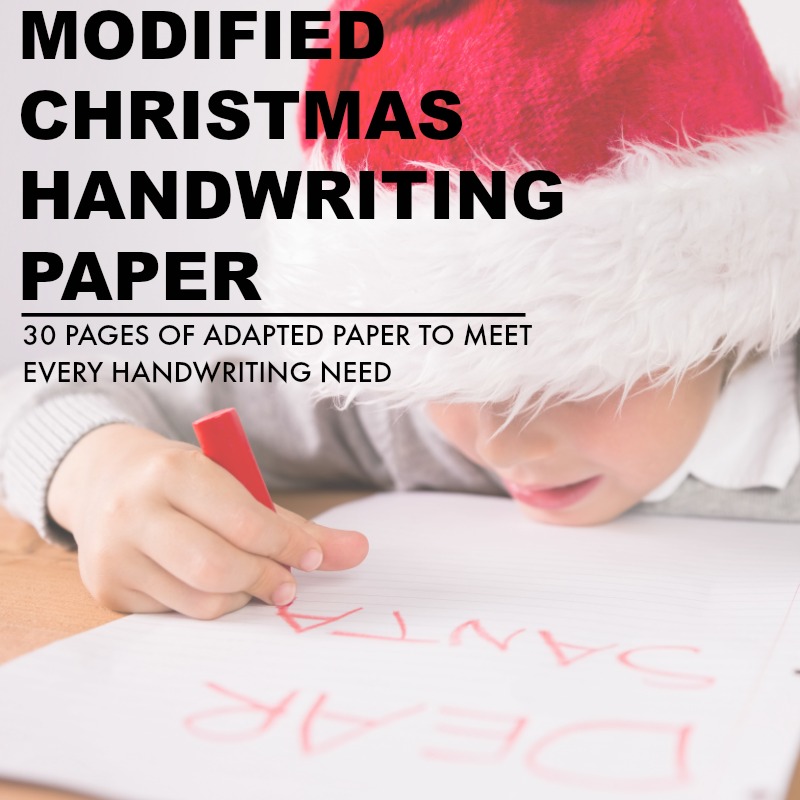
    Working on handwriting with kids this Christmas season? Grab your copy of the Christmas Modified Handwriting Packet. It’s got three types of adapted paper that kids can use to write letters to Santa, Thank You notes, holiday bucket lists and much more…all while working on handwriting skills in a motivating and fun way! Read more about the adapted Christmas Paper here


    More Themed Occupational Therapy Activity Toolkits

    his blog post by contributor author Regina Parsons-Allen describes occupational therapy activity kits that can be used to address a variety of occupational therapy goals using themed OT kits, saving time and planning for therapy. 


    Another Look at Occupational Therapy Themed Tool Kits

    This is part two of the blog post regarding themed occupational therapy activity tool kits.
    Many people have contacted me to ask if I have other themed therapy tool kits that I use in my practice as a school-based COTA. This is part two of my original post where I will share more information regarding additional kits. Like I said, I have so many kits it is hard to share them all in one or even two posts.

    What is an Occupational Therapy Activity Toolkit?

    Let’s review, pediatric and school-based occupational therapy practitioners are busy people. Racing from school to school or site to site serving children of many ages all in a single day.

    Having portable tool kits saves the therapists’ valuable time in planning, preparing, organizing and documenting for assessment and intervention. To sum up tool kits, they are portable, all inclusive, and can be separated by themes to support the different needs of the individual therapist and/or child.

    There can be many types of tool kits using a variety of designs and sizes. Tool kits can be separated by many types of themes to address a therapists’ particular needs.

    Please refer to the original blog post on occupational therapy activity toolkits as it contains lots of great information with the complete details regarding specific types of tool kits, valuable tips on how to make a tool kit, and some other examples of kits that I use in practice to include an Easter tool kit, a grab and go kit, and a strengthening kit.

    More Occupational Therapy Activity Toolkit Ideas

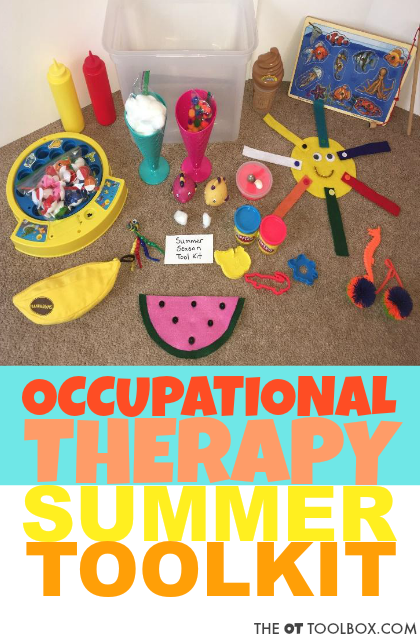
    Below is an example of a Seasonal Tool Kit – Summer:

    Use these themed occupational therapy activity toolkit ideas to create a themed summer OT activity kit for on-the-go treatment.

    Seasonal or holiday kits contain fun activities that can reach a vast majority of kiddos with many types of needs. Splashing the activities with some genuine OT creativity can really transform the impact of these kits.

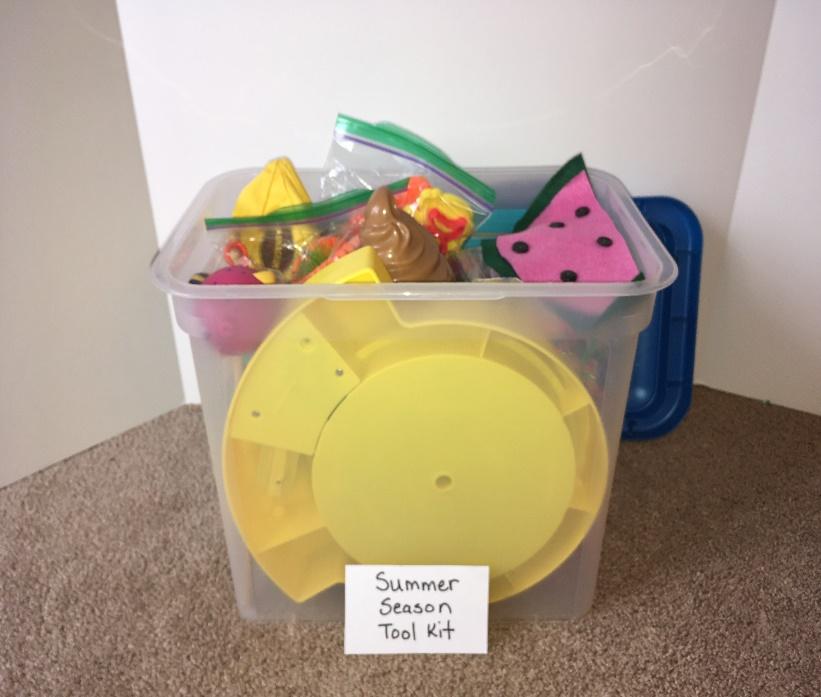
    “Dump and Run” Seasonal Therapy Tool Kit

    Create a summer themed occupational therapy activity toolkit for pediatric occupational therapy treatment.

    (Check out why I call it a “dump and run” kit in the original post.)

    Tools of the Trade Occupational Therapy Activity Toolkits

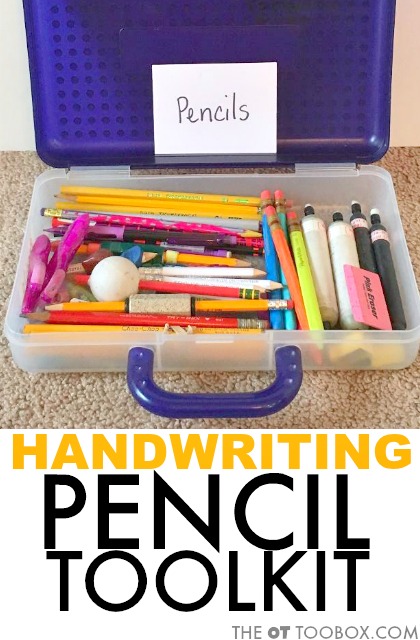
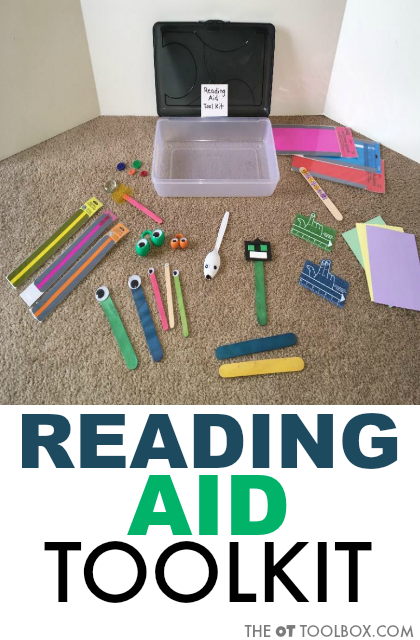
    Below are two examples of Tools of the Trade Kits – Pencil and Reading Aid Tool Kits:

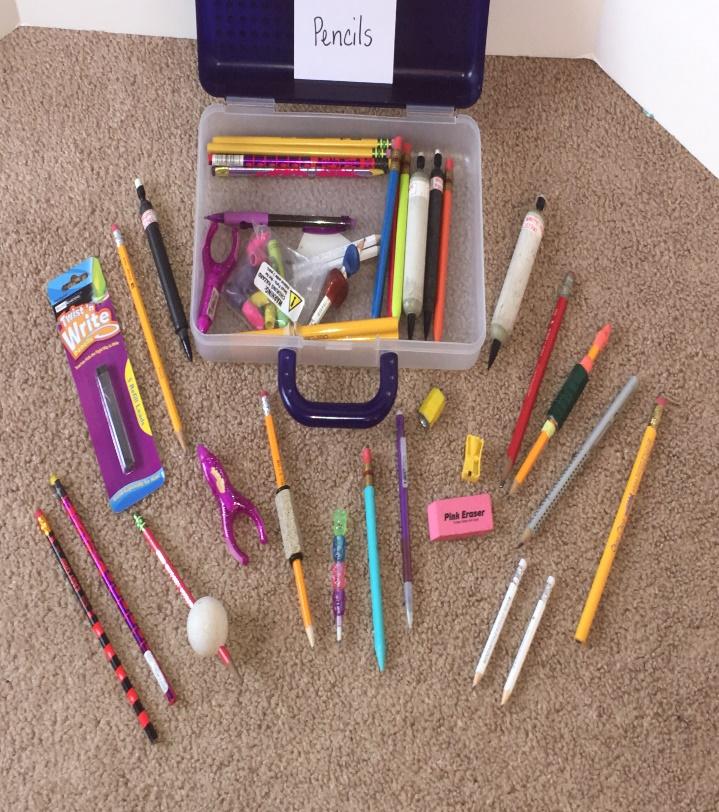
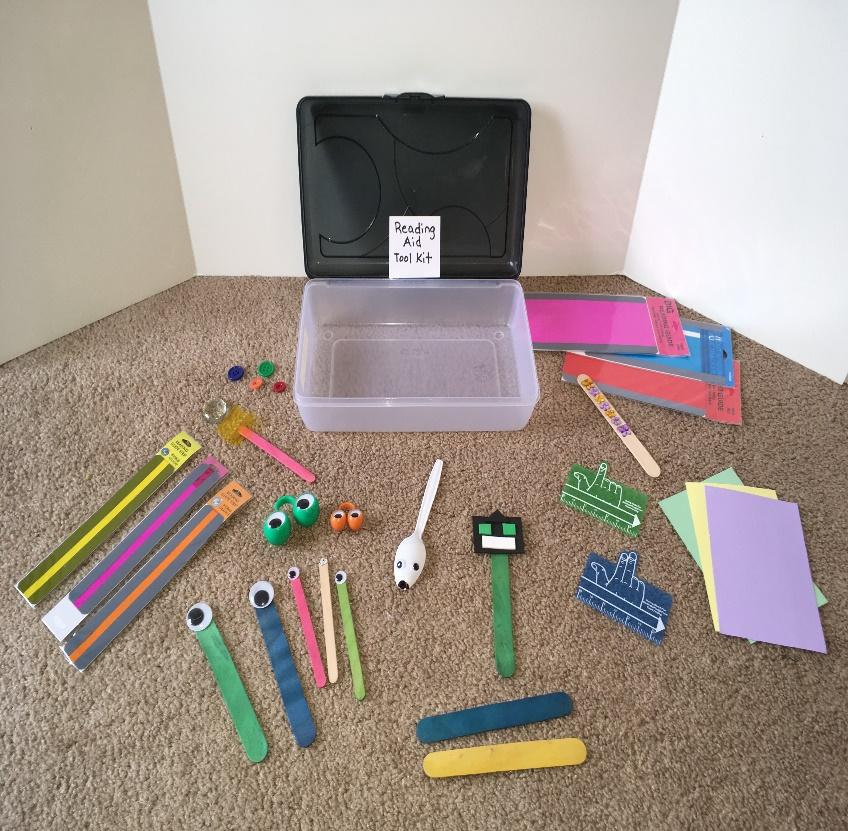
    Tools of the trade kits contain standard to adaptive tools, devices, or materials with items being either purchased or DIY. These tools can be used for treatment, trial, loan, or assessment and are useful to determine skill level, formulate therapy plans, and provide intervention.

    Handwriting Pencil Toolkit:

    Create a themed occupational therapy activity toolkit to address handwriting and pencil grips to address common handwriting issues in pediatric occupational therapy.

    Create a themed occupational therapy activity toolkit to address handwriting and pencil grips to address common handwriting issues in pediatric occupational therapy.
    This coban pencil grip can be added to the handwriting toolkit. Another addition that can benefit many students is this easy DIY pencil grip that uses balloons. 
    Add a mechanical pencil to address proprioception needs or pencil pressure issues. Read about how a mechanical pencil can help with pencil pressure here. 

     Reading Aid Therapy Toolkit:

    Create a reading aid toolkit for occupational therapy treatment of reading issues in pediatric occupational therapy activities.
    Create a reading aid toolkit for occupational therapy treatment of reading issues in pediatric occupational therapy activities.

    This visual tracking tool can make a nice addition to the reading aid toolkit.

    Targeted Skill Area Tool Kits

    Targeted skill area kits contain specific tools of the trade and other assorted materials that address the development of a targeted skill area.

    Below are two examples of targeted skill area kits designed to address Self-regulation, Sensory, and Attention:

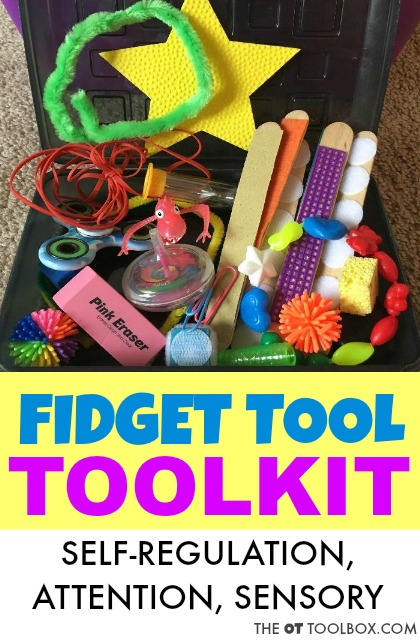
    Make an occupational therapy activity toolkit to address attention or self-regulation needs using sensory fidget tools and other items used in pediatric OT.

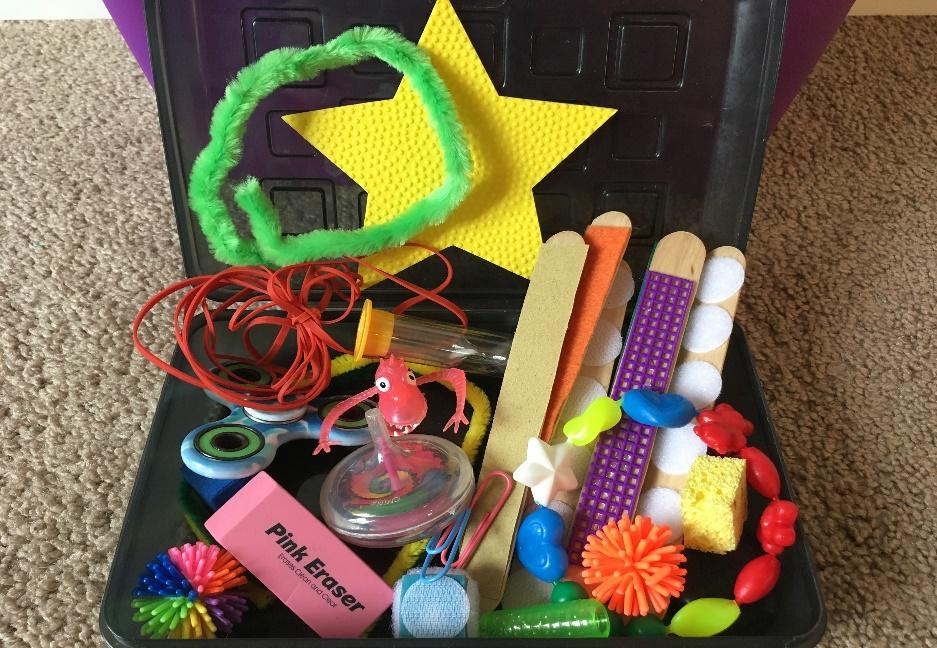
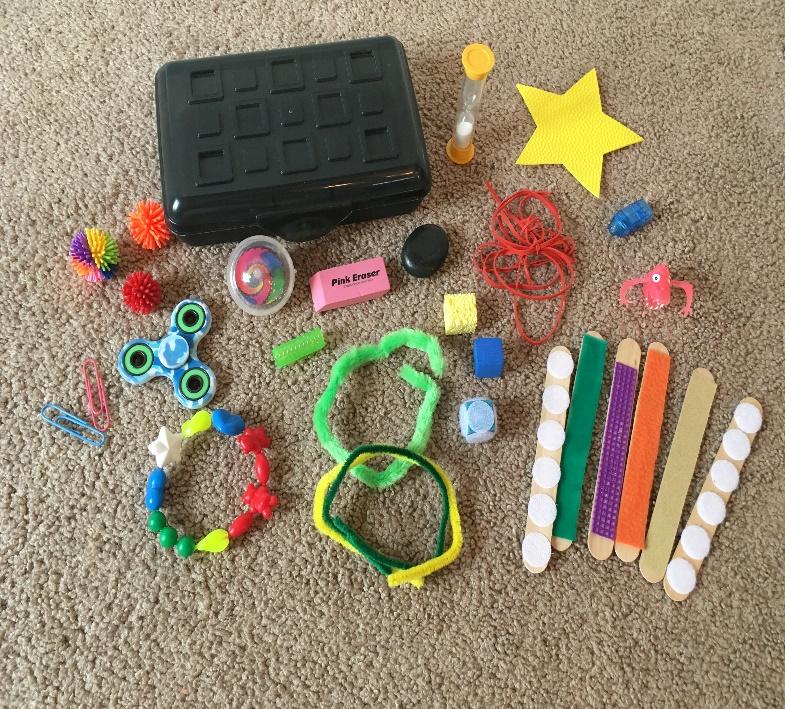
    Create a Pencil Box Fidget Tool Kit using a pencil box to store items.

    Some of these quiet fidget tools can be a nice addition. Here are some DIY fidget tools that can be added, too.

    Make an occupational therapy activity toolkit to address attention or self-regulation needs using sensory fidget tools and other items used in pediatric OT.

    Make an occupational therapy activity toolkit to address attention or self-regulation needs using sensory fidget tools and other items used in pediatric OT.

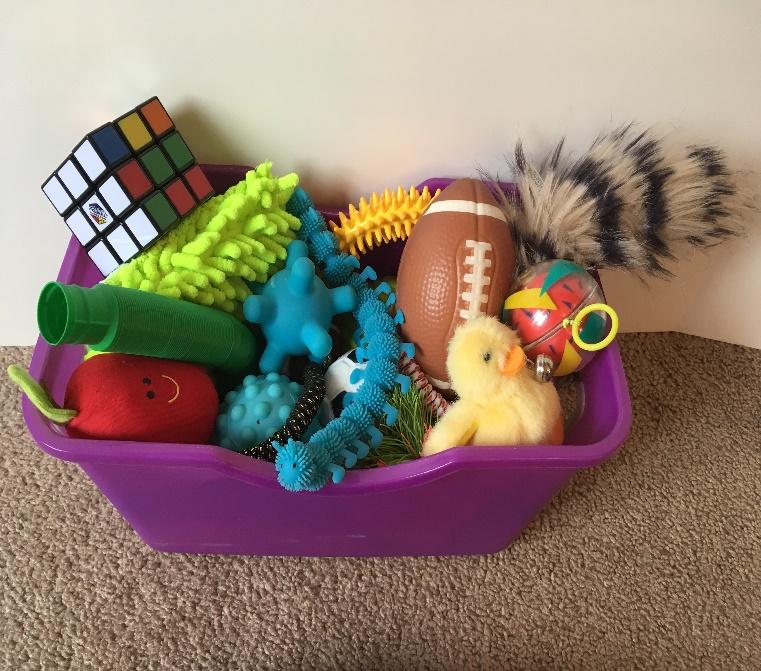
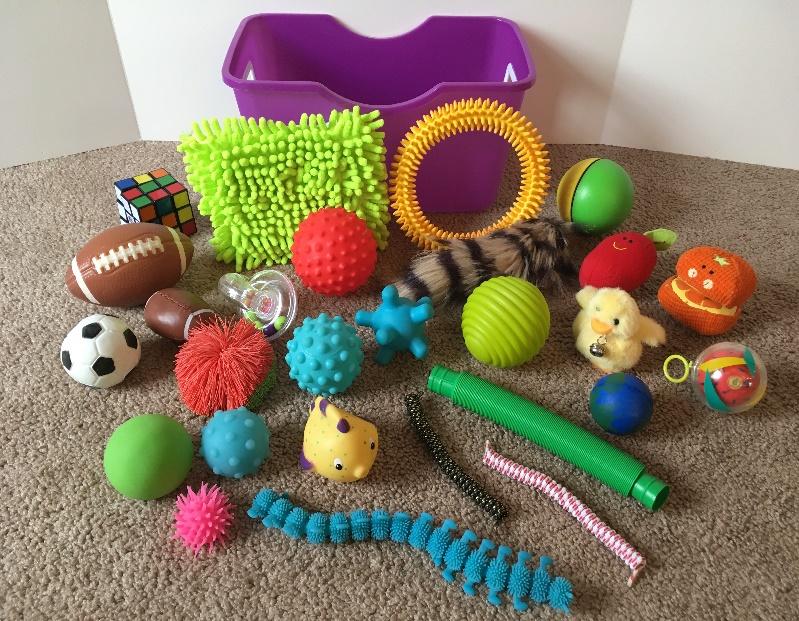
    Create an Open Top Fidget or Sensory Tool Kit in a small bin or crate.

    Make an occupational therapy activity toolkit to address attention or self-regulation needs using sensory fidget tools and other items used in pediatric OT.

    Make an occupational therapy activity toolkit to address attention or self-regulation needs using sensory fidget tools and other items used in pediatric OT.

    Themed therapy kits address the therapist’s desire for ease in program planning, preparation, organization and documentation. Invest the time now and enjoy the time later by simplifying your work as a pediatric therapist.

    Children will be excited to see the kits coming and you will be better prepared to enjoy the time you spend providing intervention with the child.

    This post was written by Regina Allen. Read about Regina in her Contributor Author Spotlight.

    How to Schedule Sensory Diet Activities

    Below, you’ll find a selection of sensory diet strategies to use when presenting sensory diet activities. Read on to find various ways to present sensory diet tasks for use within a child’s day. These strategies can work to schedule sensory diets for adults as well as children.
     
    Sensory diet activities that are appropriate for an individual child should be presented after analyzing and identifying the child’s specific needs. Just as a sensory diet uses specific sensory activities based on the child’s needs, the WAY a sensory diet is presented needs to be used according to the child’s strengths,  abilities, and needs. Presenting a sensory diet activity in a way that the child understands is very important for carryover. 
     
    Understanding exactly what is a sensory diet is a good starting point for addressing sensory needs. 
     
    Try these strategies to present sensory diet activities to kids with sensory needs. They are quite effective strategies when getting started with setting up a sensory diet. If you are wondering where to start with addressing sensory processing needs in kids or wondering HOW to set up a sensory diet, start with the links below.
     
    If you are just getting started with setting up a sensory diet, start with How to Create a Sensory Diet
     
    For understanding why a sensory diet is important, you’ll want to read more about the goals of a sensory diet.


    Use these tips and strategies to schedule sensory diet activities and to set up a sensory diet to address sensory processing needs in kids.
    Sensory Diet Activity
    Selection Strategies
    (How to present sensory diet activities)

    First, a few tips for starting a sensory diet:

    Once sensory diet strategies are developed, it’s important to present them to the child in a clear manner. This will ensure carryover and success.

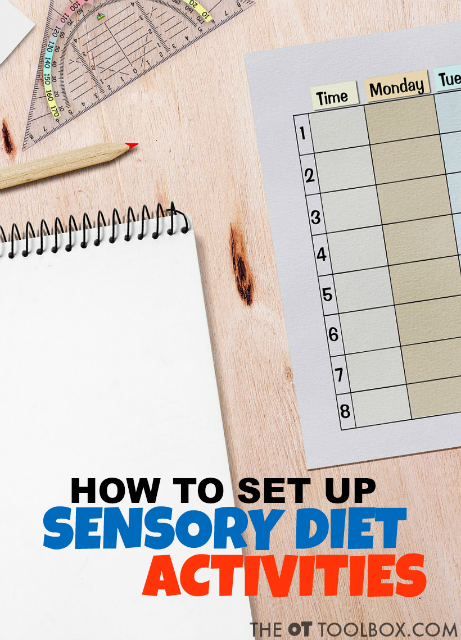
    There are many ways to set up a sensory diets scheduled activities. Each child may prefer an entirely different strategy for organizing sensory activities in their individualized sensory diet. The child who responds well to visual schedules in their classroom may use a picture schedule for their sensory diet.

    A schedule of sensory activities based on specific needs is an important part of a sensory diet and a sensory lifestyle.

    Scheduling sensory diet activities is important for carryover and use of appropriate sensory activities throughout the day and not after sensory overload or sensory seeking behaviors has occurred. Sensory diet strategies can help prevent or address a sensory meltdown, so it’s good to have the information and tools you need ahead of time and to better understand what causes a sensory meltdown and how to help.

    Use these tips and strategies to schedule sensory diet activities and to set up a sensory diet to address sensory processing needs in kids.

    Sensory Diet Scheduling Strategies

    1.Picture Schedule- Take photos of sensory activities. Print them out and laminate them. The photos can be added to a pocket in the front of each sensory bin or container. When the child takes out that activity, they can place the photo in a bowl or stick it to a wall planner using Velcro.

    2. Clip Schedule- Use clothes pins to clip onto a schedule list of activities. When the child chooses a specific sensory activity, they can clip next to the words on their list.

    3. Use PECS (Picture Exchange Communication System) or other pictures of sensory activities to create a keychain flip booklet of sensory diet activities.

    4. Create strips of paper with sensory diet activities written out on strips of paper. Laminate the strips for sturdiness. Attach a self-sticking Velcro tab to the back of the laminated strip. The schedule of activities can then be attached to a felt board or schedule board with Velcro tabs. Once the activity is performed, the child can drop the strips into a cup. For a more durable system, use foam craft sticks or wooden craft sticks.

    5. Create a sensory diet binder using page protectors. Children can mark off activities with a dry erase marker.

    6. Visual Supports- Dry erase boards, Velcro board, flip picture schedule, felt boards are all ideas. Use visual supports in the simplest way possible with reduced visual distractions. A single color is best. Meeting the needs of the child is essential as well.

    7. “First, Then” Strategy- Children with sensory processing challenges, particularly those on the Autism spectrum struggle with excessive instructions. It is hard for them to pull out the important words from a paragraph of instructions. Simplifying directions is key for these children. The “First, Then” strategy breaks down tasks into the simplest form. This is an effective mechanism for challenging behaviors and transitions.

    8. Keychain schedule- Create a schedule that can go with the child. These can be clipped to belt loops, jackets, binders, necklaces, or backpacks. The options are limitless with a keychain schedule system. Use whatever strategy works best with the child. Some ideas are picture schedules, First/Then strategy, or even a dry erase schedule with words. A reward at the end of the schedule is a great reinforcer for children.

    9. Special Interest Schedulers- Using the interests of the child as a motivator and as a scheduler can have great results. For the child who is interested in vehicles, they can attach a “wheel” onto a picture of a monster truck when each task is completed. The sky is the limit when it comes to using special interests in the form of schedules.

    10. Apps and Technology- For some children, the use of a screen is the motivating tool that can help kids transition through their day. Special interests can be used in this manner as well. There are apps that utilize a form of the “First/Then” strategy combined with special interests such as characters like Sponge Bob.

    11. Communication Center- Sensory diet activities can be created with visual images or words and made into magnets that are stuck to the refrigerator. Other ideas for a sensory diet center include a dry erase board or laminated paper that is used at a student’s desk in the classroom or on the dining room table at home.

    Use these tips and strategies to schedule sensory diet activities and to set up a sensory diet to address sensory processing needs in kids.

    More sensory diet resources

    Sensory Diet Activities for the Classroom

    Looking for more resources on how to set up and create a sensory diet? The Sensory Lifestyle Handbook walks you through sensory diet creation, set-up, and carry through. Not only that, but the book helps you take a sensory diet and weave it into a sensory lifestyle that supports the needs of a child with sensory processing challenges and the whole family.

    The Sensory Lifestyle Handbook is a resource for creating sensory diets and turning them into a lifestyle of sensory success through meaningful and motivating sensory enrichment.
    Use these tips and strategies to schedule sensory diet activities and to set up a sensory diet to address sensory processing needs in kids.

    Attention and Sensory are Connected

    Recently here on The OT Toolbox, we’ve talked a lot about sensory processing needs and how strategies can be incorporated into the child’s environment. These tactics provide an authentic and meaningful sensory strategy for incorporating much-needed sensory input right into a child’s environment. It’s all part of creating a sensory lifestyle for a child!


    Today, we’re talking about the connection between attention and sensory.


    Attention and Sensory are Connected

    Attention is a big challenge for kids. Distractions occur in the home, community, classroom, and everywhere a child goes! When attention interferes with learning, performance of functional tasks, or creates unsafe situations, it can be a real problem. But did you ever stop to think about how attention is so very related to sensory processing?


    Related read: Here are more executive functioning resources to fill your therapy toolbox!
     
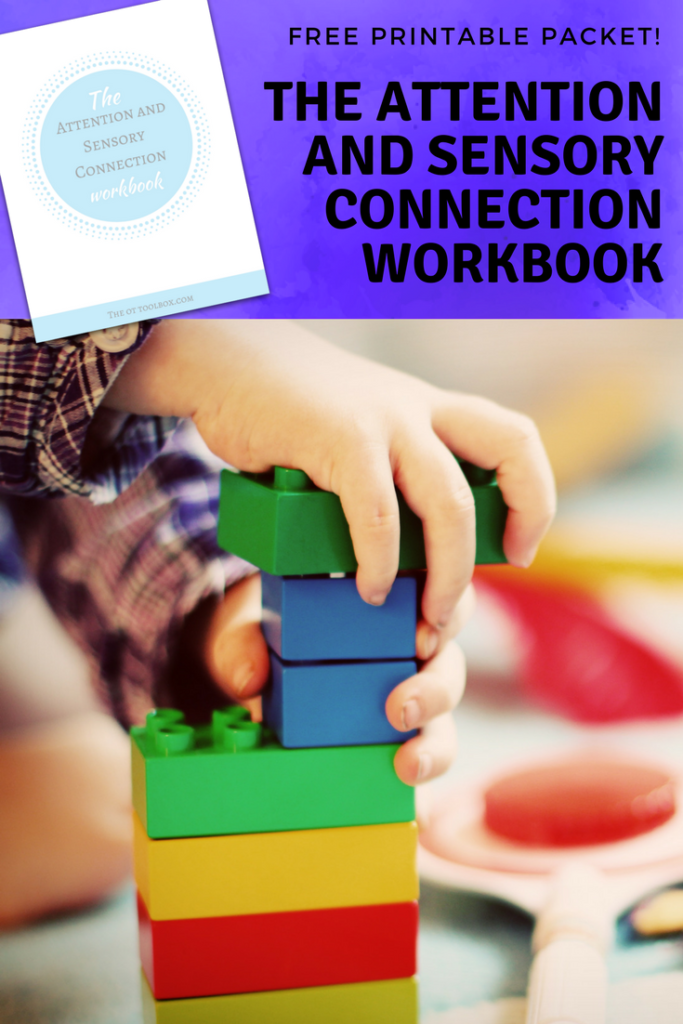
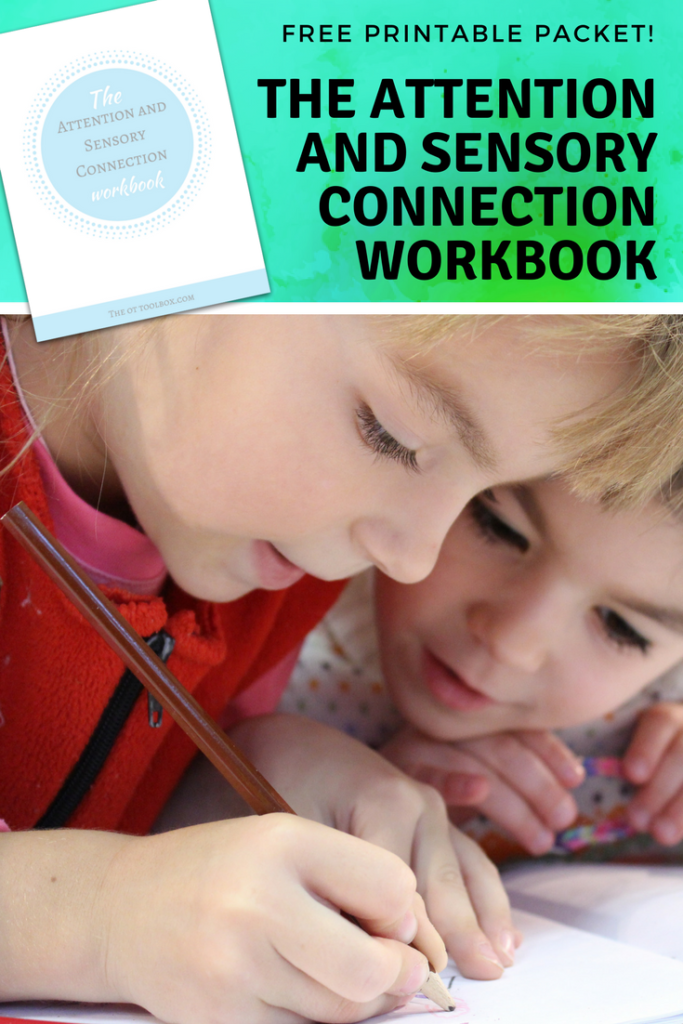
    This free printable workbook is a helpful tool in explaining how attention and sensory are connected and can help parents, teachers, and therapists to address attention through sensory processing strategies.


    Our children with sensory challenges know the struggle of inattention. Parents, teachers, and therapists know that sensory processing challenges interfere with a child’s ability to attend.  They may be so focused on a specific sensory input or need that they don’t notice when someone has called their name. Or, they may be so fearful in anticipation of a light touch that they miss what’s happening right in front of them.


    Sensory meltdowns can happen in the blink of an eye. They don’t always look like a flurry of kicking, hitting, or yelling. A sensory meltdown can look like distraction or inattentiveness, too.


    You may have seen this video floating around on Facebook. Here’s the thing: Attention and sensory challenges are connected. Sound familiar?


    This free printable workbook is a helpful tool in explaining how attention and sensory are connected and can help parents, teachers, and therapists to address attention through sensory processing strategies.


    As a parent, teacher, or therapist working with these children, we can find it difficult to address the underlying needs so that a child is able to pay attention to their classroom, or to a passing car.


    We need to figure out strategies that meet the child’s needs in motivating and natural ways within the environment. Lack of attention span and undesirable responses to sensory input can lead to frustrated teachers, and challenged parents. Distractions from external and internal stimuli can lead to responses that look a lot like behaviors.


    What if we could treat the underlying issues, resulting in increased focus and attention?


    That’s where the Attention and Sensory Connection Workbook can help.
     
    It’s a FREE one-stop spot for information on the basics of how attention is related to sensory processing. It provides tips to boost attention through the senses so that kids can learn, focus, and pay attention when they need to.
     
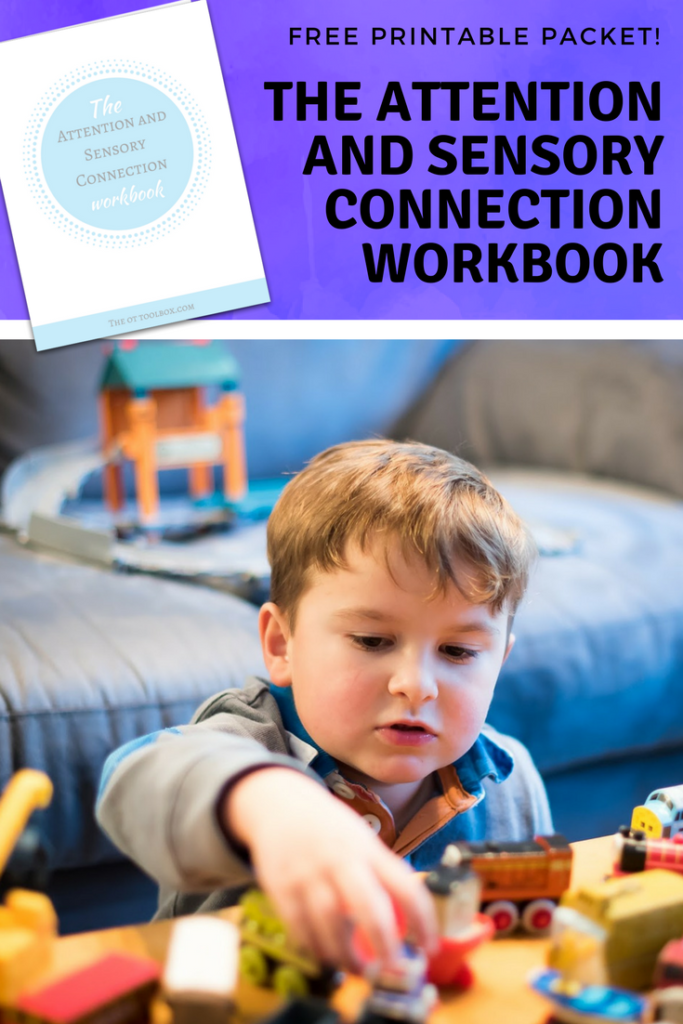
    This free printable workbook is a helpful tool in explaining how attention and sensory are connected and can help parents, teachers, and therapists to address attention through sensory processing strategies.
     
    The workbook covers information about how impaired sensory processing relates to attention issues in a variety of ways and provides movement and sensory-motor activities that can help boost attention.
     
    There are specific activity ideas and tactics to address attentiveness. You’ll also find workbook pages that can be used to identify underlying sensory-related areas that impact attention and tools for addressing those needs.


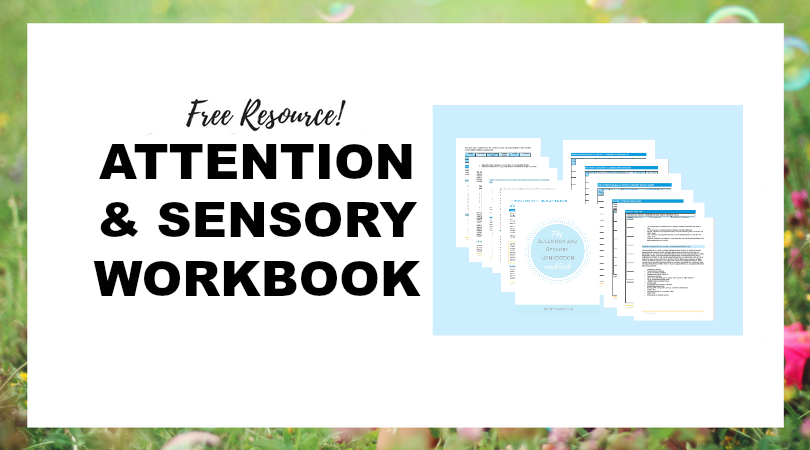
    This workbook is a guide for better focus at home or in the classroom. The Attention and Sensory Workbook contains:


    • How Sensory and Attention are Connected
    • The Impact of Sensory Processing on Learning
    • Movement and Sensory-Motor Activities to Improve Attention
    • Sensory Activity Ideas
    • Sensory Processing Workbook Pages
    • Attention and Sensory Activity Workbook Pages
    This is an ideal tool to add to any sensory lifestyle! And it’s free!


    Using specific and prescribed sensory strategies like those in a sensory diet can be a huge help for the child who struggles with attention and sensory issues. A sensory diet can be the ticket to improved attention when the strategies work and are carried over appropriately.
     
    This free printable workbook is a helpful tool in explaining how attention and sensory are connected and can help parents, teachers, and therapists to address attention through sensory processing strategies.
     
    A sensory diet that focuses on organizing vestibular and proprioceptive input can help a child regulate in order to focus in a classroom lecture. An outdoor recess with calming and alerting input can help a child focus in their afternoon classes. When sensory strategies are incorporated into a child’s environment in meaningful manners, a sensory lifestyle occurs.


    Here are a few ways that The Attention and Sensory Connection Workbook can address much-needed skills of our children/students/clients with sensory needs:


    • Sensory processing is the ability to register, screen, organize, and interpret information from our senses and the environment. This process allows us to filter out some unnecessary information so that we can attend to what is important. Kids with sensory challenges often time have difficulty with attention as a result.
     
    • It’s been found that there is a co-morbidity of 40-60% of ADHD and Sensory Processing Disorder. This workbook is an actionable guide to help teachers, therapists, and parents to help kids boost attention and focus in the classroom by mastering sensory processing needs.
     
    • You will find information on the sensory system and how it impacts attention and learning. There are step-by-step strategies for improving focus, and sensory-based tips and tricks that will benefit the whole classroom.
     
    • The workbook provides tactics to address attention and sensory processing as a combined strategy and overall function. There are charts for activities, forms for assessment of impact, workbook pages for accommodations, and sensory strategy forms.


    This free printable workbook is a helpful tool in explaining how attention and sensory are connected and can help parents, teachers, and therapists to address attention through sensory processing strategies.


    It’s been fun sharing all off these free resources with you recently. What’s awesome is that the tools you’ve accessed can be used to create a sensory lifestyle that is meaningful, authentic, and motivating for kids, in all aspects of a child’s day!
     
    Click here to grab the Attention and Sensory Workbook.


    FREE Attention & Sensory Workbook

      We respect your privacy. Unsubscribe at anytime.

      Colleen Beck, OTR/L has been an occupational therapist since 2000, working in school-based, hand therapy, outpatient peds, EI, and SNF. Colleen created The OT Toolbox to inspire therapists, teachers, and parents with easy and fun tools to help children thrive. Read her story about going from an OT making $3/hour (after paying for kids’ childcare) to a full-time OT resource creator for millions of readers. Want to collaborate? Send an email to contact@theottoolbox.com.