Make Your Own Pick-Up Sticks and Work on Developmental Skills

Do you ever look around the house and think, “Why do we have so many toys??!!” 
 
If your house is like mine, your kids play with couch cushions, old cardboard boxes, and piles of paper, and cardboard tubes waaaay more than they play with toys.  Sometimes, it’s the simple things that are just more fun.

DIY Pick Up Sticks

 
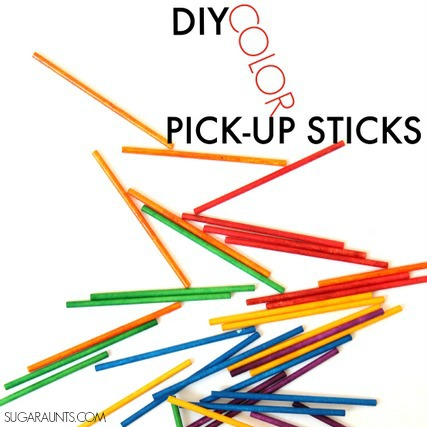
These DIY Pick-Up Sticks are one of those items.  It’s a homemade toy that is just so simple, it’s simply appealing.  Not only are these bright and colorful pick-up sticks fun, they are easy to make, and are used in so many play and functional skill areas. 
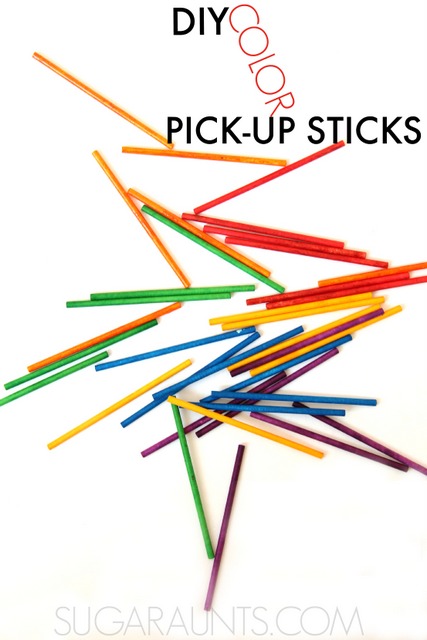


DIY pick up sticks for kids (and adults!) You can make these any color and using items you probably already have at home, while working on fine motor skills like open web space, pincer grasp, precision grasp and release, in-hand manipulation, and visual perceptual motor skills like eye-hand coordination, visual motor, visual scanning, and visual memory.
 
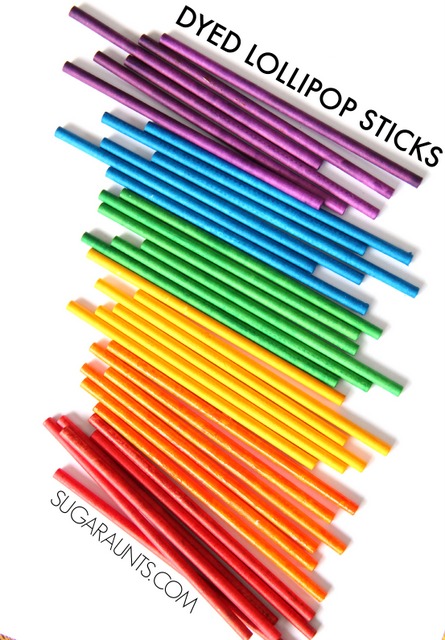
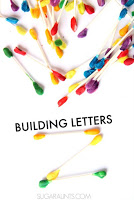
Making these colorful pick-up sticks is easy peasy.  Read how we made them here.  Do you know what we used to make them?  Lollipop sticks.  Yep!  A simple lollipop stick is the perfect accessory to play dough, the ultimate letter building tool, counting manipulative, fine motor workout, and a fabulous visual motor item.
 
Today, you’ll see how we use them to play pick-up sticks.
 

How do you play Pick-Up Sticks?

It is super easy to play pick-up sticks.  Dump the sticks out on a table.  Attempt to pick up a stick without moving any other stick.  You can slide, pull, tug, or wiggle a stick, but you can not move any other stick.  If another stick moves, your turn is over.  The player with the most sticks at the end of the game winds.  
 

Skills worked on when playing pick-up sticks:

Ohhh, this is an Occupational Therapist’s dream tool.  If you know an OT, he or she probably has a set of pick-up sticks in her treatment bag or clinic supply closet.  There are so many skill areas worked on while playing pick-up sticks!
 
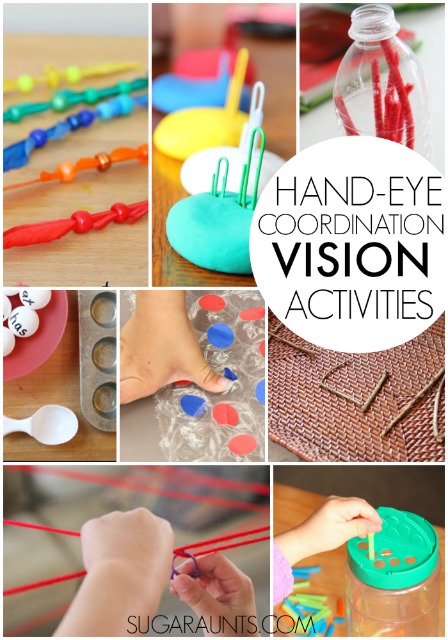
  • Hand-Eye Coordination
  • Visual Scanning Visually scan the pile and each player can pick up only one or two certain colors to make the game harder.
  • Visual Motor
  • Pincer Grasp is encouraged by picking up the sticks.  Children need a pincer grasp for managing items like zippers, buttons, and snaps.
  • Color recognition
  • Precision grasp and release is a needed skill for fine motor tasks and manipulating small items.
  • Open Web Space Picking up the sticks encourages an open space between the thumb and pointer finger, needed for handwriting.
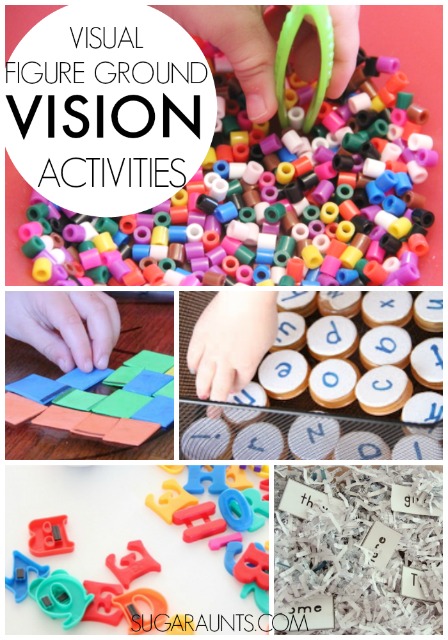
  • Figure Ground
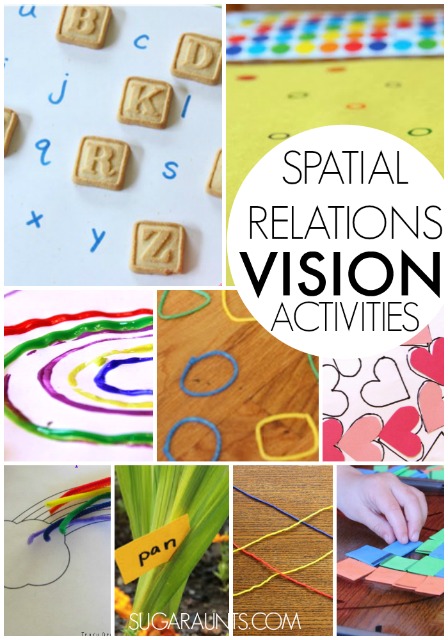
  • Spatial Relations
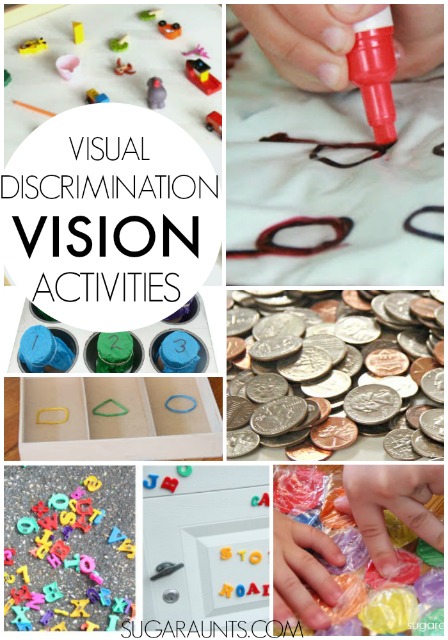
  • Visual Discrimination

If your child loves playing Pick-Up sticks, try these modifications and ideas:

Affiliate links are included.

  1. Play with Pipe Cleaners.  The fuzzy, bendable sticks make dexterity more difficult.  Don’t move any other pipe cleaners!
  2. Play with Glow Sticks.
    for a glow in the dark game of pick-up sticks.
  3. Try this set
    for a gift idea.
  4. This Melissa & Doug Suspend
    game builds sticks upward for a unique twist on the game of pick-up sticks. 
  5. Younger kids will love this Play Visions Pick Up Snakes
    with flexible snakes instead of sticks.
  6. Children that need a challenge will love this Playroom Entertainment Catch a Falling Star
    that is on a vertical plane. This game really works on the precision of grasp and release while encouraging an extended wrist. It’s an OT winner! 
  7. For more precision and fine motor fun, try Ker Plunk Game.
Make your own pick-up sticks with this DIY toy idea for kids.  There is so much leaning and developmental areas that you can work on with this simple idea: fine motor, dexterity, hand-eye coordination, open web space, precision of grasp and release, visual perceptual skills, and so many more ways!  Your Occupational Therapist will love this!


You will love to use your DIY Pick-Up Sticks like this:
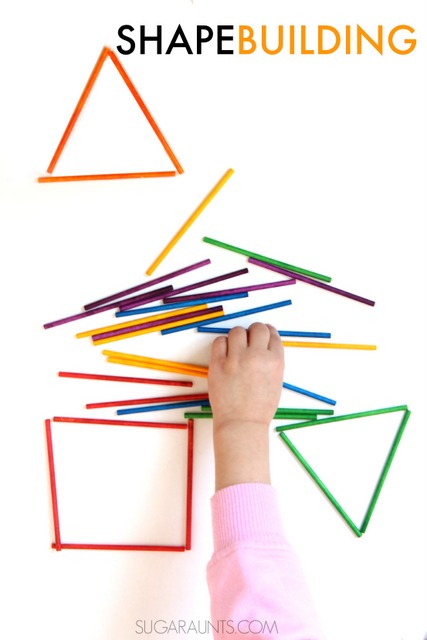
Easy Activity to Help Kids with Reading, Word Searches, & Visual Scanning

Today, I’ve got a super fun fine motor activity that not only will be a hit with the kids, it will work on a few very important skills.  This fine motor fidget toy is fun for kids to make and works on visual scanning at the same time.  Then, when they are done, you’ve got a creative fidget toy that kids can use over and over again.  Let’s get started!
 
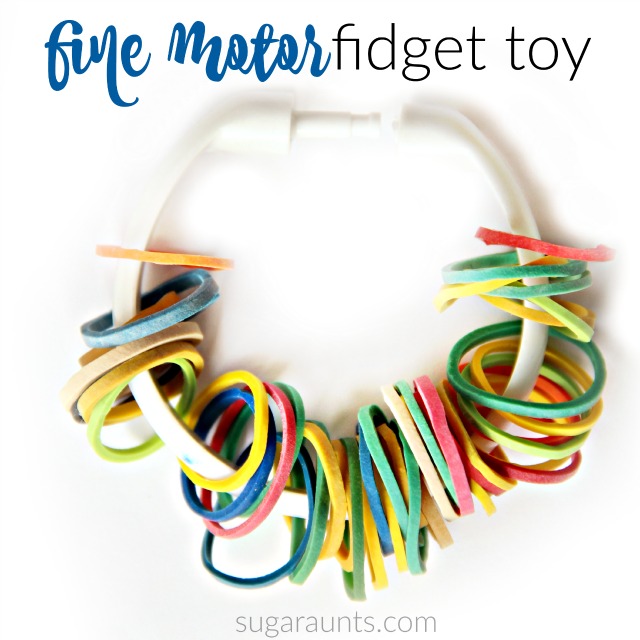
Visual Scanning Activity for fine motor skills and visual scanning in so many functional tasks like reading, word searches, puzzles. This visual motor activity creates a fidget toy to help sensory seekers with fidgeting, too.

But first, What is Visual Scanning?

Scanning a worksheet for keywords, looking through a book for a certain page number, answering a multiple choice test question and scanning the list of options for the correct answer…This is visual scanning.  
 
Looking through a pile of shoes for the matching red one, searching for a friend’s face in a crowded lunch room, doing a word search and looking for letters to make up a word…This is visual scanning.
 
Visual Scanning is the voluntary fixation of the vision from one point in the visual field to another.  Visual scanning is also be called saccadic eye movements.  Scanning, or visual saccades, may be voluntary (such as in reading, or involuntary (such as during fast phases of vestibular nystagmus). We’re going to discuss voluntary saccades in this post.  Gazing between two items (such as in answering multiple choice questions, or copying information from a blackboard) requires visual fixation and voluntary visual saccades.


When a student searches a word search for a specific letter, they need to visually scan in a systematic pattern.  That is, they need to look up, down, left, and right as they search for letter combinations.  For a child who is doing an Easter egg hunt and searching a backyard for brightly colored eggs, they must look on different planes (high, low, near, and far) to find the eggs while avoiding obstacles.  


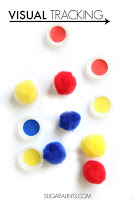
I’ve shared a few visual tracking activities lately in this Occupational Therapy series that I’ve been doing this month.  You can check those out here and here for more visual processing information, but it’s important to realize that visual scanning is different than visual tracking.  To visually scan, a child needs to view an object (red shoe, letters, or Easter egg) or area (page, corner of a book for book numbers, or lunch room) in order to locate an item or information.  In visual tracking, one maintains visual contact on an object as it moves. 

Visual Scanning Activity for fine motor skills and visual scanning in so many functional tasks like reading, word searches, puzzles. This visual motor activity creates a fidget toy to help sensory seekers with fidgeting, too.

Visual Scanning Activity for Kids

This visual scanning activity is one way to work on scanning for items in functional tasks.  This was a simple set up and used a few materials we had on hand:

Amazon affiliate links:

A Shower Curtain ring

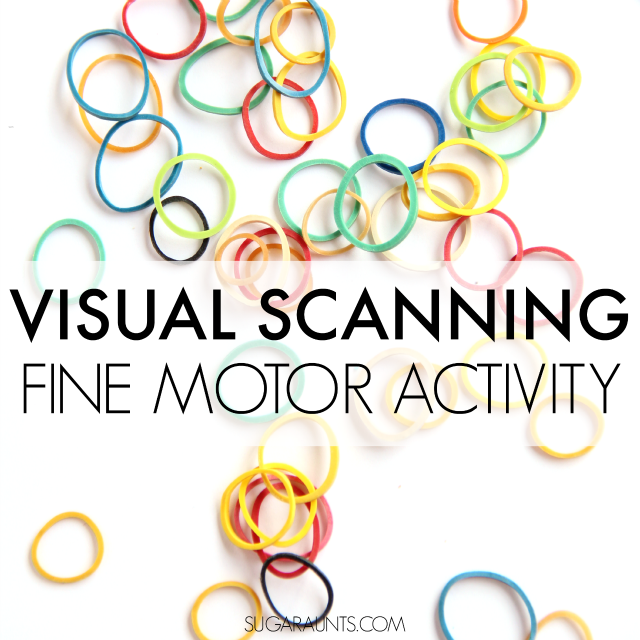
Small Rubber Bands
in many colors


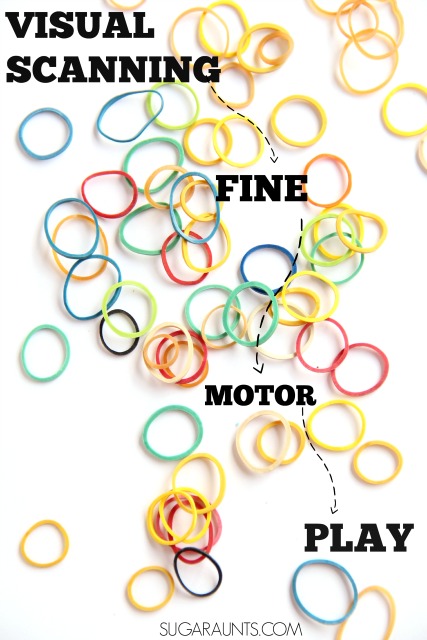
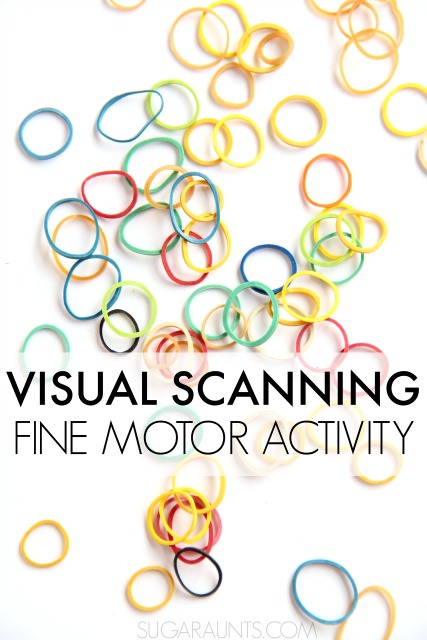
To do this easy Visual Scanning activity, simply scatter the rubber bands out on a surface.  Ask your child to scan the rubber bands to find specific colored bands.  You can call out colors individually or in patterns as they search for and find the correct colored rubber band.  


Make this activity easier (graded down) by removing the number of rubber bands or the amount of colors on the table.  Make it more difficult (graded up) by adding more rubber bands and more colors.  You can also add a larger surface area to make this activity more of a challenge.  Simply spread rubber bands over a larger area with fewer of the specific colors you will be naming.  Children then have to visual scan a larger area.  You can further grade up this activity by adding obstacles to the surface. 

Fine Motor Activity for Kids

Visual Scanning Activity for fine motor skills and visual scanning in so many functional tasks like reading, word searches, puzzles. This visual motor activity creates a fidget toy to help sensory seekers with fidgeting, too.

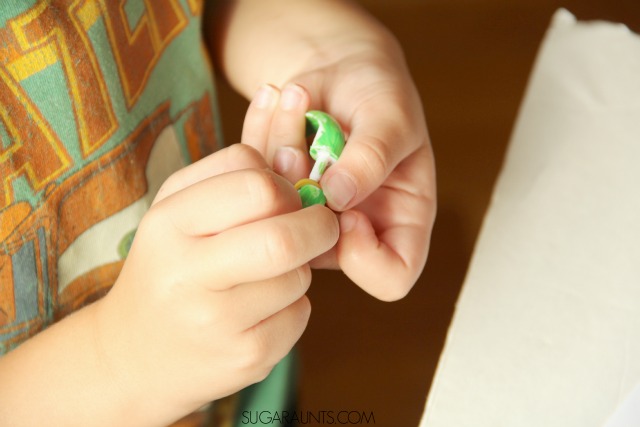
As the child scans for and finds the correct rubber band, have them thread it onto the shower curtain ring.  What a great fine motor activity for kids! They are working on their bilateral hand coordination as they pull the shower curtain ring apart and place the rubber band onto the ring.  

Visual Scanning Activity for fine motor skills and visual scanning in so many functional tasks like reading, word searches, puzzles. This visual motor activity creates a fidget toy to help sensory seekers with fidgeting, too.

My daughter did this activity one afternoon when my niece and nephew were over for the day.  It was a quiet time activity that kept two four year-olds busy for a long time.  They both wanted to keep adding more rubber bands until their ring was filled.


Visual Scanning Activity for fine motor skills and visual scanning in so many functional tasks like reading, word searches, puzzles. This visual motor activity creates a fidget toy to help sensory seekers with fidgeting, too.

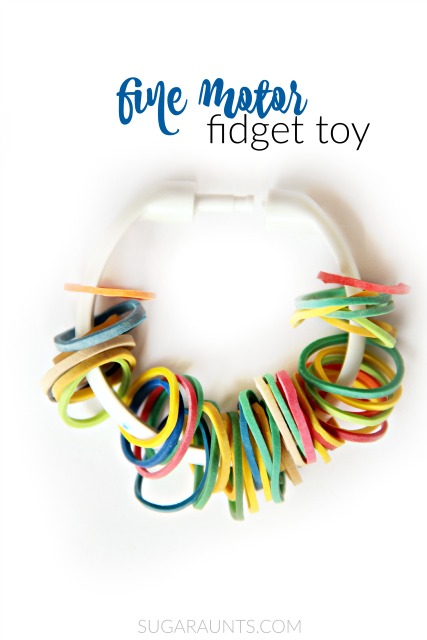
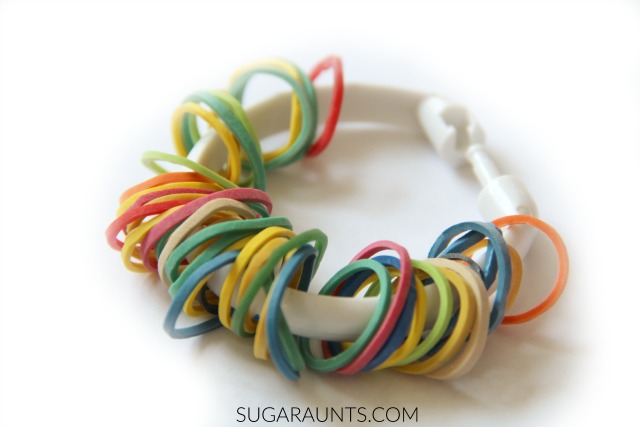
When the ring is filled with bands, you’ve got a fidget toy that can be used during homework or school work tasks.  See more about fidget toys here.  


Have fun working on visual scanning skills and creating this fun toy!  

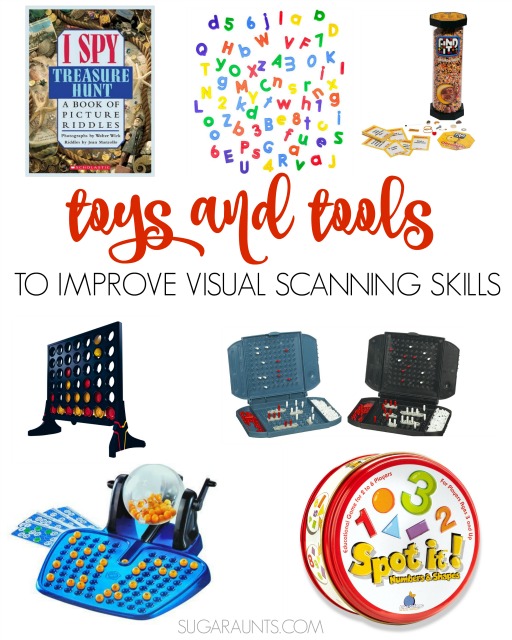
Visual scanning toys for kids

Looking for more ways to work on Visual Scanning?  These are some fun ideas and toys that you can do to work on visual saccades in a creative and playful way.

Amazon affiliate links are listed below.

  • Word Searches.  Have children scan for letters and highlight all of the letter “A’s” in one color.  They can then go through and search for more letters using different colors.
  • Play Bingo to work on scanning for numbers going up and down a card. 
  • Use Letters and Numbers
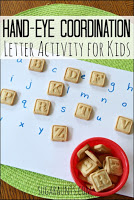
    to search and find letters in an activity like the one we did here.
  • I Spy Books
  • Find It Discovery Bottles OR, make your own, like our Alphabet discovery bottle.
  • Games like Battleship and Connect Four work on visual scanning skills. 
  • Spot It!  is another fun game for kids.
  • Maze activities. Our math maze activity is a fun fine motor and hands-on learning tool that builds visual scanning skills.
Visual Scanning Activity for fine motor skills and visual scanning in so many functional tasks like reading, word searches, puzzles. This visual motor activity creates a fidget toy to help sensory seekers with fidgeting, too.Visual Scanning Activity for fine motor skills and visual scanning in so many functional tasks like reading, word searches, puzzles. This visual motor activity creates a fidget toy to help sensory seekers with fidgeting, too.


These are some of my favorite ways to work on visual scanning:

6 Creative Ways to Improve Visual Tracking Using Recycled Cardboard Tubes

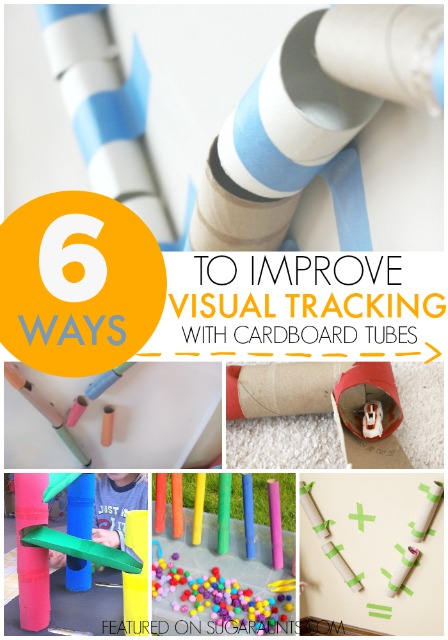
If you’ve been following along with us for long, you know that I love to use every day items and recycled materials in play and learning activities.  Today, I’m excited to share a free way to work on Visual Tracking Skills in kids.  Recently, I wrote a post all about visual tracking skills in kids and why kiddos need them in handwriting and reading tasks.  Today’s post is a collection of creative ways to work on visual tracking using something you might just throw away– cardboard paper tubes!  Toilet paper tubes, paper towel tubes, and wrapping paper tubes are plentiful in a household and are usually just tossed into the recycle bin.  Start saving those cardboard tubes…these are fun ways to get those visual tracking skills going!

 
This post is part of my 31 Days of Occupational Therapy series where I’m sharing a month of inexpensive treatment materials for areas typically treated in Occupational Therapy.  You don’t want to miss this!


Visual Tracking activity using cardboard tubes for recycled creative play and therapy ideas.  Use this in Occupational Therapy for working on reading and writing as well as other functional skills.
Visual Tracking is an important skill needed in many functional tasks.  Read more about the why and how here.  ((This post contains affiliate links.))
 
Here is detailed and informative information on saccades and how they make a great impact on learning and reading. 


Visual Tracking Activities with Recycled Materials

Some of you have voiced concerns about using toilet paper tubes in play and therapy.  You can skip the toilet paper tubes if you like and stick to paper towel tubes and gift wrapping cardboard tubes.  These can be cut down to the size you need.  Or, try making your own cardboard tubes using recycled cardboard boxes like Hands On As We Grow did.


Use these mazes, ball runs, drop toys, and movable toys in visual tracking with kids.  Children can manipulate and build their own mazes while visually tracking a moving ball or other item.  This is a great way to work on visually tracking an object as it passes through a child’s field of vision.


Hands On As We Grow uses math in their marble run activity.
Use cardboard tubes to create a marble run, like Powerful Mothering did here.
Add magnets to cardboard tubes to make movable tube ramps like Teach Preschool did.
Building a marble run on the wall is a great way to explore engineering, gravity, and speed.  Try this kid-made marble run tube activity from Little Bins for Little Hands.
Inspiration Laboratories made a cardboard tube maze for hexbugs.  How cool is that?
Work on color sorting and fine motor skills in cardboard tube activities like The Imagination Tree did.

Creative Ways to Work On Visual Tracking with a Marble Run or Ball Run

So you have those six fun visual tracking activities to create.  Get your kids in on the creation fun.  They can paint, cut, and build cardboard tubes for fine motor strengthening, creativity, tool use, and self-confidence as they build and watch their marble run in action.  Now, here are some creative ways to play with the marble runs while working on visual tracking skills:

  • Use brightly colored balls for the ball runs.  Have races with different colored marbles or balls.
  • Predict which ball will fall through the track faster.
  • Make a ball run along a long wall, for more visual scanning and peripheral scanning.
  • Ask your child to close their eyes.  Start the ball in the ball run and tell them to open their eyes.  They will need to locate the ball as it rolls through the maze.
  • Write letters and numbers on the cardboard tubes.  As the ball rolls past the letters/numbers, have your child call out the name.
  • Give your child a flashlight and ask them to keep the light on the ball as it rolls through the maze.

Other ideas to work on visual tracking is using a Marble Run in sensory play like we did with oobleck and waterbeads.


Like this activity and creative idea for working on visual tracking?  Stop by and look through our Visual Perception page where I’ve got a bunch of ideas to share.


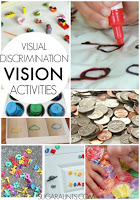
More Vision Activities you may like:

http://www.sugaraunts.com/2015/10/visual-tracking-tips-and-tools-for.html
 

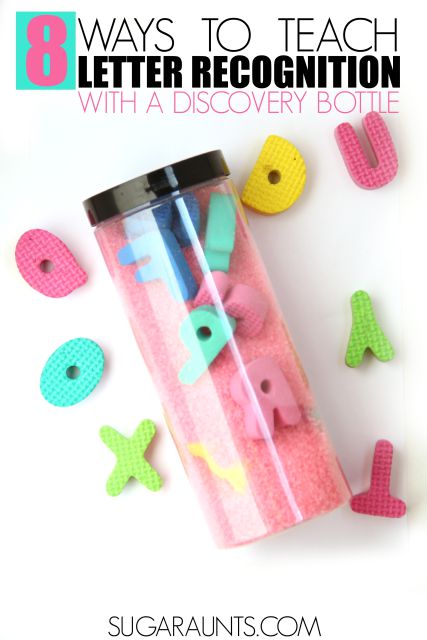
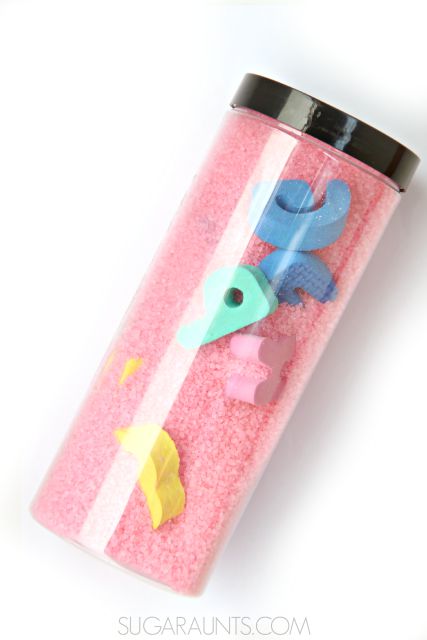
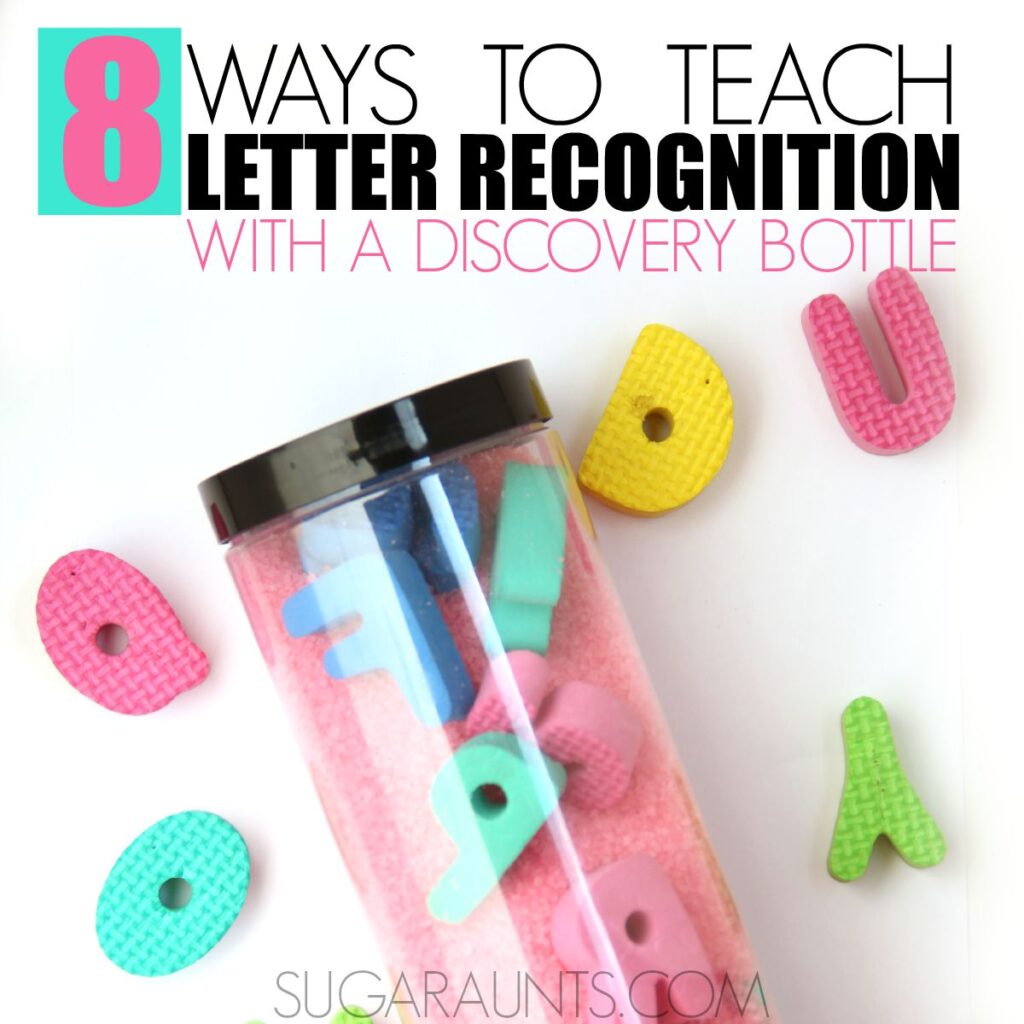
Alphabet Discovery Bottle

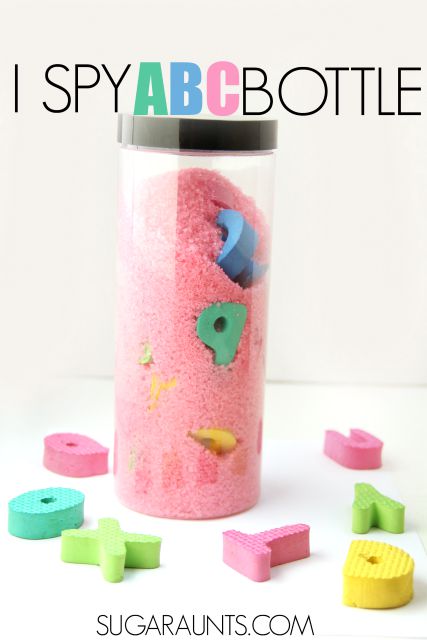
 Sometimes learning letters can be tricky for preschoolers and kindergarteners.  Remembering all of those letters (26 is a lot!) is frustrating and difficult and kids just aren’t into identifying the letters of the alphabet.  Many times you have a child who picks up on letters right away.  You can see posts on Facebook where proud parents are touting their two year old who knows all of the letters and the sounds they make.  They are proud mamas and papas and deserve to share their excitement with all of their friends on social media!  But sometimes, you have kids who just aren’t into learning letters.  As much as you try to introduce the ABC’s, some kids just have more trouble recognizing the way a letter looks, recalling the letter name, and identifying the letter’s sound.  Creative and multi-sensory teaching techniques can help with kids who are resistant in trying yet another letter learning activity.  We made this ABC letter identification discovery bottle to practice letter recognition. Have you made a sensory bottle yet?  These are very cool calming sensory tools in learning and play!


Alphabet letter recognition discovery bottle for preschool and kindergarten aged kids. This discovery bottle is fun for creative learning and sensory play with letter identification and recognition in kids.


Alphabet Letter Recognition Discovery Bottle

My three year old is always up for an interesting activity.  She is my little helper when it comes to our cooking with kids recipes.  Whenever I have an activity set up, she is always game to play!  This sensory bottle was just for her as we practiced naming the letters of the alphabet.  She helped me make our letter discovery bottle and that was part of the fun! (I’m including affiliate links in this post.)
Alphabet letter recognition discovery bottle for preschool and kindergarten aged kids. This discovery bottle is fun for creative learning and sensory play with letter identification and recognition in kids.
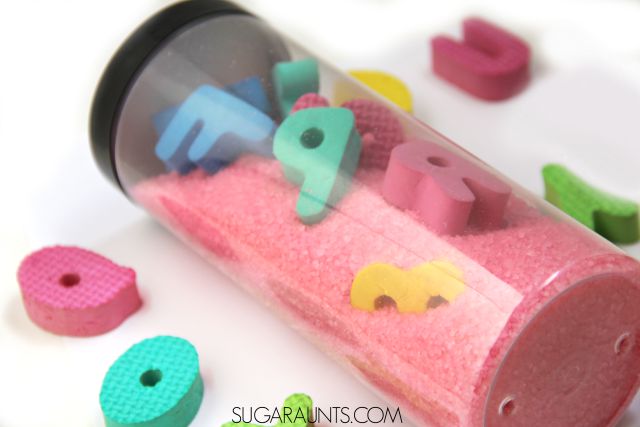
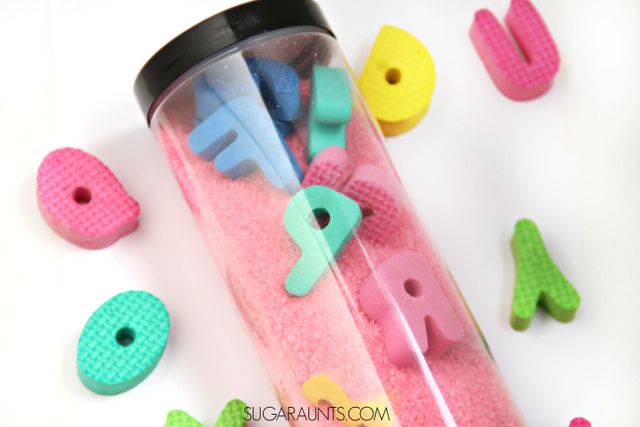
To make a sensory discovery bottle based on letters, you’ll need just two items:

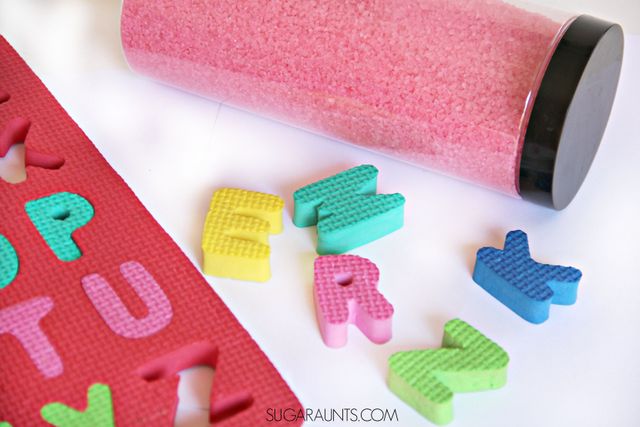
Foam Alphabet Puzzle
(This is not the type of puzzle we used in our bottle. We found ours at a garage sale long ago. However, these foam letters would work in your discovery bottle. And if you find a puzzle like ours at a yard sale, grab it up!)

Scented bath salts
Alphabet letter recognition discovery bottle for preschool and kindergarten aged kids. This discovery bottle is fun for creative learning and sensory play with letter identification and recognition in kids.
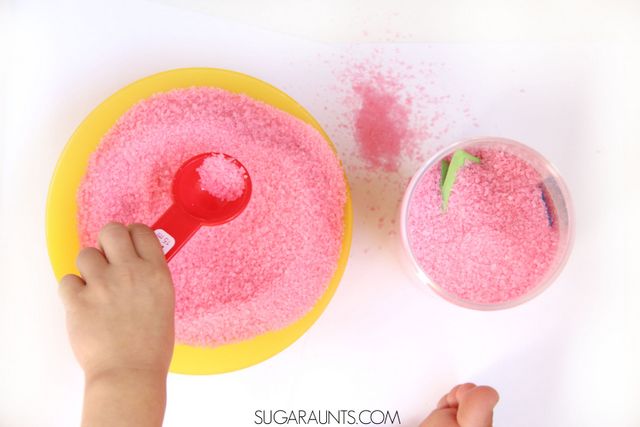
So making this scented scenory letter activity is beyond easy.  First, dump out half of the salts into a large bowl.  Add in your foam letters.  Kids will LOVE doing this part of the activity.  Ask them to help you name the letters as you drop them in one by one.  Then, when you’ve got all the letters (or as many as your bottle can handle), start scooping in the remaining bath salts.  This is such a great sensory activity for kids.  The sense of scent (or olfactory sense) is one linked to recall.  How many times do you recognize a scent form your past and recall memories associated with that smell?  Invite your child to sniff the air as you scoop the salts back into the container.
 
**NOTE** Be sure to stay with your child as you do this part, and any parts of this activity.  Children should not taste the bath salts and if your child may put items into their mouth, refrain from allowing them to scoop the bath salts.  As with any activity on this blog, be sure to use your best judgement with your child’s needs and abilities and provide direct supervision.
 
You may want to glue the lid shut at this point, before allowing your child to play with the discovery bottle.
Alphabet letter recognition discovery bottle for preschool and kindergarten aged kids. This discovery bottle is fun for creative learning and sensory play with letter identification and recognition in kids.
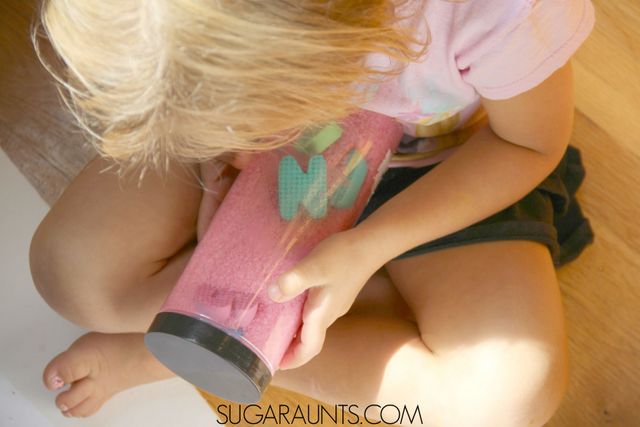
Next, start playing!  Allow your child to shake, roll, shake some more with the discovery bottle.  Invite them to shake until they find and can identify the letters in the bottle.  Shaking the bottle has weight and provides proprioceptive input to kids.  Depending on the size of your bath salts bottle, it can be on the heavy side.  Use this activity as a warm up to fine motor tasks such as handwriting or drawing.  
Alphabet letter recognition discovery bottle for preschool and kindergarten aged kids. This discovery bottle is fun for creative learning and sensory play with letter identification and recognition in kids.
 
Alternate ways to play with this letter sensory bottle:
  • Look and search for letters.  As you find one, name it with your child.  Ask them to shake the bottle and search until they find that letter again.
  • Shake and roll the bottle and ask your child to name the first letter they see.  Have them shake and roll until they find letters in alphabetical order.
  • Ask your child to find a letter that starts the word “apple, ant…”.  Name words for each letter and ask your child to find those letters in the sensory bottle.
  • When your child finds a letter, ask them to name words that start with that letter’s sound.
  • Use the empty puzzle.  Point to a letter spot and ask your child to name that letter and then find it in the discovery bottle.
  • Ask your child to shake the discovery bottle and find a letter.  Ask them to point to that letter’s spot in the empty puzzle.
  • Ask your child to find a letter in the discovery bottle.  When they do, ask them to use the discovery bottle like a pointer and draw that letter in the air, using both hands on the bottle.  Provide hand-over-hand assistance, if needed.
  • Look around the room and play “I Spy”.  Say to your child, “I Spy  something that starts with the letter B.”  Have them guess the item in the room, then shake the sensory bottle and find the letter “B” in the discovery bottle.
Alphabet letter recognition discovery bottle for preschool and kindergarten aged kids. This discovery bottle is fun for creative learning and sensory play with letter identification and recognition in kids.


Looking for more discovery bottle ideas using dry materials?   You know: rice, corn, paper, seeds…how many dry materials can you think of to use in a discovery bottle?  

 
More creative letter learning ideas that your child will love:
 

Diagraph Spelling Word Poems

This week the theme in our Second Grade Learning series is Poetry.  We are well into the swing of our school year and second grade Spelling words do need a lot of practice at home.  We decided to create poems using our -CH and -TCH Digraphs Spelling Word list.  This was a lot of fun for my second grader and I.  She really got into creating rhyming lines of our poetry.  This is one spelling practice technique, we’ll definitely be using throughout the year as we practice spelling words and words that sound similar this school year.


Diagraph activity for spelling words.  This activity is for second graders and involves writing spelling word poetry, but these diagraph spelling words can be done with all ages.


Second Grade English Language Arts: Poetry with Spelling Words

(Affiliate links are included in this post.) We started out with our Spelling list for the week, which were words containing the similarly sounding -CH and -TCH ending diagraphs.  These words can be tricky for students to learn because the sound is so alike.  We needed a little extra practice before the week’s test, so this poem building exercise was perfect.
Diagraph activity for spelling words.  This activity is for second graders and involves writing spelling word poetry, but these diagraph spelling words can be done with all ages.
 
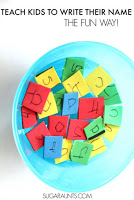
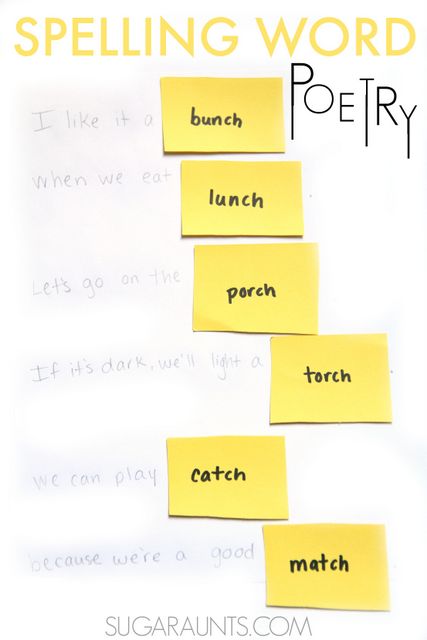
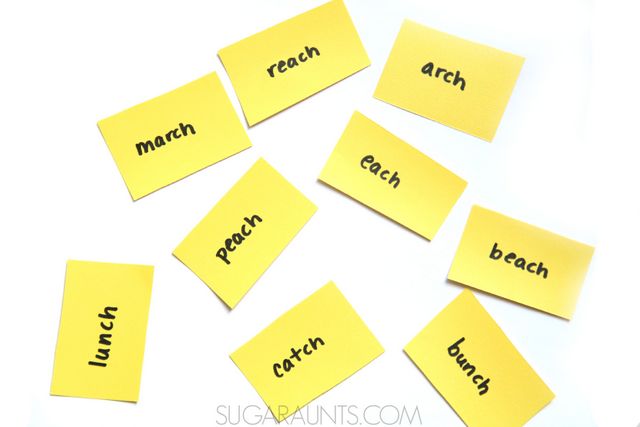
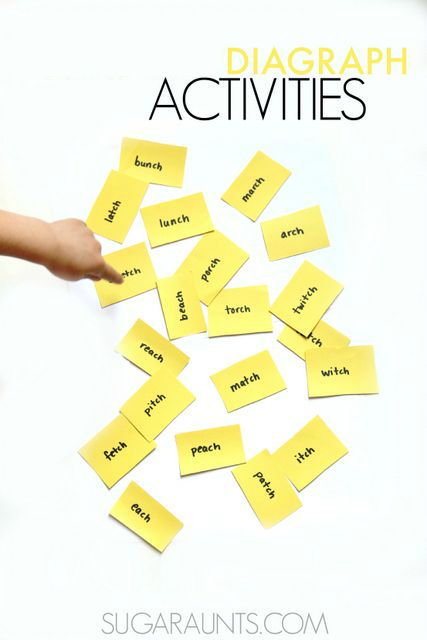
We started off by cutting out rectangles of cardstock.  I wrote out each word from the spelling list, adding in a few that contain the -CH and -TCH ending diagraphs.  
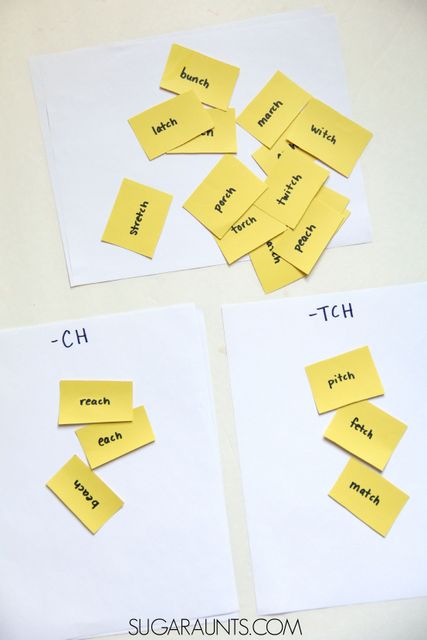
Diagraph activity for spelling words.  This activity is for second graders and involves writing spelling word poetry, but these diagraph spelling words can be done with all ages.
 
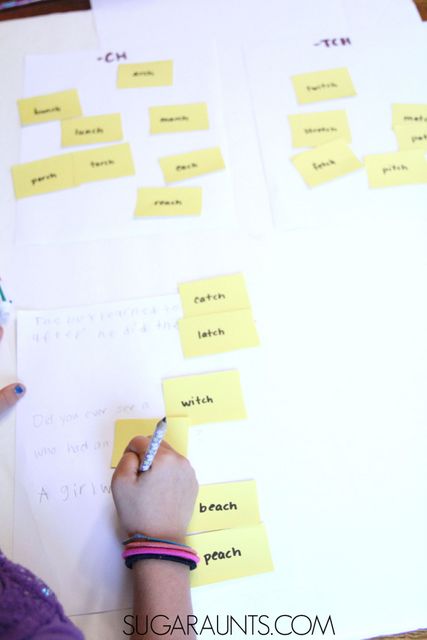
We started by sorting all of the words in the pile.  This activity was a good way to review the words and recognize that words with -CH or -TCH rhyme.  We identified several rhyming pairs.
Diagraph activity for spelling words.  This activity is for second graders and involves writing spelling word poetry, but these diagraph spelling words can be done with all ages.
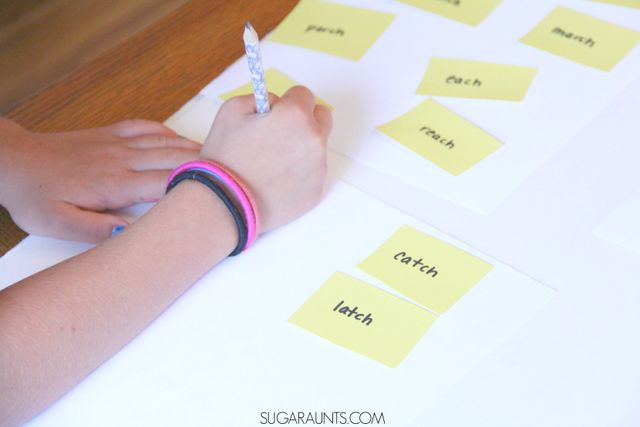
Next, we used the rhyming pairs to create rhyming lines of poetry.  We built a poem by piecing in the rhyming lines.  To do this, we pulled out a pair of rhyming word cards and placed them on our paper.  We wrote lines of the poem around the spelling words, using the spelling word as the ending of the line of poetry.  It was fun for my daughter to come up with lines that used both words of the pair in a way that made sense.  She liked the puzzle of building lines of her poem and wanted to create more.  
 
To make this a collaboration between the two of us, we took turns creating lines of the poem.  What a fun way to write and create together.  While we wrote, we talked about the rhythm of the lines of our poem.  We discussed the beat of the lines and how that added to our poetry.
Diagraph activity for spelling words.  This activity is for second graders and involves writing spelling word poetry, but these diagraph spelling words can be done with all ages.
What are your favorite ways to learn and practice diapgraphs?  Here are a few fun ways that we discovered by doing this activity together:
  • Write a diagraph poem.  Try it.  It’s fun!
  • Sort words by diagraph.
  • Match pairs of rhyming words.  Notice how the matching words (like arch and march) contain many of the same letters.  
  • Use flashcards to do a scavenger hunt.
  • Practice diagraph words with balloons.
  • Make a sensory bin with diagraph words.
  • Use ping pong balls in learning diagraphs.
Stop by and see what the Second Grade Blogger Team have done with Poetry this week:
Classic Poetry for 2nd Graders – from Look! We’re Learning 

9 Poetry Books your child might enjoy – Planet Smarty Pants 

Hand print Poetry – Creative Family Fun 


Autumn Fires Copywork – Sallie Borrink Learning 

Cinquain Poetry for Kids – Still Playing School 

Solar System Poetry – Rainy Day Mum

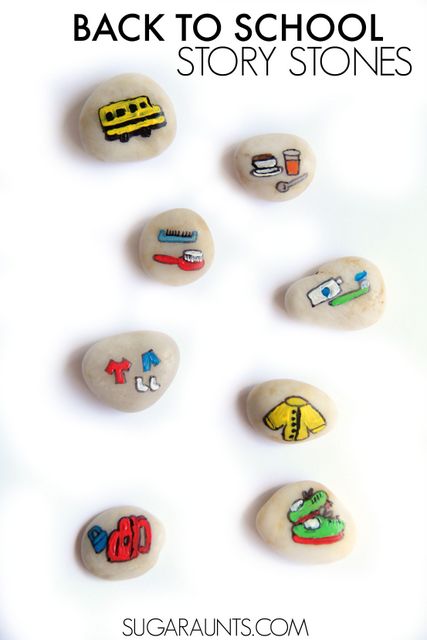
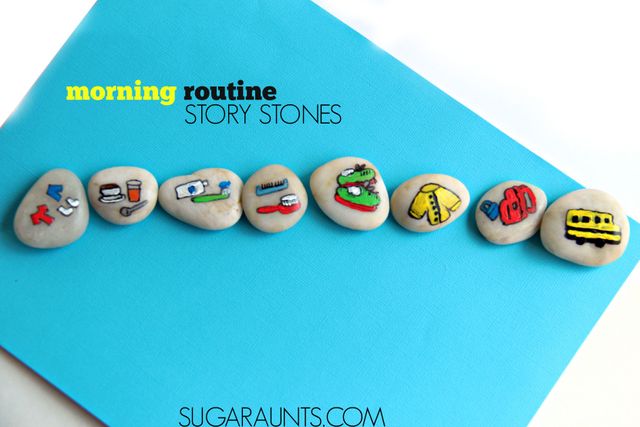
Back to School Morning Routine Story Stones

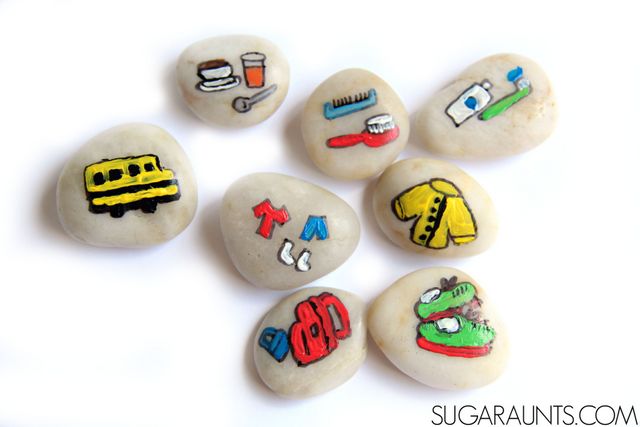
These Back-to-school story stones are sure to help with the ease of getting back into routines of Fall and School.  Whether your child is going to Kindergarten for the first time, or returning to school this Fall (or returning to routines of homeschool!), these story stones will help with getting kids used to the steps needed in morning routines.  What are story stones?  Usually, they are stones with pictures painted on them to use in imaginative play.  We made story stones to depict the morning routine for preparation and ordering of tasks for back-to-school.


Back to school story stones for helping kids with the routines of Fall and school or homeschool mornings.
 

make Back-to-School routines easier:

 
This post contains affiliate links.
 
Back to school story stones for helping kids with the routines of Fall and school or homeschool mornings.
 
The morning rush and kids do not go together well.  Getting kids up, dressed,  brushed, polished, and out of the house without forgetting important items can be more than slightly difficult.   Add in more than one child and a routine that gets old after the first week, and you have kids that need prodding with each step.  Use these story stones to help kids understand, process, and order the steps of a morning routine.
 
We’ve used rocks in learning and play before, like in word building and sensory play so this was a fun way for us to play and learn about the coming routine’s of Back-to-School.
Back to school story stones for helping kids with the routines of Fall and school or homeschool mornings.

Back to school routines schedule

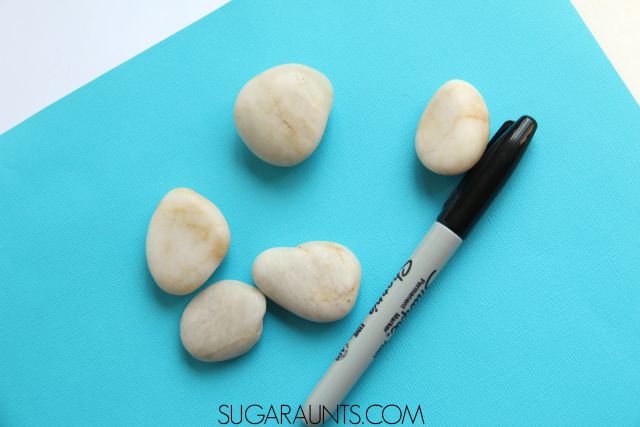
We started with a bunch of white river rocks and a permanent marker.  Figure out the important tasks that your child must do each morning.  These can be jobs that they do on their own, or initiate with prompting.  We decided that the important steps of our morning are getting dressed, brushing teeth, eating breakfast, brushing hair, putting on shoes, coat, lunch/backpack, and going to the bus stop.  You can add any other important steps in your morning, like making the bed, feeding pets, packing a lunch, etc.  
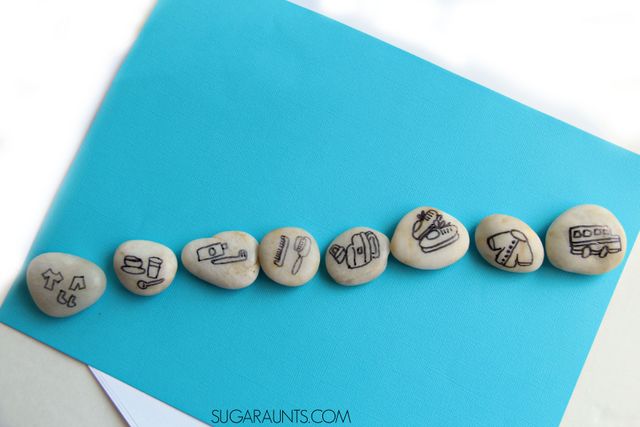
Back to school story stones for helping kids with the routines of Fall and school or homeschool mornings.
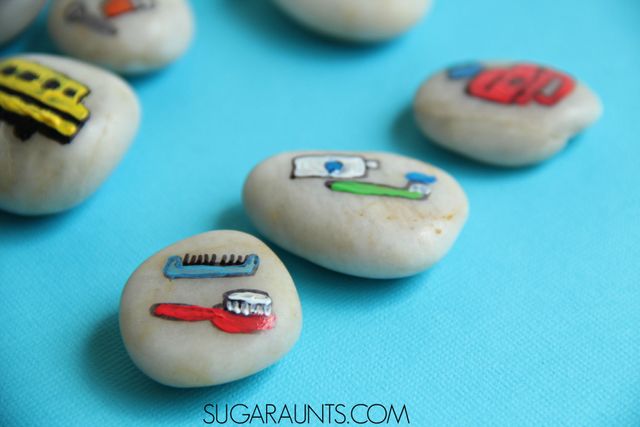
Use the permanent marker to draw a representation of the tasks onto the river rocks.
Back to school story stones for helping kids with the routines of Fall and school or homeschool mornings.
Using acrylic paints, fill in the outlines of the shapes. You will need a fine point paint brush for the small painting, or you can snip the bristles of a regular paint brush to stay in the lines.
 
Let the paint dry.  
 
Before the start of school, use the back to school story stones with your child to talk about the routines.  You can place the stones in order, move around the order, and talk about each step.  Invite your child to use the story stones in imaginative play by pretending to go through the morning’s routine. 
Back to school story stones for helping kids with the routines of Fall and school or homeschool mornings.
Hopefully this idea will help with the hectic mornings before school and Fall’s routines! 
 
 
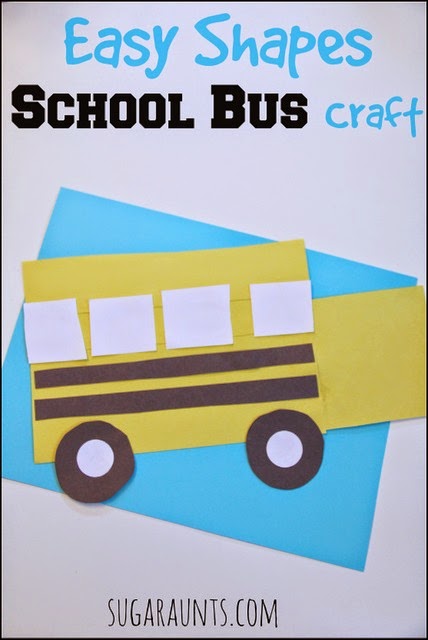
Kids will love to create this Easy Shapes School Bus craft in preparation for Back-to-School, too.

Rhyming and Synonym Puzzle Activities

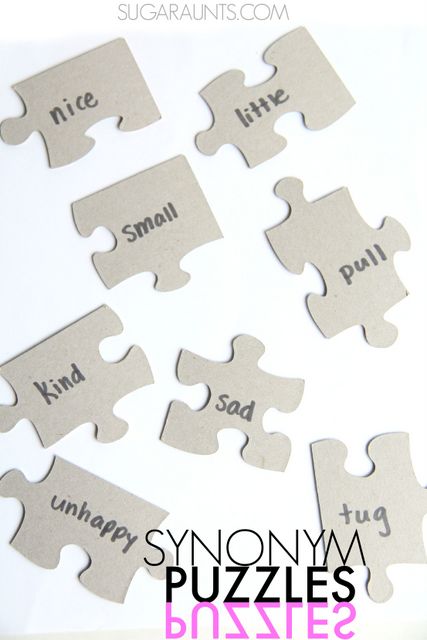
We all have puzzles that pieces go missing.  You’re building along with the kids when you get to the last handful of pieces and realize that there is just ONE puzzle piece that is missing.  It might be under a couch cushion, in the car (EVERYTHING ends up in the car at some point!), or into puzzle-piece-oblivion.  So, what do you do with that whole puzzle when it’s incomplete?  Make it a learning activity!  This incomplete puzzle turned into a rhyming word puzzle activity and a synonym puzzle.


Use a puzzle with missing pieces to practice synonym matching and rhyming word matching  with Kindergarten and First Grade aged kids.


Reuse Puzzles Pieces for Learning Mini Puzzles

This post contains affiliate links.  Grab a puzzle from your shelf that is missing a piece.  You know the one: the puzzle that you know is missing three pieces but you’re hanging onto it just in case they show up the next time you vacuum under the couch.  Put the puzzle waiting game to rest and use that puzzle in learning activities.  We practiced synonyms for a first grade English Language Arts activity by creating mini synonym puzzles.  This is so easy to do: simply grab a permanent marker and write pairs of synonyms on the back of the puzzle.  When you practice the synonym pairs with your child, you can place just two pieces out to start with.  Show them that the pairs match up based on the matching synonym words and can be positioned according to the way the words are written.  For older children or for a more complex activity, write the words in different directions so they need to work on matching up the puzzle pieces.  
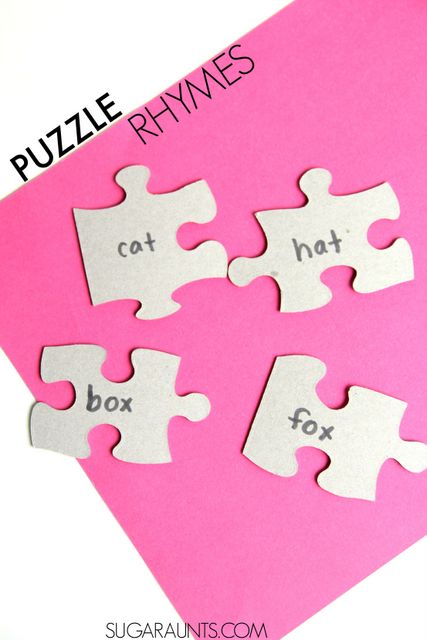
You can modify this activity to create a math, science, history, or any learning activity that kids need to determine facts.  Memorization or math can easily be done with this puzzle learning activity, too.

Synonym Activity for First Grade

Rhyming Word Match Activity for Kindergarten

Use a puzzle with missing pieces to practice synonym matching and rhyming word matching  with Kindergarten and First Grade aged kids.
We also made a rhyming word activity using the puzzle pieces.  This is a great activity for Kindergarten aged kids. 

Use a puzzle with missing pieces to practice synonym matching and rhyming word matching  with Kindergarten and First Grade aged kids.

This easy puzzle activity was a big hit in our house and we will definitely be doing this one again for other skill areas.  Because puzzles and lost pieces go together like a puzzle match. 

 This post is part of our Learning with Free Materials series where we are sharing learning ideas for homeschoolers and school-base enrichment activities using items that are free or mostly free (i.e. CHEAP or you already have in the home), and is part of the 31 Days of Homeschooling Tips as we blog along with other bloggers with learning at home tips and tools.

Cardboard Tangrams and Visual Memory

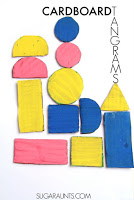
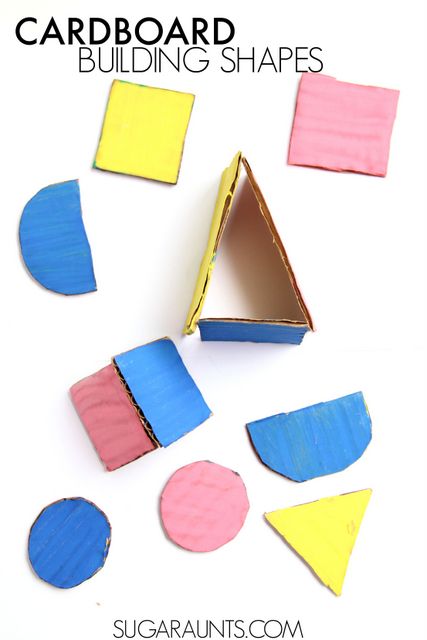
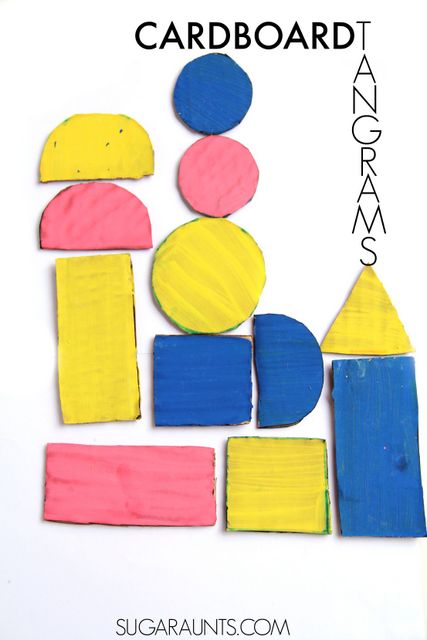
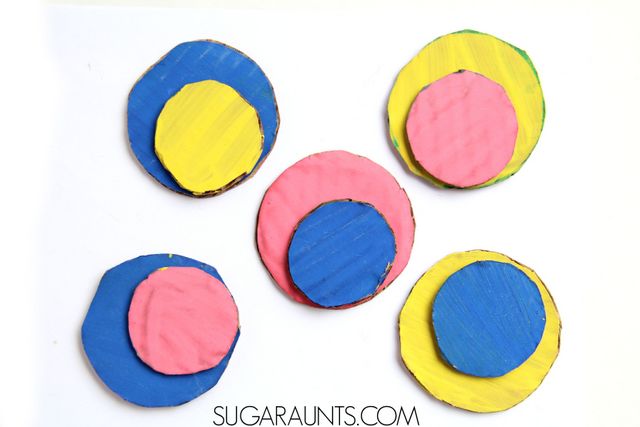
We’ve had these DIY cardboard shapes in the house for a couple of years now.  These easy Tangrams are made from recycled cardboard and large enough that small hands can manipulate and build while learning shapes and colors.  We used our cardboard building shapes to create two and three dimensional shapes while encouraging shape identification for my soon-to-be Kindergarten aged son.  
Building and copying shapes with these tangrams is a great way to practice the visual perceptual skills needed in copying letters and numbers, including visual memory and visual discrimination.


Make cardboard tangrams and work on visual memory, visual form discrimination, and more visual perceptual skills in kindergarten and first grade kids.  Shape identification, colors, copying, patterns and more

We’re including affiliate links for your convenience. 


Extra Large DIY Tangrams

We made these cardboard tangrams using a recycled cardboard box.  Cut the cardboard into shapes.  The nice thing about this project is that you can make the shapes as small or as large as you like.  

Depending on your child’s age, you may want to create one inch shapes in complex shapes like pentagons and hexagons.  We made our cardboard tangrams about 2-3 inches in height.  

This size is perfect for small hands of preschool aged-kids who are just learning shape identification.  Use paint to add color to the cardboard. (THIS is my favorite brand of paints.)

Make cardboard tangrams and work on visual memory, visual form discrimination, and more visual perceptual skills in kindergarten and first grade kids.  Shape identification, colors, copying, patterns and more
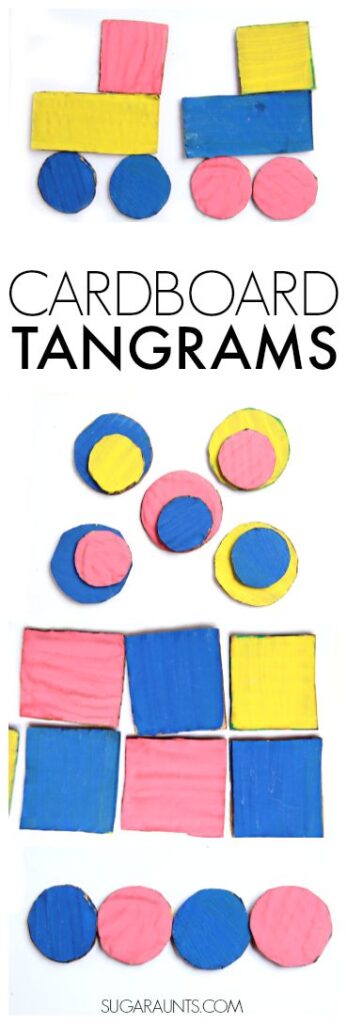
Use the cardboard tangrams to build shapes, patterns, and pictures with your preschooler.
Make cardboard tangrams and work on visual memory, visual form discrimination, and more visual perceptual skills in kindergarten and first grade kids.  Shape identification, colors, copying, patterns and more

Using Tangrams in Visual Memory

Kids can copy the shapes with tangrams.  Model how to build a combination using different colors and shapes.  Your child can copy the form as they build, copying from your design.  For a more complex activity, build a form using different shapes and colors and cover the design as you build.  They, show your child the finished form and ask them to build by copying.
For an even more complex visual memory activity using the tangrams, build a form using shapes and colors.  Show your child the design for 10 seconds.  Then cover the form and ask them to build the form from memory.
 
All of these activities challenges your child’s visual memory skills.  This is such an important area to develop for handwriting and copying letter and number forms, and then copying spelling words from a chalk board, and then recalling how to form letters and numbers by memory.  
Working on visual memory, visual discrimination, and visual scanning are so important in copying letters, recalling how to make a specific letter while quickly writing a spelling word during a spelling test, and placing letters on lines in handwriting.  
Then there is the line awareness and spatial awareness needed for cutting with scissors.  All of these areas can be worked on by playing with tangrams.  You can read more about Visual Memory here.
Make cardboard tangrams and work on visual memory, visual form discrimination, and more visual perceptual skills in kindergarten and first grade kids.  Shape identification, colors, copying, patterns and more
 
Complete even more complex tangram puzzles by stacking the shapes on top of one another to build layered and textures.  You can also build three dimensional shapes using the cardboard.  These a
are fun ways to challenge your kindergarten and first grader in shape and 3D shape identification.
 
More visual perceptual activities you will find interesting: 
   

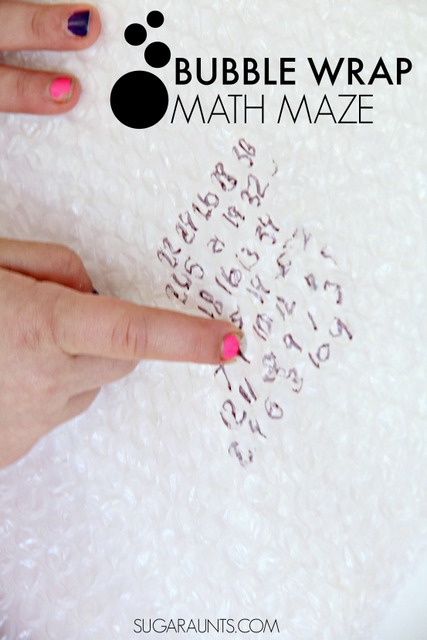
Bubble Wrap Math Visual Scanning

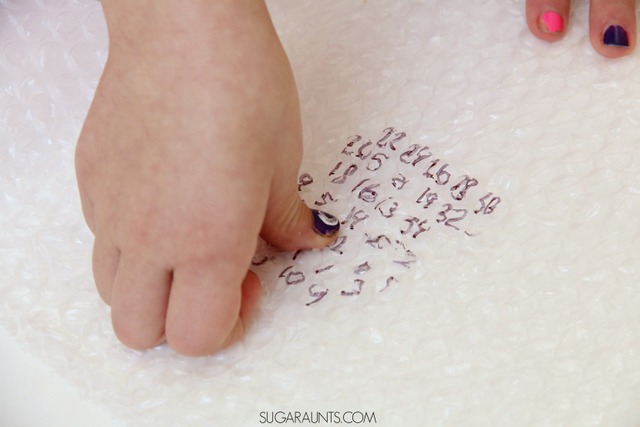
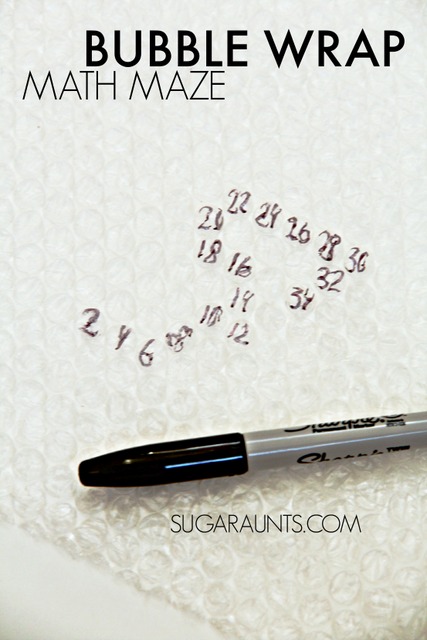
Popping Bubble wrap is a fabulous fine motor work out for kids.  Popping the little air bubbles in recycled plastic wrap works the muscles within the hand (the intrinsic muscles) and opens the thumb web space, which is important in an efficient pencil grasp.  We used bubble wrap in a visual perceptual activity and a math activity recently as we practiced “counting on” by twos.  This first grade math activity is a great way to build a foundation in addition and subtraction.  Besides being a creative way to practice math skills, our bubble wrap math maze was big time fun!
Also be sure to check out our math maze activity for more hands-on visual perceptual and fine motor math fun.


This first grade math activity is a great way to build a foundation in addition and subtraction.  Besides being a creative way to practice math skills, this bubble wrap math maze is big time fun and great for fine motor skills like intrinsic hand strength and an open web space.  Also great for visual scanning skills in kids, too.

Counting On Math Activity:

This post contains affiliate links.
 
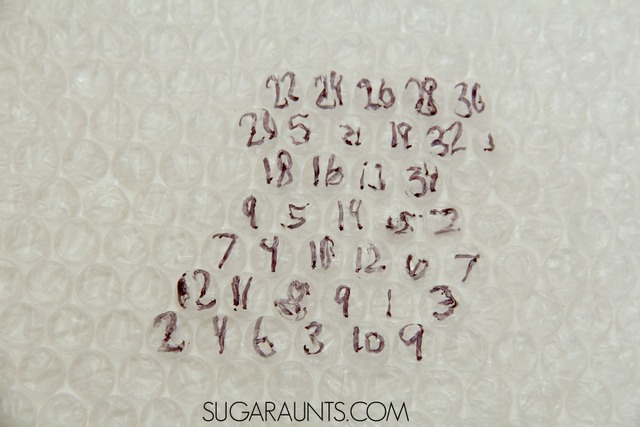
We’ve done a similar bubble wrap visual scanning activity before, only with letters and colors and using the bigger style of bubble wrap.  Today’s post uses the smaller bubble  bubble wrap and is more age-appropriate for my daughter who is just finishing up first grade.  We used a permanent marker to write even numbers on the bubbles, starting with number “2”. I wrote the numbers in a weaving maze so that it would take a bit of visual scanning to locate the appropriate number as my daughter counted on from 2.


The word on the therapy street is that Bubble Wrap is not going to be made in the near coming future, in order to provide a more environmentally conscious shipping product.   The occupational therapists I know will be stocking up now for it’s fine motor workout awesomeness!  That’s all for the inside scoop on bubble wrap for now.
This first grade math activity is a great way to build a foundation in addition and subtraction.  Besides being a creative way to practice math skills, this bubble wrap math maze is big time fun and great for fine motor skills like intrinsic hand strength and an open web space.  Also great for visual scanning skills in kids, too.
Then, fill in the surrounding bubbles with numbers.  Be sure to write numbers that don’t “add on” to the numbers in the maze.  For example, near the number 4, don’t write a number 6.  You can make the maze more difficult in subsequent mazes.  Create “dead ends” on the maze of numbers. 
 
To further extend this activity, create a maze with even numbers or “count on” by 3s, 4s, 5s, or 10s.  
You can also count down from the end of the number maze to work on subtraction.
 

What is Counting On and Counting Back in First Grade Math? 

Counting on and Counting back math facts are essentially adding and subtracting.  When a child is trying to figure out an addition problem, counting on is a method of finding the answer.  Counting back from a number is a method of finding a subtraction answer.
This first grade math activity is a great way to build a foundation in addition and subtraction.  Besides being a creative way to practice math skills, this bubble wrap math maze is big time fun and great for fine motor skills like intrinsic hand strength and an open web space.  Also great for visual scanning skills in kids, too.

Visual Scanning Activity

 
Scanning for the correct number among a group of numbers like in this activity, is visual scanning.   Visual scanning is an important part of reading, writing, and so many functional skills. You can read more about visual scanning here.  
This first grade math activity is a great way to build a foundation in addition and subtraction.  Besides being a creative way to practice math skills, this bubble wrap math maze is big time fun and great for fine motor skills like intrinsic hand strength and an open web space.  Also great for visual scanning skills in kids, too.
Need more visual scanning activities?  Try these: 

Seek and find games such as “I Spy”.  Or create your own real toy “I Spy” game.
Roll a ping pong ball across a table from person to person. Watch it with your eyes,  while keeping your head still!
Trace pictures on a light box.
Flash light games.
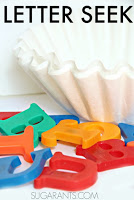
Sensory seek and find.


This post is part of our month-long series: Learning with Free Materials series, where we share ideas to learn at home using free (or almost free) materials.  It’s part of the 31 Days of Homeschooling Tips as we blog along with other bloggers with learning at home tips and tools.