How to Compose and Decompose Numbers

Most of us have glass gems sitting around the house.  (Don’t have any?  See where we got them super cheap below!)  These glass gems came in handy when we were practicing first grade math recently.  Math and common core standards can be a tricky thing with terms like composing and decomposing numbers.  They can throw us old moms and dads for a loop when we are helping out with homework duty (or following guidelines in homeschooling curricula).  Today’s post for our 31 Days of Learning with Free (or almost free) Materials was a fun and easy way to practice difficult first grade math concepts in a fun way!
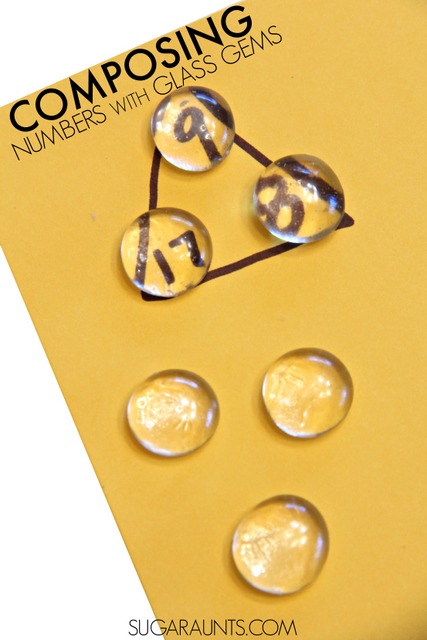

Compose and decompose numbers with glass gems in this first grade math activity

This post contains affiliate links.

How do you Compose and Decompose numbers (First Grade Math):

To start with, we used clear glass gems that we found in the dollar store.  You can get a pound of gems for a dollar which will go a long way in math and other activities with the kids.  You can quickly purchase the gems here for convenience.  

What is “composing numbers”?

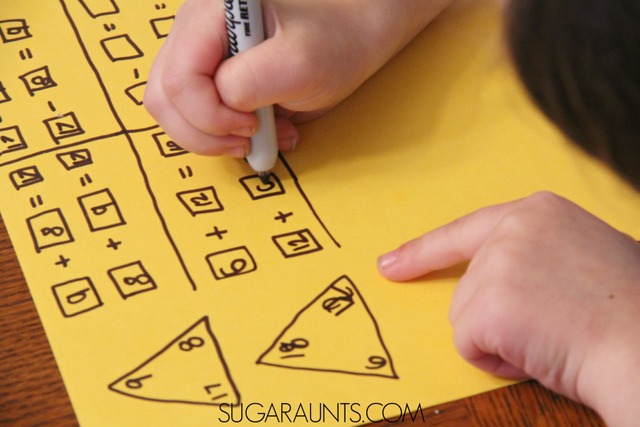
To practice our composing and decomposing of numbers, we pulled out a handful of the glass gems and paper with a marker.  I drew a triangle and wrote two numbers in two corners of the triangles.  My oldest daugher (in first grade at the time) used the gems as counting manipulatives.  She added the two numbers up by counting the glass gems and wrote the total in the empty corner of the triangle.   This adding numbers together, or building a number is called composing a number.  Another way to say composing numbers is to think about putting numbers together.  My daughter came home from school talking about how to “put together” numbers.

What is “decomposing numbers”?

To decompose the number, we wrote another triangle and started with a higher number and a lower number.  She used the clear glass gems to subtract by counting out the manipulatives.  This taking apart of a number is called decomposing a number.  You can think about decomposing numbers by “taking apart” a number.
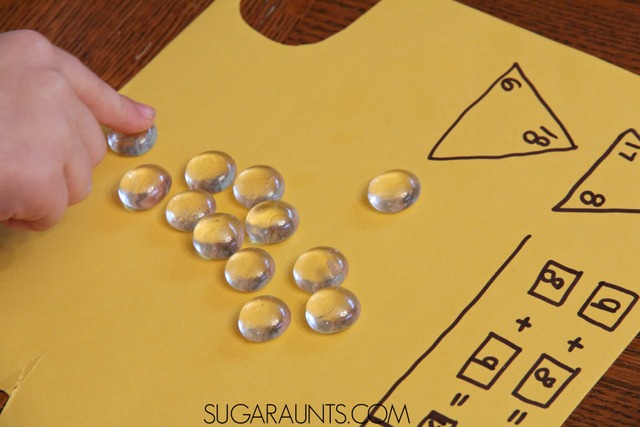
composing and decomposing numbers

How to compose and decompose numbers in first grade math

We then wrote out the addition and subtraction sentences using boxes with the composed and decomposed numbers.  It is interesting to see the light bulb go off as your child realizes that a number can be built in many ways, but if you take away a specific amount of gems (or subtract), there is only one number that can “fit” in that corner of the triangle.  Likewise, if you subtract either number from a composed triangle statement, you will always get the other corner’s number (assuming the math has been done correctly).

You can extend this activity out more by filling in just one corner of the triangle.  Draw  a page full of triangles.  Ask your child to put together, or compose, that number in as many different ways as they can.  
Work on decomposing a number by filling in just one corner of a triangle.  Draw a page full of triangles.  Ask your child to take apart, or decompose, that number in as many different ways as they can.


See all of our Learning with Free (or almost free) Materials.


This post is part of the 31 Days of Homeschool Tips series.


See all of our math posts here.

Love using regular every day items in learning and play?  Get our published book for 150+ activities for kids that can be done throughout the year:
Ebook version  Click here to purchase


Kindle version ($14.95) Click here to purchase


Paperback version ($29.99) Click here to purchase
Dyed Pasta Tic Tac Toe

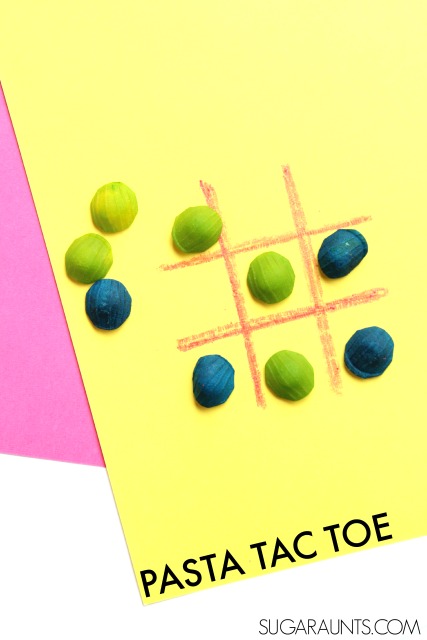
We love a fun game of tick tac toe.  We play with pretty much any manipulative and on paper with shapes, letters, numbers, or drawings.  This Pasta Tic Tac Toe game used dyed pasta and has kept us busy for many a game of tic tac toe!


homemade tic tac toe game with dyed pasta

EASY Tic Tac Toe game with dyed pasta


We’re sharing affiliate links for your convenience. Start with 

food coloring and pasta.  You can use any shape or type of pasta.  Add the dried pasta and a few drops of food coloring to a plastic baggie.  Add a squirt of
hand sanitzer and shake the bag.  Allow the pasta to dry overnight until the dye is dry.  You are ready to play.  We drew a board quickly and have been playing a lot of tic tack toe.  Have fun with your tic tac toe manipulatives!
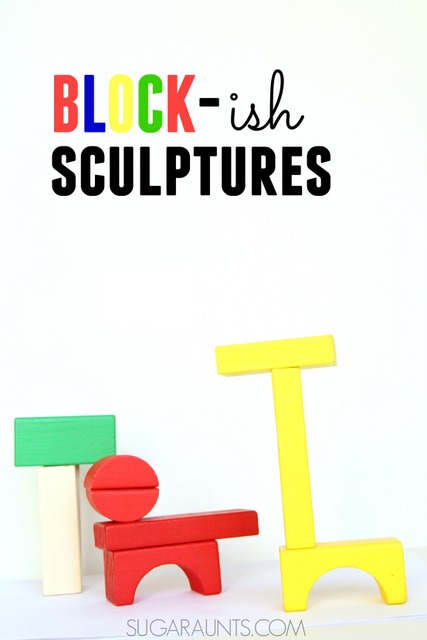
Ish Book Activity Block Sculptures

This week, the Preschool Book Club brings you activities and crafts based on the book, Ish by Peter H. Reynolds.  What a great message this book has!  We loved reading Ish (again and again!) and came up with our take on the book and it’s encouragement of creative flow to build Ish-inspired block structures.  Our block creations were full of creativity and tons of expression as the kids built and created stories and play.
Block sculptures based on the book Ish by Peter H. Reynolds

Block Structures and Creative Play inspired by the book, Ish:

 
This post contains affiliate links. 
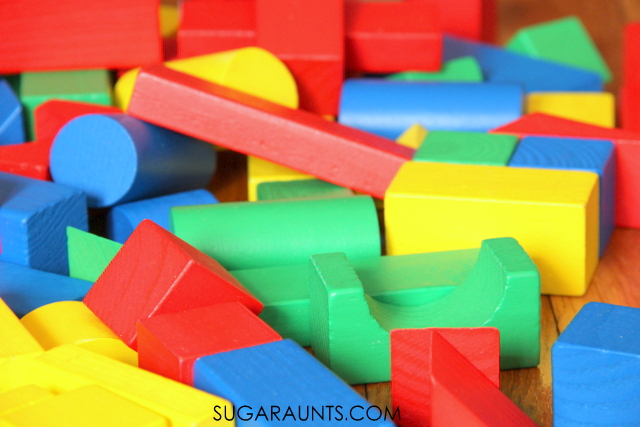
When we read Ish , by Peter H. Reynolds, we loved the feeling of being encouraged to TRY and to use our imagination.  When Ramon creates “-ish” drawings, we loved his fun ideas!  We decided to use something that we play with almost every day to create and imagine just like Ramon did.  We pulled out our wooden blocks and started building “block-ish” sculptures!
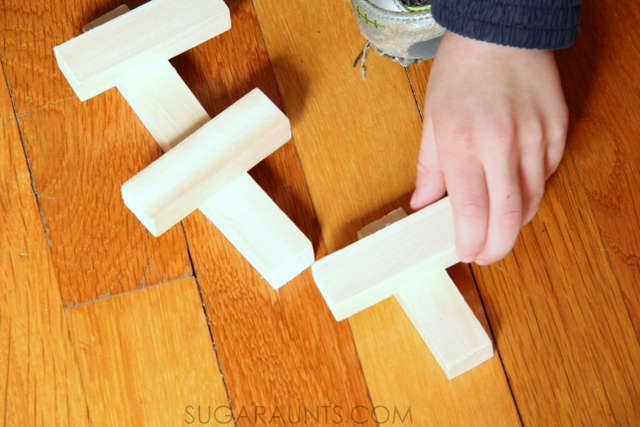
Little Guy started with a trio of “airplane-ish” shapes that took off and flew around the dining room.
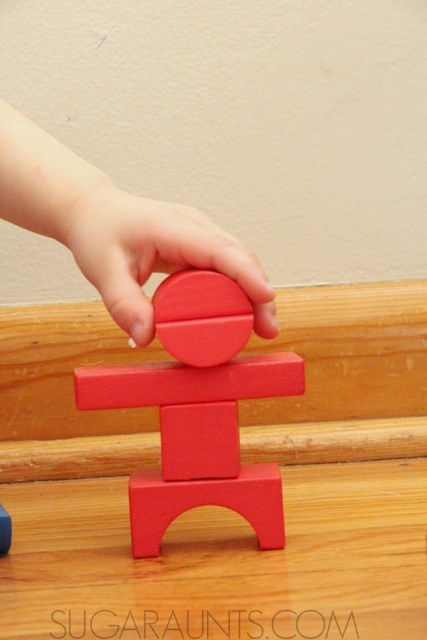
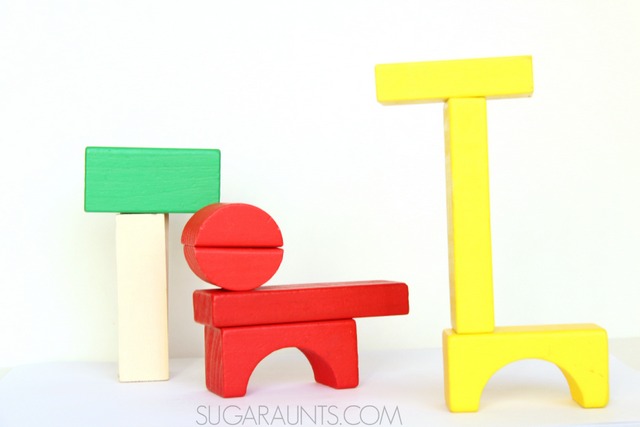
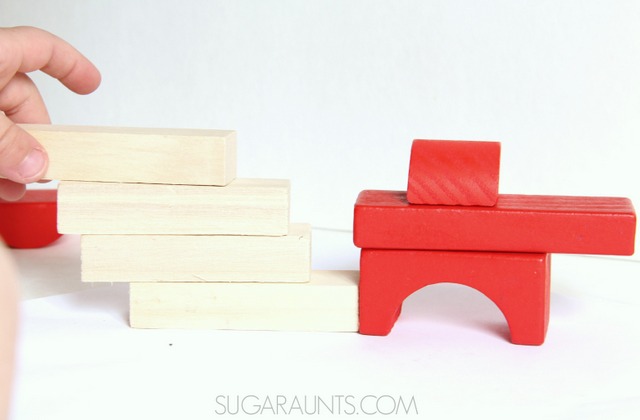
We used our imaginations to create creatures, steps, and more and started telling stories about our structures.  I love to hear the stories my kids tell and it was fun to hear the way they created once I started adding “-ish” to the structures.  They kept up with the -ish terms as they told their stories: The “dog-ish” guy went up the “steps-ish” area so he could be “taller-ish”.
 
We had SO much fun with this simple imagination building activity!
Block sculptures based on the book Ish by Peter H. Reynolds
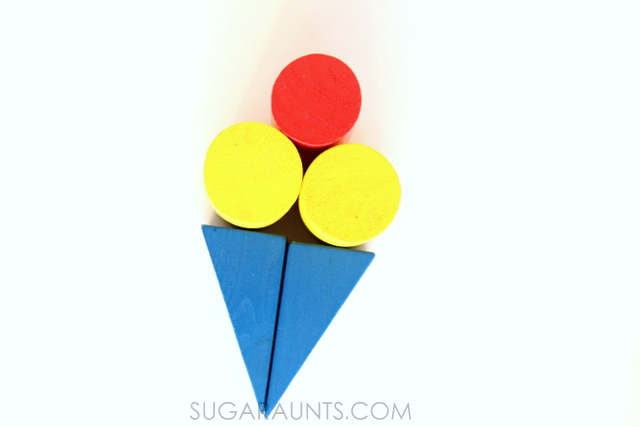
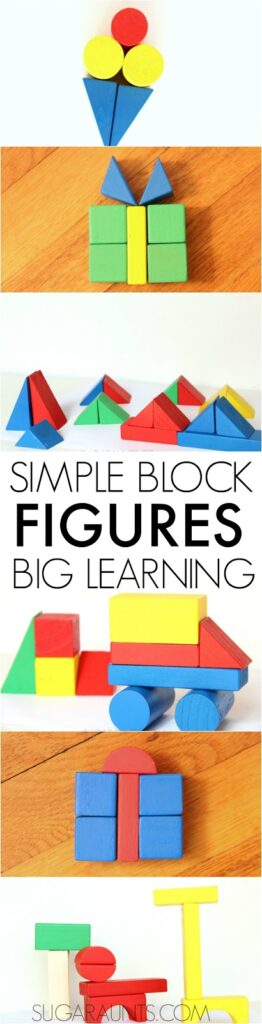
There were “ice cream-ish” treats…
…”Butterfly-ish” creatures…
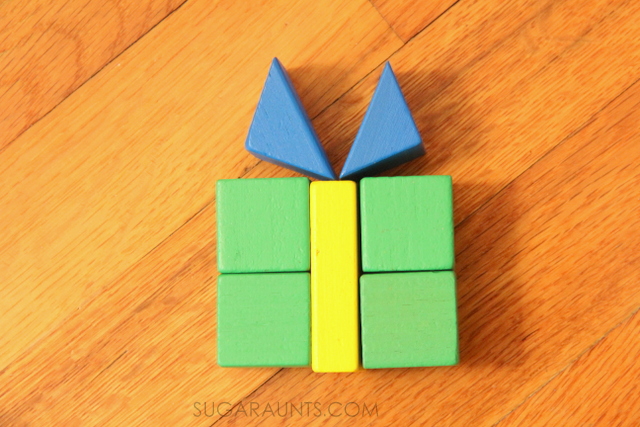
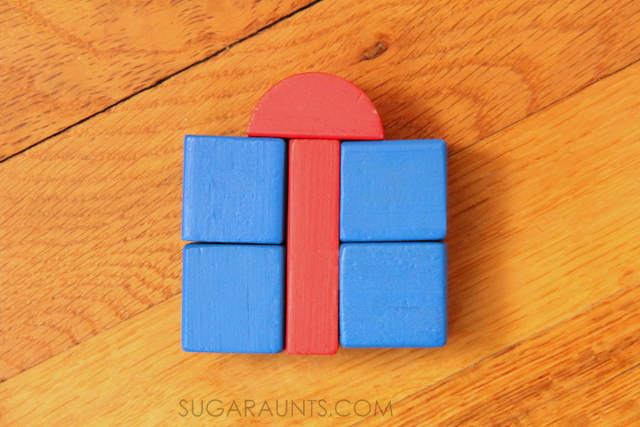
…”present-ish” gifts…
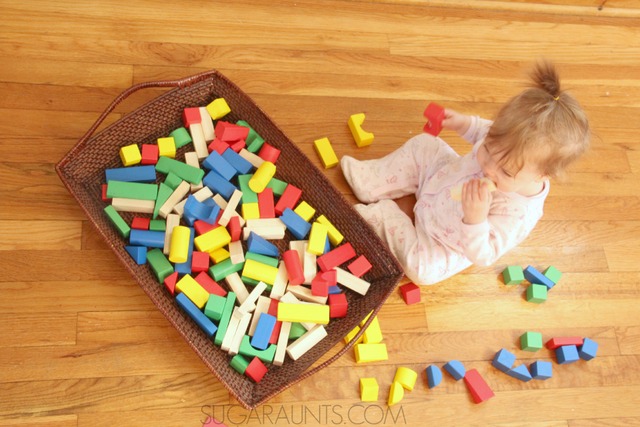
…and a little block-ish tasting from the baby!
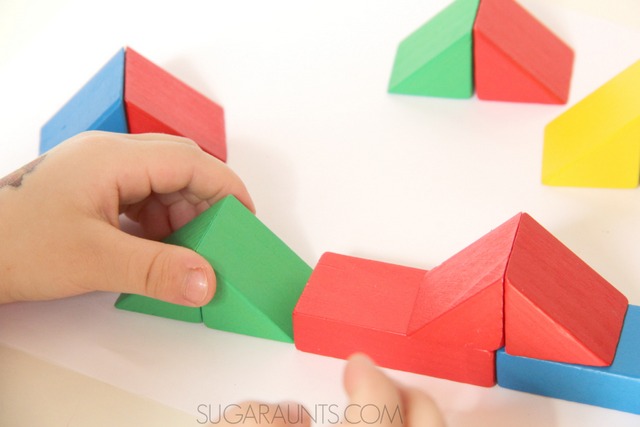
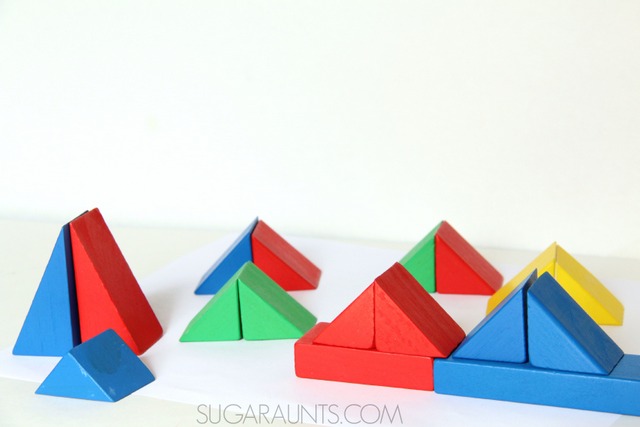
We ended up with a “tent-ish” neighborhood.
Block sculptures based on the book Ish by Peter H. Reynolds
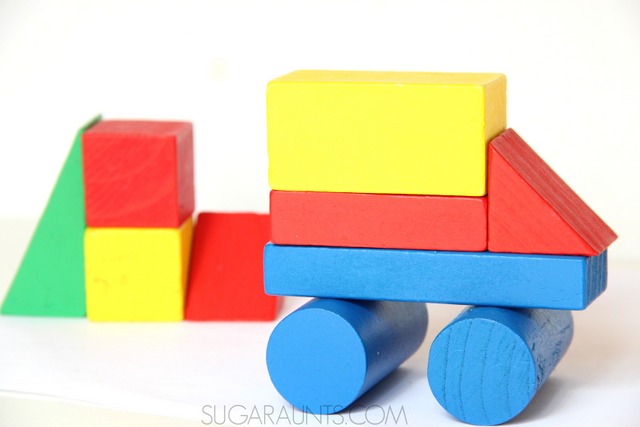
And a “truck-ish” vehicle…
Block sculptures based on the book Ish by Peter H. Reynolds
 
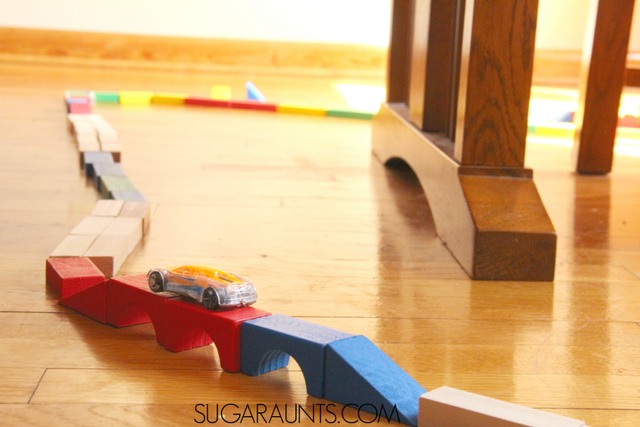
…which lead us to a dining room full of “road-ish” streets.  This became a whole afternoon of pretend play and creative thinking.
Block sculptures based on the book Ish by Peter H. Reynolds
What can you create with a basket full of blocks and inspiration from Ish?
 
Be sure to stop by the other Preschool Book Club bloggers to see their crafts and activities based on Ish:
 
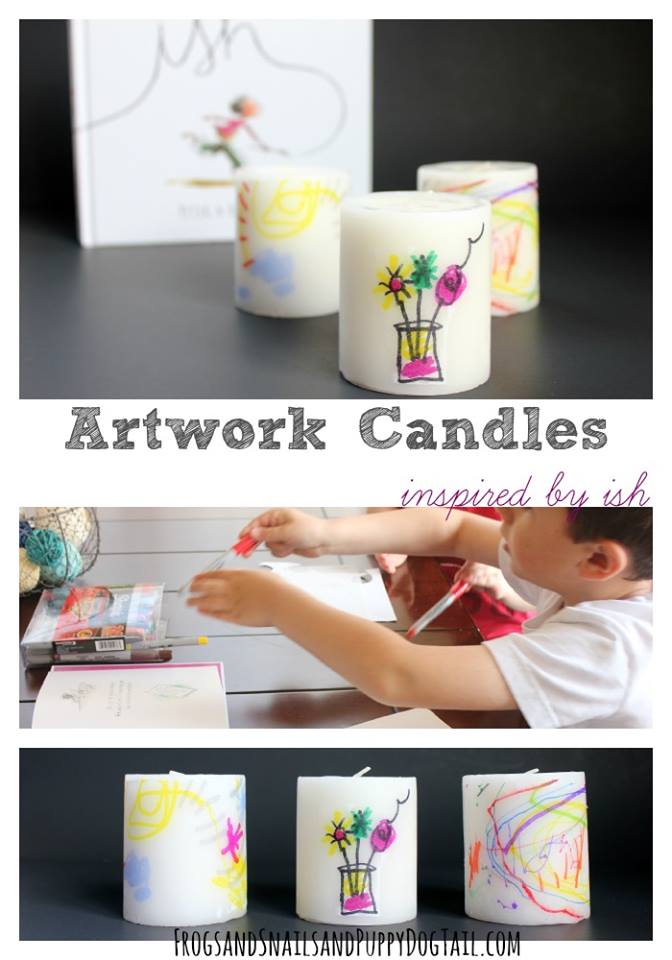
 Artwork Candles from Frogs and Snails and Puppy Dog Tails
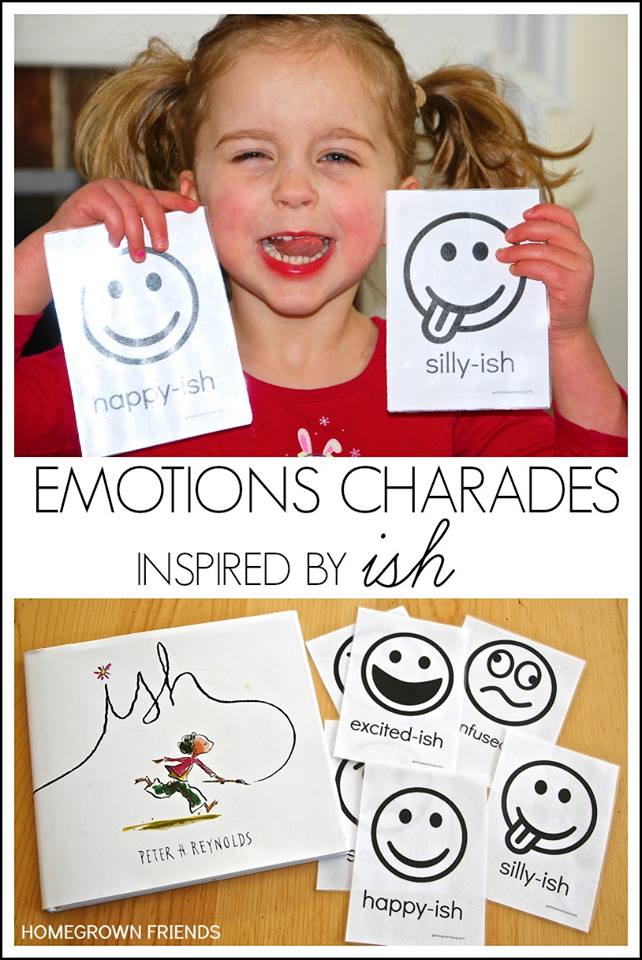
Emotions Charades from Homegrown Friends
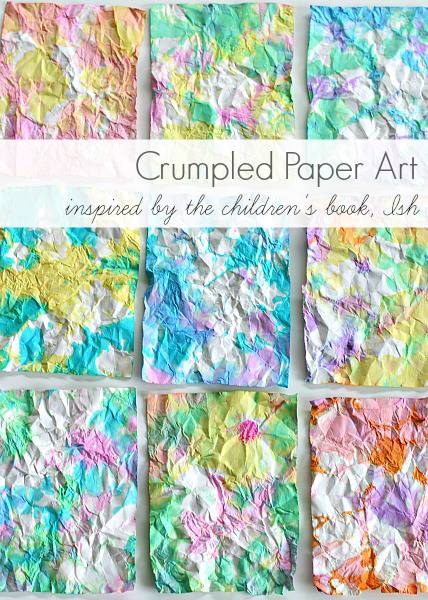
Crumbled Paper Art from Buggy and Buddy
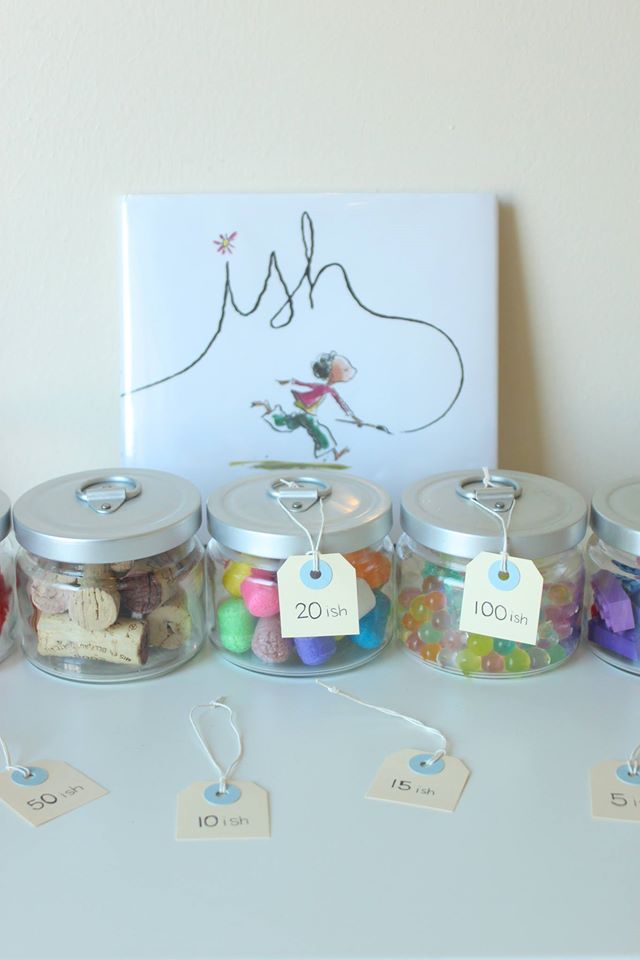
Math Estimation Jars from Mama. Papa. Bubba. blog
hands-on activities to explore social emotional development through children's books.

Love exploring books with hands-on play?  

Grab our NEW book, Exploring Books Through Play: 50 Activities based on Books About Friendship, Acceptance, and Empathy, that explores friendship, acceptance, and empathy through popular (and amazing) children’s books!  It’s 50 hands-on activities that use math, fine motor skills, movement, art, crafts, and creativity to support social emotional development.

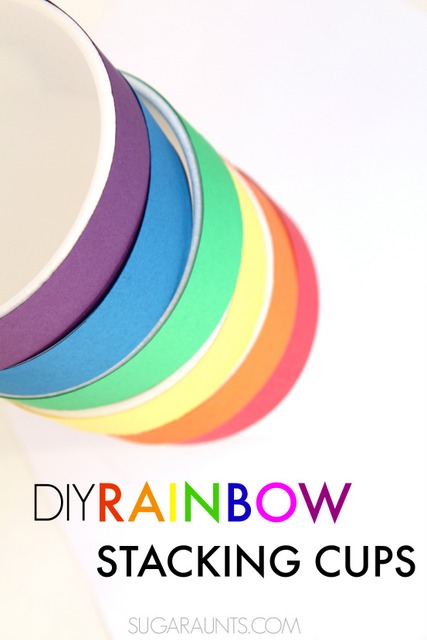
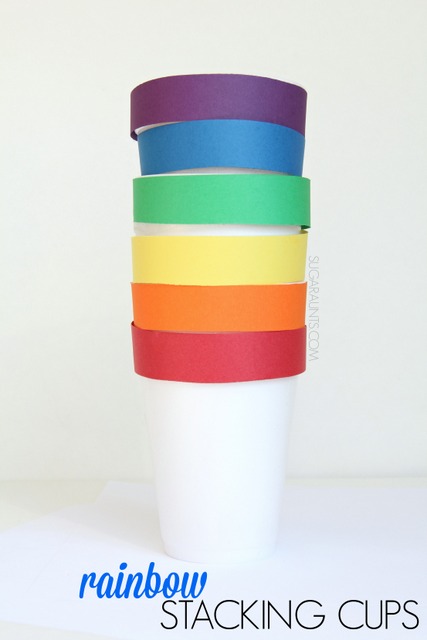
Learning Rainbow Order Stacking Cups

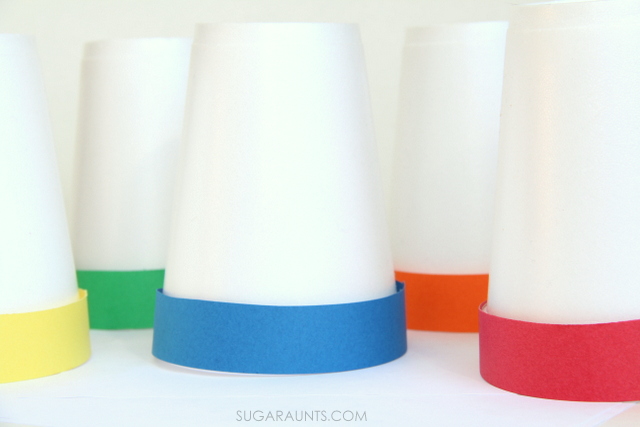
Today we’re sharing rainbow stacking cups, possibly one of the simplest learning activities that we’ve put together.  These DIY stacking cups are a wonderful way for teaching rainbow order, and so much fun to play with over and over again. Kids can benefit from the motor planning benefits of this activity too, working on gross motor skills and fine motor skills. 
 
DIY Rainbow Stacking Cups for color identification, color order, and learning rainbows with this stacking and building nesting toy.


Learning Rainbow Order

 
This post contains affiliate links.
 
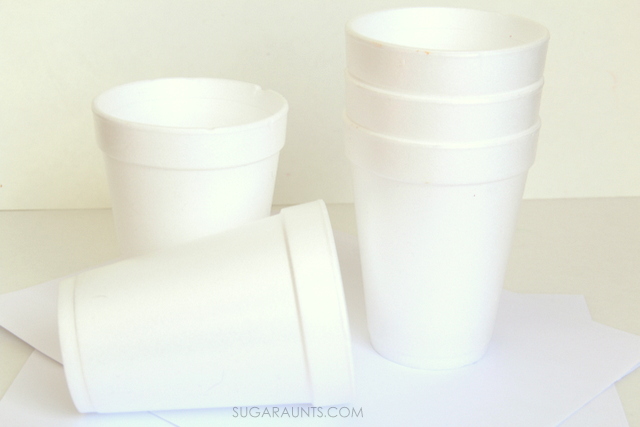
These rainbow stacking cups are really so easy to put together.  I used 

styrofoam cups 
 tape 
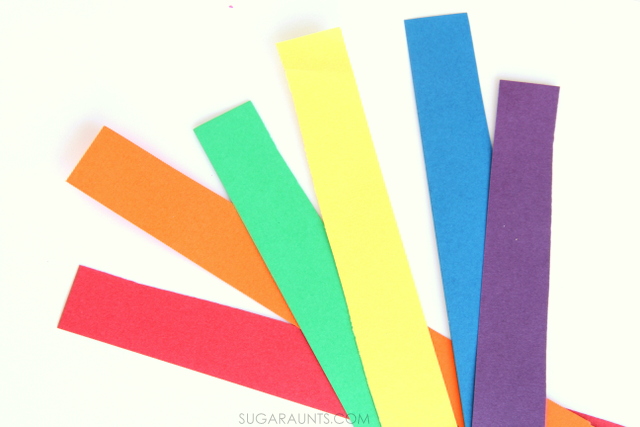
and cardstock
in a rainbow of colors.

 
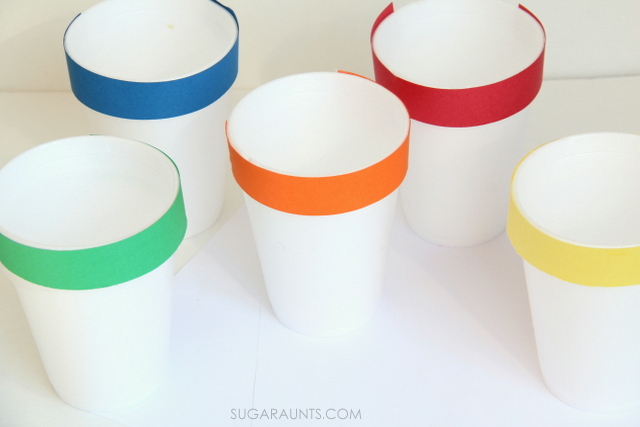
Cut the cardstock into strips lengthwise. 
DIY Rainbow Stacking Cups for color identification, color order, and learning rainbows with this stacking and building nesting toy.


Tape the cardstock onto the rims of the cups.  The activity is set for learning and play!
 
DIY Rainbow Stacking Cups for color identification, color order, and learning rainbows with this stacking and building nesting toy.
 
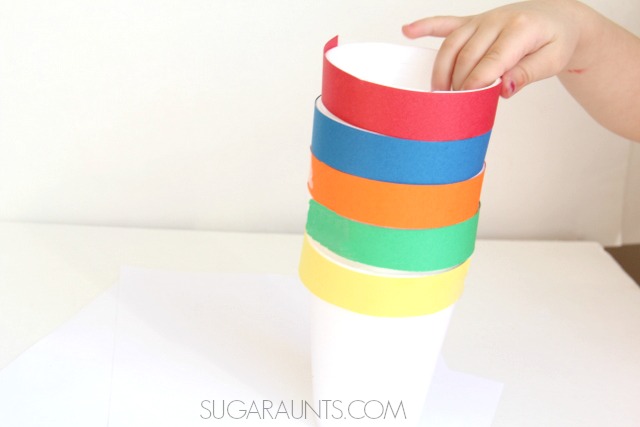
We had SO much fun with these rainbow cups!  We stacked them up in random and rainbow orders.  As we stacked, we said the colors of the rainbow.  Little Guy (age 5) considers himself an expert in knowing the colors of the rainbow in correct order and was sure to correct Little Sister (age 3) in the accurate stacking of the rainbow.
 
DIY Rainbow Stacking Cups for color identification, color order, and learning rainbows with this stacking and building nesting toy.


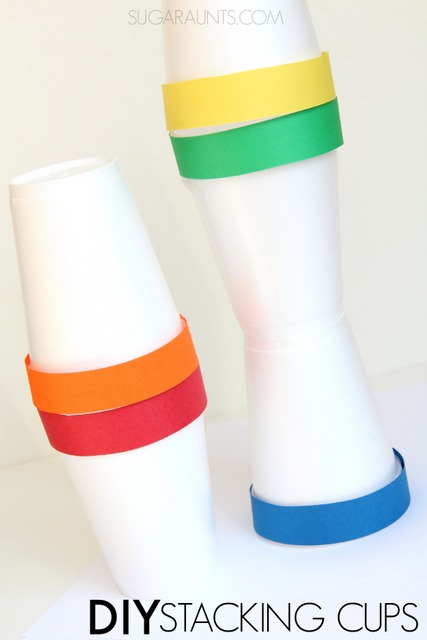
We used the cups to build towers and buildings over and over again.
DIY Rainbow Stacking Cups for color identification, color order, and learning rainbows with this stacking and building nesting toy.
 
These cups make a great collection cup for a rainbow scavenger hunt.  Go around the house looking for matching colored items to fill the cups.  We found crayons, ribbons, scrap paper, toys, Legos…This is a fun way to work on color identification with preschoolers.
 
DIY Rainbow Stacking Cups for color identification, color order, and learning rainbows with this stacking and building nesting toy.


These rainbow stacking cups were a DIY hit in our house!


Bottle Cap Math Activity

bottle cap math

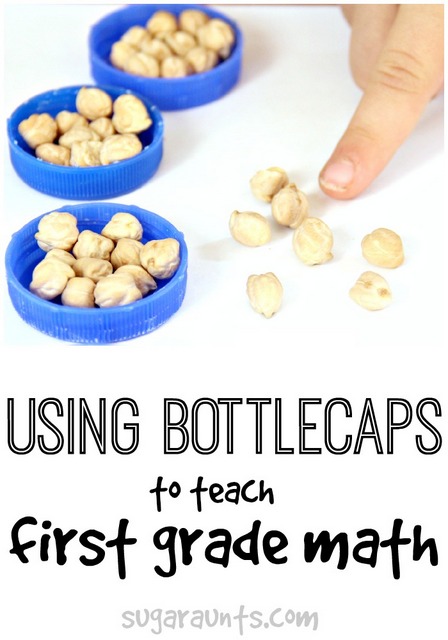
This bottle cap math activity doubles as a fine motor activity to develop precision, in hand manipulation skills AND counting by tens using bottle cap math!

Bottle Cap Math

Big Sister is working her way through first grade and loves when she has math homework.  She works hard at math but when she “gets” the concept, she rocks it.  Sometimes, we need to work a bit on some of the math ideas.  (I think she gets her math skills from her mom).  So, when we get worksheets for math homework, I like to put together hands-on activities to build on the concepts she learns at school.  
 
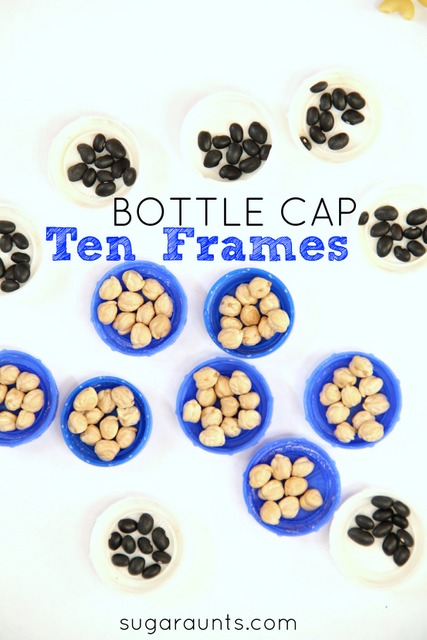
The extra work helps a lot and it is more fun for her to practice math ideas with manipulatives rather than worksheets.  We practiced 10 frames activities with bottle caps one day and worked on a few first grade math ideas that Big Sister’s been practicing in worksheet form.

 
This was fun!
 

First Grade Math Activity

bottle cap math


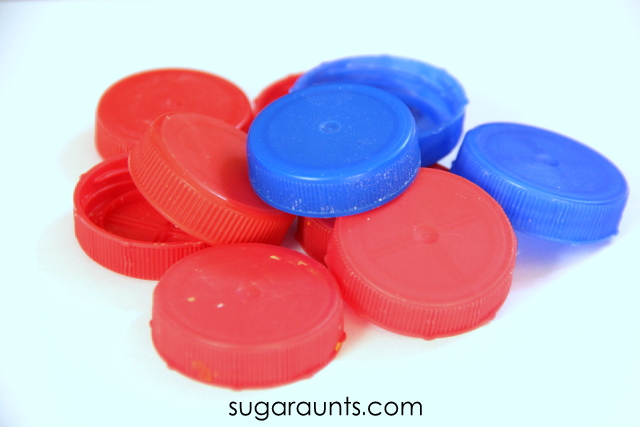
I love using things like bottle caps in OT kids crafts and activities.  It’s something that you’ve got around the house, and it’s free!  You can’t really find an item that is more perfect for sorting, letter play, art, or crafting!
This post contains affiliate links.


I pulled out our stash of bottle caps, but only grabbed a couple of colors.  I wanted this activity to focus on what was IN the bottle caps vs. the color of the cap.

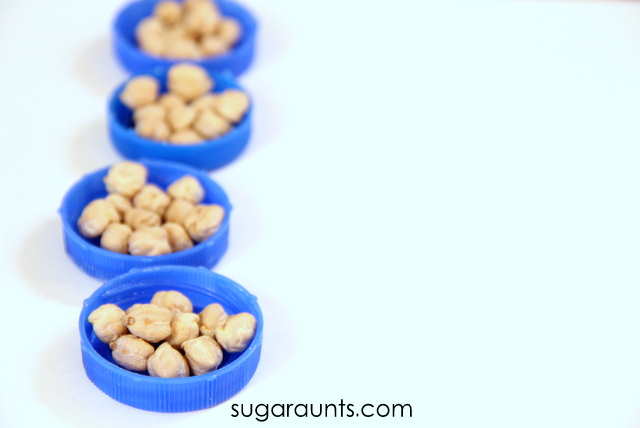
We used some (Amazon affiliate link) dried chickpeas and a few other dried items to fit right into the caps.  I had Big Sister count out the chickpeas into piles of 10.  We popped them right into the caps.
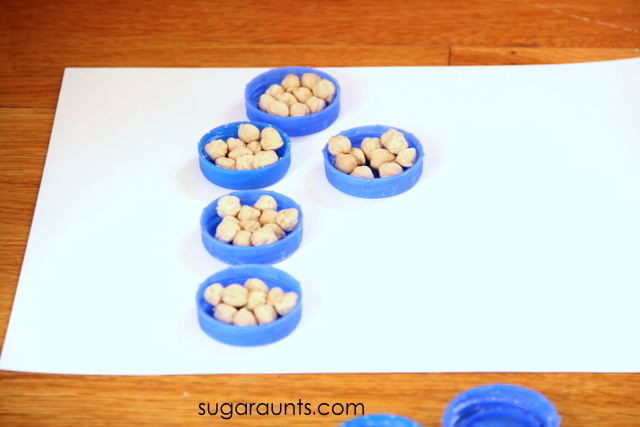
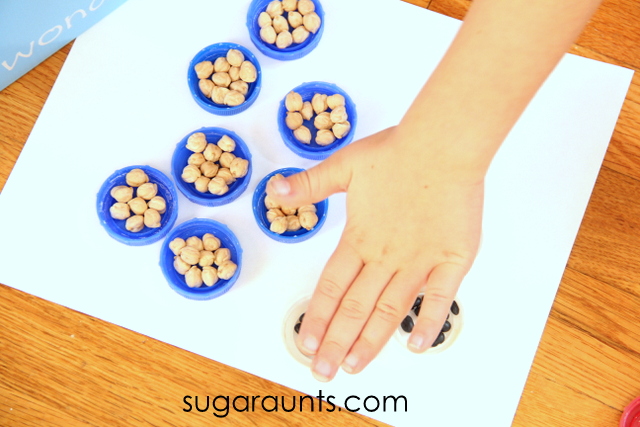
Big Sister counted the bottle caps in groups of tens and I added a handful of chickpeas to the side.  She then had to figure out the total number, counting the tens and the ones.

Counting out the 10 items is a great beginning math concept for first graders.  She’s counting the manipulatives with one-to-one correspondence and placing them into groups of tens.  We practiced counting by tens as we moved the bottle caps around on the paper.


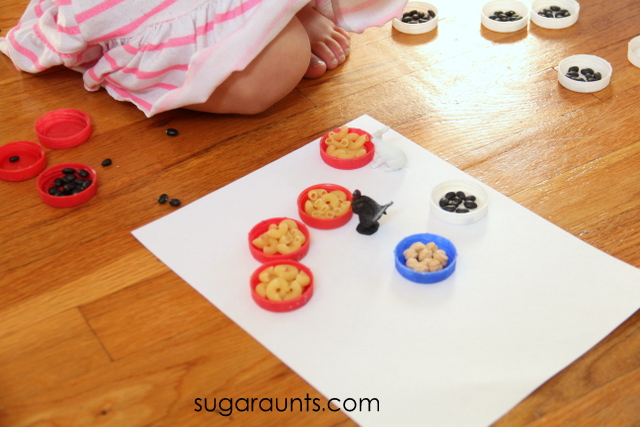
I also pulled out a bag of dried black beans and she counted out groups of tens of those, too.
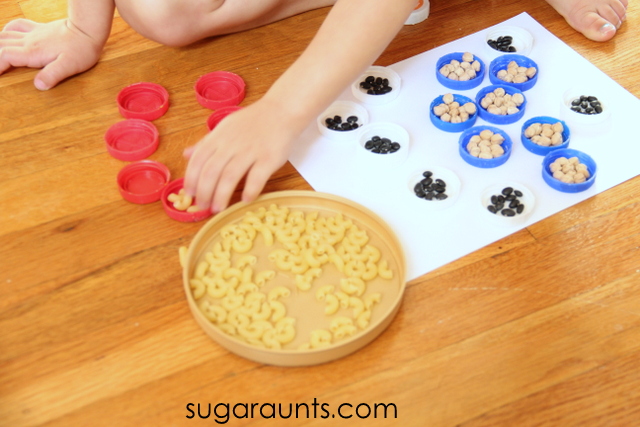
Big Sister counted by tens to add the caps with chick peas and the caps with black beans to get a total number of  items.  When we had 10 bottle caps of 10 items, we stacked them into a pile to make a hundreds column.


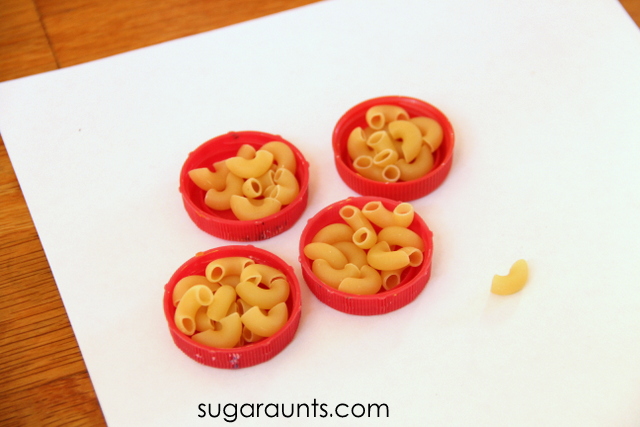
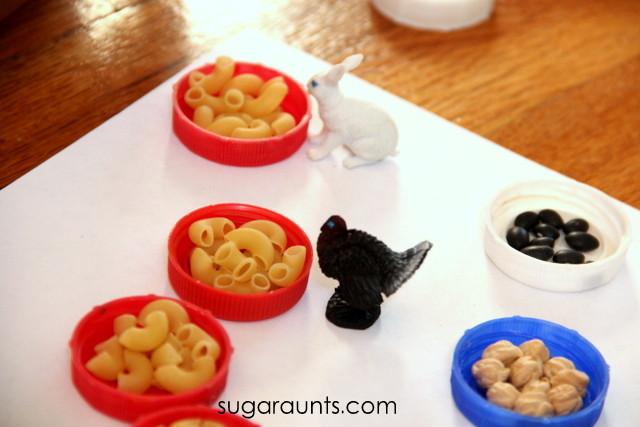
I pulled out the dried elbow macaroni and we added these lids, too.

Four tens and one ones makes 41.  She really got into this kind of math practice.

When she got tired of the math practice, we pulled out the animal figures and pretended to feed the animals.


Let us know if you do this math activity! We love to hear from our readers.  
 
Looking for more first grade math activities?  Try these:

Teaching Number Order First Grade Math

Math in first grade is all about number recognition and developing an understanding of numbers.  Recognizing place value for tens and ones and grouping tens and ones are important concepts that students will use again and again in future math concepts.  We built a little extra practice activity based on number order and played a few first grade math games with number order.

Teaching Number Order: Activities for first grade math


Number Order Math Activities for First Grade


This is such an easy way to build on concepts or practice number order.  Big Sister is a big fan of math and she always  does her math homework first.  (She does NOT get her love of math from her mom!)  

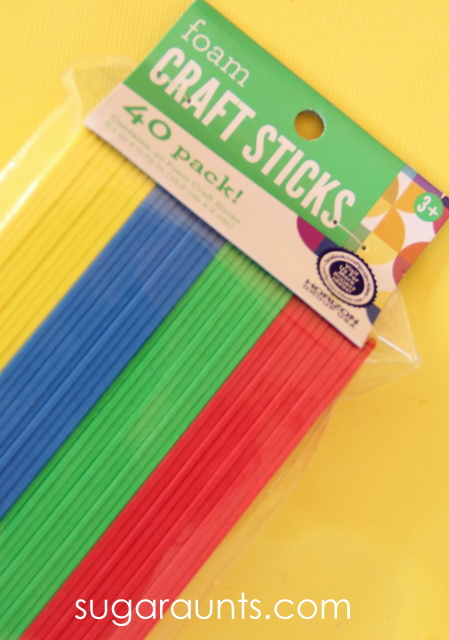
We used these craft foam sticks that we received from 

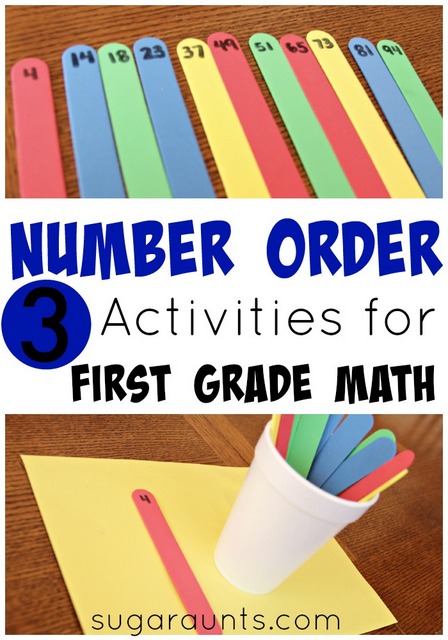
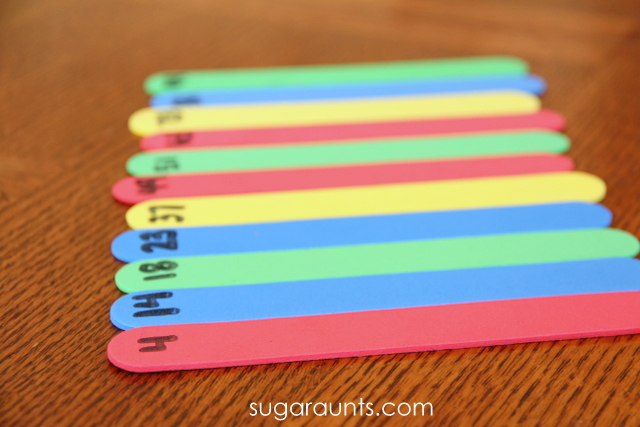
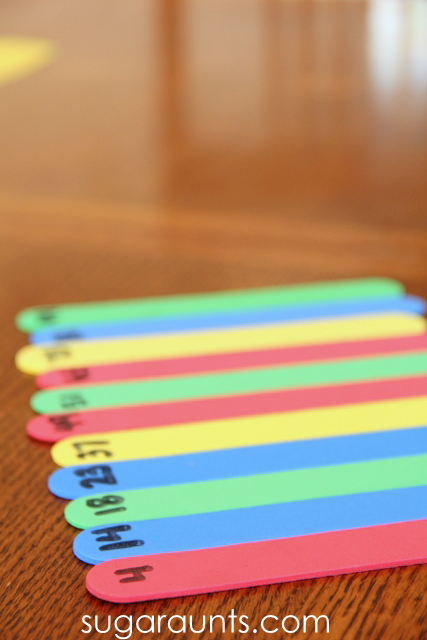
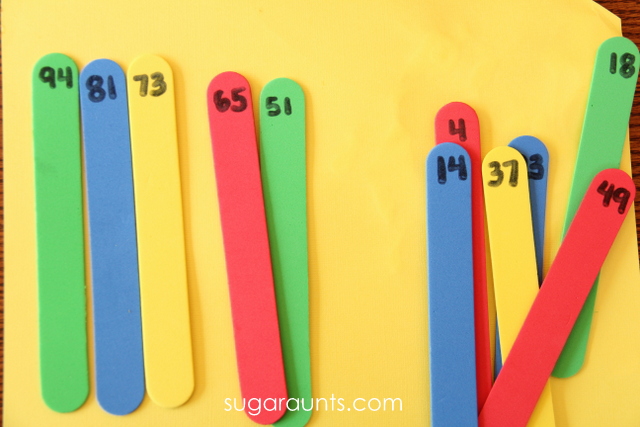
Use a permanent marker to write numbers on one side.  I chose random numbers between 1-99 so Big Sister could focus on the tens and ones.  First graders typically work on numbers up to 120 early in the year, so feel free to make number sticks including hundreds digits as well.


We started on a few activities to work on number order.  At first, I had Big Sister order the numbers from least to greatest.  She did really well with this.  Part of identifying relationships between numbers is being aware of the terms, “least” and “greatest”.  Have the child arrange the numbers from greatest to least as well, after scattering the number sticks around again.

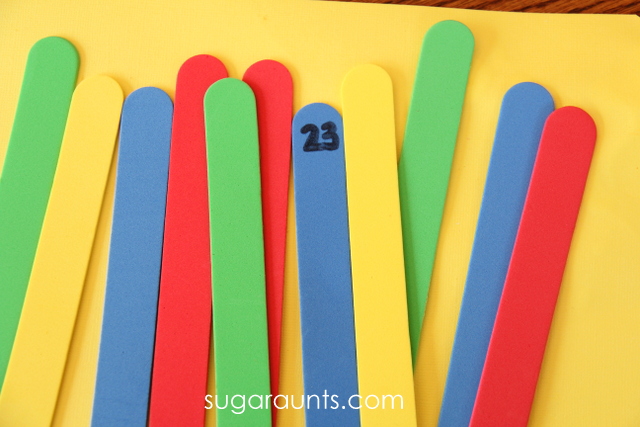
Our second math activity was turning all of the number sticks over.  I had Big Sister turn the sticks over one at a time and name the number.  She then had to tell me how many tens and how many ones make up the number.  This is a good way to work on place value.

Arranging the numbers from greatest to least.


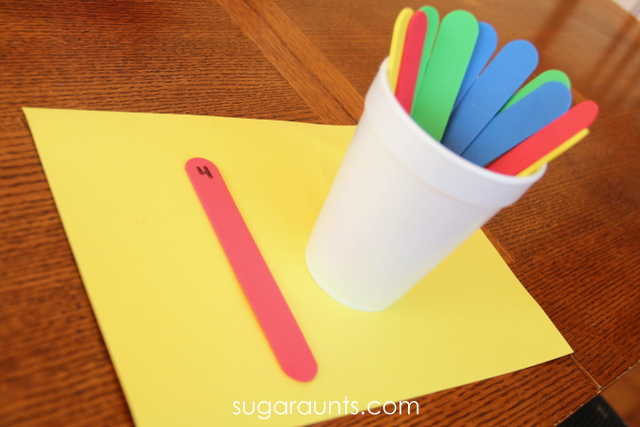
Our third activity used a cup.  We put all of the number sticks into the cup, number side down.  I had Big Sister draw a stick one at a time and name the number.  We then pulled a second number stick and made a greater than/less than statement using the two numbers.  (e.g. Four is less than thirty seven).  


Let us know if you try any of these activities.  

You may also be interested in the first grade math concept, skip counting by 5s.


Be sure to follow us on Pinterest to see all of our newest blog posts.

First Grade Teaching Comma Use Activity

Big Sister is in First Grade now.  Wait, when did THAT happen??! She is learning so much in first grade.  And I’ll be honest. I’m no teacher, I have no idea how to teach the skills needed to graduate the first grade.  I do see what she comes home with for home work, and figure out ways to make the extra practice fun.  We practice sight words and other reading and math activities in creative ways to extend the learning.  It makes it fun for her to do the homework and extend the learning.  

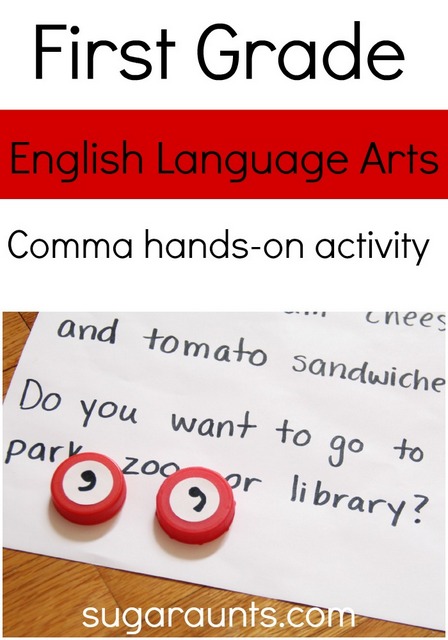
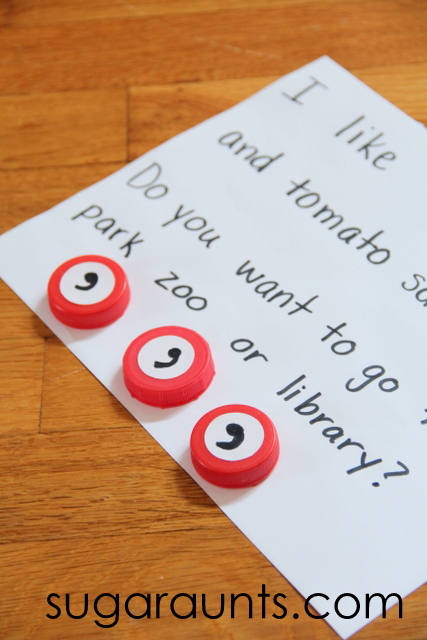
One concept first graders learn in English Language Arts is Comma Use.  I made up these movable comma pieces to practice using commas in different ways.


Hands on comma activity for first grade English Language Arts

Comma Activity for First Graders

In first grade, students are required to use commas correctly in dates and to separate single words in a series.  We went beyond the pencil and paper with this easy hands-on activity.

This post contains affiliate links.

To make the comma pieces, I used recycled bottle caps.  Save those milk jug, juice jug, and bottle tops!  (Using the commas, my friends!)


I cut a circle from a label sheet using a small circle cutter.  Peel the backing from the label sheets and stick the circles onto the bottle caps.

Use a black marker to draw a comma onto the bottle cap.  Instant comma.


I wrote a few large sentences on printer paper and showed Big Sister how to move the comma pieces into the correct places.


She really got into this activity.  We made date and series sentences for her to practice.  This is an activity that she wanted to do each day after school.

Practice comma usage in sentences and dates for First Grade English Language Arts


Let us know if you make this activity!  We love to hear from our readers.

Looking for more creative English Language Arts activities?  Follow along on our Sight Word and Beginning Reading Pinterest board.  

You can find all of our blog posts in one place by following us on Pinterest: 

How to make an easy Light Box for play and learning

We’ve made a DIY light box before and have loved playing and learning with light.  Light boxes are such a great way to encourage fine motor, sensory, visual perceptual skills, handwriting, language, creative thought process, and more.  We made another version of our Super Easy Light Box and when I say super easy…it doesn’t get much easier!


What is a light box used for? Sensory, learning, fine motor, and play


How to make an EASY light box

This post contains affiliate links.  Read our full disclosure here.

Make a light box easily for learning and play
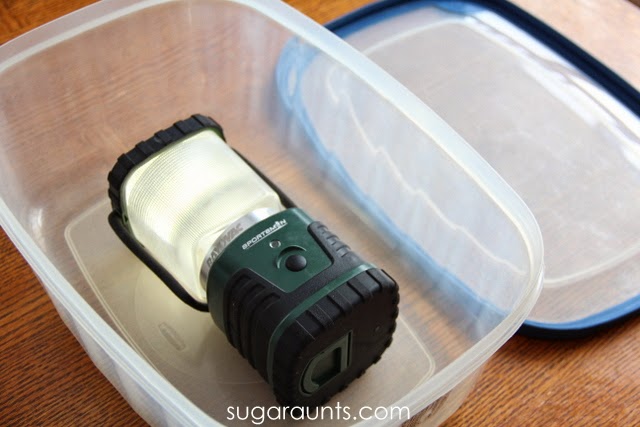
Start with a plastic bin with lid.  You’ll need your bin to be clear or see through. The size doesn’t matter, as long as it’s comparable to your light source.  We used our handy bright lantern.  This thing is heavy duty and we use it all the time.  The kids use this lantern for pretend play, outside play during summer nights, exploration adventures, Pirate explorers, ghost hunters…this lantern gets it’s run of play!  It fit pretty well in the bin that we used for our DIY light box, and the Bright LED light made a great light source.
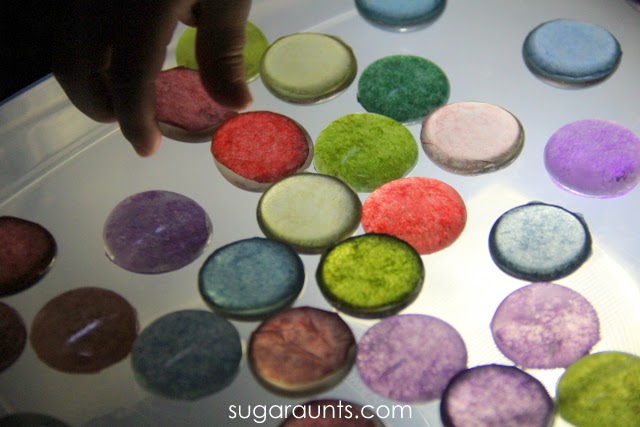
DIY light box for kids to learn and play

Pop the lid on the plastic bin, and your light box is done.  How easy is that??!  

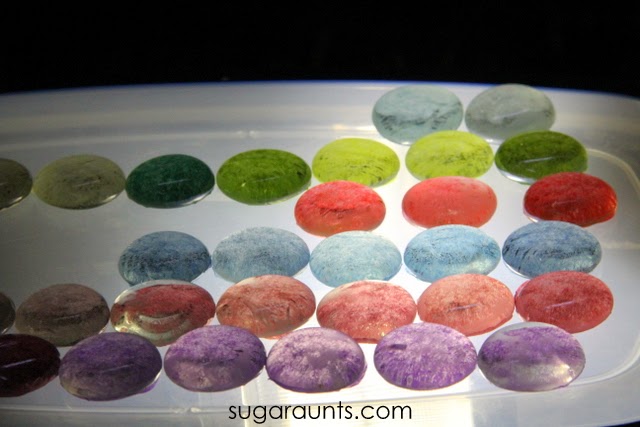
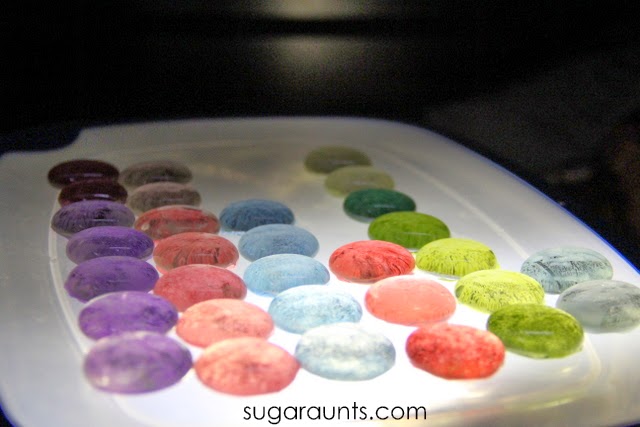
We used our DIY colored glass gems on the light box for sensory play.  These things are so easy to make and we’ve used them all the time for all sorts of fun activities.

Use a DIY light box for easy learning activities


Sorting, color patterns, math patterns, counting, number place values, adding, subtracting…this is light and math and fun all in one activity.

Use colored gems to learn patterns, counting with a light box

These look so good on the light box!  The best part is when the kids want to play explorer Pirates again, you just need to pop the lid off the bin!


We’re planning to use our glitter letter manipulatives on the light box next!

Skip Counting by 5s

First grade math is fun stuff!  It’s all new to us as Big Sister works her way through first grade.  She’s our oldest and so it’s neat to see how much she’s learning in such a short time in school.  We’ve done math activities throughout her Kindergarten year and we’ll be supplementing the first grade curriculum at school with our own fun twist on math activities at home.  Learning through play makes homework easier and fun.  
 
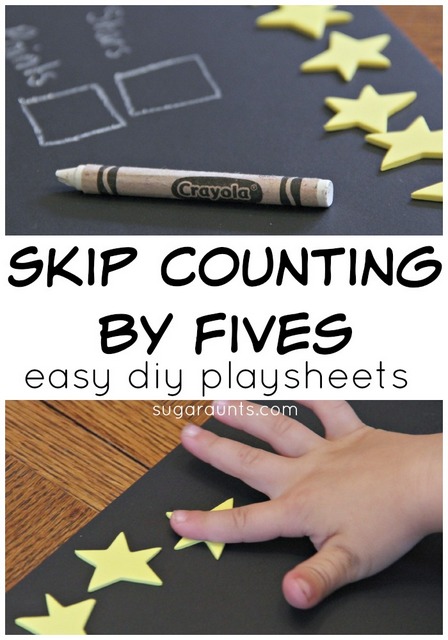
The beginning weeks of first grade brought counting to 120 and skip counting by 5s and 10s.  We did this skip counting activity using stars to skip count by 5s.
You’ll also want to grab our free count and color worksheet for more fine motor math.


First Grade Math Activity

Skip Counting by 5s Activity

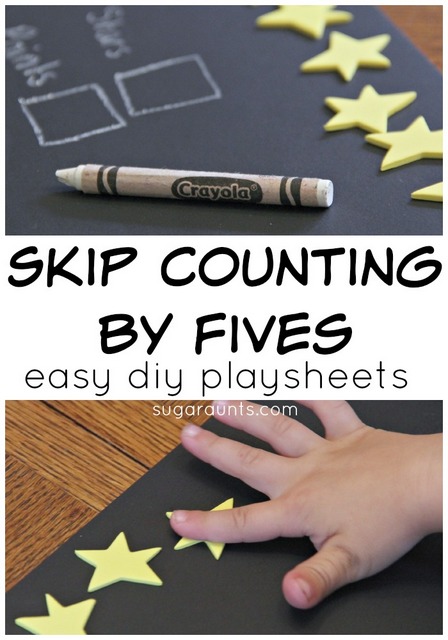
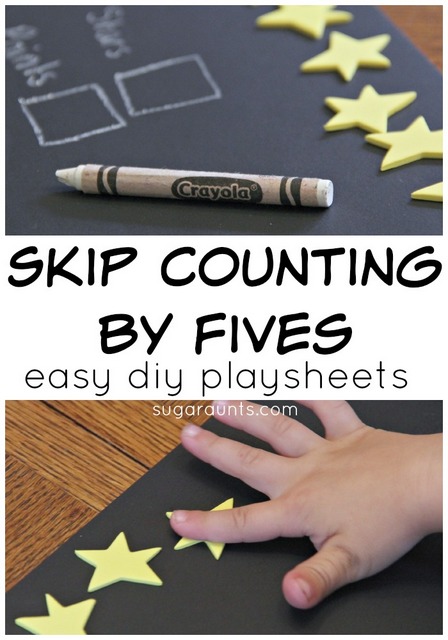
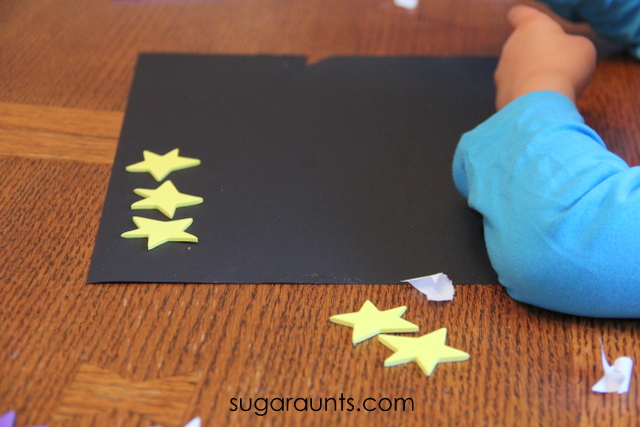
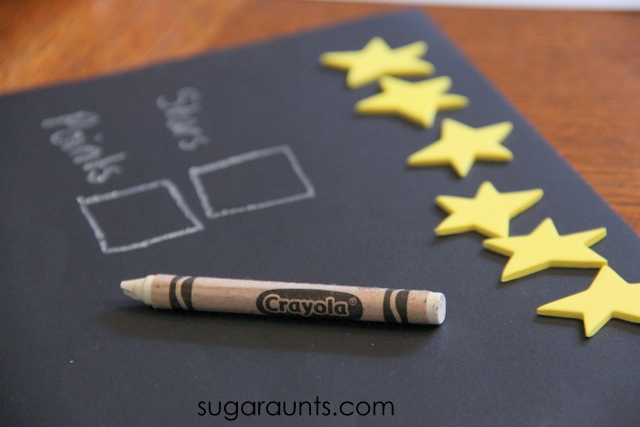
We started by using foam star stickers and a black piece of construction paper.  This “play”sheet (a fun way to play with a not-quite-worksheet) let us count and play as we learned.


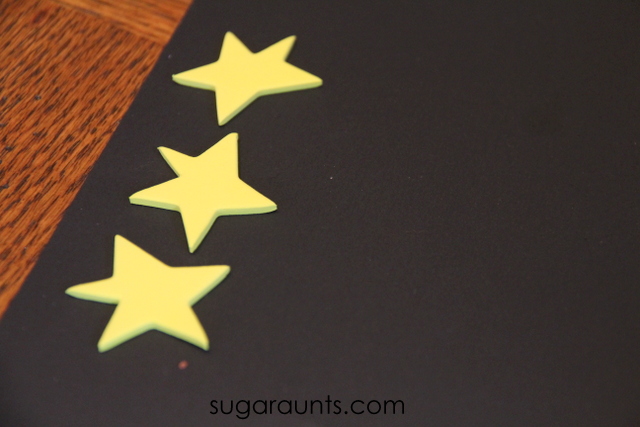
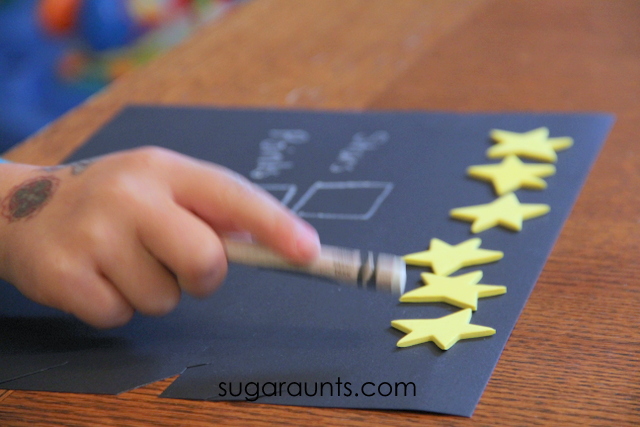
Big Sister peeled the backs from the stickers and stuck the stars in a line.

Count those stars.
 
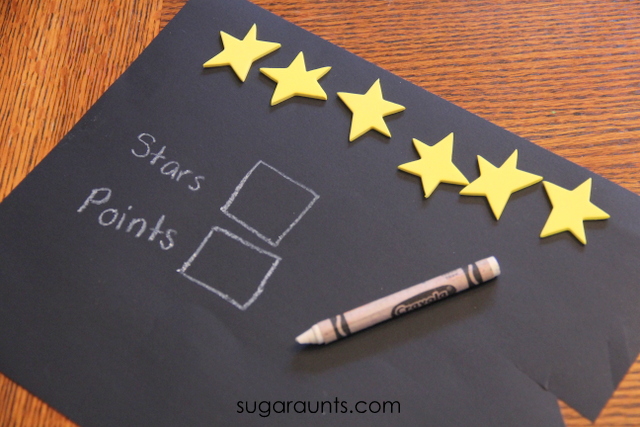
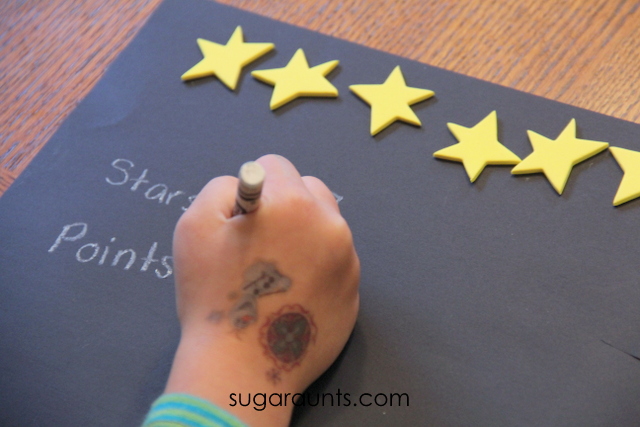
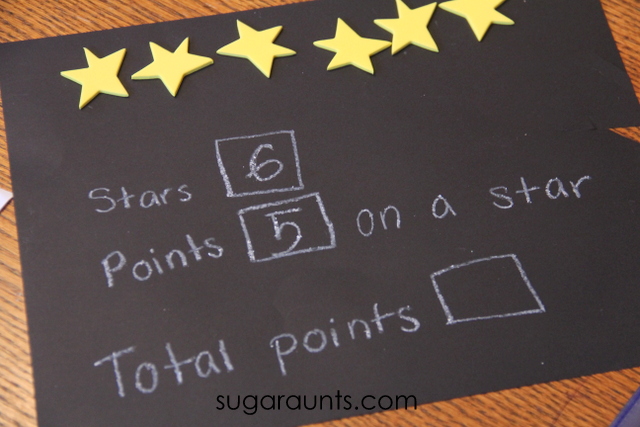
I wrote out on our playsheet the number of stars and the number of points.
 
We talked about the stars and how they have five points.  We practiced counting a few of the stars to see how they made counting by 5s easier.

Big Sister counted out the stars and then counted out the points by counting by fives.

Tattoos are optional for this activity 😉
 
We made a few more playsheets with stars for counting, using princess colors.  I kind of like the stary night sheets, though.
 
Let us know if you do this activity!
 
Like this post? Stop by and follow along on our Playful Math Pinterest board: