Visual Motor Integration Tool with KORXX Blocks

Disclosure: This post was sponsored by KORXX.  All opinions are my own.
 

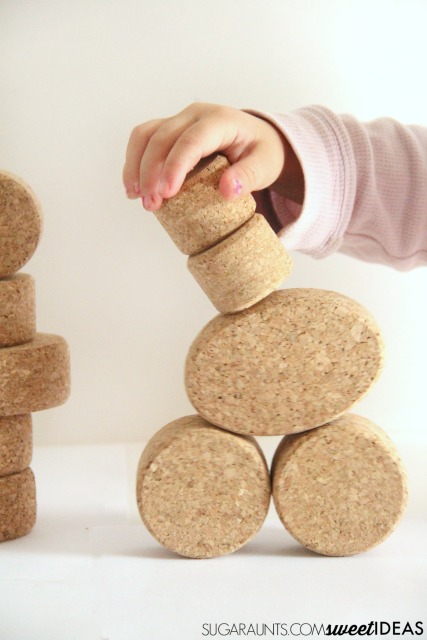
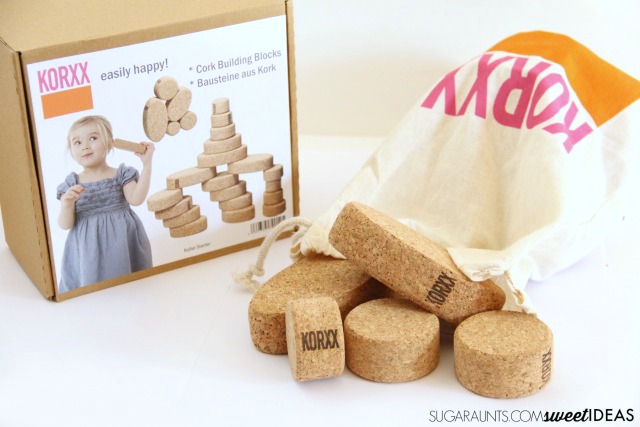
We found a new favorite building toy for play, learning, and imagination, and are so excited to share it with you.  If you haven’t played with KORXX blocks before, you are in for a fine motor and visual motor integration treat.  These cork building blocks are a natural and sustainable and a light material for little builders. We received a set of KORXX blocks to try and had a blast using them for a visual motor integration challenge.  Using blocks to assess and build a child’s visual motor integration skills are an easy way to challenge the skills needed for skills such as handwriting and letter formation and any task that requires the child to use the hands and eyes together in a coordinated and effective manner.  


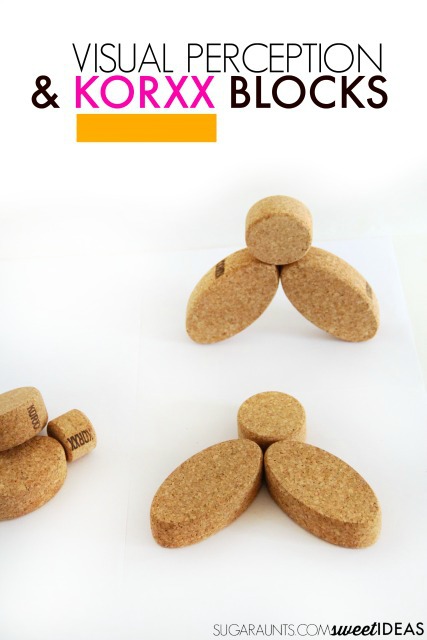
Address visual motor integration in written work by improving visual perception using block copying skills with KORXX cork blocks.
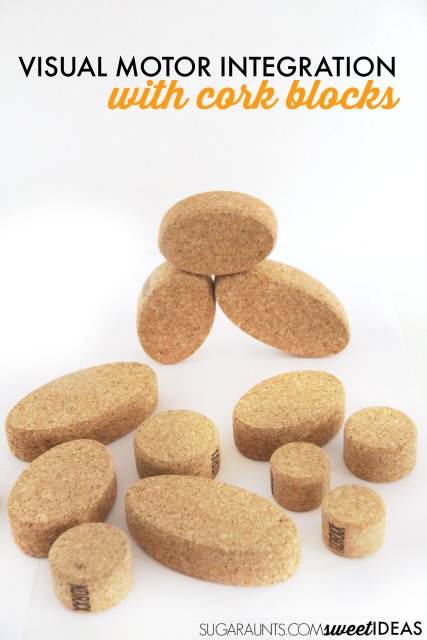
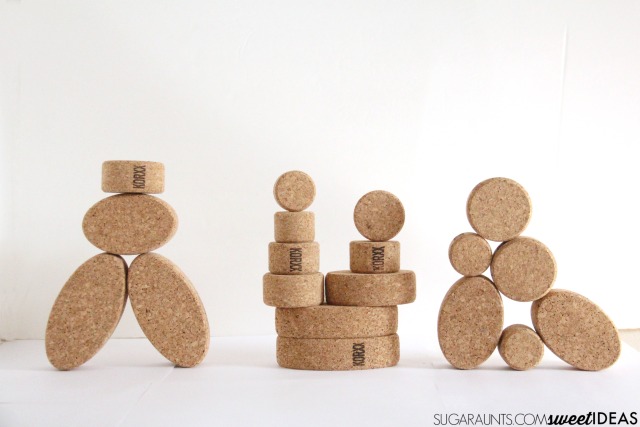
When we played with our KORXX blocks, we were excited to see how the blocks can easily be used to create three dimensional or two dimensional constructions. The therapist in me immediately noted the unique opportunity for addressing visual motor integration skills in this toy! 
 
Address visual motor integration in written work by improving visual perception using block copying skills with KORXX cork blocks.

Visual Motor Integration and KORXX Building Blocks

 
Blocks are quite often used as a therapy tool to address and assess visual motor integration skills.  The fact that blocks are a toy that is common in classrooms, playrooms, and therapy gyms makes using blocks for eye and hand skill needs easy and fun for kids.  
 
Visual motor integration skills are essential for any task that requires the hands to manipulate items based on what the eye perceives.  In that manner, our eyes must perceive certain information and process it to allow our hands to work in an efficient manner to produce written work, catch a ball, manipulate clothing fasteners, or copy and draw shapes and pictures.  
 
Visual motor integration is an essential skill needed for forming and copying letters in handwriting.
Address visual motor integration in written work by improving visual perception using block copying skills with KORXX cork blocks.


Visual Perceptual Skills and Visual Motor Integration

Skills that fall under visual perception are needed for visual motor integration. Skills such as form constancy, visual memory, visual discrimination, visual figure ground, visual closure, and visual sequential memory.
 
Form Constancy allows us to recognize shapes or letters and numbers no matter what position they might be in.  Blocks positioned on their side or in a different direction are still the same block.  A large oval shaped KORXX block is still a large oval shaped block and can be recognized for use in copying block patterns.
 
Visual Memory allows us to hold a memory in our mind of something we just saw.  It also allows us to recall letter formation when writing.  When we shift our vision to copy written work from the chalk board onto our paper, we are using visual memory to hold and then recreate that piece of information.  KORXX blocks can be used to address this skill by creating a block form in the upright position and then constructing a two dimensional copy of that form with the same shape and sized blocks.
 
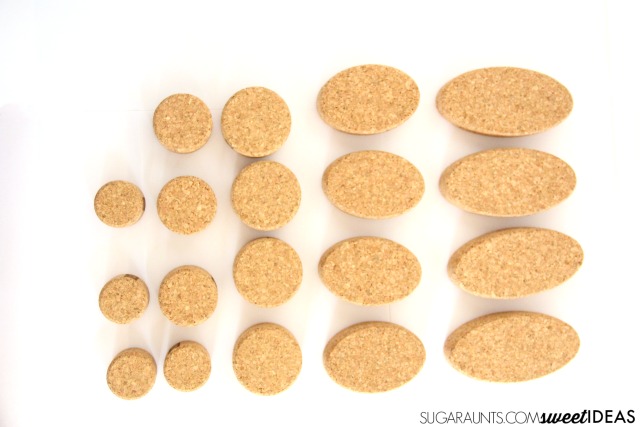
Visual Discrimination allows us to discriminate between differences in parts of letters (for example, we are able to see the difference between an “R” and a “P”).  The different sizes in the KORXX block sets are perfect for this visual perception skill.
 
Visual Figure Ground is a skill that allows us to locate and identify items when they are scattered among other items.  Locating a single puzzle piece on a table of puzzle pieces is just on example of this skill.  Use the KORXX blocks to locate needed pieces when they are scattered on the table.
 
Visual Closure allows us to identify an object when we are able to see only a portion of it.  Blocks that are stacked in a scatter on a table surface require visual closure for children to locate specific needed pieces.  They can locate a small oval KORXX block when it is partially covered.
 
Visual Sequential Memory allows us to create words or numbers in the correct sequence.  When building and copying block forms, we need to start with the correct KORXX blocks in order to copy the form.
 
So, using the parts of visual perception is a necessary part of copying letters and words in written work, math problems, and block forms in a play activity!
 
Address visual motor integration in written work by improving visual perception using block copying skills with KORXX cork blocks.
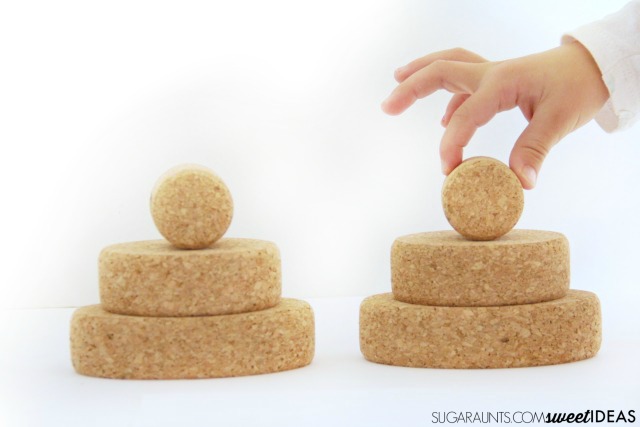
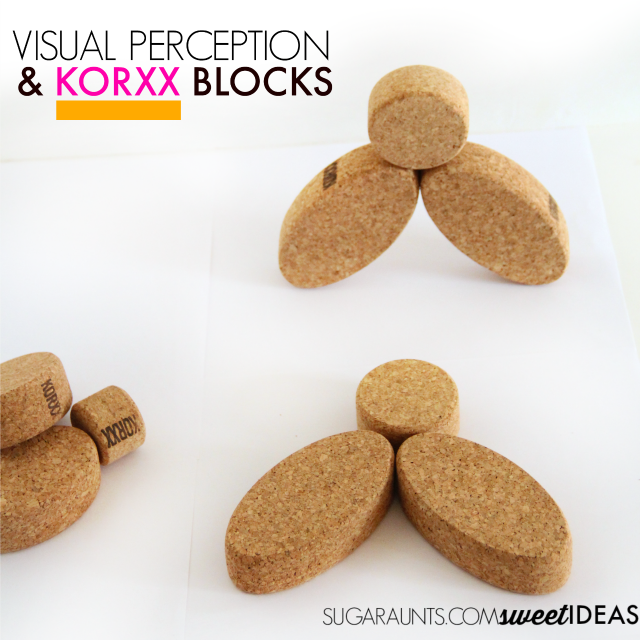
For our block play, we used our Kuller set KORXX block set to copy different forms.  I created a few multi-dimension block forms to add a depth perception component.  I set up blocks in  front of my preschooler and asked her to copy the forms.  By looking for the correct block on the table surface, she had to use all of the visual perception areas described above.  
 
Address visual motor integration in written work by improving visual perception using block copying skills with KORXX cork blocks.
 
This is such a great exercise for kids who are copying written work from an overhead position.  In the classroom, kids might have to copy their homework from an overhead position.  Between using the information they perceive in combination with their motor component of forming letters and manipulating the pencil, there are a lot of areas where illegibility can occur.
 
Address visual motor integration in written work by improving visual perception using block copying skills with KORXX cork blocks.
Try using simpler block copying forms to address visual motor and visual perception needs can be done with forms placed flat on the table surface in a top-to-bottom orientation.  Place the block form on the table and the child can construct their own form directly under the block form.  Limit the number of KORXX blocks that are presented to the child.
Address visual motor integration in written work by improving visual perception using block copying skills with KORXX cork blocks.

A little more information about KORXX blocks:

  • These eco-friendly blocks are all natural and made free of any harmful contaminants. There are no phthalates, dioxins, or other sensory emissions. The product adheres to the guidelines for children’s toys (under 3 years) and the harmonized standard DIN EN 71.
  • The soft and light cork blocks provide excellent stability without slippage. This makes them perfect for grasping by young children.
  • The KORXX bricks are made from natural cork harvested without harming the trees.
 
  • KORXX is an all natural and sustainable building block made from natural cork harvested without harming the trees.
 
You can purchase any of the KORXX block sets here.
 
Address visual motor integration in written work by improving visual perception using block copying skills with KORXX cork blocks.
 

Check out these activities using KORXX blocks:

 
Nature Play with KORXX Blocks from Fireflies and Mud Pies  

Balancing Activities with KORXX Quiet Blocks from Preschool Inspirations


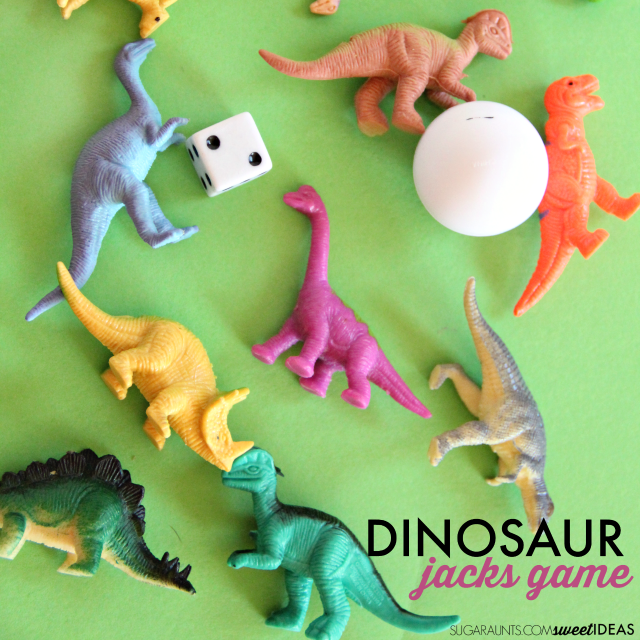
Goldilocks and the Three Dinosaurs Jacks Game

Jacks is a classic game.  Bounce a ball, scoop up the correct number of jacks, and be sure to catch the ball again! Playing jacks is a great way to sneak in eye-hand coordination skills, grasp, and motor planning.  So when we read the book, Goldilocks and the Three Dinosaurs by Mo Willems this week with the Virtual Book Club for Kids, we were excited to try a dinosaurs version of the classic Jacks game!  


Get ready for a FUN kids’ book and an even more fun active game with Goldilocks and the Three Dinosaurs Jacks Game!


This post contains affiliate links.


Goldilocks and The Three Dinosaurs Jacks Game


Have you read Goldilocks and the Three Dinosaurs?  This book is completely FUN!


My kids are huuuuuuge fans of all of Mo Willems’ books and this one was no different.


This is definitely a book to grab at the book store or add to your library request list. 


So, read the book this week and then have fun with this dinosaur themed activity:


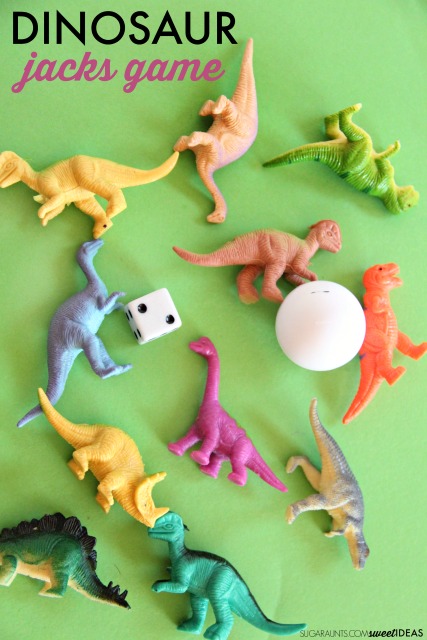
You’ll need just three items to play dinosaur themed jacks:


Mini dinosaur figures


Dice


Small rubber ball

amzn_assoc_placement = “adunit0”;
amzn_assoc_search_bar = “true”;
amzn_assoc_tracking_id = “sugaun-20”;
amzn_assoc_ad_mode = “manual”;
amzn_assoc_ad_type = “smart”;
amzn_assoc_marketplace = “amazon”;
amzn_assoc_region = “US”;
amzn_assoc_title = “My Amazon Picks”;
amzn_assoc_linkid = “381fc7cef7b4b8b6aecc9dd2ff0ca35f”;
amzn_assoc_asins = “0062104187,142319957X,1423178289,1484722868”;

amzn_assoc_placement = “adunit0”;
amzn_assoc_search_bar = “true”;
amzn_assoc_tracking_id = “sugaun-20”;
amzn_assoc_ad_mode = “manual”;
amzn_assoc_ad_type = “smart”;
amzn_assoc_marketplace = “amazon”;
amzn_assoc_region = “US”;
amzn_assoc_title = “My Amazon Picks”;
amzn_assoc_linkid = “381fc7cef7b4b8b6aecc9dd2ff0ca35f”;
amzn_assoc_asins = “B001DN8I0M,B00362RT4Y,B01KYYJXDQ,B016R3SFS2”;

amzn_assoc_placement = “adunit0”;
amzn_assoc_search_bar = “true”;
amzn_assoc_tracking_id = “sugaun-20”;
amzn_assoc_ad_mode = “manual”;
amzn_assoc_ad_type = “smart”;
amzn_assoc_marketplace = “amazon”;
amzn_assoc_region = “US”;
amzn_assoc_title = “My Amazon Picks”;
amzn_assoc_linkid = “381fc7cef7b4b8b6aecc9dd2ff0ca35f”;
amzn_assoc_asins = “B00G8JPWEG,B004ECI3N6,B00362OM26,B002G3ERMQ”;

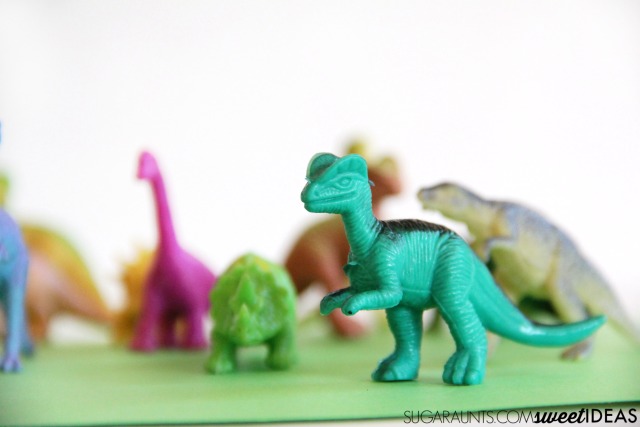
Use plastic dinosaurs in this Goldilocks and the Three DInosaurs jacks game based on Mo Willems childrens book.


RELATED READ: Dinosaur Themed Gross Motor Game


Then it’s time to play.


How to play Jacks

This game is just like the classic game of jacks. Do you know how to play jacks?  It’s pretty easy.


Scatter the jacks on the floor. 


Toss the ball into the air.  Scoop up one jack and let the ball bounce once before catching the ball in the same hand.


Collect all of the jacks in the same way.  This is called “onsies”. Then start another round called “twosies” where you will pick up two jacks at a time until all of the jacks are gone. 


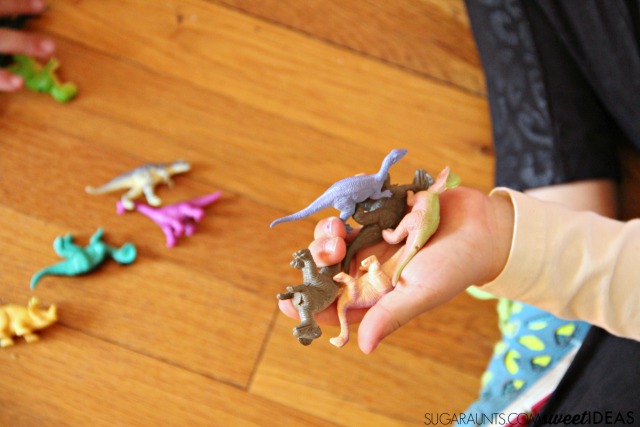
Use plastic dinosaurs in this Goldilocks and the Three DInosaurs jacks game based on Mo Willems childrens book.


So, playing Dinosaur Jacks would be the same exact way.  Scoop up one dinosaur at a time until they are all gone. 


RELATED READ: Dinosaur Themed Proprioception Game

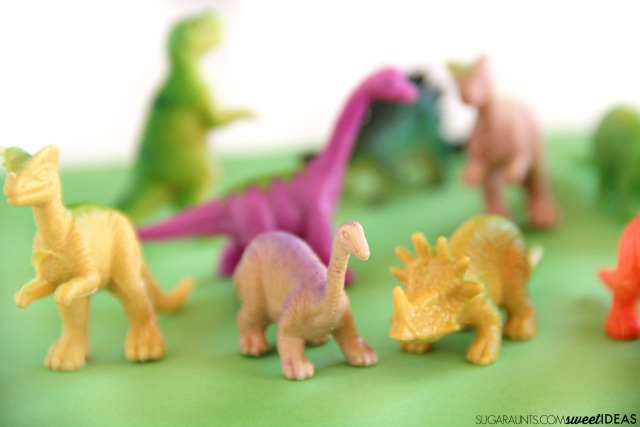
Use plastic dinosaurs in this Goldilocks and the Three DInosaurs jacks game based on Mo Willems childrens book.


How do playing Jacks help with development?

Jacks is a fun and active way to work on so many skills.

Catching a ball is a skill of motor planning.  Without a plan to adjust to the way the ball moves, it would be impossible to catch or dodge a ball.  It can be quite difficult for children with a lack of body awareness or sensory processing issues to move and create a plan in response to a stimulus such as a moving ball.

Jacks is a game of visual motor integration.  Scattered dinosaurs (or jacks) need to be gathered up while the bouncing ball is moving in different planes of vision.  
There are many visual processing skills that are used when playing jacks: visual attention, visual memory, visual spatial relationships, and visual figure ground.

Playing jacks requires the hands to move in response to what is perceived and is a challenge to eye-hand coordination skills.

Try using the game of Dinosaur Jacks to help with any of these skills that interfere with handwriting, reading, math, or other functional skills.

Looking for more ways to play and learn with a dinosaur theme?  Try these ideas from the Virtual Book Club for Kids team:

Dinosaur Themed Learning Activities

Dino Babies Letter Game ~ Rainy Day Mum
Preschool Dinosaur Name Activity from Preschool Powol Packets
Dinosaur Pre-Writing Tracing Pages from Sea of Knowledge

MATHS ACTIVITIES FOR THE DINOSAUR THEME

Dinosaur Number Maze from Inspiration Laboratories
Clothes Pin Dinosaur Count Tray from School Time Snippets
Dinosaur Shape Matching Game from Powerful Mothering
Build a Shape Dinosaur from Adventures of Adam

SENSORY AND ART ACTIVITIES FOR A DINOSAUR THEME

Collaborative Cardboard Dinosaur Art from Toddler Approved

COOKING IDEAS FOR DINOSAURS

SCIENCES IDEAS FOR A DINOSAUR THEME

MOVEMENT IDEAS FOR A DINOSAUR THEME

Roll a Dinosaur Movement Game from To Be a Kid Again
Use plastic dinosaurs in this Goldilocks and the Three DInosaurs jacks game based on Mo Willems childrens book.

amzn_assoc_placement = “adunit0”;
amzn_assoc_search_bar = “true”;
amzn_assoc_tracking_id = “sugaun-20”;
amzn_assoc_ad_mode = “manual”;
amzn_assoc_ad_type = “smart”;
amzn_assoc_marketplace = “amazon”;
amzn_assoc_region = “US”;
amzn_assoc_title = “My Amazon Picks”;
amzn_assoc_linkid = “381fc7cef7b4b8b6aecc9dd2ff0ca35f”;
amzn_assoc_asins = “B0028P9CZY,B003849FV0,B002KC4H1E,B01HT61U3I”;

Fall Visual Processing Sensory Activities

Use fall activities to work on visual processing needs with fall visual processing sensory activities.

Visual Processing can result in overactive sensitivity to sights or an under-responsiveness to all that the eye sees.  During Fall, there are many more colors and visual sights that can be a sense of interest to children with sensory processing disorders.  A simple walk in the yard is much different during the Fall months when leaves are changing or there are more sticks and acorns to navigate on the lawn.  For the child who has sensory processing concerns, using the sense of sight can be a calming or alerting tool.  Try these fall visual processing sensory activities this Fall.

Check out our free Fall Sensory Activities booklet. It’s full of family-friendly sensory activities that celebrate the season through sensory experiences covering all of the senses. The activities in this free booklet are a fun way to encourage motor movement and development through fall activities. Scroll to the bottom of this blog post to grab your copy!


Fall Visual Processing Sensory Activities with a fall or harvest theme.


Adding visual sensory activities to vestibular or proprioception activities can have a great affect on children with sensory processing disorders.  Check out our Fall Proprioception Activities and Fall Vestibular Activities or find all of the ideas in one place in our Fall Harvest Sensory calendar.

Fall Visual Processing Sensory Activities

1.     Leaf Lay– Head outdoors on a bright and sunny fall day.  Look for trees with brightly colored leaves and lay down on the ground under the tree.  Kids can look up at the leaves as the sun shines through the colored leaves.  Ask kids to notice branches in the leaves.  Address deep breathing and slow counting for a calming sensory experience.  Use this opportunity to discuss events that lead up to feelings of fear or anxiety related to the senses.

2.     Color Assessment– Use a magnifying glass to explore the colors of leaves, tree trunks, and nature finds while out on a nature hunt.  Kids can look for each color of the rainbow in a scavenger hunt type of activity.  This fall activity builds visual scanning needed for reading and writing.
 
3.     Pumpkin Seed Colors– Use dry seeds from a pumpkin to create colorful seeds using liquid food coloring or liquid water colors.  While these seeds won’t be edible, they are great for creative play!  Use the seeds to sort, manipulate, and create in Fall themed learning and play or artwork.
 
 
4.     Fall Maze– Many farms or community events host a corn or hay maze this time of year.  Walking through a maze is a visual processing experience that kids can use to develop directionality needs.  You can create your own backyard version of a fall maze using fallen leaves or a trail of sticks from trees.


Fall Visual Processing Sensory Activities with a fall or harvest theme.

Fall Sensory Activities

Work on visual processing skills this Fall AND address all areas of sensory needs while experiencing all that the Fall season has to offer! Grab your free copy of the Fall Sensory Experiences Booklet to create sensory diet activities that meet the needs of individuals in a Fall-themed way! Enter your email address below and you will find the Fall Sensory Experiences Booklet delivered right to your inbox. Enjoy!

Visual Processing and Handwriting

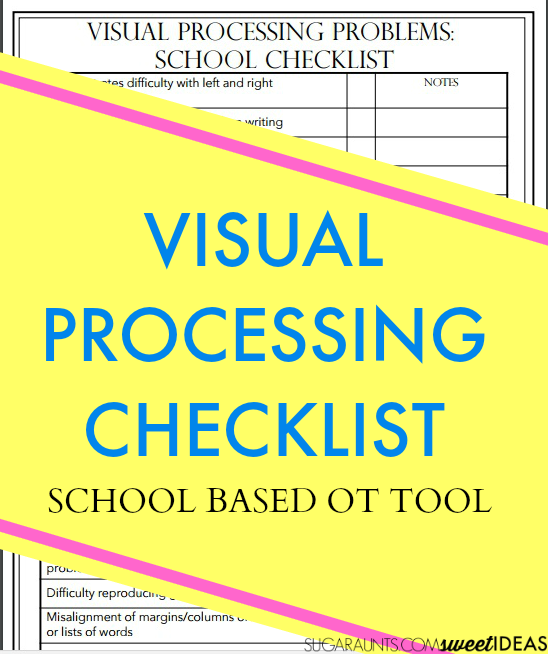
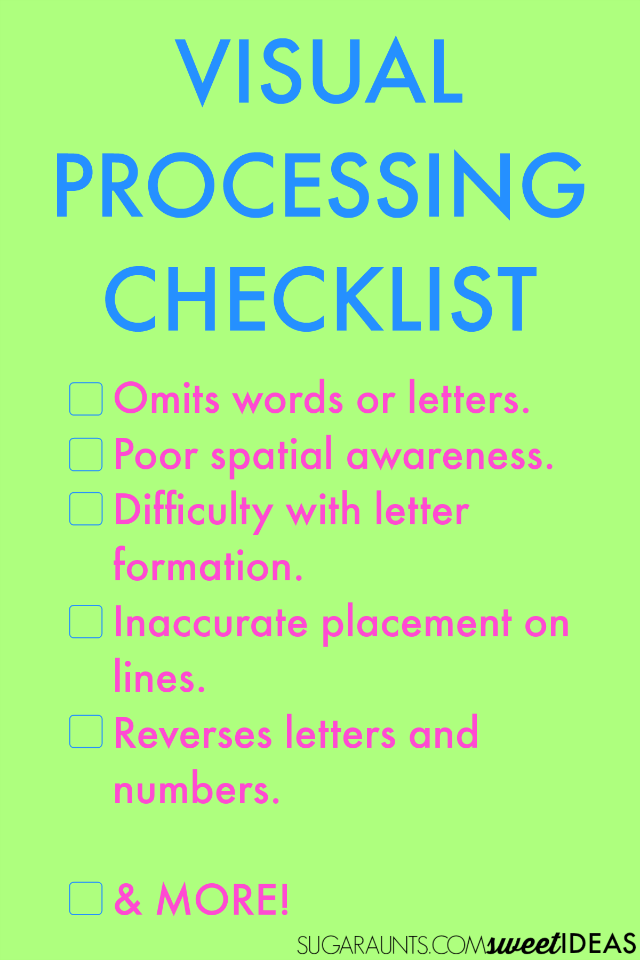
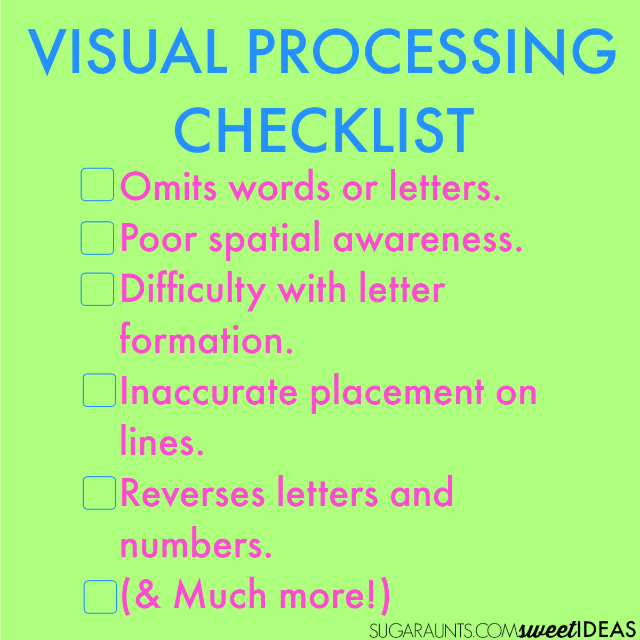
Visual Processing Skills are essential for handwriting.  Use this Visual Processing Checklist in the classroom, home, or therapy clinic to help kids address visual processing skills for improved legibility in written work.


Visual processing checklist for Occupational Therapy, classroom, teachers to help students with handwriting and classroom tasks.
 
You’ll also want to join the Sweet Ideas for Handwriting Practice Facebook group for more handwriting tips and tools.


When children learn to write, they copy and learn to form letters one at a time. They copy strait lines and combine them with different curves and angles to build letters accurately.  


After learning how to make letters, children start to place letters together to form two and three letter words.  They are shown how to place the letters next to each other, (but not on top of one another or spread too far apart) to make a word.  The words are placed on guidelines of writing paper.  Typically, kids place letters above or below the lines and with various sizes with a degree of expected inaccuracies.  


As children gain more control on their pencil and master letter formation, they adjust line, size, and spacing on the page.  Then, as children further gain in these areas, they write longer words and sentences with the ability to organize information on the paper.  Margins, lists, copying information without omissions, and forming letters from memory all become skilled as children gain handwriting experience.


But what happens when one or more of these skills suffer?  


What if written work does not progress as expected? 


The expectations of legibility and handwriting speed gain as a child grows and advances in grade. The ability to process the information that is seen translates to handwriting.  Difficulties with reversals, copying skills, placement on lines may be a visual processing difficulty.

What is Visual Processing Disorder?

A visual processing disorder refers to difficulty with response to visual information.  This might be the way the brain perceives and responds to visual information or it might mean the motor output that occurs as a result of visual information. The information that is received is not processed correctly.

Visual processing skills checklist for school and home handwriting


Visual Processing Skills and Handwriting

Visual processing skills effect other areas of function but the scope of this post is addressing visual processing skills and handwriting.  In general, visual processing difficulties result in a child having trouble with processing the information that they see.  


There are skills that are essential for handwriting that enable a person to write legibly.  These visual processing skills are part of the “hidden vision” abilities that effect handwriting.


Visual discrimination– Noticing and identifying differences in letter parts of parts of words (Discriminating between a “b” and “d” or “bake” and “brake”)


Visual Responsiveness– Responding to sensory input is just part of visual processing.  A child may overreact or under-react in response to visual information.  


Figure Ground-The ability to pull relevant information while disregarding ther information in copying tasks while copying from a text


Visual Spacing Relations– Spacing between words or letters on lines


Visual Memory-The ability to copy written work from memory as in copying homework lists from the chalkboard without shifting vision with each letter.


Visual Closure-The ability to recognize part of a letter or form without seeing the whole part


Visual Sequencing– Ability to “see” letters or words in a particular order


Visual Motor– Coordinating what is seen with the eyes into movements with the hands to place letters and words on lines and with proper letter formation


If you think your child or student might have some of these difficulties that lead to problems with handwriting, it can be quite beneficial to speak to an Occupational Therapist.  


There are many different signs of visual processing disorder that can be spotted in the classroom or in the homeschool dining room that might signify a potential visual processing disorder. I have created a checklist that will help to guide the plan for students with visual processing difficulties presented in written work and classroom tasks.  


Grab your digital copy for $1.99 and print off this checklist to pass on to Occupational Therapists as part of a classroom screening, share with parents, or use when presenting information to physicians.


This checklist is not to be used as therapy or in diagnosis of visual processing disorders, but only as an informational tool.  


Get your copy and use it in the classroom, clinic, and home. 

Visual processing and handwriting checklist for school and home to help with visual processing disorders

Maybe this one tool could be the informational gathering exercise that helps your child, student, or client to get on the right track to performing learning and written work.  


Sometimes, there are many problems with written work legibility that could be addressed with just a few simple quick fixes.  Understanding processing skills might be what is needed to help kids attend, focus, learn, and write appropriately and legibly.

Grab your Visual Processing Checklist for the Classroom!

Visual processing checklist

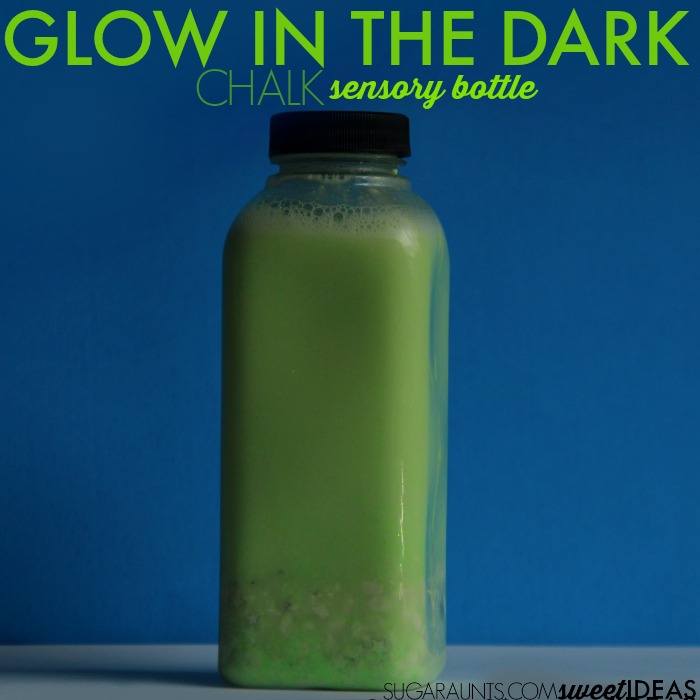
Cool Glow in the Dark Chalk Sensory Bottle

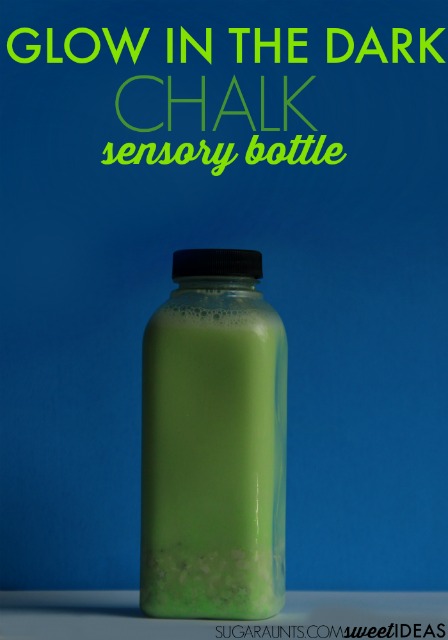
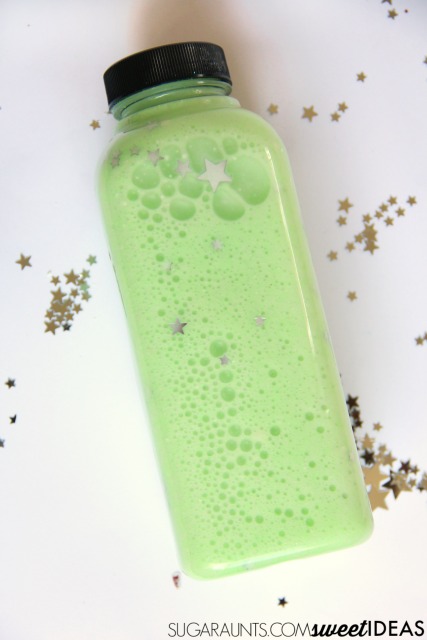
This glow in the dark chalk sensory bottle is one that is added to some of our favorite sensory bottles.
SO, if you’ve seen sensory bottles before, you might be surprised to see this calming sensory tool is made with CHALK. Yep, chalk!


Glow in the dark chalk sensory bottle: how to make a sensory bottle and why sensory bottles are great for self-regulation needs.


This post contains affiliate links.


But first,


Why use sensory bottles?

Glow in the dark chalk sensory bottle: how to make a sensory bottle and why sensory bottles are great for self-regulation needs.

Sensory bottles are a tool for calming and self-regulation in kids with sensory needs.  Some children (and adults) use them as a tool in their sensory diet.  Just like kids with motor planning issues NEED modifications or children with visual motor integration concerns NEED to use certain accommodations in order to write legible, there are kids who NEED self-regulation in their sensory diet in order to function in their day.  They are not just another blog post that you might see out there in your Facebook feed.


TIP: Add a DIY sensory bottle to your on-the-go sensory diet bag

Self regulation is essential skill that allows us to keep emotions in check and think before acting. 

Sensory bottles and self-regulation


Here are some of the benefits of using a sensory bottle as a self-regulation tool: 


  • Calms
  • Helps with focusing
  • Helps with attention
  • Allows clear thinking
  • Keep calm under pressure
  • Provides proprioceptive feedback
  • Provides a “just right” level of sensory feedback
  • Relaxes the mind


Can you imagine a child with sensory processing issues or social emotional concerns who could not regulate their emotions on their own or step back and make the “right” response in situations because of their self-regulation needs?  Can you imagine if this was your child who had these needs and there was a simple DIY (and often times quite inexpensive) tool that could help? Why not explore all of the sensory bottles out there on the internet to find one that meets your child’s interests?  It’s a sensory bottle no-brainer!


Now that I’ve stepped off my soapbox, on to the glow in the dark chalk sensory bottle fun!


Glow in the Dark Chalk Sensory Bottle

We’ve been making a bunch of sensory bottles this year along with a team of bloggers.  Each month, we’ve had a specific theme in mind.  This month is all about Glow In The Dark.  How fun is that?  I don’t know a kid who doesn’t get excited about glow in the dark toys, shirts, or glow sticks, do you?


When I was trying to brainstorm materials to make our glow-in-the-dark sensory bottle, I remembered a set of glow in the dark chalk that I bought on clearance at the end of last summer.  After a quick glow-check, I was excited to find that the chalk still glowed after 6 months in a storage bin.  We used the chalk for a cool sensory bottle that could calm and regulate in the dark!


Materials you’ll need for a CHALK Glow in the Dark Sensory Bottle


Clear plastic bottle with lid

Green liquid dish soap
Warm water
Glow-in-the-dark chalk
Kitchen mallet
plastic baggie
3-4 Marbles
Silver Glitter and Star sparkles (optional)


Other glow in the dark materials that would work for a glowing sensory bottle:

amzn_assoc_placement = “adunit0”;
amzn_assoc_search_bar = “true”;
amzn_assoc_tracking_id = “sugaun-20”;
amzn_assoc_ad_mode = “manual”;
amzn_assoc_ad_type = “smart”;
amzn_assoc_marketplace = “amazon”;
amzn_assoc_region = “US”;
amzn_assoc_title = “My Amazon Picks”;
amzn_assoc_linkid = “7dfc8be9d7d3317bd607c29716c3a460”;
amzn_assoc_asins = “B00PY47LHW,B005E0CD0G,B00LF43E6C,B00KGQOHVQ”;


To make the calming sensory tool:

Place the chalk in a plastic baggie and use a kitchen mallet to pound the chalk.  Try to get it as fine as possible.  This is a GREAT proprioceptive workout for kids and a lot like our ice pounding activity, so get the kids involved in this step!

Glow in the dark chalk sensory bottle: how to make a sensory bottle and why sensory bottles are great for self-regulation needs.


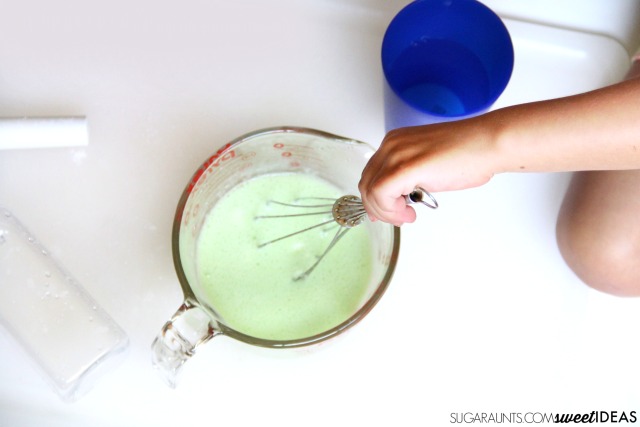
Next, mix together the chalk dust, one cup of liquid dish soap, and one cup of warm water.


Drop in the marbles (You will definitely need the marbles to break up the chalk dust as it will settle in the bottle of the bottle.) A benefit of the marbles is that it adds weight to the bottle, making this an even more effective sensory tool.


Next, pinch in glitter and sparkles.


Glue on the lid and start shaking!

Glow in the dark chalk sensory bottle: how to make a sensory bottle and why sensory bottles are great for self-regulation needs.


Other glow in the dark materials that would work for your calming sensory tool:

Our favorite sensory bottle ideas: 

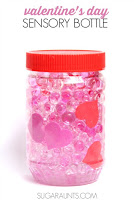
                            Valentines Day Sensory Bottle with Waterbeads

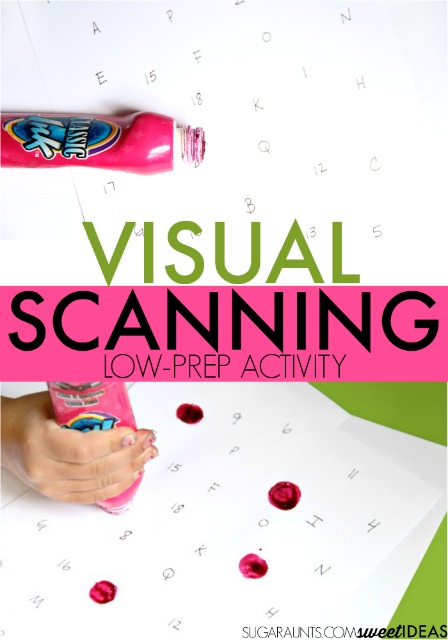
Fun and Easy Visual Scanning Activity

Visual Scanning is needed for looking in all directions with the eyes to locate an object or to avoid obstacles when walking in a crowded classroom.  A visual scanning activity is one way to build visual perception  needed for locating an item on a shelf, finding a matching sock in an overstuffed drawer, and finding a keyword in a reading activity.  If you are wondering “What is Visual Scanning?” Or for MORE visual scanning activities that kids (and adults) will love, try these.


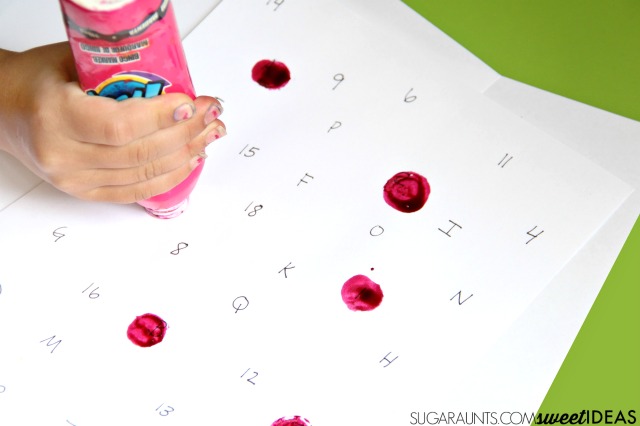
This Visual Scanning Dot Marker Activity is a super easy way to work on visual scanning needed for these tasks and many (many!) more.  Read more about visual scanning and find many more ways to build this essential skill here.

Fun and easy Visual Scanning Activity using paint dobbers

Easy Visual Scanning Activity


This post contains affiliate links.


For this activity, we made our own scanning worksheet.  Low-prep activities are great to have in your therapy back pocket when you are an Occupational Therapist, and as a busy mom, I know that easy activities are bonus when it comes to setting up the kids with a task.  This visual scanning game is perfect for therapists and parents of kids who need to work on visual scanning tasks and I’m happy to share a stress-free activity!


To make your own visual scanning worksheet, randomly write letters A-Z and numbers 1-26 on a piece of paper.  Scatter the letters and numbers around on the page.  Show your child how to use a paint dobber to dot the letter “A”, followed by the number “1”.  Next, ask the child to continue through the alphabet, dotting “B” and then “2” and then “C” and “3”.  The letter-number pattern requires the child to slow down and think about what is next in the sequence while visually scanning the whole page.  


Visual Scanning Activity using paint dobbers

Visual Scanning Activities

Extend and assist with visual scanning for kids with this activity by trying these modifications:

  • Prompt the child to look left to right and top to bottom, if they seem to omit sections of the page.
  • If the child is having trouble with this activity, try less letters and numbers.
  • Use a piece of paper to slide down the page as they scan.
  • Prompt the child to scan the whole left side of the paper before looking for letters to the right.
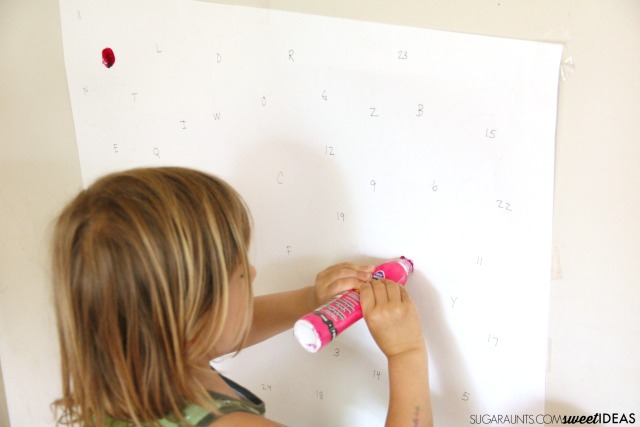
  • Make the visual scanning activity large-scale to add a gross motor component.  Use posterboard and tape the page to the wall.  Just be sure the child doesn’t push very hard on the paint dobber or drips of paint will fall down the posterboard. 
Visual Scanning Activity using paint dobbers
Looking for more ways to use a paint dobber in learning and play activities? Try these:
Visual Scanning Activity using paint dobbers
More Visual Scanning Activities you will love: 


Let me know if you try this visual scanning activity at home or in your therapy clinic.  What are your favorite activities for visual scanning? 

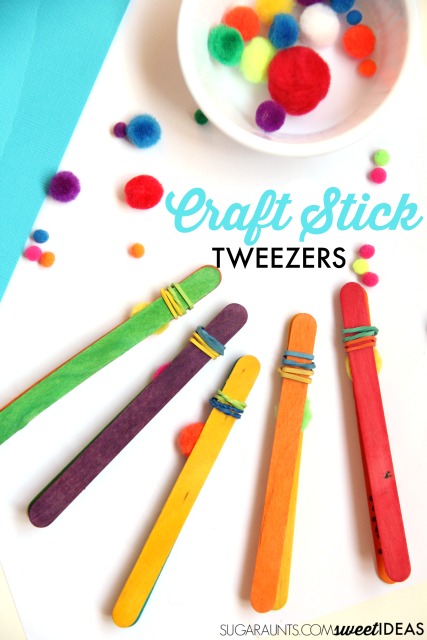
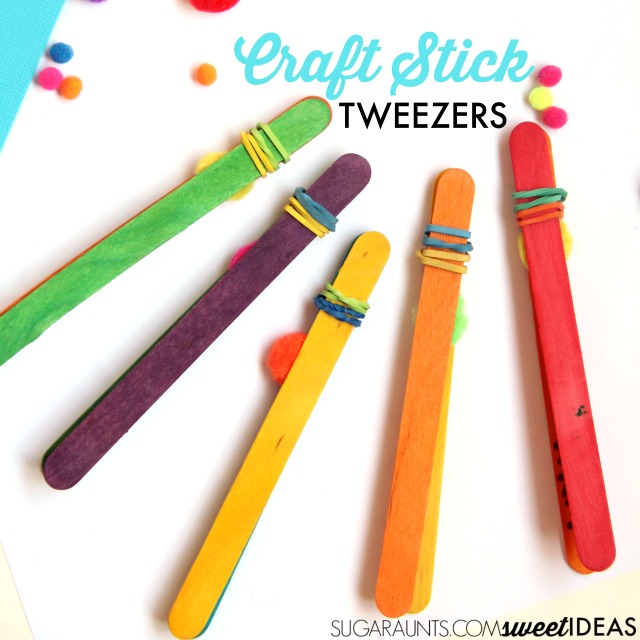
Craft Stick Tweezers to Help with Pencil Grasp

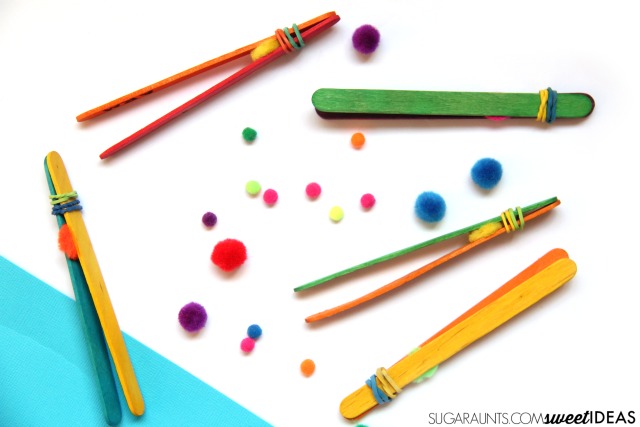
I have a fun DIY for you!  These craft stick tweezers are easy to create and a workout for finger muscles.  We made them in a rainbow of colors and you can use them for color sorting while working on the fine motor skills needed for handwriting and small motor tasks like managing clothing fasteners.


Build fine motor skills including pencil grasp using these homemade DIY tweezers made from craft sticks.

How Do Using Tweezers Help With Handwriting? 

You might know that I love to share easy, manageable tips on how to help kids with handwriting and pencil grasp.  Recently I shared a quick tip on strengthening the lumbrical muscles for more effective pencil grasp and endurance in handwriting.  Today, I’ve got an extension on that activity, using tweezers.  

So how do tweezers help with pencil grasp and handwriting?  
When a child uses tweezers to pick up small objects (using an appropriate grasp on the tweezers, of course!) they are building the skills needed for a tripod grasp.  A functional pencil grasp includes the thumb and the first and third fingers or the thumb and the first, second, third, and fourth fingers.  These grasps allow a child to move and advance the paper with small motions at an appropriate speed for writing legibly.  

Using tweezers is a great way to build the muscles needed for these grasps on the pencil.  When using a pair of tweezers to work on pencil grasp, be sure to position the tweezers as if it were a pencil.  Encourage the child to bend the tip of their thumb to build the thenar muscles of the thumb, while ensuring an open web space.  The resistance of squeezing tweezers develops the arches of the hands which are needed for a curved palm while holding a pencil.  An extended wrist provides the most functional position for writing or tweezer-ing. 

Build fine motor skills including pencil grasp using these homemade DIY tweezers made from craft sticks.

DIY Craft Stick Tweezers

Full disclosure: Affiliate links are included in this post.

Making these colorful tweezers are so easy.  We used rainbow craft sticks (ours, we received from www.craftprojectideas.com).  You’ll also need small rubber bands and a small craft pom pom.  

To make the tweezers, stack two craft sticks together and position the pom pom in between at one end.  Add two rubber bands to the end of the tweezers.  

A larger crafting pom pom will make the tweezers wider at the opening.  This will increase the amount of distance needed for grasping small items.  This is a great way to grade the activity.

Watch this video to see the full how-to:


Now get to building those hand muscles!

 Additional benefits to using tweezers in fine motor tasks:

Visual Scanning
Peripheral Vision
Hand-Eye Coordination
Development of the Skilled side of the hand
Stabilization of the ulnar (or power) side of the hand


Build fine motor skills including pencil grasp using these homemade DIY tweezers made from craft sticks.

Love this idea?  SHARE it on Facebook!


Looking for more ways to build the hand muscles for an improved pencil grasp?  Try these:

 Pencil Grasp Activity Pencil Grasp Exercise Thumb opposition activity


amzn_assoc_placement = “adunit0”;
amzn_assoc_search_bar = “true”;
amzn_assoc_tracking_id = “sugaun-20”;
amzn_assoc_ad_mode = “manual”;
amzn_assoc_ad_type = “smart”;
amzn_assoc_marketplace = “amazon”;
amzn_assoc_region = “US”;
amzn_assoc_title = “My Amazon Picks”;
amzn_assoc_linkid = “6f3c21b98ef4d0fbed62fbcaf0f65a6c”;
amzn_assoc_asins = “B0018N4CM0,B000BLJEKU,B000NNGNKA,B0074MIAXG”;

Intrinsic Hand Muscle Strengthening with Tongs

Handwriting legibility and hand strength are closely tied.  You might say they go hand-in-hand.  (I had to go there!)  

 
This easy fine motor tong activity is designed to build some of the muscles needed for managing a pencil.  The intrinsic muscles are the muscles in the hand that define the arches of the hands, bend the knuckles, and oppose with the thumbs.  


Among these muscles are a group called the lumbricals.  The lumbrical muscles have a job to bend (flex) the MCP joints and extend (straighten) the PIP and DIP joints.  When the lumbricals are in action, the hand might look like it is holding a plate with the big knuckles bent and the fingers extended.  


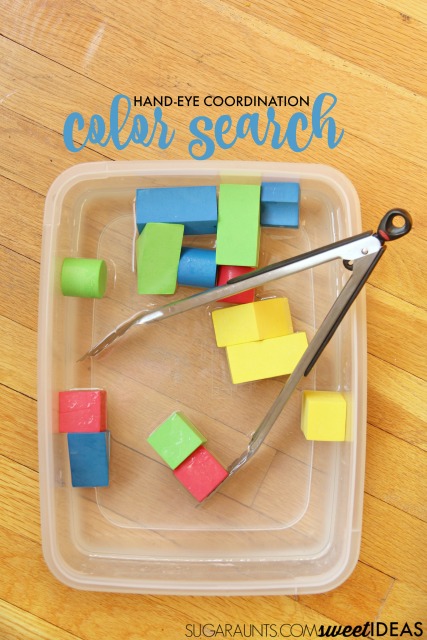
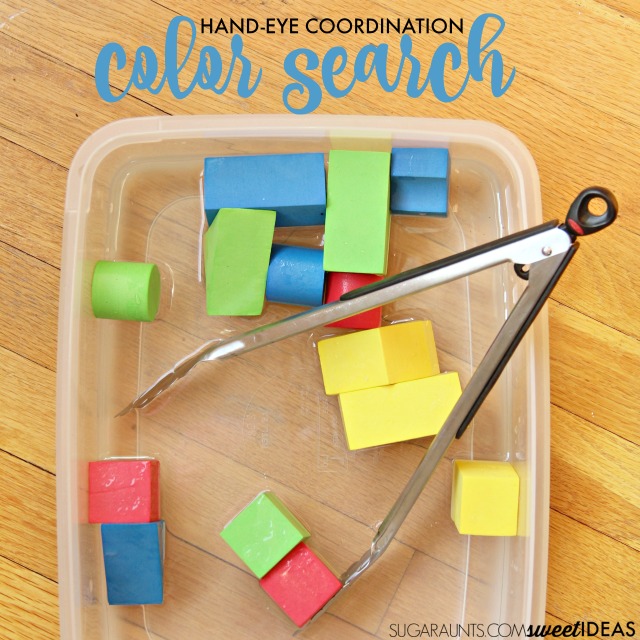
Use kitchen tongs to work on the lumbrical intrinsic muscles of the hands to build strength in handwriting, using tongs for this color search and hand eye coordination activity for kids.


Lumbrical Muscles of the Hands and Handwriting 

This post contains affiliate links.


The lumbrical muscles of the hands are important in handwriting.  They are used to hold the pencil in a functional grasp.  Advancing the pencil in an upward motion using the joints of the fingers require strength and endurance of the lumbrical muscles.  Forming letters like upstrokes in cursive letters and the re-trace of letters like a, d, g, h, m, n, p, q, r, u, v, and w require upward pencil strokes.


Hand strength can be developed through many creative, hands-on activities, like blocks and rubber bands or rolling balls of play dough.  This kitchen tong activity is another fun way to work on important skills. 
 
Use kitchen tongs to work on the lumbrical intrinsic muscles of the hands to build strength in handwriting, using tongs for this color search and hand eye coordination activity for kids.
 
 
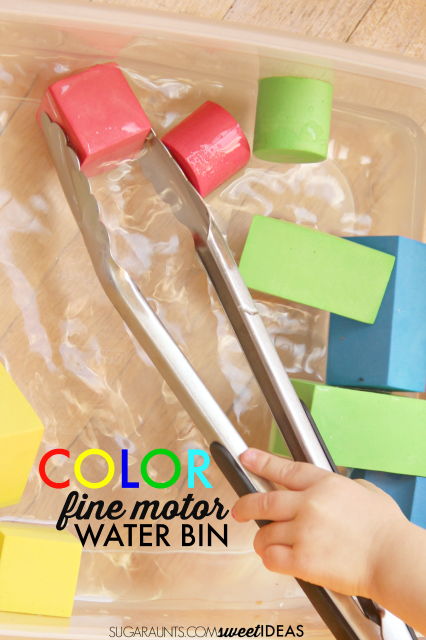
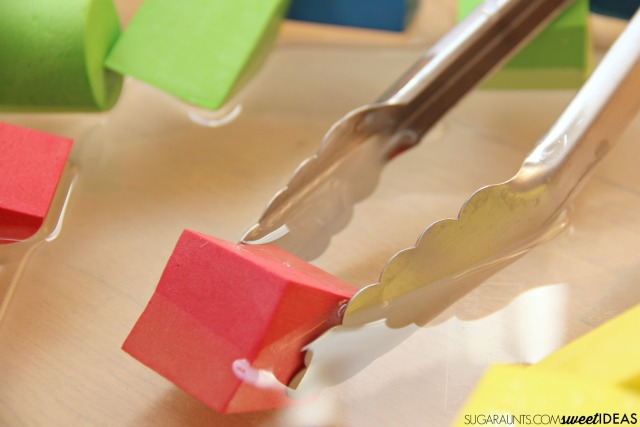
A quick and easy way to develop and strengthen the lumbricals is a tong activity like this one.  Use a large kitchen tong utensil to grasp items.  We used this kitchen tong, but any large tong would work for this strengthening activity.  Foam blocks are a nice size and make a great hand-eye coordination exercise for children with the tongs.  Fill a bin with water and add in the foam blocks.  Ask your child to grab the blocks as you call out colors for a color identification activity.


Idea:  Re-use the blocks to build MORE fine motor skill development like we did here.

Use kitchen tongs to work on the lumbrical intrinsic muscles of the hands to build strength in handwriting, using tongs for this color search and hand eye coordination activity for kids.


Using tongs to work on handwriting

It is important to notice the position of your child’s hand on the tongs in activities like this one.  You want to see a slightly extended wrist and tongs UNDER the hand to work on lumbrical muscle strength.  This is different than a task geared toward building precision and thumb intrinsic muscle strength. 

Use kitchen tongs to work on the lumbrical intrinsic muscles of the hands to build strength in handwriting, using tongs for this color search and hand eye coordination activity for kids.


More intrinsic muscles needed in handwriting

The muscles used in handwriting can be broken up into two actions.

The muscles: 
  • flexor digiti minimi, abductor digiti minimi and opponens pollicis & digiti minimi are referred to as the hypothenar muscles work to stabilize the ulnar side of the hand during handwriting. 
 
The muscles:
  • abductor pollicis brevis, flexor pollicis brevis, and opponens pollicis work to rotate the thumb for manipulation of the pencil.  
  • Adductor
    pollicis strengthens thumb opposition.
 
Looking for more ways to use tongs and fine motor tools in learning?  Try these:


Use kitchen tongs to work on the lumbrical intrinsic muscles of the hands to build strength in handwriting, using tongs for this color search and hand eye coordination activity for kids.Use kitchen tongs to work on the lumbrical intrinsic muscles of the hands to build strength in handwriting, using tongs for this color search and hand eye coordination activity for kids.


Looking for more strengthening exercises for hands?  Try these:
 

 fine motor writing activity Pencil Grasp Activity Pencil Grasp Exercise Thumb opposition activity
 

Colleen Beck, OTR/L has been an occupational therapist since 2000, working in school-based, hand therapy, outpatient peds, EI, and SNF. Colleen created The OT Toolbox to inspire therapists, teachers, and parents with easy and fun tools to help children thrive. Read her story about going from an OT making $3/hour (after paying for kids’ childcare) to a full-time OT resource creator for millions of readers. Want to collaborate? Send an email to contact@theottoolbox.com.

Kindergarten Sight Words with Winter Tic Tac Toe

I love to make homework fun.  At the end of a long school day, the last thing my kids want to do is worksheets.  They do it, because the are hard workers and want to do what they need to do.  So, when my kids are hit with a new concept that makes for homework grumbles, I try to get creative and make the extra practice fun.


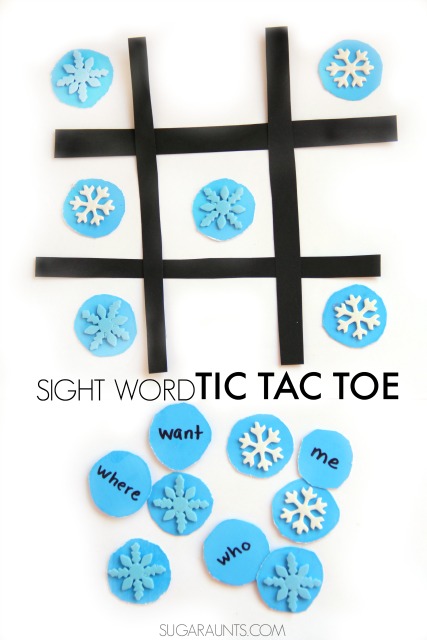
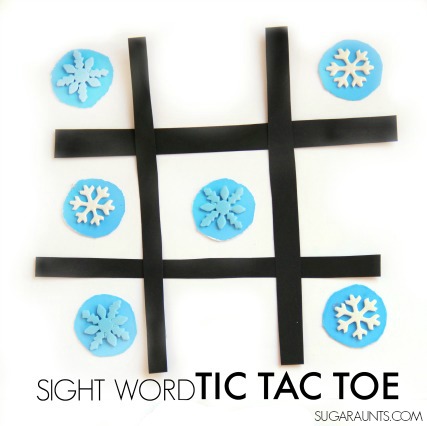
This Sight Words Winter Tic Tac Toe game is just that.  It’s a fun and creative way to practice sight words.  When pain old flashcards are just boring. (And, we’ve done a few sight word activities in our day!)


My Kindergarten boy LOVES tic tac toe.  So, when we needed to practice a bit more on some sight words, that adding a tic tac toe component would make him perk up to practice!


And, when he came home from school and saw this winter snowflake tic tac toe game waiting for him, he was so excited to start playing.


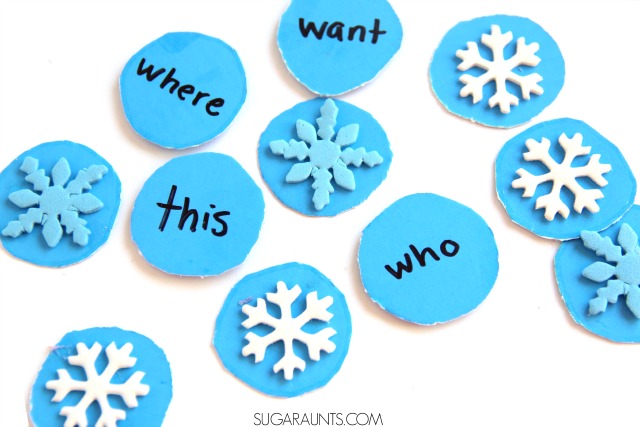
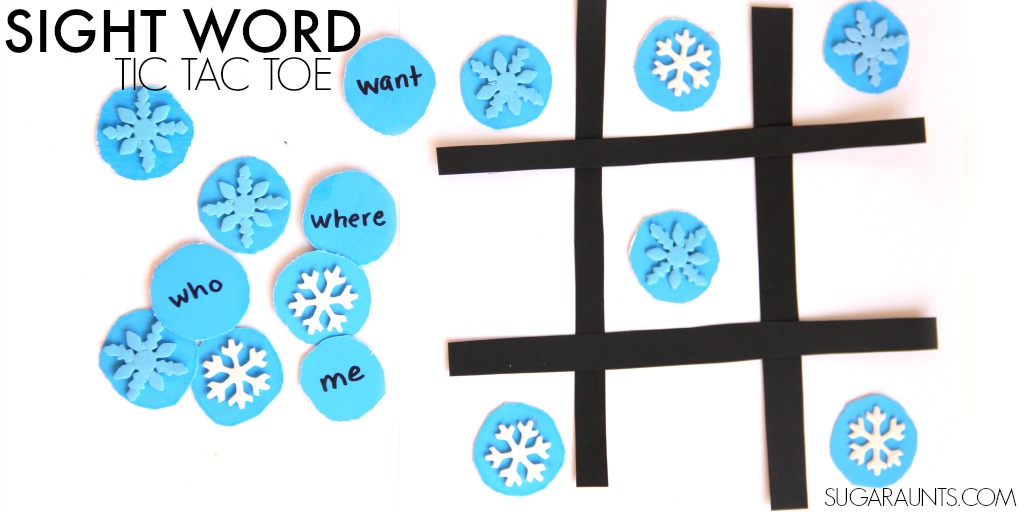
Play this sight word tic tac toe game with a winter snowflake theme. This is perfect for Kindergarten and early childhood education.

Winter Sight Words Tic Tack Toe Game


This post contains affiliate links.


To make this game, you’ll need a few materials:
Black cardstock

Snowflake foam shapes
(sticky-back or not, but you’ll need glue if yours are not stickers)

Blue cardstock

Black marker


Play this sight word tic tac toe game with a winter snowflake theme. This is perfect for Kindergarten and early childhood education.

It is easy to make this sight word game:
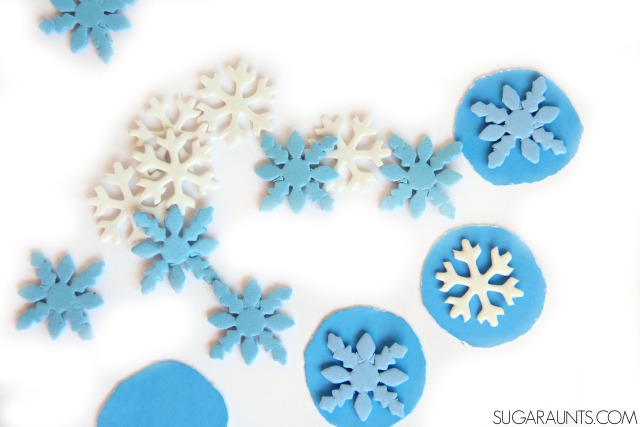
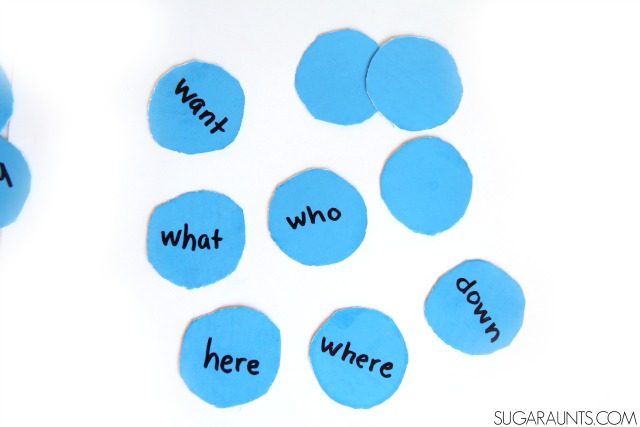
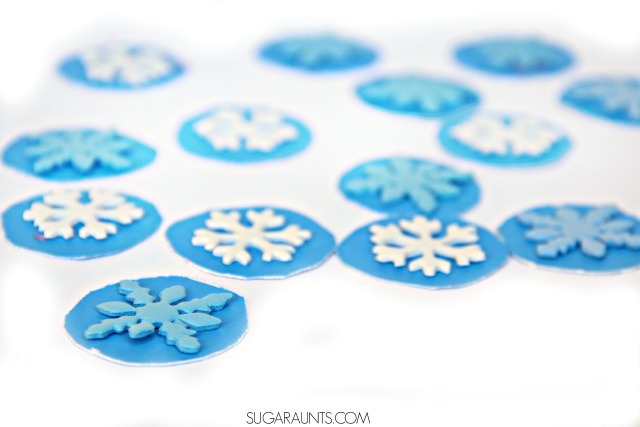
Cut circles from cardstock.  On one side, write sight words.  On the other side, stick snowflake stickers or glue foam shapes.


Tic Tac Toe Game and Visual Skills for handwriting and functional tasks

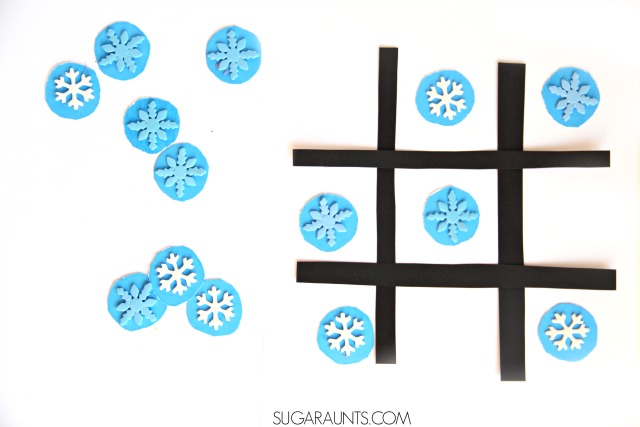
From the black cardstock, cut four long, thin strips.  Build a tic tac toe board with the strips.  We glued ours together.  Building the form was a fun task for my kindergartner.  He has drawn tic tac toe boards so often, that he could easily build and glue the shape together.  But, for kids who might need more help with this part, draw or make an example.  This is a great way to work on visual perceptual skills which are needed for forming and writing letters.

You could expand this activity by adding a word scavenger hunt component. Hide the word cards around the room or in an obstacle course. The players can find the words they need for their tic tac toe game.

Related, is our resource on name practice in kindergarten. These snowflake markers could be made with letters on each back, creating a hands-on activity for supporting sequencing of letters in writing names or kindergarten spelling words.

Play this sight word tic tac toe game with a winter snowflake theme. This is perfect for Kindergarten and early childhood education.

I had my son scan the pile of snowflakes and search for matching shapes. Looking for a particular snowflake within a jumble of shapes is a fun way to work on visual scanning, figure ground, and visual form discrimination. These are skills needed for tasks like handwriting, reading without losing their place, finding a page in a book, reading charts and graphs, scissor skills, and many other skills.


Scanning a tic tac toe board for an open spot is a great way to incorporate visual scanning into a hand-eye coordination game.
Play this sight word tic tac toe game with a winter snowflake theme. This is perfect for Kindergarten and early childhood education.


Sight Word Tic Tac Toe Game

We started playing using the snowflake side.  When we placed it on the board, I had my son turn the snowflake over and read the sight word.  He wanted to play again and again, and I was fine with that!


Alternative ways to play:
Have your child pick up 3-5 snowflakes and read the words.  Then play tic tac toe.
Create matches for each word and play memory.
Play tic tac toe with the sight words.  Take turns placing sight words on the tic tac toe board.  When the whole board is filled, turn the snowflake over to see if you’ve got three in a row.

Play this sight word tic tac toe game with a winter snowflake theme. This is perfect for Kindergarten and early childhood education.

Looking for more winter activities to do with your Kindergartner?  Try these:

Chocolate Snowflake Pretzels by Something 2 Offer
Snowflake Rhyming Activity by Books and Giggles
Skating Penguin Small World by Adventures of Adam
Stick Man Story Sack by Play & Learn Everyday

Winter Writing Prompts – by Mrs. Karle’s Sight and Sound Reading
Love this post?  Share it on Facebook!
Share on Twitter!
 
More sight word activities your child will love:

Sight Word Scavenger Hunt | Sight Word Sensory Bin | I Spy Sight Word Sensory Bottle