Hanukkah Word Scramble

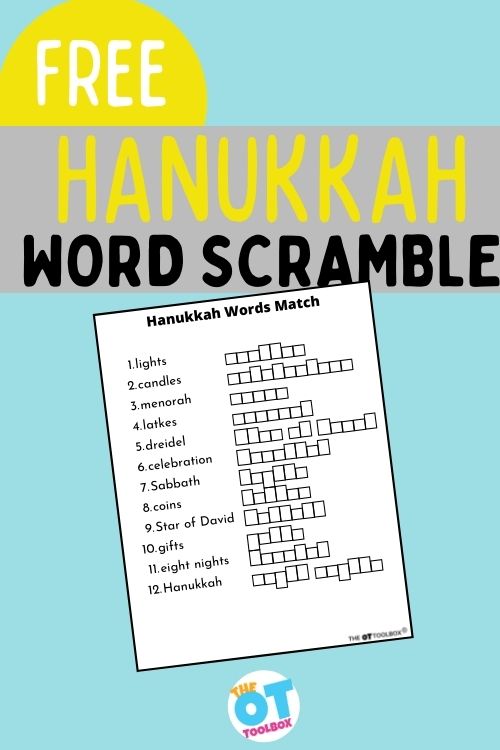
We’ve been sharing a lot of holiday printable activities lately, and this Hanukkah word scramble is one more! Winter holiday season is upon us!  Whether you celebrate Hanukkah, Christmas, Kwanzaa,  Winter Solstice, or something else entirely, this is a joyous time for many. It should not matter what you celebrate, learning the history, traditions, and meaning of these events should be at the center of the lessons. Kids can unscramble the Haunukkah words and work on visual perceptual skills and handwriting.

This free Hanukkah word scramble is a Hanukkah activity sheet for the holidays.

Hanukkah Word Scramble

In order to be interesting and motivating to young learners, fun worksheets can be incorporated into lesson plans.  These not only provide a relevant lesson plan during the holiday season, but can incorporate many important goals and objectives in one single task.  This is most important, as therapy sessions are often limited or short, as well as the attention span of young learners.  Therapy sessions in school can be as short as 15 minutes, just enough time for a warm up activity and a fun worksheet such as the Hanukkah activity sheet with scrambled words.

This Hanukkah activity sheet which involves matching Hanukkah words, is an excellent idea!

Let’s explore the many different goals and skills that can be addressed using the Hanukkah word match:

  1.  Letter formation – the worksheet has lines for correct letter formation
  2. Sizing and spacing of letters to fit in the provided boxes
  3.  Copying from a model
  4.  Decoding to use strategies to determine how many letters in each word and the size of the corresponding boxes
  5. Bilateral coordination using one hand to write and the other to hold the paper
  6.  Visual perception – being able to visualize the words once they are scrambled
  7. Social skills – working on frustration tolerance, attention to details, and following  directions
  8. Fine motor skills – building hand muscles through writing

Ways to adapt and change this activity:

  •  Laminate this page to use wipe off markers as a different medium as well as reusability. Note: some children love wipe off sheets, while others become upset that they can not take their work with them.
  •  Put this activity on the smart board to make it a group task or invite students to come to the board and write.
  •  Make space to draw the items on the page to work on visual motor skills.
  • Work in pairs or in a small group to address problem solving, turn taking, and negotiation skills.

Many times, it seems Hanukkah takes a back seat to Christmas based on the number of participants or popularity. This special traditional celebration can be incorporated into an inclusive lesson plan that includes many holidays, or as a stand-alone unit for learners celebrating Hanukkah.  This is a great opportunity for anyone to learn about different cultures and traditions no matter what is celebrated.

What is Hanukkah?

Check out this article about what Hanukkah is. This is a great tool to add to your lesson plan about holidays.

Holidays like Hanukkah can be exciting and fun to incorporate into treatment sessions. Be mindful that too much of a good thing is not so good after all.  Scatter fun holiday activities into regular tasks to help students modulate their arousal level and stay on task during these busy times.  Holidays can be a lot of fun but can also cause stress for many.  There are added responsibilities, money woes, social stressors, increased expectations, and changes in schedules that can set adults and children off of their routine.

Turn your holiday stress into a teachable moment

One article outlines how to turn your holiday stress into a teachable moment. Don’t let stress get the best of you and turn a great time into a mess.

More Holiday Activity Sheets

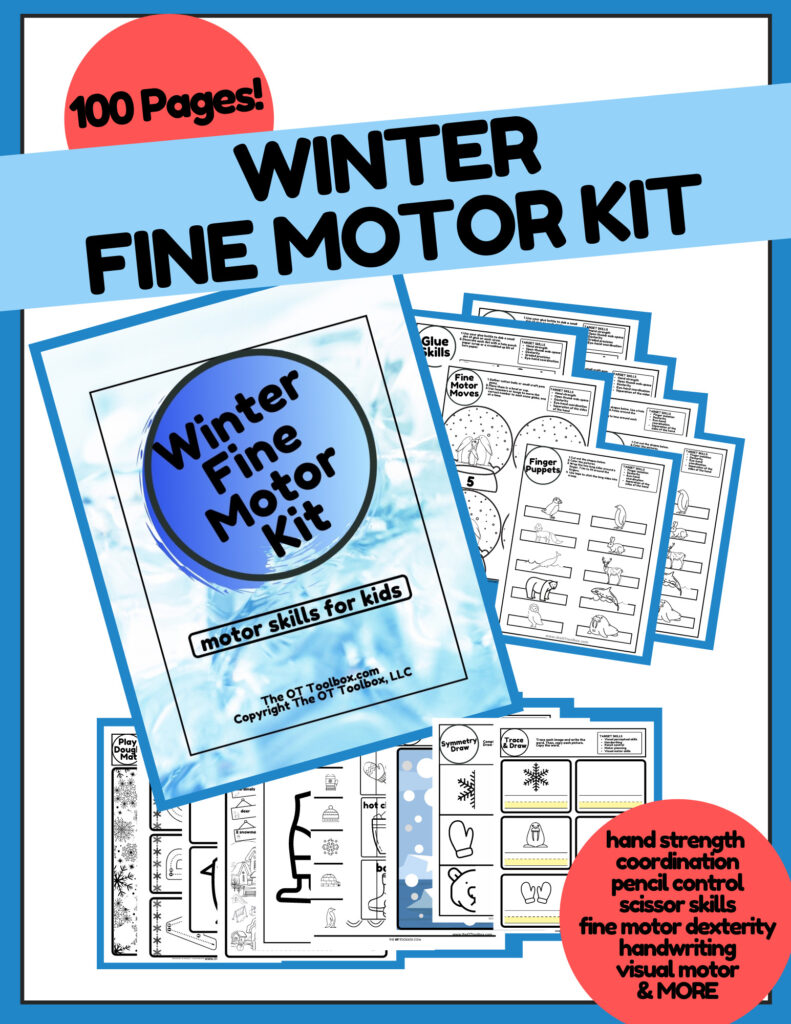
The time leading up to the holidays between Thanksgiving and these winter celebrations can last two to three weeks.  In order to feel well prepared for this season, having several activities planned ahead of time will ease stressful planning or running out of meaningful activities.  The OT Toolbox offers the Winter Fine Motor Kit full of handouts and PDF files providing several visual motor tasks to be used throughout the winter season.

In addition to these handouts, you can also read this article on Winter Fine Motor Activities for more great ideas and suggestions:

For me, the most difficult part of therapy sessions is trying to plan them and come up with novel ideas that are going to be appealing to all my different levels of learners.  Once I have several sessions planned for the week, the time flies by and sessions go much smoother.  I am able to adapt each task to meet the needs of most of my different learners.  Take this opportunity to streamline your sessions by downloading activities and ideas from the OT Toolbox today.

Free Hanukkah Word Scramble Activity Sheet

FREE Hanukkah Word Scramble Activity Sheet

    We respect your privacy. Unsubscribe at anytime.

    Happy Holidays!

    Victoria Wood, OTR/L

    Victoria Wood, OTR/L is a contributor to The OT Toolbox and has been providing Occupational Therapy treatment in pediatrics for more than 25 years. She has practiced in hospital settings (inpatient, outpatient, NICU, PICU), school systems, and outpatient clinics in several states. She has treated hundreds of children with various sensory processing dysfunction in the areas of behavior, gross/fine motor skills, social skills and self-care. Ms. Wood has also been a featured speaker at seminars, webinars, and school staff development training. She is the author of Seeing your Home and Community with Sensory Eyes.

    *The term, “learner” is used throughout this post for readability, however this information is relevant for students, patients, clients, children of all ages, etc. The term “they” is used instead of he/she to be inclusive.

    Christmas Maze Printable for in-hand Manipulation

    Free Christmas printable mazes

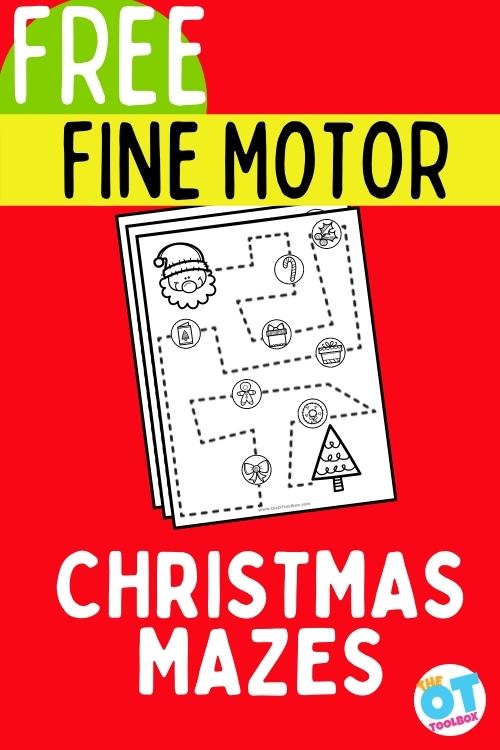
    This Christmas maze printable is a fun way to incorporate the holiday season while working on fine motor skills like in-hand manipulation. Add these free printable Christmas mazes for a therapy tool, or home activity that builds skills!

    Free printable Christmas mazes for building fine motor skills like in-hand manipulation and strength of the intrinsic muscles.

    Christmas Maze Printable

    Wait, what?  “Christmas” and “manipulation” should not be in the same sentence, right?  Well…….there is an awful lot of manipulation going on at the holidays in order for Santa to deliver the goods. 

    However, we are not referring to that type of manipulation. In hand manipulation is an important fine motor skill to develop the intrinsic muscles of the developing hand.  That sentence is a mouthful and sounds highly professional.  Be sure to slip that one into your conversation somewhere this month to sound super smart! 

    The term “manipulate” we are referring to when talking about “in hand manipulation” does not mean to control a situation or person, but rather; to treat or operate with or as if with the hands or by mechanical means especially in a skillful manner. Therefore in- hand manipulation refers to working the intrinsic hand muscles skillfully.

    Check out this article by Kelly DeYoung of the OT Perspective as she delves further into in-hand manipulation.

    Intrinsic hand muscles with a Christmas Maze Worksheet

    In simpler terms, there are many very tiny muscles inside the palm of the hand connecting to the fingers.  They are called intrinsic muscles because they are within the hand.  Great dexterity starts with the ability to move all of the muscles of the hand, rather than relying on more primitive motions using only the wrist or arm. 

    Now that we are clear that we are referring to skillfully working the small muscles of the hand, let us get on to the fun stuff! 

    Below, you can grab a set of FREE Christmas maze printables for in-hand manipulation as an excellent way to build these muscles while motivating your student at the same time.

    How to use these Christmas Maze Printables

    1. Have your student hold items such as coins, beads, bingo chips, mini marshmallows, in the palm of their hand. 
    2. Show them how to use their first finger to trace along the maze path. 
    3. At each circle have your student place one of their items onto the spot. 
    4. Continue tracing along the path placing objects until they reach the end of the maze.

    These Christmas and Candy Cane activities work on in-hand manipulation, finger/hand strength, dexterity, separation of sides of the hand, visual perceptual skills, following directions, and so much more all in one fun PDF printable.

    More ways to use these free printable christmas mazes

    Ways to modify or change this task:

    • Laminate the page to make it reusable.  Try coloring it first!
    • Print on different colored paper
    • Enlarge or shrink page to change the challenge
    • Have younger students use bingo markers on the dots as a fun game
    • Trace the line with a marker, then color the circles if handwriting is your objective
    • Color the picture after or before working on the in-hand manipulation task to add to the challenge
    • Have students pick up the coins one by one to get into their hand before dropping them one by one.  No raking grasp or sliding coins off of the table!

    Observe Skills when using the Christmas Mazes

    When working on this type of in-hand manipulation, there are several observations to be made. 

    • Can your student pick up the coins one at a time without using a raking grasp or sliding them off of the table?
    • How many items can your student hold at once without dropping some?
    • Can your student move the items from the palm of their hand to their finger tips to get them out, or do they drop the coins by opening their fingers?
    • Can your student continue to hold the coins while isolating one finger to continue the maze?
    • How many times do you need to repeat the directions so your student can follow them?
    • How many reminders does your student need while doing this activity?
    • What is your student’s frustration tolerance when they have to start over?
    • Is there any cheating or cutting corners going on? There always is.

    The best part of themed treatment planning is the ease of it.  It is streamlined and can be adapted for multiple levels of students.  If your students enjoyed the Christmas in-hand manipulation free printable, they will LOVE this Christmas Fine Motor Kit! If you order soon, you can get it while it is on sale.

    If you prefer a more “winter themed” treatment plan, the OT Toolbox has you covered.  They offer a Winter Fine Motor Kit crammed full of printable tasks to use to develop important fine motor skills.

    Writing all of these Christmas pages has me excited about trying some of these activities with my students.  I especially love this one, as in-hand manipulation tasks are one of my go to treatment plans for building hand muscles.  I just might order the Christmas Fine Motor Kit too.  With the holiday season as crazy as it is, I just don’t have time to create endless lesson plans and come up with novel ideas, when the OT Toolbox has me covered already.

    Free Christmas mazes

    Now to the fun stuff!  CHRISTMAS! These printables are a great way to incorporate meaningful relevant activities into the holiday season. As always, be mindful of your school’s policy on using specific Christmas activities that feature Santa.  Some districts have strict rules about how holidays can be celebrated.  Usually “winter theme” is a safe bet.  Candy canes, snowmen, snowflakes, hot cocoa, penguins, polar bears, etc are not usually frowned upon.

    Enter your email address into the form below and these printable Christmas mazes will be delivered. If you are a member of The OT Toolbox Member’s Club, you’ll find these printable mazes in your member’s dashboard area.

    FREE Christmas Maze Printables

      We respect your privacy. Unsubscribe at anytime.

      Happy Holidays!

      Victoria Wood, OTR/L

      Victoria Wood, OTR/L is a contributor to The OT Toolbox and has been providing Occupational Therapy treatment in pediatrics for more than 25 years. She has practiced in hospital settings (inpatient, outpatient, NICU, PICU), school systems, and outpatient clinics in several states. She has treated hundreds of children with various sensory processing dysfunction in the areas of behavior, gross/fine motor skills, social skills and self-care. Ms. Wood has also been a featured speaker at seminars, webinars, and school staff development training. She is the author of Seeing your Home and Community with Sensory Eyes.

      *The term, “student” is used throughout this post for readability, however this information is relevant for all types of learners, patents, clients, children of all ages, etc. The term “they” is used instead of he/she to be inclusive.

      Christmas I Spy

      Free Christmas I Spy worksheet

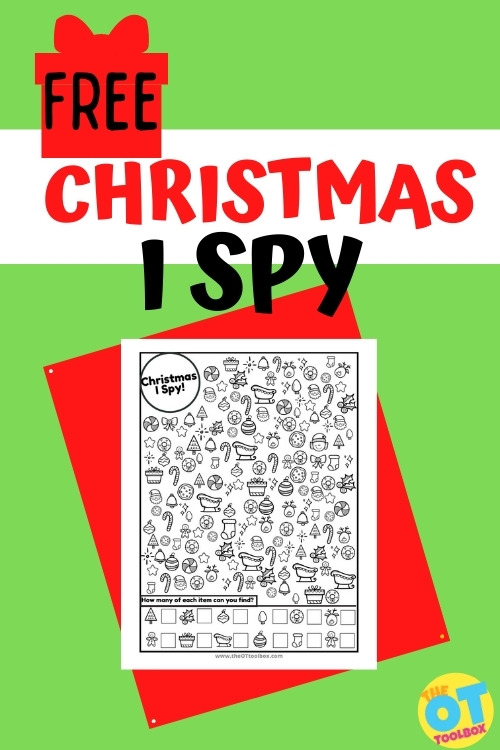
      Are you looking for a quick and easy activity to address the components of visual perception that you can also use to address numeral formation this holiday season?  This Christmas I Spy is a fun activity that can be used in a variety of ways to target the skills your students need including visual perception and numeral formation. Add this I Spy printable to your occupational therapy Christmas ideas!

      Use this printable Christmas I Spy worksheet for a party activity or in Christmas occupational therapy activities!

      Christmas I Spy

      It’s the busiest time of the year and this Christmas I Spy is a no prep printable you can take from the printer right to your therapy sessions with your students.  The best part of this worksheet is that it can target so many skills at once! 

      Some of the skills addressed with Christmas I Spy will target the components of visual perceptual skills.  Visual perceptual skills are foundational to reading and writing.  There are many components of visual perception that play a role in our student’s performance at school, but this activity primarily addresses visual discrimination and visual memory.  

      You can begin using this worksheet with your students by asking them to name some of the pictures they see on the page.  Then, focus their attention to the bottom of the page to the pictures they will look for during the activity. 

      Support Visual Skills with a Christmas I Spy

      Using their visual discrimination skills, ask your students to identify each of the pictures at the bottom.  Encourage your students to use a different color for each picture they find.  This is a strategy you can teach them to support their visual discrimination skills.  The students can circle each picture working on their fine motor dexterity skills or they could color each small picture.

      This activity is also great for addressing visual memory.  Visual memory is the ability to retain and recall visual information.  Visual memory is essential in reading and writing, but it is also important for completing tasks like Christmas I Spy in an efficient way.  

      As the students begin to work, they will be using their visual memory and scanning skills together to recall where they have seen each picture.  

      Visual scanning is also an important skill that will be addressed with Christmas I Spy.  Visual scanning is a function of the oculomotor system that involves using the eyes in a coordinated way to scan the environment for information. 

      For students who may have difficulty with visual scanning, try teaching strategies such as moving a ruler down the page as they track across, encourage them to scan in an organized manner from left to right, or you can reduce the demand by asking “can you find 3 candy canes”, for example. 

      Another way to support students who may have difficulty with visual perceptual tasks such as I Spy, would be to take turns finding the different pictures.  Not only would this take away some of the demand for struggling students, but it would also allow you to model visual scanning skills at the same time.  

      Work on Number formation with a Christmas I Spy Activity

      Finally, Christmas I Spy provides your students with an opportunity to address number formation.  After they find and color each picture, they will need to write the number in the box. 

      Here is a place where you can take this pencil/paper task and make it a kinesthetic learning experience for your students!  Many students need kinesthetic learning experiences or the opportunity to touch, move, and feel in order to learn. 

      Occupational therapists are uniquely trained to provide these types of kinesthetic learning experiences to students.  You will find that when you design an intervention to include a sensory, tactile, or movement experience, your students will be instantly engaged.  Engagement and participation are the keys to learning!

      More ways to use this Christmas I Spy Printable

      You could extend this activity to include a kinesthetic component by: 

      • Forming the numbers using gingerbread scented playdough, like this Gingerbread Salt Dough Recipe
      • If snow is more your style, try this snow dough recipe Snow Dough Recipe
      • And for an even more sensory experience try Candy Cane Moon Dough from
      • Pair the printable with this Hot Chocolate Craft for a winter themed activity.
      • Bend red and white “candy cane” pipe cleaners into the numbers your students need to practice
      • Use sand trays to practice numeral formation.  Use red and green sand to stick with the holiday theme or get inspired to use other materials/textures from ideas here: Writing Trays for Handwriting
      • Practice writing numbers in shaving cream.  Add a little silver glitter to mimic snow.

      So, grab your hot cocoa and hit print on Christmas I Spy! You will have so much fun with your students this holiday season while working on important visual perceptual and numeral formation skills!

      FREE Christmas
      I Spy Worksheet

        We respect your privacy. Unsubscribe at anytime.

        Katherine Cook is an occupational therapist with 20 years experience primarily working in schools with students from preschool through Grade 12.  Katherine graduated from Boston University in 2001 and completed her Master’s degree and Certificate of Advanced Graduate Study at Tufts University in 2010.  Katherine’s school based experience includes working in integrated preschool programs, supporting students in the inclusion setting, as well as program development and providing consultation to students in substantially separate programs.  Katherine has a passion for fostering the play skills of children and supporting their occupations in school. 

        Combinación de palabras de Navidad

        Hoja de trabajo de coincidencia de palabras de Navidad

        Buscas una hoja de ejercicios de concordancia de palabras de Navidad que te ofrezca la oportunidad de trabajar las habilidades de escritura a mano en estas fiestas? En este artículo, descubrirás cómo abordar las habilidades visuales perceptivas específicas que afectan a la legibilidad de la escritura utilizando una divertida hoja de trabajo de correspondencia de palabras navideñas. Puedes conseguir ese imprimible gratuito al final de este post. En primer lugar, vamos a ver algunas formas de utilizar este imprimible estas Navidades al planificar las actividades navideñas de terapia ocupacional.

        Hoja de trabajo de coincidencia de palabras de Navidad

        Combinación de palabras de Navidad

        La época navideña es sinónimo de familia, regalos, buena comida, repostería, celebraciones, tradiciones y mucho más. Para los profesionales de la terapia y los profesores, también significa sesiones de terapia y planes de clases.

        Qué mejor manera de pasar las vacaciones que con divertidas hojas de trabajo? Los profesores, los terapeutas y sus alumnos necesitan un poco más de motivación para superar los largos y fríos días que preceden a las vacaciones. Por alguna razón, las dos últimas semanas antes de las vacaciones de invierno parecen una eternidad. Probablemente la anticipación del tiempo libre, el tiempo con la familia y todo lo que las vacaciones ofrecen hace que este tiempo se arrastre.

        Las vacaciones también pueden ser estresantes. Los cambios de rutina en el aula son un gran desencadenante de los estallidos sensoriales. Es importante mantener un plan de clases estable, así como un horario predecible. A primera vista, el día de cine y pijama es una forma emocionante de pasar un día previo a las vacaciones. En realidad, puede provocar el caos, los arrebatos emocionales y el caos en una clase que, por lo demás, es tranquila.

        Cuando mis hijos eran pequeños, me di cuenta de que tenía que restar importancia a las vacaciones en casa debido a toda la emoción que se generaba. Retrasé la decoración unos días, no mencioné a Papá Noel tan a menudo como podría haberlo hecho y no hablé de los regalos muy a menudo. Por suerte mis hijas crecieron antes de todo eso del “Elfo de la estantería”. Eso habría añadido diariamente a la locura. Sé que parece muy divertido (y lo es para algunos), pero el exceso de algo bueno llevó a una hija con malestar estomacal el día de Navidad durante años, hasta que descubrí el secreto.

        Consulta este artículo de Through the Fibro Fog sobre “Cómo afrontar la sobrecarga sensorial en las fiestas”

        Dónde está el equilibrio entre la diversión y el caos?

        Añade pequeñas cosas a diario al plan de clases para aumentar la diversión de la temporada. Habla sobre las tradiciones, la historia de las fiestas y las celebraciones familiares. Añade pequeñas hojas de trabajo al tiempo de trabajo diario en el asiento o a las sesiones de terapia, repartidas a lo largo de las semanas previas a las vacaciones.

        Cajas de letras de Navidad para escribir a mano

        Un imprimible fácil para los alumnos de primaria (de 5 a 10 años aproximadamente) es una forma estupenda de añadir al plan las habilidades académicas y terapéuticas necesarias.

        A continuación, puedes hacerte con un estupendo imprimible navideño de la caja de herramientas de OT que pide a los usuarios que rellenen las palabras navideñas en las casillas de letras manuscritas. El juego de palabras de Navidad incluye divertidas palabras navideñas para trabajar la escritura, el tamaño de las letras y las habilidades de copiado.

        Una hoja de trabajo sencilla, como la de “Christmas Word Match”, puede abordar muchas habilidades y objetivos a la vez. Esta hoja de trabajo puede adaptarse a diferentes niveles de alumnos, o cambiar el enfoque para trabajar en diferentes objetivos.

        Qué habilidades puedo trabajar con Christmas Word Match?

        • Escritura a mano – esto es obvio
        • Formación de letras – formar correctamente las letras de arriba a abajo
        • Dimensionamiento de las letras: encajar correctamente las letras en las casillas de tamaño
        • Copiar – copiar palabras de un modelo, transferir las letras de un lugar a otro
        • Percepción visual: utilizar las pistas del contexto para descifrar qué palabras encajan en cada espacio. Los alumnos tendrán que atender a cuántas cajas hay, así como a los diferentes tamaños de las mismas. Escanear la página en busca de las respuestas correctas, mientras se mantiene la atención a medida que cada letra se transfiere a las casillas.
        • Secuenciación: ¿su alumno hará las palabras en orden? ¿Buscarán primero las respuestas fáciles u obvias? ¿Irán de forma desordenada por toda la página?
        • Coordinación bilateral: recordar que deben utilizar su “mano auxiliar” para sujetar el papel mientras escriben. Se fomenta el uso de una mano como dominante en lugar de cambiar de una a otra una vez que el niño está en la escuela primaria o demuestra una fuerza significativa en una u otra.
        • Fuerza: la fuerza del núcleo, la estabilidad de los hombros y las muñecas, el control de la cabeza, el equilibrio y la fuerza de las manos son necesarios para adoptar una postura erguida al sentarse y realizar tareas de escritura.

        Estas son sólo algunas de las habilidades que se pueden abordar con esta hoja de trabajo.

        Clasificar la correspondencia de palabras de Navidad para satisfacer diferentes necesidades

        Lo bueno de una hoja de trabajo con formas de palabras es que puedes graduar la actividad para satisfacer una variedad de áreas de habilidades y necesidades.

        Cómo califico esta actividad?

        Cuando utilizo la palabra “calificar”, me refiero a hacerlo más fácil o más difícil, no a ponerle una letra o una puntuación.

        • Lamina la página para usar marcadores y toallitas. Esto puede ser útil para la reutilización, así como para el disfrute de los marcadores.
        • El papel de diferentes colores puede hacer que sea más o menos difícil para el alumno
        • Ampliar el tipo de letra puede ser necesario para los estudiantes principiantes de caligrafía que necesitan un mayor espacio para escribir.
        • Repasa primero habilidades como escanear, descodificar y copiar si necesitas facilitar la tarea.
        • Proyecta esta página en una pizarra inteligente para que los alumnos se acerquen a la pizarra y escriban en letras grandes.
        • Los alumnos de mayor nivel pueden escribir frases con estas palabras en el reverso de la página para practicar más, o dibujar estos elementos en un papel.
        • Puede ser necesario dar más o menos indicaciones para calificar la actividad y hacerla más fácil o más difícil.

        Aquí tienes un post de la caja de herramientas de OT sobre la formación de las letras si necesitas algunos consejos y recordatorios:

        También puede consultar este paquete de papel para escribir a mano, disponible para añadirlo a su plan de clases de vacaciones.

        Tómese el tiempo para disfrutar de la temporada con sus alumnos mientras trabaja en esas importantes habilidades. Añadir palabras navideñas divertidas puede hacer que una tarea desalentadora sea mucho más motivadora incluso para los alumnos más reacios.

        Combina esta hoja de trabajo de formas de palabras navideñas con nuestra reciente hoja de calco de las luces de Navidad para obtener más divertidas hojas de trabajo navideñas en PDF, así como importantes consejos para la planificación de las clases en esta época del año.

        Felices fiestas!

        *El término “alumno” se utiliza a lo largo de este artículo para facilitar la lectura, pero esta información es relevante para estudiantes, pacientes, clientes, niños de todas las edades, etc. Se utiliza el término “ellos” en lugar de él/ella para ser inclusivo.

        Hoja de trabajo gratuita de palabras de Navidad

        FREE Christmas
        Word Match Worksheet

          We respect your privacy. Unsubscribe at anytime.

          Victoria Wood, OTR/L is a contributor to The OT Toolbox and has been providing Occupational Therapy treatment in pediatrics for more than 25 years. She has practiced in hospital settings (inpatient, outpatient, NICU, PICU), school systems, and outpatient clinics in several states. She has treated hundreds of children with various sensory processing dysfunction in the areas of behavior, gross/fine motor skills, social skills and self-care. Ms. Wood has also been a featured speaker at seminars, webinars, and school staff development training. She is the author of Seeing your Home and Community with Sensory Eyes.

          Christmas Word match- incluye palabras clave christmas word match, fun christmas words, handwriting letter boxes, Christmas word shapes

          Christmas Word Match

          Christmas word match worksheet

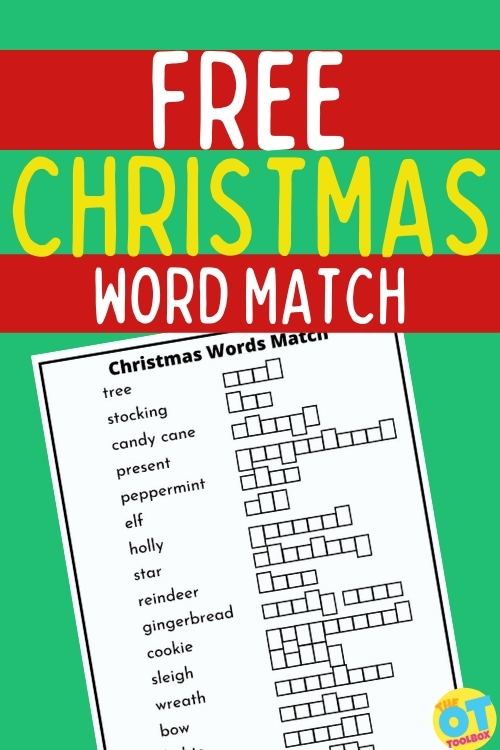
          Looking for a Christmas word match worksheet that offers a chance to work on handwriting skills this holiday season? In this post, you’ll find how to address specific visual perceptual skills that impact handwriting legibility using a fun Christmas word matching worksheet. You can grab that free printable at the bottom of this post. First, let’s cover a few ways to use this printable this Christmas when planning Christmas occupational therapy activities.

          Christmas word match worksheet

          Christmas Word Match

          Christmas time means family, presents, eating great food, baking, celebrations, traditions, and so much more.  For therapy professionals and teachers, it also means therapy sessions and lesson plans.

          What better way to get through the holidays than fun worksheets? Teachers, therapists, and their students need a little extra motivation to get through the long cold days leading up to the holidays. For some reason, the last two weeks before winter break feels like an eternity.  Probably the anticipation of time off, time with family, and all that the holidays have to offer makes this time crawl.

          Holidays can be stressful as well. Changes in routine in the classroom are a big trigger for sensory outbursts.  It is important to keep a steady lesson plan as well as a predictable schedule. On the surface, movie and pajama day is an exciting way to spend a day leading up to a holiday.  In reality it can cause mayhem, emotional outbursts, and chaos in an otherwise calm classroom. 

          When my children were young I found I had to downplay the holidays at home due to all the building excitement.  I delayed decorating by a few days, did not mention Santa as often as I might have, and did not talk about presents very often.  Luckily my girls grew up  before the whole “Elf of a Shelf” thing. That would have added daily to the madness.  I know it sounds like a lot of fun (and it is for some), but too much of a good thing led to a daughter with an upset stomach on Christmas day for years, until I figured out the secret.

          Check out this article from Through the Fibro Fog on “How to Cope with Sensory Overload at the Holidays”

          Where is the balance between fun and chaos? 

          Add small things daily to the lesson plan to add to the fun of the season. Talk about traditions, the history of the holidays, and family celebrations.  Add small worksheets to the daily seatwork time or therapy sessions, spread out over the weeks leading up until the holidays.

          Christmas Handwriting Letter Boxes

          An easy printable for grade school students (approximate ages 5-10) is a great way to add necessary academic and therapeutic skills to the plan.

          Below, you can grab a great holiday printable from the OT Toolbox that asks users to fill in Chrstmas words into the handwriting letter boxes.  The Christmas Word Match includes fun Christmas words to work on handwriting, letter sizing, and copying skills.

          A simple worksheet such as the Christmas Word Match, can address  many skills and goals at once.  This worksheet can be adapted to different levels of students, or shift the focus to work on different goals. 

          What skills can I work on with Christmas Word Match?

          • Handwriting – this is obvious
          • Letter formation – correctly forming the letters top to bottom
          • Letter sizing – correctly fitting the letters into the size boxes
          • Copying – copying words from a model, transferring the letters from one place to another
          • Visual perception – using context clues to decode which words fit in each space.  Students will need to attend to how many boxes there are, as well as the different sizes of the boxes. Scanning the page for the correct answers, while maintaining focus as each letter is transferred into the boxes.
          • Sequencing – will your learner do the words in order?  Will they look for the easy and/or obvious answers first?  Will they go in a haphazard pattern all over the page?  
          • Bilateral coordination – remembering to use their “helper hand” to hold the paper while writing.  Using one hand for a dominant hand instead of switching back and forth is encouraged once a child is in grade school or demonstrates a significant strength in one or the other.
          • Strength – core strength, shoulder and wrist stability, head control, balance, and hand strength are all needed for upright sitting posture and writing tasks.

          This is just a few of the skills that can be addressed using this ONE worksheet!

          Grade the Christmas Word Match to Meet different needs

          The nice thing about a word shape worksheet is that you can grade the activity to meet a variety of skill areas and needs.

          How do I grade this activity?

          When I use the word “grade,” I mean make it easier or harder, not give it a letter grade or score it.

          • Laminate the page for using markers and wipes. This can be useful for reusability as well as the enjoyment markers bring.
          • Different colored paper may make it more or less challenging for your learner
          • Enlarging the font may be necessary to beginning handwriting students who need bigger space to write.
          • Review skills first such as scanning, decoding, and copying if you need to make the task easier.
          • Project this page onto a smart board for students to come to the board and write in big letters.
          • Higher level learners can write sentences with these words on the back of the page for more practice, or draw these items on a paper.
          • More or less prompting may be needed to grade the activity to make it easier or harder.

          Here is a post from  the OT Toolbox on letter formation if you need some hints and reminders:

          Or check out this handwriting paper pack available to add to your holiday lesson plan!

          Take time to enjoy the season with your learners while working on those important skills.  Adding fun christmas words can make a daunting task much more motivating to even the most reluctant learners. 

          Pair this Christmas word shapes worksheet with our recent Christmas Lights Tracing Numbers for more fun holiday worksheet PDFs, as well as important holiday tips for lesson planning this time of year!

          Happy Holidays!

          *The term, “learner” is used throughout this post for readability, however this information is relevant for students, patients, clients, children of all ages, etc. The term “they” is used instead of he/she to be inclusive.

          Free Christmas Word Match Worksheet

          FREE Christmas
          Word Match Worksheet

            We respect your privacy. Unsubscribe at anytime.

            Victoria Wood, OTR/L is a contributor to The OT Toolbox and has been providing Occupational Therapy treatment in pediatrics for more than 25 years. She has practiced in hospital settings (inpatient, outpatient, NICU, PICU), school systems, and outpatient clinics in several states. She has treated hundreds of children with various sensory processing dysfunction in the areas of behavior, gross/fine motor skills, social skills and self-care. Ms. Wood has also been a featured speaker at seminars, webinars, and school staff development training. She is the author of Seeing your Home and Community with Sensory Eyes.

            Christmas Word match- include keywords christmas word match, fun christmas words, handwriting letter boxes, Christmas word shapes

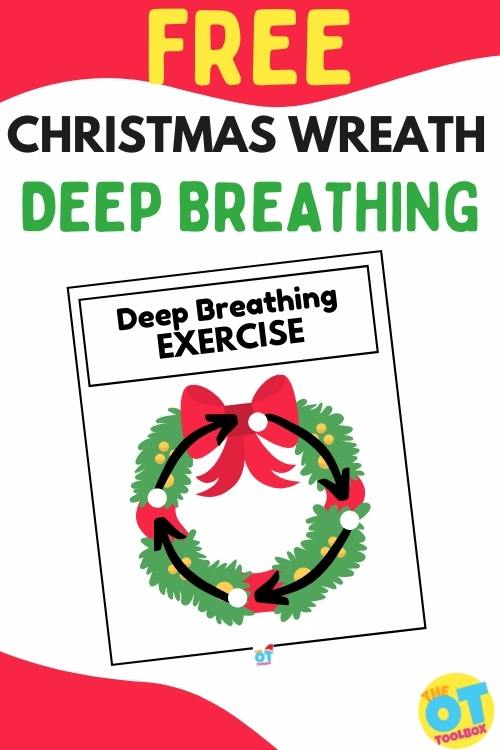
            Christmas Wreath Deep Breathing Exercise

            Christmas wreath deep breathing exercise

            Want all the benefits of deep breathing this holiday season? This Christmas Wreath deep breathing exercise is a free printable that you can grab and start using for Christmas mindfulness or coping during the hectic holiday season!

            Calming sensory activity for Christmas chaos. Use this Christmas wreath deep breathing exercise.

            Christmas Wreath Deep Breathing Exercise

            Who could use a moment of relaxation breathing in the way of deep breathing right about now? The better question is, who couldn’t?

            As if life is not stressful enough, the holidays are coming up!  While this is a joyous time for most, it can also be stressful. Given all of the changes in schedules, building excitement, increased chores and errands, money woes, and the unpredictability that comes with new events can often push an already overwhelmed person over their limit.

            For our kids who become overwhelmed by new situations, different sensory input, or changes to routines, this time of year can wreak havoc on coping tools that may be in place.

            The Neuroscience of Deep Breathing

            When the body responds to stress it sends out signals to fight, flight or freeze.  Your body either responds by “flight”: running away/avoiding the task at hand, “fight”: becoming aggressive/combative as a way to avoid the trigger, or “freeze”: suddenly becoming unable to move/think/act.

            This is generated in the brain stem, or the hippocampus to be more specific.  Did you know a brain stem response is automatic and usually out of our realm of control?  A student refusing to complete an activity or walk down the hallway may not be able to control their responses until they can calm their central nervous system.   A nervous system in flight, fight, or freeze is not efficient or effective.  

            Under stress or an imminent/imagined threat, the body responds with increased breathing, elevated heart rate, difficulty making decisions, memory loss, sweating, increased blood pressure, strong emotions, and about a dozen other autonomic (automatic) responses.

            For more information about psychological stress and the autonomic nervous system, check out this resource.

            The good news? You CAN fight the hippocampus monster to take back control of your body! 

            Calming Strategies to Reset the Body

            One helpful strategy is, using deep breathing exercises.  There are numerous other strategies, such as:

            • Deep pressure
            • Calming activities
            • Listening to music
            • Taking a walk
            • Drinking a hot or cold beverage
            • Eating a delicious snack
            • And of course, Deep breathing!

            Deep breathing and these coping strategies are quick and effective ways to begin the process of calming down.

            The OT Toolbox has several resources available to help understand and provide meaningful sensory strategies:

            Christmas Wreath Deep Breathing Exercise

            The OT toolbox has combined deep breathing exercises with a holiday theme, to easily incorporate into lesson plans. A themed lesson plan can add external motivation if planned and executed correctly.  Themed exercises, while super exciting and motivating, need to be proportional to the rest of the day, so as not to increase the arousal level further.

            These pages can be printed as they are, laminated for durability, or put into plastic protector sheets. Lamination and plastic protectors not only add to the durability of paperwork, but they can be easily sanitized to cut down on germ transfer, which is especially high during winter months.  Printed pages, instead of laminated, can be helpful if you have multiple students who need this type of assistance at the same time. 

            When creating a sensory diet for your student, these worksheets or cards can be included as part of the plan.  Making a binder of strategies, or mini cards on a keyring to teach your student to select the appropriate activity, is an excellent way to teach independence and self regulation.

            To use these sheets:

            1. have the student touch their finger onto one of the white dots. 
            2.  Instruct them to breathe in.  
            3. Guide them to trace to the end of the arrow and breathe out.  
            4. Repeat around the diagram as many times as needed for improved calming.

            For non holiday themed deep breathing exercises, try these deep breathing exercise cards. These deep breathing exercise cards include 113 different deep breathing exercises that can be printed and used in therapy, home programs, the classroom or whatever setting you find the student in need of self regulation.

            Check out this other Christmas themed deep breathing exercise printables!

            Take a moment to help your student breathe deep, put everything in perspective, talk it over, and start again.  Look for precipitating factors in the environment that may have triggered this stress response and make an effort to modify or change this if possible.  These triggers might be sounds, sights, smells, touch, or movement based. 

            Free Christmas Wreath Deep Breathing Exercise

            Enter your email address into the form below. You’ll receive the printable in your email inbox. OR, if you are tired of entering your email to access each of our free resources, check out the new OT Toolbox Member’s Club! You’ll gain access to all of our downloads in one place, PLUS get tons of new materials each month.

            Free Christmas Wreath Breathing Exercise

              We respect your privacy. Unsubscribe at anytime.

              Victoria Wood, OTR/L is a contributor to The OT Toolbox and has been providing Occupational Therapy treatment in pediatrics for more than 25 years. She has practiced in hospital settings (inpatient, outpatient, NICU, PICU), school systems, and outpatient clinics in several states. She has treated hundreds of children with various sensory processing dysfunction in the areas of behavior, gross/fine motor skills, social skills and self-care. Ms. Wood has also been a featured speaker at seminars, webinars, and school staff development training. She is the author of Seeing your Home and Community with Sensory Eyes.

              Of course if that does not work, you could always offer chocolate, that helps everything!

              *The term “student” is used for ease in this article.  These activities are meant for a multitude of audiences. “They” is used in lieu of he/she for inclusivity.

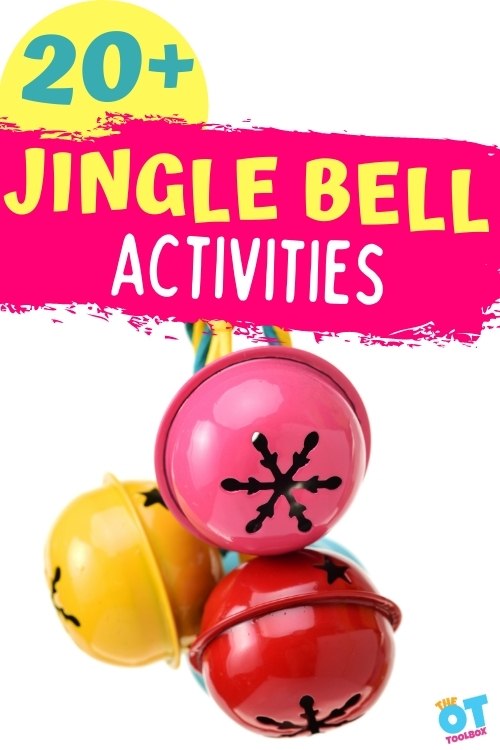
              Jingle Bell Activities for Building Skills

              jingle bell activities for kids

              You’ll be able to jingle all the way this holiday season as you use this collection of jingle bell activities that bring with them skill building! Kids can develop fine motor, gross motor, visual motor, coordination, and sensory skills using jingle bell activities this time of year. Plus, the fun of jingly bells bring festive fun and even sweet-sounding instruments to boot! 

              Jingle bell activities for developing skills like fine motor skills, visual motor skills. gross motor skills, sensory skills, and more.

              Kids just love jingle bells of any size and shape and not just in this season either! There’s always something fun and engaging when you shake a bell whether you’re simply just playing with it, making a jingle bell craft, or have a plan to use it…everyone has to shake them.

              These are just some of the Christmas occupational therapy ideas we have on the site…have fun building skills with holiday bells!

              Jingle Bell Activities

              December means a lot of opportunities for jingle bell fun so, how about some jingle bell activities that not only sound good, but work on some of those important skills too!

              That’s right, jingle bells can work on much needed skill development and practice. They can be motivating and just what you need to address fine motor, visual motor, gross motor, sensory motor, and even oral motor skills too! Yep, I said oral motor!  So, let’s combine this holiday theme with some educational and therapeutic activities to get festive and have some fun! 

              Jingle Bell Activities for Visual motor skills:

              Add jingle bells to a marble run to work on visual tracking skills, eye-hand coordination, visual scanning, and many other visual processing skills. This activity doubles as a fine motor workout for kids, too.

              Jingle bell shapes is an activity that works not only on fine and visual motor skills for shape formation and pipe cleaner manipulation, but how about those math skills that work on counting how many sides each shape has while forming the shapes? You also get free printables at this link so you can do just that. 

              Jingle bell names provides a festive visual motor and perceptual twist to some letter formation and practice of writing names. Adults write the child’s name on paper and then have the child place jingle bells on the letters just as if they were forming the letters with a writing tool. 

              This jingle bell maze is a super DIY activity that has you recycling and creating with a child to work on a variety of skills when its complete.  That’s right DIY with a Styrofoam tray and pipe cleaners or straws and then add a bell.  It’s an activity that works on bilateral coordination, eye-hand coordination, grading of movement, and motor planning too! 

              A simple jingle bell pencil is a great activity to provide a little auditory input while also working on handwriting or even drawing skills. What do you do? Just have the child string some bells onto a pipe cleaner and then wrap it around the top of the pencil or drawing tool and thus, you have created a musical writing implement! 

              Even though the jingle bell pencil was cool, how about a jingle bell paintbrush? That’s right, the same idea with use of a paintbrush which provides some cheerful auditory input while painting. Don’t want to paint? That’s ok, consider using it in a rice tray to do some letter formation instead! Fun for therapy or even art class too!

              Jingle Bell Activities to Develop Fine motor skills:

              Add these fine motor jingle bell ideas to your Christmas fine motor activities line-up this time of year:

              The jingle bell drop is an activity that can be done three different ways and works on the use of tongs or even just a pincer grasp. Decorate the container like a reindeer or wrap with wrapping paper and have even more fun with this activity. You can even just pull some containers out the cabinet or recycle bin, add some bells, and your all set.

              Here’s a jingle bell sorting idea that uses those bells to play and learn. Recycle again by using an egg carton and some paint and away you go with sorting and learning, plus you can specifically target in-hand manipulation, scanning, and eye-hand coordination and let’s not forget color identification.

              Treading jingle bells onto pipe cleaners is an easy jingle bell activity that develops fine motor skills, bilateral coordination, and eye-hand coordination skills in a big way.

              This jingle bell tree is a fun game that incorporates counting as you roll the die and count the dots and the bells to know how many to place on the Styrofoam tree. I love this one as I have done it before and the kids loved it too. A great activity to work on cupping hands together to shake the die and roll. It also addresses fine motor and visual motor skills to thread the bells onto the toothpicks. This can be tricky depending on the bell. 

              Use those jingle bells and cookie cutters as an invitation to play activity simply by just picking up and placing the bells inside the cookie cutters to work on pincer grasp or tong use. You can also incorporate patterning or even counting. 

              Jingle Bell Activities for Building Gross motor skills:

              Need a little gross motor activity to go with all of the other fun listed here? Guess what, you can create a fun jingle bell toss game out of bells, plastic cups, and a slanted surface that you could create with cardboard or a foam board to make this fun game. Children will love it and so will adults! 

              If you have children or know of any that like nerf games than this activity might be for them.  You create a target such as a tree with holes in it, add some dangling jingle bells, stand it up, and you’ve got a game. If nerf is not their thing, that’s o.k., you can easily substitute with bean bags or balls.

              Don’t have cardboard to create a tree? That’s o.k. too, use plastic cups and create a tree-like pyramid and decorate with jingle bell ornaments. These games are great for gross motor and eye-hand coordination skills.

              This jingle bell scoop and transfer activity is so simple, but so effective in addressing an important life skill as well as some motor skills of wrist rotation, shoulder control and stability, grip strength, and eye-hand coordination.

              Jingle Bell Activities to develop Oral motor skills:

              You can address oral motor skills with jingle bells too. Use a straw and jingle bells on a table surface, just like we did with this cotton ball oral motor activity. Simply hold the straw in your mouth and blow through the straw to move a jingle bell across the table. This jingle bell blowing activity is a fantastic way to work on breath control, building strength in the cheek and lip musculature, and can even address self-regulation as well.

              Jingle bell Activities for developing Auditory skills:

              Jingle bells automatically provide some auditory input, but here are easy instruments and craft ideas for the holiday.

              Make jingle bell dominos to support auditory processing, including auditory discrimination skills. The dominoes can be used in fine and gross motor activities and add an auditory component to learning and play.

              Another fun listening and discrimination activity uses jingle bells and movement. We shared this activity in our Christmas party ideas post a few years back. Kids will love to jingle a holiday bell and then listen for where in the room the sound is coming from. What a great attention, auditory memory, and auditory discrimination activity.

              The jingle bell sticks are fun reindeer faces made on craft sticks using pipe cleaners, googly eyes, craft sticks, and a bell. Perfect for working on fine motor, sequencing, and activity engagement. 

              The fuzzy stick jingle bell craft is also another fun noisemaker that is made with only pipe cleaners and bells, that’s it. Same skills addressed here!

              Jingle Bell Activities and Sensory skills:

              Lastly, we have to mention sensory activities that can easily be created with the use of jingle bells. These are great occupational therapy Christmas activities to use this time of year.

              One is called jingle soup which uses jingle bells in scented water and a child can work on placing, stirring, and serving the bells such as in a pretend restaurant. This can further work on those life skills of managing a spoon just like the scoop and transfer activity.

              Making this jingle bell slime provides the perfect hands-on activity that addresses tactile tolerance and sequencing skills while using some important hand strength and bilateral coordination while kneading the slime by hand. Toss in those jingle bells and there’s your auditory input!

              Using a paper jingle bell sensory bin and a pom-pom jingle bell sensory bin will not only provide lots of fun, but will give the opportunity for a child to work on tactile and auditory exploration.  The paper bin will provide a little extra auditory input when the child hears the crunching of the shredded paper as they dig for jingle bells and a little extra tactile input as they feel the scratchiness of the paper.  The pom-pom bin provides a little extra tactile input as they feel the softness of the pom-poms when they dig for bells.

              Now take some time and provide some jingle to your therapy sessions, classroom, or at home learning activities as you work with kids on building some skills that are motivated by the core instrument sound of the season.

              Regina Allen

              Regina Parsons-Allen is a school-based certified occupational therapy assistant. She has a pediatrics practice area of emphasis from the NBCOT. She graduated from the OTA program at Caldwell Community College and Technical Institute in Hudson, North Carolina with an A.A.S degree in occupational therapy assistant. She has been practicing occupational therapy in the same school district for 20 years. She loves her children, husband, OT, working with children and teaching Sunday school. She is passionate about engaging, empowering, and enabling children to reach their maximum potential in ALL of their occupations as well assuring them that God loves them!
              Printable Santa Emotion Worksheet

              Printable Santa Emotion Worksheet

              Want a printable Santa emotion worksheet designed to support facial expression identification? This Santa emotion PDF is just that! And even better yet, if you are looking for ways to address visual discrimination using visual scanning activities with your students, this Santa Claus Emotions I Spy will check all the boxes!  Not only will you be able to address visual discrimination and visual scanning skills with this fun printable, but you can easily incorporate many other skills addressed in occupational therapy including fine motor control and emotional regulation.  Not to mention, this feelings worksheet is an easy way to have some fun this Christmas season in your treatment sessions with your students!

              Kids will love this printable Santa emotion worksheet to work on emotion identification and visual discrimination skills.

              Visual discrimination is one skill that makes up our visual perception. Visual discrimination is an essential skill for students to participate in school in both their roles as a student for tasks such as reading and writing, as well as their role as a friend.  We use our visual discrimination skills to read others emotions or changes in the environment.   As you can see, it is so important to address visual discrimination skills using scanning activities. This printable Santa Emotion worksheet I Spy activity will make it easy!

              What is visual discrimination?

              Visual discrimintation is the ability to recognize similarities and differences between visual images or objects.  Visual discrimintation is an important skill for students in school because of its link to reading and writing.  When looking at words on the page, readers need to be able to discriminate between subtle differences in letters like “b” and “d” or “5” and “S”.  Providing opportunities to build visual perceptual skills helps students engage in their occupations as a student! 

              Why is visual scanning important?

              Visual discrimination is a component of visual perception, but in order for students to use visual discrimination skills effectively, they also need to use their visual scanning skills.  Visual scanning sends the visual information to the brain, visual discrimination tells us why that visual information is important.  In order for the visual system to work, we need both!  Visual scanning is an important component of visual perception and there are so many fun ways to address scanning in your treatment sessions.  Try marble painting, using a flashlight, or looking at a Christmas I Spy book to address visual scanning.

              As mentioned before, students also need to rely on visual discrimination skills when reading other’s emotions.  When you begin this activity with your students, start by reviewing the pictures of Santa at the bottom of the page.  Talk about the similarities in the pictures, then talk about the differences.  Have the students select a color to match with each emotion.  This would be a great place to include Zones of Regulation colors and terminology if you use that program.  Emotional regulation is essential for social participation and this is a great way to hit on that skill with your students.  

              identifying emotions worksheet with a Santa Theme!

              Once you have reviewed the visual information and the emotions and filled in the coordinating colors, now it’s time to start coding or coloring in the Santa faces!  As the student scans and discriminates each Santa, watch to see that their visual system is working to support their performance.  There are many ways you could adapt or modify this activity to meet the needs of your students. 

              Here are some ideas to support visual scanning:

              • Use another paper to cover some of the visual information
              • Teach a strategy to help scan by making a mark on the page to indicate which row they are working on
              • Use a ruler to help students keep their place as they are working

              More ways to use this feelings worksheets pdf

              • Use bingo daubers for students who have not yet developed fine motor precision skills
              • Use tape or sticky tack to secure the printable Santa emotion worksheet to a vertical or inclined surface to address shoulder strength
              • Set up a container of markers on one side of the room and put the worksheet on the other side.  Have the students use a scooter board back and forth to retrieve the markers they need.
              • Use tongs and pom poms or beads to work on fine motor skills at the same time

              If your focus is on emotional regulation, you can easily extend this activity to target the student’s ability to identify their emotions.  When discussing Santa’s emotions, ask your students to think of a time when they felt happy, sad, excited, or mad.  It may also be fun for students to think about the self regulation tools Santa might use to help him regulate his emotions throughout the Christmas season!

              Free Printable Santa Emotion Worksheet

              Do you know a kiddo that would love this printable Santa emotion worksheet? You can download this emotions PDF and start working on skills like visual discrimination, scanning, coloring, feelings identification, and more!

              Free Santa Emotions I Spy Worksheet

                We respect your privacy. Unsubscribe at anytime.

                Katherine Cook is an occupational therapist with 20 years experience primarily working in schools with students from preschool through Grade 12.  Katherine graduated from Boston University in 2001 and completed her Master’s degree and Certificate of Advanced Graduate Study at Tufts University in 2010.  Katherine’s school based experience includes working in integrated preschool programs, supporting students in the inclusion setting, as well as program development and providing consultation to students in substantially separate programs.  Katherine has a passion for fostering the play skills of children and supporting their occupations in school. 

                Christmas Worksheet PDF- Hidden Picture Worksheet

                Christmas hidden picture worksheet

                Are you looking for a Christmas hidden picture worksheet that doubles as a visual figure ground activity? This Christmas worksheet PDF can be used with students to also address fine motor skills and coloring?  Christmas Color and Count is a printable hidden picture printable PDF 2 page resource that will help you address these skills with your students. 

                This Christmas worksheet PDF is a printable hidden pictures activity for the Christmas season.

                Christmas Worksheet PDF: Hidden Pictures

                This Christmas hidden picture resource includes 2 printable PDF pages to use with your students during the holidays.  The first page has Christmas lights and stars and the second page has 2 different types of gifts. 

                These printable hidden picture PDFs work on several areas over the holiday season…when kids might not want to work on difficult skill areas. A festive and fun themed activity can help address the underlying areas that impact handwriting, reading, and other visual processing tasks.

                How do Hidden Picture Worksheets Help?

                Hidden picture worksheets can address many areas that impact function. Let’s take look at all the ways to use this free hidden picture puzzle in therapy”

                These worksheets target the visual perceptual skill of visual figure ground.  You will also be able to use these worksheets to work on fine motor skills at the same time while finding and coloring the Christmas stars and holiday lights.

                Visual Figure Ground Skills- First, let’s look at the visual perceptual skill of visual figure ground.  Visual figure ground is the ability to differentiate or pick out an object from a busy background.  This skill is essential for supporting the occupations of students in school, from reading text to finding an item in a cluttered desk. 

                Students use their visual figure ground skills to be able to differentiate words in a book, when copying information from the board, or when looking for something in their backpack.  

                You could easily use these Christmas Color and Count worksheets paired with other therapy activities to support visual figure ground skills.  An important function of visual figure ground is the ability to scan the environment and find the important visual information. 

                More ideas using the Christmas Hidden Picture

                There are more ways to use this Christmas Printable PDF in a variety of therapy activities to incorporate gross motor skills, fine motor skills, coordination, and more…

                Use the Christmas Hidden Picture Printable PDF in an I Spy Game- It would be fun to extend this activity to include a scavenger hunt or I Spy Game in your therapy space, either as a warm up activity or as a game to end your session. 

                1. Hide stars or an image of Christmas lights around your space. 
                2. You could ask your students to collect the stars or play I Spy with the images of colored Christmas lights. 

                Other fun games to address visual figure ground include (Amazon affiliate links) Spot It or I Spy Board Game.

                Visual Discrimination Activity- Once you have completed a scavenger hunt or other warm up activity and your students are ready to move on, you can begin by having them look at the pictures at the top of the page. 

                1. Ask them to identify and describe the key features of the objects they will count.  For example, the star has angles and the Christmas lights are rounded. 
                2. Ask them to describe the differences between how the 2 gifts look on the second page. 

                Executive Function Activity- Next, ask your students how they plan to start this activity. 

                This helps with executive functioning and organization. 

                1. Will they find all of one item and then move to the next? 
                2. Will they start at the top and scan in a left to right manner? 
                3. Asking your students to verbalize their plan will help you understand their organizational strategies and how you may best support their executive functioning.

                Visual Scanning Activity- Now, your students are ready to scan and color each shape. 

                Coloring is a great way to develop fine motor strength and endurance.  Coloring is a skill that needs to be taught to support the fine motor development of students. Coloring is a skill that requires hand strength. 

                Often children with decreased hand strength dislike coloring because they do not have the endurance to complete the task.  If you have students who struggle with coloring try offering alternatives to crayons, and then work your way up using crayons or colored pencils. 

                Often students who have difficulty with the fine motor components of coloring prefer using markers.  Markers provide less resistance and for many students they provide more visual interest.  Using markers to increase visual attention and motivation for coloring is a great tool for students struggling to build fine motor and visual skills.

                For students who may struggle with coloring, think of ways to make it more fun and interesting for them.  Here are some ideas:

                Christmas Hidden Picture and Strengthening Activity- For students who need additional strengthening opportunities, think about how you can challenge their postural strength and upper body stability. 

                Other ways to incorporate strengthening into this activity:

                • Tape the worksheets to the wall at eye level which will address shoulder strength and stability
                • You could also tape the worksheets under the table and have your students work while lying on their back.  This a fun and different way to work on fine motor strengthening!
                • Find some floor space and have the students lie prone, propped up on elbows while coloring.  This position will help strengthen their postural muscles and increase shoulder stability.
                • Use a large therapy ball instead of a chair to challenge postural strength while coloring at the table.  

                For students who avoid or dislike coloring, incorporating different positions into your session may help them start and stay engaged, building not only their fine motor skills, but also strengthening their visual attention. 

                Free Christmas Hidden Picture Worksheet PDF

                Christmas Color and Count is a great activity for building important visual figure ground skills and strengthening fine motor endurance at the same time!

                FREE Christmas Hidden Picture Worksheet

                  We respect your privacy. Unsubscribe at anytime.

                  Katherine Cook is an occupational therapist with 20 years experience primarily working in schools with students from preschool through Grade 12.  Katherine graduated from Boston University in 2001 and completed her Master’s degree and Certificate of Advanced Graduate Study at Tufts University in 2010.  Katherine’s school based experience includes working in integrated preschool programs, supporting students in the inclusion setting, as well as program development and providing consultation to students in substantially separate programs.  Katherine has a passion for fostering the play skills of children and supporting their occupations in school.