Colleen Beck, OTR/L is a pediatric occupational therapist and the owner and author of The OT Toolbox website. She manages all of The OT Toolbox social media accounts and runs the popular newsletter.
Read about Colleen's experience and career as an occupational therapist, including how The OT Toolbox began on our About The OT Toolbox page: https://www.theottoolbox.com/about-us/
Colleen created The OT Toolbox in 2011 and since then has written thousands of blog posts designed to support therapy providers, educators, parents, counselors, admin, and caregivers in promoting the healthy development of kids.
Check out Colleen's blog posts below:
Impulse control is a struggle for everyone. From that cookie that’s calling your name from the kitchen cupboard to the student who just can’t stay in his seat during class, all of us have impulses that challenge our self-control.
Some children struggle with impulses more than others.
Children with attention difficulties have trouble stopping and thinking out their actions.
Children with sensory processing challenges have trouble pulling out the important information from the sensory “background noise”.
Children with executive functioning struggles may not problem solve, utilize working memory effectively, or demonstrate cognitive flexibility in order to maintain self-control.
Some children struggle with impulse control more than others.
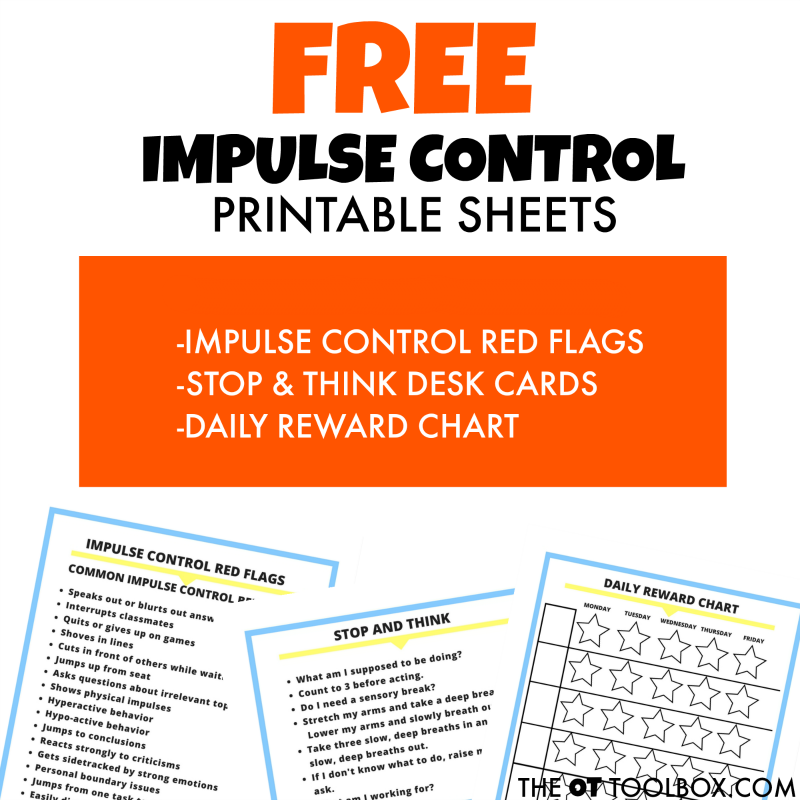
These impulse control free printable sheets are a guide to addressing issues with self-monitoring and restraint in daily tasks. Use these strategies to improve impulse control in the classroom, at home, or in the community to improve learning, social interaction, safety, confidence, attention, and independence.
When you sign up for the free executive function email course, you will get access to a free email course on executive functioning skills. These three printable sheets, along with tons of information and additional resources will arrive in your inbox.
Impulse Control Red Flags
Stop and Think Sheet
Daily Reward Chart
These emails should be resource for anyone who struggles with a child with impulse control difficulties.
In the email course, you will receive the free packet on impulse control strategies, along with 5 full days of information related to impulse control and executive functioning skills.
This free email course is a HUGE (free) resource!
More information about the free printable pack
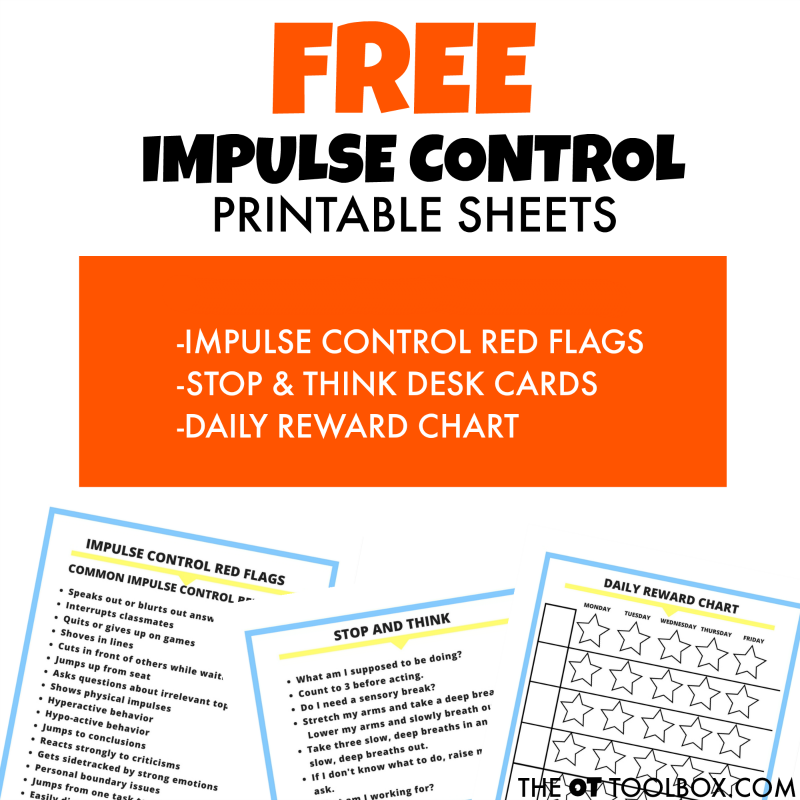
This pack is three pages and includes:
Impulse Control Red Flags- This is a nice resource to have on hand for teachers and therapists. This list of red flags can be used as an informal checklist for identifying impulse control issues.
Stop and Think Sheet- This printable sheet offers techniques for children to use to “stop and think” in the classroom or at home. This is a handy page that can be cut and fit into pencil boxes or folders. Use the blank section to fill in custom strategies for guiding impulse control issues.
Daily reward Chart- This printable page is a great tool for helping kids work on their self-control challenges. Kids can color in the stars to monitor progress. Write individual goals down the left side of the page or break the day into time frames. The reward sheet is open-ended to best suit each individual child.
A child jumps up from his seat in the middle of a classroom assignment. again.
A student acts out as he tries to make his classmates laugh. A play date friend hits and kicks other kids during play. A peer grabs toys from her friends hands. A child interrupts his mom while she’s on an important call with the pediatrician.
All of these situations are signs of impulsiveness. They are developmental stages that children go through as they grow in their social and emotional abilities. But sometimes, this developmental stage gets “stuck” and the impulsiveness just doesn’t stop despite working on impulsivity with the child. The ability to self-monitor one’s actions, or impulse control, has underlying reasons for the behaviors you see in the classroom or play dates.
Many times, impulsive actions are a brain-based result of modulation.
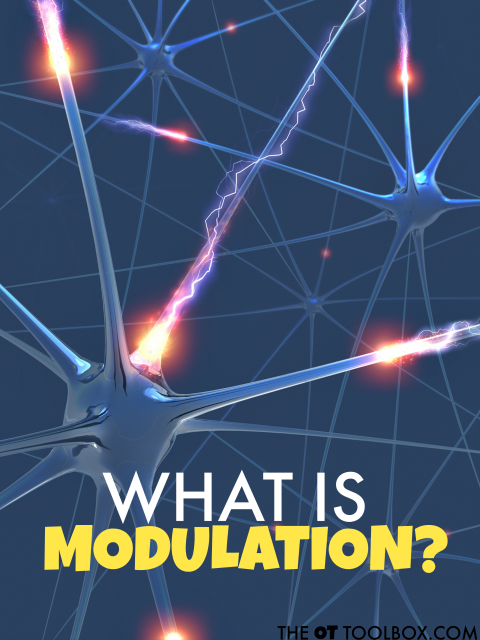
What is modulation?
Modulation is the ability to adapt or respond to circumstances. On a cellular basis in the brain, modulation refers to responses to neural activity that occurs as a result of sensory input being processed and interpreted by peripheral and neuronal cells in the central nervous system.
Modulation of sensory input is a crucial ability of our brain and body. The ability to filter out sensations and attend to the important information allows us to maintain an optimal level of arousal.
When we attend to the important information, modulation occurs. If that ability to modulate information is inadequate, our attention is distributed among all of the many changes of sensation bombarding our systems from the environment.
We’ve also covered affect modulation in detail, which is another resource you’ll want to check out.
Modulation and Impulsivity: What we see
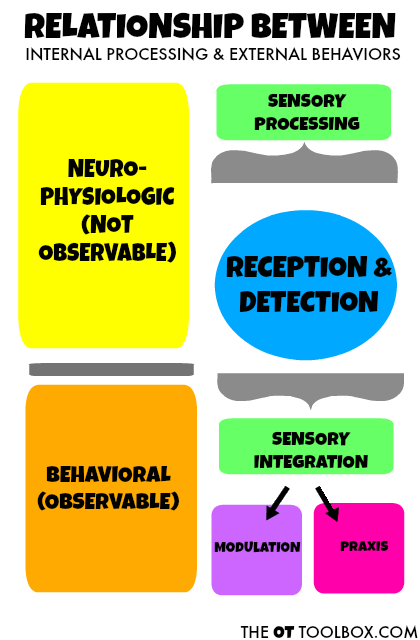
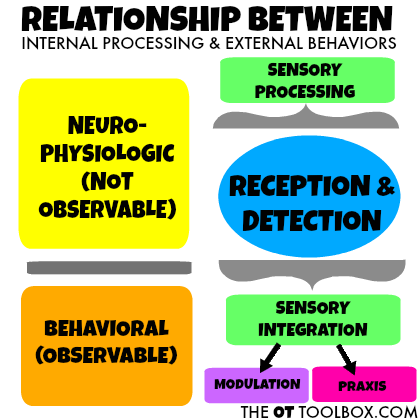
Because the ability to receive and detect (or process) sensory information occurs at the neurological level, we can only infer what is happening based on outward behaviors. These observable performance occurs as sensory information is then integrated.
Behaviorally, modulation is reflected by how we respond or don’t respond to our environment. Responses are typically seen as sensory-seeking or sensory avoiding. Poor responses can also be expressed as distractibility, attention level, disorganization, anxiety, and impulsivity.
So, it might just be that the child who can’t control their impulse to have the last word is also hypersensitive to sensory input. The child who can’t stand in their place in line and needs to shove and push may be also be hyposensitive to sensory input. The underlying reasons might not be obvious, but they are there.
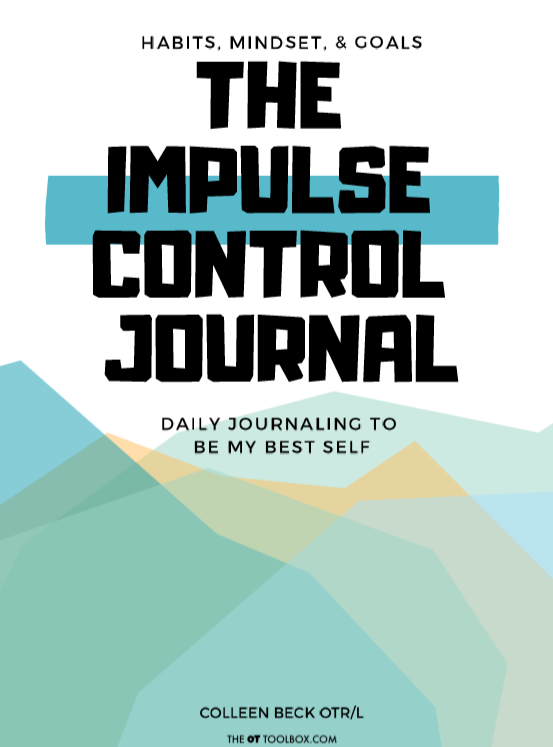
That’s why I created The Impulse Control Journal. The Impulse control journal is a printable journal for kids that helps them to identify goals, assess successes, and address areas of needs. The Impulse Control Journal is a printable packet of sheets that help kids with impulse control needs. Read more about The Impulse Control Journal HERE. The Impulse Control Journal has been totally revamped to include 79 pages of tools to address the habits, mindst, routines, and strategies to address impulse control in kids.
More about the Impulse Control Journal:
30 Drawing Journal Pages to reflect and pinpoint individual strategies
28 Journal Lists so kids can write quick checklists regarding strengths, qualities, supports, areas of need, and insights
8 Journaling worksheets to pinpoint coping skills, feelings, emotions, and strategies that work for the individual
Daily and Weekly tracking sheets for keeping track of tasks and goals
Mindset,Vision, and Habit pages for helping kids make an impact
Self-evaluation sheets to self-reflect and identify when inhibition is hard and what choices look like
Daily tracker pages so your child can keep track of their day
Task lists to monitor chores and daily tasks so it gets done everyday
Journal pages to help improve new habits
Charts and guides for monitoring impulse control so your child can improve their self-confidence
Strategy journal pages to help kids use self-reflection and self-regulation so they can succeed at home and in the classroom
Goal sheets for setting goals and working to meet those goals while improving persistence
Tools for improving mindset to help kids create a set of coping strategies that work for their needs
This is a HUGE digital resource that you can print to use over and over again.
These free impulse control printable sheets and MORE information on modulation as it impact impulsivity and other executive functioning areas can be found in my free executive functioning skills email course. Join us for 5 lessons that will explain executive functioning and change how you think about impulse control.
Colleen Beck, OTR/L has been an occupational therapist since 2000, working in school-based, hand therapy, outpatient peds, EI, and SNF. Colleen created The OT Toolbox to inspire therapists, teachers, and parents with easy and fun tools to help children thrive. Read her story about going from an OT making $3/hour (after paying for kids’ childcare) to a full-time OT resource creator for millions of readers. Want to collaborate? Send an email to contact@theottoolbox.com.
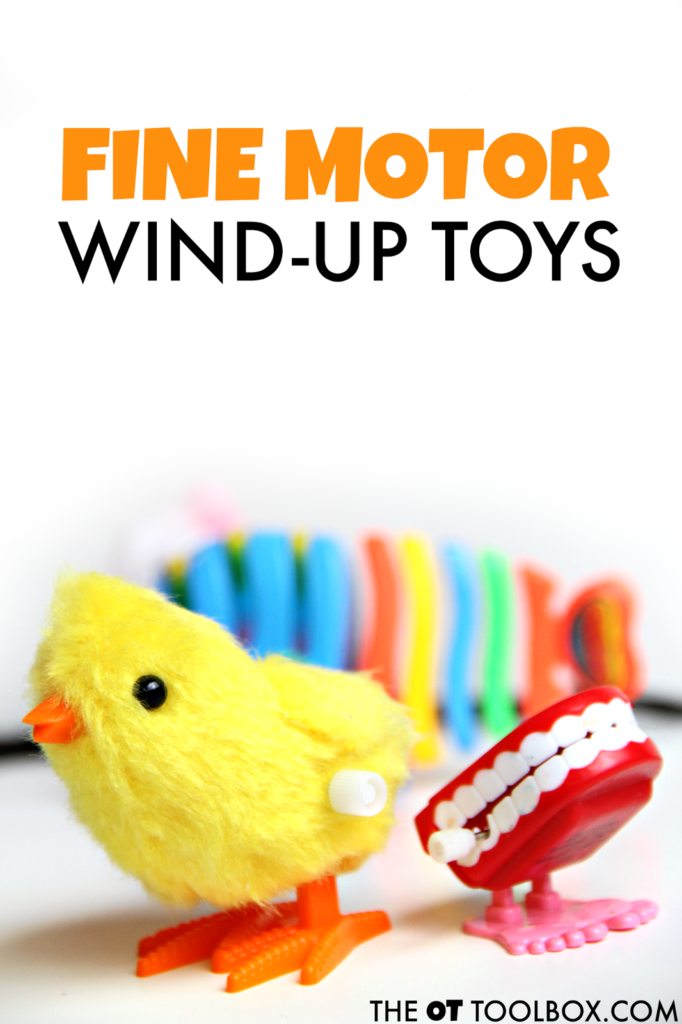
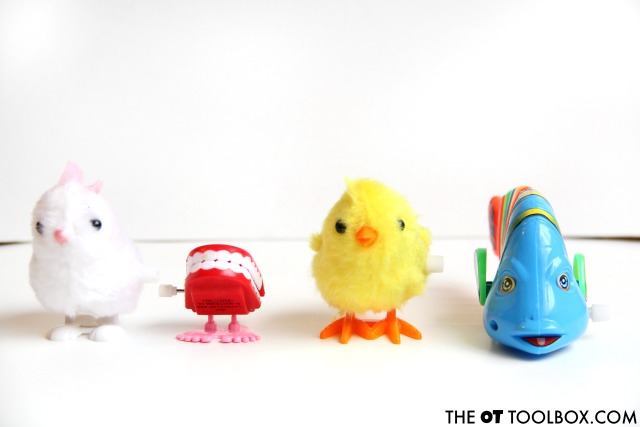
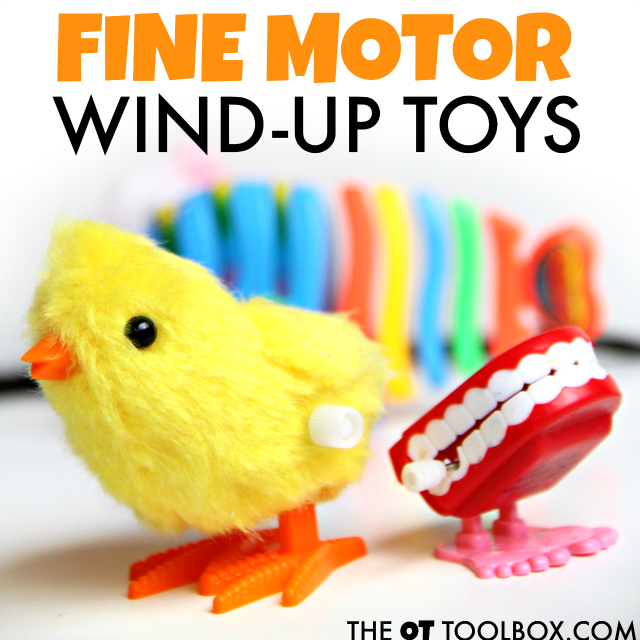
So, we have a small collection of wind-up toys. They are one of our favorite ways to play and a powerful occupational therapy toy. There is just something about a chattering set of teeth that walk that makes a kid smile. When you add in the fine motor benefits of playing with wind-up toys, it’s a big bonus to those smiles! Grab a few wind-up toys and start building fine motor skills.
Best Wind Up Toys
In-hand manipulation activities are a great way to boost fine motor skills needed for tasks like managing clothing fasteners, using a pencil when writing, manipulating items like coins or beads, and more.
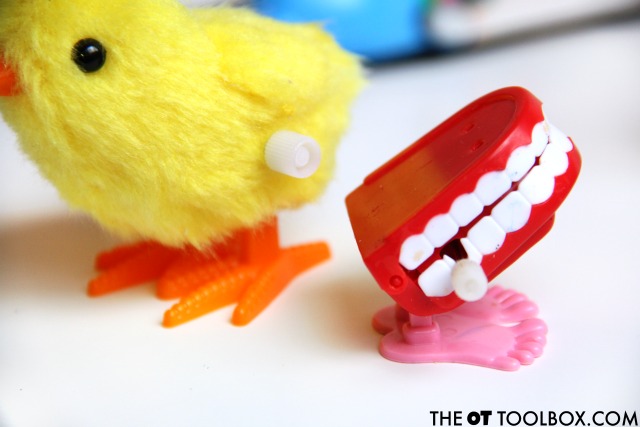
Wind-up toys are a great way to build fine motor skills. In order to make the toys go, you need to wind a small knob on the side of the toy. This skill is one type of in-hand manipulation called rotation that is needed for skills like turning a pencil with the tips of your finger. Read more about the types of in-hand manipulation here.
Affiliate links are included in this post.
Some of the best wind up toys include:
Chattering teeth toy
Wind up teeth
Wind up animals
Wind up car
Wind up bath toys
Wind up train
Wind up robot
Wind up monkey with cymbals
You can use wind-up toys for a fine motor activity by using several different toys. These are perfect little toys to add to Easter baskets or birthday gifts for kids. Ours are a collection that we have had for a couple of years now, but there are so many available out there.
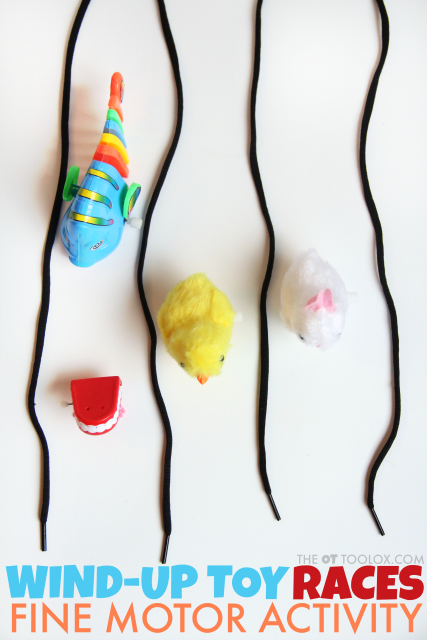
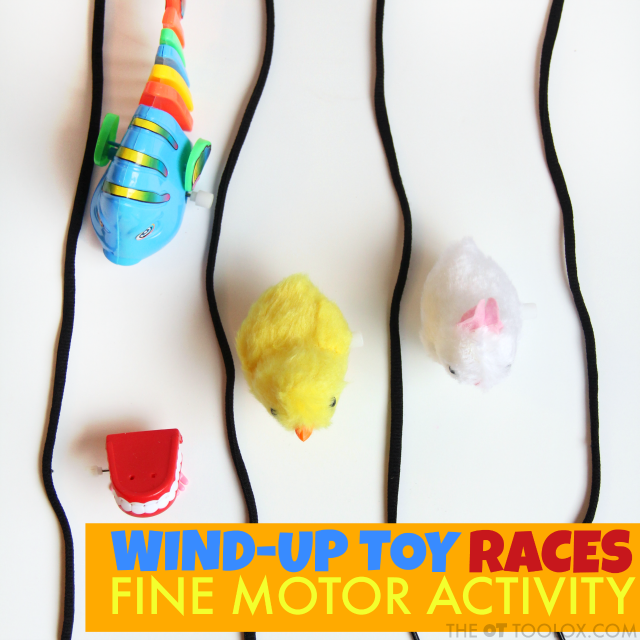
We used our wind up teeth and the wind up animal toys to race and to build fine motor skills.
This activity is so easy and a great way to work on in-hand manipulation and bilateral coordination skills. Line up a few strands of yard or shoe laces on a table. Place one wind-up toy in each lane and have a race! It’s a fun way to encourage fine motor strengthening.
Visual Perception Activity
Following the moving wind-up toys is an activity to develop and strengthen visual tracking, too.
Kids will love to have races over and over again with this wind-up toy fine motor activity!
Kids struggle with impulse control. It’s natural. In the classroom, impulsive actions can mean trouble for kids. When kids act out in school, attention lags, peers are distracted, and learning suffers. Recently, I shared some strategies to help kids improve impulse control. There was a nice list of strategies to help with self-control in the classroom. It has been well-received with readers so I wanted to share even MORE strategies to help kids with impulse control in the classroom.
Strategies to help impulse control in the classroom
It’s my hope that these strategies can help teachers who are struggling to keep kids on task and focused when impulses are interfering with learning.
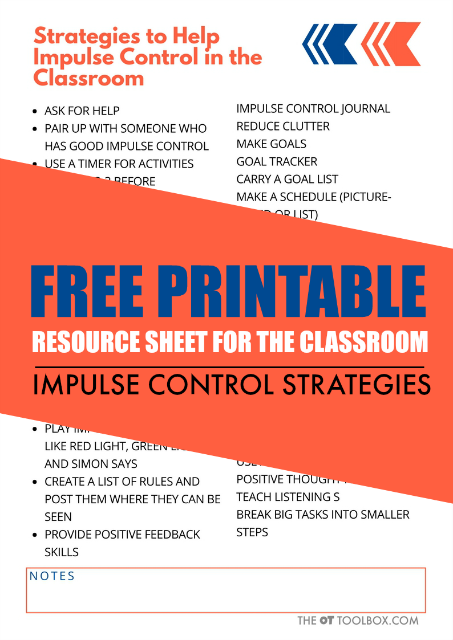
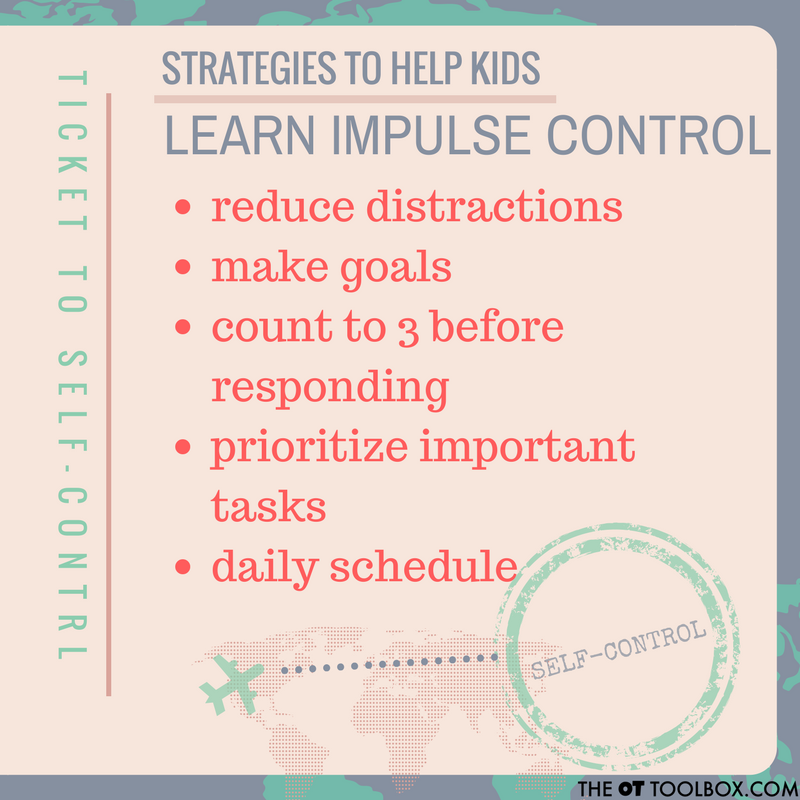
Stop and think tasks Use a timer for activities Count to 3 before answering Reduce visual distractions Act out appropriate behaviors Use timer apps Tell someone else your goals Work on problem solving skills Use a daily schedule Prioritize important tasks Work on anger management skills Make a schedule Reduce clutter Play impulse control games like Red Light, Green Light and Simon Says Create a list of rules and post them where they can be seen Break big tasks into smaller portions Provide positive feedback Use a goal tracker Teach listening skills
Share this on social media!
This free printable packet may also be of use if you are struggling to address issues with impulse control in kids. You’ll also receive a short email series loaded with information on impulse control and resources and strategies that can really help.
That’s why I created The Impulse Control Journal. The Impulse control journal is a printable journal for kids that helps them to identify goals, assess successes, and address areas of needs. The Impulse Control Journal is a printable packet of sheets that help kids with impulse control needs. Read more about The Impulse Control Journal HERE. The Impulse Control Journal has been totally revamped to include 79 pages of tools to address the habits, mindset, routines, and strategies to address impulse control in kids.
More about the Impulse Control Journal:
30 Drawing Journal Pages to reflect and pinpoint individual strategies
28 Journal Lists so kids can write quick checklists regarding strengths, qualities, supports, areas of need, and insights
8 Journaling worksheets to pinpoint coping skills, feelings, emotions, and strategies that work for the individual
Daily and Weekly tracking sheets for keeping track of tasks and goals
Mindset, Vision, and Habit pages for helping kids make an impact
Self-evaluation sheets to self-reflect and identify when inhibition is hard and what choices look like
Daily tracker pages so your child can keep track of their day
Task lists to monitor chores and daily tasks so it gets done everyday
Journal pages to help improve new habits
Charts and guides for monitoring impulse control so your child can improve their self-confidence
Strategy journal pages to help kids use self-reflection and self-regulation so they can succeed at home and in the classroom
Goal sheets for setting goals and working to meet those goals while improving persistence
Tools for improving mindset to help kids create a set of coping strategies that work for their needs
This is a HUGE digital resource that you can print to use over and over again.
Colleen Beck, OTR/L has been an occupational therapist since 2000, working in school-based, hand therapy, outpatient peds, EI, and SNF. Colleen created The OT Toolbox to inspire therapists, teachers, and parents with easy and fun tools to help children thrive. Read her story about going from an OT making $3/hour (after paying for kids’ childcare) to a full-time OT resource creator for millions of readers. Want to collaborate? Send an email to contact@theottoolbox.com.
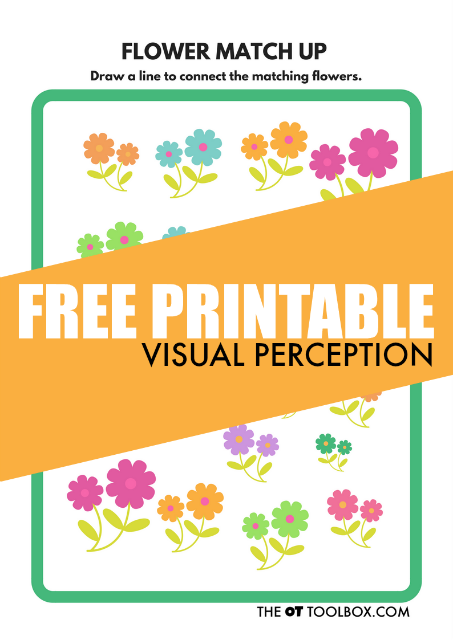
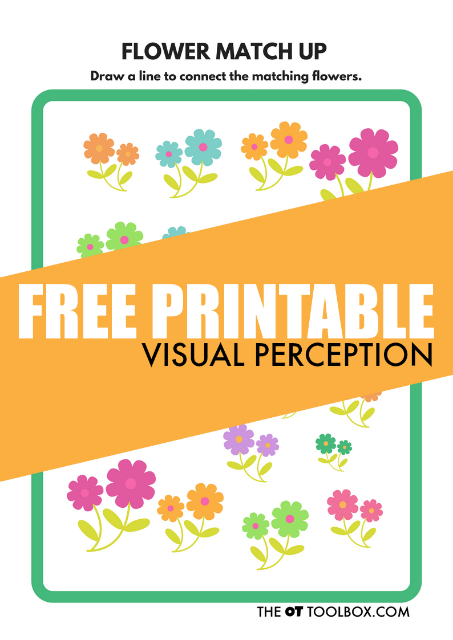
This flower theme free visual perception worksheet is one of many free visual perception worksheets here on The OT Toolbox. Kids need to work on visual perceptual skills for many reasons. Skills like handwriting and scissor use are oftentimes, a result of difficulties with visual perceptual skills. This visual perception worksheet can be part of a set of activities that help address those needs. In fact, this flower themed Visual Perception sheet helps kids develop and build skills such as visual discrimination, spatial reasoning, visual motor skills, and motor planning. Add this printable activity to your Spring visual perception activities during the Spring months, or any time of year.
To get a copy of this flower visual perception printable page, grab the entire free visual perception packet, which contains 25 pages of visual discrimination, visual closure activities, and visual perceptual skills tasks.
In a visual discrimination worksheet like this one, kids can work on pencil control and motor planning to connect matching flowers by making their pencil go around the other flowers that are in their path. Visual perceptual worksheets that challenge discrimination between space, object features, and coordination of the pencil in motor operations allows kids to foster eye-hand coordination for use in functional handwriting tasks.
Activities like writing on a given space in a page require similar visual discrimination and visual spatial awareness.
Visual perceptual skills are needed for so many functional skills. You’ll find easy and fun ways to work on visual perceptual skills through play here.
Benefits of this Visual Discrimination Worksheet:
Visual Discrimination– Noticing and identifying subtle differences in shapes, colors, direction, and forms is a necessary skill for functional tasks like matching socks or silverware. Visual discrimination is a skill that is essential for handwriting, reading, and math. Children who struggle with visual discrimination may not notice small details or may confuse letters or numbers that are similar like b, d, 2, and 5.
Spatial Reasoning– This skill is what allows us to walk around objects in our path with enough space. Spatial reasoning is needed for handwriting when determining if a word will fit in a given space or if we need to write smaller or move to the next line at the end of the right margin.
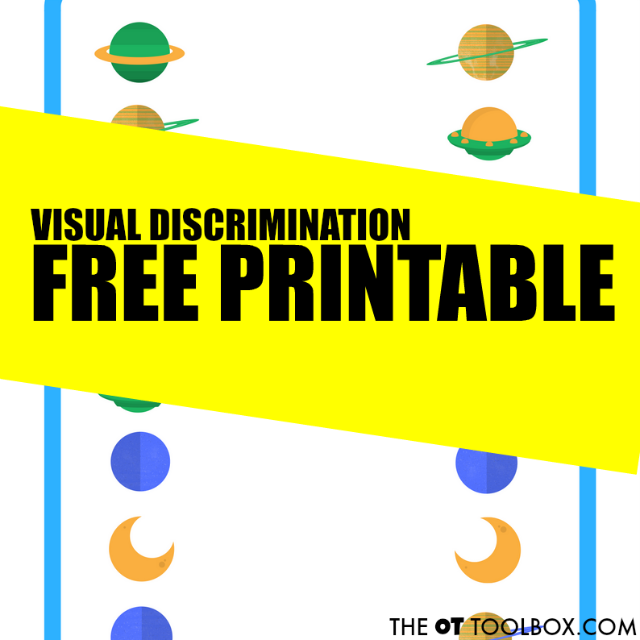
Encourage kids to draw pencil strokes around the planets so they don’t touch the other planets with their pencil. Visual spatial relations is a spatial reasoning skill.
Visual Motor Skills– Coordinating visual information with movements of the hands is a skill that is needed for handwriting. Use a writing utensil to connect the matching planets and moons while working on visual motor skills needed for written work.
Visual Memory– Children need visual memory for handwriting, reading, math, and many tasks during the school day. Visual memory is a skill that allows us to store a visual piece of information or a form in our mind and recall the characteristics of that form.
Score Fine Motor Tools and resources and help kids build the skills they need to thrive!
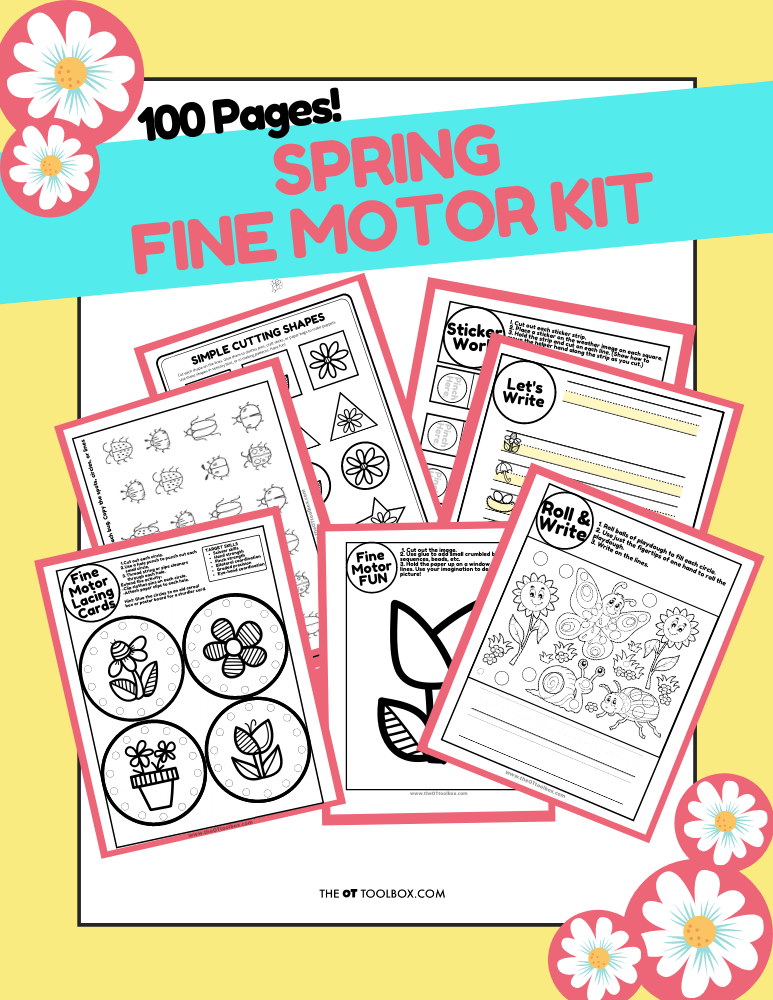
Developing hand strength, dexterity, dexterity, precision skills, and eye-hand coordination skills that kids need for holding and writing with a pencil, coloring, and manipulating small objects in every day task doesn’t need to be difficult. The Spring Fine Motor Kit includes 100 pages of fine motor activities, worksheets, crafts, and more:
Colleen Beck, OTR/L has been an occupational therapist since 2000, working in school-based, hand therapy, outpatient peds, EI, and SNF. Colleen created The OT Toolbox to inspire therapists, teachers, and parents with easy and fun tools to help children thrive. Read her story about going from an OT making $3/hour (after paying for kids’ childcare) to a full-time OT resource creator for millions of readers. Want to collaborate? Send an email to contact@theottoolbox.com.
This free space visual discrimination worksheet is a free printable sheet to work on visual perceptual skills in kids, using an outer space theme. this worksheet for occupational therapy is part of a free 25 page visual perception worksheets packet. Visual discrimination is a skill that kids need for so many skills. From identifying and matching socks when getting dressed and doing laundry to recognizing subtle differences in multiple choice problems, visual discrimination is a visual perceptual skill that allows kids to excel in reading, writing, and math activities or struggle! This space visual discrimination free printable is an easy way to work on those skills with a space theme.
Visual perceptual skills are needed for so many functional skills. You’ll find easy and fun ways to work on visual perceptual skills through play here.
Space Theme Visual Discrimination Activity
Use this space theme visual discrimination free printable over and over again. You can laminate it or slide it into a page protector and write with a dry erase marker. This is a quick activity that really boosts the skills needed to distinguish small details between objects.
Grab your free printable by clicking the button above. Print it off and use the sheet over and over again to address visual discrimination skills.
Looking for more visual perceptual skill activities?
Visual memory plays a large part in visual discrimination.
Related read: These visual perception apple theme shape stamps are a perfect way to work on visual perceptual skills and fine motor skills with DIY stampers.
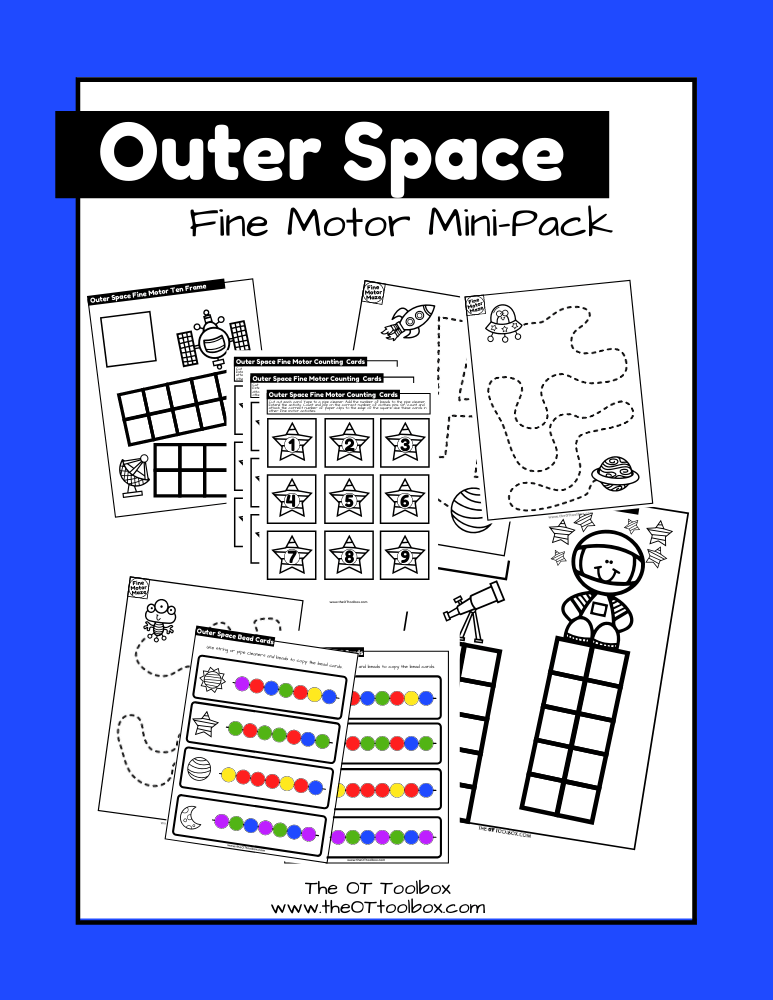
Know a kiddo that loves all things space, astronauts, and planets? The Outer Space Fine Motor Kit is your chance to develop fine motor strength, dexterity, and coordination skills.
Addressing hand strength, endurance, and precision is out of this world fun! The Outer Space Fine Motor Kit includes:
Fine Motor Mazes
Fine Motor Ten Frames for motor activities
1-20 Star Counting Cards
Bead Copying Strips
Space Alien Directed Drawing Sheets
This fine motor kit includes 24 pages of printable resources. Included in this printable pack are:
Two pages of color coded bead copying strips
Two pages of blank bead copying strips
Four pages of “draw and write” directed drawing activities with a space theme (Includes 3 styles of handwriting lines: highlighted lines, single rule, and double rule)
Nine pages of fine motor mazes
1-20 Outer Space Counting Cards
Four pages of fine motor ten frames activities
These printable activities extend to work on a variety of other functional areas, too: handwriting skills, numbers, math, adding, subtracting, one-to-one correspondence, scissor skills, coloring, and more.
Colleen Beck, OTR/L has been an occupational therapist since 2000, working in school-based, hand therapy, outpatient peds, EI, and SNF. Colleen created The OT Toolbox to inspire therapists, teachers, and parents with easy and fun tools to help children thrive. Read her story about going from an OT making $3/hour (after paying for kids’ childcare) to a full-time OT resource creator for millions of readers. Want to collaborate? Send an email to contact@theottoolbox.com.
Oculomotor function refers to the
six muscles surrounding each eye. These
muscles work together to produce controlled eye movements. When there is oculomotor dysfunction evident, a child may have difficulty with depth perception, visual attention,
visual memory, visual perceptual tasks, visual scanning, spatial
disorientation, eye-hand coordination, balance, or reading and writing
tasks. You can see how these
difficulties closely resemble problems that result from vestibular or
proprioceptive dysfunctions. Likewise, kids with oculomotor dysfunction often times have difficulty with visual motor skills. If
ocuolomotor dysfunction is suspected, children should see a developmental optometrist for assessment.
Once a diagnosis is made, there are many things you can do
to improve oculomotor dysfunction in occupational therapy.
The activities below are ones that challenge the muscles of the eye in coordination with movement changes. Looking for more movement activities? Try these:
Try these activities to improve oculomotor dysfunction:
Affiliate links are included.
Balance board- This is a great price for a child’s balance board. THIS ONE is great for older kids or children who seek more movement or challenging movement patterns.
Directional
Jumping
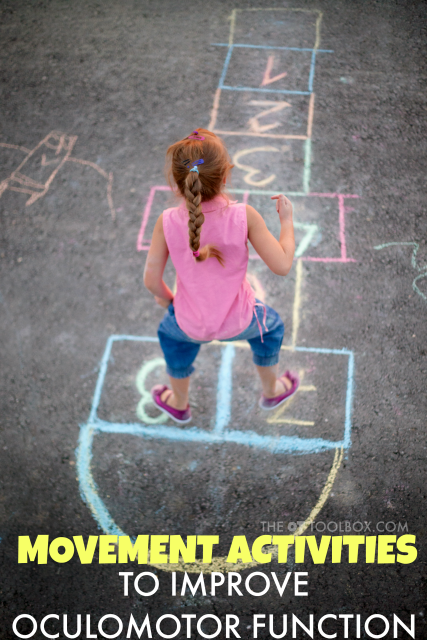
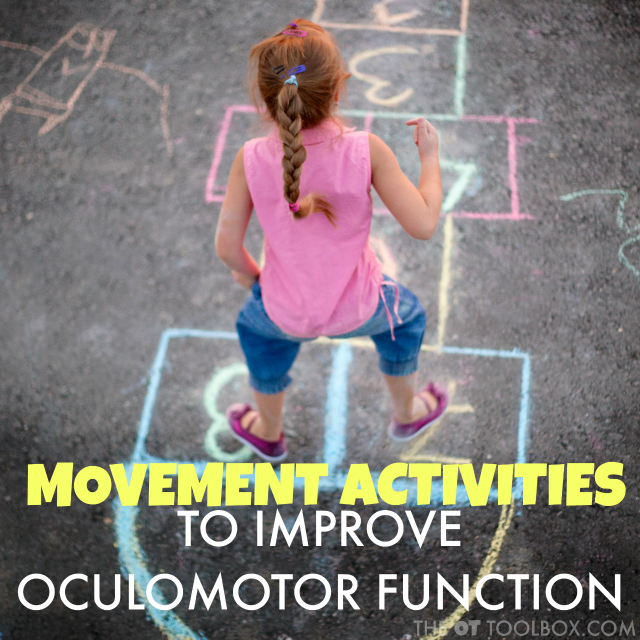
Hopscotch
Write the letters of the alphabet in random order on a small ball (a softball works!). Ask the child to hold the softball and rotate the ball to spell words.
Experience movement and direction
changes with sequencing arrows.
Crawl through an obstacle course with a bean bag or pillow on the child’s back.They can crawl along a masking tape course
while keeping the object from falling from their back.
Hit a soft
ball/balloon/crumbled paper with a tennis racket or paddle.
Toss a large
beach ball with letters or words written on it. When they catch the ball, they should look at and say one word that is
closest to their hands.
Toss bean bags
and watch as the bean bag sails into its target. These DIY ice cream bean bags or these snowflake bean bags are a fun way to build oculomotor function.
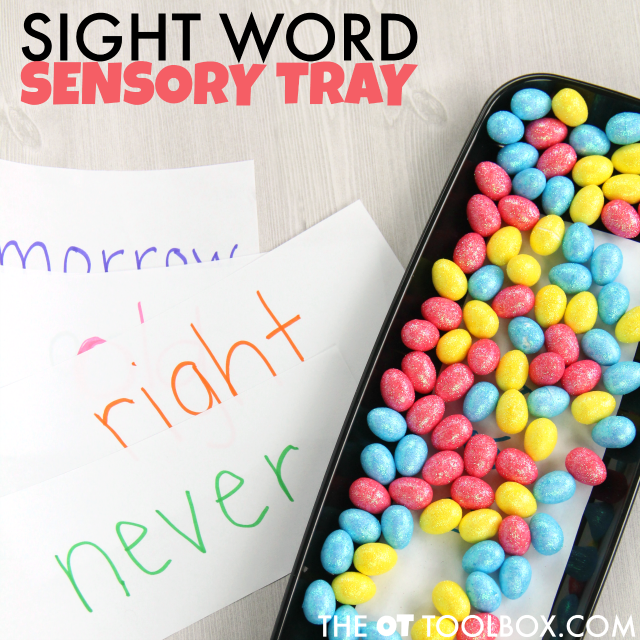
This sight word sensory tray is a multisensory sight word activity designed to help young children learn common words. There are some words that kids learn by heart. These “heart words” are what we used to call “sight words”. In this sight word activity, we are using some sight words from an old list as we did this activity many years ago. You could replace the words in the sensory word activity with any words, and even letters when learning letter formation, numbers, or a child’s name to make it a fun name activity. Let’s explore this sensory word activity…
Sensory Sight Word Activity for Learning Words
Some children are tactile learners. These are the children that learn through movement of their hands. We talk about this a bit in our post with a word scavenger hunt activity.
They NEED to move, fidget, tap, and wiggle those fingers and learning happens best when they are doing these movements. These kids focus on and recall information better when they are manipulating items in learning.
This sight word sensory tray is PERFECT for tactile learners (or kinesthetic learners).
There is a reason–Sight words are just that-words that are learned by sight. They are words that have no “rule” and are learned just through plain old memory.
But for the child who learns best through small motor actions, how are they supposed to learn those sight words just by looking at them and remembering them? A sight word sensory tray is the way to go for tactile learners and kids that are just bored with sight word memorization!
We’ve got a TON of sight word activities on the site that use tactile sensory play and movement if you are looking for more ways to help kinesthetic learners learn those sight words.
Sight Word Sensory Tray
You’ll need just a couple of materials for this activity. (Affiliate links are included in this post.)
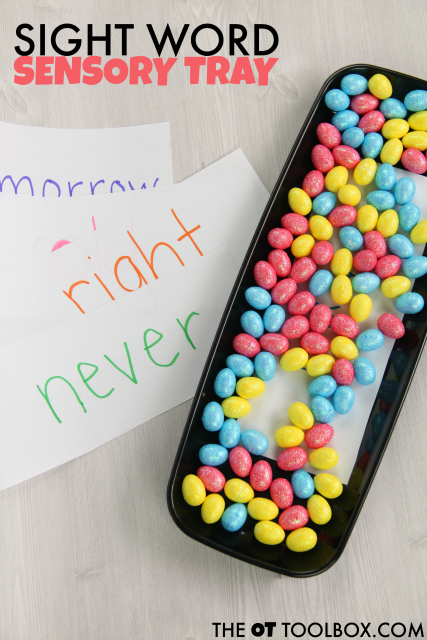
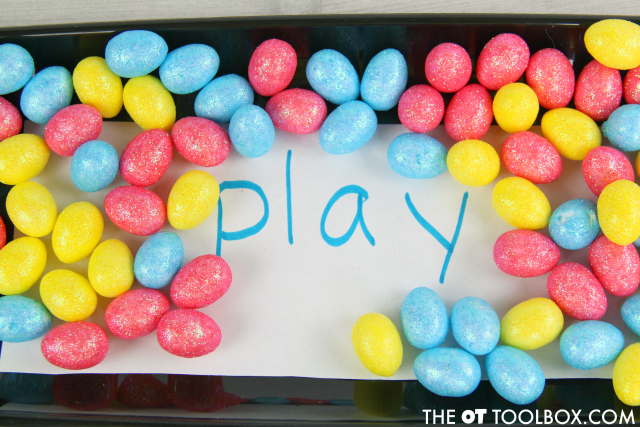
Long tray Paper with sight words written on them (Cut a sheet of printer paper in half, length-wise.) Foam eggs
First, write out the sight words on the half sheets of paper. Write one word per sheet and write with large letters.
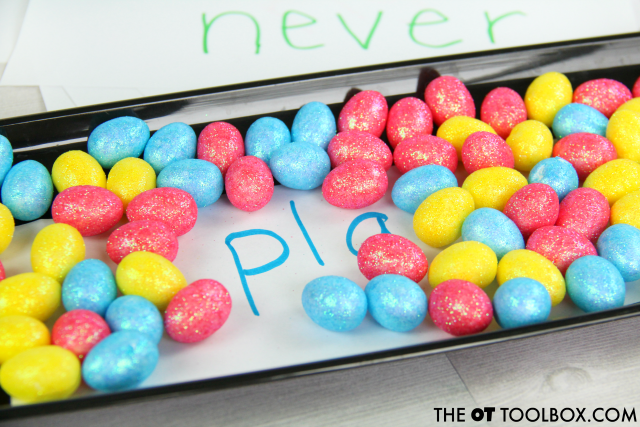
Place the sight word sheet in the tray and cover it with the foam eggs.
Then, start moving those eggs!
Kids can uncover just part of the eggs in the tray to reveal part of the sight word and then the whole word. They can identify the sight word by seeing part of the word or the whole thing.
There are several other ways to use this sight word sensory tray to help tactile learners with that sight word list.
Ask kids to trace the sight word by starting with one uncovered letter. Then, ask they to trace the remaining letters as they uncover each letter. Use a finger, the eraser end of a pencil, or a writing utensil.
Try to guess the sight word by uncovering just one or a few of the beginning letters.
Add a movement action for each letter as it’s uncovered. One example would be to “form” the letter with outstretched hands and legs.
For more information on tactile learners and sight words, check out fine motor movement learning activities like:
Sensory trays and writing trays can be a fun way to help young children learn sight words through motivating sensory play.
Having a variety of sensory ideas available to support letter and word learning is powerful because the sensory medium is simply a tool to reinforce learning.
When learning words like sight words, or commonly used words, the visual processing skill of visual discrimination is supported.
Visual discrimination skills are needed to discriminate between common letters and words like “with” and “which”.
Noticing the differences is a skill where we classify differences between the whole word by the difference letters (aka symbols) in the words. These differences in form are observed through the eyes as they receive visual input and the brain as it analyzes that information.
Visual discrimination occurs by the eyes and brain detecting differences in objects, utilizing working memory and stored memory to determine distinct differences or matched features.
Here are some ideas for things you could include on a sensory tray in order to teach sight words, letters, or numbers:
Sand or salt: Pour some sand or salt into the tray and bury small toys or objects with sight words written on them. Encourage children to dig through the sand or salt to find the hidden words and read them out loud.
Shaving cream: Spray shaving cream onto the tray and encourage children to write sight words in the cream with their fingers.
Rice or pasta: Pour rice or pasta into the tray and hide small objects with sight words written on them. Encourage children to sift through the rice or pasta to find the hidden words and read them out loud.
Play dough: Provide play dough and sight word cards, and encourage children to make the words out of the dough.
Water and food coloring: Fill the tray with water and add a few drops of food coloring. Write sight words on small pieces of paper and encourage children to identify and scoop out the words from the tray.
Feathers, pom-poms or pipe cleaners: Add colorful materials such as feathers, pom-poms or pipe cleaners to the tray and ask children to create sight words by forming letters with the materials.
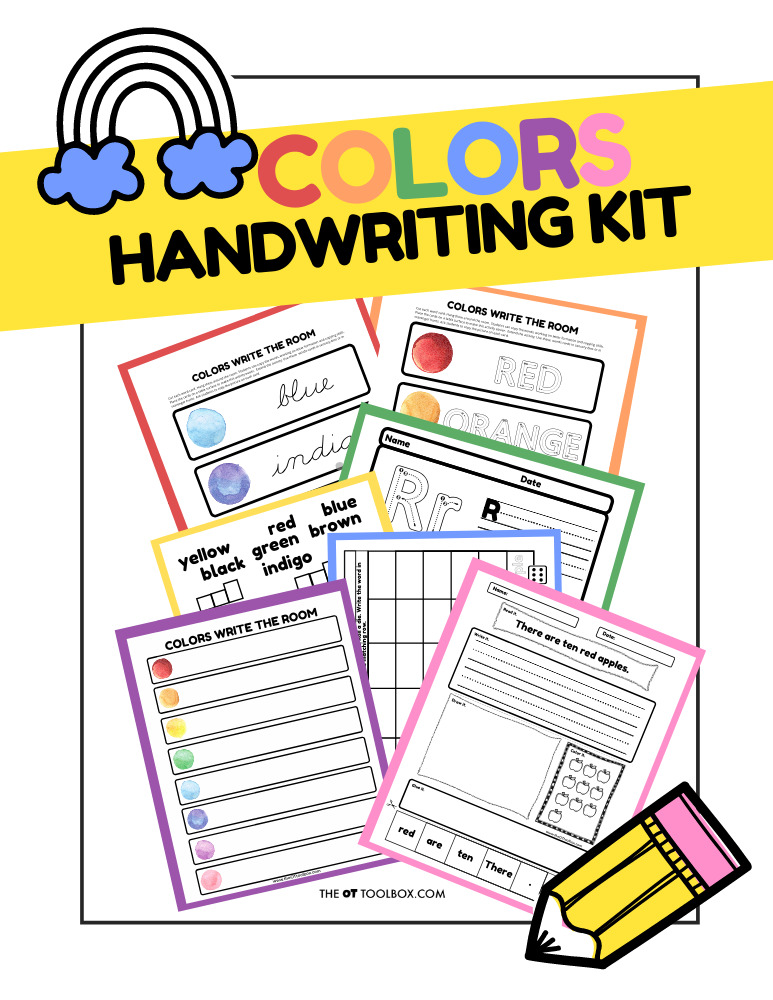
Rainbow Handwriting Kit– This resource pack includes handwriting sheets, write the room cards, color worksheets, visual motor activities, and so much more. The handwriting kit includes:
Write the Room, Color Names: Lowercase Letters
Write the Room, Color Names: Uppercase Letters
Write the Room, Color Names: Cursive Writing
Copy/Draw/Color/Cut Color Worksheets
Colors Roll & Write Page
Color Names Letter Size Puzzle Pages
Flip and Fill A-Z Letter Pages
Colors Pre-Writing Lines Pencil Control Mazes
This handwriting kit now includes a bonus pack of pencil control worksheets, 1-10 fine motor clip cards, visual discrimination maze for directionality, handwriting sheets, and working memory/direction following sheet! Valued at $5, this bonus kit triples the goal areas you can work on in each therapy session or home program.
Colleen Beck, OTR/L has been an occupational therapist since 2000, working in school-based, hand therapy, outpatient peds, EI, and SNF. Colleen created The OT Toolbox to inspire therapists, teachers, and parents with easy and fun tools to help children thrive. Read her story about going from an OT making $3/hour (after paying for kids’ childcare) to a full-time OT resource creator for millions of readers. Want to collaborate? Send an email to contact@theottoolbox.com.
Slime is such a fun way to encourage tactile sensory play. But what do you do with the slime after you’ve played with it a few times? I wanted to share some creative ways to work on fine motor skills with slime.
Fine Motor Activities with Slime
A sensory dough like play dough or therapy putty is pretty well-known tool for building fine motor skills in kids. Have you ever tried using slime to address hand strength and dexterity that is needed for functional tasks? Try these fine motor activities with your next batch of homemade slime (or purchased slime):
1. Press beads into slime- Pushing beads into slime is a great way to work on tripod grasp, arch development, separation of the two sides of the hand, and opening of the thumb web space. The slime provides a resistive feedback that will provide proprioceptive input and strengthening.
2. Remove beads with tweezers– Once those beads are pressed into the slime, use a pair of tweezers to pull them back out again. Using a clear slime would work best with this, but this activity can be done with a colored slime as well. Using tweezers helps kids strengthen the hands and address visual motor skills needed for functional tasks such as handwriting or scissor use. Tweezers develop the intrinsic strength of the hand as while developing arches in the palm.
3. Peel slime– Place pencils in a thin layer of slime, then pull the slime from the pencils- We shared this activity on our Instagram channel. The thin layer of slime on pencils is a coating that kids can pull off while strengthening the muscles of the hands. While this activity could be done with any small toy or object, the unique shape of pencils promotes tripod grasp, intrinsic hand strength, and separation of the sides of the hand.
4. Cut slime with scissors– Roll slime out into a snake shape. Use scissors to cut the slime into chunks. This is a common activity using play dough or therapy dough so most therapists would love to try the slime version! Cutting a resistive material such as slime promotes bilateral coordination and scissor skills.
5. Poke holes in slime– Create a circle of slime by patting the slime blob between both hands (bilateral coordination!) Then, with the slime on a table surface, press the index finger into the slime until you touch the table surface. This is an excellent way to work on finger isolation and strength of the hands. Finger isolation is essential for dexterity and manipulation of the pencil during handwriting tasks.