Occupational Therapy Memes

If there’s one thing that’s true, it’s that Occupational Therapists love to laugh. Maybe it’s the therapeutic use of self and the use of humor in therapy that allows us this ability. At any rate, we love occupational therapy memes! These OT memes are perfect to include with our occupational therapy month activities for occupational therapy month during April…or any time of year to celebrate the profession of occupational therapy!

Here, we’re sharing some new OT memes that we’ve been sharing over on our Facebook page. Use these to share your passion for the profession, spread knowledge about occupational therapy, and to have a quick laugh! Speaking of laughs, be sure to check out our occupational therapy jokes page!

Occupational Therapy Memes (That Therapists Love)

We’ve shared a few of these memes on Facebook and Twitter so far, and let’s just say, us OTs love to share our love for our profession! Some of our most popular occupational therapy memes include the ones below. Some are funny occupational therapy quotes and others are dedicated to the school-based therapist. Can you relate to any of these therapy memes?

Here are some sensory memes we’ve shared recently.

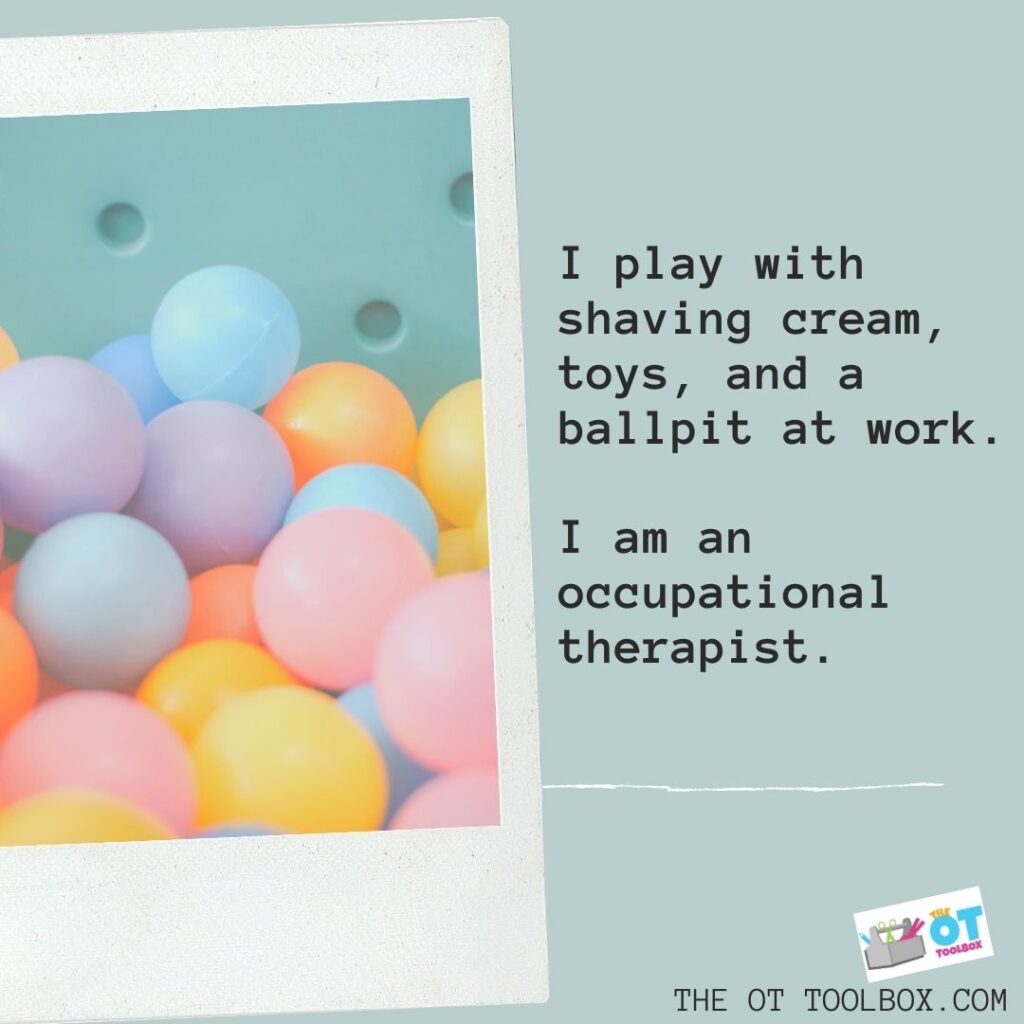
Pediatric therapists know the joy of having a clinic full of the fun stuff! Whether the gym-favorite is the ball pit or the game closet, there is a lot of fun happening in the occupational therapy gym! What is your favorite: the ball pit, shaving cream, or a specific toy?

OT meme

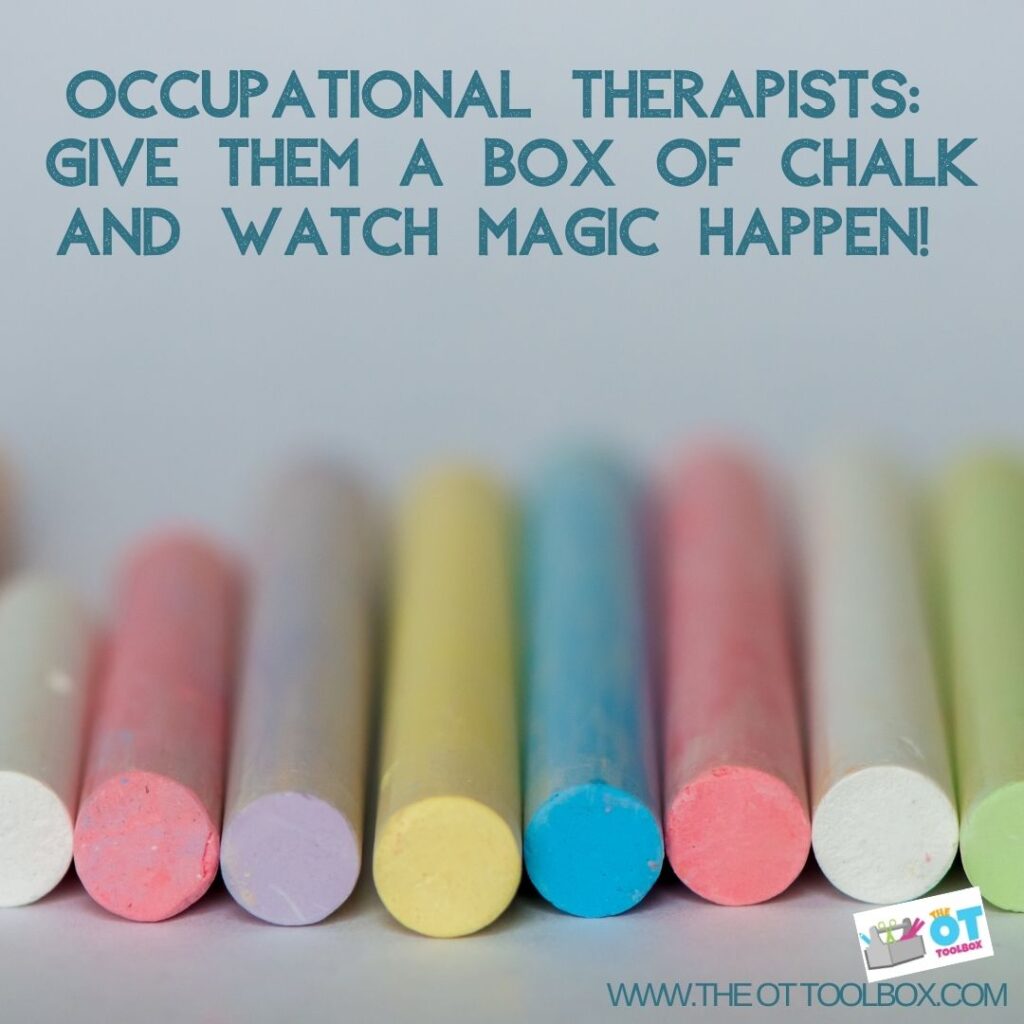
As an OT, there is just something about a clearance sign. If you are like me, you go on high-alert for potential therapy tools on the discount rack! During the end of summer, you might just find therapists scooping up all of the sidewalk chalk and bubbles…and those awesome Target dollar spot finds! There’s a reason why: OTs are skilled at using a toy or game in novel ways. A box of chalk can make it through an entire caseload…while working on everything from visual motor skills to gross motor strength and endurance…through the child’s primary occupation: play!
So, when you find a box of chalk on clearance, grab it up and watch the magic happen in the therapy room!

Occupational therapy meme

School-based OTs are some of the most efficient and busy therapists I know. From August through June, they are running from building to building (and district to district in some cases!), pulling luggage full of therapy supplies, and documenting well into the night sometimes. Don’t even mention IEP and Annual Review season! But one thing is for sure: when those summer months arrive, school-based OTs are free and loving life! Until summer school starts up!

This OT meme hit a funny bone for some therapists…Sunday nights for the school-based OTs on summer break mean just another summer day is coming, and not a case of the Mondays!

Self-care is essential for those in the healthcare field. Burnout is real! For some of us, coffee is just the right amount of self-care needed to jump into another day’s caseload! Therapist survival is a must…coffee helps!

School-based OTs and handwriting goals go hand-in-hand (pun intended!) So, after working in the field for a little while, therapists begin to notice a new superpower…the ability to read AND write upside down and backwards!

You know what I’m talking about…you’re sitting across from a student who is working on letter formation, letter spacing, line placement, and other aspects of functional handwriting. But, if you take the paper away from the student in order to correct or write words on the page, the student’s visual gaze is disrupted, attention falters, and you need to start over with orientation to the page, word, and letters. Not good.

So what happens? You develop the ability to write every upper case and lowercase letter from your position, sitting across from the child. You can write from the child’s left side to the child’s right side of the page, AND forming those letters from top to bottom, from the child’s perspective. Amazing!

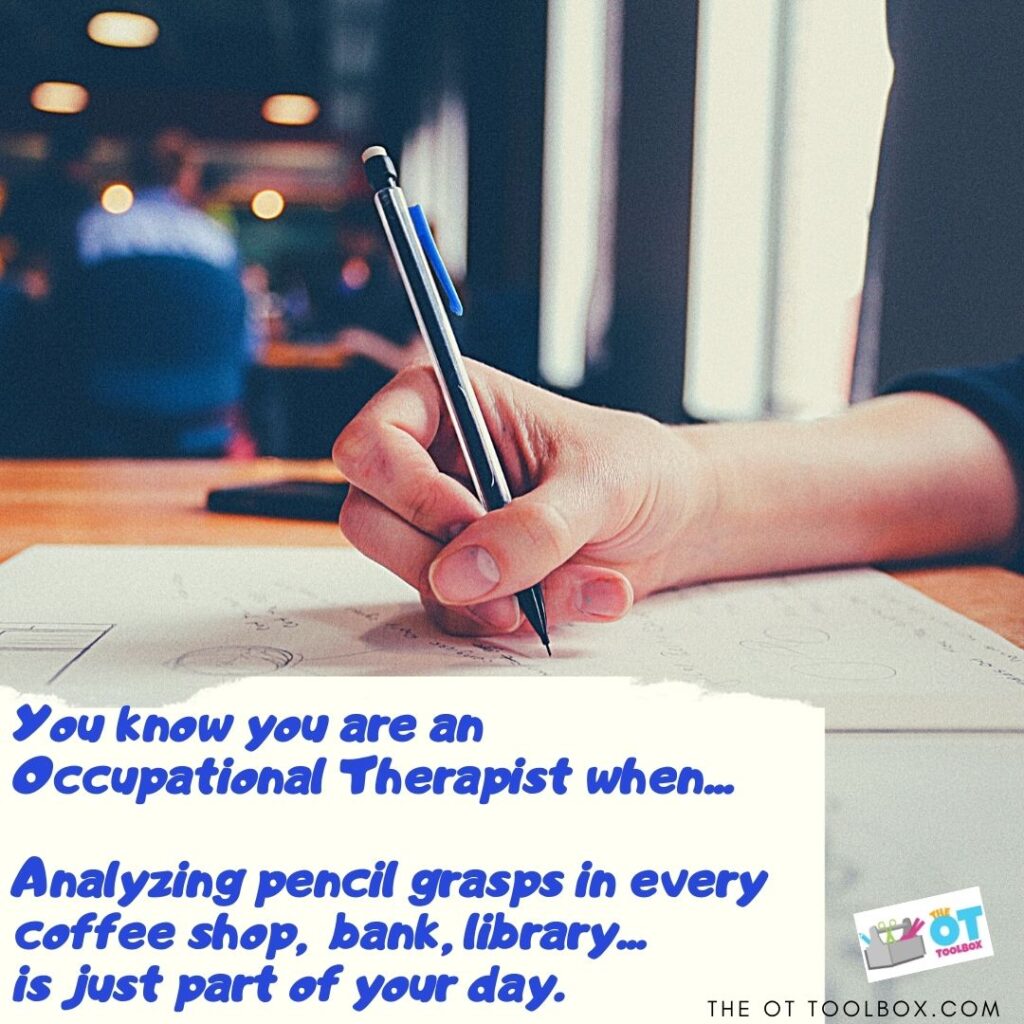
You know you are an occupational therapist when analyzing pencil grasps in every coffee shop, bank, library, hotel desk, post office, DMV…everywhere! We have this additional sense called pencil grasp analysis! We just can’t help but notice bad pencil grasps everywhere.

Occupational therapy meme

You’ve seen it before. Probably earlier today if it was a work day for you…that supply closet in the occupational therapy room that is absoluselty overflowing with therapy putty, games, toys, ride on toys, therapy balls, hula hoops, puzzles, art supplies, therapy band. The list goes on and on. And onto the floor sometimes!

The occupational therapy supply closet can be a place to find some old school items from years past! But the thing is, the OT will find a novel use for any item in that closet, and knock out some goals!

OT month. You know you are an OT when

What are some funny occupational therapy memes that you’ve seen?

Sensory Processing Spanish Resource

Spanish Occupational Therapy Resource

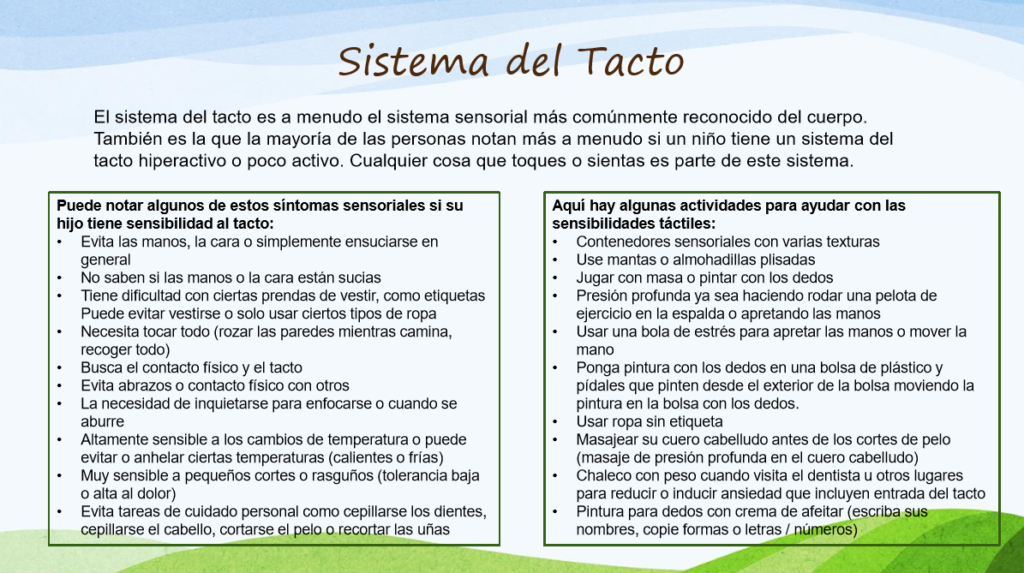
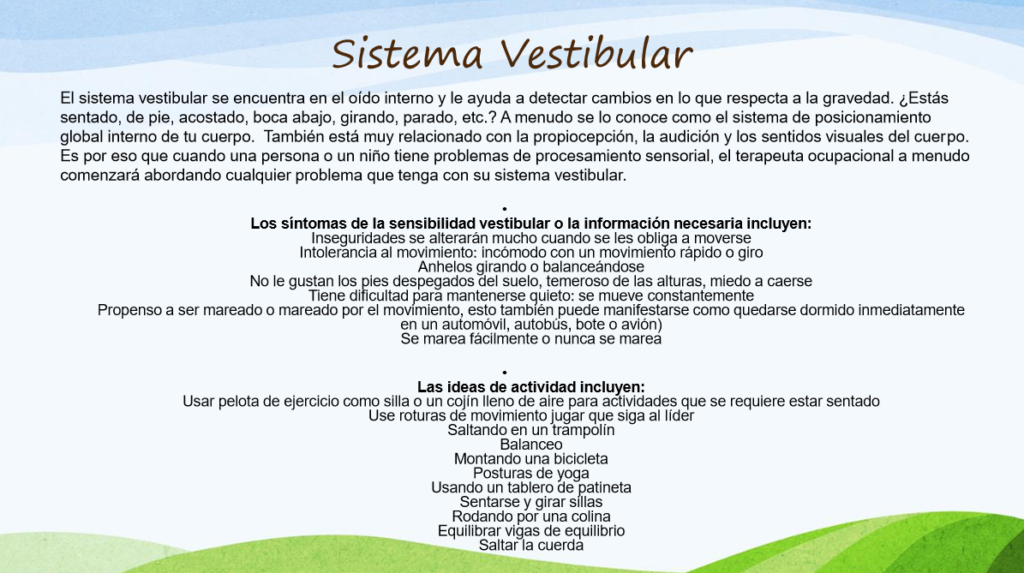
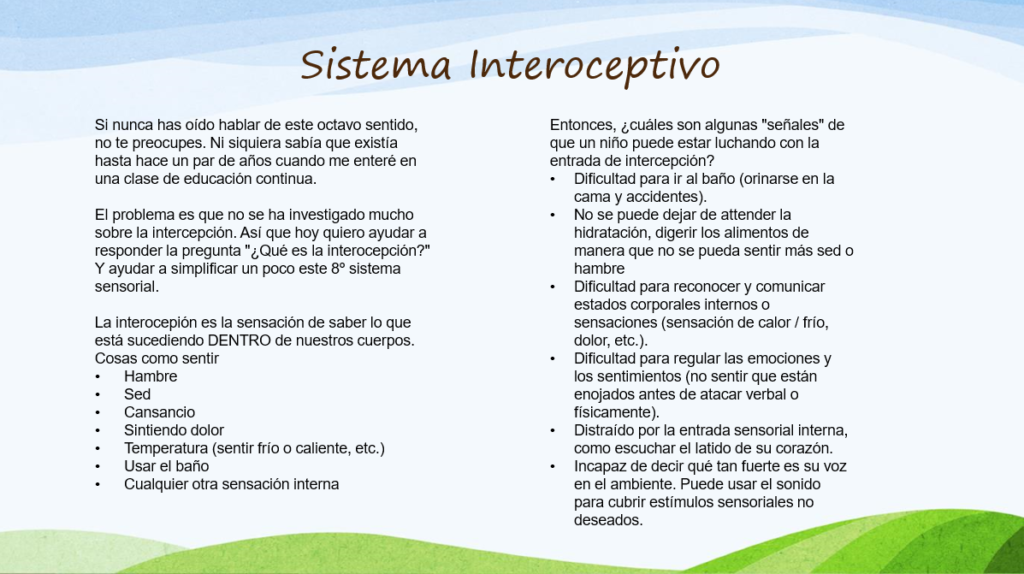
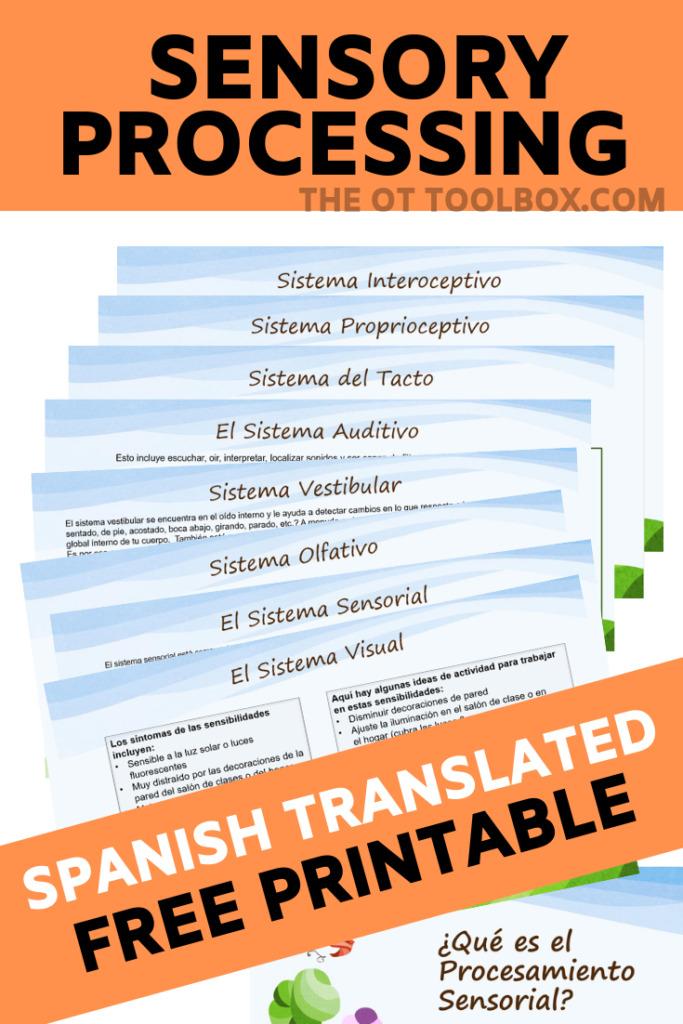
Here on The OT Toolbox, we’ve had a Sensory Processing Disorder information packet available for a long time. The booklet is a free handout that offers an understanding on sensory processing concerns. It’s a handout that can be used to advocate for sensory needs and is one of our top sensory processing resources here on the site. I’m excited to say that this booklet has been translated into Spanish! Below, you will find a Spanish resource on Sensory Processing that can be used by therapists working with Spanish-speaking clients and families.

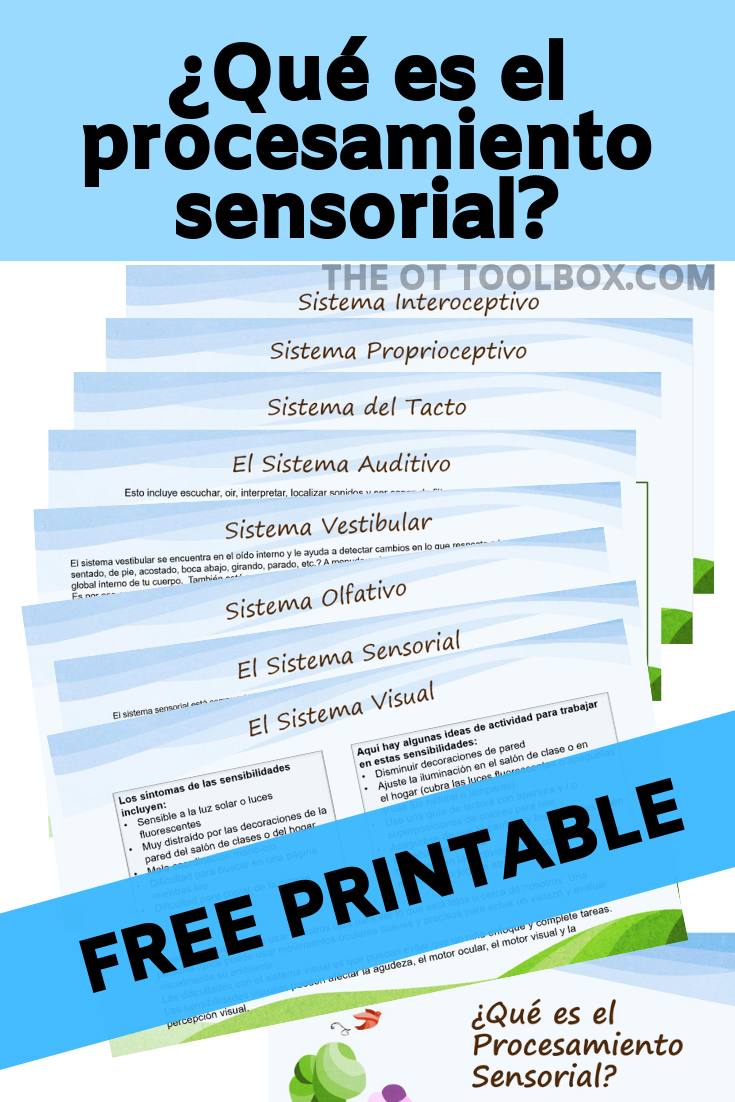
Sensory processing information resource in Spanish for printing and educating in Spanish resources for occupational therapy

Sensory Processing Disorder Resource in Spanish

Sensory processing resources in Spanish can be hard to come by. For the client working in the Spanish-speaking community or for those looking for resources for their caseload, having a go-to booklet can make all the difference. Therapists need resources that don’t take time to create while supporting the clients they serve. 
This booklet can be used to help and educate adults with sensory processing concerns too. ,
Many times, therapists use conversational Spanish, but a sensory resource translated into Spanish would be an asset to their therapy toolbox. The specific terms used in describing and understanding SPD and the sensory systems can be tricky to portray in translation.


Que es procesamiento sensorial free printable resource for sensory processing information with a Spanish translation for Spanish speaking clients


This Spanish Sensory Processing information booklet is perfect for the therapist needing resources to educate parents and teachers.

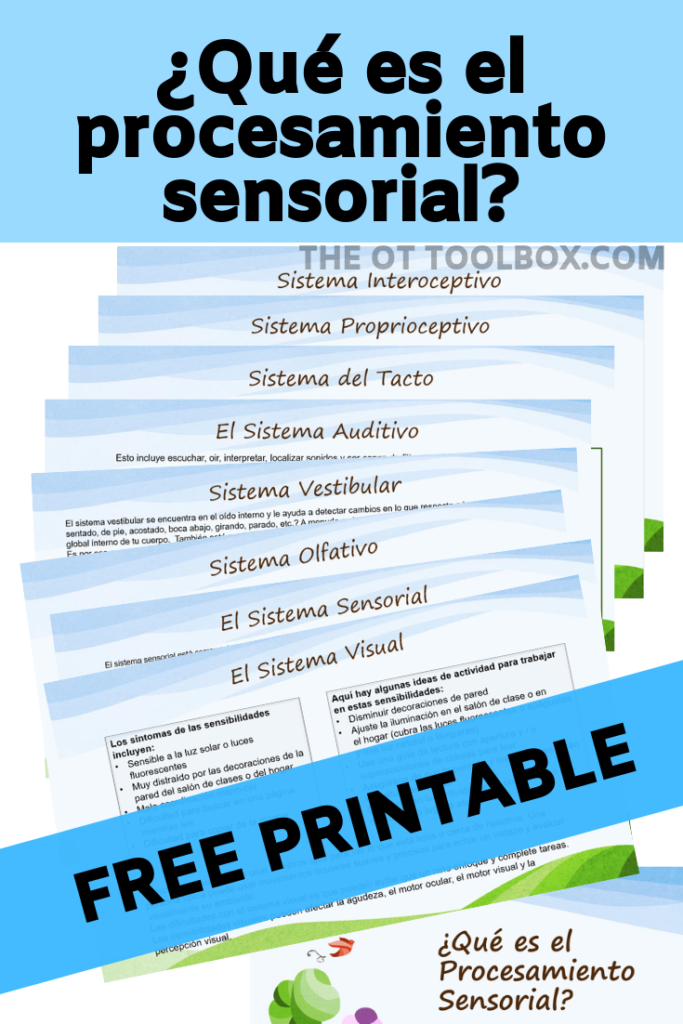
You’ll find information on sensory processing, including each of the sensory systems and how these sensory systems present when sensory processing is a challenge. You’ll find each sensory system covered on its own page, including interoception, vestibular sense, tactile sense, and proprioception…all of which are big topics and can be difficult to portray in translating sensory information during occupational therapy sessions.

Sensory processing information in spanish for educating and helping Spanish speaking occupational therapy clients

Pages in the sensory processing information booklet are easy to read and broken own by sensory system. For the full printable booklet, scroll below to enter your email.


In this sensory resource, you’ll find each of the sensory systems broken down and information telling how the sensory systems are related to behaviors, actions, and specific needs that we see. This resource is a powerful way to get the information across! 


Print this free Spanish resource for explaining sensory processing with a spanish translation.

Occupational Therapy Resources in Spanish

Let me know if this resource is helpful to you! Would you be interested in more Occupational Therapy resources in Spanish?

Free Sensory Processing Disorder Booklet in SPANISH!

 
Use this sensory processing resource for understanding sensory processing and the sensory systems


Celebrate “Sensory”

These sensory memes are perfect for advocating for sensory and sharing sensory processing information.
If there’s one thing that is certain, it’s that we are ALL “sensory”! So often, therapists or teachers hear the term “sensory” in the classrooms and clinics. The term sensory can sometimes be used as a noun to describe a child or behaviors that are a result of sensory processing needs. Today, I wanted to offer a handful of sensory memes that can help us to better understand that we are all sensory creatures. It’s the way we are wired as humans!

While there definitely are behaviors and actions that are connected or as a result of unmet sensory needs or in direct relation to an unregulated sensory system, sometimes the word “sensory” is just that. A word. So, let’s celebrate the sensory beings that we all are with a few sensory memes!

 
Sensory meme: We are ALL Sensory in one way or another!
 

Sensory Memes

The sensory memes here are part of a Celebrating Sensory …celebration! If you would like a file with these memes delivered right to your inbox, scroll to the bottom of this post. You can get them as well as two sensory processing disorder packets for celebrating and advocating for sensory processing. They are free files for you!
 

We are all “Sensory”

 
Here’s the thing: we are ALL sensory! We all have ways that we keep ourselves regulated whether it’s by taking a deep breath when you’re feeling stressed, or by getting up and pacing during a phone call. You’ve seen so many forms of self-regulation in action:
 
  • Clicking a pen during a meeting
  • Quickly tapping a toe or wiggling one leg
  • Stretching
  • Taking a moment to take a deep breath and refresh
  • Needing to step away and sip cold water
  • Naps!
Sensory regulation comes in all forms. And, sensory processing needs can be met in so many ways. We are all different and in that, comes so many means of self-regulating.
 
For our kids who struggle with regulation, yes; The term “sensory” applies. But, we are ALL sensory!


For ideas to add sensory input into everyday play, try these sensory play ideas.

For information on sensory diets, we’ve got a lot here on The OT Toolbox. This article on What is a Sensory Diet can get you started.

HUGE Sensory Resource


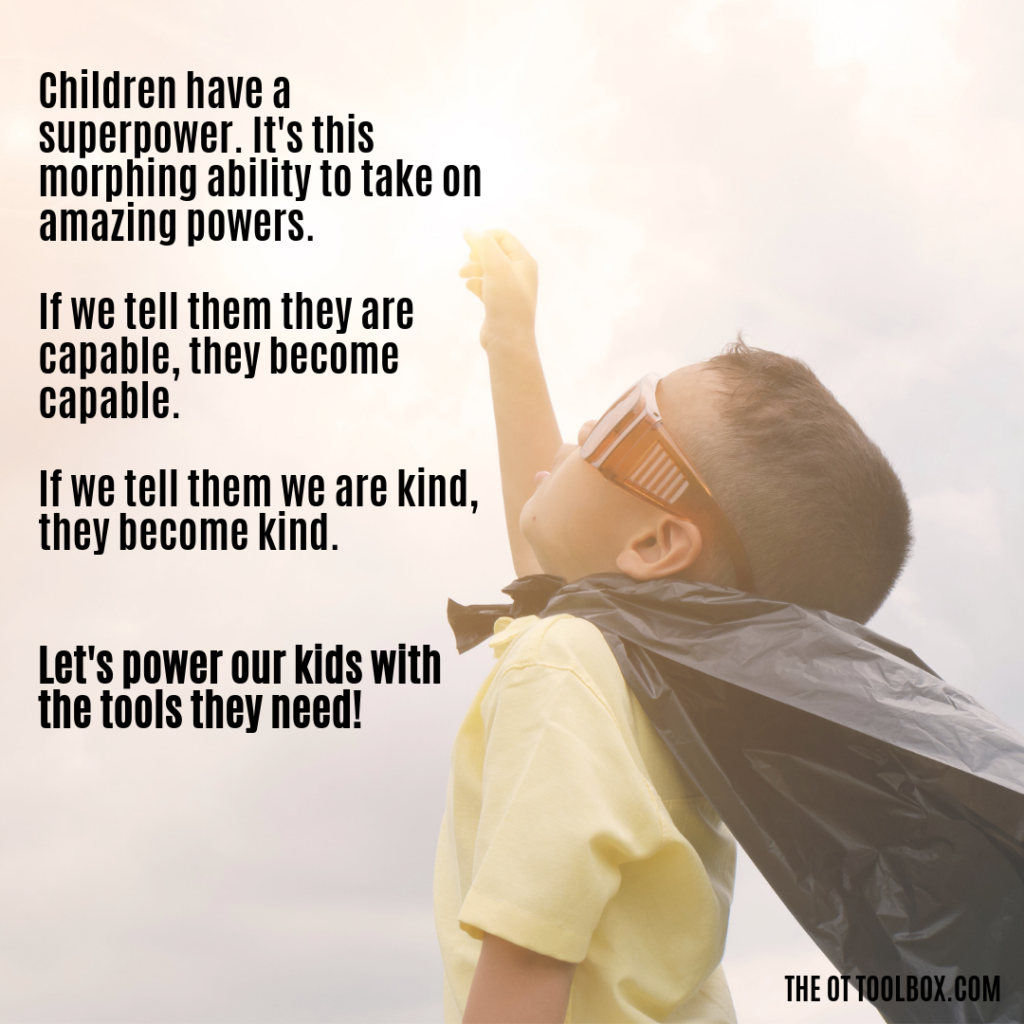
Sensory meme: Child super powers. Kids are capable!
 
Celebrate ability and kindness. Our kids are capable. Let’s power them by telling them.
Sensory meme: You are strong, capable, loved, and so much more!
 
You are strong, capable, loved, and so much more!
Sensory meme: Celebrate differences!
 
Celebrate what makes us different!
Sensory meme: Difficult roads often lead to beautiful destinations.
 
Difficult roads often lead to beautiful destinations.
 
Want to get these memes? These pics AND our Sensory Processing Disorder Booklet and the NEW Spanish version of the Sensory Processing Disorder Booklet are available in a massive printable file. Print off the booklets to start advocating for sensory processing today. Simply print and hand out! The memes can be used on social media.
 
Grab them by entering your email below. If you are using a school system’s email or an email on a .us, .edu, .gov or other email on a large system, the email delivering these files may be blocked as the email contains a file to access. You may want to enter a personal email address here to ensure delivery. For any issues with accessing these files, simply email contact@www.theottoolbox.com

Free Sensory Processing Disorder Booklet

    We respect your privacy. Unsubscribe at anytime.

    Colleen Beck, OTR/L has been an occupational therapist since 2000, working in school-based, hand therapy, outpatient peds, EI, and SNF. Colleen created The OT Toolbox to inspire therapists, teachers, and parents with easy and fun tools to help children thrive. Read her story about going from an OT making $3/hour (after paying for kids’ childcare) to a full-time OT resource creator for millions of readers. Want to collaborate? Send an email to contact@theottoolbox.com.
    Super Simple Visual Tracking Tool
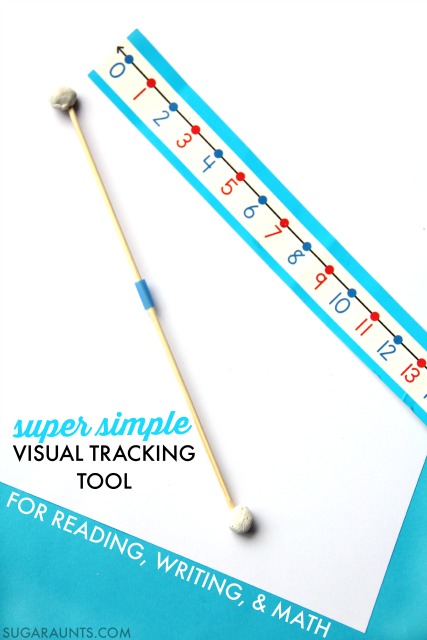
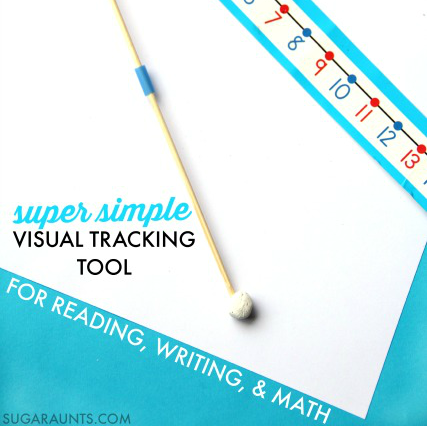
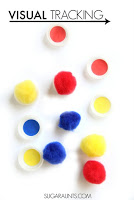
    Visual tracking is a skill kids need for reading, handwriting, and learning! Visual tracking activities can help kids strengthen this visual processing skill and in easy and fun ways. We made a Visual Tracking Tool that is an easy DIY occupational therapy activity. It is super easy to make and fun to play with, making it a great way to work on visual tracking skills.  We shared an easy way to practice visual tracking with bottle caps not too long ago, and this visual tracking tool will be another creative way for you to work on visual tracking abilities in handwriting, reading, and math number line use.

    This tool also support visual closure which is a main aspect of visual perception.

     
    This visual tracking tool will help kids with handwriting, reading, and math problems, including visually tracking difficulties (pursuits).
     

    Full Disclosure: This post contains affiliate links.


    What is Visual Tracking?

    When there are concerns with reading, writing, copying written work, and other issues related to visual processing concerns, understanding what visual tracking means can be an important place to start. 


    We explained a lot about what visual tracking means here.  Visual pursuits are often referred to as visual tracking.  When an object moves across a person’s field of vision, their eye movements maintain fixation.  Visual tracking occurs when a person’s eyes move along a line in a smooth and accurate manner. When a person moves their eyes, there are two types of eye movements that they use to gather information.  


    Visual pursuits (tracking) and saccadic eye movements (scanning).  Visual tracking can occur with just the eyes moving or the eyes and head in a combined manner.  Visual tracking depends a lot on visual attention and fatigue.


    Here is more detailed information on saccades and how they impact learning.


    Signs of Visual Tracking Problems

    A child with visual tracking difficulties might see show of these problems in daily tasks:
    Loses place when reading.
    Must use finger to keep their place when reading or when copying a line of text.
    Skips lines or words often when reading and copying in handwriting.
    Poor reading comprehension.
    Short attention span.
    Moves head excessively when reading.


    Homemade Visual Tracking Tool for Bilateral Integration

    Using this easy tracking tool requires coordinated movements of both hands together, in coordination with the eyes.  integrated movements of both arms and crossing midline is important for laterality and directionality.  These are areas needed in writing and reading letters and numbers without reversals.


    This visual tracking tool is a great way to practice smooth pursuits of a brightly colored object as it moves in a line across a visual field.

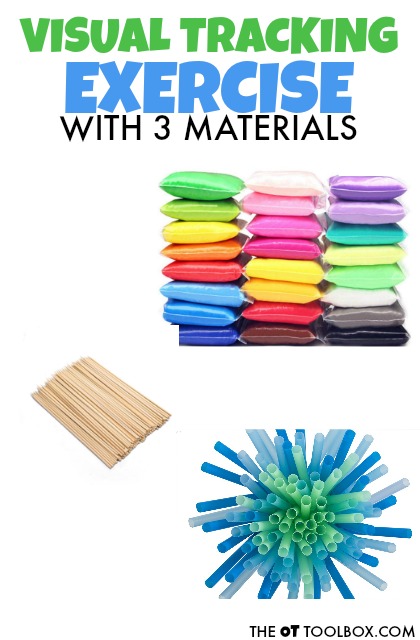
    Visual tracking exercise with only three items to help kids with visual processing skills.


    Make a visual tracking tool to help kids with handwriting, reading, and math problems, including visually tracking difficulties (pursuits).


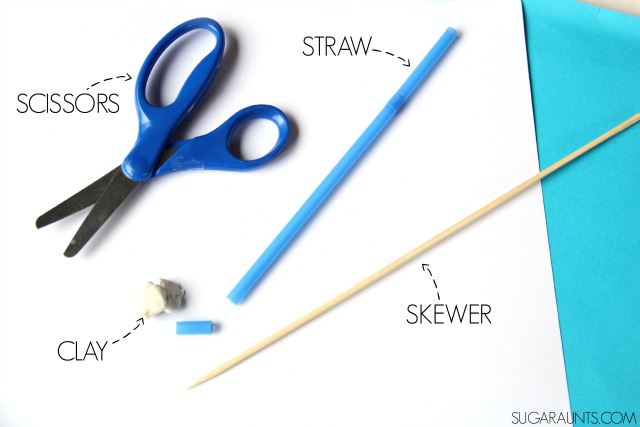
    To make your Visual Tracking Tool, you’ll need just a few items:

    Amazon affiliate links are included below.

    1. Drinking Straw

    2. Scissors

    3. Wooden Skewer

    4. Clay
    (We used a single color, but you could use two different colors to extend the use of this tracking tool.  Read more below.)


    Use clay to make a visual tracking tool that can help kids with reading and writing.
    Make an easy visual tracking activity using wooden skewers!
    Make a visual tracking tool using drinking straws.


    How to make a Visual Tracking Activity

    Cut a small piece from the straw.  Thread it onto the skewer.  Roll a ball of clay and press it onto both ends of the skewer.  Done! You can allow the clay to harden, or use it as is.

    This visual tracking tool will help kids with handwriting, reading, and math problems, including visually tracking difficulties (pursuits).


    How to use this Visual Tracking Tool:

    • Practice smooth visual pursuit by tilting the skewer from side to side and asking your child to follow the straw with their eyes.
    • Allow your child to use the tracking tool and ask them to follow the straw with their eyes.
    • Use the tracking tool in math by placing it along a number line.  Tilt the skewer from side to side and when the straw stops at a number, ask your child to name the number.  You can extend this activity by asking them to add or subtract numbers that the straw stops.
    • Align the tracking tool under a number line and use the straw as a movable placeholder while the child counts out addition and subtraction problems on the number line.
    • Use the tracking tool in reading by placing the skewer under a line of text.  Move the straw along the length of the skewer as the child reads the words in the sentence.
    This visual tracking tool will help kids with handwriting, reading, and math problems, including visually tracking difficulties (pursuits).


    Other ways to use this visual tracking tool:

    • Hold the skewer up horizontally in front of the child.  Ask them to look quickly from one clay ball to the other.  You can use different colored clay for each end and say “red” for red clay and “blue” for blue clay as they shift their eyes from the red end to the blue end.  
    • Then, hold the skewer vertically and ask your child to quickly look from the top ball to the bottom ball.  
    • Finally, hold the skewer in a diagonal position and ask them to quickly look from one ball to the other. 
    See it in action in the video below.


    You will love these visual tracking activities

    These Visual Tracking Games and activities are a big hit in therapy or at home. Use them as part of an occupational therapy home program or in therapy planning.
     
     
    Visual tracking games to help kids with visual processing skillsVisual discrimination activities for kids and vision activities to help with readingEye-hand coordination activities to help kids with the vision skills they need.


    Visual Tracking Resources

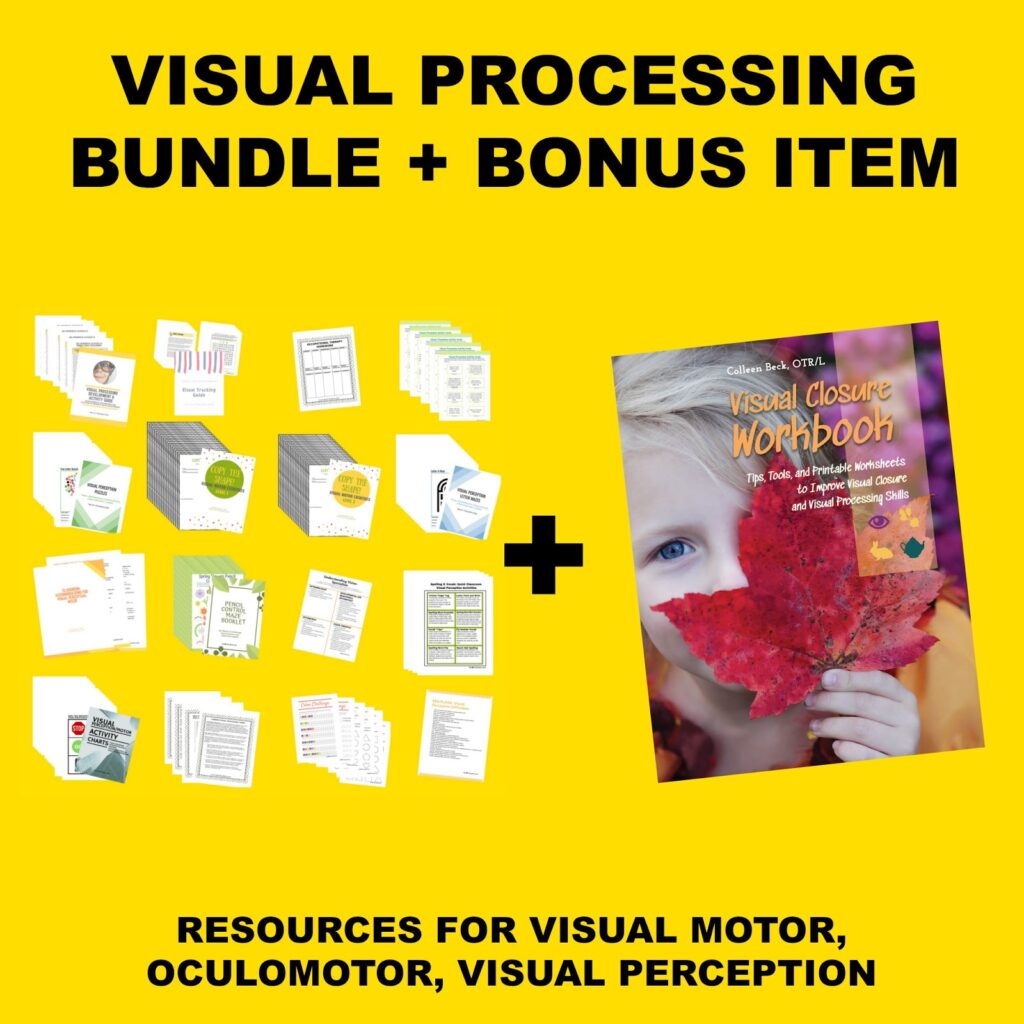
    For more information and specific activities that can address visual attention in fun and meaningful ways, grab the Visual Processing Bundle. In it, you will find 17 digital products, ebooks, workbooks, and guides to addressing various aspects of visual processing, including visual attention. The bundle is valued at over $97 dollars for these products, and includes over 235 pages of tools, activities, resources, informaton, and strategies to address visual processing needs.

    For one week, the visual processing bundle is on sale at $29.99. Grab the Visual Processing Bundle HERE.


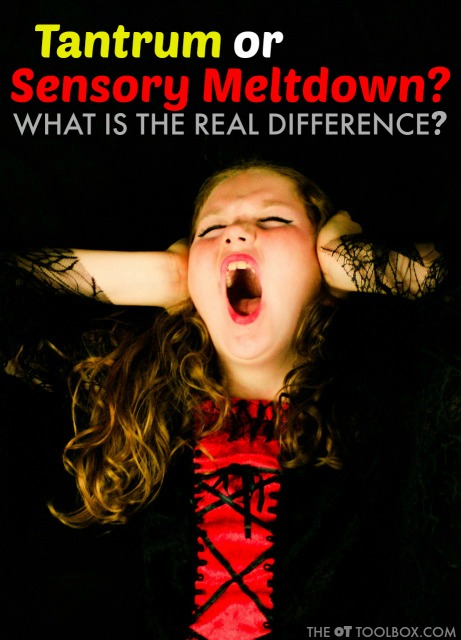
    Sensory Meltdown or Tantrum: Which one is it?

    When working with sensory kids and their families, one of the number one questions that is asked is—is this a sensory meltdown or a tantrum? It’s often hard to tell the difference between the two, and takes some detective work to figure out which one it is. Determining if a sensory meltdown is occurring is especially difficult because sensory thresholds for these children can vary day to day. So often we hear, “Is it sensory or a behavior” that is causing an action in a child. Here are the clues to help you discern the difference.

    For more information on sensory processing, you’ll want to grab our free sensory processing disorder information packet. This is a handy printable designed to better understand SPD and what that looks like in our kids.

    How to know if a chil is having a sensory meltdown or tantrum. These clues will tell the difference.

    Behaviors of Sensory Meltdowns and Tantrums Look Similar

    The challenge in determining whether behaviors are the result of a sensory meltdown or a tantrum, is that the child’s behaviors in both instances, are usually the same.

    Behaviors that are observed during both a sensory meltdown and a tantrum may include:
    • Screaming
    • Hitting
    • Kicking
    • Name calling
    • Hiding or avoidance
    • Crying

    The difference between a meltdown and tantrum however, can be often times, be found in the events prior to the behaviors.

    For information on sensory play ideas, you’ll find a lot here on The OT Toolbox.

    Tantrums

    Tantrums are usually in response to the child not receiving a want/desire out of a situation, or not achieving a goal as they had planned. In these instances behaviors typically occur for an audience, and may cease when the child has achieved their goal. This may be a way of testing boundaries with the authority figure in the situation.

    Tantrums can usually be resolved with consequences, reminders of the boundaries, removal from the situation, or distraction to the upset child. Children are also not typically emotionally drained after a tantrum and can resume their routine with ease. This is not necessarily the case when a sensory meltdown occurs.

    What is a sensory meltdown and how to tell if a child's behaviors and actions are a sensory meltdown or a tantrum

    Sensory Meltdowns

    Sensory Meltdowns are the result of sensory overload, and reaction to the big feelings that overloads cause.

    When in the throes of the sensory meltdown, the child is not able to control their reactions, behaviors, or emotions.  These episodes may also leave the child inconsolable, even when distraction or preferred items are offered, or even when the parent ‘gives’ into what the child is demanding.

    Meltdowns may appear happen without a trigger, or may be in response to an event that seems otherwise innocuous to the parent.

    The main clue that the behaviors the child is exhibiting is sensory meltdown related is that the behavior does not achieve a want, need or goal.

    In the case of a sensory meltdown, having a set of strategies available through use of a sensory diet can help with sensory overload, big feelings, and reactions.

    Clues a Behavior is a Sensory Meltdown

    • Reaction to event, feeling or overload of sensory input
    • Is not to achieve a want, need, or goal
    • Continues even without an audience
    • Ends only when the child has calmed down and the feelings are out
    • The child is very tired after the meltdown or appears ‘spent’
    • The child may feel embarrassment or shame as a result of their actions—typically this is seen in older children.

    These signs can show up at home, in the community, or in the classroom. Here are strategies for using a sensory diet in the classroom.

    What can Trigger a Sensory Meltdown?

    Sometimes, we can see a meltdown coming, and other times it seems to hit out of the blue. This is particularly true of children who are a little bit older, and understand what is acceptable and what is not. Because of this, parent’s often report that their children do GREAT at school, and then lose it at home.

    Some clues that it might be a meltdown include:

    • Being over tired or hungry
    • Illness or general unwellness—allergies can be a trigger to this sense of general unwellness. This may include food allergies or sensitivities.
    • “Holding it together” for long periods of time—going to school, camp, play dates, etc.
    • Change in routines—extra day off of school, vacation, or parent traveling. Essentially, anything outside of the child’s daily routine being off may result in a sensory overload and meltdown.

    It may take several hours, or several days before a meltdown occurs as a result of these triggers. As a result, it can appear as though there is no cause for the meltdown until the events prior to the event are examined. If you go back far enough into the past few days, a trigger is usually able to be found.

    Whether it’s a tantrum, or a meltdown, behavior is a direct form of communication from kids to adults about what is going on in their life. Knowing the difference between the two can lead to recognition of triggers and patterns, implementation of prevention strategies and successful emotional recovery in both situations.

    Create a sensory lifestyle to address sensory meltdowns or tantrums in a way that fits into the daily life of a child with sensory needs.

    Tools for Sensory Meltdowns

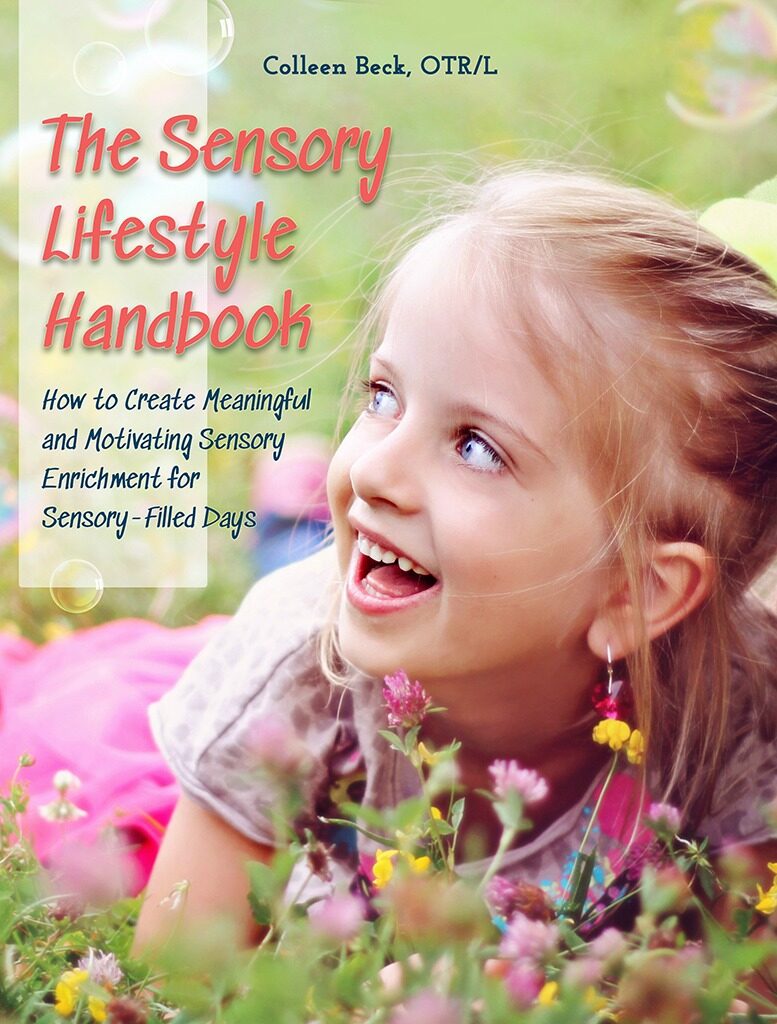
    The Sensory Lifestyle Handbook is a guidebook in strategies to help with sensory meltdowns. Taking the specific and individualized activities that make up a Sensory Diet and transitioning them into a lifestyle of sensory modifications, strategies, and techniques is a Sensory Lifestyle!

    This book is for therapists, parents, teachers, or anyone who works with kids with sensory needs.

    If you struggle with creating a sensory diet that WORKS…
    If you are tired of trying sensory tools that just don’t seem to fit within a child’s busy day…
    If you are overwhelmed and don’t know where to start with understanding sensory processing…
    If you are a therapist struggling to set up sensory programs that are carried out and followed through at home and in the classroom…
    If you are a teacher looking for help with regulation, attention, or sensory meltdowns and need ideas that mesh within the classroom schedule…
    If you are looking for sensory techniques that kids WANT to use…
    If you are striving to create a sensory lifestyle that meets the needs of a child and family…

    The Sensory Lifestyle Handbook is for you!

    Sensory Lifestyle Handbook book by The OT Toolbox author, Colleen Beck, OTR/L

    Unsubscribe

    Done! You’ve unsubscribed from the Super Sensory Bundle Emails.

    I strive to make The OT Toolbox the resource YOU need. Are you looking for specific tools or information? Let me know at contact@www.theottoolbox.com

    Have a good one!

    Potty Training Incentive (That Kids will LOVE)

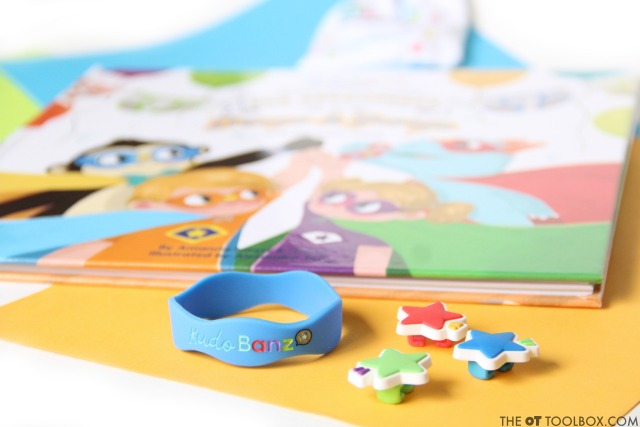
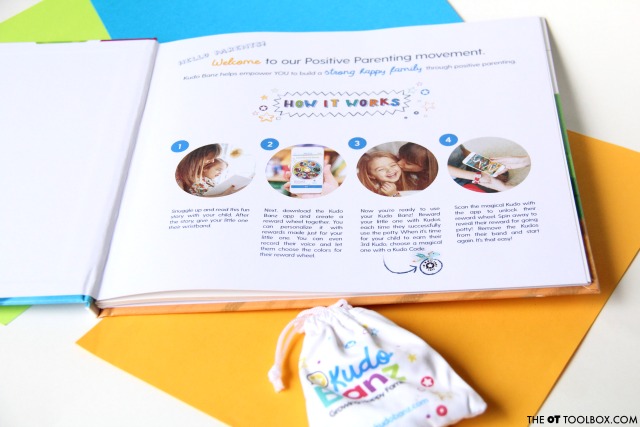
    Potty training reward incentive with Kudos Banz
    Potty training can be a jungle. Knowing what to expect when starting potty training can be challenging for parents. Even seasoned parents can struggle when it comes to potty training and there’s a good reason why; Every child is different! And here’s the thing: Because every child is so different when it comes to interests, strengths, difficulties, and needs, potty training incentives can be a challenge too. Potty training rewards can be helpful when the child’s motivations are included in toilet training. Maybe you’ve tried potty training charts before. Perhaps you are struggling to teach the basics of potty training, or are working on a child staying dry overnight. Today, I’ve got a motivating potty training incentive that can be just the tool to address a variety of toileting challenges.
    Use potty training incentives like reward charts and potty training bracelets to help kids learn steps of toilet training.

    Potty Training Incentive

    First, let’s talk about what a potty training incentive is and looks like. You’ve probably seen a potty training reward chart before. A potty training sticker chart can be just the visual that helps kids progress from making it to the potty in time to remembering to stop and go to the bathroom when playing (and before it’s too late). Other kids use reward charts for washing hands after using the restroom or wiping completely. A visual reward chart like a sticker chart can address a wide variety of potty training issues.
    Reward programs can be used in the home or while on-the-go while out and about in the community. A potty training visual chart can be used to work on many goal areas.
    Many potty training incentives offer a reward for that persistence and patience needed in potty training. Sticker charts can be just the tool to help kids feel special and confident during the potty training process. After the kiddo achieves a goal like sitting on the toilet or making it to the potty in time, they can add a sticker to the chart. After a determined number of stickers have been added to the chart, a reward is earned.
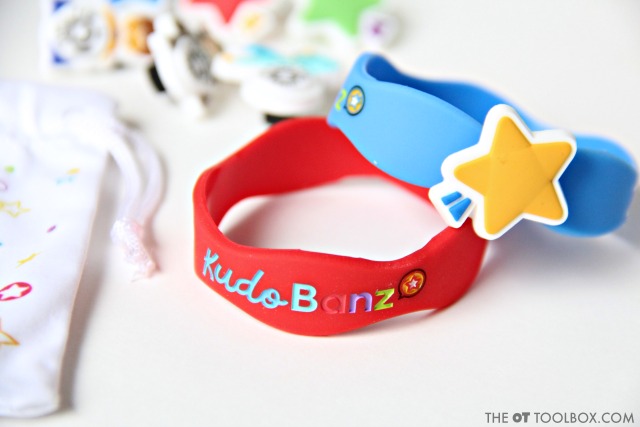
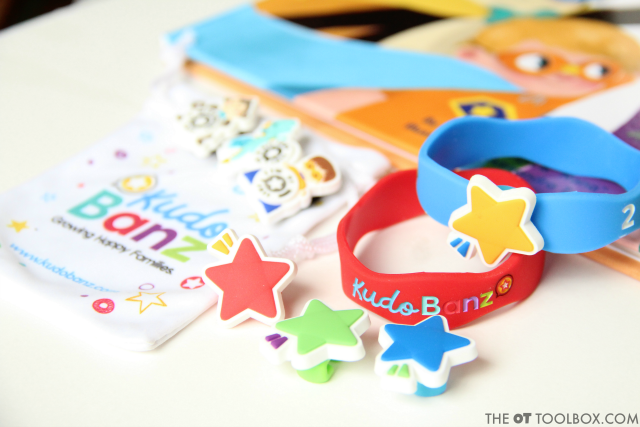
    Kud Banz is a potty training reward system that helps kids learn steps of potty training through positive reinforcement and an interactive incentive.

    Toileting Reward Program That Kids will Love

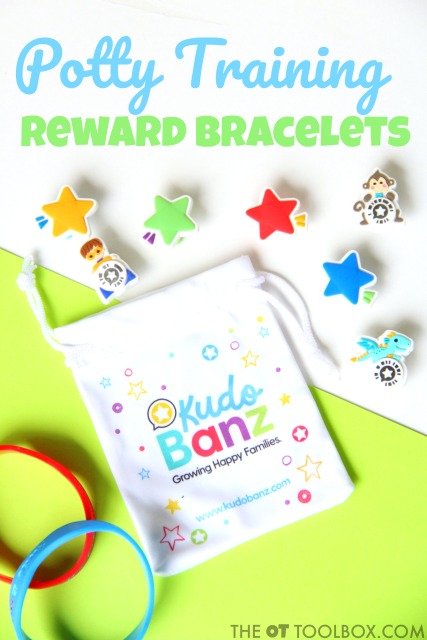
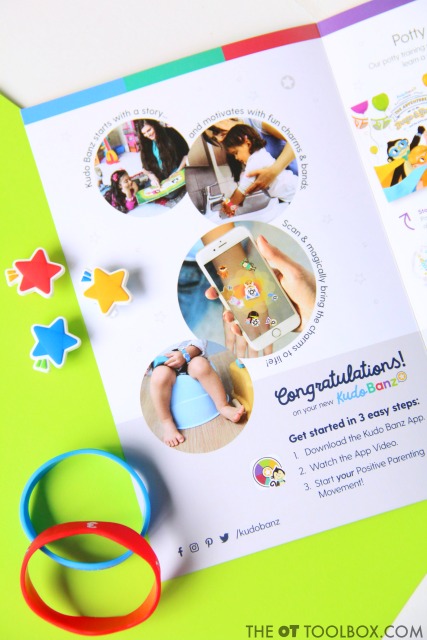
    I recently came across a potty training incentive program that I fell in love with. The Kudo Banz system works a lot like a sticker chart reward. However, the difference is that kids can wear a bracelet to help remind kids of their goals. They can earn Kudos for various aspects of potty training, keeping them motivated to turn positive behaviors and actions into habits.
    Kids will love this motivating potty training program that helps behaviors turn into habits in a meaningful way.
    Use a potty training book like the Kudo banz potty party book to teach kids aspects of toileting.
    Potty Training Book with a Twist
    Affiliate links are included in this post.
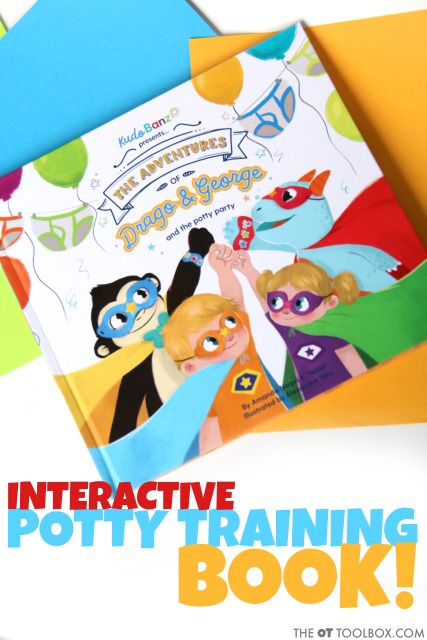
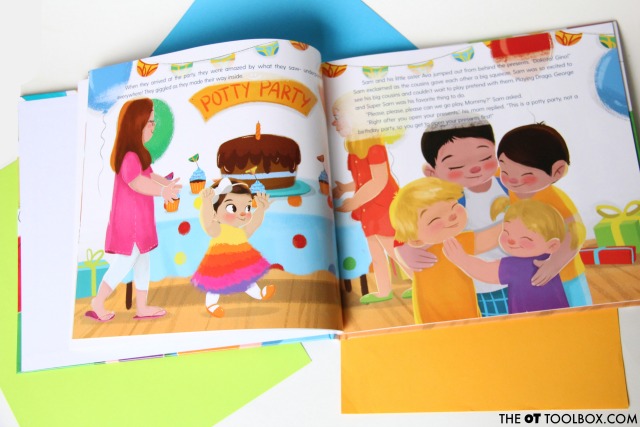
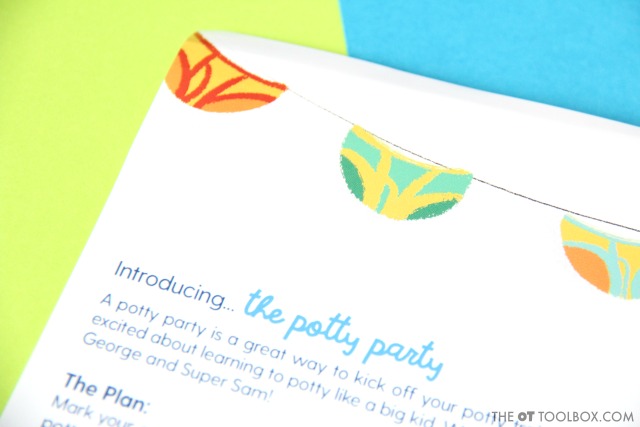
    Part of the Potty Starter Pack by Kudo Banz, is a colorful and fun storybook called “The Adventures of Drago and George and the Potty Party”. This book gets kids and parents excited about beginning potty training by describing an adventure and a fun “potty party”. In the book, the characters discover how to earn kudos by completing individualized challenges.
    A potty party is a rewarding potty training incentive that kids will love.
    As we all know, kids are so different. What works for one child may not work for another. That’s why the Kudos that can be modified based on your child’s needs, strengths, and interests are really successful.
    For special potty training seats based on needs of the child, check out our recent post on Potty Training Seats for Special Needs.
    Kids will love this potty training incentive program that teaches toileting through positive interactions.
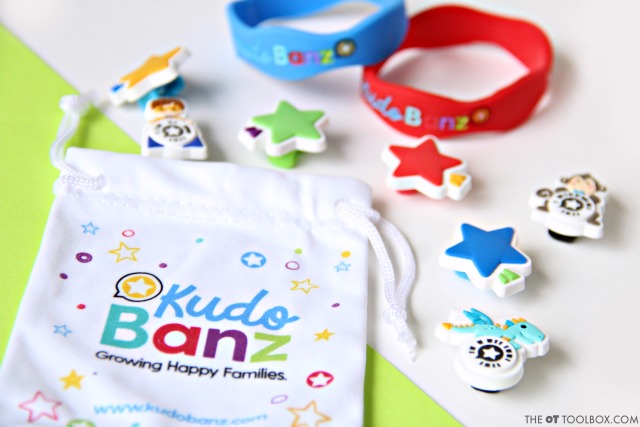
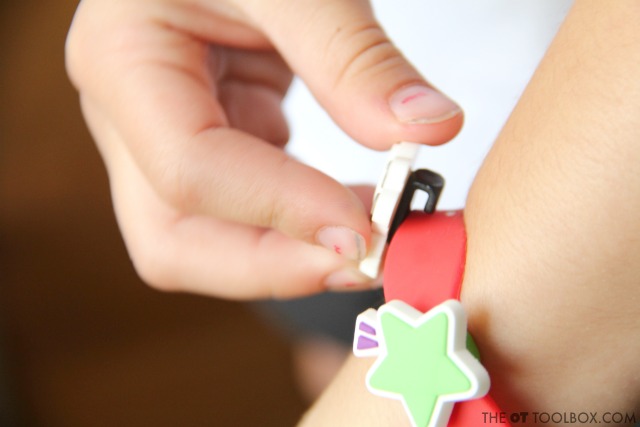
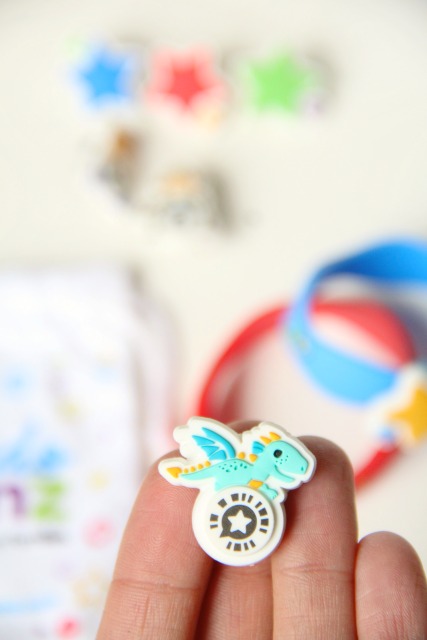
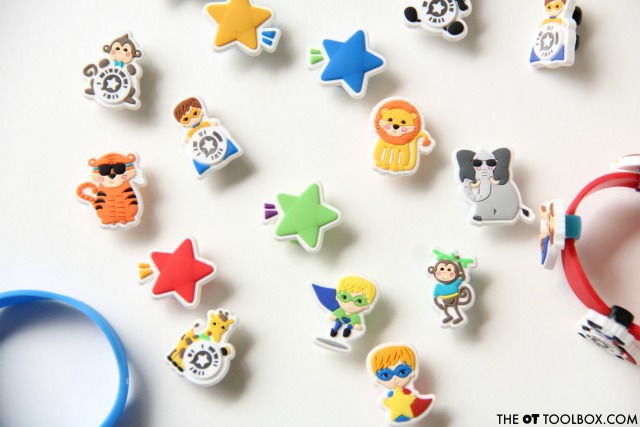
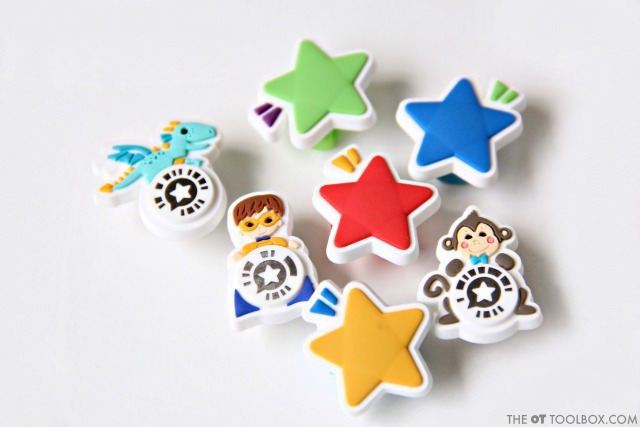
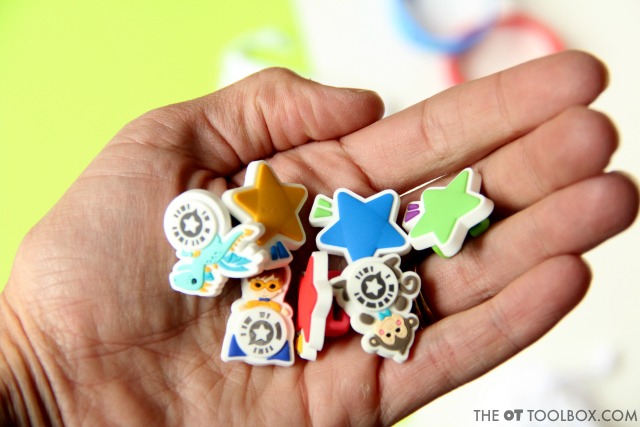
    Using a bracelet and themed charms, kids can add a “kudo”, or charm clip, after achieving goals. They can work through the various aspects of potty training, taking kids from walking into the bathroom and sitting on the potty, all the way to staying dry overnight.
    Use Kudo Banz to teach kids potty training incentives by receiving kudos for reaching personal goals.
    This potty training incentive program is meaningful and motivating to kids.
    Kids can use the bands and the clips to mark progress for toileting aspects such as:
    • Sitting on the potty
    • Going pee in the potty
    • Going poop in the potty
    • Learning to wipe all by themselves
    • Remembering to wash hands after going potty
    • Staying dry for specific amounts of time, such as from breakfast to snack time, etc.
    • Staying dry at nap-time
    • Staying dry overnight
    Teach kids potty training with a meaningful and motivating potty training incentive.
    A potty training incentive that kids will love

    Focusing on the Positive When Potty Training

    Because toilet training requires so much patience, it’s important to stay positive. As parents, this can be HARD! An accident on the floor again? Wet pants for the third time today? It can be frustrating to work through potty training challenges when you’ve practiced and practiced the aspects of toileting.
    Make potty training meaningful and motivating with a toileting reward system like a sticker chart on the wrist.
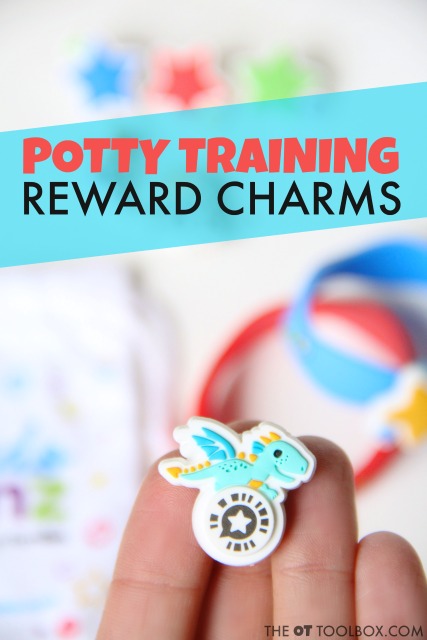
    That’s why using positive reinforcement such as the reward charms that Kudo Banz offer is so important. It helps kids stay motivated because they feel excited to have that kudo on their bracelet, and with them at all times. It’s a great way to stay encouraged to try again because they can see, touch, and feel the evidence that they did something positive.
    Kudo Banz are fun and creative potty training incentives that kids will love.
    Having that bracelet right on their arm makes staying focused on incentives rewarding because kudos happen right in the moment and even when out and about. Kids can add a kudo to their bracelet when using a public restroom and see the evidence of a bathroom win…and boost their self-confidence in potty training.
    Kids can pick their potty training reward with a meaningful and motivating theme.
    Interactive Potty Training Reward
    The thing about Kudo Banz that kids will absolutely love, besides the themed Kudo charms that they can pick, is the reward. Using an app, kids can use their reward Kudo in an interactive way to keep kids interested in their goals and motivated to earn more.
    Potty training reward charms are an incentive to accomplish personal goals and toileting goals, leading to more independence.
    Take it a step further:
    Kudo Banz is nice because kids can benefit from the motivating and interactive factor, and even take habits a step further and be used to work on a variety of goals. Things such as picky eating, doing chores, following directions, doing homework…and many more areas that can be difficult to instill in kids can be addressed with this motivating reward tool.

    Add Kudo Banz to your therapy toolbox! Grab a set here.

    Cool You’re Still on the List

    Great! I’m so glad you’re still here. I know that life gets in the way of the email inbox so in case you’ve missed some recent popular posts here on The OT Toolbox, check these resources out:

    Discount Code for You

    Please feel free to explore our OT Toolbox shop and use the discount code that we shared in the email you received prior to landing on this page.

    Recent Free OT Tool for subscribers

    I love to fill email subscriber’s inbox with free resources (I know you are working hard and don’t always have time to make materials like this yourself!) Here are recent freebies you may have missed:

    Enjoy! It’s good to see you again!

    Colleen

    Free Visual Processing Lab

    Free visual processing lab
    Visual processing impacts everything we do! When kids struggle with things like writing on the lines, managing buttons, catching a ball, or finding a missing shoe in a messy room…visual processing skills are at play. The thing is, the components of visual processing are more than meets the eye (literally)!

    Free Visual Processing Lab

    Visual processing involves several areas like oculomotor function, visual perception, and visual-motor skills. These underlying areas make all the difference in skills like handwriting, fine motor skills, learning, reading, functional tasks…everything!
    What if I told you that there is a new resource available through The OT Toolbox. The Visual Processing Lab is here! It’s a short email series that covers everything you need to know about visual processing. And you can join us!
    Visual processing lab for information on visual perception, visual-motor integration, oculomotor skills, and more.
    The best thing about this email lab (besides the lab theme references) is that you will leave with tools you need to better understand visual processing. When you join us in lab, you’ll get a free 15 page lab book that is your guide to understanding visual processing.
    In visual processing lab, we’ll cover:
    • The Big Picture of Visual Processing (including definitions)
    • Taking a closer look at visual processing (including specifics and “red flags”)
    • Experiments, Interventions, Reflection on the lab contents. We’ll also do two hands-on experiments as part of the lab, and intervention ideas.
    This lab is going to be fun!
    Join us in Visual Processing Lab!
    Visual processing lab is great for better understanding visual perception, oculomotor skills, visual motor integration, and more.