Halloween Smoothie Recipe for Kids

This green Halloween smoothie is a fun occupational therapy activity for Halloween…kids love it and making the smoothie is part of the fun.

Halloween Green Smoothie

Halloween is a holiday of sweets and treats.  Sometimes, you need a healthy Halloween snack for the kids that doesn’t involve chocolate, processed ingredients, or high calories. That’s where this Halloween smoothie recipe comes in.

Halloween recipes that double as a fun and cute healthy snack is almost as much of a hit with kids as the sugary candy is.  We make a lot of smoothie recipes, so my kids are used to the blender chopping up foods into smoothies, so it was not difficult to think of this smoothie recipe for kids to enjoy!

Skip the sweets and serve up fruits and veggies with this fun Halloween green smoothie recipe

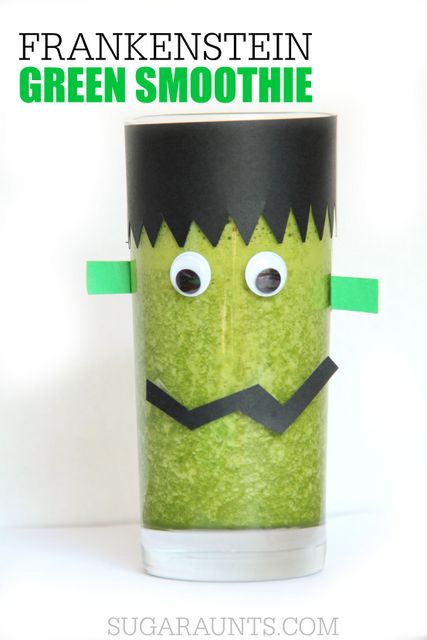
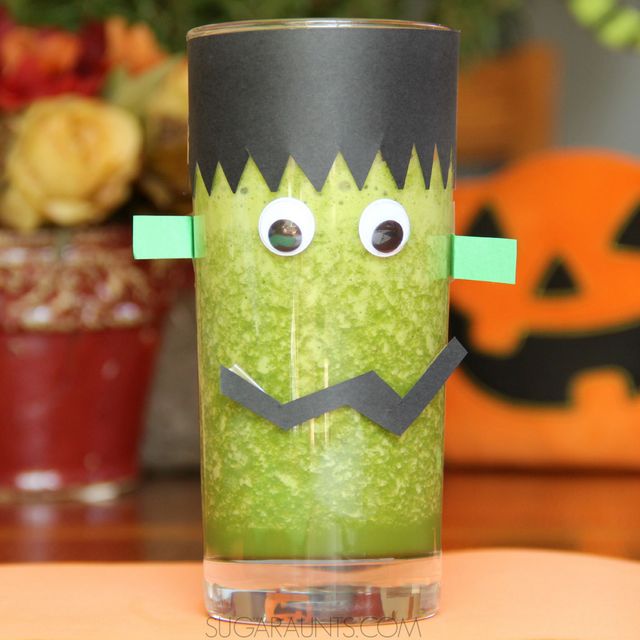
Frankenstein cup craft and green smoothie recipe for a fun Halloween snack for kids. Make these at a Halloween party for a healthy alternative to sweet drinks!


Halloween Smoothie Recipe

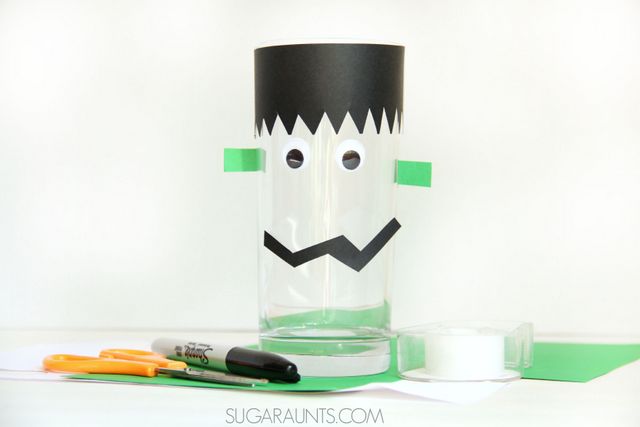
We’ll start by making a Frankenstein face on the cup. This detail is not only cute, it’s a fun Halloween craft for kids!

Frankenstein cup craft and green smoothie recipe for a fun Halloween snack for kids. Make these at a Halloween party for a healthy alternative to sweet drinks!


So, we are a big smoothie family over here. We love smoothie recipes made with a variety of fruits and veggies.

Frankenstein Face

This Halloween smoothie was a spur of the moment idea though. We started by making a Frankenstein craft with a simple glass.  

We started by cutting out the paper pieces to put a Frankenstein face on the cup. This can make a green smoothie more appetizing, especially for kids who may not want to drink up a tall green smoothie!

(Affiliate links are being included in this post.)  


The materials you’ll need for your Frankenstein face craft include:

 Amazon affiliate links:

To make the Frankenstein face craft:

  1. Cut a strip of black cardstock (affiliate link) and cut a jagged line along one edge.  Tape this onto the top of the glass or cup.  Stick the sticky back googly eyes onto the face of the Frankenstein.  

2. Cut small rectangles of the green Cardstock (affiliate link) and tape them at the ear.  Bend the cardstock so the rectangles stick out.

3. Cut a jagged mouth and tape it into place.  

It’s that easy!  This would be such a fun craft for kids to make at a Halloween party. You could use a green plastic cup and fill it with treats, or you could make the Frankenstein face on a cup that is used to hold pencils and other school supplies.

Green Monster Drink

Frankenstein cup craft and green smoothie recipe for a fun Halloween snack for kids. Make these at a Halloween party for a healthy alternative to sweet drinks!
 
Next, get your kids in on the cooking activity by making a green smoothie together.  The nice thing about this recipe is that you can use whatever fruits or vegetables you’ve got on hand.  
 
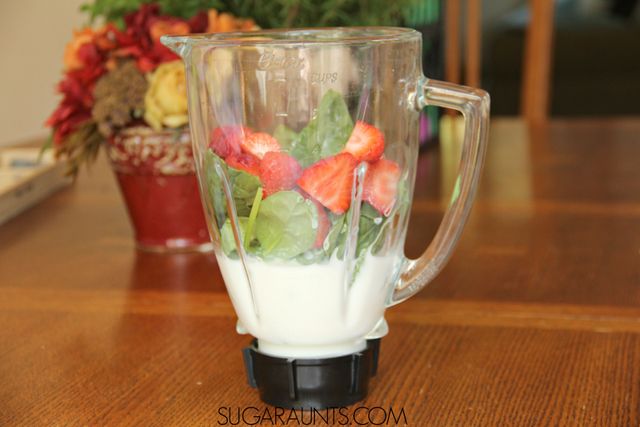
We made our green smoothie using baby spinach, strawberries, and milk.  
 
Other ingredients might include frozen (or fresh) bananas, blueberries, raspberries, mango, kiwi, blackberries, cherries, pears, apples, peaches, or any fruits.  For the green color you could substitute kale or other leafy green vegetable.  
 

Smoothies for Kids

To make the Halloween green smoothie…

  1. Toss 1 cup of baby leaf spinach into a blender.  Pour in 1 cup of milk.  
 
2. Blend this together on a high speed until the spinach is pulverized and liquid.  
 
3. Add 1 and 1/2 cup fresh or frozen strawberries. Blend again until the fruit is well blended.  
 
4. You could use other liquids for your smoothie instead of the milk.  Try juice, almond milk, water, or coconut milk. Also consider adding ice cubes for a frozen drink.
 
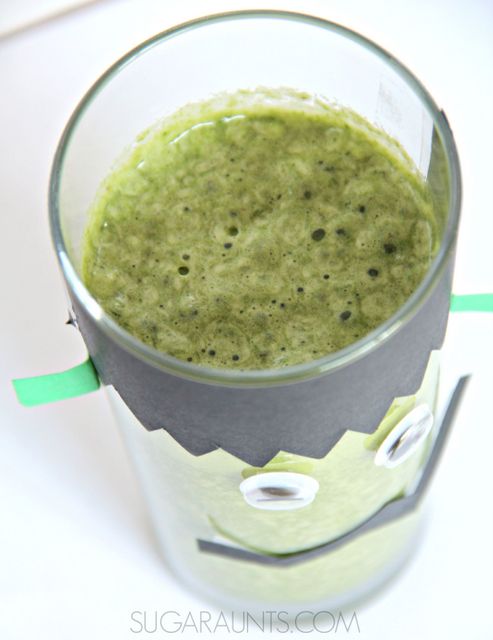
5. As you can see, there is a lot of room for substitution with this recipe.  Pour the green smoothie into the Frankenstein cups and have fun with your Halloween treat!
 
Frankenstein cup craft and green smoothie recipe for a fun Halloween snack for kids. Make these at a Halloween party for a healthy alternative to sweet drinks!
 
Play around with different combinations for a healthy and fun snack for the kids!


What are some other ways you could make a Halloween smoothie with a little creativity?

Use a glass cup and draw a face on the outside of the cup using a dry erase marker.

Make a purple monster drink using berries to make a monster smoothie for Halloween breakfast. 

Make a mango and strawberry smoothie and make it into a pumpkin for a smoothie recipe kids will love.

Sensory Benefits of Smoothies

Ok…This Frankenstein green smoothie has been on The OT Toolbox for yeeeaarsss and I totally forgot about it!

Actually, drinking a smoothie has a lot of sensory benefits. The oral motor skills required to drink a smoothie through a straw offers heavy, proprioceptive input and feedback.  “Sucking is also a calming and organizing activity which requires closing the lips, lip strength and the ability to hold the jaw in a stable position” (Yack, Aquilla and Sutton, 2015). 

When kids need a calm down moment or a chance to chill after a day at school, a smoothie can make all the difference. We talk about the sensory oral motor benefits to the mouth and jaw in our blog post on using a sports water bottle for sensory input. You could double down on the sensory input by drinking the smoothie through a straw.

Check out some other Halloween occupational therapy activities that can be incorporated into this time of year while boosting skills and areas kids nee.

How fun for a group activity…talk about the calming effects of sipping a smoothing through a straw, self-regulation, and coping strategies like the heavy “work” that a smoothie offers!


This would be GREAT “homework” for kiddos to do with the family. You could totally do a purple monster spin on this recipe and go for berries ? instead of the leafy greens ? that we used to make this one. ✌? 

Halloween Foods for Kids

 
Frankenstein cup craft and green smoothie recipe for a fun Halloween snack for kids. Make these at a Halloween party for a healthy alternative to sweet drinks!


Tell me…Have you made a Halloween smoothie for a Halloween breakfast? 


Yack, E., Aquilla, P. and Sutton, S. (2015) Building Bridges Through Sensory Integration (Third Edition).

Pumpkin activity kit
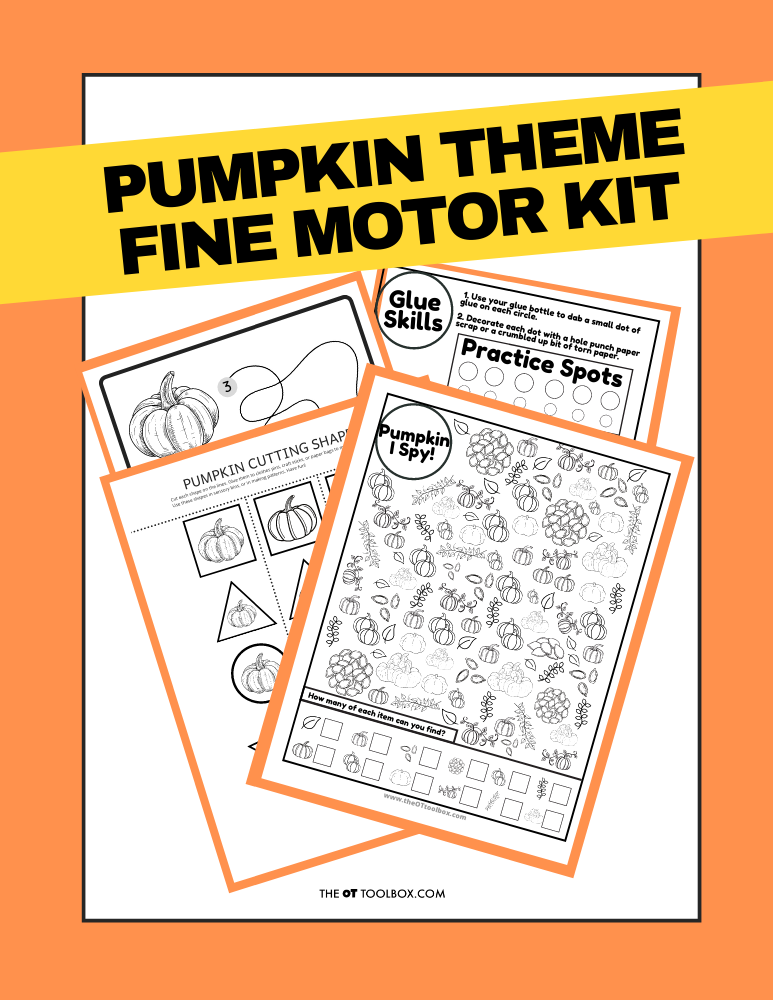
Pumpkin Fine Motor Kit

Grab the Pumpkin Fine Motor Kit for more coloring, cutting, and eye-hand coordination activities with a Pumpkin theme! It includes:

  • 7 digital products that can be used any time of year- has a “pumpkins” theme
  • 5 pumpkin scissor skills cutting strips
  • Pumpkin scissor skills shapes- use in sensory bins, math, sorting, pattern activities
  • 2 pumpkin visual perception mazes with writing activity
  • Pumpkin “I Spy” sheet – color in the outline shapes to build pencil control and fine motor strength
  • Pumpkin Lacing cards – print, color, and hole punch to build bilateral coordination skills
  • 2 Pumpkin theme handwriting pages – single and double rule bold lined paper for handwriting practice

Work on underlying fine motor and visual motor integration skills so you can help students excel in handwriting, learning, and motor skill development.

You can grab this Pumpkin Fine Motor kit for just $6!

Colleen Beck, OTR/L has been an occupational therapist since 2000, working in school-based, hand therapy, outpatient peds, EI, and SNF. Colleen created The OT Toolbox to inspire therapists, teachers, and parents with easy and fun tools to help children thrive. Read her story about going from an OT making $3/hour (after paying for kids’ childcare) to a full-time OT resource creator for millions of readers. Want to collaborate? Send an email to contact@theottoolbox.com.

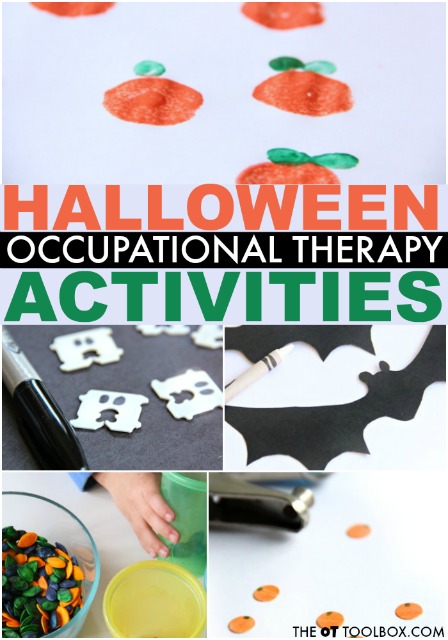
Halloween Occupational Therapy Activities

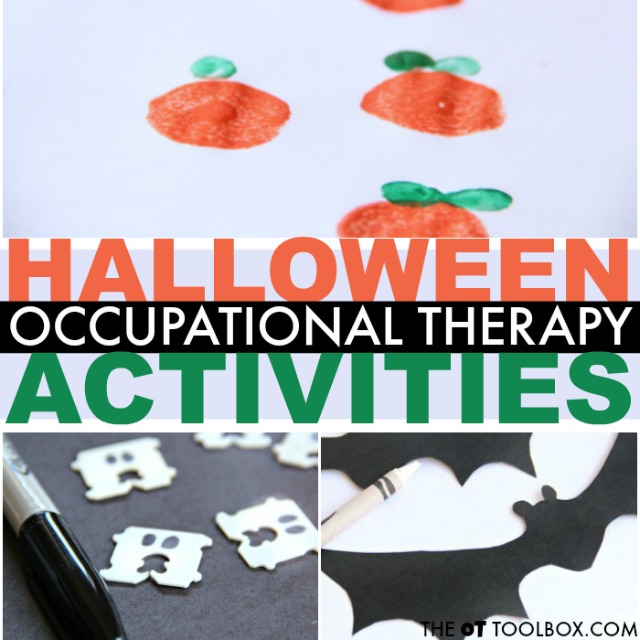
It’s that time of year! Halloween is just around the corner and so in your therapy clinic or school-based OT sessions, or even OT teletherapy, you may be thinking up Halloween occupational therapy activities that work on specific functional goals. Here, you’ll find a collection of Halloween fine motor activities, pumpkin occupational therapy activities, Halloween sensory play, and more. Use all of these ideas to help kids work on a variety of OT goals using a Halloween craft or ghost activity. This pumpkin deep breathing exercise is just one idea!

For activities and ideas to address all needs, check out these occupational therapy activities.

Here are occupational therapy themes that we’ve covered so far. Use them to make therapy planning a breeze…and make your life easier!

These halloween occupational therapy activities are great for working on skills in OT like fine motor skills, eye-hand coordination, scissor use, and more!

Halloween Occupational Therapy Activities

We LOVE to create and come up with fun crafts and activities that double as a tool for addressing specific skills!

Here you will find a variety of Fall and Halloween activities that can address skills such as fine motor, visual motor, visual perception, scissor skills, hand strength, dexterity, core stability and strength, executive functioning, and so much more.

Check out the variety of ghost crafts, pumpkin art, Halloween games, and other ideas. It just might be the perfect addition to your therapy plans this month!

One of our favorite activities for this time of year is our pumpkin deep breathing exercise. I love using this in every therapy session as a self regulation tool and warm up activity!

Ghost Occupational Therapy Activities

We’ve come up with some fun ghost activities here on The OT Toolbox! Try some of these ideas in your therapy clinic or as a home program recommendation this Fall. I love that these ideas can be done on an individual basis or as a small group. Use them in a classroom Halloween party planning or as a fun Fall fest activity.

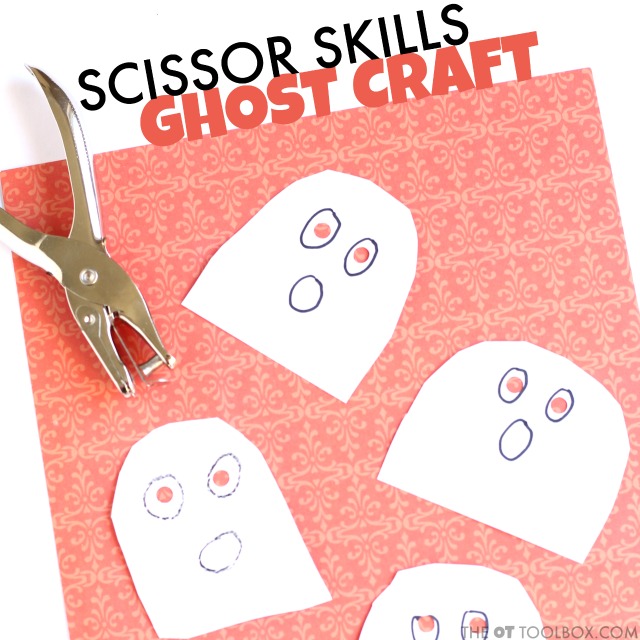
This ghost craft is an easy way to work on scissor skills. Kids can also address skills such as bilateral coordination, hand strength with a simple halloween craft that uses just paper, crayon, scissors, and a hole punch. Use these ghosts to decorate for Halloween and monitor scissor skills.

This ghost craft for sensory play is a fun one for kids to make but also use in sensory bins or fine motor activities.

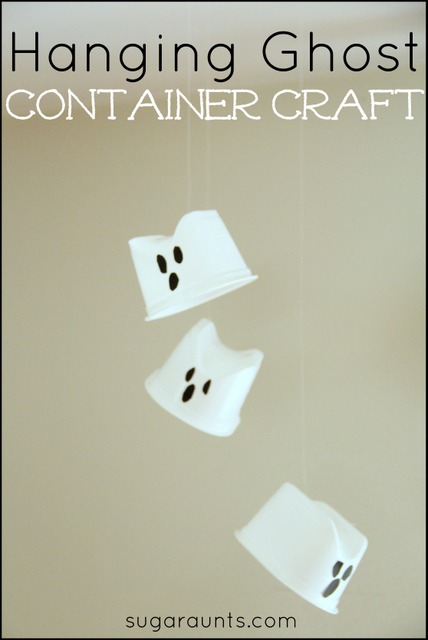
This ghost craft uses recycled materials and can be a tool for working on dexterity, precision of grasp, in-hand manipulation, bilateral coordination, hand strength, and more! These ghosts would make a fun addition to the therapy clinic, OT doorway, or even a bulletin board decoration.

This gross motor ghost game can be played over and over again while working on eye-hand coordination, visual tracking, visual convergence, core stability, reach, and other skills. Kids will participate in vestibular and proprioceptive input with a ghost theme!

Bat Occupational Therapy Activities

These bat activities will be an easy way to work on specific skills while making Halloween fun and not spooky for kids.

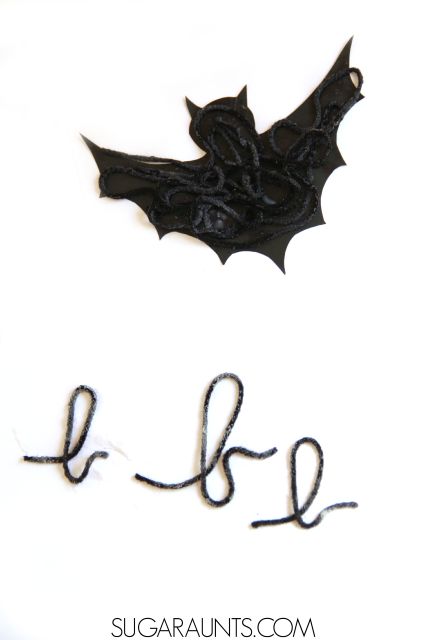
This bat Halloween craft is a fun on skills like scissor skills, bilateral coordination, fine motor skills, sensory input, and letter formation.

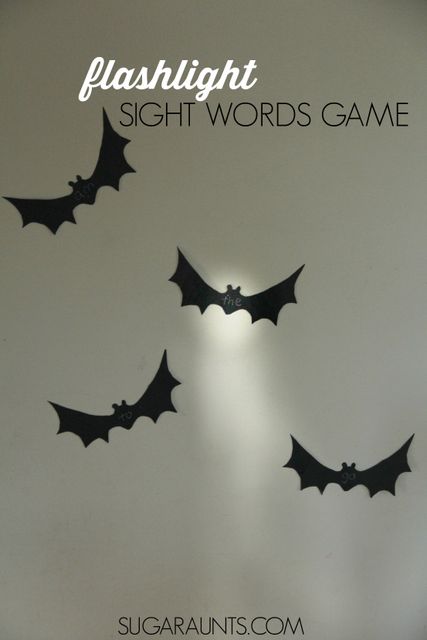
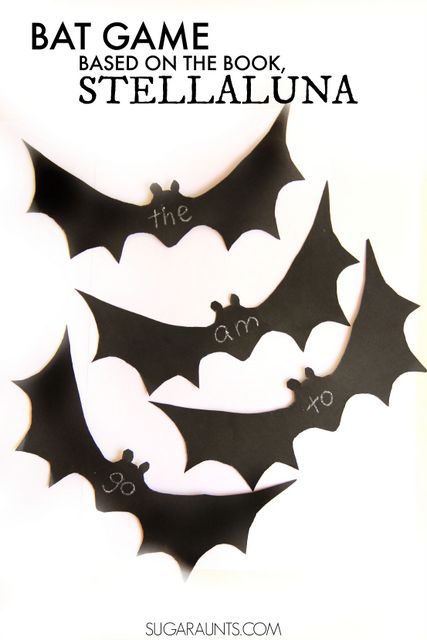
Looking to pair a Halloween book and activity for a party or small group? This Stellaluna activity can help kids with specific and purposeful skills such as sight word recognition or math skills while working on visual scanning, visual tracking, visual discrimination, figure-ground, bilateral coordination, crossing midline, and more.

Pumpkin occupational therapy activities for kids to build skills in fine motor skills, gross motor skills, sensory exploration, and mindfulness, using a pumpkin theme.

Pumpkin Occupational Therapy Activities

Be sure to check out the many pumpkin activities are to be found here on The OT Toolbox! Use these fall ideas all season long from Halloween through Thanksgiving!

The Pumpkin Activity Kit covers tons of fine motor skills, visual motor skills, coordination, and more.

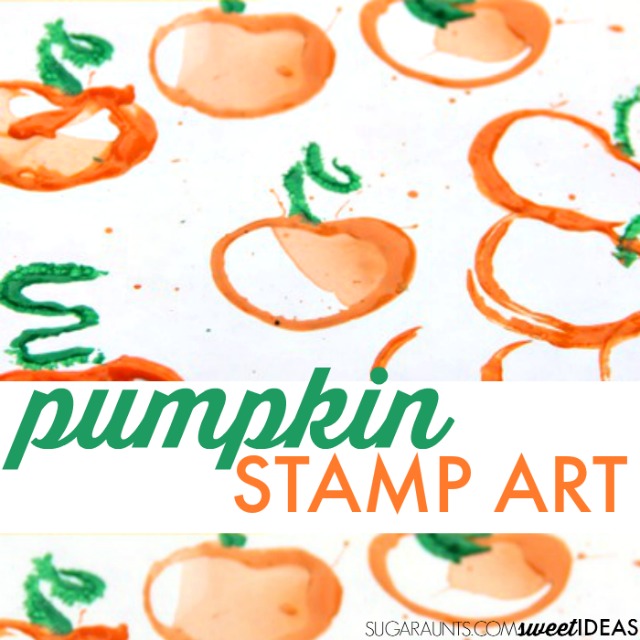
Kids can make pumpkin stamp art using a paper tube while working on bilateral coordination, crossing midline, eye-hand coordination, visual motor skills, visual perception, and fine motor grasp. You can also make pumpkin stamps with a foam curler or other stamp.

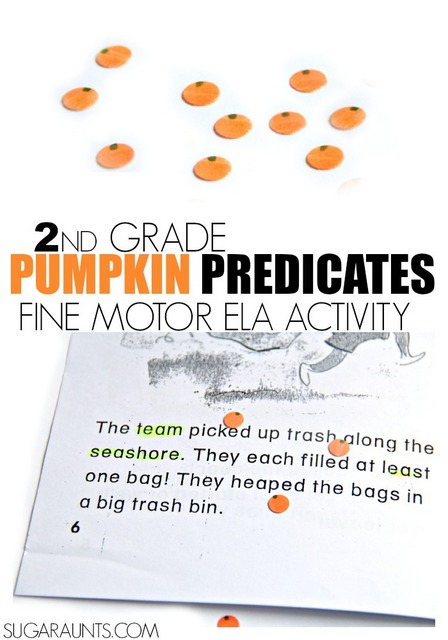
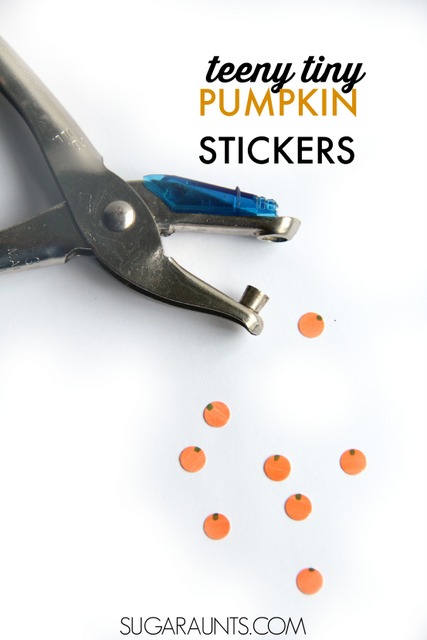
Pushing into the classroom? Work on English Language Arts, math, or other classroom lessons by using small pumpkin stickers right in the classroom. This pumpkin activity can be a big boost to fine motor skills, visual scanning, eye-hand coordination, precision, distal mobility, and more.

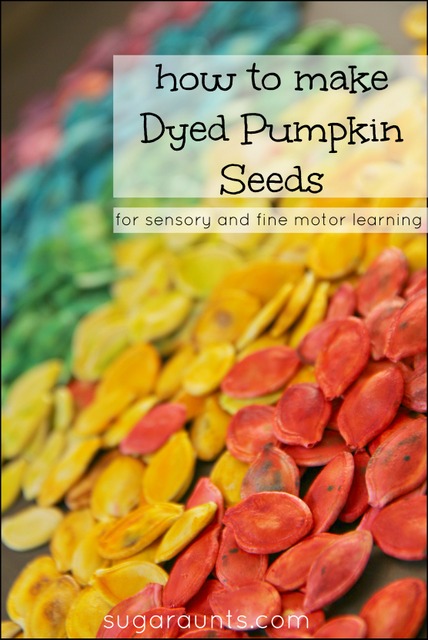
We know how awesome carving a pumpkin is for fine motor, gross motor, and sensory needs. Once you carve that pumpkin, use the pumpkin seed in sensory play by dying the pumpkin seeds. It’s a great addition to Halloween sensory bins, fall fine motor activities, and other seasonal activities.

Love Halloween sensory bins? Make a set of pumpkins from an egg carton to work on fine motor skills. We’ve used these pumpkins in so many ways over the years.

Spider Occupational Therapy Activities

Spiders don’t need to be spooky! These spider activities and games can be a powerful way to work in some much-needed skills!

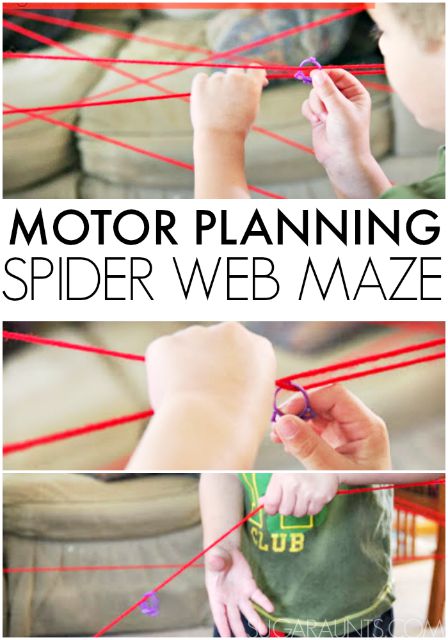
Work on bilateral coordination, motor planning, fine motor work, heavy work, vestibular input, and gross motor strengthening with this giant spider web activity.

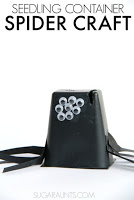
Make a spider craft using recycled materials to work on fine motor skills such as hand strength, in-hand manipulation, separation of the sides of the hand, pincer grasp, and scissor skills.

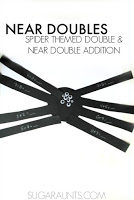
Helping out with math or other classroom lessons? This math spider craft that we did addresses doubles and near doubles but you could use it to work on any math facts or ELA lessons. Sneak in bilateral coordination, scissor skills and more with this fun spider activity.

Make a noodle spider craft and help kids with fine motor skills such as in-hand manipulation, separation of the sides of the hand, and more.

Halloween Sensory ACTIVITIES

Recommending a sensory task for kids at home as part of a home program? This Frankenstein smoothie recipe is an awesome way to encourage calming proprioceptive input through oral motor work. Kids can get in on the recipe creation action to sneak in a few executive functioning skills, too.

Halloween Fine Motor Activities

So many of the activities we shared above work on and strengthen fine motor skills. Here are more Fall fine motor activities that use items such as fall leaves, scarecrows, or other Harvest items.

We’ve included many Halloween fine motor activities in this blog post. They are great for building hand strength.

Support finger strength by using bat mini erasers in theraputty exercises. Include some Halloween dexterity activities like the fingerer yoga activities we show in the video below. The Halloween dexterity exercises are fun as a handwriting warm up or as a fun way to get those fingers moving. Check out our video below…or you can catch it over on YouTube.

These Halloween fine motor exercises would be a great warm up to a writing task or gross motor activity.

Fall Sensory Activities

We’ve shared a lot of Fall sensory activities here on The OT Toolbox! You can find all of the posts here:

Choosing Wisely Occupational Therapy Activities

Remember that the craft or activity is the means to working on specific underlying areas, but also, so often kids really struggle with completing aspects of play or crafts. Addressing certain skills right in the craft can make it meaningful and purposeful. When we talk about “Choosing Wisely“, we are occupation-based activities. AOTA has guided us in Choosing Wisely recommendations that we can consider when coming up with OT activities and ideas. Using scissors to work on a Halloween craft with kids is something they need help to become more independence (scissor use) via a fun activity that they are proud to complete and show off (a ghost craft for example). Consider the occupational performance components in crafts and activities that meet the specific needs of the child or individual.

In that way, using a craft in occupational therapy can address a variety of different skills, with different levels of accommodation or modification, input, cues, or difficulty, based on the specific needs as determined by the occupational therapy professional.

Use a Halloween occupational therapy activity in therapy planning in October with a ghost craft, spider activity, or pumpkin centers!

Halloween Activities for Occupational Therapy

What are your favorite Halloween Occupational Therapy activities? Is there something you do each year with the kids you work with? Let us know in the comments below!

Halloween Cutting Activities

Many times, occupational therapy practitioners work on the functional skill of cutting with scissors.

Snipping paper, cutting shapes, and making crafts require cutting straight lines and multi-angular shapes with scissors. We can use the Halloween cutting activities in occupational therapy sessions to work on this motor skill:

  • You’ll LOVE these free pumpkin scissor skills pages that allow kids to “cut the pumpkin” and work on line awareness, cutting curved and angled lines, and even coloring. It’s free to print and go!
  • Use this ghost craft to work on scissor skills this time of year.
  • Or, snip strips of paper to make a spider, pumpkin sensory bin filler, or squares of paper to fill a pumpkin template.

PUMPKIN ACTIVITIES KIT

For more pumpkin fun this Fall, grab the Pumpkin Fine Motor Kit!

Work on underlying fine motor and visual motor integration skills so you can help students excel in handwriting, learning, and motor skill development.

  • 7 digital products that can be used any time of year- has a “pumpkins” theme
  • 5 pumpkin scissor skills cutting strips
  • Pumpkin scissor skills shapes- use in sensory bins, math, sorting, pattern activities
  • 2 pumpkin visual perception mazes with writing activity
  • Pumpkin “I Spy” sheet – color in the outline shapes to build pencil control and fine motor strength
  • Pumpkin Lacing cards – print, color, and hole punch to build bilateral coordination skills
  • 2 Pumpkin theme handwriting pages – single and double rule bold lined paper for handwriting practice
Pumpkin activity kit
Pumpkin Fine Motor Kit– perfect for building skills with a pumpkin theme!

Halloween Play Dough Mats

I wanted to add a quick and easy Halloween fine motor activity that I love, because you need one interactive Halloween worksheet that can be used in so many different ways. It’s actually a Halloween play dough mat and I love using this as a therapy tool to support many different skills.

You can see in the video below how we used this play dough mat. I have this printable inside The OT Toolbox Membership Club.

You’ll print off the play dough mat. Then slide it into a page protector sleeve. Then, you can start building skills:

  • You can place craft pom poms on the mat.
  • You can roll small balls of play dough and then press them onto the circles on the mat.
  • You can write letters with a dry erase marker and then use a code to work on visual perceptual skills as you place colored craft pom poms onto the play dough mat to match letters. This is great for letter reversals.
  • Then, you can use a pickle picker to pick up and sort the craft pom poms.

It’s a great way to work on many OT goal areas at once! Here are more of our play dough mats we have on the website that you can use in similar ways.

Colleen Beck, OTR/L has been an occupational therapist since 2000, working in school-based, hand therapy, outpatient peds, EI, and SNF. Colleen created The OT Toolbox to inspire therapists, teachers, and parents with easy and fun tools to help children thrive. Read her story about going from an OT making $3/hour (after paying for kids’ childcare) to a full-time OT resource creator for millions of readers. Want to collaborate? Send an email to contact@theottoolbox.com.

Sensory Writing Tray

Visual Memory Game with a sensory bin

Last week, I posted a picture of a sensory writing tray on our Instagram channel. You might have seen it. It was a sensory tray designed to teach handwriting, letter formation, and early literacy skills (letter identification) with a sensory bin. That sensory writing activity has been on the “to-do” list to share with you for some time. Today, I’ve got it all lined up and ready to go for you! Read on for a writing tray that teaches handwriting AND so many other essential skills!

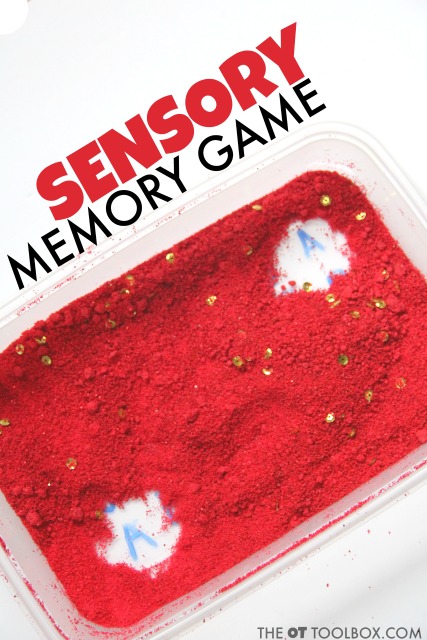
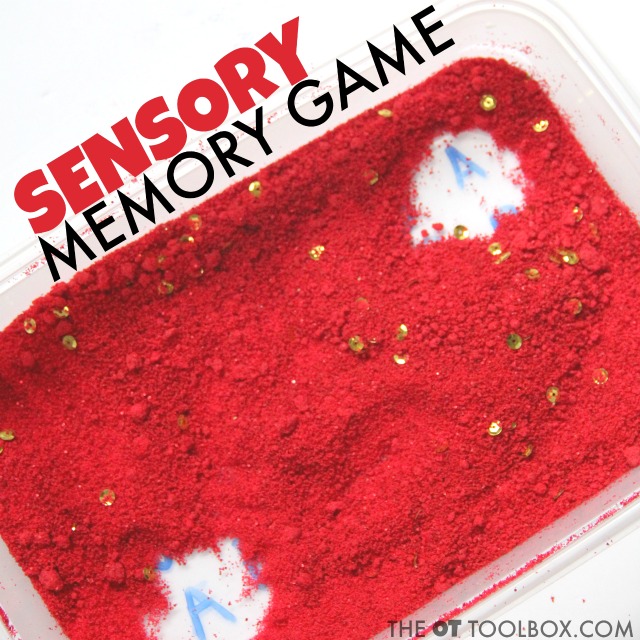
Play a sensory memory game using a sensory tray to work on letter identification and handwriting skills with kids.
Working on letters can be very fun with a sensory memory game.

Sensory Writing Tray Activity

Before I go any further, I wanted to touch base on a sensory writing activity. This sensory activity is designed to teach certain skills such as letter formation and letter identification needed for handwriting through the tactile sense. Using the senses and movement in handwriting is an aspect of kinesthetic learning which can be quite beneficial to so many students.

This particular handwriting activity helps kids with various underlying skills that play a part in handwriting as well. By manipulating the sensory medium in the writing tray, kids get to experience and build skills needed for handwriting. These include: bilateral coordination, use of the dominant and assisting hands, visual discrimination, form constancy, visual scanning, visual memory, visual closure, eye-hand coordination, visual motor integration, and fine motor skills (finger isolation, separation of the sides of the hand, in-hand manipulation, arch development, and others).

Writing Tray to Teach Handwriting

Using a writing trays for handwriting are such a hands-on approach to teaching writing. Kids really love to get their hands in a sensory medium and play…while working on the skills they need to learn letters. Manipulating sensory materials to write letters can be used in teaching letter formation in a way that gets the kids engaged and excited about handwriting.

We’ve shared quite a few writing trays here on The OT Toolbox:

Making a quick Writing tray with dyed rice is so easy with a pack of rice, some food coloring, and a plastic baggie. The best thing is that you can use that dyed rice over and over again for sensory play.

Here’s another easy writing tray using dyed rice. So easy, all you need is the rice and a low bin.

I don’t know about you, but I go through A LOT of coffee grounds. Use those old coffee grounds to practice writing with a writing tray with coffee grounds. This is another biodegradable sensory activity. When you’re finished with writing practice, use the grounds in a sensory garden.

Dyed salt is a great medium for using in writing trays. It’s easy to manipulate and is so versatile. Use caution with young children that may put things or materials in their mouths. Always use caution and best judgement with each individual child. This writing tray with dyed salt was a great way to work on bilateral coordination and symmetrical movements with a visual motor component.

We actually used grass seed to work on letter formation by gluing the seeds down, but part of the fun was making a writing tray with grass seed. It’s a really inexpensive way to work on letter formation and others skills. Then, use the seed to plant a patch of grass in the yard.

It’s kind of slowed down around here, but there was a time when the slime craze hit our house full-force. We used some of that slime to make a slime writing tray. So fun…and totally worth the clean-up!

Some writing trays can have the letters and words actually in the bin, like our sight word writing tray. It was another easy writing tray to throw together. In fact, that writing tray inspired the sensory writing activity that we are sharing today…

Use a sensory tray to work on letter formation and letter identification.

WRITing Tray to Teach Letters

We used just a few items to create this sensory writing tray:

  • Plastic casserole dish (glass would work to!
  • Marker, paper, tape
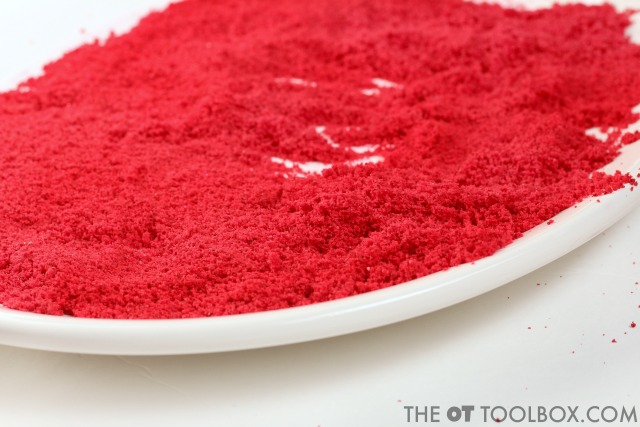
  • Dyed salt (We recycled the dried salt from this sensory activity.)

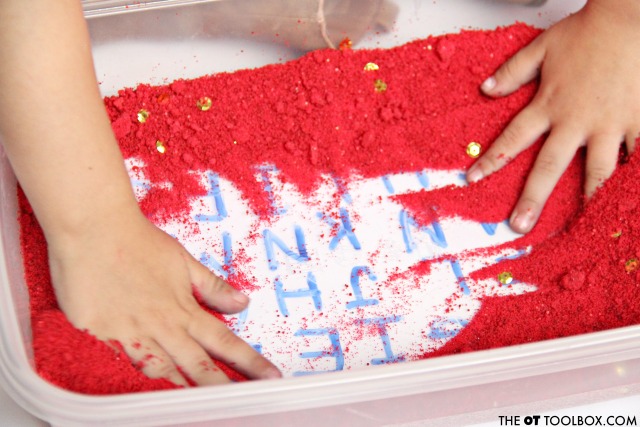
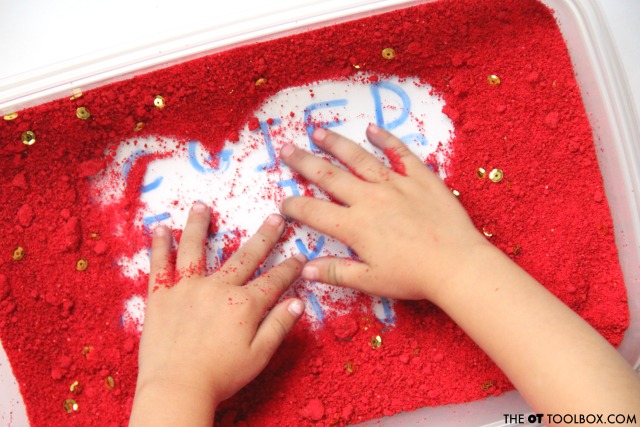
To set-up the sensory bin, use the marker to write letters in random order on the paper. You can write them in alphabetical order, but we wanted to work on a few visual perceptual skills such as visual scanning and visual memory by placing the letters in random order.

Tape the paper to the bottom of the tray (outside). You want the letters to show through the bottom of the dish from the inside. Another option would be to place the paper right into the bottom on the dish, but we wanted the salt and base of the dish to provide a contrast in temperature with this tactile sensory activity.

Kids can use a writing tray with salt to work on handwriting and letters.

You can make each letter of the alphabet, or make several of the same letter to work on letter matching, memory skills, and form constancy. Use upper case or lower case, or even numbers. This sensory bin is so versatile and the sky is the limit!

Pour in dyed salt or your sensory writing tray medium.

Use dyed salt to work on letter formation in a sensory writing tray.
Dyed salt is a great material for sensory writing trays!

Ask the child to start looking for letters. When they find the letter, they can trace the lines to “write
the letter with their index finger. We even played a memory game by searching for matching letters hiding under the salt.

Visual Skills in Handwriting

For this sensory writing tray, we made this handwriting tray in a style that actually worked on a wider variety of skill areas beyond simply copying letters from a form. In fact, there are so many skill areas being addressed with a single writing tray idea:

  • Visual discrimination
  • Form constancy
  • Visual Closure
  • Eye-Hand coordination
  • Visual Memory
  • Visual Motor Skills

FIne Motor Skills in Handwritng

When writing, kids need a lot of fine motor skills. In this writing tray activity, we work on several of those skills:

  • In-hand manipulation
  • Arch development
  • Separation of the sides of the hand
  • Finger isolation

Sensory Memory Game

Turn the sensory tray into a sensory memory game by writing sets of letters. Kids can take turns uncovering letters to “find each letter of a set. Match two upper case letters or two lower case letters. Or, match upper and lower case letters in a letter memory game that kids will love!

Kids will love working on letter identification with a sensory memory game using a salt sensory writing tray.

Fine Motor Activities with Playing Cards

Working on fine motor skills with kids doesn’t need to require the same old items every day. Recently, we’ve been sharing creating ways to promote fine motor skills with everyday items. Today, you’ll find fun fine motor activities with playing cards. We all have a deck of cards in a drawer or game closet…here are creative ways to use those cards to build the skills kids need for functional tasks like pencil grasp.

For more fine motor activities with everyday objects, try these fine motor activities using craft pom poms.

Work on fine motor skills using fine motor activities with playing cards to improve the functional grasp for pencil control and handwriting.

Fine Motor Activities with Playing Cards

Working on fine motor skills? Here are just a few ways that a simple item like l=playing cards can be used to promote fine motor areas like bilateral coordination, finger isolation, in-hand manipulation, arch development and intrinsic hand strength, and other areas.

Add a deck of playing cards to your STEM fine motor kit, too.
Playing with cards can be a great way to increase several fine motor skill areas:

Separation of the two sides of the hand- When holding the string, it is useful for the ring and pinkie fingers to bend into a fist in order to stabilize the hand.  This positioning is effective for a functional grasp on the pencil when writing. In this way, lacing cards boost fine motor skills as a pre-writing tool. 

Check out these easy ideas to address motoric separation of the hand.

Visual Motor Skills- Coordinating visual information with motor movements of the hands is essential for handwriting, cutting with scissors, and many other tasks.  Manipulating lacing cards is an excellent way to address these needs. 

Read more about visual motor skills.

Motor Planning- A motor plan is functional execution of a task which is viewed with the eyes and carried out with the hands in order to complete tasks, such as mazes, walking around obstacles, cutting along a line, and writing within a space on a form.  Visual motor skills can be difficult for children with visual processing difficulties.  Identifying and organizing information is in a motor plan works on problem solving skills.  

Read more about motor planning activities for kids.

Pincer Grasp:  Manipulating cards with a pad-to-pad grasp is a fine motor skill children need for many functional tasks.  Picking up small items like coins, beads, seeds, etc require a pincer grasp.

Eye-Hand Coordination: Eye-hand coordination is using the information received through the vision system to coordinate the hands with control, in order to complete a task, such as handwriting or catching a ball. Find more hand eye coordination ideas here.

FUn Fine Motor activities with playing cards

  • Clip clothes pins onto match numbers
  • Make the cards into mini lacing cards with a hole punch and some string.
  • Sort cards by color
  • Sort cards by number
  • Write words on cards and math to handwriting tasks
  • Create a coping strategies deck
  • Invent yoga moves for each card or suit in the deck. Use as a movement break activity
  • Slide paper clips onto cards, match the number of clips to the number on the card
  • Work on holding the cards and spanning them out in the hands
  • Encourage picking up one card as you can. Make it a card race! Pick up a single card as fast as you can. This is a great team activity
  • Play minute to win it games 
  • Turn the cards into crafts
  • Fold cards and crease to work on pinch strength
  • Use play dough to create a house of cards. Roll balls of play dough and stick cards into the dough
  • Teach kids to sort the deck as in beginning a card game
  • Work on mixing the deck with two hands
  • Pinch a single card between the thumb and pointer finger. Toss the cards into a target such as a basket

More fine motor activities

Love using regular, everyday items to boost the skills kids need? Here are a few more ideas you will love:

Print off some of these free cursive alphabet cards to work on fine motor skills AND cursive letter handwriting.

Make your own lacing cards to really boost up the fine motor work!

Strategic Thinking Games

Kids love games, and these strategic thinking games are fun board games for executive functioning. That’s why using games to help executive functioning skills is such a powerful method for development of skills like attention, prioritization, planning, and impulse control. Read on to find suggested strategy games and planning games for executive function that kids will love while improving the brain skills they need.

Use these games for improving executive function skills like planning, prioritization, strategy, and other executive functioning skills.

StrateGic Thinking Games

One of the best parts about working on EF skills is that they can be addressed through almost ANY activity! However, that’s also why they are so important, because almost any occupation requires EF skills.

There are many games out there that improve executive function and the skills that make up this cognitive super power. Here, we’re talking about a few recommended strategy games kids will enjoy.

What is Strategic thinking?

Strategic thinking involves the ability to analyze situations, make sound decisions, and plan and execute effective solutions with a long-term perspective.

It goes beyond day-to-day problem-solving and focuses on achieving specific goals by considering the broader context and potential consequences. You might even replace the phrase strategic thinking with critical thinking (there are slight differences, by the way)>

Strategic thinkers anticipate future challenges, identify opportunities, and align their actions with a clear vision or objective. This skill is crucial in daily activities as we plan and implement tasks that require thinking strategically.

Board games for executive functioning skills

You can actually use board games to support strategic thinking, and the skills that make up executive functioning.

Integrating board games into therapeutic interventions or educational settings can be an effective way to support the development of strategic thinking skills. Here are some ways board games can be used for this purpose:

Problem-solving Opportunities: Board games often present players with challenges and obstacles that require strategic thinking to overcome. Encourage players to analyze the current game state, anticipate potential moves, and develop a plan to achieve their objectives. They can use the information in front of them to prioritize the steps they should take to accomplish a task within the game. This mimics real-world problem-solving scenarios.

Decision-Making Practice: Board games offer a safe and controlled environment for individuals to practice decision-making. Players must consider the consequences of their moves and weigh different options, fostering the ability to make informed and strategic decisions.

Long-Term Planning: Many board games involve a long-term strategy to achieve victory. Players need to plan several moves ahead, considering how their current decisions will impact future outcomes. This encourages the development of foresight and planning skills.

Adaptability: Games with changing rules or unexpected events encourage players to adapt their strategies in response to new information. This flexibility in thinking is a key aspect of strategic thinking, helping individuals learn to adjust their plans when needed.

Social Interaction: Board games often involve social interaction and collaboration. Negotiating with others, understanding their strategies, and adapting to different playing styles all contribute to the development of social and strategic skills.

Critical Thinking: Board games stimulate critical thinking by requiring players to assess information, evaluate alternatives, and make reasoned judgments. This analytical thinking is fundamental to strategic decision-making.

Resource Management: Many games involve the efficient use of resources to achieve objectives. This can translate into real-life skills related to time management, budgeting, and prioritization.

Rule Understanding: Board games typically have rules that players must understand and follow. This fosters attention to detail, procedural understanding, and the ability to work within established frameworks – all valuable skills in strategic thinking.

So, let’s get to some board games to support this skill!

Strategy Games for Executive Function

Strategy games are one of many fun ways to improve executive functioning (EF) skills! The best part about these games are that children and teens often do not even realize that they are developing a challenging skill set. Try some of these fun and engaging games to improve your clients’ executive functioning skills.

Note: Amazon affiliate links are included in this post.

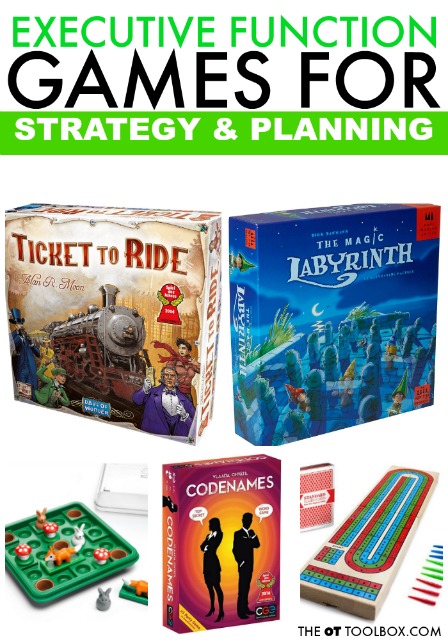
Strategy games are a favorite way to work on EF skills. A few favorites include:

Ticket to ride game to improve executive function

Ticket to Ride (ages 8+, up to 5 players):

Ticket to Ride is a popular game with many versions based on geographic locations. The original is based on a United States/Canada map. The point of the game is to complete a series of “routes” without having your opponent(s) block your path, all while being the first to run out of train figures.

Players earn points for laying down track toward completing their routes. There are multiple rule intricacies that require working memory, along with the need to plan and predict your opponents’ moves!

Labyrinth game for improving executive function

Magic Labyrinth (ages 6+, 2-4 players):

Magic Labyrinth is a fantastic fantasy-based game. Players take on the role of being magicians who are searching for treasure within a labyrinth. However, just like every good strategy game, there is a twist! The labyrinth cannot be seen.

If magicians bump into the obscured walls, their magnet falls off and they are required to return to their starting corner. This requires planning skills, along with working memory as to where the walls are placed. The walls are moveable, allowing for endless fun, since players will not be able to permanently memorize the location of walls in between games!

Jump in game for executive function skills

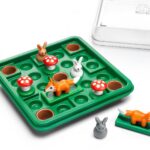
Jump In’ (ages 7+, 1 player):

Jump In’ is a cool 1-player game from Smart Games. Smart Games has many options for 1-player strategy games starting in preschool all the way up to games for adults.

Games come with a challenge book with several levels of difficulty. The goal of Jump In’ is to get all of the rabbits into their holes without getting caught by the fox! Jump In’ primarily requires the player to use planning and problem-solving skills.

Cribbage game for executive function skills

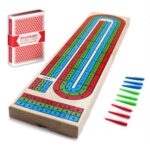
Cribbage (recommended 7+, 2-3 players):

Cribbage is a classic card/board game requiring impulse control, working memory, monitoring, and more! While there is not a formal minimum age for cribbage, players should be familiar with doing addition up to 31 in their head if playing without an adult to support.

There are many rule intricacies in cribbage, requiring players to constantly be mindful of the points that they earned and could potentially give to others by playing their cards. The goal of cribbage is to be the first player to get your pin to the finish line.

Codenames game for executive function skills

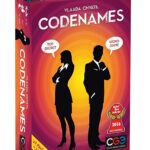
Codenames (ages 10+, 2-8 players):

Codenames is a fantastic game for perspective-taking, monitoring, working memory, planning, and impulse control. The makers of Codenames list a recommended age of 14, but board and strategy game enthusiasts feel that ages 10+ is a more realistic age minimum.

The goal of Codenames is to “contact” all your undercover agents before the other team through giving a series of one-word clues. However, as always, there is a catch! If your team guesses the assassin card, you instantly lose the game!

Using Games as a Fun Way to Improve Executive Functioning

Ultimately, strategy games are a fantastic way to improve executive functioning in a fun, age-appropriate way! While this is just a sampling of a few favorites, there are many more available. Have fun, and good luck!

Colleen Beck, OTR/L has been an occupational therapist since 2000, working in school-based, hand therapy, outpatient peds, EI, and SNF. Colleen created The OT Toolbox to inspire therapists, teachers, and parents with easy and fun tools to help children thrive. Read her story about going from an OT making $3/hour (after paying for kids’ childcare) to a full-time OT resource creator for millions of readers. Want to collaborate? Send an email to contact@theottoolbox.com.

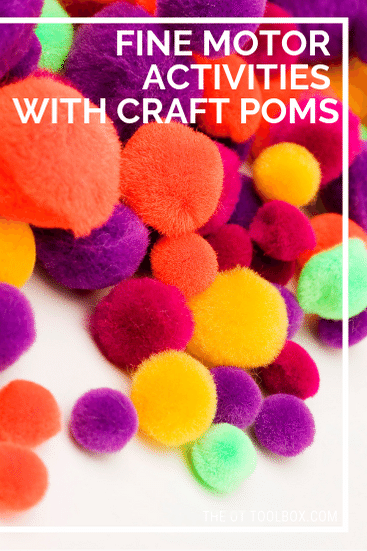
Fine Motor Activities with Craft Pom Poms

There is a new series here on The OT Toolbox! We’re talking all things fine motor activities wand the fine motor skills needed for functional tasks. These are fine motor activities for preschoolers and fine motor activities for toddlers to help kids develop the skills they need. These fine motor ideas are easy and quick ways to boost fine motor abilities using an item that is probably already in your craft supply bin or therapy bag. Craft Pom Poms are a great tool for fine motor development while improving dexterity and the motor skills kids need. Read on for fun and easy ways to use craft pom poms in fine motor play!

These fine motor activities with craft pom poms can help kids Work on fine motor skills to improve fine motor skills.

Kids need more FIne MOtor Activities

You may have heard stories about how kids are lacking in fine motor skills more and more. THere are several reasons for this problem. It’s very concerning! Kids have less outdoor time and more scheduled activities, allowing for less free-play. Kids need fine motor skills for school and play. When fine motor skills are impaired, there may be challenges with pencil grasp, functional tasks like scissor use, clothing fasteners, and tasks like manipulating materials.

Easy Fine Motor Activities with craft pom poms

Adding more fine motor activities into a child’s day can be a struggle. So having an easy list ready to go makes recommending fine motor activities a no-brainer. Use these activity ideas in fine motor home programs or in the classroom for fine motor centers. Adding them to math centers would be easy…craft pom poms are fun to sort, count, and manipulate!

Why Use Craft Pom Poms in FIne Motor Activities?

Craft pom poms are so versatile! There’s a reason why every OT has them in their therapy bag of tricks! Craft pom poms are a great way to work on various fine motor skills including:

Separation of the sides of the hand– Pom poms make a great item to hold in the palm while encouraging movement and precision with the pointer finger, middle finger, and thumb.

Pincer grasp– Craft pom poms make a powerful means of promoting the precision grasp between the thumb and pointer finger.

In-hand manipulation– Craft pom poms can be used as a manipulative item for transfering from the palm to the finger tips or vice versa. This is an essential skill needed in pencil grasp.

Finger isolation– Craft pom poms can be used in various ways to promote finger isolation needed for fine motor dexterity and functional tasks.

Eye-hand coordination– This skills is an essential fine motor precision skill needed for so many functional tasks. Craft pom poms can be a powerful way to work on this skill area.

Work on fine skills with craft pom poms.

Craft Pom Pom Activities

Here is a big list of activity ideas for using craft pom poms to work on fine motor skills. What would you add to this list? To start, here are more fine motor activities that use craft pom poms. Using this craft item in fine motor development requires easy set-up with activities like the ones listed below. You’ll see using a water bottle to work on fine motor skills in the list. Here’s a better description of how to make that craft pom pom fine motor activity work.

  • Drop craft pom poms into an empty water bottle
  • Use tweezers to place craft pom poms into an ice cube tray
  • Pinch them with tongs or tweezers
  • Pinch them with clothes pins
  • Poke toothpicks into craft pom poms
  • Pound a golf tee into a craft pom pom, using a hammer and a cardboard box
  • Press them onto double sided tape
  • Squeeze craft pom poms with color coded fingers. Use color-coded hair bands to mark fingers
  • Hide them in the palm of the hand and drop into color coded spice containers
  • Fill containers by sorting the pom poms by color
  • Create a color by number picture with craft pom poms
  • Press them into paint and dot paint by squeezing and swiping pom poms onto paper 
  • Place a certain number of pom poms onto number cards or playing cards
  • Fill number puzzle by placing pom poms into the open spaces one-by-one
  • Use craft pom poms to form numbers and letters
  • Press them onto contact paper
  • Create texture mazes with clear packing tape
  • Create a fine motor ninja course using craft pom poms to hop fingers over and around
  • Make a Simon game board by using craft pom poms to form “buttons”
  • Make crafts! This fine motor craft is just one idea.
  • Create a twister board for fingers using the craft pom poms for color spots

More Fine Motor Activities

Looking for more ways to build fine motor skills? Try some of these ideas from The OT Toolbox archives:

Work on scooping and pouring with refined fine motor skills using small objects like beads.

Improve thumb opposition using small items like paper clips.

Add visual perceptual work to fine motor activities with fine motor color sorting activities for improved eye-hand coordination.

Fall Fine Motor Activities

Fall fine motor activities for kids to develop fine motor skills.

As the leaves begin to change colors and fall, and the pumpkin spice everything is in the air, it’s a great time of year to add some fall themed activities to your therapy toolbox or even just add to play! Try a few of these fall fine motor activities to encourage and strengthen fine motor skills, a tripod grasp, fall fine motor activities for preschoolers, fall ideas for toddlers, or fall occupational therapy activities!

Be sure to check out our free Fall Sensory Activities booklet. It’s full of family-friendly sensory activities that celebrate the season AND promote motor skills through sensory experiences. The activities in this free booklet are a fun way to encourage fine motor and gross motor movement and development through fall activities. Scroll to the bottom of this blog post to grab your copy!


Use these fall fine motor activities to help kids to improve fine motor skills like tripod grasp, bilateral coordination, in-hand manipulation, separation of the sides of the hands, dexterity and other fine motor skills kids need.


Fall Fine Motor Activities

These fall fine motor activities are ones that boost the skills kids need for tasks like pencil grasp, managing clothing buttons and other fasteners, manipulating small items, opening containers and so many other fine motor tasks! Enjoy the season of Fall with a fine motor twist!


Crunch leaves– This is a seriously satisfying activity, according to my kids! Read more about using the season’s finest splendour in a Fall Leaves occupational therapy activity that can be used to work on auditory processing, sensory play, bilateral coordination, crossing midline, and fine motor skills like arch development, grasp strength, separation of the sides of the hand, and more. 
 
Add fall fun to play dough with this Fall Fine Motor with Play Dough. It’s an easy way to encourage small hands to develop the strength needed in the intrinsic muscles of the hands as they manipulate play dough with a few extras from the season. Use a fall scented play dough to add to the activity.
 
Cut Leaves with Scissors. If you live in an area with colorful fall foliage, use those leaves to work on scissor skills! Kids will love to cut leaves into small pieces or snip shapes from leaves. Make art with the leaves by glueing them onto paper or just snip and cut! We worked on line awareness by adding lines to our leaves, but you could just work on snipping leaves in half or cutting around the edges. If you are in an area without colorful leaves that fall this time of year, just use paper leaves or whatever you’ve got in your area.
 
Use Fall Leaves to work on Pre-Writing Lines and Visual Motor Skills. This is a fun way to work on visual motor skills needed for pre-writing tasks like forming and copying shapes and letters. Kids can work on crossing midline and the eye-hand coordination needed for writing, all using colorful fall leaves. This activity would work with acorns, seeds, or other small seasonal items too.
 
This Fall Leaves Craft uses leaf shapes to work on bilateral coordination, tripod grasp, eye-hand coordination, and more as kids create a seasonal fall craft. This fall craft may be better for older kids, but it’s a great introduction to sewing too.
 
There is just something about punching holes in leaves! Really boost that hand strength by Punching Holes in Leaves with a Hole Puncher. This activity uses fall leaves to strengthen the gross grasp of the hand while creating leaf confetti. Kids can pick up and manipulate the leaf holes to really work that pincer grasp. Glue the small circles onto a paper to along a line to promote more eye-hand coordination and fine motor skills.
 
This Pumpkin Stamp Art is an old craft our our website that really boosts fine motor skills with a fall pumpkin theme! Kids can create stamp art with a paper towel tube or toilet paper tube while working on skills like grasp and precision of grasp, crossing midline, and arch development. This is a great craft for a small group or for a therapy caseload to complete with various graded components based on individual needs.
 
Fall Fine Motor Apple Tree Activity– This is another fall fine motor activity that uses a hole puncher to really boost hand strength and gross grasp. Punching holes with a hole puncher allows kids to strengthen their hand strength while encouraging skills like bilateral coordination and eye-hand coordination. 
 
Fall Fine Motor Apple Seed Activity can be just the thing for toddlers to practice eye-hand coordination needed to scoop and pour objects. This activity encourages pincer grasp, in-hand manipulation, separation of the sides of the hand and other fine motor skills like precision of grasp. What fun!


Kids will love these fine motor activities with a fall theme that help kids with the fine motor skills they need for so many tasks like pencil grasp, handwriting and other fine motor skills, all with fall fine motor activities that are fun and fabulous!


MORE Fall Fine Motor Activities Kids will LOVE…

 
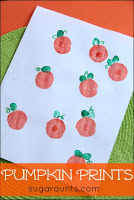
A fall fine motor craft like this Thumbprint Pumpkin Craft can be a powerful tool to promote separation of the sides of the hand, finger isolation, as well as strength and dexterity of the radial or precision side of the hand. This precision of the thumb that occurs in thumbprint fine motor crafts is especially important as distal thumb flexion can be helpful in dexterity in a tripod grasp when holding a pencil. 
 
Ahhh, sunflower seeds are a tool that can be used in so many fall fine motor activities for kids! From the pincer grasp needed to hold them to the in-hand manipulation necessary to manipulate them within the palm, sunflower seeds are a creative and fall festive way to encourage fine motor strengthening and development this season! Kids can make this Fall fine motor Sunflower Craft and really boost those fine motor skills with a fall craft that will look great hanging on the wall!
 
There’s another seed this season that plays a big part in the development and strengthening of fine motor skills! Pumpkin Seeds! Pumpkin seeds can be used to improve dexterity, grasp precision, in-hand manipulation, arch development, grasp strength, and so many other areas. Use food coloring or liquid watercolors to dye pumpkin seeds after they’ve been scooped out of a pumpkin. (Get the kids in on that fine motor task, too!)  The, use those colored pumpkin seeds to scoop, sort, drop, pinch, and play while building fine motor skills. You can find the directions to color pumpkin seeds and read all about why and how this activity helps kids build fine motor skills in our Fall Fine Motor Activity with Colorful Pumpkin Seeds activity.
 
THEN, use those colored pumpkin seeds to extend the fine motor fun even more by creating a Fine motor Fall Suncatcher that kids can make and hang on a window. Let the kiddos get in on hanging the suncatchers because working on a vertical plane is an awesome way to strengthen the core and proximal shoulder/shoulder girdle which is oh, so important for fine motor tasks!
 
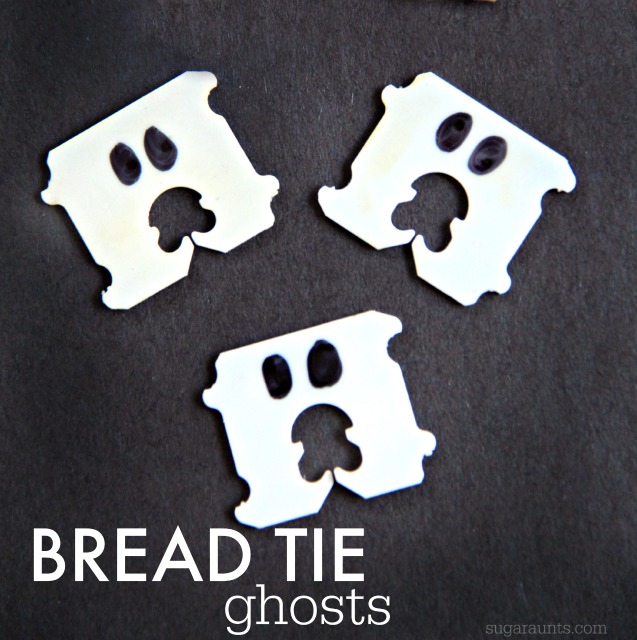
One more way to address fine motor needs this fall is to save up those bread ties. The plastic bread ties that you find on loaves of bread or items like bagels are great for manipulating and strengthening fine motor skills. Kids will love this Bread Tie Ghosts Fall Fine Motor Activity where kids can manipulate and manage bread ties while strengthening fine motor skills this fall!


What are your favorite fall fine motor activities for kids?

Get the kids building fine motor skills with these fall fine motor activities like fall leaves, fall crafts and other fall fine motor ideas!

Fall Activities for Motor SKills and Sensory Needs

Work on fine motor skills this Fall AND address sensory needs while experiencing all that the Fall season has to offer! Grab your free copy of the Fall Sensory Experiences Booklet to create sensory diet activities that meet the needs of individuals in a Fall-themed way! Enter your email address below and you will find the Fall Sensory Experiences Booklet delivered right to your inbox. Enjoy!

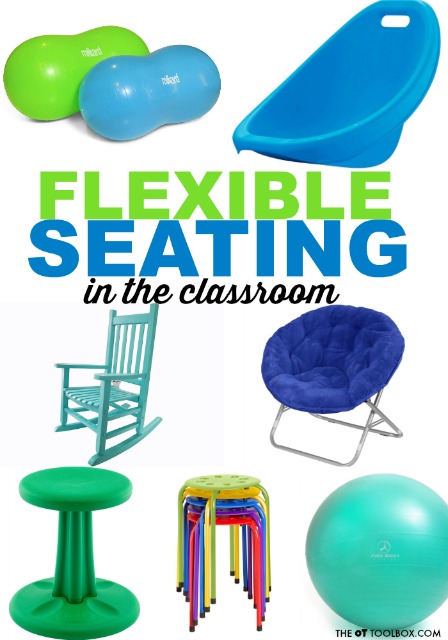
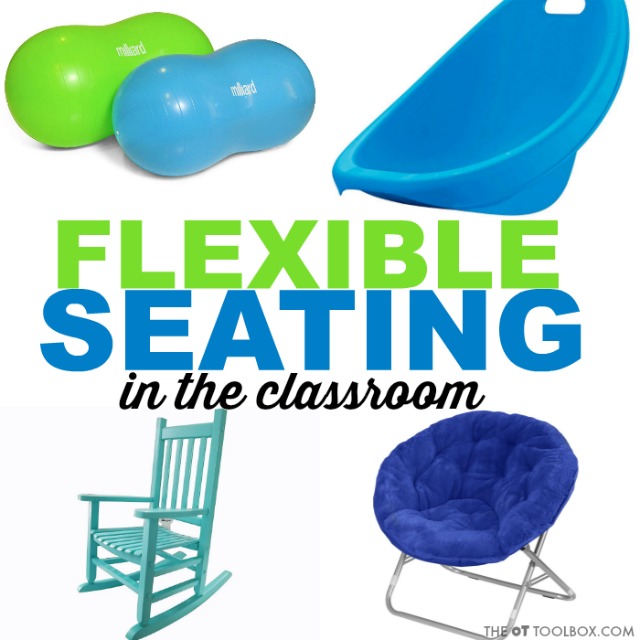
Flexible Seating in the Classroom

THese flexible seating in the classroom ideas are helpful to improve attention, focus, and learning in students.

It’s that time again when we are heading back into the school year. Teachers are getting into the classrooms and setting up room arrangements. School-based OTs are gearing up for the back-to-school chaos. When the thoughts of classroom organization and caseloads come into mind, flexible seating in the classroom ideas may not be the first thing you think of. Seating options may even be a part of a classroom sensory diet. But here’s the thing: Flexible seating ideas are always good to keep in mind! There are so many benefits to flexible seating arrangements. From DIY flexible seating ideas to types of seating ideas that can be used in classrooms…there is a lot to think about!

flexible seating in the classroom with out of the box ideas that kids will love for learning.

Flexible Seating Ideas for the CLassroom

There is so much to think about when it comes to accommodating to various seating needs. Positioning and specific student needs are just part of the puzzle. Facilitating learning while encouraging collaborations among students is important and the primary concern when it comes to out-of-the-box seating arrangements. Below, you will find various flexible seating for the classroom and information on the benefits of flexible seating ideas…as well as how to adapt to this classroom sensory strategy.

Things to consider about Flexible Seating

When considering flexible seating ideas for the classroom, there is a lot to think about. These considerations include a variety of needs including behavior, cognitive needs, physical abilities, posture, and more.

Many times therapists are consulted regarding specialized seating as a result of postural needs. In these cases, an individualized assessment may be warranted and aspects of seating should be analyzed before addressing specific seating needs:

Posture and seating needs may be a result of sensory issues such as physical limitations, weakness, range of motion as a result of tone issues or spasticity, sensory impairments,or other needs.

Physical limitation or deformities may impact seating posture and positioning. These may include posterior pelvic tilt, pelvic rotation, scoliosis, joint contractures, leg length discrepancies, head and neck positioning, extremity limitations, or other concerns. Each of these may impact learning and attention in the classroom.

When providing a new or novel seating option in the classroom, there are considerations to keep in mind as well. A flexible seating option may not be the primary classroom seating situation. In other words, it may be the best situation for the classroom learning to occur in traditional desks. Flexible seating in the classroom can be provided for supplemental learning, small groups, independent reading, or other similar activities.

In some cases, it’s important to consider optimal support in seating options including for those students with physical needs. As a result, some situations may not warrant a full classroom of flexible seating. Chairs and surfaces may not provide optimal postural alignment in order to provide adequate trunk support. Upper extremity mobility and positioning is important to consider if students will be using the seating arrangements for writing tasks. Additionally, considerations such as correct height/depth of the seat and the placement of both feet on the floor is needed for writing tasks.

Flexible seating in the classroom, ideas to help kids with sensory needs.

Benefits of Flexible Seating in the Classroom

A primary benefit of alternative seating options is the improvement to learning and attention that can occur. There may be several reasons that various seating options offer in the classroom.

  • Opportunities for Choices- Students may find that the ability to make a choice in their seating situations makes all the difference in learning and attention. Some students may really like the option to pick where they sit!
  • Something for Everyone- When there are several options for seating in the classroom, it can be one way to meet the needs of a whole classroom. Some teachers may find that kids change in their activity or attention levels throughout the day. When additional movement or proprioceptive input is needed, an alternative seating method may be just the ticket to learning.
  • Heavy Work Opportunities- Use of various flexible seating techniques in the classroom can offer occasional or scheduled use of flexible seating options can provide opportunities for heavy work input by moving desks, bean bag seats, or other seating set-ups as students or a specific team of students move furniture from determined positions. Don’t forget the sensory benefits of moving desks and chairs!
  • No Singling Out- When there are various flexible seating options in the classroom, no child is singled out. This is important for the child with sensory issues or self-regulation needs. Some students may need extra movement or heavy input to facilitate learning, and when the whole classroom has the option to choose a beanbag for reading time, the flexible seating methods are there for everyone…and no student feels singled out based on needs.

Flexible Seating Ideas for the Classroom

Now that we’ve covered considerations and a few benefits of flexible seating ideas, let’s cover some specifics! Below are alternative seating methods that may work in the classroom.

You’ll find a list of options for adding proprioceptive input to the seating system, as well as a large list of alternative seating ideas. Some of these are able to be purchased (Amazon affiliate links are included below). Other options are quite frugal or are DIY ideas. Have fun exploring and considering the flexible seating ideas!

Flexible seating and proprioception input

Sensory benefits play a big part of choosing the best flexible seating option. While some alternative seating options provide sensory input or feedback via the positioning, others provide heavy input by hugging the student. There are many ways to add weight that provides a calming benefit into seating ideas. Consider some of the options below in adding to a seating system:

Tips for adding proprioceptive input or weight to a alternative seating system:

  • Add a weighted lap pad
  • Try a therapy band or bungee cord to the chair legs
  • Use a body sock or fabric tube to the legs of the chair. Done in a non-restricting way, this tube can be a place to slide legs into while sitting in a regular chair
  • Bean bag for under/over the child
  • Computer lap desk over the child’s legs (Can be used as a writing station)
  • Homemade bean bags over legs or feet. Slide these into tube socks or knee-high socks and knot two socks together to create a weighted tube to drape over legs or the shoulders.
  • Under-the-table sling
  • Therapy swing in the classroom or outdoor space
  • Add velcro wrist weights to the inside of a 4 inch binder. Use the binder as a lap writing surface.
  • Encourage tummy time writing. (Write, draw, or read while lounging on bellies on the floor. Make this a fun reading experience by asking students to bring in a flashlight from home.)
  • Try a weighted fidget tool that can be used while seated at a desk.
  • Try some of the additions listed and described below.

Remember that finding an ideal seating system can require a lot of investigation and trial and error. Some students may benefit from one of the ideas listed here and others may require a mix of several options. Keep it individualized and remember to consult your child’s occupational therapists regarding seating ideas.

Flexible Seating Ideas

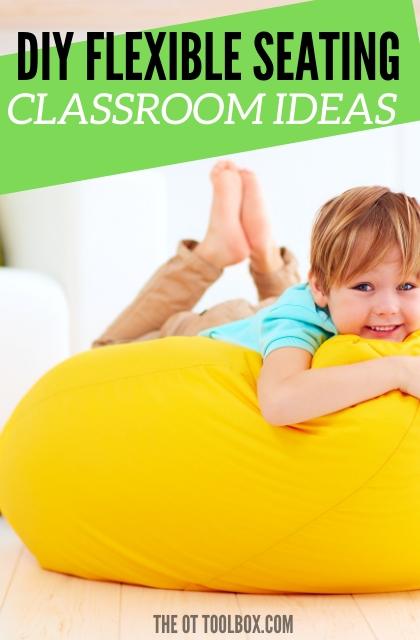
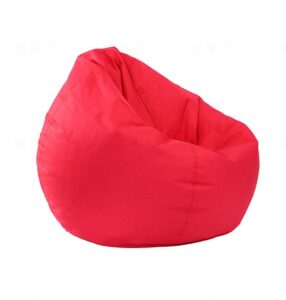
Bean bag chair is a flexible seating idea for the classroom

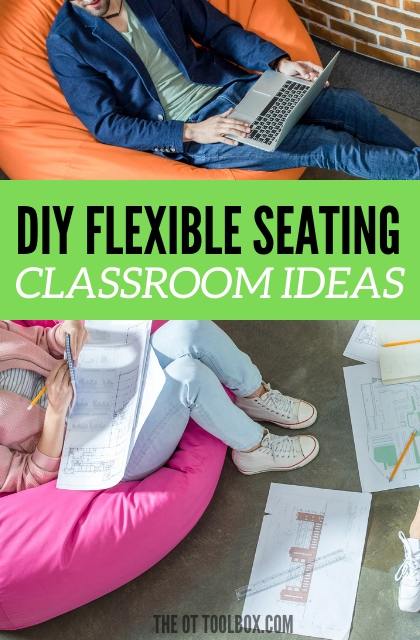
Bean Bag Chairs- Use these on the floor or at a low table. Consider lowering a table to 2-3 feet off the ground for a low writing and reading surface. Other times, bean bags can be used in small group work or for quiet reading. Consider using a bean bag as a cover for legs to provide heavy input through the legs. There are some inexpensive bean bag seat options available. There are also a few varieties of stuffed animal bean bag covers that create seats using old stuffed animals.

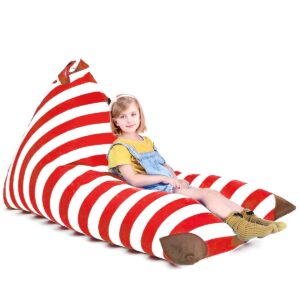
Stuffed Animal Bean Bag Seat- Ask around for stuffed animal donations from family and friends! This bean bag cover creates a bean bag seat using old stuffed animals as a seating option and can be adjusted as needed. Add more stuffed animals to fill the seat or take some out depending on the child’s sensory needs. This stuffed animal cover comes in a larger size that can be used as a lounger chair.

Use a duvet lounger as a flexible seating idea in school.

Duvet Lounger- Using the same concept of filling a bean bag with upcycled stuffed animals is the DIY version of using a duvet cover as a method to create a lounger seat. Fill a duvet cover with cushions, pillows, or stuffed animals and create a crash pad that can be used as a lounger seat for the classroom or home.

A t-stool is a great flexible seating idea for the classroom.
The Stability Tube Chair is a T-Stool seat for the classroom or home.

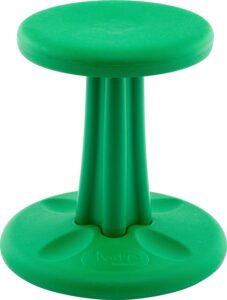
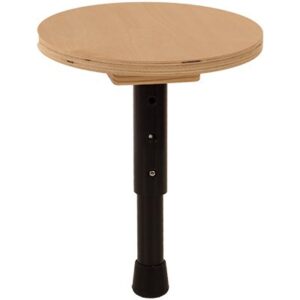
T-Stools- A T-stool is a common seat seen in classrooms. The stool allows students to wobble, move, and wiggle just as their bodies need, while reading, writing, learning, and listening! You’ll find a variety of T-Stools available: The Kore Wobble Chair is great for grades K-3 and provides a larger base of support. The Stabili-T Tool Tube provides less support but requires more core contraction and work, allowing for more movement. A T-Stool Single Leg stool offers more vestibular input given a much smaller base of support and an adjustable height option.

Single leg T-Stool offers a flexible seating option for classrooms.

Milk Crate with a Ball Inside– Going for a multi-option flexible seating arrangement in the classroom? Adding a large kickball or small therapy ball inside a milk crate is a great option for the frugal. This is one way to create several seats for a lower cost. Line the milk create up under a low table for a centers activity or small group.

A therapy ball makes a great flexible seating option in classrooms.

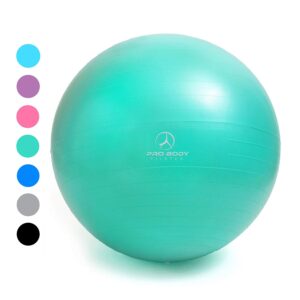
Therapy Ball– Another frugal means of offering opportunities for movement and sensory input in the classroom is using therapy balls. There are many options available on the market and in stores. Search for yoga balls or exercise balls to find the best prices, in many cases. Worried about them rolling away or becoming massive projectiles in the classroom? Make a “station” using a hula hoop as a base.

The peanut ball seat is a flexible seating idea for classrooms.

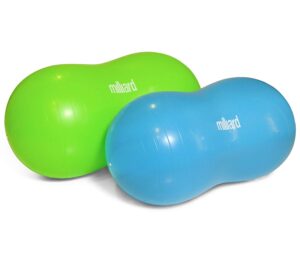
Peanut Seat- A different version of the therapy ball is the peanut ball seat. Kids can use these seats in a variety of ways, sitting or lying prone on the ball. The peanut ball allows for only unidirectional rolling so they can be easier to contain in the classroom setting when compared to a round therapy ball.

Use a sensory swing indoors or outdoors, a great alternative seating idea for the classroom

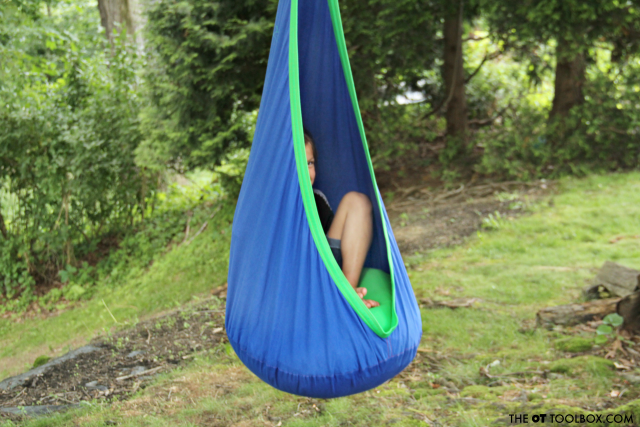
Sensory Swing- A sensory swing is a versatile seating option for reading, small group work, individual work, or a much-needed sensory break. We’ve tried and loved the Harkla Sensory Pod Swing for it’s cozy support and use as a calm-down space. The great thing about Harkla sensory swings is the easy-to install ability to place them in a classroom. We tried ours outdoors too, for an outdoor sensory swing option. Kids love the outdoor sensory swing in a shaded area such as under a patio deck or even hanging from a tree limb.

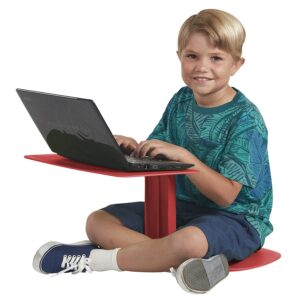
A portable laptop stand is a fun idea for flexible seating in the classroom.

Portable Laptop Stand- This portable laptop stand doesn’t need to be used for just laptops! Use it as a writing station or for a small reading center. I would love to see a DIY version of this…wonder if an awesome school janitor could whip one together using scrap materials? P.S. If you have one of these stands made…or you make one yourself…let me know! I would LOVE to see it!

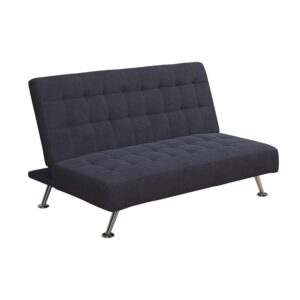
Teachers can use a futon in the classroom as a flexible seating idea.

Futon- An easy way to incorporate flexible seating options in the classroom is to add a futon. You can grab one at a big box store or on Amazon and have it shipped directly to where you need it to go. The benefits of using a futon in the classroom are endless- A “job” can be to open the futon and replace pillows after quiet reading time, adding opportunities for heavy work. Add a few weighted throw pillows and a weighted lap blanket if it’s appropriate. Sometimes lounging during instruction may be just what is needed.

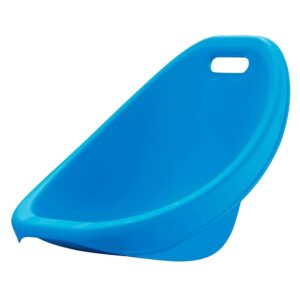
A scoop rocker chair is a great way to add flexible seating options to the classroom.

Scoop Rocker Chairs- Kids love these scoop rocker chairs! They are versatile in that they can be used at a lowered table or during circle time. The light-weight and handle make them easy to carry from class to class or to special classes, if needed. There is a special deal on Amazon offering a set of 6 scoop rocker chairs for $48 right now. Who knows how long that price will last!

Use a scooter board for seating needs in the classroom to add sensory input as part of a sensory diet at school.

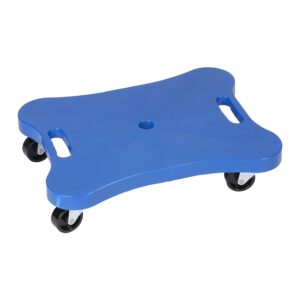
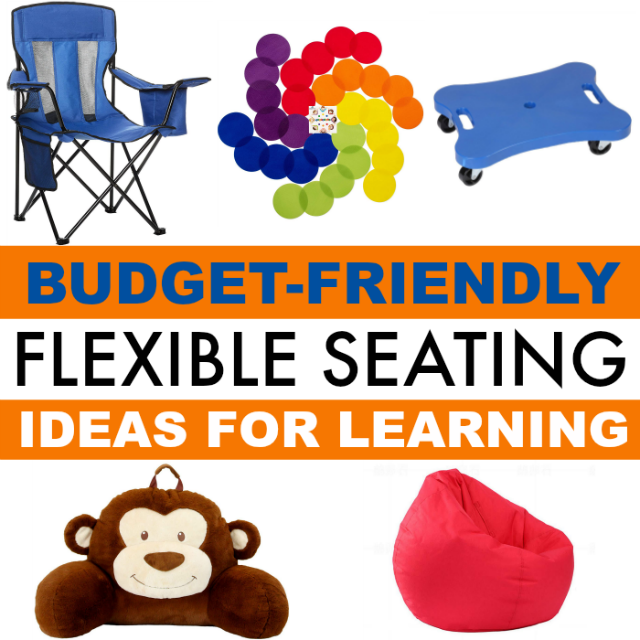
Scooter Board- Have a scooter board in your car trunk (If you are a mobile therapist, this totally applies to you…) or in the physical education gym/supply closet at school? Scooter boards make awesome foot fidgets for when sitting at a desk. Kids can also use them during circle time. (Provide a hoola hoop boundary!) Or to sit on at a low table or when working in a small group. You can find them at great prices on Amazon!

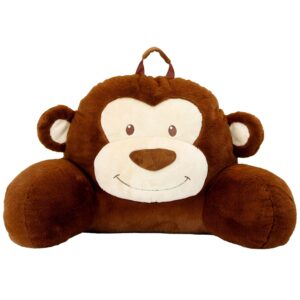
Use a reading pillow or bed reading pillow  as a flexible seating idea in the classroom.

Cushions or Pillows- Super easy to get, and at a very inexpensive cost, pillows and cushions are a fantastic way to create a cozy corner or crash area. Kids will love quiet reading time or group work when sitting on a pillow or cushion. Stalk your local resale shops for great prices. You can also ask parents to send in a small pillow or chair pad cushion (the kind you use on kitchen chairs) that can be used at desks for seated work. A reading pillow (the kind you typically use on a bed) works really well in a calm-down space, too.
Body Pillow- A body pillow can be an inexpensive way to add movement and positioning to the classroom or home. Add it to a futon or couch in the classroom or include it in a calm-down space.

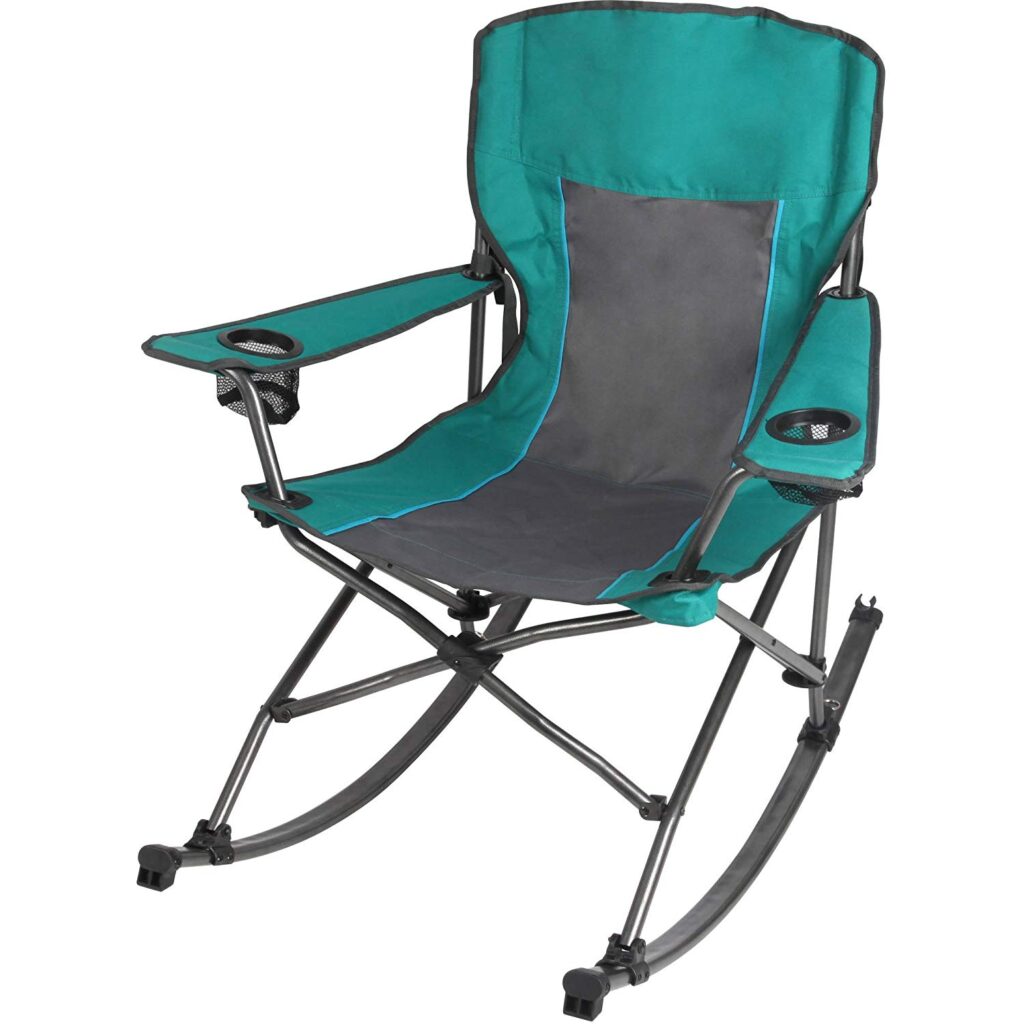
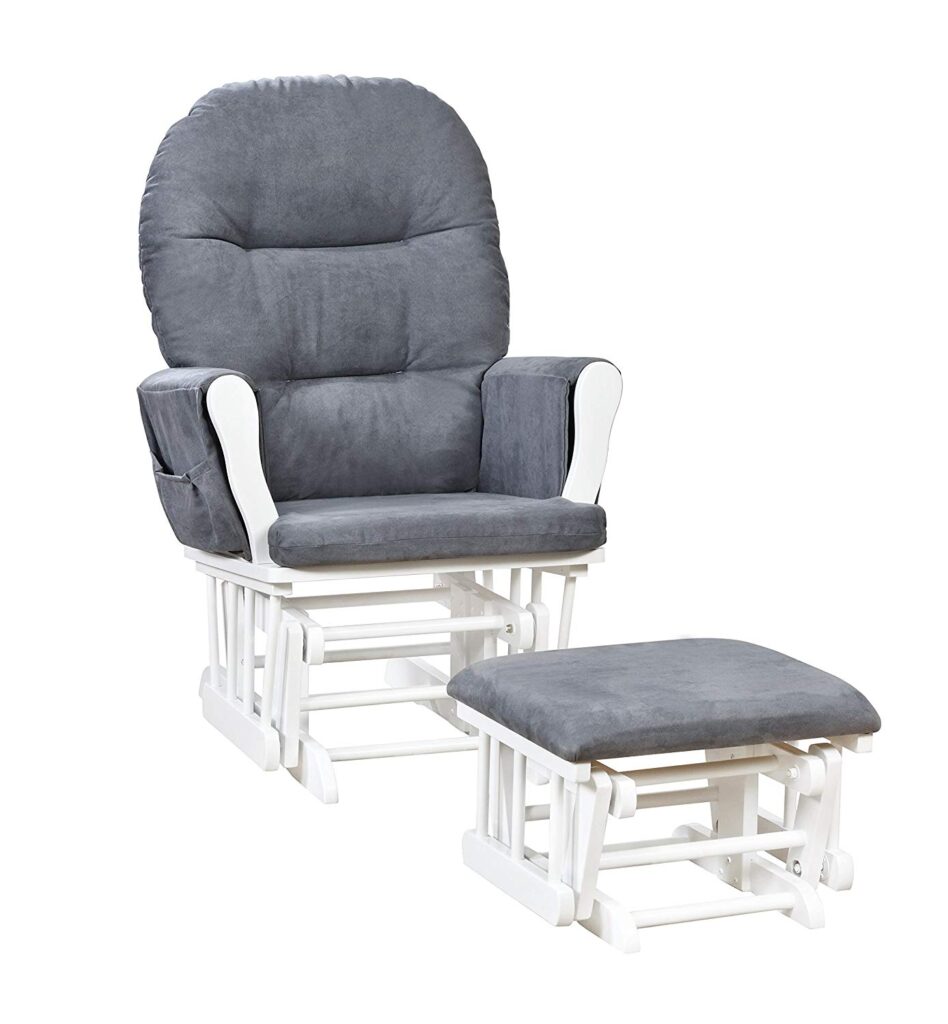
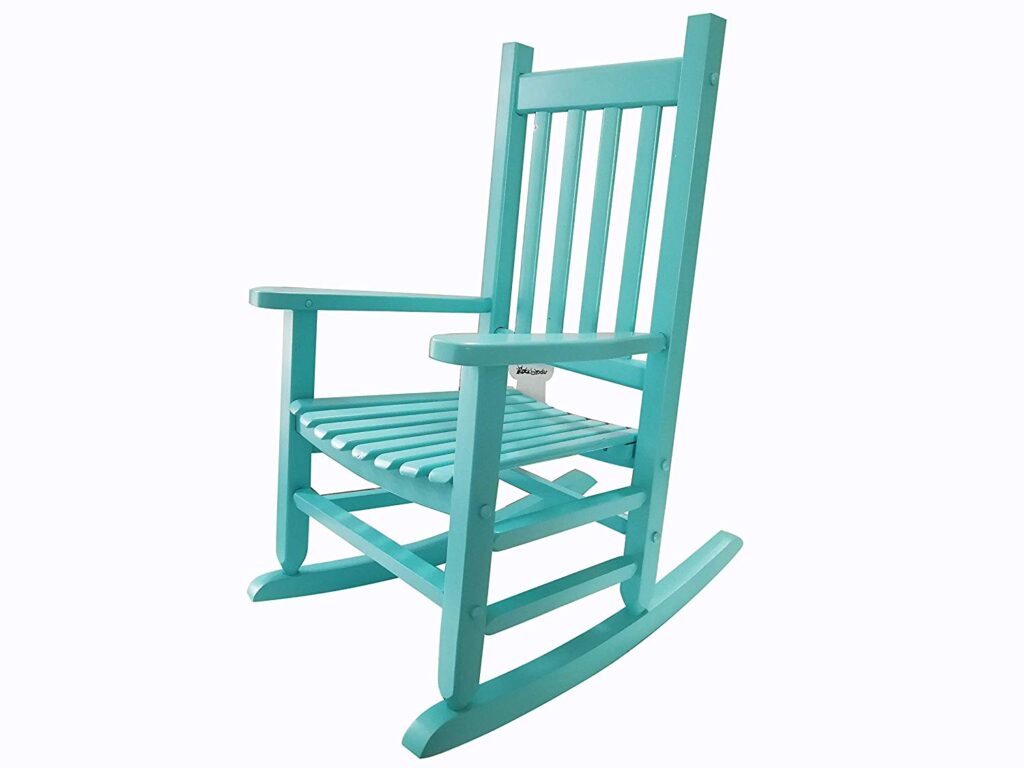
Rocking Chair- An old-fashioned porch rocker is a wonderful addition to the classroom. There’s just something about rocking back and forth that brings back memories of quieting fussy babies during the night for this mama…but perhaps the calming effects of slow linear rocking can be just the thing to turn classroom fidgeting into focused learning. If the price tag of a traditional wooden rocking chair is a problem, consider adding a camp rocking chair or an upcycled nursery glider. You can find these baby nursing chairs on Facebook marketplace or in consignment shops for a great price.

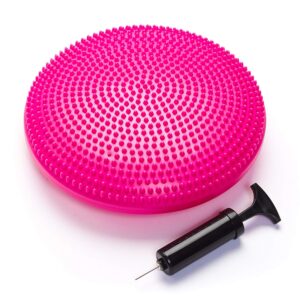
Use a balance cushion as a flexible seating tool in the classroom.

Balance Cushion- Balance cushions can be used on a traditional desk seat or for floor seating. Adding this to your flexible seating line-up promotes an opportunity for attention and balance by adding movement to learning. Add more air or remove some from the cushion to provide more or less movement and stability required.

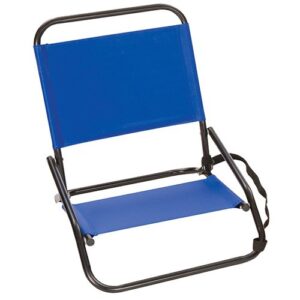
Use a beach chair as a cheap flexible seating option in classrooms.

Beach Chair- A beach chair is a super inexpensive way to add flexible seating options to a classroom. Set up an area with a few beach chairs for group activities or use them in circle time or morning meetings.

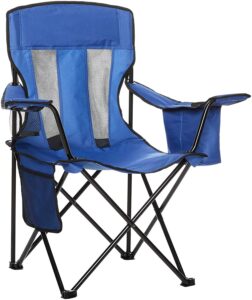
Use a camp chair as a cheap flexible seating idea for the classroom.

Camp Chair– A camp chair is another inexpensive option for alternative seating. The curved base provides a cozy and calming space for reading or listening to read alouds in the classroom or home. There are a lot of options on the market in the ways of camping chairs. From the basic camp chair to those with rockers, recliners, or loungers, the choice is yours based on needs in the classroom or home.

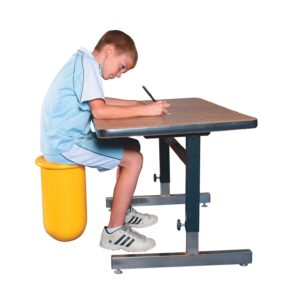
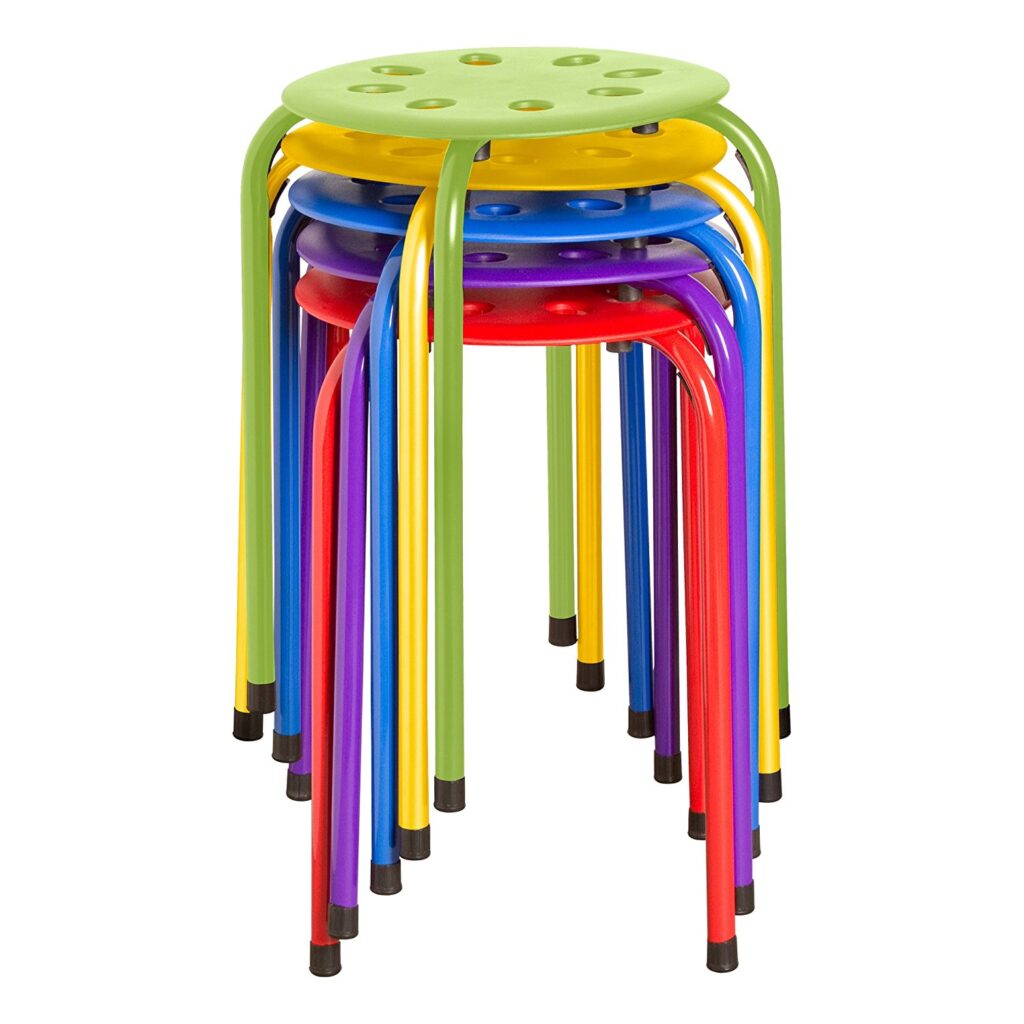
Stools- There are a lot of stool options out there. Using a stool in a flexible seating arrangement provides a variety of use for addressing various needs while making arranged seating easier to change out without much effort. Some ideas for stool use in the classroom include high-stools. These can be used at a high top table which also offers an opportunity for standing. They can be arranged into circle time or small groups while offering vestibular input. Other stool ideas include a small foot stools. These can be used at low tables, in circle time, in a small group circle, or at a low table. Try using them while writing on a paper hanging on a wall or at an easel for vertical writing, which offers more proprioceptive input and movement challenges. Stackable stools are still another option. These are great in place of traditional desk chairs in some cases. The great thing about using stools as part of an alternative seating system is that students can move and set up seating options, offering built-in heavy work.

Use a papasan chair in the classroom as a sensory seating idea for students.

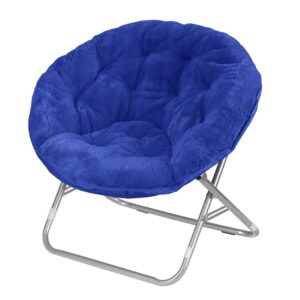
Papasan Chair– A papasan chair or a lounger seat is great for the classroom. Quiet reading or group learning can be calm and focused with a supportive and cozy seat. You can find a great price on these chairs in big box stores or on Amazon.

A cube chair is a seating option that meets sensory needs in the classroom.

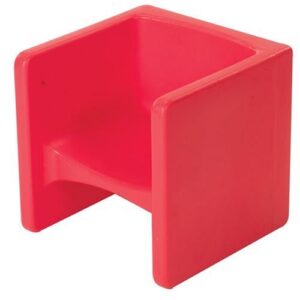
Cube Seat- This cube seat is an option that provides support for the back and trunk while containing and providing a boundary for seated activities. This cube seat option is nice because it can be used in one direction as a low seat and flipped over to allow for a higher height or for use as a table writing surface with visual blocks when visual attention is an issue.

Partially Inflated Beach Ball- Yes, it’s true. Grab a dollar store beach ball and blow it up just a little, so that the air in the beach ball provides a movable cushion. This seating system is appropriate for younger children, but it’s an option for testing out movement in the seat. You’ll find more about using a beach ball cushion in a previous The OT Toolbox blog post.

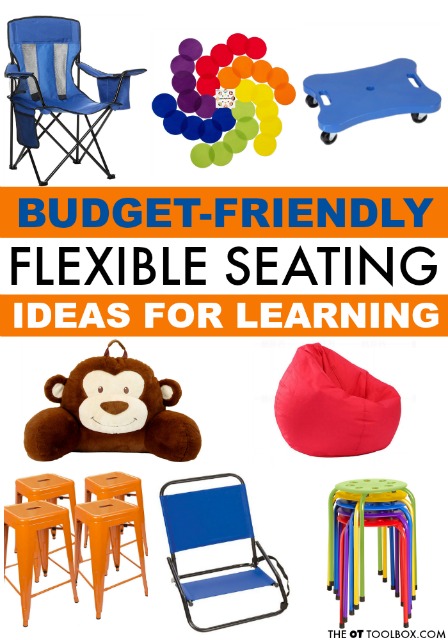
Cheap flexible seating ideas for the classroom include  camp chairs, beach chairs, bean bags, and pillows.

More Flexible seating ideas

What are your best tricks and tips for adding movement to the classroom while meeting the needs of various students? Flexible seating in the classroom doesn’t need to be complicated. It doesn’t need to be expensive either! Stop back soon, because we’ll have a line-up of DIY flexible seating ideas coming your way very soon.

Some of the ideas listed above are very budget-friendly, especially if you are able to find items second-hand or by upcycling items. Other budget-friendly seating options include using a cardboard box, cushions, or stadium seats, for example. We’ll have more budget-friendly seating ideas for you coming up soon!

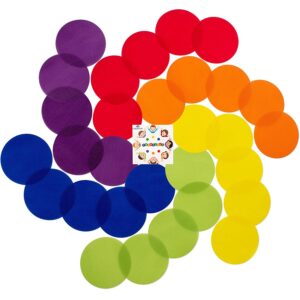
Budget-friendly flexible seating ideas include camp chairs, beach chairs, carpet spots, and more.

Choosing Wisely in Occupational Therapy

Choosing Wisely in occupational therapy is easy given the training OTs receive in client-centered practice.

Choosing Wisely is a topic that is wise to discuss! Today, I’ve got some information to share on this initiative and ways to encourage Choosing Wisely in Occupational Therapy clinics and caseloads. Here, we’re chatting all things function and evidence…and from an occupational therapist with almost 20 years of experience, I wanted share why I believe that Choosing Wisely is the wisest option!

Choosing Wisely in occupational therapy discussion of initiative recommendations for occupational therapy professionals.

What is Choosing Wisely?

Choosing Wisely is an initiative of the ABIM Foundation (American Board of Internal Medicine) that seeks to promote conversations between clinicians and patients by helping patients choose health care options that are right for them. The Choosing Wisely initiative occurs across health professions, and aims to avoid treatments or interventions that are not supported by evidence, not a duplicate of other tests or procedures already received, free from harm, and truly necessary.

Many health care organizations have created recommendations that align with the goals of the Choosing Wisely initiative, and occupational therapy is one of those services that are participating. The occupational therapy profession is taking part in this initiative!

The occupational therapy profession is taking part in this initiative…and that’s a good thing! AOTA has created, along with practitioners in the field, a list of ways to “choose wisely” when it comes to best practice. These are ways to avoid unnecessary treatment interventions that are not guided by function. I love that these guidelines promote occupation…the foundation of our profession!

Read more about AOTA’s list of five things a practitioner should avoid, as well as how this list of how these recommendations were created.

Essentially, this initiative encourages use of evidence-based practices based on function and as a result of assessment of occupational performance. Client-centered practice is something we are trained in as occupational therapy professionals. Educating and advocating for this advancement sounds like a wise choice to me!

Occupational therapy’s Choosing Wisely Recommendations

Let’s take a closer look at the recommendations for occupational therapy practitioners according to Choosing Wisely standards:

Don’t provide intervention activities that are non-purposeful (e.g., cones, pegs, shoulder arc, arm bike).

From the perspective of an OT with close to two decades of experience, this guideline holds dear to my heart. How often have we seen in clinics or therapy rooms, the closets full of cones, pegs, stacking items, rings, and other motor activity tools? The OT closet can be a colorful place full of items like these! But when we step back and put on our occupational glasses, what exactly are we working towards with these tasks?

Occupational performance, or the activities that make up an individual’s lifestyle, span all aspects of a person’s environment. This is the basis for our profession. Using purposeful activities in our treatment sessions promote motivation and greater independence in personal goals.

I’ve been at fault in using rings/cones/pegs/etc. in my experience too. I think many of us have! But what if, before we reach for that stack of pegs, we filter our thoughts with an analysis of what we are trying to achieve with those pegs? What is the function? Probably not much!
When occupational therapists re-frame thinking to collaborate with the various people in a person’s environments, we can work together with parents, teachers, grandparents, teacher’s aides, and others to help our clients become more independent. Optimal outcomes occur when collaborations are guided by occupational performance.
Instead, as occupational therapists we are capable of digging deeper to address function and our client’s true personal goals. Now that is a a way to get off the hamster wheel of rotating non-purposeful activities from client to client and making a real difference! What a powerful and meaningful way to make a world of difference in our clients and potentially prevent burnout in ourselves as therapists!

2. Don’t provide sensory-based interventions to individual children or youth without documented assessment results of difficulties processing or integrating sensory information.

I think we’ve seen it before: Teachers in a classroom applying sensory strategies like chew-top pencils, weighted items, specialized paper, or other tools without consultation by the school-based OT. In schools with a sensory room, you may have seen paraprofessionals guiding students through sensory strategies, without so much as a consult from the OT. Maddening, isn’t it?

We’ve seen sensory-based interventions been applied by others without the documented assessment and it’s frustrating! What if, we as professionals stood up to this through advocacy and education? Taking a stand on how we hold ourselves to certain standards (completing an assessment of sensory needs AND documenting a plan to address needs) is the first step. Following through with documentation can be beneficial to so many: the child struggling with certain needs, the teacher or team member that benefits from education, and ourselves as we advance ourselves professionally.

3. Don’t use physical agent modalities (PAMs) without providing purposeful and occupation-based intervention activities.

Again, we come back to the function! Purposeful intervention strategies, driven by a desire to improve occupational performance fuels motivation and meaning to our client’s lives. How powerful is it to be a part of that in our client’s lives?

We as OTs can engage our clients in function while integrating physical agent modalities into meaningful and purposeful activity. It’s pulling out the OT lens to find the function! We as occupational therapy professionals are some of the most creative souls I know. Remaining true to the roots of our profession while incorporating modalities into interventions is just part of the puzzle!

4. Don’t use pulleys for individuals with a hemiplegic shoulder.

As pediatric OTs serving those in schools, clinics, homes, and early intervention environments, this recommendation may not always play into the day-to-day caseload. However, it all comes back to meaningful, purposeful, occupation-centered practice!

It may not be a pulley that we are contemplating in our intervention plans, but perhaps an aggressive resistive activity for the child with juvenile rheumatoid arthritis. It’s all about recognizing contraindications, being up-to-date on evidence-based recommendations, and best practice.

5. Don’t provide cognitive-based interventions (e.g., paper-and-pencil tasks, table-top tasks, cognitive training software) without direct application to occupational performance.

That coloring sheet, wordsearch, or “I Spy” paper? They may not be best practice when it comes to interventions for underlying needs. We are challenged as professionals to dig deeper and find the ability to address occupational performance through table-top activities and paper-and-pencil tasks. This is the basis for our profession. Using purposeful activities in our treatment sessions promote motivation and greater independence in personal goals.

Can we shift perspective to better assist clients in becoming actively engaged in their daily tasks? Occupational therapists are unique in that they have been trained to emphasize achievement of personal goals.

We strive to design treatment plans that are client centered, driven by the patient, and family/team centered. It’s our duty to be leaders in designing programming that is focused on function.

Are you Choosing Wisely as an OT?

It’s easy to fall back on cookie cutter interventions. However, it’s our duty to move beyond those routines and remember the roots of our profession. Some quick tips for applying the Choosing Wisely recommendations into practice can be found below.

  1. Focus on function. Identifying the factors that contribute to optimal function and addressing those needs in therapy.
  2. Discuss ideas with other therapists. Start conversations that filter out unnecessary interventions and encourage occupational performance and client-centered practice. Work with your colleagues to discuss the Choosing Wisely recommendations into your workplace.
  3. Advocate! Educating parents, teachers, administration, and others on the occupational therapy profession is always needed.
  4. Identify the factors that enable individuals with disabilities to perform self-care and other performance components in order to create systems that address these needs through activity-centered strategies. Always use that OT lens.
  5. Stay up-to-date on evidence. It’s the best way to identify best-practice techniques while implementing strategies geared toward function. These evidence-based practice appraisal sheets can help filter out information to define occupation-centered and client-appropriate evidence while guiding intervention.

What strategies to you have to add to these tips? Is Choosing Wisely a part of your daily practice? Add to the discussion in the comments below.

Choosing Wisely initiative in occupational therapy is easy to apply based on our background and training in occupation and client-centered practice.

References:

Carolyn M. Baum, Mary Law; Occupational Therapy Practice: Focusing on Occupational Performance. Am J Occup Ther 1997;51(4):277-288. doi: 10.5014/ajot.51.4.277.

Occupational performance. (n.d.) Miller-Keane Encyclopedia and Dictionary of Medicine, Nursing, and Allied Health, Seventh Edition. (2003). Retrieved August 8 2019 from https://medical-dictionary.thefreedictionary.com/occupational+performance