What is Visual Scanning

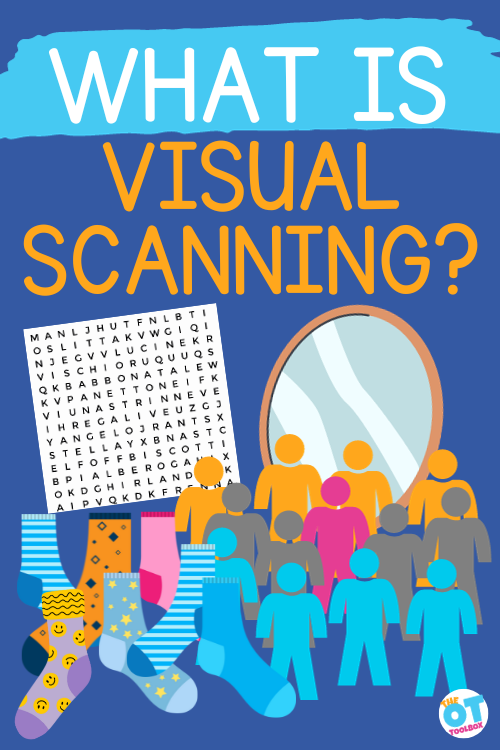
visual scanning examples with graphic of word search, mirror, crowd of people, mismatched socks, and text reading "what is visual scanning"

Visual Scanning is a component of visual processing that is crucial to everything we do! From taking in visual information, to using that information in making decisions and enabling actions…visual scanning is an oculomotor skill that is sometimes an area of difficulty for those struggling with visual processing skills.

Below, you will find information about visual scanning, including what this oculomotor control component looks like, what visual scanning really means, and why scanning as a visual skill is needed for learning, functional tasks, social emotional skills, executive function and other cognitive abilities, and just about everything we do!

What is visual scanning

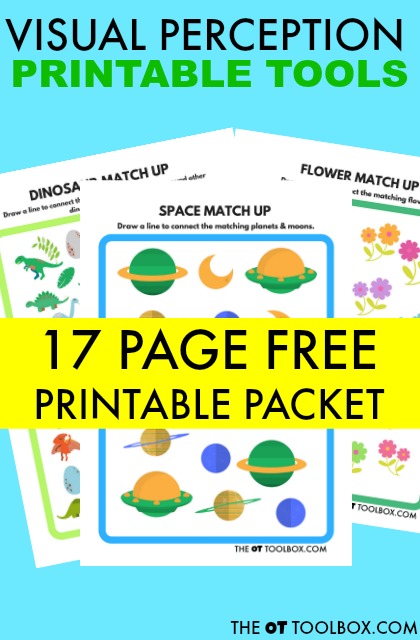
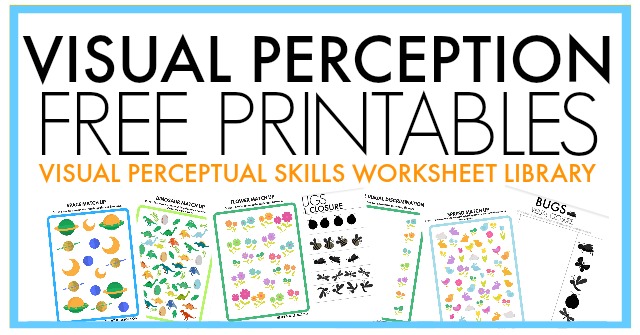
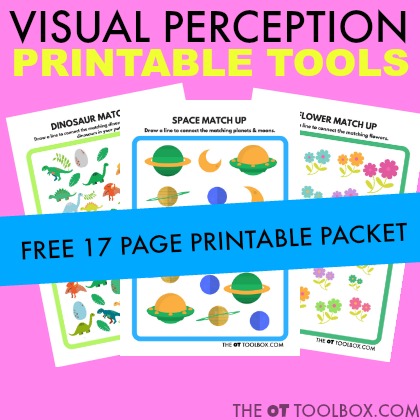
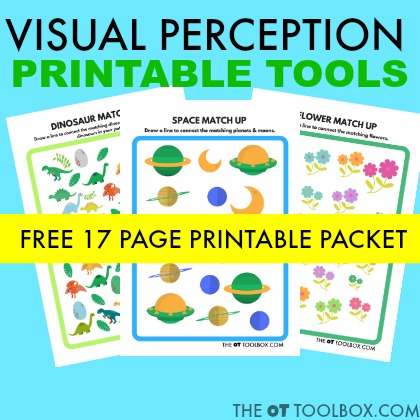
To work on visual scanning in the classroom or clinic, you may want to grab this free 17 page visual perception worksheet packet that promote oculomotor skills like visual scanning as well as visual perceptual skills!

What is Visual Scanning?

Visual scanning is an aspect of visual processing that impacts daily functional tasks, learning, safety, and everything we do. Visual scanning looks like…

  • Visual scanning is noticing a car parked on the corner when you try to cross the road.
  • Visual scanning is finding last night’s homework in a cluttered backpack.
  • Visual scanning is locating a matching shoe in a bin at the bottom of the closet.
  • Visual scanning is finding a pair of pants in a dresser to wear on a cool day.
  • Visual scanning is setting the table.
  • Visual scanning is looking for a lost parent on a busy playground.
  • Visual scanning is doing a word search puzzle.
  • Visual scanning is copying homework from the board and moving the eyes back to the place on the paper every time the eyes shift from the board to the paper.
  • Visual scanning is leaving a crowded place to find a bathroom, searching for the restroom in a hallway, finding an open stall, searching for the soap dispenser location, identifying where the paper towel dispenser or air dryer is in the restroom, searching your face and image in the mirror for anything out of place, and then back in the crowded space, locating your loved ones in the crowd.

Visual scanning is a lot of things! Rather, visual tracking is USED and REQUIRED in a lot of tasks. Scanning is needed to be independent, stay safe, make decisions, stay organized, help others, be a vital part of a workplace, succeed in school, learn and grow as an individual, and SO much more!

Many of these tasks are automatic and we scan our eyes, filter out information, and identify what we are looking for without even thinking about it.

Oculomotor Control

Visual Scanning is a part of the oculomotor system that allows the eyes to take in information. Here is more information on oculomotor dysfunction and activities that can help address this area. Scanning makes up a piece of the visual-receptive components of the visual system.

The oculomotor control that allows us to take in information includes visual pursuit, or tracking, and saccadic eye movements, or scanning. The muscles of the eyes control these movements in a voluntary and reflexive capacity.

saccades and Visual Scanning

A visual saccade is the movement of the eye toward visual stimuli. This movement of the eyes in visual scanning allows the eyes to focus on the most important part of the visual stimuli.

This allows us to notice a specific word, phrase, or topic in a body of text. You can see how scanning is needed for reading comprehension and writing essays in the school environment. In fact, visual scanning is a part of reading difficulties.

Check out this resource for more information and specific scanning activities for reading.

Visual Scanning Looks Like…

That precise focus of our eyes on a warm pair of clothes hidden in a closet provides safety and important information to drive executive functioning and decision-making.

The ability of they eye to focus on detail allows us to notice and locate our lost child in a busy store. These motor actions of the eyes are happening with both intention and in an automatic way so we are safe, locating the visual information we need, and safe.

At the same time, unnecessary information is negated, allowing the information we are looking for to be received and therefore processed for use in visual motor tasks, eye hand coordination, and function.

Here are activities to improve visual saccades.

Visual Scanning and Visual Perception

You can see how scanning works together with visual perception. As we scan, we need to discriminate, pull out the necessary information from background information, utilize visual closure, and sustain visual attention.

Visual discrimination is one key component. This requires visual perceptual skills of visual figure ground, visual form constancy, visual memory, and other underlying skills in order to determine differences in visual input and match it to a file from the mind’s visual memory to match similarities and differences. This is true for every item that could be discriminated from others, including by classifications such as form, size, color, or other features.

Visual closure is another component of visual processing and impacts visual scanning because when we read, we automatically “close” of visualize the whole word without identifying each letter of a word. This allows for reading speed and automaticity. Then, we need to comprehend what we’ve read. For the child with visual scanning challenges, we can see difficulties with speed, comprehension, and keeping up with grade expectations as information is consumed and understood.

Visual attention is another component of visual scanning because when reading or writing, we need to attend to the location in the sentence. When copying from a model, we need to remember where we left off. This is a component of visual shift and brings us back to oculomotor skills and visual shift. Read about near point copying for more information.

Likewise, to access the information, visual perceptual skills require the ability to scan the environment.

Visual scanning activities

Try the visual scanning activities listed below.

Visual Scanning Activities

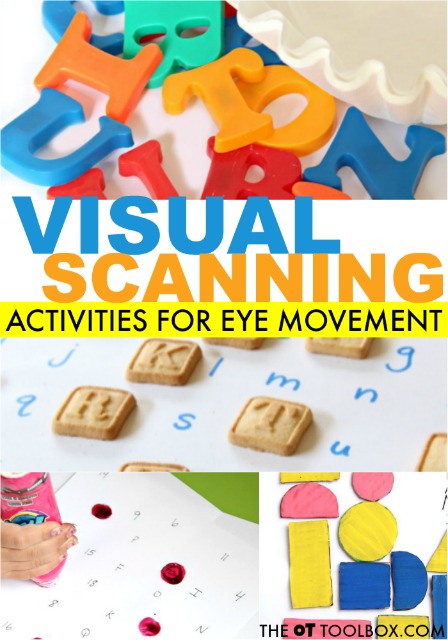
We love the visual scanning activities below because they are hands-on and play-based. These components make visual scanning activities fun and engaging for kids, and most importantly, meaningful for kids because of play being the primary motivator and occupation in kids.

There are many visual scanning exercises out there in the form of worksheets (and these have their place in vision therapy as well), however sometimes a play-based vision activity or a game is effective and fun in supporting visual scanning needs.

The vision scanning activities below do just that.

  • Here is a visual scanning activity that includes a motor component. The eye-hand coordination couples with and requires visual scanning, visual perceptual skills, and the motor integration of that information for a task.
  • This visual scanning activity is a low-prep activity that can be used with a variety of themes or to address various levels.
  • For more easy activities that address a variety of visual perceptual and visual motor skills, you’ll love these visual scanning activities.
  • This Bubble Wrap Math Maze is a fun way to work on visual scanning as well as other skill areas. Kids will love the auditory and proprioceptive feedback, too.
  • Tangrams and finding correct pieces of puzzles like the ones tangrams support area  great way to encourage visual scanning as well as the perceptual and motor components of visual processing. These Cardboard Tangrams are a frugal and fun way to play and develop skills.
  • This Letter Seek and Find activity is a low-prep and quick activity that can be used with various ages and levels. Attach handwriting tasks to make it perfect for older kids. Younger kids can work on letter recognition while addressing oculomotor skills, visual perception, and motor components.
  • Work on visual scanning with a tasty feedback, using letter cookies or crackers! This Letter Cookie Seek is a great way to work on the visual skills needed for so many areas.
  • Look for a specific letter in a word search.
  • Visually scan for objects on a wall or hidden around a room like these wall bat templates where you can use a flashlight to scan for the correct bat (or use any shape or image like shapes, colors, or templates).
  • Do a count and color worksheet.

What is visual scanning? Visual scanning is the eyes movement from point A to point B, needed for reading, games, activities, play, functional tasks. Scanning or saccades, are an oculomotor visual skill.


Visual scanning is needed for reading and learning. Here are activities designed to build visual scanning in kids.
 
Some of our favorite visual scanning activities support eye movements and the oculomotor control that are used in reading, writing, and everyday functional tasks…and they all include play.


Visual scanning is needed for functional tasks, using saccadic eye movements from one point to another. Here are activities to help with visual saccades.
 
Visual scanning activities support eye movements.
 
Free visual processing email lab to learn about visual skills needed in learning and reading.


What is visual scanning? Read more information about visual scanning or visual saccades that are needed for reading, play, and everything we do!

Feel free to use this visual scanning graphic on social media, and please link to this blog post for reference.

Looking for more visual scanning activities for the kids?  Try some of these:

More visual processing activities

For even MORE visual scanning activities to use in your occupational therapy practice, you will want to join our free visual processing lab email series. It’s a 3-day series of emails that covers EVERYthing about visual processing. We take a closer look at visual skills and break things down, as well as covering the big picture of visual needs.

In the visual processing lab, you will discover how oculomotor skills like smooth pursuits make a big difference in higher level skills like learning and executive function. The best thing about this lab (besides all of the awesome info) is that it has a fun “lab” theme. I might have had too much fun with this one 🙂

Join us in visual processing Lab! Where you won’t need Bunsen burners or safety goggles!

Click here to learn more about Visual Processing Lab and to sign up.

Colleen Beck, OTR/L has been an occupational therapist since 2000, working in school-based, hand therapy, outpatient peds, EI, and SNF. Colleen created The OT Toolbox to inspire therapists, teachers, and parents with easy and fun tools to help children thrive. Read her story about going from an OT making $3/hour (after paying for kids’ childcare) to a full-time OT resource creator for millions of readers. Want to collaborate? Send an email to contact@theottoolbox.com.

Free Visual Perception Packet

Free visual perceptual skills worksheets

These free visual perception worksheets are just the resource you need to work on visual skills like form constancy, visual discrimination, visual closure, and more. Visual perception is an area that drives so much of what we do. For kids who struggle with visual perceptual skills, so many areas are impacted. Visual perception impacts reading, writing, learning, comprehension, visual motor skills (including copying written materials), fine motor work, gross motor skills, eye-hand coordination, and even social emotional skills! It’s amazing how this one area can impact so many areas of a life and functioning. Because some f our popular free visual perception worksheets have been used by so many therapists, I wanted to pull these resources together into an easy to access visual perception worksheet packet! This is it! Your 17 page packet of free visual perception worksheets can be accessed below.

Use these free visual perception worksheets to work on so many skills kieds need for reading and learning: visual attention, visual perception, visual closure, form constancy, spatial relations, and more!

Free Visual Perception Packet

Visual perception is made up of several areas that are crucial to development, learning, and functioning. Visual attention, visual spatial relations, visual closure, visual discrimination,

That’s why I wanted to bring to you a valuable resource when it comes to understanding visual perception AND visual processing skills.

Below, enter your email in the form box and the visual perception worksheets packet will be delivered to your inbox. I need to send it via email as the packet is a large file. This one form will get you the entire 17 page packet, where the other forms on the other pages in this packet will deliver just one page. I am working behind the scenes to edit all of the other posts in this series of free worksheets so they deliver the big packet. 

I wanted to pull all of the worksheets together (along with a few new ones added to the bunch) to create a 25 page packet of visual perception worksheets.

In the packet are a few themed visual perception worksheets. You’ll find reproducible sheets to address figure-ground, form constancy, visual discrimination, as well as oculomotor skills like saccadic movements.

Visual Perceptual Skills and worksheets

Some of the worksheets included address:
Visual Figure-Ground
Visual Attention
Form Constancy
Visual Discrimination
Visual Memory
Sequential Memory
Visual Closure
Visual Spatial-Relations

…as well as eye-hand coordination needed to complete pencil control exercises.

All of the worksheets are similar in style, making them a great collection for YOUR therapy toolbox!

For now, grab your visual perception printables, and start working on those visual skills!
Enter your email to get the worksheet packet and BIG NEWS on an upcoming visual perception resource.

Be sure to watch for more news on an upcoming visual processing resource. It’s going to be BIG!

I’m so excited to share more information with you very soon. It’s going to be gooooood!

More Information on Visual Perception Worksheets:

For more information on the worksheets in this free packet, check out these posts describing some of the worksheets included in this packet of free visual perception worksheets:

Monkey Theme Visual Perception Worksheet

Flower Theme Visual Perception Worksheet

Space Theme Visual Perception Worksheet

Outer Space Theme Visual Perception Worksheet

More visual perception resources:

If you are looking for more visual perception worksheets, you’ll love everything in the Visual Processing Bundle!

The Visual Processing Bundle has everything you need to work on underlying visual processing skills so you can help students with classroom tasks like copying written work, letter reversals, and messy handwriting in fun and engaging ways!

  • Over 235 pages of workbooks, worksheets, e-books, handouts, activity cards, tracking tools
  • Classroom accommodation ideas
  • Checklists
  • Multi-level visual-motor integration workbooks
  • Pencil control worksheets
  • Classroom and therapy activities
  • Activity cards
  • Specific and open-ended activity cards
  • Visual tracking guide

Click here to access the Visual Processing Bundle.

More visual processing activities

For even MORE information on visual perception and activities to use in your occupational therapy practice, you will want to join our free visual processing lab email series. It’s a 3-day series of emails that covers EVERYthing about visual processing. We take a closer look at visual skills and break things down, as well as covering the big picture of visual needs.


In the visual processing lab, you will discover how oculomotor skills like smooth pursuits make a big difference in higher level skills like learning and executive function. The best thing about this lab (besides all of the awesome info) is that it has a fun “lab” theme. I might have had too much fun with this one 🙂


Join us in visual processing Lab! Where you won’t need Bunsen burners or safety goggles!


Click here to learn more about Visual Processing Lab and to sign up.

Free visual processing email lab to learn about visual skills needed in learning and reading.
Use visual perception worksheets to work on visual perceptual skills like figure-ground, visual discrimination, visual closure, visual attention, and other skills needed for handwriting, reading, and learning.
Add these free visual perception worksheets to your therapy toolbox to work on visual processing skills like visual spatial awareness, figure ground, form constancy, visual closure and other perceptual skills in kids.

Thank you! More Letter Formation Tips

That’s it! Your straight line letters therapy slide deck file should be delivered to your email inbox shortly.

>>> Add it to virtual therapy activities and home programming, combining them with hands-on activities, writing lists, and practicing letters on paper.

Looking for more tools to use in teaching letter formation? Try these ideas:

Free Letter Formation Slide Deck– This is another slide deck that has a scribble theme to work on letter formation. Kids won’t be scribbling those letters, though! They will be working on fine motor skills, visual perception, gross motor, and more…all needed to write letters clearly!

Writing Trays– Use items found in the home like an outdoor sandbox, a low tray of rice, or dry noodles.

Shaving Cream on the Table

Lowercase Letter Formation Activities

10 Ways to Teach Letter Formation

Letter Reversals

Fine Motor Alphabet and Play Dough

Magnetic Alphabet and Spoons Game

Here are more teletherapy activities to use in virtual OT sessions

Teletherapy activities for kids

Work on fine motor skills in teletherapy

Teletherapy games and worksheets

Problems finding the email with your letter formation worksheet?

If you don’t see it right away, give it about 15 minutes. If you still don’t see it, be sure to check your SPAM folder or “other” folders. Run a search in your email to check for an email from The OT Toolbox. Some email networks, like those using an email ending with .org, .edu, .net, etc. may have this email blocked.

Arrive on this page by accident? Want your copy of the free “scribble day” occupational therapy screen deck to use in therapy sessions? Go here to access your copy of this letter formation/fine motor/gross motor letter formation teletherapy session.

Visual Perception Info

Great! Thanks for grabbing the packet of Visual Perception Worksheets. 

Free visual perception packet and information
 

Check your email inbox to access your file. Don’t see it? Don’t fret! Check your spam folder or “other” file such as “promotions” in Gmail. Some users (especially those using an email system hosted by a school system, clinic, health system, etc.) may have this email blocked as a security measure. Send me an email at contact@www.theottoolbox.com and I will send you the file as an attachment. 

How to use your visual perception worksheets:

Use them to work on various visual perceptual skills in a variety of ways. Try using various tools to connect the items on the worksheets, such as string, marker, finger paints, Wikki Stix, etc. The options are endless.

Print them off, slide them into a page protector sheet and use them over and over again with a dry erase marker.

Work on pencil control with some of the pages by having students trace the lines to connect matching items or make matches.

MORE VIsion and Motor Activities

Try these activiteis and resources to build your therapy toolbox:

Visual efficiency and motor skills

Development of eye-hand coordination

Vision activities for kids

Activities to improve smooth pursuits

Vision accommodations and activities

Visual attention

AND…I promised you big news on a visual processing resource. Here it is!

For more info and fun activities geared toward all things vision, check out the Visual Processing Lab! Yep, a lab! This is an interactive lab activity that will be email based and delivered right to your inbox. This is a short series of emails (4-5 days) that covers everything you need to know about visual processing, detailed information on various aspects of visual processing, and strategies that work.       

Get ready to learn all the ins and outs of visual processing, and gain strategies, activities, worksheets, screening items, and so much more. This resource is huge!   

Come to this page by accident? Want to get in on the visual perception fun?

Get your copy of the free visual perception worksheets HERE.

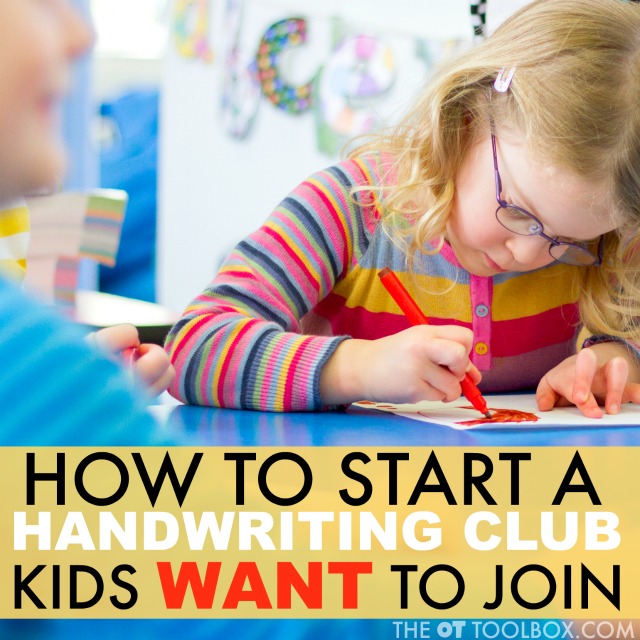
How to Start a Handwriting Club

How to start a handwriting club that kids want to join

In this article, you’ll discover how to start a handwriting club for kids to develop and enhance the skills needed for legible handwriting. Create a Handwriting Club as an after school program, an in-school activity, or as a home program idea. A Summer Handwriting Club is a great way to prevent the summer slide in handwriting skills in fun ways and using multisensory strategies to get the kids excited about practicing handwriting skills. A handwriting club can even be implemented as part of the RTI process. Plus, this is a great way to help with handwriting skill carry over!

Start a handwriting club to help kids learn handwriting and practice legible written work in a fun and creative environment. Handwriting club can be a fun way to practice letter formation, letter spacing, line use, and handwriting speed.

Why Start a Handwriting Club?

Occupational Therapy practitioners know the importance of learning handwriting skills for children.  They understand the necessity of learning pre-writing strokes and shapes prior to attempting letter formation and numeral formation and they understand the importance of proximal to distal development in order to provide the best foundation for a child to be the most successful.  Handwriting is a complex skill and requires many components to generate legible written output.

When handwriting instruction is overlooked, some children will struggle with letter forms, legibility and writing speed. It is important that handwriting be directly taught with a targeted focus and monitoring on body preparedness as well as formation patterns. When handwriting becomes automatic, children can focus on other aspects of writing such as grammar, planning, punctuation, composition, and self-correction or revision.

A fun handwriting club may be just the ticket for some children who experience more difficulty with learning handwriting due to a poor foundation. A handwriting club can provide direct instruction in body preparedness and formation or mechanics that utilizes sensory and motor activities to facilitate the learning process.

You can work through groups of letters following the Handwriting Without Tears letter order, for example.

This post will help describe the steps to organize and implement a simple handwriting club.

How to Start a Handwriting Club

Affiliate links are included below.

Here are the planning steps in the development of a handwriting club:

1. Determine the purpose of the club.  Will it target prewriting, upper case formation, number formation, lowercase formation, cursive formation, mechanics of handwriting such as letter size, letter placement, line use, spacing, etc.?

2. Determine your target group and the specific handwriting goals you wish to achieve.

3. Determine the handwriting resources or programs you wish to utilize such as (Amazon affiliate links) Handwriting without Tears, Size Matters, Loops and Other Groups, First Strokes,  etc.

4. Decide the club agenda or sequence of club activities – always begin with body preparation in gross motor to fine motor and then proceed to handwriting content. This will be based on the length of time for the session.  Later in this article, I will provide an example of a formation handwriting club agenda.

5. Collect and prepare the materials you will need to implement the activities of the club.

6. Create any parent information sheets explaining the purpose of the club and any homework expectations.

7. Prepare any homework materials.

8. Determine the exact day(s), time(s), duration, and location of the club.

9. If you want, decide the name of the club or this could be part of your first session.

10. Finally, begin the club meetings.

11. At the final session, present children with certificates of completion.

Use sensory handwriting activities, fine motor and gross motor activities to promote handwriting skills in a fun way with a handwriting club. Here's how to start your own handwriting club at school, as an after-school club, or a handwriting RTI process.
Use a handwriting club to foster growth in handwriting goals without pressure. Having friends be a part of the writing process makes handwriting goals more fun and meaningful.

Make a Handwriting Club Fun for Kids

By experience, a fun club name could provide the “just right” motivation for participation. Having children create a secret club name appeals to their sense of mystery and fascination.

Another fun element could be using special accessories that are worn only during the club meeting time. An example would be dollar store glasses (with lenses popped out if needed) in which children wear only during the club time.

Having a secret club handshake as the greeting can also make it more interesting and appealing for children to engage in the club.

What Happens in a Handwriting Club?

Here is an example of a formation handwriting club agenda or sequence of activities that has a duration of approximately 45 minutes:

Step 1: Approximately 5 minutes. Greet with a secret handshake. Start each session with gross motor warm-ups. Work on activities that prepare the body while simultaneously building core, shoulder, and arm strength and control. (Send any activities home.)

Step 2: Approximately 5-10 minutes. Follow with fine motor warm-ups. These should serve to “wake up” the hand and finger muscles while simultaneously building fine motor strength, coordination, and manipulation. (Send any activities home.)

Step 3: Approximately 5-7 minutes. Follow with beginning instruction in formation. (This time could also include a review of previous letters learned.)  The formation could be upper case, numeral, lower case or cursive letter focused.  Utilize verbal and visual strategies placing yourself appropriately in order for children to see from their handwriting viewpoint.

For example:
Instructor demonstrates formation with emphasizes on start point and sequence utilizing verbal and visual cues such as those in the (Amazon affiliate link) Handwriting without Tears program. Use the board and air writing format.

Follow with air writing imitation for children as they follow verbal and visual instruction. Instructor should monitor child arm movements to ensure correct start and sequence pattern. If needed, provide hand-over-hand guidance to facilitate the correct motor plan.

Once confident in gross motor, shift formation with children to finger writing on the table top while children verbalize steps and instructor monitors finger movements to ensure correct start and sequence pattern. If needed, provide hand-over-hand guidance to facilitate correct motor plan.

Step 4: Approximately 10 minutes. Provide further multisensory activities to practice formation before moving to paper. Change the medium with each session, if desired.

Step 5:  Approximately 10 minutes. Move to formation practice using handwriting workbooks or paper with instructor monitoring and correcting errors in grasp and formation. Have the children circle their best formation. (To note, utilizing the Handwriting without Tears workbooks (Amazon affiliate link) could provide children with a simple page format containing less visual clutter and improved space for handwriting practice coupled with visual cues and instruction. However, there are other handwriting programs that have a similar format.)

Step 6: Approximately 3-4 minutes. Once letter practice is complete, explain and issue any materials or information sheets that you plan to send home in order for parents to support their child’s club participation.

When you’ve collected handwriting samples from the students, you can plug the information into a handwriting rubric to collect data for any IEPs.

Handwriting Club Activities

Try some of these fun strategies to use motor components and sensory activities in handwriting:

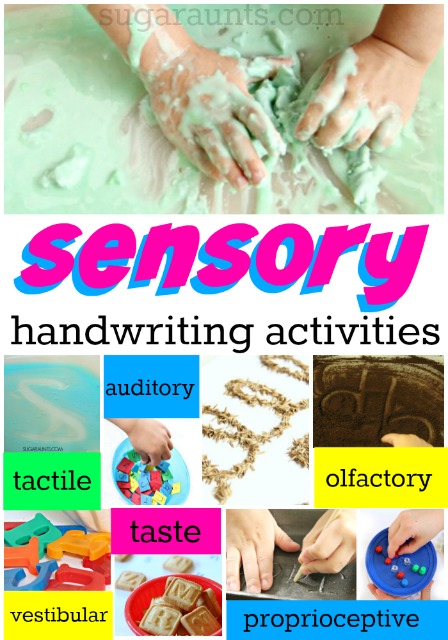
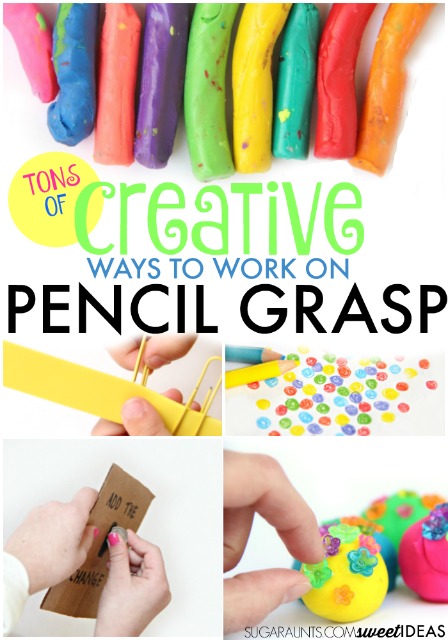
sensory handwriting activities for kids to learn how to write letters and numbers creative ways to build and work on a functional pencil grasp

Sensory Handwriting Activities add multisensory components to learning letter formation.

Use creative fine motor and play activities to promote a better pencil grasp.

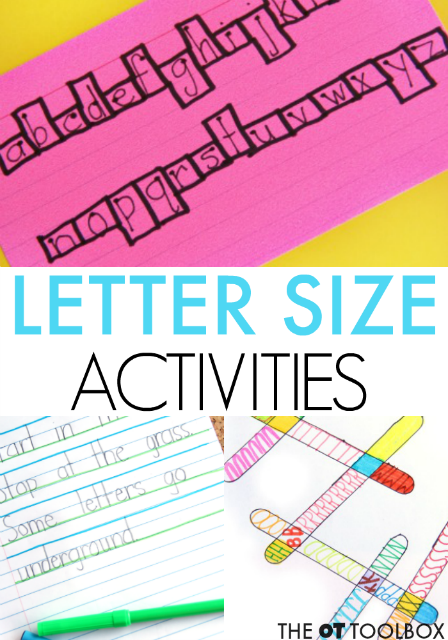
Size awareness activities for legibility and neat handwriting Spatial awareness handwriting activities to help with spacing between letters and words when writing.
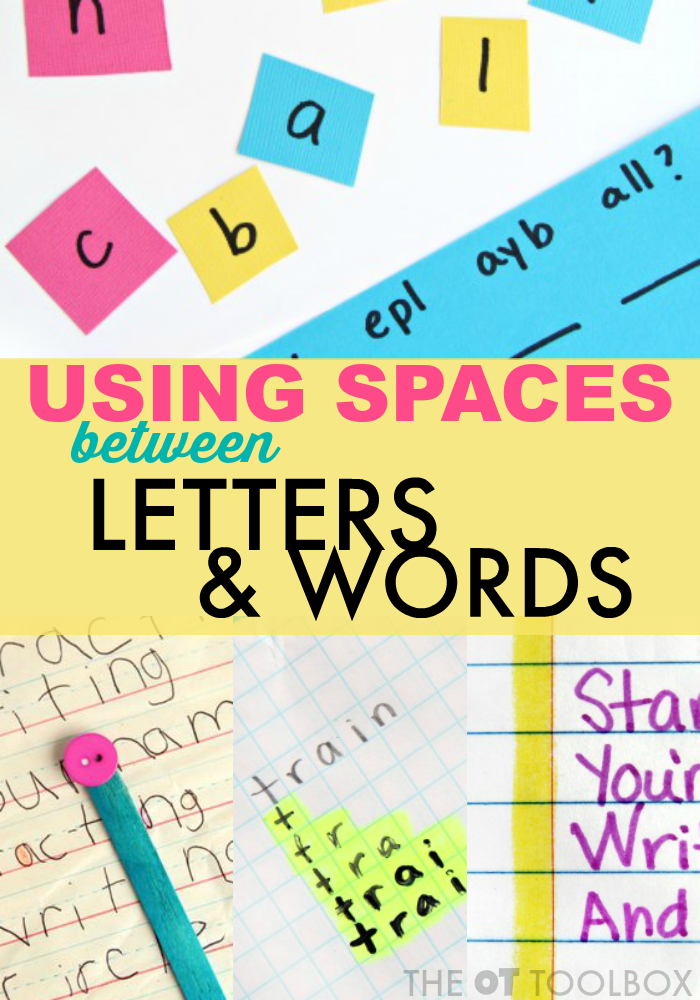
Promote and boost spatial awareness in handwriting for consistent use of spacing between letters and words with creative (and memorable) activities.

A Handwriting Club Makes Handwriting Practice Fun!

A handwriting club such as described in this article can help generate enthusiasm and make handwriting fun for children who struggle or need additional support in developing the foundational skills necessary for future handwriting success.

A fun club makes it seem less like dreaded handwriting work and more like special-time fun with friends. A handwriting club can provide the much time needed for children to develop essential skills in foundational body preparedness as well as handwriting acquisition.

Included with this article is a free Handwriting Club Session Planner and a list of possible Handwriting Club Activities including gross motor, fine motor, and multisensory activities, all which could be used during club meeting times. Get it by entering your email address below. If you are already a subscriber to our newsletter, you will still need to enter your email address. This is simply so we can deliver the PDF file to you.

Kids can join a handwriting club to improve handwriting and work on the skills kids need to produce legible handwriting.

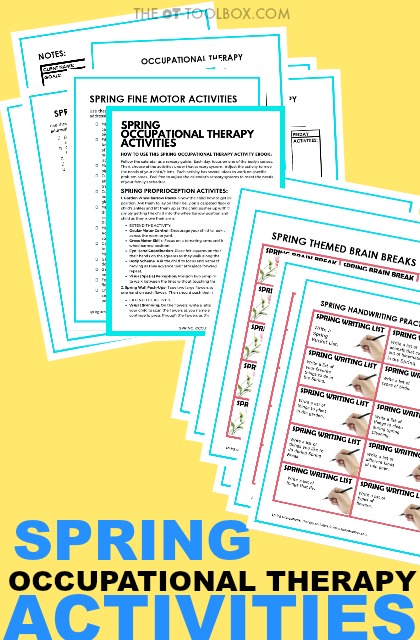
Spring Occupational Therapy Activities Packet

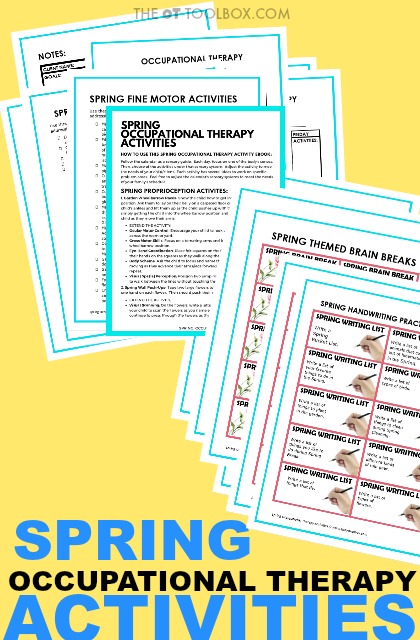
Spring occupational therapy activities

Looking for activities to add into therapy sessions, recommend in home programs, or to use in the classroom or home? You probably want ideas that promote developmental skills that kids need for effective and functional skills. That’s why I’ve put together the Spring Occupational Therapy Activities Packet! 


This time of year, one of our more popular products here on The OT Toolbox is our Spring Occupational Therapy packet. The best news is that, this packet has had a major upgrade from it’s previous collection of spring sensory activities.

Spring Occupational Therapy Activities  for kids.


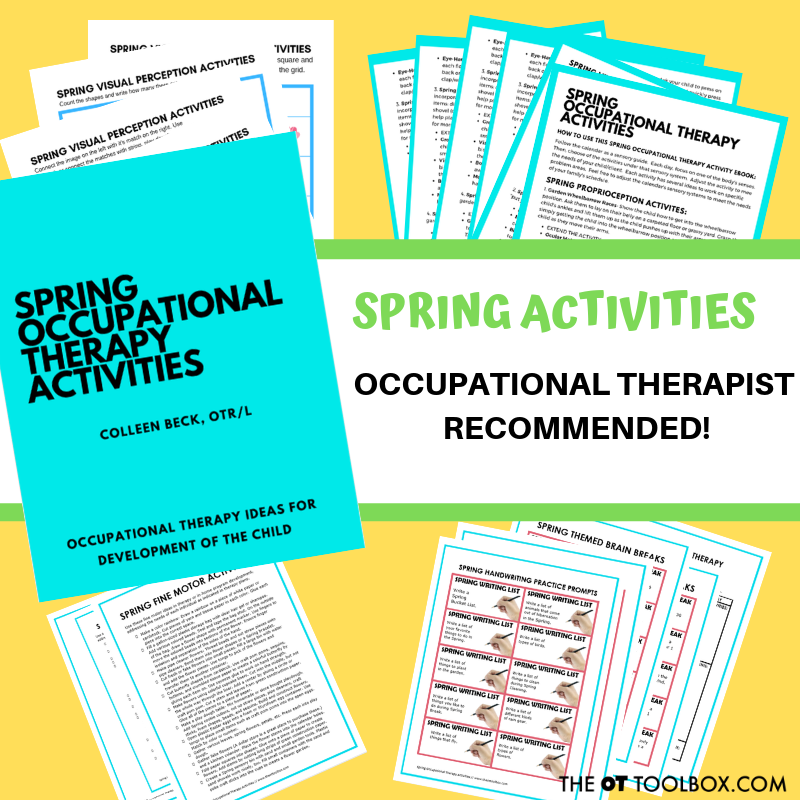
In the Spring OT packet, you’ll now find:

  • Spring Proprioceptive Activities
  • Spring Vestibular Activities
  • Spring Visual Processing Activities
  • Spring Tactile Processing Activities
  • Spring Olfactory Activities
  • Spring Auditory Processing Activities
  • Spring Oral Motor Activities
  • Spring Fine Motor Activities
  • Spring Gross Motor Activities
  • Spring Handwriting Practice Prompts
  • Spring Themed Brain Breaks
  • Occupational Therapy Homework Page
  • Client-Centered Worksheet
  • 5 pages of Visual Perceptual Skill Activities

All of the Spring activities include ideas to promote the various areas of sensory processing with a Spring-theme. There are ways to upgrade and downgrade the activities and each activities includes strategies to incorporate eye-hand coordination, bilateral coordination, body scheme, oculomotor control, visual perception, fine and gross motor skills, and more.


It’s a really popular product on the site this time of year. I’ve doubled the size of this packet and added:

Spring Visual Perception Worksheets- Print these off and slide them into a page protector. Use them to work on visual perceptual skills like form discrimination, visual closure, figure ground, and visual processing skills like tracking, scanning, etc. Use manipulative items to work on fine motor skills with these worksheets such as play dough, slime, Wikki Stix, yarn, craft pom poms, or other items.

Spring Fine Motor and Gross Motor Activities- Add these ideas to therapy home programs to work on pencil grasp or core strength. Use these ideas in therapy warm-ups, or to add movement to a child’s day.

Spring Themed Brain Breaks- Cut up these cards and use them to add movement and motor skills into the classroom or home. It’s a great way to re-charge!

Spring Themed Handwriting Practice Prompts- There are two pages of writing prompts that are ONLY in list form. That means kids don’t need to write out sentences while working on letter formation, spacing and size. They can work on all of the handwriting skills they need in a short list that is interest-based, making it motivational for them. And, the list format is a quick way to sneak in handwriting practice!

OT Homework Sheet- Sometimes, it takes extra practice to make skills “stick”. When parents help in practicing therapy activities, it can make a difference in carryover. You’ll find a done-for-you OT homework sheet to use in weekly homework activities OR for use as a home exercise program!

Client-Centered Worksheet- When our kiddos have a voice in their therapy, carryover and goals can be more meaningful to them. Use this worksheet to come up with Spring activities that meet the needs of a child, while taking into considerations that child’s interests and strengths to make activities meaningful.

Sensory Activities and More- All of these extras were added to the already well-rounded Spring packet that includes activities designed around each of the sensory systems. You’ll find 13 pages of proprioception activities, vestibular activities, tactile activities, oral motor activities, etc. And, they include ideas to extend the activity to include eye-hand coordination, body scheme, oculomotor control, visual perception, coordination, and motor planning.

This Spring Packet has everything you need for the next three months!
You’ll also find several sheets listing tons of Spring activities designed to promote specific areas:

  • Spring Fine Motor Activities
  • Spring Gross Motor Activities
  • Spring Handwriting Practice Prompts
  • Spring Themed Brain Breaks
Use these activities as warm-ups to your therapy sessions, or add them to the homework page below to create a home program. 

Use this Spring Occupational Therapy Activities packet to come up with fresh activity ideas to promote fine motor skills, gross motor skills, balance, coordination, visual motor skills, sensory processing, and more.

The Best thing about the Spring Activity Packet:

One of my favorite parts of the Spring Occupational Therapy Packet is the therapist tool section:

  • Occupational Therapy Homework Page
  • Client-Centered Worksheet

These two sheets are perfect for the therapist looking to incorporate carryover of skills. Use the homework page to provide specific OT recommended activities to be completed at home. This is great for those sills that parents strive to see success in but need more practice time for achieving certain skill levels.

The Client-Centered Worksheet is a great way to incorporate the client’s specific interests and goals so that overarching goal areas and functional goals incorporate interests and personal strengths, achieving that “just right” level of skill.

CLICK HERE to grab the Spring Occupational Therapy Activity Packet for just $7.99.

Finally, included in the Packet are several sheets of visual perception activities. These are worksheets that can be used in so many ways! Laminate them or slide them into a page protector and use them over and over again with a variety of tools such as play dough balls (work those fine motor skills!), pain dabbers, craft pom poms, wikki stix, or dry erase markers. These sheets can be printed off once and used over and over again with the whole caseload, using them in different ways.

  • 5 pages of Visual Perceptual Skill Activities
I’m so excited to get this updated packet out to you. If you’re looking for ways to make therapy planning easy for the next few months, grab your copy here. 
This activity packet is 26 pages long and has everything you need to work on the skills kids are struggling with…with a Spring theme!

Here’s the link again to grab that packet.

Use this Spring Occupational Therapy Activities Packet to work on occupational therapy goals and functional skills with a spring theme.
Spring fine motor activities, spring gross motor skills, visual motor skills, handwriting, sensory processing, and strengthening are just some of the ways to use a spring theme in occupational therapy.
NOTE: This packet is not intended as treatment or intervention. It’s to be used as an educational resource and in conjunction with therapy plans as indicated by a child’s therapist following individualized evaluation. Activities should be completed under supervision by an adult.

Unsubscribe

Thanks for letting me know! You’ll no longer receive emails about the Super Sensory Bundle.

Looking for something else? Check out our dropdown list of topics.

See you soon!

Colleen

Classroom Breaks and Behavior

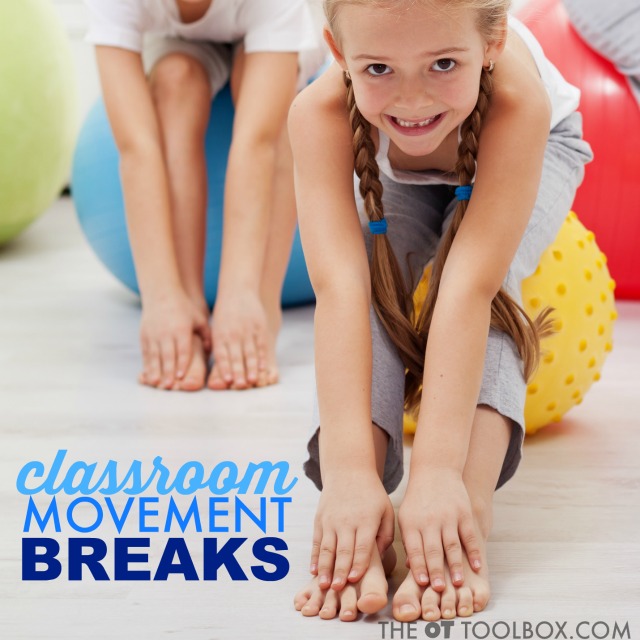
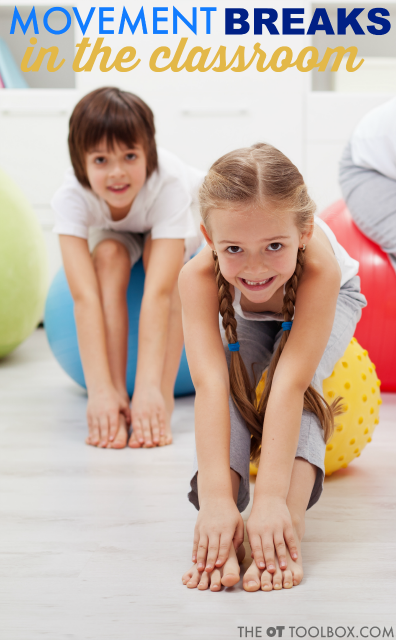
Movement breaks in the classroom ideas and activities for the classroom

Adding movement breaks to the classroom can be a tool for helping kids focus and learn. Read below about some research related to classroom breaks and behavior, learning, and focus in the classroom. These are brain breaks that can be used as classroom breaks to take a short break from learning…OR used as a strategy to incorporate movement into learning activities!

We talk more about the benefits of movement in our post on middle school brain breaks.

Classroom breaks add an opportunity to boost learning skills and reduce behaviors that interfere with academics. These movement activities and classroom breaks can be incorporated into the classroom and are evidence-based.

Movement Breaks

I was thinking about the cold weather we’ve been having recently. My kids have been cooped up in school and when they get home from school, it’s been FREEZING. Sure, we can bundle up and run around the yard for a bit (and I try to get all the kiddos to do this)…but it is downright cold out there. We can’t last too long when the wind chill is -4 degrees F!


Not only that, but many schools aren’t having outdoor recess when it’s this cold. Some are getting their kids bundled up and outside, but for the most part, it’s been indoor recess for many kids.


So when the school day is an indoor affair all day long, kids can become antsy!


Research on Classroom Breaks


Research tells us that activity breaks in the classroom can improve classroom behavior and can increase students’ overall physical activity.


We know as therapists, that behaviors are just the tip of the iceberg. They are the sign that something bigger is causing the behavior we see. It might be anxiety, worries, sensory needs, communication issues, emotional concerns, social situations, or a myriad other underlying areas that lead to the behavior we see. 


So, to know that science tells us that a brain break can help get out of that rut of behaviors is huge! It’s a strategy to help reduce the behavior and move toward focused learning and attention. In fact, there’s been some findings indicating physical activity during the school day improves attention-to-task in elementary school students. 


The evidence suggests that increasing physical activity may improve academic performance, in the forms of recess, physical education class, and physical activity in the classroom. But if indoor recess is the only option this time of year, and gym class occurs every one day out of 6 in a classroom rotation schedule, or even one day/week, where does this leave us? Movement and learning and classroom breaks seem to be the option left!


In my research of the available evidence-based practice scenarios out there, I found some interesting points related to learning and specifically executive functioning skills and overall cognitive functions related to learning. 


Here is some more information on physical activity and brain structure such as brain white matter and brain function. 


Executive function is related to learning

It seems that executive functioning skills play more into learning that just having a neat and tidy desk space or remembering homework. 


In fact, executive function plays very much into the use of those mental skills in learning and classroom tasks. These skills can play a big role in attention levels and impulse control of kids in the classroom. They play a part in learning in many ways. Here are just a few examples:

-Arriving to class on time
-Staying on task in an assignment
-Staying focused when completing minor tasks such as retrieving a pencil. Here’s a scenarios you may have seen before: A student drops their pencil. They bend to retrieve that pencil and then get distracted and lose focus on the assignment they are working on. Sound familiar?
-Visual attention in order to scan a math worksheet and going through the assignment part by part without skipping sections or getting distracted or overwhelmed

Activity and Learning

  • Evidence suggests that mathematics and reading are the classroom subjects topics that are most influenced by physical activity. These academic areas depend on “efficient and effective executive function, which has been linked to physical activity and physical fitness”.
  • Executive function and brain health are the basis of academic performance. The cognitive functions of attention and memory are essential for learning. These executive function skills are enhanced by physical activity and higher aerobic fitness.

Physical activity and behaviors

It seems that when physical activity is used as a break in the classroom, whether as a brain break or , during gym class, recess time, or during active learning, attention, on-task behavior, and academic performance  improves as well. 

How to add more physical activity to the school day 

Some ideas for adding physical activity into the classroom in order to improve behaviors include:


1. Offering physical activity breaks within the curriculum or learning activity


2. Allow students to stand at the student’s discretion. This strategy should be used with a training period and even a contract signed by the student that says they will not move away from their desk and that they will perform the work that’s asked of them while standing at their desk.
 

3. YouTube Videos- Here are our recommendations for YouTube brain breaks that can be added into classroom breaks. Some of these would be great for an indoor recess dance party, too. 


4. Print off a collection of brain breaks and pull them out at different times during the day or as a transition activity. Here are some printable sheets of brain breaks: Bear brain breaksSquirrel Themed Brain Breaks apple themed brain breaks

5. Add a beach ball or bean bag to group activities. Toss while naming the answer to questions. 


6. Jumping Jack Spelling Words- This is a whole-class exercise drill that gets the brain and the heart moving!


7. Make indoor recess an active time. Here are indoor recess ideas to get the kids moving. 

Use these classroom movement ideas to help with behaviors, learning, and to promote academic skills like math and reading.


References:

Grieco LA, Jowers EM, Bartholomew JB. Physically active academic lessons and time on task: The moderating effect of body mass index. Medicine and Science in Sports and Exercise. 2009;41(10):1921–1926. 


Mahar MT, Murphy SK, Rowe DA, Golden J, Shields AT, Raedeke TD. Effects of a classroom-based program on physical activity and on-task behavior. Medicine and Science in Sports and Exercise. 2006;38(12):2086.


Donnelly JE, Lambourne K. Classroom-based physical activity, cognition, and academic achievement. Preventive Medicine. 2011;52(Suppl 1):S36–S42. 

How to Improve Executive Function

Executive functioning resources
Here, you will find a variety of information on executive functioning. These are resources curated from around the internet designed to improve executive function. I wanted to create a space that has information on executive functioning skills that can be accessed all in one place. It is my hope that this space is one where you can find strategies and tools for addressing problems with attention, organization, task initiation, planning, prioritization, and many other mental skills that cause so many individuals to struggle. Use these tools, tips, and information to work on executive functioning by starting at the beginning!

Wondering how to improve executive function? Here are 20 online resources for understanding executive functioning skills.
 
 
Improve executive function skills in kids or adults with these strategies and tips.


If you’ve noticed anything about The OT Toolbox, it may be that I love to share a lot of tools and resources that can help parents, teachers, and of course, occupational therapists. The information in this post are resources and tools that I share on one of our Facebook pages, Executive Functioning Toolbox. Some readers who do not have access to Facebook have asked for access to this collection of information. It’s my hope that THIS can be an executive function toolbox!

Here are strategies to help the adult with executive function disorder. Many of these tips and strategies are great for teens as well.

How to Improve Executive Function

 
Free email course on executive functioning skills
 
1. First, you may want to sign up for our free Executive Functioning Skills Email Course, if you haven’t already. Over the course of 5 days, we’ll cover everything from what executive function means, to the “why” behind actions, and things that may be occurring beneath the surface in the individual with executive function disorder or simply challenges with one or more of the mental skills. You’ll also get great tips and strategies to work on executive functioning skills, too. 
 
Read more about what you’ll learn and sign up for the free executive functioning course here.
Use these resources to improve executive function in kids and adults.


These executive function resources can help improve skills like working memory, attention, and other executive functioning skills.


Know a child who struggles with impulse control, attention, working memory or other executive functions?Let’s talk about what’s going on behind those impulses!
FREE Email Mini-Course


    We won’t send you spam. Unsubscribe at any time.

    Online Resources for executive function:

    There are many benefits to having kids with attention or learning challenges participate in martial arts. Here’s why martial arts can help kids with attention problems

    Inhibition is a big part of executive functioning skills that play into many other EF skill areas like planning, prioritization, task initiation, perseverance, and more. Here are some Impulse Control Strategies.

    Here is a self-test to help determine if you or someone else has an executive function disorder. 

    Foresight, or the ability to think ahead, is a big part of executive functioning. This skill works together with working memory, and other skills to allow us to problem solve, plan, and prioritize tasks. Here is more on foresight and activities and games to improve foresight.

    “Executive function and self-regulation skills are the mental processes that enable us to plan, focus attention, remember instructions, and juggle multiple tasks successfully. Just as an air traffic control system at a busy airport safely manages the arrivals and departures of many aircraft on multiple runways, the brain needs this skill set to filter distractions, prioritize tasks, set and achieve goals, and control impulses.” Here is more information on executive function and self-regulation.

    Here are  Apps and Sites to Improve Executive Function– These can be a helpful tool for so many!

    Looking to add items to your child’s holiday gift list that serve a purpose? Keep these games in mind when choosing gifts for a child who struggles with executive functioning skills. 

    An introduction to working memory: “Compared to short-term memory, working memory plays a more influential role in students’ academic performance. This is because many academic tasks involve multiple steps with intermediate solutions, and students need to remember those intermediate solutions as they proceed through the tasks. Examples of working memory tasks could include holding a person’s address in mind while listening to instructions about how to get there, or listening to a sequence of events in a story while trying to understand what the story means. In mathematics, a working memory task could involve keeping a formula in mind while at the same time using the formula to solve a math problem.”

    Understanding what it’s like to have executive function disorder: “It only took three-and-a-half minutes of simulated executive functioning issues to bring me to tears of frustration. It still makes me panicky to think about it.”

    This site has much information, resources, articles, and tools for addressing executive functioning skills and needs in these mental skill areas.

    Does a lack of executive function explain why some kids fall way behind in school? This report discusses the idea.

    Here is general info on EF skills, anatomy of executive functioning, and a quick list of instruments used to assess executive behavior.

    What is executive function disorder, and how is it different than ADHD? Here is a nice explanation.

    Here is an assessment of Sensory Processing and Executive Functions in Childhood..

    Want to understand more? This article is informative: “There’s no diagnosis called executive function disorder. You won’t find it in the DSM-5, the manual clinicians use to diagnose conditions. But you can still identify weaknesses in executive function by having your child evaluated.

    Executive function is complex, so it can be tricky to evaluate. But there are specific tests that look at a wide range of skills that are involved in executive function. These skills include…”

    Wondering how executive functioning skills develop through childhood?

    Need ideas to work on  EF skills? Here are a few completely free and no-prep games that build executive functioning skills: “Parents who want to stimulate their children’s brain development often focus on things like early reading, flashcards and language tapes. But a growing body of research suggests that playing certain kinds of childhood games may be the best way to increase a child’s ability to do well in school. Variations on games like Freeze Tag and Simon Says require relatively high

    levels of executive function, testing a child’s ability to pay attention, remember rules and exhibit self ­control — qualities that also predict academic success.”

    Looking for more information on executive functioning skills? Here is all of the executive functioning skills items on this website that can help.

    Finally, here are more executive function resources.

    Colleen Beck, OTR/L has been an occupational therapist since 2000, working in school-based, hand therapy, outpatient peds, EI, and SNF. Colleen created The OT Toolbox to inspire therapists, teachers, and parents with easy and fun tools to help children thrive. Read her story about going from an OT making $3/hour (after paying for kids’ childcare) to a full-time OT resource creator for millions of readers. Want to collaborate? Send an email to contact@theottoolbox.com.