Spaceman Writing Tool

Spacing tool for spacing between words in handwriting

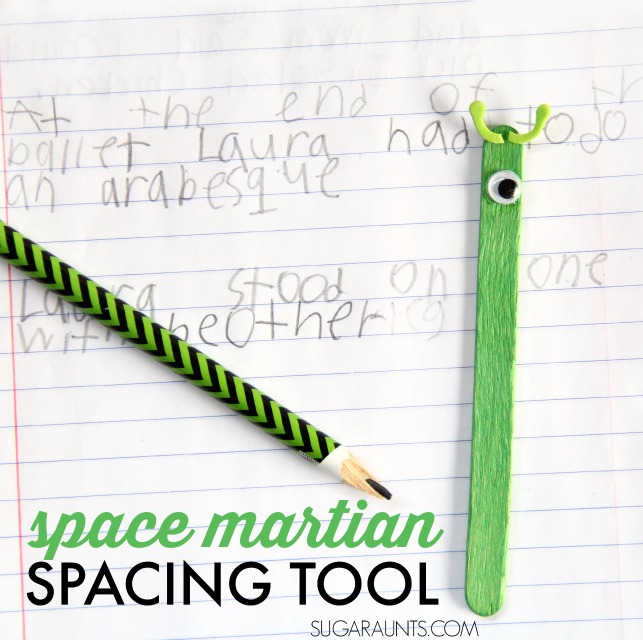
This spacing tool is an alien craft that kids can make and use as a spacing tool for handwriting. A spaceman writing tool is a powerful device to help kids with spacing in handwriting, specifically space between letters and words when writing. We’ve come up with a few different spacing tools in the past, and this space themed spacing tool helps kids better understand the concepts of spatial awareness for better legibility in written work.

Teaching proper letter spacing in handwriting doesn’t have to be boring—meet your new writing sidekick: the Spaceman Writing Tool! This fun, kid-made spaceman for writing helps children visually and physically separate words on the page. Whether you call it a word spacer tool, spaceman spacer, or star spacer handwriting tool, this simple craft stick Martian is a fun and effective way to improve spacing between words.

Perfect for occupational therapy for writing, classroom handwriting instruction, or home use, this DIY spacing tool for writing gives students a concrete visual cue to help keep their words from crowding together. It’s a space-themed handwriting exercise that brings structure, independence, and just the right amount of fun to writing practice.

This space martian spacing tool goes really well with our block light saber spacing tool!

Sometimes, a child’s handwriting doesn’t improve given time and practice in the classroom. You might see a child copying words or sentences and squishing all of the words and letters together in a long string. There might be no space or inconsistent spacing between letters and words. It can be frustrating for the child and their parent or teacher.

Spacing Tool

This spacing tool will help with spacing in handwriting in a fun way.  My second grader and I had fun creating this Space Martian Spacing Tool and using it to practice spacing between words.
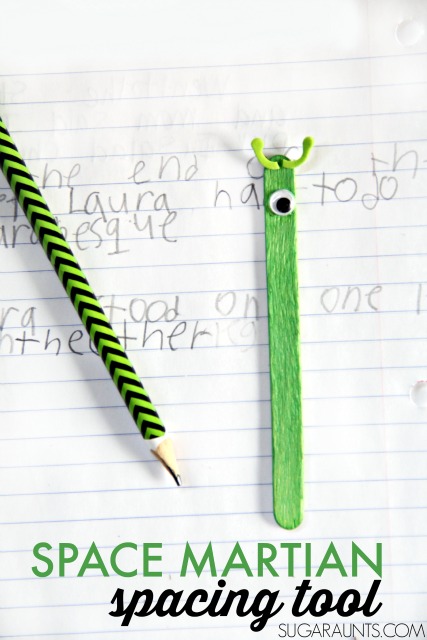
Spacing tool for spatial awareness in handwriting, using a space theme

Spacing Tool for poor spacing in handwriting

  This post contains affiliate links.  

Poor spacing in handwriting can be a visual tracking problem.  It could be visual inattention or poor hand eye coordination.  Sometimes, spacing is just something that needs more practice and a visual prompt like this space alien can help.  

We’ve shared other versions of spacing tools to support these needs:

What Is a Spaceman Writing Tool?

The spaceman writing tool that we made is a small, craft-based object (like a decorated popsicle stick) used to teach word spacing in handwriting. It’s commonly used in classrooms and occupational therapy for writing sessions to give students a consistent way to mark space between words.

Benefits of Using a Word Spacer Tool

I love using a visual tool like this one for several reasons.

  • Encourages consistent spacing
  • Improves legibility
  • Builds independence
  • Supports spatial awareness (important in OT)
  • Engages young writers in a multisensory way
    Include how this tool supports distal finger exercises by giving physical feedback between words.

Try this easy DIY version is actually a spaceman spacer for writing…but the alien version!
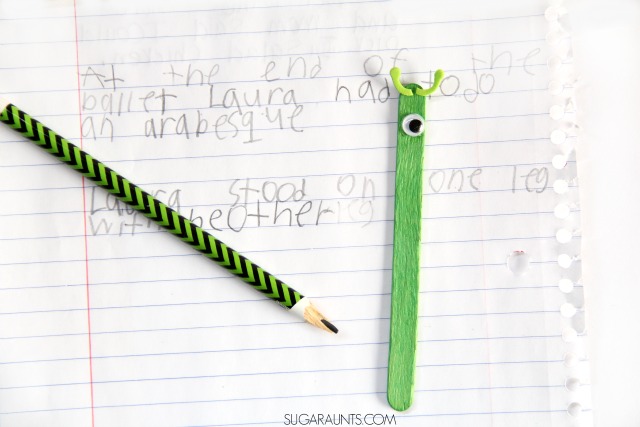
Make a spacing tool with this space martian craft, and work on visual tracking, visual perceptual skills, and visual attention in handwriting.

Make a Spaceman Writing Tool

You can easily make this spacing tool with just a few materials:

  1. To make the spacing tool, ask students to use glue to add a small dot of glue to the back of the googly eye. What a great fine motor precision and eye-hand coordination job.

2. Next, stick the googly eye onto one end of the green craft stick.

3. Cut the letter C foam sticker in half. Glue each piece to the craft stick above the googly eye.

And that’s it! If you don’t have foam letter stickers, you could use small pieces of pipe cleaners or scraps of paper.

Here’s a video showing how to make this space alien spacing tool:
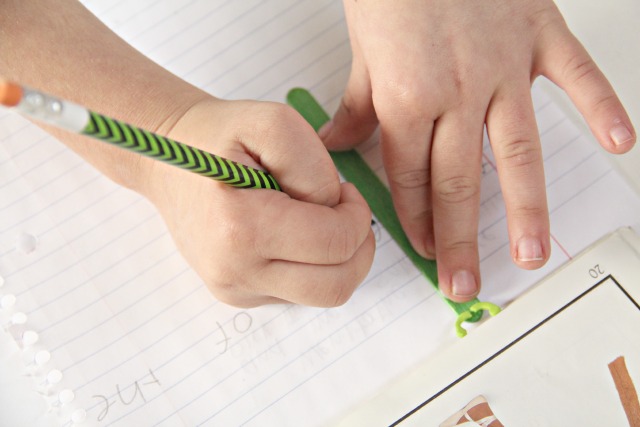
Work on spacing in handwriting with a spacing tool craft kids can make.

 Use this handwriting spacing tool between letters and words.  Encourage your child to move the spacer over between words.  Sometimes, just that visual cue is enough to help.  The physical act of moving the craft stick to space between words can provide enough input to a child that they become more aware of the need to space, and are able to carryover the skill without using the physical reminder for spacing.  
Visual Perception and spatial awareness in kids.  What is Spatial awareness and why do kids have trouble with spacing between letters and words, reversing letters, and all things vision.  Great tips here from an Occupational Therapist, including tips and tools to help kids with spacing in handwriting.

HANDWRITING SPACING TOOL

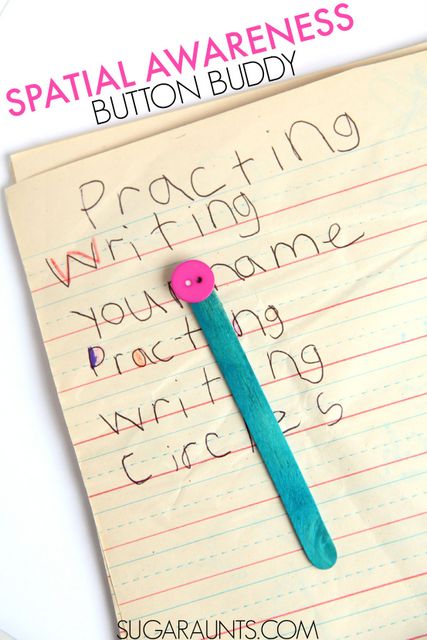
Another easy way to make a handwriting spacing tool involves materials you have around the home, like buttons. The main thing to address with a handwriting spacing tool is a spatial awareness and using a craft that kids can make adds meaning and motivation to work on spacing between letters and words.  

When kids learn to write, it can be difficult to work on all of the parts of handwriting.  There is holding the pencil, and using muscles to maintain a grasp while writing sentences. Then there is letter formation.  Putting it all together can be challenging.  

In Kindergarten, children really work on letter formation, and especially lower case letter formation. When you throw in the lines and spacing to writing, it can be a real frustration for a new writer!  That’s where using a fun spacing tool comes into play. It allows for appropriate spatial awareness in handwriting is accurately spacing letters within words and spacing words correctly within a sentence.      

For another spacing tool idea, try this easy (and inexpensive!) way to create a Spacing tool using buttons. This spacing tool can be used in handwriting tasks, as a tool for spacing between letters and words.  
Visual Perception and spatial awareness in kids.  What is Spatial awareness and why do kids have trouble with spacing between letters and words, reversing letters, and all things vision.  Great tips here from an Occupational Therapist, including tips and tools to help kids with spacing in handwriting.

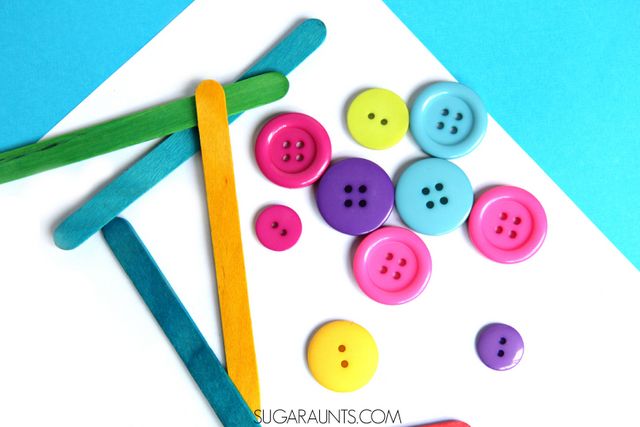
How to make a spacing tool with buttons

Spacing between words and letters can be easy with this button spacing tool.  It’s easy to make and can be created using items you already have.  The cost of this activity should be very inexpensive, especially if you use items you already have.  

To make spacing tool you’ll need just a couple of items: (This post contains Amazon affiliate links.)

  • Craft stick
  • Glue
  • Buttons

We used a colored craft stick and brightly colored button that we received from www.craftprojectideas, but you could use any material you have in your home.  Have a bin of beads or crafting pom poms in your craft supplies?  Use beads instead of buttons. Other ideas include craft pom poms or pipe cleaners.

  1. First, glue one button to the end of a popsicle stick or even a pipe cleaner.  
  2. Let it dry.
  3. Then, use the spacing tool while your child is writing words and sentences.  Show them how to place the button spacing tool between words and sideways between letters. 

This post is part of our 31 Days of Occupational Therapy where I’m sharing tips and tools for many developmental areas using free or inexpensive materials.     For more spatial relations related to handwriting, check out our Visual Tracking activities

RELATED READSpatial Awareness Tips and Tools

Spacing tool with an alien craft.


Visit our Visual Motor Skills page for more ideas in all thing visual perception and kids!      

Occupational Therapy Tips for Teaching Spacing with a Hands-On Approach

In occupational therapy sessions, teaching proper spacing between words often involves visual cues, as well as other areas in a multisensory learning experience. We need to see motor planning, spatial awareness, and self-monitoring during written tasks.

The spaceman writing tool is an excellent way to incorporate proprioceptive feedback and tactile input into handwriting instruction. Here’s how to make it more hands-on:

1. Physically Move the Pencil with Intention

After completing a word, instruct the child to set their pencil down briefly, pick up the spaceman tool, and place it against the end of the word. This pause gives their body and brain time to reset before starting the next word.

Then, the child uses their dominant hand to hold the pencil and their non-dominant hand to hold the spacer in place, which promotes bilateral coordination and fine motor precision. As they slide the pencil to the other side of the spacer, they get a physical sense of space, which helps internalize how much room to leave between words.

2. Add a Cueing Routine

Teach a routine like “Write-Stop-Space-Slide-Write” to support sequencing and executive function during written tasks. These verbal prompts paired with physical actions help students self-monitor spacing over time.

3. Use Heavy Work and Movement Breaks

Incorporate heavy work before writing (e.g., wall push-ups, towel wringing, or chair pushes) to activate proprioceptive input and support postural stability, which improves writing control and precision.

4. Encourage Consistency Across Settings

Have students take their spaceman spacer tool between home and school (or OT sessions and class) as part of their self-regulation and academic routines. This builds confidence and consistency in their handwriting performance, especially for children working on functional school-based goals.

More Spacial Awareness Activities

Know a kiddo that loves all things space, astronauts, and planets? The Outer Space Fine Motor Kit is your chance to develop fine motor strength, dexterity, and coordination skills.

Addressing hand strength, endurance, and precision is out of this world fun! The Outer Space Fine Motor Kit includes:

  • Fine Motor Mazes
  • Fine Motor Ten Frames for motor activities
  • 1-20 Star Counting Cards
  • Bead Copying Strips
  • Space Alien Directed Drawing Sheets

This fine motor kit includes 24 pages of printable resources. Included in this printable pack are:

  1. Two pages of color coded bead copying strips
  2. Two pages of blank bead copying strips
  3. Four pages of “draw and write” directed drawing activities with a space theme (Includes 3 styles of handwriting lines: highlighted lines, single rule, and double rule)
  4. Nine pages of fine motor mazes
  5. 1-20 Outer Space Counting Cards
  6. Four pages of fine motor ten frames activities

These printable activities extend to work on a variety of other functional areas, too: handwriting skills, numbers, math, adding, subtracting, one-to-one correspondence, scissor skills, coloring, and more.

Click HERE to grab the Outer Space Fine Motor Mini-Kit.
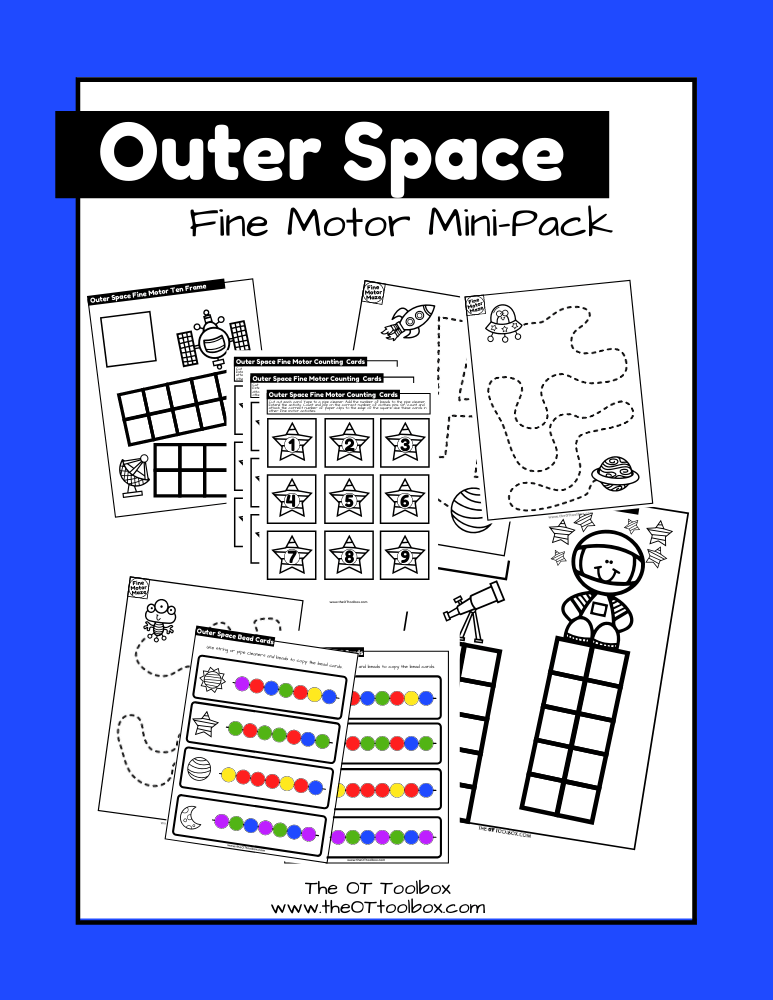
Outer Space Fine Motor Kit
The Handwriting Book is a comprehensive resource created by experienced pediatric OTs and PTs.

The Handwriting Book covers everything you need to know about handwriting, guided by development and focused on function. This digital resource is is the ultimate resource for tips, strategies, suggestions, and information to support handwriting development in kids.

The Handwriting Book breaks down the functional skill of handwriting into developmental areas. These include developmental progression of pre-writing strokes, fine motor skills, gross motor development, sensory considerations, and visual perceptual skills. Each section includes strategies and tips to improve these underlying areas.

  • Strategies to address letter and number formation and reversals
  • Ideas for combining handwriting and play
  • Activities to practice handwriting skills at home
  • Tips and strategies for the reluctant writer
  • Tips to improve pencil grip
  • Tips for sizing, spacing, and alignment with overall improved legibility

Click here to grab your copy of The Handwriting Book today.

Colleen Beck, OTR/L has been an occupational therapist since 2000, working in school-based, hand therapy, outpatient peds, EI, and SNF. Colleen created The OT Toolbox to inspire therapists, teachers, and parents with easy and fun tools to help children thrive. Read her story about going from an OT making $3/hour (after paying for kids’ childcare) to a full-time OT resource creator for millions of readers. Want to collaborate? Send an email to contact@theottoolbox.com.


Manual Dexterity Goals

manual dexterity

In today’s blog post, we’re talking all things manual dexterity goals. Fine motor IEP goals, or goals designed to target manual dexterity needs can be identified based on dexterity weaknesses that impact participation in the educational environment. You’ll also find many manual dexterity activities in this blog post, including this dexterity activity.

Be sure to read about IEP and 504 plans for information on where to begin with these processes. Another resource you’ll want to check out is our self regulation IEP goals and identifying student strengths for IEP writing.

Goals, goals, and more goals! It seems all therapists do is create, work on, and document about goals. Occupational therapy is about play. Where is the fun in that? Unfortunately, therapists are driven by measurable data and reimbursement.

what are manual dexterity skills?

Manual dexterity refers to the ability to use your hands in a skillful, coordinated way to grasp and manipulate objects and demonstrate small, precise movements. Manual dexterity is one of the components of fine motor skills.

Other fine motor skills include: speed and precision, visual motor skills, and strength. These skills allow for manual dexterity, or coordinated precision, to happen. Those skills listed out are:

There are tons of articles and ideas in the OT Toolbox Archives under “manual dexterity” to help gather ideas of what to be watching for when evaluating a student for fine motor skills.

manual dexterity examples

In occupational therapy, manual dexterity is a key area of focus, particularly for children who struggle with fine motor control. Strengthening these skills supports independence in self-care, academics, and play. Understanding what manual dexterity means helps caregivers and professionals identify delays and build effective goals.

That being noted, the focus on progress and goals will continue. Writing goals and measuring them can feel overwhelming at times. Today we will focus just on manual dexterity goals.

manual dexterity goals

Manual dexterity or precision in fine motor skills, has many underlying factors that impacts graded coordination in functional tasks.

What Is Manual Dexterity?

Manual dexterity refers to the ability to skillfully use the hands and fingers to complete precise movements, tasks, or manipulations. This includes actions like buttoning a shirt, writing with a pencil, tying shoes, or manipulating small objects like coins or beads.

Manual Dexterity Skills and Examples

Some common manual dexterity skills include:

  • Turning pages of a book
  • Zipping a jacket
  • Using scissors accurately
  • Stringing beads or building with small blocks
  • Picking up small objects like Cheerios or coins
  • Handwriting and coloring within lines

These examples can help inform targeted fine motor goals in occupational therapy, especially when writing IEP goals or designing home exercise programs.

Manual Dexterity Activities for Therapy

When planning manual dexterity activities, it’s important to select tasks that match a child’s developmental level and gradually increase the precision or coordination required. Effective manual coordination activities may include:

  • Tweezers games for grasp precision
  • Pegboards or lacing cards
  • Bead stringing or bracelet making
  • Using a hole punch or stapler
  • Squeeze toys or clothespins
  • Drawing mazes or tracing lines with resistance

These activities can be used during direct services, at home, or embedded into classroom routines for additional practice.

Why Manual Dexterity Matters in Pediatric OT

In pediatric occupational therapy, manual dexterity is one of the foundational skill areas that supports overall development, academic success, and independence in everyday life. Weakness in these areas may lead to challenges in writing, drawing, using tools, self-care tasks, and participation in age-appropriate play.

By embedding manual dexterity goals into treatment, therapists support fine motor coordination, hand dominance, bilateral integration, and task sequencing, all of which improve fine motor skills needed for success in school and at home.

Fine Motor Goals for IEPs and OT Documentation

Manual Dexterity Goals in Occupational Therapy

Here are examples of manual dexterity goals that can be used in occupational therapy documentation or individualized education plans (IEPs):

  • The student will improve manual coordination by manipulating small classroom tools (pencil, scissors, glue) with appropriate grasp and control in 4/5 trials.
  • The child will demonstrate fine motor precision by placing 10 small pegs into a pegboard within 1 minute with minimal assistance.
  • Given visual and verbal prompts, the student will use fine motor skills to complete a 3-step self-care task (e.g., buttoning, zippering) independently on 3 out of 5 opportunities.
  • The child will increase manual dexterity by stringing 15 beads with a pincer grasp in under 2 minutes across 3 consecutive sessions.

These fine motor goals reflect functional tasks and can be adjusted to support classroom performance or daily routines.

Setting effective fine motor goals is essential when developing an IEP or occupational therapy treatment plan. Consider the child’s current performance, strengths, and areas of need.

Some fine motor IEP goals may include:

  • Improve pencil grasp and in-hand manipulation to write first and last name legibly in 3 out of 5 opportunities.
  • Increase speed and accuracy of cutting along a line using scissors independently during art or classroom tasks.
  • Demonstrate improved hand strength and dexterity to open containers in lunchbox without assistance in 4/5 school days.

These goals can also align with manual dexterity activities and classroom expectations.

manual dexterity goals

Before churning out a dozen goals, it is important to review the basic framework and structure of excellent goals. A

s much as I dislike all of the documentation involved in providing therapy, having great measurable goals makes it a little easier. When goals are SMART, they are specific, measurable, attainable, relevant, and timebound.

The key to successful goal writing is to incorporate all five of these elements into each goal. Check out this post on Breaking Down Goals for more information.

Manual Dexterity Examples

Manual dexterity goals are going to be related to manipulating objects with the hands, rather than the visual motor goals of copying shapes, writing letters, coloring, and cutting.

Examples of these from the  Bruininks-Oseretsky Test of Motor Proficiency Second Edition (BOT-2) include the following five items measured in fifteen second intervals:

  • transferring pennies (total pennies into box after fifteen seconds)
  • sorting cards
  • making dots in circles
  • placing pegs into a pegboard
  • and stringing blocks

Other manual dexterity measurements might include; the Purdue Peg Board, 9 Hole Peg Test, Jebson Hand Function Test, Functional Dexterity Test, and the Box and Block Test.

It’s important to know about fine motor milestones when assessing these results in order to create fine motor goals.

Specific examples of fine motor, manual dexterity activities include many components of every day activities. There are many fine motor skills required in the school environment. At home there are just as many!

It would be hard to list out every single manual dexterity example, but here are some listed below. Some of these are related to the school environment and may be incorporated into IEP goals based on manual dexterity needs in the school-based OT environment. Others are more ADL or IADL based and do not impact education. These dexterity goals may be covered in outpatient or medical model of occupational therapy.

  1. Typing on a keyboard
  2. Handwriting, holding a pencil
  3. Coloring in lines
  4. Writing in a given space
  5. Buttoning clothes
  6. Zipping a zipper
  7. Snapping a clothing snap
  8. Tying shoelaces
  9. Threading a needle
  10. Cutting with scissors
  11. Using chopsticks
  12. Turning a key in a lock
  13. Playing a musical instrument
  14. Operating small tools (e.g., screwdrivers)
  15. Applying makeup
  16. Drawing and coloring
  17. Pressing buttons on a device
  18. Sculpting with clay or manipulating play dough
  19. Braiding hair
  20. Flipping a coin
  21. Manage money
  22. Stringing beads
  23. Assembling puzzles
  24. Crafts
  25. Tearing paper
  26. Playing board games
  27. Painting miniatures or models
  28. Using a combination lock
  29. Applying nail polish
  30. Playing jigsaw puzzles
  31. Building with LEGO bricks
  32. Weaving paper crafts
  33. Operating a computer mouse
  34. Folding origami
  35. Stacking small items like Jenga game pieces
  36. Cutting food with a knife
  37. Putting on jewelry
  38. Playing cards
  39. Folding paper
  40. Flipping a light switch
  41. Opening a door handle
  42. Turning a faucet
  43. Opening containers like a toothpaste lid
  44. Sealing plastic sandwich bags
  45. Using a spoof and Fork
  46. Pouring liquid from a container
  47. Applying lotion or cream
  48. Turning the pages of a book
  49. Using a stapler
  50. Playing with building blocks
  51. Playing with small toys
  52. Using tweezers
  53. Using fingernail clippers
  54. Flossing teeth
  55. Turn a pencil sharpener
  56. Turn a watch dial
  57. Put on a watch

not so great manual dexterity goals

How do you translate the data you gathered in a standardized assessment into SMART goals? One strategy is not to be to vague. This is one of the first goals I pulled up when searching for “manual dexterity goals”:

The student will improve fine motor dexterity skills to manipulate small objects, use tools, or engage in activities that require precise hand movements.

This goal is missing several components. It is not specific, measurable, attainable (how will you know when the student has improved?), or timebound. While it IS relevant to therapy, it is missing all of the other components that make it a usable goal.

How about this one?

In six months, the student will improve manual dexterity skills by improving score on the BOT2 test from 11 to 18 points in 3 of 4 trials.

There is a big part of me that likes this goal. It has all of the components of a SMART goal. The drawback is you will be constantly teaching and reviewing the specific items on the test, which will nullify the results the next time you retest. Also, school based therapists can not use standardized assessments each time they measure and report on goals.

Another thing to consider about writing fine motor goals based on the results of standardized testing; This goal is a “no no” in the school system (I found out the hard way this year). Maybe there is a way to tweak it in a long term goal, while having several different short term goals. After all, your ultimate measurement for progress and discharge may be those results from updated standardized testing!

manual dexterity goals – framework

The goals I tend to write have several similar components (as dictated by the school district or governing body):

  • In TIME FRAME (one, three, six, 12 months)
  • student will improve manual dexterity skills
  • by…
  • as measured by clinical observation and data collection by occupational therapist
  • 3 of 4 trials, 8 of 10 opportunities, 4 of 5 sessions. I prefer this to percentages because it feels more specific than “75% of opportunities”.

measurable manual dexterity goals

The following is a list of goal ideas to get you started. It is by no means an all inclusive list, because students are as different as snowflakes.

To use an activity in goals, you can add time frames, percentages, number of seconds, assistance, or whatever modifications you need.

For example, to write a fine motor goal based on a specific fine motor task, follow this format:

In 12 months (specify date), the student will demonstrate improved manual dexterity skills by:

  • stringing 3 half inch beads on a lace within 15 seconds, stringing one at a time
  • place 9, 1/4 inch pegs into a 5 inch pegboard using dominant hand within 30 seconds
  • pick up and hold 10 pennies without dropping any, using dominant hand only, and a pincer grasp to pick up
  • find 10 quarter inch beads in medium green theraputty using a pincer grasp (this can include picking off the extra strings of dough)
  • independently button/unbutton 4/4 one inch buttons on a standard button strip
  • rotate a pencil in hand from the lead side to use the eraser using one hand only
  • rip one inch pieces of construction paper using finger tips
  • crumple pieces of tissue paper using one hand to reduce to 1/4 the original size
  • independently open screw top containers and replace
  • roll 10 one inch balls of playdough and place them in one inch circles
  • pick up 10 pennies and place into a vertical slotted container in 30 seconds
  • place 15 clothespins accurately on the edge of a plastic container, using dominant hand to squeeze clothespins
  • flip 10 quarters on a horizontal surface using in hand manipulation, without sliding quarters off of table
  • lace a shoe lace through holes x6 holes (does not have to be in correct order)

Manual Dexterity Activities

Remember when writing and using goals, these are just the items you are measuring for documentation. This does not mean these are the only manual dexterity activities you do during your treatment sessions. It would be next to impossible to list all of the possible activities you will be measuring in your goals.

You may end up with 27 goals this way! I often add 3-4 challenges within the goal, as I feel that one item might not be enough to accurately represent my student.

Manual dexterity intervention strategies can (and will!) include the list of 50 examples of dexterity that we shared above. After all, occupational therapy is all about functional tasks as a tool and a goal. However, some more manual dexterity examples can be rooted in play and the interests of the individual.

Some dexterity activities to try include:

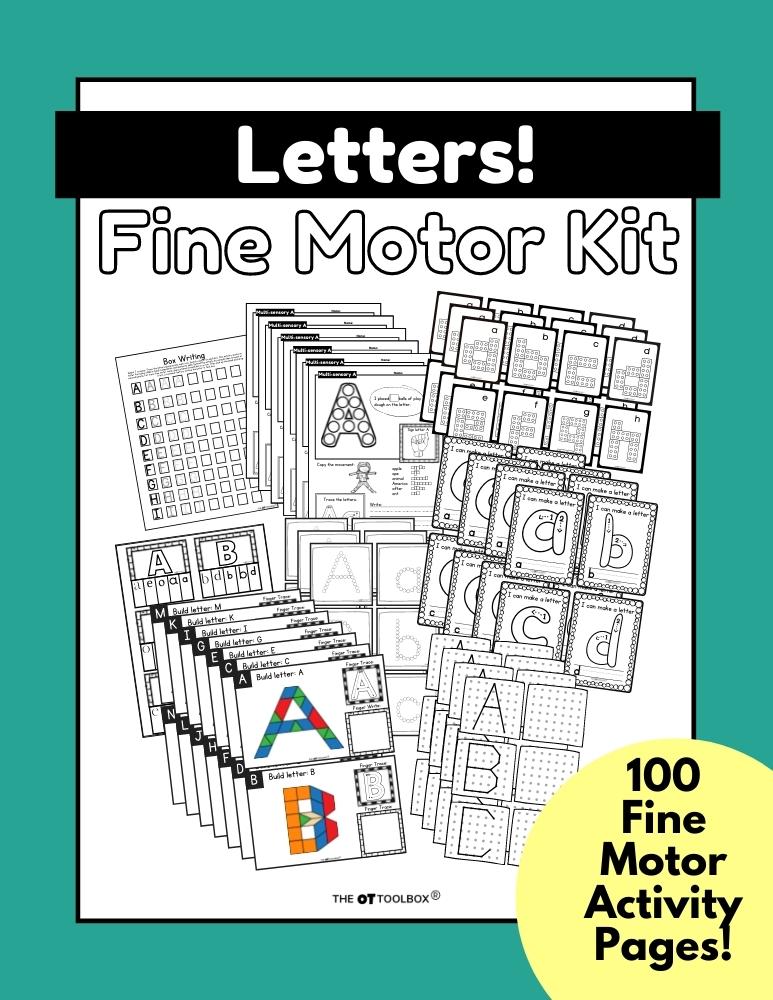
Working on fine motor skills, visual perception, visual motor skills, sensory tolerance, handwriting, or scissor skills? Our Fine Motor Kits cover all of these areas and more.

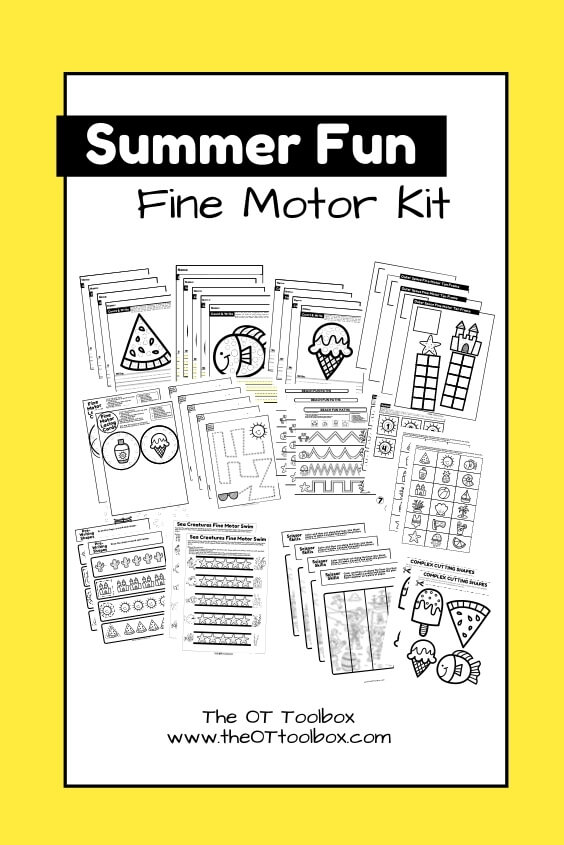
Check out the seasonal Fine Motor Kits that kids love:

Or, grab one of our themed Fine Motor Kits to target skills with fun themes:

Want access to all of these kits…and more being added each month? Join The OT Toolbox Member’s Club!

Victoria Wood, OTR/L is a contributor to The OT Toolbox and has been providing Occupational Therapy treatment in pediatrics for more than 25 years. She has practiced in hospital settings (inpatient, outpatient, NICU, PICU), school systems, and outpatient clinics in several states. She has treated hundreds of children with various sensory processing dysfunction in the areas of behavior, gross/fine motor skills, social skills and self-care. Ms. Wood has also been a featured speaker at seminars, webinars, and school staff development training. She is the author of Seeing your Home and Community with Sensory Eyes.