Colleen Beck, OTR/L is a pediatric occupational therapist and the owner and author of The OT Toolbox website. She manages all of The OT Toolbox social media accounts and runs the popular newsletter.
Read about Colleen's experience and career as an occupational therapist, including how The OT Toolbox began on our About The OT Toolbox page: https://www.theottoolbox.com/about-us/
Colleen created The OT Toolbox in 2011 and since then has written thousands of blog posts designed to support therapy providers, educators, parents, counselors, admin, and caregivers in promoting the healthy development of kids.
Check out Colleen's blog posts below:
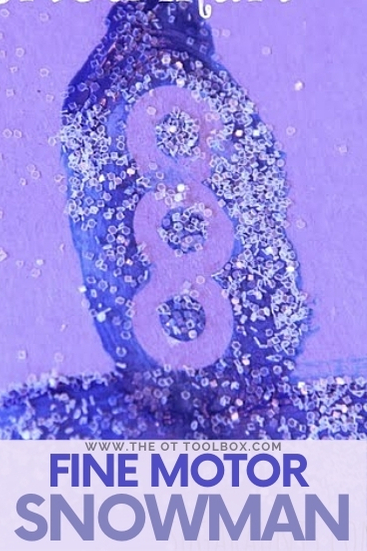
You know we like to use materials that are on hand to help kids develop fine motor skills. This snowman craft uses hole reinforcement stickers to make a cute craft that works on fine motor skills. We do a TON of Fine Motor activities here! This Fine Motor Snowman art craft was just the thing to work on a little fine motor dexterity while keeping with our wintery freezing theme! We worked on tip to tip grasp, bilateral hand coordination, and intrinsic muscle strength, while creating our snowmen. Read all about it below!
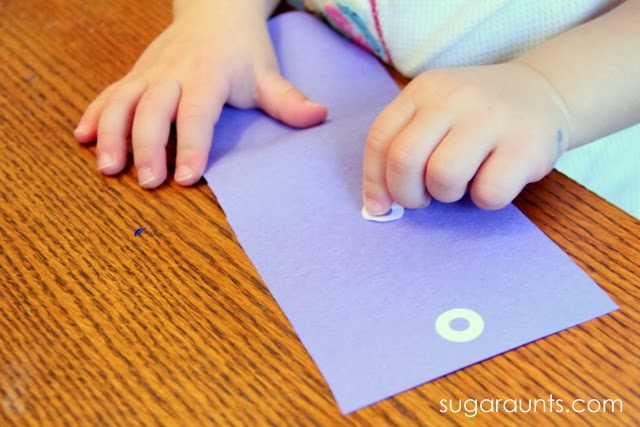
Pulling the reinforcement stickers from the sheet required bilateral hand coordination to manage the page and pull the sticker off with the other hand. Managing two hands together in a coordinated manner is bilateral hand coordination. This skill is very important for self care tasks such as buttoning and zippering clothing, tying shoes, and handwriting.
We placed the stickers into a snowman by placing one sticker above the others. It was starting to look like a snowman party!
Pinching the small stickers from the sheet required precise fine motor dexterity. Using a tip-to-tip grasp to peel the sticker from the sheet was necessary because the stickers were so small. A tip-to-tip grasp occurs when the ends of the pointer finger and thumb are used to pick up very small items. Think about picking up a needle from a table surface. This can be a very difficult and advanced fine motor skill for some!
Once our snowman were placed on the paper, we painted them with blue paint.
Picking up the glitter and sprinkling activates the small muscles of the hands~ the intrinsic muscles. These are the muscles that allow for strength in the arches of the hands and are very important for endurance in coloring and writing with a pencil. The glitter stuck on the paint and made very sparkly snowmen!
To finish the project, peel the reinforcement stickers away and you’ll find a snowman. Be sure to peel away the reinforcement labels away while the paint is still wet, otherwise it will be difficult to pull them away.
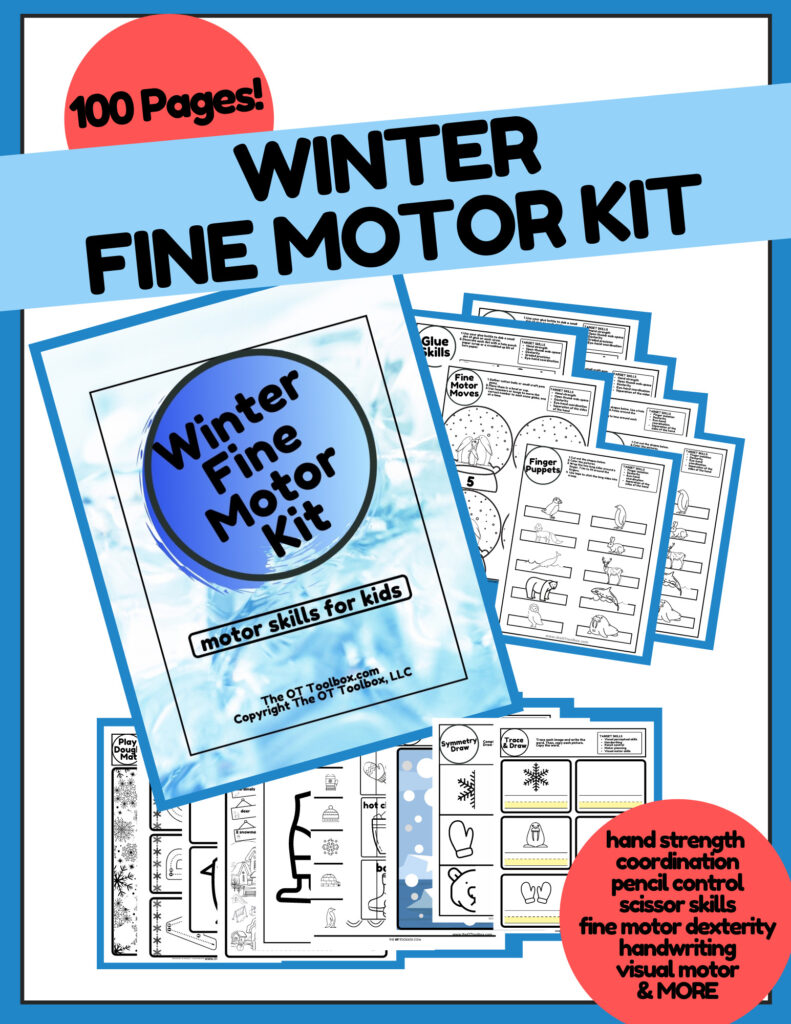
Want more ways to boost fine motor skills with a snowman theme or winter theme? The Winter Fine Motor Kit is on sale now!
This print-and-go winter fine motor kit includes no-prep fine motor activities to help kids develop functional grasp, dexterity, strength, and endurance. Use fun, winter-themed, fine motor activities so you can help children develop strong fine motor skills in a digital world.
More than ever, kids need the tools to help them build essential fine motor skills so they develop strong and dexterous hands so they can learn, hold & write with a pencil, and play.
This 100 page no-prep packet includes everything you need to guide fine motor skills in face-to-face AND virtual learning. Includes winter themed activities for hand strength, pinch and grip, dexterity, eye-hand coordination, bilateral coordination, endurance, finger isolation, and more.
Colleen Beck, OTR/L has been an occupational therapist since 2000, working in school-based, hand therapy, outpatient peds, EI, and SNF. Colleen created The OT Toolbox to inspire therapists, teachers, and parents with easy and fun tools to help children thrive. Read her story about going from an OT making $3/hour (after paying for kids’ childcare) to a full-time OT resource creator for millions of readers. Want to collaborate? Send an email to contact@theottoolbox.com.
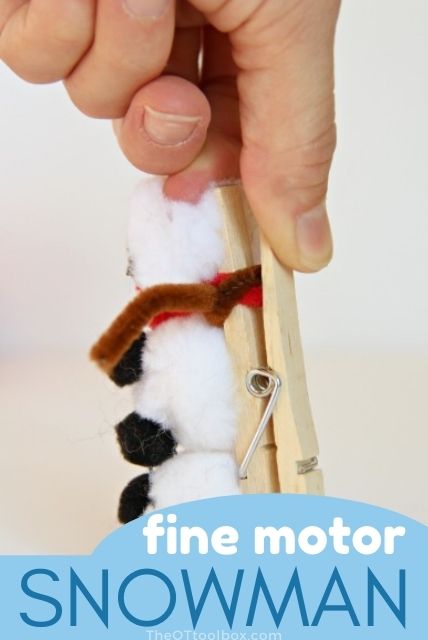
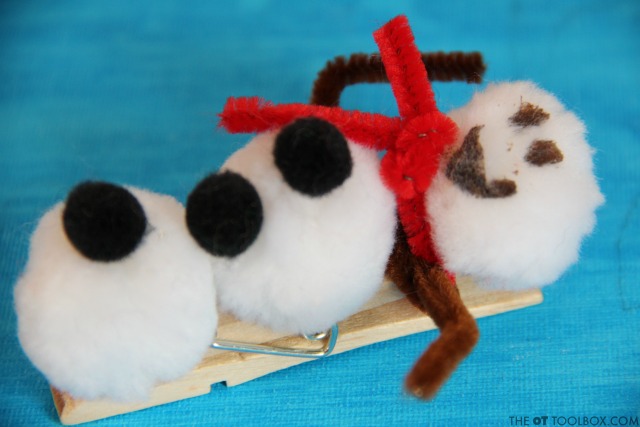
This clothespin snowman is a fine motor craft that is not only the cutest winter craft we’ve seen, but it’s also a powerful tool to strengthen fine motor skills. Kids that fumble with pencil grasp, struggle with clothing fasteners, or are challenged by opening lunch box containers, often times need focused fine motor strengthening. What if we could combine fine motor work with a fun snowman craft? That’s just what we did and we are sharing the how to below! This is a craft that kids can use to really boost fine motor skills…with a super cute snowman clothespin craft!
Read on to find out how to make a snowman craft that uses a few craft supply closet staple items (hello clothespins!) AND works on the fine motor skills like hand strength, precision of grasp, and other skills, too.
ClothesPin Snowman Craft
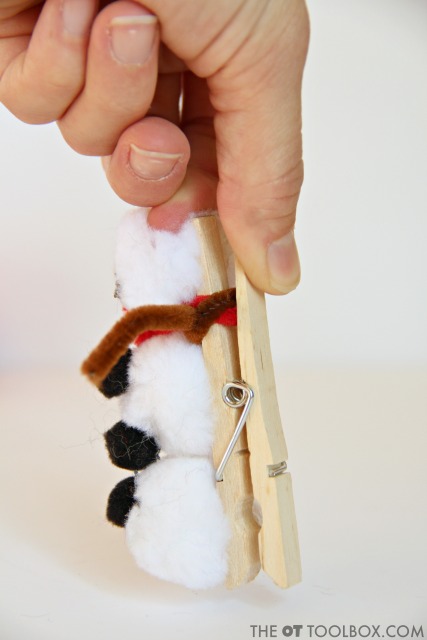
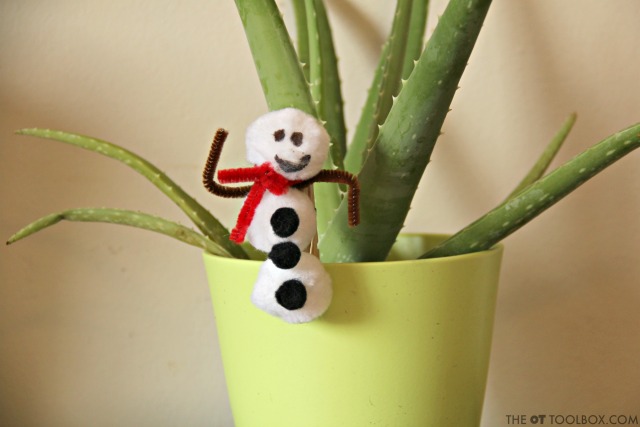
We used some basic craft materials to make a snowman craft that has been as much fun to make as it is to play with! The fact that this snowman craft is on a clothespin makes it a fine motor power tool. Kids can pinch the clothespin to attach the snowman to anything from a folder, to a book, to a backpack, to a flowerpot! Our snowman craft showed up hanging out on the side of a flowerpot and it is still there!
Fine Motor Skills Craft Idea
The clothespin snowman craft that we made is a spin on the typical painted clothes pin idea. While equally cute, I wanted to come up with a craft idea that builds fine motor skills throughout the process of making the snowman craft AND while using it in play and decoration.
The best thing about this little snowman is that while making him, we powered up on fine motor skills like neat pincer grasp, pincer grasp, bilateral coordination, in-hand manipulation, eye-hand coordination, hand strength, finger isolation.
All of these fine motor skills are needed for every-day tasks like pencil grasp, management of clothing fasteners, cutting with scissors, manipulating small containers, shoe tying, and so many other areas.
So many of our kids are struggling with fine motor skills…why not sneak them in with a fun winter craft like this clothespin snowman craft?
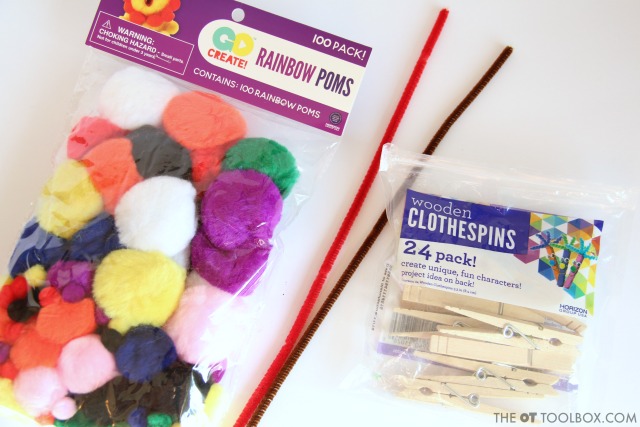
You will need a few materials for this clothespin snowman:
Clothespin
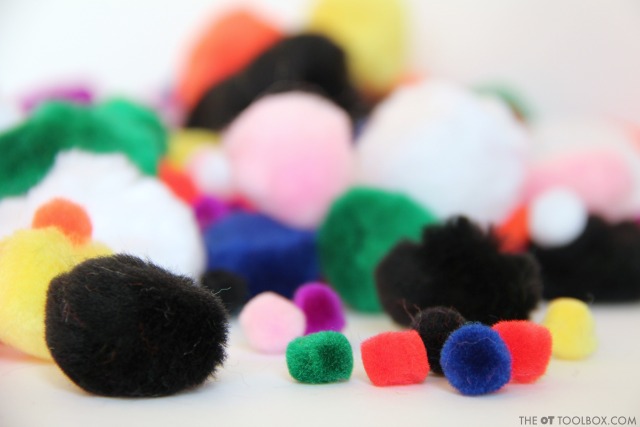
White craft pom poms
Small black craft pom poms
Red pipe cleaner (or any color!)
Brown pipe cleaner
Black paint
Craft glue
make a clothespin Snowman
This was super easy to make:
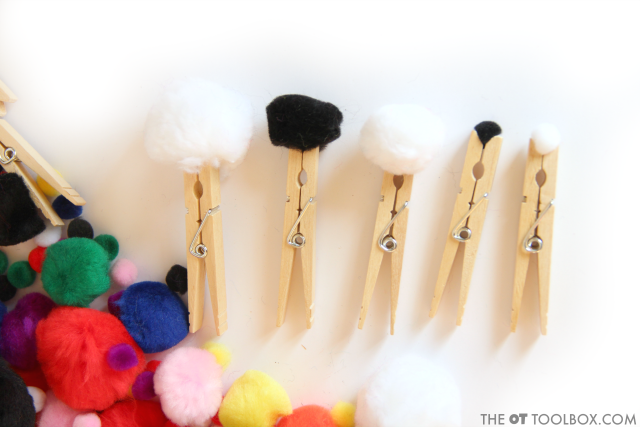
Use the craft glue to stick the white craft pom poms onto the clothespin. The bottom of the snowman should be at the end of the clothespin that opens when you pinch it.
2. Glue the small black craft pom poms onto the belly of the snowman.
3. Use the red pipe cleaner as a scarf by cutting a smaller piece. About 4 inches long is perfect, because you can then trim it as short as you would like.
4. Thread the pipe cleaner behind the head of the snowman and bend it around the front. Twist it into a “knot” and bend the pipe cleaner so it stays in place with the ends hanging as you would like them. Trim the excess from both ends of the scarf.
5. Use the brown pipe cleaner to make the arms of the snowman craft. Thread the pipe cleaner behind the snowman’s head. At this point, you can add a bit of glue to the red and brown pipe cleaners to keep them both in place.
6. Use paint to make a face on the snowman craft. We used squeezable gel glue (the kind that is use for window suncatchers) because it really adds a fine motor strengthening component. A sharpie works as well. Other ideas for decorating the snowman’s face might include gluing small googly eyes and a orange pipe cleaner carrot in place. These options may include use of a hot glue gun.
And that’s it! Your snowman craft is ready to hang out AND work those fine motor skills!
Fine Motor Skills Used in this Snowman Craft:
We incorporated fine motor skills like the ones listed below right into the process of creating our snowman craft!
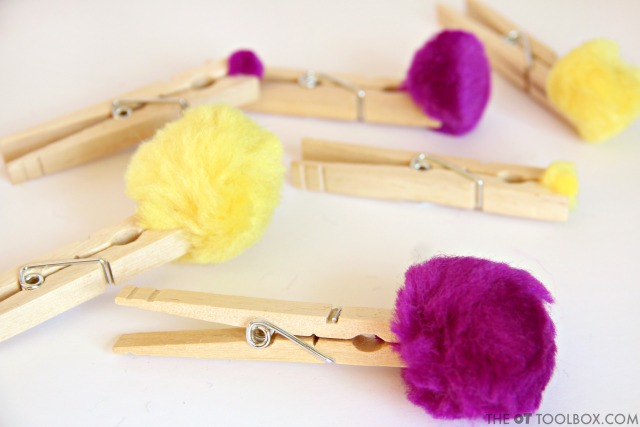
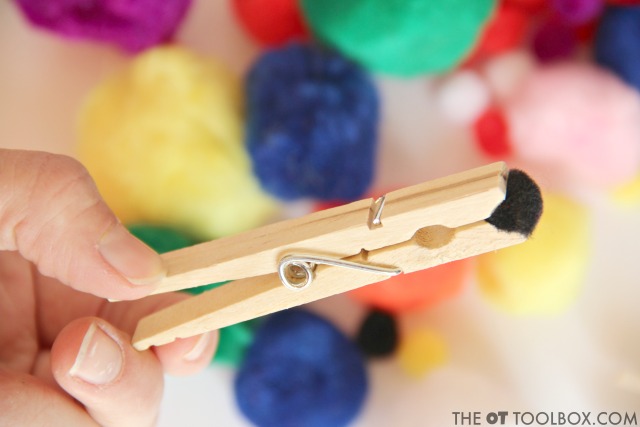
Use the clothespins to pick up the craft pom poms that you will need for the snowman. One way to do this is to have a sample available. Kids can look at the sample and identify the correct pom poms they need to build a snowman of their own. What an exercise in visual perceptual skills as well as fine motor skills!
Picking up and moving craft pom poms with the clothespins really strengthens the hands. Here is more information on using clothespins to strengthen the hands, and you can read more about the specific fine motor skills below.
Neat pincer grasp- This fine motor skill is a precision skill that uses the tip of the pointer finger and the tip of the thumb in opposition. Here is more information about neat pincer grasp. We use neat pincer grasp to manipulate very small items. This is a refined fine motor skill. Use the snowman craft to work on this fine motor skill by holding the small craft pom pom with the tips of the fingers while adding craft glue.
Pincer grasp-Pincer grasp is the opposition of the pointer finger to the thumb, but with the pads of the fingers. This is a skill tat develops from a very young age, but is used for so many functional skills! Use the clothes pins to pinch and pick up the craft pom poms like we did.
Bilateral coordination- Using both hands together in a coordinated manner is a skill that is used in almost every activity we do. Work on bilateral coordination by building a fine motor snowman of your own.
In-hand manipulation- This fine motor skill is essential for a functional pencil grasp and manipulating items like clothing fasteners and small objects. Work on in-hand manipulation by managing the craft pom poms when completing this craft.
Eye-hand coordination– Build skills by asking your child or client to work on eye-hand coordination when adding the craft pom poms and details to this snowman craft.
Hand strength- Strong hands allow us to perform fine motor tasks with coordinated movements. Use the clothes pin to strengthen the arches of the hand and the intrinsic muscles by pinching and placing the snowman craft onto various surfaces!
All of these fine motor skills are needed for every-day tasks like pencil grasp, management of clothing fasteners, cutting with scissors, manipulating small containers, shoe tying, and so many other areas.
This cute little snowman craft has been moving all around our house these last few days!
clothespin snowman craft- Fine Motor Activity
We actually have a video that shows different ways you can use a clothes pin, like the snowman clothespin that we made, as a hand strengthening tool:
Clothespins are a powerful way to strengthen hands. In this video, we walk through different grasp patterns that we can target with clothes pin activities.
Want more ways to boost fine motor skills with a snowman theme or winter theme? The Winter Fine Motor Kit is on sale now!
This print-and-go winter fine motor kit includes no-prep fine motor activities to help kids develop functional grasp, dexterity, strength, and endurance. Use fun, winter-themed, fine motor activities so you can help children develop strong fine motor skills in a digital world.
More than ever, kids need the tools to help them build essential fine motor skills so they develop strong and dexterous hands so they can learn, hold & write with a pencil, and play.
This 100 page no-prep packet includes everything you need to guide fine motor skills in face-to-face AND virtual learning. Includes winter themed activities for hand strength, pinch and grip, dexterity, eye-hand coordination, bilateral coordination, endurance, finger isolation, and more.
Colleen Beck, OTR/L has been an occupational therapist since 2000, working in school-based, hand therapy, outpatient peds, EI, and SNF. Colleen created The OT Toolbox to inspire therapists, teachers, and parents with easy and fun tools to help children thrive. Read her story about going from an OT making $3/hour (after paying for kids’ childcare) to a full-time OT resource creator for millions of readers. Want to collaborate? Send an email to contact@theottoolbox.com.
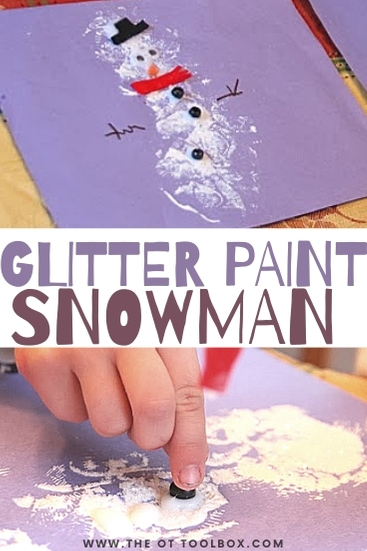
We used homemade glitter paint to make this snowman painting that is the prefect addition to a snowman theme! The nice thing about this snowman craft is that it uses paint and glitter so that the process is a little messy, but super sensory. The way that we painted our glitter paint snowmen was very fun and a great sensory experience for the toddlers. Add this to your creative art ideas for more fun!
This, along with our how to paint snow activity are fun winter OT ideas
How to make Glitter Paint
This post contains affiliate links.
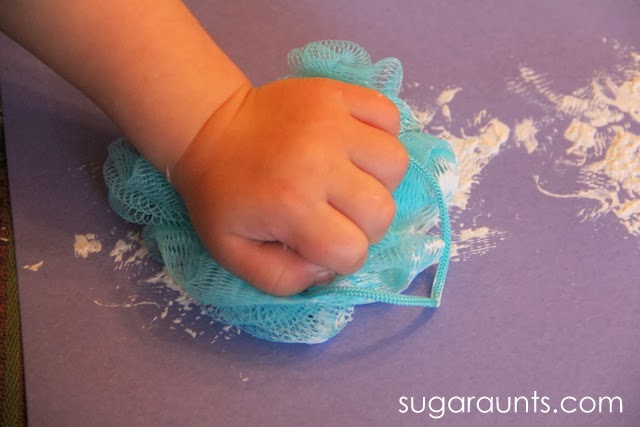
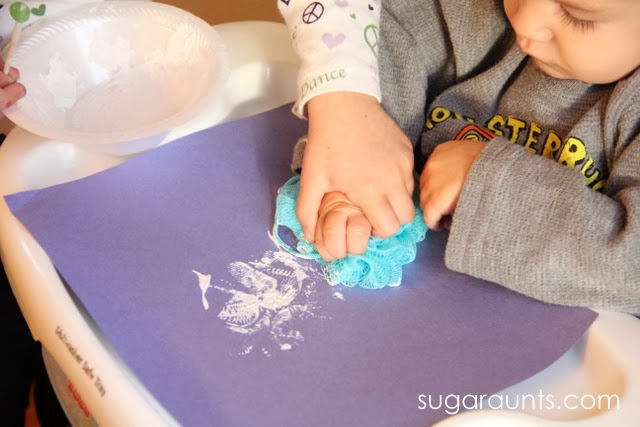
To make the glitter paint, we started with some white paint in a bowl and a new shower scrub. You can get a pack of these at the dollar store.
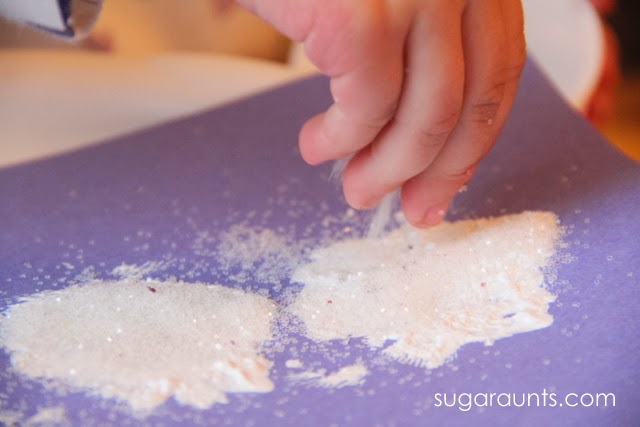
At this point, you could mix white or iridescent glitter right into the paint and mix it up. We chose to sprinkle the glitter onto the paint, however, for the fine motor benefits of sprinkling.
Next, you are ready to make the snowman craft!
Glitter Paint Snowman
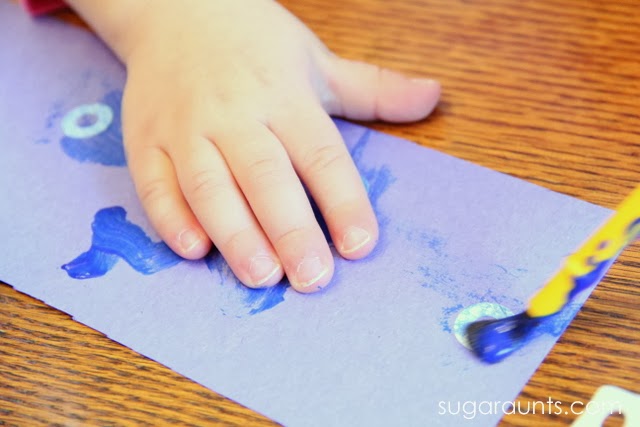
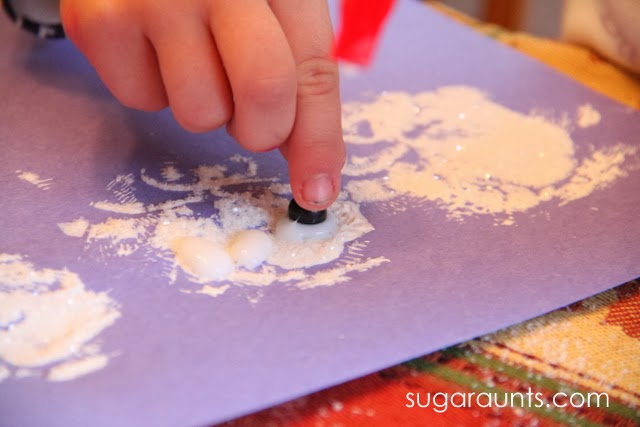
Press a new shower scrubber into the white paint. Then, gently press it onto blue construction paper. You can “build” a snowman by adding three puffs of white paint.
The shower puff was the perfect stamper for our snowman’s body and a great painting tool for toddlers. The Toddlers could grab the shower pouf with a gross hand grasp and smash it right down on the construction paper.
Big Sister helped out with this craft and was the “teacher”.
While the paint was still wet, we sprinkled **generous amounts** of clear glitter right onto the paint. By sprinkling the glitter with your fingertips, kids develop intrinsic hand strength and arch development. It is a similar motor plan and muscle use required for rolling small balls of play dough. You can explore more on intrinsic hand strengthening here.
The glitter stuck right in the glue and the excess was shook off. Our snowmen were starting to look pretty snowy!
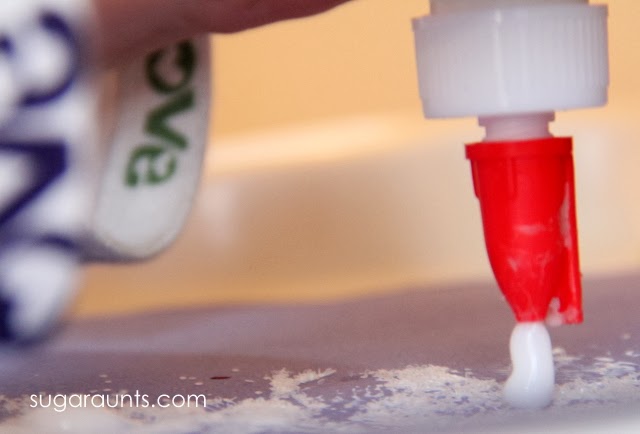
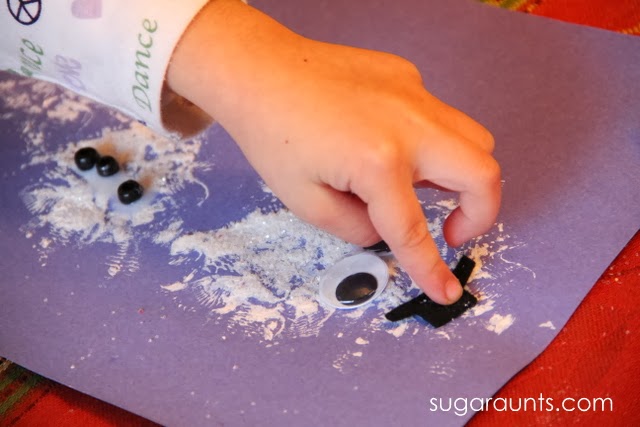
The next step involved Big Sister coming to the aid with her “teacher” duties. She squirted dots of glue for eyes, noses, scarves, hats, and buttons.
Next, you will need squeeze glue from a bottle. As a pediatric occupational therapist, I love the use of a squeeze glue bottle over a glue stick for so many reasons. By using a squeeze glue bottle, kids are building refined use of skill areas:
Refined grasp
Hand strength
Eye-hand coordination
Arch strength
Open thumb web-space
Visual motor skills
You can focus on certain areas with use of a squeeze glue bottle by asking kids to place glue onto specific spots. Just use a marker to dot throughout the shape. Kids can then place glue dots on those specific spots.
If working with glue bottles is a helpful activity for the children you serve, you will love the Glue Spots Exercises in the Winter Fine Motor Kit.
All of these were one at a time and because we were doing four kid’s worth of snowmen, she was pretty busy with her little glue assembly line!
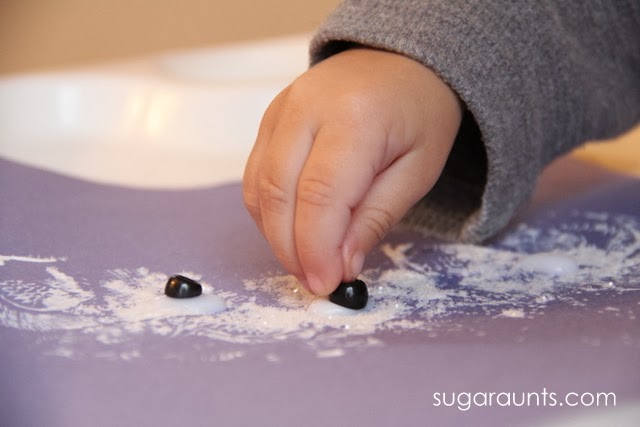
Little Nephew was much more sure of himself when it came to squashing the black pony beads into the glue dots. This was a great fine motor activity for little hands. I love those little wrinkly knuckles!
Big Sister helped to keep everyone on task with the steps.
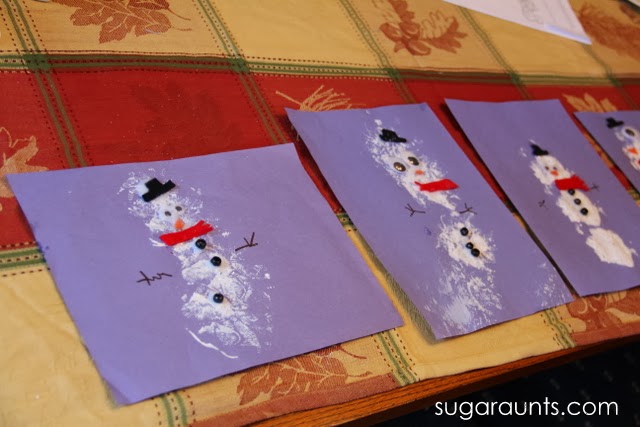
I cut little pieces of orange felt into carrots for the snowmen noses and tiny felt hats from felt sheets. The eyes were googly eyes and the scarves were just strips of red felt. Once everything was glued on, we used a brown marker to draw stick arms.
Our sparkly snowman family looks pretty cute. This was such a fun craft for multiple ages. I love how their personalities come out in each snowman, too…with the different sized eyes, the smash of the paint, the sizes of the arms…Big fun!
Looking for more winter activities designed to build fine motor skills? The Winter Fine Motor Kit is on sale now!
This print-and-go winter fine motor kit includes no-prep fine motor activities to help kids develop functional grasp, dexterity, strength, and endurance. Use fun, winter-themed, fine motor activities so you can help children develop strong fine motor skills in a digital world.
Colleen Beck, OTR/L has been an occupational therapist since 2000, working in school-based, hand therapy, outpatient peds, EI, and SNF. Colleen created The OT Toolbox to inspire therapists, teachers, and parents with easy and fun tools to help children thrive. Read her story about going from an OT making $3/hour (after paying for kids’ childcare) to a full-time OT resource creator for millions of readers. Want to collaborate? Send an email to contact@theottoolbox.com.
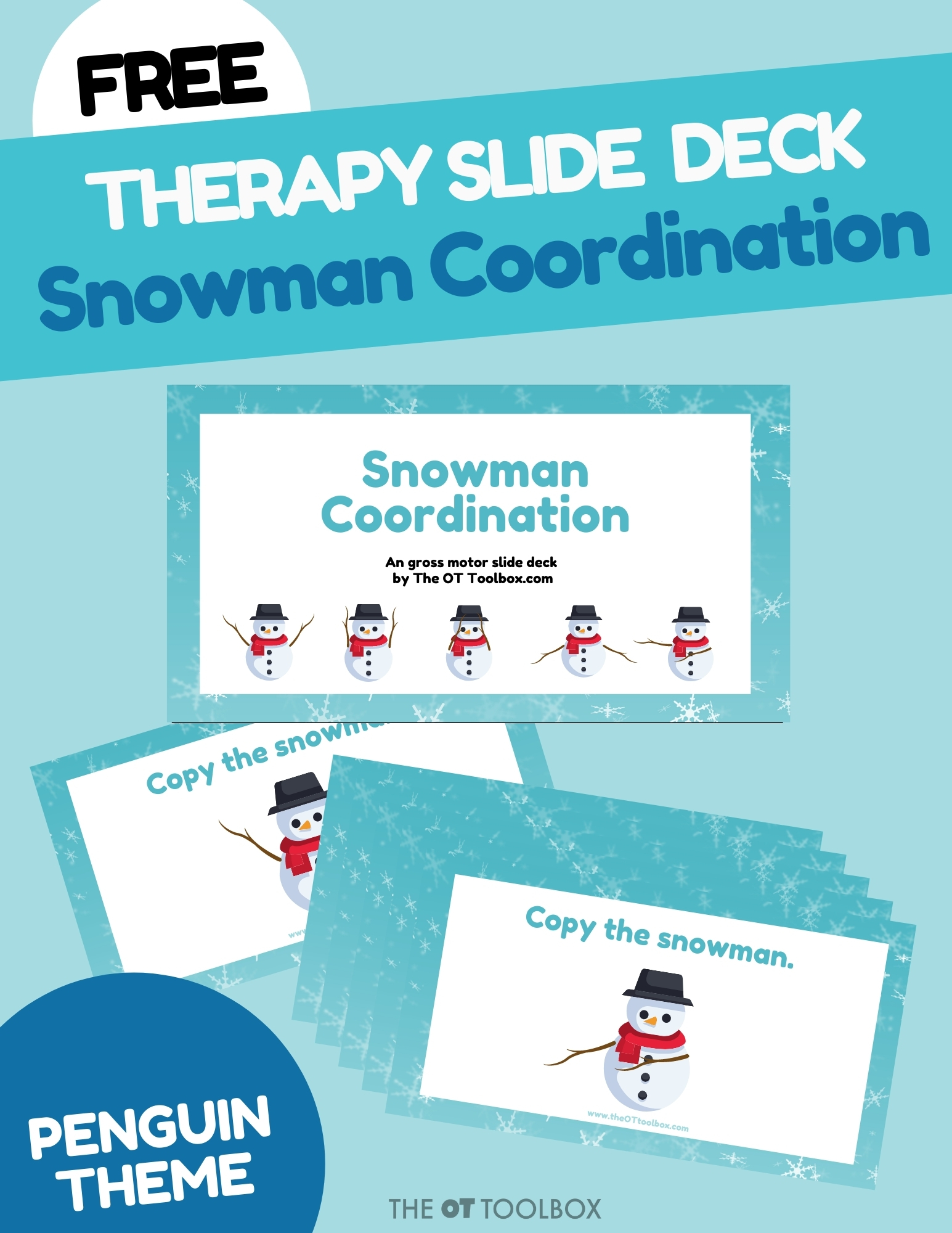
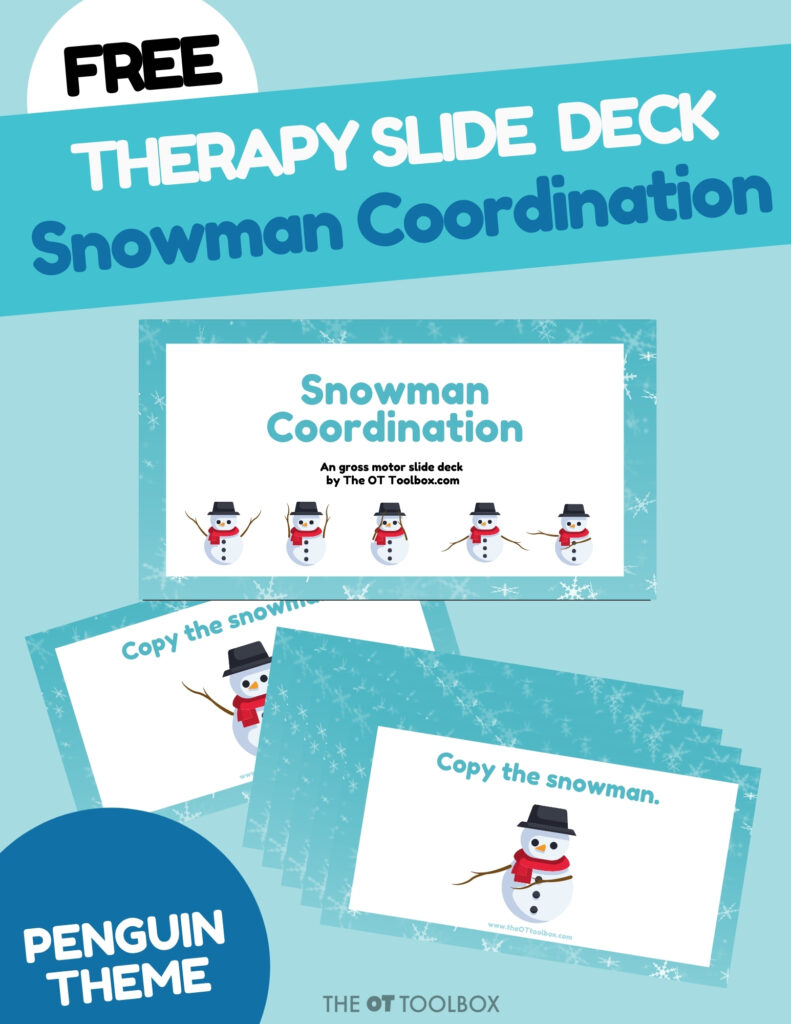
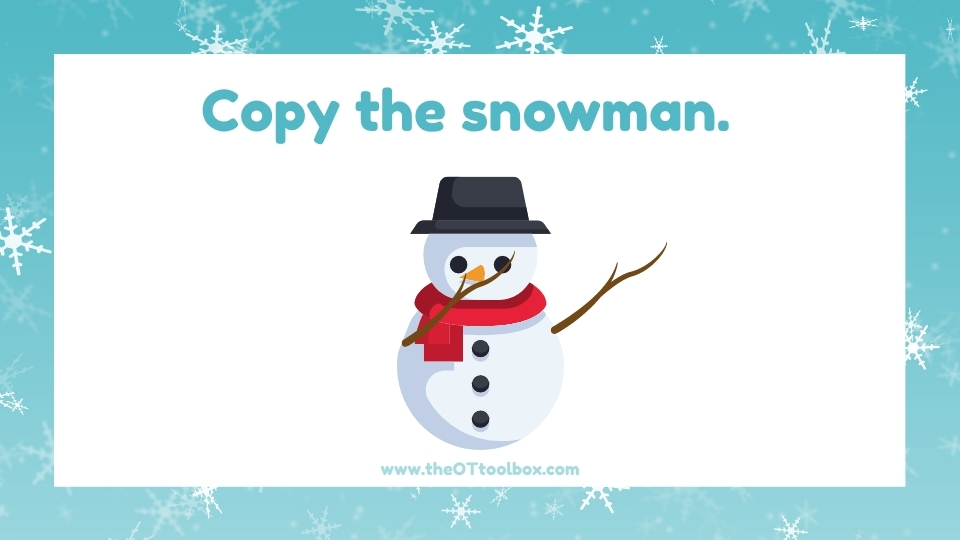
I have something super cute to share with you today. This snowman theme bilateral coordination activity might be one of my favorites of recent resources. If working on bilateral coordination, crossing midline, and motor planning is something you’ve been working on with kids, then this free therapy slide deck is for you. It’s meant as a fun, play-based direction-following therapy slide deck. Use it as a warm-up to occupational therapy interventions, or a brain break, with a snowman theme!
This therapy slide deck is designed so therapy practitioners need no other materials or items to run a virtual session. The free slide deck can be uploaded to Google slides and then used within a virtual session or distance learning classroom.
There are so many benefits to working on bilateral coordination skills, and motor planning with a fun theme like this snowman activity.
Read here about crossing midline activities and the benefits of this essential skill in handwriting, learning, and functional tasks. This skill integrates with bilateral coordination, or a coordinated use of both sides of the body so that functional use of both hemispheres in everyday tasks are possible.
Be sure to read more on this link about bilateral coordination, because you’ll see that there are three components of bilateral coordination: Symmetrical movements Alternating movements Dominant hand/supporting hand movements
Each of these areas play a role in functional tasks like play, self-care, learning, school-day tasks, and things each of us do all day long.
Motor planning is another important motor skill that impacts everyday functional tasks. Here is more information about motor planning.
There is a connection between creating a plan for movement, following a visual representation of a body positioning, and then sequencing movements using both sides of the body.
This snowman gross motor activity does just that!
You can scroll back and forth between the slides to really challenge kids with these motor plans. It’s like a “Simon Says” game with snowmen.
Work on all of these areas:
Bilateral coordination
Motor planning
Crossing midline
Core strength
Stability
Balance and equilibrium skills
Range of motion
Flexibility
Movement patterns
Posture and postural control
Muscle tone
Free Snowman Gross Motor Therapy Slide Deck
To get your hands on this free snowman slide deck, you’ll need to enter your email address into the form below.
Use this polar bear theme therapy slide deck in virtual therapy sessions or as a brain break.
Be sure to make a copy of this slide deck and not change the url to indicate “edit” at the end. When you make a copy of the slide deck onto your Google drive, you will end up with your own version that you are free to adjust in order to meet your student’s needs. By changing the url to “edit”, you can potentially mess up the original version that many other therapists and The OT Toolbox users are given.
You can grab a copy of this Google slide deck and use it to work on specific skills.
Enter your email address below and you will receive a PDF containing a link to copy the slide deck onto your Google drive. Save that PDF file, because you can come back to it again and again and send it to the kids on your caseload (or classroom) so they can make their own copy on their Google drive.
Please use the copy of the slide deck and do not change the url.
Evidence tells us that physical exercise is a strong influence on wellbeing. Here, we’re breaking down the evidence and identifying aspects of exercise wellbeing and overall wellness. Therapists who struggle with burnout in the industry know that self-care and intentional focus on wellbeing makes an impact on day to day tasks. But taking what we know as professionals and applying it to our own lives can sometimes be difficult! Let’s take a look at what science says about the benefits of exercise on wellness.
You’ll also find my top tips for using physical exercise to promote self-care as a busy therapist.
Physical activity
Physical activity can mean different things to different people. The World Health Organization has a fact sheet on physical activity, including recommendations for physical activity levels for different ages.
Beyond the obvious physical health benefits, participation in physical activity benefits areas such as:
Physical health benefits
Physical activity reduces symptoms of depression and anxiety
Physical activity enhances cognitive functioning, including thinking, learning, and judgment skills
Physical activity ensures healthy growth and development
Physical activity improves overall well-being
We can break down physical activity into physical activity that includes a structured and repetitive, and has as an objective. This might include planning to and following through with a walk around the block every morning, or doing 20 crunches 3 times a week, or running a mile at the track. Physical exercise can come in many forms!
Physical exercise and wellbeing
Adding physical exercise has benefits in many aspects of wellbeing. Take a look at the wellness wheel.
Physical exercise impacts mood. Research tells us that mood and physical health are related. And, mood is a predictor of well-being in many ways, including self-esteem. Self-esteem includes how positive a person feels about themselves. That aspect of emotional skills impact mental health in areas of an individual’s thoughts, emotions, values, and goals. And, a positive level of self-esteem carries over to having a positive attitude about themselves and the world around them.
Other components of mood include a growth mindset, mindfulness, contentment, positivity, motivation, happiness or emotional regulation, and curiosity. These are the components of emotional well-being. These components allow us to meet the demands of everyday life.
Many studies show that physical exercise impacts emotional well-being.
All of this plays a role in burnout in the workplace.
Tips for Physical Exercise and Wellbeing
Incorporating physical exercise into a lifestyle doesn’t need to be difficult. Below are some tips and strategies to integrate physical exercise into the day-to-day.
When a physical routine involves your interests, that makes it easier to stick with it.
Make it personal– Personally, my favorite physical exercise involves running and walking. When weather is bad or it’s too cold outdoors, I turn to my treadmill. I love to run along to music, podcasts, and even Netflix when running on the treadmill. What motivates you?
Make achievable goals– Adding physical exercise doesn’t mean you need to sign up for a 5K race. Just 5 or 10 minutes on the treadmill makes a big difference in mood and emotional well-being.
Plan it out– Schedule physical exercise into your day. When it’s written down, it becomes more real.
Start slow– Take a walk around the block. Begin with low intensity physical exercise. On the treadmill, begin with an achievable goal using the programing options. A low intensity routine might include a fast walk or slow run at 1% or 2% incline.
If you are looking for exercise equipment to add to your physical exercise toolbox, check out Horizon Fitness for equipment and accessories at all levels.
Affiliate links are included in this post, but I only recommend products that I own, and love!
Colleen Beck, OTR/L has been an occupational therapist since 2000, working in school-based, hand therapy, outpatient peds, EI, and SNF. Colleen created The OT Toolbox to inspire therapists, teachers, and parents with easy and fun tools to help children thrive. Read her story about going from an OT making $3/hour (after paying for kids’ childcare) to a full-time OT resource creator for millions of readers. Want to collaborate? Send an email to contact@theottoolbox.com.
Courneya, K.S., Friedenreich, C.M. Physical exercise and quality of life following cancer diagnosis: A literature review. ann. behav. med.21, 171 (1999). https://doi.org/10.1007/BF02908298
Gilani, S., & Feizabad, A. K. (2019). The effects of aerobic exercise training on mental health and self-esteem of type 2 diabetes mellitus patients. Health psychology research, 7(1), 6576. https://doi.org/10.4081/hpr.2019.6576
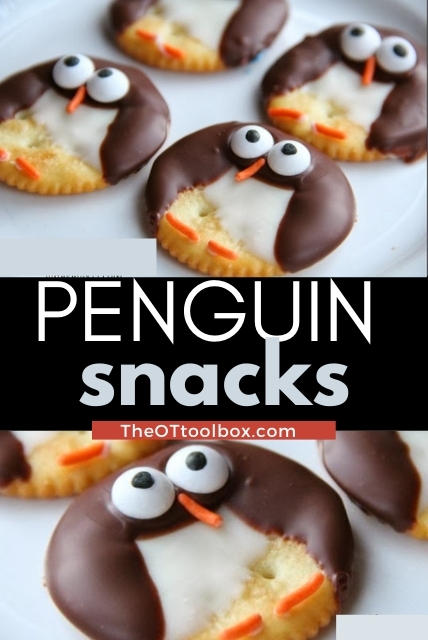
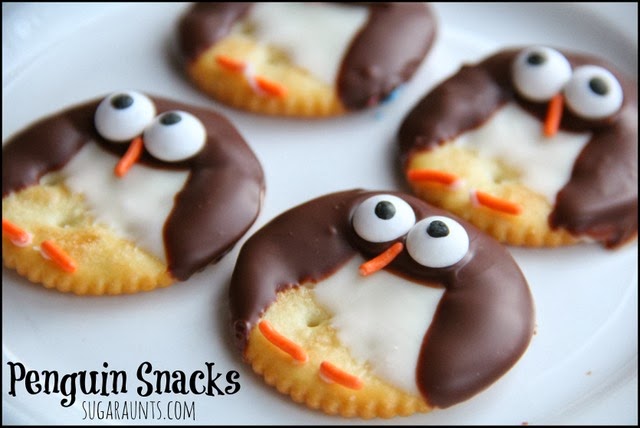
We’ve been on a penguins activities kick around here lately. These penguin snacks are cute little homemade penguin crackers that can easily be added to a penguin preschool theme. The bonus to kids making these are the many benefits of cooking with kids in developing fine motor skills, executive functioning, and other learning opportunities.
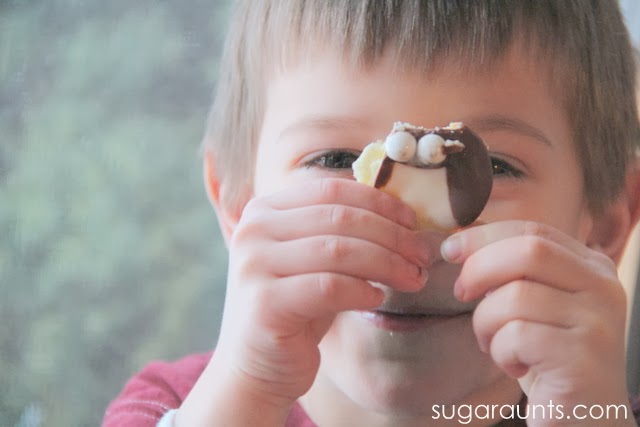
These Penguin snacks were just the thing we needed one day when the temps were sooooo cold outside that we felt like penguins at preschool pick-up! Our penguin snacks were the perfect ending to a frigidly cold day. And, slightly owl-like, I think they would make a great owl treat too 😉
Penguin Themed Snacks
This post contains affiliate links.
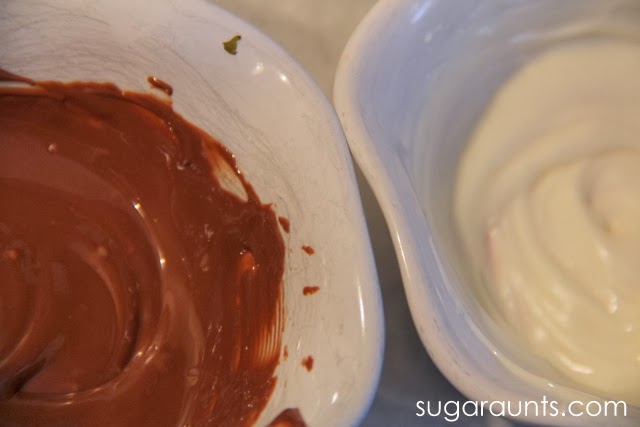
Start with a little melted milk chocolate (I just used a chocolate bar broken up into pieces) and melted white candy melts, in two separate bowls.
Dip round crackers 3/4 of the way in the melted white chocolate. Let this harden in the fridge. Or just put it outside on the porch like I did in the single-digit temps. The chocolate will harden in a flash!
You’ll need to make sure the white chocolate is hardened before you dip the crackers again in the ilk chocolate. Otherwise, you’ll get a mix of the two chocolates. Once the white chocolate is hardened, dip each side and the very top of the penguins in milk chocolate.
Pour out a handful of sprinkles and admire their prettiness. Pull out a few of the orange ones. You’ll need them for the Penguin’s feet and beaks. This is a great fine motor activity for kids.
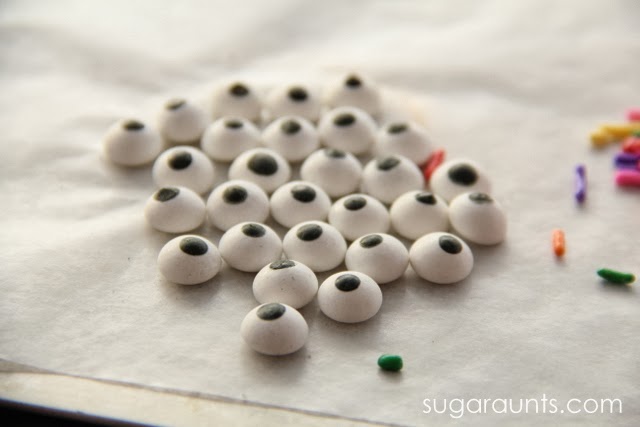
I found these candy eyeballs on clearance after Halloween and knew they would come in handy. Stick the orange sprinkles and candy eyes onto the penguins with a bit of the left over melted chocolate.
Cooking with preschoolers involves a lot of the prep-work, and this is one cooking task that is great for young children. They can sort and count the number of items needed for the recipe. It’s an easy way to add fine motor work as well.
Pulling out the correct amount of orange sprinkles and eyes was a great job for Big Sister and Little Guy. They made sure we had enough for each penguin. And only snuck a few. 😉
Your penguins/owls are done!
For more penguin theme activities, (and fine motor work), grab the Winter Fine Motor Kit, with 100 pages of done-for-you therapy activities, including penguin themes. There are sensory bin materials, crafts, and activities designed to boost fine motor skills. These would be great additions to a penguin theme in therapy sessions.
Colleen Beck, OTR/L has been an occupational therapist since 2000, working in school-based, hand therapy, outpatient peds, EI, and SNF. Colleen created The OT Toolbox to inspire therapists, teachers, and parents with easy and fun tools to help children thrive. Read her story about going from an OT making $3/hour (after paying for kids’ childcare) to a full-time OT resource creator for millions of readers. Want to collaborate? Send an email to contact@theottoolbox.com.
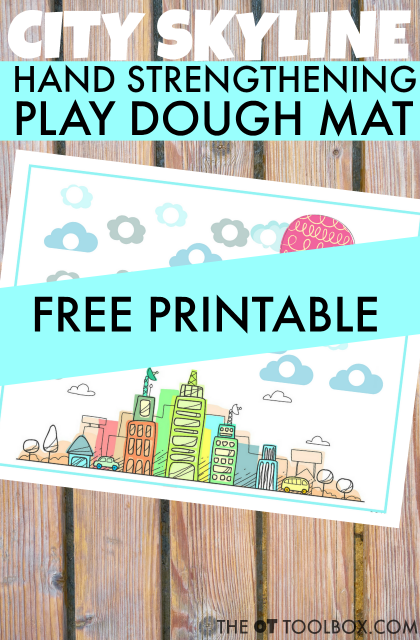
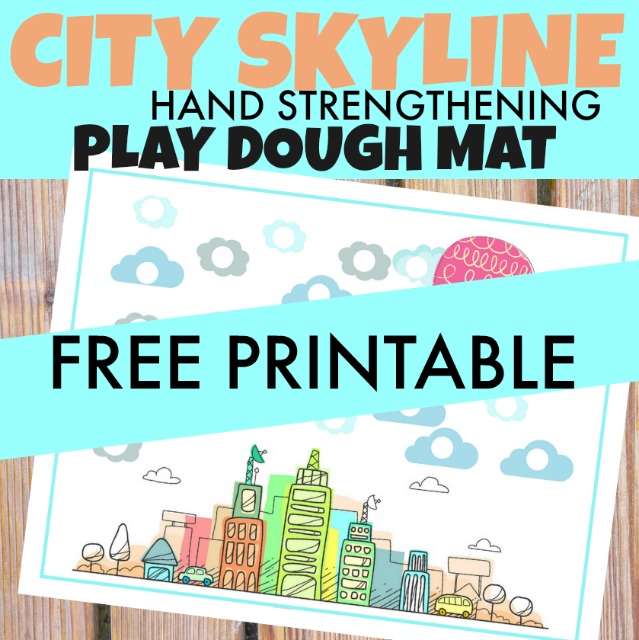
This fine motor play dough mat is a fun one. It’s a play dough city mat that allows kids to work on hand strength and fine motor skills using a city themed play dough mat. Playdough mats like this one can be used along with other city activities like books, travel, or discovering information about geography and our world. We’ve talked before about using play dough for fine motor skills development and this city play dough mat is a great way to do that!
This City Play Dough Mat is a supplement that can help with more skills than just adding to a city learning theme, all in a fun play dough activity! This free play dough mat boosts fine motor skills specifically hand strength, and the intrinsic muscles of the hands. Print off this city playdough mat and start playing and learning WHILE boosting those skills that kids need!
City Play Dough Mat
I love adding hands-on components to learning themes. It adds a special twist that really helps with recall when motor components are added. This city play dough mat is a great accompaniment to any community or geography theme.
Kids can fill in the circles in the city skyline while building the fine motor skills they need for tasks such as endurance with writing or coloring, pencil control when forming letters, functional pencil grasp, management of buttons/zippers/other clothing fasteners, opening and closing of food containers, and so many other fine motor tasks!
For the child who struggles with fine motor skills or has a fine motor delay, this city play dough mat can be a fun way to build those skills.
In fact, there are so many fine motor skills needed in school and in home learning environments whether it occurs in the classroom, virtual learning, or the homeschool dining room. Building fine motor skills can make an impactful difference in learning and functional tasks!
How to increase hand strength with a play dough mat
Play dough mats are a big hit with kids. They can come in any theme, making them fun for specific interests. This astronaut play dough mat is one of our favorites. The thing is, though that just the act of playing with play dough on a play dough mat is a really power tool in strengthening little hands!
In fact, there are so many ways to use a play dough mat to strengthen the skills kids need for fine motor tasks. One of the ways we have been focusing on here on The OT Toolbox with our recent play dough mat series is working the intrinsic muscles of the hands by rolling small balls of play dough in various sizes.
Using the finger tips and thumb of one hand at a time to roll a play dough ball is an intrinsic muscle workout that builds the muscles of the thenar eminence, hypothenar eminence, the interossei, and the lumbricals. All of these muscle groups make up the intrinsic hand muscles which are those located within the hands.
The intrinsic muscles are those responsible for nice, defined arches of the hands, the ability to separate the two sides of the hand, and to have nice, bulky muscle tone in the mass that makes up the base of the thumb and the side of the pinkie finger. These muscle groups help with dexterity, endurance, coordination, and controlled manipulation of small items and all things fine motor!
Free Play Dough Mat
Grab a copy of this free playdough mat by entering your email in the form below.
You will receive the printable play dough mat in your email where you can print it and use it over and over again in your therapy toolbox.
Want to check out the other play dough mats we’ve shared recently? They are all designed to promote strengthening of the intrinsics and hand strength in kids.
Be sure to grab the city play dough mat and use it for increasing hand strength in fun ways!
Colleen Beck, OTR/L has been an occupational therapist since 2000, working in school-based, hand therapy, outpatient peds, EI, and SNF. Colleen created The OT Toolbox to inspire therapists, teachers, and parents with easy and fun tools to help children thrive. Read her story about going from an OT making $3/hour (after paying for kids’ childcare) to a full-time OT resource creator for millions of readers. Want to collaborate? Send an email to contact@theottoolbox.com.
If you are working on building intrinsic hand strength and the fine motor skills kids need to improve tasks such as maintaining a pencil grasp or coloring with endurance, than this space play dough mat is perfect for you.
Kids can use play dough mats to strengthen their hands and develop essential skills needed for writing with a pencil, dexterity in fine motor tasks, and precision in fine motor coordination tasks. This free play dough mat has a space theme and you can print off the printable play dough mat and add it to your therapy toolbox.
Kids love play dough mats like this space worksheet. When they roll play dough to fit in the spaces on the printable sheets, they don’t always realize they are working on intrinsic hand strength or hand strengthening in general. Even better, this outer space play dough mat is a free printable playdough mat that will go perfectly with a space theme!
Space Play Dough Mat
Working on intrinsic hand strength is a task that doesn’t need to be difficult…with a simple play dough activity like this one, building hand strength is easy!
We’ve shared a few play dough strengthening activities before. There is a reason why: Kids NEED more hand strength. It’s evident in the increased pencil grasp issues that teachers, parents, and therapists are seeing every day!
The thing about this outer space play dough mat is that it works on a specific set of muscles in the hand. The intrinsic muscles are those within the hand that enable dexterity and endurance in fine motor tasks. They are the ones that allow the arches of the hand to be used in fine motor tasks like manipulating objects with in the hand.
They are the muscles of the hand that contribute to separation of the sides of the hand and create the thenar and hypothenar eminences. Specific exercises can strengthen these muscles and one of the biggest ones is rolling small balls of play dough with just the fingertips of the hand.
That’s why we’ve created a series of free play dough mats that encourage small balls of play dough of various sizes.
Space Activity
Print off this free play dough mat and add it to your toolbox for a fun fine motor activity that kids will love.
You can enter your email into the form below and watch your email to find the printable outer space playdough mat. After printing, you may want to cover it with a plastic or laminated surface that allows you to use the playdough mat over and over again. Some of our favorite tricks for this include: (Amazon affiliate links are included below.)
Pair this free outer space play dough mat with hands-on fine motor activities or virtual therapy activities for a themed therapy experience. Try these space activities that build skills:
Want to add this space play dough mat to your therapy toolbox? Enter your email address into the form below to access.
Know a kiddo that loves all things space, astronauts, and planets? The Outer Space Fine Motor Kit is your chance to develop fine motor strength, dexterity, and coordination skills.
Addressing hand strength, endurance, and precision is out of this world fun! The Outer Space Fine Motor Kit includes:
Fine Motor Mazes
Fine Motor Ten Frames for motor activities
1-20 Star Counting Cards
Bead Copying Strips
Space Alien Directed Drawing Sheets
This fine motor kit includes 24 pages of printable resources. Included in this printable pack are:
Two pages of color coded bead copying strips
Two pages of blank bead copying strips
Four pages of “draw and write” directed drawing activities with a space theme (Includes 3 styles of handwriting lines: highlighted lines, single rule, and double rule)
Nine pages of fine motor mazes
1-20 Outer Space Counting Cards
Four pages of fine motor ten frames activities
These printable activities extend to work on a variety of other functional areas, too: handwriting skills, numbers, math, adding, subtracting, one-to-one correspondence, scissor skills, coloring, and more.
Colleen Beck, OTR/L has been an occupational therapist since 2000, working in school-based, hand therapy, outpatient peds, EI, and SNF. Colleen created The OT Toolbox to inspire therapists, teachers, and parents with easy and fun tools to help children thrive. Read her story about going from an OT making $3/hour (after paying for kids’ childcare) to a full-time OT resource creator for millions of readers. Want to collaborate? Send an email to contact@theottoolbox.com.
We had some fish learning activities based on a penguin theme going on for a while around here. Penguin activities are so much fun for learning and play! This fish learning activity was a fun way to explore letters, words, and numbers AND incorporate our penguin theme. We did this learning and counting activity one day after we made our penguin themed snacks. Add it to the penguin yoga activity and penguin deep breathing activities to round out full-body movement and learning.
Fish learning activity
Penguin math is fun when it comes to catching fish for penguin food! Use these ideas for a polar bear theme, too.
We used sheets of scrapbook paper and construction paper to make fish shapes. Kids can cut these out to work on scissor skills.
Next, we drew a pond on a large sheet of crafting paper. I wrote words, letters, or numbers on the fish. On some, I attached a paperclip or clip. We used a net (from a Bug Net toy) or a fishing pole from a puzzle set to scoop up the fish like a penguin would.
You could also use a magnetic fishing pole from a puzzle set to catch the fish with clips on them. We scooped them in numerical order or in alphabetical order and then in random order too.
How fun would this be to read a few fun penguin books and then do some fishy counting to continue the penguin theme?
Colleen Beck, OTR/L has been an occupational therapist since 2000, working in school-based, hand therapy, outpatient peds, EI, and SNF. Colleen created The OT Toolbox to inspire therapists, teachers, and parents with easy and fun tools to help children thrive. Read her story about going from an OT making $3/hour (after paying for kids’ childcare) to a full-time OT resource creator for millions of readers. Want to collaborate? Send an email to contact@theottoolbox.com.