Letter Reversals

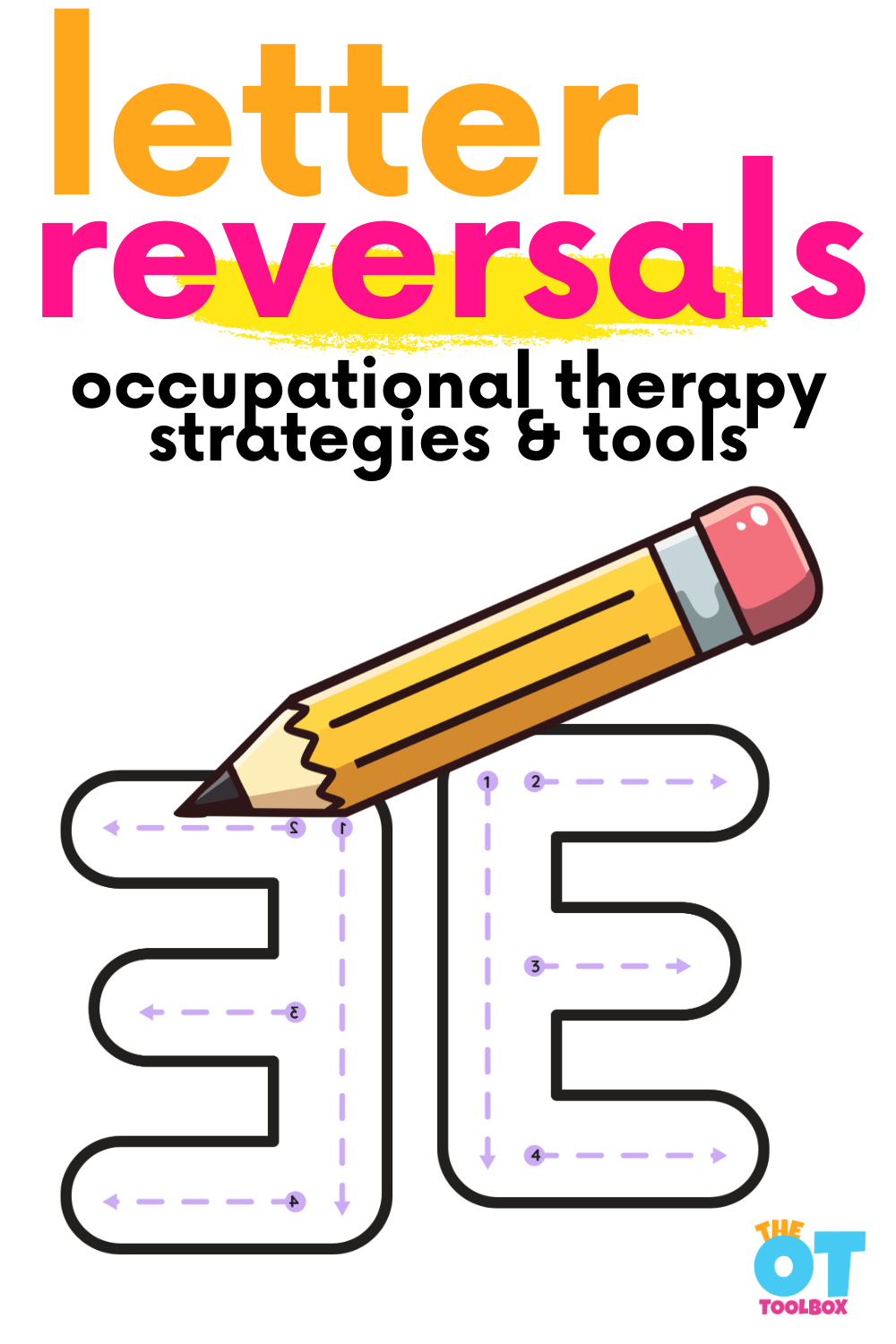
letter reversals- writing letters backwards

Letter Reversals…they are a major cause for handwriting concern by most parent’s standards. Here we are covering information about writing letters backwards and what is normal for letter reversals in development. We also have some great tips for addressing common letter reversal struggles and even reversal activities that can help with visual perception handwriting struggles. Read on!

Letter b and d reversals: These specific strategies cover letter b and d reversals.

Letter p and q reversals: You’ll find more specific letter reversal information in this post on reversing letter p and q.
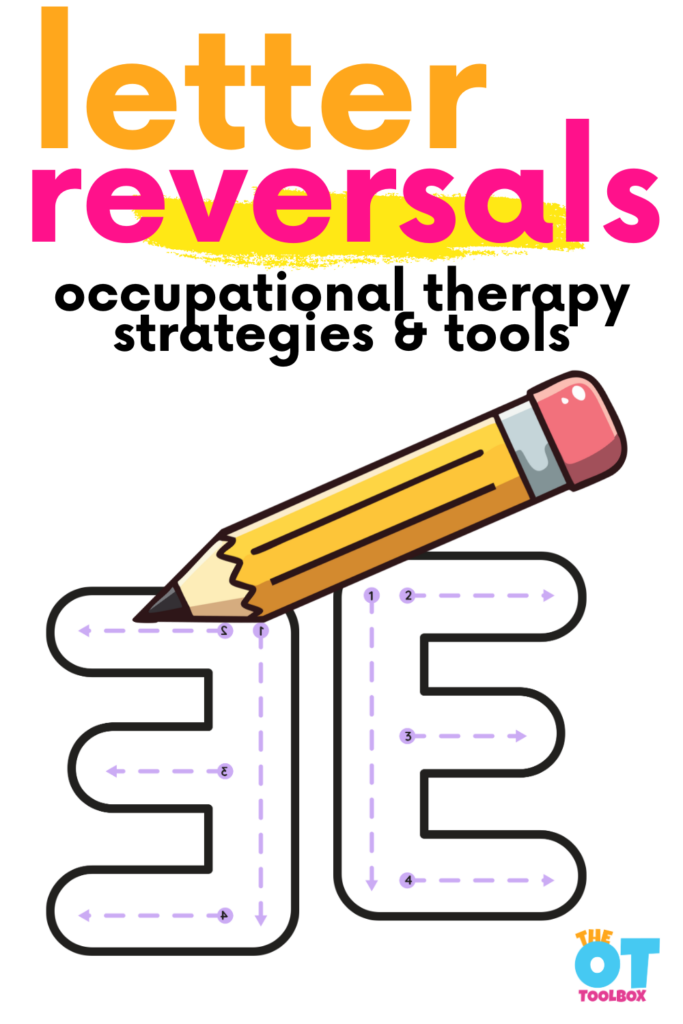
letter reversals- writing letters backwards

Also check out these activities to work on backwards letters.

Writing Letters in Reverse

Do letter reversals mean dyslexia? Not exactly! Dyslexia means problems learning to read, spell, and write. However, there is much more to reversals than what meets the eye, and should be assessed before jumping straight to the conclusion of dyslexia. Be sure to read our resource on Dyslexia and occupational therapy for more information.

One creative tool to support the skills needed for this area of development is our new color by letter worksheet. Just print and go and work on letter identification and matching skills.

Check out all of our letter formation worksheets for more free printables to target letter forming.
Letter reversals such as switching b and d or writing letters and numbers backwards can be a result of various things. Here is information on letter reversals.

Letter Reversals Normal Development

Reversals are age appropriate up until 7-8 years of age!

That’s right! Letter reversals are normal up to a certain age range. And when kids write letters backwards it is actually typical development in handwriting skills. Working on letter reversals in occupational therapy (and other visual perceptual areas) can be a common occurrence for school-based OTs…but just because kids are writing letters backwards, it doesn’t mean there is a true problem indicating a need for intervention.

It takes our brains that long to integrate all the skills needed to form a letter correctly and automatically during written expression. Skills needed range from phonetic awareness, ability to imitate pre-writing strokes, automation of letter formation, and higher level cognitive skills for multi-tasking.

Some kiddo’s develop these skills faster than others. Some kiddo’s struggle with these skills and may receive support services such as occupational therapy or pull out services with their school’s reading specialist before age 7.

Services provided before age 7 are typically preventative and because the child has shown struggles in the foundation skills needed for reading and writing, such as phonemic awareness, challenges with pre-writing strokes and shape formation (visual motor integration), poor fine motor skills, dominance concerns or underlying vision concerns.

What is a letter reversal

The term Letter reversals refers to several things related to reversing letters in reading or writing:

  • Writing a specific letter backwards, when they replace a letter with another such as forming a letter b as a d or a letter p as a letter q
  • Writing a letter upside down or flipped, such as forming a u as an n
  • Reading a letter backwards, as when kids replace a d with a b
  • Writing letters backwards as when kids write letters h, n, s, z, etc. in a mirror image
  • Transposing letters or switching the order of letters when writing
  • Reversing or writing numbers backwards

Common Letter and Number Reversals

So, knowing that it is quite common developmentally, to reverse letters and numbers up until age 7 or 8, it can also help to know which letters are commonly reversed in writing.

Letter Reversals List

These letters and numbers are often times transposed for one another:

  • b and d
  • n and u
  • w and m
  • s and z
  • 3 and E
  • 2 and 5
  • s and 5

It’s easy to see why the letters and numbers listed above are often reversed. They all contain similar pencil strokes. For children that are just learning to write, spatial integration can be still developing. Kids are getting the muscle memory in place can replace one letter or number for another.

These letters are often written backwards:

  • b
  • c
  • d
  • e
  • f
  • h
  • j
  • k
  • p
  • q
  • r
  • s
  • u
  • z

Each of these letters has a starting point at the top and pencil strokes that then go into a different direction. Children that are still developing handwriting skills are establishing the motor plan for direction changes with the pencil. The can sometimes “guess” the correct direction which results in letters being written backwards.

Numbers that are commonly written backwards include:

  • 2
  • 3
  • 4
  • 5
  • 6
  • 7
  • 9

Each of these numbers also have a direction change which could easily be confused.

In many cases, working on letter and number formation so the muscle memory is established with fix reversal issues. Using multisensory formation activities helps to establish that motor plan.

Letter reversals can be related to phonetic awareness difficulties.
There can be a connection between letter reversal problems and phonetic awareness delays.

Phonetic Awareness and Letter Reversals

The current theory among the educational community is that reversals start with phonemic awareness. If a child is lacking phonemic awareness, they may struggle with letter identification and spelling needed for fluent written expression. Similar struggles may also be seen with numbers, resulting in a negative impact on math skills.

In my clinical experience, I have found that children with high rates of ear infections and PE tubes (ear tubes) struggle with sound awareness. If the kiddo is unable to hear the sound of the letter clearly and consistently, it leads to poor sound awareness.

I have also found that children with difficulties with attention and auditory filtering often pair the wrong letter sound with wrong letter. This is important to note in sessions as it may require remediation by a speech therapist or reading specialist if available. Here is more information and activities for auditory processing.

While phonetics play a large role in reversals, many other foundational skills may influence whether a child will struggle with reversals or not.
Letter reversals and a connection to hand dominance
There may be a connection between letter reversals and hand dominance.

Hand Dominance and Letter Reversals

Hand dominance is typically fully developed by five years of age. Right at the same time most children are learning and mastering the formation of letters and numbers. It also coincides with the start of kindergarten, or formal education where children who are struggling may be noticed for the first time. Writing with both hands can be a common struggle and an indicator of hand dominance challenges.

Children with handedness issues, whether it’s mixed dominance or delayed development of dominance, are more likely to struggle with left versus right tasks.

This plays into reversal concerns as many of these children cannot consistently discriminate left from right, leading to b’s and d’s, p’s and q’s being flipped. Often times, they are unable to recognize that they have made the mistake as their brain is registering the letter as they meant it to be.
VIsual processing plays a big part in letter reversals. Here's what you need to know.
Visual processing plays a big part in letter reversals. Here’s what you need to know…

Letter Reversals and Visual Processing

Vision is can be one of the biggest challenges facing children who struggle with reversals. Chances are, they have had an underlying vision concern that goes unaddressed or unrecognized during the critical learning period of letters and their sounds.

You will find much more information on visual perception in our free visual perception lab series.

(Children in the U.S. typically begin to learn letters and sounds between 3 and 4 years of age when they enter preschool programs. Curriculums now expect children to know their letters, sounds and how to write them upon entering kindergarten.)

Due to their vision deficit, the child may not consistently see the same image of the letter each time, or may not see the letter that is being taught due to “wandering” eyes or poor abilities to focus on the letter. The kiddo now has a poor foundation from which to build on, due to difficulties with recalling from their visual memory what the letter looks like, and pairing it with the correct sound.

To add to vision deficits, vision is not just what we see, or how the eye’s work together. It is also a motor task of taking information in with the eyes and reproducing an image, or in this case, letters on paper. This skill is known as visual motor integration and also plays a role in reversals.

Here are free visual perception worksheets that can address a variety of visual skills.

Visual Motor Integration and Letter Reversals

Visual motor integration allows us to write, draw and paint freely. To do all of these things, we go through a set development of producing pre-writing strokes and basic shapes in imitation to freely producing them from our memories and eventually becoming automatic. Here is more information and activities related to visual motor skills.

Most children learn to imitate these strokes and shapes at a young age from top to bottom and left to right. However, some children do not learn it this way or their brains are not “wired” to follow this pattern of development.

Children who deviate from this pattern may have difficulties with reversals as they struggle to learn and integrate letter stroke combinations in the correct order. When this happens, they struggle to write fluently and reversals may begin to appear.

Signs of poor visual motor integration skills that could lead to reversals include:

  • Segmental Drawing—drawing a shape one stroke at a time instead of integrated
  • Bottom to top orientation when drawing
  • Right to left orientation when drawing
  • Difficulties crossing the midline during drawing tasks
  • Rotation of the paper to adjust for angle execution
  • Failed attempts to imitate basic shapes after the child has stated what the shape is
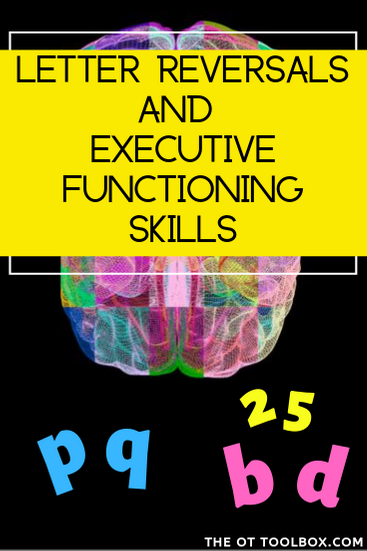
Reversing letters can be related to an executive function difficulty.
Writing letters in reverse can be a trouble with executive functioning skills.

Executive Functioning and Letter Reversals

Executive functioning skills refer to our higher level thinking that includes attention, multi-tasking and memory, among many other skills. Writing requires all of these skills to be working at their best. If a child is struggling with any of these skills, they may demonstrate reversals and poor overall handwriting.

Reversals and poor handwriting may be the result of the child being unable to recall the strokes of the letter, the sequence of the strokes, what the letter looks like, where to start the letter, how big to make the letter, what each letter sound is, how to spell a word and complete their thought.

Oh, and lets add in that they have to remember how to hold their pencil correctly. For a kiddo who is struggling, this is a CHALLENGE.

There are so many more things that go into writing that may lead to reversals then what I have listed, but are too many to list out. 

The main concept of executive functioning is that if the child cannot make it all work together, from fine motor to phonemic awareness to visual motor, they are more likely to struggle with reversals in their work.
Try these letter reversal interventions to help kids who reverse letters and numbers.
Try these letter reversal strategies…

Letter Reversal INterventions

It is important to recognize that reversals may be the sign of underlying deficits with foundational skills and should be addressed when they are noticed. The sooner that these underlying deficits are addressed the better off the kiddo will be. Once a child has had a long enough time period to practice incorrectly, it will be that much harder to break the “bad habits” and correct the reversals.

You will find many letter reversal interventions in this blog post.

  1. This resource on letter b and d reversals is a helpful read on how specifically to work on these commonly reversed letters. You’ll find multi-sensory writing strategies to address b-d letter reversals.

2. Try “building” letters to establish the motor plan needed to create muscle memory. Use different colors to help children see the ways that the pencil moves when writing letters and numbers. This letter construction activity explains more about this process. This letter building strategy, paired with other forms of multi-sensory handwriting and teaching letters in groups based on the ways the pencil moves can make a big impact.

Addressing some of the other co-existing issues discussed in this article can be a start.
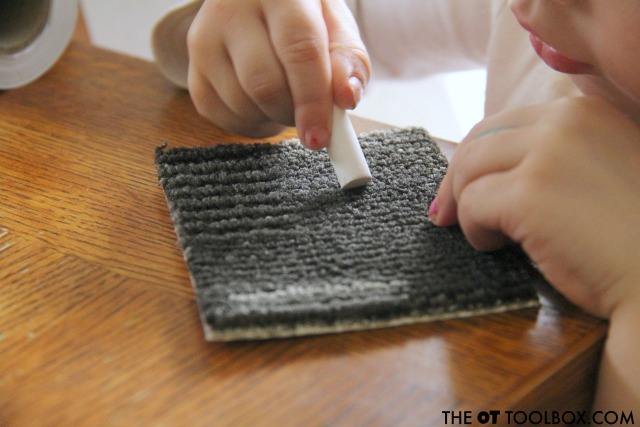
3. Address the motor planning in handwriting necessary for letter and number formation. Strategies that develop motor planning skills utilizing multi-sensory approaches can help with letter reversal.

With handwriting practice of letters with visual, auditory, and kinesthetic sensory channels at the same time, the weaker channel may be reinforced (Berninger, 2000).

Multi-sensory letter reversal strategies include:

4. Work on visual perception with toys and games, and activities to address specific visual perceptual skills or visual motor skills.

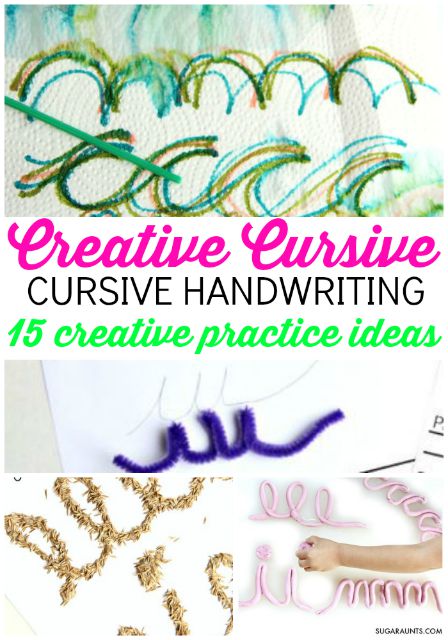
5. Use cursive writing in some cases. Here are creative ways to teach cursive and our entire cursive writing series.
6. Gain a better understanding of visual processing and all of the “pieces” of the vision puzzle that play into letter reversal and other concerns by joining thousands of other therapists, teachers, and professionals in the Visual Processing Lab.

7. Use this Vision Screening Tool to identify and address specific vision concerns such as letter reversals.

8. Try some of these activities to address visual motor integration and eye-hand coordination.

9. Try rainbow writing.

Have concerns? Talk to your child’s teacher or occupational therapist to address your concerns.

Work on letter reversals and get a better understanding of vision, visual perception, and visual motor skills in the visual processing lab.

Understanding Letter Reversals in Young Children

Letter reversals are common in young children as they begin learning the letters of the alphabet. During early writing development, children are still building an understanding of directionality, or the ability to understand left-to-right orientation and the correct direction of the letters. Because of this, it is typical to see reversed letters, especially in preschool and kindergarten.

The most common letter reversal patterns include confusing letters like b/d, p/q, and sometimes n/u. These reversals occur because children are still learning how the parts of the letter are formed and how each letter is oriented on the page.

When Are Letter Reversals a Concern?

Letter reversals are developmentally appropriate in young kids through early elementary years. However, by around second grade, most children begin to demonstrate more consistent correct letter formation and fewer reversal errors.

If letter reversal issues continue beyond this stage or interfere with writing and reading, it may be helpful to provide extra practice and targeted support. Persistent letter confusion can impact fluency, confidence, and classroom performance.

Why Do Letter Reversals Happen?

Letter reversals are often related to developing visual and motor skills. Children are learning how to recognize the orientation of symbols and reproduce them through writing. This requires coordination between visual perception, motor planning, and memory.

Some children may also rely on verbal cues or physical prompts, such as using lips to sound out words while trying to recall the correct letter shape. Others may struggle with understanding spatial relationships, which impacts how they form letters like letter m or other multi-stroke letters.

Supporting Correct Letter Formation and Directionality

Helping children develop correct letter formation and understanding the direction of the letters can reduce reversals over time. Clear instruction and consistent modeling are key.

Strategies include:

  • Teaching letters using consistent starting points
  • Using visual cues to reinforce directionality
  • Breaking down the parts of the letter into simple steps
  • Practicing letters in a multisensory way

Providing strong visuals (such as arrows, starting dots, and highlighted lines), can help children understand how letters are formed and improve accuracy.

Letter Reversal Strategies for the Classroom

In the classroom, teachers can support students by embedding handwriting instruction into daily routines. This includes modeling letter formation, providing guided practice, and offering structured opportunities for repetition.

Helpful strategies include:

  • Posting visual alphabet charts with directional cues
  • Using consistent handwriting programs for instruction
  • Offering small group support for students with letter reversal issues
  • Providing extra practice opportunities during centers or writing time

Consistency across instruction helps children build automaticity and reduce errors over time.

Activities to Reduce Letter Confusion

Hands-on activities can support children who experience letter confusion. These activities strengthen memory and reinforce correct patterns.

Try:

  • Tracing letters with finger paths
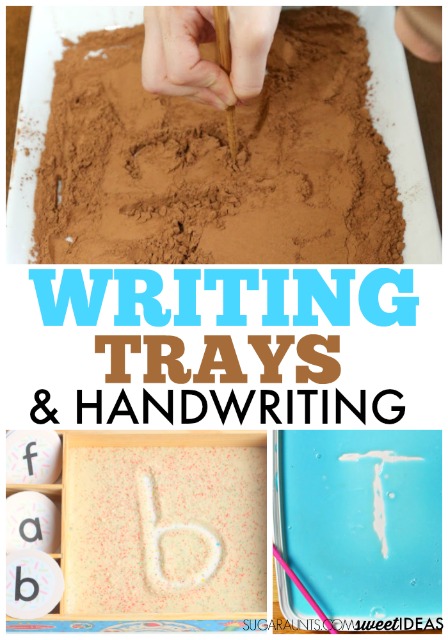
  • Writing letters in sand, shaving cream, or play dough
  • Matching letters with similar shapes and discussing differences
  • Practicing frequently reversed letters in short sessions

Additional Information for Parents and Educators

It is important to remember that letter reversals are a normal part of development for many young children. With time, practice, and supportive instruction, most children naturally outgrow these patterns.

If concerns persist, additional support from an occupational therapist can help address underlying skills such as visual perception, motor planning, and fine motor coordination.

Providing consistent guidance, clear visuals, and opportunities for practice can help children gain confidence and improve their writing skills over time.

Contributor: Kaylee is a pediatric occupational therapist with a bachelors in Health Science from Syracuse University at Utica College, and a Masters in Occupational Therapy from Utica College. Kaylee has been working with children with special needs for 8 years, and practicing occupational therapy for 4 years, primarily in a private clinic, but has home health experience as well. Kaylee has a passion for working with the areas of feeding, visual development, and motor integration.
Types of Pencil Grips

pencil grips

Pencil grips, pencil grips, pencil grips, there are so many types of pencil grips! Do I try this grip or that one? Does this child really need a pencil grip? Will they use this pencil grip? Will it be used correctly if they use it in the classroom? Ugh! So much to decide and so many variables to consider when it comes to handwriting. It is overwhelming! Does this sound like you in your practice as an OT? I’ve been there, and I’ve said these things to myself, and sometimes even to others. This post is here to help you decide what pencil grips to try and why!

Pencil grips

Types of Pencil Grips

In this blog post, we’ll dive into pencil grips occupational therapy practitioners may offer as a tool to support handwriting needs.

We’ll address types of pencil grips (with links for purchase) and why each pencil grip is used.

Finally, we’ll cover a variety of related resources and activities to support the development of pencil grip use.

To further explore pencil grasp development, take a look at our blog post, Pencil Grasp Development and get this great Pencil Grasp Quick Visual Guide, which helps Occupational Therapists identify and explain grasp patterns, using pictures to educate, and explain how pencil grasps progress developmentally.

The visuals will help parents and teachers understand grasp development and the goals for an appropriate grasping pattern. My prediction is that these tools will help get buy-in from the educational team and the family. It helps them understand exactly where the child is developmentally and where you, as the OT, wants the learner to head, and why! 

pencil grips and Occupational Therapy

First, let me begin by saying that pencil grips are NOT a miracle cure for pencil grasp. They can help in certain circumstances based on the child’s individual needs.

Different types of pencil grips do not help to overcome the root of the inefficient grasp, as these issues must be addressed simultaneously, while implementing the gripper. 

In occupational therapy sessions, the OT practitioner is striving to achieve the most effective and functional pencil grasp for each individual. A therapist may have 40, 50, or even 70 students on their school-based OT caseload…and each student will be completely different when it comes to grasp patterns, pencil pressure, positioning of the fingers, preferences, letter formation strokes, executive functioning skills, self-regulation, visual motor skills, sensory preferences, and handwriting considerations. All of these areas play into handwriting.

To meet the needs of the individual student, a pencil grip may be supplied as a tool to support those individual needs.

Before we get into the various types of pencil grips you may see an occupational therapy practitioner recommend, it’s important to cover functional pencil grip.

Pencil grips are designed to support the most functional and efficient pencil grasp a child can achieve.

This is based on many factors including; their current skill level, motivation, and understanding that the pencil grasp should be efficient and effective, but NOT perfect.

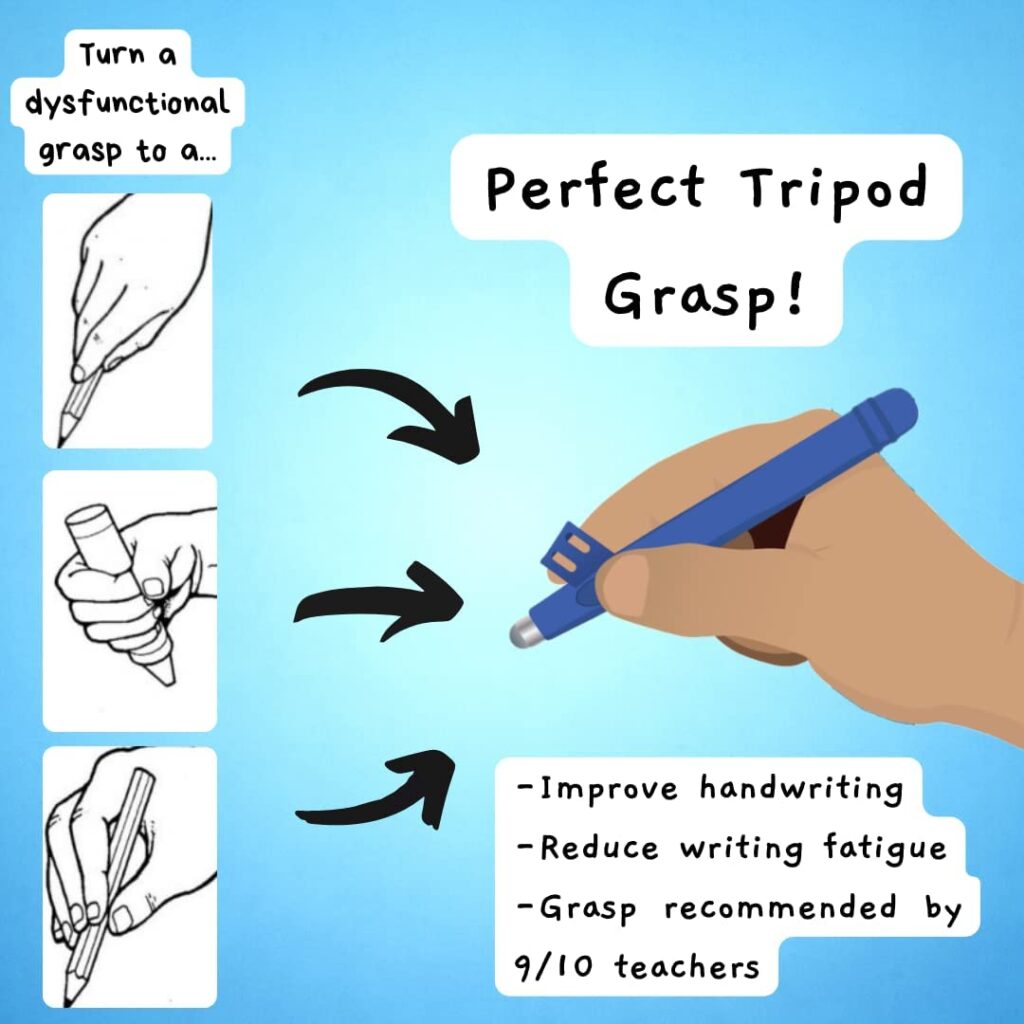
Functional grasps have a few basic components, which include; an open web space, skill fingers holding the pencil (thumb, first, and middle fingers), and stability (achieved with the ring and little fingers being curled securely into the palm). This results in an efficient and functional tripod grasp for the most success with handwriting, drawing, and coloring.

Inefficient grasps are used as a child attempts to compensate for lack of stability, skill finger strength, and endurance. With this inefficient grasp comes fatigue, pain, stress on the joints, decreased writing speed and overall legibility.

A pencil grip may be a tool provided to support a functional pencil grasp, depending on the needs of the individual student.

Think of pencil grips as a supplemental tool to aid a child as they continue to work on building the hand and finger skills needed to achieve an independent and efficient grasp.

The type of pencil grip can also serve to support the child as they focus on the writing process, therefore not exhausting their thought and energy, trying to remember to grasp the pencil properly for the best function. 

The OT Toolbox has a great Pencil Grasp Bundle available for purchase to support various needs related to pencil grasp.

types of pencil grips

Now, without further ado, let’s proceed to types of pencil grips that most OTs recommend, what their purpose is, and why they are recommended!

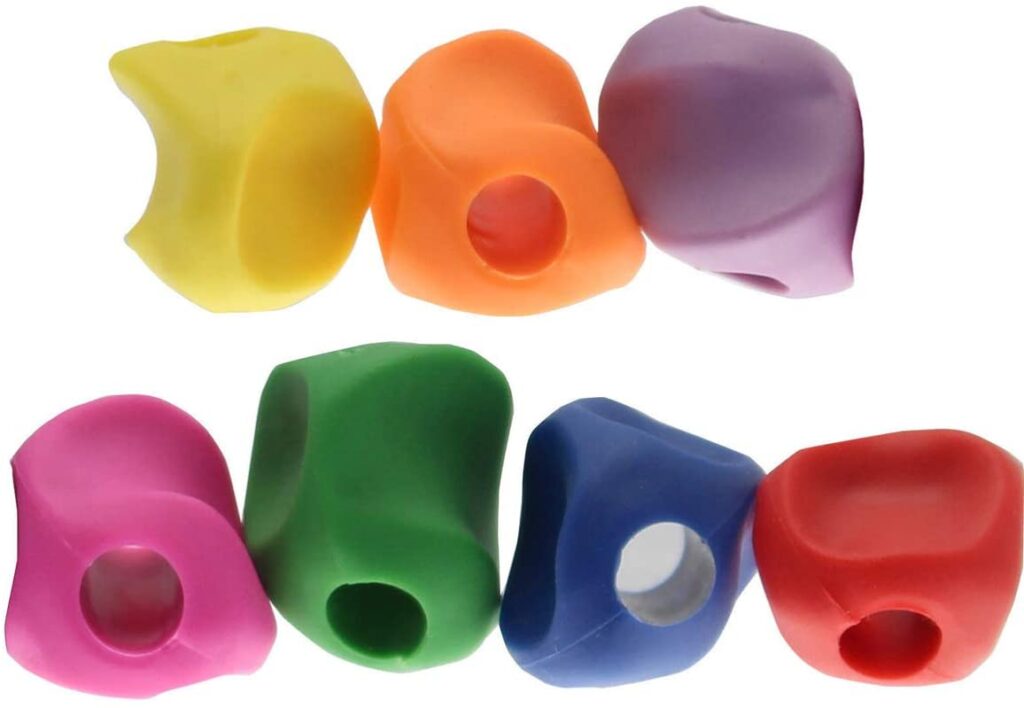
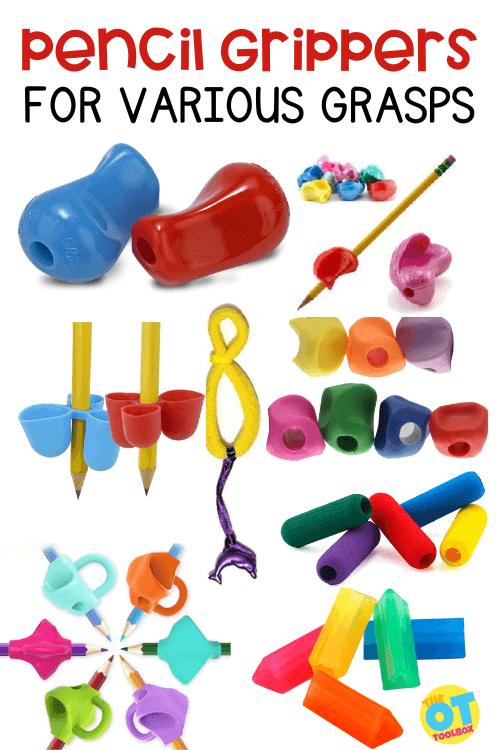
There are so many types of pencil grips out there on the market. Some of those listed out include:

  • Trigangle pencil grip
  • Grotto pencil grip
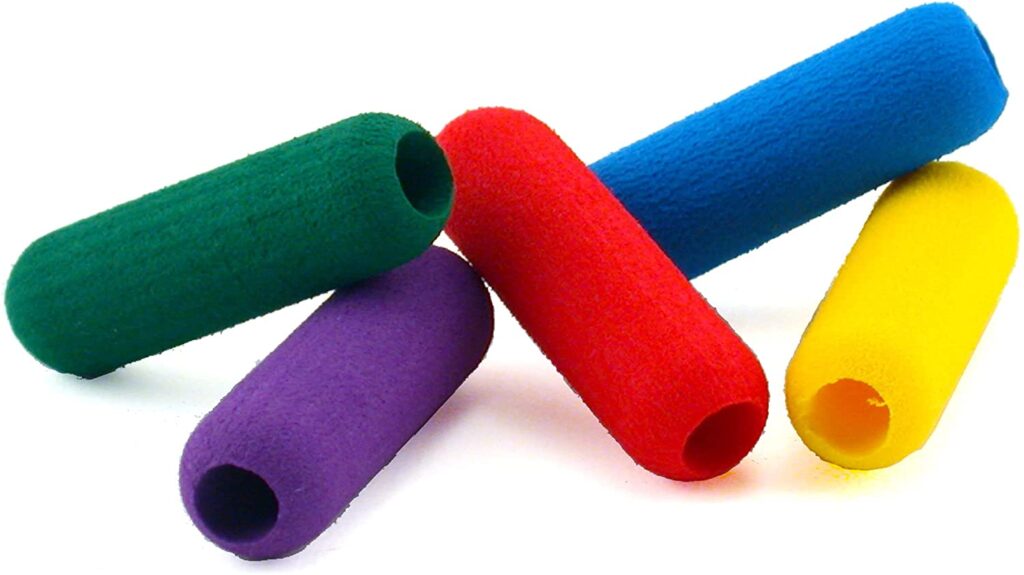
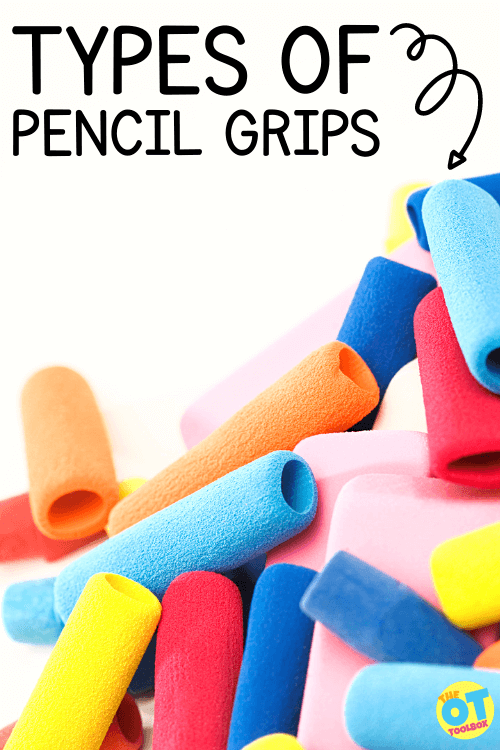
  • Soft foam pencil grip (Classic foam pencil grip)
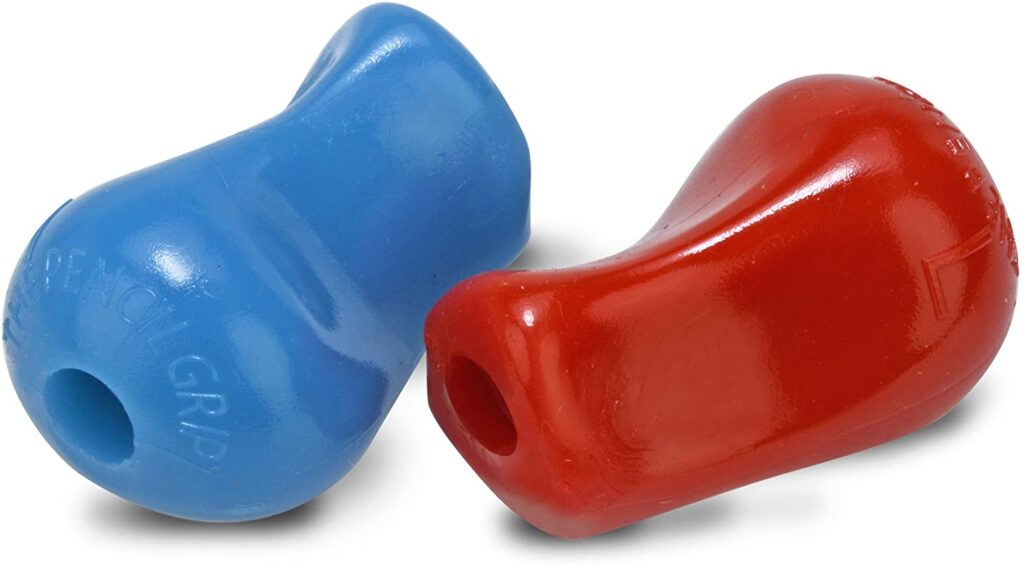
  • The Pencil Grip
  • Crossover Gripper
  • The Writing C.L.A.W.
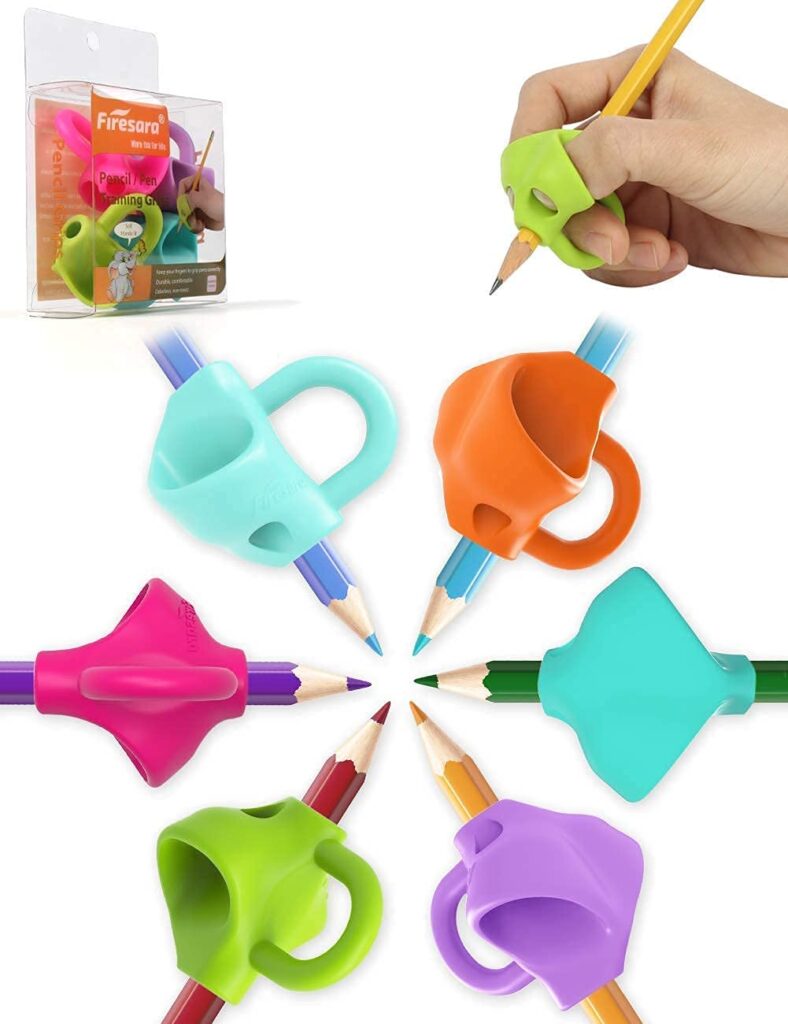
  • Firesara Grip
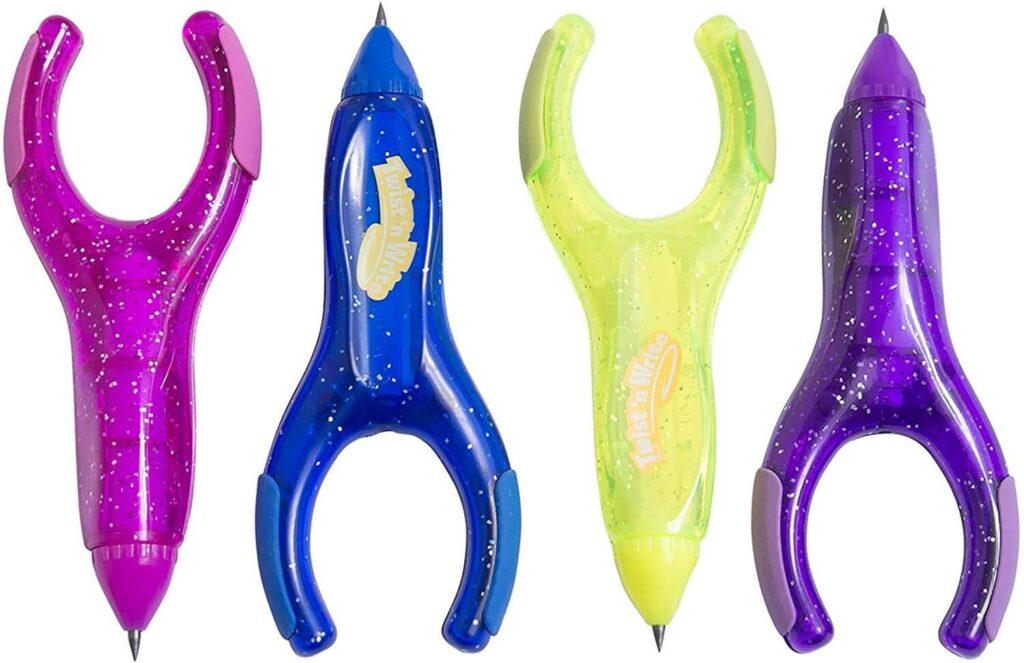
  • Twist n’ Write
  • Handiwriter
  • Write Right Stylus
  • Stetro Gripper
  • Weighted pencil grip

This is just a start of all of the types of pencil grips out there. We’ll go into greater detail on the benefits of each pencil grips, and why you would select one grip over another.

Let’s get started!

Amazon affiliate links are included below for purchase of various types of pencil grips.

Sometimes the easiest way to ensure a better grip on a pencil is by getting a smaller pencil into those hands. Golf pencils are some of the best tools for smaller hands, as they are the right size. The use of larger pencils and crayons leads to compensatory grasping patterns, as they are too long and too heavy for little hands to grasp and hold for long periods of time.  A typical sized pencil in the hands of a child, is the equivalent of an adult trying to use a 12 inch pencil!

The physical size of hands and biomechanics of the muscles and joints in a child’s hand can’t possibly hold a large writing instrument unless they grasp it with compensatory efforts. This generally results in inefficient and ineffective grasps.  Younger learners have far more maladaptive pencil grasp patterns than older adults, due to the young age at which learners are instructed to write. 40 years ago, writing did not begin until first grade. That gave the hands time to develop. Now writing starts in the two year old class, or in preschool many times. It’s because of the early push to trace, copy, and write letters in preschool that we see poor pencil grips established.

The Pencil Grip

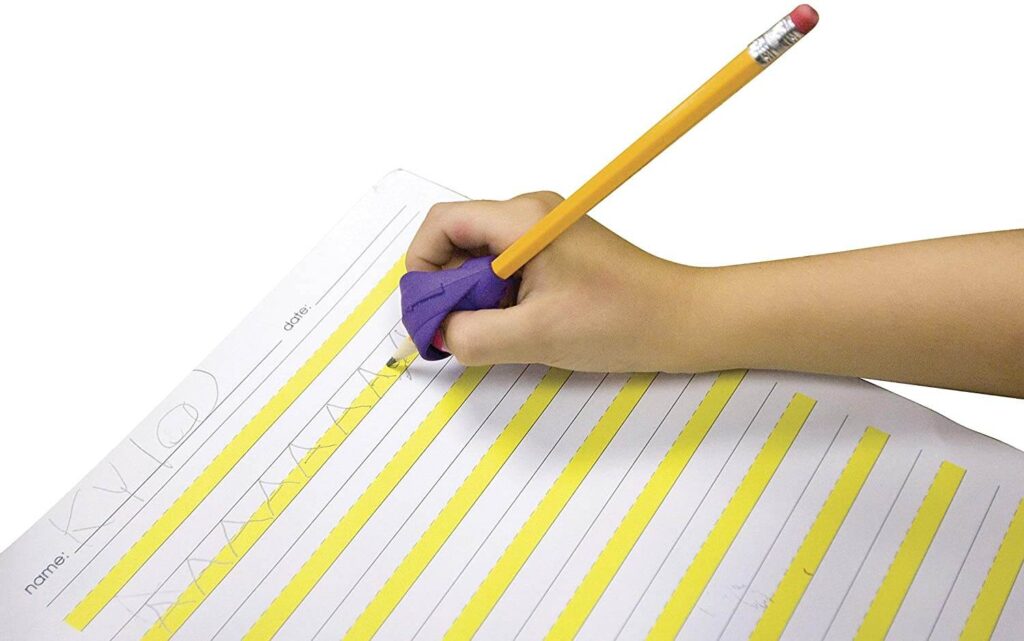
This grip, simply called “the pencil grip”, is an oldie, but a goodie for some children. It is designed to provide cushiony comfort, with proper finger placement indicators for left AND right-handed writers. The Pencil Grip helps learners gain improved pencil control, while reducing fatigue. This type of pencil grip supports an open web space and tripod grasp. The pencil grip comes in mini, standard, and jumbo sizes, making it available for a variety of children and adults. Recently, I have been unable to find the mini-sizes. 

The crossover grip

Honestly, this grip is essentially “The Pencil Grip”, with a wing on the front to help prevent the fingers and thumb from wrapping over the pencil shaft. This helps keep the web space open. The crossover grip will aid some children who do not have a strong thumb overwrap pattern yet. If their thumb overwrap is significant, this grip may not be the one for them, as it allows a wrap grasp with little resistance. It is cushiony and does not prevent the learner from wrapping their thumb over the material.

The Grotto Pencil grip

This type of grip is great for the children that have a thumb wrap grasp which closes up their web space. The Grotto Grip is not as cushiony as “The Pencil Grip”, but it is easier to use, as it has molded finger slots for the thumb and index fingers, and an indentation on the bottom for the grip to rest on the middle finger. It also has a wing on the front, and the material is stiffer in design, which can help aid in the prevention of any finger or thumb wrapping.

Left and right-handed writers can easily use the Grotto Grip, as the finger placement is exactly the same, making it less confusing for children to know where their fingers should be placed while using it. 

The Writing Claw pencil grip

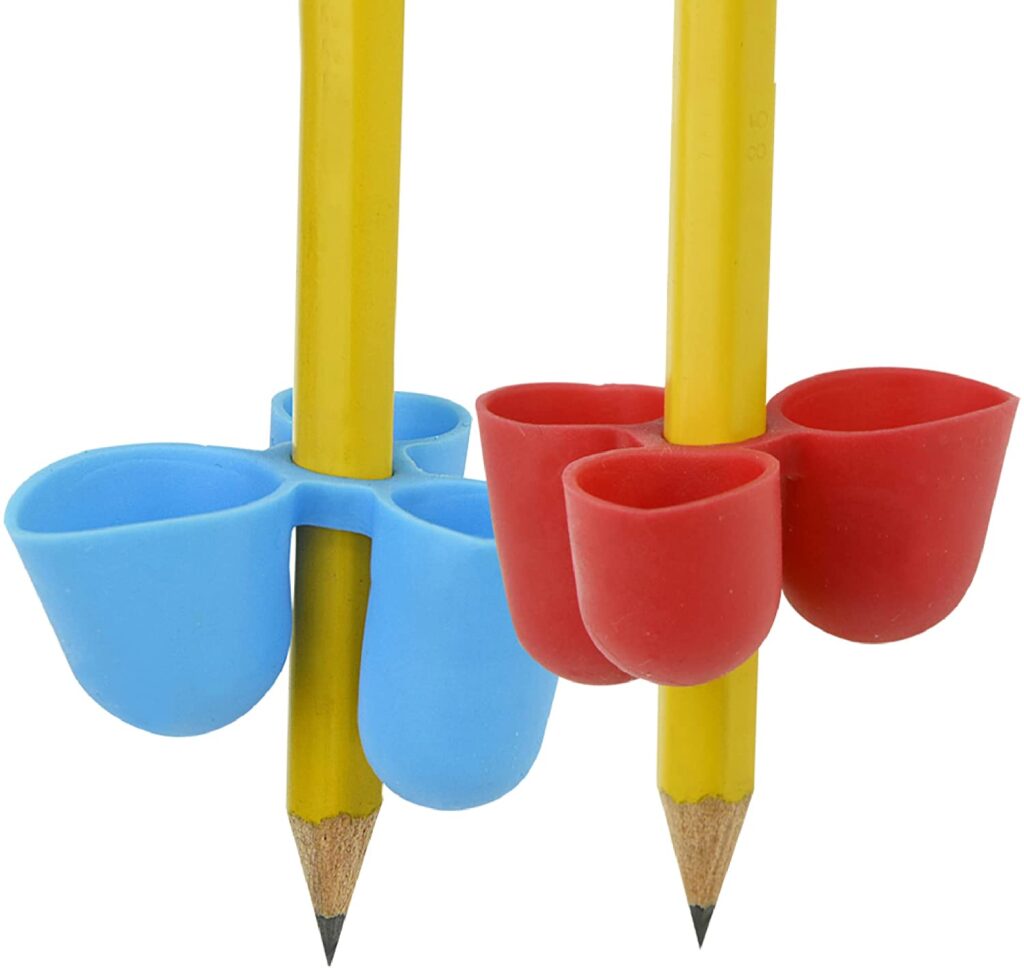
This grip has three finger cups to support finger placement, and can be used by both left and right-handed writers with a simple change of finger placement within the cups. The finger placement indicators are on the bottom of each cup. The design leaves little room for error, and supports a variety of children, as it comes in three different sizes.

The Writing C.L.A.W. fits a wide variety of writing, drawing and coloring tools such as standard pencils, primary pencils, crayons, markers, and paint brushes!

Firesara Pencil Grip

This grip is similar to the Writing C.L.A.W. as it has two cups for the thumb and index fingers, but it has a ring for the placement of the middle finger. The Firesara Grip can easily be used by left and right-handed writers. Learners place their thumb and index fingers into the cups, and the middle finger goes into the ring finger of either hand.

Using this grip, helps the three fingers to be fixed tightly to the pencil shaft. The Firesara type of grip is made of soft, durable silicone.

Twist and Write pencil grips

The Twist n’ Write, also called the Rocket Pencil, is not a pencil grip, but a pencil that has a wishbone-shaped design. This helps fingers to be placed into a tripod grasp with little guidance. It has rubbery sides that double as erasers! The pencil twists at the bottom to push forward more lead. It needs a special tool to add more lead, which makes it a little less efficient for use. It is often easier to buy multiple pencils rather than trying to replace the lead. The pencil design is for not for tiny hands, but is effective for finger placement without the use of a pencil grip, making it more motivating to use.

The Twist n’ Write pencil can easily be used by left and right-handed writers. Some learners or teachers might not like the rocket pencil, because it looks so different from traditional pencils.

Handiwriter Pencil Grip

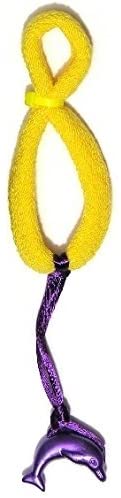
This is not really a type of grip, but rather a position support for the pencil. There are some children who hold the pencil vertically instead of at an angle, or have a thumb overwrap grasp with a closed web space. The Handiwriter positions the pencil at the correct angle within the hand. This pencil positioner helps to reposition the pencil within the web space, by pulling the pencil back into the web space, while promoting improved finger placement on the pencil shaft.

The “charm” on the commercially purchased Handiwriter is grasped by the ring and pinky fingers, and curled into the palm, providing increased hand stability. These can purchased as pictured, but can also be made with or without the charm support, by using two terry cloth hair bands using these directions, or by following the visual sequence for creating one using elastic bands. 

Stylus with pencil grip attached

You can put a grip on an existing tablet stylus, or buy get his great stylus that has a gripper on it! I tried this device with some of the kiddos I work with, and it worked well with the added index finger placement into the cup that is on the shaft of the stylus.

The Write Right Stylus will only work if the index finger is properly placed into the cup, and ensures proper positioning when using a tablet or screen for writing tasks. This placement helps to promote a tripod grasp. The symmetrical design allows it be used by left and right-handed writers. 

Stetro Pencil Grip
  • Stetro (affiliate link)- This pencil grip is efficient when The Pencil Grip is too large and the individual benefits from a smaller “target” to pinch the pencil.
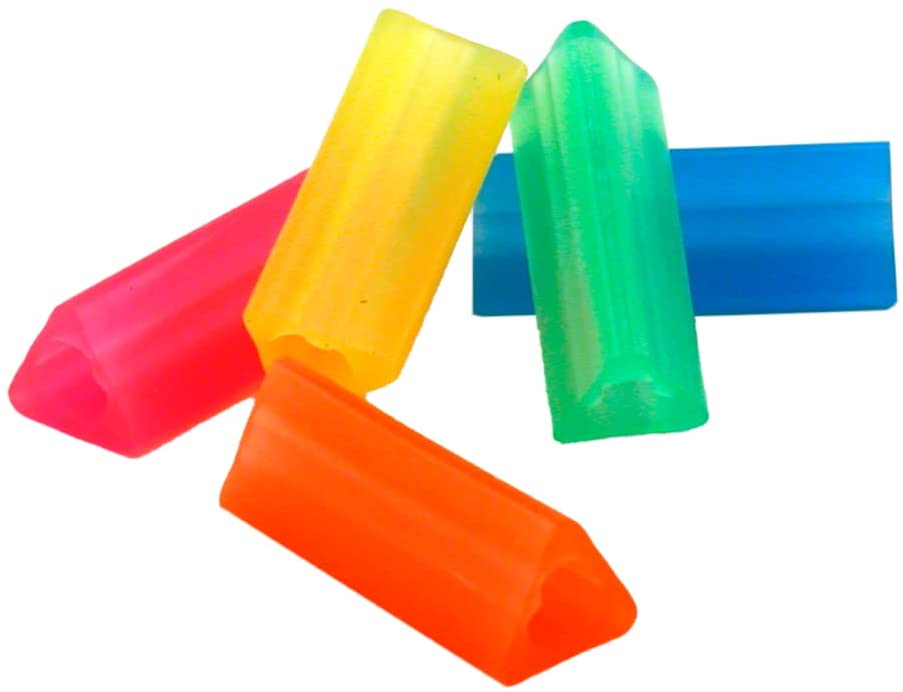
Traditional triangle pencil grip
  • Traditional Triangle (affiliate link)- the Traditional triangle grip is a common pencil grip that is offered to the whole classroom from teachers, parent teacher groups, or in back-to-school kits. The triangular sides offer a flat placement for the fingers, but this grip may not work for all individuals. One therapy tip is to cut the triangle grip in half or in thirds and use the triangular ridges as bumps on the pencil to stop the fingers from moving too close to the pencil point. This way the ridges bring awareness for placement.

  • Weighted pencil (affiliate link) grips- Pencils with weighted added on are typically an adaptation to support specific needs related to tone, proprioceptive sensory input, tremors. Read about pencil pressure and the benefit of adding a weighted pencil grip for more information.
Classic foam pencil grip

Adaptive Pencil Grips

The alternative pencil grasp pattern that is successful for many kiddos who simply cannot achieve an efficient grasp is use of an adaptive tripod grasp, or any grasp which enables a functional grip on the pencil. There are adaptive pencil grips that support various needs.

For those struggling to manipulate, use, position, and write with a pencil grip during written output, sometimes an alternative grip is the answer.

There are several alternative grasps for pencil manipulation.

The Adaptive Tripod Grip is appropriate to use when low muscle tone or hyper mobility of the finger joints limits pinching and manipulating the pencil.

It is easy to achieve, and I often use it if I am writing a lot. My husband uses it all of the time, and has since grade school.

In the adaptive tripod grasp, the child places the pencil between the index and middle fingers rather than within the traditional web space. They grasp the pencil shaft with the thumb, index, and middle fingers. The placement of the pencil between the index and middle fingers provides ample support and stability allowing for good pencil control, and less hand and finger fatigue. 

This grasp pattern is similar to the “Rocket Pencil” described above. This can be used with different types of pencil grips if needed. 

When pencil grips are uncomfortable

One final note on the use of pencil grips, they WILL be uncomfortable to use at first. Learners are having to utilize the correct finger and hand muscles.

They are not used to using them in this way, therefore they will be uncomfortable and met with resistance. With this discomfort comes less motivation and desire to use.

Rest assured, the use of the right pencil grip, when coupled with the activities you are using to get to the root of the problem, will help.

Be patient, encouraging, and rewarding to your learners, as they work on these skills. A good grasping pattern will be essential later in school, as handwriting tasks become longer and more complex. You are supporting their present AND future success! 

Pencil Grip Kit

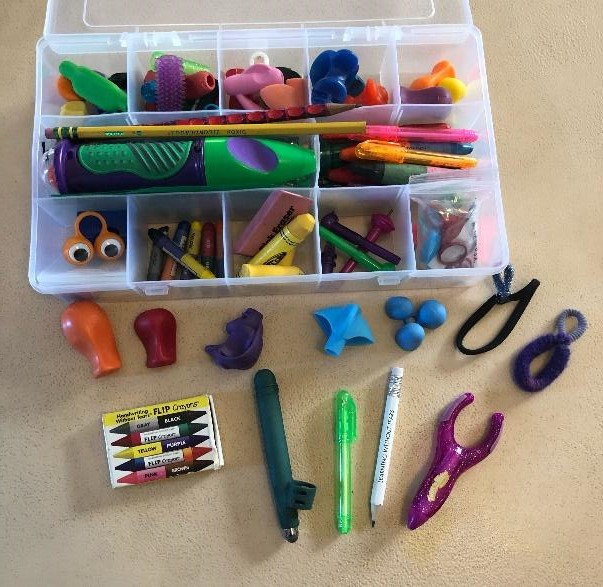
Here is an OT tip just for you! Create a pencil grip kit as pictured below. This will serve you coordinate an approach to determining the best pencil grip for any learner. You will have children that the typical grip will not work for, and you’ll need that one rarely used grip just for them! Have it on hand!

Below is a picture of my own pencil grip kit, which I have used with kiddos to help determine which one is the best grip for them. You can buy pencil grip kits on Amazon that come with several different types of grips.

Make a pencil grip kit for occupational therapy sessions.

Pencil Grip Activities

Be sure to check out our FREE Pencil Grasp Challenge . This is a 5-day email series that will provide you with loads of information about everything you need to know about the skills that make a functional pencil grasp. You will gain quick, daily activities that you can do with learners to help them right now.

Explore the other blog posts we have here at The OT Toolbox regarding pencil grasps by reviewing the convenient list of these just for you:

Pencil Grips for Other writing utensils

It’s important to cover another aspect of using pencil grips on writing utensils like gel pens, golf pencils, or weighted pencils. For some students, a different type of writing tool is needed and you can incorporate a pencil grip that supports sensory motor needs.

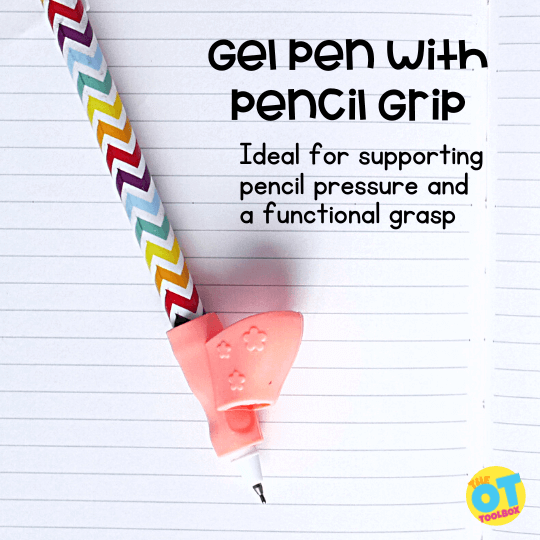
gel pen grip uses a pencil gripper on a pen

Gel Pen Pencil Grips

For example, a student that requires a gel pen over a pencil might have needs with proprioceptive awareness or trouble with pencil pressure. In this case, the gel pen offers lower resistance of the pen as it moves across the page. This can allow handwriting that was previously illegible because the pencil marks were too light on the page, to now show up. Other students might not have enough strength to move the pencil across a page given the force required to press through the lead of the pencil over the paper.

For these students, you might want to trial various gel pens that require less force to use.

Pencil grips that can be used with gel pens include any of the pencil grips listed above. Some of the ideal grippers include:

  • Classic foam grip
  • Grotto grip
  • Writing CLAW
  • Crossover grip

Depending on the needs of the individual, you can use other grips as well. Essentially, a gel pen grip supports a combination of handwriting needs, so combining these tools can target different needs.

Golf Pencil Grips

Pencil grips can also be used with golf pencils. You might want to use a small pencil like a golf pencil to support more precision and fine motor control with the mechanics of the finger grasp on the pencil.

Just like using an alternative writing tool like a gel pen, a golf pencil will fit with a variety of pencil grippers.

Elastic Band Pencil Grip

An elastic band pencil grip is a simple yet effective tool that is easy to make. The elastic band pencil grip is essentially a rubber band or a hair tie attached to the writing end of the pencil. The other end of the rubber band might be loose in a loop or it might have a charm attached.

Students that struggle with holding the pencil up and down might have a closed web space, tightly around the pencil. This means the pencil doesn’t have full motion and there is limited finger dexterity in the tips of the thumb, pointer finger, middle finger, and possibly the ring finger. In this case, using an elastic band that is attached to the pencil and loose (without a charm) can position the pencil into an upright position. You’ll want the student to put the loose end of the rubber band around their wrist. The elastic material then pulls the pencil into a vertical position.

Students that tend to put all four fingers in opposition with their thumb may not use a separated sides of the hand when writing. This means they might not move the pencil as efficiently as they could (and leads to lower letter legibility). In this case, the rubber band attaches to the tip of the pencil and the other end, which has the charm attached can be tucked into the palm of the hand.

In combination with these rubber band grippers or traditional pencil grips, incorporating a few manual dexterity goals can make all of the difference. A true tripod grasp might not be achieved, but a functional grasp is achievable.

The primary purpose of the elastic band pencil grip is to promote a functional and efficient grasp, thereby enhancing fine motor skills and handwriting abilities. Tools that support development of coordination and strength include:

  • Pencil Grasp Play Book– activities to support dexterity, fine motor strength, coordination, and more, all with an efficient pencil grip in mind.
  • 6 Month Fine Motor Plan– This plan outlines specific and easy fine motor exercises designed around play and sensory exploration that support fine motor skills needed for pencil grasp.

Types of Pencil Grip

Understanding the different types of pencil grip helps parents, teachers, and therapists support handwriting development in a meaningful way. Pencil grasp develops over time as children build hand strength, coordination, and motor control. Each stage reflects underlying fine motor development and the ability to use the small muscles of the hand efficiently.

There are several common types of pencil grips, ranging from early developmental grasps to more refined and efficient patterns used for writing tasks in school.

Pencil Grip Names and Developmental Stages

There are specific pencil grip names used to describe how a child holds a writing tool. These names help professionals identify whether a grasp pattern is developmentally appropriate or if support may be needed.

Common pencil grip names include:

  • Palmar supinate grasp
  • Digital pronate grasp
  • Static tripod grasp
  • Dynamic tripod grasp
  • Quadrupod grasp
  • Lateral tripod grasp

Each of these grasps reflects different levels of control and hand development. Early grasps involve larger arm movements, while more advanced grasps rely on refined finger movements.

Types of Pencil Grips in Occupational Therapy

In occupational therapy, understanding the different types of pencil grips is essential for evaluating handwriting skills and identifying areas of need. Therapists do not focus only on how the pencil looks in the hand, but also on how the grasp impacts function.

An efficient grasp allows for:

  • Smooth, controlled finger movements
  • Reduced fatigue during writing tasks
  • Improved letter formation and legibility
  • Better endurance for classroom activities

Occupational therapists consider multiple factors when assessing pencil grasp, including:

  • Hand strength
  • Stability of the wrist and forearm
  • Separation of the sides of the hand
  • Motor planning and coordination

Why Choosing the right Pencil Grip Matters

While there are several acceptable types of pencil grips, the goal is not perfection…it is function. Some children may use a non-traditional grasp but still write clearly and efficiently. Others may have a grasp that looks typical but struggle with control, speed, or endurance.

From an OT perspective, pencil grip is just one part of handwriting. It works together with posture, visual motor skills, and fine motor development to support overall writing performance.

Supporting Pencil Grip Development

When children struggle with pencil grasp, occupational therapy strategies focus on building the underlying skills needed for efficient movement.

Helpful strategies include:

  • Strengthening hand muscles through play (putty, clothespins, tongs)
  • Encouraging finger isolation activities
  • Using short crayons or pencils
  • Practicing writing on vertical surfaces
  • Supporting proper positioning and posture

These approaches help develop the foundation needed for more refined types of pencil grips used in handwriting tasks.

Regina Allen

Regina Parsons-Allen is a school-based certified occupational therapy assistant. She has a pediatrics practice area of emphasis from the NBCOT. She graduated from the OTA program at Caldwell Community College and Technical Institute in Hudson, North Carolina with an A.A.S degree in occupational therapy assistant. She has been practicing occupational therapy in the same school district for 20 years. She loves her children, husband, OT, working with children and teaching Sunday school. She is passionate about engaging, empowering, and enabling children to reach their maximum potential in ALL of their occupations as well assuring them that God loves them!