5 Things OTs Want Parents to Know About Pencil Grasp

Pencil grasp recommendations is a question that comes up a lot when kids have trouble with handwriting. In fact, many times occupational therapists receive a referral to check on a child with handwriting challenges and one of the things the teacher mentions is the child’s pencil grasp. Parents may have a lot of questions about pencil grasp development, too. They may wonder if their child is on track with their pencil grasp or how to help kids that are struggling with holding a pencil. The thing is that there is a lot that goes into gripping a pencil! Here are the top things that pediatric OTs wish parents knew about pencil grasp.

Facts therapists with parents knew about pencil grasp

Pencil Grasp Recommendations

If your eyes glaze over when it comes to pencil grasp, how your child is holding a pencil, and how to help them, don’t worry! Here are the main points you need to know about pencil grasp development:

#1 Pencil grasp is not clear-cut.

In typically developing kids, children progress from using their whole arm to move a crayon, to using their forearm and wrist, to using their fingertips. That progression indicates upper bodies that support the arm, strong arms to stabilize posture, and refined fine motor skills.

In children with physical, cognitive, or neurodevelopmental considerations, grasp may not follow the age progression or demonstrate delays in progression. Other children skip developmental stages of pencil grasp for a variety of reasons.

#2 Limit the screens and offer more play.

Kids today are exposed to a variety or play activities (or lack thereof). They are also exposed to technology and screens from a very young age.

Think about it this way: when a young child holds a screen, they are missing out on time that other generations would have had to experience play and activity through their hands. They are also spending hours of time in some cases with a “screen grasp”. When a young child holds a screen, there is heavy weight through the ulnar side of the hand. The pinky side of the hand curves over and is in constant active grasping position to hold onto the screen or device.

That allows for a lot of strength in the pinky side of the hand, and time spent in the same position. The hand isn’t getting a variety of experiences to stabilize, manipulate which are important for in-hand manipulation and separation of the sides of the hand.

Then, the child is typically using the pointer finger to swipe. There isn’t the variety of grasp, manipulation, pincer development, and precision occuring.

Likewise, with screen use, there is a shift to thumb swiping and movements of the thumb on the screen. The thenar eminence gets a lot of the same motions. All of this adds up to a perfect storm of limited fine motor experience and lack of fine motor skills.

#3 Functional writing is most important.

This is one of the biggest take-aways that therapists want parents to know: A functional pencil grasp might not look like the traditional tripod grasp. Kids can hold their pencil with a thumb-wrap, cross-over, modified tripod, quadrupod grasp, or any of the many other variations…and STILL write in a way that is legible and efficient.

Research tells us that pencil grasps do not impact skills like letter formation or legibility. In the child using a mature pencil grasp (the fingers and hands do the work to move the pencil), variations of pencil grasp do not impact writing speed.

When speed is an issue, there is probably something else going on such as the child is using a transitional grasp pattern, sensory issues like heavy writing pressure are present, or motor planning issues like letter formation are occuring.

#4 Kids need play! Yes, it’s worth repeating. 

Coloring, play dough, climbing trees, tumbling in the grass, and manueving on the monkey bars are important parts of pencil grasp development.

It’s true! The underlying skills that kids need to grasp the pencil and write occurs through play. The early stages of child development includes lots of crawling, and that’s an important stage!

Many times, we see fine motor difficulties in kids that skip the crawling stage. Sometimes the connection between crawling, fine motor exposure, and play isn’t apparent when it comes to pencil grasp.

Children need fine motor play to develop hand strength for precision and using those fingers. Kids need to climb and move to gain stability and control in their upper bodies so their shoulders and arms are able to support and stabilize distal mobility.

#5 Don’t rush the “picture perfect” pencil grasp.

So often, kids are rushed to hold a pencil perfectly. This assumption happens in classrooms everyday. Kids begin to write letters before they are developmentally able to hold and manipulate a pencil at a level that “looks correct” and in the meantime, miss out on valuable progression through pencil grasp stages.

We are seeing children start to learn to write letters in preschool and are pushed to write letters, words, and sentences in kindergarten. Going by developmental progression, this is before a child is developmentally able to manipulate a pencil with precision and mobility in the fingers and hand.

It’s OK to see a pencil grasp that isn’t perfect in preschool, kindergarten, or even the early grades. Keep offering fine motor experiences, play, and activities!

Need more pencil grasp help?

Try some of these fine motor activities to promote the skills kids need:

Use small pencils. Broken crayons and golf-sized pencils are perfect!

Try these games to build a better pencil grasp.

Improve pencil grasp with play.

free pencil grasp challenge

JOIN THE PENCIL GRASP CHALLENGE!

Want to know how to fix a problem with pencil grasps? Need help knowing where to start when it comes to immature pencil grasps or a child hating to write because their hand hurts? The Pencil Grasp Challenge in open for you! In this free, 5 day email series, you’ll gain information, resources, specific activities designed to promote a functional, efficient pencil grasp.

The pencil grasp challenge is a free, 5 day mini course and challenge. During the course of five days, I’ll be teaching everything you need to know about the skills that make up a functional pencil grasp. You’ll learn what’s going on behind the inefficient and just plain terrible pencil grasps you see everyday in the classroom, clinic, or home. Along with loads of information, you’ll gain quick, daily activities that you can do today with a kiddo you know and love. These are easy activities that use items you probably already have in your home right now.

Besides learning and gaining a handful (pun intended) of fun ideas to make quick wins in pencil grasp work, you’ll gain:

  • 5 days of information related to pencil grasp, so you know how to help kids fix an immature pencil grasp.
  • Specific activities designed to build a functional pencil grasp.
  • Free printable handouts that you can use to share with your team or with a parent/fellow teachers.
  • You’ll get access to printable challenge sheets, and a few other fun surprises.
  • And, possibly the best of all, you’ll get access to a secret challengers Facebook group, where you can share wins, chat about all things pencil grasp, and join a community of other therapists, parents and teachers working on pencil grasp issues.

Click here to join the Pencil Grasp Challenge.

Colleen Beck, OTR/L has been an occupational therapist since 2000, working in school-based, hand therapy, outpatient peds, EI, and SNF. Colleen created The OT Toolbox to inspire therapists, teachers, and parents with easy and fun tools to help children thrive. Read her story about going from an OT making $3/hour (after paying for kids’ childcare) to a full-time OT resource creator for millions of readers. Want to collaborate? Send an email to contact@theottoolbox.com.
What is a Functional Pencil Grasp

What is a functional pencil grasp and how does that impact handwriting in kids

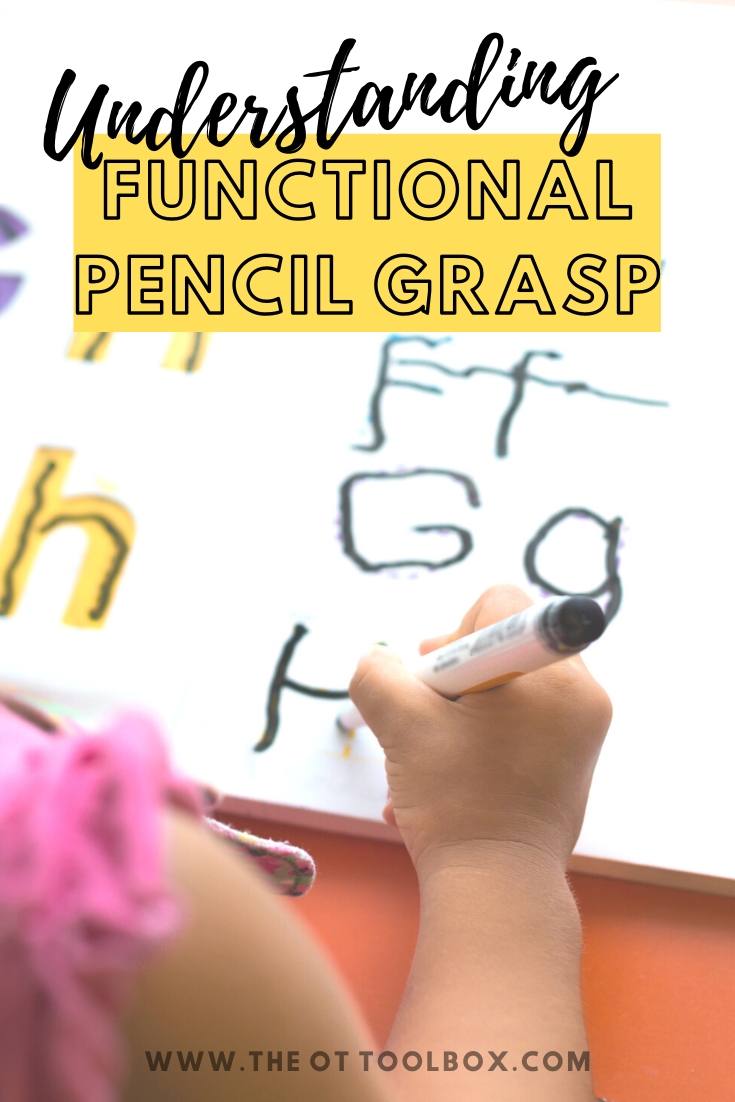
The term “functional pencil grasp” is one of the possibly most discussed concepts when it comes to handwriting issues. School-based occupational therapists know that pencil grasp is one of those topics that come up so often. The question that often comes up is whether a pencil grasp is functional or if it’s one that should be addressed through fine motor work, strengthening, or possibly OT interventions. Today, we’re talking about all things functional pencil grasp, the grasp patterns involved, and what exactly makes up a functional pencil grip on a pencil.

Functional Pencil Grasp or Inefficient Pencil Grasp

A quick guide to understanding pencil grasp and exactly what a functional pencil grasp is

First, let’s talk about what it is that makes up a functional pencil grasp. A functional grasp is one in which the writer uses a pencil both efficiently and effectively. A functional grasp is one that the student is able to write without several big issues.

When a student writes with a pencil, they may not use the clear-cut tripod grasp. The student may write all of the letters and numbers in a clear and legible manner, but hold the pencil with a really awkward and strange positioning. The pencil grasp might not look like a traditional tripod grasp or modified tripod grasp. The child may use three or four, or even five fingers on their pencil, yet write in a way that is actually legible and time efficient. A grasp might look really out of place in the classroom, but be able to read their writing later when they come back to read over their notes.

A functional pencil grasp can exist with one or more of the aspects which are considered inefficient, yet the written work is still legible. When a grasp is legible and efficient, it is considered functional.

Many (many) of us have unique and very functional pencil grasps. The issue is when a quirky grip on the pencil becomes a cause for illegibility, fatigue, joint strain, or other concern.  In those cases, a grasp should be addressed. 

Remember that a functional pencil grasp is the one we want to see. A functional pencil grasp might look like various things. Every child may have different tendencies when it comes to “functional” 

Functional means the student can hold the pencil, write with legible handwriting, and doesn’t have joints that are hyperextended or otherwise inefficient in joint positioning. Fatigue and endurance play a part in a functional pencil grasp.

Functional grasp means the child can perform the strokes that make up letters and numbers without pain, low endurance, misaligned joints, or with proximal motions of the arm.

Inefficient Pencil Grasp- An inefficient pencil grasp is one which is not functional. There are several components that indicate an inefficient grasp, and a child does not need to present with all of these components to utilize an inefficient pencil grasp. Some examples of an inefficient pencil grasp include:

  • A pencil grasp that uses the power fingers as opposed to the action fingers
  • Joints that are hyper-extended or bent back beyond normal range of motion
  • Joints that demonstrate extreme pressure on the pencil and appear lightened in skin tone due to so much pressure being used through the joints (See below)
  • A pencil that is moved by proximal movements, such as shoulder, forearm, or wrist mobility
  • A pencil grasp that does not utilize separation of the sides of the hand (the Power Fingers are not bent into the palm to support the Action Fingers)
  • Poor distal mobility of the fingers when moving the pencil (See below)
  • A “hooked wrist” or wrist flexion when writing
  • Inefficient writing speed, or a pencil speed that is laborious
  • Excessive pencil pressure leading to dark pencil writing that is difficult to read
  • Fatigue or pain when writing
What is a functional pencil grasp and how does that impact handwriting in kids

Each of the items discussed in this list could be covered in a whole article of their own. Let’s cover a few of these topics here.

Handwriting Speed- Some research has found that there is no impact between various types of mature pencil grasps as they relate to handwriting legibility and speed. What this tells us is that tells us that a child using a mature pencil grasp has options! There doesn’t need to be a strict focus on the tripod grasp if a child is using a modified tripod or quadrupod grasp. (Schwellnus, H. et al., 2012) What does come into play in regards to handwriting speed is a need to work on letter formation, transitioning or primitive pencil grasps, or other underlying concerns. Some of these issues might be proximal weakness, sensory processing issues (that present as pencil pressure, or writing very heavily which can slow down handwriting speed), or other concerns.

Pencil pressure- Sometimes, children hold their pencil very tightly.  They press so hard on the paper, that lines are very dark when writing.  The pencil point breaks.  When erasing, the pencil marks don’t completely erase, and the paper is torn.  The non-dominant, assisting hand moves the paper so roughly that the paper crumbles.  When turning pages in a notebook, the pages tear or crumble.  Movements are not fluid or efficient.  Handwriting takes so much effort, that the child becomes fatigued, frustrated, and sore.  It may take so much effort to write a single word, that handwriting is slow and difficult.  It’s messy. It’s not functional handwriting. 

Other times, the pencil pressure is just too light. Kids may write so lightly that you can’t read the overall writing sample. Other times, you can’t discern between certain letters. Maybe you notice that the writing pressure is just so light that the child’s hand or sleeve smudges the pencil lines and the writing sample is totally not functional or legible. Some students vary in their pencil pressure. They may start out writing at a legible pencil pressure, but as they write their hand get tired and with that hand fatigue, the writing gets lighter and lighter.

Here is more information on pencil pressure in handwriting and how to help with creative activities.

Pencil control/Poor distal mobility/Poor proximal stability- Writing with proximal mobility versus using the fingers to manipulate and move the pencil is one aspect that makes up an inefficient grasp. In order to demonstrate distal mobility, proximal support and stability is needed.

Functional pencil grasp is a skill kids need for efficient and legible handwriting

Other pencil grasp red flags might include:

  • Writing with a flexed wrist
  • Closed thumb web-space
  • Hyperextended joints or white knuckles from the strain of holding the pencil
  • Holding the pencil with a full fist
  • Illegible writing
  • Hand fatigue when writing
  • Extension of the pinkie finger or ring finger when writing

As discussed above, some of these “red flags” may be noted in a child that writes with a functional manner. That is, the grasp appears awkward, et the letters and words are legible and the speed is efficient.

Here is more information on pencil control and distal mobility in handwriting.

Here are games to improve pencil grasp.

Kinds of Functional Pencil Grasps

Static Tripod Grasp-Between about 3.5-4 years of age, a static tripod grasp develops. This grasp permits the child to hold the writing utensil with the thumb and index finger with the pencil shaft resting on the DIP joint of the middle finger. Mobility of the pencil occurs from larger joints while the fingers remain static. The hand moves as one unity with this grasp. Sometimes, the wrist is positioned in a bent or “flexed” position, but this graspand it’s positioning are typically developing in the 3.5-4 year old child.

Dynamic Tripod Grasp- This grasp allows the student to write with precision using the thumb and index finger in a pinching position at the end of the pencil. The pencil rests on the DIP joint of the middle finger, and the ring and pinky fingers are tucked into the hand, or palm for a separation of the sides of the hand. Mobility of the pencil occurs by motions through the thumb, pointer finger, and middle finger. This grasp t[ically presents with a slightly extended wrist, and an open thumb webspace. This pencil grasp typically develops between 4.5 and 5 years.

Static Quadripod/Quadrupod Grasp- This grasp is similar to the static tripod grasp, but the student holds the pencil with the ring finger on the shaft of the pencil.

Other Functional Pencil Grasps- There are many other grasps which can be deemed functional. Some of those include versions of thumb wrap grasps, index finger wrapped grasps, inter-digital grasps, and many others. The most important thing to remember is the “functional” part of a grasp. As log as the child is writing in a way that is functional for their needs, the grasp is typically good to go!

Here are fun fine motor activities to improve pencil grasp toward a tripod or dynamic tripod grasp.

How to develop a functional Pencil grasp

Want to know how to fix a problem with pencil grasps? Need help knowing where to start when it comes to immature pencil grasps or a child hating to write because their hand hurts? The Pencil Grasp Challenge in open for you! In this free, 5 day email series, you’ll gain information, resources, specific activities designed to promote a functional, efficient pencil grasp.

The pencil grasp challenge is a free, 5 day mini course and challenge. During the course of five days, I’ll be teaching everything you need to know about the skills that make up a functional pencil grasp. You’ll learn what’s going on behind the inefficient and just plain terrible pencil grasps you see everyday in the classroom, clinic, or home. Along with loads of information, you’ll gain quick, daily activities that you can do today with a kiddo you know and love. These are easy activities that use items you probably already have in your home right now.

Besides learning and gaining a handful (pun intended) of fun ideas to make quick wins in pencil grasp work, you’ll gain:

  • 5 days of information related to pencil grasp, so you know how to help kids fix an immature pencil grasp.
  • Specific activities designed to build a functional pencil grasp.
  • Free printable handouts that you can use to share with your team or with a parent/fellow teachers.
  • You’ll get access to printable challenge sheets, and a few other fun surprises.
  • And, possibly the best of all, you’ll get access to a secret challengers Facebook group, where you can share wins, chat about all things pencil grasp, and join a community of other therapists, parents and teachers working on pencil grasp issues.

Click here to join the Pencil Grasp Challenge.

free pencil grasp challenge

Schwellnus, H., Carnahan, H., Kushki, A., Polatajko, H., Missiuna, C., & Chau, T. (2013). Writing forces associated with four pencil grasp patterns in grade 4 children. The American journal of occupational therapy : official publication of the American Occupational Therapy Association67(2), 218–227. doi:10.5014/ajot.2013.005538

Colleen Beck, OTR/L has been an occupational therapist since 2000, working in school-based, hand therapy, outpatient peds, EI, and SNF. Colleen created The OT Toolbox to inspire therapists, teachers, and parents with easy and fun tools to help children thrive. Read her story about going from an OT making $3/hour (after paying for kids’ childcare) to a full-time OT resource creator for millions of readers. Want to collaborate? Send an email to contact@theottoolbox.com.
Pencil Grasp Challenge Waitlist

Great! Your email address has been added to The Pencil Grasp Challenge Waitlist. You should have a freebie waiting for you in your inbox right now. Grab that freebie and then you can expect pencil grasp resources each week. AND, once we open up the Pencil Grasp Challenge again, you’ll be the first to know!

Here are some pencil grasp tools you may enjoy until then:

Pencil Grasp Tools

What is a functional pencil grasp? Discover what it is that makes up a functional pencil grasp, and inefficient pencil grasp, and what to do about pencil grasp issues.

Easy Pencil Grasp Trick– The easy pencil grasp trick described in this post is one that provides a frugal option for ensuring a functional pencil grasp and one that plays into the dexterity needed for letter formation and handwriting

5 Things OTs want Parents to Know About Pencil Grasp– Parents and teachers many times, have a lot of questions about pencil grasp development. They may wonder if their child is on track with their pencil grasp or how to help kids that are struggling with holding a pencil. The thing is that there is a lot that goes into gripping a pencil! This post identifies the top things that pediatric OTs wish parents knew about pencil grasp.

Thumb Wrap Pencil Grasp– Kids may wrap their thumb around the pencil when writing as a means of addressing instability or weakness in the muscles of the hand. This compensation grasp can impact functional writing. The thumb wrap pencil grasp exercise in this blog post is an easy one to put together and one that will help kids gain strength in the muscles that make up a functional grasp.

See you in the challenge once it starts back up again!

Hand Eye Coordination Toys

Today, we’ve got just one of the many fun eye hand coordination toys to share. Occupational therapy toys like these hand eye coordination toys are powerful tools in child development. Let’s talk coordination skills needed for tasks like play and self-care.

hand eye coordination games and activities to promote eye hand coordination skills in tasks like handwriting and play.

What is Hand Eye Coordination

Working on hand eye coordination is part of play. It occurs from a very young age…in fact development of hand eye coordination begins in the first month. The early development of this essential skill serves as a building block for functional tasks occuring much further down the road in beyond the infant period.

Eye hand coordination is needed for tasks such as handwriting, tying shoe laces, managing clothing fasteners, catching and throwing a ball, reading, managing school supplies, and even walking through crowded hallways while managing items such as books, jacket and the backpack.

Other examples of eye-hand coordination include catching a ball, manipulating pegs into a pegboard, lacing a lacing card, etc. This is a skill that is an integral part of each day.

Poor hand eye coordination

When delays in coordination skills are present, children struggle in many ways.

While eye hand coordination plays closely with other visual processing areas such as visual perception and visual efficiency, visual tracking, convergence, etc., there is a motor component to consider as well. The visual portion and motor portion must be integrated in a coordinated manner, allowing for effective and efficient use of the hands so that we can manipulate and manage objects. This coordinated motor skill requires fine motor skill development equally as much as the visual skill component

These motor skills allow us to collect visual information and use it in a motor action. Eye-hand coordination requires fine motor dexterity, strength, shoulder stability, core stability, etc.

When there are difficulties with coordination of these areas, we see trouble with movement games, clumsiness, difficulty with sports, disorganization, and challenges with motor control in functional tasks.

Coordination Games and Activities

Hand eye coordination games and activities can be an effective way to work on these areas, even while addressing other areas such as sensory input, problem solving, and even learning. We’ve got many hand eye coordination activities here on the website:

Eye-Hand Coordination Activities using Paper– work on hand eye coordination using an everyday item…something you have in your therapy bag right now!

Bilateral Coordination Visual Motor Integration Clover– Work on the integration of visual processing skills with motor movements with this symmetrical drawing activity.

Jumbo Fine Motor Threading Activity– Threading and lacing is a great way to work on hand eye coordination.

Eye-hand coordination activity with letters– Sorting, manipulating, and organizing small items can be a way to boost skills with coordination exercises.

Feather Beading– Threading beads onto feathers is a creative and fun way to improve eye hand coordination skills.

Fine Motor color sorting– Encourage coordination skills for preschoolers and eye hand coordination in toddlers by sorting colors or shapes.

Hand Eye Coordination Toy

One such eye hand coordination toys that doubles as a tool for addressing sensory needs, motor planning, problem solving, and creative play is the Punkinfutz PunkinPitch Kit. This open-ended game uses a vest and soft, velcro “paint balls” that can be used to work on eye-hand coordination, motor planning, and more.

For example, we love to start with buckle toys as a tool to support eye hand coordination skills because they require integration of they eyes and hand movements and it’s a great clothing fastener toy to support self dressing goals!

Kids can wear the vest and move through an obstacle course or move from base to base as they dodge and avoid paint balls. They can then throw the soft balls at another player who is wearing the vest. The options are limitless, and part of the fun is coming up with creative ways to incorporate this coordination game into therapy needs or learning.

Kids can work on other skills beyond eye-hand coordination as well: Motor planning, gross motor skills, core strength and rotation, and social play are just some of the areas covered by this coordination activity.

Eye hand coordination activities

Also, check out these other toy suggestions based on therapeutic development through play.

  1. Fine Motor Toys 
  2. Gross Motor Toys 
  3. Pencil Grasp Toys 
  4. Toys for Reluctant Writers
  5. Toys for Spatial Awareness 
  6. Toys for Visual Tracking 
  7. Toys for Sensory Play 
  8. Bilateral Coordination Toys 
  9. Games for Executive Functioning Skills 
  10. Toys and Tools to Improve Visual Perception 
  11. Toys to Help with Scissors Skills
  12. Toys for Attention and Focus 

Mightier for Self-Regulation

If you are a pediatric occupational therapist working with kids on self regulation or emotional regulation, then you may have heard of Mightier. The biofeedback games help kids build emotional regulation skills by playing games as they learn calming skills to stay focused and in control through game playing. Mightier is just one tool that can be a means to help kids thrive. Today, I’m excited to explore this kit a bit more.

This post was part of our Therapy Giveaway Series.

Self-regulation strategies for kids to help with emotional regulation.

What is Mightier

First, let’s talk about the Mightier application. I came across Mightier at last year’s AOTA annual conference. I had the chance to talk with Mightier representatives and the regulation tool sounded really interesting. I’ve seen threads here and there on various occupational therapy pages and forums asking about Mightier and it’s use in addressing self-regulation needs.

Mightier is a way for kids to play games and see their emotions come to life in the process of playing the game. They then have to identify feelings and coping strategies that impact those various emotional regulation changes. The games adjust to challenge the child as they become more proficient in coping strategies.

Kids can use those strategies in real life situations. Through the process of playing the game and analyzing the data associated with it, parents have the opportunity to connect with a clinical coach to set goals, track progress and practice strategies to help their child use and apply their specific calming skills fin real life situations where emotions, worries, frustrations, or meltdowns may impact function or learning.

Self Regulation Strategies

We’ve shared a lot of strategies to help kids cope with various needs here on the website.

You’ll find self regulation strategies for addressing regulation needs.

There are coping strategies to assist and support sensory processing and meltdown issues.

There are DIY and on-the-go self-reflection tools.

And there are mindfulness tips to help kids become more aware of themselves and their world around them.

Using strategies such as biofeedback games are just one more tool to add to the self-regulation toolbox.

Mightier Giveaway

This giveaway has ended.

More self regulation strategies

Also, check out these other toy suggestions based on therapeutic development through play.

  1. Fine Motor Toys 
  2. Gross Motor Toys 
  3. Pencil Grasp Toys 
  4. Toys for Reluctant Writers
  5. Toys for Spatial Awareness 
  6. Toys for Visual Tracking 
  7. Toys for Sensory Play 
  8. Bilateral Coordination Toys 
  9. Games for Executive Functioning Skills 
  10. Toys and Tools to Improve Visual Perception 
  11. Toys to Help with Scissors Skills
  12. Toys for Attention and Focus 

Best Therapy Resources

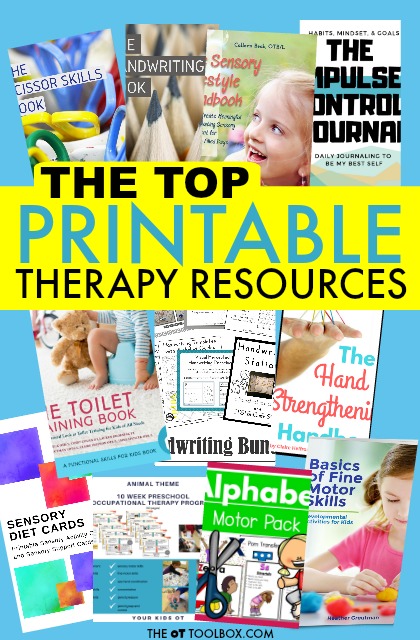
There are a lot of online therapy resources and informative websites out there. I wanted to compile a list of the best therapy resources for pediatric occupational therapists. The resources that are in this post are so incredible. They are some of the best occupational therapy resources on the web!

The best therapy resources and occupational therapy worksheets.

Best Therapy RESOURCES

Each of these items alone is well worth its price tag. From handwriting tools to self-regulation, to functional tasks, these therapy resources have you covered in the way of helping kids meet their maximum potential.

Some of the best handwriting resources for therapists include e-books, bundled occupational therapy worksheets, and tools for addressing underlying skills.

The Handwriting Book- The Handwriting Book is a 62 page digital file written by the team of occupational therapists and physical therapists at Functional Skills for Kids. This book breaks down the functional skill of handwriting into developmental areas. These include developmental progression of pre-writing strokes, fine motor skills, gross motor development, sensory considerations, and visual perceptual skills. Each section includes strategies and tips to improve these underlying areas. Valued at $15.99.

  • Strategies to address letter and number formation and reversals
  • Ideas for combining handwriting and play
  • Activities to practice handwriting skills at home
  • Tips and strategies for the reluctant writer
  • Tips to improve pencil grip 
  • Tips for sizing, spacing, and alignment with overall improved legibility

Handwriting Bundle from Your Therapy Source- The Handwriting Bundle includes titles to assist with prewriting skills, letter formation and handwriting practice.  When you purchase all the titles together you receive occupational therapy worksheets to address line awareness, pencil control, shapes and pre-writing skills, handwriting stations, action activities, visual perception handwriting practice pages, and a handwriting template and letter guides.

Basics of Fine Motor Skills by Growing Hands on Kids- Basics of Fine Motor Skills is a digital resource covering all things fine motor, including an explanation of which fine motor skills are important for fine motor development, plus what fine motor development looks like in children at all age levels. Your go-to-guide for everything fine motor related, it’s the perfect resource for parents, teachers, and therapists. Explore how gross motor, visual-motor, and sensory processing skills affect fine motor development. Plus how to find what fine motor red flags to look for as your child developments. Get activity ideas and suggestions for all the different fine motor skills and also find age-appropriate activities based on your child’s skills and abilities. Your go-to-guide for everything fine motor related, it’s the perfect resource for parents, teachers, and therapists. This is a 70 page PDF/digital resource valued at $15.00.

Animal Theme 10 week Preschool Occupational Therapy Program From Your Kids OT – The 10 week occupational therapy preschool program was created for children 3-5 years old. It was originally designed to be carried out with small groups of children, however could also be used with an individual child. Each week of the program includes activities for the whole body, hands/fingers and tool use. The activities are designed to engage the child in learning through play.

The session plans are organized in themes with each week’s program taking approximately 30 minutes to run. This time will vary according to the number of children participating, the number of times an activity is repeated, whether additional activities are used and the amount of assistance a child might need to participate in an activity. The program may be used for school readiness in the year prior to the commencement of school.

The program outlines developmentally appropriate goals for pre-school age children which may be targeted whilst carrying out this program. These goals include the development of gross motor skills, sensory-motor skills, bilateral coordination skills, visual-motor skills, fine motor skills, hand strength, pencil grasp and control, scissor skills, self-regulation and social skills.

The Scissor Skills Book- The Scissor Skills Book breaks the functional skill of cutting with scissors into several developmental areas including areas listed below. This 81 page resource is valued at $15.99.

  • Developmental progression of scissor use
  • Fine motor skill involvement
  • Gross motor development
  • Sensory considerations and
  • Visual perceptual skills
  • Each section includes strategies and tips to improve these underlying areas.
  • Help for kids who struggle with cutting accurately
  • Creative tips to keep things interesting for kids who lose interest easily
  • Quick, practical strategies that can be put into action today!
  • Ideas for kids who cut too fast or too slow
  • Support for kids who can’t grasp scissors efficiently 
  • Strategies for right-handed and left-handed children

The Toilet Training Book- The Toileting Book is a comprehensive resource covering every aspect of toilet training. Written by a team of experienced pediatric occupational therapists and physical therapists with decades of experience, this toilet training resource is packed with information on toilet training readiness and achievement of toileting success. Includes Toilet Training Guides for special populations (children with fine or gross motor needs, behavioral or cognitive challenges, physical disabilities, etc.) including Sensory Processing Disorder, Trauma-Informed Needs, Autism Spectrum Disorder, Cerebral Palsy, Spina Bifida, Spinal Cord Injuries. This book is valued at $19.99.

  • Provides information on interoception and the role this sensory system plays in potty training
  • Discusses common toileting equipment and special needs toileting tools
  • Includes tips and suggestions for individualized toilet training 

The Sensory Lifestyle Handbook- The Sensory Lifestyle Handbook takes the specific and individualized activities that make up a Sensory Diet and transitioning them into a lifestyle of sensory modifications, strategies, and techniques is a Sensory Lifestyle! Whether you are a parent or teacher, this handbook will help you better understand “sensory” and use the recommendations to address sensory needs in a whole new way. 

Therapists will find valuable resources to explain sensory processing and transition “what we know” about a child into action plans guided by evidence-based strategies, resources, and guidelines.

Use sensory accommodations, sensory strategies, and sensory routines integrated right into the various tasks within a child’s day in order to navigate kids toward a “just right” state, with better attention, focus, and confidence…using activities based on the child’s strengths, needs, and interests. Valued at $19.99.

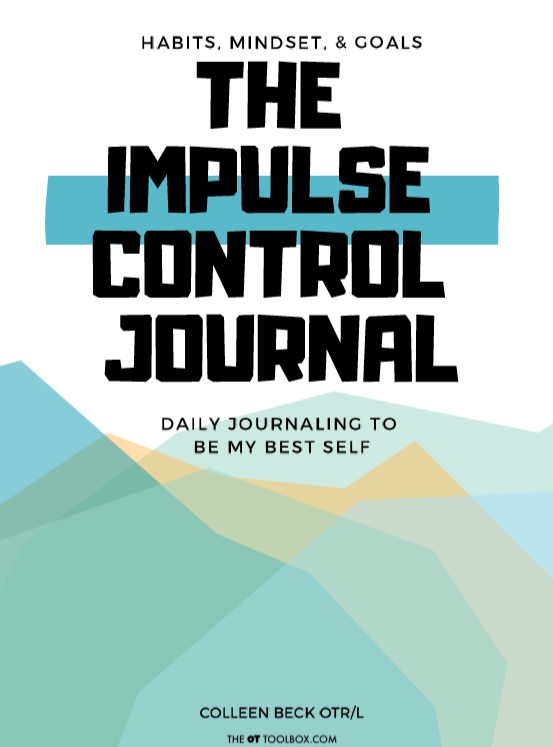
Impulse Control Journal- The Impulse Control Journal is your ticket to helping kids manage their impulses, strategize ways to “shift gears”, and learn valuable lessons in self-regulation. This 80 page impulse control journal for kids to keep track of their day. Valued at $16.99.

  • 30 Drawing Journal Pages to reflect and pinpoint individual strategies 
  • 28 Journal Lists so kids can write quick checklists regarding strengths, qualities, supports, areas of need, and insights 
  • 8 Journaling worksheets to pinpoint coping skills, feelings, emotions, and strategies that work for the individual 
  • Daily and Weekly tracking sheets for keeping track of tasks and goals 
  • Mindset,Vision, and Habit pages for helping kids make an impact 
  • Self-evaluation sheets to self-reflect and identify when inhibition is hard and what choices look like 
  • Daily tracker pages so your child can keep track of their day 
  • Task lists to monitor chores and daily tasks so it gets done everyday  
  • Journal pages to help improve new habits  
  • Charts and guides for monitoring impulse control so your child can improve their self-confidence  
  • Strategy journal pages to help kids use self-reflection and self-regulation so they can succeed at home and in the classroom  
  • Goal sheets for setting goals and working to meet those goals while improving persistence  
  • Tools for improving mindset to help kids create a set of coping strategies that work for their needs

Sensory Diet Cards- These printable sensory diet cards includes 24 pages of 345 sensory diet activities can be used with any child, based on individual needs and preferences. Valued at $9.99. Use these sensory diet cards in the classroom, clinic, home, or community to address:

  • Calming and alerting movement activities
  • Heavy work fine motor activities for pre-writing needs or fidgeting needs
  • Sensory activities
  • Sensory support cards

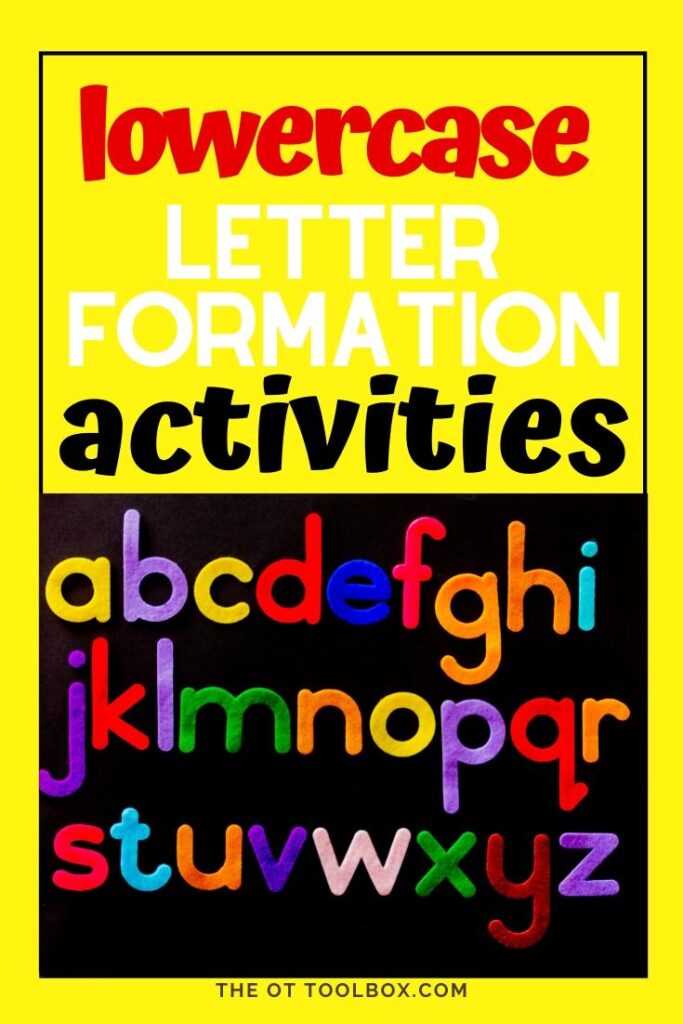
Lowercase Letter Formation

lowercase letter formation activities

Teaching kids to write lowercase letters can be a tricky task. Kids are exposed to different techniques depending on if they went to preschool or not. Some children pick up on lowercase letter formation easily and others struggle with reversals, placement on lines, and accurate letter formation. Today, I’ve got some tips and tricks to teach kids how to write lowercase letters and a tool that kids will love.

Lowercase letter formation activities

Lowercase Letter Formation

Teaching lowercase letter formation can be fun! We’ve shared quite a few ways to use creative activities in teaching kids to write letters here on the website. One such activity is using a sensory means with baked cotton swabs.

Like we talked about in yesterday’s play-based learning post, we know that adding movement, play, and a creative component to learning allows kids to engage with learning in a way that allows children to truly benefit from the learning experience.

Ways to work on lowercase letter formation

Using play and movement in working on letter formation takes just a little out of the box thinking. Here are some ways to teach letter formation with movement and play.

Use a sensory writing tray to teach lowercase letters.

Add movement! Add motor components to teaching letter formation as kids learn how to form big lines down, curves, and slanted lines. Letters can be acted out with letter formation rhymes or with themes.

Use a color by letter worksheet to work on fine motor skills and the letter discrimination skills needed for connecting a lowercase letter to an uppercase letter.

Build lowercase letters with play dough, slime, wikki stix, yarn, or paper strips/paper curves.

Trace and then re-trace the letters on a dry erase board. Rainbow writing offers several chances to practice letter formation.

Trace letters with a finger. Then use finger paint, pudding, dish soap, lotion, or cooking oil.

Want an easy, on-the-go tool for working on lowercase letter formation in a fun and engaging way? I’ve got a fun way to help…

Lowercase Letter Formation Kit

Muscle Movers are a tools for working on letter formation with a focus on movement, motor planning, gross motor skills, and play.

Heavy duty laminate cards with letters on one side, unique animals and activities on the other – the educational opportunities are endless.

Use the cards for letter recognition and getting the wiggles out, add Wikki stix or PlayDoh to allow your Little Learner to use their fine motor skills to form the letters on the card and finally practice with the included dry erase pen.

I Can Build Letters! Magnets (with a magnetic dry erase board)– This set includes hands on letter building with colorful lines and curves used to work on letter formation. These colorful, super-strong magnets allow help improve problem solving and fine motor skills while visually supporting letter formation. These can be used on any magnetic surface.

I Can Build Letters guide– Use this guide as a companion to the I Can Build Letters! Magnets. Your child can start by building the letters on top of each guide on a regular surface, progress to a magnetic surface and then ultimately build letter puzzles with the color builder guide

I Can Write Letters! Workbook– Little Learners start writing using Fundanoodle’s zip, zoom, and buzz terminology. With our grid paper, they learn how to keep their letter a consistent size and we introduce the letters from easiest to hardest to write to develop confidence. And each book includes a series of practice pages and a reward sticker system

The Fundanoodle Letter Fun Kits come in a colorful zippered tote for learning on the go!

More lowercase letter writing activities

Also, check out these other toy suggestions based on therapeutic development through play.

  1. Fine Motor Toys 
  2. Gross Motor Toys 
  3. Pencil Grasp Toys 
  4. Toys for Reluctant Writers
  5. Toys for Spatial Awareness 
  6. Toys for Visual Tracking 
  7. Toys for Sensory Play 
  8. Bilateral Coordination Toys 
  9. Games for Executive Functioning Skills 
  10. Toys and Tools to Improve Visual Perception 
  11. Toys to Help with Scissors Skills
  12. Toys for Attention and Focus 

Sensory Friendly Clothing

Sensory friendly clothing is a must for kids with sensory processing needs. Heck, sometimes that itchy sweater or scratchy jeans get on my nerves, too! Today we are chatting all things sensory friendly clothing. Sensory issues with clothing are a common concern. Even winter sensory clothing issues are something to think about. You’ve probably noticed that itchy tag or a turtle neck sweater that just drives you nuts. But what about our kids with sensory issues?

Sensory friendly clothing

Before we get into the nuts and bolts of sensory friendly clothing, it’s helpful to have a few resources on hand. Read up on our articles on clothing sensitivity red flags, weighted vests and compression garments, as well as clothing fasteners because all of these supports can help.

Finding clothing for sensory issues can be a puzzle and an an adventure! Today we are talking about sensory friendly clothing and how something as simple as sensory friendly pajamas can make a world of difference in the child with sensory processing disorder or sensory needs.

Sensory friendly clothes and common sensory clothing issues that kids have.

Sensory Clothing

Many times, our kids with sensory processing needs struggle with tactile defensiveness or sensitivities when it comes to clothing. It’s nothing new to find that certain materials, seems, or clothing articles are itchy, scratchy, bumpy, rough, or even hurt our kids. Parents of children with sensory needs find that addressing sensory clothing issues is a real struggle. It’s just one more aspect of daily life that needs adjusted, modified, or adapted.

Meeting the needs of the child is essential for function and self-care. In fact, that independent functioning at the “just right” level is the foundation to daily life. Self-care is a priority of parents and allows children to become more self-reliant (Chiarello, 2015). It builds skills, develops self-awareness and self–esteem. Self care by identifying and understanding one’s particular preferences and using those day in and day out in self-care tasks brings us full circle in the way of functioning.

While there are ways to adapt clothing to make it less of a tactile issue, and addressing sensory sensitivities through sensory diets and sensory input is helpful, sometimes, meeting the child’s specific needs makes sense in the way of adaptive clothing that meets the needs of the child.

Sensory Clothes on the Market

Luckily, we are in an age of more awareness and inclusion. We have seen more and more sensory friendly clothes on the market and readily available in stores. We are able to use what is out there, and when the specific adaptive clothing is not available, we can sometimes adjust what we’ve got to make it meet the child’s needs.

You may have seen sensory clothing available in stores and online. The fact is that these items are more readily available. And, that is a wonderful thing to see! Prices, styles, and selection are improving. Costs are becoming more affordable. Our children with sensory needs can better thrive as a result.

Sensory Clothing Issues

There are certain aspects of clothing that are a common complaint for those with sensory processing issues impacted by clothing sensitivities. Some common complaints include:

  • Annoying Seams on clothing
  • Bumps or wrinkles in fabric
  • Tags that itch and scratch
  • Rough material
  • Clothing that bunches
  • Clothing that doesn’t “give” or stretch
  • Wide leg or arm openings that “flap” around the wrists or ankles
  • Clothing that is too tight or too loose
  • Pressure from shoes or footwear that doesn’t bend or give
  • Elastic waistbands
  • Padding or underwire in bras
  • Shoulder straps that are tight or too loose
  • Clothing that doesn’t breath or holds moisture from sweat
  • Clothing that never seems to fit “just right”

All of these concerns are sources for a daily battle when it comes to getting dressed and with the end result of independent self-care and self-dressing for kids. Getting out the door and onto the school bus can be a daily struggle that leads to a meltdown before the day even begins.

The same situation can occur at night when children with sensory processing disorder are asked to get dressed into their pajamas…those itchy pjs that bunch and pull…it’s a nightly battle that results in a pre-bedtime meltdown and hours of restlessness when what the kiddo and parents really need are rest and sleep.

Sleep and sensory needs

Occupational therapy practitioners often support and work with families of children with an autism spectrum disorder or another developmental disorder to address function as it relates to effective sleep. Sleep deprivation can impact the child, the family, and functional abilities on a day-to-day basis. When a child with sensory processing needs struggles to find rest as a result of clothing issues, meltdowns at bedtime, or frequent waking as a result of sensory avoiding or sensory seeking behaviors, sleep is impacted.

OT professionals aim to address a variety of needs impacting restful and adequate sleep. One such strategy for sensory needs is to suggest sensory friendly pajamas and clothing (Picard, 2017).

Want to try a pair of sensory friendly pajamas to address sensory issues like the one discussed today? Let’s take things up a notch by getting a sensory clothing into your hands.

One sensory clothing company that really addresses the sleep and sensory component is Lovey & Grink. These sensory friendly pajamas are fun and comfortable pajamas that they are excited to put on before bed. So often, kids complain that pjs are hot or scratchy. It can result in a nightly meltdown.

Take a look at many of the sensory pajamas out there on the market. When you look for super soft pajamas, you might notice that most of the softer pajama brands we saw were prone to shrink or really expensive. Lovey & Grink pajamas are kid tested and approved and best of all, reasonably priced. A bit more about these sensory pajamas”

  • Breathable (keeping your kids cool)
  • Durable (they’ll hold their shape and last after tons of washing)
  • And super soft (they’ll want to live in them!)

Parents know that anything that makes the bedtime routine a little smoother is a welcome help. These sensory friendly sleepwear is a tool that meets the child’s needs for better sleep.

Sensory Pajamas Giveaway

This giveaway has now ended.

Also, check out these other toy suggestions based on therapeutic development through play.

  1. Fine Motor Toys 
  2. Gross Motor Toys 
  3. Pencil Grasp Toys 
  4. Toys for Reluctant Writers
  5. Toys for Spatial Awareness 
  6. Toys for Visual Tracking 
  7. Toys for Sensory Play 
  8. Bilateral Coordination Toys 
  9. Games for Executive Functioning Skills 
  10. Toys and Tools to Improve Visual Perception 
  11. Toys to Help with Scissors Skills
  12. Toys for Attention and Focus 

References:

Lisa Chiarello and the Move and Play Study Team (2016) Children’s Participation in Self-Care and Ease of Care-giving for Parents. Movement and Participation in Life Activities of Young Children Information for Families and Service Providers. www.canchild.ca.

Picard, M. (2017). American Occupational Therapy Association Fact Sheet. Occupational Therapy’s Role in Sleep. Retrieved from https://www.aota.org/~/media/Corporate/Files/AboutOT/Professionals/WhatIsOT/HW/Facts/Sleep-fact-sheet.pdf

Play Based Learning Tool

Play based learning is a powerful tool! Today, we are discussing how and why a creative play that combines movement and visual processing skills impact learning and development. We’ll cover using learning and play with movement-based learning through play ideas using brain breaks. We’ll also share interactive learning opportunities that address motor, cognitive, social, emotional, sensory, and emotional needs.

This content is part of our week-long therapy giveaway event, where we are collaborating with brands to give you the opportunity to win various therapy items, toys, and games as a thank you for being here and a celebration of our profession and those we serve. This giveaway has now ended.

Play based learning ideas for kids

Play Based Learning

What is play-based learning, and why is learning through play important for kids? Why is it that children learn through play?

Play based learning offers many opportunities to advance on cognitive skills through the process of play. By using skills that the child is familiar with and confidence in, they can excel in learning concepts by simply playing.

While play offers the opportunity to build and advance on skills like motor development, executive functioning, problem solving, visual processing, and other areas. But play also offers situations to expand on self-regulation as well. By incorporating play into a learning experience, children get the chance to move. It’s a brain break built right into learning.

Learning through Play

Learning and thriving as a child, according to Kathryn Hirsh-Pasek, a well-known child development expert notes that children require the “six C’s” in order to succeed. These are six attributes that must exist in order for children to thrive. Through that success comes learning. These aspects build on one another and allow function and success for the child. The six attributes for successful thriving are as follows:

  • collaboration
  • communication
  • content
  • critical thinking
  • creative innovation
  • confidence

By building these areas as well as using these attributes in learning opportunities, we give our children the opportunity to succeed in learning. Don’t these attributes sound like aspects of play? Through play, kids collaborate with others. They interact in play situations in games and pretend play. They communicate with peers or through self-talk. They participate in real-life situations and carry those situations over into play as they “chew on” things that occur around them in the real world. They might pretend to go to the grocery store, drive a truck, take care of a baby, or be a teacher. They see the content and practice it by playing. Play is a chance to practice and expand on critical thinking. It’s a chance to expand on attention, problem solving, working memory and other essential skills. Creative innovation happens during the play process and as a result, creative innovation. All of these skills happen through play and are essential for learning as well. When the processes are combined by true engagement in play AND learning, real skills can be developed and built upon. Play is a powerful tool for learning!

Learning through play allows the learning situation to become active and not passive. It allows us to take a meaningful part in the learning process rather than sitting back and soaking in information. Play offers the freedom to participate in meaningful learning situations that are memorable.

By adding movement, games, or play situations into learning facts, the connections between physical education, movement, breaks, recess, energizing activities, and improved cognition strengthen. In fact, movement can be an effective cognitive strategy to (1) strengthen learning, (2) improve memory and retrieval, and (3) enhance learner motivation and morale.

Movement and Learning in Play

Brain breaks are a buzzword in the schools. But the facts are that kids are receiving less recess time, increased demands in the classroom, and have less outdoor play at home. When those factors align, it’s a recipe for disaster. The thing is that movement breaks in the classroom, or “brain breaks” offer kids the chance to reset. They can help to prepare the nervous system for learning. They can also be done in between learning activities or combined with learning situations to support self-regulation while children are engaged in an academic or learning task.

Movement, standing up, stretches, yoga breaks, and activity are powerful tools! As noted in Teaching with the Brain in Mind, by Eric Jensen:

“These actions can raise a child’s heart rate (and as a result, blood flow) by as much as 5 to 8 percent in just seconds (Krock & Hartung, 1992). And finally, here’s a powerful research finding: evidence from animal studies indicates that voluntary exercise influences gene expression to improve learning and memory (Tong, Shen, Perreau, Balazs, & Cotman, 2001). This improved pattern of gene expression enhances many factors that support the encoding and transfer of data, synaptic structure, and the activity and plasticity of neurons. All of these processes facilitate learning.”

Play Based Learning Activities

So knowing all of this, how can we combine play with learning in the classroom to build concepts, practice math facts, memorize vocabulary words, practice comprehension, and other essential learning tasks?

Adding opportunities to move during classroom times offers just the freedom for the facilitation of learning, all while offering the means to move and get the child in the “just right” state of regulation for absorbing information.

One tool for offering learning through play is by using an open-ended means of combining learning with games and movement activity.

Learning Through Play Activity

Adding movement to classroom learning by using games and gross motor actions offers a brain break opportunity. Some ideas include those that incorporate gross motor movement into math when repeating facts. These allow whole-body games such as Simon Says.

Students can perform specific motions when math facts are true, and perform other motor tasks when math facts are false. Try asking kids to jump or do jumping jacks for an up and down motion.

Bounce a beach ball in a game or at a target to encourage eye-hand coordination while practicing facts or stating true/false responses.

Add upside down motions in the classroom for a calming activity or one that “resets” sensory modulation. Students can sit in their seat and reach under one side to place an object at the far side of their chair, putting their head in an inverted position. Try placing index cards with facts, spelling words, or statements into piles on each side of the chair.

Toss balls at a target with answers.

Add movement games and songs into learning with tunes like “Head Shoulders Knees and Toes”.

Bend over at the knees and place cards, post-it notes, or items into a target. Add over or under movements with specific answers or true/false responses.

Sit on a target and spin around to each as far behind as the child can to add rotary movements. They can place balls into a target as the answer. Make it part of a relay or timed response with a team as they answer questions.

Use this PlaySet to build on learning in the classroom. The numbers can be assigned to answers or used in math activities. Add movement and play to learning by using the play set in gross motor activities, self-regulation and sensory modulation activities, motor planning, and emotional regulation activities, or other learning through play activities.

  • 1 PunkinPlaySpace
  • 3 Orange PunkinPitch Balls
  • 3 Blue PunkinPitch Balls
  • 1 Durable Vinyl Storage Pack

Play ANd Learn Play Space GIVEAWAY

This giveaway has now ended.

Play Based Learning Ideas

Also, check out these other toy suggestions based on therapeutic development through play.

  1. Fine Motor Toys 
  2. Gross Motor Toys 
  3. Pencil Grasp Toys 
  4. Toys for Reluctant Writers
  5. Toys for Spatial Awareness 
  6. Toys for Visual Tracking 
  7. Toys for Sensory Play 
  8. Bilateral Coordination Toys 
  9. Games for Executive Functioning Skills 
  10. Toys and Tools to Improve Visual Perception 
  11. Toys to Help with Scissors Skills
  12. Toys for Attention and Focus 

Then, scroll through the comments…you might just find some new learning through play activities that will work for you! Hopefully we can learn from one another!