Sensory Swing for Modulation

Sensory swings are a wonderful tool for improving sensory modulation in kids. We’ve covered different swings in the past, including specific types like a platform swing. Here, we will discuss how and why a sensory swing is used for modulation of sensory needs. Sensory swings are powerful sensory strategy when it comes individuals with sensory processing needs. Let’s discuss how sensory swings can help with sensory processing and modulation.

Related, check out our blog post on affect modulation.

Use a sensory swing to help kids with sensory needs including sensory modulation

Sensory Swings for Modulation…

You’ve seen the issues in classrooms and in homes. There are kiddos struggling with self-regulation and management of sensory processing. We notice the child that gets overwhelmed or stuck on a direction to complete a worksheet. We see a child who breaks down and resolves into a pattern of hitting, biting, kicking, or damaging property. We notice the child that can’t sit upright in their seat to listen to their teacher. We can identify the child who bites on their pencil to the point of nibbling on eraser bits and chunks of wood. We see the actions and we see the results of a real need. Sometimes, we can even predict the events or situations that lead to these behaviors.

What we don’t see is the internal struggle.

We miss out on the feeling of overwhelming sensory input. We can’t feel the emptiness or the detached sensation. We miss out on what’s happening inside those beautiful, intelligent, and awesomely created brains and bodies.

While we can connect the dots from event to behavior, our biggest struggle as advocates, educators, and loved ones is to know the true internal path that connects those dots.

An occupational therapist analyzes the occupational domains that a child or individual pursues. They determine any difficulties in modulation, discrimination, praxis, motor skills, and other components that impact those occupations. In providing sensory-based interventions, therapists use tools to move their clients to optimal levels of arousal for functioning.

The sensory swing is one of those ways to help with sensory modulation.

What is Sensory Modulation

Sensory modulation information including what is sensory modulation and how to help.

As discussed in the book, The Sensory Lifestyle Handbook, sensory modulation is the organization and regulation of sensory input through the central nervous system to enable skills and abilities such as attention, activity levels. This skill is an efficient, automatic, and effortless occurrence in those with typically developing individuals.

Sensory modulation is defined by Dr. A Jean Ayres as “the neurological process that organizes sensation from one’s own body and from the environment and makes it possible to use the body effectively within the environment. The spatial and temporal aspects of inputs from different sensory modalities are interpreted, associated, and unified” (Ayres, p. 11, 1989).

Problems with sensory modulation result in difficulty responding to and regulating sensory input. A child with sensory modulation disorder might withdrawal as a result of their responses. They may become upset by noises or sounds. They may become overly distracted or obsessed with specific stimuli.

Sensory Modulation in a Nutshell

Essentially, sensory modulation is the ability to take in sensory input, sort it, and respond to that input. Modulation results in function, alertness, awareness of self, and awareness of the world around oneself.

When sensory modulation is stalled, moving slowly, or running on hyper speed, we see disorganized, over-responsive, or under-responsive individuals.

As a result, children struggle to complete functional tasks, follow directions, learn, manage emotions, interact socially, etc.

How to Help with Sensory Modulation

Sensory modulation issues can be improved to impact a child’s arousal state so they can be effective and function in daily living tasks, in school, emotionally, and socially. Some sensory strategies to help with modulation are listed below.

Use the expertise of an occupational therapist to identify and analyze modulation levels. Identifying strengths and weaknesses can play a part in helping to understand other underlying areas that need addressing and play into sensory modulation concerns. Functioning individuals may require specific levels and intensities of specific sensory input, which can vary across different environments or on a day-to-day basis.

  1. Use sensory activities to add proprioception, vestibular input, or touch input to help with arousal states, and calm or alert levels in order to function in tasks.
  2. Create a sensory diet that allows for sensory use across environments and sensory tools or strategies to address changes in modulation or arousal.
  3. Set up a sensory station to successfully integrate sensory activities into daily lives. Sensory stations can occur in the home, classroom, or on-the-go.

A sensory swing can be used to impact sensory modulation in all of these strategies.

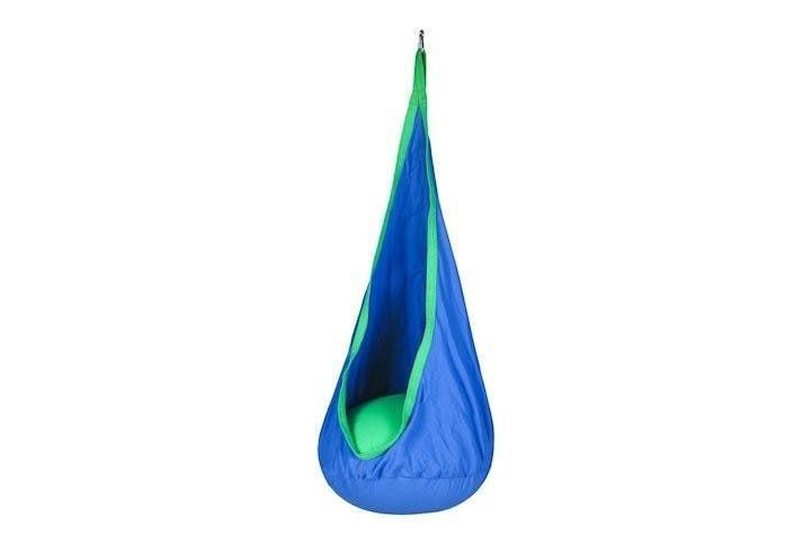
Harkla sensory swing for therapy and sensory modulation

Use a sensory swing for Modulation

A sensory swing can be a calming place to regroup and cope. It can be a safe space for a child to gain calming vestibular input through slow and predictable motions.

A sensory swing can be a source of intense vestibular input as a means to challenge arousal levels.

A sensory swing can use a firm pillow base to provide proprioceptive feedback and heavy input while addressing tactile defensiveness.

A sensory swing can be a means for combining calming or alerting motions with coordinated movement strategies to impact praxis, postural control, and perception.

A sensory swing can be used with others as a tool for building social skills and emotional regulation.

A sensory swing can be used as an outlet for meltdowns before they turn into biting, kicking, hitting, or yelling.

A sensory swing can be a transition tool to provide calming vestibular input before physical actions and executive functioning concepts needed for tasks such as completing homework, or getting ready for bed.

Use a therapy swing to help kids with sensory processing

INDOOR Sensory Swing

Want to address modulation and impact sensory processing needs in the home, classroom, or therapy room? we’ve talked about how sensory swings impact sensory processing and the ability to regulate sensory input. Let’s take things up a notch by getting a therapy swing into your hands.

One sensory swing that I’ve got in my house is the Harkla sensory swing. We’ve used this exact swing as an outdoor sensory swing, but it’s a powerful tool when used as an indoor swing. Today, you have the chance to win one of your own. Using a Harkla swing as an indoor swing provides opportunities for modulation in various environments and as a tool to regulate emotions, behaviors.

Over or under inflate to provide more or less base of support and a challenge in postural control. Additionally, this swing holds up to 150 pounds, making it an option to address sensory modulation for adults.

Use the cocoon swing to create a relaxation space or sensory station right in the home or classroom. With the easy-to-install swing, a sensory diet space can come alive using the Harkla Therapy Swing!

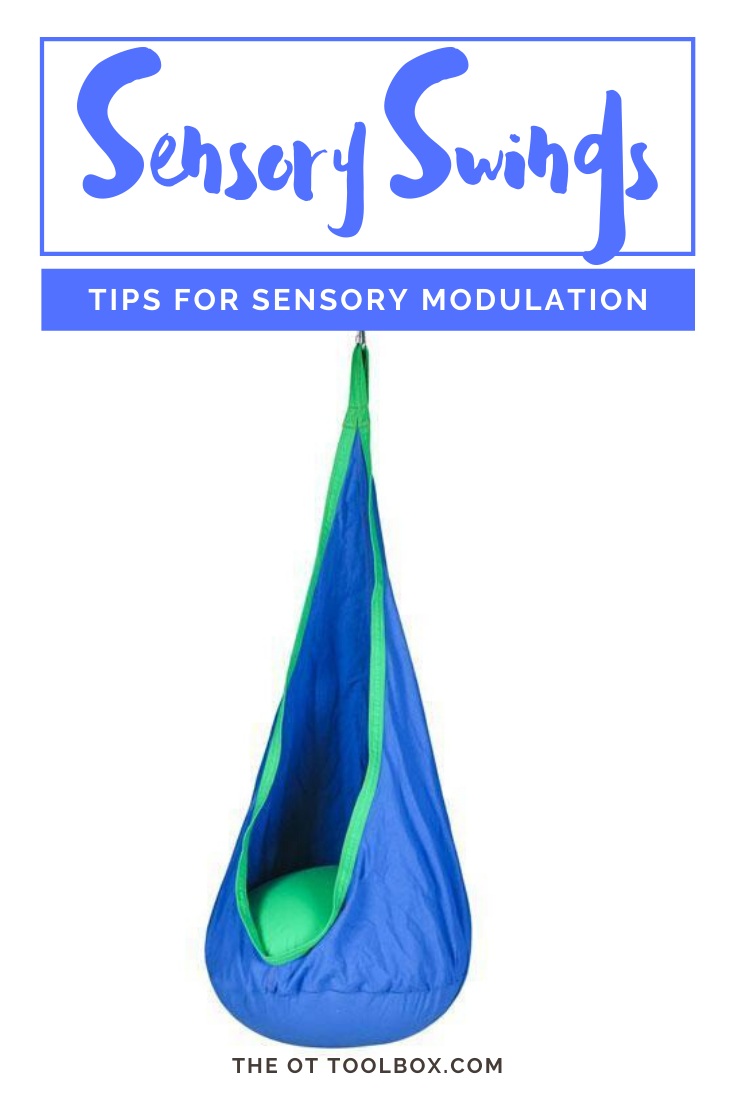
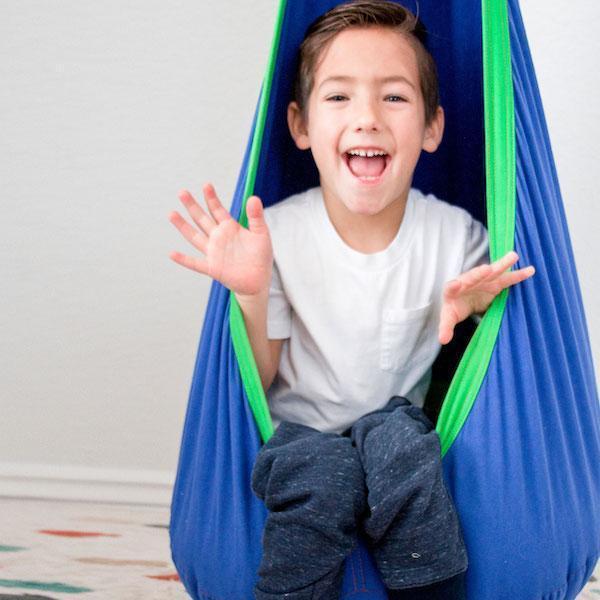
Occupational therapists use pod swings to address sensory modulation, attention needs, regulation, or sensory processing disorder. The cocoon swing we’re giving away below provides a hug-like effect to address sensory needs or as a fun space to hang out in in the classroom or home. A few more details about this indoor swing option:

  • Comes with all the hardware for an easy setup, including a pump, adjustable strap, 4 bolts, carabiner, and a ceiling hook
  • Holds up to 150lbs for a safe place for your child
  • Includes an adjustable strap to make it easy to safely hang your sensory swings indoors from any height
  • Comes with easy-to-follow directions so anyone can hang it up
  • Free shipping & a lifetime guarantee

Harkla Sensory Swing Giveaway

This giveaway, sponsored by Harkla, has now ended.

TOns of Sensory Modulation Ideas

Also, check out these other toy suggestions based on therapeutic development through play.

  1. Fine Motor Toys 
  2. Gross Motor Toys 
  3. Pencil Grasp Toys 
  4. Toys for Reluctant Writers
  5. Toys for Spatial Awareness 
  6. Toys for Visual Tracking 
  7. Toys for Sensory Play 
  8. Bilateral Coordination Toys 
  9. Games for Executive Functioning Skills 
  10. Toys and Tools to Improve Visual Perception 
  11. Toys to Help with Scissors Skills
  12. Toys for Attention and Focus 

Ayres, A.J. (1 989). Sensory Integration and Praxis Tests. Los Angeles, Western Psychological Services.

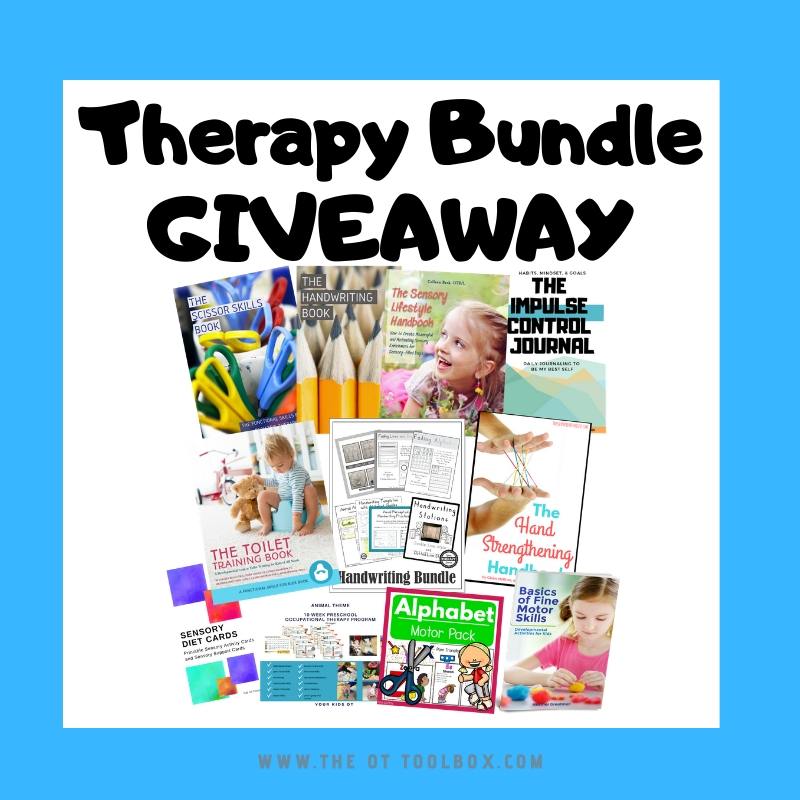
Therapy Tools Giveaway

Hi there friends! For a while now, I’ve wanted to organize a massive therapy giveaway of some kind to just say thank you for your support over the years. This week, (plus a few extra days…) I’ve got some really awesome therapy tools to give away as part of a Holiday Therapy celebration! This giveaway celebrates you and all you do for others. The items are therapy tools and resources that you can use in your clinic, classroom, or home. NOTE: This giveaway has now ended. Stay tuned for next year’s Annual Therapy Tools Giveaway occuring in November 2020.

Therapy Tools Giveaway

These therapy giveaway items are perfect for occupational therapists and anyone working in pediatrics.

Stop back each day to enter the daily giveaway and catch up on the ones you may have missed. Each giveaway opens on the day specified and will remain open for the duration of the giveaway period. Share this page with others you think may benefit from the item or items.

Thankful for You

I am so grateful and incredibly proud of the readers of The OT Toolbox. You are professionals, advocates, and servants, defenders, and counselors. You are leaders, educators, and supporters of those looking for their ability to do and be. You are the manager of function and the chief of ability. By using your sincere empathy, insight, judgement, and expertise, you are the means for guiding those you serve towards capability. The profession is proud to have you. You are an instrument to build up others and the system to establish function.

You are the reason that so many flourish with their daily occupations. You are the roadmap to ability in the day to day skills that make up our classrooms, clinics, and communities. You deserve so much more than these items. These giveaways are just a simple way to express gratitude for you and all you do on a daily basis.

Therapy Tools Giveaway

So, to kick off the holiday season with gratitude and thanks, I’m excited to announce the first (hopefully annual) Therapy Giveaway!

Scroll down to find and enter the therapy tools being given away this week. You will find items for the classroom, sensory tools, fine motor tools, and therapy resources designed to promote function and ability in a variety of occupations. Enter each giveaway once per day! Each giveaway may have additional rules or stipulations, depending on the brand or company offering the therapy item. This giveaway is hosted on The OT Toolbox but may offer additional giveaway

THERAPY GIVEAWAYS

This is the place you will need to come back to each day over the course of the next 10 days. Each day, you will find a new therapy giveaway item “turned on”. If you missed entering any of the past giveaways, don’t worry! Just go back and enter those giveaways. All giveaways end on December 4th at 11:59 pm PST. Winners will be notified by email. Prizes will be fulfilled by the brand or company offering the giveaway. For some prizes, a full name and physical mailing address will need to be obtained via email so the prize can be mailed out.

Scroll through the images below and enter each one beginning on the day indicated. I’m excited to share each of the items below. In total, giveaway prizes add up to over $1,000! You’ll find therapy items that you can use in your practice, in the clinic, classroom, or home. There are sensory tools, handwriting products, massive therapy resource bundles, amazing therapeutic toys, and so much more. You are going to love each item!

Here we go!

Therapy Giveaway Item #1

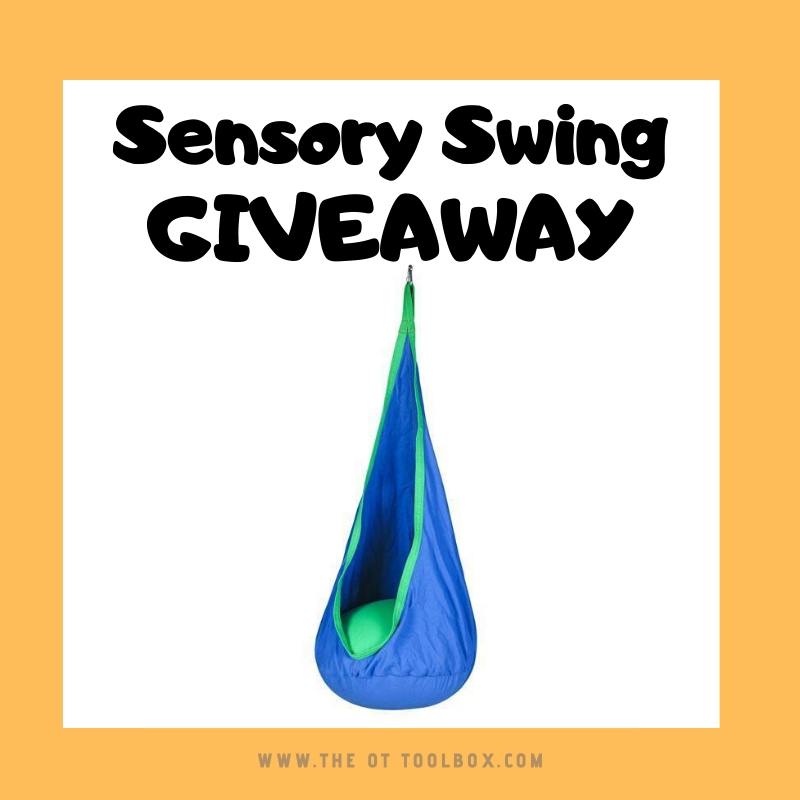
Therapy giveaway Harkla sensory swing
Win a Harkla sensory swing for sensory input in the home or classroom! Valued at $80.00! Includes swing, all installation hardware, and cushion.

CLICK HERE to enter to win the Harkla Sensory Swing.

Therapy Giveaway Item #2

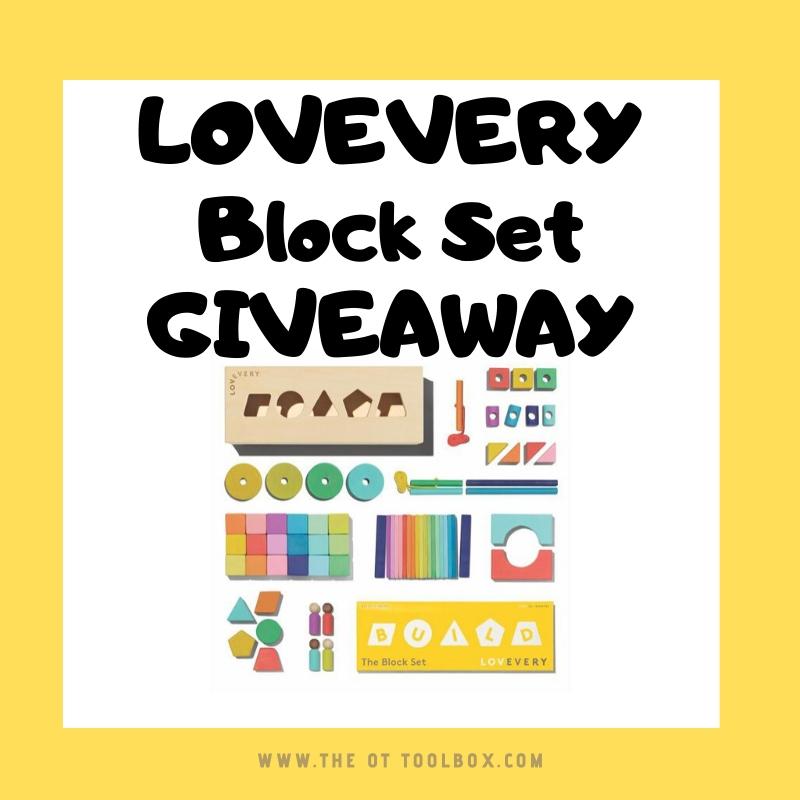
Lovevery blocks giveaway to win a set of blocks for kids
This 70 piece wooden block set from LOVEVERY is valued at $90 and includes over 20 block activities designed to promote skills, learning, and development.

Click HERE for a chance to win a LOVEVERY block set!

Therapy Giveaway Item #3

Free AOTA membership therapy giveaway
One occupational therapy professional will win a year-long membership to AOTA. Open to current and new (not currently a member) OTs, OTAs, OT students, and retired OT/OTAs.

Click HERE to enter to win a year-long membership to AOTA!

Therapy Giveaway Item #4

play and learn set giveaway for therapy giveaway
One PunkinFutz PlaySet, valued at $95.00. This multi-purpose therapeutic toy that offers endless learning and play activity opportunities and has a play-based curriculum available.

Click HERE to enter to win a PunkinFutz PlaySet!

Therapy Giveaway ITem #5

sensory friendly pajama set therapy giveaway
Win one pair of Lovey & Grink sensory friendly pajamas, valued at $42.00.

Click HERE to enter to win a pair of sensory friendly pajamas!

Therapy Giveaway Item #6

letter builder kit giveaway for therapy giveaway prize
Win one Lowercase Letter Builder Kit from Fundanoodle, valued at $74.99.

Click HERE to enter to win a Lowercase Letter Builder Fun Kit!

THerapy Giveaway #7

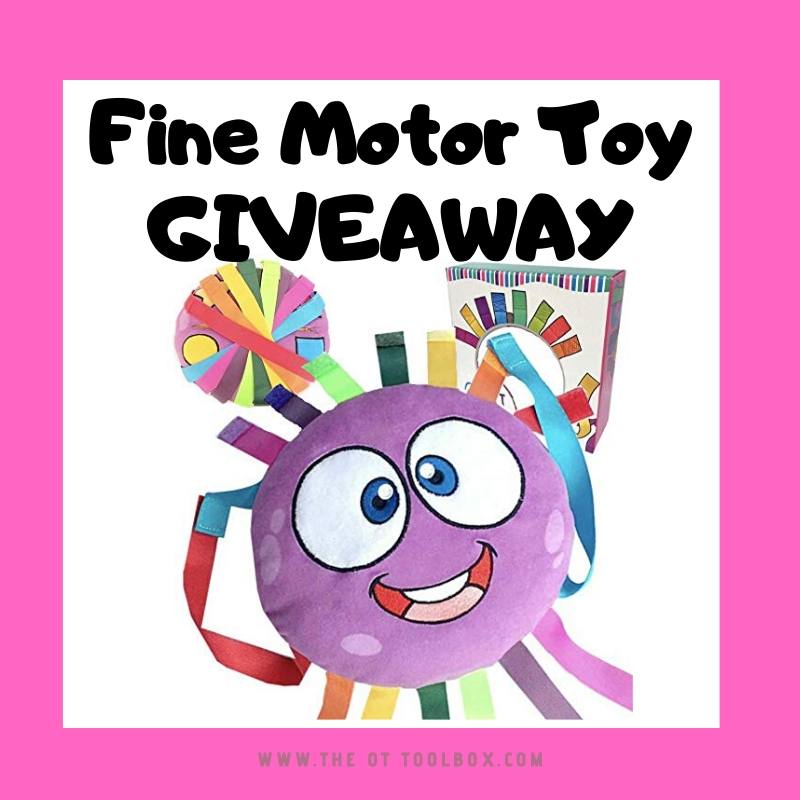
fine motor toy giveaway for week of therapy giveaways
Fine motor toy designed to promote fine motor strength, bilateral coordination, eye-hand coordination and more. Valued at $21.00

Click HERE to enter to win this fine motor toy!

Therapy Giveaway #8

therapy resources available online
Win a massive digital resource containing e-books, occupational therapy worksheets, activities, and therapy resources, valued at over $220!

Click HERE to enter to win a massive therapy resource bundle!

Therapy Giveaway #9

Win a Mightier Professional Kit, valued at $395 and includes a Mighty band & dedicated Mightier tablet, 1-on-1 onboarding and customized setup for your practice, Access to Professional Development Trainings and Mightier Certification Program, Unlimited player profiles, Monthly clinical consultation with a dedicated Mightier Certified OT

Click HERE to enter to win the Mightier Annual Professional Kit!

Therapy Giveaway Item #10

Pitchkit giveaway for therapy giveaway prize
Win a PunkinFutz Pitch Kit Set, to work on bilateral coordination, core strength, motor planning, eye-hand coordination, and more. Valued at $80.00

Click HERE to enter to win a PunkinFutz Pitch Kit Set!

Be sure to stop back each day to find out the details of each giveaway item!

Therapy tools giveaway items

Fine Motor Activities with Chalk

Kids struggle with fine motor skills. You may have seen it in a pencil grasp that needs work. You may see it in a child struggling to open a food container in the lunchroom. You may have seen it with weak or low endurance when coloring. All of those struggling areas are challenged by fine motor weakness and distal mobility problems that result in real struggles in the classroom or home.

Here are fine motor activities using chalk, an everyday item that you will find in many therapy rooms or classrooms. It’s all part of our fine motor activities with items like craft pom poms, playing cards, paper clips, and play dough.

Try these fine motor activities using chalk to improve the dexterity and mobility in pencil grasp, managing clothing fasteners, and other small motor tasks.

Fine Motor ACTIVITIES using Chalk

We’ve shared ways to use sidewalk chalk to build fine motor skills. This selection of activities are ideas for using small pieces of chalk that you might find in the classroom. Sidewalk chalk may only be on the shelves during summer months. Grab a pack of chalk from the dollar store and get ready to build precision and dexterity!

For information on what are fine motor skills and how these small motor skill areas impact function, check out the search bar on this website.

Use these fine motor activities using chalk to improve skills kids need.

Add these activities to the therapy lineup this week:

  1. Draw chalk on cardboard.
  2. Draw chalk on carpet squares.
  3. Copy pre-writing lines on construction paper.
  4. Wet chalk in water. Draw lines on a toilet paper tube.
  5. Draw big lines. Cover lines with rocks.
  6. Break chalk. Color small shapes.
  7. Use small pieces to color rocks.
  8. Draw with crayons and color on top with chalk.
  9. Drop chalk in water. Mix to create chalk paint.
  10. Break chalk with hammer.
  11. Draw on floor on sheets of paper.
  12. Carve into edges of sidewalk chalk with toothpick.
  13. Scoop up chalk dust and add drops of water. 
  14. Break chalk into small pieces and draw or copy shapes.
  15. Use chalk to rainbow write on sandpaper.
  16. Draw a line on paper and make a finger obstacle course.
  17. Write letters and shapes on paper and paint over them with water on a paintbrush.
  18. Tape paper to a wall or easel and write or copy forms with chalk.
  19. Break chalk into dust and add water. Use it to paint letters, shapes, and forms.
  20. Draw a chalk Twister board on cardboard. Use fingertips to play the game.
  21. Break chalk into dust. Add water and mix. Use the chalk paint to fingerpaint letters or numbers.
  22. Use the side of chalk to swipe a large line. Writing on a chalkboard, form extra large letters or numbers
  23. Use a toothpick to carve letters into the sides of chalk.
  24. Crush chalk into dust. Add a small bit of water and press the chalk into a mold (a chocolate mold or ice cube tray works well. Pop the mold into the freezer and use the molds to draw.
  25. Use chalk to color a coloring book page.
  26. Write letters or mystery words on construction paper with chalk. Use an eraser to swipe away the word. See if the word can be discovered by the left over letters or dust.
  27. Make a tic tac toe board with chalk. Use fingers to “hop” through the board.
  28. Crush chalk into dust. Sprinkle it onto paper. Use a spray bottle to spray water onto the dust.
  29. Use a scrap of material as a writing surface. Staple it to cardboard if it’s too hard to hold in place.
  30. Write mystery words n a piece of paper towel. Crumble up the paper towel and see if someone else can read the mystery word.

More fine motor activities with chalk

What would you add to this list? Leave your chalk ideas in the comments below!

Cursive Writing for Beginners

We have a lot of cursive writing posts here on The OT Toolbox. Check out the search bar and you’ll see tips for how to teach cursive writing, help with cursive writing speed, and even cursive letter order. There is a lot that goes into teaching cursive writing to kids. It doesn’t need to be complicated, though. Here, you will find a plan starting at the beginning when teaching cursive. This is everything you need to know about cursive writing for beginners.

Use these tips to teach cursive when working on cursive writing for beginners.

Cursive Writing- Start at the Beginning

Think about when kids start to learn cursive. They might be in second o third grade, or between 7 and 8 years old. Or, depending on the school and the cursive writing curriculum, there may or may not even be a plan in place to teach cursive writing.

Some teachers have to come up with cursive lesson plans on their own. Others follow a cursive curriculum such as Zabner-Browser, Handwriting without Tears, or D’Nealian. Sometimes, the school district allows a set number of weeks for cursive writing and if a child misses days during that time period, they miss the boat on learning a certain letter in cursive formation . In most cases, cursive is taught once and not covered again. Kids can write their spelling words in cursive or complete journals entries in cursive, but they are not required to do so. Usually, that is the only practice a student gets in fine tuning their cursive handwriting. Letter formation might get checked, but not graded for accuracy and the child doesn’t have the chance to go back and correct letter formation errors. They may not even notice a teacher’s marks on a letter formation mistake.

How to start teaching cursive

We’ve shared a lot of strategies to teach cursive here on The OT Toolbox. When getting started with cursive writing for beginners, try some of these first steps to cursive writing success:

Start with these pre-cursive activities. Start with pre-cursive lines and use the activities in this post to work on curves, lines, bumps, waves, and re-trace lines.

Grab these cursive flashcards to work on multisensory writing strategies when practicing cursive letter formation.

Use this gross motor warm-up before starting a cursive letter lesson. It’s a nice way to get the whole class geared up and ready to write.

Be sure to start with posture and paper positioning when beginning cursive lessons.

Use these tips to teach cursive s.

Try a cursive lines worksheet. Use the free worksheet below.

free cursive writing worksheet is great for teaching cursive to beginners.

Cursive Writing Worksheet

Use this free cursive lines worksheet to work on pencil control, cursive lines, and motor planning needed for connecting letters, re-tracing over cursive letters, and gaining motor control needed for smooth writing lines.

Enter your email below to access your free cursive writing worksheet.

Free Cursive Lines Worksheet

Enter your email and get weekly tools for kids in your inbox.

    We won’t send you spam. Unsubscribe at any time.
    Powered By ConvertKit

    Print off the cursive writing worksheet and trace the lines in a variety of ways to practice smooth lines, re-trace, bumps, and curves. Try some of these cursive worksheet ideas:

    • Try Rainbow writing with colored pencils.
    • Slide the cursive worksheet into a page protector. Use dry erase markers.
    • Color Mixing Writing– Use markers to mix colors while working on line formation and re-trace in cursive.
    • Tape the worksheet to a wall and get the gross motor action involved.
    • Pin the worksheet to a bulletin board. Trace the lines with a highlighter, pencil, pen, or marker to gain sensory feedback from the bulletin board.
    • Sandpaper Writing Trick– Place the cursive worksheet over a sheet of sandpaper. Trace the lines with a pencil to gain proprioceptive feedback when writing the cursive strokes. The sandpaper can be used with markers or a pen as well.

    What are Fine Motor Skills

    There are a lot of fine motor activities here on The OT Toolbox. On these fine motor skills examples all over the website, you’ll find a lot of descriptions of what the term actually means. I wanted to create a space that clearly breaks down the definition of fine motor skills and covers what are fine motor skills and how they all work together in functional tasks. These are the foundations of fine motor, broken down into specific skills.

    What are Fine Motor Skills?

    What are fine motor skills? This guide will explain the definition of fine motor, fine motor activities, and what fine motor skills mean in child development.
    What are fine motor skills? Read on for information on all of the pieces that make up “fine motor”…

    Scroll through Pinterest and you will see activity after activity that claims to improve fine motor skills or help with fine motor development…however, have you really found a resource that defines exactly how fine motor development occurs through play activities? This Fine motor list can be helpful in better understanding the activities we set up for kids so we can define fine motor skills and its meaning in play!

    Understand fine motor skills and how each motor skill impacts function.
    Understand fine motor skills and how each motor skill impacts function.

    Why are fine motor skills important?

    The OTs in the room know this process, of course. Read on to better understand the underlying fine motor skills play into activities such as holding a pencil, cutting with scissors, turning the page of a book, opening a snack baggie, zippering a coat, and every other task we complete throughout the day.

    Our hands are amazing tools. They help us get dressed, write down important information, open containers, hold utensils, and many other daily tasks. To support our success in completing these tasks, we must first develop the necessary fine motor skills. These skills can be broken down into in-hand manipulation skills, dexterity, web space and arches of the hands. Without these skills, our daily lives would be much more difficult.

    Fine Motor Skills and Examples

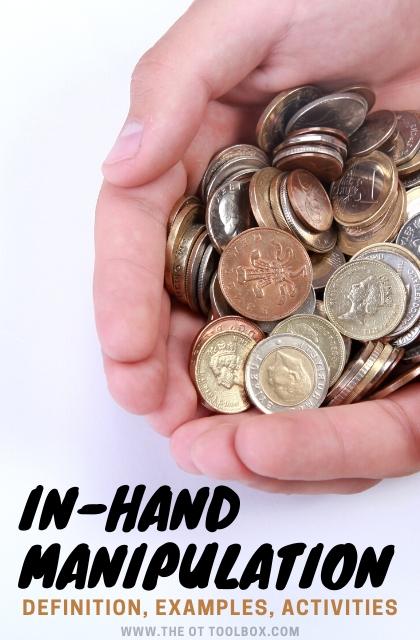
    In-hand manipulation is a fine motor skill needed for skills like manipulating coins, managing money, and holding a pencil.

    In-Hand Manipulation Skills- In-hand manipulation skills refer to the ability to move our fingers in a series of three dynamic patterns that include translation, shift, and rotation. A major component of in-hand manipulation skills is that they are completed with ONE hand. If the other hand is utilized for support, it is not longer an in-hand manipulation skill and the child may be experiencing a delayed skills. In-hand manipulation skills support our abilities to manipulate pencils, fasteners, tie our shoes and open packages with ease. Still other tasks include managing a fistful of small items such as sand, beads, dry beans, and play activities. Here is an in-hand manipulation activity, and here is another in-hand manipulation activity to work on these fine motor skills.

    Translation– Translation is the ability to move an item from the bottom of the palm, the top of palm and back. We use this pattern for giving out change, and “squirrelling” away multiple buttons, beads or other small items into our hand without dropping them. Translation supports fluid movement of the joints in the fingers, and separation of the two sides of the hand needed for dynamic finger patterns used in everyday activities. Translation includes two types of movement:

    • Finger-to-Palm Translation: Movement of an object from the fingers to the palm i.e. picking up a coin and moving it to the palm.
    • Palm-to-Finger Translation: Movement of an object from the palm to the finger tips.  (i.e. moving a coin from the palm to the fingertips to insert into a vending machine.)

    Translation is needed for tasks including manipulating coins or moving money within the hands.

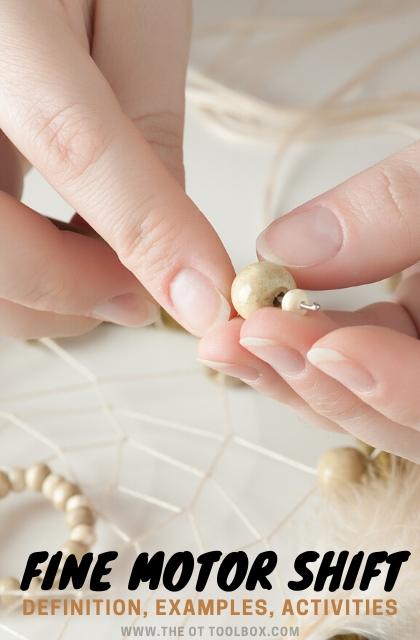
    FIne motor skills includes shift in the hands to complete tasks like beading or threading.

    Shift- Shift allows us to move our fingers into position on the pencil to allow for optimal control of the eraser, or allow us to push a string through a bead. This movement pattern is often described as looking like your fingers are “walking” in a linear fashion from one end of the pencil to the other.

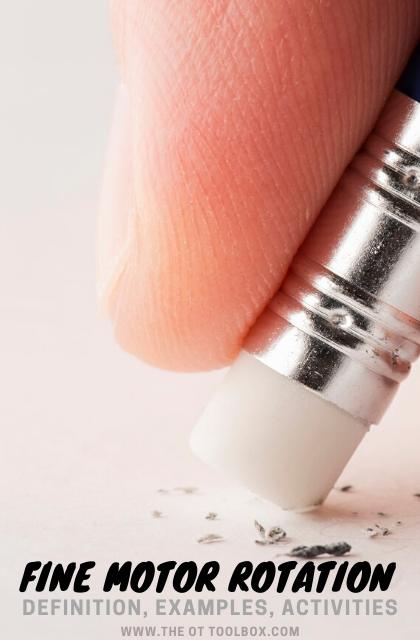
    Fine motor skills like rotation is needed for managing a pencil or moving items in the hand.

    Rotation– Spinning a pencil with one had to use the eraser, spinning a coin or flipping a card over to what’s on the other side. When describing the movement pattern of rotation is defined, it is defined as moving an item in a circular pattern on an axis. Rotation includes two types of movement needed for fine motor activities:

    • Simple Rotation: Turning or rolling an object 90 degrees or less with the fingers moving as a unit (i.e. unscrewing a toothpaste lid, or spinning a pencil to adjust when erasing or getting a pencil comfortable in the grip).
    • Complex Rotation: Turning an object more than 90 degrees using isolated finger and thumb movements (i.e. Turning a paper clip, or turning a pencil over to erase). Use these other games with paper clips to support various fine motor skills.
    Open thumb web space is a fine motor skill needed for tasks like buttoning and pencil grasp.

    Web Space– The area of the hand that is referred to as the web space is the distance between thumb and the index finger. When this area is not very large or is restricted due to malformations or tone, dexterity and dynamic finger movements are negatively impacted. Conversely, when the web space is an adequate width, dexterity and dynamic finger movement is positively impacted.

    The thumb web space is that space between your thumb and pointer finger that makes an “O” when you make the “OK” sign. In order to grasp small items with your thumb and index finger, you need to oppose the tip of your thumb to the tip of your pointer finger.  Not only do the tips of the fingers need to touch, but the thumb must rotate at the joint closest to your hand.  This opposition is needed to manipulate and grasp small items like a pencil when writing, shoe laces, buttons, and zippers.  Here are activities to work on an open thumb web space.

    While there is nothing that can be done to directly affect the web space as it is anatomically what it is, it is an important observation to make during a hand writing assessment due to its effect on other skills needed for writing.

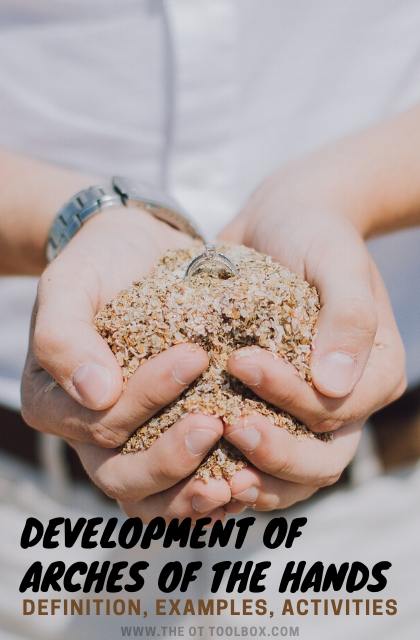
    Arch development is a fine motor skill that kids need for endurance in coloring or writing.

    Arches of the hands- Like web space, the arches of the hands are an anatomical feature, but we can develop them through hand strengthening activities and exercises. There are three main arches of the hands–two that run from the hypothenar eminence (ulnar side) to the thenar eminence (radial side), and one that runs transversely up the middle of the palm. Of the two arches, one runs just below where the fingers meet the metacarpals, and the other on the bottom of the palm from the outside heel of the hand to just under the thumb.

    The main purpose of these arches is to allow for opposition of the thumb to the fingers, and for various power and precision grasp patterns. These arches are also what allow you to form a functional “C” shape with your hand.

    When the arches are underdeveloped, this functional position appears “flat”, thumb to finger opposition and dexterity skills decrease.

    The arches are needed for endurance in tasks like coloring, writing, and other fine motor activities. The curved palm is needed for tasks which require the palm to cup items such as small objects, coins, beads, water, or other things which can be held in the palm of a “cupped” hand. Here is an activity to improve arch development and intrinsic hand strength.

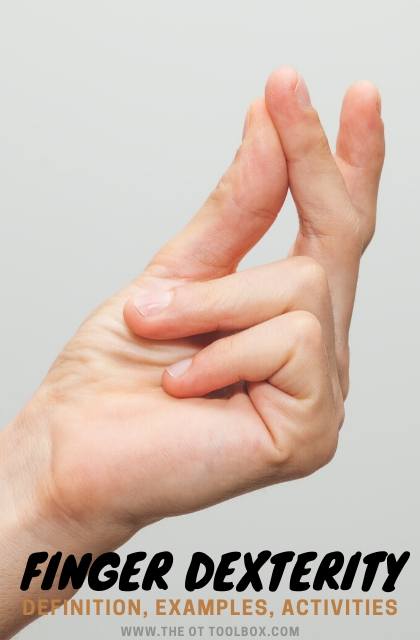
    Fine motor skills include distal mobility and dexterity.

    Dexterity- One of the most commonly known fine motor skills is dexterity. Dexterity is our ability to move our fingers in novel patterns of finger isolation and opposition to complete a variety of tasks throughout our day. Tasks like opening the toothpaste, eating cereal with a spoon, zipping a coat and many more. Without the good in-hand manipulation skills, web space and developed arches of the hands, dexterity skills are negatively impacted.

    Dexterity is one of the areas of fine motor skills that is most likely to noticed when its impaired due to its high level of need during daily activities.

    Sometimes we see kids who write using their whole arm or wrist. They move the pencil or crayon with the forearm and don’t move the fingers to color or write. Distal dexterity of the fingers and mobility of the hands is needed for precision. Here is an activity for dexterity.

    A Final Note on What Fine Motor SKills Are

    After reading through all of these details on what makes up fine motor skills, it can be overwhelming to think about where to begin. Don’t worry though! Our fine motor skill set is a complex and interactive skills that support many of our daily activities. When they are impaired or challenges are noted, identifying the area of skill break down is helpful when providing intervention and treatment. Take a look on this website for many fine motor activities that can be fun ways to work on specific skills.

    Monthly Movement Activities

    October movement activities for preschool and toddler development.

    Looking for ways to keep the kids moving and active? Maybe you need some indoor play ideas. Perhaps you are looking for movement activities for children when getting out of the house just isn’t possible. Kids just aren’t moving like they used to. Need a few ways to add movement activities into each and every day? Adding extra movement breaks or brain breaks into the classroom or just daily play can be a helpful tool for improving the underlying skills kids need for strengthening or just getting the sensory input they crave and need to develop. Sometimes, it’s as simple as coming up with creative movement ideas. Other times, kids play the same favorite gross motor games over and over again. These monthly sensory movement activities provide the sensory input and gross motor movement that kids need! 

    Monthly movement activities for kids
    Use these sensory movement ideas for kids to add movement and play into activities for kids all year long! They are perfect for play and occupational therapy activities.

    Monthly Movement Activities

    Add a few of the occupational therapy activities in this post into your therapy line-up. Having a few monthly themed activities for therapy can make the routines less boring and a great way to throw a wrench at the burnout machine.

    Use the lists below to inspire therapy plans for the month or weeks ahead. Simply add the theme into your occupational therapy activities for the week. Then, use specific graded activities to meet the needs of each child on your caseload. This strategy can help in planning OT activities in the clinic or school-based interventions. (And, having a theme set up for the week totally helps with carting items from place to place in that trunk of yours, too!)

    Monthly Movement Activities for Kids

    Kids love a fresh occupational therapy activity, too. Adding a fresh and fun new game or activity can make a rainy indoor day more fun or can bring a little something different to a sunny afternoon outdoors. The best thing about these movement and play ideas is that they provide all of the right kind of sensory movement input that kids need to pay better attention, calm down, or self-regulate. Use these activity ideas as movement activities for preschoolers in planning lessons that meet movement needs. 

    The movement activities listed below are play ideas that promote proprioceptive input, vestibular input, gross motor skills, body awareness, fine motor skills, visual motor integration, bilateral coordination, crossing midline, core strengthening, motor planning, and so much more. Best of all, they are FUN! 

    Movement activities for Preschoolers

    In the preschool setting, there is often an emphasis on writing letters. However, there is a much more important area that needs addressing…movement! Adding movement activities for preschoolers in learning builds the underlying skills that are many times, lacking in preschool-aged kids, and beyond. By adding movement activities to the preschool classroom, kids can learn letters, colors, numbers, and more through movement, and really gain that kinesthetic learning component.

    Given that so many kids are spending more time on screens and have less opportunities to play outside, I wanted to provide a big old list of movement pay ideas that can be incorporated into every day of the year! These ideas cover each month and have themes but can be expanded on so that every day of every month is covered. 

    occupational therapy games and activity list

    Therapists will love to use these movement activities as home programs or as part of therapy interventions. Adding themed activities is a fun way to work on specific skills or goals using occupational therapy games with this activity list.

    Teachers could sneak some of these movement ideas into the school day as brain breaks, indoor recess activities, or movement breaks to improve attention. 

    The list below separates each month into themed sets of activities that can be used in handwriting, gross motor games, fine motor activities, sensory movement activities, movement breaks, and more.

    Parents will love adding these activities into everyday of the year to get the kid active and moving both indoors and outdoors! 

    A Year of Sensory Play
    This year of movement activity list is part of our A Year of Sensory Play packet. It’s a printable packet of TONS of themed activities that will last the whole year long. Each activity is designed to promote movement and sensory processing through sensory challenges and play activities. There are 67 pages in the Year of Sensory Play Packet  and the activities cover every season. The packet also includes 12 months of sensory planning sheets, and the monthly movement activities listed below. There are also monthly sensory bin filler ideas so that every month of the year is covered when it comes to gross motor and fine motor sensory play. 


    The Year of Sensory Play packet is a resource for planning out and actually USING the sensory ideas that provide sensory input kids need to develop the skills they require for attention, focus, regulation, handwriting, learning, managing clothing fasteners, and overall functioning as a thriving kiddo! 


    Now onto the sensory play ideas! 


    Monthly Sensory Movement Activities

    The ideas listed below are movement-based activities. Each sensory activity doubles as a gross motor or fine motor movement activity that builds on sensory based activities. These are fun ways to get the kids learning through play and are activities for toddlers to gain skills like balance, eye-hand coordination, fine motor development, and core strength. 

    When intending to improve various skills in preschool-aged kids, use these sensory movement activities for preschoolers, as well.

    Try incorporating these ideas into each month for a year of movement and fun!

    January Movement Activity Ideas

    January movement activities for preschoolers, toddlers, and sensory learning.
    Jumping Jacks
    Indoor Yoga
    “Snowman Says”
    Indoor Tag
    Build a couch fort
    Hide and Seek
    Burpees
    Push-Ups
    Brain Break YouTube Videos
    Build with blocks
    Indoor parade
    Packing peanuts
    Blanket tug-of-war
    Bean bag toss
    Hop on paper snowflakes


    February Movement Activity Ideas

    February movement activities for preschoolers, toddlers, and sensory play.
    Heart hopscotch
    Obstacle course
    Masking tape maze
    Paper plate ice skating
    Slide on cardboard on carpet
    Indoor snowball fight (paper)
    Draw on windows-dry erase marker
    Scrub floors with soapy water
    Build with cardboard boxes
    Gross motor Uno
    Bedsheet parachute play
    Crawl through tunnels
    Movement scavenger hunt
    Marching games
    Wash walls


    March Movement Activity Ideas

    March movement activities for learning, play, brain breaks, and sensory learning.
    Indoor trampoline

    “Leprechaun Says”
    Therapy ball
    Sit and spin
    Charades
    Tumbling
    Dance party
    Balloon ball toss

    Shamrock balance beam
    Hoola hoop
    Dribble a basketball
    Plastic Easter egg race on spoons
    Animal walks
    Roll down hills
    Easter egg hunt

    April Movement Activity Ideas

    April movement activities for occupational therapy games and activities.
    Playground tour
    Jump in puddles
    Bear walks
    Dig in dirt
    Plant flowers
    Sidewalk chalk race
    Trace shadows with chalk
    Bounce ball on wall
    Flutter like a butterfly
    Grow like a flower
    Pick flowers
    Fill a recycle bin
    Wheelbarrow walks
    Crawl like a bug
    Draw big flowers with both hands


    May Movement Activity Ideas

    May movement activities for kids.
    Leaf balance beam
    Hula hoop race
    Beach ball toss
    Ride bikes
    Mother May I
    Use a bike pump
    Outdoor yoga
    Swim relay
    Bouncing ball tic tac toe
    Lawn games
    Jungle gym
    Hike
    Outdoor picnic
    Bounce a ball on a line
    Collect sticks


    June Movement Activity Ideas

    June movement activities for occupational therapy activity planning.
    Swimming
    Craw walks
    Log balance beam
    “King of the Mountain”
    Kick a ball course
    Throw paper airplanes
    Hammer golf tees into ground
    Climb trees
    Play catch
    TV Tag
    Limbo
    Ride scooters
    Collect nature
    Walk a dog
    Toy scavenger hunt


    July Movement Activity Ideas

    July movement activities for preschoolers and toddlers learning and play.
    Fly like a bee
    Jump waves
    Creep like a caterpillar
    Catch fireflies
    Jump rope balance beam
    Leap frog
    Waterguns
    Freeze tag
    Shadow puppets
    Put up a tent
    Water balloon race
    Pull a wagon
    Pillow fight
    Cartwheels
    Blow bubbles


    August Movement Activities Ideas

    August movement activities for kids
    Slither like a snake
    Hop like a frog
    August Sensory Bin
    Catch bugs
    Gallop like a horse
    Sort seeds
    Small toys frozen in ice
    Finger paints
    Hang clothes on a clothes line
    Hunt for sounds
    Walk with a ball between legs
    Hit a kickball with tennis racket
    Run through sprinkler
    Pick fruit or berries
    Water table play


    September Movement Activity Ideas

    September movement activities for occupational therapy games.
    Write on sandpaper
    Pool noodle balance beam
    Balance board
    Hop on leaves
    Scurry like a squirrel
    Fall hike
    Bob for apples
    Roll like a pumpkin
    Fall leaf hunt
    Collect acorns
    Family walk
    Bike parade
    Wash the car
    Donkey kicks
    Waddle like a duck


    October Movement Activity Ideas

    October movement activities for preschool and toddler development.
    Spin like a spider
    Carve a pumpkin
    Stretch spider web netting
    Punch holes in leaves
    Cut leaves
    Football toss
    Farmer in the Dell
    Jump in pillows
    Paper football
    “Scarecrow Says”
    Autumn art projects with leaves
    Wash apples
    Chair push-ups
    Make applesauce


    November Movement Activity Ideas

    November movement activities for brain breaks, and classroom movement and learning.
    Jump in leaves
    Rake leaves
    Catch falling leaves
    Waddle like a turkey
    “Turkey Pokey”
    Thread beads on feathers
    Flashlight Tag
    Thanksgiving Charades
    Crumble and stomp on leaves
    Trace leaves
    Turkey hunt
    Roll a pumpkin
    Run in place
    Cut feathers
    Blow a feather with a straw


     December Movement Activity Ideas

    December movement activities for preschoolers, toddler learning, and occupational therapy activity planning.
    Christmas themed yoga
    Wrap presents
    “Santa Says”
    Prance like a reindeer
    Shovel relay race 
    Decorate a tree
    Roll and knead dough
    Pull a sled
    Crunchy walk on ice or snow
    Holiday themed charades
    Holiday march
    Jingle Bell Catch
    Relay with gift bow on a spoon
    Stocking guessing game
    Push boxes


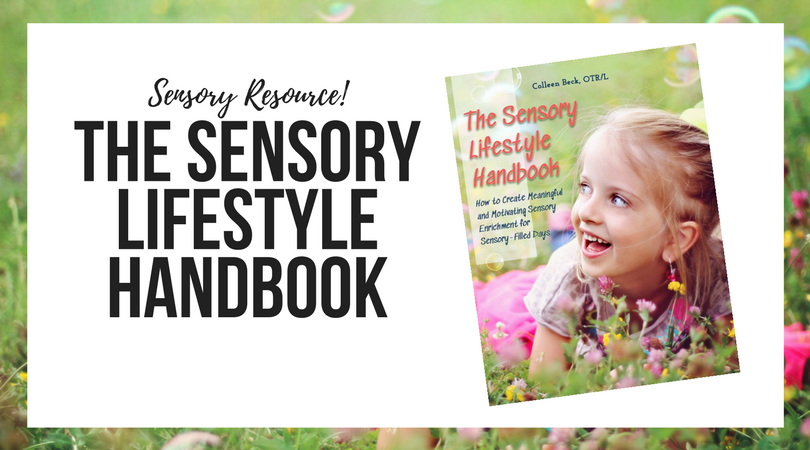
    Looking for more ideas to add movement throughout the day? Check out The Sensory Lifestyle handbook to add sensory input throughout daily activities to create a lifestyle of sensory success! 

    I’ve worked to create a book on creating an authentic and meaningful sensory lifestyle that addresses sensory needs. The book is now released as a digital e-book or softcover print book, available on Amazon. 
     
    The Sensory Lifestyle Handbook walks you through sensory diet creation, set-up, and carry through. Not only that, but the book helps you take a sensory diet and weave it into a sensory lifestyle that supports the needs of a child with sensory processing challenges and the whole family.
     
     
    The Sensory Lifestyle Handbook is a resource for creating sensory diets and turning them into a lifestyle of sensory success through meaningful and motivating sensory enrichment.
     
    Use these monthly movement activities to encourage sensory input or gross motor play all year long.


    Tummy Time Myths

    Tummy Time Advice…There are certain tummy time myths that are part of that advice. You’ve heard about it at each baby well visit and read it in all the baby advice books. All of that tummy time advice is so important. But what happens when that sweet little baby wails as soon as they are down on the floor? Those little screams can break a mama’s heart! It can be stressful for mom and dad when tummy time results in a red-faced, screaming baby. Here’s the thing though. Tummy time doesn’t need to be stressful. But how do you break through those screams of discomfort? It’s actually part of the tummy time myths we’re debunking here. Read more for tummy time myths and what’s really happening:

    When to start tummy time and other tummy time myths that parents have.

    Your Biggest Tummy Time Myths Busted

    What is the biggest myth or misconception surrounding tummy time ? What is one thing that many parents believe…but it just isn’t true?

    Here’s the thing: Babies don’t actually hate tummy time.

    Back to Sleep has our babies sleeping on their backs, and that’s a good thing. But babies are also spending a lot more time on their backs that is necessary it’s having an impact on development, and issues like Flat Head Syndrome ( or Positional Plagiocephaly), or torticollis (or stiff neck in babies).

    Related, is our resource on newborns not sleeping, as sleep can be achieved in the tummy time positioning.

    There are other issues that can come up as a result of lack of tummy time. There is a reason why doctors and therapists agree that babies need that time every single day. Tummy time is so important for neck and core strength, digestion, spatial awareness, eye-hand coordination, visual processing, preventing flat spots on the head, and strength and stability of the trunk, neck, and arms.

    Tummy Time Myth #1 My baby hates tummy time.

    Baby needs tummy time. Baby is placed on their belly…and they scream. Mom or dad swoops in and picks up baby. They MUST be in pain, right? Crying = something is wrong, right? Wrong! Your baby actually doesn’t hate tummy time!

    So often, parents of a young baby are told to place their infant into tummy time for proper development, strengthening. The pediatrician has mentioned it at each doctor’s visit. But each time you dread it. It hurts your heart to hear that sweet little thing wail or downright scream each time he or she is placed on her belly!

    Baby actually just needs a little help learning to get comfortable, adjust to new positioning, staying calm, connecting with a loved one, and engaging in this strange, new view of the world. Think about it this way: your child just spent a long nine months (or more/less) curled up in a cozy fetal position in the womb. That’s a lot of time to get comfortable in a curved and flexed position. Then, that newborn sweetie is swaddled, held, placed on their back to sleep, or snuggled in a car seat or baby swing most of the day and night.

    Positioning baby on their stomach actually stretches and lengthens those muscles that have for so long been curved up in a snuggly curved forward position. Laying a baby on their belly stretches and develops the muscles that will later support the child in sitting and playing in the coming months. Tummy time is also essential for neck and core strength, visual processing, and eye-hand coordination. It prevents flat spots on the head and allows for flexibility of the neck and hips. The problem is that all of this work is hard for baby!

    So, a crying baby in tummy time is definitely communicating their dislike of this new and hard task of stretching out those muscles and joints. They are telling you that the hard sensation of the floor on their tummy is different. They are expressing uneasiness in the way they can.

    Tummy Time Myth #2: Tummy Time starts at 2 months

    Nope! Tummy time actually starts before that three month time, or even one month. In fact, tummy time starts much, much earlier! Knowing when to start tummy time is actually one of the most common questions new parents have about their baby.

    When to start tummy time?

    Tummy time starts day one! That’s the thing: tummy time can start on the day (or night) that your little one is born and it can be easy to do. As soon as baby is fed, rest that sweet little one on your chest and you’ve got a baby in its first session of tummy time. Using chest positioning several times a day is an easy way to transition to floor tummy time where the little babe can build the strength they need.

    Tummy Time Myth #3: Tummy Time is Hard!

    When little baby cries because they are used to going “Back to Sleep”, spending time in their car seat, baby swing, bouncer, Bumbo pillow, or curled up to eat, they can have some trouble in tummy time. Think about it: when your little one has spent so much time curled up in a comfortable bent forward (flexed) position, laying on the floor in tummy time can put a stretch on those muscles. But tummy time doesn’t need to be hard…

    In fact, there are some simple ways to make tummy time easier for baby so that the important strengthening, stretching, and development can happen:

    • Use short 3-4-minute periods of tummy time several times throughout the day instead of longer spurts. Make it part of the routine of the day.
    • Try positioning baby in tummy time in position where they feel more connected to mom or dad: on a parent’s chest, laying across the knees with support, in the arms in a football hold, with a nursing pillow, etc. Here are more tummy time activities in various positioning.
    • Get down on the floor and make eye contact with a soothing voice. Baby needs to feel connection so he/she can learn to stay calm in tummy time. A tummy time mat or a baby gym on the floor can make the floor feel softer and provide an engaging surface. Some of the best tummy time mats have bold patterns with black and white or black/white/red patterns.
    • Engage with baby in play while in tummy time. Invite siblings to play with baby. Talk to baby. Use tummy time toys to engage baby. The options are limitless. Try this tummy time play idea with baby-safe mirrors.
    • Encourage reaching for toys and development of eye-hand coordination skills that will drive crawling, play, and eventually reading and writing. Here are some baby play ideas for older babies, but some to give an idea of tummy time play.

    A final Note on Tummy TIme Myths

    Did any of these tummy time myths resonate with you? Have you run across questions about tummy time or wonder when to start tummy time? Let me know in the comments below. Add your tummy time tips too. You never know if they may help another new parent!

    DIY Flexible Seating Ideas

    For those of you looking for flexible seating ideas for the classroom, we’ve got some to share! But, one of the most common concerns about setting up flexible classroom seating arrangements is the price! Finding inexpensive seating options that meet the needs of kids can be difficult. In place of pricy alternative seating ideas, why not try the frugal version and make a few DIY flexible seating ideas? Here are some ideas for adding sensory seating to the classroom with do-it-yourself versions of seating options to arrange a classroom for success!

    These DIY flexible seating ideas are alternative seating for the classroom like bean bags, cushions, therapy balls to help kids with sensory needs.

    DIY Flexible Seating Ideas

    Add some of these seating strategies to a classroom sensory diet, to meet sensory needs, or to help with self-regulation or attention issues. These classroom seating options can meet the needs of a single student or a group of students. From wobble seats, to therapy balls, to using a futon in the classroom, flexible seating looks like a lot of different things! The alternative seating options below are a do-it-yourself version.

    Tire Seat- You may have seen DIY tire seats shown on Pinterest. Be sure to check out our Pinterest page of flexible seating options for some ideas and more options! One easy DIY tire seat tutorial is listed on A Life That We Built, which shows how to construct a tire seat as a seating idea for kids. This looks easy enough!

    Use circle dots or carpet squares as a flexible seating option in classrooms.

    Circle Dots- Kids can really benefit from floor time! The versatility of moving colorful dots around the room as a seating option is perfect for the classroom that covers many needs. While these carpet dots are available commercially, what if you could frugally create your own version? Here’s the how-to:

    1. Grab a set of colorful felt sheets.
    2. Using a black marker, trace a dinner plate on each sheet of felt.
    3. Use your sharpest scissors and get to cutting.
    4. Done! Use those carpet dots to encourage movement, set up visual cues for seating, sort students into groups by colors, create in-classroom obstacle courses, and use as a visual seating spot for learning of all kinds!

    Partially Deflated Beach Ball– Yes, a beach ball! We shared how and why this DIY seating option works in a past blog post. Using a beach ball as a cheap seating option is a great way to encourage the proprioceptive and vestibular input kids need.

    Therapy Ball- A flexible seating option doesn’t need to be specified as a seat. Just like using a partially deflated beach ball described above, try adding more or less air to exercise balls aka a stability ball, yoga ball, or balance ball.

    Chair or Couch Made from a Wooden Pallet– Use a couple of discarded pallets to create a small chair or bench. One tutorial is available on Funky Junk Interiors. This would make a nice reading space in a classroom or home.

    DIY flexible seating can be a way to modify the classroom with inexpensive seating options.

    Milk Crate with Cushion- Use a milk crate, fabric, and foam to create a no-sew milk crate seat. These can be adjusted for students by adding softer or thicker foam, inflatable cushions, or other options. Really Good Teachers shares how to make no-sew milk crates easily and without pulling out the sewing machine!

    Pillow Pile on Shag Carpet– Keep your eyes peeled for a sale on area rugs and especially for a shag carpet that’s on sale. A small cozy reading corner can be made using a shag rug and a pile of pillows. The shag seems to be a great fidget for some kids, too. Here is one option for a reasonable price.

    Window Seat with Storage- Curling up with a book and some comfortable pillows sounds like a fun way to spend a little free reading time. Use a cube storage bench with pillows to create a flexible seating idea for the classroom or home. Store books or other materials in the cubes.

    Cozy Corner Tent with Pillows- A calm-down space or cozy corner can be a part of the classroom’s flexible seating options or used as an area to meet specific sensory needs within the classroom. Some ideas for creating a cozy corner can include a teepee or tent, cardboard box, or even a fort structure with a sheet roof.

    Use these DIY flexible seating ideas in the classroom.

    Lounge Cushions- Make your own lounge cushions by recycling old couch cushions or sewing up a sleeping bag. You can often times find cushions available on Facebook marketplace.

    Carpet Scrap Placed Upside Down on Linoleum– This is a quick seating option that can help kids with the wiggles while providing a means of vestibular input The ability to scootch and slide the carpet square can be a movement break for some kids. Keep the carpet square “parked” in a designated spot when it’s needed and the child can keep their hands and feet still. This alternative seating option is a nice one for helping kids with personal space, too.

    Use a yoga mat with markings as a flexible seating idea that can help kids pay attention in the classroom.

    Yoga Mat– A yoga mat can be purchased fairly inexpensively and can be a nice way to provide movement in the classroom, both as a movement break, or even as a space to lounge while reading or completing group work. Yoga mats can be rolled up and stored in a closet or locker and pulled out for group yoga activities. While this isn’t a DIY seating idea specifically, you could use painter’s tape or electrical tape to create markings on the yoga mat for specific seating ideas to help with body awareness or marked spaces to sit and work.

    Cardboard Box– Alternative seating strategies don’t need to be expensive! Use a large cardboard box either as a quiet space for reading or chilling, or as a seating option. Kids can get into a cozy box and read or complete a specific task. The walls of a cardboard box can muffle some distracting noises and can be a space to create or calm down. Add a string of Christmas lights for a sensory tunnel space or cave like we did in an old blog post.

    Laundry Basket- Another inexpensive seating option, a laundry basket offers a cozy and small space for kids to calm down and focus on a task such as reading.

    Soft Tent- There are so many options for play tents out there. Grab one or tow and make it a calm down space in the classroom that offers a quiet place to read, complete an assignment, or regroup. Kids can complete written assignments by using a small stool or lap tray to write on in the cozy sensory tent. They could also just chill and read in quiet by lounging on a bean bag or some pillows. Search pop-up kids indoor tent on Amazon to find lots of options.

    Yoga blocks make a great DIY alternative seating option for the classroom.

    Foam Blocks- Yoga blocks can be used for so many different positioning needs. Use them to prop up feet to provide a foot rest for fidgeting or to get kids into a better posture for writing. The input through the feet can help kids with proprioceptive input that aligns their body for a better upright posture. Foam blocks could be used to prop up a clipboard to create a DIY slant board option, too. There are options on Amazon, but these can be found at discount stores like Five Below, too. To make a DIY version, use an old phone book with duct tape to create a sturdy block. Or, cut hard foam from packing materials and cover with tape.

    Lowered Table and Kneeling- One nice option about some tables and desks is that they can be lowered with the help of the custodial staff at schools. The lower legs can be removed and placed into a cut tennis ball to creates a half-sized desk or table, Kids can then sit or kneel to work at the table surface, while getting some really great proprioceptive input in through their knees and legs.

    Standing Table Surface- Other tables can be raised to create a standing surface. Kids can then stand to work in small groups or to complete short assignments. A pub-style table is a great surface as a standing table. This one is very nice for one or two students to work on a task.

    This portable swivel seat rests right on the chair seat and offers sensory input while learning.

    Swivel Seat- This is an alternative seating idea that provides much-needed sensory input for some kids. Think of a Lazy Susan and the spinning/rotation benefits that can occur. A swivel seat pad can provide that spinning or rotating vestibular input on any chair surface or even the floor. Kids can rotate their lower body to turn back and forth in their seats. I love this swivel seat option.

    Flexible seating tips

    What are your favorite DIY flexible seating ideas? Would any of these alternative seating ideas work in your classroom or home? Let me know in the comments below!

    Spatial Awareness for Baby

    Spatial relations development activities for babies

    I have some fun information to share with you today! So, as a mama of four big kids (my baby just went off to kindergarten!), I have to live vicariously in the baby stage by sharing information about baby development. Luckily, as a pediatric occupational therapist, developmental milestones and other child development aspects is part of the job! Today, we’re covering all things spatial awareness for babies, including how visual spatial skills develop through play and tummy time. For our young babies, time on the tummy time mat is so important for development of spatial reasoning and the bodily kinesthetic intelligence that goes along with it! With tummy time play comes skills like spatial reasoning, eye-hand coordination, motor skills, and spatial ability for function. Read on for some FUN ways to encourage spatial skills through play!

    Be sure to read this resource on baby container syndrome for recommendations from an occupational therapist for best positioning to develop visual spatial skills in infants and babies.

    Spatial awareness is made up of so many visual spatial skills that are essential for helping baby grow and develop!

    Resource for New Parents

    Many people think new parents are the only ones that need baby advice. Maybe you found yourself as a new mother who suddenly had a lot of questions on sleep patterns, eating and childhood milestones. But, if there is one thing that therapists wish they could tell new parents, it’s that parents could have a better understanding of how movement plays into development.

    Therapists are many times, seeking resources to share with parents to support a family through the first year of baby’s development so they can thrive.

    Remarkable Infants is a great opportunity for parents and professionals alike to educate more people on how to support a baby’s first-year development for future learning development.

    Yes, this course does provide information on helping a baby sleep and eat, but this course is the other more comprehensive sections. The pieces most other baby trainings don’t provide.

    It’s a 5-step, all-inclusive online training for new moms focusing on the development of the whole child from birth through 12 months of age. It includes the following:

    • Language Development (Talking with your baby)
    • Healthy Sleep Habits (Understanding baby sleep)
    • Cognitive Development and Motor Development (Playing with your Baby)
    • Reading with your Baby (Vocabulary, visual-motor, speech and language)
    • Infant Nutrition (Feeding your baby)

    Even though this course is geared to moms, it’s also great for professionals. It can be a HUGE help to clients, expecting moms you work with and those that have kids with learning challenges. The more we can help educate parents on the necessity of building a baby’s cognition, speech and language and motor movements in their first year, the further ahead that child will be later in life.

    The 2 best parts are:

    1. Each section is taught by a specific professional (Occupational Therapist, Speech and Language Pathologist, Pediatric Sleep Sleep Specialists and Registered Dietitian) with evidence-based research. So you know you’re getting advice from the pros!

    Spatial Awareness For Baby

    What is spatial awareness? Spatial awareness in early childhood is so important to child development!

    We’ve talked a lot about spatial awareness in handwriting. But, what exactly is spatial awareness and how does it develop? Spatial relations allows the organization of the body in relation to objects.  This is an important part of movement-based activities. Knowing where your body is in space and in relation to the world around you is so important for learning, development, and gaining skills. For young babies, spatial awareness develops through movement and exploring the world around them.

    An important part of spatial awareness is the visual component. In order to reach for a toy that is nearby, a baby must first visually see the ball, be aware of where their body is in space, and use coordinated effort to reach for that toy. All of this sense of space is a part of bodily kinesthetic intelligence and using that information to perform actions.

    Another essential piece is the body awareness. For young babies, knowing where their body is in space is important for reaching, grabbing, rolling, crawling, and walking. You can see how the beginning stages of play has a big part in child development. Helping babies understand body awareness is a wonderful thing!

    Having the weight of a toy or the weight of moving to reach for a toy provides proprioceptive input and feedback, with helps with body awareness.

    Spatial awareness is also the ability to understand how objects relate and interact with one another. Play is a big part of this piece of the visual spatial puzzle. Toys move, blocks stack, balls roll…For a baby, understanding how all of this works develops through play.

    Giving kids the words they need to understand their spatial sense is powerful. By saying words like, up, down, under, in, and behind, we label where objects are in relation to one another. Playing in tummy time is a great way for babies to establish these building blocks of learning. It’s just another reason why tummy time is so important for babies!

    Spatial learning is a powerful way for kids to develop an understanding of in, out, under, behind, spatial intelligence that helps with early math.

    Spatial SKills for Babies

    Play for babies offers so many valuable lessons. Getting down on the floor with a few toys is an opportunity to refine beginning understanding of spatial skills. By using a few items designed to promote spatial learning, babies can establish the skills they need to learn. One tool to support this skill development is through floor play with little ones.

    Using a baby gym allows parents, caregivers, or siblings to get down on the floor for building strong core and neck muscles, and the visual motor skills for intentional reach, which is one of the building blocks to fine motor development.

    We had the chance to check out a Panda Crate from Kiwi Crate and found some great items inside that are perfect for teaching spatial skills and spatial reasoning. Try some of the ideas below to work on skills that small children will use as they grow.

    Some of the spatial skills that you can work on during tummy time play include:

    • Spatial reasoning (comparing size, volume, weight, object permanence)
    • Spatial perception
    • Sense of self
    • Body awareness
    • Spatial language (spatial learning)
    • Eye-hand coordination
    • Cause-effect
    • Kinesthetic intelligence
    • Spatial exploration- including concepts like in, out, behind, under, on top, etc.

    There are other child development benefits that occur through tummy time play too:

    • Fine motor skills
    • Gross motor skills
    • Strength and stability
    • Early math concepts
    • Directionality
    • Tactile play
    • Problem solving
    • Visual processing
    • Sensory processing
    Use a pouch or container to help babies understand spatial reasoning and object permanence.

    Use patterned cloth squares to hide in a zippered pouch- This simple play activity teaches babies so many skills. Part of spatial reasoning includes realizing that when an object is out of view, it still exists. This piece of child development is an important milestone in cognition for babies. It is a skill that evolves into stranger danger and a sense of self as baby develops.

    Teach babies about spatial recognition and spatial reasoning using toys and a small blanket.

    Use small objects like these wooden coins (big enough that they are safe for baby!) to “hide” under a blanket or cloth. Hiding objects is a great way to work on object permanence, and spatial language such as the word “under”. These skills are the building blocks of spatial recognition and spatial reasoning.

    Use toys to make a DIY tummy time mat to help with spatial skills and body kinesthetic intelligence, or how the body moves in space.

    Create a DIY tummy time mat with fabric squares and small toys. Using high-contrasting patterns in black and white provides an engaging and vivid visual prompt for babies. They are motivated to reach and grab for the objects on the tummy time mat while working those reaching and eye-hand coordination skills. Where does the objects go as soon as baby grabs them? Right to their mouth as they explore…and that is ok!

    Using items that are safe for baby, like these toys in the Panda Crate makes playtime safe. And, when baby brings those items to their mouth, they are learning about weight of the object, tactile sensation, and with visual processing benefits too: visual convergence, motor planning, eye-hand coordination and bilateral coordination.

    Teach babies about spatial awareness by putting toys into a box and pulling them out. A great exercise for eye-hand coordination too.

    Work on spatial reasoning by allowing baby to put items into and pull items out of a small space. By manipulating baby-safe objects, they learn to control their movements (eye-hand coordination) that is necessary for refined fine motor skills in coloring and managing clothing fasteners down the road.

    There is also a connection to learning colors. Read about that in our article on when do babies learn colors.

    Be sure to use spatial language such as “in” and “out” to label the child’s movements and really work on that spatial awareness.

    Spatial concepts like in, out, full, and empty are part of spatial awareness.

    Spatial concepts such as empty and full are a building block of spatial learning. Grabbing fabric swatches from a container like this soft tissue box from Panda Crate offers early math concepts and spatial ability needed as they grow and develop.

    Make a tummy time play mat to help kids with all of the benefits of tummy time.

    Make a DIY tummy time mat using a blanket and some scattered toys that encourage reaching, rolling, and pivoting on the belly. All of these movements are pivotal in crawling and the strength that will be needed down the road for things like writing!

    Teach babies to crawl with a tummy time play space and some toys while also working on spatial learning.

    In fact, those movements (reaching, pivoting on the belly, and rolling toward a desired target (like black and white fabric swatches) can be helpful in teaching babies to crawl. This developmental milestone can be helped along by spreading out a blanket and scattering engaging items just out of reach. Make them a little further apart to encourage more reaching and scooting along on the floor.

    A bead maze is a great toy for helping babies develop spatial awareness.

    There are so many ways to work on the essential skills kids need through tummy time and floor play. Babies will develop the spatial awareness they need as they explore how their body works and the objects around them.

    Want more ways to give babies the skills they need? The Panda Crate from Kiwi Crate was really fun to explore with a therapist’s lens on child development.

    These would be a great recommendation from therapist as toys that parents can use at home to build the skills kids need. They make awesome gift ideas from a therapist or parent who loves skill building toys!

    Panda crate from Kiwi Crate, a great gift idea for babies.

    Panda Crate Deal

    Use the code SHARE30 to save 30% on your first month’s box. Click here to get your Panda Crate with the savings and start playing!

    Disclosure: We received a Panda Crate to check out, but only recommend items that we feel will really benefit you, the reader. All opinions and information in this blog post are our own.

    Colleen Beck, OTR/L has been an occupational therapist since 2000, working in school-based, hand therapy, outpatient peds, EI, and SNF. Colleen created The OT Toolbox to inspire therapists, teachers, and parents with easy and fun tools to help children thrive. Read her story about going from an OT making $3/hour (after paying for kids’ childcare) to a full-time OT resource creator for millions of readers. Want to collaborate? Send an email to contact@theottoolbox.com.