Colleen Beck, OTR/L is a pediatric occupational therapist and the owner and author of The OT Toolbox website. She manages all of The OT Toolbox social media accounts and runs the popular newsletter.
Read about Colleen's experience and career as an occupational therapist, including how The OT Toolbox began on our About The OT Toolbox page: https://www.theottoolbox.com/about-us/
Colleen created The OT Toolbox in 2011 and since then has written thousands of blog posts designed to support therapy providers, educators, parents, counselors, admin, and caregivers in promoting the healthy development of kids.
Check out Colleen's blog posts below:
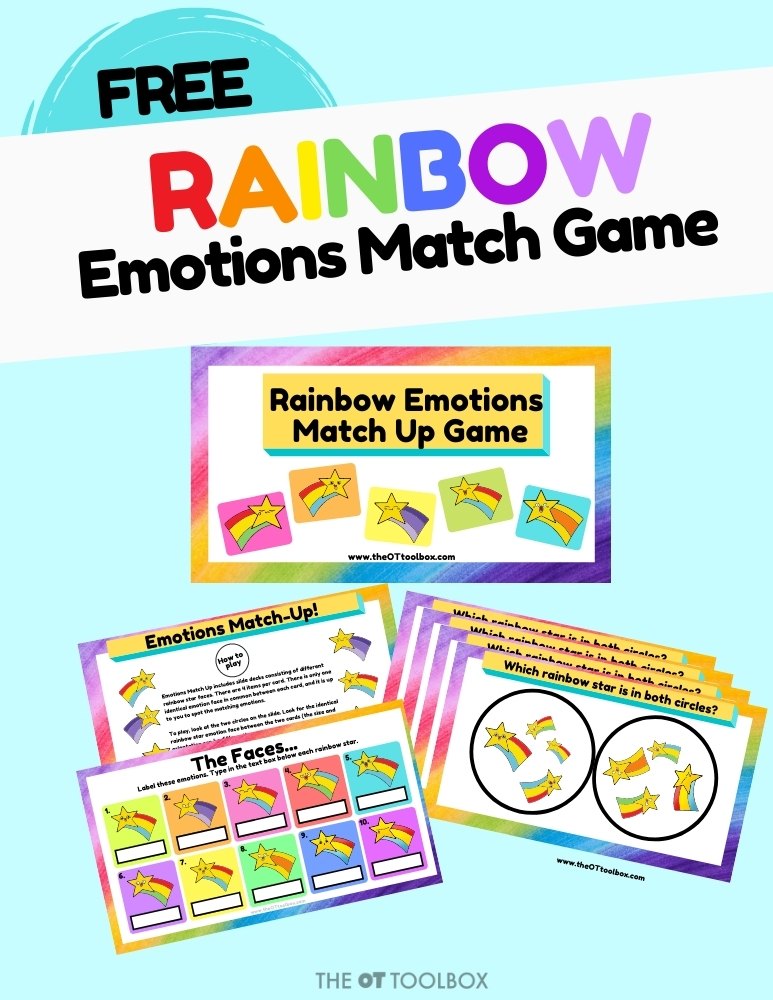
Today, I’ve got a fun emotion matching game that you can use in teletherapy sessions to teach emotions and feelings. This social emotional learning activity is an online game that kids will love to use in virtual therapy while working on things like identifying facial expressions as well as the visual perceptual skills like visual discrimination, visual scanning, and form constancy.
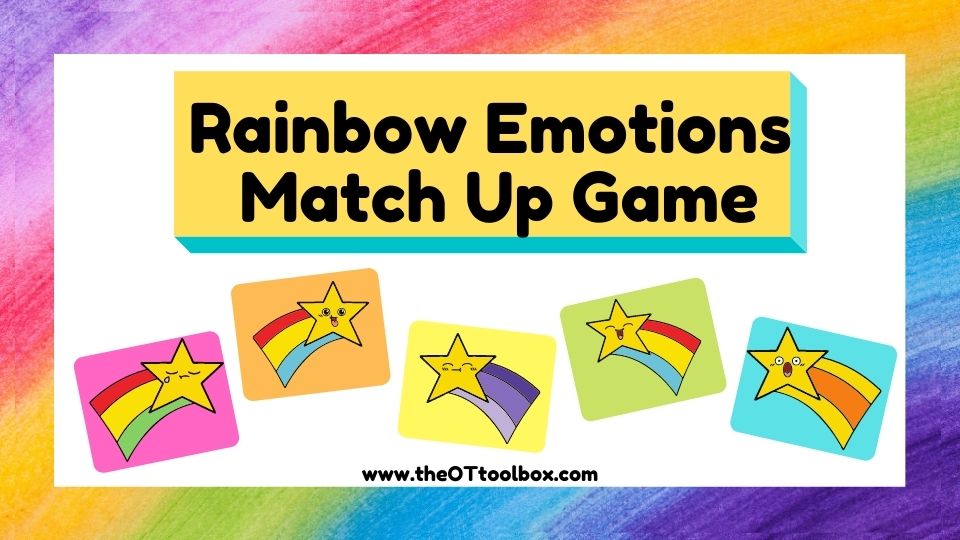
Emotion Matching Game
If working on emotions in a spot it game is helpful in your occupational therapy interentions, this emotions matching game will do the trick.
Kids can work through the slides and first, identify emotions based on facial expressions of the stars on each rainbow star.
There is a text box under each facial expression where users can type the name of the facial expression.
Next, kids can work through each slide to identify the matching emotions. There are only two facial expressions that match on each slide and kids can move the clouds over to cover the matching emotions.
This slide deck covers a variety of skill areas:
Visual scanning
Visual form constancy
Visual discrimination
Visual attention
Visual memory
Social emotional learning
Identifying emotions
Eye hand coordination
Typing skills
Computer mouse skills
Identifying and expressing emotions through play is an important part of social emotional development. This game offers an oppourtunity to work on these skills in virtual therapy sessions.
For more ways to work on emotion matching, try these activities and resource pages:
Want to add this emotion matching game to your therapy toolbox?
Enter your email address into the form below and you’ll receive this Google slide deck game.
Google Slide Deck TIPS:
Save the PDF file that you receive once you enter your email below, because you can come back to it again and again and send it to the kids on your caseload (or classroom) so they can make their own copy on their Google drive.
You will be prompted to make a copy of the slide deck. Before clicking that, be sure that you are logged into your Google account.
Make a copy for each student’s Google Drive. When you share it, make sure you enable edit capabilities for users.
The pieces will be moveable in “edit” mode. If you click “present”, the movable ice cubes won’t work.
Be sure to make a copy of this slide deck and not change the url to indicate “edit” at the end. When you make a copy of the slide deck onto your Google drive, you will end up with your own version that you are free to adjust in order to meet your student’s needs. By changing the url to “edit”, you can potentially mess up the original version that many other therapists and The OT Toolbox users are given.
To easily start a new game- Once you’ve gone through all of the slides, go to “history” on the top of the Google dashboard. You will be able to revert the slide to it’s original state using the history option, so all of the ice cubes go back to their original place. The history option is located on the top dashboard by clicking the link that says, “last edit was…”. When you click on that, you will see a list of edits made on the right side of your screen. Click on the edit titled, “New Game (Revert slides to their original state)”. This should move all of the movable ice cubes back to their original location on the slide deck. The typed in emotions on the text boxes will disappear as well. Note that you can delete edits from that list, so if several students are using the slides, you can keep the organization simple and delete edit versions that you no longer need.
MORE Emotions Games and Activities
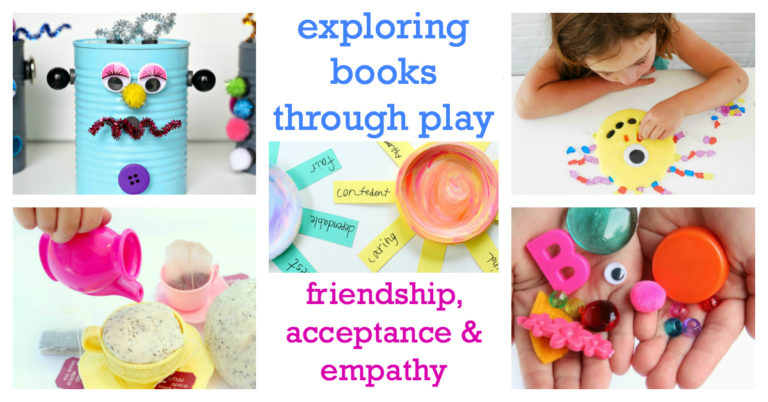
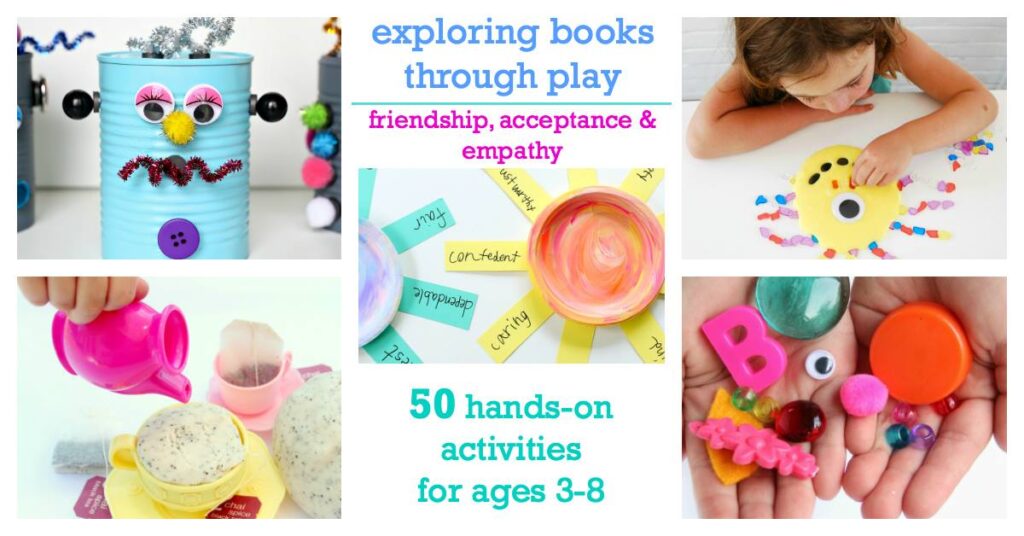
Want to help kids explore social and emotional learning through play? Exploring Books Through Play inspires social and emotional development though play based on children’s books. The specifically chosen books explore concepts such as differences, acceptance, empathy, and friendship.
Exploring Books Through Play: 50 Activities Based on Books About Friendship, Acceptance and Empathyis filled with hands-on activities rooted in interactive, hands-on, sensory play that focus on creating a well-rounded early childhood education supporting growth in literacy, mathematics, science, emotional and social development, artistic expression, sensory exploration, gross motor development and fine motor skills. Kids can explore books while building specific skills in therapy sessions, as part of home programs, or in the home.
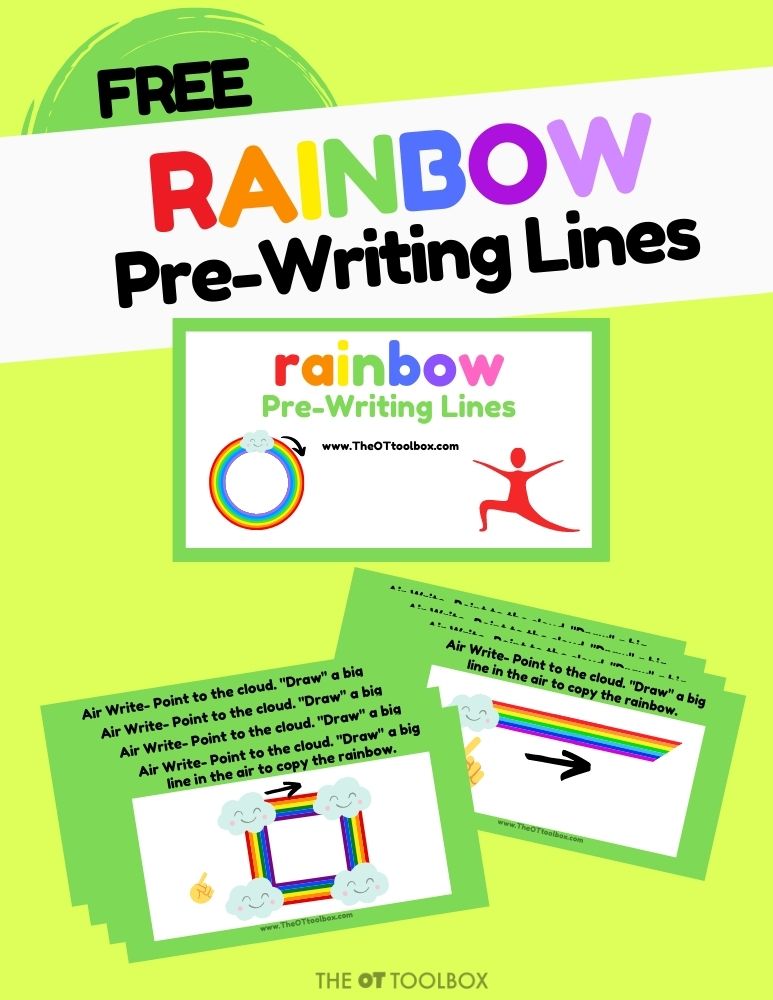
This rainbow therapy slide deck activity is a prewriting lines activity that can help kids with the visual motor skills needed for writing letters, numbers, and in all aspect of handwriting. Prewriting skills are those very important developmental skills needed before kids can actually write letters or numbers. Pre-writing lines activities are an often-times skipped step of handwriting. That’s why I wanted to create a rainbow drawing art activity that can be used in teletherapy (or face-to-face sessions) that works on this important skill.
You’ll also love these free rainbow therapy slide decks: Rainbow drawing art activity and the rainbow emotions slide decks. Add both to your occupational therapy interventions.
As we discussed in this blog post on a past pre-writing lines activity, working on pre-writing lines prior to practicing letter formation is an important step for preschool-aged kids, and actually helps to develop a strong basis for proper letter formation.
Establishing pre-writing lines allow kids to strengthen visual motor skills, hand muscles, promote pencil strokes needed for letters, and improve pencil control.
We’ve also previously talked about the progression of pre-writing lines. Prewriting lines development is as follows:
What Are Pre-Writing Skills?
In short, pre-writing skills are the lines and strokes kids need to master and know BEFORE learning how to print the alphabet. Each of these lines is developed in a sequence, based on how old the child is. We’ve covered developmental progression of pre-writing lines previously.
This developmental sequence of prewriting lines is as follows:
Age 1-2: Spontaneous scribbles
Age 2-3: Imitates a vertical line, horizontal line, circle
Age 3-4: Imitates a cross shape, and diagonal lines, a crude square
Age 4-5: Imitates an X, triangle, square
This is a very basic description of ages and developmental progression of line development and pre-writing skills.
As always with child development, each child will progress through this developmental sequence somewhat differently and at different speeds. Some children may draw a square with refined pencil strokes and sharp corners or controlled curves before another child. Other children may form perfectly slanted diagonal lines while others at the same age may make bumpy or curved diagonals.
Still another concern that should be addressed: Older kids may have been introduced to handwriting before they have mastered prewriting lines and then you see the breakdown in letter formation, reversals, inaccuracies with curves, diagonals, line placement, etc. In this case, it is ok to go back and work on these forms in multi-sensory learning strategies. Use sensory bins, rainbow writing, drawing on sandpaper, finger-paint, drawing in shaving cream, etc. to work on accurate copying and forming of these line forms.
This developmental progression of pre-writing lines should be taken as a general outline.
In short, we want to see each of these line formations develop before a child is asked to copy or trace letters.
There are many hands-on activities that help to work on these skills.
Writing trays are an excellent way to work on pre-writing lines.
Pre-writing virtual activity
So how do you work on pre-writing skills in a virtual occupational therapy environment? There are many ways!
Copying pre-writing forms can be achieved in teletherapy through creative thinking, use of the camera, and items the child has in the home. To get started on thinking outside the box, check out our free teletherapy with kids mini-course, where you will find loads of information on all things teletherapy, including for those who are at the pre-writing stage in their in their writing and visual motor skills.
Rainbow prewriting lines activity
You can use the slide deck presented here to work on prewriting lines with children, as another virtual therapy activity.
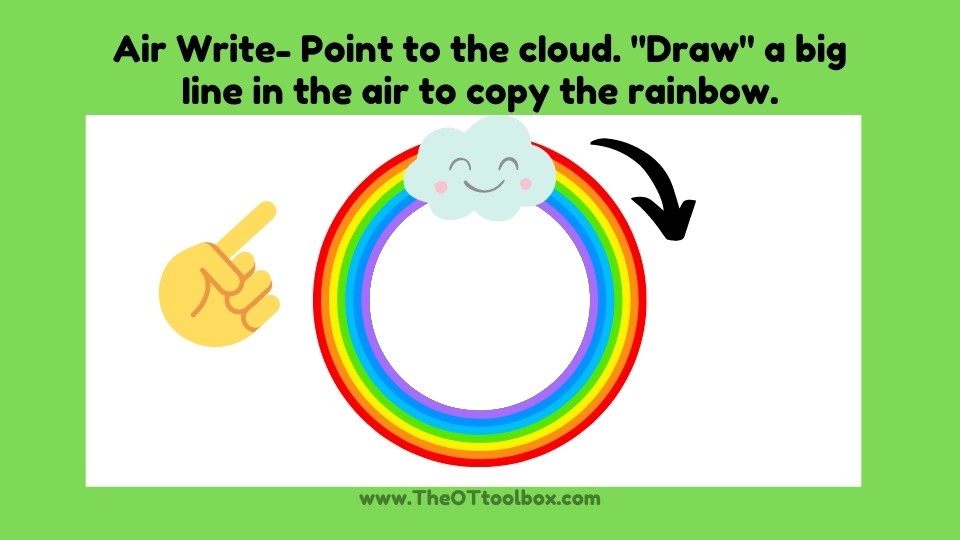
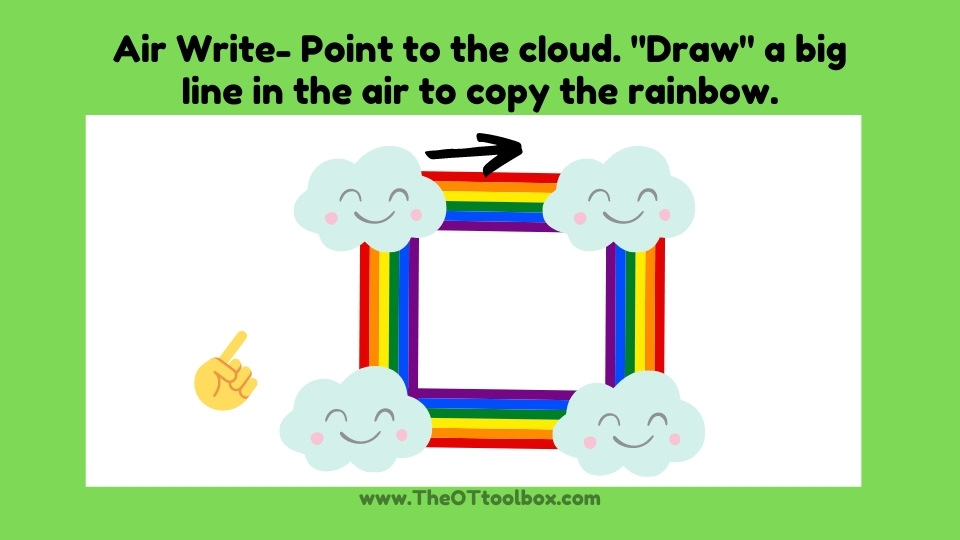
In the free Google slide deck, kids can complete several activities to work on copying pre-writing lines, and they all have a rainbow theme.
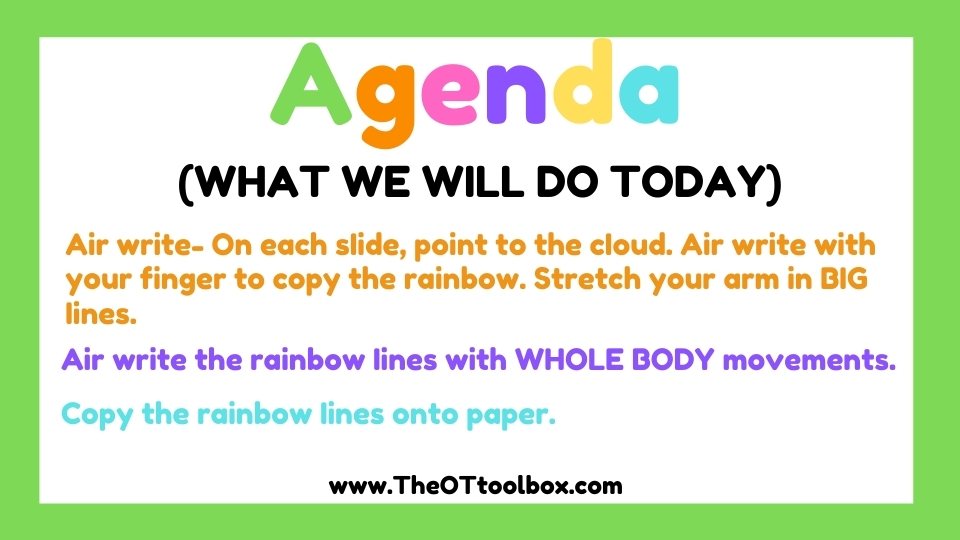
Kids can first copy the prewriting lines with air writing as they point to the lines. Then, they can use whole body movements to air write the forms. This incorporates motor planning, crossing midline, and visual tracking.
In the rainbow therapy slide deck, you’ll find all of the pre-writing lines, including slides for strait vertical lines, horizontal lines, diagonal lines, a cross, curves, wiggly lines, arches, a square, a triangle, and more.
Finally, children can draw the prewriting forms onto paper.
Want to add this prewriting lines therapy slide deck to your teletherapy toolbox?
Enter your email into the form below and you’ll get access to thsi free Google slide deck.
Colleen Beck, OTR/L has been an occupational therapist since 2000, working in school-based, hand therapy, outpatient peds, EI, and SNF. Colleen created The OT Toolbox to inspire therapists, teachers, and parents with easy and fun tools to help children thrive. Read her story about going from an OT making $3/hour (after paying for kids’ childcare) to a full-time OT resource creator for millions of readers. Want to collaborate? Send an email to contact@theottoolbox.com.
Preschool color activities like this Bear Sees Colors Activity makes learning colors in preschool fun…and paring a fun color snack with a book makes the concepts really stick for kids. After reading the book, make this color snack with the kiddos to develop motor skills. Then, go on a color search as a fun way to teach colors but also promote visual discrimination skills, helping them to identify visual differences that necessary skills for reading and writing. Add this colorful snack idea to our activities to teach colors to kids.
This Bear Sees Colors activity is part of a series of blog posts where we explored preschool books and came up with hands-on, multisensory activities to extend the book.
Bear Sees Colors Activity
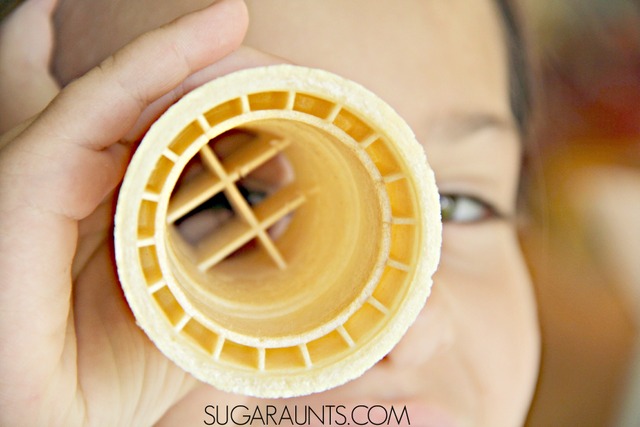
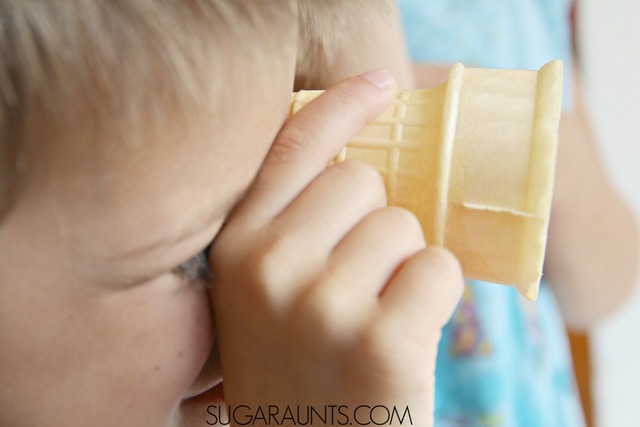
We made a creative and healthy snack based on the book and all of it’s colors. Preschool kids (and older kids!) will love to seek and hunt for colors with these ice cream cone color scopes, then use the cones as an edible snack container. This is such a great activity for a preschool playdate. Simply set out a plate of healthy snacks and the color scopes while the book is being read.
This post contains affiliate links.
Color Snack Idea
This color snack is easy to make with kids, or to set up a healthy, colorful snack for the whole family.
When we read Bear Sees Colors by Karma Wilson and loved it’s rhyming story and fun illustrations. We are HUGE fans of the other Bear books, (Bear Snores On is one of our absolute favorites!) so reading Bear Sees Colors was fun for us. We thought it would be fun to go on a color hunt with our snack using an ice cream cone telescope and seek out colors like Bear does in the book.
This color snack requires one main ingredient, and then a variety of colorful fruits and vegetables.
Simply fill up a cake ice cream cone with healthy treats: fruits, nuts, and veggies for a different snack that will get the kids to smile.
Kids can get involved with the fruits and veggies prep. Allowing kids to help in the kitchen is a powerful way to help children develop fine motor skills.
We used the same idea for our Color Scopes based on the book, Bear Sees Colors and made the cake cones into color telescopes.
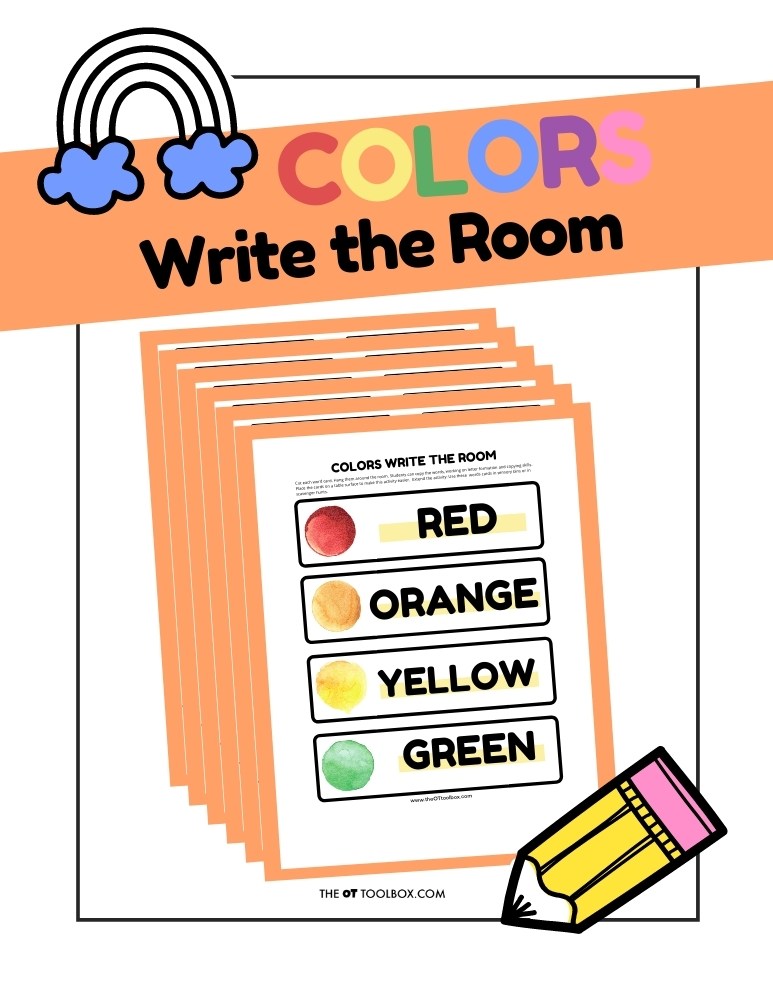
For more ways to add color hunts to teaching colors, add the “Write the Room” cards from the Colors Handwriting Kit. Kids can scan the room for the color cards and then write the color names onto their paper, working on visual discrimination, visual scanning, and color identification.
It is so easy to make an ice cream cone snack for kids. To make the color snack telescope, grab a few cake ice cream cones.
Using a sharp knife (this is a job for an adult.) Slice off the end of the cone. I wanted the grid-like bottom of the cone to stay intact for our color scopes, for a couple of reasons: First, it was difficult to try to cut out the grid. Second, I wanted the kids to be able to put fruit and veggies from our snack into the cones and the grid held the treats in. Third, if the grid was removed from the cone, the cone would probably squash when handled by little curious hands, resulting in crushed cone snack. That would be an equally tasty and fun treat, I’m sure, but ineffective when it comes to hunting for colors in your snack 😉
Colors Snack Idea
In the book, Bear goes hunting with a few friends and sees all sorts of wonderful colors in the world around him. Bear Sees Colors doesn’t hit all of the colors of the rainbow, but we decided to make our snack include a bunch of tasty berries, nuts, vegetables, and of course, Teddy Graham Crackers.
The nice thing about this snack idea, is that you can use whatever you’ve got in your pantry and fridge. Pull out a plate and load it up with anything colorful.
We read through the book again as we ate our snack, and when Bear saw a color, I had the kids look through their color scopes to seek and find the color on the plate.
I had them hunt for more colors, too. I called out a color and they had to search for it using their color scope. They got a big kick out of this activity!
We then filled up our cones with healthy treats and had a colorful snack!
This snack idea was fun for all of my kids, but would be great for preschool kids, especially as they identify colors. How can you think of using our ice cream scopes?
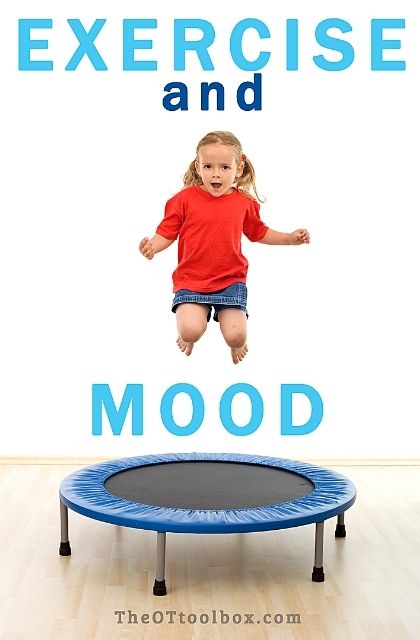
Years of research and personal experience can tell us that adults tend to function better with regular exercise. Exercise helps us sleep better, reduce our stress, and manage our weight2. But what about our kids – how do they benefit from exercise? Today we are going to dive deep into the research and see why and how our kids should exercise to better their mood. Let’s look at the link between exercise and mood, and establishing healthy habits that lead to function and independence in kids.
If your child is having issues with emotional regulation, it may come out as a temper tantrum. You know the feeling of having no control over your emotions; being taken on a ride of sadness, aggression, and pounds of heavy frustration. Most adults have had enough practice honing their emotional regulation skills to keep them from screaming in the middle of the grocery store after a long day. Children, however, are still working on developing emotional regulation skills, and because of that, their overall mood can suffer.
Also related is the mood of those around us, or co-regulation. This is another aspect of mood that we don’t always first think of as it relates to our behavior and actions.
According to research new and old, exercise can help a child better regulate their mood9. Next time your child is screaming in the middle of Target, think to yourself – have they gotten enough physical activity recently? I have found that 30 mins of exercise in the morning can help even out moods for the whole day. Plus, you are bound to get a good nap time out of them if they have gotten enough physical activity – double whammy for everyone’s mood!
Tips for Exercise and Mood
Try these tips for encouraging exercise to reduce tantrums in toddlers:
Instead of pushing your toddler in a scroller on neighborhood walks, encourage them to walk next to you for a while.
Use classic movement songs to incorporate movement into their day – our favorites are “Animal Action” By Greg and Steve, “Jim Along Josie” By Pete Seeger, and “Pet Parade” by Hoyt Axton.
If screen time is a part of your routine, use videos like Cosmic Kids Yoga to make the screen time more valuable.
Exercise to REDUCe ANXIETY AND DEPRESSION
Research shows that regular exercise in youth can treat anxiety and depression in the short term and long-term 3,4. Some studies suggest that high-intensity exercises, that will increase cardiorespiratory activity, improve mood more than low-impact exercises, like yoga5.
While there is lots of evidence to support that exercise can improve mood in both adults and children, some of the research points to other affects that exercise programs can have on children. For example, when children are enrolled in sports or other physical activity programs, they are also socially active and get attention from adults, which may also positively impact their mood7.
Whatever way you look at it, exercise is likely to improve their mood and guard against anxiety and depression.
Exercise for self-CONFIDENCE
One way that exercise improves mood is through raising self-esteem – physical activity gives you a confidence boost! Research shows that all kinds of physical activity contribute to a rise in self-esteem5.
Self-esteem is so important in all the occupations that children have, particularly in school. Academic and social success are partially dependent on self-esteem and self-worth, and both contribute to a positive mood.
“Psychological and behavioural problems in children and adolescents are common, and improving self‐esteem may help to prevent the development of such problems” (Ekeland et al., 2004).
Exercise and positive BEHAVIORS
In one study, researchers found that teachers reported an increase in wanted behaviors for children enrolled in both high and low-intensity exercise programs5. The theory here is that when a child’s physical activity needs are met, they are better able to regulate their emotions, attention, and behaviors9.
This comes with the awesome effects that exercise has for executive functioning, which controls many cognitive abilities6. With this increase in desirable behaviors, they will be more likely to develop positive relationships with their peers, teachers, and family members8.
“Exercise…is highly relevant in preadolescent children… given the importance of well-developed executive functions for daily life functioning” (Verburgh et al., 2014).
Exercise has been shown to increase self-esteem, cognition and academic success, and decrease depression and anxiety in children3. Not to mention the obvious health factors associated with physical activity like heart and respiratory function. All said, exercise is integral to the overall health and wellness of our children.
EXERCISES FOR KIDS
After all that exercise talk, we have to offer some great ideas to add to your list! Most important to any exercise routine – you have to do what you love! Find what your kids like and encourage them to try new activities.
Another key strategy to encourage exercise in kids is to model healthy habits as the child’s parent. When parents model healthy choices, fitness, and regular exercise, kids see that and are more likely to follow suit with their own healthy choices.
One way that adults can model healthy choices is through exercising in the home. When kids see adults exercising, they have that positive interaction with physical activity.
Having a treadmill in the home is one sure-fire way to encourage movement, exercise, and healthy habits that are integrated into the day-to-day. With Horizon Fitness treadmills and fitness equipment, you get the availablity of cardio equiptment right in the home. It’s there as a visable option for adding movement and regular cardio exercise on a daily or weekly basis.
Plus, parents of children can benefit from the fitness programs for quick and effective workouts that fit into the busy family’s schedule. Horizon offers a number of entertainment apps and streaming options, including Bluetooth speakers, live or on-demand fitness apps, and other streaming fitness opportunities. All of these extras are designed to promote improved physical exercise and meaningful motivation.
1. Ekeland, E., Heian, F., Hagen, K. B., Abbott, J. M. & Nordheim, L. (2004). Exercise to improve self‐esteem in children and young people. Cochrane Libary of Systematic Reviews.https://doi.org/10.1002/14651858.CD003683.pub
2. Oaten, M. & Cheng, K. (2010). Longitudinal gains in self‐regulation from regular physical exercise. The British Journal of Health Psychology,11(4). https://doi.org/10.1348/135910706X96481
3. Ortega, F. B., Ruiz, J. R., Castillo, M. J. & Sjöström, M. (2008). Physical fitness in childhood and adolescence: a powerful marker of health. International Journal of Obesity, 32, 1–11. https://doi.org/10.1038/sj.ijo.0803774
4. Pascoe, M. C. & Parker, A. G. (2018). Physical activity and exercise as a universal depression prevention in young people: A narrative review. Early Intervention in Psychiatry, 13(4). https://doi.org/10.1111/eip.12737
5. Telles, S., Singh, N., Bhardwaj, A. D., Kumar, A. & Balkrishna, A. (2013). Effect of yoga or physical exercise on physical, cognitive and emotional measures in children: a randomized controlled trial. Child and Adolescent Psychiatry and Mental Health,7(37). https://doi.org/10.1186/1753-2000-7-37
6. Verburgh, L., Königs, M., Scherder, E. J. A., & Oosterlaan, J. (2014). Physical exercise and executive functions in preadolescent children, adolescents and young adults: a meta-analysis. British Journal of Sports Medicine,48, 973-979. https://bjsm.bmj.com/content/48/12/973
7. Williams, C. F., Bustamante, E. E., Waller, J. L. & Davis, C. L. (2019). Exercise effects on quality of life, mood, and self-worth in overweight children: the SMART randomized controlled trial. Translational Behavioral Medicine,9(3), 451–459. https://doi.org/10.1093/tbm/ibz015
8. Xue, Y., Yang, Y. & Huang, T. (2019). Effects of chronic exercise interventions on executive function among children and adolescents: A systematic review with meta-analysis. British Journal of Sports Medicine,53, 1397-1404. doi:10.1136/bjsports-2017-097600
9. Zhang, Y., Fu, R., Sun, L., Gong, Y., & Tang, D. (2019). How does exercise improve implicit emotion regulation ability: Preliminary evidence of mind-body exercise intervention combined with aerobic jogging and mindfulness-based yoga. Frontiers in Psychology,10. doi: 10.3389/fpsyg.2019.01888
Sydney Thorson, OTR/L, is a new occupational therapist working in school-based therapy. Her background is in Human Development and Family Studies, and she is passionate about providing individualized and meaningful treatment for each child and their family. Sydney is also a children’s author and illustrator and is always working on new and exciting projects.
Exercise and Mood Resources for Kids
You’ll love these resources designed to help kids get moving, exercising, and building skills, and kids won’t even realize they are “exercising”!
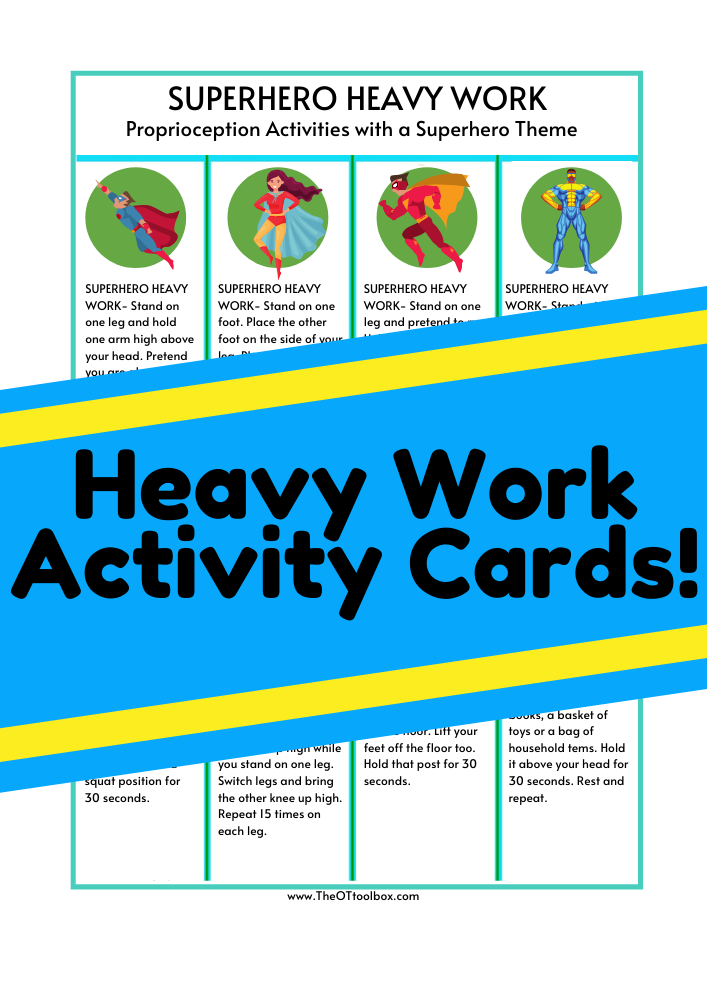
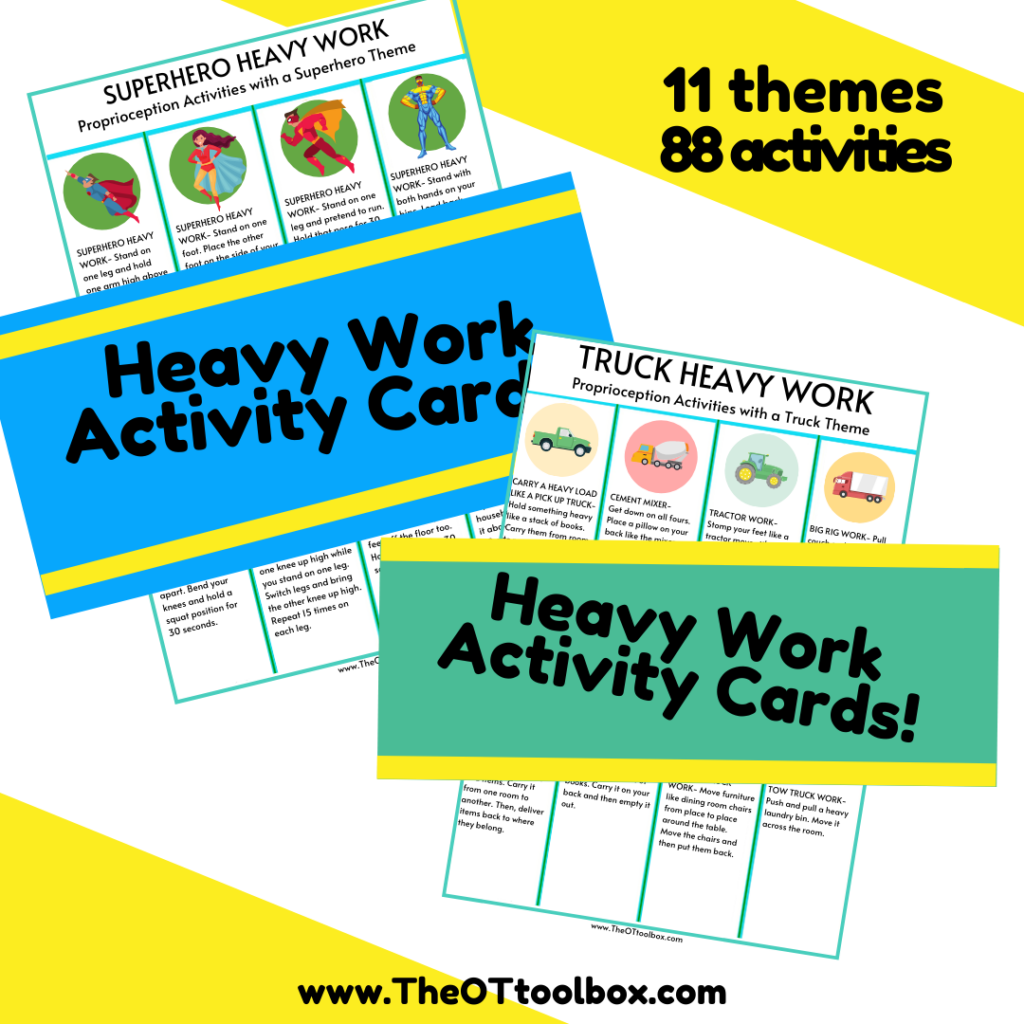
Designed to use fun themes, these heavy work activity cards add proprioceptive input to help kids become more aware of their body’s position in space.
Heavy work input allows kids to gain more awareness of motor planning skills, coordination, AND strengthening in fun and creative ways.
Incorporate the themed exercise cards into learning themes or play.
Adding to our deep breathing exercises here on the site, is this rainbow breathing activity for kids. It’s a breathing exercise that kids can use in a rainbow theme in therapy sessions, or as a coping tool to help kids with self-regulation, mindfulness, and focus. Print off this rainbow breathing printable and add it to your deep breathing activities!
This rainbow breathing activity is a great mindfulness tool to use with other rainbow activities. You can even add some Rainbow Fruit Loop craft ideas for fine motor fun.
Rainbow Breathing Activity
Kids will love this printable rainbow breathing activity. It makes a great poster for a therapy room, classroom, of homeschool room, too, especially this time of year.
There are many benefits to breath control in breathing exercise as coping tools, and there is a reason why we are seeing more need for these types of resources.
To use this free deep breathing printable, ask kids to start at the white dot on one side of the rainbow. They can slowly trace along the colors of the rainbow as they take a deep breath.
Then, when they reach the other side of the rainbow, they can begin at another white dot where they can trace along another color in the rainbow. Ask kids to trace in rainbow order.
Rainbow meditation
You can extend this rainbow breathing activity by incorporating rainbow meditation into this mindfulness activity.
Ask children breathe deeply, they can focus on the breaths that they are taking in and noting how their body slows down to an alert and ready state. Rainbow meditation exercises involve using the colors of the rainbow ask children focus on each color along with mindful thoughts.
For each color, ask the child to focus on the color of the rainbow as they breathe in or breathe out. They can think about an object that is that color in nature or in their environment.
To help the child focus on the benefits of guided meditation with this rainbow activity, ask the child to visualize the rainbow colors flowing through them with each deep breath.
Red-They can take a deep breath in as they trace along the red band of the rainbow. Ask them to think about red things as they visualize red flowing through their body. Some things that are red might be hot and warm. Can they “feel” warmth flowing through their body? They can picture the color coming in through their nose and flowing through their body.
Orange- As the child traces along the orange band of the rainbow, the child can picture orange objects. They can breathe deeply out through their mouth as they picture orange colors of the rainbow flowing through their arms and legs and then out through their mouth. Things that are orange might be warm and energy. Can they “feel” warmth and safety flowing through their body?
Yellow- Ask the child to trace along the yellow band of the rainbow. They should be taking a deep breath in through their nose again. Ask the child to picture yellow items. Can they visualize the flow of yellow as it courses through their body? Yellow things might be bright and sunny. Do they feel alert and awake?
Green- Next, kids can trace along the green band of the rainbow. As they do, ask the child to breathe out through their mouth. They can then picture green things and imagine the green of the rainbow is flowing through their body. Green can be bright, soothing, and energetic. Do they feel that flowing through their body?
Blue- The next color in the rainbow is blue. Ask the child to trace along the rainbow band and breathe in through their nose. Blue might be calming, or peaceful thoughts. Can they feel calm colors flowing through their body? What are some blue things they can picture?
Purple- Finally, ask the child to trace along the purple band as they breath out through their mouth. Ask them to picture purple flowing through their body. Purple can mean creative and awareness. Can they picture any purple objects?
Free Rainbow Breathing Printable
Want to add this printable exercise sheet to your therapy toolbox? Enter your email address into the form below and you’ll be on your way.
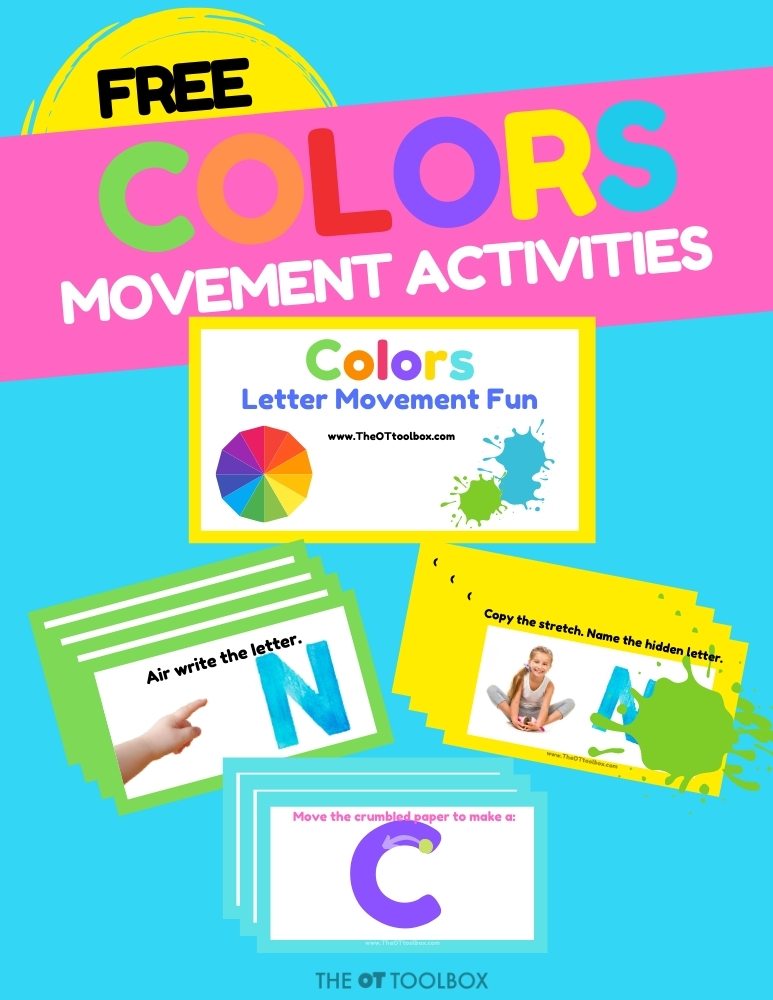
Looking to get kids moving and building skills in therapy sessions or at home? These color exercises use all the colors of the rainbow to help kids move and strengthen gross motor skills, fine motor skills, and even visual motor skills! Add these whole body exercises use colors as a therapy theme, but I love that the colorful exercise activities get kids strengthening muscle groups in big and small ways.
This therapy activity slide deck is one of the many free slides available here on the site, as a resource for teletherapy, home programs, and therapy planning!
Related resource- Working with kids in teletherapy? Need streamlined info on how to structure your sessions? Need activities for week-to-week therapy planning? need answers for all of your teletherapy questions? Join the free teletherapy course, a 5 day email series on telehealth for occupational therapists.
Color exercises
This is a color learning activity, that can be used in teletherapy sessions to develop many skill areas:
Gross Motor Color Exercises
All of these gross motor skill areas can be addressed using the color activities in this slide deck:
Gross motor skills
Core strength
Bilateral coordination
Crossing midline
Core strength
Stability
Balance and equilibrium skills
Coordination
Range of motion
Flexibility
Motor planning
Crossing midline
Movement patterns
Posture and postural control
Muscle tone
Proprioceptive input
Vestibular input
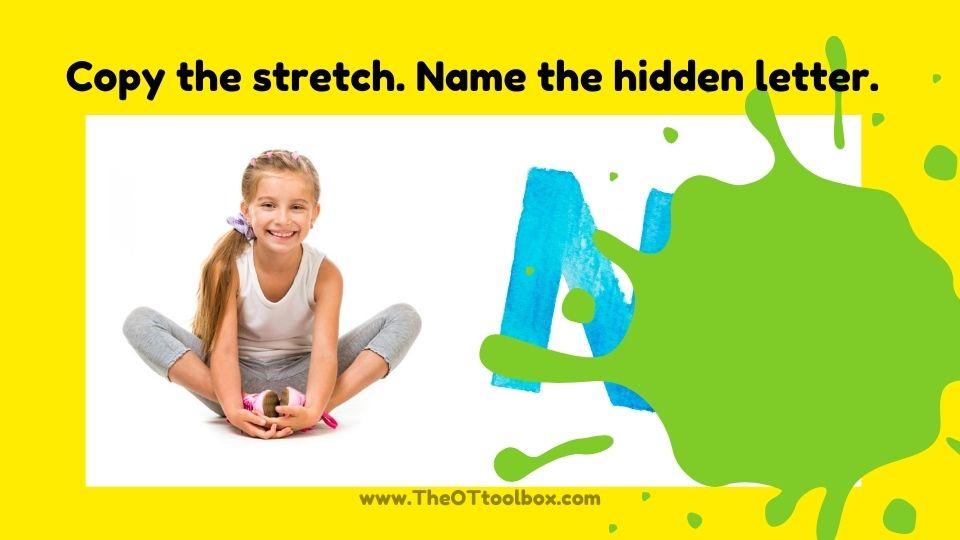
As kids go through the slides, they need to complete various stretches, challenging the skills listed above. There are movement patterns, crossing midline activities, yoga positions, and more. Kids can go through these slides several times if you like, to work on motor planning, sequencing, and memory skills.
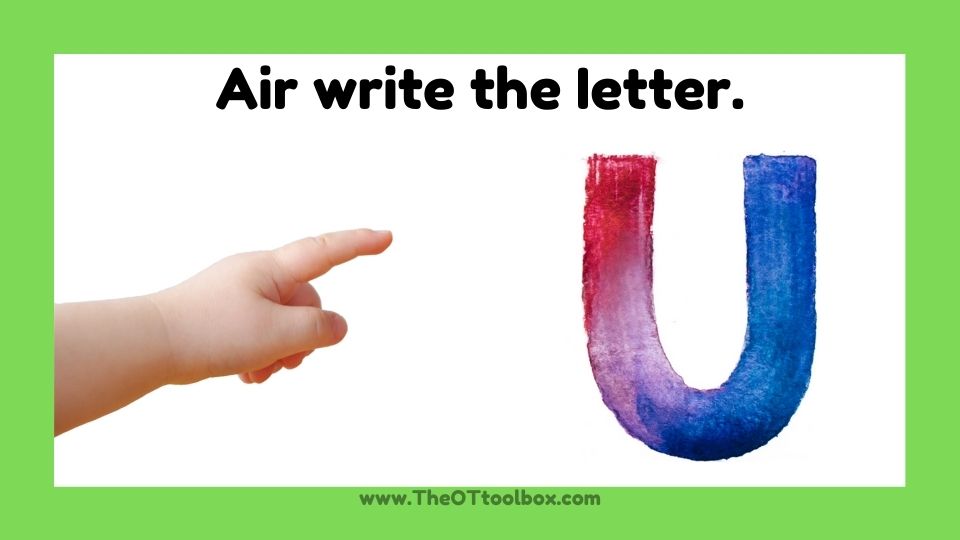
Then, the slides ask the child to air write letters. This is an eye-hand coordination activity that incorporates shoulder positioning and strengthening, finger isolation, and crossing midline, motor planning, range of motion.
These slides also work on visual perceptual skills including visual closure as kids identify the hidden letter.
Grade and extend this activity:
Challenge kids by calling out a color and they can complete that gross motor activity.
Having the child air write the letter associated with the color and writing the letter larger or smaller, using whole arm motions, or just the finger.
Challenge kids by calling out a color and asking them to air write the letter.
Or ask kids to complete the air writing task while in the gross motor stretch activity.
Fine Motor Color Exercises
This slide deck challenges fine motor skills as well. Kids can use their finger and work on finger isolation as they write the letters on each of the color slides.
There is another movement section of the slide deck that incorporates colored letters with a fine motor activity. All students will need is a piece of paper (scratch paper works, so tell them to grab an old homework page or even a piece of junk mail) and their hands.
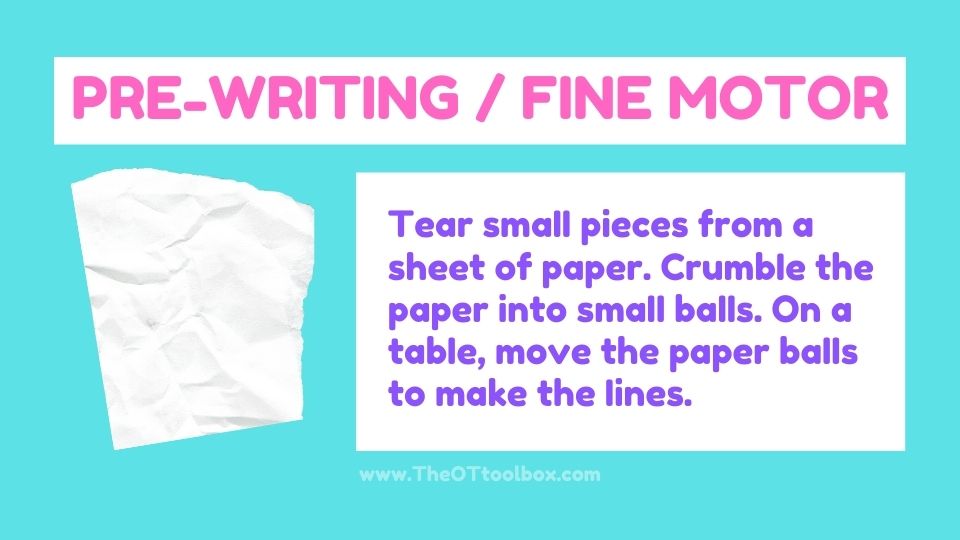
Following the directions on the fine motor activity slides, they will tear the paper into small pieces using their hands to tear and crumble. Tearing paper with the hands and using the finger tips to crumble small bits of paper strengthens the intrinsic muscles of the hands. Here is more information on tearing paper as a fine motor activity.
This activity works on fine motor skills:
Arch development
Intrinsic hand strength
Open thumb web space
Hand strength
Dexterity
Precision
Graded tearing- eye hand coordination
Separation of the sides of the hand
Then, you can extend this activity to use it in different ways or to challenge kids of all levels and ages:
Use different colored paper to match with different letter activities and gross motor exercises in the first part of the slide deck.
Use different grades of paper to make the exercise more difficult. Heavy weight paper like construction paper, cardstock, or paper plates is more of a challenge and lighter weight paper like thing paper, wrapping paper, wax paper, or tissue paper is easier.
Encourage children to use only the very tips of one hand.
Ask kids to write a letter on the small piece of paper and then crumble it up so the letter is hidden.
Visual Motor Exercise with Colors
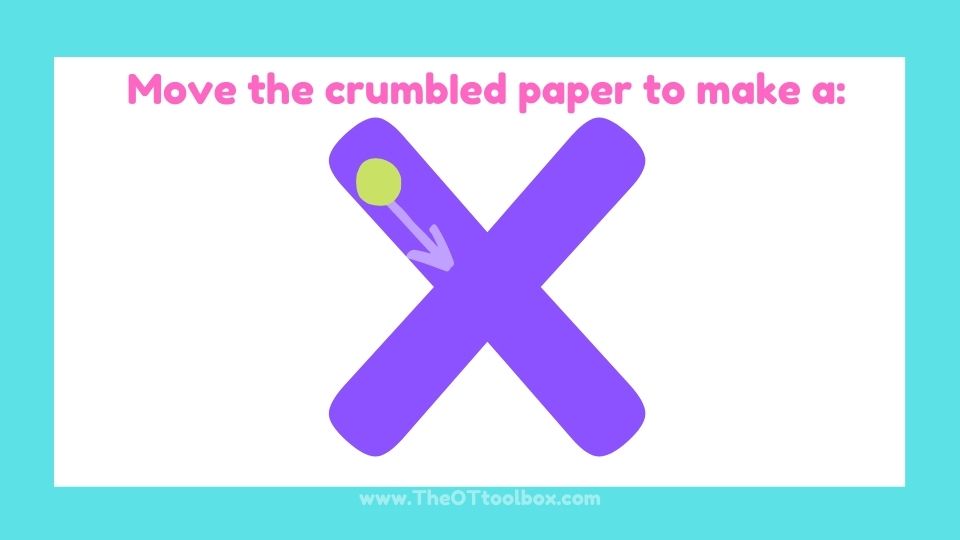
Finally, the last part of this slide deck is a visual motor exercise. Children can use those small pieces of paper to copy the lines and letters on the slides.
This activity includes strait lines for younger children to incorporate pre-writing lines. There are also letters included for kids working on forming letters.
Extend this activity
Matching letters to the exercises at the beginning of the deck.
Kids could also form letters using the paper balls by memory rather than copying the letter forms.
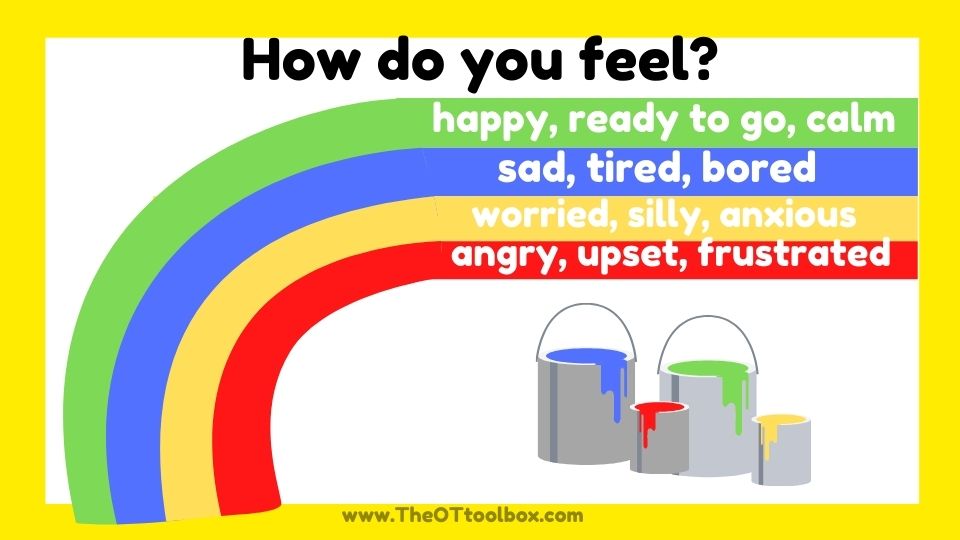
The slide deck ends with a color self regulation exercise. Kids can choose the color that matches their feelings, alert state, and regulation needs, all with a rainbow color theme!
Virtual Color Exercise Activities
Want this free therapy slide deck? Enter your email into the form below. Grab the free Google slide deck by entering your email into the form below. You will receive a PDF containing a link to open the slide deck. Be sure you are logged into your Google account before clicking the button on that PDF. Save the PDF in your therapy files so you can access this resource any time and share with those on your caseload.
Colleen Beck, OTR/L has been an occupational therapist since 2000, working in school-based, hand therapy, outpatient peds, EI, and SNF. Colleen created The OT Toolbox to inspire therapists, teachers, and parents with easy and fun tools to help children thrive. Read her story about going from an OT making $3/hour (after paying for kids’ childcare) to a full-time OT resource creator for millions of readers. Want to collaborate? Send an email to contact@theottoolbox.com.
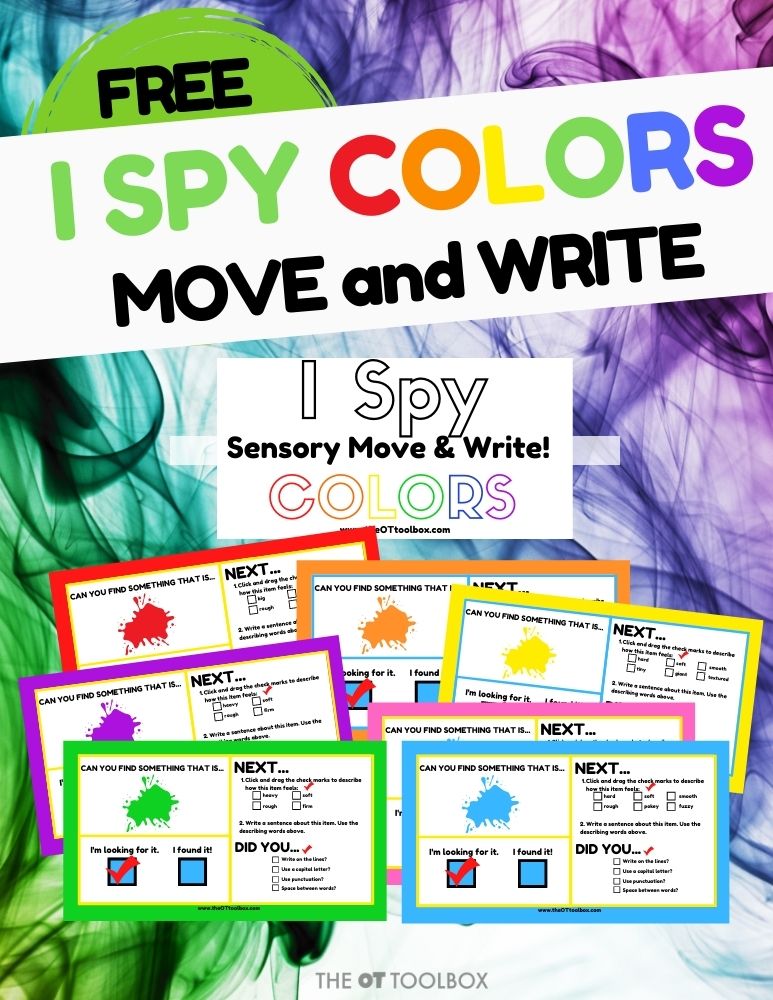
If you’ve ever played “I Spy with my Little Eye”, then you are going to love this I Spy colors therapy slide deck. It’s a movement activity that gets kids up and moving and challenges several developmental skill areas: visual processing, tactile sensory exploration, handwriting, and strength, endurance, and movement challenges. Kids can go through the free therapy slide deck in an occupational therapy teletherapy session and work on learning colors as well. Add I Spy colors as a color scavenger hunt that kids will love!
Use this along with our color exercises slide deck for more color theme activities in therapy.
This I Spy virtual game is just one of the free slide decks we have available here on the site. You’ll also love our printable color by letter worksheet. Check them all out!
Need more teletherapy resources? Working with kids in teletherapy? Need streamlined info on how to structure your sessions? Need activities for week-to-week therapy planning? need answers for all of your teletherapy questions? Join the free teletherapy course, a 5 day email series on telehealth for occupational therapists.
I Spy Colors
The kids you are working with may have played I Spy before. In a traditional look-and-find game, they need to search a book, puzzle page, or other activity page for hidden items. You may have even played I Spy with my little eye while waiting at a doctor’s office, or in a restaurant. It’s a good activity for kids that keeps them busy. But did you know there are even more therapeutic benefits to this game?
I wanted to create a teletherapy activity that required no materials other than paper and pencil. This I Spy Colors therapy slide deck does the trick.
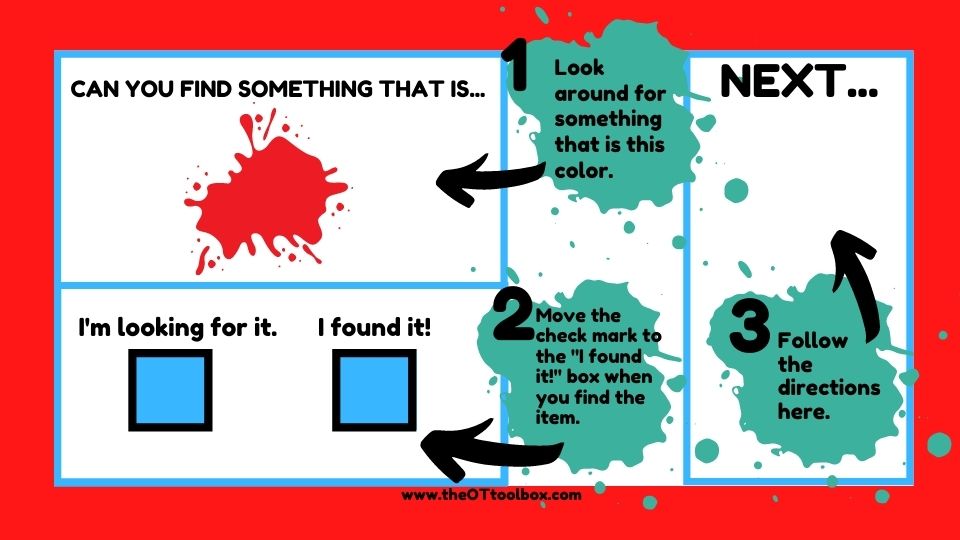
Therapists can use this free interactive slide deck in therapy treatment sessions virtually as a color scavenger hunt activity.
The activity asks users to search their house for an object of a particular color. By looking around the home for the color detail of objects, children are strengthening several visual perceptual skill areas:
Visual scanning– moving the eyes for a specific aspect of details: colors of objects. Visual scanning is a skill needed for reading as kids scan their eyes over the lines of a page.
Visual discrimination– visually determining differences in colors of objects. The slides ask kids to locate items that are in a range of colors. This color activity is slightly more advanced than just finding a blue item. Can they find teal? Visual discrimination is a skill needed for distinguishing differences in letters and words when reading.
Figure-ground– Pulling out details of objects from a busy background. When users scan their home for a specific color, they are visually identifying objects that may be hidden in a busy background. This visual skill is used in functional tasks every day.
Visual memory– Holding a “picture” of details such as the shade of color in the mind. As kids look throughout their room or home, visual memory is needed to recall the color and shade they are looking for. This visual skill is needed in reading and math.
Visual closure– identifying an object when only parts of it are seen. This visual perceptual skill is used when children locate an object in the room that may be partially hidden. Visual closure is used in reading when readers are able to identify a word by only some of the letters.
Visual convergence– A visual processing skill, this motor task allows vision to shift in scanning. By scanning to near and far points, kids are strengthening this skill. Visual convergence is used in the classroom when scanning from a teacher or the board to the desk, or from near to far and far to near.
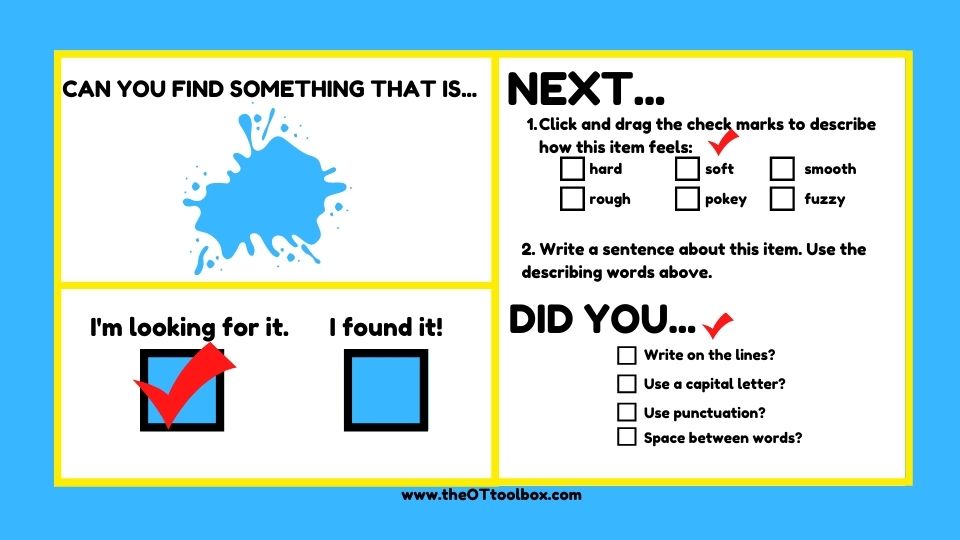
Users can then identify features of the object by responding to questions about texture. The slide deck asks about aspects of the found item by asking the child to explore the tactile aspect. Is the item fuzzy? Soft? Rough? How does it feel?
This part of the color activity brings in features of the tactile sensory system.
Virtual I Spy
This virtual I Spy activity takes the fun of the classic look and find game online, making it great for teletherapy activities with kids of all ages. This particular color game goes beyond just “I Spy” however…
Use the virtual activity for working on other areas in therapy, too:
Movement challenges- Kids get up and move to find the objects
Visual perceptual skills- covered above
Tactile sensory exploration and challenges- Can they find a green object that is fuzzy? This activity can be expanded in many ways!
Handwriting- work on skills such as line awareness, letter formation, sizing, legibility. Kids can then self-assess their work, making carryover of writing skills stick.
Users can move the interactive piece of the slide deck to mark off tactile sensory aspects of the colorful item they found.
Finally, there is a color writing activity where users can write a sentence about the object, using the describing words that they selected. This part of the slide deck may be a higher level for some users, but the writing piece invites users to incorporate aspects of language and creative writing into the I Spy Colors activity.
I Spy Colors for all ages
The slide deck is designed so it meets various levels and can be graded to different ages:
Younger kids can just look for the objects in a color scavenger hunt.
Teach colors, making it a preschool color activity that is perfect for virtual learning.
Some children can skip the tactile sensory aspect and just seek out items in the I Spy portion of the activity.
Grade the activity up by discussing tactile features.
Further grade the activity up by incorporating handwriting. Younger students can just write the word.
Older students can write the word in a sentence, working on adding describing words.
Kids that complete the handwriting portion of the slide deck activity can self-assess their handwriting, using the interactive check marks as they look over their written work.
There’s somethign for everyone with this I Spy Colors therapy activity!
Want to play I Spy Colors?
Grab the free Google slide deck by entering your email into the form below. You will receive a PDF containing a link to open the slide deck. Be sure you are logged into your Google account before clicking the button on that PDF. Save the PDF in your therapy files so you can access this resource any time and share with those on your caseload.
More color activities
Add this slide deck to these hands-on color activities:
Benefits of coloring– Use a couple of crayons to work on many areas of child development.
Visual Motor Color Match Activity– This activity translates wonderfully to virtual therapy sessions. It can be used in face-to-face interventions as well, or as a home activity.
Color Mixing Rainbow Write– Work on letter formation and size with this rainbow write activity that challenges kids to mix colors and see what the result is.
Colleen Beck, OTR/L has been an occupational therapist since 2000, working in school-based, hand therapy, outpatient peds, EI, and SNF. Colleen created The OT Toolbox to inspire therapists, teachers, and parents with easy and fun tools to help children thrive. Read her story about going from an OT making $3/hour (after paying for kids’ childcare) to a full-time OT resource creator for millions of readers. Want to collaborate? Send an email to contact@theottoolbox.com.
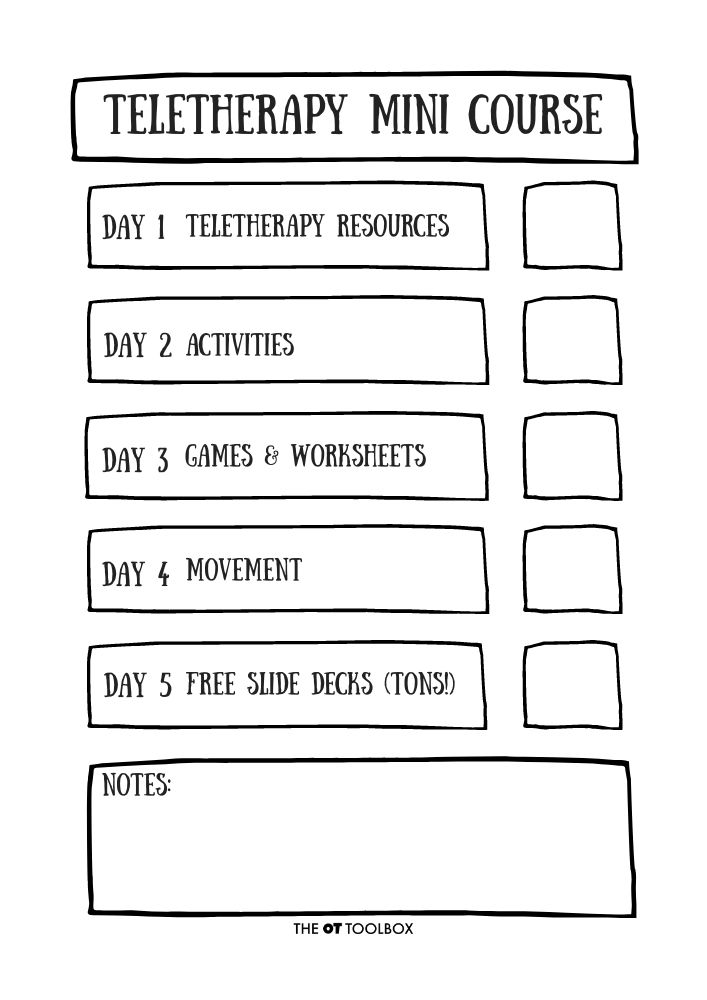
Great! You’re in the free teletherapy with kids email course. Check your email for a welcome email containing a checklist of everything we’ll be covering in the course.
Hint: You need to click that button so you get the emails in this series 🙂
You’ll also see the first email in this series, and it contains your first freebie, as well as information on loads of resources.
Each activity page includes 8 movement and heavy work cards in that theme.
These heavy work activities can be used in virtual therapy sessions. Add these heavy work activities to home programs, teletherapy activity plans, or used as brain breaks during learning and play.
Proprioception activities like these themed heavy work activities are essentially brain breaks that provide whole-body, heavy work input through the large muscle groups and the core. These movement activities are a good way to calm and organize your child given the calming and organizing heavy work. Kids who need more heavy work, or proprioceptive input, to address sensory needs might present in some of these ways:
Poor pencil pressure when writing
Attention and focus issues in learning situations
Appear clumsy
Difficulty transitioning between activities
Fidget when asked to sit quietly
Show an increased activity level or arousal level
Seek intense proprioceptive input by “crashing and bashing” into anything
Slap their feet when walking
Flap hands
Use too much or too little force on pencils, scissors, objects, and people
“No fear” when jumping or walking down stairs
Or, are overly fearful of walking down steps/jumping
Look at their body parts (hands/feet) when completing simple tasks
Sit down too hard or miss chairs when sitting
Fall out of their seat
Fluctuates between over-reacting and under-reacting in response to stimulation
I have something exciting to share with you. So many therapists were thrown into the world of teletherapy. When it comes to teletherapy with kids, however, there is a lot going on. Kids show up without materials to their virtual OT sessions. Or they might not show up for their scheduled session at all. There are schedule issues with hybrid/virtual sessions. Other therapists run into the difficulty of coming up with teletherapy ideas for kids that address skills like handwriting, visual processing skills, and functional tasks. I’m here to help.
Want to get streamlined information on teletherapy with kids?
I have put everything on the website covering all things virtual therapy and put it into one free email course.
In the 5 day email series, I cover areas that you’ve told me you have questions about. Some of those questions include:
How to work on goal areas without therapy equipment and materials?
What does teletherapy look like for early intervention or younger children?
What does virtual therapy look like for high-needs children?
What activities can be accomplished in virtual therapy?
How to use household materials in teletherapy sessions?
How to come up with new and fresh activity ideas week after week?
How to help kids MOVE in the way they need for development and strength, coordination, attention, and sensory needs?
Any and all teletherapy resources!
It’s all covered in the free teletherapy with kids mini-course!
Teletherapy for Kids Free Resources
Each day of the 5 day email series, you’ll receive information on each of the topics described above. You’ll find tons of tips and tools for each area.
AND…
Each day in the free email series contains a free resource that you can add to your teletherapy toolbox. The free printables include:
A free printable teletherapy planner to make planning your sessions a breeze
A handy list of links to teletherapy activities using materials found in homes
A list of online games and websites you can use as reward activities to build skills
A parent handout describing household materials that can be used in teletherapy sessions
Tons of themed therapy slide decks!
Want in? Let’s get you the resources you need for serving kids in teletherapy!
Colleen Beck, OTR/L has been an occupational therapist since 2000, working in school-based, hand therapy, outpatient peds, EI, and SNF. Colleen created The OT Toolbox to inspire therapists, teachers, and parents with easy and fun tools to help children thrive. Read her story about going from an OT making $3/hour (after paying for kids’ childcare) to a full-time OT resource creator for millions of readers. Want to collaborate? Send an email to contact@theottoolbox.com.