Large Fine Motor Threading Activity


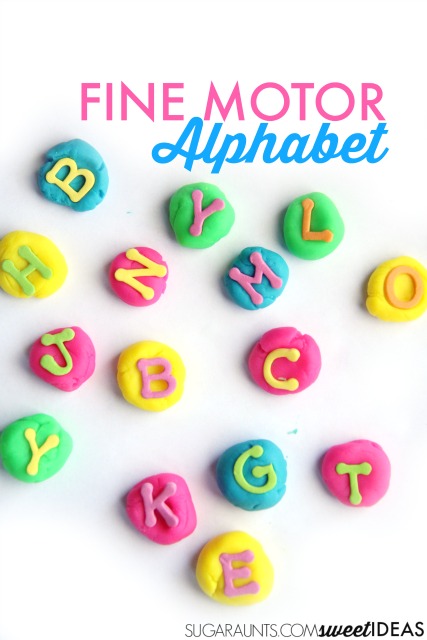
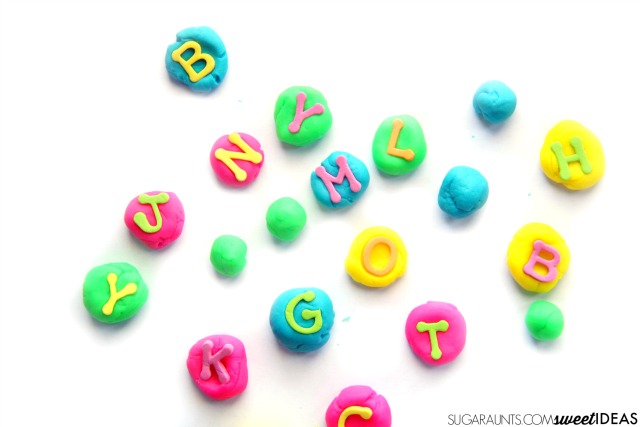
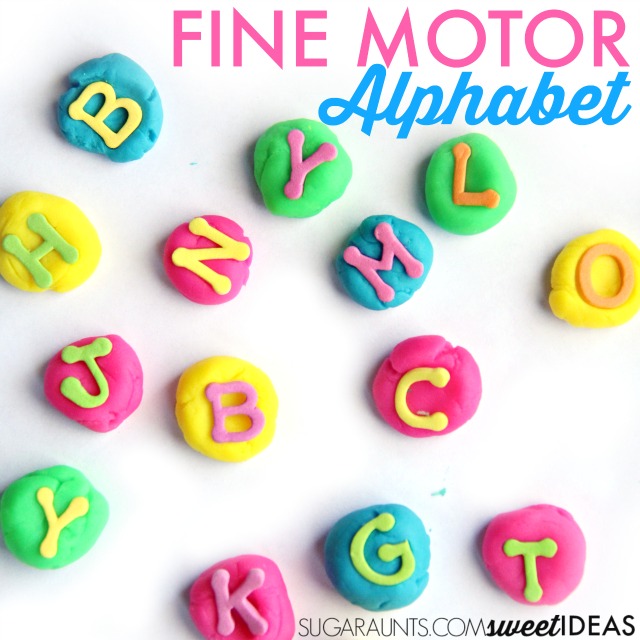
This ABC play dough activity is a fun way to build hand strength with letters of the alphabet. This Fine Motor Play Dough Alphabet activity combined a couple of our favorite things: Creative Play Dough ideas and Fine Motor Skills. We used a handful of foam alphabet stickers that we had in the house and store bought play dough to make letters that we used in spelling words, letter identification, and alphabetical ordering. And our play dough fun rating was 26 letters long!
Sometimes, you need play dough in your day. Other times, you need to turn up the play dough fun notch just a bit. (That’s a thing, right? The play dough fun scale? I think so.)

Full disclosure: This post contains affiliate links.
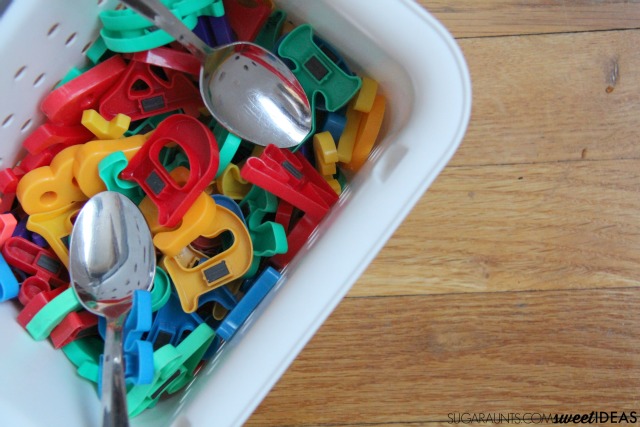
So, we received these foam letter stickers and have been using them in a bunch of fun ways. Today, we used them with plain old fashioned Play-Doh.
Every Occupational Therapist knows the benefits of play dough is so huge that they recommend it as a top-rated tool for fine motor development. We’ve shared a ton of fine motor activities using play dough and I absolutely love to play with play dough with my kids for it’s use in fine motor skill development and hand strengthening.
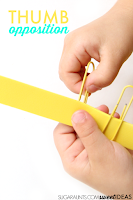
Play dough is perfect for refining skills like intrinsic muscles strength, finger isolation, tripod grasp development, thumb opposition, opening up the web space, bilateral hand coordination, and more. With this activity, we specifically hit developing the intrinsic muscle strength of the hands.

So, what is intrinsic muscle strength? There are seventeen muscles in the hand that are responsible for fine motor skills and precision grasp, among other things like moving the thumb and fingers. There are different groups of intrinsic muscles and they allow us to grasp items in a functional way. The muscles of the hands work in conjunction with the muscles that originate in the forearm. These extrinsic muscles end in your hand.
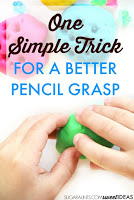
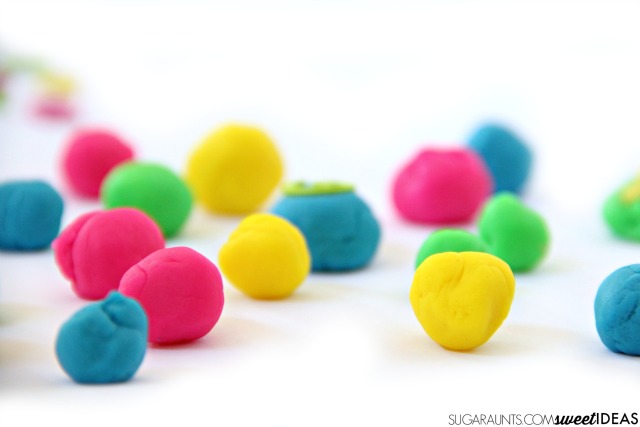
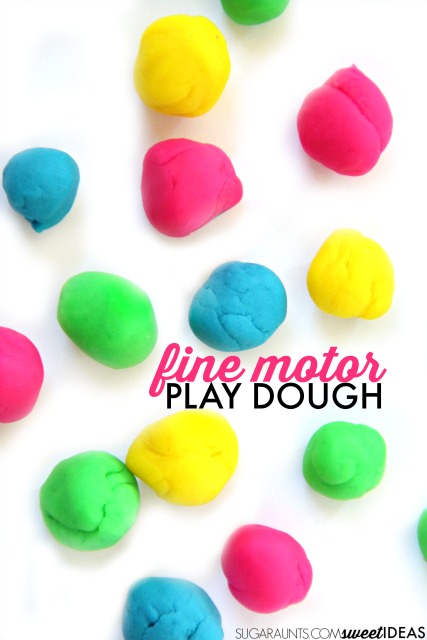
For this activity, we used different colors of play dough and created small round balls of dough. I asked my kids (and a niece and nephew who were over for the day) to roll small, dime-sized balls using just their thumb and fingers.
Rolling small balls of this size uses the intrinsic muscles that are responsible for moving the thumb (thenar muscles) and the muscles that bend the fingers at the knuckle (lumbricals). Also needed for a task like this are the palmer interossi muscles that work to move the fingers in a flexed position toward the thumb.
So, when a child is rolling a small ball of dough, with their thumb and fingers, they are working on strengthening the muscles that a child uses to write and color with a pencil or crayon.
Sometimes kids complain of their hand hurting when coloring or you might see them switch crayons very often when coloring.
These are signs of a weakness of hand strength. Other signs of intrinsic muscle weakness are a weak grasp on the pencil or writing very lightly with a pencil.


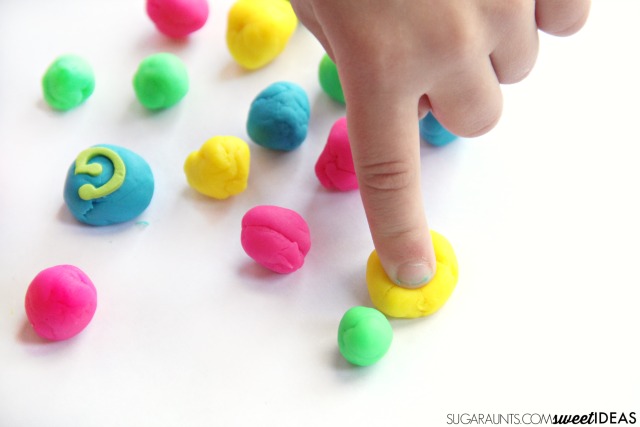
After we rolled all of the play dough balls, we used our foam letter stickers to press letters into the Play-Doh. Pressing the letters with an extended finger (like in the picture) is a great way to work on finger isolation. It is important to note that using the finger in an extended “pointer” uses the extrinsic muscles that originate in the forearm.
I shared more about finger isolation here.

We used these letters to practice spelling words with my second grader, identify sight words for my Kindergartner, practice letter identification and letter order with my preschooler, and practice not eating play dough with my toddler 😉
It was a fun day had by all!
How will you use these letters to learn and play?


Colleen Beck, OTR/L has been an occupational therapist since 2000, working in school-based, hand therapy, outpatient peds, EI, and SNF. Colleen created The OT Toolbox to inspire therapists, teachers, and parents with easy and fun tools to help children thrive. Read her story about going from an OT making $3/hour (after paying for kids’ childcare) to a full-time OT resource creator for millions of readers. Want to collaborate? Send an email to contact@theottoolbox.com.
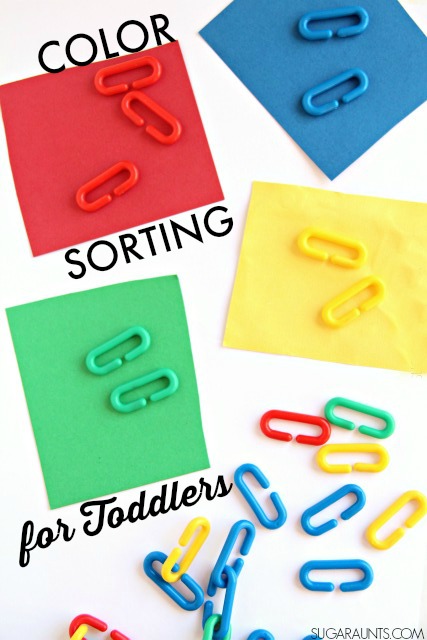
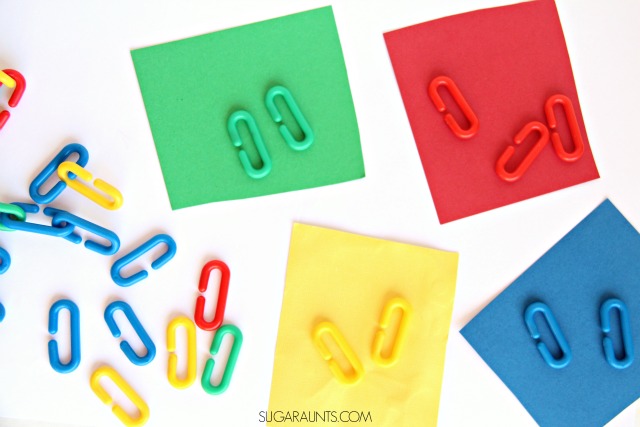
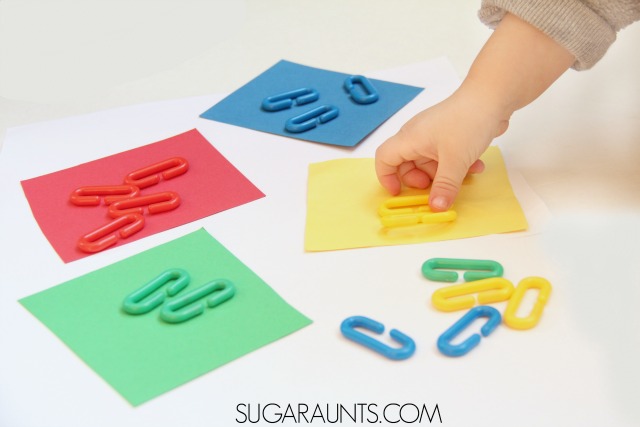
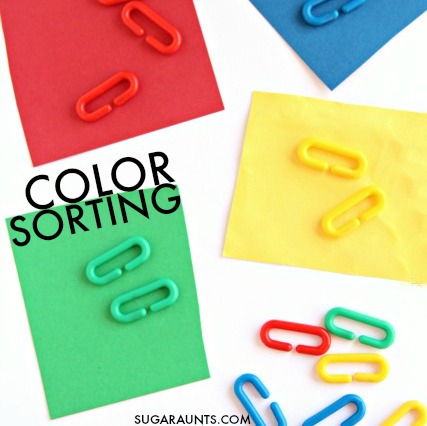
This rainbow color sorting activity is one of the oldest ones we have on this website, because we love using this classic occupational therapy activity. It’s a great tool for supporting color recognition skills in kids, fine motor skills, eye hand coordination, and more.


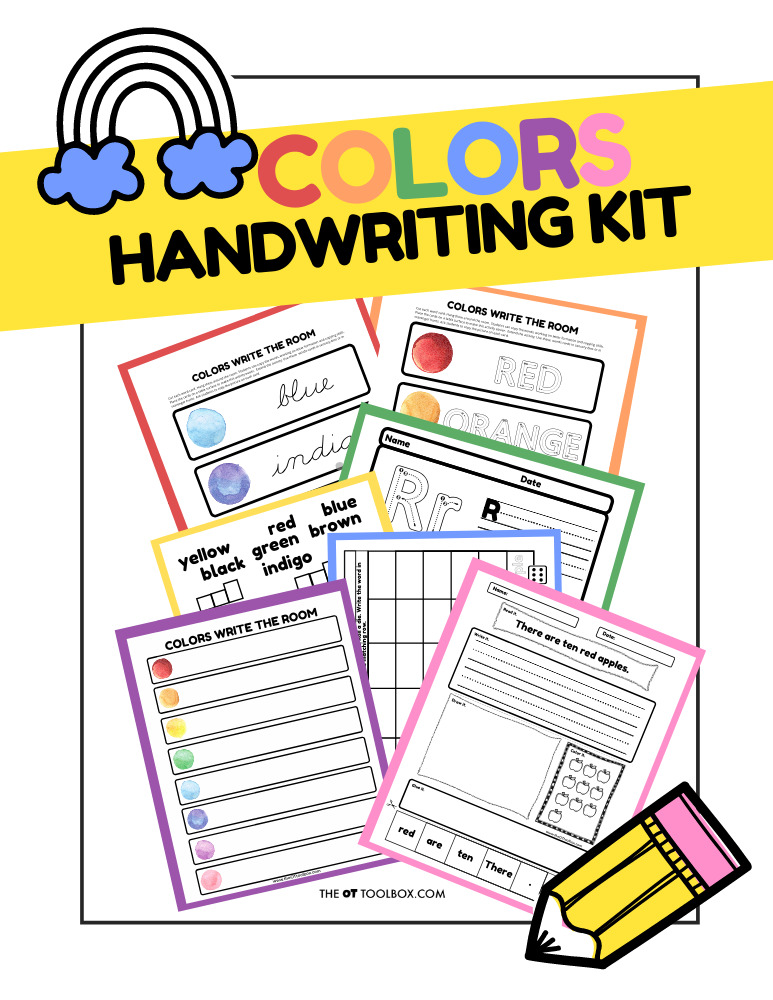
Rainbow Handwriting Kit– This resource pack includes handwriting sheets, write the room cards, color worksheets, visual motor activities, and so much more. The handwriting kit includes:

Colleen Beck, OTR/L has been an occupational therapist since 2000, working in school-based, hand therapy, outpatient peds, EI, and SNF. Colleen created The OT Toolbox to inspire therapists, teachers, and parents with easy and fun tools to help children thrive. Read her story about going from an OT making $3/hour (after paying for kids’ childcare) to a full-time OT resource creator for millions of readers. Want to collaborate? Send an email to contact@theottoolbox.com.



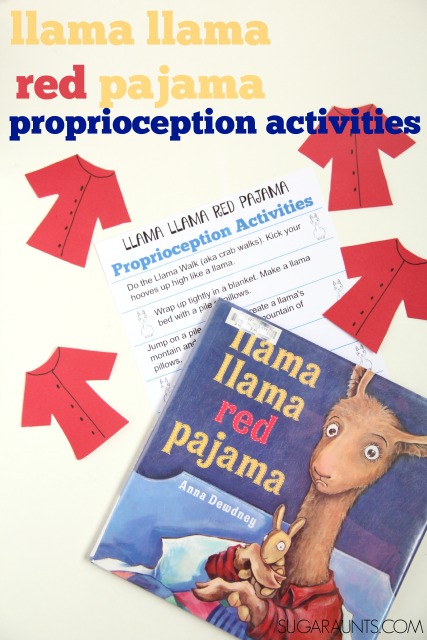
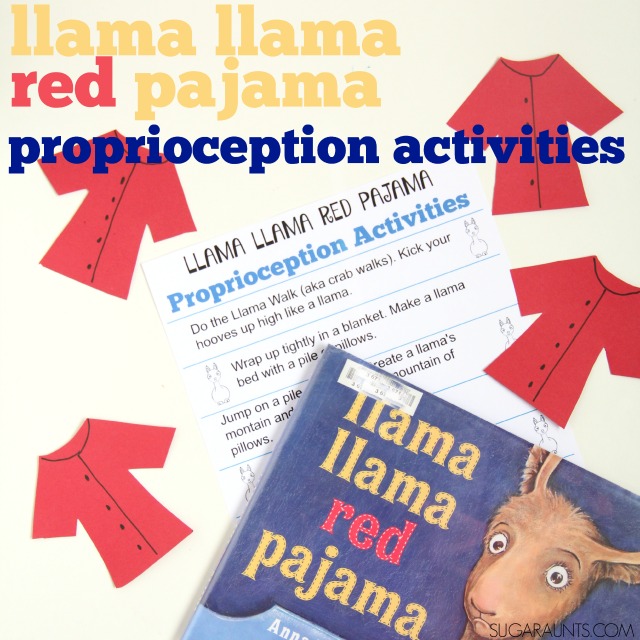
Use these proprioception heavy work activities for calming sensory integration Try these Proprioception activities for sensory integration and calming heavy work input based on the book, Llama Llama Red Pajama with your little llamas!
Did you ever read Llama Llama Red Pajama and think, “That Mama Llama. Oh, I FEEL for that mama!”
She just wants to put the baby down to sleep so she can finally wash those crusty breakfast dishes. Then she has to take a call from a friend (which was probably scheduled with the intention to cross another three items from her to-do list, and totally not a call of the friendship-soul-building type). Then all she wants to do is finally… finally…put up her llama feet and sigh a deep, exhausted, mama breath.
You know that end-of-the-day mama sigh, right? A Mama can finally breathe at the end of the day, knowing that her babies are safe in their beds and quiet, at peace, and not dumping toys all over the floor. It’s the biggest sigh and is so satisfying. Maybe it was a ROUGH day. A day filled with yelling and not happy giggles. A day loaded with siblings pulling hair and not playing like nice little brothers and sisters. A day of sensory overload.
That Mama Llama. She starts in on her nightly to-dos and hears the “Maaaaammmaaaa!” from upstairs.
Ugh.
A long day just got longer.
But that “Mama!” yelling llama is scared. Nervous. Alone. Questioning. Upset.
And a mama, be it a mama llama or a tired, frizzy, overworked mama of the people variety just help.
Baby Llama’s routines have changed. The normal nightly get-a-drink-one-last-kiss-tuck-me-in norm has been a little diverted. And then, you can’t help but feel for that little llama baby who NEEDS his mama. Her KNOWS he needs her.
He needs deep pressure, sensory, proprioceptive input, calming relaxation before he can snuggle up and go to sleep. Routines have changed, a sensation triggered a thought process of what-ifs, and there is no turning back from the sensory integration that only mama can give.

And Mama Llama does just that. She drops everything, does the tuck-snuggle-one-last-kiss thing and baby llama is finally able to settle.
And that Mama Llama. She can finally take that last big sigh of the day and know that she helped her little one in every way that she could.
{This post contains affiliate links. See our full disclosure here.}
SO, When we read Llama Llama, Red Pajama, I couldn’t help but notice the proprioceptive needs that are being yelled for. Screamed for, even. Baby Llama needs to feel calmed after his routine is thrown. And it doesn’t take much. That one last drink that mama brings every night, or even some nights, is a known to Baby Llama. He knows his mama is going to help him and keep him safe. When that normal thing is gone because Mama is on the phone, his little llama world is thrown.
I had to put together these Llama Llama Red Pajama
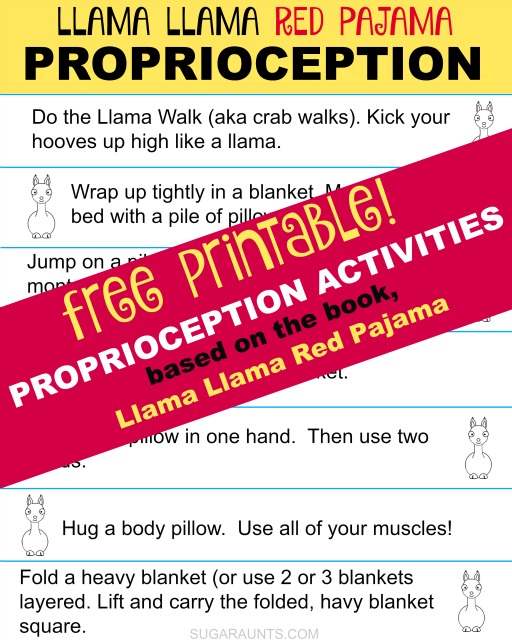
Proprioception cards. They are a fun way to get a little proprioceptive input in when sensory needs are thrown and a child needs to calm, relax, and center themselves.
This sensory activity is very simple. Read Llama Llama Red Pajama. Notice how Baby Llama jumps, twists, stomps, and cries. He’s gotten so upset that there is NO way he can settle down on his own. Sometimes all it takes is a snuggle and a reassuring hug from mama, but for other kids, they need proprioception to re-group and organize themselves.

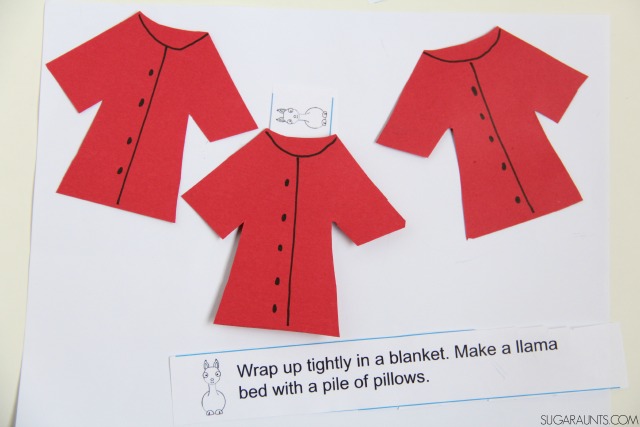
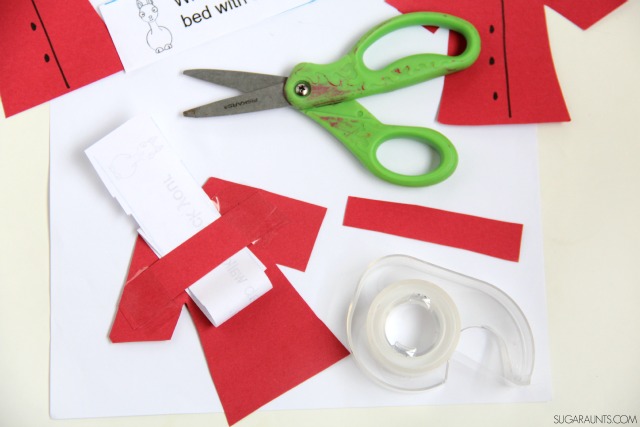
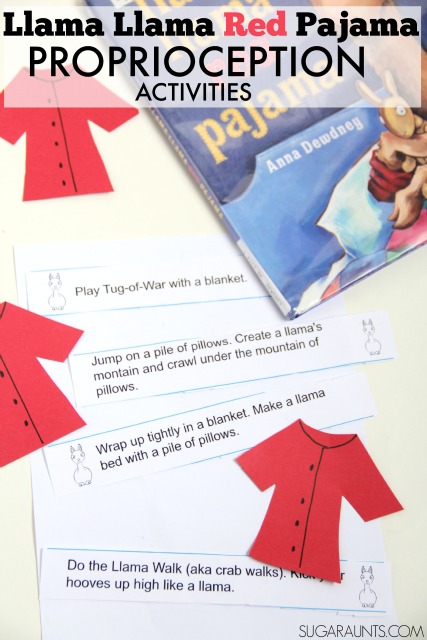
We cut out red pajama shirt shapes from red paper. After printing the free printable with the Llama proprioception activities, we cut them out and attached them to the pajama shirts.
Cut a small strip of paper to create a sleeve on the back of the pajama shapes. Slip the paper strips into the sleeve to hold the proprioception activity ideas.
Use these cards along with the book or as needed. Keep them together in a pile on a window sill or in an envelope and pull them out when calming proprioception needs are high.


Stop by and see what the other bloggers in our Book Club Play Dates series have come up with based on the book, Llama Llama Red Pajama:


This fine motor Christmas card is a great activity for therapy sessions during the holidays. Use this holiday fine motor task to build hand strength, coordination, and dexterity skills. Here’s the thing: Kids love to create gifts they can give to family and friends. One easy way to get the kids involved in holiday gifting (with minimal mess) is to have them make holiday cards. These Christmas cards were kid made and have a fine motor component, too.
Making Christmas cards with kids is a GREAT way to develop fine motor skills, and kids take ownership of their craft. They love to see the response on the recipient’s face when they make a card on their own. When there are fine motor skills being addressed, too…it’s a win-win situation!
So many kids struggle with fine motor skills, hand strength, coordination, and precision of grasp. However, when they are making a card for a loved one, there is motivation involved.
When kids are motivated by a task (like seeing their loved one smile!) there is intrinsic meaningfulness happening. Kids will LOVE to create cards that actually work on the skills they need to develop (fine motor skills).
So, let’s add Christmas card making to your therapy line-up this holiday season!
You might have seen our Christmas Tree hole punch activity. It’s a fine motor and proprioception powerhouse and very fun to make these hole punch Christmas trees. We can’t get enough of these easy Christmas decorations and used them to make Christmas cards.
This is a fun craft that addresses a variety of fine motor skills, including open thumb web space.

You’ll need just a few materials for this craft. (Affiliate links are included in this post.)
Make the scissor skills Christmas trees. The only difference is that you’ll want your child to punch holes through two Christmas Trees at a time, so the holes line up. Mark one side of each tree so your kiddo knows which side to apply glue. The pencil sides will be the inside of a Christmas Tree “sandwich” where the trees are the bread.

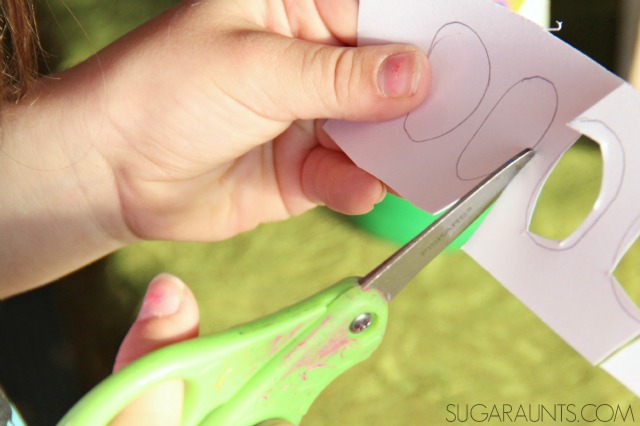
Tear the tissue paper into small pieces. Tearing tissue paper is a great way to practice fine motor skills and intrinsic muscle strength, as well as building arch development and an open thumb web space. You’ll only need very small pieces of tissue paper, and tearing such small pieces of tissue paper really works the muscles of little hands.
Spread glue on the marked side of a Christmas tree. Stick the small tissue paper pieces on the holes. Be sure tissue paper does not overlap other holes.
Fold the white cardstock in half, lengthwise. Place the tree on the paper and draw a rectangle-ish shape around the tree. Cut out the rectangle to make a large window on the front of the card.

Cut two pieces of embroidery thread and twist them together. Tape one end of the twisted thread to the top of the card on the inside of the window. Place the thread along the length of the Christmas Tree and place another Christmas Tree on top, lining up the holes. Tape the other end of the embroidery thread at the bottom of the card window, inside the card.
The twisted thread will allow the Christmas Tree to spin when the card is opened, giving it a 3D look.

Write on the inside of the card for a peekaboo effect. I love the cute kid writing you can see through from the front of the card!
Who can you make these cards for this Christmas?

What if you had themed, NO-PREP activities designed to collect data and can help kids build essential fine motor skills?
Take back your time and start the year off with a bang with these done-for-you fine motor plans to help kids form stronger hands with our Winter Fine Motor Kit. This print-and-go winter fine motor kit includes no-prep fine motor activities to help kids develop functional grasp, dexterity, strength, and endurance. Use fun, winter-themed, fine motor activities so you can help children develop strong fine motor skills in a digital world.
The Winter Fine Motor Kit includes reproducible activity pages include: pencil control strips, scissor skills strips, simple and complex cutting shapes, lacing cards, toothpick precision art, crumble hand strengthening crafts, memory cards, coloring activities, and so much more.

Colleen Beck, OTR/L has been an occupational therapist since 2000, working in school-based, hand therapy, outpatient peds, EI, and SNF. Colleen created The OT Toolbox to inspire therapists, teachers, and parents with easy and fun tools to help children thrive. Read her story about going from an OT making $3/hour (after paying for kids’ childcare) to a full-time OT resource creator for millions of readers. Want to collaborate? Send an email to contact@theottoolbox.com.