Outer Space Math Maze with ReGrouping

Space Maze

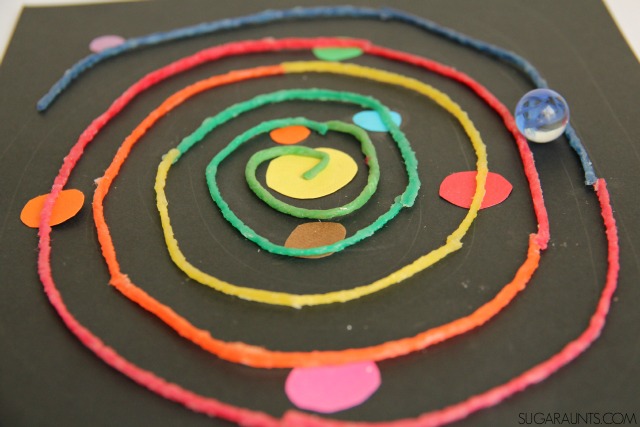
Today we have a Wikki stick maze that supports skills like bilateral coordination, motor planning, and visual motor skills. This is one of our favorite wikki stick activities!


Wikki Stix maze

Want to make learning math fun and creative when the kids just want to “be done?”


Sometimes we need to practice and build math concepts just a bit more.  It can be hard to find ways to get the extra practice in when the kids really just are over practicing math (again and again!)


The baby wants held, the green beans are boiling over on the stove, and the other kids are dumping bins of puzzles all over the living room.  But, the second grader needs to practice regrouping triple digits just a bit more.


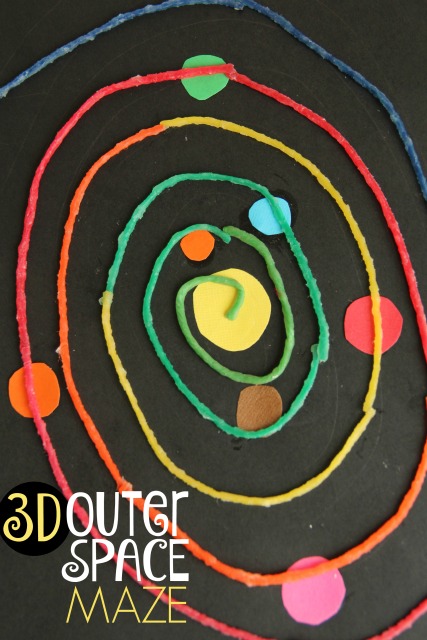
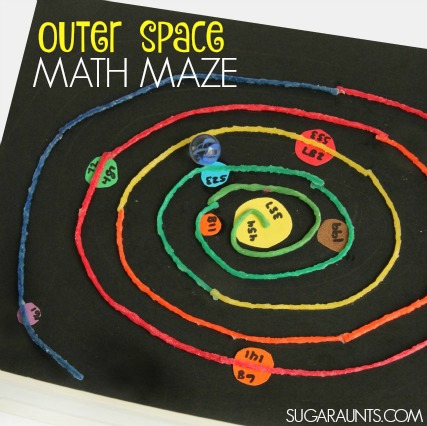
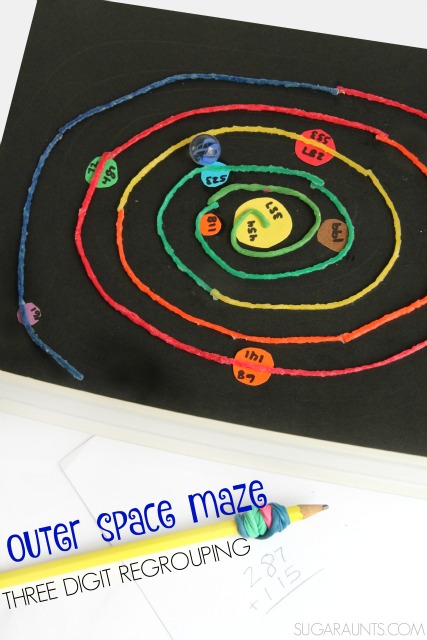
Practice regrouping three digit numbers with this 3D Outer Space math maze that kids can use for extra practice and with bilateral hand coordination.


Outer Space Maze

For kids that love all things outer space, this outer space maze is perfect for building math skills but also visual motor work.


My four year old and I made up this 3D Outer Space maze to practice re-grouping tens and hundreds columns in three digit numbers one day while my second grader was at school.  When she came home from school, she was all over it!


Mazes are a great way to practice skills needed in handwriting and math.  They are a puzzle for hand-eye coordination and a visual motor workout.  

Often times, kids have trouble aligning numbers in columns of ones, tens, and hundreds. A maze using hand-eye coordination like this one can help to work on that copying skill.


Materials you’ll need to make the Outer Space Maze:
(Affiliate links are included in this list and in this post.)

3D Outer Space Maze

This activity is actually a 3d Space project as well. You’ve probably seen 3D outer space projects in the past that focus on planet size, distance between planets, and rotation around the sun. Our 3D Space project is on paper, but you can also target rotation around the sun, planet size, etc.

Directions to make this 3D space project:

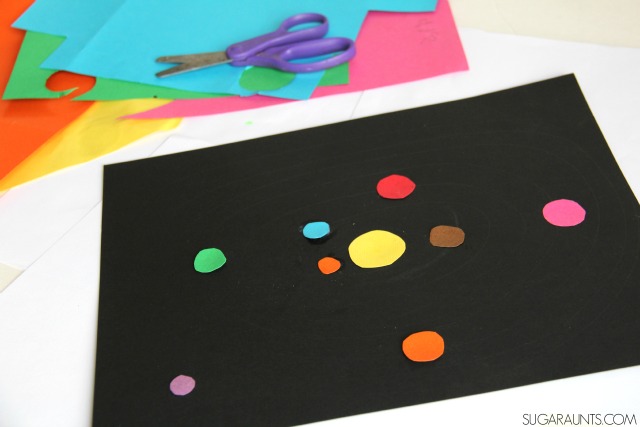
  1. Draw rings for planet’s orbits around the sun.  NOTE: We did this quickly and our outer space model is in NO way accurate in terms of size of planets or orbits.  Older kids could do this as a Science project.  

Practice regrouping three digit numbers with this 3D Outer Space math maze that kids can use for extra practice and with bilateral hand coordination.


2. Cut circles from Colored cardstock (Amazon affiliate link)
to represent planets.  
 
3. Glue them onto the orbits.

Practice regrouping three digit numbers with this 3D Outer Space math maze that kids can use for extra practice and with bilateral hand coordination.


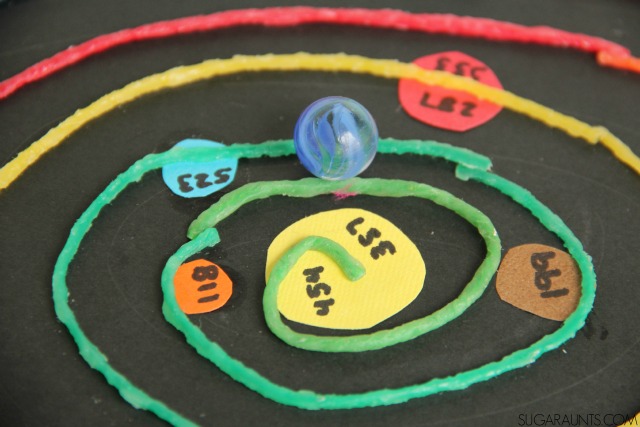
4. Press Wikki Stix (Amazon affiliate link) onto the orbits and over the planets.  Try to get them to stick right through the center of each planet.  
5. Then, use the Black marker to write three digit numbers on both sides of the planets.  
 
6. Place the paper into a bin with edges and move a marble along the 3D track.  

Practice regrouping three digit numbers with this 3D Outer Space math maze that kids can use for extra practice and with bilateral hand coordination.


Wikki Stix Maze

 
It takes coordinated and slow movements to get the marble to stay on the track and move along the path.  
 
You can read more about Bilateral Coordination and how it’s needed in so many functional tasks through play using lacing card activities.

Practice regrouping three digit numbers with this 3D Outer Space math maze that kids can use for extra practice and with bilateral hand coordination.


Math Maze

 
As your child moves the marble along the path, write down the numbers.  They can add the digits and work on adding with regrouping.  
Start the marble at different spots and tilt the tray in different directions to get different numbers.
 
Adding the bilateral coordination movement to this learning task made it a fun and hands-on activity that a worksheet simply isn’t.
 

So, hopefully this idea will help your hands-on learner.  Have fun playing and learning math…until the beans boil over!


The second grade blogger team have created hands-on learning activities with an Outer Space theme.  

See what they’ve been up to:


Practice regrouping three digit numbers with this 3D Outer Space math maze that kids can use for extra practice and with bilateral hand coordination.
 
 
More hands-on math activities you will love:
 
Make a paper door to introduce concepts in first grade math like regrouping in addition. 


Colleen Beck, OTR/L has been an occupational therapist since 2000, working in school-based, hand therapy, outpatient peds, EI, and SNF. Colleen created The OT Toolbox to inspire therapists, teachers, and parents with easy and fun tools to help children thrive. Read her story about going from an OT making $3/hour (after paying for kids’ childcare) to a full-time OT resource creator for millions of readers. Want to collaborate? Send an email to contact@theottoolbox.com.
Fingerprint Art from A-Z Fine Motor Finger Isolation

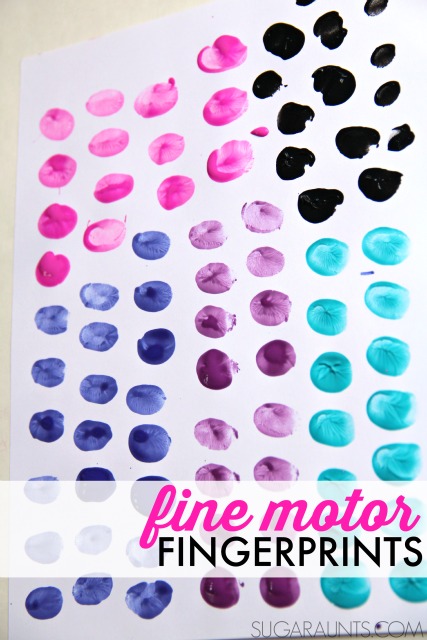
Fine motor fingerprints to help with finger isolation and dexterity in kids
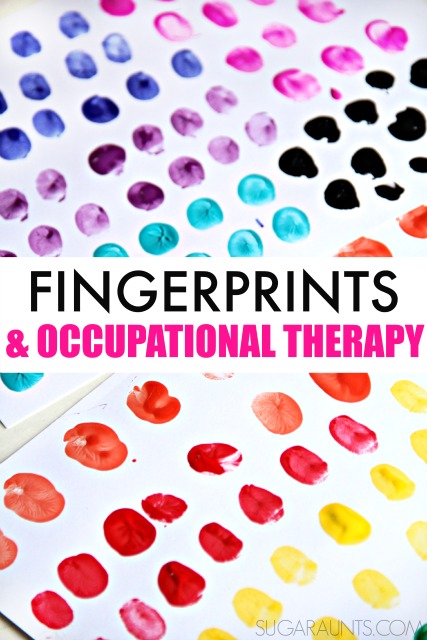
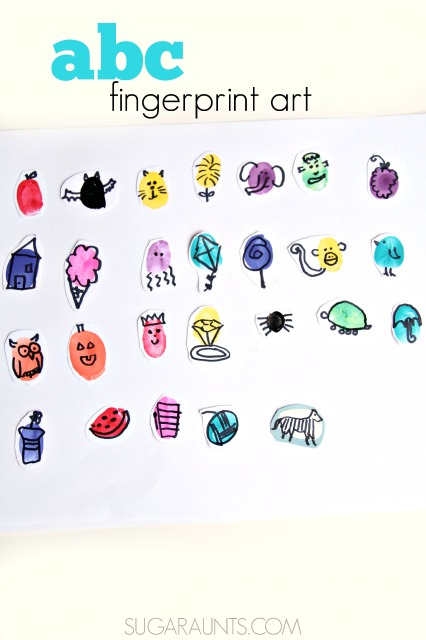
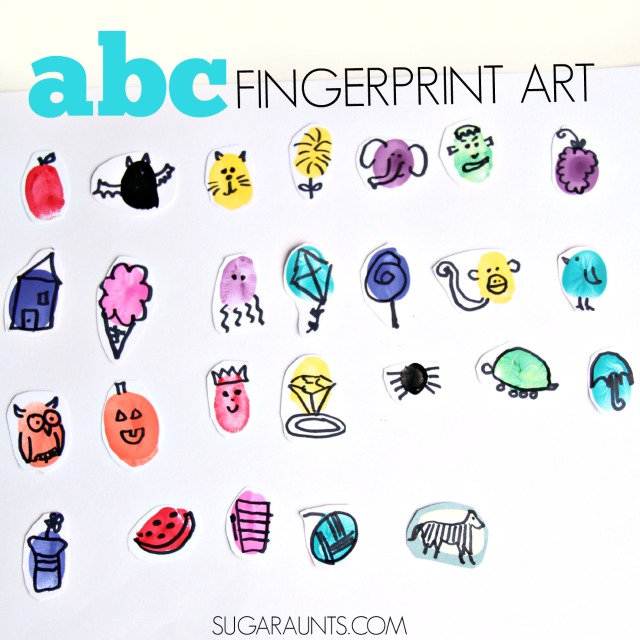
Fingerprint art is a fine motor powerhouse.  These cute little Letter of the Week Alphabet finger print crafts don’t really show how many fine motor skills are bring addressed!
 
Four kids in eight years make a lot of fingerprints. Fingerprints on the fridge, fingerprints on the sink, and fingerprints on the windows.  Then, there are the bins of artwork that I’ve got saved in the attic.  We all have a couple of those bins of memories that a mama has got to save.  The fingerprint and handprint Mother’s Day gifts, preschool crafts, and memorabilia.
 
As an Occupational Therapist who spent years working with kids, I can now practice the finger isolation needed in fine motor skills with my own kids, while creating fun artwork!
 
Finger isolation activities and fingerprint fine motor activities for kids to work on developing fine motor skills needed in functional tasks like handwriting, playing instruments, shoe tying, and typing.
 
This post contains affiliate links.  
 
It is not only fin to make fingerprint artwork, but educational too.  Use fingerprints in fine motor patterns, addition, multiplication, and so many more ways…all while working on finger isolation.


What is Finger Isolation? 

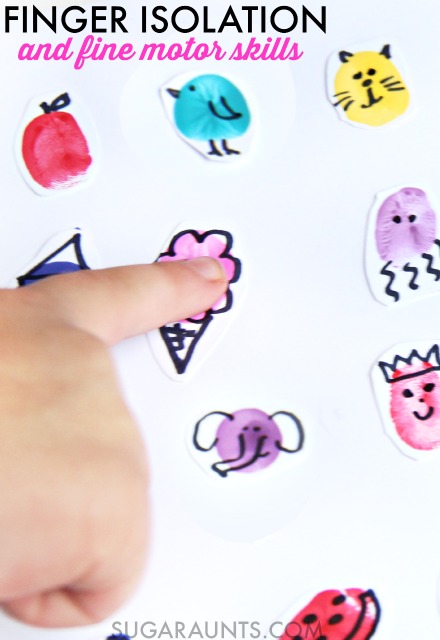
Finger isolation is using one finger to perform a task.  Pointing with the index finger, wiggling all of the fingers individually, and counting out the fingers on your hand are finger isolation.  This finger isolation is needed for many functional activities, like dexterity in managing pencils, paintbrushes, and other tools, typing on a keyboard, tying shoes, and many other skills.
 
 
Fine Motor Fingerprints
Many Occupational Therapists suggest fingerprint activities to their students for the fine motor benefits that the simple task allows.  To create a fingerprint, a child needs to isolate one finger and bend  (flex) the rest of the fingers into a fist.  This is refinement from the fisted hand and “raking” motion that babies and young toddlers demonstrate.  To create a fingerprint, the ulnar (pinkie side of the hand) are stabilized with the pinkie and ring fingers bent into the palm, or are positioned with the pinkie finger extended and abducted (spread apart). 
This positioning allows the knuckle joints (metacarpals) to stabilize and allow the pointer and middle fingers to be used with more control. The separation of the radial and ulnar sides of the hand allows for more skilled fine motor manipulation.
 
So, how can you use fingerprints in activities? 
  • Use fingerprints like you would a dobber.
  • Fingerprint math patterns.
  • Fingerprint pointillism art.
  • Draw circles and ask your child to add their fingerprints to each circle.
  • Fingerprint onto sight words, spelling words, or vocabulary words.
 
Finger isolation activities and fingerprint fine motor activities for kids to work on developing fine motor skills needed in functional tasks like handwriting, playing instruments, shoe tying, and typing.


Finger Isolation Activities to Improve Fine Motor Dexterity:

Try these fine motor activities to work on finger isolation:
  • Fingerprints!  Make a whole alphabet of fingerprint artwork, using the guide below.  These are perfect for letter of the week letter learning or for just creating a A-Z art with fingerprints.  Each fingerprint represents a letter of the alphabet.  Simply show your child how to print in different colored paints.  When the paint dries, use a black permanent marker to add details.
Finger isolation activities and fingerprint fine motor activities for kids to work on developing fine motor skills needed in functional tasks like handwriting, playing instruments, shoe tying, and typing.


More Finger Isolation Activities

    • Squeeze a spray bottle using just one or two fingers.
    • Spin coins on their edges.
    • Roll small balls of play dough between the thumb and index finger.  Repeat between the thumb-middle finger and thumb-ring finger.
    • Try sign language.
    • Play finger games like “Where is Thumbkin” and “Itsy Bitsy Spider”.
    • Shoot Marbles .
    • Finger pattern games.  Ask your child to rest their fingers on the edge of a table.  They can copy your hands as you lift individual fingers, separate, bend, and tap your fingers in patterns.  Ask them to copy using both hands at the same time, then work to copying patterns with just one hand at a time.
    • Play paper football.
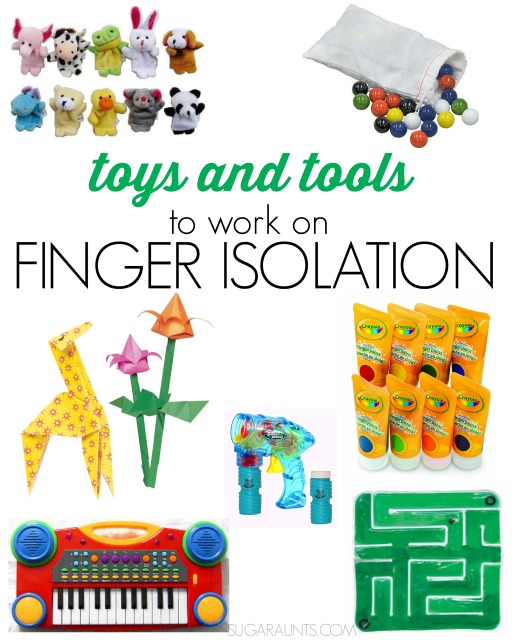
    • Finger Puppets allow kids to imagine and pretend while working on finger dexterity and movement of individual fingers in isolation of others. This is a great precursor to typing. Play with these puppets as a hand warm-up before working on keyboarding tasks.
    • Finger Painting This is a sensory and messy texture and wonderful for sensory feedback while working on finger isolation.
Fold Origami
Squeeze a Bubble gun
and pop the bubbles between fingers.
  • Practice tying knots and shoe tying.
  • Play a keyboard
  • Play mazes with the fingers. This Sensory Gel Maze
    is perfect for finger isolation.
  • Pick up stick games
  • Screw/Unscrew bottles, lids, nuts, and bolts
Toy ideas for working on finger isolation Occupational Therapy tips
 
Finger isolation activities and fingerprint fine motor activities for kids to work on developing fine motor skills needed in functional tasks like handwriting, playing instruments, shoe tying, and typing.
Use the activities in this post to work on the skills needed for so many fine motor tasks.  Hopefully, you don’t end up with too many more fingerprints on the windows with all of this finger isolation practice!
Finger isolation activities and fingerprint fine motor activities for kids to work on developing fine motor skills needed in functional tasks like handwriting, playing instruments, shoe tying, and typing.
Did you like this post?  Share it on Facebook!
 
This post is part of our 31 Days of Occupational Therapy series.  You can find more creative fine motor activities here:

Jackson Pollock Inspired Tote Bag Art

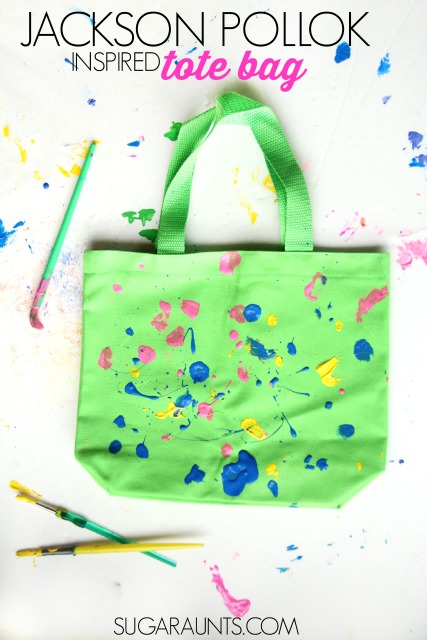
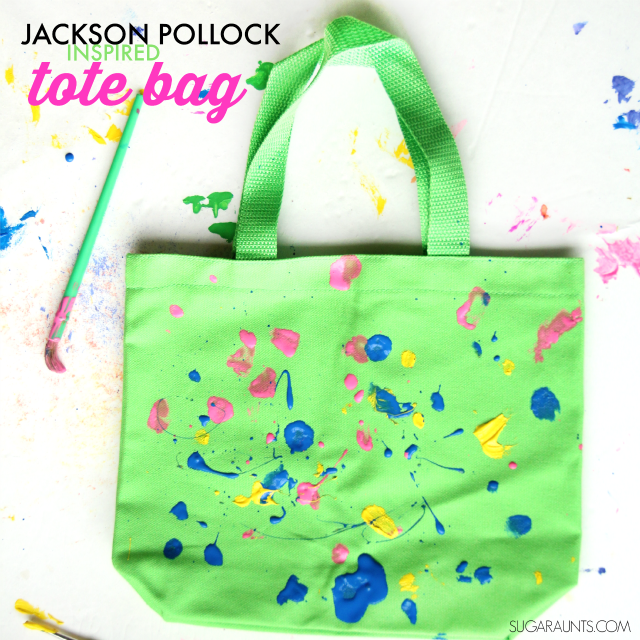
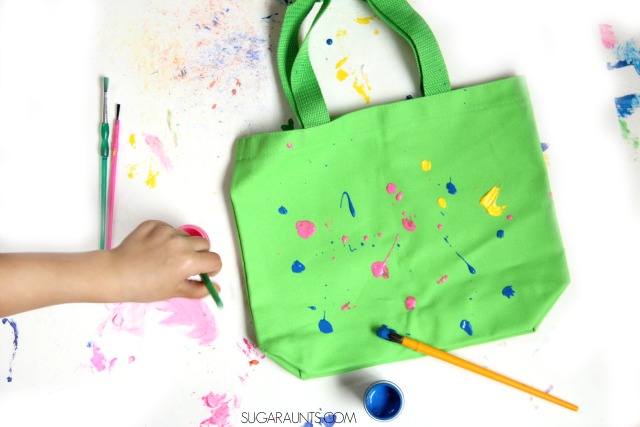
Today, I’ve got such a fun and gorgeously simple art project to share.  This Jackson Pollock inspired tote bag art was just the creative outlet my second grader and I needed one rainy afternoon. Splatter paint is a creative painting tool that kids love.

 
As a Mama of four goofy/amazing/active/wild kids, Pollock’s balance of control and chance speaks to me.  I think Moms have the balance of control and chance pretty well managed…sometimes we have a little more control in situations and other times it’s more of a game of chance. The balance changes by the moment. And it’s all part of the job of being mom!
 
Flinging little drops of paint around sure was an act of balancing how hard we flung the paint and just accepting the chance of blue paint dripping onto bare ankles.  
 
Which happened.  
 
And lead to lots of giggles.
 
Jackson Pollock inspired tote bag art for second graders (or any age!) that wants to explore Pollock's use of movement, balance, and control in his painting technique.  Create a unique and creative art project, too!


This post contains affiliate links.

Jackson Pollock Inspired Tote Bag Art

 
You’ll need just a few materials to make this art project:

Tote Bag 
Poster Paints (THESE are my favorite brand! for their gorgeously bright colors.) 
A bit of water
Stick, paint stirrers, chopsticks, or paint brushes 

Drop cloth, old table cloth, or a large Storage Bin


We found this Jackson Pollock book
at our library and learned some interesting facts about the artist.  One thing that stood out to us was the fact that Jackson Pollack’s paint brush never touched his canvas.  When we painted out tote bag, we loved re-creating that fact!
RELATED: Get creative by Painting with Yarn!
 
To make the Tote Bag project: 
Spread out a drop cloth, old table cloth, plastic throwaway table cloth, or even an under the bed storage bin.  Anything that is going to protect your floors will work.  The mess with this project depends solely on how the art moves you and the kids.  And it might just end up being big old movements that paint the walls.
 
Jackson Pollock often times painted with items other than paint brushes.  We did use paint brushes for our tote bag but only because we got too excited about painting and forgot to dip the stick end of the brush into the paints.  Be sure to not touch the brush to the tote bag though!  Instead, swirl, tap, swing, and shake the paint onto your painting surface.


Let the paint dry and use your tote to carry essentials.  I’ll share how we’re using our tote in another post. Coming soon!
Jackson Pollock inspired tote bag art for second graders (or any age!) that wants to explore Pollock's use of movement, balance, and control in his painting technique.  Create a unique and creative art project, too!
Be sure to check out all of the great Famous Artist ideas from the 2nd grade blogging team! 
Piet Mondrian Suncatcher Art for Kids from School Time Snippets 
Van Gogh Inspired Sunflower Art Projects from Preschool Powol Packets 
Matisse Inspired Suncatchers from Creative Family Fun 
Warhol Inspired Art for Kids from Still Playing School 
 
Jackson Pollock inspired tote bag art for second graders (or any age!) that wants to explore Pollock's use of movement, balance, and control in his painting technique.  Create a unique and creative art project, too!
More creative art and painting you will love:
  

Creative & Fun Ways to Help Kids Cut With Scissors

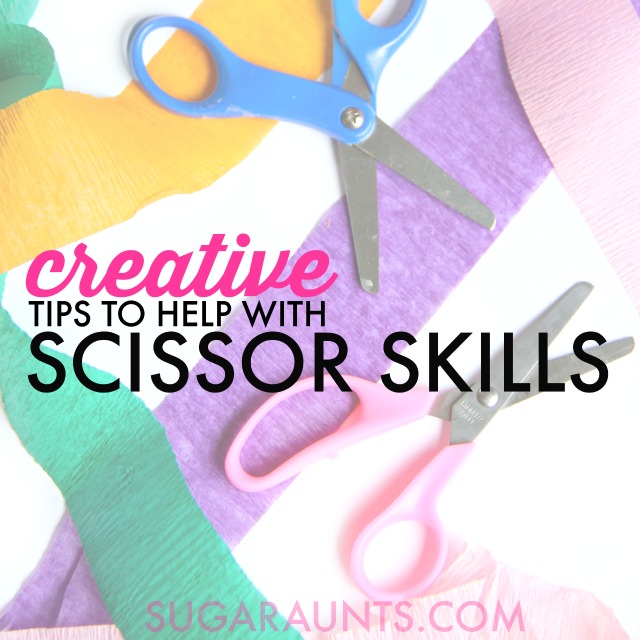
Teaching and modifying for scissor skills is absolutely one of my favorite treatment areas in working with pediatrics.  Today, I’m excited to share creative tips on helping kids with scissor skills.  These ideas work with any type of scissors. From snipping paper to cutting complex shapes, there is a lot to cover!


These ideas are some of my favorite tips and tools and you’ve got them all in one place.  It’s part of my 31 Days of Occupational Therapy series, where you can find treatment ideas using free and almost free materials that you probably already have in your home.  These cutting ideas use items you probably already have in your house.

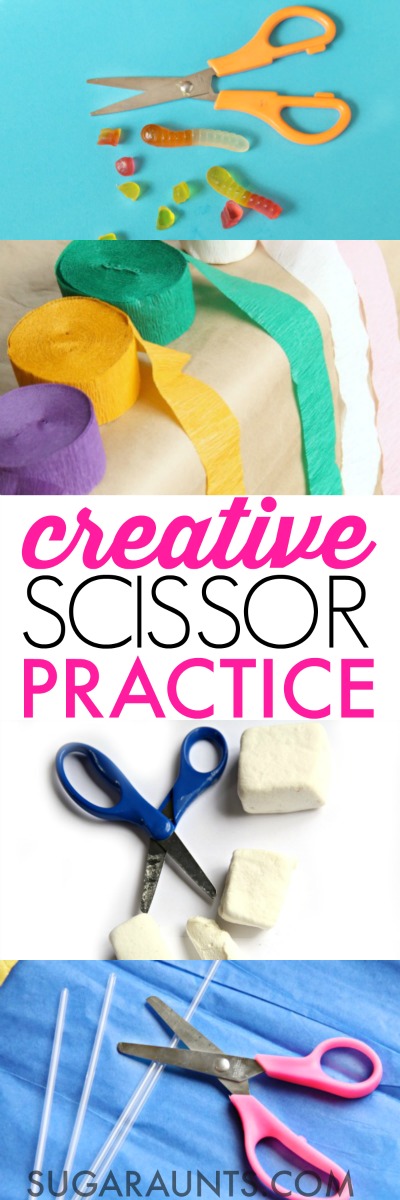
Creative Scissor Skills ideas and tips for helping kids work on cutting with scissors, from an Occupational Therapist

Creative Ways to Help Kids Cut With Scissors


Take a quick look around Pinterest and you will see a gazillion ways to practice scissor skills with kids.  


But, you can hand a kiddo a pair of scissors and have them snip away and they still might need a little extra help with cutting on the lines.  Did you know there are a bunch of skills that a child needs to master in order to cut a multi-angled shape like a house from paper?  


In order to hold scissors and cut on lines, a child needs to use a precision grasp on the scissors, separate the two sides of the hand, position the scissors with a perpendicular position to the paper, flex the thumb with graded dexterity, perceive force as they cut, utilize bilateral integration, demonstrate motor planning, utilize eye-hand coordination, and show integration of visual motor skills.  Whew!  I’m tired just thinking about all of that work a kiddo is doing when they cut out a shape!

Scissor Grasp and Accuracy in Cutting Paper

Before a child can cut a shape from paper, they must use an appropriate grasp on the scissors.  Provide visual and verbal cues for holding the scissors correctly and notice a few things:

  • Does the child can open and close the scissor?
  • Do they position the scissors consistently on their dominant hand? 
  • Does the child open and close the entire hand when cutting, or just the thumb side of the hand.
  • Do they have the scissors positioned on their hand correctly?
  • Are they holding the scissors in a perpendicular position to the paper?
  • Are the middle, ring, and pinkie fingers bent into the palm?


If any of these areas are a concern, you’ll need to work on scissor grasp.  Stay tuned, because we’ve got scissor grasp ideas in the line up and coming soon to the blog!
 
Now, if your little scissor user has a good grasp on the scissors, is interested in cutting with scissors, and is ready for some practice, try these creative ideas for working on scissor control, accuracy, and avoiding cutting their therapist or parent helper:
Creative Scissor Skills ideas and tips for helping kids work on cutting with scissors, from an Occupational Therapist

Fun Scissor Skills Ideas For Kids

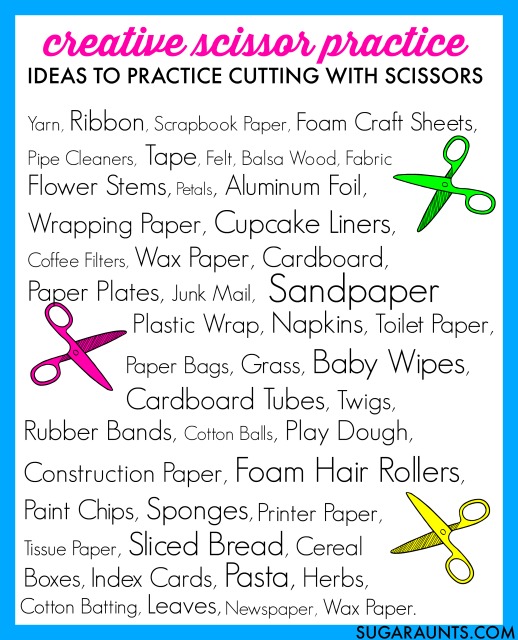
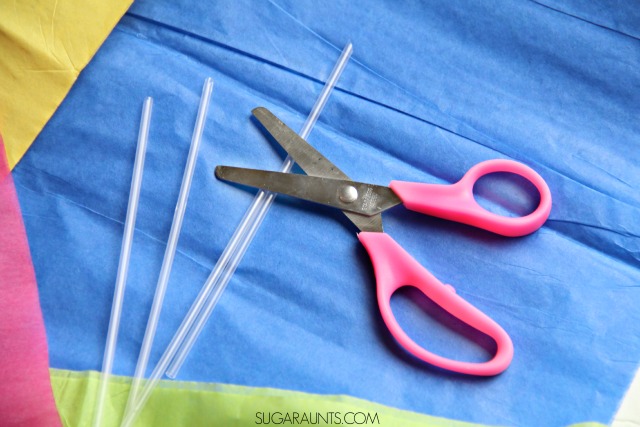
Try cutting these materials for creative scissor practice: 
 
NOTE: These creative scissor ideas are not in order of difficulty.  That is another blog post 😉  This list is meant to be a resource of creative cutting practice ideas. Click on the links to see how we used each material in a fun way in the past!
 
Creative Scissor Skills ideas and tips for helping kids work on cutting with scissors, from an Occupational Therapist
Practice Scissor Skills by Cutting Paper Materials: 
Toilet paper

Construction Paper

Cardstock
Oaktag
Index Cards
Food Wrappers like Labels
Coupons
Paper Plates
 
Creative Scissor Skills ideas and tips for helping kids work on cutting with scissors, from an Occupational Therapist
Practice Scissor Skills by Cutting Household Items:
Flower Stems

Cloth

Aluminum Foil
Cheesecloth
Chip Bags
Sandpaper
Fabric
Wax Paper
Plastic Wrap
Plastic Bags
Sandwich Baggies
Cotton Swabs
Toilet Paper
Cardboard Tubes
Napkins
Baby Wipes
Herbs
Grass
Leaves
Thin Twigs
Rubber Bands
Cotton Balls
Plastic Beads
Paint Chips
Cupcake Liners (like this and this)
Sponges
Creative Scissor Skills ideas and tips for helping kids work on cutting with scissors, from an Occupational Therapist
Practice Scissor Skills with Crafting Materials:
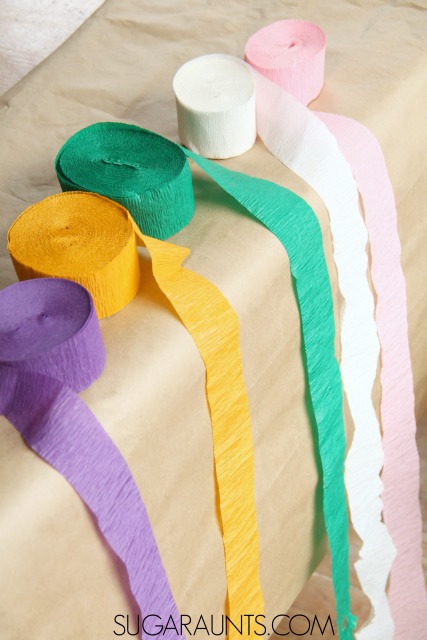
Foam Crafting Paper like this.
Ribbon
Thin string
Scrapbook Paper
Cotton Batting
Tape
Thin Balsa Wood
Felt
Creative Scissor Skills ideas and tips for helping kids work on cutting with scissors, from an Occupational Therapist
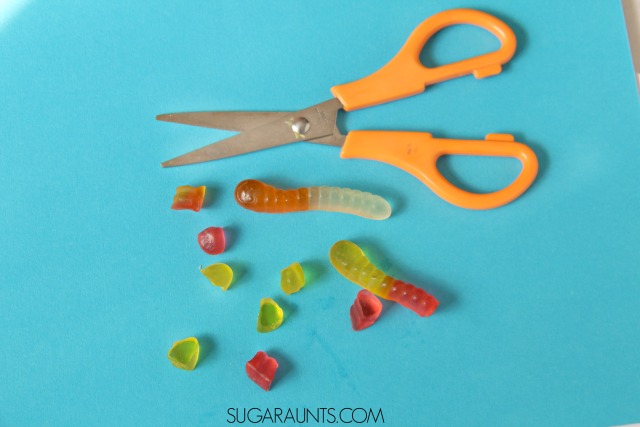
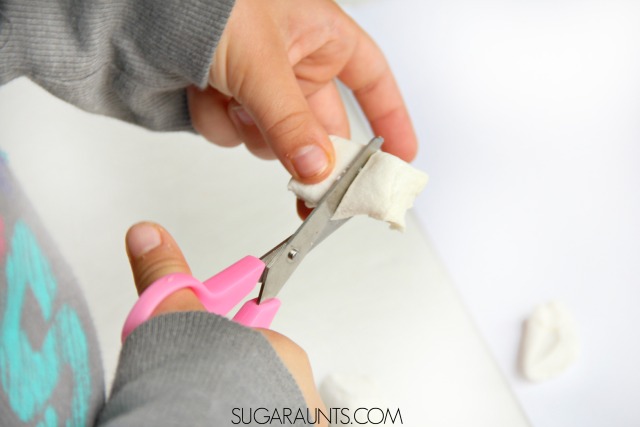
Practice Scissor Skills with Food Materials: Use the cutting practice during food preparation in Cooking With Kids experiences!
Sliced Bread
Twizzler candies.  See how we did it over on Instagram.
Sliced Cheese
Deli Meat
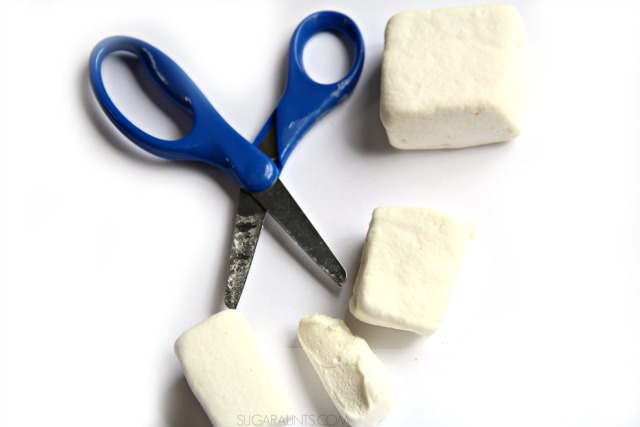
Gummy Worms
Thinly Sliced vegetables like cucumbers, zucchini, carrots
Marshmallows
Pasta
Toast
Lettuce
Dough
Green Beans
Creative Scissor Skills ideas and tips for helping kids work on cutting with scissors, from an Occupational Therapist
So the ideas in this post are purely for practicing MORE scissor activities while working on and encouraging your child’s appropriate scissor grasp.  Line Accuracy, smooth cutting strokes, and difficult cutting shapes are other areas (Again, coming soon to a blog near you…this one!) All of these ideas will make cutting with scissors easier for your child in a fun and creative way.  And prevent snips to your fingers as you help your favorite scissor user!

Creative Scissor Skills ideas and tips for helping kids work on cutting with scissors, from an Occupational Therapist
 
More activities you will love: 
 

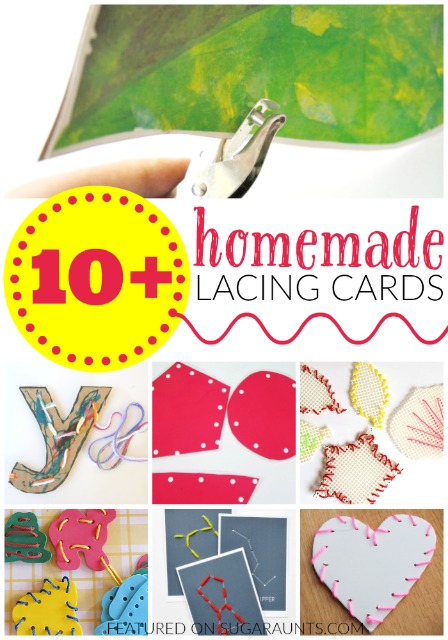
Homemade & Store Bought Lacing Cards Bilateral Coordination

Lacing Cards can always be found in an Occupational Therapist’s treatment bag.  Every pediatric OT clinic, preschool therapist, and school-based OT has a bag of lacing cards.  It’s just that lacing cards are a powerhouse of therapeutic benefits for kids of all ages. 


Why use lacing cards with kids of all ages?  Read on, I’ve got a great list for you.  Today, I’m sharing ideas to make your own homemade lacing cards as well as some of may favorite lacing cards and activities out there on the market.  


This post is part of my 31 days of Occupational Therapy series where I’m sharing a month-long OT fest with materials that are mostly free or inexpensive.  


Hopefully you can find a few ideas for some areas you are working on in your Occupational Therapy clinic, or your child is building at home, in school, or in homeschool.


Homemade lacing cards and why kids love them and should do them for fine motor skills and learning, from an Occupational Therapist.


Why should kids use lacing cards for development of skills and learning?  

One of my favorite tools that I used with my OT kiddos were lacing cards.  You can really modify them to suit the learning objectives and developmental needs of every child.  Now, I have a shoebox of lacing cards that I use with my own children in play (and as I sneak in my OT skills with them!).  We work on fine motor skill, visual perceptual skills, bilateral coordination, language, literacy, math, tool use, life skills, and more.

How lacing cards are beneficial to kids:


  • Development of pincer grasp:  Manipulating the string or needle with a pad-to-pad grasp is a fine motor skill children need for many functional tasks.  Picking up small items like coins, beads, seeds, etc require a pincer grasp.
  • Bilateral Coordination:  Children need bilateral hand coordination where they use their dominant hand as a tool user and the non-dominant hand as the assisting hand in skills like handwriting, cutting with scissors, zippering a coat, buttoning a shirt, and drawing. You can see all of our bilateral hand coordination activities here.
  • Motor Planning: A motor plan is functional execution of a task which is viewed with the eyes and carried out with the hands in order to complete tasks, such as mazes, walking around obstacles, cutting along a line, and writing within a space on a form.  Visual motor skills can be difficult for children with visual processing difficulties.  Identifying and organizing information is in a motor plan works on problem solving skills.
  • Hand-Eye Coordination: Hand-eye coordination is using the information received through the vision system to coordinate the hands with control, in order to complete a task, such as handwriting or catching a ball. Find more hand eye coordination ideas here.
  • Visual Scanning:  Children need visual scanning in order to scan a page, read, write, and find a certain colored sock in a drawer full of socks (for example.  There are a ton of other ways that visual scanning skills are imperative for functioning in school and home settings.) Find more visual scanning ideas here.
  • Literacy:  Lacing cards can be modified to meet educational needs of children.  Write letters along side the holes and children can practice letter identification, letter recognition, letter sounds, upper and lower case letter matching, alphabetical order, and more.
  • Math:  Write numbers along the lacing holes and children can work on number identification, number recognition, number order, addition, subtraction, multiplication, skip counting, even/odds, and more.  Lacing cards can be created in geometric shapes for shape identification.
  • Tool Use:  Managing a thread with or without a needle is great practice for tool use in a functional skill.  
  • Life Skills:  Children can be introduced to sewing patterns with thread and a needle.
Now. There are a gazillion lacing cards out there on the market.  There are brightly colored animals, shapes, letters, numbers… and that is great. (In fact, I’m going to share some of my favorites at the bottom of this post!)  


Kids tend to gravitate towards themes that they love.  So a dino fan will maybe try to lace and create with a stegosaurus lacing card.  I do love the sturdiness of fabricated lacing cards.  They are awesome for little OT hands when you’ve got a crew that uses them day after day.  


I’m also going to share some ideas on how to make your own lacing cards.  When you make your own, you can customize the fine motor tool to your child’s interests.  Get your kiddo in on the creating part, so that they can craft and use their creation.  


Related Read:  Try these Neat Pincer Grasp Activities to develop fine motor skills.
 

Homemade Lacing Card Ideas:

There are a ton of materials you can use to make lacing cards.  Here are some of my favorites:
  • Foam sheets (The Chaos and the Clutter) are very versatile for lacing cards.  They can be made into any shape using cookie cutters or free hand drawing.
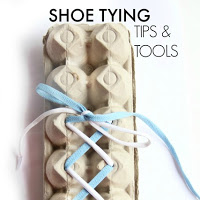
  • Make a lacing card using recycled materials.  We used a take out container.  These can be created into any shape you like, too.
  • Plastic Mats (Kids Activities Blog) like place mats or sink mats make a nice sturdy lacing card surface.
  • A Cardboard Cereal Box makes a great sturdy lacing surface.  You can customize it however you like.  I love the way Parenting Chaos used a book jacket.
  • Cardboard (No Time For Flashcards) created letter shapes.
  • Seasons, patterns, and colors can be explored by lacing with wallpaper scraps (Happy Hooligans).
  • Cut out shapes from Plastic Canvas, like we did, and practice different types of stitches, as well as math.
  • There are, it seems, a limitless supply of free printable lacing cards in any shape or theme out there.  These Dinosaur shapes (Living Life and Learning) would be a hit in our house.
  • Explore more interests like Outer Space with these Constellation Lacing cards (Kids Activities Blog).
  • Use Transparent Office Supplies (Where Imagination Grows) like binder dividers and create a light table lacing activity.
  • You can even create a lacing card from Family Photographs (Where Imagination Grows) for a fun lacing activity.

lacing gift guide and tips and tools on why lacing cards are awesome for fine motor skills. From an Occupational Therapist.


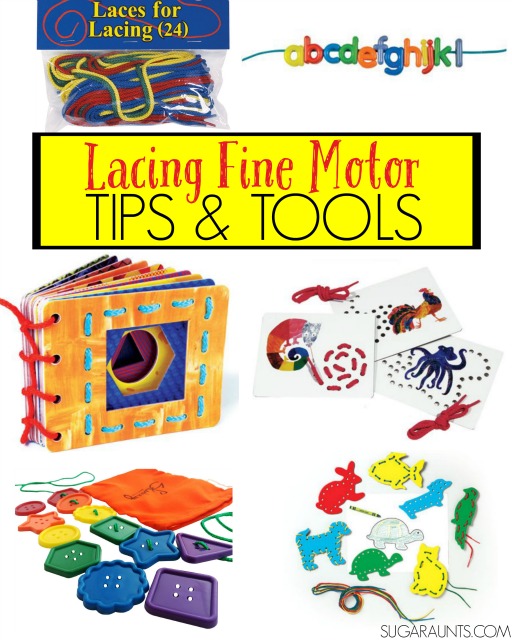
So homemade lacing cards are super cool, and we know WHY kids should be using lacing cards in home, school, and therapy. And we’ve got some fun ideas on HOW to make our own. But what if you just can not get up the oomph to make your own? Here are some of my absolute favorites that are out there. 


These are the lacing tools that will work on those fine motor skills, open up the thumb web space, coordinate hand and eye movements, and work two hands together in effortless coordination. Well, maybe it’s not as easy as picking up a card and thread, but lacing cards should have an Occupational Therapy superhero cape on them… 


 Give this list to grandparents who are asking for gift ideas, put these on your wish list, or just watch for the next sale. Or, if you’re like me, just drool over the awesomeness of the products out there. ((Then go make your own version!)) 


 Who doesn’t love Eric Carle? These The World of Eric Carle Animal Lacing Cards are gorgeous and bright! 


 Kids can create a book or hanging wall art with this MoMA Modern Shapes Lacing Cards. What a creative way to work on fine motor skills! 


 Want to work on lacing cards with the kiddos, but can’t justify the cost? Just grab some colorful Long Extra Laces and make your own using the tips above. 


 These Letter Beads
are another great way to work on skills that lacing cards do, but while working on literacy too. For added fun, make your own paper plate lacing card and add letter beads within the card to practice letter identification and sounds. 


 Lacing cards like these Lacing & Tracing Pets
are great for so many skills, but they can be boring for kids after they do them once. Ask kids to lace them together into a garland (tie the strings!), thread in beads, create different patterns, or add literacy/math components. These are cool because you can also use them a stencil and trace them. 


 I love these Lacing Buttons for their open ended-ness! Kids can learn shapes, patterns, colors, and sequencing by lacing hem together.
Hopefully, you’ve found some creative ideas here!  You might like a few other posts in my 31 Days of OT series:

 
What my blogging friends are sharing today:

Preschool Books and Activities

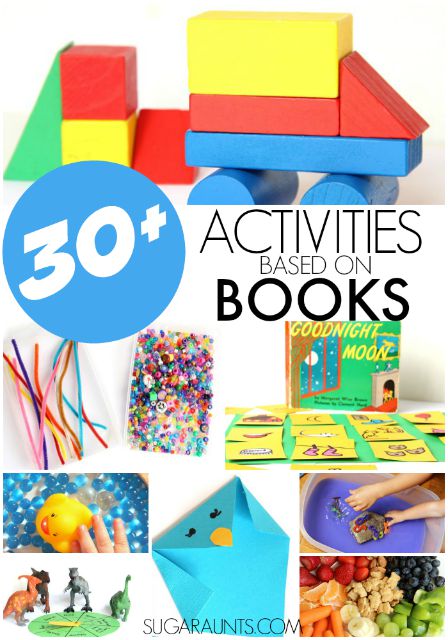
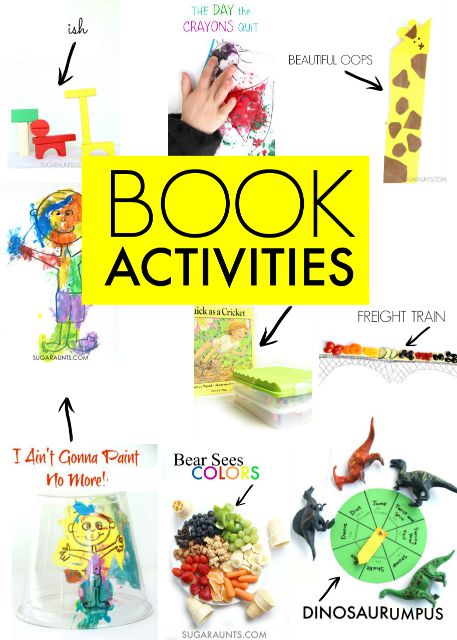
Children can explore books through their senses and with a hands-on approach while learning and making memories. These preschool books and the activities that we’ve come up with…are popular children’s books that are fun to read, and fun to play along with! These are book extension activities that we’ve read and come up with book-based sensory play ideas, regulation ideas, fine motor activities, crafts, and more. Check out the list below, because these are some of our favorite ways to use books in therapy activities and learning!

The fine motor activities for preschoolers page is another great place to find activity ideas to meet the needs of preschool children. Many of the book activities here incorporate developmentally appropriate play activities using these concepts.

Preschool book extension activities to use to explore children's books through play. Use these preschool books in activities for kids!

Preschool ACTIVITY Books

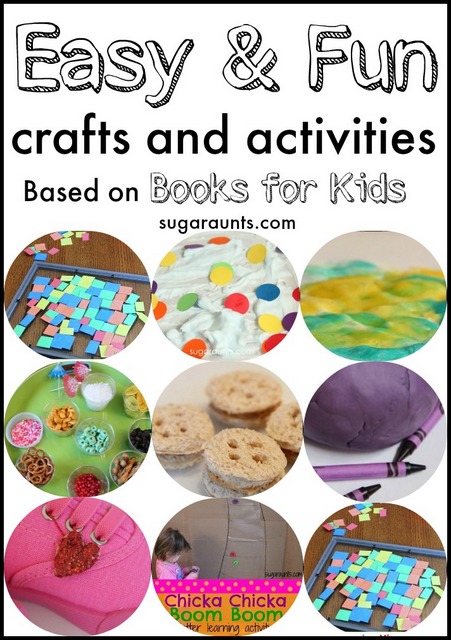
We love coming up with fun crafts and activities based on favorite books.  This is a collection of crafts and activities that go along with some fun books for Preschoolers, Toddlers, and School-aged kids.  

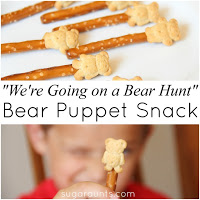
Kids remember the activity that you create for a book long after they’ve read a book.  So often, my kids will say (out of the blue), “Hey Mom, remember when we made bear puppets?” in reference to our We’re Going on a Bear Hunt activity.  

We love to create multi-sensory play and learning enrichment activities to extend themes of books.  We’ve covered many Preschool books and activities in our blogging days, but also many school-aged books with creative play and learning ideas.  We’ll be adding to this page, so be sure to stop back for more fun ideas!

Related, these friendship activities for preschoolers are more great tools to address social emotional learning in young children.


Book activities for kids


Preschool, Toddler, and School-aged Children’s Books and Crafts Activities

This post contains affiliate links.

 Quick as a cricket book activity   


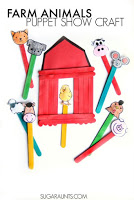
 Big Red Barn puppets  


Book extension activities for kids


Books We LOVE (Book Lists):


The books Preschoolers LOVE:

Activities and crafts based on Preschool and Toddler books.  This blog has so many quick and easy ideas for kids!

hands-on activities to explore social emotional development through children's books.

Love exploring books with hands-on play?  

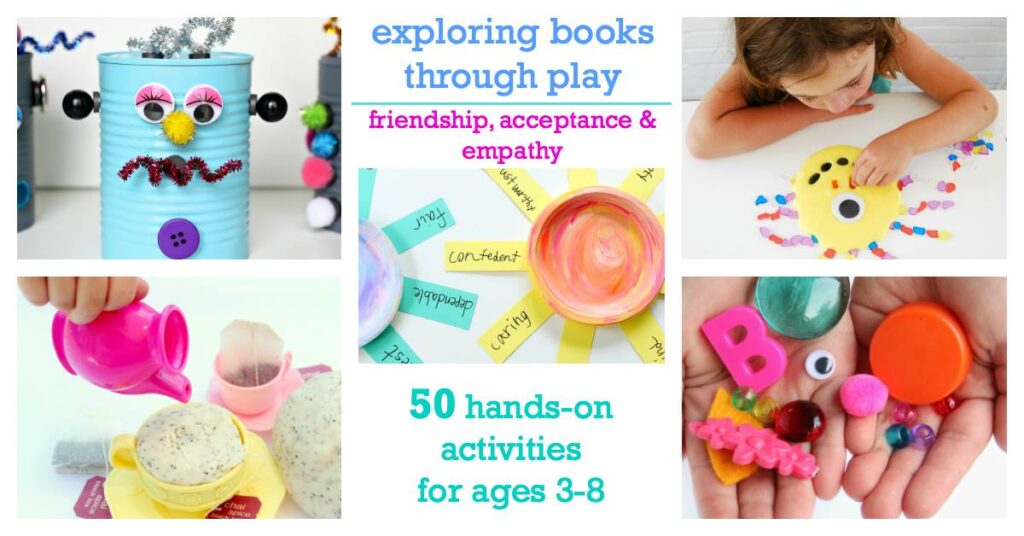
Grab our NEW book, Exploring Books Through Play: 50 Activities based on Books About Friendship, Acceptance, and Empathy, that explores friendship, acceptance, and empathy through popular (and amazing) children’s books!  This digital e-book (or physical book, available on Amazon), contains 50 hands-on activities that use math, fine motor skills, movement, art, crafts, and creativity to support social emotional development. This resource includes activities, crafts, hands-on play ideas, and so much more. There are activities based on 10 popular children’s books:
 
A Sick Day for Amos McGee
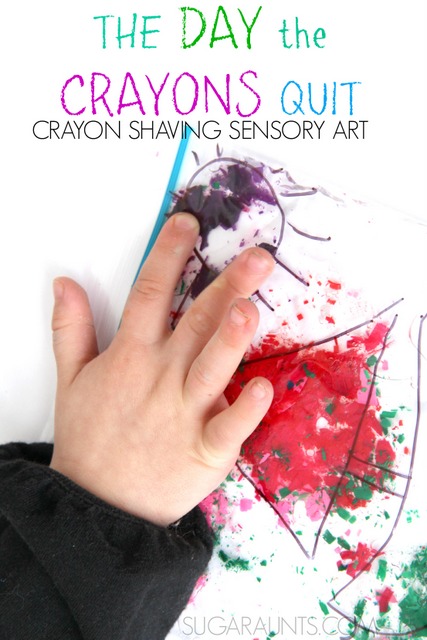
The Day the Crayons Quit
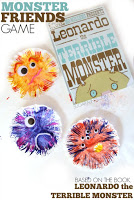
Leonardo the Terrible Monster
Boy + Bot
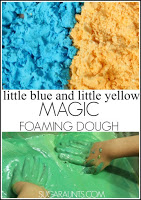
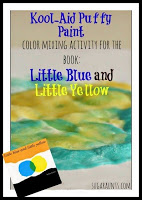
Little Blue and Little Yellow
Red
The Adventures of Beekle
Chrysanthemum
Penguin and Pinecone
Whoever You Are
 
Each activity is designed to be hands-on and encourage acceptance, empathy, and friendship through play and sensory exploration. This book allows children to explore their favorite children’s books with their senses! Includes printable resources. 
 
 
Amazon affiliate link:

Base Tens Operations with Paper Clips

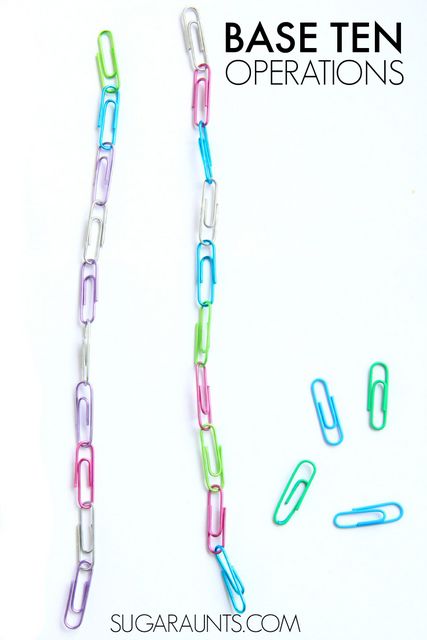
There are many games with paper clips that support development of fine motor skills, and making this paper clip chain is just one! You’ve probably made a paperclip chain at one point or another. But did you ever think about the learning that is happening, too?

In first grade math, base ten is a big part of learning the basics of adding.  Kids need to understand that the two digits of a two-digit number represent amounts of tens and ones.  This is a basis of more complex math problems.  So what is a base ten?  Base 10 refers to the position of a number.  There is a ones place value, a tens place value, and a one hundreds place value in a three digit number like 236.  Each number is 10 times the value to the right of it.  A ten is thought of as a bundle of ones.  Using base ten concepts, kids can decipher that a two digit number is made up of one or more tens and single numbers.  We made these base ten manipulatives using paper clips for comparing, adding, and counting.  The bonus to this activity is that it is a fine motor workout!  


Use paper clips to add, subtract, and discuss math concepts like base ten and adding two and three digit numbers.  This is great for Kindergarten, first grade, or second grade math  with kids.


Base Ten Activities for Kids:

This post contains affiliate links.
We used the paper clips
to first, count out ten.  We attached the ten paper clips to create a tens value.  We then built more and counted by ten.  Using the strand of tens paper clips, we were able to build 7 strands of tens. (Then we ran out of paper clips!)

  • Using strands of tens, sort them into piles.  You might have three strands of tens in one pile and 4 strands of tens in the other pile.  Ask your child to figure out which is more.
  • Compose numbers using strands of the ten paper clips and ones.  Write down numbers (You can even use our homemade worksheets to write out numbers.)  Then help your child build the numbers using the strands of tens and the individual paper clips.
  • Subtract multiples of 10 using the paper clips. Write out the problems and discuss the methods and reasoning.
  • Add multiples of 10 using the paper clips.  Write out the problems and discus methods and reasoning.
  • Tell your child a two digit number and ask them to mentally find 10 more or 10 less than the number.  Use the paper clips to figure out the answer if needed. 
  • Add within 100, including adding a two-digit number and a one-digit number, using the paper clips as a model.  Draw out pictures of the problem.  Write out the problem. 
  • Use the paper clips to add two-digit numbers, adding strands together and ones together.
  • Discuss how to use the paperclips to compose a ten.  See how we recently practiced composing numbers.
How many ways can you think of to use paper clips in math with base ten activities?  

Try more of our math activities:
We are posting this idea as part of our month-long Learning with Free Materials series where we provide 31 days of learning using free or almost free materials in homeschooling or school-based extension learning like homework.  This post is part of the 31 Days of Homeschooling Tips as we blog along with other bloggers with learning at home tips and tools.

Fine Motor Color Math

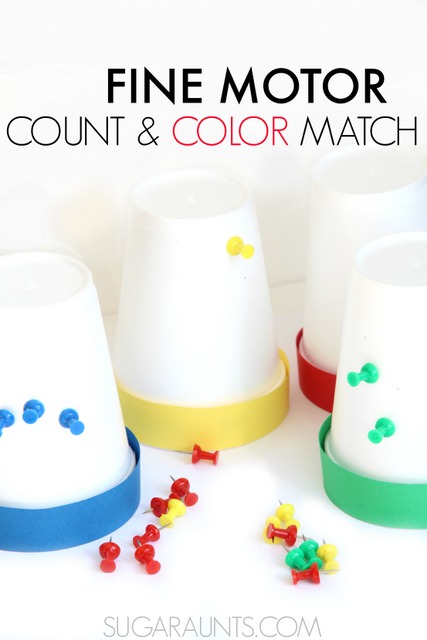
You may have noticed that we like to share easy and (mostly) free activities for kids here on our blog. This Fine Motor Count and Color Match Activity is no exception.   Moms and Aunts are always looking for simple prep and low cost when it comes to learning at home.  We made this counting math activity using a few materials we had on hand.  You could cheaply re-create this activity using supplies in your home while working on preschool math and color recognition.


Fine motor color math with push pins and a foam cup. This is great and a simple activity for preschoolers to do at home! Work on counting, addition, subtraction, and color recognition with materials you already have at home (free or almost free materials for homeschool or learning extension activities at home!)

This post contains affiliate links.  

This post is part of the 31 Days of Homeschooling Tips.  You can find homeschooling and learning at home tips from 25 other bloggers this month.  We’ll be sharing 31 days of learning at home in the series. 


Math and Fine Motor Color Match with Foam Cups:

Fine motor color math with push pins and a foam cup. This is great and a simple activity for preschoolers to do at home! Work on counting, addition, subtraction, and color recognition with materials you already have at home (free or almost free materials for homeschool or learning extension activities at home!)
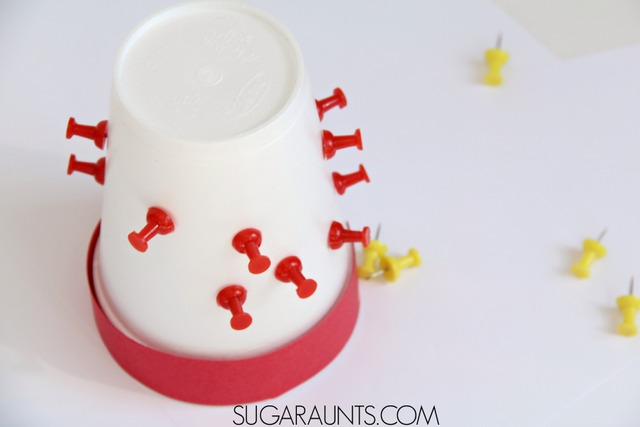
This is such a simple activity and one we did after having so much fun with our rainbow order color stacking cups.  We used foam cups
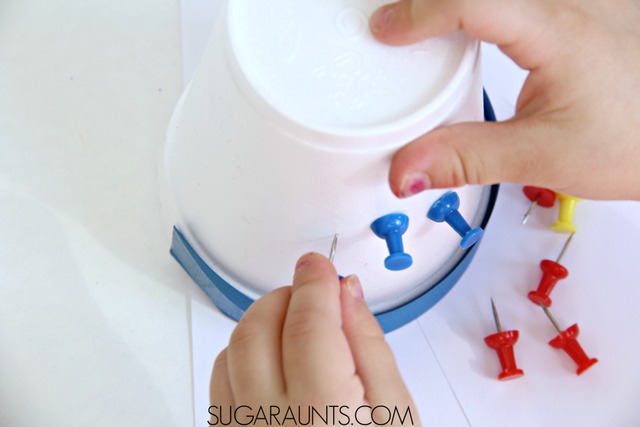
and plastic push pins along with the colored strips from our stacking cups post.  This is such a simple and fun activity that my 5 year old son really got into.  We worked on the tripod grasp needed for handwriting by pushing the pins into the resistive surface.

I had my preschooler work on matching the colored push pins with the colored band at the bottom of the cups.  We kept the foam cups positioned so the opening of the cup was flat on the table to avoid any pinches to hands.  We added wadded up paper towels to the inside of the cups to prevent any scratches as well.  This is an activity that will require supervision with younger kids.
Fine motor color math with push pins and a foam cup. This is great and a simple activity for preschoolers to do at home! Work on counting, addition, subtraction, and color recognition with materials you already have at home (free or almost free materials for homeschool or learning extension activities at home!)

Math with push pins:

To work on beginning math skills with my preschoolers, we counted the pins as they pushed them into the cups.  We then counted any pins that were grouped together and counted the total number of pins.  Extend this activity further by adding a dice to add and subtract push pins.  Roll the dice and push in the rolled number of push pins.  When all of the pins are added to the cup, remove pins by rolling the dice and removing the rolled number of pins.   

More Math activities you will enjoy:
Don’t miss a single post! Subscribe to our newsletter for a weekly email.

Easy No Prep Free Summer Activities

Summer is upon us.  For me, I am at home with my four kids and playing, (trying) to stay on top of the laundry, feeding constantly hungry mouths, planning hikes and park visits, scheduling play dates, visiting the library, and trying to keep this little blog business afloat.  The kids do a great job of unstructured free play and come up with some pretty wild imaginative ideas.  They are playing school, cops, library, and pirates on almost a daily basis.  Then there is the daily coloring and TV tag in the yard that keeps the kids creating and moving.  We also find ourselves pulling our hair out with bickering kids, whining, and boredom.  A little inspiration in EASY and basically free activities for the kids is needed sometimes.  Use this list of essentially Free Summer Fun Activities for those times when the kids need a little encouragement to create, play, and get along.  Because we all know that sometimes distraction can change a sour attitude into smiling happy kids!

You’ll also be interested in our new Summer Occupational Therapy Activities Packet. It’s a collection of 14 items that guide summer programming at home, at school, and in therapy sessions. The summer activities bundle covers handwriting, visual perceptual skills and visual motor skills, fine motor skills, gross motor skills, regulation, and more.

You’ll find ideas to use in virtual therapy sessions and to send home as home activities that build skills and power development with a fun, summer theme. Kids will love the Summer Spot It! game, the puzzles, handouts, and movement activities. Therapists will love the teletherapy slide deck and the easy, ready-to-go activities to slot into OT sessions. The packet is only $10.00 and can be used over and over again for every student/client!

Grab the Spring Occupational Therapy Activities Packet HERE.

summer occupational therapy activities for kids


Basically free summer activities for kids and families this summer. Creative play is inspired play!


Free Summer Activities for Kids

 
Use what you’ve got in the house with these activities:
Create with recycled materials and make arts, crafts, and activities.
Pull plastic ware out of the cupboards and sort the lids onto the containers.
Mix colors with food coloring in water.
Blow bubbles
Jump rope
Play Kickball
Throw a book picnic: grab snacks, a blanket, and a pile of books and head outside.
Dress up with old fancy dresses and clothes from mom’s closet (then throw them in a bag and donate!)
Bake
Poke holes in a cardboard box and push pipe cleaners through the holes
Bowl with recycled plastic water bottles
Act out a favorite nursery rhyme
Play Pizza Tag: one person is “it” and chases the others.  Players run from “it” and can stay safe from being tagged by naming pizza toppings and touching the ground.
Put dollhouses or play sets into a bin of shredded paper.
Play hide and seek
Climb trees
Watch and draw clouds
Tell stories where one person starts a story and each person adds a sentence to continue the story.  Write it down and illustrate your story!
Make and deliver lemonade to neighbors
Go birdwatching
Make creative firefly catchers and then catch the fireflies that night.
Play charades
Act out a favorite book
Create with finger paints (make your own with flour, water, and food coloring or washable paint!)
Sing songs
Turn on music and dance
Pick flowers and give them to neighbors
Make crafts. Have an art show and invite friends.
 
Creative play
 
Whatever you do this summer, enjoy every minute and have fun!
 
More creative fun you may enjoy this summer:
 

Want to take summer play to the next level? Be sure to grab your copy of the Summer OT Activities Bundle!

Summer activities for kids