Elmer the Elephant Activities

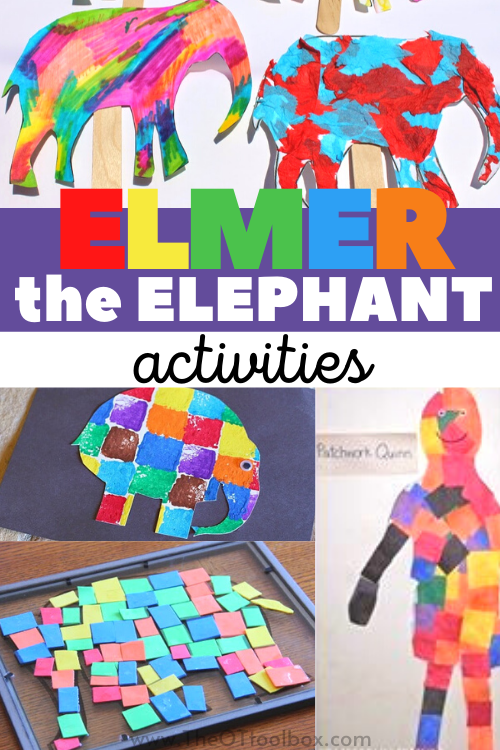
Elmer the Elephant activities

Elmer the patchwork elephant looks different than his friends. Through stories and colorful pictures that depict everyday elephant life, Elmer the elephant teaches us about diversity and differences. Elmer teaches us about acceptance, friendship, and empathy. Check out the Elmer the Elephant activity below that builds a baseline for these important skills, but also helps kids with fine motor skills, visual perceptual skills, and visual motor skills.

If you love the Elmer books as much as we do, then you will adore this Elmer the Elephant activity. We LOVE Elmer the Elephant…and all of the Elmer books. Every time we go to the library, we are sure to check the shelf for a new Elmer book that we may have missed. This week’s book activity was so much fun to do with the kids, because it involved one of our favorite books (ever) and a great visual perception activity. Add this book activity to your list of crafts based on children’s books that build skills through reading.

Elmer the Elephant Activity

This fine motor craft is a powerful one because it not only builds essential visual perceptual, visual motor, and fine motor skills, but it teaches as well. This Elmer the elephant activity can be used to illustrate differences, empathy, and friendship. Here are more books that teach empathy and friendship that can be used in therapy sessions or in the classroom or home.

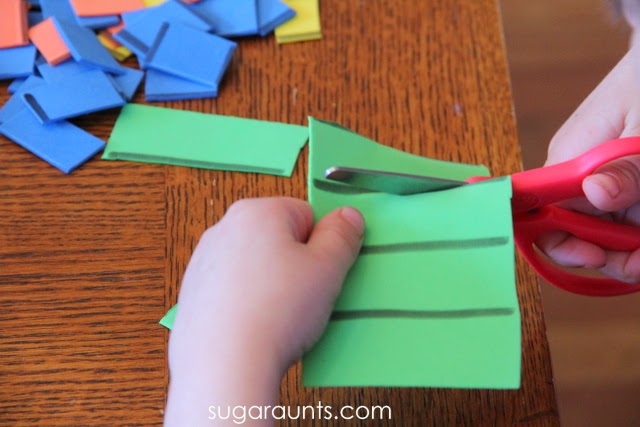
They loved creating and building our very own Elmer craft. Elmer’s colors made for a great way to help kids build fine motor skills and visual motor skills, too. I loved throwing in the scissor work portion of the activity and working on a few important skills. My youngest daughter worked on her color identification and sorting.  The colors in Elmer’s patchwork skin are perfect for Toddlers to practice naming colors.  Little Guy was loving the puzzle-building portion of our activity.  The lines were a great way to work on a few visual perceptual skills needed for handwriting.  

Elmer the elephant activity that uses the Elmer children's book as a guide and activity to help kids understand acceptance, differences, and diversity while building fine motor skills.

Elmer the Patchwork Elephant Activity

This post contains affiliate links.  

If you haven’t read Elmer by David McKee, this is definitely a book you need to check out.  Elmer is a patchwork elephant with many colors.  He sticks out from the crowd of gray elephants. By exploring and interacting with his community of elephants, Elmer and the other elephants learn to accept and value his unique characteristics. Elmer is not only a colorful patchwork elephant. He is funny, smart, caring, and an individual. The book teaches us to accept differences because those differences are what make us who we are.

Elmer teaches us about diversity. He teaches us about identity and tolerance. We all have different colors, shapes, interests, abilities, talents, and ideas. Those differences are what make us special. Let’s see those differences, accept them, and celebrate them!

We made our own patchwork elephant with lots of colors and had a great time building and creating while talking about color names.  This was such a great activity for both Little Guy and Baby Girl.

Try this Elmer the Elephant activity to teach children skills like scissor use and fine motor development with a wonderful children's book.


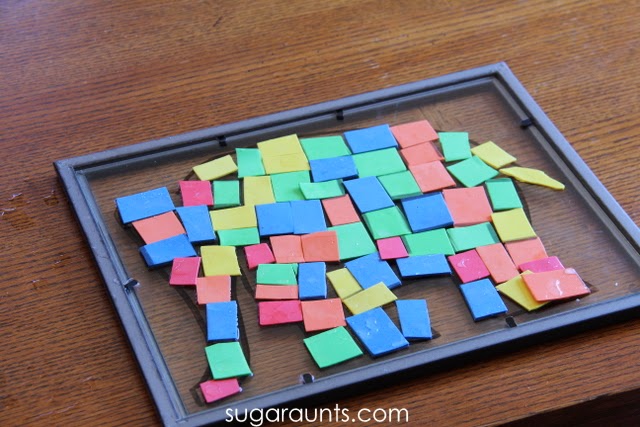
We started with Foam Sheets in lots of different colors.  You might have seen our color sorting scissor activity post where we practiced our scissor skills.  These squares came in handy for this Elmer activity.

Create an Elmer the Elephant activity using foam pieces to teach children about empathy and acceptance of differences in others while building fine motor and visual motor skills.

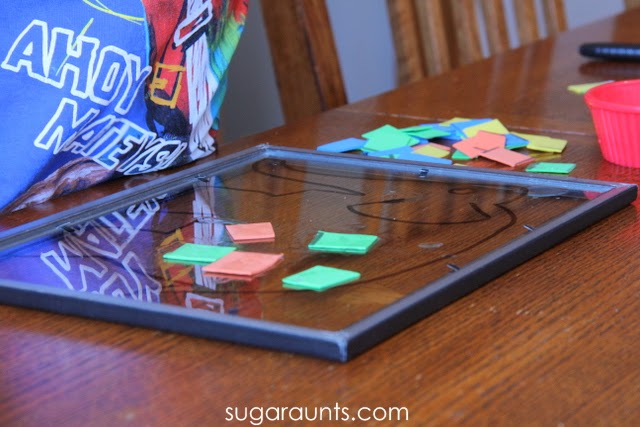
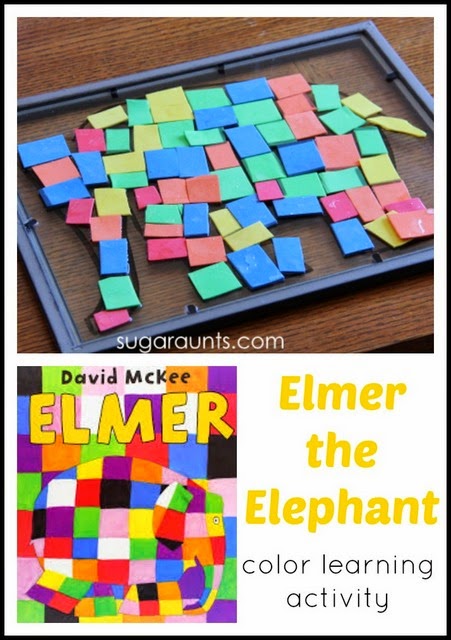
 I found a picture frame at the Dollar Store that has an acrylic front, instead of glass.  This is a great writing surface using a white board marker.  I drew an outline of Elmer with the marker.  We had a little bowl of water and started sticking the foam squares onto the surface to build our Elmer.  When the foam pieces are dunked into water, they stick really well to the picture frame surface.  We did a version of this way back when our blog began with our rainbow building activity.

Fine motor activity for the book, Elmer the Elephant.

Visual Perception Activity for Kids

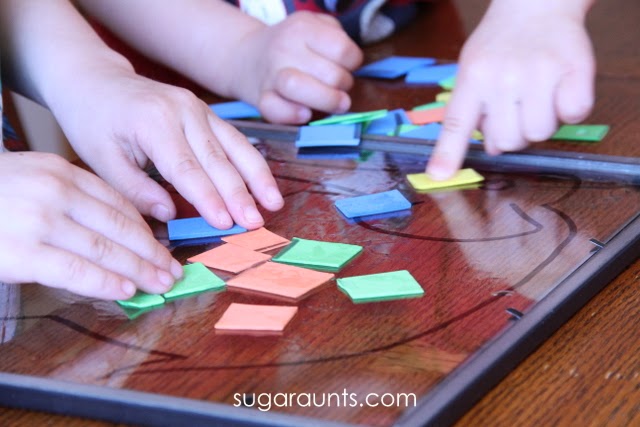
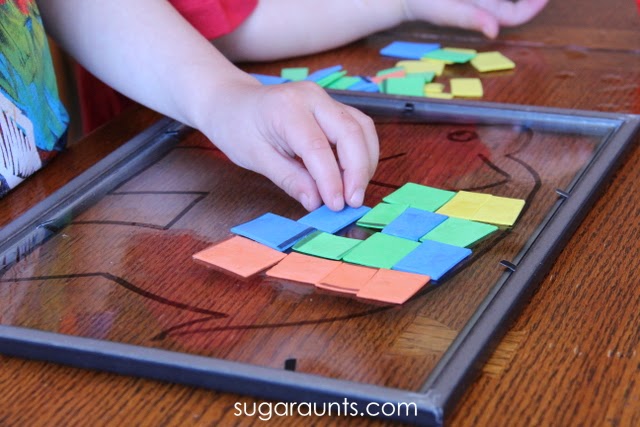
There were fingers everywhere, adding patchwork squares!  Little Guy and I quizzed Baby Girl on her colors as we worked.  It was a fun puzzle to get the squares fitting into the outline.  What a great way to work on visual perceptual skills, fine motor precision, dexterity, and line awareness!

Visual perceptual skills in kids are necessary for so many things…from self-care to fine motor skills, to gross motor skills…all parts of a child’s development require visual perception.  There are many pieces to the giant term of “visual perception”.  This Elmer building activity works on quite a few of these areas:

Visual Discrimination is determining differences in color, form, size, shape…Finding different sized squares to fit into the outline of our Elmer, discriminating the different colors, and shapes are a great way to work on this area. 

Visual Closure is the ability to fill in parts of a form in the mind’s eye to determine shape or a whole object.  Filling in the missing parts of our Elmer works on this area.

Visual Spatial Relations is organizing the body in relation to objects or spatial awareness.  This is an important part of handwriting.  Spacing those pieces amongst the others and in relation to the lines is one way to work on this skill.

Visual Figure Ground is the ability to locate objects within a cluttered area (think “I Spy”).  Finding a red square among the pile of foam pieces is one fun way to work on this area of visual perception.

Use this fine motor activity with the book Elmer the Elephant to help kids learn abstract concepts while building visual perception.

  Little Guy was really into this activity.  He loved lining up the squares to make our Elmer.

Elmer the Elephant puzzle that kids can do to build skills in occupational therapy sessions or in the classroom or home.

We loved how our Elmer turned out!  We’ll be using our frame again, soon.  I can think of so many fun ways to learn and play with this dollar store frame and a marker!

Elmer the Elephant book and Elmer activity for kids

More Elmer the Elephant Activities

Elmer the elephant activities for kids based on the children's book, Elmer the Elephant


Check out some of these Elmer the Elephant activities for kids. They are powerful ways to build awareness, acceptance, and friendship through the book and activity.

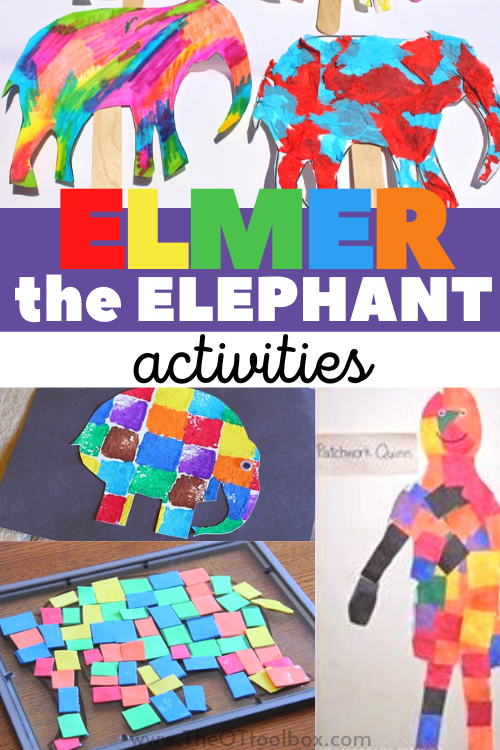
Elmer the Elephant activity with facepaint

Use face paint to celebrate friendship with a face painting party based on the Elmer the Elephant book.

Elmer the elephant craft

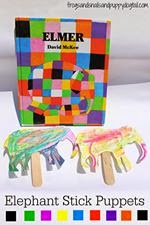
Make an Elmer craft using puppets to celebrate differences, diversity, and uniqueness in a great lesson for kids, while building fine motor skills.

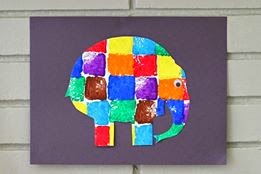
Create an Elmer craft using stamp painting.

Create an Elmer the patchwork elephant craft using paint to make a paint stamped elephant craft. What a great way to build fine motor skills!

Elmer the elephant preschool craft

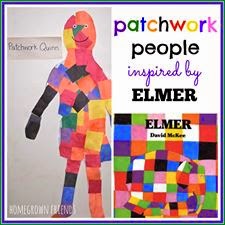
Kids can trace their bodies with large pieces of paper and then fill the space with colorful paper squares to celebrate uniqueness in this Elmer the Elephant preschool activity.

Teach Acceptance, Differences, and Diversity

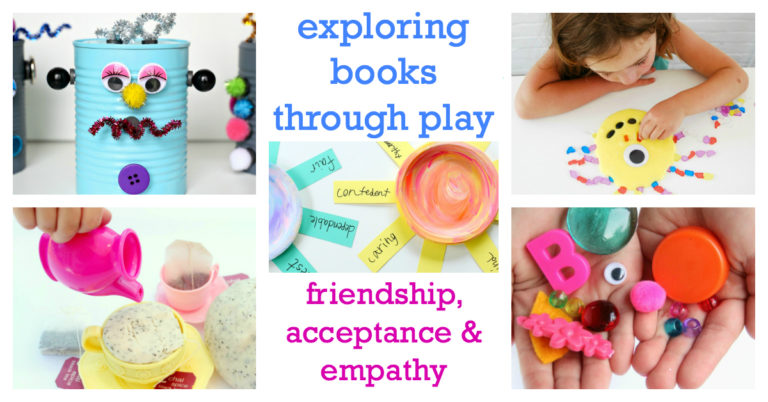
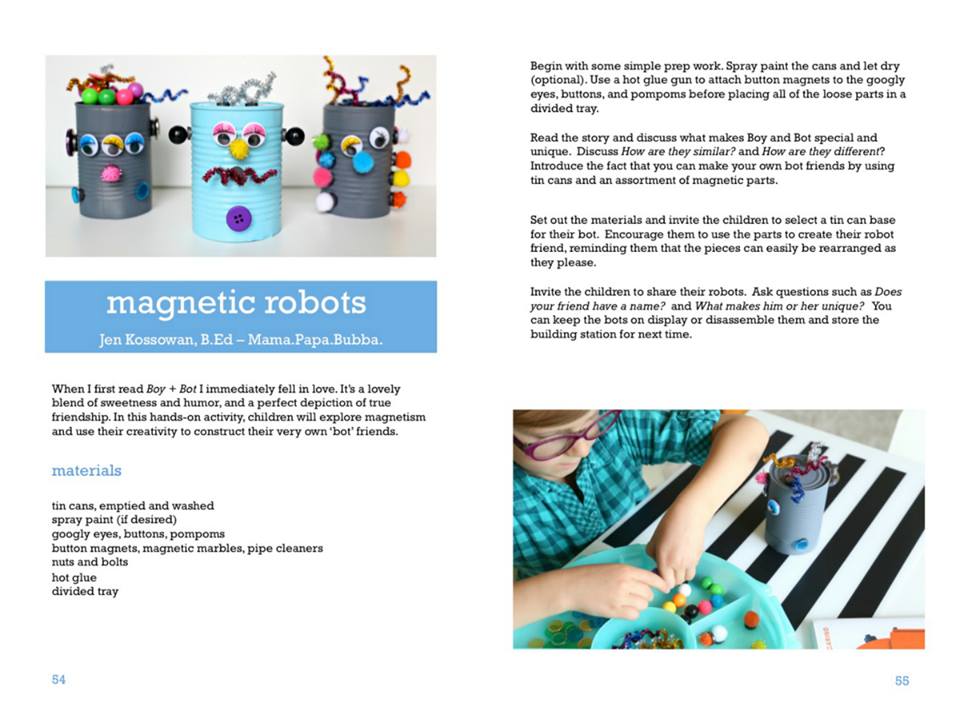
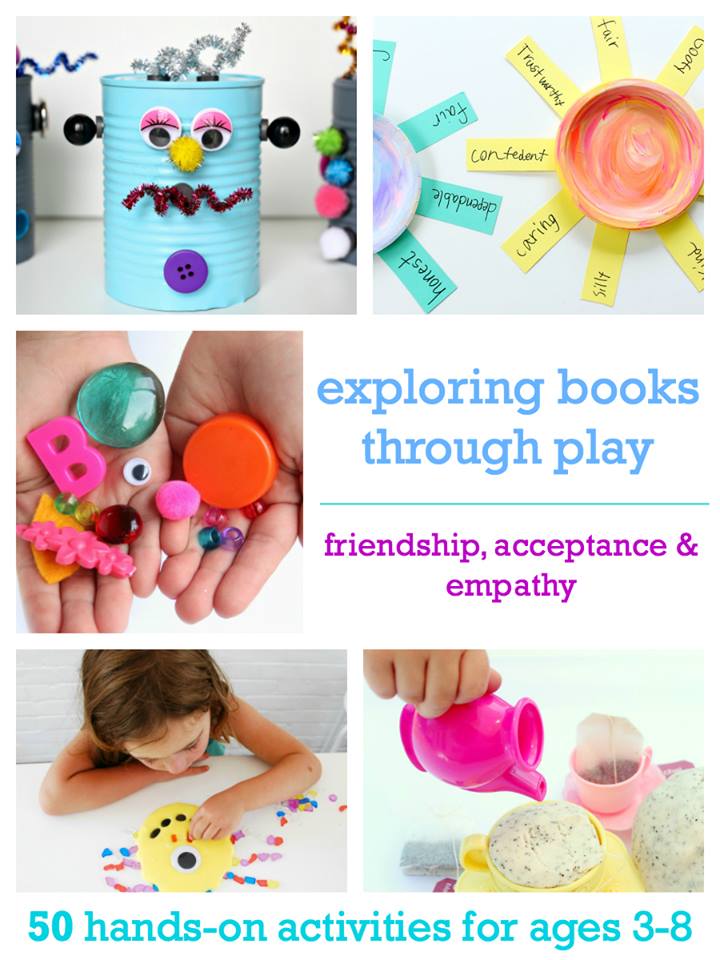
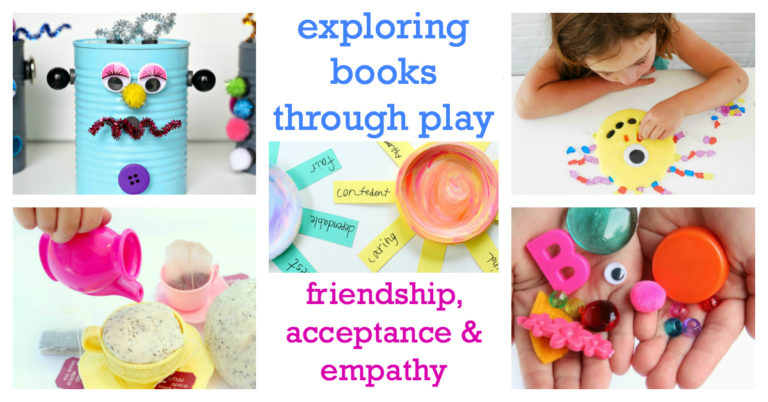
Want to take complex and abstract concepts like empathy, acceptance, uniqueness, and diversity to the next level with kids? This digital, E-BOOK, Exploring Books Through Play: 50 Activities Based on Books About Friendship, Acceptance and Empathy is filled with hands-on activities rooted in interactive, hands-on, sensory play that focus on creating a well-rounded early childhood education supporting growth in literacy, mathematics, science, emotional and social development, artistic expression, sensory exploration, gross motor development and fine motor skills.

Kids can explore books while building specific skills in therapy sessions, as part of home programs, or in the home. is an amazing resource for anyone helping kids learn about acceptance, empathy, compassion, and friendship.

In this book, you’ll find therapist-approved resources, activities, crafts, projects, and play ideas based on 10 popular children’s books. Each book covered contains activities designed to develop fine motor skills, gross motor skills, sensory exploration, handwriting, and more. Help kids understand complex topics of social/emotional skills, empathy, compassion, and friendship through books and hands-on play.

Click here to get the book and add children’s books based on social emotional learning to your therapy practice, home activities, or classroom.

Exploring books through play is a guide to using children's books in therapy and while building developmental skills.

More books to teach social emotional skills

Check out our other posts in the Preschool Book Club Series for activities based on favorite books:

Colleen Beck, OTR/L has been an occupational therapist since 2000, working in school-based, hand therapy, outpatient peds, EI, and SNF. Colleen created The OT Toolbox to inspire therapists, teachers, and parents with easy and fun tools to help children thrive. Read her story about going from an OT making $3/hour (after paying for kids’ childcare) to a full-time OT resource creator for millions of readers. Want to collaborate? Send an email to contact@theottoolbox.com.

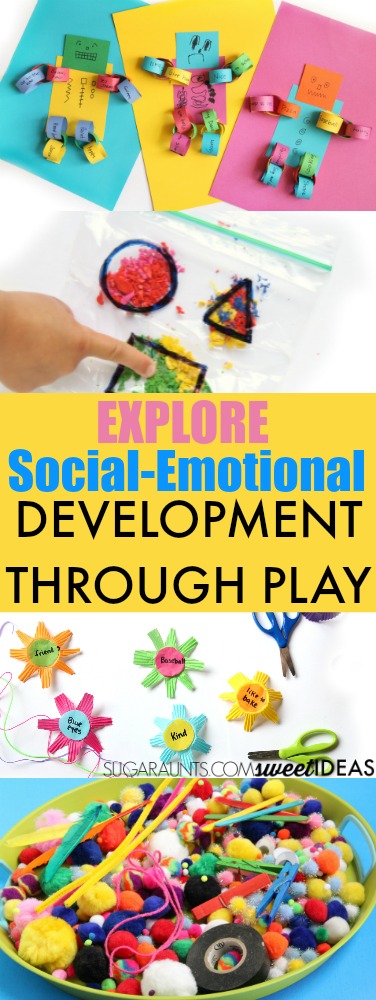
Social Emotional Development with Books

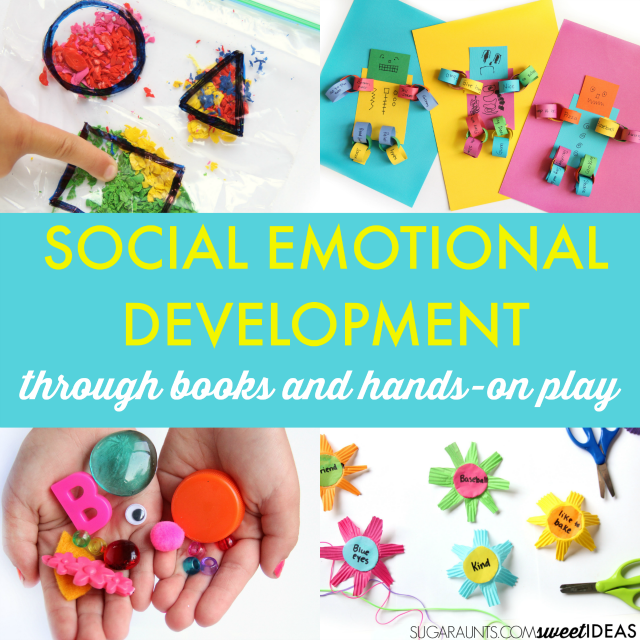
Want to help kids learn about empathy? Striving to make gains in social emotional development? Want to teach kids acceptance? Want to work with children on friendship? Want to celebrate differences? I have a valuable tool to share with you! The great news is that guiding children to social development and emotional development as well as emotional literacy and social fluency is easy and fun! In this post, I’m sharing book activities to help kids develop skills in these very abstract concepts. Read a popular children’s book, talk about concepts, and do the play activity. It’s a powerful way to help kids thrive!

Exploring Books Through Play: 50 Activites Based on Books about Friendship, Acceptance, and Empathy

Exploring Books Through Play is a guide to using books to help kids develop social emotional skills as well as other essential developmental areas (fine motor, gross motor, sensory exploration, handwriting, etc.) The book celebrates play-based learning with 50 unique, hands-on activities that explore social and emotional development, literacy, art, science, mathematics, sensory exploration, gross motor development and fine motor skills.

One of the aspects of this developmental progression is the stages of empathy development that are learned through experience. This book supports that skill.

Books and activities about empathy, love, friendship for kids

Social Emotional Activities for Preschool

This post contains affiliate links. 

You probably have seen book-related activities that I’ve shared in the past.  It all started with a group of amazing women who are the most inspiring and creative bunch out there.  Together, we shared hands-on learning and play activities that were inspired by simply awesome children’s books.


Here are just some of the great books we’ve read in the Preschool Book Club. Each book contains activities to support social emotional developmental milestones through play activities for preschool (and older ages!) By using books to build socio-emotional development, kids can use concrete activities to develop abstract concepts.

social emotional development activities for kids through book activities.


Beautiful Oops– Use this book activity to help kids explore differences, acceptance, and individualism. In this book activity, we worked on visual motor skills, eye-hand coordination, fine motor work, and strengthening.


I Ain’t Gonna Paint No More – This book celebrates emotions and is a great starting point to emotional development. In this activity, we used sensory play to create art while working on eye-hand coordination, fine motor skills, and more.


The Day The Crayons Quit– Kids can explore self-identity and self awareness in this children’s book. The book covers concepts such as differences, acceptance, and social norms. We explored the book with a fine motor activity that built awareness of self as well.


Freight Train – This mesmerizing book teaches basic concepts of shapes and colors. We used it in a food activity for kids to prepare a healthy snack. The book is a great one for identifying differences in shapes and colors and is a wonderful building block to awareness.


Ish –  In this children’s book activity, we used blocks to work on various motor skills such as eye-hand coordination, visual motor skills, visual perception, and fine motor work. The book is a fan favorite and teaches kids to accept themselves and not to be so self-critical. What a great starting point to social development!


Goodnight Moon  – This classic book for kids teaches kids about focus and imagination in a rhyming and calming manner. The book helps kids understand the imagination and addresses self-awareness and awareness of one’s surroundings. In our book activity, we worked on visual memory and concentration with a themed Memory game.


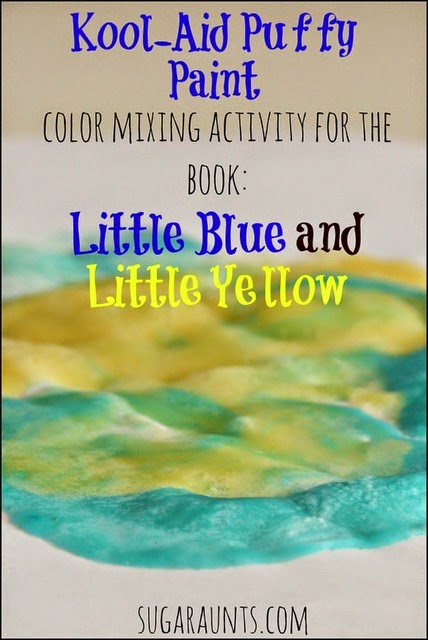
Little Blue and Little Yellow – This book helps kids understand color and builds fine motor skills when paired with play dough to act out the book. However, there are bigger social emotional development concepts at hand as well. Kids can discover emotional development awareness in the concepts of friendship, awareness of self and others, and identity. We used DIY puffy paint for an interactive book activity.


Elmer – This book helps kids understand differences, acceptance, and social roles. The book can be used to work on social development in children as they talk about things that make them and others special or different. The book is a tool in building empathy. We used the book to work on fine motor skills, visual perception, and visual motor skill development in a fun book activity.

The Kissing Hand– This book is a building block in helping kids understand emotions. They can read the book and become more aware of how others might be feeling, helping them to develop empathy as well. We created a key chain craft to use as a grounding tool for emotions kids might have.


There are so many more!


The group of us bloggers decided that we wanted to come up with a better way to share our book-related ideas.  With a real book of our own!

Exploring books through play is a guide to using children's books in therapy and while building developmental skills.

Exploring Books Through Play: 50 Activities Based on Books about Friendship, Acceptance, and Empathy


This book is full of creative learning and play ideas for kids and is based on amazing children’s books.  These activities will inspire acceptance of those around us, enhance friendship, and provoke empathy.

Social Emotional Development through Play

Check out the description on Amazon

“Exploring Books Through Play: Friendship, Acceptance and Empathy celebrates play-based learning with 50 unique, hands-on activities that explore social and emotional development, literacy, art, science, mathematics, sensory exploration, gross motor development and fine motor skills. The activities are inspired by 10 children’s books including “A Sick Day for Amos McGee”, “The Adventures of Beekle”, “Little Blue and Little Yellow” and “The Day the Crayons Quit.” Focusing on high quality children’s literature centered on friendship, acceptance and empathy, this book is designed to be used in home and school settings and is perfect for large or small groups. Ideal for children ages 3-8 years old, the activities can be adapted for multiple skill levels and developmental stages. As you work through the activities in the book children will naturally be discussing the characters, delving deeper into the lessons, bringing the stories to life and falling further in love with literature.”

Exploring Books Through Play: 50 Activites Based on Books about Friendship, Acceptance, and Empathy

The books that are explored in this resource were intentionally chosen for their social emotional aspects.  Activities were designed that inspire learning and play through hands-on involvement.  


Join the Club!


The Preschool Book Club is hoppin’ and we want you to join us!  Sign up for this exclusive email list for special sales and exciting offers. Enter your email below.

Exploring Books Through Play: 50 Activites Based on Books about Friendship, Acceptance, and Empathy

  Grab your copy today!


GET THE E-BOOK


Get the PRINT BOOK is available on Amazon for $26.99 


This is a book that, if I saw it on the shelves of a bookstore, I would grab it up and totally buy it.  The images are bright and colorful and the creative ideas are inspiring.  Not only are the hands-on play and learning activities easy and fun to do, but they each inspire children and families to think about actions, how others feel, and how small acts of kindness and thoughtfulness can make a big difference in the lives of others.


The special launch prices will run for only one week, so be sure to grab the deals today!


E-book:
Exploring Books Through Play: 50 Activities Based on Books about Friendship, Acceptance, and Empathy

Printed Book: Exploring Books Through Play: 50 Activities Based on Books about Friendship, Acceptance, and Empathy

Colleen Beck, OTR/L has been an occupational therapist since 2000, working in school-based, hand therapy, outpatient peds, EI, and SNF. Colleen created The OT Toolbox to inspire therapists, teachers, and parents with easy and fun tools to help children thrive. Read her story about going from an OT making $3/hour (after paying for kids’ childcare) to a full-time OT resource creator for millions of readers. Want to collaborate? Send an email to contact@theottoolbox.com.

Kids Craft Supplies for Building Skills

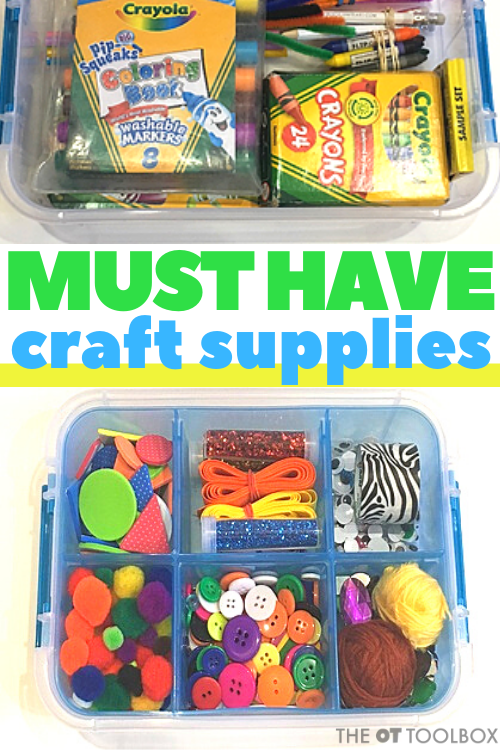
These must have craft supplies are great for making a craft kit for kids

While kids crafts offers children the chance to create through art or an opportunity to be creative, the fact is that crafting is a means to help children build skills. Because of that, I wanted to put together a resource detailing kids craft supplies and how simple craft items can be used to help kids improve fine motor skills, executive functioning, motor planning, and other developmental skills. There’s more; Kids can use crafts as a coping strategy. Crafts are one of the therapeutic activities for teens or children of all ages that not only allow children to express their selves, but to create. Let’s talk more about the specific craft supplies for kids and how they can be used as a therapy tool.

These must have craft supplies are great for making a craft kit for kids

Kids Craft Supplies In Therapy

The therapeutic use of crafts has been the history of occupational therapy since the very beginning. The use of crafts began in mental health with a huge focus on basket weaving. Therapeutic crafts have sustained their relevance and continue to be utilized in many occupational therapy settings today to include pediatrics, mental health, outpatient and skilled nursing, among others.

Why? Because crafts can work on many skills with a focus on functional skills, or meaningful activities. Most all craft activities have some type of motoric and cognitive skill component. Individuals can work on their fine motor control and manipulation, bilateral coordination, tool use, hand strength, visual motor and perception, motor planning, and grasping skills. Crafts allow for work on executive functioning skills to include attention, focus to task at hand, task initiation and completion, planning, sequencing, organizing, following multi-step directions, and problem solving. Craft activities can also provide a fun time for therapists to connect with clients and develop a special rapport.

Crafts have recently regained their popularity and are back in style with increased vigor and emphasis across all populations.  Children and adults are participating in craft activities both available on social media as well as at craft events in local craft stores and art studios. Adults meet with friends to create and engage in social interaction while learning new skills and creating works of art from their own hands. For many, crafts are a form of occupation. Children likewise enjoy crafts for similar reasons as they are able to use their skills to create something they can share with others and take home to enjoy while having a sense of accomplishment and success.

Children love to make crafts both in school and during their own time. They have fun exploring different materials and using them to create unique and original items which they can then share with others and display.  To see the smile on the face of a child when they have completed a craft, no matter the end product, is simply priceless.  Precious smiles with development of skills are the reward to pediatric therapists as they work with children every day. Perfection is not the goal, but the process. 

use craft supplies in therapy

Art Therapy for Children

Art therapy for children is a powerful therapeutic activity. There is an entire profession dedicated to the use of art and crafts in therapy. In the occupational therapy profession, the use of arts and crafts offers a meaningful occupation to build essential skills for function. While it may seem like play, there is much happening behind craft activities! Crafts and art in OT sessions are the tools or the medium to improve functional skills in patients.

Craft Kits for Kids

Craft kits are one of the best tools for pediatric therapists.  These craft sets are a set of kids craft supplies selected to help kids build skills. Craft kits for kids can come in any shape or size and they offer a sense of intrigue and possibility for children.  Therapists use these motivational materials to address therapeutic goals while children develop confidence in their skills along with self-esteem and ultimately, product production.

craft kits for kids to build skills in therapy

Activity Kits for Kids

When therapists choose a craft they are targeting specific child goals. Using craft supplies, selected activity kit for kids allow users to build skills through creating art or crafts. They address improving skills with scissor manipulation, grasp, fine motor coordination and manipulation, tactile tolerance and stimulation, organization, sequencing, or following multi-step directions.  Craft projects in a group lead to an opportunity for socialization and social skills development too.  Crafts can easily be downgraded or upgraded to address multiple skill levels. Furthermore, therapists can position materials during the process of crafting to facilitate crossing midline, hand dominance, left and right awareness, postural control, range of motion, and motor planning.  Again to reiterate, it is the process of the activity with skills addressed rather than the complete end product.

Using craft kits can be so much fun and taking them a step further by creating themed kits are always the best!  Craft kit themes can include food items, craft items, sensory items, holiday items, or seasonal items.  Decide the craft kit theme you want to create and start off to the store to gather your materials. A simple, easily replenished, go-to craft kit should be a part of the pediatric therapist’s bag, cart, therapy room, or clinic. So many wonderful skills can be practiced and addressed with craft kit items while also allowing for child creativity and freedom to explore. Let’s take a peek at two fun craft kits that are cheap to create using everyday craft supplies for kids and use easy to find items. 

Kids craft supplies in a craft kit

Kids Craft Supplies Kit

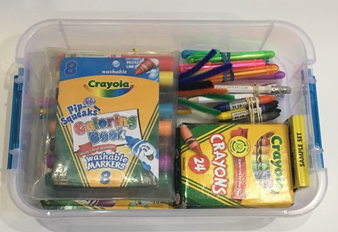
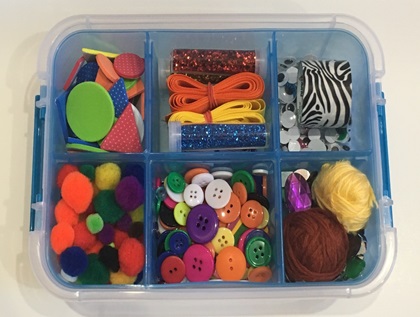
This small craft kit contains simple items for use in craft and art activities which can be found at a local dollar store, chain store, or craft store. It contains only the items for art pieces and crafts, but not the necessities such as paper, glue, and scissors.  This craft supply set may be more useful in the clinic setting as the other necessities are readily available for use. However, locating a set of must-have craft supplies for kids is as easy as an internet search.

craft supplies for kids to use in art activities

Below is a list of craft supplies that build skills. Click on the links to purchase the craft items.

Amazon affiliate links are included below.

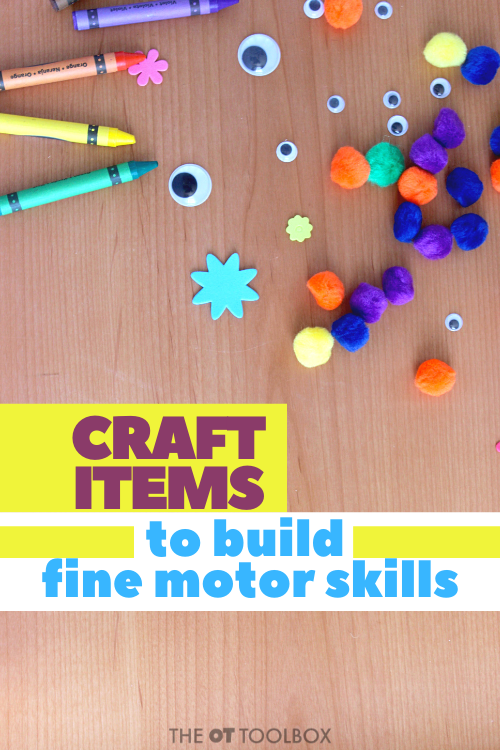
Buttons – addresses size relations and fine motor coordination and manipulation. Buttons can also be used to string onto pipe cleaners for crafts which addresses fine motor control and precision, eye-hand coordination, perception, and bilateral coordination.

Colored craft sticks – addresses fine motor coordination and manipulation. Adding other craft elements such as googly eyes, stickers, washi tape, etc. addresses fine motor precision, bilateral coordination, and eye-hand coordination.

Crayons – broken pieces of crayon addresses grasp and distal control while the child colors or draws.

Doilies – addresses fine motor manipulation, bilateral coordination, and patience as the child works to separate the doilies to obtain just one.

Foam sticker shapes – addresses shape recognition, tactile tolerance, fine motor manipulation and coordination, pincer grasp and bilateral coordination. Removing sticker backs and applying to a surface are key components. In fact, stickers build a lot of skills in occupational therapy goal areas.

Googly eyes – addresses fine motor manipulation and coordination and pincer grasp. Googly eyes can sometimes be challenging to pick up from a flat surface.

Pipe cleaners – addresses bilateral coordination, fine motor precision, in-hand manipulation, eye-hand coordination, pincer grasp, and visual motor and perceptual skills. Pipe cleaners can be used for lacing straw pieces and buttons and creating shapes.

Pom-pom balls – provides a tactile experience and works on pinch and eye-hand coordination for placement. Patterning can also be addressed.

Regular craft sticks – these are great for creating fun “buddy” crafts.Use crayons to color and other elements for decoration such as googly eyes, sequins, and stickers which addresses fine motor coordination and manipulation, fine motor precision, visual motor, bilateral coordination, and grasp.

Sequins – addresses fine motor control and manipulation. They are challenging to pick up and manipulate for placement onto glue dots. Patterning can be addressed.

Small glitter tubes – addresses graded control for sprinkling. Tactile tolerance can be addressed if the glitter is sprinkled with a pincer grasp.

Straw pieces – addresses bilateral coordination, scissors skills, fine motor coordination and precision, and pincer grasp. Cut straws into pieces for art an activity or for stringing onto pipe cleaners.

Washi tape – addresses tactile tolerance, bilateral coordination, scissor skills, pincer grasp, size relations and pre-writing skills if used for shape formation.

Yarnprovides tactile tolerance especially when placing onto glue and addresses fine motor manipulation and coordination, scissors skills, and prewriting skills if used for shape formation.

craft supplies to help kids build skills in therapy

Craft Kit for Kids

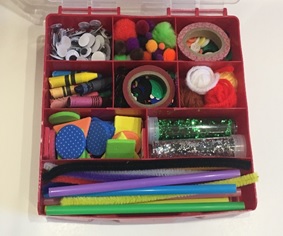
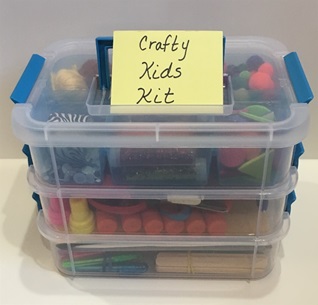
This larger, three tier craft kit contains ALL that you need to work on art and craft activities with kids.  It houses all of the craft and art items found in the smaller craft kit with a few more additions.  It also allows storage for scissors, glue, paper, and more drawing and writing tools. With this kit, you simply grab and go as all items are there for use in completing the entire art piece or craft.  This kit would serve itinerant or traveling therapists well as they do not always have the necessities readily available in the settings they may be working. 

Must have craft supplies to add to your therapy tools

Here is a list of the additional craft supplies in the kit and the skills they can promote:

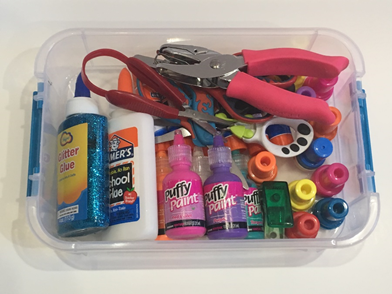
Bottle and glitter glue – addresses school tool use, fine motor manipulation, hand/finger strength, bilateral coordination, graded control, and tactile tolerance. Partially closing the twist top can promote an opportunity for increased hand strength.

Glue sticks – addresses school tool use, fine motor coordination, bilateral coordination, graded pressure, and tactile tolerance.

Hole punches (thumb and hand) – addresses grasp, bilateral hand use, hand and finger strength, and eye-hand coordination. These small hole punchers are great for building thumb stability and strength in the arches. This reduced effort hole punch strengthens the hand and are ideal for children.

Ink stampers – addresses fine motor coordination and manipulation, bilateral coordination, and graded control. Patterning can be addressed.

Markers, pens, pencils, and colored pencils – provides options for color as well as drawing and addresses grasp, distal control, eye-hand coordination, and pressure regulation.

Paper – a variety including construction paper, card stock paper, doilies, foam sheets, paper plates, and paste board (which can be recycled paste board food boxes).

Puffy paint – addresses fine motor manipulation, hand and finger strength, bilateral coordination, graded control, and tactile tolerance.

Ribbon – addresses fine motor manipulation and coordination, bilateral coordination, scissor skills, and eye-hand coordination.

Scissors – regular and adaptive scissor options addresses scissor skills, grasp, bilateral hand use, hand strength, and eye-hand coordination.

Using craft supplies to build skills is easy with a quick trip to the dollar store or online shopping session. What craft supplies do you have in your home already? Many times, thinking outside of the box can expand your craft supply. Try using these recycled materials to make crafts and build skills.

Make a craft kit for kids to use in therapy or at home to build skills

A final word on Kids Craft Supplies in Therapy

With these two craft kit examples, you have a better understanding of what type of craft supplies to add to your home or therapy practice. Use the craft supply list to build kids craft kits you would find most beneficial according to your needs and the needs of your clients or children.

Enjoy creating your craft kit for kids and have fun exploring the items with kids while building important skills and providing opportunities to build child self-esteem and confidence.

Coffee Filter Crafts

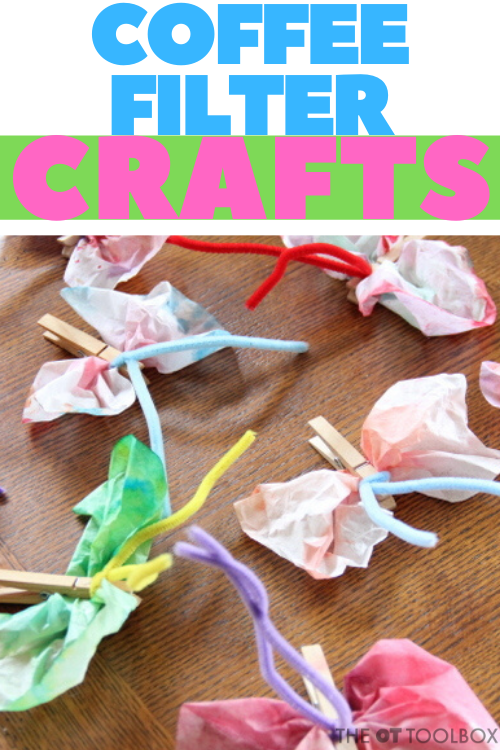
coffee filter crafts for kids

Coffee filter crafts are such a classic way to create with kids.  The thin texture of coffee filters makes a great material for cutting, painting, and folding.  Today, I’ve got ideas to use an item found in the home to work on various skill areas…with coffee filters! For more ways to help kids work on skills like fine motor dexterity, strength, motor planning, direction following, and bilateral coordination, check out some of the crafts for kids here on The OT Toolbox.

Coffee filter crafts to help kids develop skills
coffee filter craft ideas for kids
Coffee filter crafts for kids to use to work on skills in occupational therapy activities


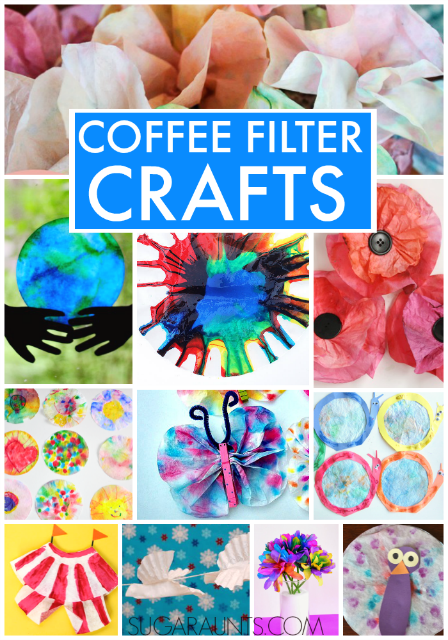
Coffee Filter Crafts for kids:

This circus tent craft made from coffee filters is something different that can be a great tool for working on precision, scissor skills, bilateral coordination, motor planning, and more. 

Work on social-emotional skills by pairing the children’s book, Leonardo the Terrible Monster with a monster coffee filter craft.

This butterfly craft is a classic. There is a reason to add it to your occupational therapy activity line-up. It’s a powerful way to help kids develop skills with an easy kids craft.

This Salad Spinner Art from Babble Dabble Do looks like a ton of fun and can be a great tool for bilateral coordination, visual tracking, and sensory play. 

Coffee filters are a great tool to work on precision in scissor skills. Here is more information on scissor skill progression along with tips for improving graded use of scissors to master accuracy. Here are more scissor skills activities that can be coupled with coffee filters.

If you like sun catchers, make these snails to work on scissor skills and precision.

 Suncatchers made from coffee filters don’t need to be extravagant. Use what you have in your home. 

Kids can work on handwriting and pencil grasp with this Earth Day coffee filter craft. 

The classic Butterfly Craft uses clothes pins and builds hand strength, bilateral coordination, and more. 

Make something different and build scissor skills for more of a challenge with this garland of doves.

For an easier scissor skill activity, create a peacock craft.

Poppies from coffee filters are a fun way to decorate the home while building skills. 

Another flower idea is this vibrantly colored flower craft that really powers up those bilateral coordination, motor planning, and direction-following skills. 

Mother’s Day Craft You Are Tea-Riffic Card

mothers day craft for kids

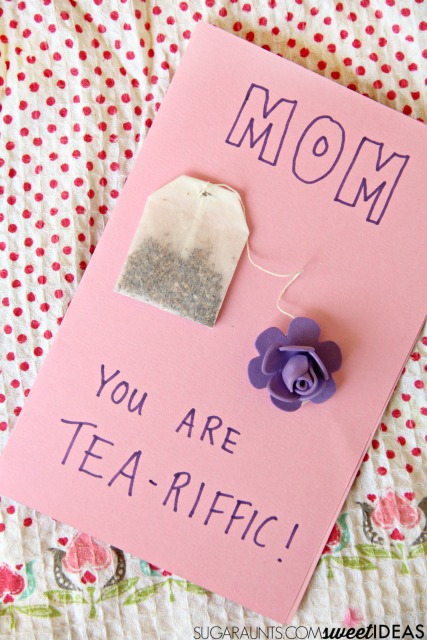
Mother’s Day is all about cute kid-made cards. Many times, occupational therapy professionals and teachers seek out crafts to make with students to celebrate Mom. This year may be a little different when it comes to coming up with a Mother’s Day craft to make with students. I wanted to put together an easy Mother’s day idea that kids can make in virtual therapy sessions or as part of a distance learning activity. Kids can even make this card with Dad using just a couple of items. This Mother’s Day craft is perfect for a tea-loving mom…Or kids and moms who love puns like “You are TEA-riffic”!  This might be one of my favorite kids’crafts that we’ve done.  It’s easy and it’s super cute.  Add a Mother’s Day quote to this card and you’ve got a gift idea that will make any mom smile!  

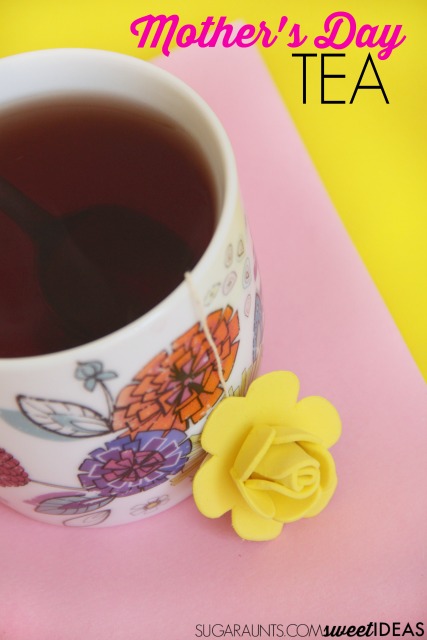
Mothers Day craft Mom, this is a fun craft for kids to make for mother's day. You are TEA-Riffic card for moms who love tea! All you need is a tea bag for this craft.

Mother’s Day Craft

This post contains affiliate links.    You’ll need just a few materials for this craft:

  • Paper
  • Tape
  • Tea bag
  • Sticker/flower/something to stick to the tea bag’s tag
  • Markers/crayons

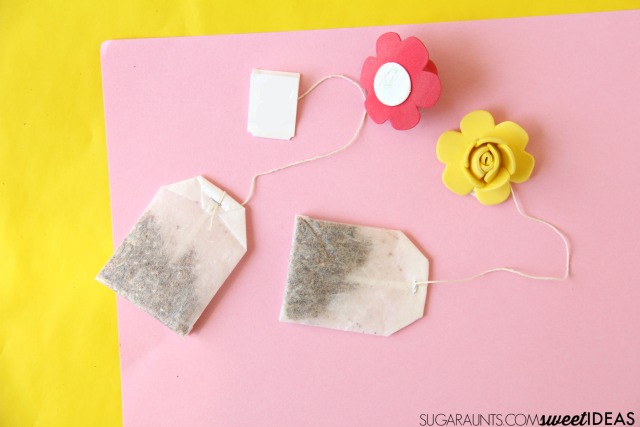
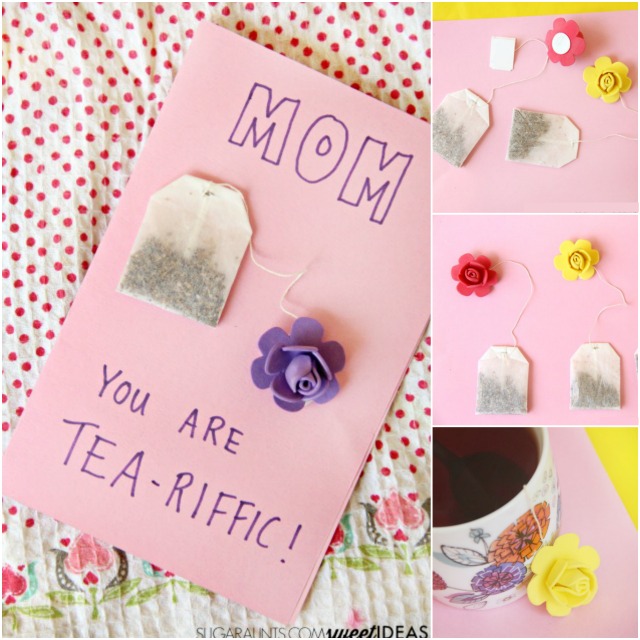
Grab a piece of paper or cardstock for the card.  Fold it in half.  Next, use your mom’s favorite tea.  We just used a bag of tea that we had on hand, but I do love caffeine free flavored teas.  

Pull the tea out of the wrapper and stretch out the string.  

Then, you can decorate the paper tab with a sticker, or by coloring on the paper label. Other ideas include creating a paper flower and gluing it on the the paper. We used foam sticky flowers for a Spring-y touch.  We received ours from www.craftprojectideas.com but you can get a set here.  

The nice thing about this easy Mother’s Day craft is that it is very open-ended and you can use the items on hand.

Kids can make this easy Mother's Day craft with a bag of tea and items found in the home.

Tea Bag Craft for Moms

 To make the tea bag craft, kids can stick something to the paper tag on the tea bag. The flower stickers that we used are sticky on the back, so just peel off the back and stick it to the tea bag’s tag. Adding a sticker or gluing a small note would work too. The idea is to use what you’ve got on hand at home.

We then taped the tea bag and the tag to the front of the card with a tape donut and wrote a fun message with the words, “MOM You are TEA-Riffic” to the front.  Done!  

This would make a great preschool Mother’s day craft because it’s very simple and requires just a few steps. The craft can easily be graded up or down to meet a variety of skill levels as well.

Kids can make this Mother's Day craft to work on fine motor skills.

  Mom will love this super cute craft.  Work on handwriting by having your child add a message to the inside of the card.   Glue lined paper to the inside to provide visual cues for spacing and line awareness.  This is sure to be one of the crafts that Mom keeps forever!  

Mother’s Day Craft for Therapy Sessions

By adding this Mother’s Day craft to occupational therapy sessions or the classroom, kids can work on a variety of skills. Add this easy craft to your therapy line up or classroom plans and you’ll add a variety of skills:

  • Eye-hand coordination
  • Precision (managing tape, peeling sticker)
  • Hand strength (folding and creasing paper)
  • Handwriting
  • Bilateral Coordination (folding paper, sticking stickers)
  • Scissor Skills

Use this mother's day craft to help kids work on skills in occupational therapy sessions.

More Mother’s Day Crafts

 Who do you know that will love this craft?   Looking for more creative Mother’s Day ideas for the kids?  Try these ideas to work on specific skills during therapy sessions or as part of a distance classroom activity:  

We know the power of fingerprints and finger painting in building fine motor skills as well as finger isolation. Here is a Mother’s Day Finger Painting activity if that is something that might work as a Mother’s Day craft this year.

Send Mom a Mother’s Day quote for something different this year.

For a homemade gift idea for Moms, a homemade Mother’s Day card can work. This one challenges the scissor skills so it would work for older children or those working on more complex scissor skills.

Play dough or clay can be used to make a homemade gift for moms. Making Little Clay Bowls challenges the fine motor skills, too.

If you are looking to make a treat for Mom, these cupcakes are a great way to challenge fine motor skills, executive functioning skills, and more.

Finally, this Mother’s Day Book List can be used as a cozy time with mom. Find the books on a library app and read with Mom!

Kids can make this easy Mother's Day card in therapy to work on skills.

Colleen Beck, OTR/L has been an occupational therapist since 2000, working in school-based, hand therapy, outpatient peds, EI, and SNF. Colleen created The OT Toolbox to inspire therapists, teachers, and parents with easy and fun tools to help children thrive. Read her story about going from an OT making $3/hour (after paying for kids’ childcare) to a full-time OT resource creator for millions of readers. Want to collaborate? Send an email to contact@theottoolbox.com.


Improve Finger Isolation with this Clover Thumbprint Craft

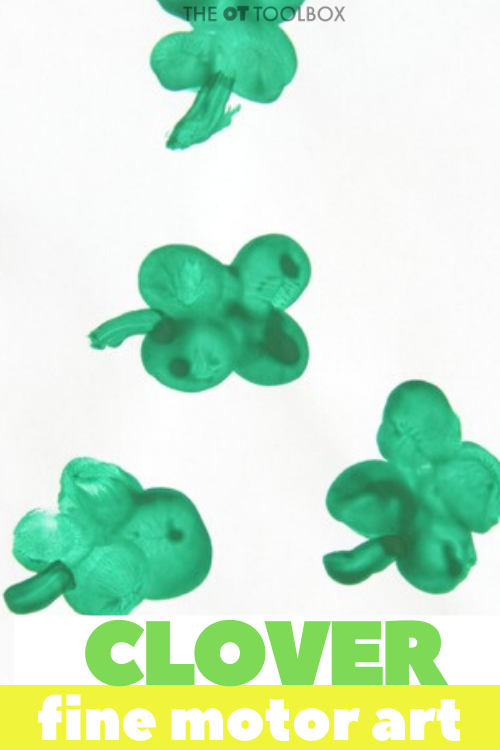
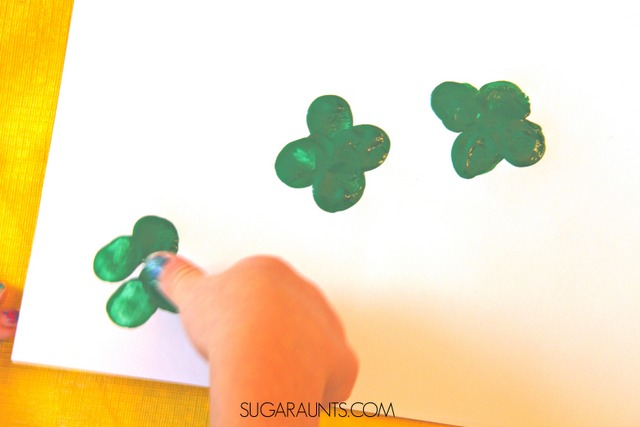
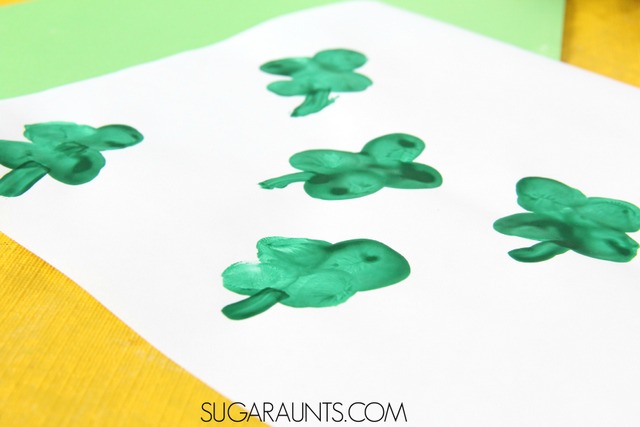
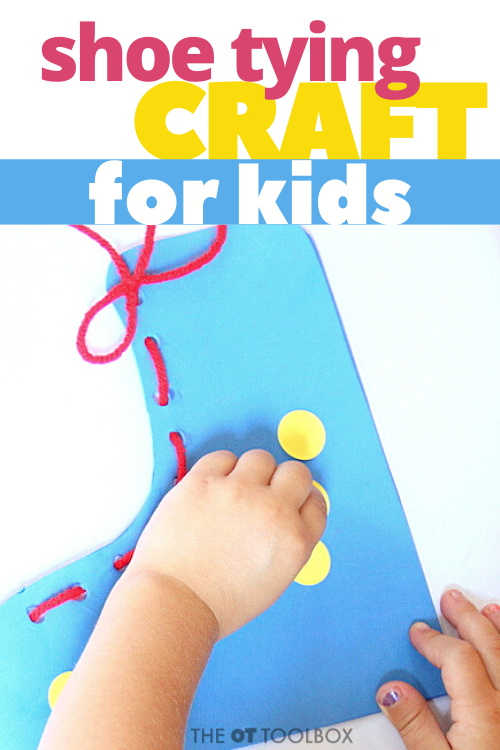
Here is a super easy St. Patrick’s Day craft and fingerprint art that builds skills.  We made this simple clover thumbprint art one day as we geared up for St. Patrick’s Day. We made four leaf clovers, but you could make shamrocks too. The important part is that kids are getting a great experience with strengthening finger isolation…a much needed fine motor skill for functional tasks like tying shoes, typing, pencil grasp, and so many more dexterity tasks. 

This St. Patrick's day craft uses clovers to work on fine motor skills like finger isolation. What a fun dexterity activity for kids!

Help Kids with Finger Isolation

What is finger isolation? It’s an important fine motor skill! Here is a more detailed explanation of finger isolation and functional tasks, but in short, here’s what you should know:

Finger isolation typically develops in the baby at around 6 months of age as they begin to pick up small pieces of cereal. It progresses to pointing, and then separation of the two sides of the hand with in-hand manipulation. Finger isolation is so important in fine motor dexterity in every task that the hands perform. 

Fingerprint art like the four leaf clovers in this St. Patrick’s Day craft promotes isolation of the index finger.  

Fingerprint art like this one allows students to isolate one finger and bend  (flex) the rest of the fingers into a fist.  This is refinement from the fisted hand and “raking” motion that babies and young toddlers demonstrate.  To create a fingerprint, the ulnar (pinkie side of the hand) are stabilized with the pinkie and ring fingers bent into the palm, or are positioned with the pinkie finger extended and abducted (spread apart).   

This positioning allows the knuckle joints (metacarpals) to stabilize and allow the pointer and middle fingers to be used with more control. The separation of the radial and ulnar sides of the hand allows for more skilled fine motor manipulation.

Rainbow Finger Isolation Art

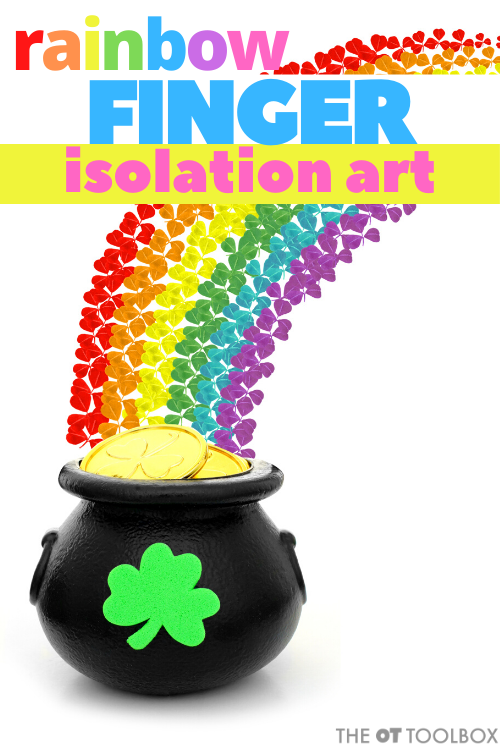
Rainbow finger isolation activity to build fine motor skills, making this St. Patrick's Day art a rainbow craft that builds dexterity and motor skills.

Take the finger isolation skills a step further by making a whole rainbow of fingerprint art. Here’s how you can make a rainbow craft to work on finger isolation:

  1. Pour a rainbow variety of paint colors on a paper plate.
  2. Ask your kiddo wot point their index finger into red. They can make a curved line of red dots on a piece of paper. Ensure the remainder of the fingers are tucked into the palm with the thumb holding them in place.

  3. Ask them to wipe off their finger for proprioceptive input through the joints of the finger. Talk about awareness and heavy work!
  4. Move on to orange. They can follow the curve of their rainbow to make each color in rainbow order.
  5. Wipe off each finger in between colors for more feedback.

Simple St. Patrick’s Day Craft

This post contains affiliate links.  

This craft needs just one item (besides the paper you’re printing on!) We love this green paint for it’s bright color. Pour a little on a paper plate and you are ready for fingerprint art.  

Shamrock Fingerprint art

  Show your child how to make a thumbprint using the green paint.  Kids can use either their index finger or thumb to make these prints.  

Fingerprint art for kids. Shamrock fingerprint craft at St. Patrick's Day

  Make a little stem using the paint.  The four leaf clovers are done!  These would be cute on a fun St. Patrick’s Day card, or just for fun.

Colleen Beck, OTR/L has been an occupational therapist since 2000, working in school-based, hand therapy, outpatient peds, EI, and SNF. Colleen created The OT Toolbox to inspire therapists, teachers, and parents with easy and fun tools to help children thrive. Read her story about going from an OT making $3/hour (after paying for kids’ childcare) to a full-time OT resource creator for millions of readers. Want to collaborate? Send an email to contact@theottoolbox.com.

One Zillion Valentines Day Craft

Valentines Day crafts

Have you read the book, One Zillion Valentines?  It i such a cute Valentine’s Day book for kids.  We read the book and made a Miniature Candy Heart Valentine based on the book a few weeks back.  That same day, we made this airplane valentine craft too, because we loved this part of the book! Valentines Day crafts are a fun way to work on certain skills in a way that is motivating for kids. This window cling Valentine’s Day craft we made years ago is a fine motor powerhouse, a lot like this airplane craft.   

This is just one of the Valentine’s Day occupational therapy activities here on the website. Use this heart craft to work on skills like fine motor strength, dexterity, direction following, and more.


Valentines Day craft for kids

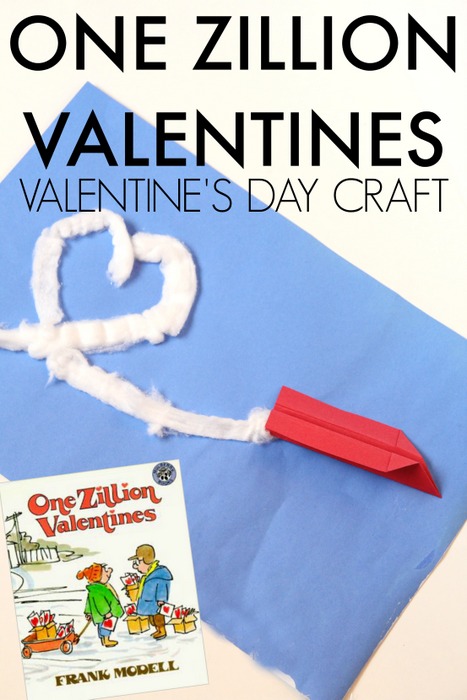
Have you read the book, One Zillion Valentines? Such a cute book for kids and this craft is based on the book.

Valentines Children’s Book Activity

Pairing a book with therapy or when working on skills with kids is a fun way to open up conversation, problem solving, and strategizing to create a project or activity based on the book. This Valentine’s Day book for kids is just that. One Zillion Valentines is one children’s book that pairs nicely with a fine motor craft for kids.   This post contains affiliate links.

One Zillion Valentines craft

Valentines Day Book Activity

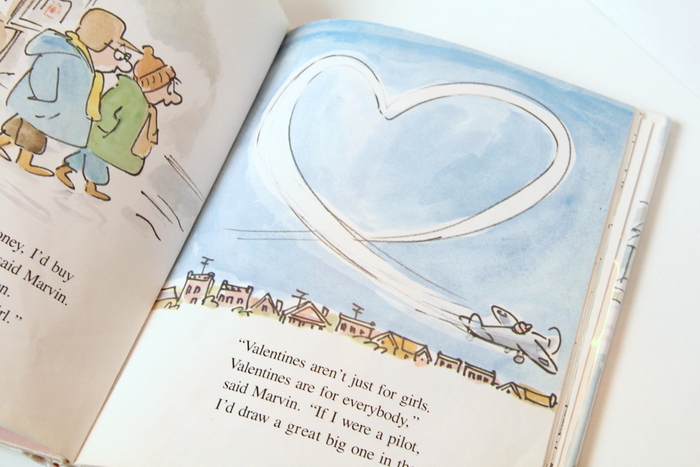
One Zillion Valentines is one fun book for kids around Valentine’s Day.  We love this part of the book…the message and the images!  We decided to make our own airplane craft for Valentine’s Day.

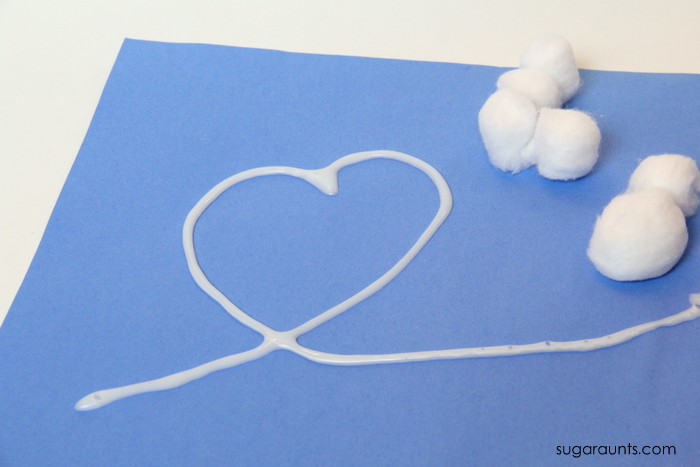
First we drew a big glue heart on large blue paper. Be sure to use squeeze glue for strengthening the hands.

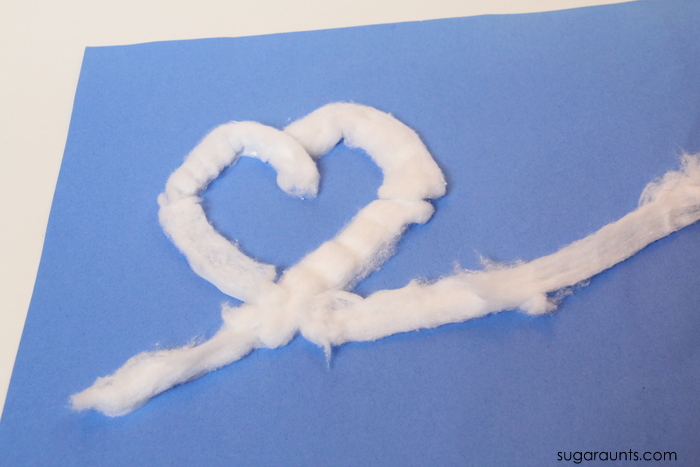
Grab a handful of cotton balls.  Some brands of cotton balls are rolled and you can pinch and unroll the layers of cotton.  This is a great fine motor activity for kids!  Other brands of cotton balls can be pinched apart into strands.  

This is ALSO a great fine motor activity for kids!  Pinching and pulling the cotton balls apart works on the intrinsic hand strength of the small muscles of the hands.  These are the muscles that are located within the hand and are essential for endurance during writing and coloring tasks while holding a writing utensil with an open web space.

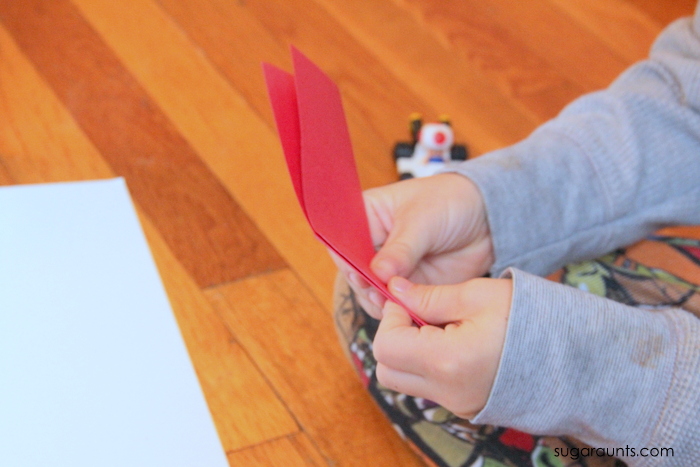
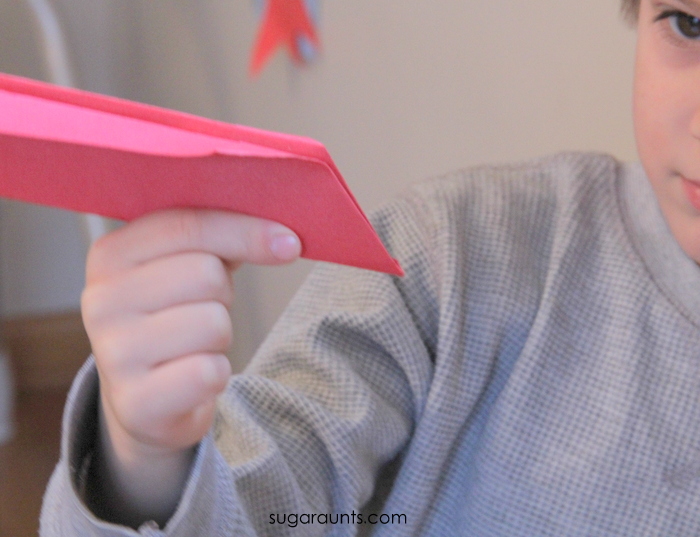
Make a paper airplane from red cardstock.  My Little Guy (age 5) was totally into following a step by step example to make his own airplane.  

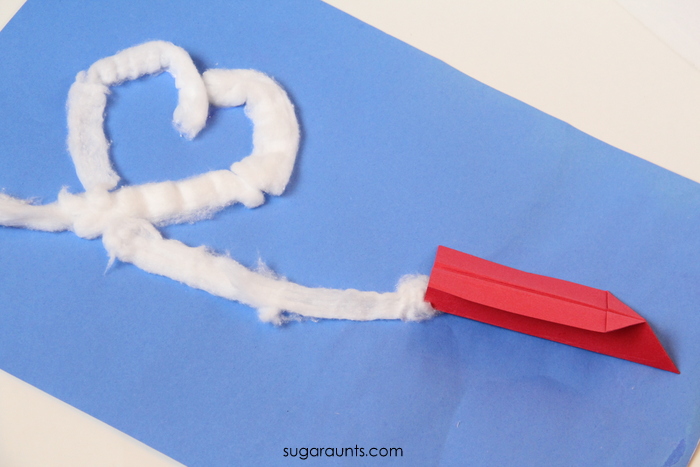
Glue the paper airplane onto the trail of Valentine smoke and you’ve got a super cute airplane craft! Keeping the cotton strands on the glue is an exercise in eye-hand coordination.

This is a great craft that doubles as a book extension activity AND a means for working on specific skills.

How to make this Valentine’s Day Craft:

Time needed: 15 minutes

Make a Valentine’s Craft based on One Zillion Valentines.

  1. Create the background of this Valentine’s day craft.

    Use squeeze glue to draw a big swoop on blue construction paper. This will be the clouds following the airplane.

  2. Use cotton balls to make clouds.

    Stretch out the cotton balls using both hands. This is a great fine motor workout.

  3. Make a paper airplane.

    Use red paper (if you have it) to match the book. Fold a paper airplane by bending the paper in half and folding the top of the page into a point. Fold in half again. Bend the wings down in the opposite direction. It can help to make a paper airplane along side your child so they can copy each step.

  4. Glue the paper airplane onto the page.

    Add the paper airplane at the end of the cotton clouds.

More Valentine’s Day Activities for Kids

There are many Valentines’ Day activities here on The OT Toolbox that double as fine motor and visual motor powerhouses. Check out some of these Valentine’s Day themed activities for therapy:

Colleen Beck, OTR/L has been an occupational therapist since 2000, working in school-based, hand therapy, outpatient peds, EI, and SNF. Colleen created The OT Toolbox to inspire therapists, teachers, and parents with easy and fun tools to help children thrive. Read her story about going from an OT making $3/hour (after paying for kids’ childcare) to a full-time OT resource creator for millions of readers. Want to collaborate? Send an email to contact@theottoolbox.com.

Woolly Bear Caterpillar Craft Idea

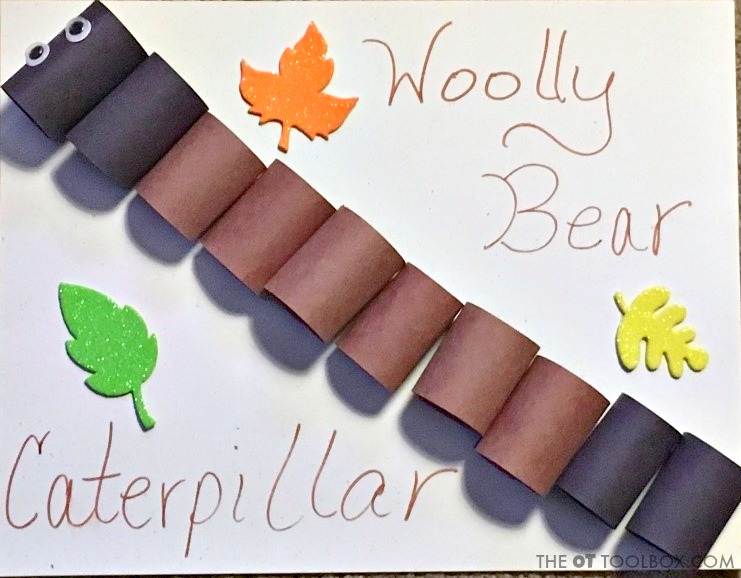
Make a simple woolly bear caterpillar craft to celebrate the coming of the fall season!  This caterpillar craft is a fun fall craft idea that can be used in occupational therapy activities to help kids with scissor skills, bilateral coordination, visual motor skills, direction following, fine motor skills, and more. 


This fall craft idea is perfect for occupational therapists to use in OT sessions to work on handwriting with a woolly bear caterpillar theme for fall.


Fall Craft Idea: Woolly Bear Caterpillar Craft

Where I live we have a local Woolly Worm Festival that is celebrated the third week in October every year with the 41st annual taking place this year.  The festival hosts a fun race for woolly worms as they climb a three-foot length of string during different heats to win first place. The winning woolly worm gets the honor of predicting the severity of the coming winter based on its coloring. (The darker the shading the more snow and cold it represents.) 


A woolly bear caterpillar has 13 body segments and there are 13 weeks of winter so each segment represents each week of winter. Now this isn’t truly science, but simple local folklore fun for kids and adults. 

Kids can make a fall craft like this wooly bear caterpillar craft to help with skills like scissor skills, fine motor skills, visual motor sills, and more.


Woolly Bear Caterpillar Craft for Occupational Therapy Goals:

Since woolly bear caterpillars can be seen everywhere here as the fall season gets underway, we made a fun paper craft using simple materials to work on fine and visual motor skills. From cutting to pasting, construction to handwriting, this paper craft makes a big impact both in process and in end product. 


It’s a fun fall fine motor activity that kids will love!

Materials Needed to Make a Woolly Bear Caterpillar Craft

Amazon Affiliate links are included below.


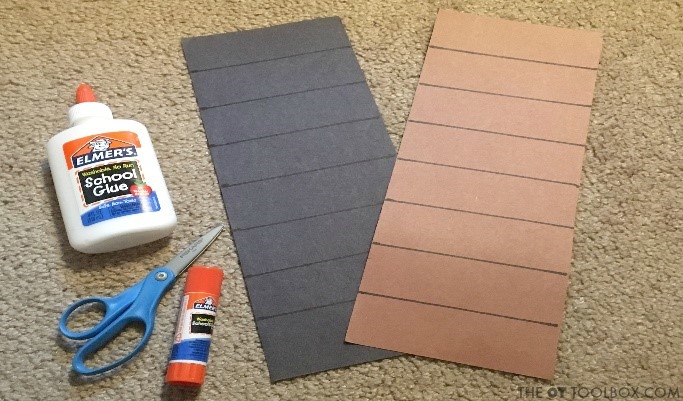
Here are the materials needed to make this cute woolly bear paper craft:
• Black construction paper
• Brown construction paper
• Sheet of white cardstock paper
• Two googly eyes
• Your preference of bottle or stick glue
Scissors (This brand is my favorite for kids)
• Brown marker
• Optional: fall leaf stickers or leaves to cut out 

Steps to Make a Woolly Bear Caterpillar Craft

Use this wooly bear caterpillar craft as a fall craft idea with kids in occupational therapy activities this school year.

Preparation steps:
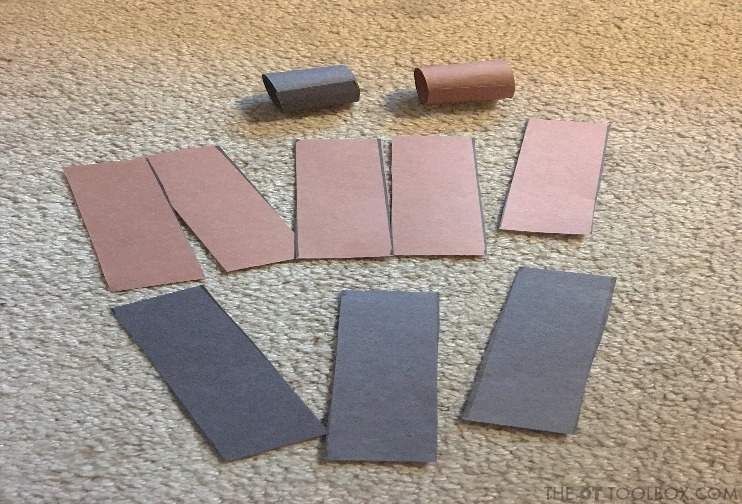
1. Mark the black and brown construction paper with lines for a child to cut in order to create 1 ½” wide and 4 ½” long strips. Draw cutting guidelines with regard to width based on each child’s skill level.  You choose how many of each color.


2. If needed, write Woolly Bear Caterpillar on the cardstock paper for child trace or have child fill in the word or letter blanks or have child copy the text.  You choose which level of written output matches each child’s skill level.  

Kids can use this wooly bear caterpillar craft idea as a fall fine motor craft that boosts the skills kids need for handwriting, scissor skills, fine motor skills, and many other areas that OTs work on in occupational therapy through crafts.

Child steps:
1.  Have child cut on the black and brown paper lines to create the individual strips.


2. Have child wrap strips into loops and glue the ends. Press and hold for a few seconds to ensure they remain adhered together. 


3.  Have child glue the loops onto the background cardstock paper to create a chain that resembles a caterpillar body. Have child press and hold each loop to the background paper for a few seconds to ensure it will remain attached to the paper.


4.  Once the caterpillar body chain is created, have the child glue googly eyes near the top of the last loop at one end. 


5. Optional: Peel sticker backs off of leaves and apply stickers to the background paper or cut and glue leaves on the background paper. 


6. Finalize the activity by labeling the craft creation with “Woolly Bear Caterpillar” text either by tracing, filling in the blank, or writing independently.  

Woolly Bear Caterpillar Handwriting Activity

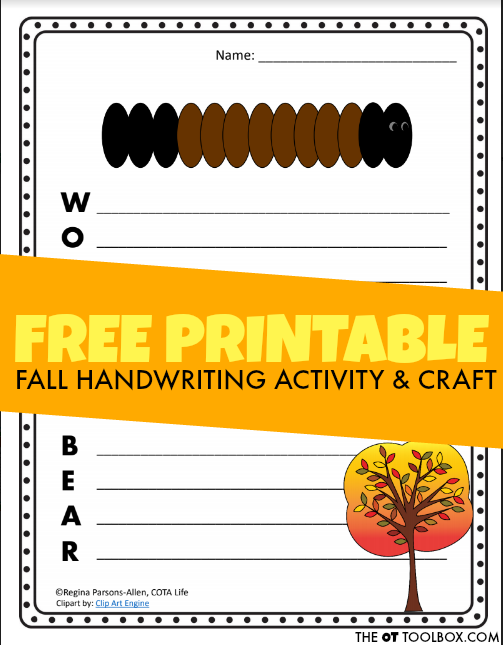
For further handwriting practice for older children, you could have them write a fact sheet about woolly bear caterpillars or use the acrostic poem printable I have created and included below. 


Click here to print this free Woolly Bear Caterpillar Acrostic Poem and work on handwriting. 
  
The Woolly Bear Caterpillar craft can be taken home or used in the creation of a classroom or therapy room bulletin board to celebrate the coming of the fall season.  


Hope you enjoy this fun paper craft project with kids while working on fine and visual motor skills!

Dragonfly Occupational Therapy Activity

dragonfly craft

This blog post describes a cute dragonfly craft that can be used to address a variety of occupational therapy activity areas including: fine motor skills, visual motor skills, crossing midline, bilateral coordination, dexterity, and more. 

Dragonfly Craft

Looking for a creative and crafty occupational therapy activity that is easy to
prepare and packs big punch in addressing a variety of skills?  This dragonfly occupational therapy activity and craft creation may be just what you need! 

It’s fun, versatile, easy to implement, and addresses a large variety of skills and multiple skill levels while also being cheap!!  

It’s a great activity that can be easily upgraded or downgraded to provide the “just right” challenge. While this dragonfly craft is perfect for the pediatric and school-based occupational therapy practitioner, but would make a great classroom center or take home activity too.

Create dragonfly crafts to work on occupational therapy goals with this occupational therapy activity that kids will love, using a dragonfly theme.

Dragonfly Craft Ideas

These dragonfly crafts are so versatile they could be used as a simple occupational therapy craft activity, an assembly activity, a game-like activity, or any combination. 

For occupational therapy professionals looking for a quick craft and easy set up activity, this one is it…plus it supports a variety of skill areas.

For example, you can adapt the craft to support different skills, depending on the goals you’re addressing with kids:

  • Have students cut out paper strips to work on scissor skills
  • Use a variety of textured paper to work on cutting different paper thicknesses (tissue paper, printer paper, cardstock, sandpaper, etc.)
  • Color or paint the clothespins.
  • Add eyes with different small items or draw the eye features.

Take a look at all of the crafty fun that can be had with these fun flying creations.


Kids will love this dragonfly craft occupational therapy activity that works on skills like fine motor skills and visual motor skills.

Dragonfly Craft – A Fun Occupational Therapy Activity

Using the dragonfly as a take home occupational therapy craft encourages skill development during the making process with the end product being used for play or display.  


The child could make one dragonfly or a group of dragonflies with the focus of the activity being on coloring and cutting which addresses a child’s fine motor coordination, manipulation and grasp, distal control, bilateral coordination and visual motor skills
  
Related: For more bilateral coordination activities like this one, try some of the ideas on our list of Winter Bilateral Coordination Activities.

This cute dragonfly craft uses clothes pins and a variety of craft materials to work on skills like bilateral coordination, visual motor skills, and fine motor skills in this creative occupational therapy activity.

How to make a dragonfly craft: 

Affiliate links are included below:
Color the clothespins with either a marker, crayon, or a colored pencil working on grasp patterns and distal control.

Use tacky glue to glue on the googly eyes working on precision skills.

Cut the wings from selected tactile material working on scissor skills, including scissor grasp, bilateral coordination, and eye-hand coordination.

Possible materials that can be used for dragonfly designs could include felt, sandpaper, sticky sticks, chenille stems, paper straws, plastic straws, foam, Velcro, craft sticks, and plastic canvas.

Place the wings that are cut into an X pattern and pinch the clothespin to insert the wings. This process addresses fine motor strength, manipulation, pinch, and visual perceptual skills.

Use craft materials like pipe cleaners, craft sticks, wikki sticks, straws, and other materials in this dragonfly occupational therapy craft for kids.

Dragonfly Occupational Therapy Activity

To use the dragonflies as an assembly activity requires the dragonfly materials to be prepared prior to the session. 

The therapist pre-assembles the clothespins, having the googly eyes
glued on and the wing materials are already cut. 

Having these pieces ready prior to the session allows the focus of the session to be on targeted skill development directed by the therapist addressing individual goals. 

Activity focus areas might include fine motor skills, bilateral coordination, tactile
tolerance, isolated or intersecting diagonal line practice, visual scanning,
motor planning and problem solving.

Work on fine motor skills and other occupational therapy goals with these cute dragonflies made from clothespins.

To set up the dragonfly craft as an occupational therapy assembly activity:

·     1. Place the wing materials scattered on the tabletop and have the child visually scan the table top for matching pieces.

·    2. Have the child take the matches and create an X pattern for wing assembly.

·    3. Have the child pinch clothespins open to insert the wings.

·    4. Continue this process until all dragonflies are assembled with matching wings.

Dragonfly occupational therapy activity that kids can make.

Dragonfly Game 

To use the dragonflies for fun game-like activities, the dragonfly materials would be prepared prior to the session with one set of wing materials inside of a bag.

Dragonfly Matching Game
1: Have the child reach into the bag, feel for only one wing, pull it out and
locate its match on the table top for dragonfly assembly.
     
Dragonfly Texture Game
2: Have child reach into the bag and feel the texture of one wing inside of the
bag and while keeping their hand in of the bag, use their other hand to locate
its match on the table top and assemble the dragonfly.

Activity focus areas might include the same as simple assembly, but with this game-like approach tactile perception is more actively targeted.

Use this dragonfly craft to work on occupational therapy goals like handwriting with this occupational therapy activity idea.

Dragonfly Handwriting Activity

A bonus would be to couple this activity with some handwriting practice. Take a look below at how easy it is to toss in some quick
handwriting work.

Use this dragonfly craft to work on occupational therapy goals like handwriting with this occupational therapy activity idea.

Dragonfly designs is a fun, cheap summertime activity that is easy to implement during therapy sessions and packs a big therapeutic punch.  What therapist doesn’t enjoy those elements for a therapy activity?   

Regina Allen

Regina Parsons-Allen is a school-based certified occupational therapy assistant. She has a pediatrics practice area of emphasis from the NBCOT. She graduated from the OTA program at Caldwell Community College and Technical Institute in Hudson, North Carolina with an A.A.S degree in occupational therapy assistant. She has been practicing occupational therapy in the same school district for 20 years. She loves her children, husband, OT, working with children and teaching Sunday school. She is passionate about engaging, empowering, and enabling children to reach their maximum potential in ALL of their occupations as well assuring them that God loves them!