Social Emotional Learning

Occupational therapists and parents can use these social emotional learning activities to help children develop positive relationships, behaving ethically, and handling challenging situations effectively.

Social emotional learning is defined as a process for helping children gain critical social skills for life effectiveness, such as developing positive relationships, behaving ethically, and handling challenging situations effectively. The specific skills that allow kids to function and complete daily occupations (such as play, learning, participating in social situations, rest, dressing, writing, riding a bike, interacting with others…) are those social emotional skills that help children to recognize and manage emotions, interact with others, think about their feelings and how they should act, and regulate behavior based on thoughtful decision making.

One piece of addressing underlying social emotional learning needs in kids is the fact that the behaviors that we see have an underlying cause that can be found as a result of regulation of emotions, making decisions, and acting on impulses. Social emotional skills are not always a cut and dry aspect of development.
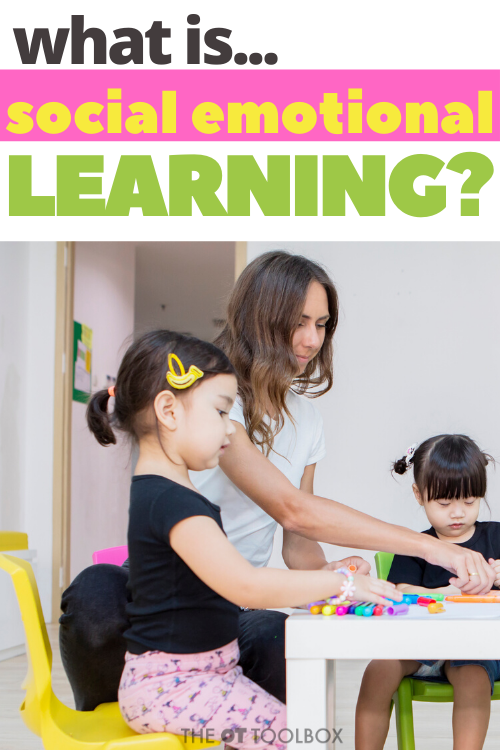
Social emotional learning is an important part of child development and an essential skill that kids need to accomplish daily tasks.

What is Social Emotional Learning?

Today, I wanted to expand on that idea. So many times, we run into children on our therapy caseloads or in our classroom (or hey, even in our own homes!) who struggle with one area…or several. Remembering that beneath the behaviors, troubles with transitions, acting out, irritability, sleep issues, inflexible thoughts, frustrations, etc…can be emotional regulation components.

Let’s consider some of the ways our kids may struggle with social and emotional competencies. We might see kids with difficulty in some of these occupational performance areas (occupational performance = the things we do…the tasks we perform):

  • Academics/learning
  • Management of stress in learning/chores/daily tasks
  • Creating of personal goals in school work or personal interests and following through
  • Making decisions based on ethical and social norms in play, learning, or work
  • Understanding/Engaging in social expectations (social norms) in dressing, bathing, grooming, etc.
  • Social participation
  • Conflict resolution with friends
  • Empathizing with others
  • Responding to feedback in school, home, or work tasks
  • Making good judgement and safety decisions in the community
  • Showing manners
  • Responding to the moods of others and reaching out to others as a support system (both an aspect of co-regulation skills)
  • Understanding subtle social norms in the community or play
  • Transitions in tasks in school or at home
  • Ability to screen out input during tasks
  • Cooperation in play and in group learning
  • Considering context in communication
  • Emotional control during games
  • Understanding mood and affect and how this relates to behavioral responses

Wow! That list puts into perspective how our kids with regulation concerns really may be struggling. And, when you look at it from the flip-side, perhaps some of our children who struggle with, say, fine motor issues may have sensory concerns in the mix too.
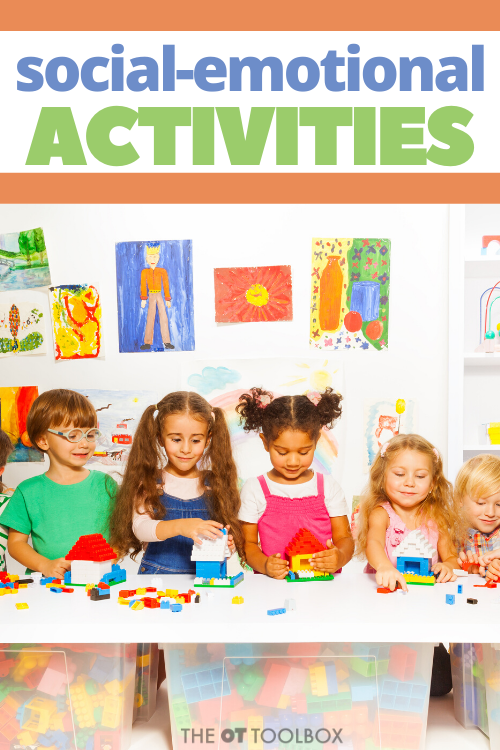
Occupational therapists and parents can use these social emotional learning activities to help children develop positive relationships, behaving ethically, and handling challenging situations effectively.

Social Emotional Learning Activities

When we equip our students with tools to identify their emotions and self-regulate, we are giving them tools for life and promoting a positive environment for learning. We can foster social emotional development through play and interactions.

What might this look like at home, in online schooling, or in a classroom setting?

1. Connect emotions to behavior- Children may not have the language knowledge or understand how to explain what they are feeling. They may need concrete examples or scenarios to help them understand how their emotions are tied to their behavior. Does a storm make them feel nervous or scared? How do they react when they feel anxious about a test or quiz? When they argue with a sibling, how do they react? Once they are able to understand their emotions and how they are feeling, they can start using emotional regulation tools and strategies.

Use this social emotional learning worksheet to help kids match emotions to behaviors and coping strategies.

2. Be flexible and patient- Flexibility is something we have all been thrown into more than usual lately. But working with children on emotional regulation and understanding their emotions takes patience and being flexible. You may need to change up how you introduce emotions, or maybe a strategy you thought would work isn’t.

3. Set the tone and share your own feelings- This may feel uncomfortable for some of us, but sharing our own feelings with our students and clients and modeling the responses and strategies we are encouraging them to use will have a huge impact.

4. Try specific social skills activities- Social skills activities are those that help kids build underlying emotional and regulation strategies so that making friends, emotions, kindness, empathy, self-awareness, self-management, and other socio emotional tools are built at the foundation. One way to do this is by setting up a system for an emotions check in or a feelings check in to start the day.

A recent post here on The OT Toolbox has more ideas to develop social emotional learning by engaging in activities that foster emotional regulation and executive functioning skills.

…it’s ALL connected!

Another fantastic resource that can help develop social and emotional skills is the activity book, Exploring Books Through Play.

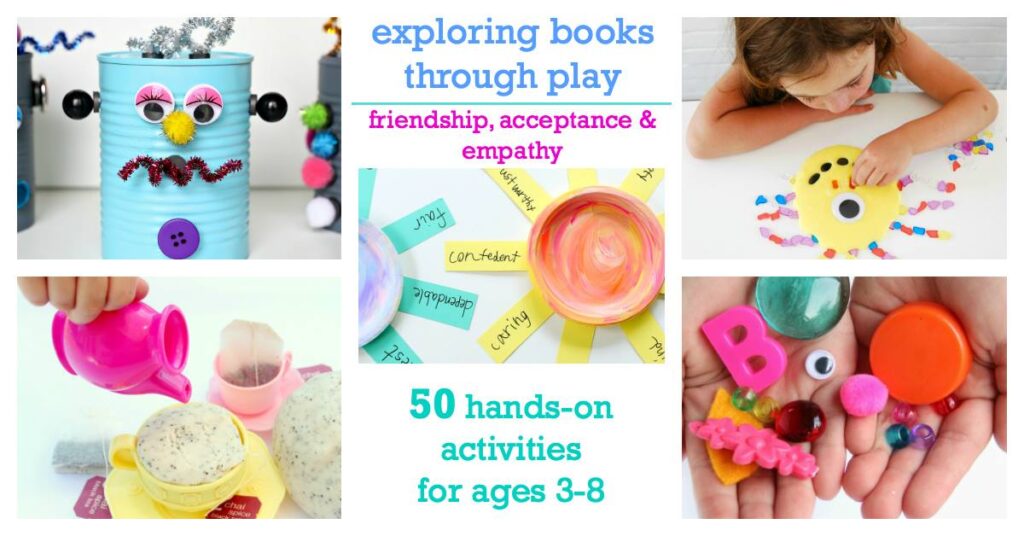
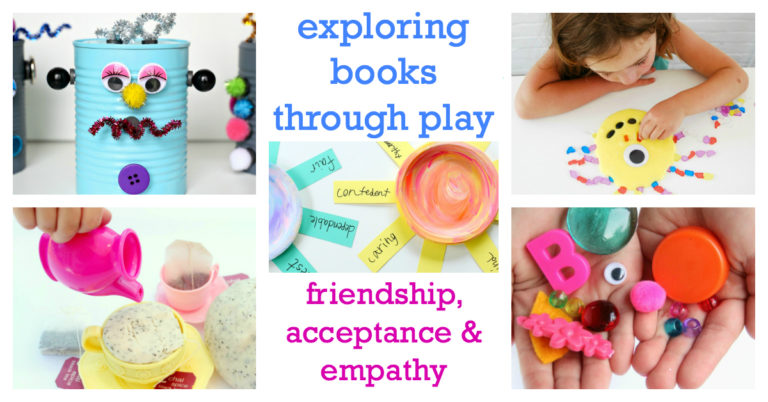
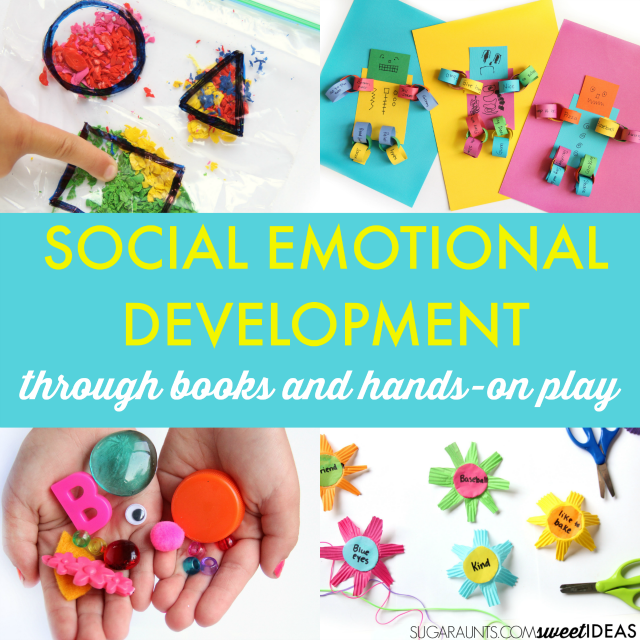
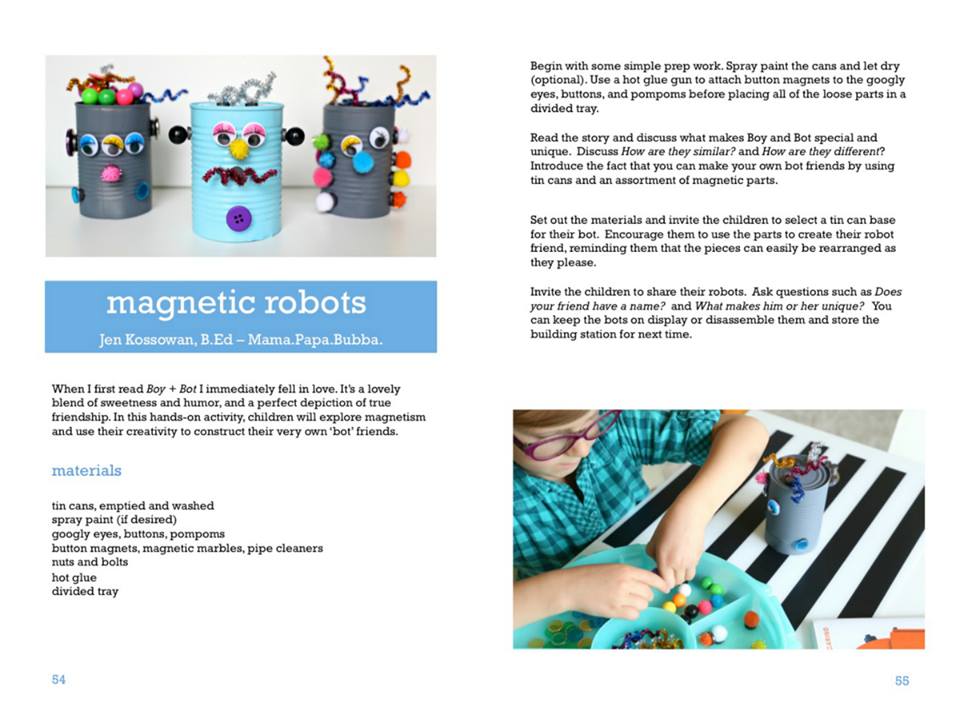
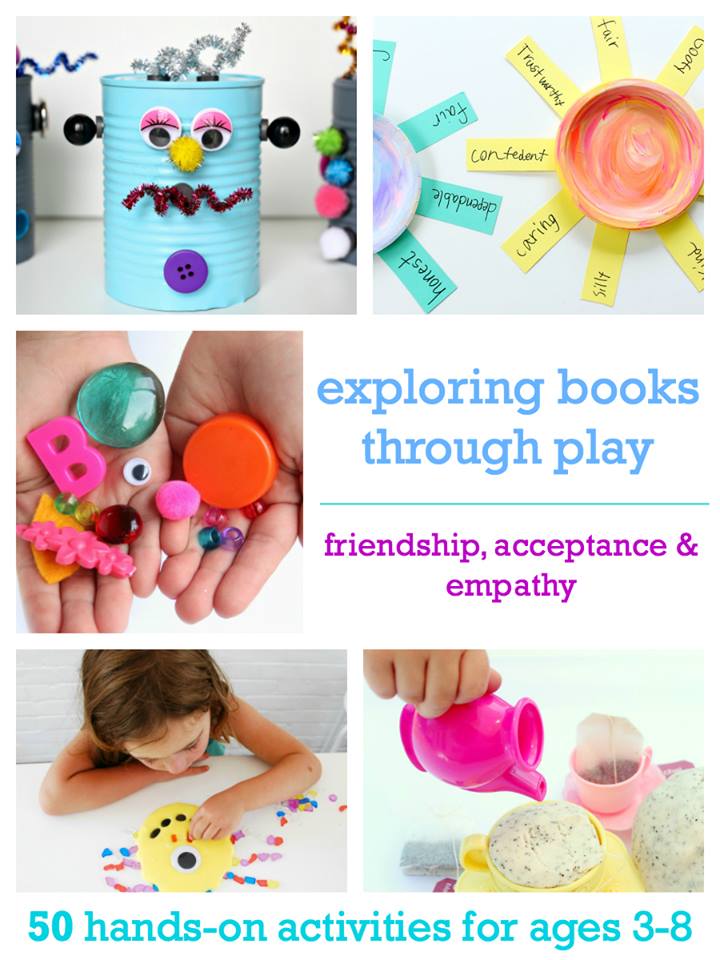
This digital E-BOOK is an amazing resource for anyone helping kids learn about acceptance, empathy, compassion, and friendship. In Exploring Books through Play, you’ll find therapist-approved resources, activities, crafts, projects, and play ideas based on 10 popular children’s books. Each book covered contains activities designed to develop fine motor skills, gross motor skills, sensory exploration, handwriting, and more. Help kids understand complex topics of social/emotional skills, empathy, compassion, and friendship through books and hands-on play.

The book Exploring Books Through Play, has 50 different activities based on popular children’s books. Each book is used for 5 different activities that cover a variety of areas: sensory play, crafts, gross motor activities, fine motor activities, handwriting, scissor skills, and so much more.

This book is designed to address emotional regulation and connecting with kids.
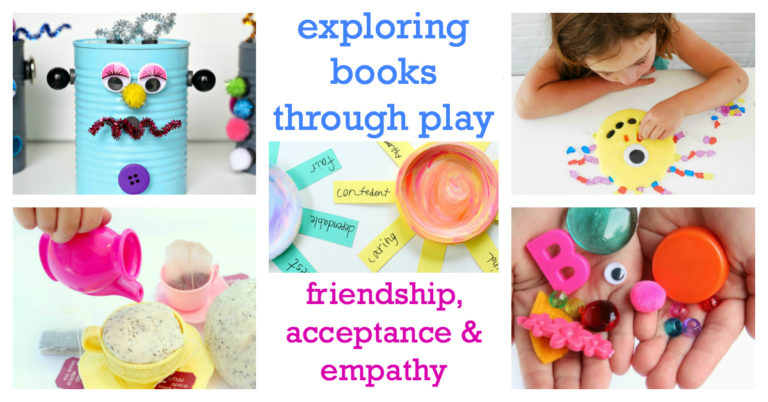
social emotional activities for kids

What’s Inside Exploring Books through Play?

We have handpicked these easy and hands-on activities to help kids develop essential social emotional learning skills.

As classroom curriculum becomes more focused on academics, social and emotional development can get lost in the shuffle. This book focuses on abstract concepts of friendship, acceptance and empathy. By using children’s books that foster understanding of these concepts through pictures and stories, we can help children understand and see these emotions in action. What if you could use books and interactive activities to teach friendship? What if you could read a book that centers on accepting differences and create or make an activity or craft that helps children see acceptance in action. What if you could explore emotions through story and interactive play? In this book, you will find books that cover abstract concepts and use play to build social and developmental skills.  The 10 books covered include:

  • A Sick Day for Amos McGee
  • Boy + Bot
  • Little Blue and Little Yellow
  • Red: A Crayon’s Story
  • Chrysanthemum
  • The Day the Crayons Quit
  • Leonardo the Terrible Monster
  • The Adventures of Beekle: The Unimaginary Friend
  • Whoever You Are and Penguin and Pinecone

Want to help kids learn more about complex concepts such emotions, empathy, compassion, and differences?
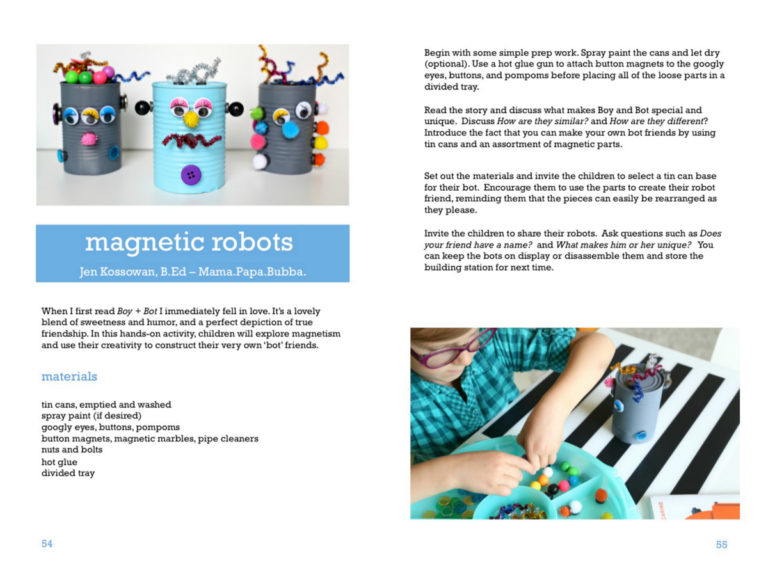
Creative book activities that help kids develop fine motor skills and gross motor skills, while exploring books.

Exploring Books Through Play uses children’s literature as a theme to engage in fun, hands-on activities that help children and adults delve deeper into the characters and lessons, bringing the stories to life and falling further in love with literature. Read a story and then bring the characters to life while learning and building skills. Each story offers unique activities designed around central themes of friendship, empathy, and compassion.

Each chapter includes 5 activities for each of the 10 children’s books. The activities are perfect for children ages 3-8, can be used in small groups or as a whole class, and are easily adapted to a home or classroom setting.

Click here to get the Exploring Books Through Play resource.

Hopefully, this resource, and these suggestions to support social emotional learning has been helpful. Remember that fostering SE development across the ages and stages fosters learning, educational participation, and functional performance in all contexts and environments. Specifically, social emotional learning is important to consider when creating self regulation IEP goals or when fostering self regulation and emotional regulation needs in the school environment.

Colleen Beck, OTR/L has been an occupational therapist since 2000, working in school-based, hand therapy, outpatient peds, EI, and SNF. Colleen created The OT Toolbox to inspire therapists, teachers, and parents with easy and fun tools to help children thrive. Read her story about going from an OT making $3/hour (after paying for kids’ childcare) to a full-time OT resource creator for millions of readers. Want to collaborate? Send an email to contact@theottoolbox.com.
Social Skills Activities

Social skills activities for kids to use to build social emotional skills and learn kindness, empathy, awareness of others, and other social skill interventions needed to function.

Today, I wanted to share some social skills activities and specific social skill interventions that can be used to help kids with social emotional learning and the components that help kids with emotional regulation and wellness. When kids struggle with big emotions, anxiety, fear, transitions, worries, outbursts, or social participation… social emotional development can be impacted. And, all we want is to help them by responding to their underlying needs and to support or connect with that individual.

Social skills activities for kids to use to build social emotional skills and learn kindness, empathy, awareness of others, and other social skill interventions needed to function.

Social Skills Activities

We know that the underlying areas are the root of the “behavior” that we see. The ability to identify one’s emotions, and understand how internal characteristics influence our actions; These aspects maintain a sense of self-confidence and self-efficacy in coping with stress and managing impulses.

The social skills activities listed here are some of the best ways to target emotional regulation tips, tools, and strategies that will give you a jump start in creating connections with your child or student.

Be sure to check out and grab the resource, Exploring Books Through Play, a 50-activity guide on addressing social emotional learning and emotional regulation through play and exploration of popular children’s books.

Created by an occupational therapist and educators, this digital resource has everything you need to manage and teach about emotions, help with regulation, mindset, empathy, self-awareness, and family connections.

Exploring Books Through Play uses children’s literature as a theme to engage in fun, hands-on activities that help children and adults delve deeper into the characters and lessons, bringing the stories to life and falling further in love with literature. Read a story and then bring the characters to life while learning and building skills. Each story offers unique activities designed around central themes of friendship, empathy, and compassion.

social emotional activities for kids
Use these social skills activities to help kids build awareness of others and develop social emotional awareness.

Social SKills Interventions

These strategies are some of the ways to help kids develop social skills and emotional learning:

Social Skills ACTIVITY #1: Role Models

Kids can learn much about social situations including social norms and subtle cues by observing others. That’s why it’s important for parents and families to be a good role model when it comes to self-awareness, awareness of others, empathy, stress management, goal setting, and relationship situations such as preventing and resolving interpersonal conflict or seek help when needed.

Modeling and practicing with children can include many aspects of social skills, including building friendships, kindness, empathy, and awareness of others.

Games and activities that teach self control is one way to begin this process.

Another important aspect is teaching task initiation.

These self-awareness slide decks offer activities to teach about awareness of self and others.

This children’s book and empathy craft is a tool for teaching empathy.

These strategies to teach impulse control can be helpful in modeling activities.

Social Skills Activity #2: Social Stories

A social story is a story that describes a situation, skill, or concept in terms relevant to the reader. I’t provides social cues and perspectives so the reader can respond appropriately. Social stories are reassuring and well-understood by the reader, making them a social skills activity that can be used over and over again. Social stories use pictures and typically are individualized so they meet specific needs of the child and are focused on interests in a motivating manner.

Social stories help children with social skill development because it defines what they should do in a positive manner, while identifying the social expectations which can be frustrating or confusing for some children.

Social stories can be created to address a variety of functional tasks such as potty training or getting dressed. Others are based on emotions and interacting with friends. Still other social stories cover social situations such as wearing a mask when out and about.

Social Skills Activity #3: Group Games

Getting kids involved with group play and group activities is a powerful one in building social awareness, conflict resolution, problem solving, communication, and other important social skills like the critical thinking involved in making decisions.

This group gross motor activity requires a group and also offers sensory input through the proprioceptive and vestibular systems.

Pretend play is another way for kids to practice these important skills in social situations. Whether in a small group or alone, practice occurs through pretend play. Here are some pretend play ideas to get you started:

Outdoor pretend play with bug toys

Grow a pretend flower garden

Pretend play felt cookies

Using board games is another way to build social skills in a small group. Here are board games to help build skills.

Social Skills Activity # 4: Social Scripts

Social scripts offers a tactic for kids to respond to specific situations. Scripts might be in card format or a prompt that offers a cue. Social scripts can be created for when to do specific tasks like turning off screen time. Other kids may use social scripts for asking a friend to play.

Social scripts are great for kids that read well or can follow verbal prompts. However, some scripts include pictures and images as well.

Social Skills Activity # 5: Video Modeling

Kids can use videos as a motivating way to observe and copy behavior or social situations in action. Some video modeling activities offer kids a way to know how to perform tasks. Others offer opportunities to see social situations in action.

Video modeling can also be used to inform. Kids can watch videos of other children in specific situations and develop awareness of the subtle social rules well as norms. They can learn to empathize with others and take others’ perspectives while building an awareness of self.

Social Skills Activity #6: Self-regulation

By helping kids to better understand their senses and how sensory input impacts their behaviors, thoughts, and offer tools to help kids identify, address, and use strategies to achieve self-control and emotional regulation in a non-judgmental and safe way.

Programs like the Zones of Regulation and How Does my Engine Run offer strategies to impact regulation into every day tasks.

Helping kids understand their senses and how input impacts their behavior, actions, and emotions is a huge starting point for kids to get a handle on social skills.

Social Skills Activity #7: Understanding emotions

Helping kids to better understand emotions is an important step to helping kids understand themselves and how they react to situations. They can then transfer that understanding by better understanding others around them in social situations.
Here is a free printable to help kids learn about emotions and their reaction or behavioral responses.

In this resource on using children’s books and social emotional activities (fine motor, gross motor, art, crafts…) kids can learn about emotions of the main characters as they build the social skills needed to better understand and empathize with others.

While this activity is pumpkin-themed, we used a face and manipulatives to help kids understand and identify emotions and facial expressions. Try this activity with any shape.

A final word on social skills for kids

The main thing to recognize from this list of activities is that it is possible to teach social skills to kids. Some children flourish with one strategy and others will appreciate another social emotional skill activity. Try some of these activities and mix and match others to build a social skills toolbox that will help kids thrive!

Social Emotional Skills Resource

Addressing underlying needs= Making a difference.

Therapists know that all of the activities, programs, courses, worksheets, etc. that we use with clients are TOOLS for promoting skills. They are the strategies we use for meeting functional skills. They are the blueprint for helping clients reach goals. They are the means for fulfilling meaningful occupations!

Exploring Books Through Play is focused on social emotional skills, regulation, connection with kids/families, and empowering kids by meeting the underlying sensory needs so that they can learn, play, and connect with others while building the skills they need to be functioning kiddos.

Social skills activities in the books include ideas such as interactive play experiences, this book guides you through activities for each children’s book. The activities were designed to build fine motor skills, gross motor development, sensory exploration, and much more. By adding movement and fine motor activities, or multi-media sensory-based play and craft ideas, children can build motor experiences and develop skills through activities based on the concepts of each children’s book.

As classroom curriculum becomes more focused on academics, social and emotional development can get lost in the shuffle. This book focuses on abstract concepts of friendship, acceptance and empathy.

By using children’s books that foster understanding of these concepts through pictures and stories, we can help children understand and see these emotions in action.

What if you could use books and interactive activities to teach friendship? What if you could read a book that centers on accepting differences and create or make an activity or craft that helps children see acceptance in action.

What if you could explore emotions through story and interactive play?

In this book, you will find books that cover abstract concepts and use play to build social and developmental skills. 

Wow…do our kids need this, right??

As therapists, we strive to focus on the whole child…and all of the sub-layers that play a part in development and growth. We focus on each child individually based on specific needs, strengths, and developmental levels. The connection between the brain, emotional development, sensory input and regulation are the “roots” to everything we do! Focusing on those underlying needs helps the child to flourish in higher-level aspects like being flexible, social participation, using good judgement, responding to feedback, transitioning between tasks, regulating emotions, and much more.

And incorporating those “branches” fosters cognition, completion of tasks, higher-level learning, behaviors, and everything we see!

The bottom-line is that using evidenced-based sensory experiences to improve areas such as cognition, learning, motor performance, etc. is the way to go! Overall, studies suggest that frequent, active participation in multi-sensory experiences can help regulate emotions, improve specific symptoms, address cognitive functions, motor performance, and focus. Research shows us that embedding social-emotional learning strategies within school curricula promotes improved behavior, academic performance, and social skills.

It makes sense! In school an at home, on-task behavior is a required component for student participation. There is a lot to consider…and all of the components work together. sensory regulation, processing of sensory input, filtering out unnecessary input, focusing, transitions…And all of these areas are connected.

Exploring Books through Play, hands-on and sensory-based movement activities to foster social emotional and sensory tools!

Exploring Books Through Play will help to create simple book activities focused on play that fit into a family’s schedule, help parents figure out why their child is irritable or responds in the way they do.

Colleen Beck, OTR/L has been an occupational therapist since 2000, working in school-based, hand therapy, outpatient peds, EI, and SNF. Colleen created The OT Toolbox to inspire therapists, teachers, and parents with easy and fun tools to help children thrive. Read her story about going from an OT making $3/hour (after paying for kids’ childcare) to a full-time OT resource creator for millions of readers. Want to collaborate? Send an email to contact@theottoolbox.com.
Research on Screen Time for Kids

Research on screen time in kids

In this blog post, we’re talking research on screen time. Kids are exposed to screens, tablets, smartphones, laptops, etc. more and more, especially as education turns to online learning. What is the added screen time doing for our young kids? What does the science say about screen time limits. What exactly are the effects of screen time? Here, you’ll see just some of the facts about screens…and how to move forward to a more balanced life with screens.

Research on Screen Time for Kids

Getting familiar with what science says about the impact of screens on child development and the whole family is a great start in becoming a tech wise family.

We’ve done the research on wellness. We know that an unbalanced life leads to overload in physical, mental, or emotional health (as in other areas). Unbalanced screen use leads to so much more and the research is telling!

You’ll also want to check out our recent post on the symptoms of too much screen time. It’s astonishing how our kids are impacted!

Smartphones and tablets have only been around for about a decade or so…but we are at the point where our elementary school-aged children have been around screens for their entire life. Many have constant access to screens, whether it’s through entertaining apps or by watching videos or by observing the adults in their life have a screen device within arms reach as they communicate, work, play, manage the home, play, navigate the vehicle…the list goes on and on.

Occupational therapists who work with children everyday on areas like balance, coordination, regulation, sensory integration, motor skills. All of these areas are necessary for completion of functional tasks. It’s through play that OT professionals work on these much-needed areas. And, it’s play and activity in real-life activities that the balance of screen time needs to occur.

Research oN the Symptoms of Screen Time

The research is telling us even more devastating facts about screen time in kids:

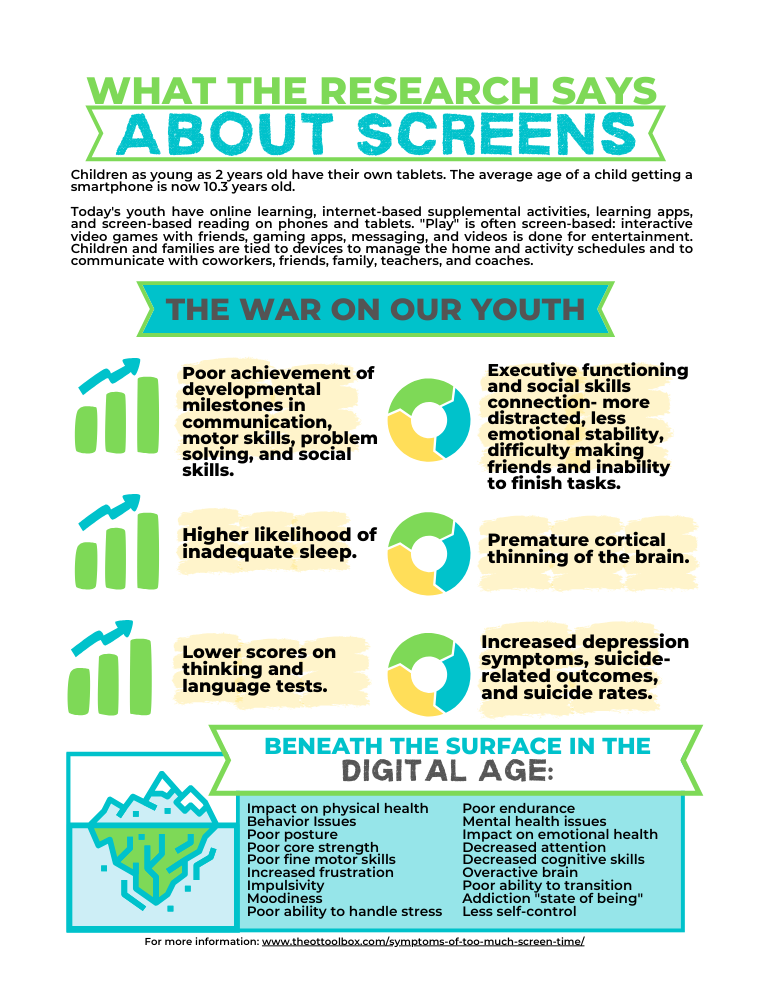
Things like the increasing occurrence of toddlers and preschoolers who have poor achievement of developmental milestones in the areas of communication, motor skills, problem solving, and social skills.

Things like the direct association between screen time and child development.

Symptoms of screen use in kids and research on screens and development in children and teens.

There is research telling us that more hours per day spent on screens is linked to lower psychological well-being, in a way that presents in executive functioning skills as well as social/emotional development. Connections between lower self control, more distractibility, less emotional stability, difficulty making friends, and inability to finish tasks are all depicted.

There is research telling us that increased time spent with digital media in teenagers associated with higher odds of symptoms of ADHD. This may show up as some of they symptoms of too much screen time.

There are reports of increased mental health concerns and mental well-being. There are findings on the overall functioning of the brain that looks like distractibility, frustration, moodiness, and irritability.

You may have heard of the blue light emitted by personal electronic devices. Because children’s eyes absorb less short-wavelength light, more blue light reaches a child’s retina. Children, therefore, may be at higher risk for blue light retinal damage than adults. Blue light emitted from smartphones, tablets, and personal computers before bedtime can delay sleep onset, degrade sleep quality and impair alertness the following day. Limiting those devices before bedtime not only address sleep issues, but can help with overall wellness.

Our teenagers are impacted as well. Hours spent on screens leads to less sleep adequacy, which impacts learning, well-being, and development. Less adequate sleep impacts learning and cognitive skill-building. This occurs right during the age that social-emotional skills develop, executive functioning skill development is occurring, and communication skills are set to develop.

There have been studies completed that show increased depression symptoms, suicide-related outcomes, and suicide rates coinciding with screen use levels.

There is research revealing that brain scans of children who spend more than 7 hours per day on screens show premature cortical thinning of the brain. This is especially significant for our young children who often times, hold phones right up to their face, in a slouched position.

In one study with 18 year-old college students, individuals with internet gaming addiction showed less gray matter volume in several parts of the brain (bilateral anterior cingulate cortex, precuneus, supplementary motor area, superior parietal cortex, left dorsal lateral prefrontal cortex, left insula, and bilateral cerebellum) (Wang et al., 2015)

There are so many more devastating facts and figures that should make us terrified for the future of our children.

Research on screen time in kids

How to use research on screens to create a balance

Things are not hopeless. We are at a point where we must learn, work, communicate using devices. Screen time is inevitable. But, what we can control is the balance of real activities, movement, and play.

All of this information on the research being done on the impact of screens on development, is covered and explained in easy-to-understand language in the therapist-created course and 12-step program, Digital Devastation Solutions.

Digital Devastation Solutions is a tool created by an occupational therapist that can make a true impact on our kids. This course provides the means to balance screens while providing the framework to help kids thrive and master emotions, physical health, mental well-being. It is a formula for helping kids establish skills they need for executive functioning, learning, motor milestones, and so much more.

Digital Devastation Solutions is a way for families to balance excessive screen time use and improve their child’s development. The course covers everything you need to know about the astonishing research that’s been done on screen use in kids and gives a step-by-step plan.

You’ll gain a knowledge of exactly what happens to the brain on screens. You’ll be able to use this information so you can give kids what they really need to grow and develop.

Digital Devastation Solutions is an informative course AND 12 Step Plan for raising a happy, healthy child in the digital age. Kids and families can use that 12 step solution to balance screen time in this new COVID era.

Therapists can access a workshop and program that can be duplicated in your practice. You can use the workshop as a class for parents and share this powerful research and step-by-step program with those in your community.

Therapists can help balance screen time

As therapists, we are experts in wellness. We know the power of occupational balance. Having too much screen time throws that balance off in a way that impacts performance, task completion, mental health, emotional health, and physical well being. Occupational therapy professionals strive to empower clients and families with resources to combat screen overload.

Digital Devastation Solutions offers a therapist resource to use in practice. This is a tool to build a workshop for sale or community building while building a practice. Not only will this workshop educate your community and offer great value, it will position yourself as the expert to offer solutions which will build your OT business.

  • An already done for you marketing and education system. All you have to do is set up the class and then press play on the PowerPoint. It will come with a script so you will know exactly what to say. This will save you about 40 hours of time. (Value $4000)
  • Parent handouts including: Screen Survey, Technology Agreement, When to Get Professional Help and Chores Chart by Age (Value $500)
  • Marketing ideas and a Pre-Made flyer you can use to market your class (Value $300)
  • Developmental Screening Form (Value $500)
  • Access to a private Facebook group to share ideas and support
  • Added Bonus when you Pre-Order “Quick Start Guide: The Step by Step Checklist to Set Up your First Class”

Click here to read more about Digital Destination Solutions Program for use in therapy sessions and practice.

bonus for Digital Devastation Solutions course

>>Free Ways to Add Sensory Motor Activities to the Classroom

>>Scree Research Printable

>>Classroom Sensory Strategies Toolkit

>>Indoor Recess Sensory Diet Activities

>>Outdoor Sensory Diet Activities and Outdoor Challenges

>>School Sensory Checklist

>>How Play Builds Child Development Printable

When you purchase Digital Devastation Solutions through a link on this website, email contact@theottoolbox.com with your receipt and you will be sent this bonus pack.

Wang H, Jin C, Yuan K, Shakir TM, Mao C, Niu X, Niu C, Guo L, Zhang MFront Behav Neurosci. 2015; 9():64.

Infant & Children’s Vision Resources supported by The American Optometric Association and Optometry Cares – The AOA Foundation . Blue Light Impact in Children [White paper].  https://www.aoa.org/Documents/OptometryCares/Blue%20Light%20Impact%20in%20Children.pdf

Screen Time Checklist

free screen time checklist

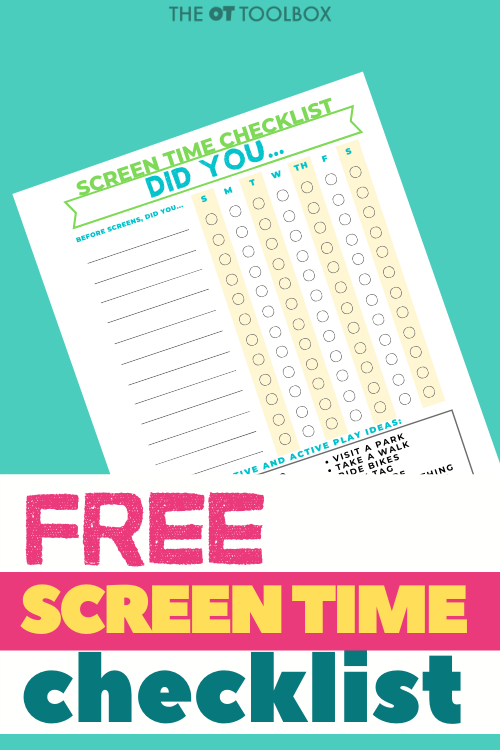
How to balance screen time in a digital age is a HUGE question that therapists, teachers, and parents wonder about. Our kids are struggling. They are impacted by increased time on screens in ways that we may have not ever imagined. The research on screen time is profound. So how do we balance screen time when it seems to be everywhere: schools, distance learning requirements, social media, communication apps, games, television and movie streaming, and so much more? Today, I’m excited to share with you screen time checklist to use to help kids balance screen use with activity and responsibilities. This is a great tool to have in your toolbox as a tech wise family.

free screen time checklist

Screen Time Checklist

This free printable checklist can be customized to include tasks each child needs to complete before they have access to screens.

Add chores, homework, or other responsibilities to the list.

Add reading time, creative play such as journaling or art creation to the screen checklist.

Add household responsibilities such as making the bed, getting dressed, brushing teeth, or cleaning up the breakfast plates.

Add physical activity requirements such as outdoor play, exercise, going for a walk, or playing in the yard.

Open ended checklist for screen time

The task requirements were intentionally left blank so that you can add the time constrictions and activity requirements. Perhaps you would like to see face-to-face interactions to work on emotional well being.

Maybe your specific child or client needs sensory play in the way of tactile exploration or vestibular input. These activities can be written on the checklist so they have exposure each day.

Maybe your child needs to have heavy work in their sensory lifestyle. This can be added in the form of heavy work chores or sensory coping activities.

If executive functioning is a concern, maybe adding a cooking activity for each day would be a good requirement before screens.

If reading is important to add to your child’s day, try adding a book related activity to the list.

I wanted to make this checklist a motivating way to accomplish individual goals while also adding balance to digital time.

Becoming more aware of how much time a child spends in the way of face-to-face interaction, creative play, physical activity compared to screen time is one of the first steps in helping kids balance screens and address some of those symptoms of too much screen time.

Screen Time Checklist for Home and therapy

Enter your email address below to access this free printable. If you are already on my newsletter list, you will still need to enter your email so the printable can be delivered to your inbox.

Grab the Screen Time Checklist

    We respect your privacy. Unsubscribe at anytime.
    Powered By ConvertKit

    Colleen Beck, OTR/L has been an occupational therapist since 2000, working in school-based, hand therapy, outpatient peds, EI, and SNF. Colleen created The OT Toolbox to inspire therapists, teachers, and parents with easy and fun tools to help children thrive. Read her story about going from an OT making $3/hour (after paying for kids’ childcare) to a full-time OT resource creator for millions of readers. Want to collaborate? Send an email to contact@theottoolbox.com.
    Digital Devastation Solutions Offer and Bonus

    digital devastation solutions

    I am SO excited to share a huge resource with you. As a therapist, I can see the change in our kids of today. Students and clients are different than they were 20 years ago when I started out as an OT. As a mom of four, I can see the day-to-day impact that screens have on children. I can see how much screen time is required for school (distance learning or traditional classroom education). I can see the lack of focus in kids when they are not on screens. I can see the meltdowns when asked to get off of a tablet. The outbursts, visual tracking issues, and threat to boundaries that screen time overload has truly impacts kids and families.

    All of this is why I am elated to bring you the Digital Devastation Solutions course and 12 step program to balanced digital life.

    This course is a great resource in becoming a tech wise family.

    Digital Devastation Solutions Resource

    We are required to work and learn online. Kids are playing, learning, communicating, and interacting with peers via screens day and night. As a result, we see frustration. We see meltdowns, inactivity, and kids pushing the time limits of screen use. They want to be on screens constantly! And when they aren’t they are stressed, overwhelmed, and frustrated by learning and social interactions.

    digital devastation solutions

    We can do something about this!

    >>It is really possible to balance digital entertainment and screen use with play, real activities, in-person responsibilities so kids can thrive in meeting developmental milestones.

    >>It is possible to offer tools for a balanced lifestyle so kids can transition off screens to have personal interactions and flourish in emotional, mental, and physical well-being.

    >>We can help kids move from a sedentary lifestyle to one that is active, imaginative, and thriving.

    Does any of this sound familiar:

    • Kids that are hyper or lack focus and have no sitting tolerance, a short attention span
    • Students that are barely getting by and functioning on sensory overload, with emotional breakdowns
    • Kids that are constantly bored and only want screen-based entertainment
    • Clients that are delayed in fine motor skills, core strength, emotional regulation, and in a constant state of sensory overload

    You are in the right place!

    We CAN manage screen time in a balance, and effective way that makes a true difference in the development and functioning of our kids in today’s digital world.

    Digital Devastation Solutions is a course and a tool created by an occupational therapist that can make a true impact on our kids. This course offers an in-depth explanation of the research behind screens. It shows us as parents, therapists, and educators exactly what is happening to the development of children with screen overuse.

    It uses easy-to-understand language to balance screens while providing the framework to help kids thrive and master emotions, physical health, mental well-being. It is a formula for helping kids establish skills they need for executive functioning, learning, motor milestones, and so much more.

    Digital Devastation Solutions is a way for families to balance excessive screen time use and improve their child’s development. The course covers everything you need to know about the astonishing research that’s been done on screen use in kids and gives a step-by-step plan.

    The course offers actionable strategies to impact our kid’s nervous systems so they get the activity they need, and it explains this in a way that is easy to understand.

    This course is a cost-effective way to get the research and understand it in a parent-friendly way. What’s more, you’ll be able to explain to others what the research tells us, so you can understand the impact screens are having on so many areas of development in children.

    You’ll gain a knowledge of exactly what happens to the brain on screens. You’ll be able to use this information so you can give kids what they really need to grow and develop.

    Digital Devastation Solutions is an informative course AND 12 Step Plan for raising a happy, healthy child in the digital age. Kids and families can use that 12 step solution to balance screen time in this new COVID era.

    Now is the time to battle the beast of screen time overload. There are easy action steps that you can do to balance out the excessive screen time kids are experiencing due to mandatory online schooling. You can use this information and step-by-step plan to improve your child’s readiness for school in the fall.

    This is an investment in your family and your child’s development and overall health and well being.

    This course and program is for therapists, parents, teachers, or anyone who works with or strives to raise functioning, balanced, and healthy kids. 

    • If you struggle with setting limits on screen time…
    • If you are tired of trying trying to get kids to be active when they just want to play online…
    • If you are overwhelmed and don’t know where to start with helping kids balance boundaries around screen use…
    • If you are a therapist struggling to help kids achieve goals that just can’t sit still and lack focus, attention span, and sensory overload…
    • If you are looking for actionable strategies to set up a digital detox that fits your family’s needs…
    • If you are striving to create a balanced and lasting impact on your home and family…
    • If you are a therapist wanting to create a workshop designed to educate current and potential clients with a step-by-step program…

    Digital Devastation Solutions is for you! 

    The Digital Devastation Solutions course can be purchased here for just $29.

    Therapists can access a full, done-for-you workshop so you can replicate this course for clients and your community to truly make an impact.

    RESOURCE FOR THERAPISTS CONCERNED ABOUT SCREEN USE IN KIDS

    Therapists: I fell in love with this program and am using it’s 12 step plan in my own family. This course, created by a pediatric occupational therapist is not only a powerful tool for you own family…it’s the potential to make an impact on kids in your community and practice.

    Therapists can access a workshop and program that can be duplicated in your practice. You can use the workshop as a class for parents and share this powerful research and step-by-step program with those in your community.

    Therapists educate and address occupational imbalance (or overload on one are of life or another that impacts functioning and overall well being). We do this by helping our clients achieve functional goals, by addressing lifestyle habits like sleep, nutrition, and exercise. But what about the balance of screens?

    In this course and program, therapists will get:

    • An already done for you marketing and education system. All you have to do is set up the class and then press play on the PowerPoint. It will come with a script so you will know exactly what to say. This will save you about 40 hours of time. (Value $4000)
    • Parent handouts including: Screen Survey, Technology Agreement, When to Get Professional Help and Chores Chart by Age (Value $500)
    • Marketing ideas and a Pre-Made flyer you can use to market your class (Value $300)
    • Developmental Screening Form (Value $500)
    • Access to a private Facebook group to share ideas and support
    • Added Bonus when you Pre-Order “Quick Start Guide: The Step by Step Checklist to Set Up your First Class”

    Click here to read more about Digital Destination Solutions Program for use in therapy sessions and practice.

    BOnus for parents and therapists

    bonus for Digital Devastation Solutions course

    >>Free Ways to Add Sensory Motor Activities to the Classroom

    >>Scree Research Printable

    >>Classroom Sensory Strategies Toolkit

    >>Indoor Recess Sensory Diet Activities

    >>Outdoor Sensory Diet Activities and Outdoor Challenges

    >>School Sensory Checklist

    >>How Play Builds Child Development Printable

    When you purchase Digital Devastation Solutions through a link on this website, email contact@theottoolbox.com with your receipt and you will be sent this bonus pack.

    Free Social Emotional Learning Worksheets

    Social Emotional Learning Worksheet

    I offered these free social emotional learning worksheets to my newsletter subscribers last week and I wanted to put it on the website so you could access it to. Here’s the thing: when kids are developing their social emotional learning skills, starting with emotional skills is very important in social development in children.

    Kids who have a good baseline understanding of emotions offers a means to better understand emotional growth. Kids can use social emotional activities like this worksheet to better understand emotions, including how they feel at different times, or how their emotions change in different situations.

    They can understand social situations and the emotions that others might exhibit with empathy and compassion. Add this social emotional skills worksheet to your friendship activities.

    While there are many uses for this emotions worksheet, one way we like to use it is in an emotions check in task. This can be used as part of a curriculum or to support overall self regulation needs by first becoming more aware of emotions, mood and affect.

    Social Emotional Learning Worksheet

    Free Social Emotional Learning Worksheet

    I love this emotions worksheet because it is a starting point for covering social emotional development in kids. It’s a great activity for children who are just beginning to understand emotions and how they respond, or to identify what leads up to a certain emotion.

    As therapists, we cover a lot on self-regulation. We talk about what’s happening “below the surface” of behaviors and meltdowns. We discuss underlying factors such as social-emotional skills, and self-awareness.

    We address those trigger points by providing self-regulation tools, coping strategies, and mindfulness activities. We help kids and families master an improved quality of life so that completion of daily tasks and everyday occupations are easier and more functional.

    This social emotional learning worksheet does just that!

    emotions worksheet

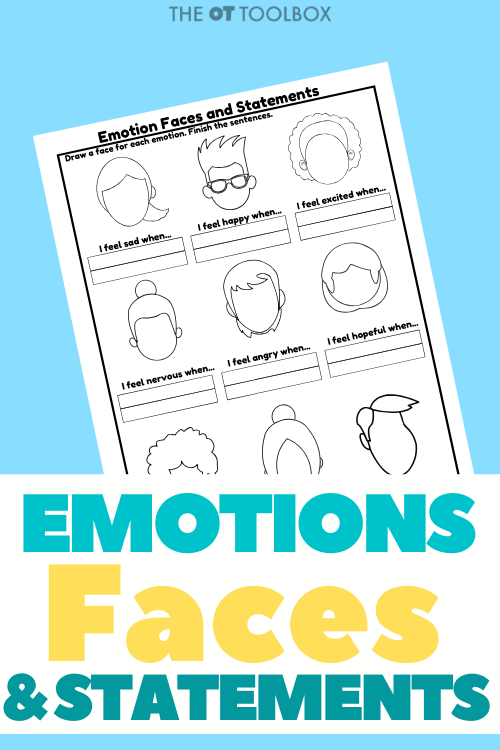
    To help kids better understand various emotions, they can use this tool to draw and color faces to match the various types of emotions.

    They can then write in the given spaces to complete the sentence and identify a time when they felt that emotion.

    This is a great tool for helping kids understand emotions, and foster emotional development by offering coping tools or regulation strategies if needed. It’s a great way to help kids talk about emotions and know that it’s ok to feel all of those emotions, and that everyone else does, too.

    More emotions activities

    This free social emotional learning worksheet makes a nice addition to play-based emotions activities. In the resource, Exploring Books Through Play, you’ll do just that.

    This digital, E-BOOK is an amazing resource for anyone helping kids learn about acceptance, empathy, compassion, and friendship. In Exploring Books through Play, you’ll find therapist-approved resources, activities, crafts, projects, and play ideas based on 10 popular children’s books. Each book covered contains activities designed to develop fine motor skills, gross motor skills, sensory exploration, handwriting, and more. Help kids understand complex topics of social/emotional skills, empathy, compassion, and friendship through books and hands-on play.

    Click here to get your copy of Exploring Books Through Play.

    social emotional activities for kids

    I hope this social emotional worksheet is helpful to you and those you serve!

    To get your printable copy of this FREE SOCIAL EMOTIONAL LEARNING WORKSHEETs, enter your email into the form below:

    Get this social emotional learning worksheet!

      We respect your privacy. Unsubscribe at anytime.
      Powered By ConvertKit

      Colleen Beck, OTR/L has been an occupational therapist since 2000, working in school-based, hand therapy, outpatient peds, EI, and SNF. Colleen created The OT Toolbox to inspire therapists, teachers, and parents with easy and fun tools to help children thrive. Read her story about going from an OT making $3/hour (after paying for kids’ childcare) to a full-time OT resource creator for millions of readers. Want to collaborate? Send an email to contact@theottoolbox.com.

      Goodnight Moon PDF Printable Memory Game

      Goodnight Moon activity and Goodnight Moon pdf printable

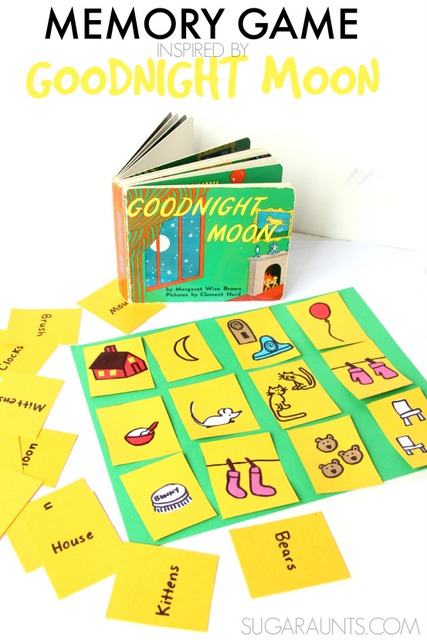
      Goodnight Moon is a classic book by Margaret Wise Brown that teaches so many skills, making it the perfect children’s book to use in therapy activities. We used this book activity and a DIY Goodnight Moon printable PDF memory game. It’s a calming book that inspires sleepy contentment with it’s rhyming text and simple images. The book is a fantastic tools to build visual perceptual skills including figure ground, form constancy, and visual memory. Those skills carryover with our memory game printable you can access below. However, for my own kids, I loved the calming tone that the book offers. It’s a great way to calm down before bed.

      For more calm down activities before bed, try these bedtime relaxation stretches.

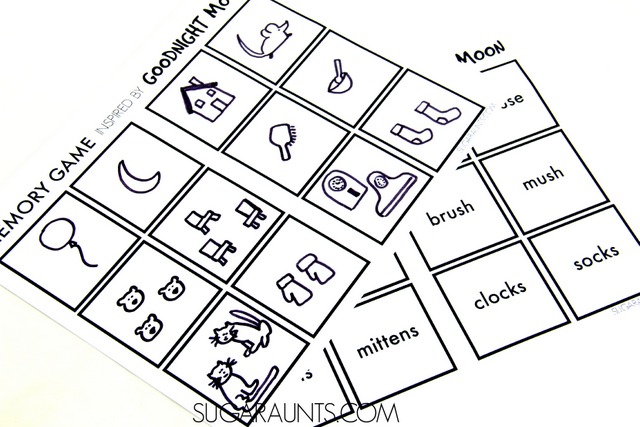
      Our Goodnight Moon activity has been played almost as many times as we’ve read the book!  We decided to create a free printable to go along with our memory skills game, so you can play, too.    

      Goodnight Moon activity for kids and Goodnight Moon pdf printable game.
      Goodnight Moon activity with a Memory game inspired by the book, Goodnight Moon by Margaret Wise Brown.

      Goodnight Moon Activity…Memory Game!

        Goodnight Moon teaches kids that fear can be caused my our imagination. I loved this explanation of what exactly Goodnight Moon teaches and how this book can be used to help kids build skills.

      This post contains affiliate links.

      Goodnight Moon by Margaret Wise Brown is one of those books that we read over and over again.  Each time, the kids will sit mesmerized as I read the quiet rhyming words.  This is definitely a bedtime book that is loved at all times of the day!  When we read through the book, my kids love to look for each item on the pages and find it’s rhyme.  It’s almost like a memory game as you read through the book, especially as the mouse moves around the room in the book.  

      Margaret Wise Brown Book, Goodnight Moon activity for kids.

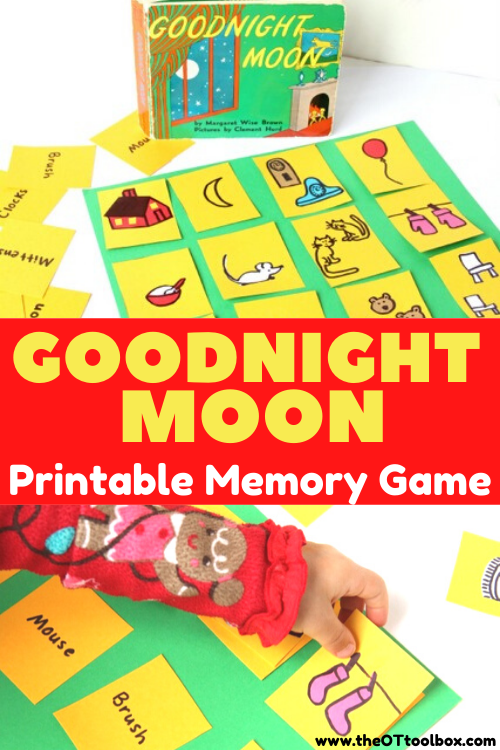
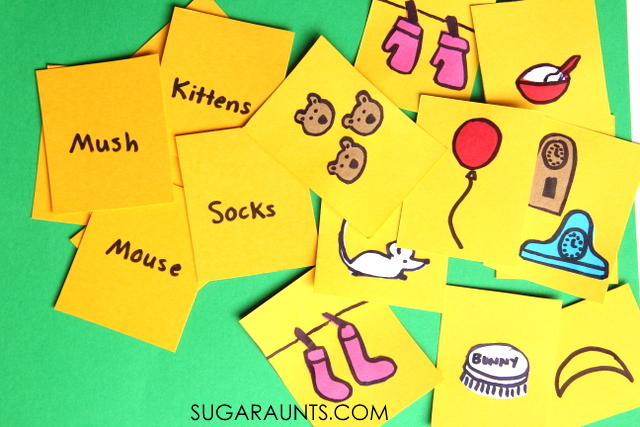
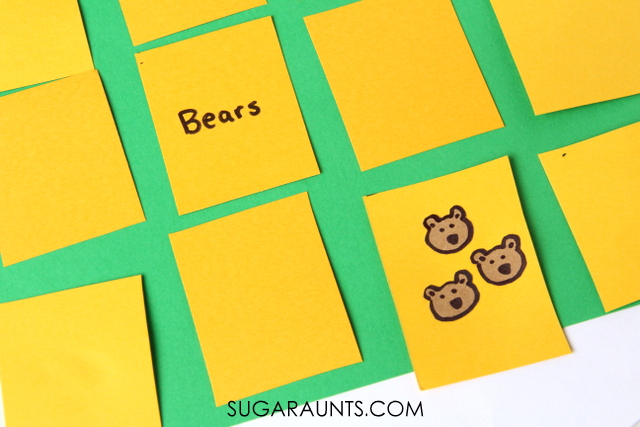
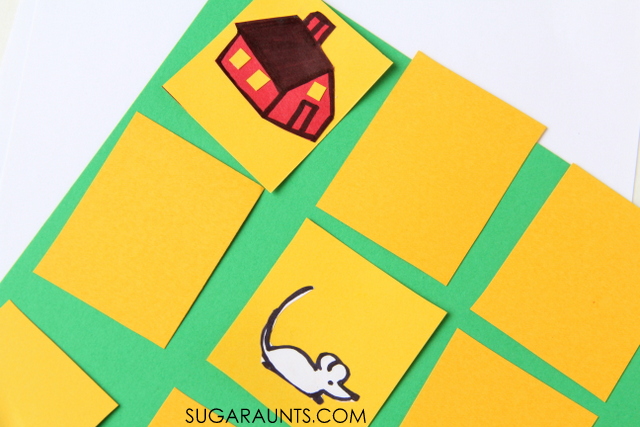
        To make your Goodnight Moon memory game, grab a couple of pieces of card stock.  We chose brightly colors based on the colors of the book.  Because the setting occurs in a green room, we used green paper for our playing board.  

      You could certainly play this memory game right on a table or floor, but my kids got a kick out of our “green room” and the green paper contained the game for our matches.  

      Goodnight Moon learning Activities

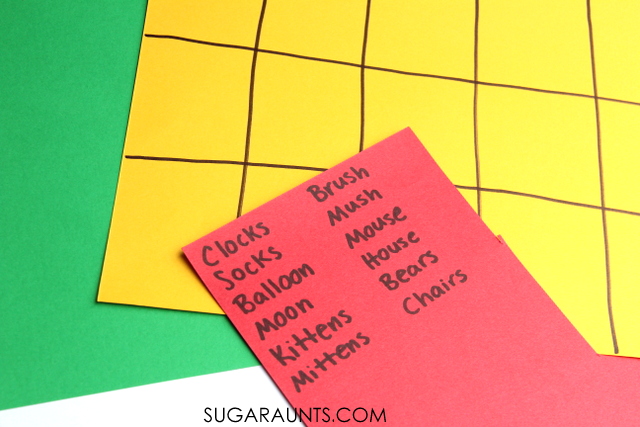
      Make a list of all of the rhyming words as you go through the book.  This is a great preschool book activity, but a powerful visual perception activity for all ages.  Kids can build visual memory skills as they recall each item and the way it looks throughout the book. Some objects change slightly, such as the position of the mouse. So, when kids look for that image on each page, they are building visual discrimination and form constancy. As you read the book, ask them what rhymes with each word.  They can use the book pages as a visual cue to the matching rhyme.    

      Goodnight Moon book activity for kids that builds visual perceptual skills.

      Goodnight Moon PDF 

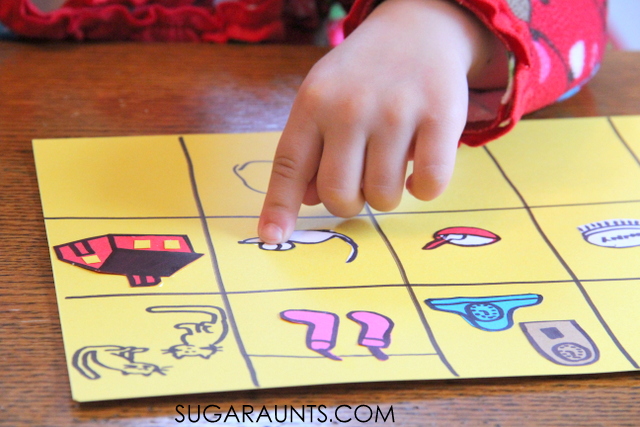
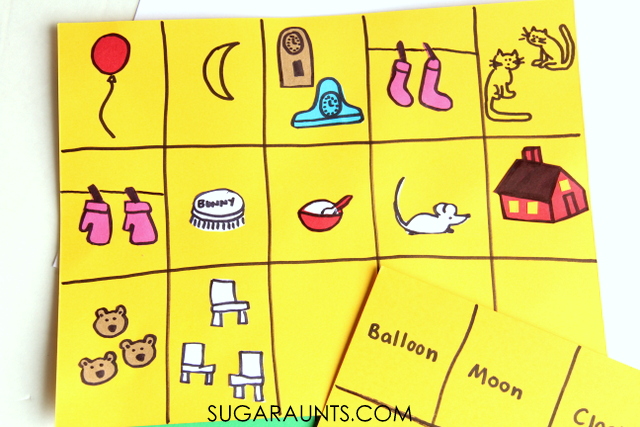
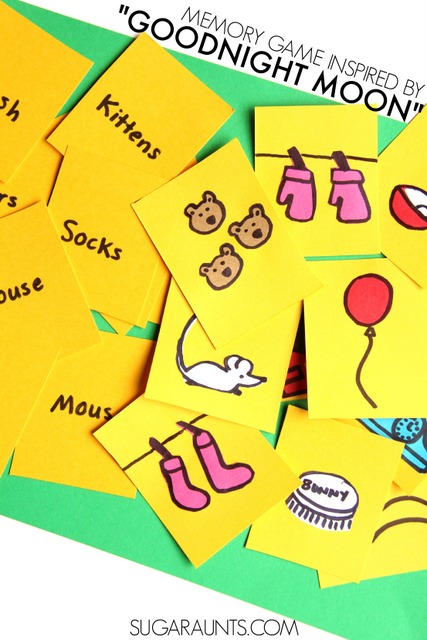
      Fill in your game pieces with your own drawings (or kid-drawings!) or use our free printable.  You’ll need these three sheets:

      >>Draw your own pictures on the blank picture card printable.

      >>OR, use our picture word card printable.

       >>Printable word cards here. We drew a picture for each rhyme and filled in another card sheet with the written words.  

      Memory game inspired by the book, Goodnight Moon
      Memory game inspired by the book, Goodnight Moon-FREE printable!
      Memory game inspired by the book, Goodnight Moon

        Cut out each block and get ready to play.

      Kids can play this Goodnight Moon activity and work on visual perceptual skills as well as other skills and learning opportunities in Goodnight Moon

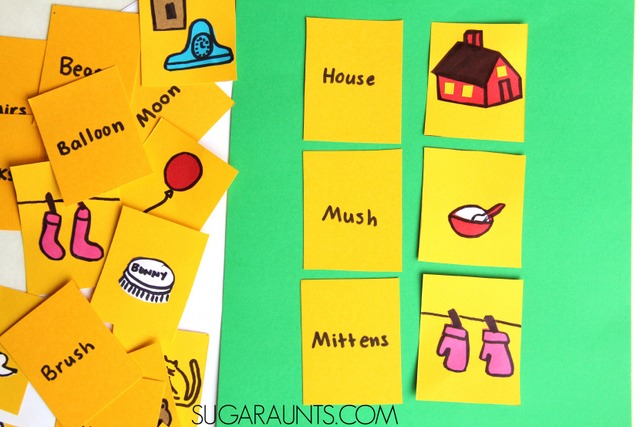
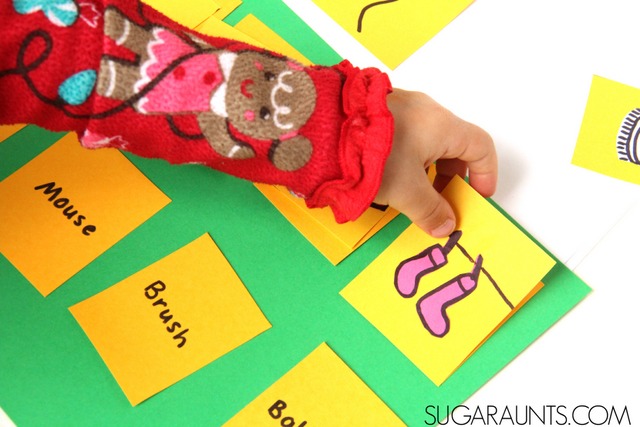
        We started with a few matching games.  I placed the written word on our green room paper and had the kids scan the pile of pictures for the matching image.  This is a great way to work on literacy skills as the child matches the picture to a written word, as well as on visual scanning.  Arrange the cards from left to right as a pre-reading skill.    

      Play this Memory Game for kids with the classic preschool book by Margaret Wise Brown.

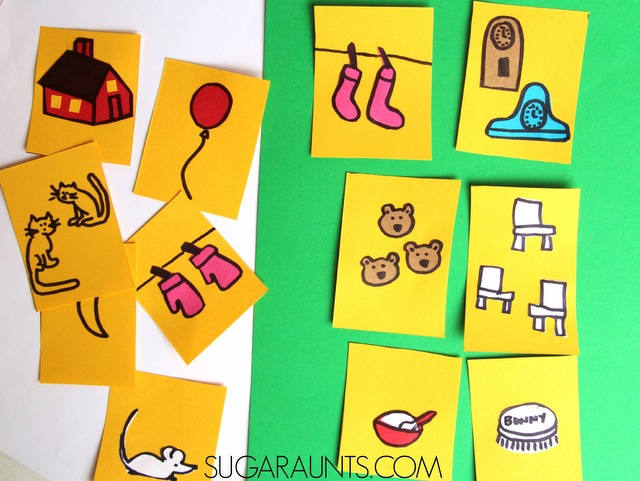
        We also matched rhyming words.  Arrange a few pictures on the left side of the page and have your child place the rhyming match  to the right.    

        We then arranged the words in a block formation on the green paper.  The kids scanned the pile of pictures and placed the matches together.

      Goodnight Mouse activity for Goodnight Moon book.

        After all of our rhyming games, we played an actual Memory game.  You can also modify the memory game to extend out the activity.  Match word to picture, rhyming pictures, and rhyming words.  This DIY Memory game can be played in so many ways!  

      This is such a fun book activity for kids based on the book, Goodnight Moon
      Memory game inspired by the book, Goodnight Moon

      GoodNight Moon Activities

      First, don’t forget to grab the Goodnight Moon pdf sheets to play this memory game.

      Goodnight Moon inspired memory game blank game pieces.

      Goodnight Moon inspired picture game pieces.

      Goodnight Moon inspired word game pieces.  

      Then, check out these other Goodnight Moon activities. They are great to help kids understand that sometimes scary things are in our minds and that the thoughts we think are not always as scary as things really are.

      Be sure to visit the other bloggers in the Preschool Book Club to see their takes on Goodnight Moon:  

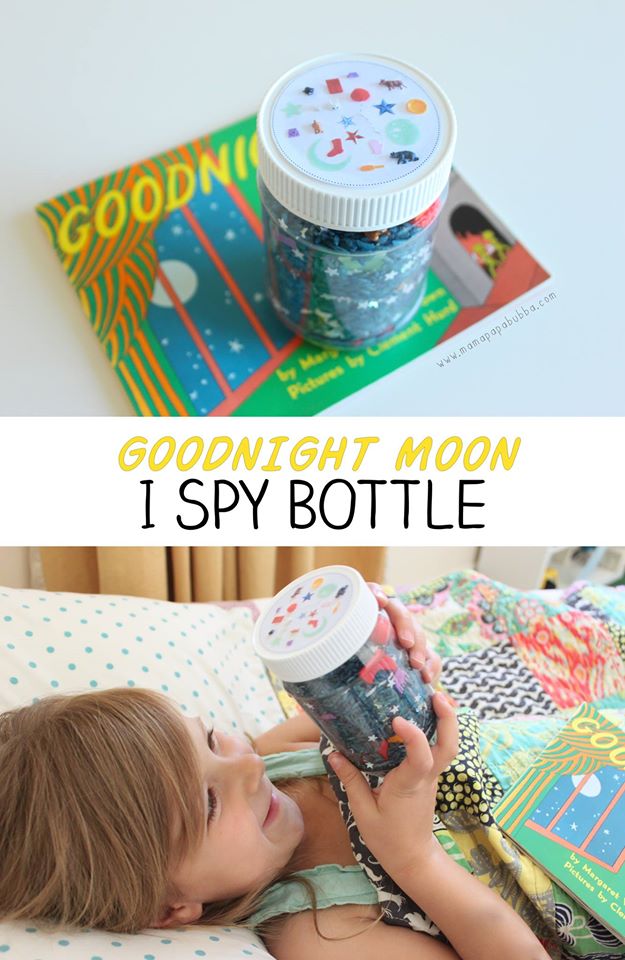
      This I Spy Bottle from Mama Pappa Bubba is another fantastic visual perceptual skills activity and a calming one at that. Check out these sensory bottles and WHY sensory bottles are so calming for kids as well as HOW to make sensory bottles that make an impact.

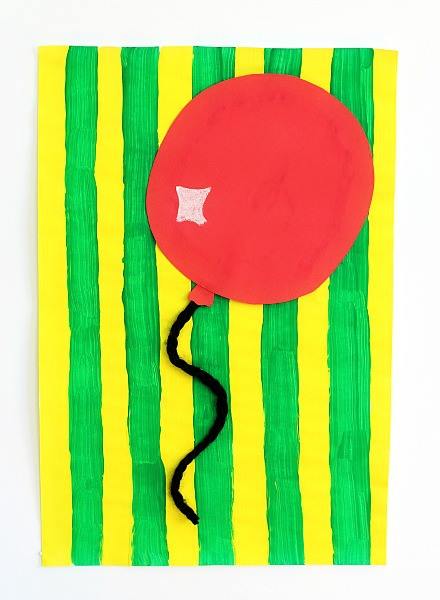
      This red balloon Art Activity from Buggy and Buddy uses Goodnight Moon’s red balloon with a creative painting activity. Kids can work on fine motor skills and tool use to paint a creative take on the book. Foster scissor use and scissor skills to, meeting therapy goals as well.

      Here are more scissor skills activities kids will love.

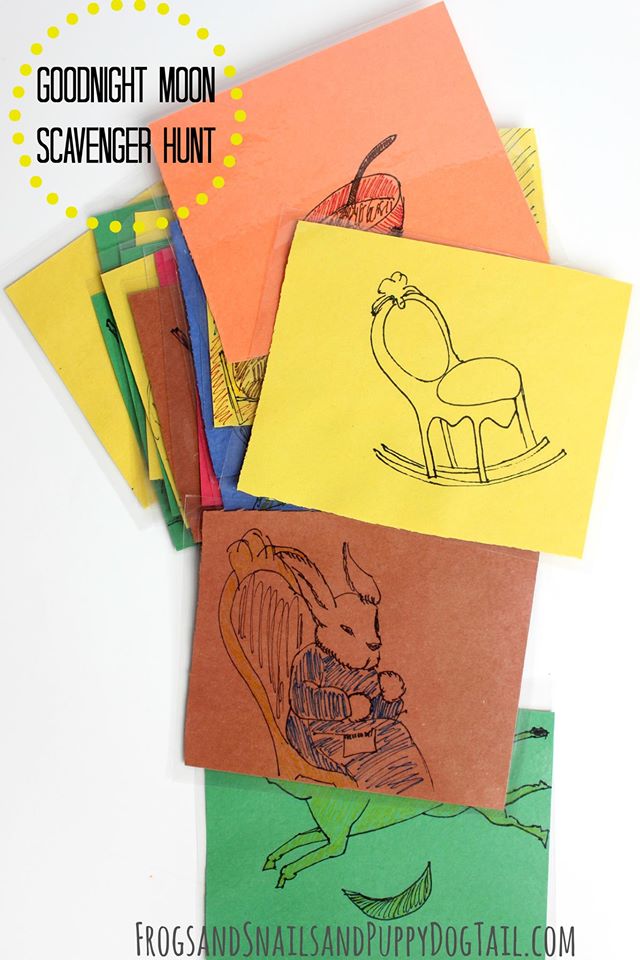
      This Goodnight Moon Scavenger Hunt from Frogs and Snails and Puppy Dog Tails is a gross motor activity that builds skills in visual perception and visual scanning. Love this idea to encourage core strength and stability!

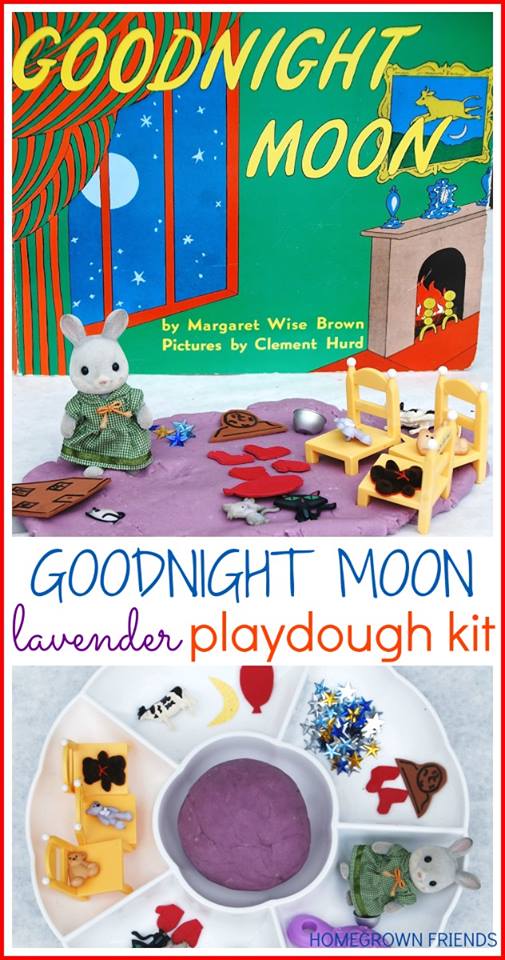
      This Goodnight Moon activity with a Lavender Play Dough kit from Homegrown Friends is a calming olfactory activity that adds sensory play and fine motor skills. Kids will love to pair the preschool book with a play dough activity.

      Here is another purple play dough recipe that use crayons. How fun!

      Books to Build Awareness Skills

      Goodnight Moon and the concepts introduced in the book goes well with this resource for parents, teachers, and therapists. It’s a huge collection of 50 activities based on children’s books and it helps to teach children about empathy, acceptance, awareness of others, and friendship. The social emotional development that kids can gain through play based on popular children’s books is amazing!

      Grab the resource, Exploring Books Through Play: 50 Activities based on Books About Friendship, Acceptance, and Empathy, that explores friendship, acceptance, and empathy through popular (and amazing) children’s books!  It’s 50 hands-on activities that use math, fine motor skills, movement, art, crafts, and creativity to support social emotional development.    

      GET THE DIGITAL E-BOOK

      Get the PRINT BOOK

      hands-on activities to explore social emotional development through children's books.

      Elmer the Elephant Activities

      Elmer the Elephant activities

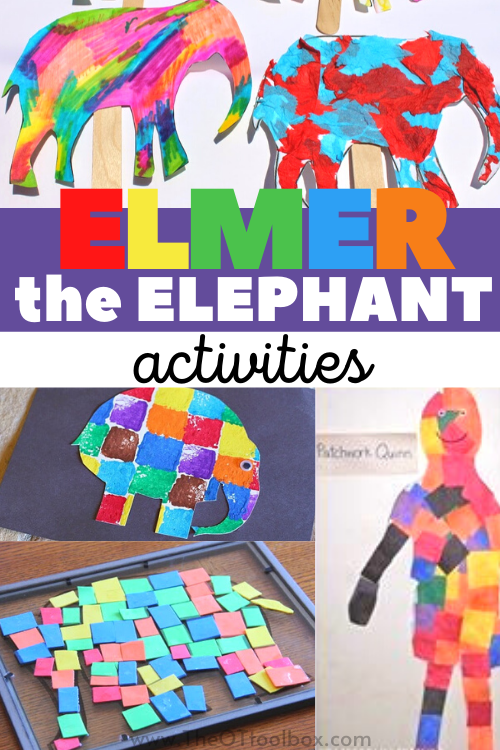
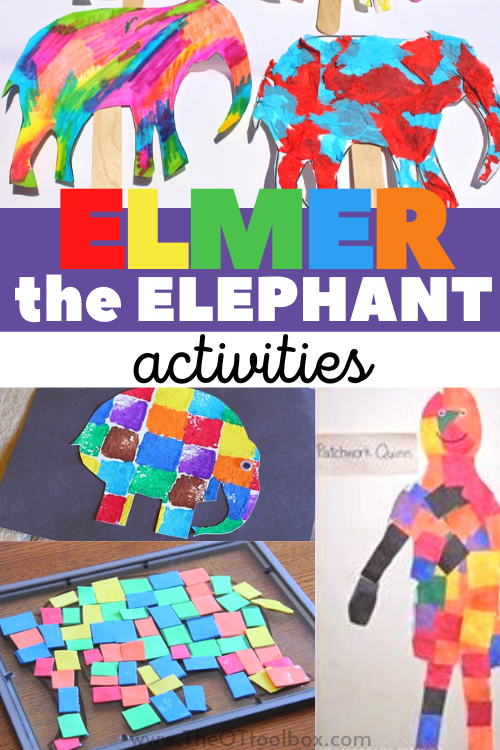
      Elmer the patchwork elephant looks different than his friends. Through stories and colorful pictures that depict everyday elephant life, Elmer the elephant teaches us about diversity and differences. Elmer teaches us about acceptance, friendship, and empathy. Check out the Elmer the Elephant activity below that builds a baseline for these important skills, but also helps kids with fine motor skills, visual perceptual skills, and visual motor skills.

      If you love the Elmer books as much as we do, then you will adore this Elmer the Elephant activity. We LOVE Elmer the Elephant…and all of the Elmer books. Every time we go to the library, we are sure to check the shelf for a new Elmer book that we may have missed. This week’s book activity was so much fun to do with the kids, because it involved one of our favorite books (ever) and a great visual perception activity. Add this book activity to your list of crafts based on children’s books that build skills through reading.

      Elmer the Elephant Activity

      This fine motor craft is a powerful one because it not only builds essential visual perceptual, visual motor, and fine motor skills, but it teaches as well. This Elmer the elephant activity can be used to illustrate differences, empathy, and friendship. Here are more books that teach empathy and friendship that can be used in therapy sessions or in the classroom or home.

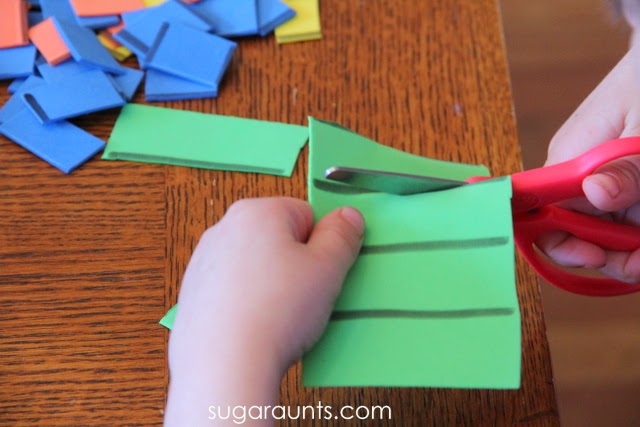
      They loved creating and building our very own Elmer craft. Elmer’s colors made for a great way to help kids build fine motor skills and visual motor skills, too. I loved throwing in the scissor work portion of the activity and working on a few important skills. My youngest daughter worked on her color identification and sorting.  The colors in Elmer’s patchwork skin are perfect for Toddlers to practice naming colors.  Little Guy was loving the puzzle-building portion of our activity.  The lines were a great way to work on a few visual perceptual skills needed for handwriting.  

      Elmer the elephant activity that uses the Elmer children's book as a guide and activity to help kids understand acceptance, differences, and diversity while building fine motor skills.

      Elmer the Patchwork Elephant Activity

      This post contains affiliate links.  

      If you haven’t read Elmer by David McKee, this is definitely a book you need to check out.  Elmer is a patchwork elephant with many colors.  He sticks out from the crowd of gray elephants. By exploring and interacting with his community of elephants, Elmer and the other elephants learn to accept and value his unique characteristics. Elmer is not only a colorful patchwork elephant. He is funny, smart, caring, and an individual. The book teaches us to accept differences because those differences are what make us who we are.

      Elmer teaches us about diversity. He teaches us about identity and tolerance. We all have different colors, shapes, interests, abilities, talents, and ideas. Those differences are what make us special. Let’s see those differences, accept them, and celebrate them!

      We made our own patchwork elephant with lots of colors and had a great time building and creating while talking about color names.  This was such a great activity for both Little Guy and Baby Girl.

      Try this Elmer the Elephant activity to teach children skills like scissor use and fine motor development with a wonderful children's book.


      We started with Foam Sheets in lots of different colors.  You might have seen our color sorting scissor activity post where we practiced our scissor skills.  These squares came in handy for this Elmer activity.

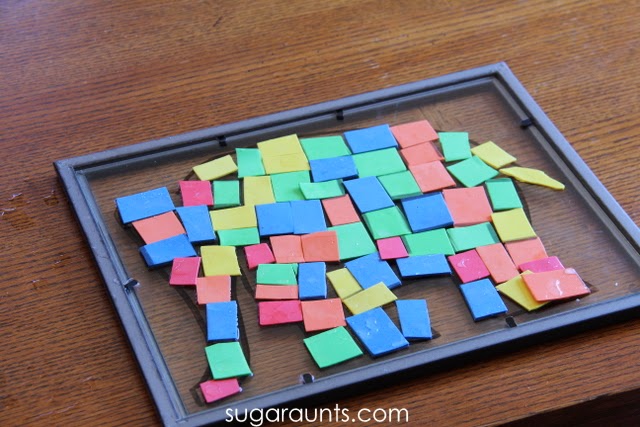
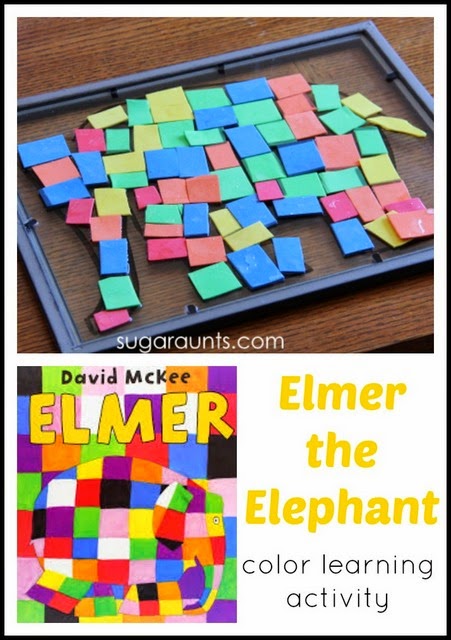
      Create an Elmer the Elephant activity using foam pieces to teach children about empathy and acceptance of differences in others while building fine motor and visual motor skills.

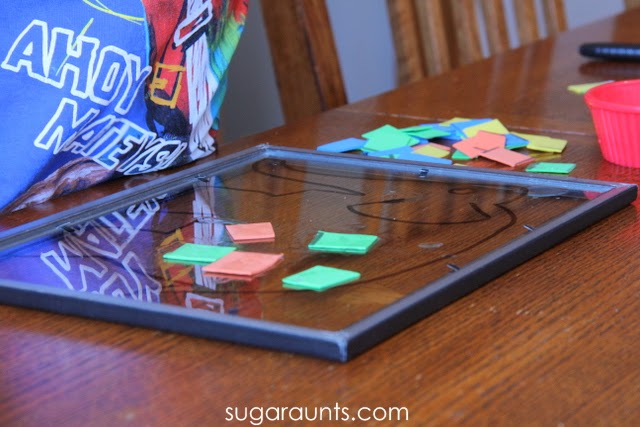
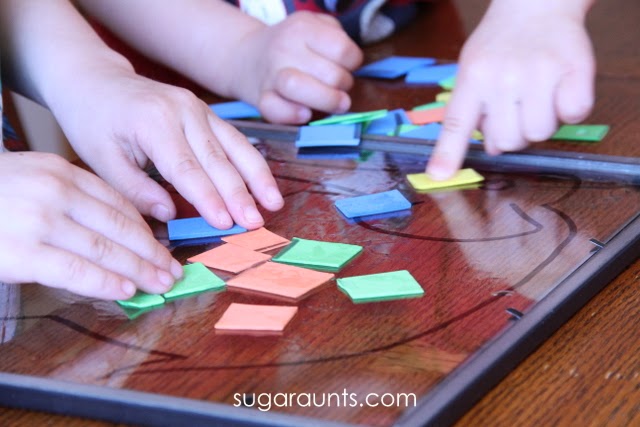
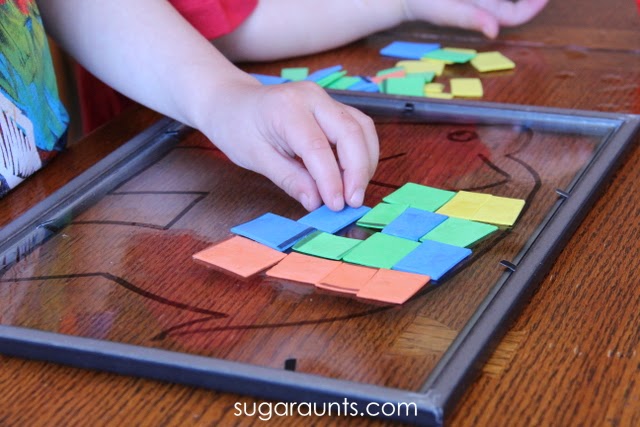
       I found a picture frame at the Dollar Store that has an acrylic front, instead of glass.  This is a great writing surface using a white board marker.  I drew an outline of Elmer with the marker.  We had a little bowl of water and started sticking the foam squares onto the surface to build our Elmer.  When the foam pieces are dunked into water, they stick really well to the picture frame surface.  We did a version of this way back when our blog began with our rainbow building activity.

      Fine motor activity for the book, Elmer the Elephant.

      Visual Perception Activity for Kids

      There were fingers everywhere, adding patchwork squares!  Little Guy and I quizzed Baby Girl on her colors as we worked.  It was a fun puzzle to get the squares fitting into the outline.  What a great way to work on visual perceptual skills, fine motor precision, dexterity, and line awareness!

      Visual perceptual skills in kids are necessary for so many things…from self-care to fine motor skills, to gross motor skills…all parts of a child’s development require visual perception.  There are many pieces to the giant term of “visual perception”.  This Elmer building activity works on quite a few of these areas:

      Visual Discrimination is determining differences in color, form, size, shape…Finding different sized squares to fit into the outline of our Elmer, discriminating the different colors, and shapes are a great way to work on this area. 

      Visual Closure is the ability to fill in parts of a form in the mind’s eye to determine shape or a whole object.  Filling in the missing parts of our Elmer works on this area.

      Visual Spatial Relations is organizing the body in relation to objects or spatial awareness.  This is an important part of handwriting.  Spacing those pieces amongst the others and in relation to the lines is one way to work on this skill.

      Visual Figure Ground is the ability to locate objects within a cluttered area (think “I Spy”).  Finding a red square among the pile of foam pieces is one fun way to work on this area of visual perception.

      Use this fine motor activity with the book Elmer the Elephant to help kids learn abstract concepts while building visual perception.

        Little Guy was really into this activity.  He loved lining up the squares to make our Elmer.

      Elmer the Elephant puzzle that kids can do to build skills in occupational therapy sessions or in the classroom or home.

      We loved how our Elmer turned out!  We’ll be using our frame again, soon.  I can think of so many fun ways to learn and play with this dollar store frame and a marker!

      Elmer the Elephant book and Elmer activity for kids

      More Elmer the Elephant Activities

      Elmer the elephant activities for kids based on the children's book, Elmer the Elephant


      Check out some of these Elmer the Elephant activities for kids. They are powerful ways to build awareness, acceptance, and friendship through the book and activity.

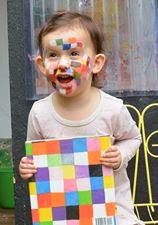
      Elmer the Elephant activity with facepaint

      Use face paint to celebrate friendship with a face painting party based on the Elmer the Elephant book.

      Elmer the elephant craft

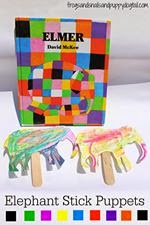
      Make an Elmer craft using puppets to celebrate differences, diversity, and uniqueness in a great lesson for kids, while building fine motor skills.

      Create an Elmer craft using stamp painting.

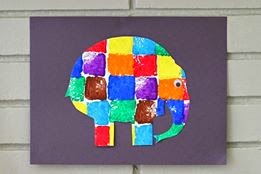
      Create an Elmer the patchwork elephant craft using paint to make a paint stamped elephant craft. What a great way to build fine motor skills!

      Elmer the elephant preschool craft

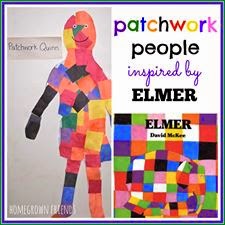
      Kids can trace their bodies with large pieces of paper and then fill the space with colorful paper squares to celebrate uniqueness in this Elmer the Elephant preschool activity.

      Teach Acceptance, Differences, and Diversity

      Want to take complex and abstract concepts like empathy, acceptance, uniqueness, and diversity to the next level with kids? This digital, E-BOOK, Exploring Books Through Play: 50 Activities Based on Books About Friendship, Acceptance and Empathy is filled with hands-on activities rooted in interactive, hands-on, sensory play that focus on creating a well-rounded early childhood education supporting growth in literacy, mathematics, science, emotional and social development, artistic expression, sensory exploration, gross motor development and fine motor skills.

      Kids can explore books while building specific skills in therapy sessions, as part of home programs, or in the home. is an amazing resource for anyone helping kids learn about acceptance, empathy, compassion, and friendship.

      In this book, you’ll find therapist-approved resources, activities, crafts, projects, and play ideas based on 10 popular children’s books. Each book covered contains activities designed to develop fine motor skills, gross motor skills, sensory exploration, handwriting, and more. Help kids understand complex topics of social/emotional skills, empathy, compassion, and friendship through books and hands-on play.

      Click here to get the book and add children’s books based on social emotional learning to your therapy practice, home activities, or classroom.

      Exploring books through play is a guide to using children's books in therapy and while building developmental skills.

      More books to teach social emotional skills

      Check out our other posts in the Preschool Book Club Series for activities based on favorite books:

      Colleen Beck, OTR/L has been an occupational therapist since 2000, working in school-based, hand therapy, outpatient peds, EI, and SNF. Colleen created The OT Toolbox to inspire therapists, teachers, and parents with easy and fun tools to help children thrive. Read her story about going from an OT making $3/hour (after paying for kids’ childcare) to a full-time OT resource creator for millions of readers. Want to collaborate? Send an email to contact@theottoolbox.com.
      Social Emotional Development with Books

      Want to help kids learn about empathy? Striving to make gains in social emotional development? Want to teach kids acceptance? Want to work with children on friendship? Want to celebrate differences? I have a valuable tool to share with you! The great news is that guiding children to social development and emotional development as well as emotional literacy and social fluency is easy and fun! In this post, I’m sharing book activities to help kids develop skills in these very abstract concepts. Read a popular children’s book, talk about concepts, and do the play activity. It’s a powerful way to help kids thrive!

      Exploring Books Through Play: 50 Activites Based on Books about Friendship, Acceptance, and Empathy

      Exploring Books Through Play is a guide to using books to help kids develop social emotional skills as well as other essential developmental areas (fine motor, gross motor, sensory exploration, handwriting, etc.) The book celebrates play-based learning with 50 unique, hands-on activities that explore social and emotional development, literacy, art, science, mathematics, sensory exploration, gross motor development and fine motor skills.

      One of the aspects of this developmental progression is the stages of empathy development that are learned through experience. This book supports that skill.

      Books and activities about empathy, love, friendship for kids

      Social Emotional Activities for Preschool

      This post contains affiliate links. 

      You probably have seen book-related activities that I’ve shared in the past.  It all started with a group of amazing women who are the most inspiring and creative bunch out there.  Together, we shared hands-on learning and play activities that were inspired by simply awesome children’s books.


      Here are just some of the great books we’ve read in the Preschool Book Club. Each book contains activities to support social emotional developmental milestones through play activities for preschool (and older ages!) By using books to build socio-emotional development, kids can use concrete activities to develop abstract concepts.

      social emotional development activities for kids through book activities.


      Beautiful Oops– Use this book activity to help kids explore differences, acceptance, and individualism. In this book activity, we worked on visual motor skills, eye-hand coordination, fine motor work, and strengthening.

      I Ain’t Gonna Paint No More – This book celebrates emotions and is a great starting point to emotional development. In this activity, we used sensory play to create art while working on eye-hand coordination, fine motor skills, and more.


      The Day The Crayons Quit– Kids can explore self-identity and self awareness in this children’s book. The book covers concepts such as differences, acceptance, and social norms. We explored the book with a fine motor activity that built awareness of self as well.


      Freight Train – This mesmerizing book teaches basic concepts of shapes and colors. We used it in a food activity for kids to prepare a healthy snack. The book is a great one for identifying differences in shapes and colors and is a wonderful building block to awareness.


      Ish –  In this children’s book activity, we used blocks to work on various motor skills such as eye-hand coordination, visual motor skills, visual perception, and fine motor work. The book is a fan favorite and teaches kids to accept themselves and not to be so self-critical. What a great starting point to social development!


      Goodnight Moon  – This classic book for kids teaches kids about focus and imagination in a rhyming and calming manner. The book helps kids understand the imagination and addresses self-awareness and awareness of one’s surroundings. In our book activity, we worked on visual memory and concentration with a themed Memory game.


      Little Blue and Little Yellow – This book helps kids understand color and builds fine motor skills when paired with play dough to act out the book. However, there are bigger social emotional development concepts at hand as well. Kids can discover emotional development awareness in the concepts of friendship, awareness of self and others, and identity. We used DIY puffy paint for an interactive book activity.


      Elmer – This book helps kids understand differences, acceptance, and social roles. The book can be used to work on social development in children as they talk about things that make them and others special or different. The book is a tool in building empathy. We used the book to work on fine motor skills, visual perception, and visual motor skill development in a fun book activity.

      The Kissing Hand– This book is a building block in helping kids understand emotions. They can read the book and become more aware of how others might be feeling, helping them to develop empathy as well. We created a key chain craft to use as a grounding tool for emotions kids might have.


      There are so many more!


      The group of us bloggers decided that we wanted to come up with a better way to share our book-related ideas.  With a real book of our own!

      Exploring books through play is a guide to using children's books in therapy and while building developmental skills.

      Exploring Books Through Play: 50 Activities Based on Books about Friendship, Acceptance, and Empathy


      This book is full of creative learning and play ideas for kids and is based on amazing children’s books.  These activities will inspire acceptance of those around us, enhance friendship, and provoke empathy.

      Social Emotional Development through Play

      Check out the description on Amazon: 

      “Exploring Books Through Play: Friendship, Acceptance and Empathy celebrates play-based learning with 50 unique, hands-on activities that explore social and emotional development, literacy, art, science, mathematics, sensory exploration, gross motor development and fine motor skills. The activities are inspired by 10 children’s books including “A Sick Day for Amos McGee”, “The Adventures of Beekle”, “Little Blue and Little Yellow” and “The Day the Crayons Quit.” Focusing on high quality children’s literature centered on friendship, acceptance and empathy, this book is designed to be used in home and school settings and is perfect for large or small groups. Ideal for children ages 3-8 years old, the activities can be adapted for multiple skill levels and developmental stages. As you work through the activities in the book children will naturally be discussing the characters, delving deeper into the lessons, bringing the stories to life and falling further in love with literature.”

      Exploring Books Through Play: 50 Activites Based on Books about Friendship, Acceptance, and Empathy

      The books that are explored in this resource were intentionally chosen for their social emotional aspects.  Activities were designed that inspire learning and play through hands-on involvement.  


      Join the Club!


      The Preschool Book Club is hoppin’ and we want you to join us!  Sign up for this exclusive email list for special sales and exciting offers. Enter your email below.

      Exploring Books Through Play: 50 Activites Based on Books about Friendship, Acceptance, and Empathy

        Grab your copy today!


      GET THE E-BOOK


      Get the PRINT BOOK is available on Amazon for $26.99 


      This is a book that, if I saw it on the shelves of a bookstore, I would grab it up and totally buy it.  The images are bright and colorful and the creative ideas are inspiring.  Not only are the hands-on play and learning activities easy and fun to do, but they each inspire children and families to think about actions, how others feel, and how small acts of kindness and thoughtfulness can make a big difference in the lives of others.


      The special launch prices will run for only one week, so be sure to grab the deals today!


      E-book:
      Exploring Books Through Play: 50 Activities Based on Books about Friendship, Acceptance, and Empathy

      Printed Book: Exploring Books Through Play: 50 Activities Based on Books about Friendship, Acceptance, and Empathy

      Colleen Beck, OTR/L has been an occupational therapist since 2000, working in school-based, hand therapy, outpatient peds, EI, and SNF. Colleen created The OT Toolbox to inspire therapists, teachers, and parents with easy and fun tools to help children thrive. Read her story about going from an OT making $3/hour (after paying for kids’ childcare) to a full-time OT resource creator for millions of readers. Want to collaborate? Send an email to contact@theottoolbox.com.