Colleen Beck, OTR/L is a pediatric occupational therapist and the owner and author of The OT Toolbox website. She manages all of The OT Toolbox social media accounts and runs the popular newsletter.
Read about Colleen's experience and career as an occupational therapist, including how The OT Toolbox began on our About The OT Toolbox page: https://www.theottoolbox.com/about-us/
Colleen created The OT Toolbox in 2011 and since then has written thousands of blog posts designed to support therapy providers, educators, parents, counselors, admin, and caregivers in promoting the healthy development of kids.
Check out Colleen's blog posts below:
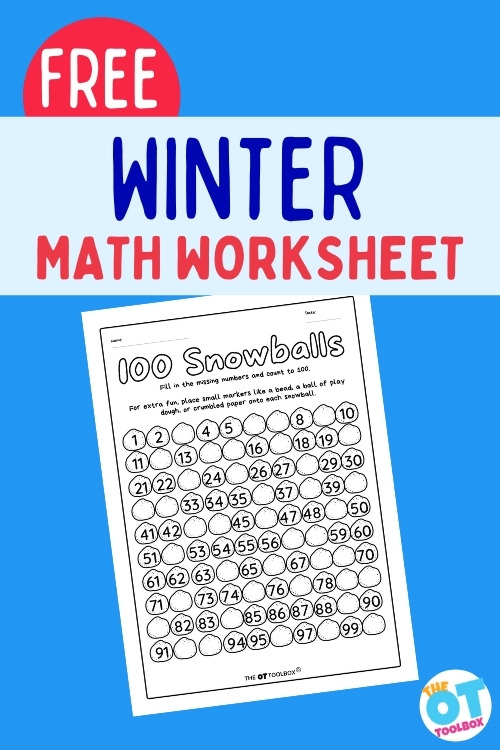
Today, you’ll find a fun winter math worksheet with 100 snowballs. This is a great activity for the 100th day of school…and working on writing numbers with kids. Number formation skill can be a challenge, so making practice fun and engaging is key. Use this 1 to 100 writing practice sheet with other winter occupational therapy activities all winter long! This hands-on, fine motor math worksheet supports many skills!
This 100 snowballs activity is a winter math worksheet that is perfect for the 100th day of school. Incorporate it into other number formation goals along with these number formation resources:
When it comes to working on numbers and handwriting skills, meaningful and motivating activities is key. So when winter brings snow and ice, you can incorporate this functional practice activity into goal areas.
Winter and 100 snowballs
If you have read my other winter blog posts, you already know I am not a fan of winter. The temperature hit 61F last night and I was FREEZING! I do not know how I am going to survive the southern winter at this rate. Speaking of survival, I know I survived my childhood in the Northern US and lived to tell about it, but right now I don’t know how you do it.
Snowball fights were a staple of my winter childhood. We spent hours creating our stockpile of balls, to be ready to ambush an unsuspecting neighbor or sibling. Have you seen the new snowball maker contraption? That is one cool tool. Perfectly round balls of snow in five seconds flat. I am not sure why I remember liking snowball fights at all. I am not good at throwing anything, especially a flimsy ball of snow (we didn’t have that ball maker when I was young). I can dodge ok I suppose, but who wants to just dodge all the time?
We went to a man-made snow place in Georgia last winter. I temporarily forgot how bad my aim is. I loved making the snowballs with the new snow packer tool, but still got pummeled. Based on the popularity, I am going to venture a guess that snowball fights are still a “thing.”
What better way to reminisce about winter than creating a lesson plan about it? For adults it will be a great story telling opportunity (unless you have never ventured to the snow covered mountains), and for learners an excellent tie in to what is going on around them. If your learners live where it is warm, use this opportunity to teach about snow with video clips, worksheets, activities, fine motor games, making an all inclusive lesson plan.
Winter Math Worksheet
To start off your Winter Lesson Plan, the OT Toolbox has you covered! Check out the new 100 Snowball Math Worksheet.
The winter math worksheet that you can grab below is a great way to work on number formation and filling in numbers. Add it to a 100th day of school lesson plan, or therapists can use this as a complementary winter math lesson while still working on goal areas to support educational needs.
In its simplest form, this is a great PDF printable to address counting, number formation, and writing to 100. Add this to the other winter worksheets from The OT Toolbox and your Winter Lesson Plan will be well on its way.
Let’s take a look at the plethora of other ways to use this worksheet and incorporate it into treatment.
Make tiny snowballs of tissue or playdough to work on in hand manipulation. Place the tiny balls on each of the numbers.
Use a dot marker to dab the snowballs as they are being counted. This adds color and flair as well as building critical grasping skills.
Cut all of the numbers, putting all of the snowballs back in order like a puzzle.
Make large snowballs out of crumpled paper, then work on upper body coordination throwing the snowballs at a target.
Build this into a gross motor task by running back and forth with snowballs.
Ways to modify this task for different levels of learners:
Count aloud as a group to find the next number
Encourage students to remember the numbers, instead of starting back at one each time
Enlarge this worksheet onto a board, for a group activity or to make more readable
Laminate this task and use markers to fill in the numbers
Print it onto colorful paper for visual contrast and readability
Color the winter math worksheet before laminating it, or have learners color after filling in the numbers
Provide a model for copying for learners who do not know the numbers yet
Make a dotted version of the answers for tracing into the open spaces
Use different writing tools for different effects (read our resource on tracing sheets for a better understanding of the skills that are impacted by tracing too soon).
Cut the page into smaller chunks if your learners can not yet write to 100
How to document about this 100 snowball printable worksheet?
The most straightforward way to document your lesson plan with this math worksheet is to note the number of correct responses. Then take it further and note number formation, the number of reversals, correct formation, sizing, legibility, placement inside the provided spaces, grasping pattern, and pressure on the paper. To continue, make note of your learners’ attention to detail, frustration tolerance, number of cues needed, number of physical assists, overall attention, behavior, self regulation, working in a group, sitting posture, and 100 other observations.
The great thing about worksheets like the 100 Snowball Printable from the OT Toolbox is the versatility of it. My documentation might not have anything to do with number formation, grasping pattern, sizing, or spacing at all. I can solely focus on social function and sensory strategies if that is the nature of my learner’s goals.
For this reason, these winter worksheets can be used for a good variety of learners, not just the ones working on number formation.
What else does the OT Toolbox have to offer?
100 Snowballs- 100 snowballs, 1 to 100 writing practice sheet, winter math worksheets
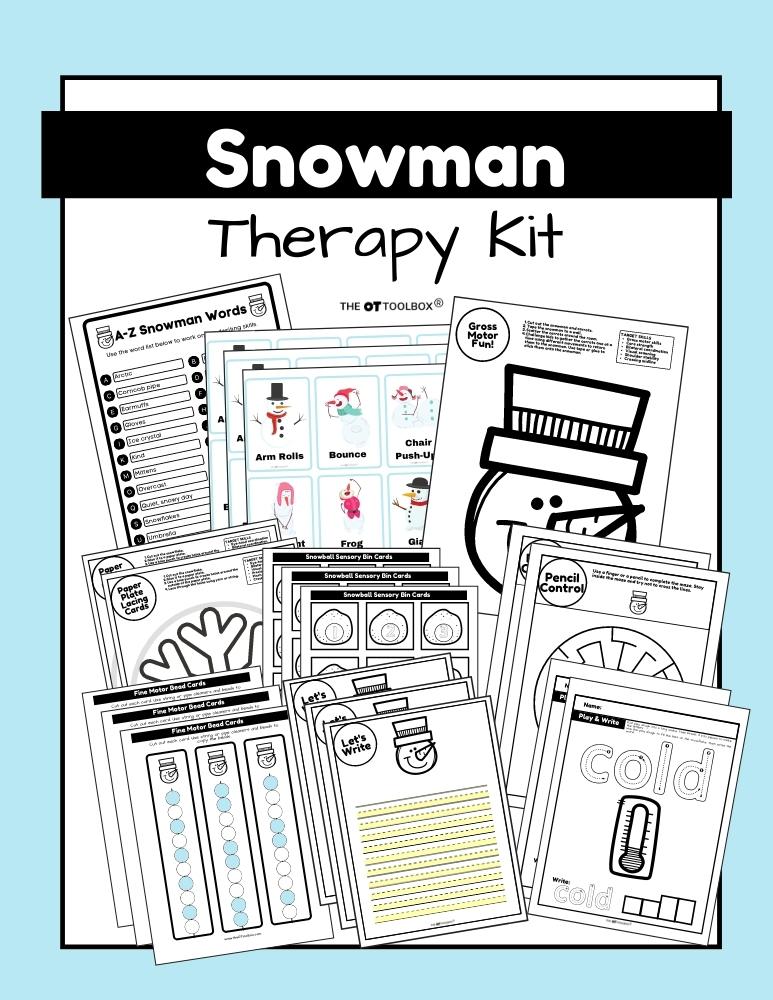
For more snowball and snow themed activities, be sure to check out the Snowman Therapy Kit. It’s loaded with fine motor activities, crafts, gross motor tasks, coordination, motor planning, scissor skill tasks, and handwriting activities all with a snow and snowman theme.
Free 100 Snowballs Worksheet
Want to add this 100 snowballs worksheet to your therapy toolbox for winter occupational therapy activities this time of year? Enter your email address into the form below to access this printable. OT Toolbox Member’s Club members will also find this worksheet inside the membership, along with hundreds of other resources and tools.
My treatment plans are all about efficiency, effectiveness, and getting the most out of each session…and this winter math worksheet fits the bill!
I will keep practicing my aim, just in case!
Victoria Wood, OTR/L
Victoria Wood, OTR/L is a contributor to The OT Toolbox and has been providing Occupational Therapy treatment in pediatrics for more than 25 years. She has practiced in hospital settings (inpatient, outpatient, NICU, PICU), school systems, and outpatient clinics in several states. She has treated hundreds of children with various sensory processing dysfunction in the areas of behavior, gross/fine motor skills, social skills and self-care. Ms. Wood has also been a featured speaker at seminars, webinars, and school staff development training. She is the author of Seeing your Home and Community with Sensory Eyes.
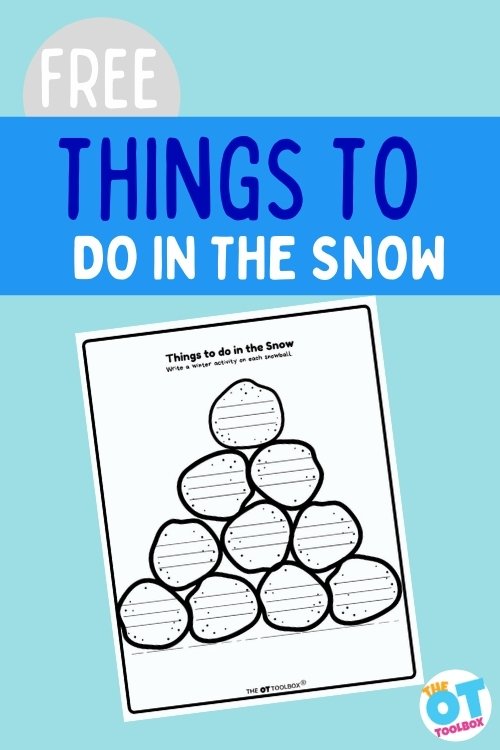
When school is cancelled for a snow day, it can be fun to think of things to do in the snow. For parents or therapists, sometimes kids need things to do on a day at home so they stay off the video games and screens. Here, you will find therapist-approved winter family activities, things to do in the snow, and a special printable handwriting worksheet with snow writing prompts…perfect for a home therapy task that helps kids build skills through motor skills, PLAY, and even motivating and functional handwriting.
Things to do on a snow day
Whether you live in the snow, are dreaming about wintery conditions, or are happy to never have to see it again, there is a lot to be said about a winter day. Check out these snow and ice activities, for snowy fun that doesn’t involve all of the cold, ice, and snowflakes!
Snow days represent different things to different people. Does it represent winter family activities? As a child in Connecticut, winter and snowy days were great! There were endless things to do outside in the cold. These winter days meant bundling up layers and layers of clothing to head outside, building forts, rolling a snowman, shoveling sidewalks, climbing snow drifts, making snow angels, creating paths of footprints across the fresh, untouched snow, walking across a frozen pond, sledding down a huge hill, or skiing.
Some of my fondest childhood memories were made on winter days. During the blizzard of 1978, the snow was piled up over our heads. We walked on top of huge piles over ten feet tall. We had a sheepdog for many winters, it was funny to see his fur covered in snowballs from jumping in the wet snow. Not so funny having to take them all off after coming inside.
Snow days can also mean NO SCHOOL! We watched and waited for the announcement that there would be no school. While parents dread this news, kids everywhere cheer for a day off.
A day or two of fresh snowfall can mean some indoor cozy fun also. If the power went off, we had a rare chance for pizza from the little town. I think the neighbor had a snowmobile to trek down and collect it. It also meant hot cocoa and home baked cookies. In the 70’s and early 80’s TV was not really for kids, except Saturday mornings. School cancellations did not mean lazy days by the TV or playing electronics. Out came the board games, the Easy Bake Oven, puzzles, Legos, coloring books, and all of the other things we never seemed to find enough time for.
What does a winter snow day mean to you? Did you grow up with cold winters, or just read about it? Did you long for just one flurry during a southern winter? Winter days feel different to me now, than as a child. Today I would treat a winter day as a cuddle up under a blanket with hot cocoa, cookies, a good book, and a dog.
Snow days are now virtual school days?
What does a snow day mean to your learners? It could mean 100 different things. This is a great snow writing prompt for digging up memories, stories, shared ideas, and working on critical handwriting skills.
But, in many cases, a school cancellation means parents who still need to work while the kids are at home. There can be more screen time, video games, and YouTube watching than normal. Sometimes parents need a quick list of things to keep the kids busy and OFF screens.
Even more recently, in many areas, a school cancellation day is no longer a day off from school. Snowy conditions and ice or other weather conditions that may have previously meant a day off from school now may mean a virtual learning day. This change for many kids, is a change that may not go away now that many schools have virtual learning opportunities in place. In these cases, kids attend virtual school, but then they are finished early or have breaks during the school day. The last thing parents want their kids doing during a break from virtual learning is hopping onto another device!
That’s where a quick list of things to do on a snow day comes in handy.
In these cases, therapists who may be seeing students virtually can offer therapeutic activities that actually develop the very skills that the students on their caseload are working on.
Therapists may need a quick activity or task list that specifically addresses the skills their kids are working on, so the child can have an action list of activities to do outside in the winter.
These snow day activities can even be followed-up on and used as writing prompts in a later session to address executive functioning skills, handwriting, memory, and other skill areas.
That’s where the snow day activities worksheet available below comes into play. Print off the worksheet and use it to identify winter ideas. Then, when students do have a day off from school, they can use it as a winter bucket list. It’s also a great family activity list for winter days. Or, just use the worksheet in virtual or face to face learning to work on handwriting skills and executive functioning skills.
Things to do in snow Worksheet
This winter printable helps learners create a list of Things to do on a Snow Day.
Each person will have a different experience to write about. Encourage your learners to explore all different aspects of winter days, whether they have experienced them, or just read about it. Learners will write something to do in the snow in each snowball.
This activity can be modified for all levels of learners:
Lowest level learners can dictate what they would like written in the snow balls
This printable can be projected onto the board to work as a group task
Pictures of activities can be printed separately, cut and glued onto the snow balls. Use this Snow Day bingo game board to cut out ideas or play snowy bingo
The snowballs can be cut and glued onto a separate sheet of paper to add cutting and gluing to the task
Middle level learners can write one or two words in each ball.
Higher level learners can write an idea in each ball, then create a story or memory out of each idea. This turns into a multilevel activity to use during many sessions.
Skills addressed? As always, therapy or teaching is more than just fun and games. There are goals and objectives to be addressed. This Things to do in the Snow printable, while being fun and relevant, also works on key skills
Handwriting – Work on letter formation, letter size, spacing, word and letter placement
Letter formation – correctly forming the letters top to bottom
Letter sizing – correctly fitting the letters into the size boxes
Copying – copying words from a model, transferring the letters from one place to another
Fine motor strengthening, hand development, and grasping pattern
Sequencing – will your learner do the words in order? Will they go in a haphazard pattern all over the page?
Following directions, attention to detail, turn taking, waiting, social skills, compliance, behavior, and work tolerance
Cutting on the line ( if you choose to add this step), within half inch of lines, in the direction of lines
Pasting using glue stick or drippy glue with accuracy
Bilateral coordination – remembering to use their “helper hand” to hold the paper while writing. Using one hand for a dominant hand instead of switching back and forth is encouraged once a child is in grade school or demonstrates a significant strength in one or the other.
Strength – core strength, shoulder and wrist stability, head control, balance, and hand strength are all needed for upright sitting posture and writing tasks.
Remember, you can address all of these skills at once, or focus on one or two. Some skills above will be addressed without your conscious knowledge, while other skills will be directly worked on.
Documentation in Therapy with this Worksheet
Use this snow day worksheet to document and track skills for data collection. Take note of these areas to collect data for documentation:
the percentage of correct letters,
how many letters are formed correctly/directionality/legibility
size of letters in relation to the boxes
grasping pattern, hand dominance
attention to detail, following directions, prompts and reminders needed, level of assistance given
Therapist-recommended Winter Activities
If kids are filling out the worksheet and need some ideas to fill in the spaces, try these ideas. You can even fill out a worksheet to have as a copying activity for some student’s skill needs.
These things to do in snow are perfect for a day off of school or winter family activities:
What would you add to this list? Do any of these look like winter family activities that you would like to do on your next snow day?
Free Snow Day Worksheet
Make this snow writing prompt just part of your winter lesson plan. Print off this worksheet and get started with winter activities for the whole family! This winter worksheet is also available in the OT Toolbox Member’s Club. Members can log in and download this resource along with hundreds of other resources and tools to help kids thrive.
Gotta go get my cocoa and marshmallows!
Victoria Wood, OTR/L
Victoria Wood, OTR/L is a contributor to The OT Toolbox and has been providing Occupational Therapy treatment in pediatrics for more than 25 years. She has practiced in hospital settings (inpatient, outpatient, NICU, PICU), school systems, and outpatient clinics in several states. She has treated hundreds of children with various sensory processing dysfunction in the areas of behavior, gross/fine motor skills, social skills and self-care. Ms. Wood has also been a featured speaker at seminars, webinars, and school staff development training. She is the author of Seeing your Home and Community with Sensory Eyes.
Grab the Snowman Therapy Kit for more things to do on a snow day, or just in winter, whether you are on a snow day, or don’t even live in an area with snow!
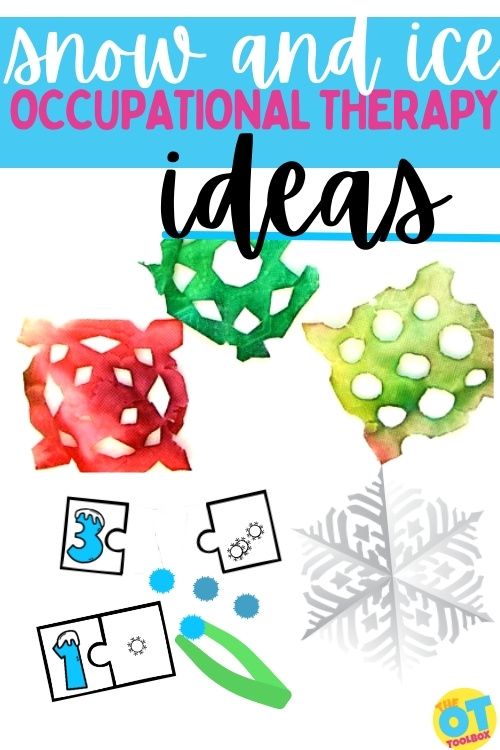
These snow and ice activities are more winter occupational therapy activities that kids will love! Use these snow activities and ice themed ideas to help kids develop skills during the cold winter months. They are great additions to real ice play and build a variety of developmental skills.
We’re trying to stay warm these days by playing indoors or bundling up and heading outside. Some days it’s just too cold to play outside with small kids and these indoor winter activities are fun ways to keep the kids learning when the temps dip!
Snow and Ice Activities
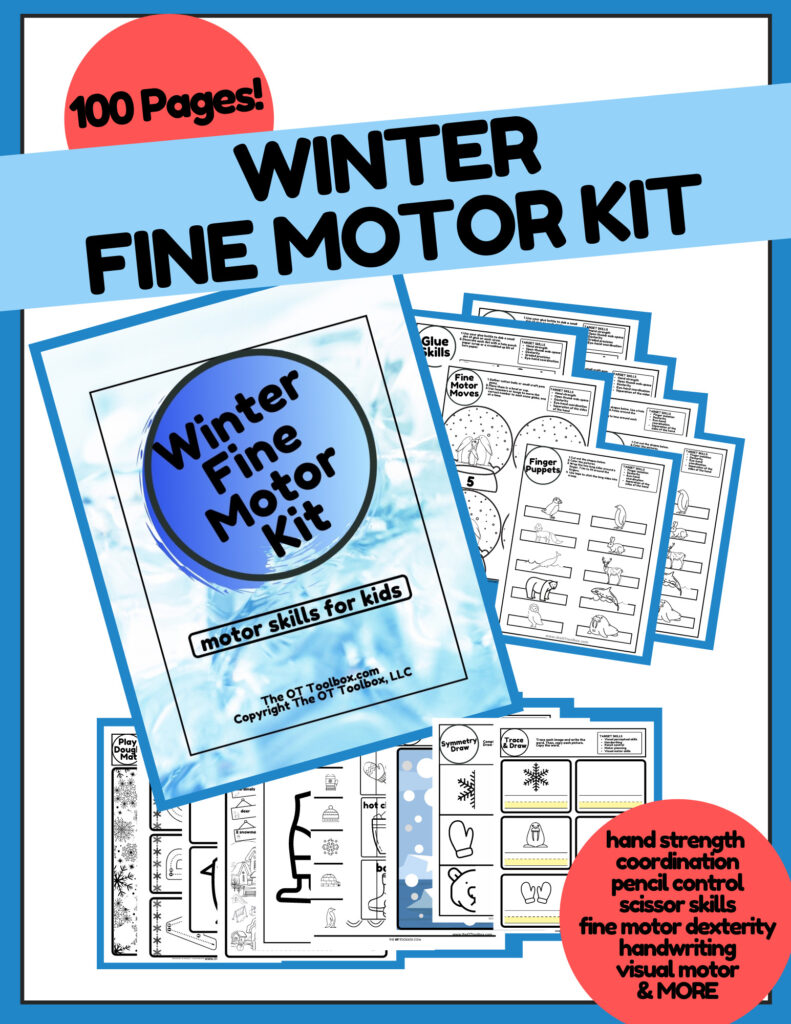
For specifically fine motor skill-building, be sure to check out the Winter Fine Motor Kit, the Snowman Therapy Kit, and the Penguin Therapy Kit. Each one includes different activities and they all develop fine motor, gross motor, visual motor, sensory, handwriting, scissor skills, and self-regulation skills through winter play.
Explore science with a melting iceberg from Stir the Wonder.
Looking for more fun winter activities?
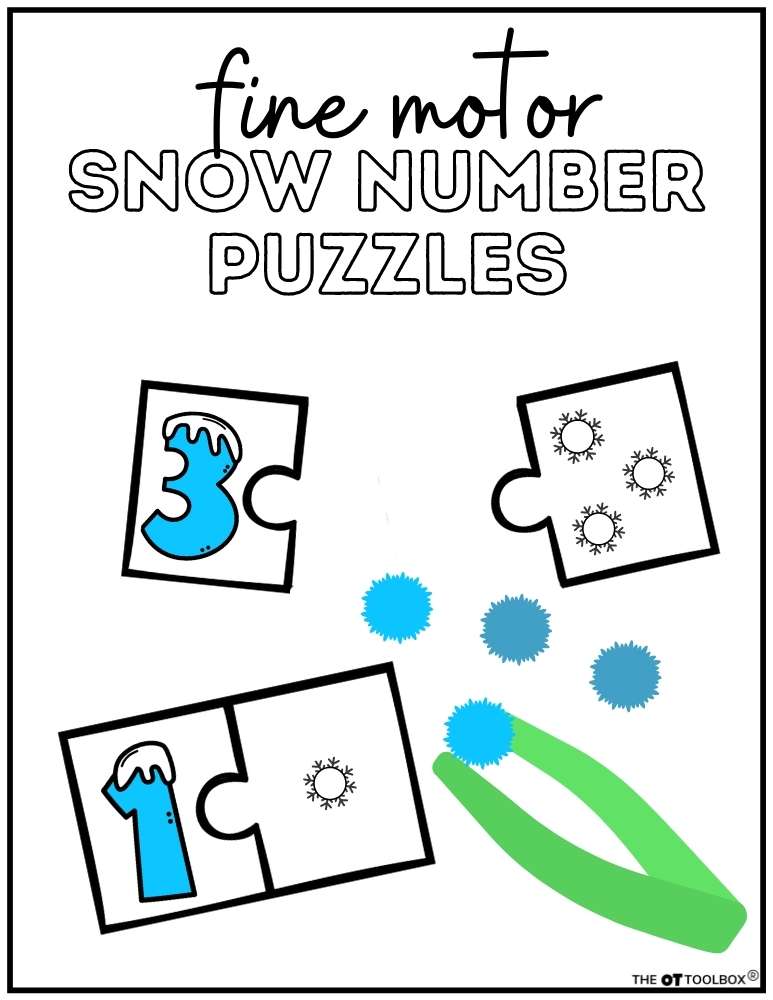
These ice number puzzles are a great fine motor activity. Kids can cut out the puzzles. Then, laminate them (or not!) and use them to work on fine motor skills. I love using tweezers or tongs to have kids move craft pom poms or mini erasers to match the ice number. This is such a great activity for building so many skills:
Other snow and ice printables that you can grab inside the Member’s Club (or as a free resource by entering your email into the forms on each blog post) are these snow, ice, and snowball activities:
These fine motor play ideas are great for days when it’s too cold to play outside in the snow and ice.
Cut paper icicles and work on scissor skills, bilateral coordination, and eye-hand coordination. Label the icicles with sight words, math facts, vocabulary, etc. Get the kids involved in taping the icicles to the wall for shoulder strengthening, proprioceptive input, and other benefits of working on a vertical surface.
Have anindoor paper snowball fight to address motor planning, eye-hand coordination, balance, bilateral coordination, crossing midline, and more. Snowballs can be used as counters. Or, throw the paper snowballs at targets marked with facts or true/false containers.
Focus on fine motor skills by tearing paper. Add learning components by asking kids to first write answers on the paper, and then they can tear the page into strips or small squares. There are so many benefits to this activity!
Have fun this winter while building skills through play!
What if you had themed, NO-PREP activities designed to collect data and can help kids build essential fine motor skills?
Take back your time and start the year off with a bang with these done-for-you fine motor plans to help kids form stronger hands with our Winter Fine Motor Kit. This print-and-go winter fine motor kit includes no-prep fine motor activities to help kids develop functional grasp, dexterity, strength, and endurance. Use fun, winter-themed, fine motor activities so you can help children develop strong fine motor skills in a digital world.
The Winter Fine Motor Kit includes reproducible activity pages include: pencil control strips, scissor skills strips, simple and complex cutting shapes, lacing cards, toothpick precision art, crumble hand strengthening crafts, memory cards, coloring activities, and so much more.
Colleen Beck, OTR/L has been an occupational therapist since 2000, working in school-based, hand therapy, outpatient peds, EI, and SNF. Colleen created The OT Toolbox to inspire therapists, teachers, and parents with easy and fun tools to help children thrive. Read her story about going from an OT making $3/hour (after paying for kids’ childcare) to a full-time OT resource creator for millions of readers. Want to collaborate? Send an email to contact@theottoolbox.com.
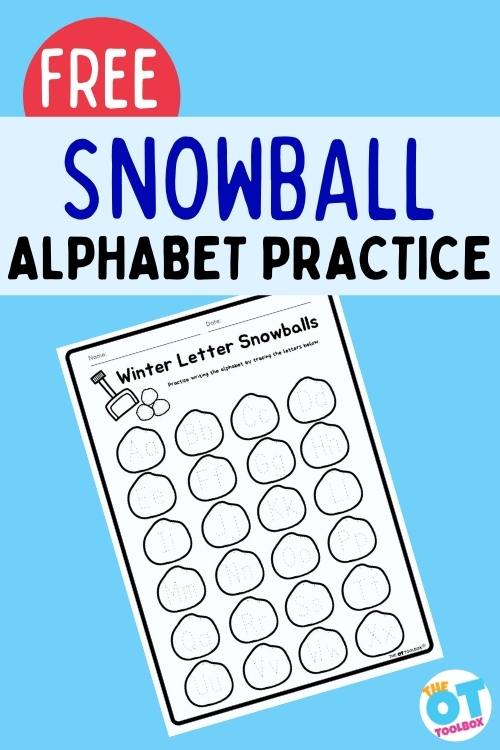
Today, we have a fun handwriting resource for you. Grab your mittens because this snowball alphabet worksheet PDF is a free download that builds many skill areas. It may look like a snowball themed tracing worksheet, but this snowball letters PDF builds many skill areas. Let’s take a look at various ways to incorporate Winter Snowball letters into therapy and the classroom or home!
And, grab our mitten printable too in order to support fine motor skills, pencil control, and eye-hand coordination.
Snowball Letters
The OT Toolbox is continuing with its winter theme this month by offering another wonderful free printable. If you have to live/vacation/endure somewhere with snow, you might as well make the best of it. Everyone loves making snowballs. That is why they have snow making machines pumping out fake snow here in the south, so we don’t miss out on all of the fun. I have to say it is kind of strange sledding and throwing snowballs while wearing a short sleeved shirt.
Before we get to the snowball letters activities, check out these snowball sensory ideas. Use real snow brought indoors (or use the items outside!). Kids will LOVE to use these snowball tools with our fake snow recipe. Plus, when kids are involved in making the fake snow, there are more therapy goals to address like executive functioning, bilateral control, and even tactile defensiveness.
Snowball Maker- The beauty of making snowballs? It has evolved! No longer do you need to have cold wet mittens while scooping up layers and layers of snow. They have a tool for that! This (amazon affiliate link) snowball scooper is perfect for creating the perfect snowball.
Before you scoff and say you would rather do it the old fashioned way, you need to check this thing out! I made the most perfect fake balls of snow with this contraption. Now all I need is a launcher like they make for tennis balls, and some better aim. Are you intrigued by this wonderful tool?
Snowball Mold Set– Wait, there is more! Kind of makes me want to have a snow day to try all of this cool stuff out. You no longer have to roll snowmen, create handmade blocks for igloos, or scoop the snow with your hands. Tired of circle snowballs? They have a solution for that! This snow mold set comes with penguin and heart shapes. Need to be more efficient when creating these fluffy white bundles of fun? They have a tool that will make FIVE snowballs at once! They have just ramped being out in the snow to a whole new level.
Now that we have filled your shopping cart with such wonderful things to do in the snow, what about the days when your learners have to be in school, or it is too awful to stay outside all day? A winter skills treatment or lesson plan is just what you need.
Snowball Alphabet PDF
The OT toolbox is showcasing winter activities and PDF sheets all month long. Today’s cute design is an alphabet letter worksheet full of winter snowballs to practice letter formation.
As always I love the versatility of each of these pdf activities and printables. This design comes with two different ways to change the activity for different skill levels. Tracing inside snowballs or working on letter formation with blank winter snowballs.
When working with any learners, it is important to be able to adapt or grade your activity for multiple learning levels. What does it mean to grade an activity? To make it easier or harder for your whole caseload of learners or adapt the task for a specific learner. Suppose you get started with the blank snowballs and realize your learner has no clue what the letters look like. You would grade this down to either tracing, or copying letters from a model. You could grade it further down to matching letters or identifying them. You can grade up to writing lowercase and uppercase letters in the winter snowballs.
Snowball Letter Tracing Sheet
Since the first page is a tracing task, let’s talk about tracing. I am not a fan of tracing unless it is used correctly, or the objective is understood.
Tracing is not going to teach number/letter formation if the learner does not know what those figures are. To a learner who does not know these symbols, they will be tracing lines, not numbers or letters
Know your audience. If your learner does not know the letters or numbers, use the activity as a fine motor task to develop dexterity
Kinesthetic awareness. This long word means to learn by doing. Theoretically if a person writes the number 5 enough times, the body will start to recognize this pattern and commit it to memory. This only works if the learner understands what is being traced
Tracing for dexterity. This is the type of tracing I like best. Tracing for dexterity works on staying on the lines, fine motor control, building hand muscles, scanning and so much more.
What else does tracing and writing alphabet letters work on?
Handwriting – this is obvious as you are building letter formation
Fine motor control – holding a pencil, developing intrinsic muscle control to improve written expression, dexterity to stay on the lines on the tracing section
Letter formation – correctly forming the letters top to bottom
Letter sizing – correctly fitting the letters into the size boxes
Copying – copying letters from a model if you have graded it to include one
Working memory – remembering what letters have already been written, and what comes next. See if your learner can recall the next letter without going back to letter A each time
Sequencing – will your learner do the letters in order? Will they go in a haphazard pattern all over the page?
Bilateral coordination – remembering to use their “helper hand” to hold the paper while writing. Using one hand for a dominant hand instead of switching back and forth is encouraged once a child is in grade school or demonstrates a significant strength in one or the other.
Strength – core strength, shoulder and wrist stability, head control, balance, and hand strength are all needed for upright sitting posture and writing tasks.
Executive function skills – attention, frustration tolerance, task completion and initiation, self regulation, working independently
To learn more about executive function, type this into the search bar on the OT Toolbox to see dozens of posts on this topic. Here is a general post on executive function by Colleen Beck, owner of the OT Toolbox:
More ways to use the SNOWBALL ALPHABET WRITING PRACTICE SHEETS PDF
There are many otherways to adapt or grade the snowball alphabet sheet:
Laminate the page for using markers and wipes. This can be useful for reusability, as well as the enjoyment markers bring.
Place craft pom poms or mini erasers on the letters.
Cut out the snowballs and use them to match letters.
Use the snowballs for letter BINGO. Call out letters and ask kids to find the letter in the alphabet.
Call out a letter and have a student place a mini eraser or marker on the letter. Then they can form the letter onto paper or onto the blank snowballs.
Different colored paper may make it more or less challenging for your learner
Enlarging the font may be necessary to beginning handwriting students who need bigger space to write.
Create another page with all of the alphabet letters for copying or reference
Have students cut out letters from another page and glue to the snowballs – this adds a cutting and gluing element
Velcro the back of the snowballs, after laminating and cutting it, to create a matching game
Make changes to the type of writing utensil, paper used, or level of difficulty
Have students write on a slant board, lying prone on the floor with the page in front to build shoulder stability, or supine with the page taped under the table
Project this page onto a smart board for students to come to the board and write in big letters.
More or less prompting may be needed to grade e activity to make it easier or harder
Make this part of a larger lesson plan including gross motor, sensory, social, executive function, or other fine motor skills
How to document this activity:
First determine what goals and skills you are addressing. Are you looking strictly at letter formation, tracing, and alphabet recall? Or something else entirely such as executive function and behavior?
Focus your observations on the skills you are addressing. It is alright to address one or ten skills at once, just be sure to watch for those skills during the activity. This can take practice to watch everything all at once. Newer clinicians often videotape sessions to go back and review clinical observations they may have missed.
Use data to back up your documentation. Avoid or limit phrases such as min assist, fair, good, some, many, etc. They are vague and do not contain the numbers and data critical to proficient documentation. Instead use percentages, number of trials, number of errors, exact sizing, how many letters were written incorrectly, number of reversals, number of prompts, minutes of attention. You get the idea.
This type of documentation may feel foreign at first if this is not what you are used to, however insurance and governing agencies are becoming more strict on accurate documentation.
In addition to this great winter snowballs alphabet PDF worksheet, the OT Toolbox has entire winter themed lesson plans available as well as a Snowman Lesson Plan Kit that covers all aspects of therapy sessions.
These winter printables, including this Snowball Alphabet Worksheet will be highlighted all month long to help create amazing therapy sessions. I have to say I am kind of excited about the snowball making contraption for those of you who live in the frozen north.
Free SNOWBALL ALPHABET WRITING PRACTICE SHEETS PDF
Want to grab a copy of this Snowball Alphabet Worksheet PDF for your therapy toolbox? Enter your email address into the form below and the PDF will be delivered to your inbox. OT Toolbox Member’s Club members can access this writing practice sheet along with many others with one click to download, inside the dashboard.
I’d rather throw sand than snowballs any day!
Victoria Wood, OTR/L
Victoria Wood, OTR/L is a contributor to The OT Toolbox and has been providing Occupational Therapy treatment in pediatrics for more than 25 years. She has practiced in hospital settings (inpatient, outpatient, NICU, PICU), school systems, and outpatient clinics in several states. She has treated hundreds of children with various sensory processing dysfunction in the areas of behavior, gross/fine motor skills, social skills and self-care. Ms. Wood has also been a featured speaker at seminars, webinars, and school staff development training. She is the author of Seeing your Home and Community with Sensory Eyes.
Click here to read more about the Snowman Therapy Kit and to grab your copy while it’s on sale.
Questions about the best apps for occupational therapy come up often. It is possible to address developmental skills through app play. Let’s cover various occupational therapy apps for the iPad or tablet.
Children of today have technology very much integrated into all aspects of their daily lives. Technology is an occupation in and of itself. As occupational therapists, we strive to support functioning and full lives in our clients. Using apps in occupational therapy services serves two purposes: a meaningful and motivating tool to support functional skills by addressing underlying skills, AND as an extrinsic factor impacting function: using a device, filling form fields on apps, scheduling appointments, making calls, and other performance areas. Apps are a part of function because technology is so integrated into daily life.
Let’s look at various areas of development where app use can help support kids, teens, and adults:
Apps for Occupational Therapy
Normally at this time of year in therapy, it can be hard to keep the kids attention spans on track. Having a free app that builds skills can be one way to stay on track with addressing specific skills.
Here, you will find free apps for occupational therapy that can be used as a supplemental activity or as a quick activity in between other occupational therapy activities. The OT apps for the ipad or tablet can be used in many different ways:
Use the OT apps as a supplemental activity for home recommendations or classroom down-time.
Use the occupational therapy app as a transition activity that continues to develop skills addressed in therapy sessions.
Others may want to use these apps for therapy breaks or as a reward at the end of the session.
Use the apps for occupational therapy homework so that kids are motivated to participate and incentivize OT home programs, fostering the carryover we don’t sometimes see.
Still others may find the occupational therapy apps perfect for home occupational therapy programs or ways to keep kids busy while parents are working from home.
Whatever your need, these educational games and special education supports can be a powerful tool in distance learning and learning at home.
Free Apps for Occupational Therapy
The free apps below are broken down into targeted skill area. I’m adding apps for handwriting and letter formation, visual motor skills, executive functioning skills, and other areas. Some of these apps are IOS apps and others are Android apps.
The apps that are available for Android on Google Play may be accessed through a Google account on a desktop and then accessed through the Google play app or via a Google account on an Apple device. Here is more information on how to access Google Play apps on an Apple device.
I tried to locate only free apps in this resource. There are many great apps for occupational therapy out there, but I wanted to cover all the bases when it comes to OT interventions with free apps that can meet the needs for free!
The apps listed below are some of the best apps for occupational therapists to use in therapy sessions, and to recommend to parents and teachers, when appropriate. Remember that all kids are different and all have specific needs, so these recommendations may not work for every child or individual.
All About Shapes- This free app is available on IOS and is a shape drawing app. Users can draw and identify shapes.
Vision Tap- This free IOS app is a great one for addressing visual processing and visual efficiency skills. Visual tracking, visual scanning, and oculo-motor skills are challenged with this one!
Broom, Broom- This free IOS app allows children to draw paths for the vehicles in the game to drive on, building eye-hand coordination, motor planning, visual memory, and precision of fine motor skills.
Visual Memory- is a free app available on Google Play. The game is designed to develop visual memory and improve attention. Users can find the image that appears at each level.
Piko’s Blocks- this free IOS app really challenges the visual spatial skills for older kids.
Memory Game- is another free app on Google Play. The game is just like the classic concentration game, helping users to build visual memory skills.
Learning with Wally is an Android app available on Google Play. The visual discrimination app challenges users to discriminate between differences, recognize, and attend to details in visual forms, including pictures, letters, words and sentences.
Sorting and Learning Game 4 Kids- This app is available on Google Play and challenges users to categorize and match themed objects while helping to build visual attention, visual memory, and focus with a concentration on visual perception.
Visual Attention Therapy Life is an app available on Google Play. The free app allows users to address and build visual scanning, visual memory, and visual attention. It also helps rehab professionals to assess for neglect and provide more efficient and effective therapy for attention deficits.
Sensory Baby Toddler Learning- This Google Play app is great for younger kids as they work on cause and effect and develop hand eye coordination skills.
Connecting Dots is Fun- This free IOS app allows users to work on visual perceptual skills such as visual discrimination, form constancy, figure-ground and visual processing skills of tracking and scanning. Users create dot-to-dot activities in the app.
Alphabet Puzzles For Toddlers- This Google Play app helps younger children work on letter identification and letter recognition. The letter learning app is a great app for preschoolers or toddlers. The visual perceptual app allows children to address form constancy, visual discrimination, figure ground, and other visual perceptual skills.
iMazing- In this free IOS app, users can complete maze activities while challenging visual perception and visual motor skills. Skill Game- This free app is available on Android. The game allows users to draw lines to connect numbers while building eye-hand cordination, precision, motor planning, visual memory, and more.
On the Line- This IOS app is great for working on visual motor skills using a stylus.
Squiggles- This free app is a great one to work on pre-writing skills. Users can draw lines and figures and watch as they become animated.
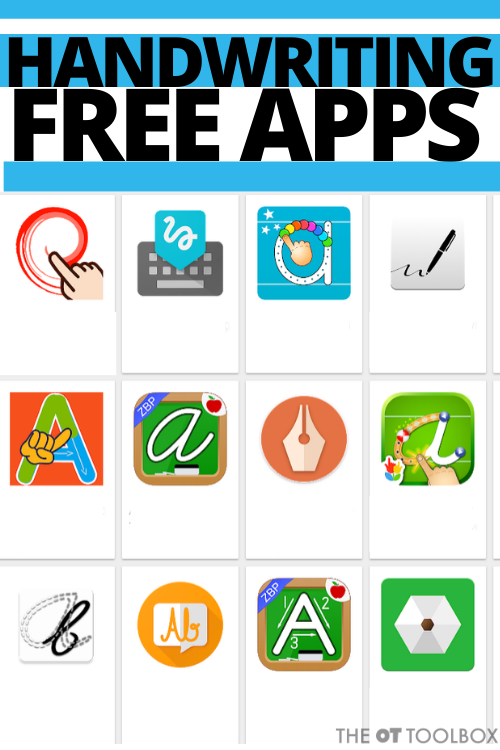
Handwriting Apps
These handwriting apps are occupational therapy tools that support the underlying skills needed for handwriting. Some apps allow kids to “write” letters using a resistance-free surface on the tablet or iPad. This input can be the “just right” level for some kids. Other Handwriting apps listed address other skills. Let’s take a look at how to use these apps in occupational therapy services.
ITrace is a handwriting app that does have a price for the main version, however, there is a free version available with some activities. Users can trace letters, numbers, words, and shapes while working on visual motor skills and letter formation.
Writing Wizard- This app is available on Google Play and allows users to trace letters along a visual guide. There are various fonts available and size can be adjusted for different ages.
Writing Wizard-Cursive- This handwriting app is created by the makers of the regular, print version of Writing Wizard. Users can practice letter formation in cursive.
Start Dot- This app addresses letter formation using visual, auditory, and movement cues. These prompts fade to address accuracy and independence.
Ollie’s Handwriting and Phonics- This free app allows users to trace and copy individual letters and words on the app’s chalkboard wall.
Write ABC – Learn Alphabets Games for Kids- This handwriting app is available on Google Play. The app helps younger children work on letter formation using visual cues for starting points and ending points.
Sand Draw- This free Google Play app provides a sandy beach for kids to practice writing letters, words, or phrases in. Use it to practice spelling words for a fun twist.
Snap Type- While this app has a paid version, the free version also allows users to create digital versions of worksheets. Students can take a picture of their worksheets, or import worksheets from anywhere on their device. They can then use their Android device keyboard to add text to these documents. When complete, students can print, email.
Apps for Fine Motor Skills
These apps for fine motor skill development might not be your go-to fine motor task when it comes to strengthening hands and promoting dexterity. But for the child that struggles with fine motor skills, a tablet or iPad app can be a motivating and meaningful way to address developmental skills.
With an app, it is possible to address functional, fine motor skills:
The fact is that devices are not going away. In fact, our youth are likely to see all aspects of their future lives managed by screen technology. For kids that struggle with dexterity, hand strength, motor planning, and other motor skills, we can help them to be the most functional and independent individuals.
These fine motor apps are just one more strategy in our OT toolbelt.
Dot to dot Game – Connect the dots ABC Kids Games- This free app is great for toddlers, preschoolers, or young children working on precision, dexterity, and fine motor work. the app addresses letter and number formation.
Tiny Roads- This free app allows children to connect objects while working on precision and finger isolation.
Montessori Fine Motor Skills Game School Numbers- This fine motor app helps users work on eye-hand coordination, precision, and finger isolation while working on numbers, letters, and shapes.
executive function apps
When addressing attention, distraction, planning, prioritization, time management, and other executive functioning skills, using apps in occupational therapy is a no-brainer. Kids are exposed to the technology of devices every day and the ability to complete daily tasks using devices is just part of advances in our time.
Use these executive function apps in occupational therapy as a support tool: devices to help with challenges like attention, organization, scheduling, and planning. Or, use these executive functioning apps in OT to work on cognitive skills that enable function; Apps are a great way to practice filling out forms, recalling and typing passwords, addressing online distraction, and other functional tasks that kids and adults are faced with every day. App use is an occupation, or task that occupies our daily lives, in a very real way. There are many typing programs that target these skills.
CogniFit Brain Fitness- This Google Play app uses memory games, puzzles, reasoning games, educational games, and learning games to train memory, attention, concentration, executive functions, reasoning, planning, mental agility, coordination and many other essential mental skills.
Lumosity: Brain Training- This free executive functioning skills app uses games to exercise memory, attention, speed, flexibility and problem-solving.
Memory Games: Brain Training– This executive functioning skills app uses memory and logic games to improve memory, attention and concentration.
Alarmy- This free alarm app allows users to set alarms for attention building, and scheduling.
The Google Tasks app– This free app creates checklists and sub-lists and allows users to add details about the areas that users need need to focus on in order to accomplish tasks. The app helps users to stay on track with due dates and notifications.
The 30/30 app- This free app helps with executive functioning skills such as starting tasks, staying organized, and prioritization in tasks. This app is useful to address procrastination and motivation on bigger tasks or projects.
Forest- This app helps with procrastination, productivity, and motivation.
Study Bunny- This free productivity app helps students pay attention and focus on studying and larger school projects or tasks.
Habitica- This task completion app allows users to track habits, and add gamification to tasks to build motivation and help with productivity.
HabitNow- This free habit tracker app helps users to track habits and build habits to improve productivity and time management. This is a great app for scheduled activities or daily tasks such as chores or morning/evening routines.
Brain N-Back- This working memory app helps to train working memory.
Clockwork Brain Training- This memory training app helps with working memory and concentration through games and puzzles.
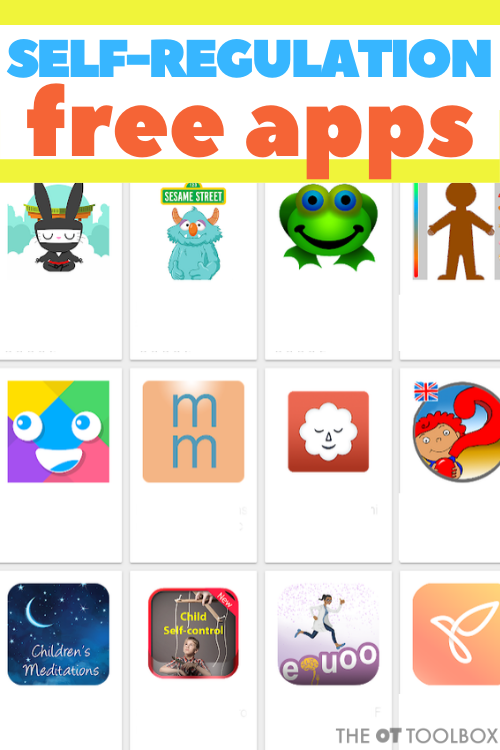
Apps for Emotional regulation
There are apps that can be used as self-regulation tools. There are apps to practice social interactions. There are even apps to check-in on emotional regulation and self-regulation needs. These apps for emotional regulation are a great way to support kids and teens emotional regulation and overall wellbeing needs through the use of a hand-held self-regulation tool.
Breathe, Think, Do with Sesame- This self-regulation app uses a fun Sesame Street monster to help little ones calm down and solve everyday challenges. Available in English and Spanish, the coping tools app helps your child learn Sesame’s “Breathe, Think, Do” strategy for problem-solving.
Trigger Stop: Sensory and Emotional Check-In- This free self-regulation app is available on Google Play so they can identify and communicate sensations and emotions or feelings in the body so they can express them in a healthy way.
Social Navigator –This emotional regulation app is a great social skills app designed to assist children with social and behavioral challenges. Kids can develop essential social interaction skills by taking a look at their behavior in social situations, and this app is a nice way to build confidence in that area.
EmoPaint – Paint your emotions! is a free self-regulation app available for IOS in the Apple Store or Google Play. The paint app allows users to represent emotions or bodily sensations through art, by painting them interactively on the screen.
Moodflow: Self-care made easy!- keeps track of your emotions, moods, thoughts and general well-being with a self-rating system, emotional language, and a system that allows for identification of how coping strategies help with emotional regulation.
Deep Breathing apps- there are many mindfulness and deep breathing apps out there. I even have one right on my watch. With calming visuals, mindfulness apps allow the user to calm down and regulate their emotions so they can function in any situation. Bubble: Breathing Companion is one self-regulation app that encourages emotion regulation through breathing exercises.
Colleen Beck, OTR/L has been an occupational therapist since 2000, working in school-based, hand therapy, outpatient peds, EI, and SNF. Colleen created The OT Toolbox to inspire therapists, teachers, and parents with easy and fun tools to help children thrive. Read her story about going from an OT making $3/hour (after paying for kids’ childcare) to a full-time OT resource creator for millions of readers. Want to collaborate? Send an email to contact@theottoolbox.com.
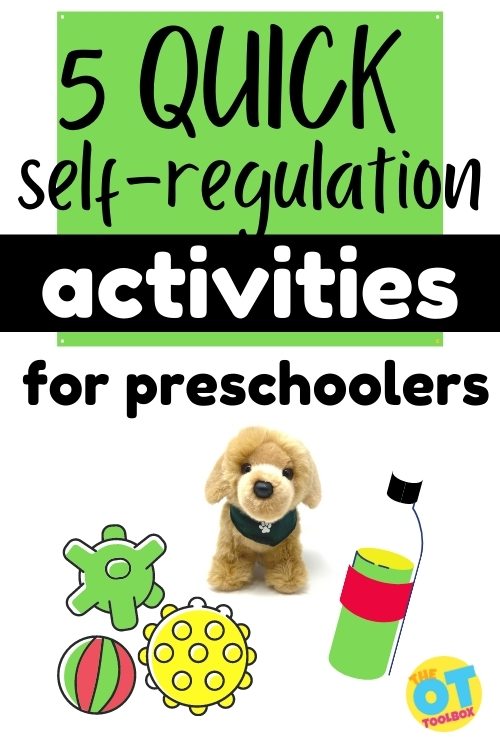
Here we are discussing the topic of how to support Self-Regulation in Preschoolers. Self-regulation is a skill that needs to be developed. For our youngest students, identifying emotions, and using self-regulation strategies for preschoolers is just hard. The preschool and Pre-K years are a time to work on emotional regulation through play and experience. Occupational therapy professionals can be a support and a service for parents, teachers, AND preschoolers in OT in the preschool years. Let’s break this down a bit…
This blog includes 5 simple ways to support a preschool child’s ability to regulate their emotions using age appropriate strategies.
Self Regulation in Preschool
Young children feel their emotions before they know what they mean. The first step to responding to a preschooler’s behavior is to understand what they are feeling when they are having trouble with regulation. Sometimes children need others to co-regulate while other times they need time on their own to self-regulate.
When four year old, Anglea, screams at the top of her lungs, we hear the scream, but we don’t feel what she is feeling. The first step to responding to a child’s behavior is to understand how they are feeling.
In order to do this, we need to take a step back and remember what it feels like when we become upset. Do you remember the last time that you were frustrated and wanted to scream?
Like the time that you were running late and you had to stop at every single stop light on the way to the grocery store. You are feeling annoyed right now, but you can deal with it. Then, the only open parking spot was at the every end of the parking lot (and it was next to a HUGE SUV that parked over their side of the line.) Ugh. You feel your fists clenching a bit as you try to squeeze out of your door.
When you walk up to the store, there are no grocery baskets. You walk back to the return basket spot in the parking lot to get a soaking wet basket. You roll your eyes as your patience is tempted. As soon as you walk into the store, you realize the shopping cart you picked is one that “squeals” across the floor. That’s it. You have had enough but you made it into the store and you are going to grab the milk that your two year old wants so she will sleep through the night tonight.
As you rush to the milk aisle, you gasp as the only 2% milk left is the one she won’t drink. Your heart starts to race and you feel like crying. The last thing you want to do is go to another grocery store after the ordeal you already have had. So you grab the off brand milk and say a little prayer that she will drink it tonight.
You’ve had a rough day, but you are almost done. After standing in the 20 minute checkout line (because for some reason the grocery store decided to only have TWO checkout lines open at 5pm on a Friday) you are now able to load your groceries onto the conveyor belt.
You’re next in line. You text your husband that you are hurrying as fast as you can and then the worst thing happens. Over the loud speaker, a voice says “Sorry customers. Due to a technical difficulty, we are only able to accept cash or check. No credit cards are able to be processed.”
How do you feel now? You take three deep breaths as you are trying your best not to scream. You want to fall on the floor and maybe cry? Or you want to toss the milk to the side and run out the door screaming.
You are so upset that you are having a hard time regulating.
But you don’t. You leave the cart, walk to your car (saying some words under your breath) and head to the other grocery store for milk.
Now picture your preschooler feeling that same way. What do they do?
Development of Self-Regulation Skills
Preschoolers need to practice self-regulating skills before they can control their responses. This foundational skill will help them manage their thoughts, emotions and behaviors. Self-regulation skills develop over time. According to this article, even babies are able to self-regulate.
The article states that in infancy, babies are able to self-regulate through strategies:
Shifting attention or averting gaze when overwhelmed
Self-soothing by sucking fingers or a pacifier to reduce distress
As children gain new skills, they are able to self- regulate in different ways. This same article discussed the next steps in self-regulation development in the toddler years:
The article describes toddler’s abilities to self-regulate through strategies such as:
Focusing attention for short periods
Adjusting behavior to achieve goals
Beginning to label feelings
Briefly delaying gratification
Turning to adults for help with strong feelings
Self-regulation development continues in the preschool years. For kids ages 3-5, self-regulation is experienced in preschool-aged children through strategies such as:
Recognizing feelings in self and others
Identifying solutions to simple problems
With support, using strategies like deep breaths and self-talk to calm down
Preschoolers love to engage in hands-on activities that teach a variety of concepts. One of the most important concepts is self-regulation. This skill can be taught and practiced at home, at school and out in the community. As children experience the world, there are so many different external circumstances that can trigger a child’s emotions. Each of these experiences gives preschoolers the opportunity to practice self-regulation techniques that they have learned.
Soothing Sammy is a preschool self-regulation strategy that uses an adorable golden retriever teaches children how to use their sensory system to calm down. The book, plush and playful activities all work together to help children create their own sensory basket they can visit whenever they need some extra calm down tools.
With two simple words, “Sammy Time,” your preschoolers will be redirected to visit Sammy, the plush, at his house, use a cup of water, spot to jump or other sensory materials, to calm down. Once calm, children are able to talk about their feelings and problem solve. Soothing Sammy is perfect for classrooms and homes!
2. Proprioceptive and Movement Based Input:
Taking a heavy work movement break is a great way to redirect ourselves (like when we go for a run or go to the gym to cool down). This works for preschoolers also. Our other article includes over 50 ideas on how to help children calm down, including movement based input such as taking a walk and rocking back and forth in a chair.
When we include proprioceptive input while moving, joint compression increases the ability for us to calm down fast! Some ideas include stomping, squeezing playdough, and stretching!
These emotions playdough mats offer heavy work through the hands while users can identify emotion names associated with facial expressions and feelings.
3. Calming Nature Sensory Bottle:
Looking at calming visuals, like this calming nature sensory bottle, helps redirect our attention to something interesting and beautiful. These easy sensory bottle creation not only supports visual aesthetics, but it also reminds children of being outdoors in nature. This sensory bottle would be a great addition to the Soothing Sammy program.
4. Emotional Vocabulary:
Understanding how to describe our feelings, not only keeps us calm, but also helps us communicate our feelings to others. When children learn the words that match their feelings, they are able to come up with solutions with peers and adults. Playing emotion games, like the ones included in this article, will help even the smallest of children remember emotion words during times of stress.
5. Pretend Play:
Children learn so much while they play. Playing with peers and also participating in pretend play, allows children to act out scenes from different situations. These situations can be happy ones, stressful ones, adventurous ones and so much more! The use of puppets, baby dolls and dramatic play materials helps children formulate situations, discover different responses and make plans for if certain experiences happen in real life. This article goes into more detail about the importance of pretend play in social development.
As children grow and develop, they experience the world in a variety of different ways. Sometimes everything goes as they planned, and other times, there are unexpected situations where they will need to manage their emotions. By teaching children self-regulation strategies, they will be able to respond to their emotions in a positive way, calmly plan their response and move forward with their day.
Jeana Kinne is a veteran preschool teacher and director. She has over 20 years of experience in the Early Childhood Education field. Her Bachelors Degree is in Child Development and her Masters Degree is in Early Childhood Education. She has spent over 10 years as a coach, working with Parents and Preschool Teachers, and another 10 years working with infants and toddlers with special needs. She is also the author of the “Sammy the Golden Dog” series, teaching children important skills through play.
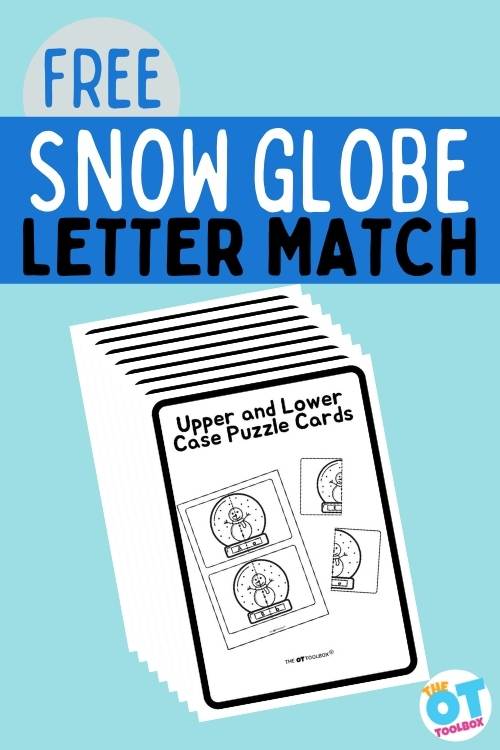
Here, you can access a set of free snow globe alphabet puzzle cards. These upper and lower case puzzle cards use printable snow globe puzzles for matching upper and lowercase letters. It’s a fun winter therapy activity that develops many skill areas. Let’s take a look!
Snow Globe Letter Match
Get ready to have some Snow Globe Letter Fun with these snow globe printables.
Winter is upon us. For many, this is a wonderful time full of sledding, ice skating, hot cocoa, bonfires, icicles, and snow. If you live in the cold areas of the globe, winter can be magical. I am a summer type myself, so winter and cold are not my favorite words. If I could live in the Bahamas year-round, I would. Unfortunately, being a popsicle saleswoman does not pay enough.
However, for those who love winter, the cold, and outdoor sports, this is your time! I grew up skating on frozen ponds listening for the crack sound before darting off the ice. We survived the blizzard of 1977 with snow piles as high as the roof.
For me I can get my winter fix on just one blustery day, or by staring into a snow globe!
Snow globe Activity
Creating a fun winter treatment plan is a good way to pass those long blustery days stuck inside. This week center a lesson around snow globes. You can research snow globes, talk about collectors, go broad and discuss winter, then start your activity session on snow globes.
Then, print off the snow globe printable at the bottom of this blog post and use it to work on letter identification, visual discrimination, and handwriting skills, and letter formation.
Snow Globe Facts
Writing this blog post led to finding a few fun facts about snow globes. Use these in your therapy sessions, classroom, or home to work on handwriting skills.
Snow globes are a glimpse of winter one can view from the comfort of the beach. Collectors have shelves lined with snow globes they have gathered from around the world.
2. If you want to bring back a globe from vacation, you will have to pack it in a checked bag. No liquids over a couple of ounces in a carry-on bag. I wonder how many awesome snow globes are sitting at security every day after being confiscated from lovely travelers.
4. Andy Zito holds the world record collection of globes and domes, a whopping 11,500!
5. You can read about the history of snow globes. The first known snow globe was reportedly created from an idea to make a brighter surgical instrument.
Snow Globe Letter match
If you are looking for printables and snow globe ideas, The OT Toolbox has you covered! A good place to get started is the Snow Globe Printable Upper- and Lower-Case PDF Printable Puzzle Cards.
This is a cute set of snowglobe worksheets that include the entire alphabet. It uses a winter theme to address goals related to matching upper- and lower-case letters. Use this as a jumping off point to work on letter recognition, matching letters, and scanning goals.
There are many ways to use this activity, but the most efficient would be to color in these cards, then laminate them.
Make this activity easier for learners by coordinating colors on sides that go together, or more challenging by leaving them blank.
If leaving them uncolored, how about printing them on fun colored paper to help with the less motivated learners?
During the entire first week, have all of your learners color a page, then laminate the whole bunch. Now each student will have had a hand in this reusable activity, that can be repurposed each year.
Enlarge these pages to make a great floor puzzle!
Project these pages onto a smart board for an interactive game dragging the pieces around the board. I am not a huge fan of technology; however, I like to provide these options for people who are.
The term “jumping off” was used above in reference to this worksheet. This does not need to be the complete lesson on snow globes OR handwriting. There is a continuum to learning anything. For handwriting it might start with recognizing letters, move to matching letters or matching upper- and lower-case letters, progress to copying letters, then finally to writing them from memory.
Start where your learner is currently functioning, then move forward. Often it is wise to start at one stage earlier than the current level, so the learner can have a sense of mastery, before moving onto a more difficult challenge.
Have you ever noticed how many of your older learners gravitate toward “baby toys” or easy puzzles? This is because they have mastered them, and that sense of accomplishment, no matter how small, bolsters their spirit. Avoid getting stuck at this stage, but allow it at times, especially for your more reluctant learners.
The OT Toolbox can fill your treatment plan with great ideas, not just worksheets. Look at this post on winter fun activities. Adding our snow globe puzzle cards to a winter theme would be a great way to incorporate various skill areas.
In previous posts such as the Winter Fun Clothes Number Trace Worksheet, several goals were outlined beyond the most obvious. Check out that post to get an idea of the goals that can be addressed using just one work page such as this Snow Globe Upper- and Lower-Case Letter Matching PDF.
Free Snow globe Printable
Want to add this snow globe letter match to your therapy toolbox? Enter your email address below to access a PDF for matching upper and lowercase letters. This alphabet puzzle card set is also available in The OT Toolbox Member’s Club so members can access it there without entering your email address.
Enjoy your winter season full of sledding, ice skating, snowball fights, and building snowmen, while I just stare into my snow globe, lounging by the beach. Just kidding, I do not actually live in the Bahamas yet, but I will be spending one glorious week in the Caribbean getting away from old man winter!
Stay warm folks!
Victoria Wood, OTR/L
Victoria Wood, OTR/L is a contributor to The OT Toolbox and has been providing Occupational Therapy treatment in pediatrics for more than 25 years. She has practiced in hospital settings (inpatient, outpatient, NICU, PICU), school systems, and outpatient clinics in several states. She has treated hundreds of children with various sensory processing dysfunction in the areas of behavior, gross/fine motor skills, social skills and self-care. Ms. Wood has also been a featured speaker at seminars, webinars, and school staff development training. She is the author of Seeing your Home and Community with Sensory Eyes.
*The term, “learner” is used throughout this post for readability, however this information is relevant for students, patients, clients, children of all ages, etc. The term “they” is used instead of he/she to be inclusive.
If you’ve been a reader of The OT Toolbox website for long, you’ve probably seen our many deep breathing exercises. But have you ever wondered about HOW relaxation breathing works physically? How does the body calm as a result of mindful breathing strategies? Let’s explore the science of what’s going on with this breathing tool…and try out a few powerful relaxation breathing strategies, including our breathing star.
What is RELAXATION BREATHING?
Relaxation breathing is a mindful approach at deep breathing as a strategy for resetting the body. Relaxation breathing includes a deep breath followed by holding that breath for a short period (6-7 seconds), and then slowly releasing the breath over a period of about 8 seconds. This slow approach to deep breaths resets the nervous system so that we can calm the body.
This style of breath focus allows one to calm the body, manage anxiety, and self-regulate in different ways.
With relaxation breaths, you’ll notice a few changes to the body:
Relaxation breathing slows the heart rate
Relaxing breath control allows the body to gains a sense of awareness
Relaxation breathing adds calming proprioceptive input through the movement of the ribs when deep breaths are taken in, held, and slowly released. This movement of the ribcage release tension and move blood through the kidneys or renal system through internal proprioceptive input.
When the renal system calms the adrenal glands, the production of the stress hormones adrenalin and cortisol are impacted, resulting in a lower state of stress.
Relaxation breathing engages the parasympathetic fibers in the membranes around the lungs, and has a calming effect.
3 Powerful Relaxation Breathing Strategies
What’s more, studies have found that parasympathetic activity and CNS activities are related to emotional control and psychological well-being in healthy subjects during slow, relaxing breathing techniques.
Here, we’ll cover 3 different ways to elicit the relaxation response:
4, 7, 8 breathing
Breathing with the tongue on the roof of the mouth
Nose Breathing
4, 7, 8 Breathing
Have you heard the term 4, 7, 8 breathing?
4, 7, 8 breathing is a deep breathing strategy where a deep breath is breathed in for a count of four. The breath is then held for a count of 7, and then breathed out for a count of 8.
During the time when the breath is held for a count of 7, you will notice that you can feel your lungs and ribs continue to expand. Try it!
When that expansion occurs, the fibers in the lungs stretch. This “extra breath” is a powerful calming period. The ribcage expands more during this period, offering greater proprioceptive input, and activating the vagus nerve, which has a relaxing effect.
Breathing out for a count of 8 has the same impact, where the longer breath period again moves the ribcage in a downward motion. Emptying the lungs pushes more air out and continues to offer that calming effect.
In this way, 4, 7, 8 breathing is a relaxation strategy because the counts and time of breaths in, held breath, and breathing out trigger a relaxation response.
Try 4 7 8 breathing for yourself!
breathing with tongue on roof of mouth
Another calming breathing strategy is the tongue posture with breathing with tongue on roof of mouth.
In this relaxation strategy, the tongue rests on the roof of the mouth for a simple reason: this tongue posture ensures that the individual is breathing in and out through the nose.
Also, when one is breathing with the tongue on the roof of the mouth, the tongue adds proprioceptive input through the palate in a calming manner.
Try breathing with your tongue on the roof of your mouth for yourself!
Breathing through the nose
As explained above, when the tongue is resting on the roof of the mouth, nose breathing is ensured. Here’s why that is important:
When breathing in and out with the tongue on the roof of the mouth, nose breathing is enabled, and the parasympathetic response results in relaxation.
When breathing though the nose, the structures of the nose actually regulate airflow and slows the flow of air because of the those physiologic structures.
This PDF titled The Healing Power of the Breath explains more.
Try breathing through your nose for yourself!
Relaxation Breath Strategies
Hopefully, these relaxation breath strategies have offered some explanation on how deep breathing in both the 4, 7, 8 method, nose breathing, and breathing with the tongue on the roof of the mouth are powerful relaxation breath tools to use in self-regulation and coping.
Try these additional relaxing breathing activities paired with the breath strategies listed above.
Help kids with coping strategies using themed, practical belly breathing strategies that work.
Includes A-Z alphabet exercises for whole body exercises
9 different themes to use in learning or therapy themes
Oral motor exercises for heavy proprioceptive input through the mouth, tongue, and lips
Exercises that can be used any time or anywhere!
Need help getting kids to focus, pay attention, or calm worries? Need help with self-regulation in a calm-alert, ready-to-go state, so they can learn, play, and function?
Achieving a self-regulated state of focus, attention, and being ready to go doesn’t need fancy therapy equipment or sensory tools. Deep breathing exercises are tools that we can all use, any time, and any place!
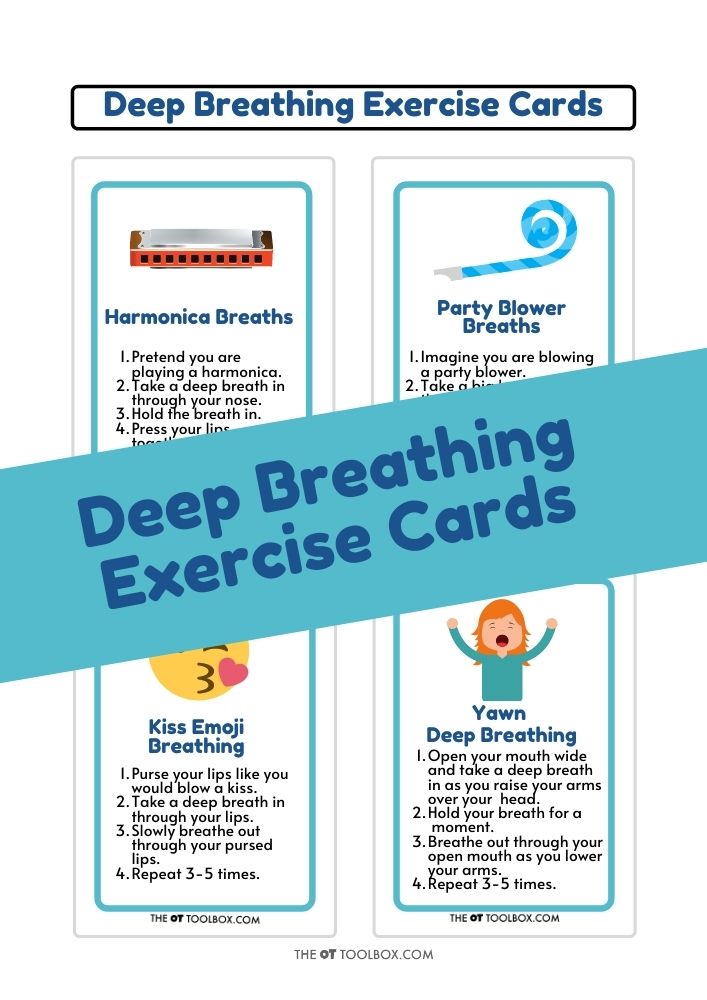
These deep breathing exercise cards includes 113 different deep breathing exercises that can be printed and used in therapy, home programs, the classroom or at home.
Colleen Beck, OTR/L has been an occupational therapist since 2000, working in school-based, hand therapy, outpatient peds, EI, and SNF. Colleen created The OT Toolbox to inspire therapists, teachers, and parents with easy and fun tools to help children thrive. Read her story about going from an OT making $3/hour (after paying for kids’ childcare) to a full-time OT resource creator for millions of readers. Want to collaborate? Send an email to contact@theottoolbox.com.
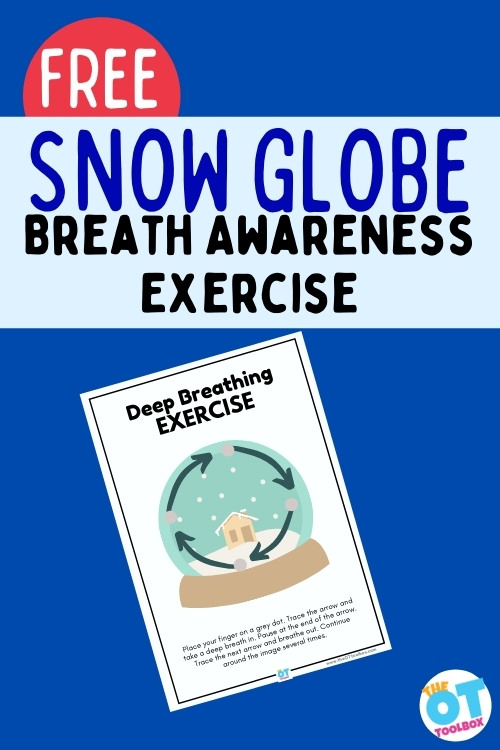
Here, you’ll find a printable snow globe activity designed for breath awareness. This breath awareness practice uses a snow globe theme. Paired with other deep breathing exercises, this resource is a concreate way to help kids develop breath awareness as a coping tool for self-care and mindful breathing.
Mental health struggles are so overlooked and underdiagnosed. Recently a push for mental health awareness has gained some traction. If you are or know someone who is struggling, you know how difficult it is to get the right help. Waiting lists to see a doctor can seem like a mile long. Getting in to see the right specialist takes time and persistence.
In the meantime, or to prevent further damage, a little self care can go a long way. Before taking on all of the challenges of the the classroom, learning, or functioning in general, take time for a little self care.
When we use breath awareness strategies as a tool for self-care, we are becoming more mindful of how our breath impacts regulation. Breath awareness results in a calmer state. This in turn allows for mindful participation, or being present in the moment, rather than a focus on internal or external stressors.
This strategy can help with breath control as well. Try to settle the snow globe with slow and steady breaths from the bottom of the lungs. A long and slowed breath can help to calm the whole body, so when imagining a snow globe, use that long and slow breath to settle the snow, not stir it up.
Don’t let it add to your stress as one more thing to do, but take five minutes to remind yourself of the possibilities each day.
In addition to finding help and working on self care, becoming more aware of breath and it’s impact on the body and mind is an excellent step to reducing stress and improving mental health.
Snow Globe Meditation
The OT Toolbox has several excellent printables and tools to help develop strategies for reducing stress, decreasing arousal level, or improving focus. The newest printable in the Deep Breathing Series is our Snow Globe Deep Breathing Printable.
The snow globe meditation tool you’ll find below is a printable PDF breathing exercise. Beyond the easy usability with this printable deep breathing exercise, is the way that it can be used in conjunction with a real snow globe.
A snow globe is a powerful tool for meditation. If you’ve ever shaken up a snow globe, then you probably can picture the sense of calmness that comes over you as you watch the snow inside the globe first swirl furiously and then slowly settle to the bottom of the glass globe.
This imagery can be paralleled to internal stressors.
When we feel stressed by thoughts, emotions, or external stimulants, you might feel like a swirling storm is inside of you. It’s hard to focus on a thought just like it’s difficult to focus on one swirling snowflake in a winter storm. But, with time, the snow slows and settles to the bottom of the snowglobe.
You can use a snow globe imagery to help kids feel calm and focus on breath awareness as a self-regulation tool.
Snow Globe Breath Awareness Tool
To use this page, begin by having kid identify their emotions and feelings. Help them to become more aware of breath by describing their breathing, focus, stress levels as swirling like a shaken up snow globe.
Then put your finger on the first white dot. Trace the arrow and take a deep breath in. Pause at the end of the arrow and breathe out. Continue around the image several times while breathing.
Then ask kids to describe their emotions, heartbeat, feelings, and breathing. Ask the user to identify how their breathing and other identifiers have changed. Are they feeling more like a settled snow globe? Or do they still feel “shaken up” and swirling? If so, repeat the breath awareness exercise.
What else can I use the Breath Awareness Printable for?
In sensory speak this activity can be used for modulation and improving arousal level. This basically means practicing self regulation and calming, by focusing the energy on a single activity rather than the offending or overwhelming sensory input.
This Breath Awareness PDF can also be used to improve focus. Learners can practice channeling their energy onto the page to begin to learn to attend to one item at a time. This will help practice self control.
Mindfulness is not new. It has been around for centuries. In western medicine, mindfulness is commonly taught in dialectical behavioral therapy, or DBT treatment. According to the writers at Mindful, “mindfulness is the basic human ability to be fully present, aware of where we are and what we’re doing, and not overly reactive or overwhelmed by what’s going on around us. Mindfulness is a quality that every human being already possesses, it’s not something you have to conjure up, you just have to learn how to access it.”
While learning DBT, I tried to learn mindfulness. I learned I am not good at it. I can not slow my mind enough to sit without doing or thinking. As a DBT activity, I clocked how many thoughts went through my head in 60 seconds. I had over 20 different thoughts one of the days I tried this task. I one minute! Imagine people who meditate and are proficient at mindfulness can sit for HOURS thinking of nothing, just listening to nature or attending to their breathing.
That’s where this snow globe breath awareness task comes in as a mindfulness tool to help identify breathing and overall awareness.
How can I modify this activity?
Laminate this PDF to make it reusable
Print in full color to make it more motivating
Instead of deep breathing, use the activity to place coins on each of the dots, then use the pointer finger to slide to the next arrow. This develops in hand manipulation.
Create a modulation kit of printables, and other sensory items to work on self regulation, stress reduction, and attention/focus. The OT Toolbox has several printable deep breathing exercises and a pack of cards to specifically address this goal year-round.
What other strategies can I use for calming and organizing?
Sensory fidgets such a putty, koosh balls, coil bracelets
Chewing gum
Journaling and creative writing
Aromatherapy
Heavy work
Exercise/yoga/Pilates/walking
Pet therapy
Music
The list is endless, work with each of your learners to find out what helps them with their self care
Free Snow Globe Breath Awareness Printable
Want to download a copy of this snow globe breathing exercise? Enter your email address into the form below to access this printable tool. Note that this resource is also available for immediate download inside the OT Toolbox Member’s Club. Members can grab the PDF immediately simply by clicking a button.
With all of the holiday fun and excitement, do take time out for self care and deep breathing. It will be worth it!
Just keep breathing!
Victoria Wood, OTR/L
Victoria Wood, OTR/L is a contributor to The OT Toolbox and has been providing Occupational Therapy treatment in pediatrics for more than 25 years. She has practiced in hospital settings (inpatient, outpatient, NICU, PICU), school systems, and outpatient clinics in several states. She has treated hundreds of children with various sensory processing dysfunction in the areas of behavior, gross/fine motor skills, social skills and self-care. Ms. Wood has also been a featured speaker at seminars, webinars, and school staff development training. She is the author of Seeing your Home and Community with Sensory Eyes.
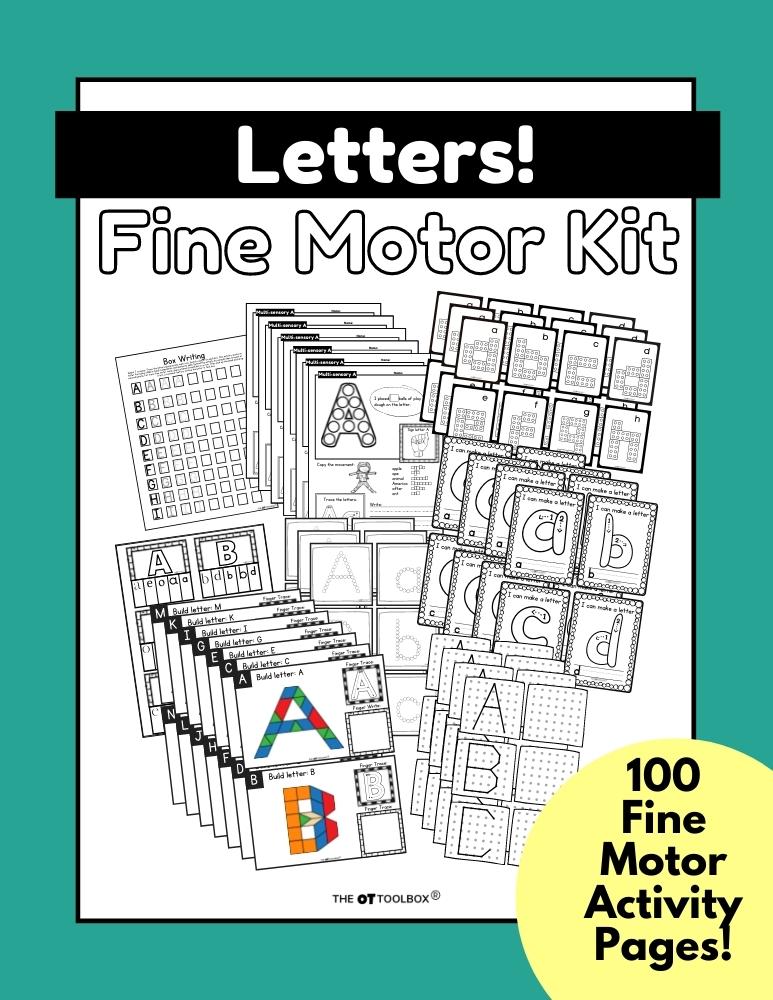
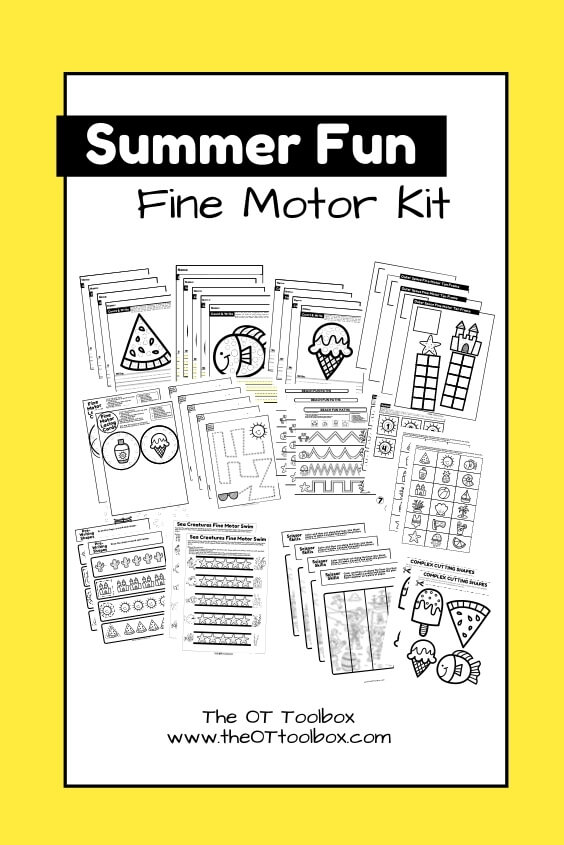
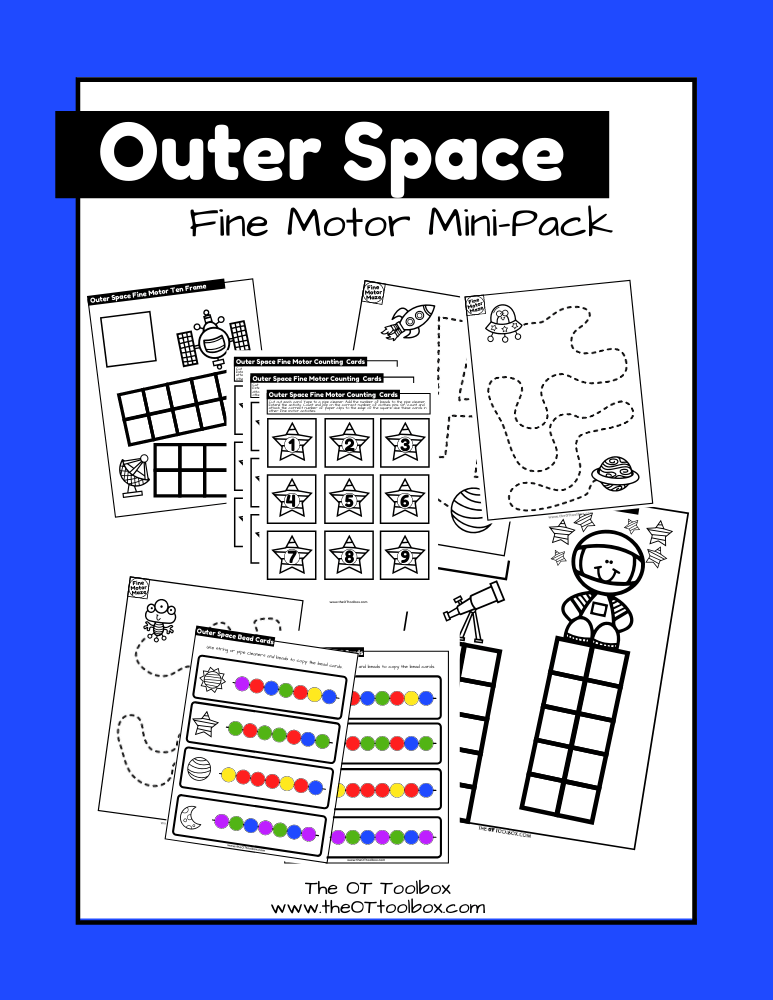
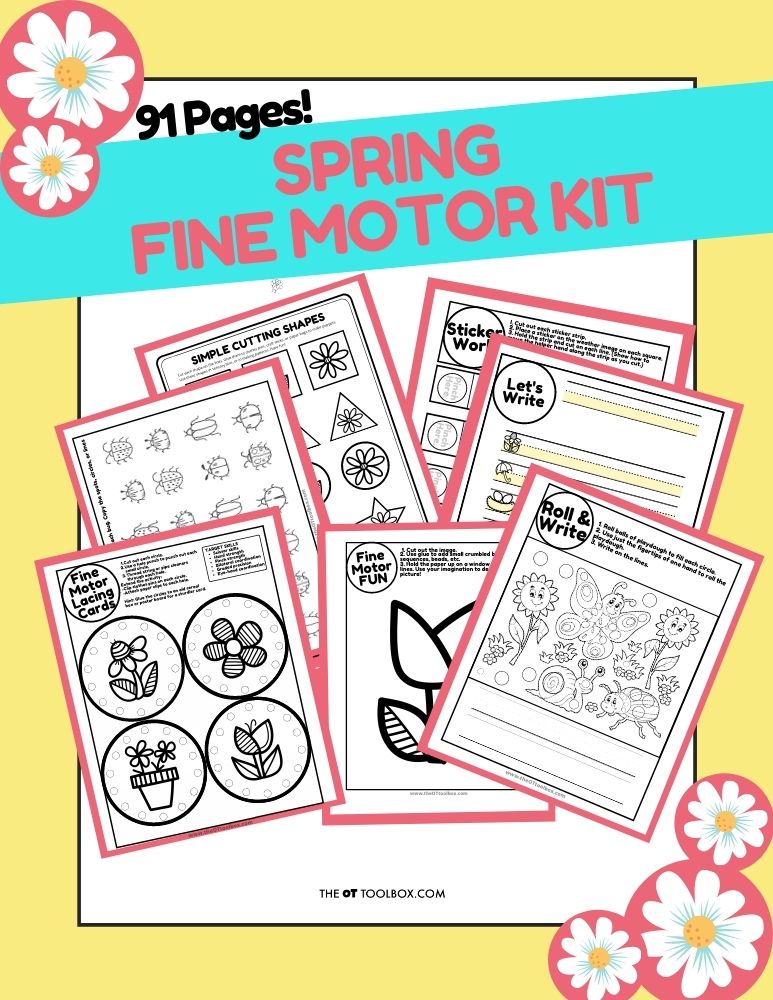
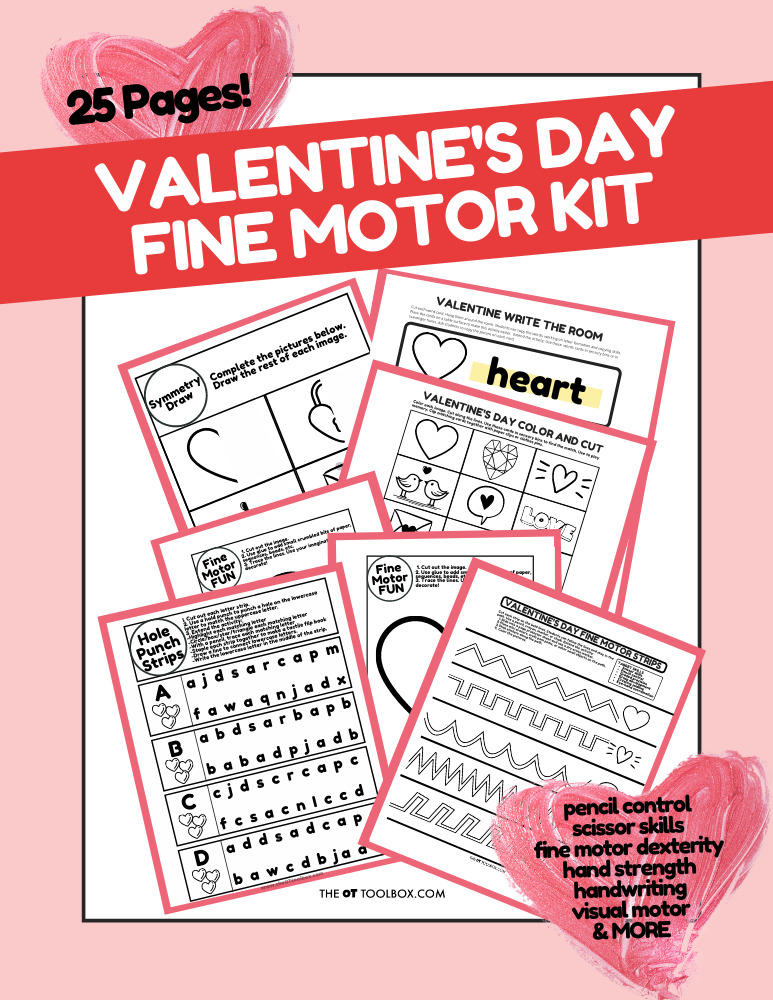
Working on fine motor skills, visual perception, visual motor skills, sensory tolerance, handwriting, or scissor skills? Our Fine Motor Kits cover all of these areas and more.
Check out the seasonal Fine Motor Kits that kids love: