Fine Motor WATER PLAY

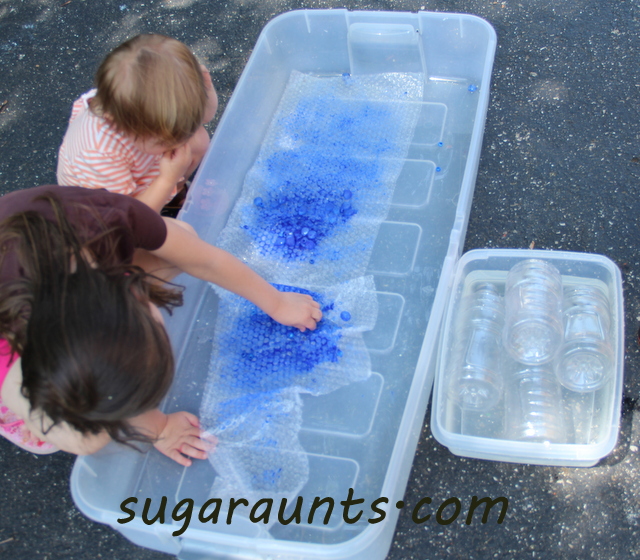
This is part 2 of a two-part outdoor messy play activity.  If you missed part one, Sensory Paint Play(Part1)  was very fun…Check it out!  We left the bubble wrap/blue paint dry right in the bins overnight.


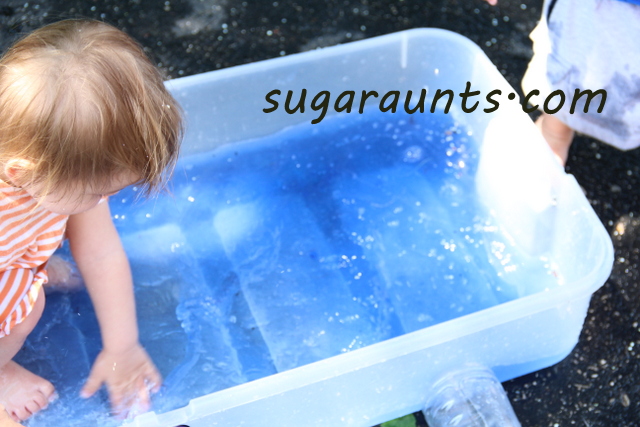
The next day was another super hot and sunny day.  Add a bin of water and some empty plastic bottles, and let the fun begin.

Sensory Play

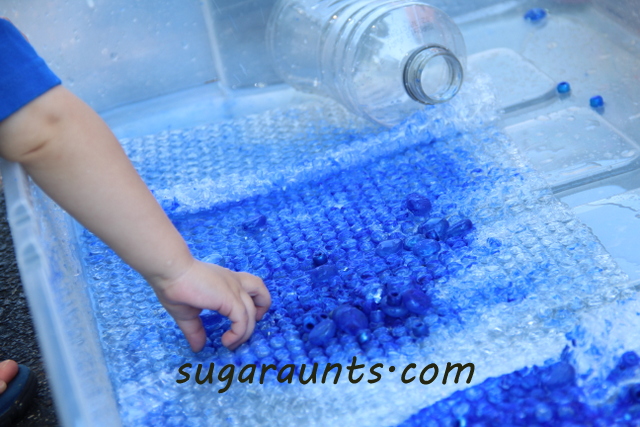
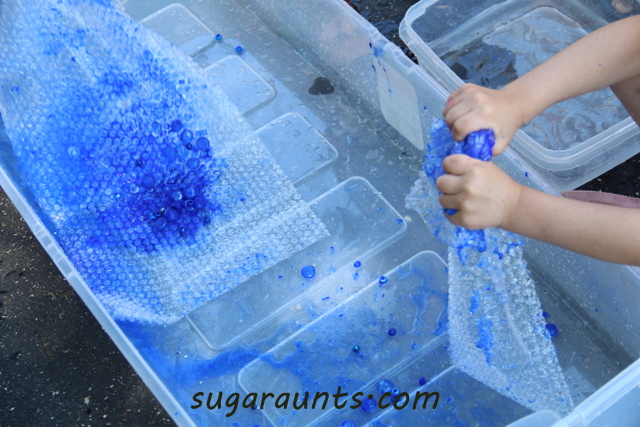
The paint-y, texture-y, messy play returned when the water was added.
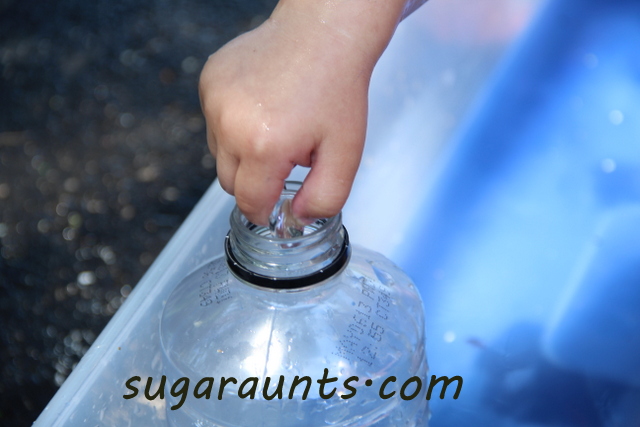
Plus, it’s just fun to pour water from bottles.
And put the bottles on your head, of course.
What a fun sensory play experience!

 Fine Motor Play

Baby Girl thought it would be pretty fun to drop the gems and beads into the plastic bottles.  She did this for a LONG time.  That little ‘bonk’ sound was pretty cool!
and, such a great fine motor task.
{{LOVE this picture!}}

Colors

When all of the water was added, we had a blast on this 85 degree day in our BLUE water bin!
Looking for more BLUE play activities:

Sensory Paint Play

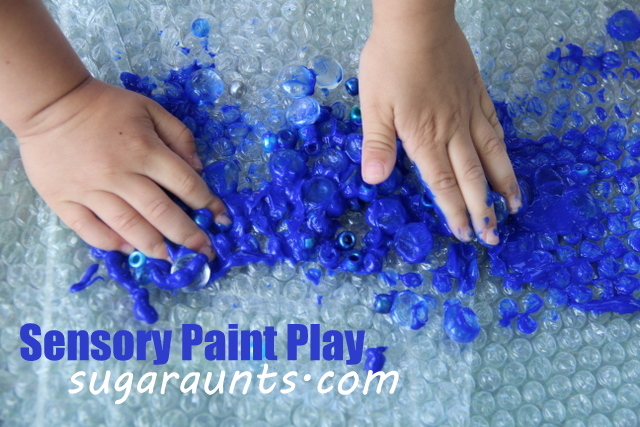
This sensory paint activity used bubble wrap for a wonderful tactile experience. We loved to feel the bubble wrap sensory activity. Kids can use this as a way to work on sensory touch and tactile defensiveness, or just for fun, creative painting!

Sensory Paint

This sensory paint idea is easy. You’ll need just a couple of items:

  • Paint
  • Bubble wrap
  • Paper to press onto the bubble wrap

How to do this bubble wrap sensory play

When you get a package in the mail that has bubble wrap, it’s a special day!  After some jumping and a little popping, we used the bubble wrap in a fun sensory play activity.
 
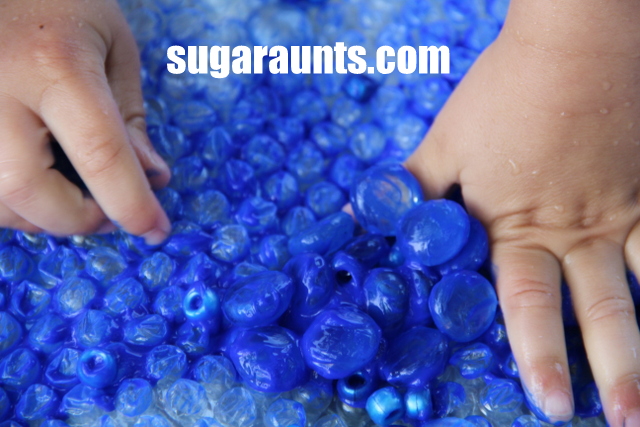
Finger paint, and a handful of beads, and glass gems made this extra special.


This sensory painting activity is a great activity for sensory exploration. Add it, along with this rubber duck painting activity to your painting ideas!


This was SO much fun!  Perfect outdoor play for a hot day.


Don’t you just want to get messy and play with this???


It was such a neat sensory experience…and very BLUE.  After we were done playing, we squirted the kids off with the hose.  I left the blue bubble wrap, beads, and everything right in the bin until the next day.  I had plans…
 
*stop back tomorrow to see what we did the next day after the whole mess dried!*
 
 
UPDATE: Here is the post for the next part of this two-day sensory play activity…PERFECT for a hot, sunny, outdoor messy play day! Fine Motor/Sensory/Water Play (Part 2)
 
 
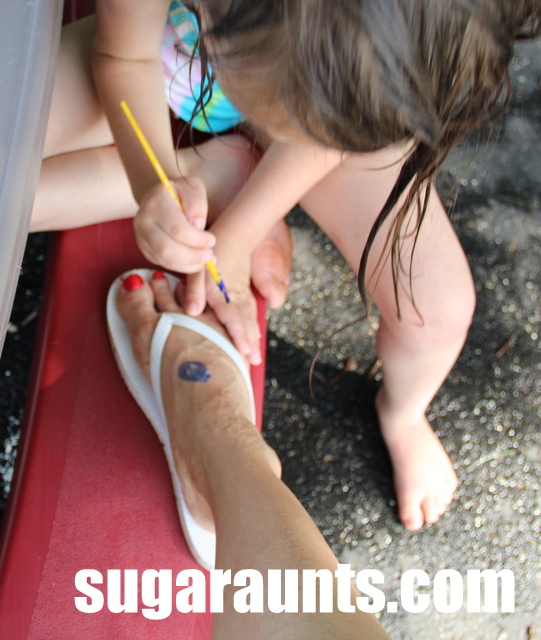
We did use a little of that wet blue paint for some face painting.  Big Sister gave me a nice smiley face on my foot 🙂


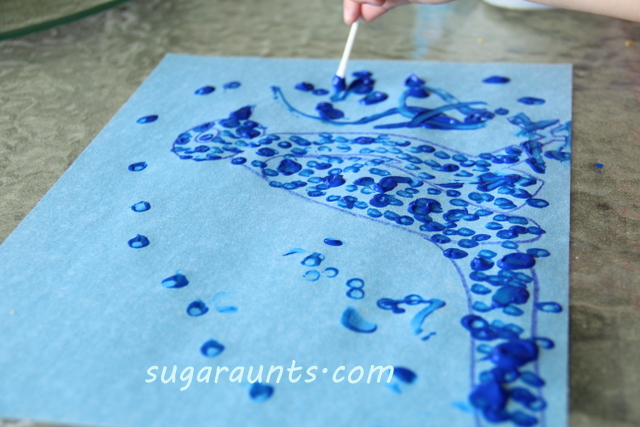
Playing With Color: Cotton Swab Painting

Use a cotton swab and paint to create a pretty bird craft while working on the fine motor skills needed for a functional and dynamic pencil grasp.

This was a fun painting craft we did recently.  We’ve been doing a lot of blue activities lately:
Big Sister and Little Guy went dot crazy on these bird pictures.

…using that tripod grasp to paint away with the cotton swab.

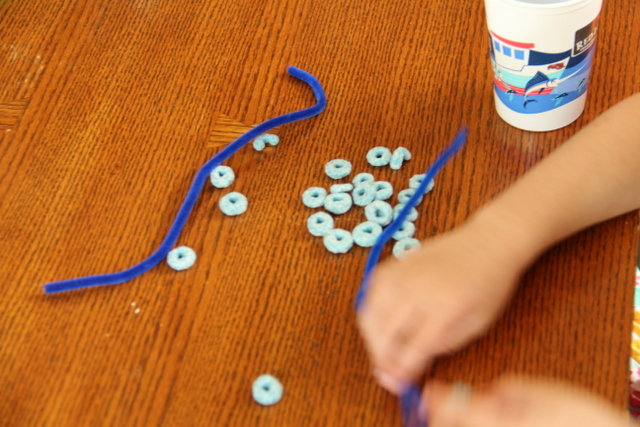
We finished up our blue play with a little Fruit Loop lacing on pipe cleaners.
 In blue of course 🙂

…more tripod grasp play!

Blue Sensory Play for Toddlers

This was a fun activity that the toddlers around here loved.  I put a bunch of little objects out on a tray, all in shades of blue.  Different textures, shapes, and sizes were perfect for little exploring hands.  Baby Girl and my niece and nephew played with these for a while.
Once they had enough of that activity, I poured the whole tray into the sandbox and we had a ball covering everything with sand, finding little things, and starting all over again.  


We’ve been on a blue kick around here.  It started when we filled our bird feeder and had a Blue Jay in our front yard. 
We’ve been playing with blue, sorting blue, crafting blue, eating blue (berries), and even reading  about blue…

Toddler Sensory Tray

((I love the little knuckle dimples in these pictures!!))
Watch this space for more BLUE play and craft activities!

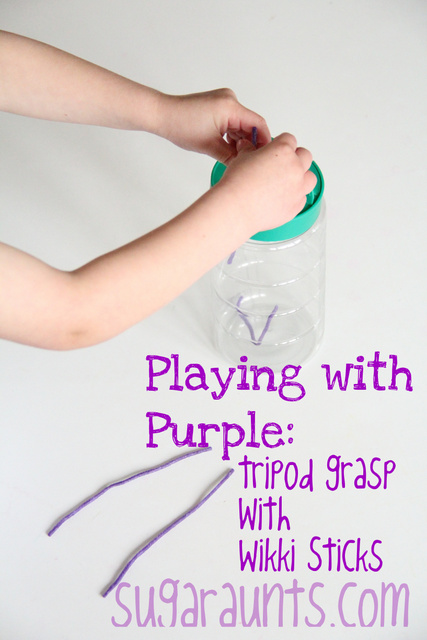
Playing with purple (tripod grasp with Wikki Sticks)

We pulled out the Wikki Stix again!
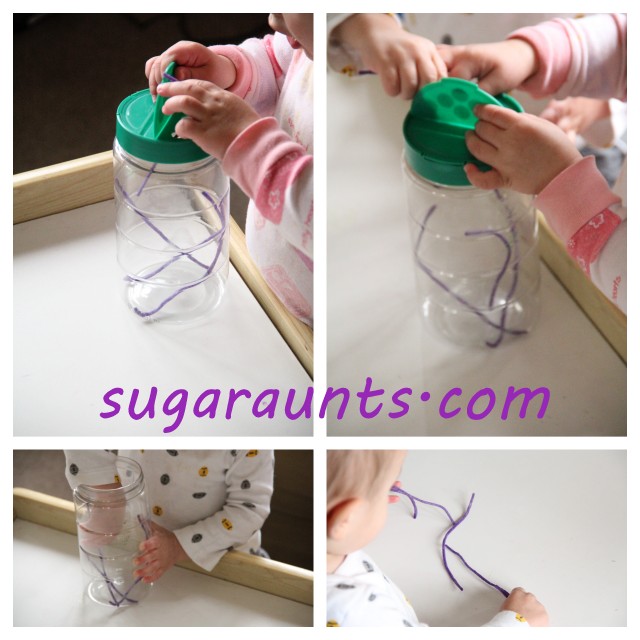
The kids had a ball pushing them into a grated cheese shaker… and worked on their tripod grasp while they were at it!
Baby Girl and my niece and nephew (both 18 months) were really into this. There were a lot of little hands reaching in there at one point.  They liked to take the lid off of the container and twist it back on.

This kind of activity is great for cause and effect and their eye-hand coordination.

I stuck to one color to encourage them to say “purple” and not overwhelm them with 20 little Wikki Stix.  Sometimes it’s good to avoid flying Wikki Stix…and that’s when they seem to “walk off” and  you find them in random places.
…like stuck to the shower stall….
Big Sister had fun sporting her new purple frames…

In-Hand Manipulation ~ 2 fine motor play ideas

In-hand manipulation

is the ability to move small objects around in your hand without using the other hand to help. There are three parts to In-hand manipulation…translation, shift, and rotation.
Translation is using your fingers to moving a little item from your palm to your finger tips (or your fingertips to squirrel the item into the palm). When you hold a coin in your palm and manipulate it to your finger tips to push it into a piggy bank or vending machine, you are demonstrating palm-to-finger translation.   
Shift is moving an object using the pads of your fingers…adjusting the pencil grip is demonstrating finger shift.  Another example might be manipulating a button or a zipper with the finger tips.
Rotation is rolling an object using the fingertips.  Examples of rotation are rolling a pencil in your fingertips, turning a pencil over to use the eraser, or opening a bottle top by rotating the lid on your finger tips.
In-Hand Manipulation is a high level fine motor skill and essential for activities like handwriting, buttons, snaps, zippers, cutting, and play.
If a child has difficulty with any three aspects of in-hand manipulation, you might see them struggling to perform these tasks, use two hands to do an activity or skill that normally would use just one, appear clumsy.  You may see them unnecessarily stabilize their arms against their chests and do a task very close to their bodies.
We have done two different (and FUN) play activities recently that work on in-hand manipulation.  This first one used our bin of water beads. 
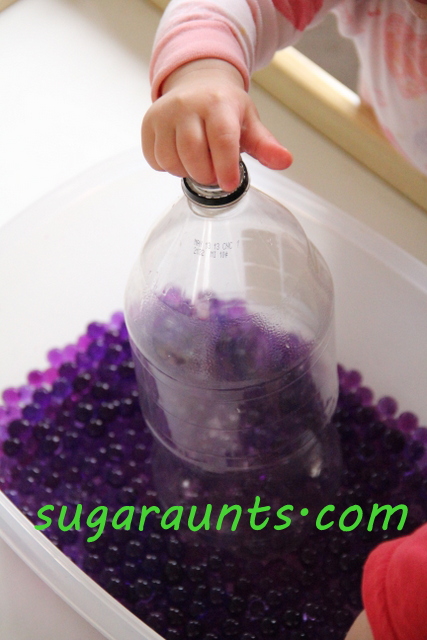
I put an empty two liter bottle in the bin and the kids went crazy popping the water beads into the opening.  You can see Little Guy’s hand full of water beads in one of the pictures below.  He was able to hold the water beads in the palm of his hand and move them to the fingertips.  He used palm-to-finger in-hand manipulation skills to maneuver the water beads into the opening of the bottle.
Baby Girl had a lot of fun doing this activity too.
We’ve been playing with another activity recently that really works the in-hand manipulation skills.  We brought an empty grated cheese shaker bottle into our corn bin.  Big Sister held a handful of corn kernels in her palm and would place them, one by one, into the holes of the lid.  
Have your child pick up the kernels one at a time and squirrel them away in their hand before pushing them into the holes of the container.  This would be a one way to encourage finger-to-palm translation.
This is also a great activity for encouraging a tip to tip neat pincer grasp. (A Neat Pincer grasp is important for advanced fine motor dexterity like picking up very small objects from a table surface…very small beads, a strait pin, etc…)
You could also encourage tripod grasp if you presented it with a little larger items, like small crafting pom poms, cut bits of straws, little pieces of pipe cleaners…the possibilities are endless!

What are some other ways that you can encourage in-hand manipulation? 

Push coins into a piggy bank (encourage your child to hold several coins in their palm as they push the coins in)
Push buttons into a slot cut in a plastic tub
Pick up beads and encourage your child to hold them in their palm as they pick up more.
Lite Brite with several colored pegs in the child’s hand
Games with small chips
Pegboards with small pegs
Beading
Twisting lids on/off water bottles

Purple Waterbead Sensory Bin

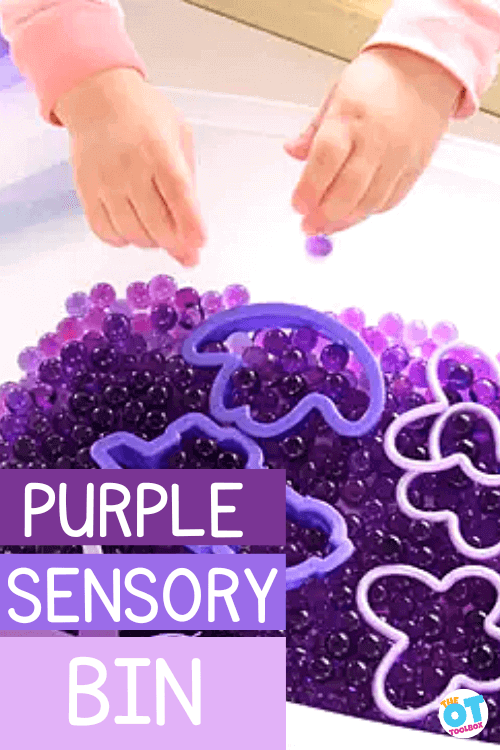
Purple water beads in a container with cookie cutters and hands reaching into the bin. Text reads purple sensory bin

This purple sensory bin is a fun way to explore the color purple using one of our favorite sensory play materials: a water bead sensory bin! While this is a very old post on our blog (circa 2013), we still love the mesmerizing impact of a color themed sensory play activity. Plus, if you are looking for more fun ways to extend the play, check out our water bead activities!

Purple sensory bin

Purple Sensory Bin

A purple themed sensory bin has many benefits beyond exploring the color purple. Of course, you could make a color themed sensory bin based around any color and gain so many benefits:

  1. Tactile sensory experience- Targeting tactile discrimination and tactile exploration is one of the main skills that are address with a sensory bin. You can address various aspects of tactile defensiveness through engaging and motivating play.
  2. Motor Skills- Using a scoop or spoon to move and manipulate the sensory bin items builds skills in motor planning, dexterity, crossing midline, bilateral coordination, hand-eye coordination, and more. Check out all of the benefits of scooping and pouring activities.
  3. Social Emotional Skills- Playing in a sensory bin like our purple sensory activity is an engaging activity that fosters group play (parallel play) and encouraging peer interaction by borrowing tools, working together. Engaging in a new situation is an excellent way to foster communication, cooperation, and other social emotional skills. Here are more social skills activities kids love.
How to set up a purple sensory bin

In our colorful sensory bin, we gathered just a few items from around the home:

  • Large storage bin
  • Purple water beads
  • Purple cookie cutters
  • Purple scoops and bowls

You could use other sensory bin base materials with a certain color theme such as:

  • Shredded paper
  • Colored sand
  • Dyed beans
  • Dyed rice

Add a few spoons, cups, and manipulative items, and you are ready to go!

purple sensory bin
 
This was a fun and easy little sensory bin to put together.  Someone (cough, Big Sister, cough) threw some bath water colors into the bin of blue water beads we had out.  They absorbed the color reeeeally fast.  And are VERY vivid in their new purple hue.
 
 
I found a few purple bracelets and cookie cutters, and a few other purple things, and voila!
 
Purple Sensory Bin fun!


I’m not sure why, but every time we do water bead or corn bin sensory play, Little Guy goes into the kitchen and grabs my whisk and whatever other utensils look right.  So, now Baby Girl does the same thing.  I guess it’s just fun to mix and stir when you’re playing with a sensory bin!
Have you done a water bead sensory bin? 

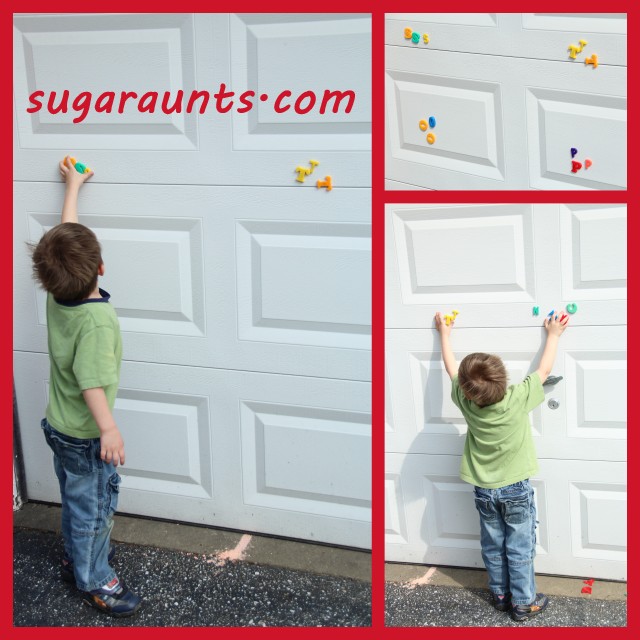
Magnetic Letters on the Garage Door

We have a bin of magnetic letters that we’ve been playing with for years.  Packs of these magnetic alphabets are everywhere; You can find them at the dollar store and so many other stores.  I have pulled this bin out so many times for play.  Each child has loved to sort, dump the bin out, place all over the fridge, and more.  The big kids are spelling their name and words.  We’ve used these letters in all kinds of sensory bins…even molded into Jello for messy sensory play!
Last week, we took the bin of letters outside and found the BIGGEST magnetic board EVER!

Big Sister is learning to spell and read some words and found the letters for a few words she knows.  Little Guy is a big fan of spelling “stop” at every stop sign we come to on the road.  So, he found the letters to that word.
((He also has the recent …funny…habit of spelling “YES” or “NO” instead of saying the actual word when you ask him a yes/no question.))  SO funny, and SO him!

Movement and Learning in Letter Identification and Spelling

There is a lot of research out there showing that incorporating movement into learning helps with so many aspects of cognition.  Kathryn at Movement and Learning shares a great collection of research.
We played a little game to sort out the letters to a word that both of them knew really well.  I wanted to encourage self-confidence by starting with a word they know.  I put one of each of the letters of “stop” in different areas of the garage.  Little Guy (who is learning letter identification) looked in the pile of letters on the ground and found an “S” and put it with the rest of the “S’s”.  Then he found a “T” and put it with the rest of the “T’s”.  He found each of the letters in order and went through the word “stop” three times.
Big Sister is learning to read beginner words.  I wrote some “-ar” words on the driveway in chalk (car, jar, far, star) and she would walk from the word to copy the words in magnets on the garage.

Cross Lateral Movement and Learning

I had them try another game to put the letters back into the bin.  I asked them to put the letters away one by one, using alternating hands to reach across their midline to grab the letter.
What is the midline?? Imagine a line going down the middle of your body from the middle of your forehead, and strait down, dividing your body into two symmetrical halves.  Your right and left sides are divided by your midline.
The right side of the brain controls the left side of the body and the left side of the brain controls the right side of the body.  Crossing midline forces the two halves of the brain to work together.
It was a little difficult to get them to reach for letters with their non-dominant hand.  It required more verbal cues, physical prompts, and visual cues.  Why was this so tricky?  Because the brain was being asked to do something novel.  Both Big Sister and Little Guy needed the extra prompts and cues to reach across their midline, all the while recalling the letter in order to spell the word.
Pretty Cool!
So, is crossing midline difficult for your child?  Try these play activities:
Crawling in a tunnel, finger painting with both hands, digging in sand to find objects, Pat-a-Cake hand and rhythm games, Simon Says games, playing with ribbon wands or scarves.

Invitation to Scoop and Pour

Scooping and Pouring for Toddlers and Preschoolers

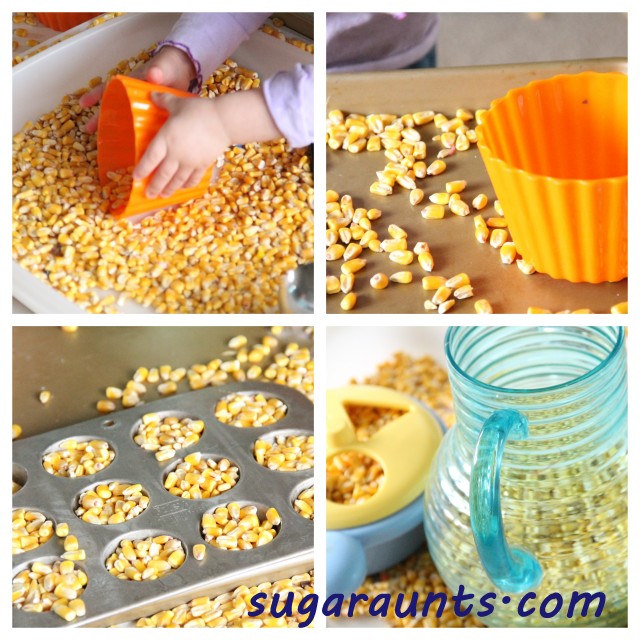
is such a great fine motor and visual perceptual activity for little ones.  Not to mention the neat pinging sound you get when pouring grains of corn onto a metal tray 🙂
Toddlers who are learning to control the spoon during eating, scooping food with a spoon, and using  controlled motions to bring food to their mouth benefit from an activity like scooping corn.  A child with poor muscle control would benefit from different modifications to this activity: different sized scoops/spoons, lighter or heavier objects to scoop (sand, rice, beans, crafting pom poms, cotton balls…)

I had a set of these orange bowls and spoons sitting around and they worked great to scoop, pour, and dump corn.  Baby Girl was occupied with this activity for a looooong time.
Pouring from a pitcher with something like corn is perfect play practice for the real world task of pouring drinks from a water pitcher.  Preschoolers often do this in a preschool setting at snack time, and pouring drinks for their friends is fun!  I’ve seen Big Sister glow with excitement when I have her pour water for us at lunch time here.  You can see her self-confidence growing!
Pouring materials from a pitcher is also a great activity to work on bilateral coordination, visual perceptual skills (stop pouring before you overflow the cup!)
Baby Girl watched Big Sister fill the pitcher with corn and pour corn into the muffin tins.  (We were making “cupcakes” for Daddy!) Baby Girl then had to copy and pour the corn.
Of course.  This girl does EVERYTHING the big kids do!
If you are worried about the mess, lay down a blanket first and do all of the pouring and scooping on the middle of the blanket.  You could also play in a baby pool.  Or, just head outside now that we are having some warmer weather.

Why we love scooping and pouring:

Fine Motor skill development

Visual perceptual skills

Bilateral hand coordination

Self-confidence

Real-world practice

Sensory Play