We’ve made a DIY light box before and have loved playing and learning with light. Light boxes are such a great way to encourage fine motor, sensory, visual perceptual skills, handwriting, language, creative thought process, and more. We made another version of our Super Easy Light Box and when I say super easy…it doesn’t get much easier!
How to make an EASY light box
This post contains affiliate links. Read our full disclosure here.
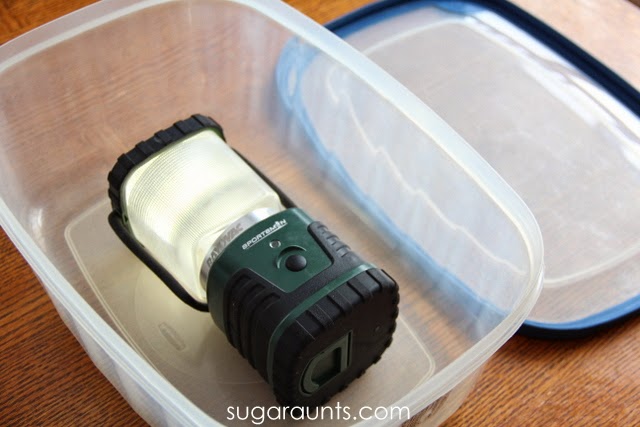
Start with a plastic bin with lid. You’ll need your bin to be clear or see through. The size doesn’t matter, as long as it’s comparable to your light source. We used our handy bright lantern. This thing is heavy duty and we use it all the time. The kids use this lantern for pretend play, outside play during summer nights, exploration adventures, Pirate explorers, ghost hunters…this lantern gets it’s run of play! It fit pretty well in the bin that we used for our DIY light box, and the Bright LED light made a great light source.
Pop the lid on the plastic bin, and your light box is done. How easy is that??!
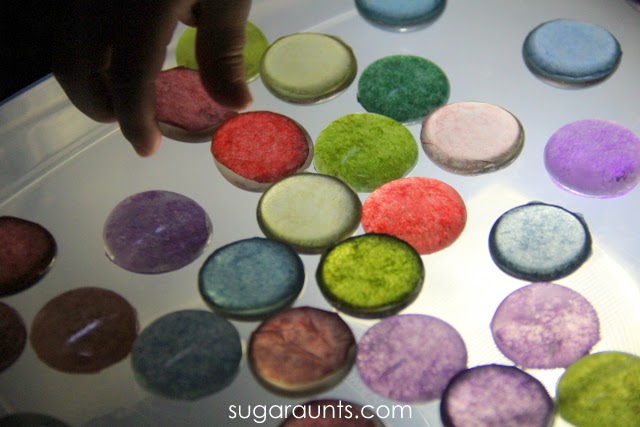
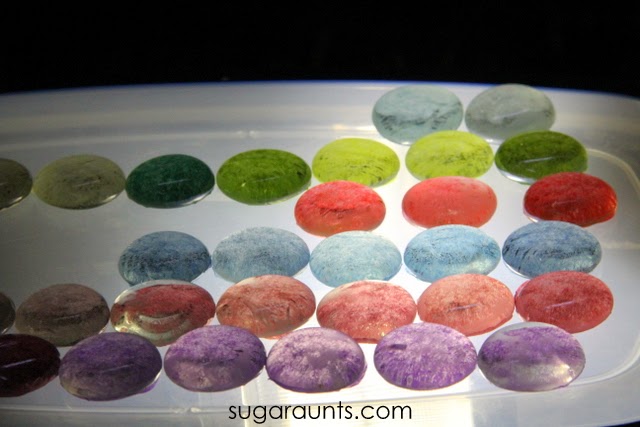
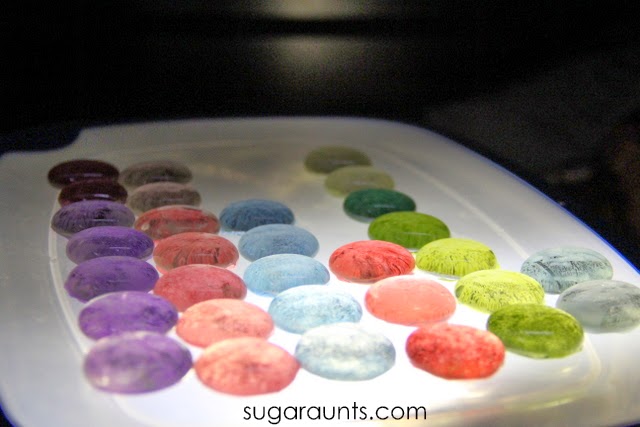
We used our DIY colored glass gems on the light box for sensory play. These things are so easy to make and we’ve used them all the time for all sorts of fun activities.
Sorting, color patterns, math patterns, counting, number place values, adding, subtracting…this is light and math and fun all in one activity.
These look so good on the light box! The best part is when the kids want to play explorer Pirates again, you just need to pop the lid off the bin!
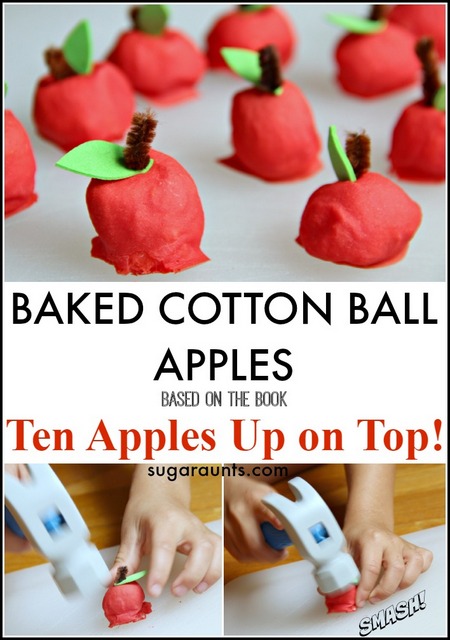
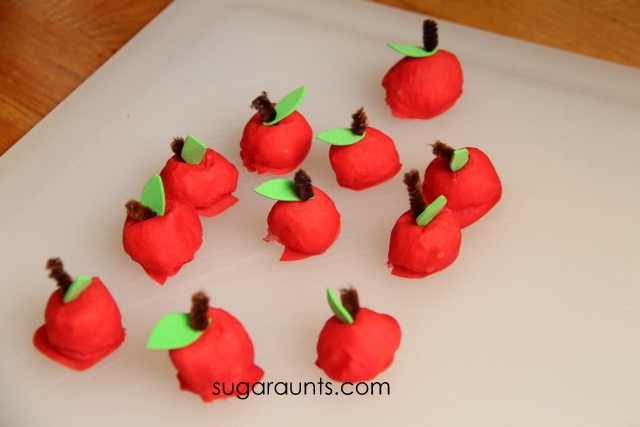
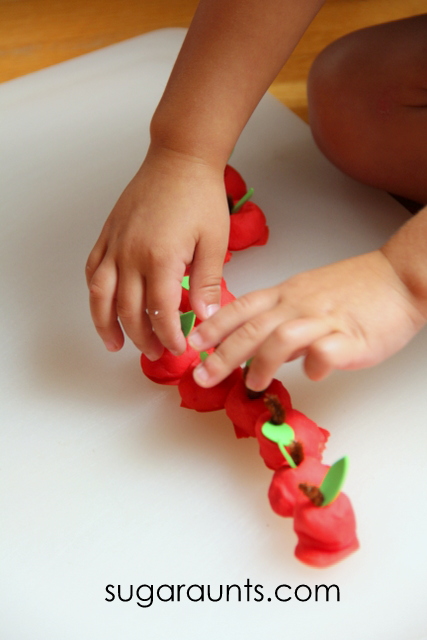
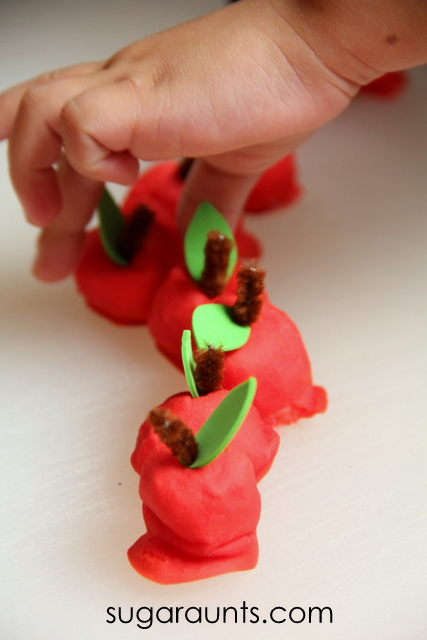
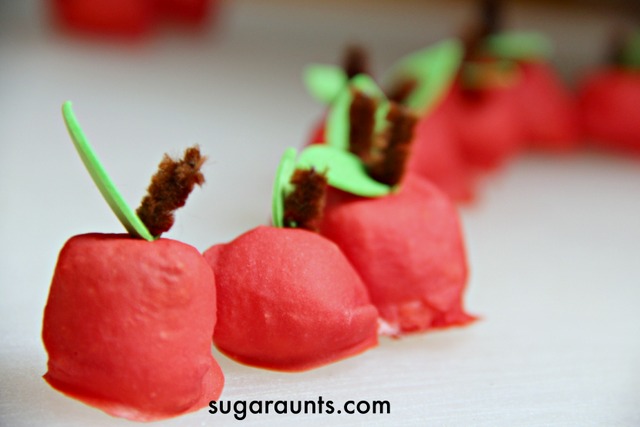
This Ten Apples Up on Top activity was a huge hit with my kids, because they love the book, so making baked cotton ball apples was a fun way to play through the book. And as a pediatric OT, I loved the fine motor and heavy work input that was an added benefit. You can add this to apple activities that you are doing in occupational therapy sessions or at home. These baked cotton ball apples would be a great addition to our apple pie sensory bin, and they would be fun for hands-on play with our Fine Motor Therapy Kit for visual motor, handwriting, and fine motor play.
Here’s what we did…
Ten Apples Up on Top Activity
Did you ever do an activity with the kids that was such a hit, that the kids ask to re-do the activity over and over and over again? This one is it for us. There is rarely a day that goes by that I don’t hear about our smashing apples activity. Especially if we happen to see a hammer. Oh, this baked cotton ball activity was a fun one for us!
We’ve never made baked cotton balls before, but have had the idea bubbling for a while. When we heard that the Preschool Book Club‘s book for this week would be Ten Apples Up on Top, we knew it would have to be an apple themed baked cotton ball activity. We even made these waaaay before all of the other book activities in the second series of books.
Like back in June. If you’ve never made baked cotton balls before, this is a MUST-DO activity!
This post contains affiliate links.
How to make Baked Cotton Balls
Are you familiar with baked cotton balls? This sensory tool is a DIY sensory material that kids love, and for so many great reasons. Actually, mixing up and making the baked cotton balls is as much of a therapy task as playing with them!
First read Ten Apples Up On Top! by Dr. Seuss. This is such a fun book for counting and playing along with the story.
How to make baked cotton balls:
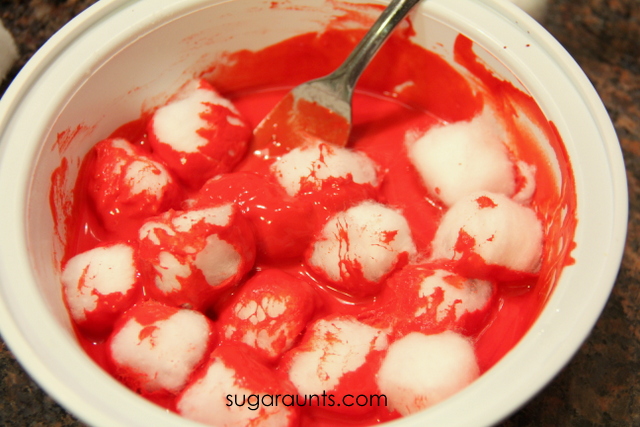
Begin by mixing together one cup of flour and one cup of water. This is a great activity for the kids. Scooping, stirring, direction following, sneak tasting (my kids aren’t the only ones who go crazy for flour, right!??).
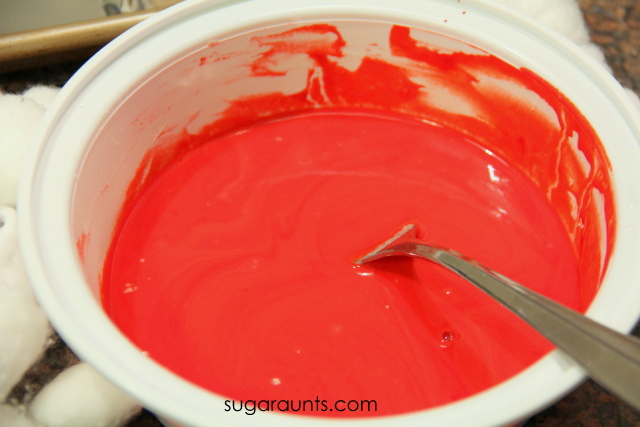
Pour in a bunch of red food coloring. We typically go with Wilton gel colors for all of our dying activities, but I knew I wanted a really deep red color. It seems like red coloring requires SO much dye to get a good shade of red. I ended up using a bottle from the dollar store and used about half of the bottle of food dye. This was maybe 20 drops? Add enough to get a nice red color.
Mix in the food coloring.
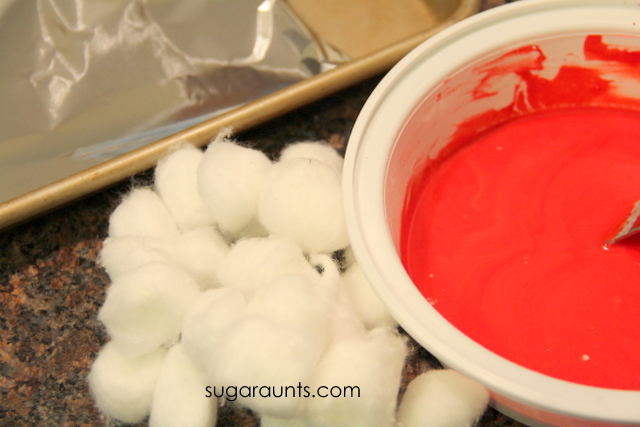
4. Now is the cotton ball part. Grab up your stash of cotton balls.
5. Mix them around to coat all of the cotton balls.
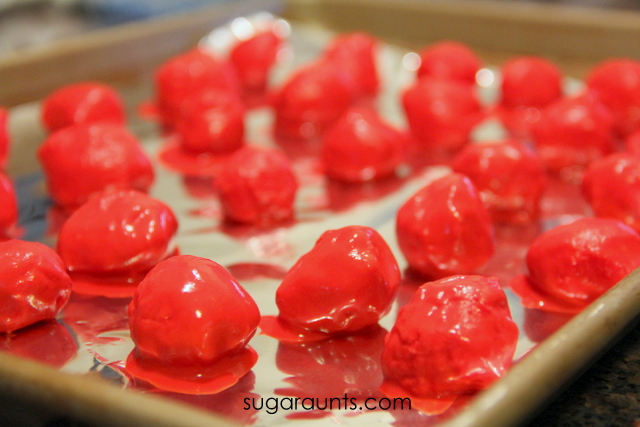
6. Place a layer of aluminum foil on a baking tray and place the cotton balls on the tray for baking. I used two forks to pick up the coated cotton balls and was able to let excess flour coating drip off before placing the cotton balls onto the foil.
You’ll want to let as much excess drip off before putting them on the sheet to avoid the sharp edges and flat bottom once the cotton balls bake.
7. Pop the baking sheet into the oven for around 60 minutes at 300 degrees F.
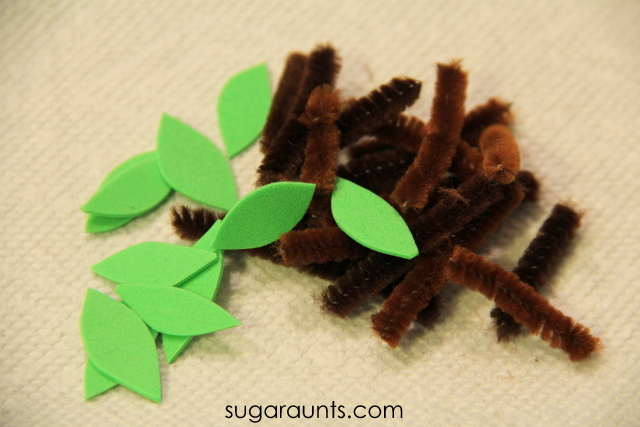
While the cotton balls are baking, snip up the leaves and stems for the apples. We used brown pipe cleaners and green crafting foam.
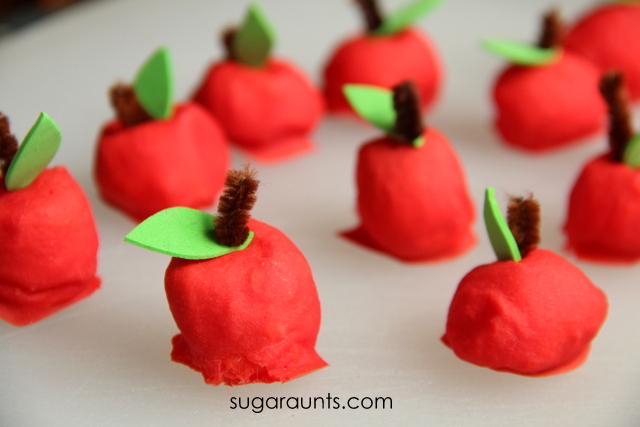
When the apples are done, pull them out of the oven and let them cool for a bit. They will be nice and hard. You’ll need to snip the bottom edges of the apples to remove any sharp edges that dripped to the base before baking.
To attach the leaves and stems, lay the leaves on the apple top and poke the pipe cleaner through the foam sheet and into the cotton ball. The kids were able to help with this part, but assisting with stem attachment did not allow this mama to take any pictures 😉
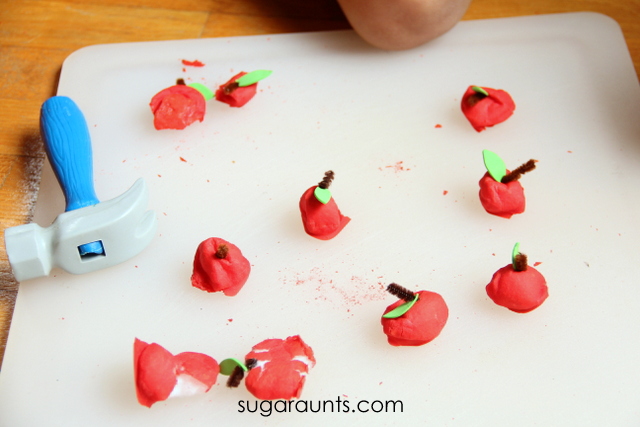
Our crop of apples were ready for playing with!
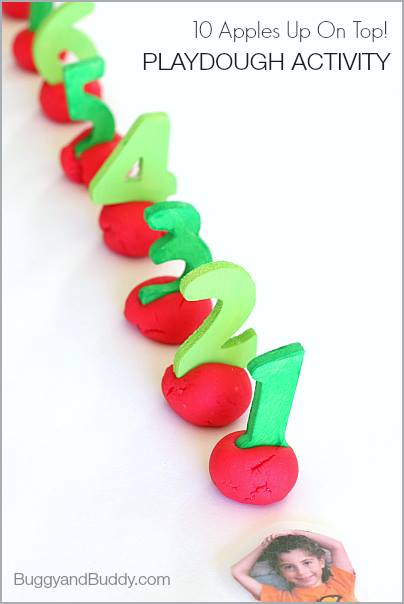
We followed along with the book as we read to stack up apples one by one. What a great way to learn and play with math facts, counting, number order, and simple adding. Little Guy LOVED this activity.
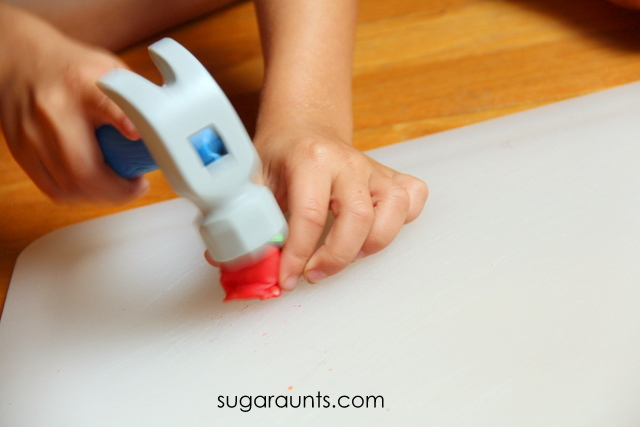
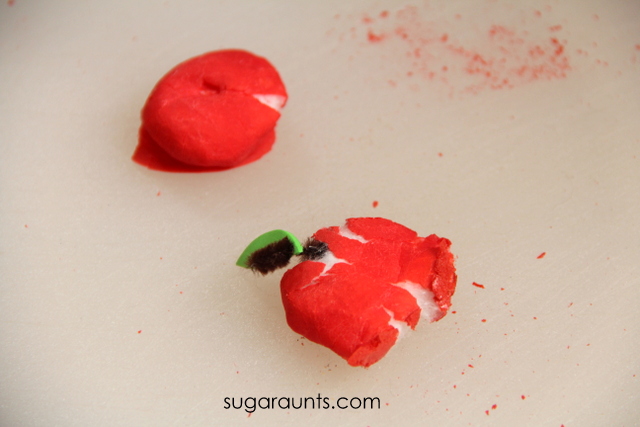
We got to hammering the cotton balls and this was the really fun part! The baked cotton balls have a hard outer edge that allow for a satisfying crunch when smashed, and a squishy, cottony center. What a fun way to explore and play.
We used a plastic hammer, but any hammer would do.
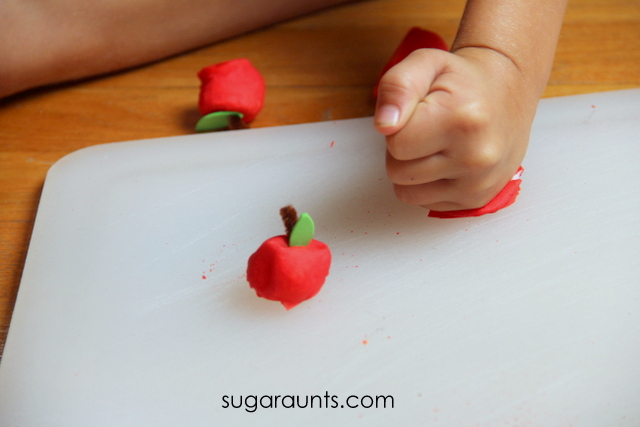
In fact, fists work just as well for smashing.
We had a smashing afternoon.
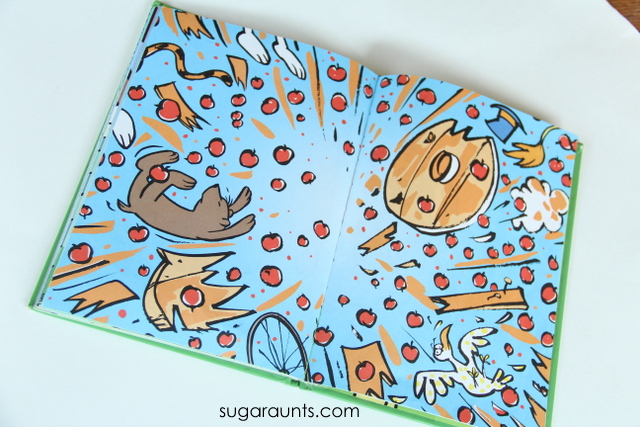
The remains of our cotton ball smashing reminded us of this page in the book. Be sure to let us know if you make baked cotton balls! We would love to hear about your experience with this sensory and fine motor activity!
Stop by the other Preschool Book Club bloggers to see their takes on Ten Apples Up On Top!
Colleen Beck, OTR/L has been an occupational therapist since 2000, working in school-based, hand therapy, outpatient peds, EI, and SNF. Colleen created The OT Toolbox to inspire therapists, teachers, and parents with easy and fun tools to help children thrive. Read her story about going from an OT making $3/hour (after paying for kids’ childcare) to a full-time OT resource creator for millions of readers. Want to collaborate? Send an email to contact@theottoolbox.com.
We’ve been having so much fun lately making all sorts of play dough. There’s so much to do with play dough…from pretending, to working on fine motor skills…play dough is one of our favorite ways to play. And the fun ways to make play dough; Oh boy things can get crazy in the play dough workshop (aka my kitchen). We’ve mixed up dough with everything from crayons to cola.
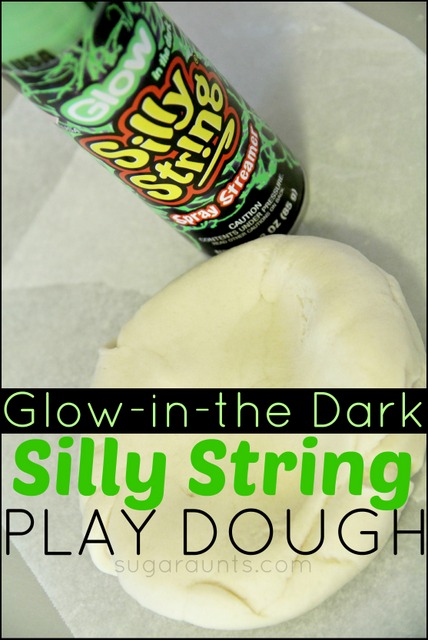
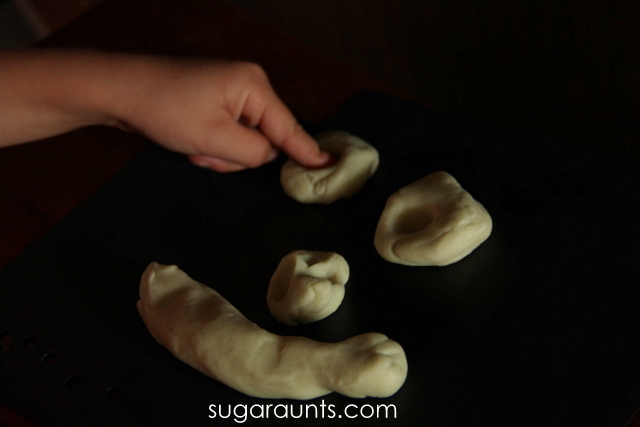
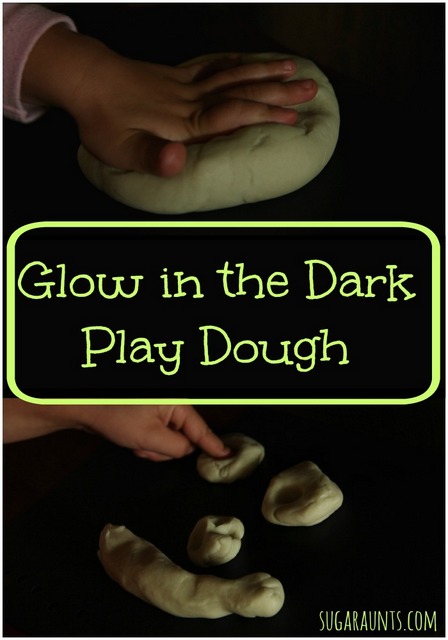
This time, we were on a mission to create our very own Glow-In-The Dark play dough. This was fun!!
This little experiment turned into a fun adventure with the kids. We brainstormed all kinds of ways to turn our play dough into glowing dough. Little Guy’s idea of lightning bugs was thoughtful, but a little yucky. And cruel to glowing bugs. So where to start with making glowing dough?? We packed up the minivan and headed off to Target.
The sales clerk gave us the eyebrow when we said we needed anything that glowed. But this was a mission for creativity. We grabbed up glow in the dark stickers, duct tape, nail polish, and silly string.
We were looking for things that could be added to dough to make a glowing dough. While doughs that require a black light for luminosity are very cool, we don’t have a black light. And, lots of parents out there don’t have the budget for a black light, so glowing dough was the way to go for us.
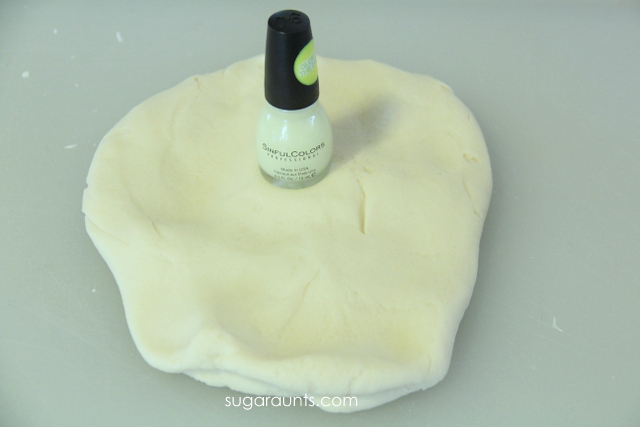
We started our experiments with the nail polish.
Please don’t make play dough with nail polish. Won’t glow. And the fumes, yikes! Round two.
Silly String Play Dough~
We started by mixing up a batch of our homemade play dough recipe with a small modification. We were out of cream of tarter, so I substituted a half cup of flour for the cream of tarter. I also cut the recipe in half. This is important for the glowing of the dough, as we only used one can of silly spray. More dough would require more silly string for a glowing shade. Our play dough ingredients were:
2 cups flour
3/4 cup salt
1 and half cup water
1 Tbsp oil
It’s important to note that different ingredients and temperatures/humidity will result in different play dough consistencies. The most important part of this dough recipe is the kneading. You’ll need to knead it a lot for smooth play dough. Repeat that: Need to knead. Need to knead. 😉 If your dough is too sticky, add more flour.
This is a no-cook dough. The warnings on the Silly String say to keep away from heat. I wan’t taking any chances with warm dough, so no-cook it was. Mix together the ingredients for the dough and knead, knead, knead. When you’ve got a nice play dough consistency, it’s time for the fun part. Silly String! (This link is not the brand we used, but should work. We used a bottle of 3 oz glow in the dark Silly String found at Target). Little Guy waited very patiently for this part. If patiently means reminding mom that we need to spray the silly string, then it was patiently. 😉
Spread the dough out on wax paper and spray! We sprayed to whole bottle onto the dough without any attempts to spray each other. Success.
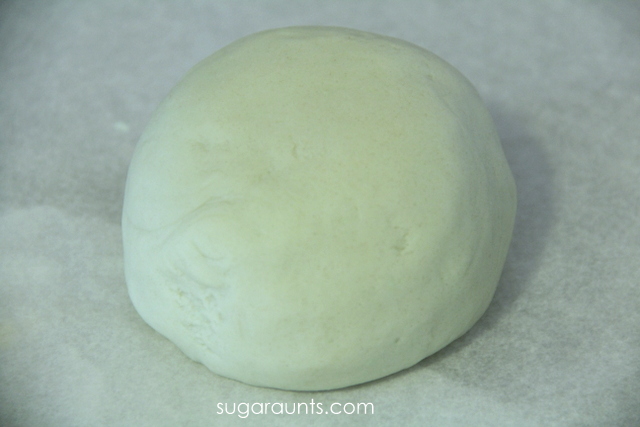
Roll the dough edges into the center and mix in that silly string. we did not have any dying of skin with the silly string, but feel free to wear gloves if you like. The nice part about the silly string is the non-toxic notice on the side. Non-toxic=awesome.
We did not add any coloring to our dough. The greenish shade of the silly string dough was enough, but it would be fun to experiment and see what a bright green food coloring would do to the dough. You might want to add another bottle of silly string to your dough for a more vivid glowing dough. If you add more silly string, you’ll need to add more flour to take away the stickiness.
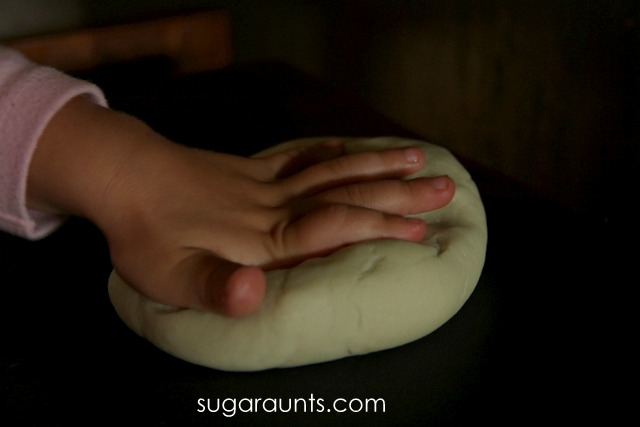
Once, mixed take that dough into a dark closet to check it out! I did notice that our dough was more vivid if we “charged” under a light first. This stuff was very cool! The kids were pretty impressed with the glowing dough.
NOTE~ The “glow” is not extremely strong. This dough would not be able light your way on a dark night. It will be visible in a dark room. It will not enable you to see across the room. It will glow enough to see. It will not turn your dark living room into a glow-in-the-dark disco party. It will last about 2 weeks in a sealed plastic bag or container, with “charging” to get the glow. It will not make a great flashlight on Halloween. It will be very fun to play with!
And when the dough gets stuck to the couch, you can now see it in the dark. Yay!
We love using math concepts that are learned in school into playful activities at home. Learning through play is a great way to strengthen concepts learned in the classroom. We used apples to count, add, and learn one day, all in the great outdoors!
Apple math activity for Kindergartners and Preschoolers
This post contains affiliate links. If a purchase is made through these links, we receive a small percentage in payment at no cost to you.
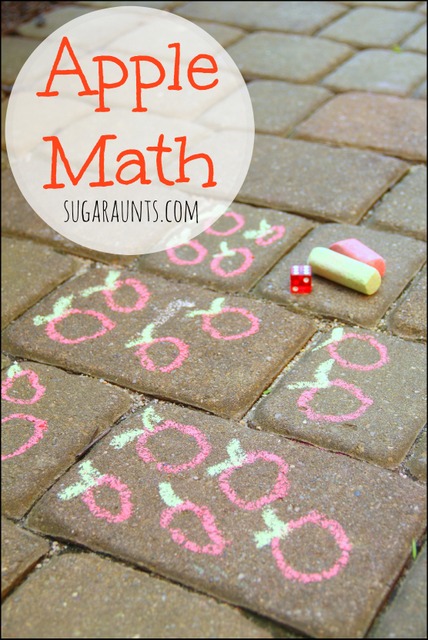
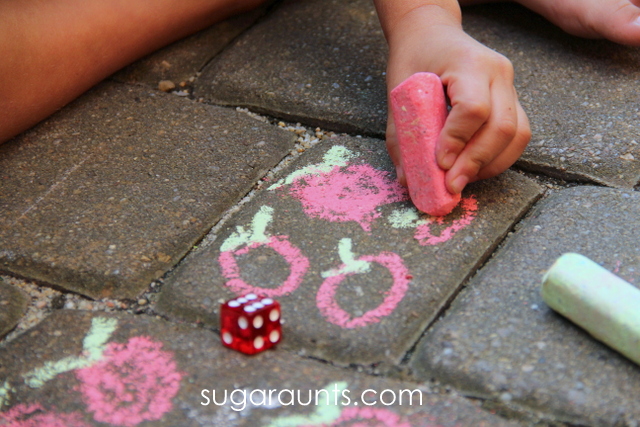
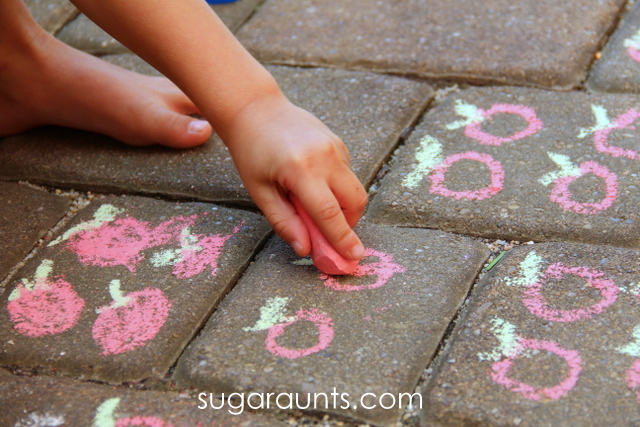
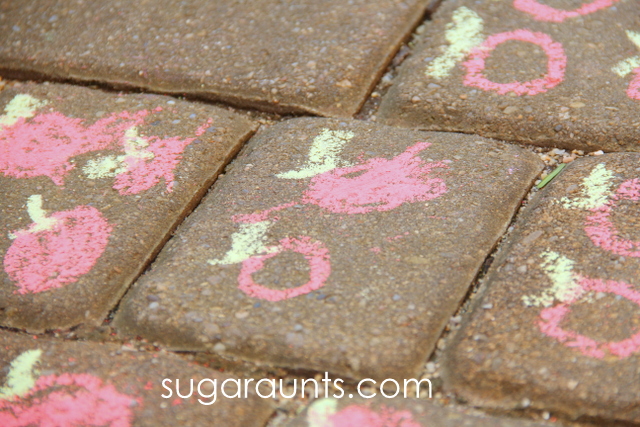
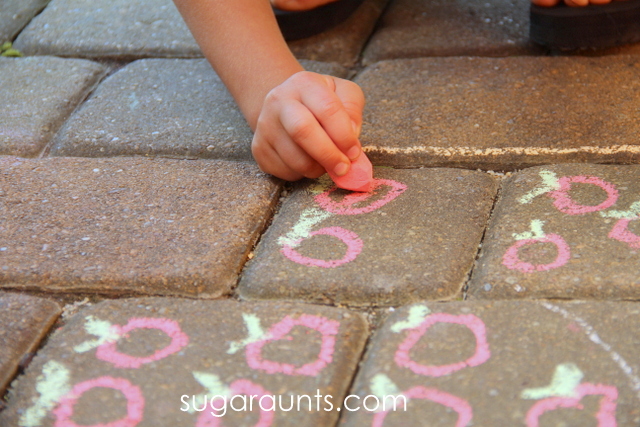
We used Sidewalk Chalk and a dice for this activity. I took the kids outside to the sidewalk one afternoon and drew a bunch of apple shapes. We were ready to play.
Note–you could also draw any shape for this activity: pumpkins, smiley faces, geometric shapes, simple houses…any thing would work.
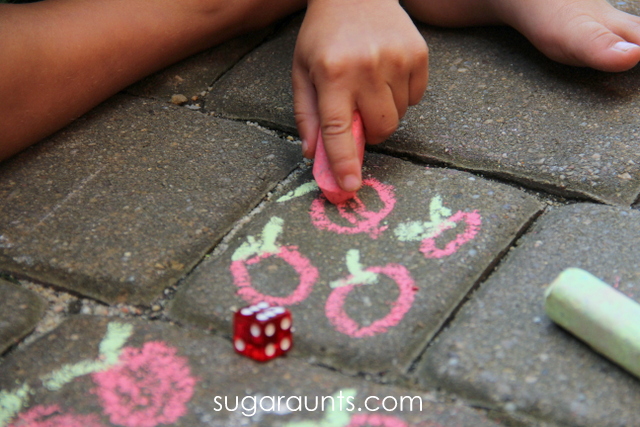
To play the game, I had the kids roll the dice. They had to count the dots on the dice, or simply look at the dots to determine how many dots there were. Big Sister did a lot of dice activities last year in Kindergarten so she was able to glance at the dice and know how many dots there were. Little Guy counted the dots. This is a great early math skill for preschool aged kids.
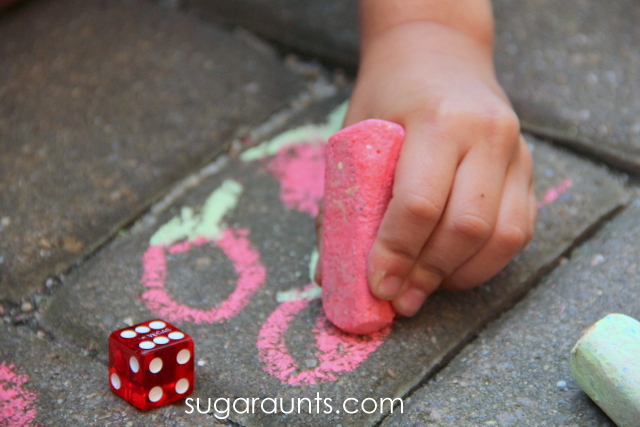
Once they counted the dots on the dice, I had them color in the same number of apples to correspond to the number of dots.
We used the squares of our sidewalk to wok on Kindergarten math concepts that Big Sister learned towards the end of her school year. Some of the squares had two apples drawn on them, and others had four or more.
This was a great opportunity to review addition.
She added the apples to make the total match the number of dots on the dice.
Little Guy counted along with Big Sister to count the total number of apples filled in.
Coloring in the apples with the chalk requires use of the small muscles of the hand. The sidewalk surface is resistive and the area they colored in was small. This required precision to stay in the lines. Not to mention, coloring in all of those apples really strengthened the hands!
This was such a fun way to review old math areas for the new first grader and introduce new math concepts to the preschooler. Like this math activity? Try a few of these ideas:
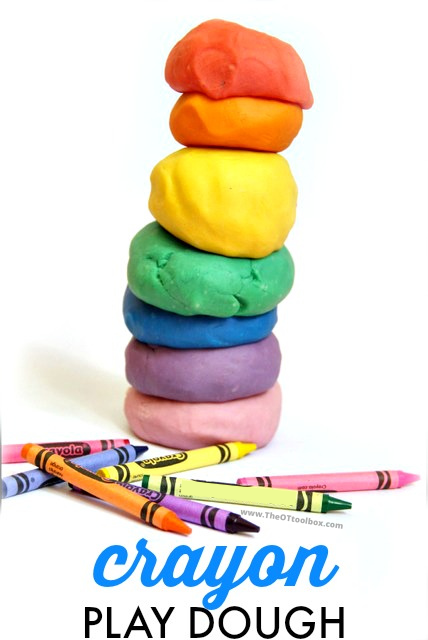
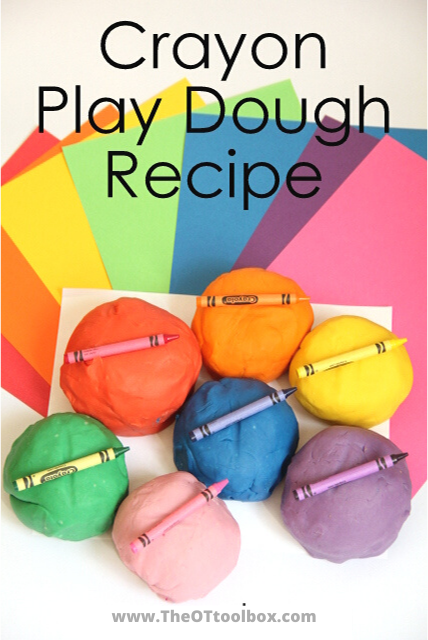
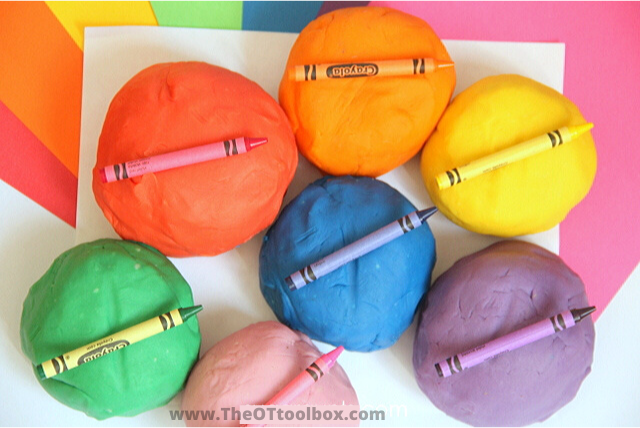
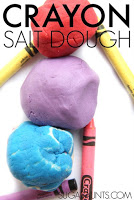
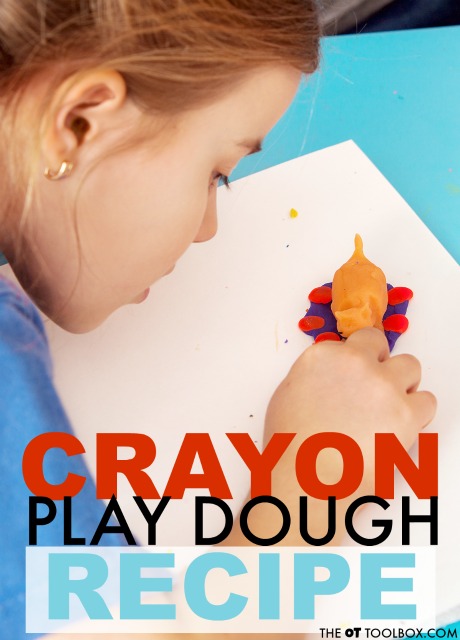
Did you know that September 16th is National Play Dough day? Me either, until a blogging buddy brought it up. What a better day than to share our DIY Rainbow Crayon Play Dough recipe? It’s one of our many crayon play dough recipes that we have here on the site.
We first made our crayon play dough recipe to go along with a book activity that called for purple play dough. But when the kids started playing with this dough every single day? I loved it for the fine motor benefits. My kids just thought it was cool to make play dough from old crayons. I knew we had to make a few other colors.
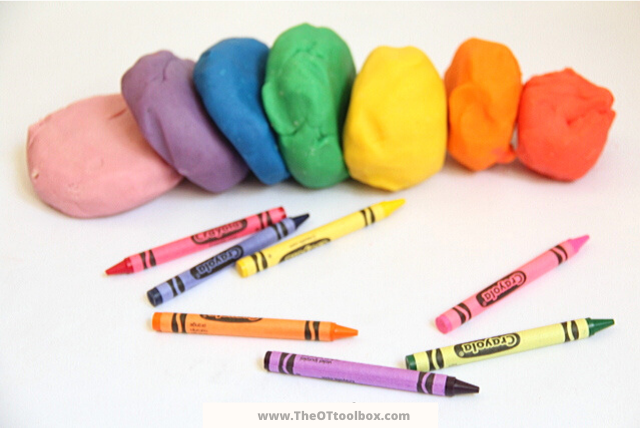
And that turned into every color of the rainbow.
This Crayon play dough recipe is so easy, that you’ll want to make it in every shade, too. Here is everything you need to know about How to Make Crayon Play Dough:
This post contains affiliate links.
How to make Crayon Play Dough:
You will need just a few ingredients to make play dough using old crayons. The other ingredients are probably in your kitchen cupboards right now!
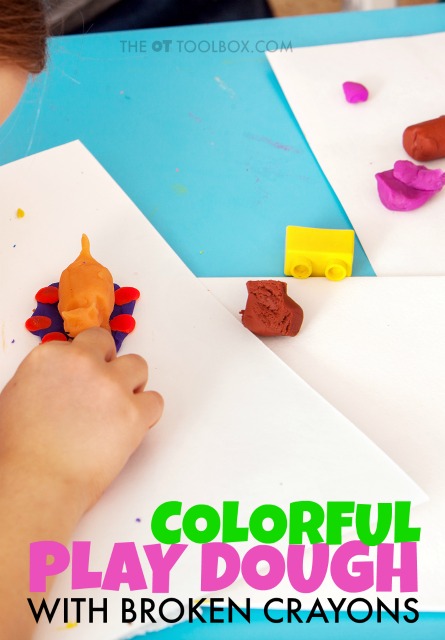
Now, when we made play dough in a rainbow of colors, things were moving very quickly over the stove. I didn’t get a chance to take many action shots. With the heat of the stove, hot oil, and chopping up the crayon bits, this is a job for the mamas or papas rather than helpful kids. Older children certainly could do this recipe. I wasn’t able to take pictures while making our dough. 🙁 You can see how the crayons were chopped in our Harold and the Purple Crayon post that inspired more colors of play dough. Start by chopping up your crayons into pieces. This is where your broken crayons will come in handy. We used a variety of brands of crayons mixed together and it didn’t seem to alter the texture of the dough.
Use Broken Crayons to Make Crayon Dyed Play Dough:
You’ll need the following ingredients: 2 Tbsp oil 2 and half broken crayons (each color) 2 cups water 3 cups flour 1 1/2 cup salt 2 Tbsp. cream of tartar I halved these ingredients to make each shade. If you read our Harold and the Purple Crayon post, you saw that we used 2 and a half chopped up crayons for the full recipe as well. When I halved the ingredients, I kept the amount of crayons and we got bright, bold colors for our dough. Perfect for playing! First, chop up 2 and a half crayons.
In a large bowl, mix together the dry ingredients (flour, salt, cream of tartar)
Next, heat the oil in a pan. Add the chopped crayons. Stir until the crayons are completely melted. Slowly stir in 2 cups of water while stirring. Certain types of crayons will either make a clumpy and gooey looking liquid. Other types will make a smooth liquid once the water is added. Either way is fine. Just keep stirring.
Slowly, stir in the dry ingredients. The dough will pull together in a ball over the heat. Once the dough pulls together, dump it out onto a cutting board or counter. Let the dough cool until you can tolerate kneading. Knead the dough for a few minutes until smooth.
By the time we got to our last color, we ran out of cream of tartar. I know that in certain areas of our readership, cream of tartar is unavailable. Without the cream of tarter, the dough recipe still worked fine, just a little less smooth. To make all of the colors of dough, I had to hustle a little; I made one color, plopped it onto a cutting board, let it cool while starting the next batch. When the first color was cool enough to touch for kneading, I took a little break from the stove mixing and crayon chopping. It got a little hectic in the kitchen, and you may want to completely mix up one color at a time. For your own sanity 😉 Note: If you have an old pan, use that to melt the crayons down. I was able to get any waxy residue out of my pan with soaking and boiling dish detergent on the stove, though.
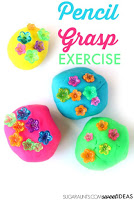
This dough is such a soft dough but is it is still a great way to incorporate fine motor skills and strengthening in a vividly colorful way. In fact, playing with crayon play dough would be a great way to work on pencil grasp and an awesome addition to one of the top 5 blog posts that we’ve shared, on improving pencil grasp with fine motor activities.
A few more play dough recipes that look like a fun way to celebrate National Play Dough Day:
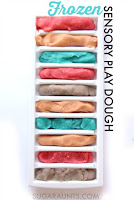
If you like the idea of using your broken crayon pieces in something as fun and creative as play dough, then you will love to try a few different ideas, too. We’ve given crayon play dough a run for it’s fun and tried a few different versions. Check them out and if you make a batch, let us know how you get creative with crayon play dough!
Favorite Play Dough recipes and activities for kids:
Click on the images or the links below each image:
Do you LOVE using play dough as a sensory and fine motor tool in therapy and in play? I have a subscriber-only play dough mat that is designed to work on the intrinsic hand muscles which are needed for pencil grasp and fine motor skills. Read more about the play dough mat and the areas it will help with HERE. This play dough mat is available for FREE only for our Play Dough is Awesome newsletter group. (This is a different email list than our regular subscribers. If you’re on our subscriber list, you’ll still need to sign up for this one to receive the play dough freebies coming your way!)
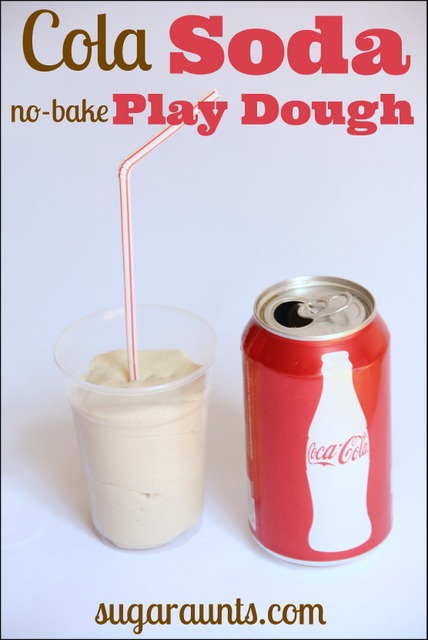
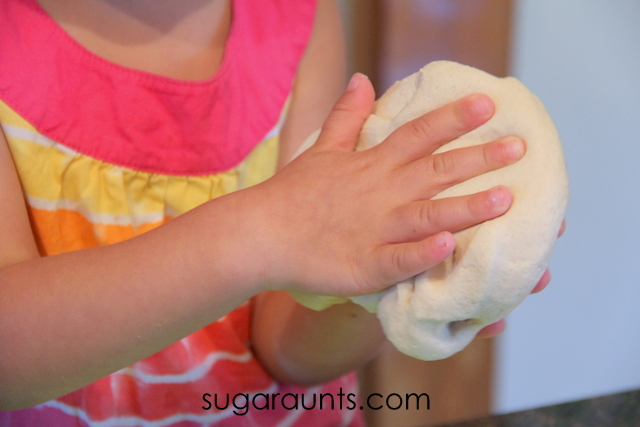
Call it cola, soda, pop…what have you…we are playing with it! This sensory dough is no-bake and very cool to play with.
We are joining the the 12 months of sensory dough bloggers to bring you a No-Bake play dough recipe this month. You can see TONS of fabulous ideas from these bloggers for all kinds of sensory doughs. They’ve been mixing up dough for sensory fun all year long and you will definitely want to check them out.
Now it’s true that we love mixing up play dough and creating all kinds of concoctions. Crayon play dough, anyone? This month, September brings you no-bake play dough in the sensory dough series and we were more than happy to join in on the fun! We made Cola Play Dough!
No bake play dough recipe:
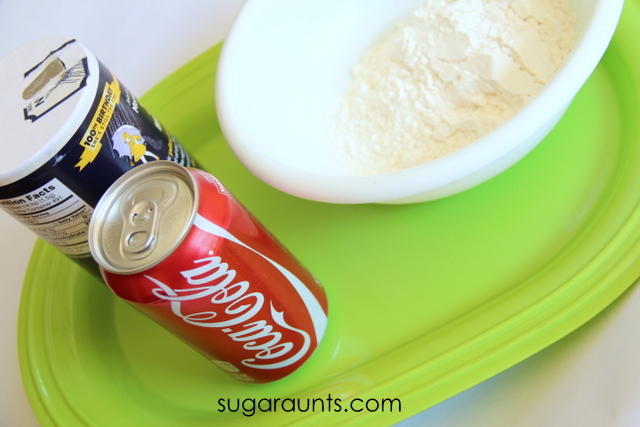
We started with just a few ingredients. This no-bake recipe is easy, I promise! Flour, salt, cola. And that’s it.
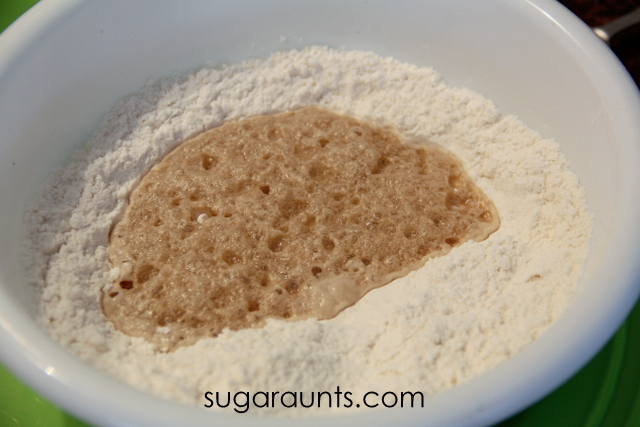
Measure out 1 1/4 cups flour. Stir in 2 Tbsp salt. Make a small well in the center of the flour mixture. Pour in 1/2 cup soda. Watch the bubbles.
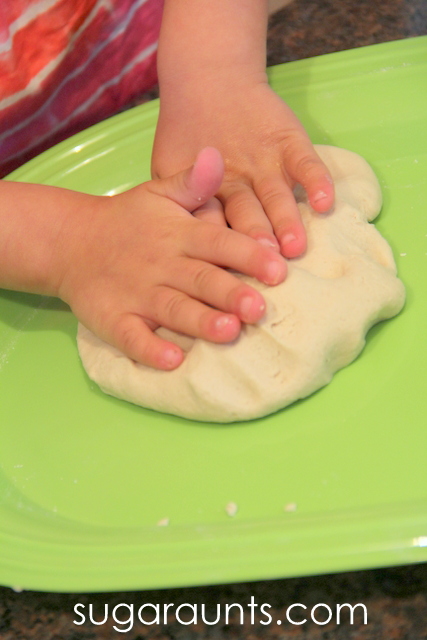
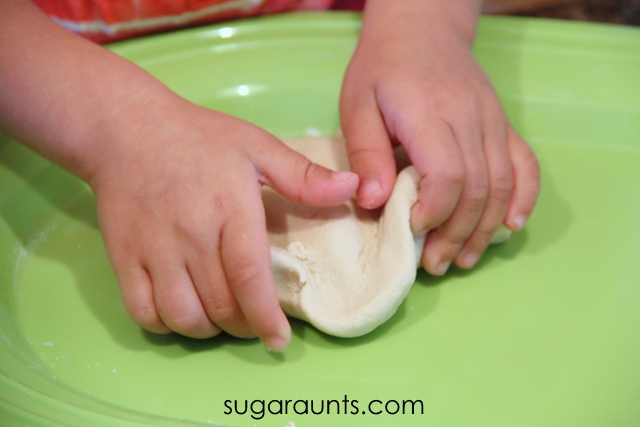
Stir the mixture until the dough starts to pull together. Then, plop the dough onto a counter or floured surface and knead, knead, knead.
This is such a fun sensory experience for the kids (and mom). The scent of the soda really is noticeable while mixing the dough up.
If your dough is too sticky, add a little more flour until it no longer sticks to your hands.
This dough will last a few weeks in a closed plastic container or plastic bag pouch. You will need to add a bit more flour the longer it sits. It seems to get stickier the longer it sits.
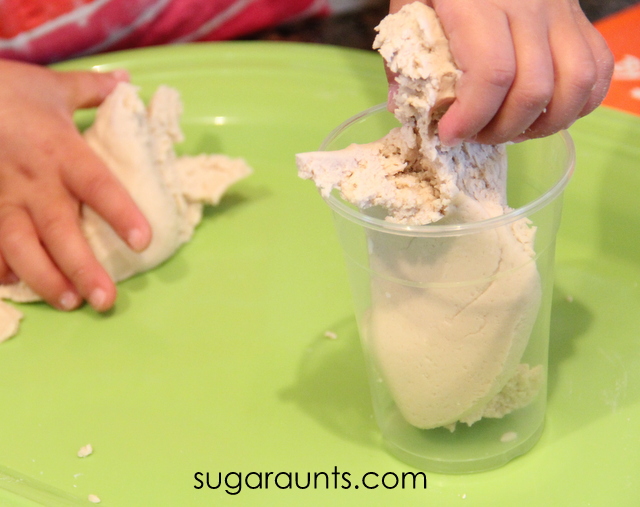
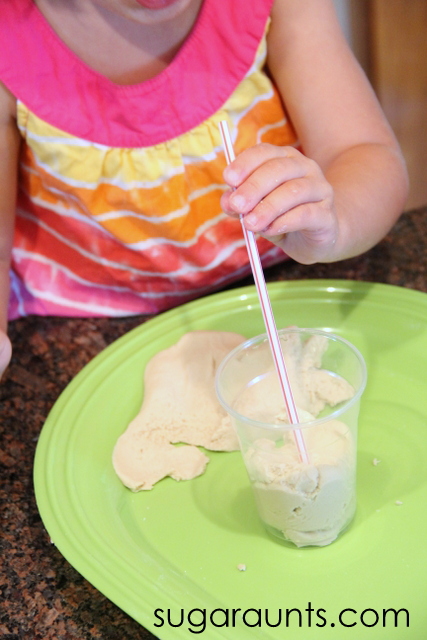
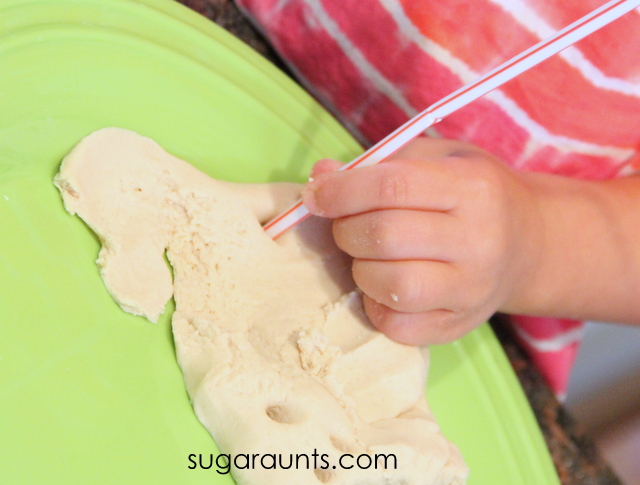
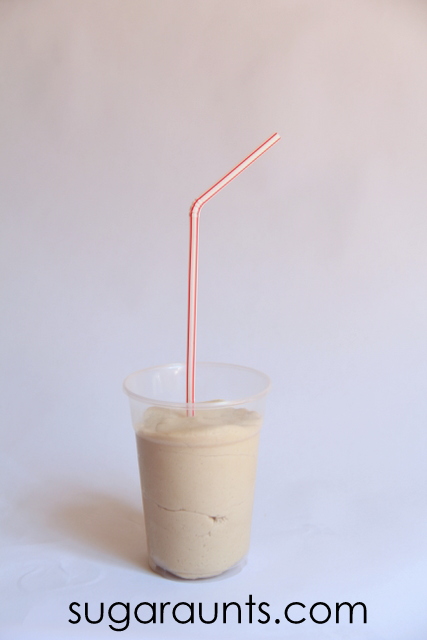
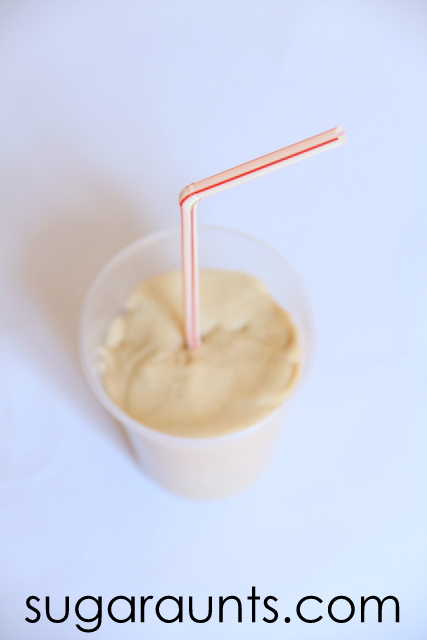
We pulled out a few clear cups and straws to play with our soda pop dough.
Ahhhh, refreshing 😉
The straws were great for poking holes in the dough, too. A great fine motor task!
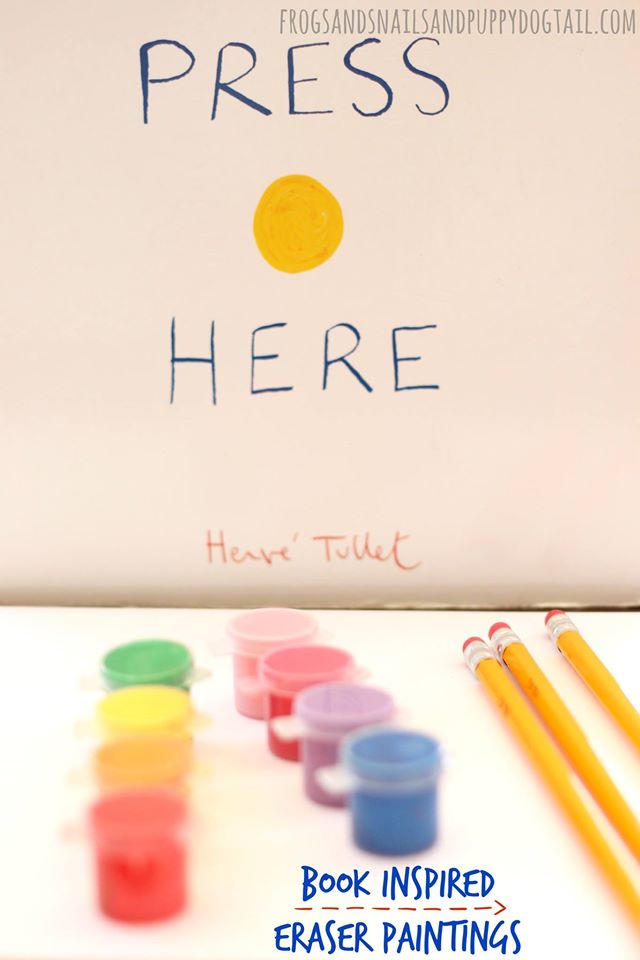
If you love sensory activities to pair with children’s books, you will LOVE this Press Here book activity! The book, “Press Here” is a memorable one that kids adore, but when you add a fun sensory play activity that goes with the book’s themes, you’ve got a winner. It has been so much fun coming up with play and learning ideas for Harold, Elmer, Pete, and more. This week, we’re reading and playing with the book, “Press Here” by Herve Tullet.
Press Here Book Activity
This post contains affiliate links.
Press Here is a new book to us. And what a fun book it is! The bright and bold pictures, the movement and direction following, and the fun instructions made this book a huge hit in our house.
Little Guy (age 5) is STILL talking about this book. He loved following the directions to shake, pull, push, and move the dots and even the whole book. We decided to put the movement into our play activity with a sensory based interpretation of this fun book.
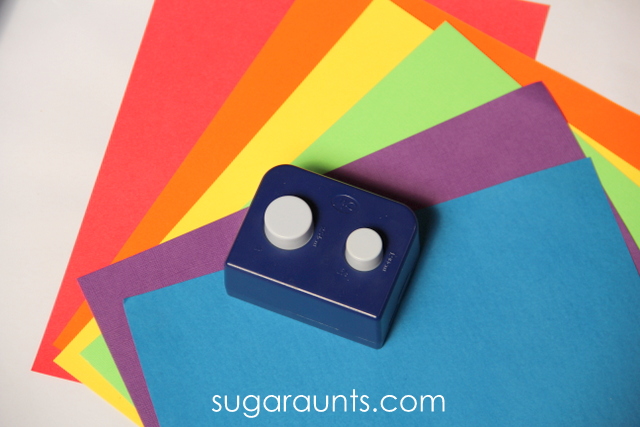
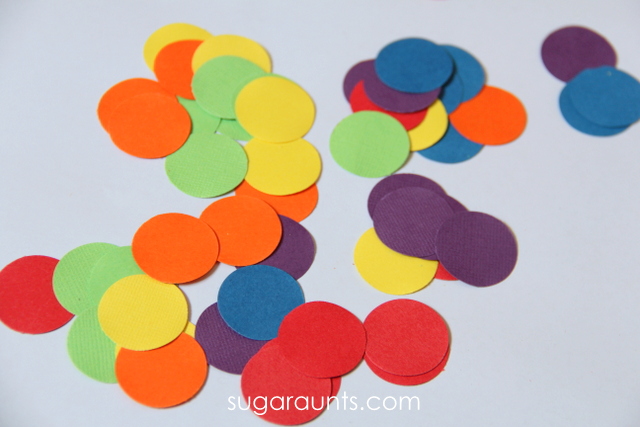
I started with rainbow cardstock and a circle hole punch. I punched a bunch of holes from all of the colors. Little Guy (age 5) LOVED helping me with the hold punching. Fun stuff!
How pretty are these colorful dots??
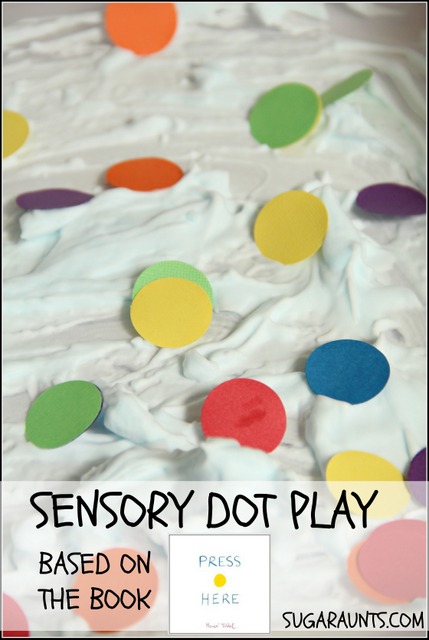
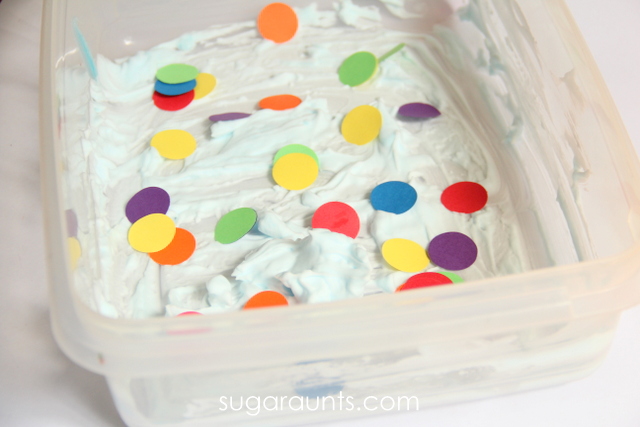
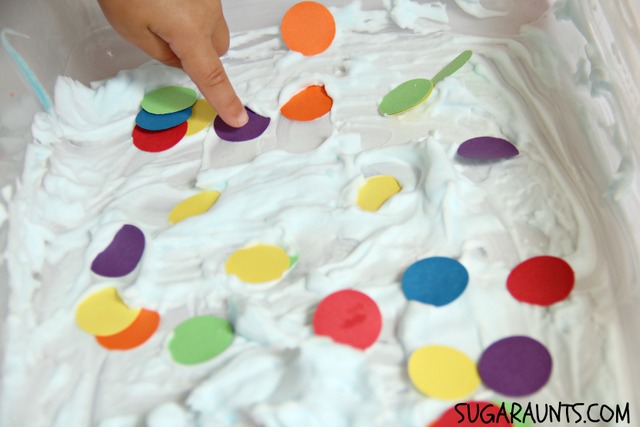
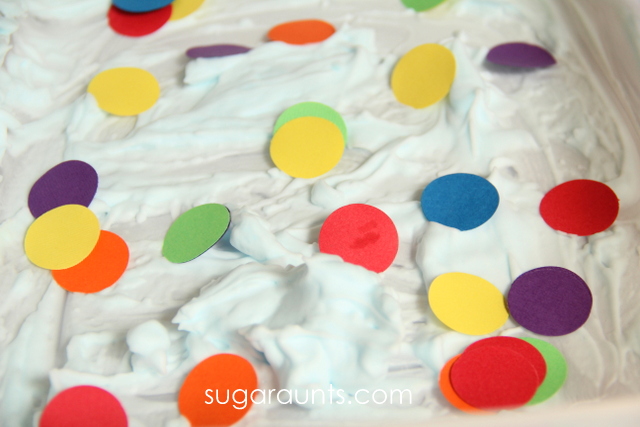
Add shaving cream to a container, and sprinkle in the colored dots. Sensory play is ready for little fingers!
We pushed, pulled, and poked the dots just like in the book. Be sure to talk about the colors while playing. This is a great sensory bin to work on color identification. Sensory play and learning go hand in hand, and this is a great way to learn and play.
Press Here Activities
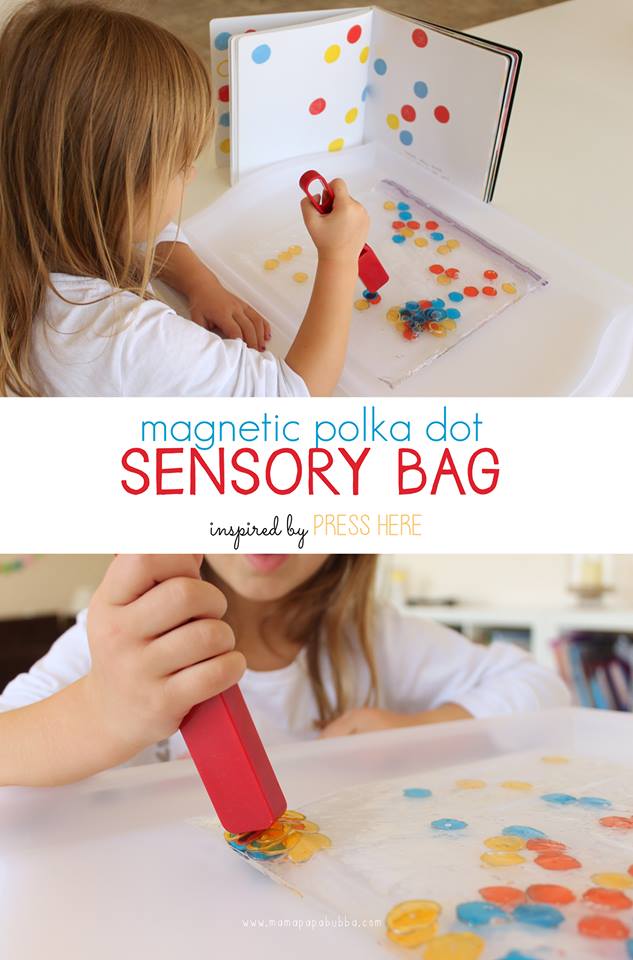
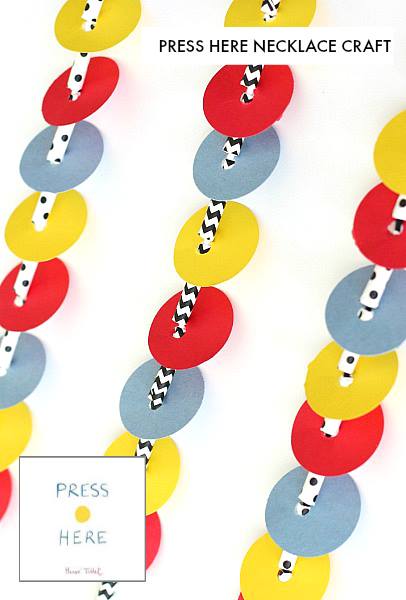
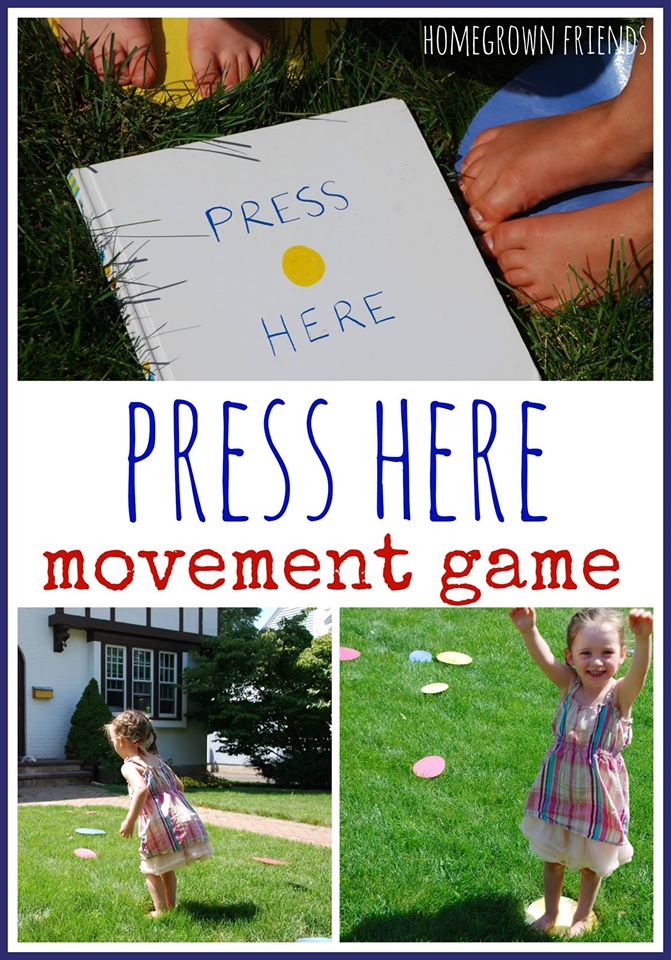
For more Press here activities, check out the ideas listed below. Each Press Here book activity uses the concepts in the book, the fun colors of the dots, and lots of pressing!
Check out the other Preschool Book Club bloggers for more Press Here ideas. And be sure to watch for our next book club activity. You won’t want to miss it!
Colleen Beck, OTR/L has been an occupational therapist since 2000, working in school-based, hand therapy, outpatient peds, EI, and SNF. Colleen created The OT Toolbox to inspire therapists, teachers, and parents with easy and fun tools to help children thrive. Read her story about going from an OT making $3/hour (after paying for kids’ childcare) to a full-time OT resource creator for millions of readers. Want to collaborate? Send an email to contact@theottoolbox.com.
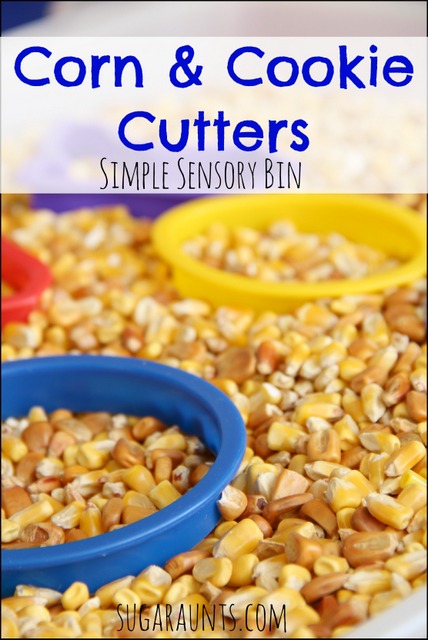
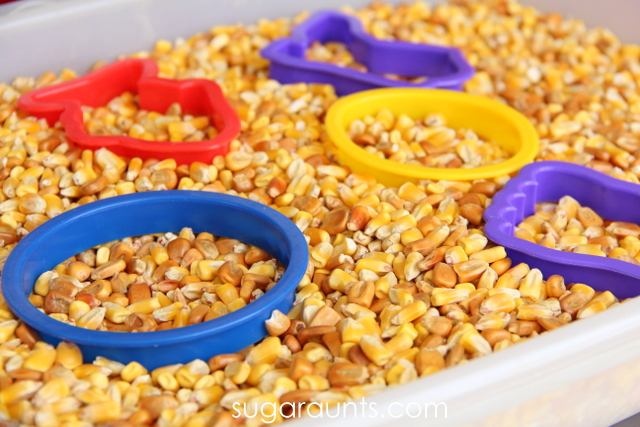
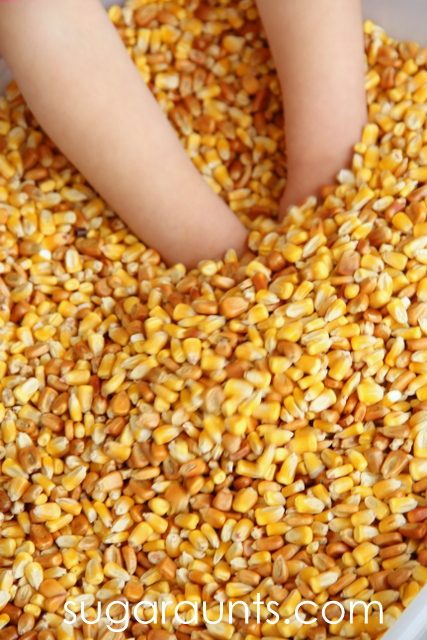
We are on a simple sensory bin kick around here. We’re working our way through the alphabet (although, not necessarily in ALPHABETICAL order…) with simple sensory bin ideas that focus on two or three items that you’ve got around the house. These sensory bin items have one letter in common. So far, we’ve played with a B sensory bin and an S sensory bin. (yup, definitely no organized order happening here…) Today we explore Letter C with Corn and Cookie Cutters!
Letter C Sensory Bin
For a Corn and Cookie Cutter Sensory Bin, you will need:
((This post contains affiliate links for your convenience.))
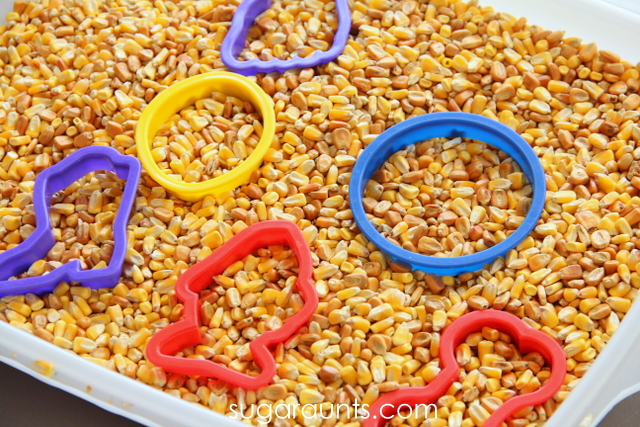
We have a bin that is filled with field corn at all times. Little Guy will ask to play with corn at least once a week. We fill it with random things…
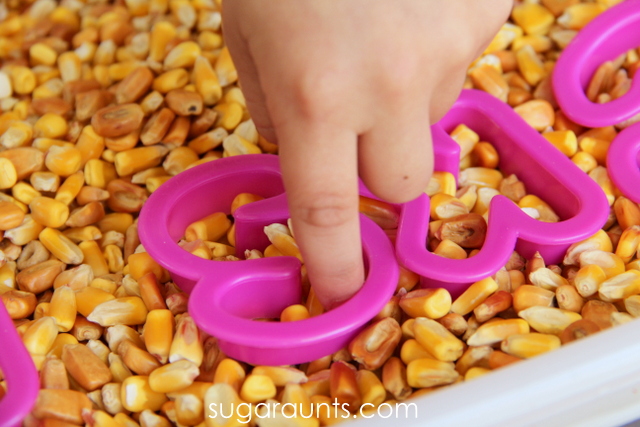
Today, it’s cookie cutters!
Field corn is a larger kernel that is used to feed livestock. The texture of field corn in a sensory bin is great for tactile play. It makes a great sensory bin base, and we’ve used it in lots of different sensory activities.
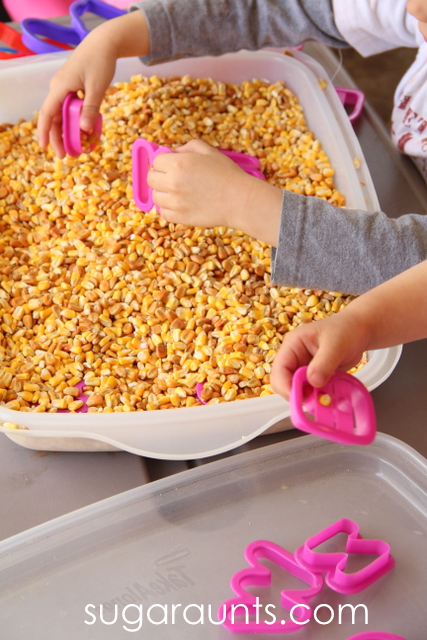
The cookie cutters in the corn are great for sensory play. Pushing the cookie cutters down into the corn was such a neat sensory experience. We talked about shapes, colors while we buried the cutters and found them again.
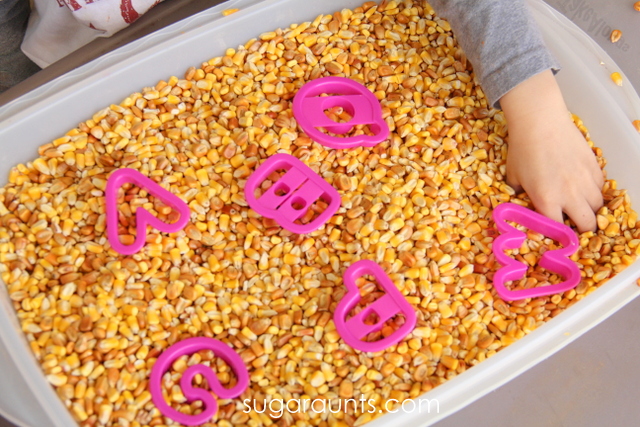
We took the shapes out and replaced them with letters. Little Guy is working on identifying letters.
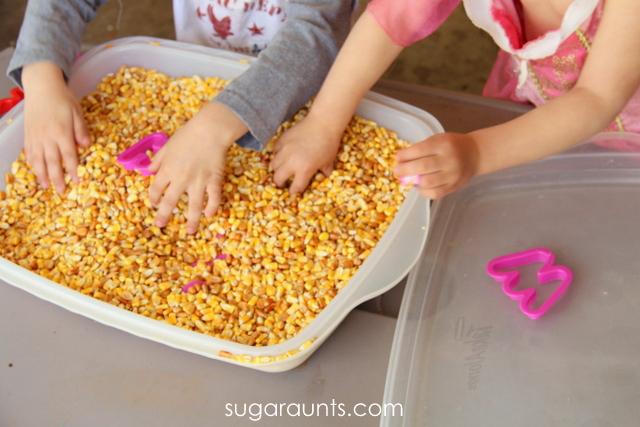
Baby Girl and Little Guy couldn’t keep their hands out of there!
Such a great sensory activity…just corn kernels in a bin. Simple and perfect!
Sensory Handwriting Practice
The ABC cookie cutters were great for practicing letter formation. The corn kernels gave great tactile feedback when tracing the letters.
Little Guy has been practicing his letter “S”, and this was fun for him.
It’s that time of year again for all of the apple activities! The kids are headed back to school and crisp, fall days are ahead. The excitement that comes with summer has dwindled, but don’t you worry – we are here to help fill your days with fall-themed fun, starting with Apple Activities to use in occupational therapy sessions or at home to help kids develop skills! Get started with our apple pie sensory bin to start off the sensory and fine motor play, and grab a copy of our Fine Motor Therapy Kit for visual motor, handwriting, and fine motor play.
Just think of the hot apple cider, apple picking, and apple pie that lies ahead…along with the opportunities to learn, of course!
We have broken down our activity list into therapy topics, so that you are able to pick and choose what you would like to address that day: sensory, motor, vision, cognition, or social skills!
Apple Sensory Activities
Amazon affiliate links are included in this blog post.
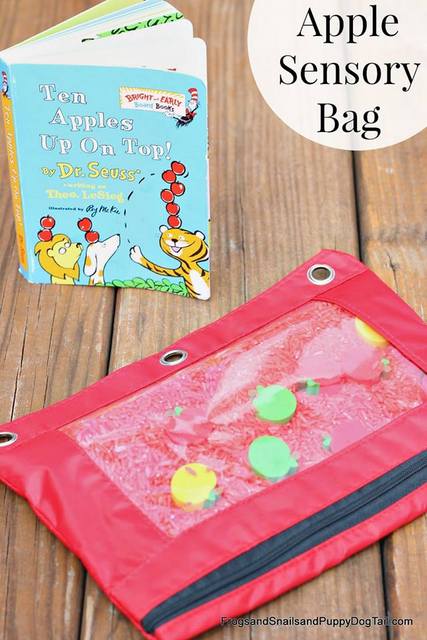
For heavy work through the hands that offers proprioceptive input AND tactile sensory experiences, try making these baked cotton ball apples. We used them in apple sensory play and fine motor work.
Sensory bins can be a great way to learn by experience. An apple-themed one could look like this: Apple-Cinnamon Sensory Bin. You could hide magnet letters to find and spell out the word “apple”, which would be great practice for children who have difficulty with shape constancy and letter reversals – actually holding the letter in their hand can help wire their memory for future use!
Applesauce oobleck is just like traditional oobleck, a type of slime, but with applesauce! The applesauce adds a new texture that is not often felt in traditional slime, as well as the smell of apples and cinnamon, as an added sensory experience. You can use these types of sensory experiences to address sensory concerns, like hyper or hyposensitivity, or you can use them as a means to address other unrelated concerns. For example, I love making slime as a way to address attention, sequencing and direction following. Additionally, when paired with education or discussion, it can be used as an adjunct to a socioemotional intervention.
For more Fall sensory activities, grab our Fall Sensory Activities Guide for hands-on sensory play with apples and all things Fall.
Apple Fine Motor Activities
To work on fine motor skills, strength, dexterity needed for functional tasks like handwriting, clothing independence, pencil grasp, cutting with scissors, and more, an apple themed fine motor activity is the way to go. Check out our Apple-Themed Fine Motor Math activity for a multi-sensory learning activity with apples.
Kids love these apple stamps using a toilet paper tube. It’s a fun OT craft to work on precision, eye-hand coordination, crossing midline, and much more.
Apple Poke with Toothpicks is a super easy but satisfying sensory and fine motor activity for children of all ages. Holding the thin toothpick requires a fine grasp like a pincer or tripod, which prepares hands for the work of a child (handwriting, buttoning, zipping, etc).
Adjust as necessary to make this activity your own:
Follow a pattern with colored toothpicks
Encourage fine motor precision by poking on dots or in pre-made holes
Use golf tees or one-sided toothpicks for a safer option
Apple Pointillism is a great way to use one of my favorite tools – the hole punch. Hole punching strengthens important hand muscles, in preparation for skills like handwriting, buttoning, and so much more. Even better, picking up those teeny-tiny circles will encourage a pincer grasp.
Apple Gross Motor Activities
Apple gross motor activities can be used to develop core strength, endurance, balance, position changes, motor planning, and more. All of these skill areas are a must for occupations and functional tasks. Try these gross motor activities with an apple theme:
Check out our Apple-Themed Brain Breaks for plenty of movement-based activities as well as self-regulation through whole body movement.
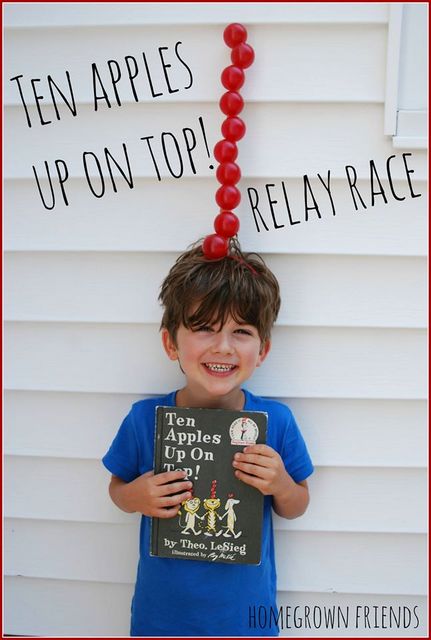
Ten Apples Up on Top by Dr. Seuss is a great book for sequencing and identifying numbers, but I think it could be great for gross motor development like coordination, balance and postural stability. Just have your child copy the movements of the animals! For even more challenging fun, cut out felt “apples” so they can balance them on their heads, too!
Just like you would do with tangrams, you could create a pattern fitting for the theme with Lego Apples. Matching an image to another by building a structure is a great way to address visual perceptual skills, problem solving, and spatial awareness.
Plus, here are some more on-theme resources for vision and fine motor skills:
Cooking and executive function go hand-in-hand. To work on executive functioning skill development with an apple theme, try this apple salt dough recipe. It’s great fun and a wonderful sensory and fine motor experience, too.
The Apple Pie Tree by Zoe Hall shows the life cycle of a tree, and even shares a recipe for apple pie! I love using this story for sequencing and attention.
You can address attention, memory, spelling, letter recognition or word recognition with these Red Apple Cups. You could use constructing the cups as an intervention, too – this activity can be used in so many different ways!
Apple Activities for Social Emotional Skills
Social Communication Skills with Apples from the Social Butterflies Club offers great resources to use with kids that encourage social interaction in a structured activity.
We hope that you have been inspired to create your own apple themed activity, or have chosen one that will work great for your kiddos! Check in for more fall-themed activities soon. While you are waiting, take a look at these awesome resources for a great fall: Fall Themed Water Table, Fall Gross Motor Activities, and Fall Fine Motor Crafts.
Apple Theme Activities
Sydney Thorson, OTR/L, is a new occupational therapist working in school-based therapy. Her background is in Human Development and Family Studies, and she is passionate about providing individualized and meaningful treatment for each child and their family. Sydney is also a children’s author and illustrator and is always working on new and exciting projects.