Flexible Seating in the Classroom

THese flexible seating in the classroom ideas are helpful to improve attention, focus, and learning in students.

It’s that time again when we are heading back into the school year. Teachers are getting into the classrooms and setting up room arrangements. School-based OTs are gearing up for the back-to-school chaos. When the thoughts of classroom organization and caseloads come into mind, flexible seating in the classroom ideas may not be the first thing you think of. Seating options may even be a part of a classroom sensory diet. But here’s the thing: Flexible seating ideas are always good to keep in mind! There are so many benefits to flexible seating arrangements. From DIY flexible seating ideas to types of seating ideas that can be used in classrooms…there is a lot to think about!
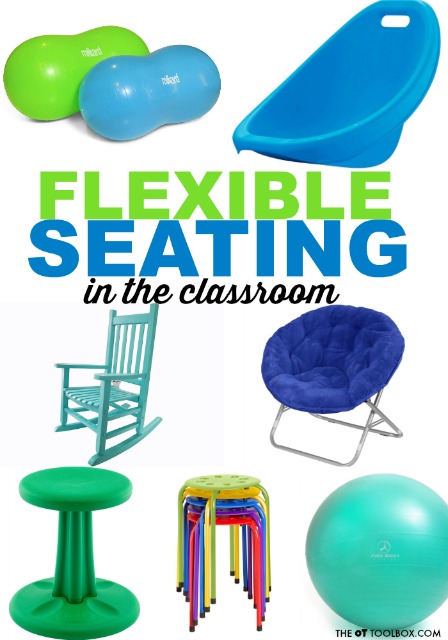
flexible seating in the classroom with out of the box ideas that kids will love for learning.

Flexible Seating Ideas for the CLassroom

There is so much to think about when it comes to accommodating to various seating needs. Positioning and specific student needs are just part of the puzzle. Facilitating learning while encouraging collaborations among students is important and the primary concern when it comes to out-of-the-box seating arrangements. Below, you will find various flexible seating for the classroom and information on the benefits of flexible seating ideas…as well as how to adapt to this classroom sensory strategy.

Things to consider about Flexible Seating

When considering flexible seating ideas for the classroom, there is a lot to think about. These considerations include a variety of needs including behavior, cognitive needs, physical abilities, posture, and more.

Many times therapists are consulted regarding specialized seating as a result of postural needs. In these cases, an individualized assessment may be warranted and aspects of seating should be analyzed before addressing specific seating needs:

Posture and seating needs may be a result of sensory issues such as physical limitations, weakness, range of motion as a result of tone issues or spasticity, sensory impairments,or other needs.

Physical limitation or deformities may impact seating posture and positioning. These may include posterior pelvic tilt, pelvic rotation, scoliosis, joint contractures, leg length discrepancies, head and neck positioning, extremity limitations, or other concerns. Each of these may impact learning and attention in the classroom.

When providing a new or novel seating option in the classroom, there are considerations to keep in mind as well. A flexible seating option may not be the primary classroom seating situation. In other words, it may be the best situation for the classroom learning to occur in traditional desks. Flexible seating in the classroom can be provided for supplemental learning, small groups, independent reading, or other similar activities.

In some cases, it’s important to consider optimal support in seating options including for those students with physical needs. As a result, some situations may not warrant a full classroom of flexible seating. Chairs and surfaces may not provide optimal postural alignment in order to provide adequate trunk support. Upper extremity mobility and positioning is important to consider if students will be using the seating arrangements for writing tasks. Additionally, considerations such as correct height/depth of the seat and the placement of both feet on the floor is needed for writing tasks.
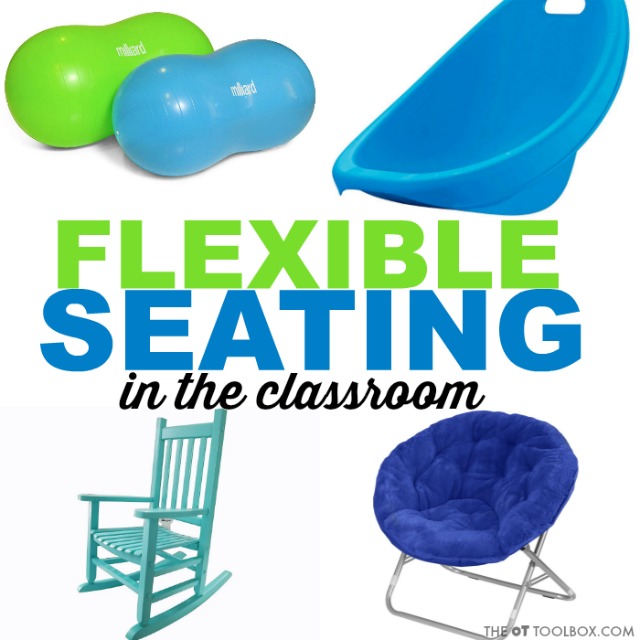
Flexible seating in the classroom, ideas to help kids with sensory needs.

Benefits of Flexible Seating in the Classroom

A primary benefit of alternative seating options is the improvement to learning and attention that can occur. There may be several reasons that various seating options offer in the classroom.

  • Opportunities for Choices- Students may find that the ability to make a choice in their seating situations makes all the difference in learning and attention. Some students may really like the option to pick where they sit!
  • Something for Everyone- When there are several options for seating in the classroom, it can be one way to meet the needs of a whole classroom. Some teachers may find that kids change in their activity or attention levels throughout the day. When additional movement or proprioceptive input is needed, an alternative seating method may be just the ticket to learning.
  • Heavy Work Opportunities- Use of various flexible seating techniques in the classroom can offer occasional or scheduled use of flexible seating options can provide opportunities for heavy work input by moving desks, bean bag seats, or other seating set-ups as students or a specific team of students move furniture from determined positions. Don’t forget the sensory benefits of moving desks and chairs!
  • No Singling Out- When there are various flexible seating options in the classroom, no child is singled out. This is important for the child with sensory issues or self-regulation needs. Some students may need extra movement or heavy input to facilitate learning, and when the whole classroom has the option to choose a beanbag for reading time, the flexible seating methods are there for everyone…and no student feels singled out based on needs.

Flexible Seating Ideas for the Classroom

Now that we’ve covered considerations and a few benefits of flexible seating ideas, let’s cover some specifics! Below are alternative seating methods that may work in the classroom.

You’ll find a list of options for adding proprioceptive input to the seating system, as well as a large list of alternative seating ideas. Some of these are able to be purchased (Amazon affiliate links are included below). Other options are quite frugal or are DIY ideas. Have fun exploring and considering the flexible seating ideas!

Flexible seating and proprioception input

Sensory benefits play a big part of choosing the best flexible seating option. While some alternative seating options provide sensory input or feedback via the positioning, others provide heavy input by hugging the student. There are many ways to add weight that provides a calming benefit into seating ideas. Consider some of the options below in adding to a seating system:

Tips for adding proprioceptive input or weight to a alternative seating system:

  • Add a weighted lap pad
  • Try a therapy band or bungee cord to the chair legs
  • Use a body sock or fabric tube to the legs of the chair. Done in a non-restricting way, this tube can be a place to slide legs into while sitting in a regular chair
  • Bean bag for under/over the child
  • Computer lap desk over the child’s legs (Can be used as a writing station)
  • Homemade bean bags over legs or feet. Slide these into tube socks or knee-high socks and knot two socks together to create a weighted tube to drape over legs or the shoulders.
  • Under-the-table sling
  • Therapy swing in the classroom or outdoor space
  • Add velcro wrist weights to the inside of a 4 inch binder. Use the binder as a lap writing surface.
  • Encourage tummy time writing. (Write, draw, or read while lounging on bellies on the floor. Make this a fun reading experience by asking students to bring in a flashlight from home.)
  • Try a weighted fidget tool that can be used while seated at a desk.
  • Try some of the additions listed and described below.

Remember that finding an ideal seating system can require a lot of investigation and trial and error. Some students may benefit from one of the ideas listed here and others may require a mix of several options. Keep it individualized and remember to consult your child’s occupational therapists regarding seating ideas.

Flexible Seating Ideas
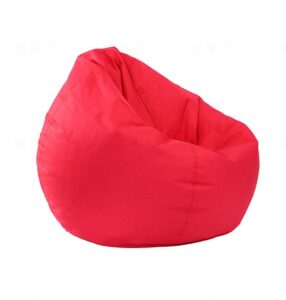
Bean bag chair is a flexible seating idea for the classroom

Bean Bag Chairs- Use these on the floor or at a low table. Consider lowering a table to 2-3 feet off the ground for a low writing and reading surface. Other times, bean bags can be used in small group work or for quiet reading. Consider using a bean bag as a cover for legs to provide heavy input through the legs. There are some inexpensive bean bag seat options available. There are also a few varieties of stuffed animal bean bag covers that create seats using old stuffed animals.

Stuffed Animal Bean Bag Seat- Ask around for stuffed animal donations from family and friends! This bean bag cover creates a bean bag seat using old stuffed animals as a seating option and can be adjusted as needed. Add more stuffed animals to fill the seat or take some out depending on the child’s sensory needs. This stuffed animal cover comes in a larger size that can be used as a lounger chair.
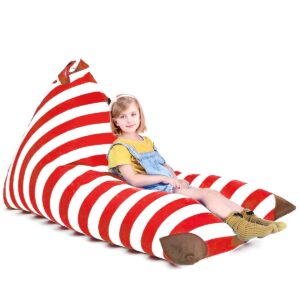
Use a duvet lounger as a flexible seating idea in school.

Duvet Lounger- Using the same concept of filling a bean bag with upcycled stuffed animals is the DIY version of using a duvet cover as a method to create a lounger seat. Fill a duvet cover with cushions, pillows, or stuffed animals and create a crash pad that can be used as a lounger seat for the classroom or home.
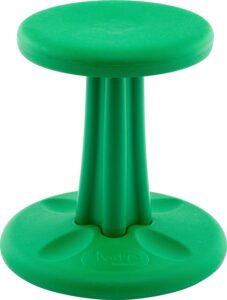
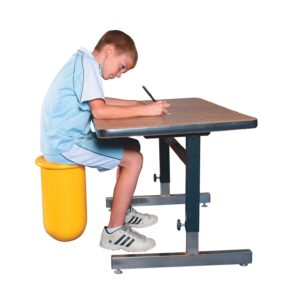
A t-stool is a great flexible seating idea for the classroom.
The Stability Tube Chair is a T-Stool seat for the classroom or home.

T-Stools- A T-stool is a common seat seen in classrooms. The stool allows students to wobble, move, and wiggle just as their bodies need, while reading, writing, learning, and listening! You’ll find a variety of T-Stools available: The Kore Wobble Chair is great for grades K-3 and provides a larger base of support. The Stabili-T Tool Tube provides less support but requires more core contraction and work, allowing for more movement. A T-Stool Single Leg stool offers more vestibular input given a much smaller base of support and an adjustable height option.
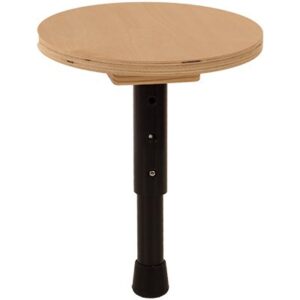
Single leg T-Stool offers a flexible seating option for classrooms.

Milk Crate with a Ball Inside– Going for a multi-option flexible seating arrangement in the classroom? Adding a large kickball or small therapy ball inside a milk crate is a great option for the frugal. This is one way to create several seats for a lower cost. Line the milk create up under a low table for a centers activity or small group.
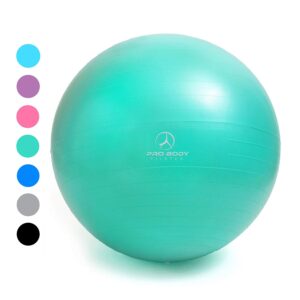
A therapy ball makes a great flexible seating option in classrooms.

Therapy Ball– Another frugal means of offering opportunities for movement and sensory input in the classroom is using therapy balls. There are many options available on the market and in stores. Search for yoga balls or exercise balls to find the best prices, in many cases. Worried about them rolling away or becoming massive projectiles in the classroom? Make a “station” using a hula hoop as a base.
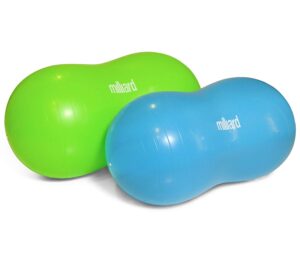
The peanut ball seat is a flexible seating idea for classrooms.

Peanut Seat- A different version of the therapy ball is the peanut ball seat. Kids can use these seats in a variety of ways, sitting or lying prone on the ball. The peanut ball allows for only unidirectional rolling so they can be easier to contain in the classroom setting when compared to a round therapy ball.
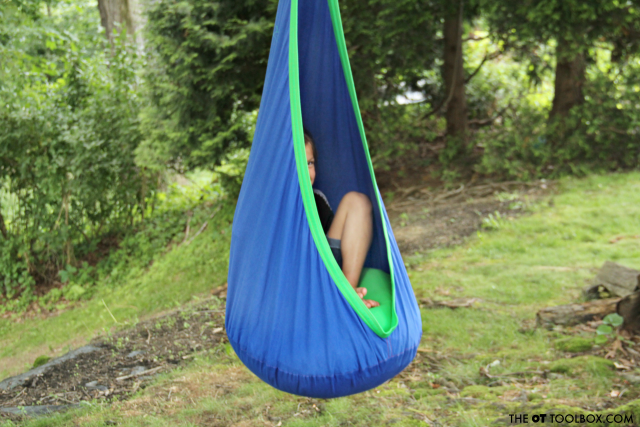
Use a sensory swing indoors or outdoors, a great alternative seating idea for the classroom

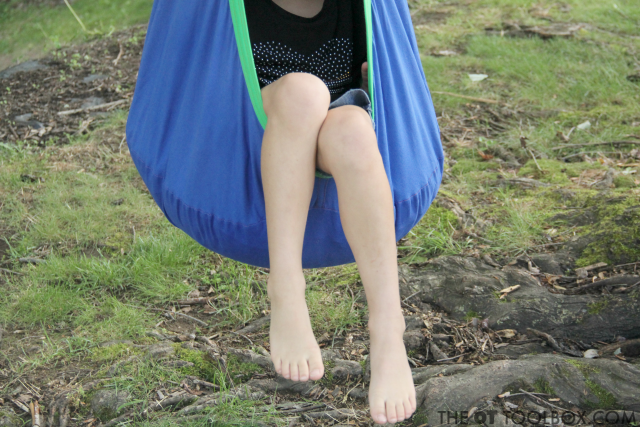
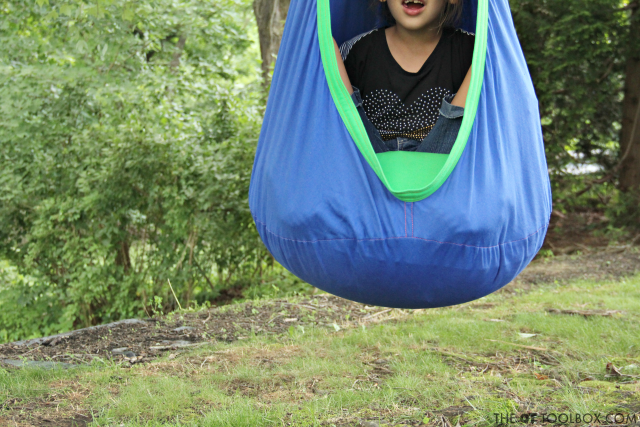
Sensory Swing- A sensory swing is a versatile seating option for reading, small group work, individual work, or a much-needed sensory break. We’ve tried and loved the Harkla Sensory Pod Swing for it’s cozy support and use as a calm-down space. The great thing about Harkla sensory swings is the easy-to install ability to place them in a classroom. We tried ours outdoors too, for an outdoor sensory swing option. Kids love the outdoor sensory swing in a shaded area such as under a patio deck or even hanging from a tree limb.
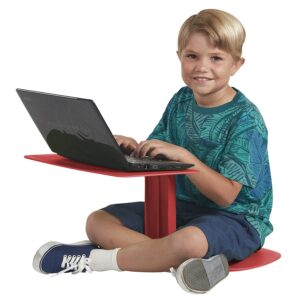
A portable laptop stand is a fun idea for flexible seating in the classroom.

Portable Laptop Stand- This portable laptop stand doesn’t need to be used for just laptops! Use it as a writing station or for a small reading center. I would love to see a DIY version of this…wonder if an awesome school janitor could whip one together using scrap materials? P.S. If you have one of these stands made…or you make one yourself…let me know! I would LOVE to see it!
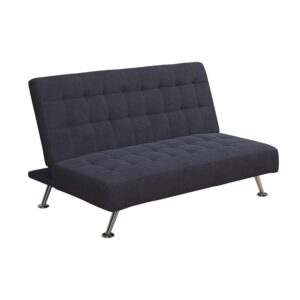
Teachers can use a futon in the classroom as a flexible seating idea.

Futon- An easy way to incorporate flexible seating options in the classroom is to add a futon. You can grab one at a big box store or on Amazon and have it shipped directly to where you need it to go. The benefits of using a futon in the classroom are endless- A “job” can be to open the futon and replace pillows after quiet reading time, adding opportunities for heavy work. Add a few weighted throw pillows and a weighted lap blanket if it’s appropriate. Sometimes lounging during instruction may be just what is needed.
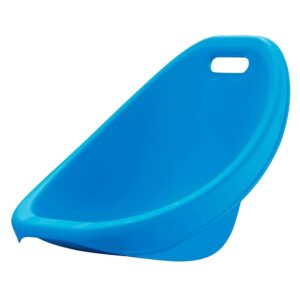
A scoop rocker chair is a great way to add flexible seating options to the classroom.

Scoop Rocker Chairs- Kids love these scoop rocker chairs! They are versatile in that they can be used at a lowered table or during circle time. The light-weight and handle make them easy to carry from class to class or to special classes, if needed. There is a special deal on Amazon offering a set of 6 scoop rocker chairs for $48 right now. Who knows how long that price will last!
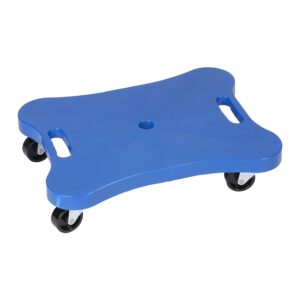
Use a scooter board for seating needs in the classroom to add sensory input as part of a sensory diet at school.

Scooter Board- Have a scooter board in your car trunk (If you are a mobile therapist, this totally applies to you…) or in the physical education gym/supply closet at school? Scooter boards make awesome foot fidgets for when sitting at a desk. Kids can also use them during circle time. (Provide a hoola hoop boundary!) Or to sit on at a low table or when working in a small group. You can find them at great prices on Amazon!
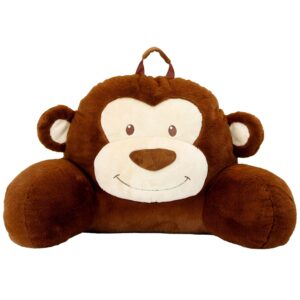
Use a reading pillow or bed reading pillow  as a flexible seating idea in the classroom.

Cushions or Pillows- Super easy to get, and at a very inexpensive cost, pillows and cushions are a fantastic way to create a cozy corner or crash area. Kids will love quiet reading time or group work when sitting on a pillow or cushion. Stalk your local resale shops for great prices. You can also ask parents to send in a small pillow or chair pad cushion (the kind you use on kitchen chairs) that can be used at desks for seated work. A reading pillow (the kind you typically use on a bed) works really well in a calm-down space, too.

Body Pillow- A body pillow can be an inexpensive way to add movement and positioning to the classroom or home. Add it to a futon or couch in the classroom or include it in a calm-down space.
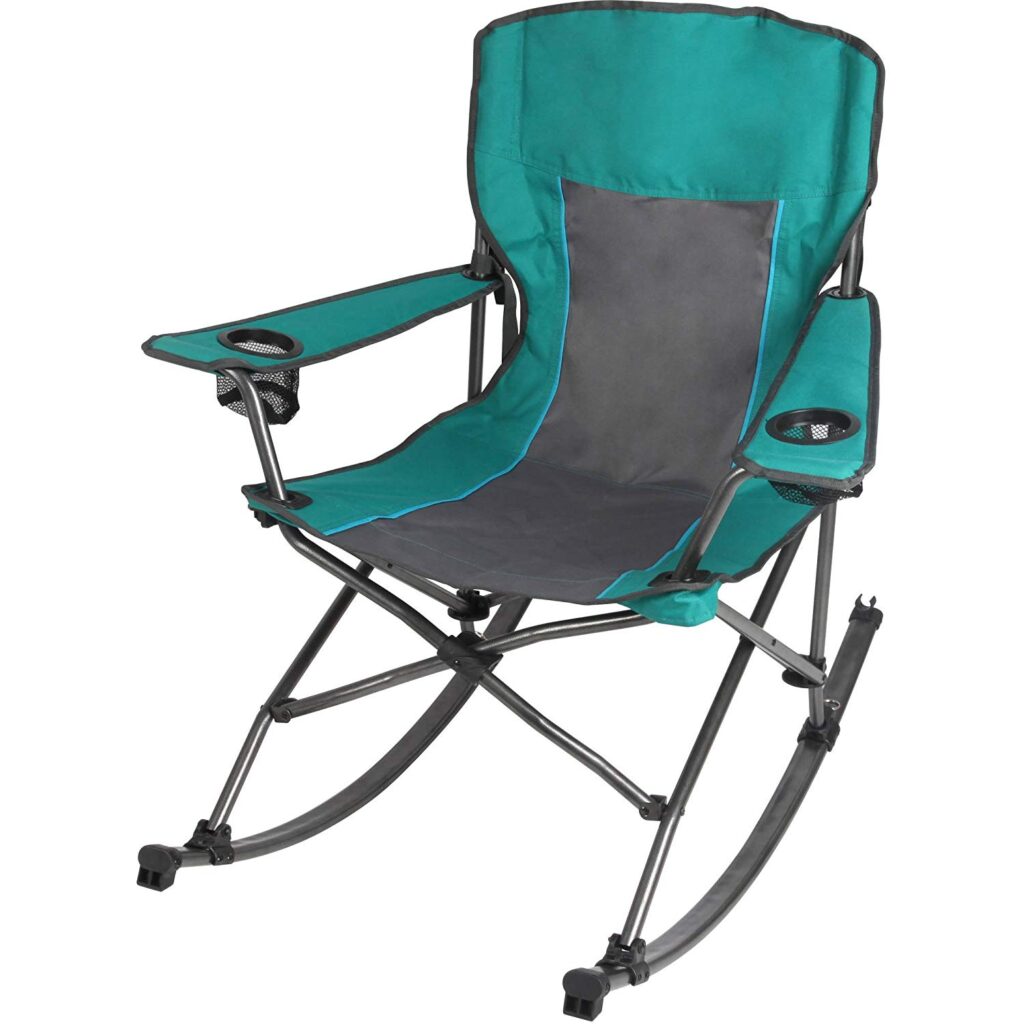
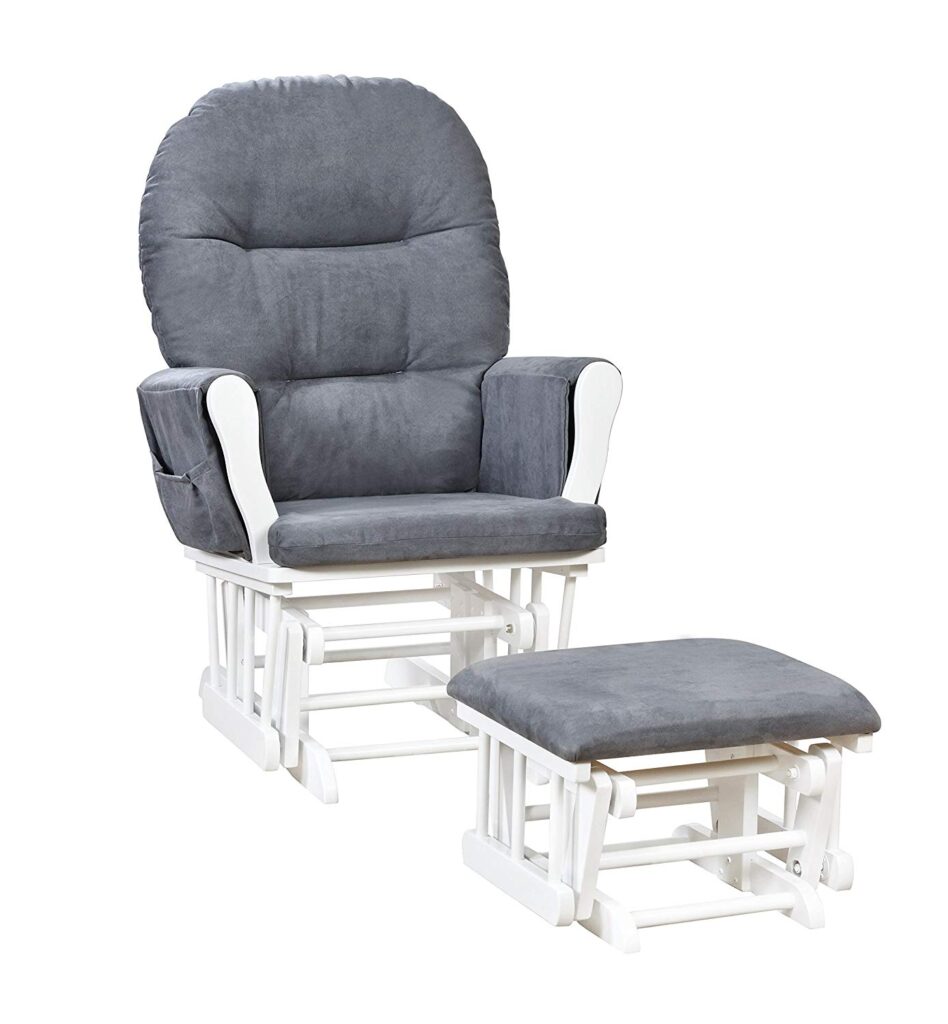
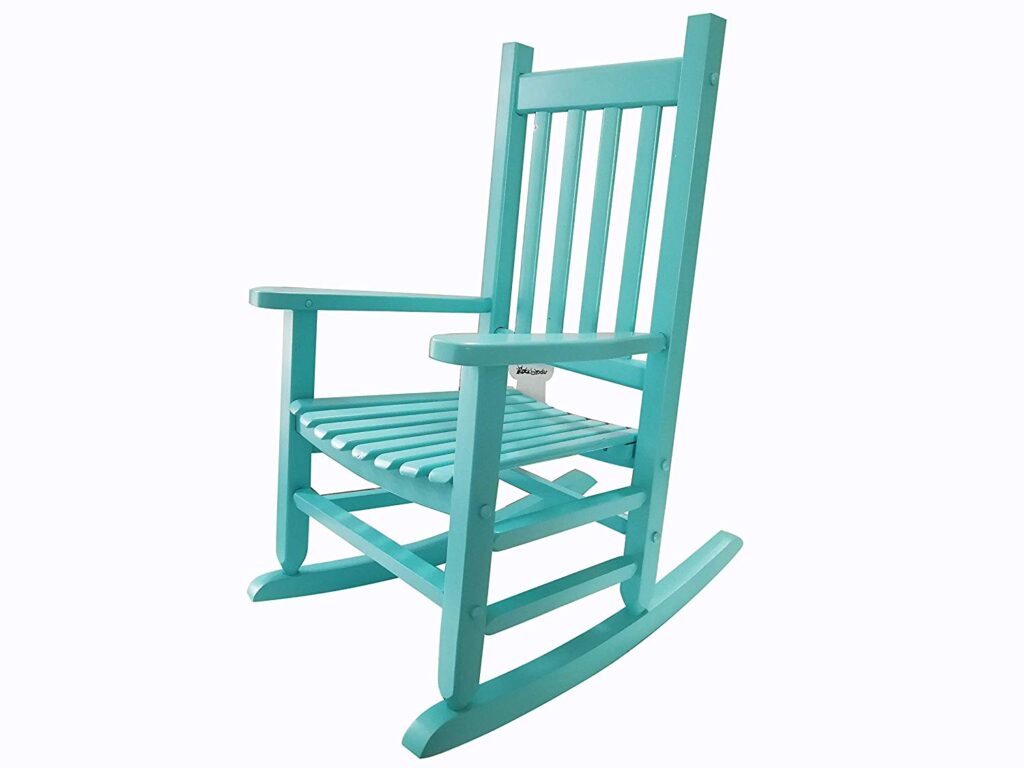
Rocking Chair- An old-fashioned porch rocker is a wonderful addition to the classroom. There’s just something about rocking back and forth that brings back memories of quieting fussy babies during the night for this mama…but perhaps the calming effects of slow linear rocking can be just the thing to turn classroom fidgeting into focused learning. If the price tag of a traditional wooden rocking chair is a problem, consider adding a camp rocking chair or an upcycled nursery glider. You can find these baby nursing chairs on Facebook marketplace or in consignment shops for a great price.
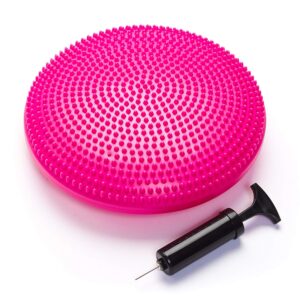
Use a balance cushion as a flexible seating tool in the classroom.

Balance Cushion- Balance cushions can be used on a traditional desk seat or for floor seating. Adding this to your flexible seating line-up promotes an opportunity for attention and balance by adding movement to learning. Add more air or remove some from the cushion to provide more or less movement and stability required.
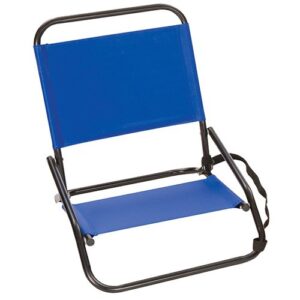
Use a beach chair as a cheap flexible seating option in classrooms.

Beach Chair- A beach chair is a super inexpensive way to add flexible seating options to a classroom. Set up an area with a few beach chairs for group activities or use them in circle time or morning meetings.
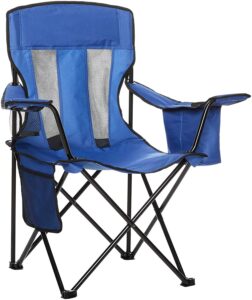
Use a camp chair as a cheap flexible seating idea for the classroom.

Camp Chair– A camp chair is another inexpensive option for alternative seating. The curved base provides a cozy and calming space for reading or listening to read alouds in the classroom or home. There are a lot of options on the market in the ways of camping chairs. From the basic camp chair to those with rockers, recliners, or loungers, the choice is yours based on needs in the classroom or home.

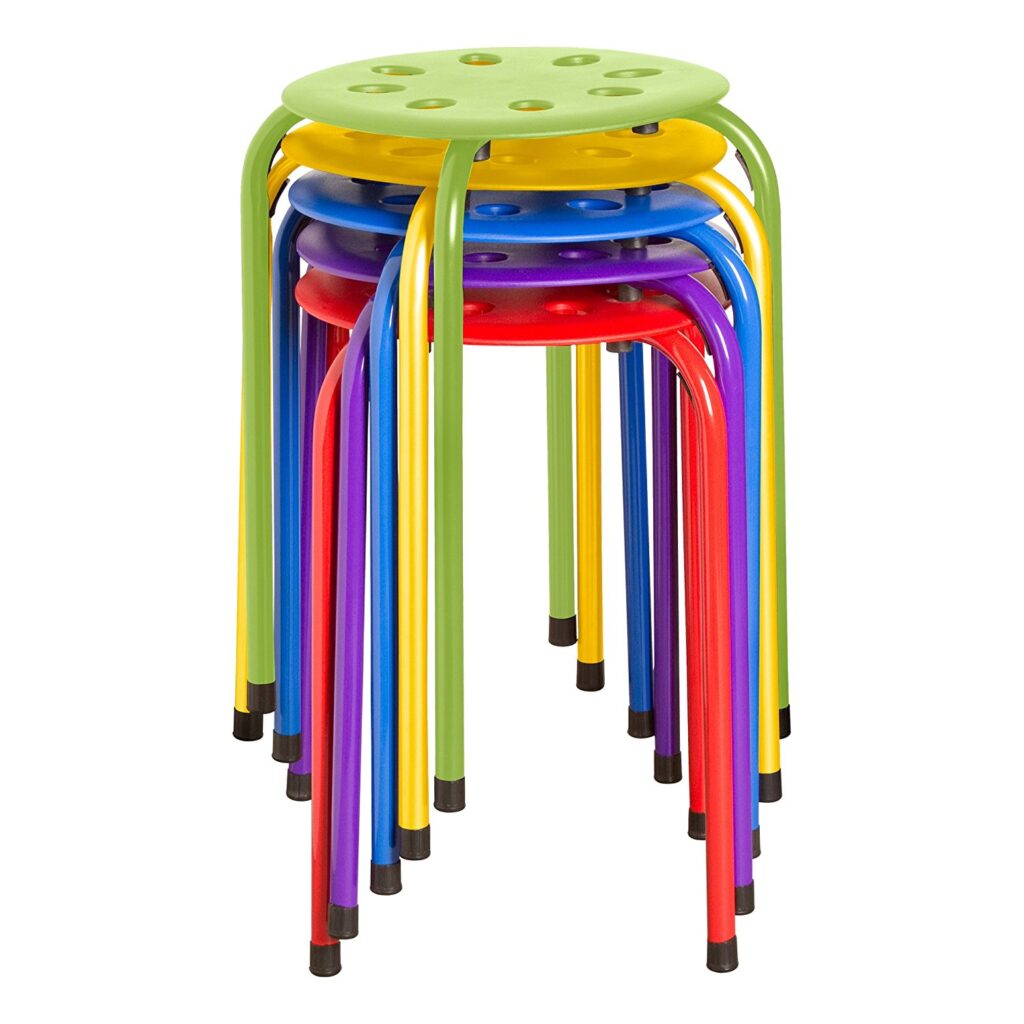
Stools- There are a lot of stool options out there. Using a stool in a flexible seating arrangement provides a variety of use for addressing various needs while making arranged seating easier to change out without much effort. Some ideas for stool use in the classroom include high-stools. These can be used at a high top table which also offers an opportunity for standing. They can be arranged into circle time or small groups while offering vestibular input. Other stool ideas include a small foot stools. These can be used at low tables, in circle time, in a small group circle, or at a low table. Try using them while writing on a paper hanging on a wall or at an easel for vertical writing, which offers more proprioceptive input and movement challenges. Stackable stools are still another option. These are great in place of traditional desk chairs in some cases. The great thing about using stools as part of an alternative seating system is that students can move and set up seating options, offering built-in heavy work.
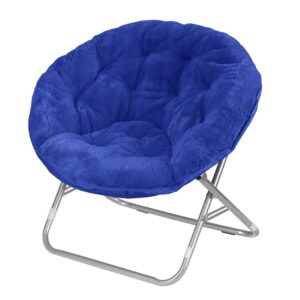
Use a papasan chair in the classroom as a sensory seating idea for students.

Papasan Chair– A papasan chair or a lounger seat is great for the classroom. Quiet reading or group learning can be calm and focused with a supportive and cozy seat. You can find a great price on these chairs in big box stores or on Amazon.
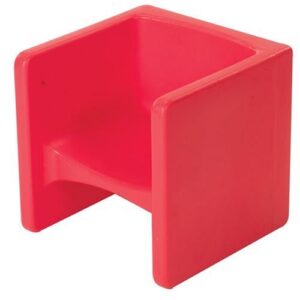
A cube chair is a seating option that meets sensory needs in the classroom.

Cube Seat- This cube seat is an option that provides support for the back and trunk while containing and providing a boundary for seated activities. This cube seat option is nice because it can be used in one direction as a low seat and flipped over to allow for a higher height or for use as a table writing surface with visual blocks when visual attention is an issue.

Partially Inflated Beach Ball- Yes, it’s true. Grab a dollar store beach ball and blow it up just a little, so that the air in the beach ball provides a movable cushion. This seating system is appropriate for younger children, but it’s an option for testing out movement in the seat. You’ll find more about using a beach ball cushion in a previous The OT Toolbox blog post.
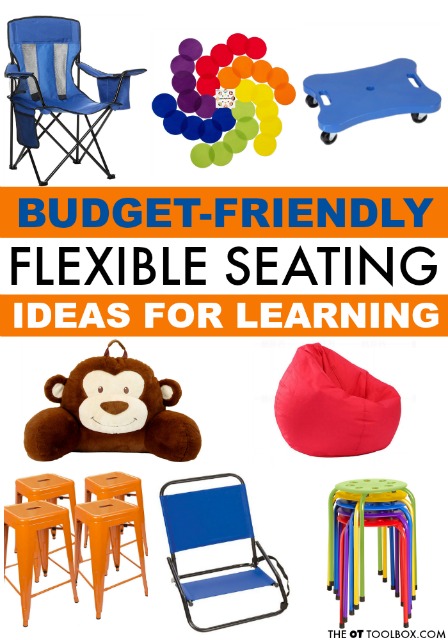
Cheap flexible seating ideas for the classroom include  camp chairs, beach chairs, bean bags, and pillows.

More Flexible seating ideas

What are your best tricks and tips for adding movement to the classroom while meeting the needs of various students? Flexible seating in the classroom doesn’t need to be complicated. It doesn’t need to be expensive either! Stop back soon, because we’ll have a line-up of DIY flexible seating ideas coming your way very soon.

Some of the ideas listed above are very budget-friendly, especially if you are able to find items second-hand or by upcycling items. Other budget-friendly seating options include using a cardboard box, cushions, or stadium seats, for example. We’ll have more budget-friendly seating ideas for you coming up soon!
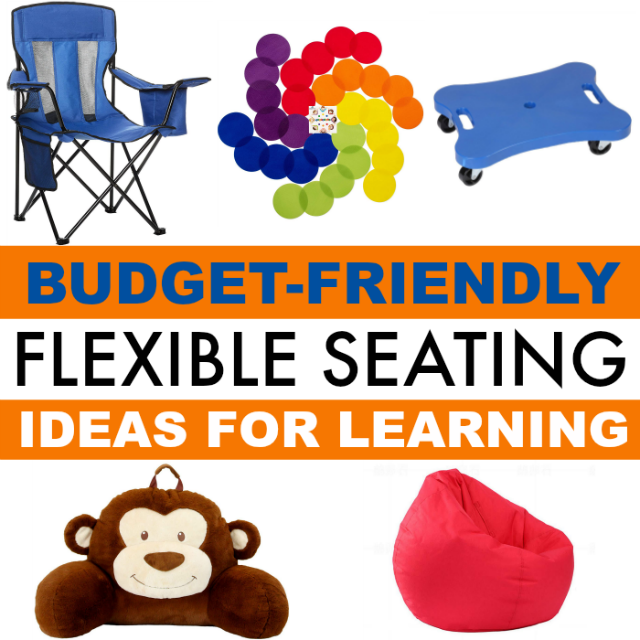
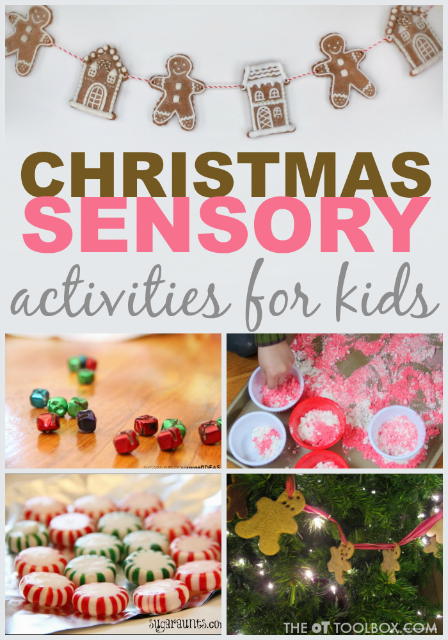
Budget-friendly flexible seating ideas include camp chairs, beach chairs, carpet spots, and more.

Christmas Sensory Activities

Whew, what a week this has been! We’ve been talking all about Christmas occupational therapy activities for kids here on The OT Toolbox and today ends the week of Christmas activities in this series. We’ve talked about all the ways to make this holiday season special while working on underlying skill areas and incorporating occupational therapy goals. Today, it’s all about Christmas Sensory Activities that can be used in the classroom, clinic, or home programs over the holiday break. Use these Christmas play ideas in sensory diets, to create sensory bin ideas or sensory bottles!


Our Christmas sensory bins are a great place to start when it comes to sensory play activities during the holidays.

Use these Christmas sensory activities to promote development, play, learning, and fun this holiday season while working on occupational therapy activities.


Christmas Sensory activities

If you’ve missed any of the blog posts this week, you might want to catch up on all of the ideas! You can check out all of the Christmas Activities for Kids here on our main Christmas page. 


Some of the ideas we’ve covered are Christmas activities for preschoolers, Christmas activities for toddlers, Christmas crafts for kids, and Christmas party ideas. All of these activities have a therapy mindset where they encourage movement, play, and motor development with a Christmas theme!


With the upcoming holiday season, kids can be all over the place when it comes to excitement for holiday events. Try incorporating some of the Christmas sensory activities listed below to encourage sensory play with a learning twist.

Christmas activities for kids

First, you’ll want to check out a previous post here on The OT Toolbox where we shared sensory processing activities and sensory experiences perfect for the month of December.
 
Try this scented peppermint sorting activity to work on fine motor skills and eye-hand coordination. Add motor skills like finger isolation to count the peppermints or use tongs to move the peppermints and strengthen the hands.
 
Mix up a batch of candy cane moon dough for sensory play with a fresh scent! Moon dough can be used as a writing tray to practice letter and number formation or to work on eye-hand coordination  in scooping and pouring. 
 
Have you ever let the kids play with cooked pasta as a sensory play experience? It’s a tactile challenge for some! This noodle sensory activity can boost fine motor skills. Try cutting them to sneak in some scissor work, too.
 
We shared this Christmas tree sensory experience the other day on our Christmas activities for preschoolers post, but it’s worth mentioning again. There’s a reason why: manipulating wet pieces of foam is a fantastic tactile sensory experience that doubles as a fine motor activity, too. 
 
For a sensory recipe, try this scented playdough for creating miniature snowmen. Add a few manipulatives to make it a fine motor powerhouse. This is an OLD post here on the website. Beware, the pictures are small and dark!! That doesn’t stop the play dough from being fun though! Add this activity to your holiday lineup.
 
Another sensory recipe is this DIY snow recipe, perfect for play and fine motor work. This would make a great addition to a home program for the holiday break!
 
Add a few colored ice cubes and scoops, spoons, and ladles to a big bowl for eye-hand coordination and fine motor precision with a Christmas theme. Kids love water play and this Christmas water activity is no different!
 
This easy Christmas sensory bin can be a go-to activity for settling holiday excitement in the days leading up to Christmas. Use materials you have in your home to work on fine motor skills, eye-hand coordination, crossing midline, and more through sensory play.
 
Getting the kids into the kitchen is a great way to work on so many skills with kids! Direction following, executive functioning skills, motor skills, strengthening, and more are developed through cooking with kids. Make a batch of this Gingerbread Salt Dough for sensory play and ornament-making. These ornaments are still on our tree years later! Check out the pictures on this OLD blog post. This takes me back to those busy days as a mom of toddlers and preschools! Tears!
 
Colder weather doesn’t mean outdoor play needs to stop. Take a sensory potpourri hike outside with the kids and explore nature by creating a potpourri. Add bits and pieces such as various pine needles, pine cones, and add in orange peels or cinnamon sticks. Kids can cut pine needles with scissors and add them to the scented collection. 
 
For many more Christmas sensory activities, check out this round up of activities from all over the internet.
 
Need another scented DIY play dough recipe? This one is a peppermint scented play dough, perfect for rolling, needing, and strengthening those hands!


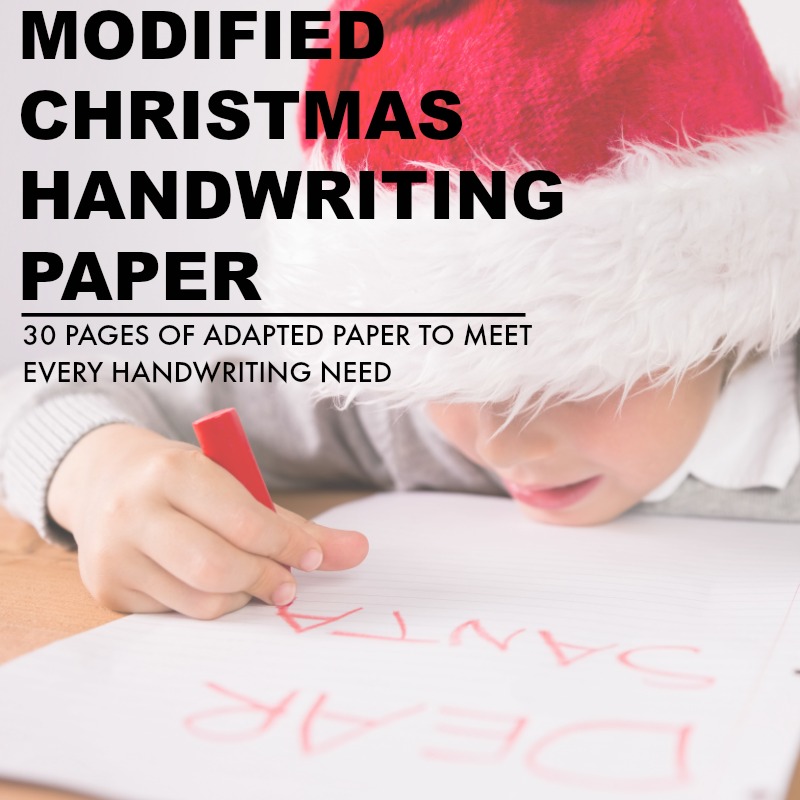
Working on handwriting with kids this Christmas season? Grab your copy of the Christmas Modified Handwriting Packet. It’s got three types of adapted paper that kids can use to write letters to Santa, Thank You notes, holiday bucket lists and much more…all while working on handwriting skills in a motivating and fun way! Read more about the adapted Christmas Paper here


Outdoor Sensory Swing

outdoor sensory swing

Today, we have a fun blog post on outdoor sensory swings. Did you ever look at the swings at the park and think about the sensory impact? Sensory swings are typically used in the therapy clinic, a sensory calm down space in schools, or even in homes. But, taking them outdoors to incorporate all of the benefits of nature is a must! Let’s break it down…

Outdoor Sensory Swings

Taking sensory diet activities and other sensory play activities into the outdoors is as easy as walking outside! There are so many opportunities for outdoor sensory experiences using the world around us.

Add a few key components like water, chalk, playground equipment, toys, and tools and you’ve got a sensory gym right in your backyard. While we’ve shared a lot of outdoor sensory diet activities here on The OT Toolbox, there are so many sensory experiences that are just plain fun right outside.

Using outdoor sensory activities in occupational therapy is a great strategy to support sensory and emotional regulation needs.  

Today, we’re talking about taking the sensory processing experiences up a notch using an outdoor sensory swing!   We were lucky to try out the (Amazon affiliate link) Harkla Sensory Pod Swing, and it has been a huge hit with my own children.

The Occupational Therapist in me can’t help but see how awesome this sensory swing is for addressing sensory needs right in the home…and in the backyard!


Use an outdoor sensory swing for the ultimate sensory experience for kids with sensory processing needs, self-regulation challenges, attention, and more.

Add an Outdoor Sensory Swing to your Child’s Sensory Diet

Sensory diets play a huge part in the lives of so many children. Kids with sensory processing needs, attention issues, self-regulation challenges, and other areas. Read more about the goals of a sensory diet looks like in kids and how a tool like a sensory swing can play a part in addressing sensory needs.
 
In fact, there is much research on outdoor sensory play.

The fact is, research shows us that some of the developmental and primary tasks that children must achieve can be effectively improved through outdoor play. These include: exploring, risk-taking, fine and gross motor development, absorption of basic knowledge, social skills, self-confidence, attention, language skills, among others.   

So knowing the benefits of being outdoors when it comes to addressing sensory needs, taking the sensory tools used in a sensory diet outdoors can be the obvious next step.   

Use an outdoor sensory swing like the Harkla pod swing for calming sensory input when outside.

Why take a sensory swing outdoors? 

The outdoors offers so much to our senses naturally. Sights, sounds, tactile experiences, and even air pressure can have a bountiful sensory impact!   

A bright day can be alerting to the child who struggles with alertness. A warm and sunny day can have a calming effect.  

A slight breeze can offer a brush with the nerve endings on the skin, alerting the child. It can be a calming change from indoor air.   The feel of grass on a child’s toes can bring awareness and body perception.   

Background noises can be an opportunity to develop auditory processing skills. In fact, there are many ways to address auditory processing needs through backyard auditory processing activities.   

Ambulating to a sensory swing area is an opportunity to address balance and stability in a natural and functional environment.   

Swinging provides an opportunity for improved body awareness as a child learns how their body moves and responds to movement. Taking an indoor sensory swing into the outdoors provides a change in routine that can “wake up” the child’s awareness about certain movements.   

The outdoors offers a vast tactile play box!

From the feel of a tree’s bark to pebbles and stones, playing outside combined with needed sensory input a sensory swing offers can promote skills like:

  • Fine motor strength
  • Precision
  • Graded grasp
  • Separation of the sides of the hand
  • Bilateral coordination
  • Crossing midline
  • Balance
  • Endurance
  • Core stability and strength
  • And so many other skill areas!   
Use this outdoor sensory swing for outdoor calming sensory input in kids with sensory processing needs.

Outdoor Sensory Swing 

When we received our Harkla pod sensory swing, the kids were eager to put it up in our home.

After some time waiting for this to actually happen, because as we adults know, making changes to the home can sometimes take longer than expected, we finally decided to try it out in the outdoors.   

We took the sensory pod swing and the attachment components to a large tree in our backyard. After a quick installment, it was clear that the outdoor sensory swing was a success.   

Use a sensory swing outside as part of a sensory diet for calming sensory input.

What a calming experience this was!   

For the mom of four kids, it can be overwhelming during summer days when the kids are free from routine. All four of the kids swung in the Harkla sensory pod swing and were noticeably more calm and relaxed.   

The enclosed pod provides a calming nook where kids can relax or calm down.    For the child with sensory needs who thrives after use of a sensory swing in therapy, taking the sensory swing outdoors can be a beneficial and therapeutic experience.   

I love that the swing can be used indoors or outdoors. Simple attachment mechanisms make this swing easy to install. The adjustable strap allow the swing to be attached at a preferred height for safety.   

Use a sensory swing to help kids calm down and organize sensory input for improved self-regulation with an outdoor sensory swing.

 Since using the pod swing outdoors, we’ve used the swing several times outside on our big, shady tree. My older kids use the pod swing as a cozy reading nook. What a way to work on that summer reading list!  

I did bring the swing in after we used it, just so it wouldn’t get soaked in the next summer rainstorm. Putting it back up was easy, using the installment belt and clip.   

For those without a tree branch that would hold kids, a regular swing set can be an optimal placement for the sensory swing. Simply pull the regular swings to the side or remove the chains and attach the sensory pod using the belt and clip.  

The price on the sensory pod swing is great for those looking for a sensory swing that can fit within a budget.   

As a therapist whose seen many therapy equipment catalogues, this is a great price! There is a coupon on the website for saving 10% on your first purchase, along with free shipping in the US.  

We will be using this outdoor sensory pod swing all summer and installing the swing indoors, too. When the swing is not in use, just unclip the belt!  

Click here to purchase the Harkla Sensory Pod Swing.

Click here for more outdoor sensory diet activities and ideas.

Harkla sensory pod swing is great for calming sensory input at home.


Disclaimer: The information presented here is for educational purposes only. It is not meant to diagnose or treat children with sensory needs, or other areas. Using a sensory swing can have a wide variety of responses on children. Also, recognize that every outdoor experience is different for each child as the environment is different in each experience. Consult your child’s occupational therapist for individualized recommendations. The OT Toolbox provides educational information only and is not responsible for any issues. Reading information found on this website acknowledges your consent to this disclaimer.   This post contains affiliate links.    

The Sensory Lifestyle Handbook walks you through sensory processing information, each step of creating a meaningful and motivating sensory diet, that is guided by the individual’s personal interests and preferences.

The Sensory Lifestyle Handbook is not just about creating a sensory diet to meet sensory processing needs. This handbook is your key to creating an active and thriving lifestyle based on a deep understanding of sensory processing.

Colleen Beck, OTR/L has been an occupational therapist since 2000, working in school-based, hand therapy, outpatient peds, EI, and SNF. Colleen created The OT Toolbox to inspire therapists, teachers, and parents with easy and fun tools to help children thrive. Read her story about going from an OT making $3/hour (after paying for kids’ childcare) to a full-time OT resource creator for millions of readers. Want to collaborate? Send an email to contact@theottoolbox.com.

Sensory Diet Activities for the Classroom

sensory diet in the classroom

In the schools, many teachers struggle with students with sensory processing challenges. There are students who have attention and focus issues that impact learning. Classrooms are a busy place, and when sensory issues impact the ability to pay attention, focus, self-regulate, and interact with others, learning can suffer. Sensory issues are often times, the underlying reasons for impaired functioning in the classroom. For some children, a sensory diet activities for the classroom can help. Sensory activities for the classroom can make a big impact in the life of a student.


The information listed below includes effective strategies for helping kids who are distracted, inattentive, disorganized, irritable, sensitive to sensory input, or seeming to have other sensory-related behaviors.


Add these resources to the ones you can find here under sensory diet vestibular activities to meet the sensory needs of all kids.

Use these sensory diet activities for the classroom to help kids with sensory processing needs and to address areas like attention, focus, self-regulation and other areas that impact learning.
 
First, I am very excited to tell you about a NEW resource book that I’ve been working on behind the scenes. It’s a HUGE resource related to sensory diets. 
 
There is so much information packed into this book, including underlying information related to the sensory systems, detailed information and references related to sensory diets like what they are and who needs one.  
 
There are data collection sheets and strategy monitoring systems for ensuring sensory diet techniques are authentic and motivating. 
 
This book is coming very soon! If you would like to be among the first to know about this new book, join the list here. Annnnd, there just may be a few freebies in store for anyone who is among the first to be informed! 
 

For some students, a selection of sensory activities can be a helpful strategy for getting through the day. The students who receive therapy may be completing a sensory diet with specific activities based on the individual child’s needs.


Therapists can use the sensory diet activities listed below to add to their toolbox of strategies within the school environment.


NOTE: Activities described here should be used educational information and not as treatment suggestions. Every child’s specific needs and strengths are individual and before activities are utilized as interventions, individualized assessment should be performed by an occupational therapist.


Sensory Diet Activities for the Classroom

You can find many sensory strategies for the school based OT to use and provide in the classroom.


Additionally, therapists and teachers will find many resources, including a printable sensory activity sheet here on this article about calm down strategies for school.


Finally, here is information about using sensory diets in the school. You can see this informative video on our Facebook page, or in the video below:


Sensory diet activities in the classroom are extremely varied! Each child will crave or avoid different sensory input that naturally occurs in the classroom. Sensory diet activities can be integrated into the school environment using materials right in the classroom. Try some of these sensory diet activities:


Move classroom furniture at the beginning or end of the day.
Erase the Smart Board using a cloth.
Add moveable or alternative seating options into the classroom (chair cushions, standing at easels, bungee cord added to the chair legs, bean bags, lying prone on the floor, etc.)
Carry library books from the classroom to the library.
Move equipment from classroom to classroom.
Give the student a “job” to carry a box of materials to the office each day.
Allow the student to sharpen pencils using a manual pencil sharpener.
Add extra playground time into the schedule as a reward.
Provide movement breaks for the whole classroom.


Add calming sensory strategies to a sensory diet for the classroom:

Provide a warm blanket for cozy reading in a bean bag chair.
Create a calm-down space in a cardboard box.
Create a whole-classroom stretch break with yoga or rhythmical knee/shoulder patting and rocking. 
Ask the whole classroom to play “Simon Says”. Use these therapy Simon Says commands.
Allow wall push-ups and chair push-up breaks.
Encourage the child to blow bubbles at recess.


Add calming modifications to the classroom:

Turn down the lights for a calm-down break.
Seat the child away from high-traffic areas.
Use soft voices during classroom instruction.
Remove fluorescent light bulbs from the area above the student’s desk.
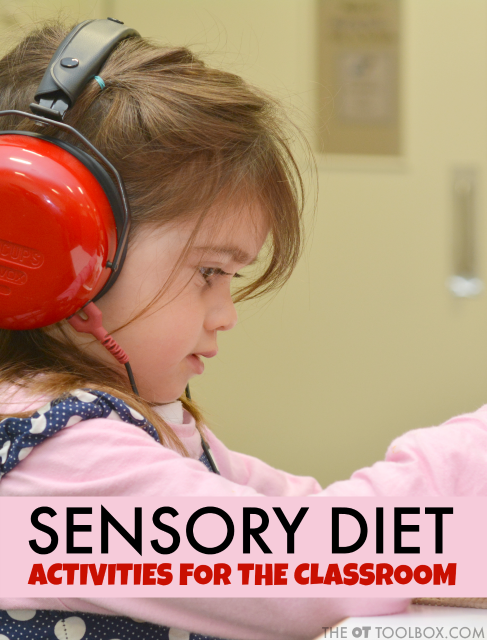
Allow the child to wear headphones to block out environmental sounds.
Minimize overwhelming visual environmental stimuli by using natural light.


Add alerting sensory strategies to a sensory diet for the classroom:

Play “Simon Says” with light touch to the face and palms.
Movement breaks with jumping jacks or burpees (if the space allows).
Show students how to briskly rub up and down the arms to “wake up” the arms and hands.
Provide classroom-friendly fidget tools such as a DIY pencil topper


Add alerting modifications to the classroom:

Have crunchy snacks available: dry cereal, pretzels, celery, raw carrots, etc.
Use modified writing utensils such as modified surfaces or writing utensils.
Provide visually stimulating writing paper with high-contrast lines or writing spaces.
 
Use these sensory strategies in the classroom for students who struggle with sensory processing or those who may experience sensory-related behaviors.
 
 
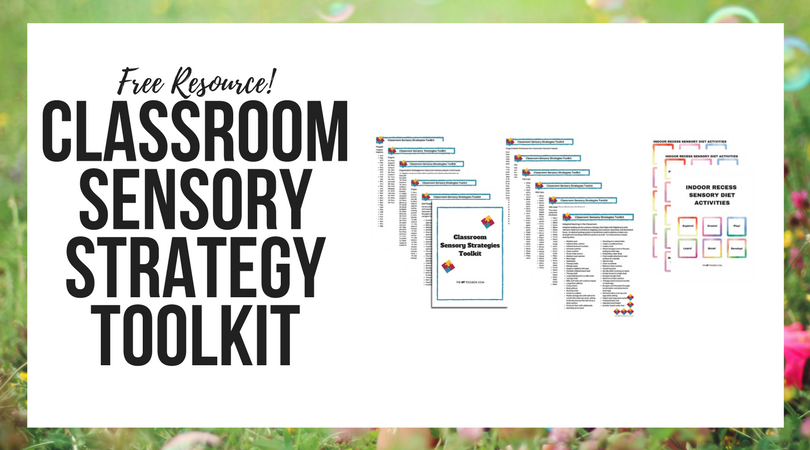
You may also be interested in the free printable packet, The Classroom Sensory Strategy Toolkit.


The Classroom Sensory Strategy Toolkit is a printable packet of resources and handouts that can be used by teachers, parents, and therapists. Whether you are looking for a handout to explain sensory strategies, or a tool for advocating for your child, the Classroom Sensory Strategy Toolkit has got you covered.


And it’s free for you to print off and use again and again.


In the Classroom Sensory Strategy Toolkit, you’ll find:


  • Fidgeting Tools for the Classroom
  • Adapted Seating Strategies for the Classroom
  • Self-Regulation in the Classroom
  • 105 Calm-down Strategies for the Classroom
  • Chewing Tools for Classroom Needs
  • 45 Organizing Tools for Classroom Needs
  • Indoor Recess Sensory Diet Cards
 
Sensory Strategies for the Classroom
 

Free Classroom Sensory Strategies Toolkit

    We respect your privacy. Unsubscribe at anytime.

    Colleen Beck, OTR/L has been an occupational therapist since 2000, working in school-based, hand therapy, outpatient peds, EI, and SNF. Colleen created The OT Toolbox to inspire therapists, teachers, and parents with easy and fun tools to help children thrive. Read her story about going from an OT making $3/hour (after paying for kids’ childcare) to a full-time OT resource creator for millions of readers. Want to collaborate? Send an email to contact@theottoolbox.com.

    Christmas Proprioception Activities

    This time of year, the hustle and bustle of the season can make all of us feel a little out of sorts.  For the child with sensory issues, the holiday season can be a real challenge!  Try adding Christmas Proprioception Activities into your child’s day for calming strategies to meet sensory needs.  
    For more ideas, grab this December Occupational Therapy calendar.


    Christmas Proprioception Activities

    Christmas proprioception activities for children with sensory needs


    Christmas Sensory Diet  

     
    Occupational Therapists can add these proprioception activities to sensory diet plans or to make home programs this time of year. Ad these heavy work ideas to your therapy plans this month. They are great Christmas activities for sending home to parents for a home program over the holiday break. 
     
    Parents and teachers can use these activities as part of an individualized plan that meets the child’s needs. 
     
    The calendar’s activities are outlined in an easy to follow therapy plan, however as parents and therapists know, a day that involves children does not always go as planned.  The activities can be shifted around to suit the needs of the child and the family. 
    An activity can be completed on a different day or used in combination with another day’s therapeutic activities. 
     
    Try adding these activities into the child’s day to challenge sensory issues or as a way to help kids focus during overstimulating times that the holidays bring.
     

    Christmas Heavy Work Ideas


    1. Shovel activity- Use a small child’s sized snow shovel or sand shovel to scoop couch
    cushions.

    2. Mitten Toss- Fill a plastic sandwich bag with dry beans.  Push the filled bag into a mitten.  Close the opening of the mitten by rolling the top over on itself like you would roll socks together.  Use the mitten as a DIY bean bag in tossing target games.
     

    3. Gift Push- Load cardboard boxes with heavy objects like books.  Ask the child to push the boxes across a room.  For less resistance, do this activity on a carpeted floor.  For more
    heavy work, do this activity outside on the driveway or sidewalk.
     

    4. Reindeer Kick- Promote proprioceptive input through the upper body with wheel barrow
    race type movements.
      Kids can also stand on their arms and legs in a quadruped position and kick their legs up. 

    5. Sleigh Push- Load a wheelbarrow, sled, or wagon with objects.  (Try the weighted boxes from number three activity listed above.) Ask kids to push, pull, and tug on the “sleigh” through the yard. 

    6. Peppermint Candy Stick Oral Motor Activity- Did you know you can make a peppermint candy stick into a straw?  It’s a great oral motor activity for kids. Cut an orange
    in half and then stick the peppermint stick into the orange.
      Next, suck the peppermint stick.  The juices from the orange will begin to work their way up through the peppermint stick. 

    7. Cocoa Temperature Taste- Make a batch of hot cocoa. Pour it into an ice cube tray and
    let it freeze.
     Next, make another batch of hot cocoa. Divide it out into several mugs. Add a cocoa ice cube to the first mug, two ice cubes to the second mug, and so on. Mix the mugs up on a table.  Place a straw into each mug.  Children can position the mugs in order of
    coolest to hottest or vice versa.
      If doing this activity with several children, use small paper cups so that each child gets their own set of cups. 

    8. Christmas Chewy and Crunchy Food Breaks- A calming sensory snack can be just the thing that children need to organize their sensory system during the hustle and bustle of the holiday season. 

    Calming Sensory Foods for Christmas

    Adding chewy or crunchy foods to a sensory diet has a calming effect. These types of food provide heavy work through the jaw and mouth.

    Try these calming Christmas foods: 

    • Peppermint snack mix with peppermint chocolate candies mixed with dry cereal and raisins
    • Toffee
    • Rice Crispy Wreath cookies
    • Pretzel sticks
    • Homemade fruit leather
     
     
    Christmas proprioception activities for kids with sensory needs


    Christmas Sensory Writing

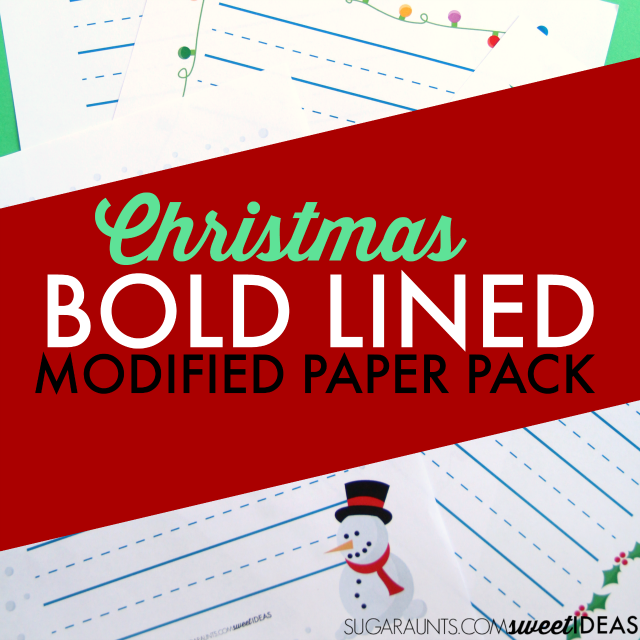
    Looking for modified paper to help kids with handwriting issues?  Try this modified Christmas paper packet!
     
    Use this modified paper Christmas Handwriting Pack to work on legibility and handwriting struggles with kids.
     
    Use these modified paper with a Christmas theme to work on handwriting this time of year. Add a sensory component with proprioceptive feedback to add heavy work through the hands. Here are some ideas for adding adding proprioception to sensory writing activities:
     
    • Write over a sheet of sandpaper.
    • Tape the Christmas paper to a wall or easel and write on a vertical surface. 
    • Use a grease pencil to add proprioceptive input resistance. 


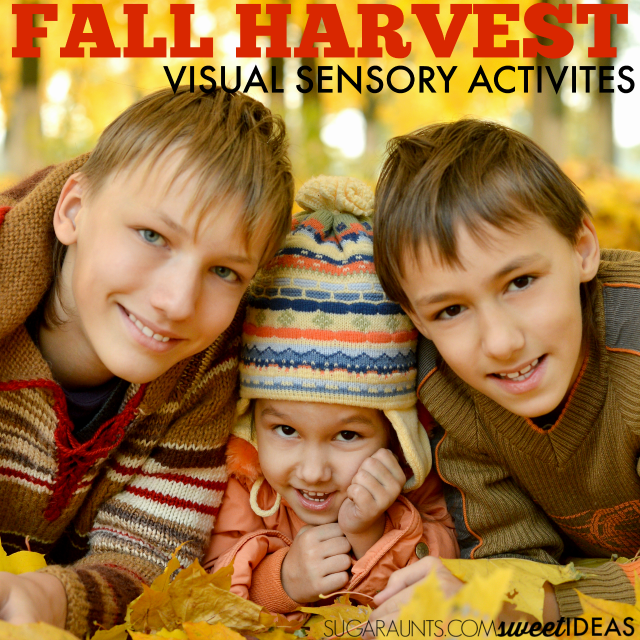
    Fall Visual Processing Sensory Activities

    Use fall activities to work on visual processing needs with fall visual processing sensory activities.

    Visual Processing can result in overactive sensitivity to sights or an under-responsiveness to all that the eye sees.  During Fall, there are many more colors and visual sights that can be a sense of interest to children with sensory processing disorders.  A simple walk in the yard is much different during the Fall months when leaves are changing or there are more sticks and acorns to navigate on the lawn.  For the child who has sensory processing concerns, using the sense of sight can be a calming or alerting tool.  Try these fall visual processing sensory activities this Fall.

    Check out our free Fall Sensory Activities booklet. It’s full of family-friendly sensory activities that celebrate the season through sensory experiences covering all of the senses. The activities in this free booklet are a fun way to encourage motor movement and development through fall activities. Scroll to the bottom of this blog post to grab your copy!


    Fall Visual Processing Sensory Activities with a fall or harvest theme.


    Adding visual sensory activities to vestibular or proprioception activities can have a great affect on children with sensory processing disorders.  Check out our Fall Proprioception Activities and Fall Vestibular Activities or find all of the ideas in one place in our Fall Harvest Sensory calendar.

    Fall Visual Processing Sensory Activities

    1.     Leaf Lay– Head outdoors on a bright and sunny fall day.  Look for trees with brightly colored leaves and lay down on the ground under the tree.  Kids can look up at the leaves as the sun shines through the colored leaves.  Ask kids to notice branches in the leaves.  Address deep breathing and slow counting for a calming sensory experience.  Use this opportunity to discuss events that lead up to feelings of fear or anxiety related to the senses.

    2.     Color Assessment– Use a magnifying glass to explore the colors of leaves, tree trunks, and nature finds while out on a nature hunt.  Kids can look for each color of the rainbow in a scavenger hunt type of activity.  This fall activity builds visual scanning needed for reading and writing.
     
    3.     Pumpkin Seed Colors– Use dry seeds from a pumpkin to create colorful seeds using liquid food coloring or liquid water colors.  While these seeds won’t be edible, they are great for creative play!  Use the seeds to sort, manipulate, and create in Fall themed learning and play or artwork.
     
     
    4.     Fall Maze– Many farms or community events host a corn or hay maze this time of year.  Walking through a maze is a visual processing experience that kids can use to develop directionality needs.  You can create your own backyard version of a fall maze using fallen leaves or a trail of sticks from trees.


    Fall Visual Processing Sensory Activities with a fall or harvest theme.

    Fall Sensory Activities

    Work on visual processing skills this Fall AND address all areas of sensory needs while experiencing all that the Fall season has to offer! Grab your free copy of the Fall Sensory Experiences Booklet to create sensory diet activities that meet the needs of individuals in a Fall-themed way! Enter your email address below and you will find the Fall Sensory Experiences Booklet delivered right to your inbox. Enjoy!

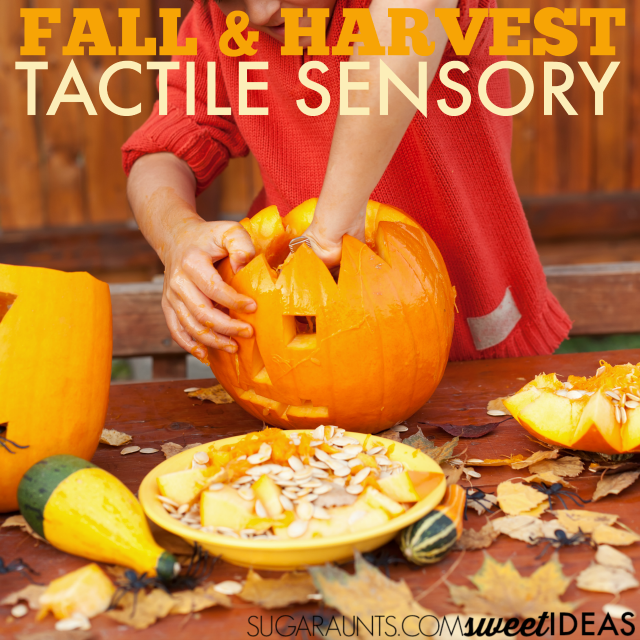
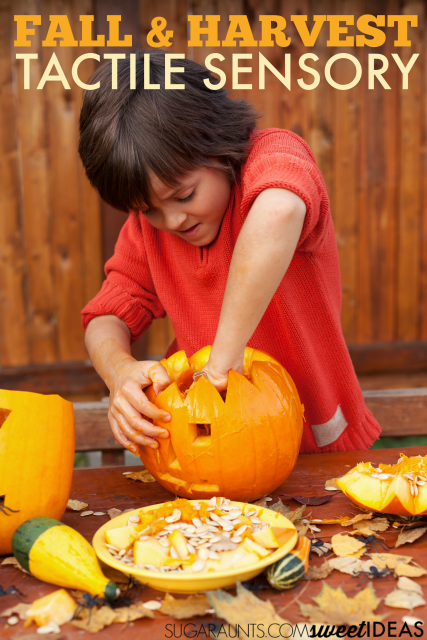
    Fall Tactile Sensory Activities

    Help kids tolerate tactile sensory play with these Fall tactile sensory activities.
    This time of year, it’s fun to encourage Fall tactile sensory activities to promote and encourage the sense of touch and tactile challenges. Kids will love these Fall tactile sensory activities.  Kids and families can get involved in these fall and harvest themed activities that just might start a new seasonal tradition while encouraging sensory play!
     
    For more Fall fun, grab our free Fall Sensory Activities booklet. It’s full of sensory activities that celebrate the season AND promote motor skills through sensory experiences. The activities in this free booklet are a fun way to encourage motor movement and development through fall sensory activities. Scroll to the bottom of this blog post to grab your copy!


    Fall tactile sensory play ideas for families and kids


    Fall Tactile Sensory Activities

     
    This post contains affiliate links.
     
    1.     Pumpkin Seed Scoop- Carving a pumpkin is an excellent sensory experience.  When it comes to scooping out the pumpkin guts, kids can challenge their tactile sense by touching and moving the seeds.  For kids who are not able to tolerate this task, try using latex free gloves.  Kids can also try pulling off the pumpkin’s seeds from the innards using tweezers.  Once the seeds are removed, allow kids to rinse the seeds in a colander and strain them into containers.  Use scoops and spoons of different sizes to address visual motor integration skills as they move and manipulate the wet seeds. Pinching individual seeds is an excellent fine motor task.
     
    2.     Marshmallow Pinch- Kids that have made s’mores know that managing that sticky marshmallow is a messy experience.  Embrace the mess with a marshmallow pinching activity that will challenge the sense of touch.  Warm a marshmallow over a fire or in the microwave.  Allow it to cool to the touch and ask kids to pinch and pull the sticky marshmallow.  Use the pointer finger and thumb to pinch the marshmallow while addressing hand strength and pincer grasp.  Use the stringy marshmallow to create a textured sort of paint by placing the marshmallow on paper.  This is a taste-safe tactile sensory experience that kids will love.
     
     
    3.     Pumpkin Bin- Address sensory needs by creating a sensory bin with a pumpkin theme.  Use egg cartons to create pumpkins and place them in a sensory bin filled with field corn or rice.  Here is an example of how to create this sensory bin. 
     
    4.     Fall Texture Feel- Gather various textures from nature to create a multi-textural sensory experience.  Use leaves, sticks, acorns, small pumpkins and gourds, or dry corn husks for kids to explore various textures.


    Fall harvest tactile sensory play ideas for kids and families


    More Fall and Harvest themed tactile sensory play ideas:

    Create a sensory bin with leaves.  Hide small items in the leaves for kids to feel and find.

    Make Fall Slime for messy sensory play.

    Make a Fall sensory bin like this one at Fantastic Fun and Learning.

    Fall Tactile Sensory Activities and more:

    Encourage tactile sensory tolerance this Fall AND address other sensory needs while experiencing all that the Fall season has to offer! Grab your free copy of the Fall Sensory Experiences Booklet to create sensory diet activities that meet the needs of individuals in a Fall-themed way! Enter your email address below and you will find the Fall Sensory Experiences Booklet delivered right to your inbox. Enjoy!

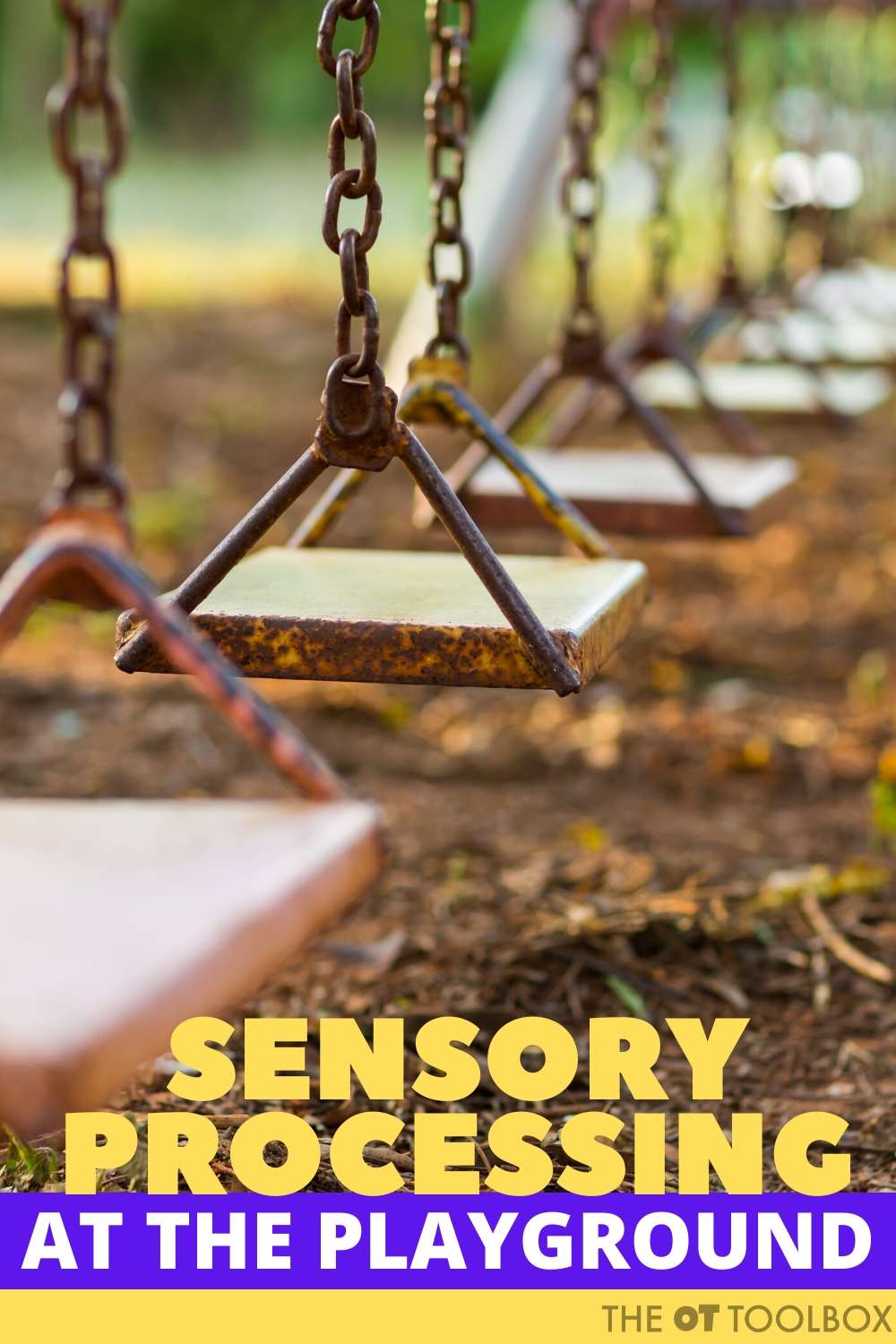
    Sensory Processing at the Playground

    sensory processing at the playground

    It can be frustrating as a therapist and parent to have a child or client with sensory processing needs when therapy equipment resources are unavailable or too expensive for home or treatment spaces.  It would be nice to refer a child to a fully equipped sensory integration gym but sometimes that is just not possible.  Children with sensory needs may receive therapy only in the school setting or at home in early intervention and would benefit from overhead swivel swings, balance beams, and bolsters.  There is a way around this expensive therapy equipment and it involves a trip to the local playground.  Try sensory processing therapy strategies at the playground. 

    Be sure to read this related resource on playground therapy.


    Kids will love the vestibular activities and other ways to challenge the sensory system in a fun way right on the playground.


    Add these resources to the ones you can find here under sensory diet vestibular activities to meet the sensory needs of all kids. 

    sensory processing at the playground


    Sensory Processing at the Playground

    This post contains affiliate links.

    First, and most importantly, it is necessary to receive an assessment and therapist recommendations from an Occupational Therapist.  Specific strategies meeting the individual’s needs are needed for safety and appropriate intervention.  Sensory processing interventions can be detrimental for the child with gravitational insecurity or the child who becomes overly responsive to vestibular input. Always consult an Occupational Therapist for individualized recommendations.  The child’s therapist can make appropriate recommendations while guiding the child rather than pushing interactions on playground equipment.


    Read more HERE about sensory systems and hyper- and hypo-responsiveness to sensory input. 


    It is important to note that simply going to the playground to play is not effective sensory integration therapy.  A typically developing child with appropriate sensory integration responses is provided with the sensory input he needs simply through the function of play.    
     
    The child with sensory integration dysfunction has difficulty processing sensory input and can not respond to play in a way that is organizing and appropriate.  The sensory information that a child with sensory processing disorder needs specific interventions to meet his needs (Ayres, 1979). 
     
    For more information on Dr. Jean Ayers, and occupational therapist and researcher who developed a theory on sensory integration, check out our blog post on Ayres Sensory Integration.

    What is Sensory Integration therapy?

    There is a difference between sensory play, sensory experiences, and sensory integration. Sensory integration processes information from our environment and our body in order to organize sensory input and allow us to respond appropriately.  

    Sensory integration organizes information from our eyes, ears, joints, skin, mouth, nose, and our body’s position in space.  It allows our body to pull all of this information together to enable us to respond to sensory input in purposeful function. 

    When there is a problem with sensory integration, the brain does not process or appropriately organize the sensory information in a way that provides allows for effective behavior.

    Without effective sensory integration, a person feels uncomfortable about himself and responds to ordinary environmental demands with stress (Ayres, 1979).


    There are many functional skills that are diminished as a result of sensory integration difficulties: “Children with sensory integration impairments may have difficulty orienting to and registering sensory input, filtering stimuli, or habituating to familiar stimuli.  

    They may struggle to organize a response to the sensory environment that is logical and appropriate from an observer’s viewpoint.  With inaccurate sensory processing in the CNS, praxis and motor output impairments may manifest in delayed gross and fine motor development and diminished sensory discrimination abilities (such as visual perception, tactile discrimination, and auditory discrimination).” (Tomchek, 2001)


    In Sensory Integration Therapy, a therapist guides the child into activities that help the child organize sensory information and allow the child to perform adaptive responses.  

    Therapy is a manner of helping the child to function with through activities that the child wants to do.  

    While sensory integration therapy involves many aspects that should be completed in various environments (such as vibration, deep pressure, joint compressions, brushing, as well as gustatory and olfactory sensory activities), there are SI therapy ideas that can be done at the playground that challenge or meet the needs of some children, depending on their specific needs. 


    Vestibular and Proprioceptive Sensory Input at the Playground

    The playground provides equipment in a natural environment that can effectively address vestibular needs.  

    Some children may need to arouse his vestibular system.  Children with typical sensory processing abilities are able to determine their body’s position in space and determine the amount of force needed for play.  

    The child with sensory processing disorders can not sense how to play on equipment that challenges his sensory systems.  Use playground equipment to provide vestibular and proprioceptive input in these ways:

    • Swings- Full body movements can be developed through gravitational insecurity on the swings.  Lying in a prone (superman) position on the swings is organizing in a forward/back motion on the swings. Slow swinging in the prone position helps to normalize a child with tactile defensiveness.  
    • Swings- Encourage the child to look up in front of them and even toss bean bags into a bucket. Ask the child to notice things around them in the playground area and play games like “I Spy” while slowly swinging back and forth in the prone position.  
    • Swings- Spinning on playground swings requires strength of the arms and upper body to maintain an upright position.  The vestibular stimulation received from spinning is intense and shouldn’t be utilized for more than 10 minutes. 
    • Swings- Position the child sideways in the swing so the swings are straddling the seat of the swing.  Children can then be slowly pushed side to side as well as front-to-back. 
    • Slide- Riding down a slide promotes use of position in space as the child holds themselves up against the pull of gravity.   
    • Slide- Another idea for using the slide in sensory play is to have the child lay prone on the slide without movement.  Use the upward ramp of the slide as a positioner for art creation or eye-hand coordination games like rolling a tennis ball up the slide and catching it as it rolls back down. 
    • Slide- Walking and crawling up the slides while looking upward is a test of gravity while encouraging bilateral coordination and core body strength.
    • Tunnels- Encourage crawling and scooting through playground tunnels with eyes up and looking out of the tunnel so that the child’s head and neck are resisting gravity and vision is guiding movement. 
    • Merry-go-round- Spinning on a merry-go-round can be done in a seated, prone, or supine position.  Holding onto the bars and maintaining upright posture is a strengthening exercise and a source of proprioceptive input. 
    • Balance Beam- Balance beams can be used in obstacle courses and are a great source of vestibular and proprioceptive input while encouraging visual changes.  Show the child how to look up forward as they walk along a balance beam.
    • Steps- Many playground equipment sets have small sets of steps to reach different levels.  Children can climb the steps, using the banister for support if needed.  Try having the child pull themselves up the steps using the banister for a change in body and head position that promotes proprioceptive input, using the body’s weight against gravity.
    • Picnic Bench-Lying prone on the seat of the picnic bench while the hands are dropped to the ground is a way to work against gravity through the arms in a ball tossing game, or drawing in the dirt with a stick.  Ask the child to scoot forward on the bench so that they need to work harder for efficiency of the vestibular system and against gravity. This type of activity promotes use of the eyes in an activity while the back, arms, head, and neck are used against gravity and help to build visual perception. 
    • Vertical Ladder- Climbing a ladder to monkey bars requires strength, bilateral coordination, and provides vestibular input.  Using the child’s own body weight is effective in providing proprioceptive input.  Children can look up with neck extension to further adjust vestibular receptor response to movement in space.
    • Ramps-  Many playgrounds have ramps built in within the playground. Crawling, scooting, walking toe-to-toe, and sliding up and down these ramps provide many different sensory input opportunities.  Try rolling a ball up or down these ramps into a target or to a friend.
    Other children may require vestibular sensory input in order to modulate excessive vestibular activity and will avoid equipment that provides a sense of gravitational insecurity.  
     
    These children tend to avoid movement and changes in position.  In these cases, children should be guided by an Occupational Therapist in treatment techniques that allow modulation of vestibular input. 
     
    Try these sensory integration therapy ideas at the playground for vestibular and proprioceptive sensory input.
     

    A word of caution about vestibular sensory input:

    Vestibular sensory input can have a late-effect on children.  They may not appear to respond to sensory input immediately, so children should be monitored and carefully watched for the effects of vestibular stimulation.

    Vestibular input (especially spinning) can evoke a powerful response in children and too much input can be overwhelming and disorganizing for children.

    These tools can be overpowering for children and the children should always be monitored for overreactions to sensory input.  

    It is for this reason that sensory integration strategies at the playground should be addressed by an Occupational Therapist.  

    The OT practioner can train parents, teachers, or student aides in appropriate sensory strategies at the playground, all while making adaptations to the vestibular, proprioceptive, and tactile experiences. 

    Continued play over and over again on playground equipment in manners that are designed to integrate the sensory systems can help the child with sensory processing disorders to respond appropriately through memories of motor plans.  
     
    The sensory experiences at the playground can have a lasting impact on organization of sensory processing.
    The playground provides a wide variety of opportunities for movement through crawling, climbing, reaching, swinging, and sliding.  
     
    The playground provides a fun environment for establishing confidence in the child’s response to movement activities. 
     
    This post is part of the Functional Skills for Kids series that myself and  nine other Occupational Therapist and Physical Therapists are completing.  
     
    Each month, we are covering a different childhood function.  You can see all of the past topics here.
    Stop by to see all of the playground posts from the Functional Skills for Kids team:
    Resources: 
    Ayres, A. J. (1979). Sensory integration and the child. Los Angeles: Western Psychological Services.
    Tomchek, S.D. (2001). Assessment of individuals with an autism spectrum disorder utilizing a sensorimotor approach. In R.A. Heubner (Ed.), Autism: A sensorimotor approach to management (pp. 103-138). Gaithersburg, MD: Aspen Publishers


    Looking for more ways to add sensory play to your day?  Try these favorites: 


    All of these playground sensory integration tips and strategies can support students as they head back into the classroom. We love using the playground as back-to-school sensory activities to meet the needs of students transitioning back into school mode!
     
    For more fun and functional tips, check out the Sensory Lifestyle Handbook to create meaningful and motivating strategies to support kids in all environments.
     

    The Sensory Lifestyle Handbook walks you through sensory processing information, each step of creating a meaningful and motivating sensory diet, that is guided by the individual’s personal interests and preferences.

    The Sensory Lifestyle Handbook is not just about creating a sensory diet to meet sensory processing needs. This handbook is your key to creating an active and thriving lifestyle based on a deep understanding of sensory processing.

    Colleen Beck, OTR/L has been an occupational therapist since 2000, working in school-based, hand therapy, outpatient peds, EI, and SNF. Colleen created The OT Toolbox to inspire therapists, teachers, and parents with easy and fun tools to help children thrive. Read her story about going from an OT making $3/hour (after paying for kids’ childcare) to a full-time OT resource creator for millions of readers. Want to collaborate? Send an email to contact@theottoolbox.com.

    Handwriting and Sensory Issues

    Sensory Processing and Handwriting

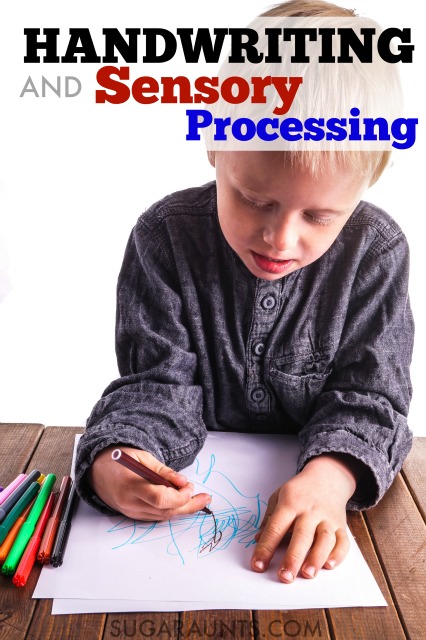
    There are many handwriting and sensory considerations, from paper sensory issues, to pressing too hard when writing, to sensory issues that impact handwriting posture, handwriting is connected to sensory processing. When teaching a child to write, there are many sensory processing to consider. Today, I’m sharing sensory considerations and strategies to help children in handwriting tasks.  

    Handwriting and Sensory Issues

    This post is part of my new year-long series with 9 other Occupational Therapy and Physical Therapy bloggers as we discuss Functional Skills of Childhood

    Pick up a pencil.  Hold it correctly.  Write a letter.  Copy a word.  Fill in a worksheet. Write down the day’s homework assignment in the correct space with a noisy classroom full of talking kids while the teacher chats to someone at the door. The open windows alert you of another class playing on a playground.  Bouncing balls, laughing students, buzzing pencil sharpener, bright sunshine, and that homework assignment that needs to be written legibly so you and your parents can read it an hour from now.

    One of a child’s occupations are to perform educational activities like handwriting.  Holding a pencil, forming letters, writing on lines, and copying from a chalkboard is a multi-sensorial function of childhood.


    Handwriting depends on accuracy and legibility.  Letters must be formed correctly and with appropriate pencil pressure, on the lines, and with attention to details.

    To complete these skills, handwriting and sensory processing are naturally associated.  All components of handwriting require integration of our senses for accuracy, legibility, and performance.  

    In a classroom environment, we are constantly bombarded with an input of sensory information.  We receive sensory information from our eyes, ears, skin, muscles, and joints and our brain has the job of organizing the information, selecting the important parts, and disregarding the rest.

    When our body’s sensory systems are functioning appropriately, we are able to manage tasks like writing with a pencil.  When there is a deficit in one of these areas, there are sensory integration problems and activities that we are required to perform are affected.

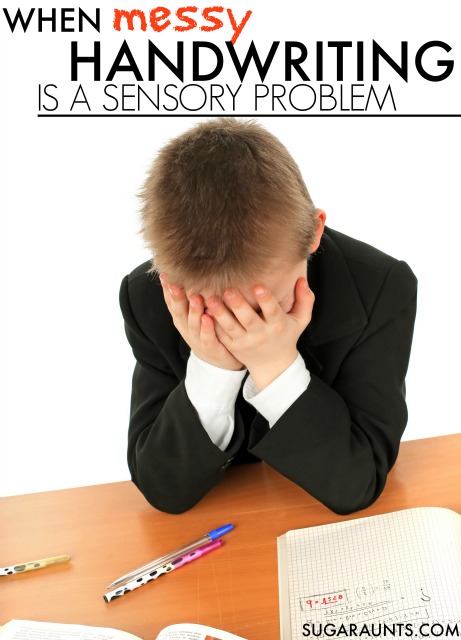
    Handwriting and sensory problems and sensory strategies to help with messy handwriting.


    Full Disclosure: This post contains affiliate links.


    Sensory Processing and Handwriting


    What is sensory processing?

    Sensory processing, or sensory integration requires the body’s central nervous system to effectively register sensory information, filter the parts that are not necessary, organize and interpret what to do with that information, and modulate the attention level of our nervous system.  
     
    Ineffective accommodation to this process leads to distractibility and disorganization.  There are seven sensory systems in our bodies: 
    • Tactile System (touch)
    • Vestibular System 
    • Proprioceptive System
    • Olfactory System
    • Visual System
    • Auditory System
    • Gustatory System
    Sensory integration is what turns sensations from these systems into perception.  We perceive our bodies, and our interactions in our environment because our brain has integrated the sensory information into something meaningful, organized, and useful (Ayres, 1979). 


    An Explanation of the Sensory Systems related to Handwriting

    The proprioceptive, vestibular, and touch senses are primary influences on the integration of our senses.  This happens from infancy as we are swaddled, carried in a flexed position, and swung in a baby swing or our mother’s arms.
     
    If these sensory systems are poorly functioning, a child will have trouble developing in all areas.  Integration of the vestibular and proprioceptive systems gives the child control over eye movements at infancy.  Without integration of these two systems, the baby will be slow to develop postural reactions and have a poor foundation of movement. 
     
    If the proprioceptive, vestibular, and touch sensory systems are not functioning adequately, the child will have a poor reaction to his environment. He may withdraw or over-respond to auditory and visual stimuli.  The child can not focus on tasks and may feel insecure in his environment.  These problems can lead to a poor body perception.


    A child with proprioception dysfunction may seek out sensory feedback from his environment.  You might see these children bumping into their desks, stomping their feet on the ground, kicking their chair or their neighbors chair.  
     
    They might rub their hands on the desk, bight their hands, shirt, or pencils, or write with heavy pencil pressure.  Students seeking proprioceptive input often crack their knuckles and chew on shirt cuffs or collars.


    An inefficient grading of movement might result in students holding their pencils too tightly, writing so heavily that the pencil point breaks, or producing messy work with large erasure holes.


    A child with vestibular dysfunction may present as a hyperactive child or a hypersensitive child.  Some students might have an intolerance for movement and will seem willful and uncooperative, while demanding physical support.  
     
    A problem with the vestibular system sometimes presents with gravitational insecurity.  These kids might be fearful when moved such as when a teacher pushes in their chair.  
     
    The hypo-sensitive student will have an increased tolerance for movement.  These kids need to keep moving in order to function.  They might fidget, wiggle, and bounce in their seat.  You will see these students jumping up and down in their chair, sitting on their feet and swaying, hanging upside down at their desk, and falling out of their seat.


    Children with vestibular, tactile, and proprioception difficulties will have trouble with eye-hand coordination.  Writing on lines and coloring between lines is difficult.  There will also usually be difficulties with depth perception.  In order for a child to develop visual perception, they need adequately integrated vestibular and proprioception systems.


    Many times, children have auditory and tactile dysfunctions that interfere with handwriting:


    The child with auditory processing concerns will seem unaware of where sounds are coming from.  When a teacher directs the class to write down items or copy specific information, these directions are lost.  They are unable to pay attention to one voice or sound without being distracted by other sounds in the classroom.  
     
    They may even be distressed by the sounds of pencils making marks as they or other students write.  
     
    They have trouble attending to and understanding and remembering directions related to letter formation in words and sentences.  These kids might have difficulty putting their thoughts onto paper and trouble revising or correcting what they have written.  
     
    Additionally, students with poor auditory processing often times have a weak vocabulary so when they are writing words and sentences, they struggle with words and sentence structure and therefore lose focus on the letter formation and line placement that they need to attend to.
     

    Sensory Issues with paper

    The child with tactile dysfunction may be either hypersensitive or hypo-sensitive to touch.  

     
    A student who has tactile defensiveness (hypersensitivity) may overly react to light touch.  
     
    When teachers are up close as in handwriting instruction, the student might become fearful or irritable.  These kids can become overly focused on neatness in handwriting and their desk space.  They might need to brush off every eraser bit or clear their paper and desk of every stray mark.  
     
    Touching paper can cause anxiety. There can be over sensitivities to the texture of paper, the lines on the paper, or the “feel” of paper.
     
    Others may find the sound of ripping paper abrasive or anxiety causing.
     
    Still others may struggle with crumbled paper and find the creases of paper are too rough on the hands.
     
    The child with under-responsiveness to touch (hypo-sensitivity) might seem unaware of pencil pressure and write with very heavy or very dark pressure on his pencil.  
     
    These children fail to realize that they’ve dropped their pencil or that they’ve got pencil smears all over their palms.

    Sensory Processing and Motor Planning needed for Handwriting

    When our body understands sensations from our skin, muscles, and joints, we are able to feel and know what our body is doing without looking at it.  
     
    This poor perception can lead to difficulty coordinating the two sides of the body as they perform different tasks.  The child might have trouble holding his paper with one hand while writing with his dominant hand.  
     
    The child will need to think through his actions without them happening automatically.
     
    Most students learn to form letters and numbers automatically given practice.  Children with a poor motor plan must think out the way a letter is made.  
     
    Motor planning is the sensory process that allows us to complete and adapt to an unfamiliar task (like a worksheet), using what we already know.  The key to motor planning is a body perception that can accommodate to tactile, proprioceptive, and vestibular information.  
     
    Also related to the sensory system is a child’s attention span.  If the sensory information is not registered, filtered, organized, selected, and discarded appropriately, the child will not be able to focus his attention on an activity like handwriting.


    Handwriting and sensory problems and sensory strategies to help with messy handwriting.


    Handwriting Difficulties due to poor Sensory Processing

    Children with difficulties modulating sensory input face a big challenge in the classroom.  The school environment is overstimulating and asking a child with sensory integration difficulties to filter out irrelevant sensory input while attending to academic work is very difficult.  
     
    Problems in handwriting might include (but not be limited to): 
     
    Handwriting Issues Related to Poor registration of sensory input with an Under-reactive response
    • The child may be unaware that he drops his pencil.
    • Shows a weak grasp.
    • Difficulty maintaining an effective writing posture.
    • Tires easily in writing tasks.
    • Does not notice details (Misses letters when copying words or sentences)
    • Desk and writing area are disorganized and sloppy.
    Handwriting Issues Related to Poor registration of sensory input with a Hyperactive or Over-reactive Response
    • Avoids smells (pencil or paper) in the classroom.
    • Easily distracted during writing tasks.
    • Difficulty paying attention to a writing task.
    • Cannot work silently.
    • Visually distracted by others, including noises, scents.
    • Difficulty focusing on one section of a chalkboard or one part of a worksheet.
    Handwriting Issues Related to Sensory Seeking 
    • Seeks movements by moving the chair, wiggling in the seat, bouncing legs and arms and distracts other students with the movements.
    • Overly excited after recess and is difficult to settle down.
    • Always touching the desk or parts of the chair during writing tasks.
    • Craves scents or tastes: chews the pencil for it’s task, smells the paper or pencil shavings.
    • Chews the pencil or eraser and clothing.
    • Bites hair/shirt/nails when writing.
    • Writes with heavy pencil pressure.
    Handwriting Issues Related to Sensory Avoiding 
    • Difficulty with changes in the routine of writing: new paper or type of worksheets
    • Low frustration level with errors in letter formation
    • Anxiety: wants to make letters and numbers correctly the first time
    • Stubborn in handwriting concerns
    • Avoids touching pencil shavings, the wooden part of the pencil tip, or the eraser.
    • Avoids erasing mistakes
    Handwriting and sensory problems and sensory strategies to help with messy handwriting.


    How to Help: Sensory Handwriting Strategies

    Many times, sensory integration can help with handwriting problems related to handwriting.  Children who demonstrate proprioceptive issues may benefit from heavy work activities in the classroom.

    Heavy Work Sensory Activities to Help with Handwriting


    • At the beginning of the day, take down chairs from desks and push them to correct places in the room
    • Erase the chalkboard
    • Wash desks/dry erase board
    • Sharpen pencils with a manual pencil sharpener
    • Chewy food breaks (fruit leather, licorice)
    • Crunchy food breaks (vegetables, popcorn, pretzels, dry cereal)
    • Cut materials from oak-tag or heavy paper
    • Carry books with both hands, hugging the books to their chest
    • Weight down the student’s chair by taping weights to the chair legs
    • Pad the feet of the chair to add extra resistance
    • Climb playground equipment
    • Carry books and supplies to other classrooms
    • Hand fidget toy
      and squeeze toys
    • Brain Breaks
    • Wall push-ups
    • Chair push-ups
    • Animal walk breaks
    Possible Modifications and Strategies to Help with Handwriting Problems


    • Try a variety of pencil grips.
    • Wrap the tip of the pencil in clay and tell the child that if the clay is misshaped, then he is pressing too hard on the pencil.
    • Try various proprioception in handwriting modifications.
    • Tilt the child’s writing surface to a slightly included position using a 3 ring binder.  This positioning provides improved wrist positioning and will decrease the force the child presses through his wrist.
    • Try writing with carbon paper under the paper to show the child that he needs to press harder or lighter through the pencil.
    • Copy written work from a his desk instead of from the chalkboard or overhead.
    • Write with a grease pencil
      to provide more resistance and feedback.
    • Remove distractions from the classroom and seat the child away from windows and doors.
    • Provide the child with written and verbal instructions.
    • Provide a quiet space in the classroom.
    • Provide movement breaks. 
     

    Typically, the sensory systems and sensory integration is developed by the time a child enters school.  


    The ability to concentrate while managing sensory input is very much needed for the classroom that is multi-sensorial, like described above.


    Problems seen with handwriting, like heavy pencil pressure, sloppy letter formation, difficulty with letter size and form, fast or very slow speed of writing, and inattention to writing tasks are often times an end product of an inefficient and irregular sensory processing system. 


    A sensory integrative approach to teaching handwriting can be successful for the child with sensory processing concerns.  Occupational Therapists can analyze sensory processing skills during the performance of handwriting (and other school-day tasks).  


    An OT uses formal evaluations, screening tools, standardized tests, observation of classroom behaviors, parent/teacher checklists, and observation of classroom behaviors and play activities to identify handwriting issues related to sensory processing.


    This post is part of the Functional Skills for Kids.  See all of the bloggers who are participating and more about the series here.  Looking for more information on the components and considerations related to Handwriting? 


    Resources:
    Ayres, A.J. (1979). Sensory integration and the child. Los Angeles: Western Psychological Services.
    Bundy, A., Lane, S., & Murray, E. (2002). Sensory Integration Theory and Practice. F. A. Davis Company.


    Looking for more Handwriting ideas?  These are some of our favorites:

     
    http://www.sugaraunts.com/2015/10/visual-tracking-tips-and-tools-for.html 


    The Sensory Lifestyle Handbook walks you through sensory processing information, each step of creating a meaningful and motivating sensory diet, that is guided by the individual’s personal interests and preferences.

    The Sensory Lifestyle Handbook is not just about creating a sensory diet to meet sensory processing needs. This handbook is your key to creating an active and thriving lifestyle based on a deep understanding of sensory processing.

    Colleen Beck, OTR/L has been an occupational therapist since 2000, working in school-based, hand therapy, outpatient peds, EI, and SNF. Colleen created The OT Toolbox to inspire therapists, teachers, and parents with easy and fun tools to help children thrive. Read her story about going from an OT making $3/hour (after paying for kids’ childcare) to a full-time OT resource creator for millions of readers. Want to collaborate? Send an email to contact@theottoolbox.com.