December Sensory Processing Activities

These December Sensory Processing Activities are designed to provide sensory opportunities, Christmas themed sensory prompts, accommodations to holiday activities, and sensory challenges with a Christmas and winter theme.  For more Christmas themed developmental activities for Occupational Therapists, parents, and teachers, grab try this free Christmas Occupational Therapy activities printable calendar.


December Sensory Processing Activities
 
December is a time of holiday fun,
hustle, and bustle.  Families have added
activities, winter parties, and distant family to visit.  This time of year brings with it unusual holiday
songs and bells, lights, different foods to smell and taste, and crowded
stores.  For the child with sensory processing concerns, it can be a very difficult time.  


The holiday rush brings with it, added and unusual sounds, sights, smells, visitors, scratchy holiday sweaters, and schedule changes. The holiday season can be downright debilitating for the child with sensory challenges. 
 
The time leading up to Christmas
can be a month-long time of sensory overload for children with sensory
issues.  It can be confusing for sensory
systems!  The overwhelming feelings of
sensory uncertainty can add a whole new meaning to holiday stress.  This time of year, when even the most intentional
parents and teachers can still cause over-stimulation or under-stimulation to
the child who is already struggling with sensory issues. 
 
There can be a need for additional calming
sensory input or changes to sensory diet, additional modifications, and added
sensory down-time.  


When it comes to preparing for the holidays and all the adjustments it brings, a plan can help. An understanding of the sensory system and how the senses are processed can help parents, teachers, and caregivers to cope with the added sensory stress for children with sensory issues.


Having a kit of ideas and coping strategies can be a helpful tool to prepare the child with sensory processing difficulties for the holiday season. 


A list of sensory activities that can be added to the day…WITH a holiday theme can make all the difference in creating a holiday that the whole family will remember, all while keeping the sensory systems in mind. 


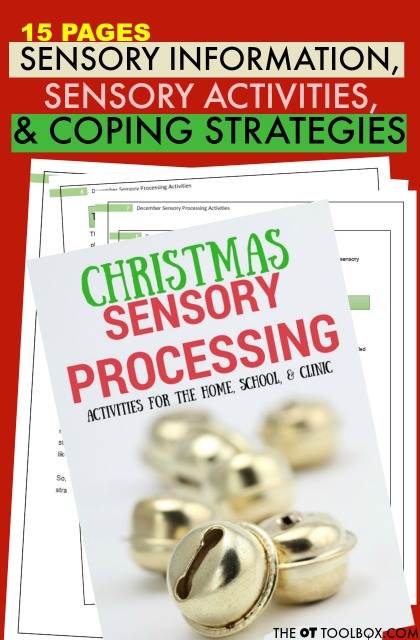
Below, you’ll see a packet of sensory activities that has been on this site for a little over two years. This packet of Christmas Sensory Activities are bound to help families of those with sensory processing challenges to thrive this holiday season. 


There are coping strategies for dealing with all of the added and new sensory input. 


There are activity challenges that hit on the big sensory systems, allowing for calming or stimulating sensory input with a Christmas theme. 


There are Christmas and holiday themed activities that can be incorporated into an established or new sensory diet, making a valuable tool for the child who is overwhelmed or underwhelmed by all that the holidays bring.


Read more about what’s included in the Christmas Sensory Processing Activity Packet…


Included in the Christmas Sensory Processing Activity Packet:


  • Each of the sensory systems are addressed in the 31 sensory activities.


  • There is a detailed description of the sensory system and sensory processing included in this packet.


  • Information is included on sensory diets and how they are needed during the holiday season. Sensory activities with a holiday theme can be added to sensory diets depending on individual sensory needs. 
 
  • Sensory challenges and modifications that can be added into daily routines this time of year.


  • A comprehensive list of sensory coping strategies is included for handling holiday stress and over- or under-responsiveness related to holiday travel, holiday visitors, and changes in routines over the Christmas season.

ON SALE for 25% OFF NOVEMBER 24-27, 2017! Just click the link to access the reduced price of $3.75!


Add these activities to your
therapy plans this month.  The activity list
is perfect for passing on to parents as a home program.  Parents and teachers can use these activities
as part of an individualized plan that meets the child’s needs. 
 
The activities are
outlined in an easy to follow therapy plan, however as parents and therapists
know, a day that involves children does not always go as planned.  The activities can be shifted around to suit
the needs of the child and the family.  


Does this sound like a resource that might help your client, child, or student? If the holidays make you want to curl up in a blanket because of the added stress and sensory challenges, this might just be the tool for you and your family! 


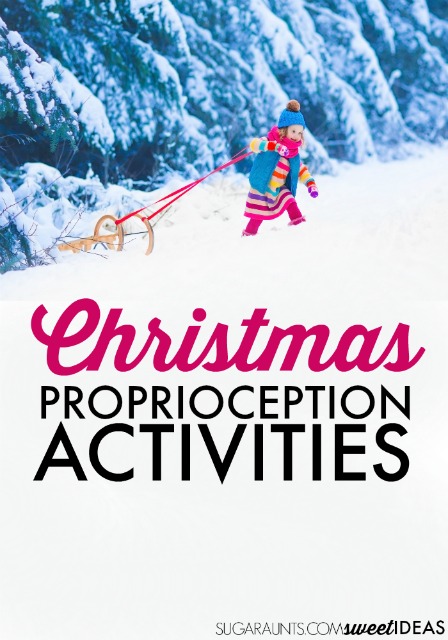
Christmas Proprioception Activities

This time of year, the hustle and bustle of the season can make all of us feel a little out of sorts.  For the child with sensory issues, the holiday season can be a real challenge!  Try adding Christmas Proprioception Activities into your child’s day for calming strategies to meet sensory needs.  
For more ideas, grab this December Occupational Therapy calendar.


Christmas Proprioception Activities

Christmas proprioception activities for children with sensory needs


Christmas Sensory Diet  

 
Occupational Therapists can add these proprioception activities to sensory diet plans or to make home programs this time of year. Ad these heavy work ideas to your therapy plans this month. They are great Christmas activities for sending home to parents for a home program over the holiday break. 
 
Parents and teachers can use these activities as part of an individualized plan that meets the child’s needs. 
 
The calendar’s activities are outlined in an easy to follow therapy plan, however as parents and therapists know, a day that involves children does not always go as planned.  The activities can be shifted around to suit the needs of the child and the family. 
An activity can be completed on a different day or used in combination with another day’s therapeutic activities. 
 
Try adding these activities into the child’s day to challenge sensory issues or as a way to help kids focus during overstimulating times that the holidays bring.
 

Christmas Heavy Work Ideas


1. Shovel activity- Use a small child’s sized snow shovel or sand shovel to scoop couch
cushions.

2. Mitten Toss- Fill a plastic sandwich bag with dry beans.  Push the filled bag into a mitten.  Close the opening of the mitten by rolling the top over on itself like you would roll socks together.  Use the mitten as a DIY bean bag in tossing target games.
 

3. Gift Push- Load cardboard boxes with heavy objects like books.  Ask the child to push the boxes across a room.  For less resistance, do this activity on a carpeted floor.  For more
heavy work, do this activity outside on the driveway or sidewalk.
 

4. Reindeer Kick- Promote proprioceptive input through the upper body with wheel barrow
race type movements.
  Kids can also stand on their arms and legs in a quadruped position and kick their legs up. 

5. Sleigh Push- Load a wheelbarrow, sled, or wagon with objects.  (Try the weighted boxes from number three activity listed above.) Ask kids to push, pull, and tug on the “sleigh” through the yard. 

6. Peppermint Candy Stick Oral Motor Activity- Did you know you can make a peppermint candy stick into a straw?  It’s a great oral motor activity for kids. Cut an orange
in half and then stick the peppermint stick into the orange.
  Next, suck the peppermint stick.  The juices from the orange will begin to work their way up through the peppermint stick. 

7. Cocoa Temperature Taste- Make a batch of hot cocoa. Pour it into an ice cube tray and
let it freeze.
 Next, make another batch of hot cocoa. Divide it out into several mugs. Add a cocoa ice cube to the first mug, two ice cubes to the second mug, and so on. Mix the mugs up on a table.  Place a straw into each mug.  Children can position the mugs in order of
coolest to hottest or vice versa.
  If doing this activity with several children, use small paper cups so that each child gets their own set of cups. 

8. Christmas Chewy and Crunchy Food Breaks- A calming sensory snack can be just the thing that children need to organize their sensory system during the hustle and bustle of the holiday season. 

Calming Sensory Foods for Christmas

Adding chewy or crunchy foods to a sensory diet has a calming effect. These types of food provide heavy work through the jaw and mouth.

Try these calming Christmas foods: 

  • Peppermint snack mix with peppermint chocolate candies mixed with dry cereal and raisins
  • Toffee
  • Rice Crispy Wreath cookies
  • Pretzel sticks
  • Homemade fruit leather
 
 
Christmas proprioception activities for kids with sensory needs


Christmas Sensory Writing

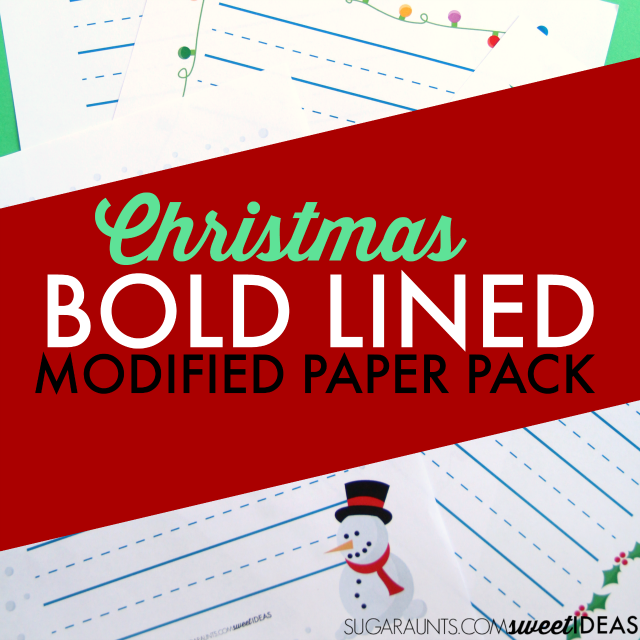
Looking for modified paper to help kids with handwriting issues?  Try this modified Christmas paper packet!
 
Use this modified paper Christmas Handwriting Pack to work on legibility and handwriting struggles with kids.
 
Use these modified paper with a Christmas theme to work on handwriting this time of year. Add a sensory component with proprioceptive feedback to add heavy work through the hands. Here are some ideas for adding adding proprioception to sensory writing activities:
 
  • Write over a sheet of sandpaper.
  • Tape the Christmas paper to a wall or easel and write on a vertical surface. 
  • Use a grease pencil to add proprioceptive input resistance. 


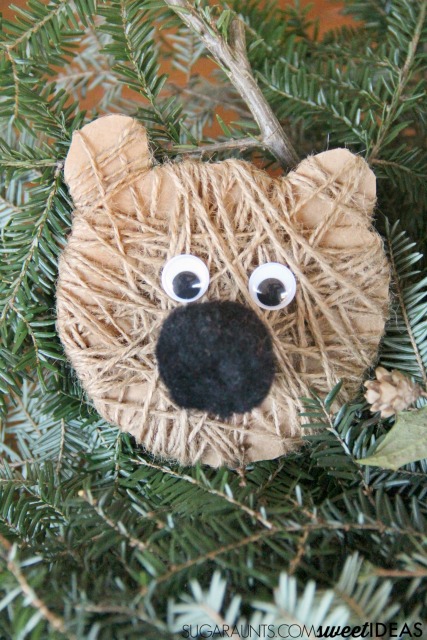
Bear Ornament

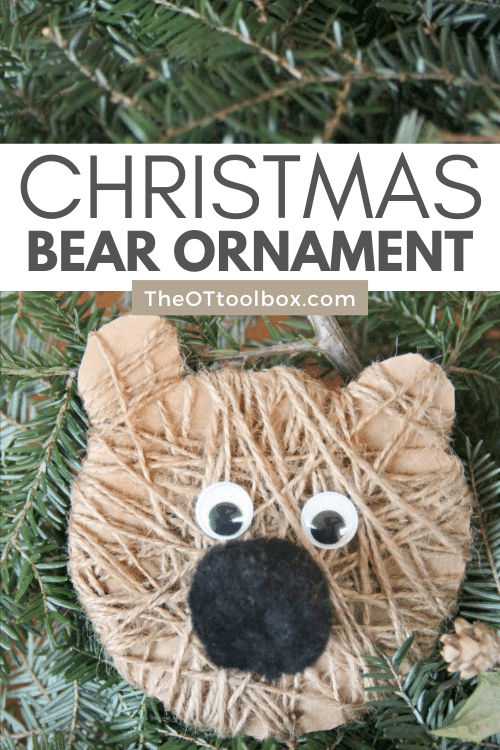
Bear ornament


Making holiday ornaments like this bear ornament with kids is such a fun way to develop fine motor skills, and then see the work hanging on the Christmas tree. Kids will love this teddy bear ornament but occupational therapists will love it even more for the developmental aspects! Add this bear ornament craft to your occupational therapy Christmas crafts.

Bear Ornament

Check out these Christmas Fine Motor Activities for more creative ways to work on fine motor skills and address development of skills this Christmas season. 

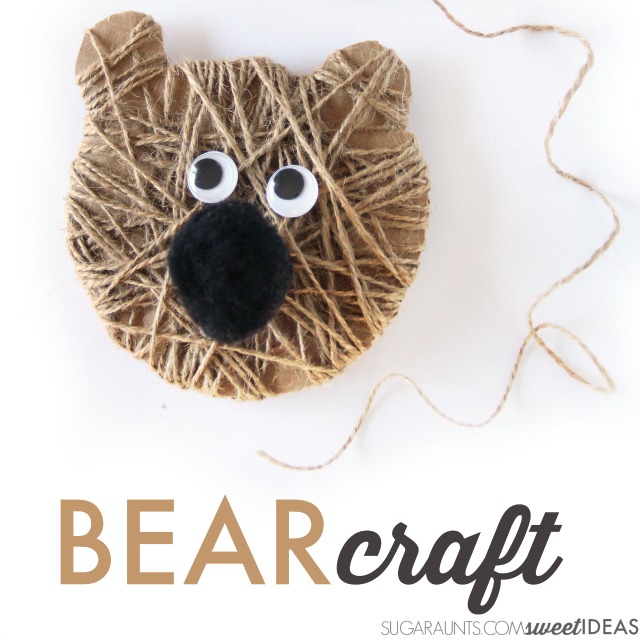
Today, I have a fun bear craft to share with you. This bear ornament is such a fun way to get kids creating and crafting during the Christmas season. We used this as a bear Christmas ornament, and a children’s book extension activity for the Bear Books by Karma Wilson.  

We made the bear craft based on Bear Stays Up for Christmas.  It’s true that in our house, we do love to come up with crafts and activities based on children’s books and this Christmas book themed Christmas ornament craft was no exception.

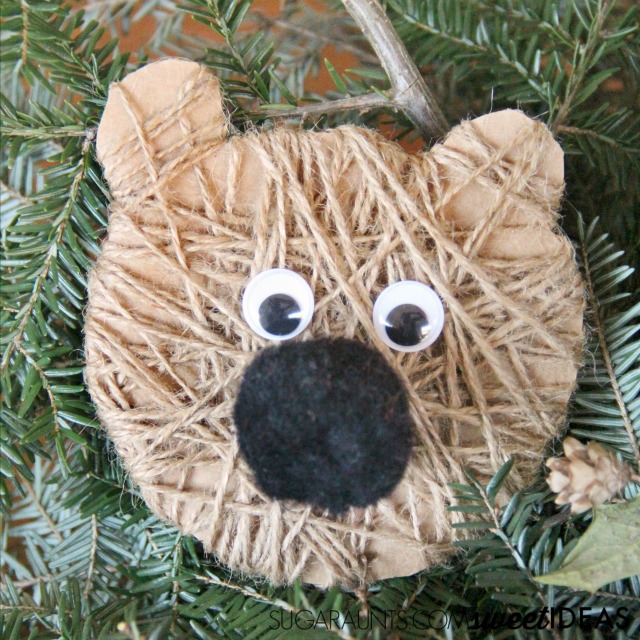
Bear ornament that kids can make for a book related Christmas ornament.

How to make a Bear ornament

This post contains affiliate links.

When we came up with this bear craft, we knew we wanted to create a cute bear that matched the bear in Karma Wilson’s Bear Stays Up for Christmas.  The bear books are such a fun series to read and we loved to see Bear’s friends help him stay up to celebrate Christmas.

Bear Stays Up for Christmas is the perfect book to add to your reading list this Christmas season.  It shows us how bear discovers the best gift of all is giving.  How fun would it be to read this book, make the cute bear craft Christmas ornament, and then give it to a friend?

Such a cute bear ornament for Christmas.

You’ll need just a few materials to make this bear craft:

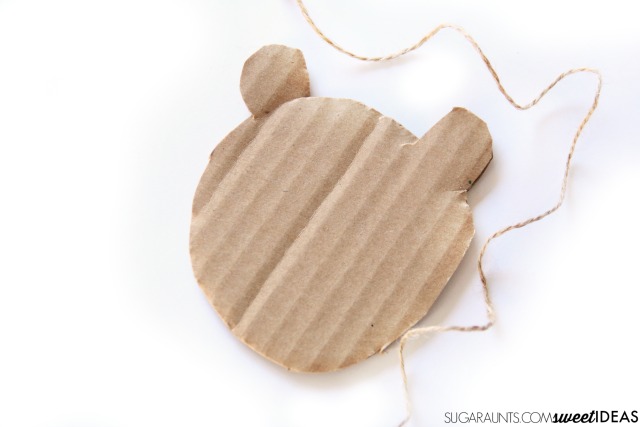
This is such an easy bear craft.  It would be perfect for preschool aged kids or grade school children. To start, you’ll need to cut a bear face shape from the cardboard.

Bear craft that kids will love to make while working on fine motor skills.

Bear Craft

Bear crafts can be made this time of year, or all year long to work on skills like fine motor work, eye-hand coordination, bilateral coordination, and more.

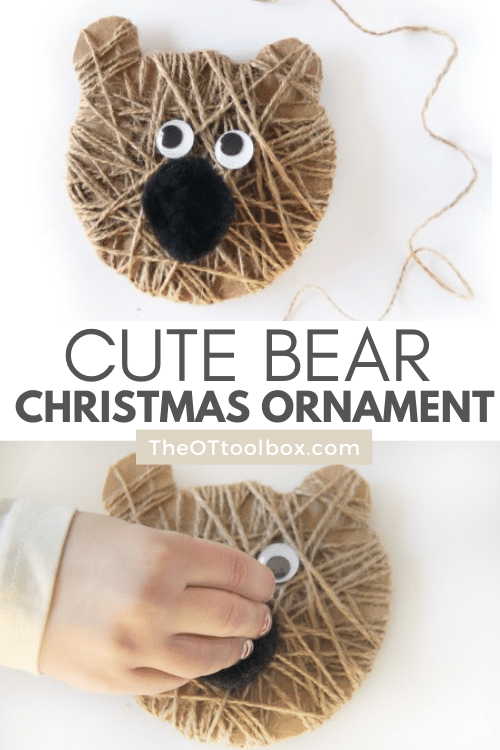
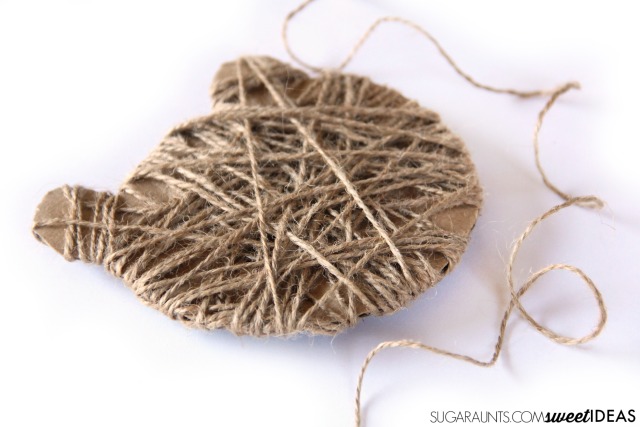
Then, use the brown twine to wrap all around the cardboard face shape. Tape the twine to the back of the bear to keep it in place.

Help kids work on fine motor skills with a bear craft that is perfect for a Christmas ornament.

Fine motor tip: This activity is a great way to address bilateral coordination skills. Wrapping the twine around the cardboard shape allows kids to coordinate both hands together with a working hand and a non-dominant, assisting hand.  This type of activity requires a child to work at midline while looking down toward their hands.  It is a good activity for kids to seem to switch hands when writing or require prompts to hold the paper when writing and other tasks that utilize an assisting hand and precision work with the dominant hand.

Read here for more information on creative ways to address bilateral coordination

Continue to wrap the twine around the cardboard until most of the cardboard is not showing, including around the bear’s ears.


Add a small piece of tape to the back of the bear craft to hold the end of the twine down.


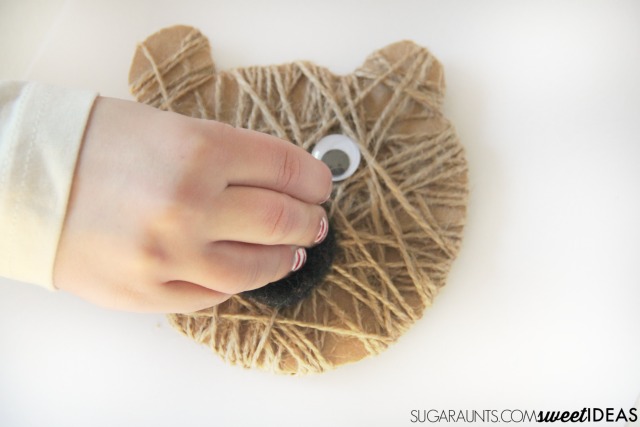
Next, stick the peel and stick googly eyes on the bear’s face.

Kids love to make crafts like this bear craft based on a popular childrens book.

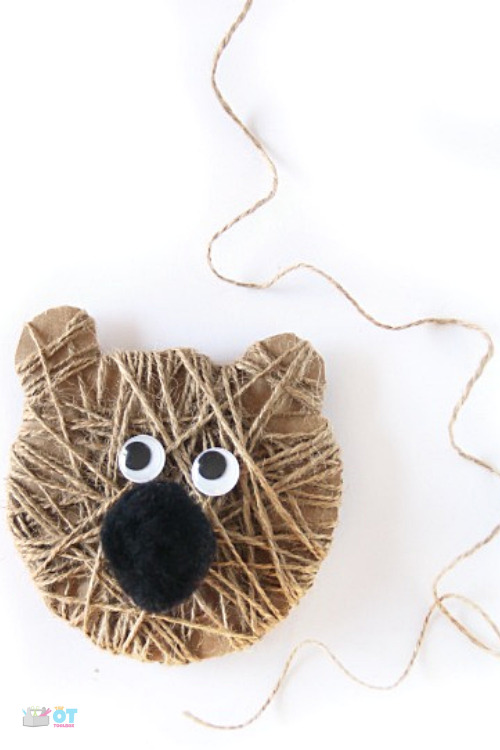
Use a dab of glue or a glue dot to stick the crafting pom pom onto the bear craft.


Finally, use a small piece of twine on the back of the bear craft to create a loop in order to hang the bear craft Christmas ornament onto the Christmas tree.


While this bear craft was based on a popular children’s Christmas book, it would be a great accompaniment for any bear themed preschool book or children’s book.

Kids can make this bear craft based on the book, Bear stays up for Winter, or any bear book for kids.

Make this bear craft Christmas ornament based on Bear Stays Up for Christmas childrens book.

Need more ornament crafts? 


Nativity Tree Decorations 

Spice Jar Lid Star Ornaments 

Dog Ornament 

Pine Tree Ornament

Looking for more kid-created Christmas ornaments?  Here are some of our favorites:

Bottle Caps Holly Ornament

Spaghetti Wreath Ornament

ee cummings Little Tree Christmas Ornament

Olive the Other Reindeer Ornament

Cutest ever bear craft Christmas ornament for kids.
Every Christmas tree needs this kid-made Christmas tree bear craft ornament!


Colleen Beck, OTR/L has been an occupational therapist since 2000, working in school-based, hand therapy, outpatient peds, EI, and SNF. Colleen created The OT Toolbox to inspire therapists, teachers, and parents with easy and fun tools to help children thrive. Read her story about going from an OT making $3/hour (after paying for kids’ childcare) to a full-time OT resource creator for millions of readers. Want to collaborate? Send an email to contact@theottoolbox.com.

Handwriting Resources

Handwriting can be a tough struggle to overcome.  You might work with a child on line awareness or spatial recognition but the child still neglects these areas. 

 
You might see letters that are formed poorly so that legibility is greatly impacted.
 
You might help a child on their written work and they seem to do well when one-on-one, but they simply can not carry the skills over into the classroom setting.
 
You might see struggles with letter and number reversals no matter how much you practice letter formation and perceptual skills.
 
All of these difficulties are challenges that YOU have mentioned to me.
 
Chances are, there are many, MANY more others who are facing the very same handwriting challenges with their child, student, or therapy client.
 
All of these concerns were voiced to me as a response to my Handwriting Help email series.  Did you get the free printables and 6 days of themed handwriting help?  Sign up here.
 
The thing is, every child struggles in different ways.  There are differences in attention, focus, sensory needs, fine motor skills, pencil grasp, visual processing, cognition, and many more factors. What works for one child may not work for another.
 
However, there are common techniques that can help children who face specific handwriting challenges.
 
To help work on these areas, I wanted to share with you some handwriting resources that can help.  These are activities and ideas that might be just the thing that clicks for your child.
 
These are workbooks, handwriting practice sheets, and creative strategies that can help kids who struggle with handwriting.  
Handwriting resources for parents, teachers, therapists, and professionals who work with children with handwriting legibility challenges and sloppy writing.
 

Handwriting Resources for Sloppy Handwriting

 
Affiliate links are included in this post. 
 
 handwriting strategies resources
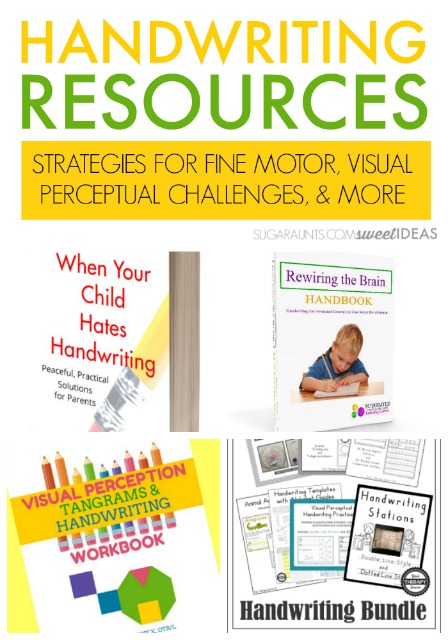
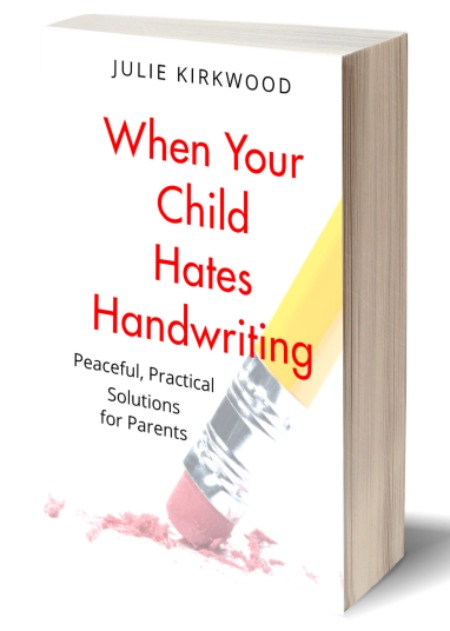
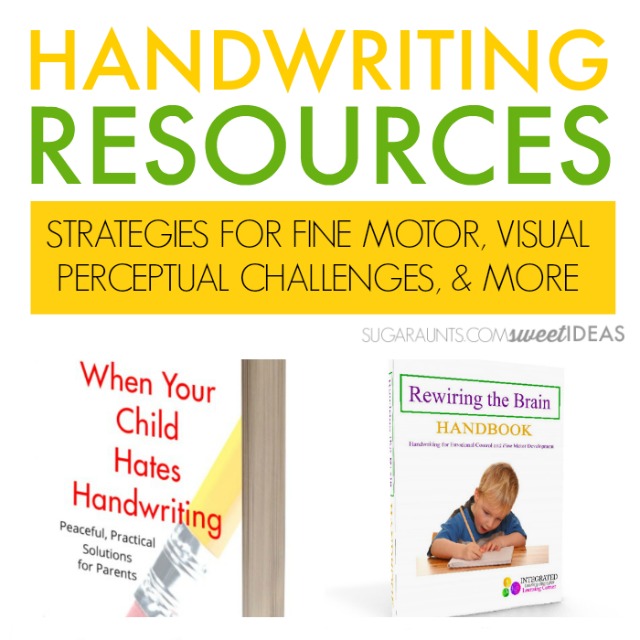
When Your Child Hates Handwriting provides handwriting instruction through 50+ fun and easy activities that can be incorporated into handwriting practice .  Appropriate for use with children from ages 3 to 12, this book offers a new approach to teaching the struggling child how to write.
Buy When Your Child Hates Handwriting 
 
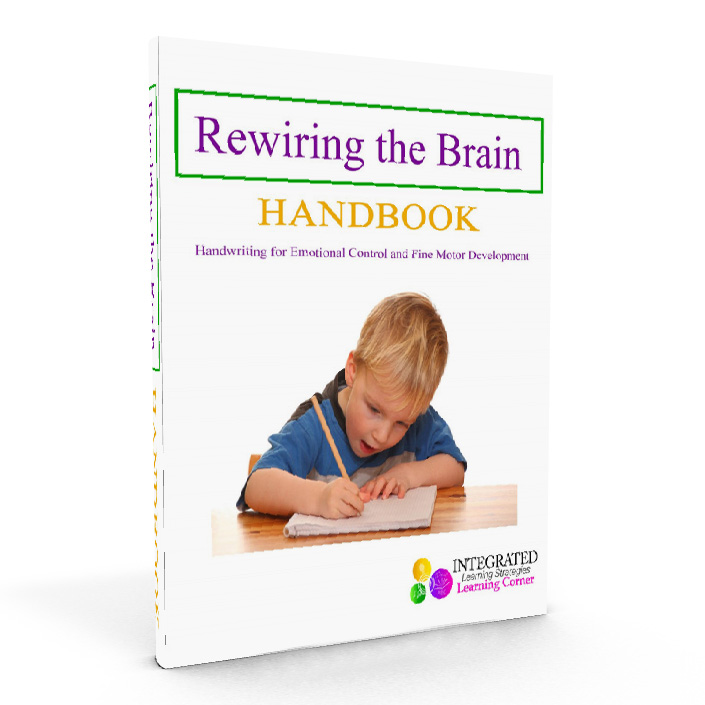
Rewiring the Brain Handbook is a printable handwriting workbook that is designed for parents, teachers, therapists, and professionals as a guide for providing cognitive development, fine motor skills, and emotional grounding.  The exercises in the book are intended to support emotional stability, attention, reading, fine motor skills, eye-hand coordination, and visual perception. The workbook contains 42 pages of exercises and activities with lines, shapes, letters, mazes, and fine motor games to enhance learning development.  
Buy Rewiring the Brain Handbook
This Handwriting Bundle printable packet is designed to help with prewriting skills, letter formation and handwriting practice.  When you purchase all the titles together you receive a 30% discount.  
This handwriting bundle includes the titles below (click on each title for more information):
  1. Lines, Lines and More Lines ($3.99)
  2. Fading Lines and Shapes ($3.99)
  3. Fading Alphabet ($4.50)
  4. Handwriting Stations ($6.99)
  5. Animal Action Alphabet ($4.99)
  6. Visual Perceptual and Handwriting Practice Pages ($4.99)
  7. Handwriting Templates with Alphabet Guides ($4.99)
Regularly, these titles would be priced at $34.44 but when you purchase all 7 together you get a 30% discount sale price of $24.10!  This discount code was created specifically based on the interests of my readers (that’s you!)
 
 
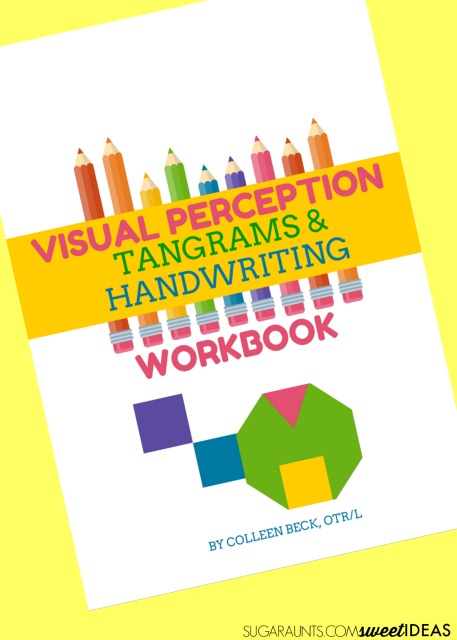
This Visual Perception, Tangrams, & Handwriting Workbook activity workbook has information on all of the visual perceptual areas necessary for written work: 
  • Visual Spatial Relations
  • Visual Discrimination
  • Figure Ground
  • Form Constancy
  • Visual Memory
  • Eye-Hand Coordination
  • Sequential Memory
  • Visual Closure
The printable workbook shares creative puzzles, drawing activities, and building challenges that will work on all of the skills needed for improving line awareness, letter formation, and neatness in written work.  Read more about this Visual Perception workbook and ways to use the activities in a playful way.
 
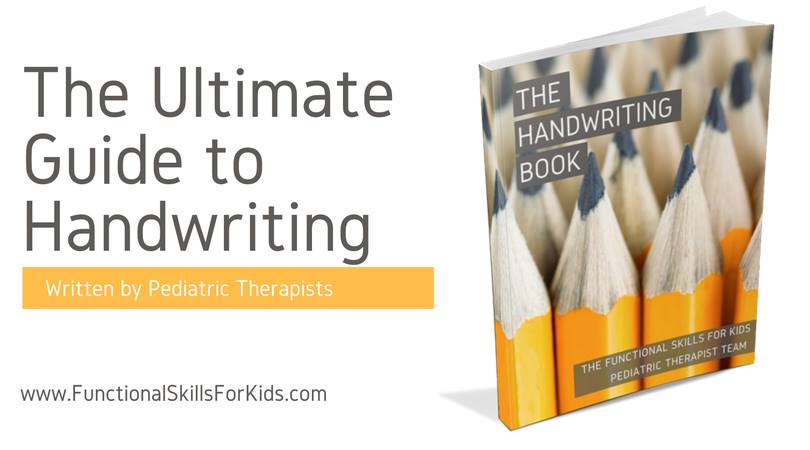
The Handwriting Book is a digital book written by 10 pediatric Occupational Therapists and Physical Therapists and addresses underlying components related to handwriting.  This book is FULL of creative ways to work on handwriting. 


MORE handwriting resources you will love:

 
Be sure to join the Sweet Ideas for Handwriting Help Facebook Group for daily handwriting tips, strategies, and practice techniques in an engaging community of parents, teachers, and therapists.
Handwriting resources for parents, teachers, therapists, and professionals who work with children with handwriting legibility challenges and sloppy writing.

The Most Creative Lacing Cards and Fine Motor Skills

Fine motor development is essential for so many tasks.  Kids begin their fine motor skills development as soon as they are placed in tummy time as an infant.  While the manipulation of small motor muscles in activities like lacing cards and handwriting doesn’t come until much later, the building blocks for success in tool manipulation and dexterity is established within days of birth.


Because fine motor skills are used in so many of our daily functions, it can be frustrating for kids (and their parents or teachers!) when manipulation and dexterity of the hands and fingers are a struggle.


Today, I’m sharing in inside scoop on how lacing cards boost fine motor skills and creative ways to further develop those skills through creation of DIY lacing cards, in unique process art ways!

Use lacing cards to address fine motor skills with kids in the classroom, home, or therapy clinic.

Lacing Cards and Fine Motor Skills


When kids thread a string through a lacing card, they are doing much more than establishing a baseline of sewing skills.  The motor movements required to perform this activity are powerful.  In fact, it shouldn’t come as a surprise to know that many Occupational Therapists use lacing cards as a power tool, i.e. a therapy treatment tool that addresses many common goal areas in kids.

Lacing cards and fine motor skills are great for building skills needed in tasks.

Let’s talk about the skills needed to manage and lace up a lacing card:


Bilateral Coordination-  In order to hold the lacing card and the string or ribbon, kids need to be able to manipulate and coordinate both hands together in a functional way.  They need to bring both hands to midline and work with one hand moving as a manipulating hand to move and thread the string.  The other hand, typically the non-dominant hand works as an assisting hand to hold the lacing card.  Both hands, wrists, and shoulders need to work together to position the card and string in a coordinated fashion.  


Read more about bilateral coordination activities.


Tripod grasp or Pincer grasp-  Depending on the size of the lacing card holes and the thickness of the string, different types of pinching grasps can be used with the dominant hand.  it is common for these grasps to vary during and throughout the task of lacing a single card.  One thing is consistent though and that is the fact that the fingers are working in a functional way that is beneficial for pencil grasp and manipulation of small items such as needles, beads, and clothing fasteners.  


Here is more information about a pincer grasp and activities to address this skill.


Separation of the two sides of the hand- When holding the string, it is useful for the ring and pinkie fingers to bend into a fist in order to stabilize the hand.  This positioning is effective for a functional grasp on the pencil when writing. In this way, lacing cards boost fine motor skills as a pre-writing tool. 


Check out these easy ideas to address motoric separation of the hand.


Visual Motor Skills- Coordinating visual information with motor movements of the hands is essential for handwriting, cutting with scissors, and many other tasks.  Manipulating lacing cards is an excellent way to address these needs. 


Read more about visual motor skills.


Motor Planning- A motor plan is functional execution of a task which is viewed with the eyes and carried out with the hands in order to complete tasks, such as mazes, walking around obstacles, cutting along a line, and writing within a space on a form.  Visual motor skills can be difficult for children with visual processing difficulties.  Identifying and organizing information is in a motor plan works on problem solving skills.  


Read more about motor planning activities for kids.


Process Art DIY Lacing Cards 

This post contains affiliate links.
 
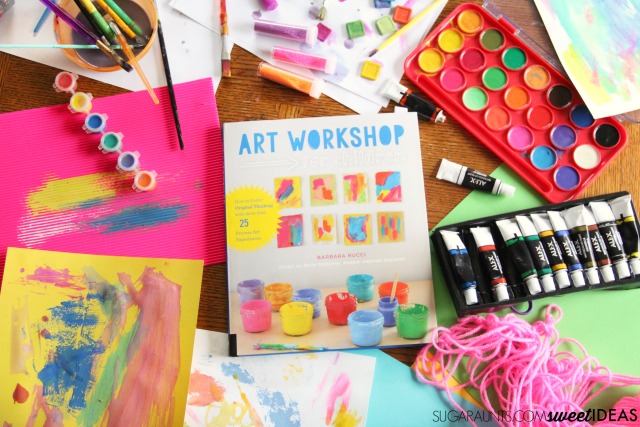
While there are many lacing cards available on the market, it can be a lot of fun (and quite beneficial) to make your own lacing cards.  We had a blast making a big set of lacing cards recently, using inspiration from Barbara Rucci’s new book, Art Workshop for Children.  
 
We were lucky to receive a book to check out and WOW! What a resource for developing creativity and inspiration in kids.  I loved flipping through every page with my kids as we picked out project after project to complete.  
 
One of the art projects that stood out to me, is the watercolor lacing cards activity.  As an Occupational Therapist, I was drawn to the fine motor goldmine with this activity.
 
We were inspired by the watercolor lacing cards in the book and HAD to make our own.  Just like the extended activity ideas that are included with every art activity in Art Workshop for Children, I had to get my kids creating by making their own colorful and creative lacing cards.
 
So often you see printable lacing cards that are very cookie cutter.  There are so many on the market that are simple shapes and single colors or images.  These are fun and completely perfect for boosting the fine motor skills needed for functional tasks.

Use art supplies to make your own lacing cards and address fine motor skills.


However, when we saw the creative opportunity in Art Workshop for Children, we had to get busy with the fine motor development!
 

Creative DIY Lacing Cards and Fine Motor Skills

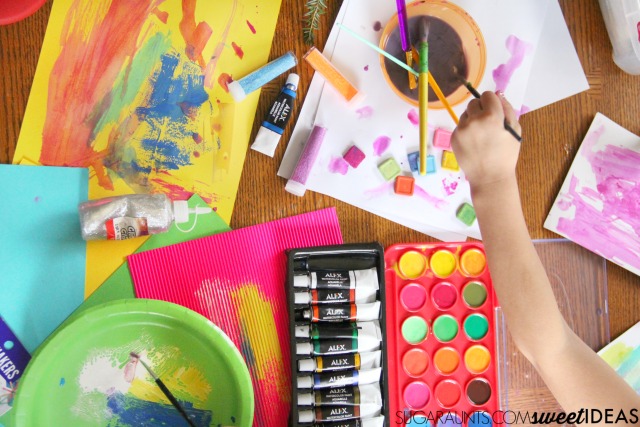
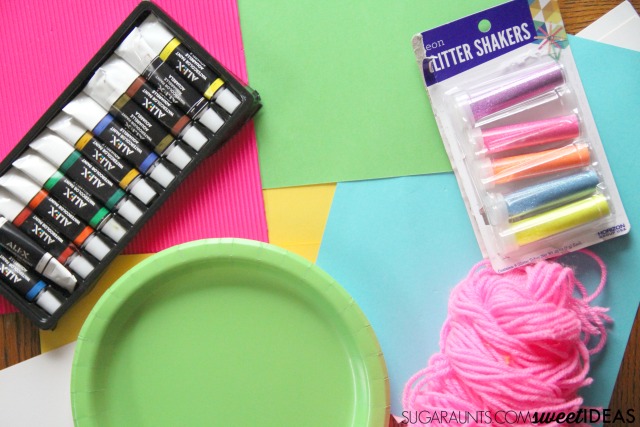
I set up our dining room table with a bunch of supplies:

Paper plates

Glitter Shakers 
Glitter Glue
You'll need just a few materials to make your own lacing cards and fine motor skill development.
 
I didn’t have to do much in the way of instruction with this creative activity.  My kids were drawn to the paints and paint brushes like kids to candy.  They got busy painting, dripping, splotting, and dumping.  It was fun to hear the comments about glitter and paint mixing and I laughed because it reminded me of the “Overheard” sidebar comments in the Art Workshops for Children book.

Glitter and watercolors are all you need for creative lacing cards and fine motor skills development in kids.
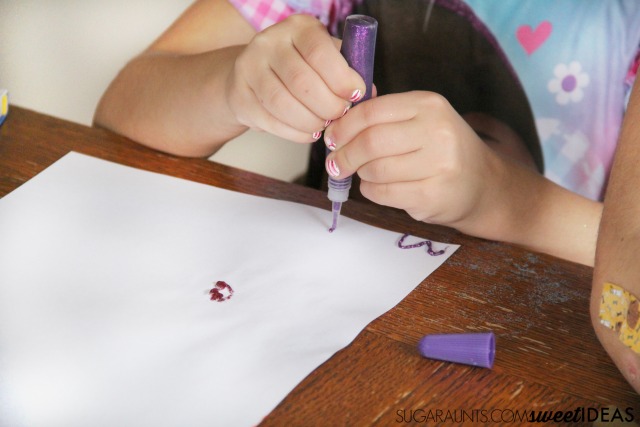
Use glitter glue to make creative lacing cards and fine motor skills development.
 
Just making the watercolors were a fine motor goldmine.  Squeezing glitter glue tubes, sprinkling glitter, and painting with paint brushes of all sizes worked those intrinsic muscles of the hands. 

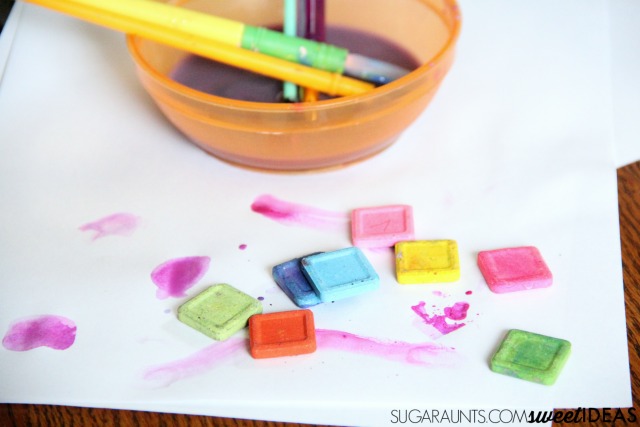
Use watercolor cakes to paint lacing cards and address fine motor skills.


Kids can make lacing cards for fine motor skills.

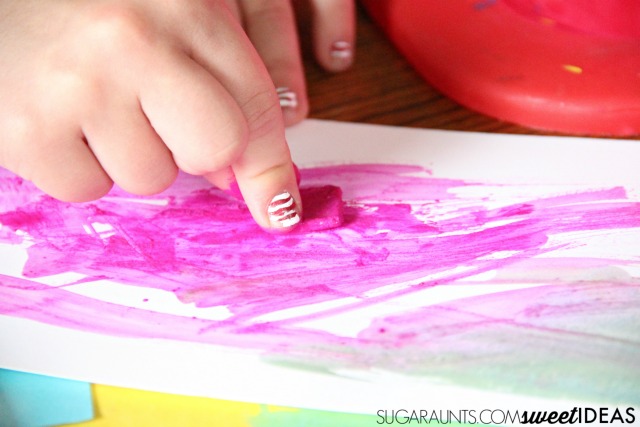
One surprising way that we worked on fine motor skills was using old water color cakes.  I pulled the cakes right from the water color set and showed my kids how to dip them into water and then draw on the paper.  Pinching the wet and messy watercolor cake was a great sensory experience that promoted a tripod grasp.  This is a great way to strengthen the intrinsic muscles of the hand and promote arch development needed for endurance in tasks such as coloring and writing.

 
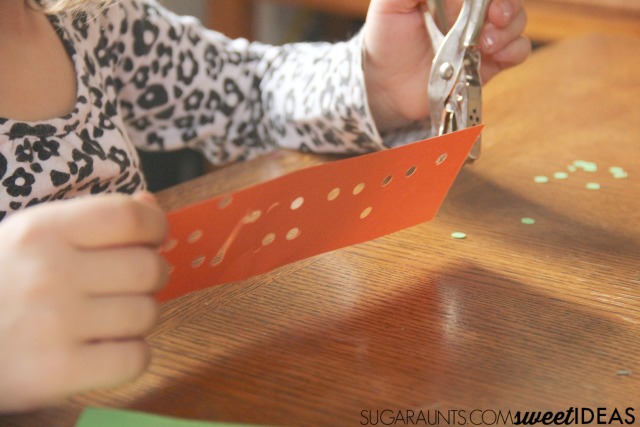
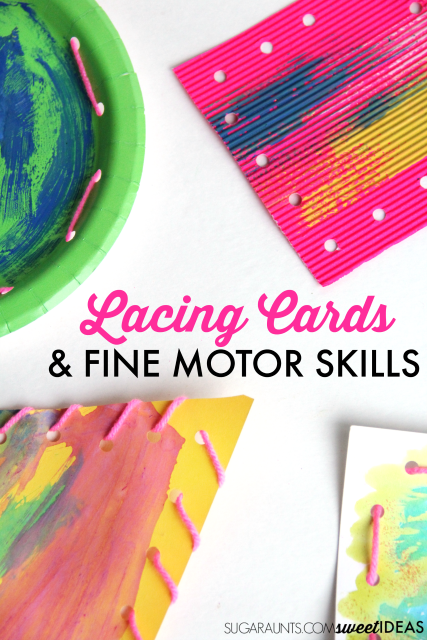
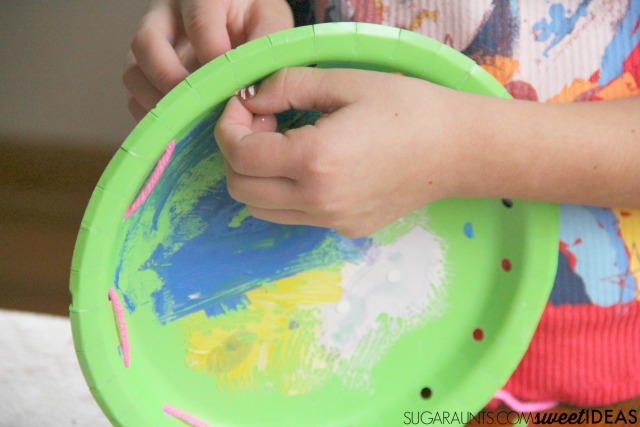
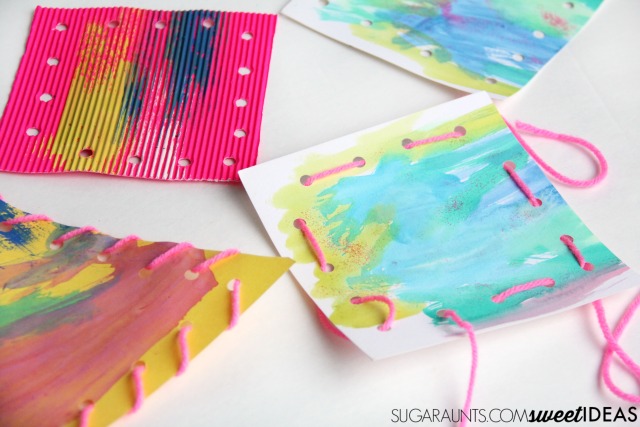
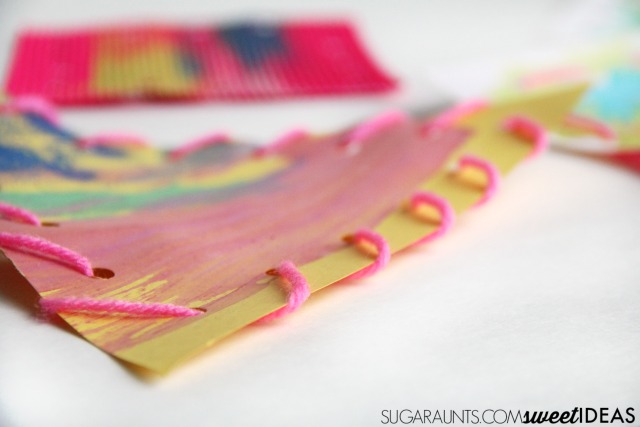
Once our paintings were dry, my oldest daughter and I cut them into large shapes and used a hole punch to create lacing cards.  We used yarn to thread around the holes.  I showed my kids how to stitch the holes in two different ways, going up and down through the holes and also around the edge of the lacing card.  Both techniques great for addressing the fine motor skills described above.

Kids love to make their own lacing cards for addressing fine motor skills.
Lacing cards and fine motor skills go hand in hand with creative activities.
 
These gorgeous watercolor lacing cards are perfect for developing fine motor skills in kids and are great addition to any home, classroom, or therapy clinic…from start to finish!  We’ll save our lacing cards and use them again and again! 
 
I am so excited to be on the Art Workshop for Children blogging team.  You can read more about the book here and read more about the creative activities in the book. 
 
Consider adding Art Workshop for Children to your holiday shopping list!  Pair the book with art supplies for a creative and unique gift idea that kids of all ages will love.  Teachers and therapists will find this book beneficial for the classroom or clinic, too. 

Grab the Art Workshop for Children book for creative art ideas.

Who do you know that would love a creating art gift like this?

Lacing cards and fine motor skills are great for developing the strength in the hands for handwriting and pencil grasp.

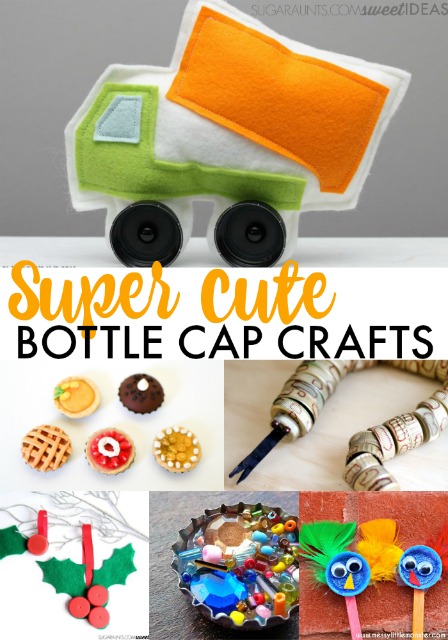
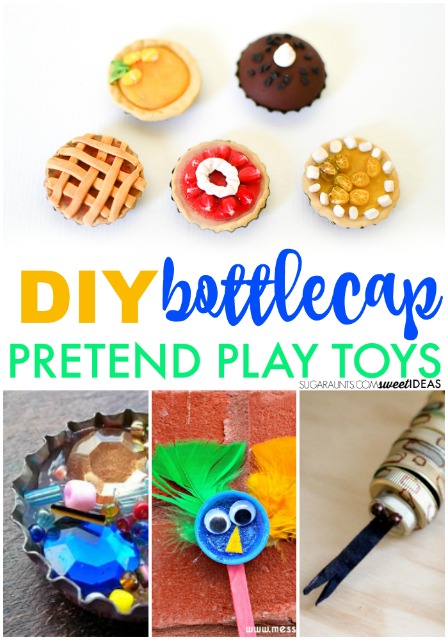
Surprising DIY Pretend Toys from Bottle Caps

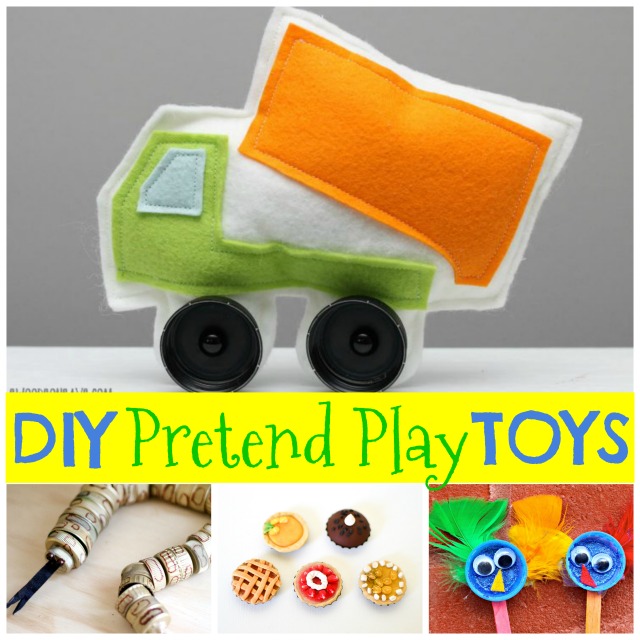
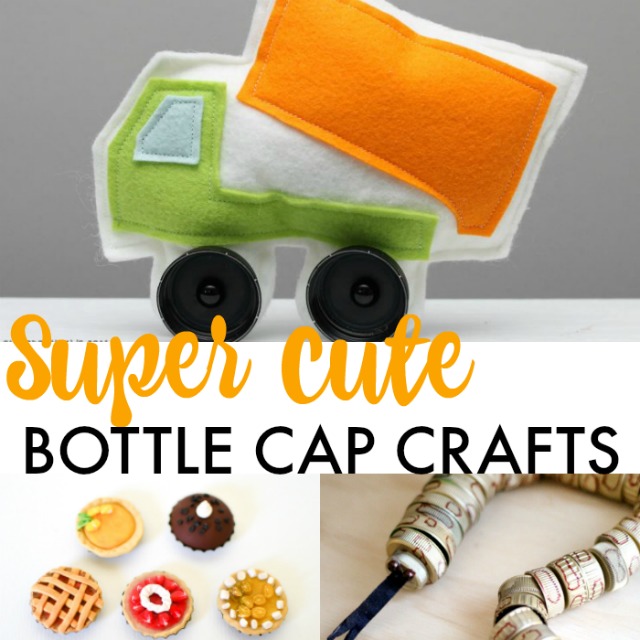
Today, I’m sharing a few fun DIY pretend toys made from bottle caps! These craft ideas that are irresistible for imagination, pretend play, and creative time.  In fact, make that super cute bottle cap crafts.  These are fun ways to inspire pretend play with toys using recycled materials from around the home to create toys, pretend play, and just plain old fun. I am trying to figure out which of the DIY pretend toys to make first!
Make DIY pretend toys from bottle caps!
Scroll around and check out some of these super cute crafts using bottle caps! I love that so many of these can be used in pretend play.  Get the kids involved in the creating process for DIY pretend play fun!

Make DIY pretend toys from bottle caps!

DIY Pretend Toys for Kids

Bottle Cap Rattle Snake Craft  from Moms and Crafters

Rudolf Ornament Craft from Red Ted Art

Bottle Cap Holly Craft from Sugar Aunts

Bird Puppet Craft from Messy Little Monster

Treasure Magnets from Hattifant

Bottle Cap Ornaments from Life Over Cs

Bottle Cap Snowflake from Zing Zing Tree

Bottle Cap Truck Craft from Swoodson Says


Polymer Clay Bottle Cap Pies from Adventures in a Box


DIY bottle cap toys would be fun for pretend play with kids.


Make DIY pretend toys from bottle caps!

Which of these DIY pretend toys from Bottle Caps do you want to make first?


Everything You Need for Your Minecraft Fan

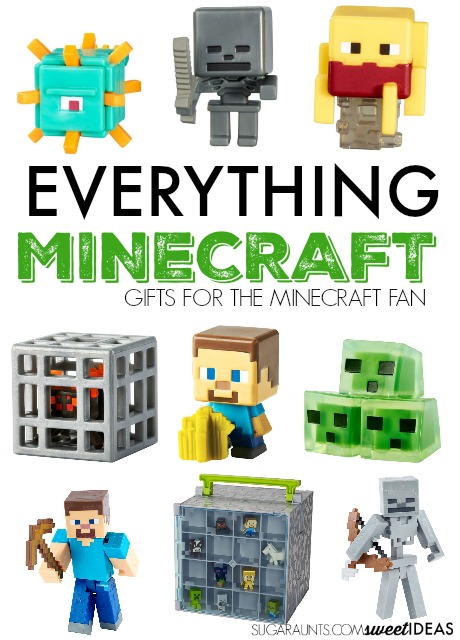
My son is a Minecraft fan.  He is obsessed.  From playing the game, to pretending with action figures, to reading the books.  He is Minecraft obsessed in a big way.  Although this is a different sort of post than I usually share, I wanted to put together a gift guide that has everything Minecraft that you need for your obsessed child.  Use this list as a guide for gift ideas, stocking stuffers, and even pass it on to grandparents who are asking what to buy this holiday season.


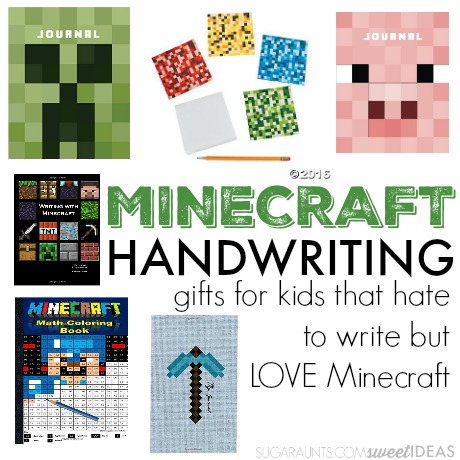
And here is a tip: when that Minecraft loving kid HATES to practice handwriting, use his or her passions to spark a writing fire! 


I’ve got all of the Minecraft writing tools toward the bottom of this post, so scroll on down…but for now, here are  toys that will help improve pencil grasp.


Everything you need for your minecraft fan this holiday season. use these minecraft ideas for gifts.


Minecraft Gifts That Your Child Will Love

There are SO many Minecraft ideas that are out there.  From gift ideas to stocking stuffers, you can find them all here.

Affiliate links are included in this post.

These figures are perfect for building, setting up imaginative scenes and pretend play scenarios.  The great thing about Minecraft is that the mind is the limit when it comes to creating scenes.There are so many mini figures that can be used in pretend play scenarios. Use them to encourage storylines.  Then, kids can write down characters, plays, and actions of the figures.

amzn_assoc_placement = “adunit0”;
amzn_assoc_search_bar = “true”;
amzn_assoc_tracking_id = “sugaun-20”;
amzn_assoc_ad_mode = “manual”;
amzn_assoc_ad_type = “smart”;
amzn_assoc_marketplace = “amazon”;
amzn_assoc_region = “US”;
amzn_assoc_title = “My Amazon Picks”;
amzn_assoc_linkid = “6784097fea76382fa17229ecbf3d34ed”;
amzn_assoc_asins = “B015QZMIQM,B015QZMIPI,B015QZMJOS,B015QZMHSQ”;


Use these blocks to create landscapes: 

amzn_assoc_placement = “adunit0”;
amzn_assoc_search_bar = “true”;
amzn_assoc_tracking_id = “sugaun-20”;
amzn_assoc_ad_mode = “manual”;
amzn_assoc_ad_type = “smart”;
amzn_assoc_marketplace = “amazon”;
amzn_assoc_region = “US”;
amzn_assoc_title = “My Amazon Picks”;
amzn_assoc_linkid = “6784097fea76382fa17229ecbf3d34ed”;
amzn_assoc_asins = “B00DOQD0Y0,B013DZOC7U,B00KLCH5FK,B00MI55QWW”;

What to do with all of those mini figures? Grab a storage case. Use small Minecraft notepads to label the figures in the case.


amzn_assoc_placement = “adunit0”;
amzn_assoc_search_bar = “true”;
amzn_assoc_tracking_id = “sugaun-20”;
amzn_assoc_ad_mode = “manual”;
amzn_assoc_ad_type = “smart”;
amzn_assoc_marketplace = “amazon”;
amzn_assoc_region = “US”;
amzn_assoc_title = “My Amazon Picks”;
amzn_assoc_linkid = “3f1e1cf9ecd4ac819f32bdccac5d9f83”;
amzn_assoc_asins = “B00RZ62A1O,B01D0XP32I,B016YXMYQ4,B00DOQCV9U”;
Looking for a few digital ideas? Ask kids to write labels on the games or instructions for play.


amzn_assoc_placement = “adunit0”;
amzn_assoc_search_bar = “true”;
amzn_assoc_tracking_id = “sugaun-20”;
amzn_assoc_ad_mode = “manual”;
amzn_assoc_ad_type = “smart”;
amzn_assoc_marketplace = “amazon”;
amzn_assoc_region = “US”;
amzn_assoc_title = “My Amazon Picks”;
amzn_assoc_linkid = “3f1e1cf9ecd4ac819f32bdccac5d9f83”;
amzn_assoc_asins = “B00RZ628O8,B0119J9VMI,B00KVQYJR8,B00992CF6W”;
Most parents are interested in getting the kids to read. For the Minecraft obsessed kid, a story about Steve may be just the material that creates a bookworm. Use the books to encourage writing.  Ask your child to write a story extension to the books. Here are some Minecraft books to try:


amzn_assoc_placement = “adunit0”;
amzn_assoc_search_bar = “true”;
amzn_assoc_tracking_id = “sugaun-20”;
amzn_assoc_ad_mode = “manual”;
amzn_assoc_ad_type = “smart”;
amzn_assoc_marketplace = “amazon”;
amzn_assoc_region = “US”;
amzn_assoc_title = “My Amazon Picks”;
amzn_assoc_linkid = “3f1e1cf9ecd4ac819f32bdccac5d9f83”;
amzn_assoc_asins = “1632207117,B018B6RU7A,1539650138,1943330115”;
If you are a lost Minecraft parent, here are some guide books that might help: 

amzn_assoc_placement = “adunit0”;
amzn_assoc_search_bar = “true”;
amzn_assoc_tracking_id = “sugaun-20”;
amzn_assoc_ad_mode = “manual”;
amzn_assoc_ad_type = “smart”;
amzn_assoc_marketplace = “amazon”;
amzn_assoc_region = “US”;
amzn_assoc_title = “My Amazon Picks”;
amzn_assoc_linkid = “6784097fea76382fa17229ecbf3d34ed”;
amzn_assoc_asins = “B01IT02ZTG,0399593217,B01CGNHVE6,B00VDIZ788”;

Everything you need for your minecraft fan this holiday season. use these minecraft ideas for gifts.


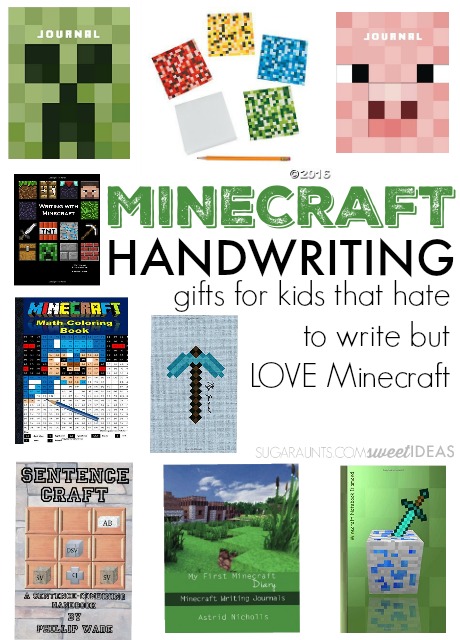
If you’ve got a child who HATES to write or practice handwriting, but LOVES Minecraft, then why not try to sneak some handwriting skills into their interest? Try these Minecraft themed handwriting activities: 

Use this paper to practice handwriting with a Minecraft theme:

Kids can use the journals to practice handwriting, using the toys in the ways described above. Encourage quality handwriting, but overall legibility over quality.  Minecraft is your child’s passion and you don’t want to make it a job to just play! 

amzn_assoc_placement = “adunit0”;
amzn_assoc_search_bar = “true”;
amzn_assoc_tracking_id = “sugaun-20”;
amzn_assoc_ad_mode = “manual”;
amzn_assoc_ad_type = “smart”;
amzn_assoc_marketplace = “amazon”;
amzn_assoc_region = “US”;
amzn_assoc_title = “Minecraft Paper”;
amzn_assoc_linkid = “adf0e86e8226ee4b5a6bbfe983117789”;
amzn_assoc_asins = “B008CQMHTQ,B01M659Q4G,3739237651,1537225340,1537225464,1507836201,1537224069,3739229179”;

Minecraft handwriting activiites

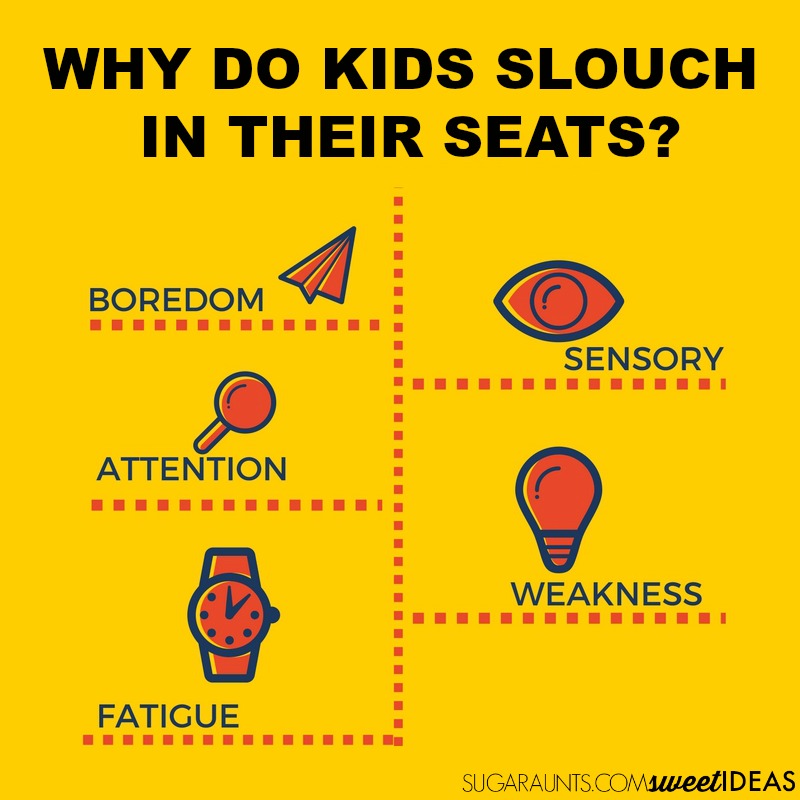
Why Do Kids Slouch in Their Seats?

You see it every day in the classroom.  Kids slouched down at their desks, legs out in the aisles, head propped up on their hand, and maybe even falling right out of the chair.


Why do kids slouch so much in their seats?


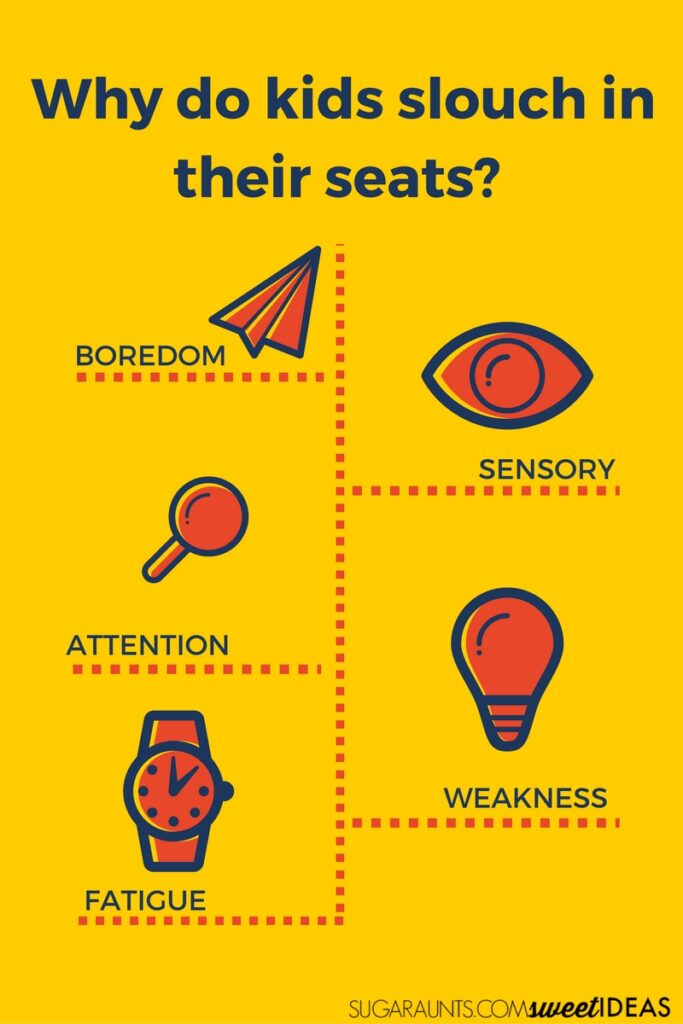
There are many reasons for the slouched posture that you see when you glance up and down the rows of desks in any classroom: boredom, attention, distraction, or fatigue are probably the culprits.


But sometimes, there is an underlying reason behind the slouched posture that kids use day after day at school.


Sometimes there is a sensory reason.


Why do kids slouch in their seat? Sometimes, it's a sensory reason.


Posture, Sensory Processing, and the Classroom

 
When a child slouches in their seats in the classroom (or at home–You can definitely see this positioning at the dinner table, during homework, in a doctor’s waiting room, or even in church pews!) there can sometimes be a sensory reason behind the poor posture.
 
Why do kids slouch in their seats?


Now, it needs to be said that sensory issues are not always going to be the case with slouched posture.   Sensory processing and unmet sensory needs are just one reason that you might see slouched positions when kids sit for a period of time.  Some kids get into a comfortable position.  Sometime core weakness is an issue.  Sometimes it is just plain old boredom, fatigue, or attention.
 
When there are other sensory processing concerns, you can potentially see the connection between sensory processing and posture when sitting.  


Why do Kids Slouch in their Seats?  A Sensory Reason!

One possible reason for slouched posture is a relationship to unmet sensory needs.  Postural control deficits can potentially present due to poor processing of vestibular and/or proprioceptive information.
 
These kids may have trouble maintaining an upright posture over time.  They might seek out or avoid pressure from the desk or chair on the backs of their legs.  They might have a need for movement or a fear of falling from the chair if vestibular the vestibular sense is challenged. 


How to Help Kids Sit with Better Posture in the Classroom

There are a few sensory-based strategies that can help with posture:


Affiliate links are included below.
  • Movement seats like a disk cushion are great for allowing movement for improved attention.
  • Wobble Seat uses the idea of a therapy or stability ball in the form of a stool.  This is great for classroom use because the giant therapy balls tend to roll away from desks.
  • Allow kids to lay on the floor for some activities.  Yep, right in the classroom!  A towel draped on the floor or a yoga mat can be a softer surface for hard classroom floors.  Laying on the floor provides proprioceptive input and provides stability through the upper body and shoulder girdle.  Add a few bean bags chairs or pillows to the classroom for lounging and reading centers.  These can be just the movement and heavy work break that is needed (and CAN fit into the educational curriculum of the day) to allow for better posture when seated at a desk.
  • Try a slanted table surface.  There are a lot of slant boards on the market.  Or, you can make your own DIY version to save money. 
  • Take a quick check on desk and chair size.  The feet should touch the floor.  Add a cardboard box, taped phone books, or have the custodial department make a wooden base for feet under the desk.  Other options include a very slightly slanted surface.
What are your favorite ways to encourage better posture in the classroom or at home?
 
Sensory based reasons why kids slouch in their seats at school and at home.
 
 
Sensory based reasons why kids slouch in their seats at school and at home.


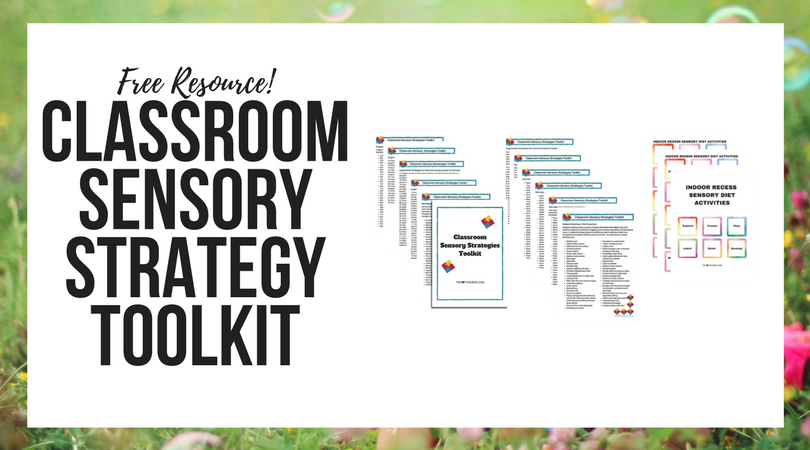
You may also be interested in the free printable packet, The Classroom Sensory Strategy Toolkit.

The Classroom Sensory Strategy Toolkit is a printable packet of resources and handouts that can be used by teachers, parents, and therapists. Whether you are looking for a handout to explain sensory strategies, or a tool for advocating for your child, the Classroom Sensory Strategy Toolkit has got you covered.


And it’s free for you to print off and use again and again.


In the Classroom Sensory Strategy Toolkit, you’ll find:


  • Fidgeting Tools for the Classroom
  • Adapted Seating Strategies for the Classroom
  • Self-Regulation in the Classroom
  • 105 Calm-down Strategies for the Classroom
  • Chewing Tools for Classroom Needs
  • 45 Organizing Tools for Classroom Needs
  • Indoor Recess Sensory Diet Cards
 
Sensory Strategies for the Classroom


Free Classroom Sensory Strategies Toolkit

    We respect your privacy. Unsubscribe at anytime.

    Colleen Beck, OTR/L has been an occupational therapist since 2000, working in school-based, hand therapy, outpatient peds, EI, and SNF. Colleen created The OT Toolbox to inspire therapists, teachers, and parents with easy and fun tools to help children thrive. Read her story about going from an OT making $3/hour (after paying for kids’ childcare) to a full-time OT resource creator for millions of readers. Want to collaborate? Send an email to contact@theottoolbox.com.

    The Ultimate Guide to Independence with Clothing Fasteners

    If you’ve been following the Functional Skills for Kids series this year, then you know the wealth of information that has been shared.  Each month, the team of OT and PT bloggers have broken down a functional task into it’s development, necessary components, and strategies for increasing independence.  This month brings buttons, snaps, buckles, and the ultimate guide to independence with clothing fasteners.  
     
    Check out the links below to find everything you need to help kids with management of clothing fasteners with increased independence.  From pincer grasp to shoulder girdle stabilization and sensory processing to visual motor skills, children have a lot of precursors to master before they can independently put on their jacket or managing their clothing in the school bathroom.  


    The Ultimate Guide to Independence with Clothing Fasteners


     Functional Skills for Kids series
     
     Functional Skills for Kids and a guide to independence with clothing fasteners.