Science and Discovery Activities for Kids

Discovery activities

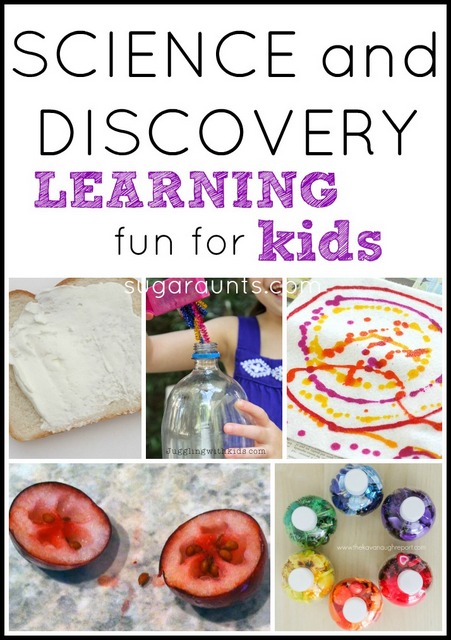
Watching kids discover through science, art, and creativity is fun!  The learning that happens through discovery is pretty neat to watch.  These ideas have great opportunity for discovery and learning for kids.


Discovery Activities


Science and discovery activities for kids

These discovery activities support science, technology, art, engineering, and math, or STEAM! Not only that, but the hands-on activity ideas are great for getting kids involved in project completion from start to finish. 

By participating in these discovery learning activities, kids can challenge themselves in executive functioning skills (planning, prioritization, task completion) as well as social emotional skills such as self-awareness and self-confidence.

Check out these discover and learning ideas for kids:

Explore evaporation with this hands-on science activity.

Discover how to make butter from There’s Just One Mommy.
Discover and learn science in cranberries from Stir the Wonder.

Experiment with air drag and streamlined shapes.
Discover absorption with watercolors on felt from Buggy and Buddy.

Discover STEM with lemon experiments.
Discover colors with sensory bottles from The Kavanaugh Report.

Discover levers and a fulcrum.
Discover geysers from Teach Beside Me.
Discover snowball experiments from us!
Discover polar bear science from us!


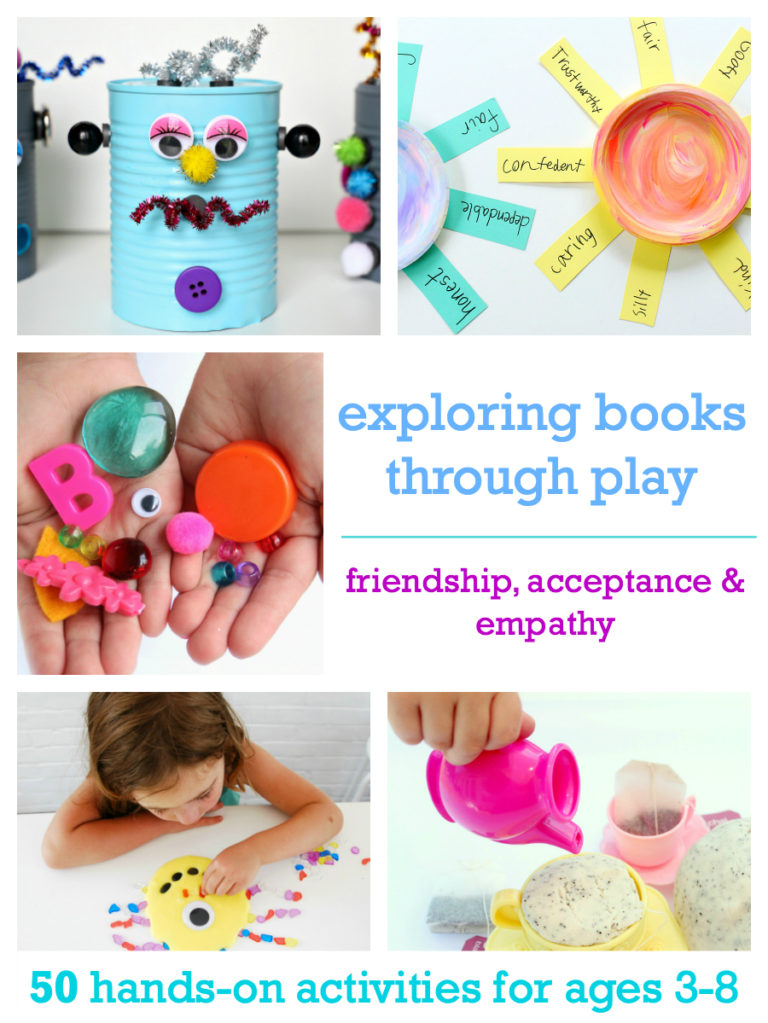
Exploring Books Through Play is loaded with 50 hands-on exploring and discovering activities based on books! Kids love to explore books and the world around them!

Colleen Beck, OTR/L has been an occupational therapist since 2000, working in school-based, hand therapy, outpatient peds, EI, and SNF. Colleen created The OT Toolbox to inspire therapists, teachers, and parents with easy and fun tools to help children thrive. Read her story about going from an OT making $3/hour (after paying for kids’ childcare) to a full-time OT resource creator for millions of readers. Want to collaborate? Send an email to contact@theottoolbox.com.

Bottle Cap Christmas Craft

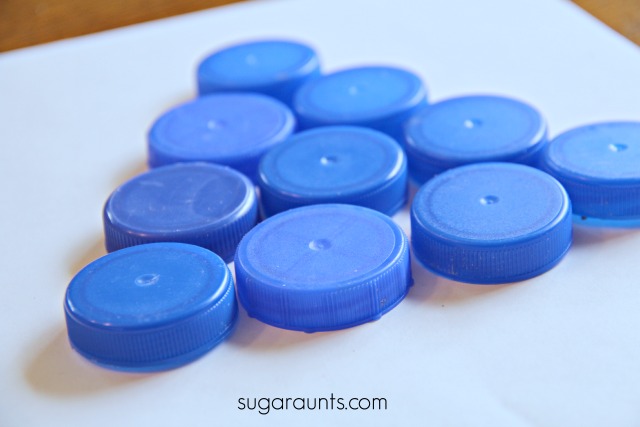
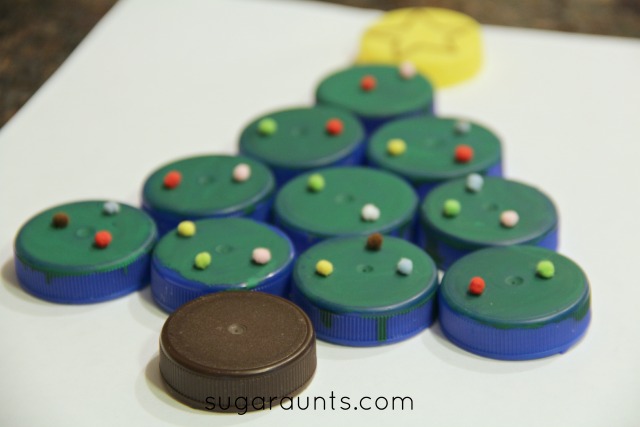
We love our Christmas play activities.  We’ve even put together a 25 Days of Christmas play list of fun activities we’ve done in the past.  This bottle cap Christmas Tree is fun to make and a cute Christmas craft that kids will love.  And, bonus is that the recycled caps are free!


Christmas Tree craft using recycled bottle caps. This is a fun craft for kids!


Christmas Tree Craft for Kids

This post contains affiliate links.
To make the Christmas Tree craft, you’ll need a few items:
bottle caps (green, or use green acrylic paint) You will also need either brown and a yellow bottle cap, or brown and yellow acrylic paint
glue
tiny craft pom poms
marker

Arrange the lids in a tree shape to get an idea of how you want the tree to be on a page.

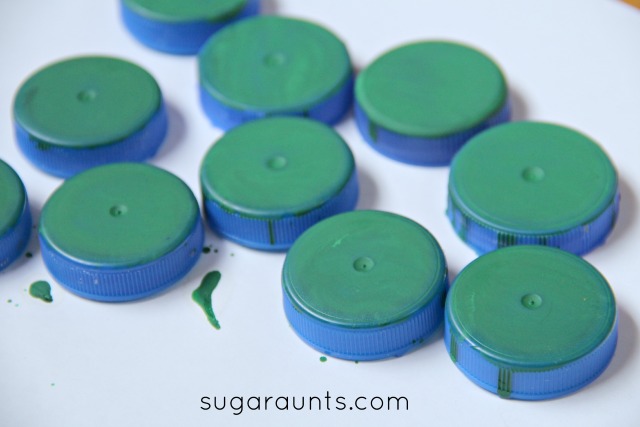
Use the acrylic paint to paint the tops green.  If you’re starting with green bottle caps, you can skip this part.


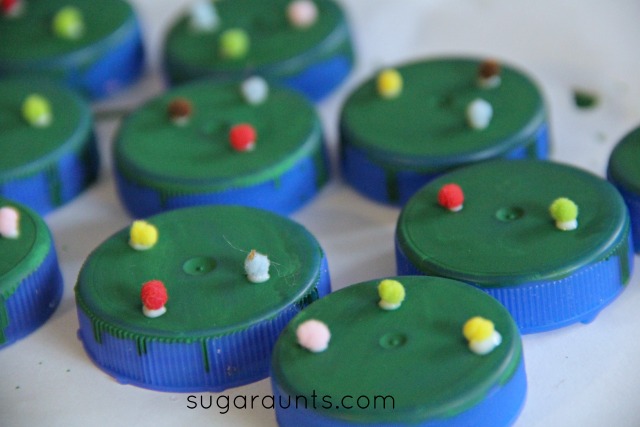
Dab a small amount of glue on the dried bottle caps.  The crafting poms we used were very small and great for fine motor skills.  A neat pincer grasp is needed to manipulate these itty bitty pom poms.


Glue the bottle caps into place on a piece of card stock or paper.  We drew a star on the top yellow bottle cap.  This is a fun puzzle for the kids, and a very cute craft for kids to create!

Christmas Handwriting Activities

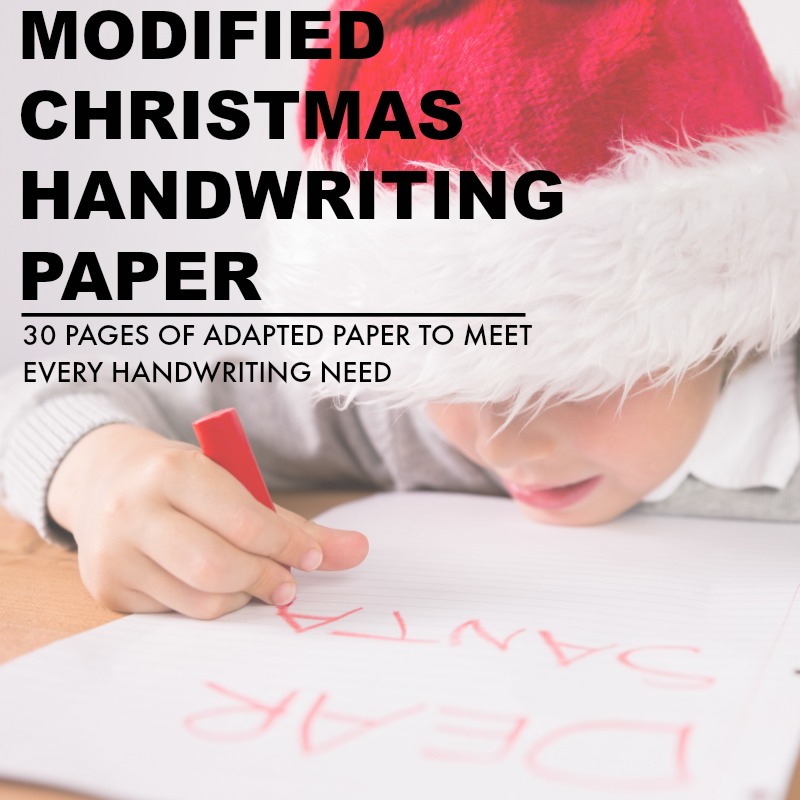
Writing out that Christmas wish list is a difficult task that brings out tears instead of holiday excitement.  I’ve got a solution for your kiddo with handwriting difficulties: a packet of modified paper for all of the Christmas handwriting tasks that come up each year.  Use this handwriting pack to help kids who struggle with handwriting to participate in holiday traditions while even working on and developing their handwriting skills!

Working on handwriting with kids this Christmas season? Grab your copy of the Christmas Modified Handwriting Packet. It’s got three types of adapted paper that kids can use to write letters to Santa, Thank You notes, holiday bucket lists and much more…all while working on handwriting skills in a motivating and fun way! Read more about the adapted Christmas Paper here


KidKraft Train Table Review Trundle Drawers Gift for Kids

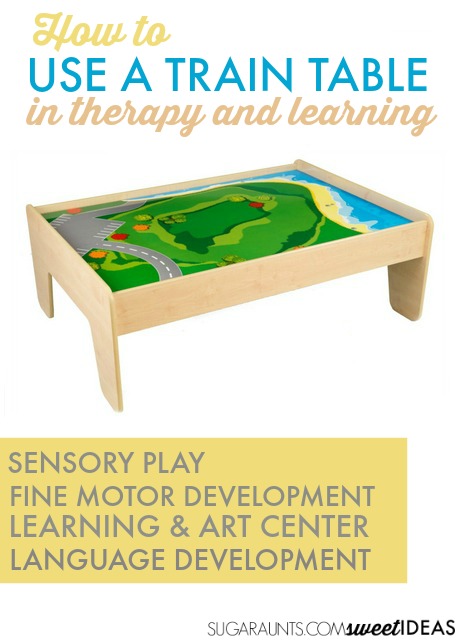
We own a KidKraft Train Table with Trundle Drawers and wanted to review it’s versatility for creative play and learning.  A train table is a key tool in therapy and learning in the home and classroom, to boost many skills.  We love to come up with frugal ways to encourage development of the child.  Using a train table is just one way to do this by using what you’ve got in the home as a multi-purpose item for therapy, play, learning, and exploration!


We’ve joined 31 other bloggers in a gift review blog hop to discover and explore more about each blogger’s must-have items.  


Sensory strategies that are motivating can be a big help for some kids. Try these train themed sensory activity ideas 

Use a train table in therapy, sensory play, fine motor development, learning, crafts at home and at school.

This post contains affiliate links.  See our full disclosure here.

We LOVE our KidKraft Train Table.  With it’s trundle drawers, we have lots of storage for trains, pretend play animals, blocks, and even sensory play items.  We use our train table almost every day in some type of play and wanted to review the KidKraft train table and share our fun ideas that make this big ticket item a great deal for versatile play for kids.


The KidKraft train table is the perfect size for play from all sides.  Many train tables are on the smaller side, but this one is huge!  It’s perfect for lots of kids to get at the pretend play fun from all sides.  The table has a small lip to the edge to prevent trains from rolling over the sides of the table top.  We’ve used this edge to contain not only trains, but marbles, water beads, art supplies, and beads.  The train table is easy to assemble and move.  We’ve moved our KidKraft Train Table around so many times and it is still very sturdy and in great shape.


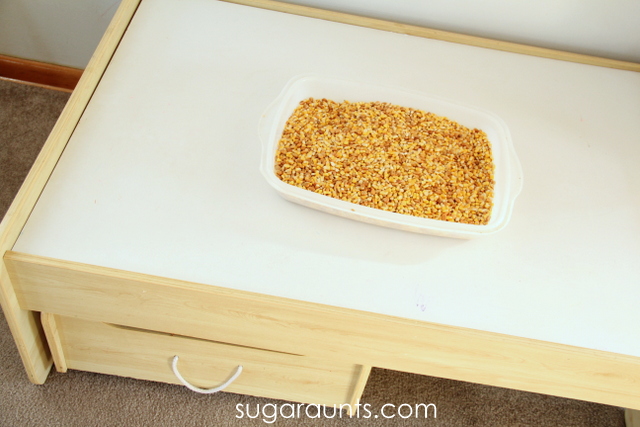
Besides the trundle drawers for amazing storage (these drawers are HUGE!), our favorite feature is the reversable table surface.  One side has a great landscaped scene with road, parking lot, water, and grassy area for pretend play with trains and cars.  The other side of our surface is all white.  This is perfect for creative play at it’s finest.  Our model is older and it seems like the newer models may have a different color on the reversed side.  It would be fun to paint one side of the surface with a solid color, or chalkboard paint, or attach a Lego surface for a DIY Lego table or glue a large sheet of felt to the surface for a DIY felt table.

The height of the table is perfect for children to kneel, sit, or stand around. Adults can get right up to the table and sit on the floor with their legs under the table and stretched out, comfortable and ready for playing!


How to use a train table in therapy and at home for development.


Using a KidKraft Train Table for Creative Play

We love using our train table in creative play.  

Using a Train Table for Sensory Play:

Use the train table for sensory play with water beads, magnetic lettersplay dough activitiesbaby sensory play, or by creating a real-life “I Spy” game.  One thing to note about our train table–the surface wipes down really well.  I wouldn’t saturate it with gak or water in sensory play, but you could play with moon dough or other wipe-able sensory activities.  I use spay-able cleanser or magic erasers to clean the white surface of our train table all the time.

Using a Train Table for a Craft Center:

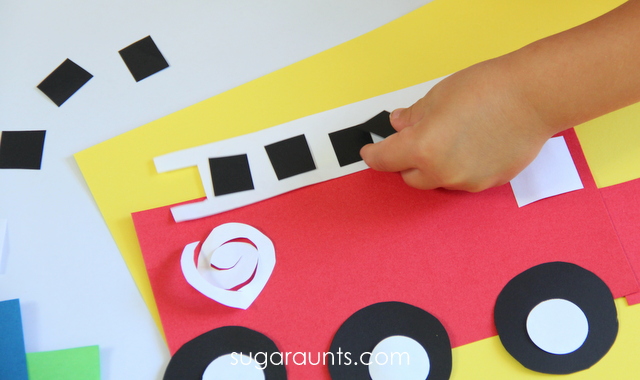
The size and surface of the train table is perfect for kids crafts.  The surface of this large table is perfect for spreading out supplies, craft activities, and even allowing friends to join in on crafty fun!  We’ve used our train table in so many art creation activities.

Using a Train Table for  Fine Motor Development:

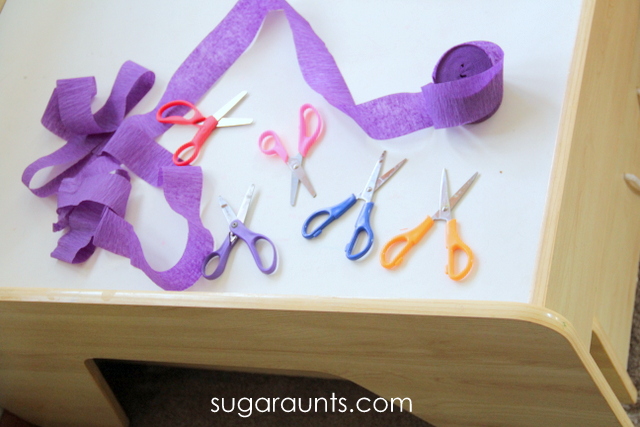
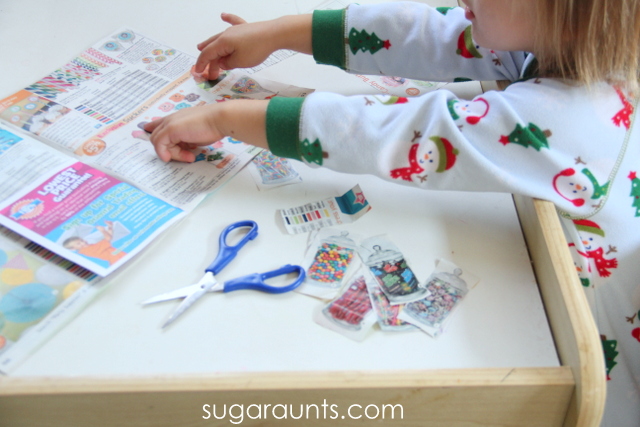
We love to spread out a bunch of magazines and a few pairs of scissors to get busy on scissor skill activities.  This large area is a great way to create and play with fine motor activities while exploring many skill sets on the train table surface.  Kids can gather around the sides of the train table and play with all kinds of  fine motor activities, like in-hand manipulation play while being sure that the lip of the sides will not allow little pieces to flip over onto the floor.


Using a Train Table in Small World Imagination Play:

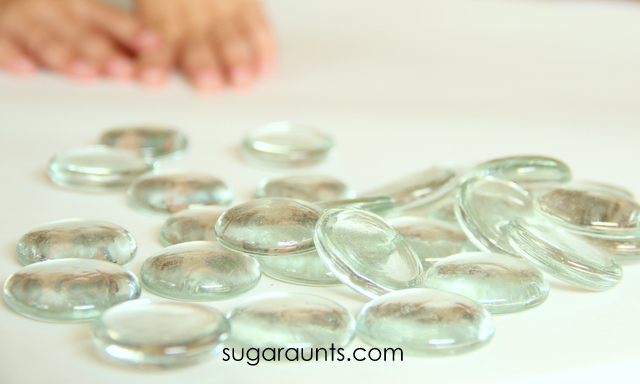
Oh, we definitely use our train table for trains, cars, and small world pretend play.  Free imagination play is often times the most fun!  Besides using just trains on the train table, pull in small worlds to encourage  and develop language and imagination with play dough, or with pieces like glass gems, small plastic animals, rocks, or more.  Your imagination is the limit!  We use those giant  trundle drawers for storing all of the pieces to imagination play.

The size and height of the KidKraft Train Table allows for a perfect surface for party activities like play crafts, and snacks.  


Do you have a train table? How do you use it in play? Let us know on our Facebook page or the comments below.


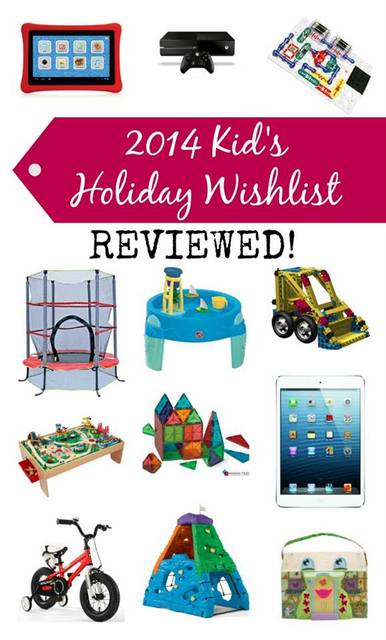
Stop by the other bloggers in this series to see their gift item reviews by visiting Lalymom’s Wishlist Reviewed!


                         Train Table review for gifts.  Use a train table for so much ore than just train play: fine motor station, craft table, small world surface, art area. We use our train table every day!

More gift ideas you may be interested in: 


Gratitude Craft Counting Blessings with Kids

We are so blessed.  Our family, our health, our home, everything that we do and say each day is because of the blessings that we have been given.  We are thankful all year long for all that we have been blessed with, but this time of year, it is especially appropriate to count and express gratitude for our blessings.  The kids and I create a Thanksgiving Tree or Gratitude Garland each year to display everything that we are thankful for.


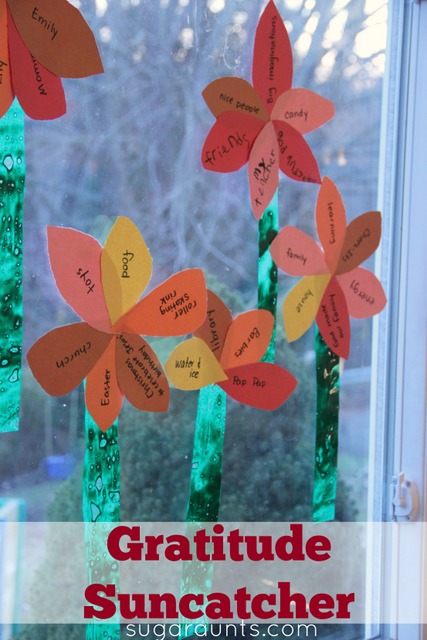
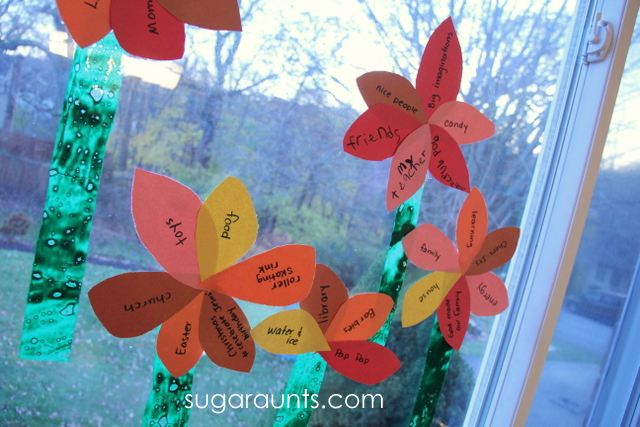
This year we made our gratitude leaves into a sun catcher flower craft.  We can see our leaves an all of the blessings each day as we eat our meals together.


Gratitude Sun Catcher Craft


Gratitude Craft for Kids


This post contains affiliate links.  See our full disclosure here.


I love to do a version of this activity with the kids each November as we gear up for the holiday season.  Counting and writing out our blessings is a joyful way to head into Thanksgiving.  The display is something we love to look at our display each day and the kids will ask, “what does that leaf say?” as we read through our gratitude leaves.


This year, we made a craft to display our blessings.  I like to maintain the leaf theme each year with this activity.


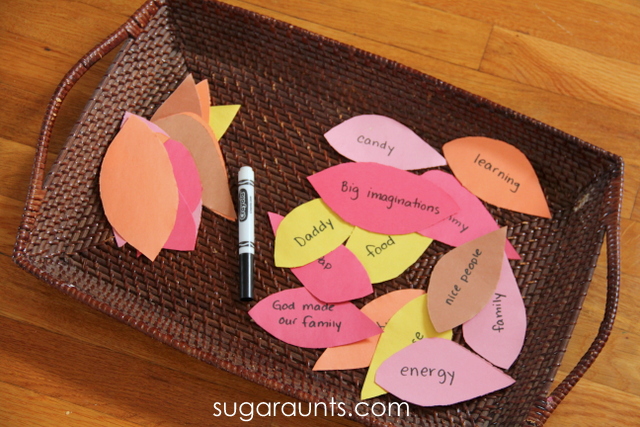
I set out a basket of leaves made from construction paper.  This is super easy to throw together.  Snip up a few simple leaf shapes and a black marker, and you’re good to go.  Sit the kids down and start talking about gratitude.


These leaves crack me up!  The gratitude for “big imaginations, energy, and nice people”?? There’s a lot of thankfulness in our house for candy and cheez-its.

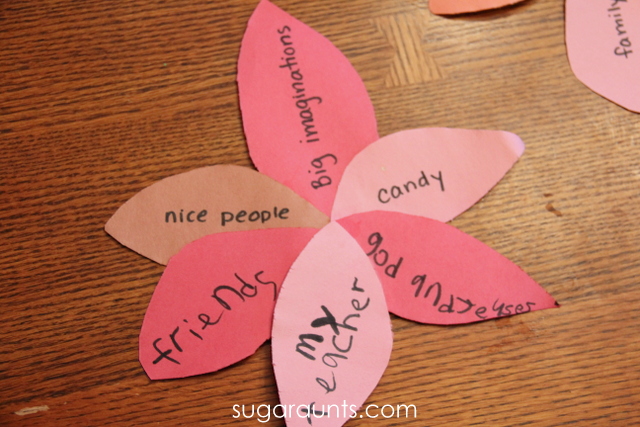
We glued our leaves together to form a flower.


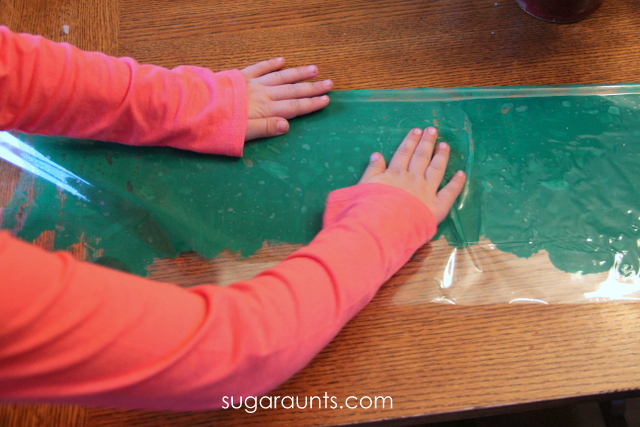
Make the sun catcher part of the flowers by painting a thin layer of green paint onto clear cellophane wrap.  Be sure to smear the paint on nice and thin.  Fold the cellophane over.  You may need to let the sun catchers dry over night if too much paint is used.  We were able to cut the stems right away without paint dripping from the sides.


Cut strips of the green sun catchers and hang the flowers on the window with tape.


Be sure to count blessings with the kids every day!

Holiday Tradition Ideas for Families

With the season of holidays beginning, this is the time of year to pull out bins from the attic, decorate the house, and renew holiday traditions.  Families the world over celebrate Christmas in many different ways, with traditions unique to their families.  It’s a joyful time of year and we wanted to celebrate the joy with ideas for traditions.  Whether you have a special activity that you do with your family year after year or are seeking new traditions to begin, this is the place to find joy and celebrate the season!


Holiday tradition ideas for families. Bring joy into the season with easy and fun new traditions for your family.

Holiday Tradition Ideas for Families

Celebrate the season with books!  KC Edventures shares books and Christmas traditions, perfect for this time of year.
Start a new tradition sure to bring in the festivities of the season with a breakfast train tradition from Play Trains.
Bake and celebrate the season with an annual cookie baking day from Teach Mama.
Create a Christmas Tree Advent Puzzle from Toddler Approved.
Purchase a new pair of Christmas pajamas and start a few new pajama traditions from Fantastic Fun and Learning.
Create an Advent calendar for a full season of traditions.  Fill the calendar with Advent calendar ideas. (Sugar Aunts)
Start a Christmas Eve surprise box full of fun items from The Imagination Tree.


What are special traditions in your house during this season?

Tools in Fine Motor Skill Development

Fine motor skills can be developed with so many tools that you have around your house.  We love playing in creative ways to work on fine motor skills.  

Great tips to work on improving fine motor skills in kids with simple tools you can find around the house.


Tools for Fine Motor Skills


Work on scissor skills with a bunch of fun ideas from Living Montessori Now
Use broken crayons (Planting Peas) to work on a more mature grasp on the crayons when coloring which will then encourage a tripod grasp on the pencil when writing.
Something as simple as an eye-dropper can improve intrinsic muscle strength of the hand. This is so important for endurance in fine motor tasks like coloring.


Use stacking toys to work on precision, coordination, and opposition of the thumb to stack and build with graded movements


Some of our favorite ways to play and work on fine motor skills:
Fine Motor Play with Tissue Paper using tissue paper
Fine Motor Play With Crafting Pom Poms using crafting poms
Cereal Box Fine Motor Coordination Activity using a cereal box and straws
DIY Lacing Cards using styrofoam
In Hand Manipulation Ideas for Kids using water beads and recycled bottles
Manipulating Coins Fine Motor Skills using coins
Using Pipe Cleaners for Fine Motor Skills using pipe cleaners
Fine Motor Table Top Play with Tape with masking tape
Golf Tee Hammering with golf tees
Honey Bee Pinch Pins using clothes pins
Invitation to Scoop and Pour with spoons
Spring Themed Play Dough Press with cookie cutters


More tools to use in fine motor skill development:
tweezers
tongs
beads
toothpicks
hole puncher
peg boards
lacing cards

Unique Uses for Baby Wipes

baby wipe uses in occupational therapy

This is an old blog post on unique wipe uses for baby wipes and we’ve given it an update. Occupational therapists use some unique materials in occupational therapy sessions. Toys, games, and even recycled materials can help to support OT goals! Here, we’re covering ways to use wipes in OT!

Why Use Baby wipes in occupational therapy?

OTs work on many different skills. We help individuals develop skills in any functional task. That’s why there are so many different tools to the trade!

When it comes to baby wipes, you can get a large quantity for a pretty inexpensive price and use them in so many different ways.

From self-care to crafts and activities, baby wipes can be used for every aspect of functional skills.

Let’s take a look at ways to use baby wipes in occupational therapy sessions:

Baby Wipe Uses in OT

Use baby wipes in self-care-

Occupational therapy practitioners help individuals develop independence and functioning skills in self-care. This includes bathing, toileting, grooming and hygiene, perineal hygiene, and more. Use baby wipes to support goal development in all of these areas.

  • Use baby wipes to practice perineal hygiene. Wipes offer a softer material to teach individuals about wiping completely after toileting.
  • Use baby wipes for a “sponge bath”. For individuals following a surgery or injury, a traditional shower or bath may not be safe or allowed. Use baby wipes to clean under the arms or all over the whole body in a “dry shower”.
  • Use wipes for grooming- From makeup removal to washing the face, baby wipes are a great tool.
  • Teach handwashing with baby wipes. OTs can work with individuals on how to wash hands. Wipes are a great addition to handwashing activities.
  • Teach about germs with baby wipes. Use a little paint or glitter on the hands and add a baby wipe to clean to teach kids about germs and stopping the spreading of germs by handwashing.

Use baby wipes for fine motor skills-

Occupational therapy practitioners get creative with therapy materials, and baby wipes are a useful tool for strengthening fine motor skills.

  • Use baby wipes for finger flexion and extension. Place a wipe on the table surface. The learner can extend and flex the fingers over the wipe to scrunch up the baby wipe. This is a great workout for the fingers and the hands. Because of the wipe’s consistency and the fluid surface, there is less resistance. This is a good hand therapy workout for grading down a hand and range of motion exercise.
  • Use baby wipes to strengthen the arches of the hands. A user can crumble up a baby wipe into a ball. Then, hold the wipe between the thumb and pointer fingers. Use the wipe to wipe off certain areas of a table or a chalkboard. This positioning on the wipe supports development of an open thumb web space and arch development by strengthening the intrinsic muscles of the hand.
  • Make baby wipe art using washable markers. Write and color right on the baby wipe to create tie dye art. This is a great fine motor activity that requires use of the assisting hand to hold the wipe as a pre-writing skill.

Use baby wipes for gross motor skills-

Hold a wipe in the hand and use it to develop gross motor skills including shoulder strength, core strength and stability, gross motor coordination, and posture.

  • Wipe down a wall while standing or sitting. This exercise is a functional task (home management) that supports development of neuro motor skills including range of motion of the shoulder and arm through a full range, while offering proprioceptive feedback by pressing against the wall.
  • Use a wipe to clean a chalkboard. This gross motor task requires full arm motions and can be done in a classroom setting. It’s a great heavy work activity that is functional, too.

Use baby wipes in handwriting-

Occupational therapy practitioners often work with students on handwriting skills. You can use wipes as a therapy tool to work on letter formation.

  • Write letters on a dry erase board. Use the wipe to erase the handwriting. You can work on letter formation, letter size, and line use.
  • Write letters on a small chalkboard using the Handwriting Without Tears method of wet-dry-try. Use the baby wipe to write the letter to make a “wet” letter. Then they can write over the wet letter with chalk in the wet letter. Then write over it with a dry paper towel. After students form the letter with the baby wipe and the towel, they can use chalk to form the letter. Then, use the baby wipe to clear off the chalkboard.
  • Try rainbow writing with different colors of chalk. Then erase the letter over the letter lines with the baby wipe.

Other Ways to use baby wipes

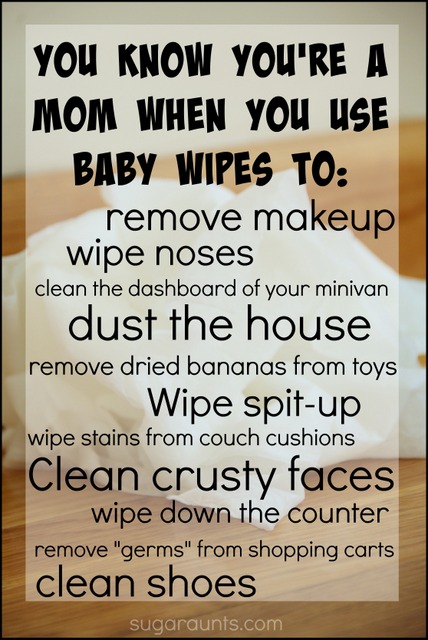
Things get a little crazy when you’re a mom.  Whether you’re a mom to young kids, life is messy.  There are always stains, crust, and dust. And don’t even mention the laundry!  So when you’ve got all of these messes happening, you need easy assurance that the little things are taken care of. With four kids ages 7 and under, I’ve got a lot of messes most of the time.  And the bigger kids are my helpers.  But let’s be honest…the helpers make a lot of messes too, even when they are trying to help!

You know you're a Mom when you use baby wipes for crazy things! dusting, cleaning, germ removal...

  It seems like there is ALWAYS something to wipe, swipe, scrub, and clean. From stains on the couch to dust on the lamps (And oh boy, there’s a lot of dust!), life with kids gets messy.  

Most moms I know keep a pack of wipes handy for easy clean up.    

I’ve found myself wearing the ultimate Mom badge of honor during preschool drop off (and only an hour after my morning shower) with the baby’s spit up.   Wipes! 

When you’re sitting at a red light and you see the dust all over the mini van’s dashboard? Wipes! 

When your daughter runs into the house with dirt and mud all over her dance jazz shoes?  Wipes! 

When the two year old wears the (hand-wash-only) Princess dress-up gown for a week strait? Wipes!  

I love that when I’m using all of these wipes for kiddo crusty noses, chocolaty little cheeks, and bums, the natural wipes layers stand up to the grunge with their layers that are thick enough to handle any mess and a texture soft enough for baby’s smooth skin.    

We like the designer tubs that the wipes come in and the pop up tubs.  Because a mom needs quick access to mess clean-up!  You’re also able to get baby wipes in big refill packs, on the go containers, and convenient soft packs of wipes.    

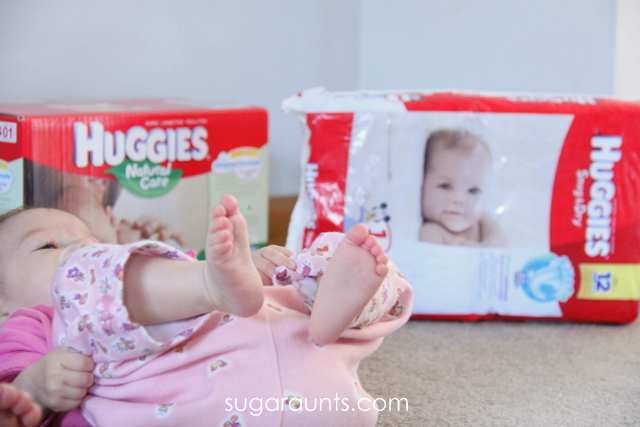
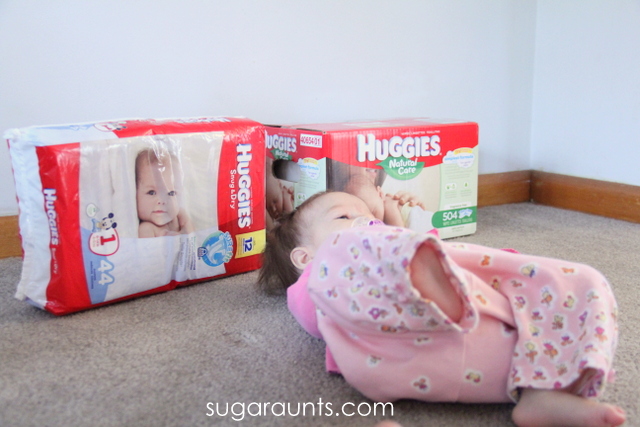
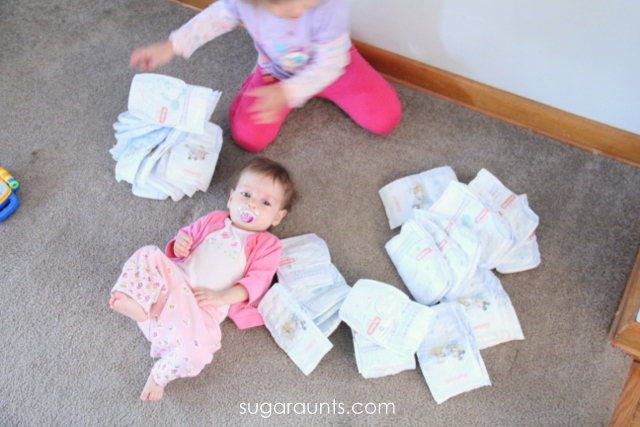
Any new package that comes into our house is usually inspected by the older kids (when they “help”) and our diaper and wipes purchases were no different.

Of course, diapers need to be stacked, counted, and sorted.  This little helper loved the designs on our diapers.  And needed to put her touch on our storage system.  I mean, it’s a great idea to keep all of your new diapers in a pile in the living room 😉


How to make an easy Light Box for play and learning

We’ve made a DIY light box before and have loved playing and learning with light.  Light boxes are such a great way to encourage fine motor, sensory, visual perceptual skills, handwriting, language, creative thought process, and more.  We made another version of our Super Easy Light Box and when I say super easy…it doesn’t get much easier!


What is a light box used for? Sensory, learning, fine motor, and play


How to make an EASY light box

This post contains affiliate links.  Read our full disclosure here.

Make a light box easily for learning and play
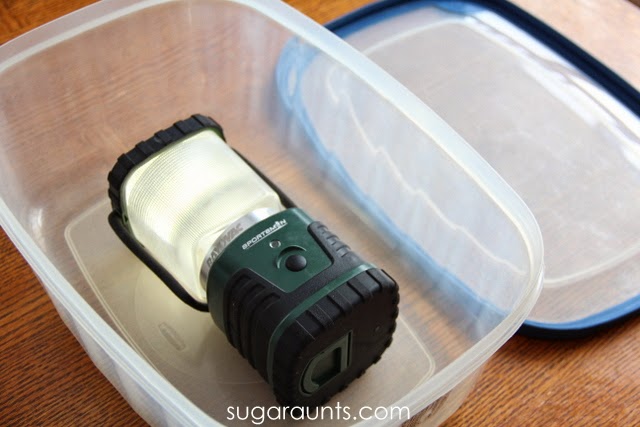
Start with a plastic bin with lid.  You’ll need your bin to be clear or see through. The size doesn’t matter, as long as it’s comparable to your light source.  We used our handy bright lantern.  This thing is heavy duty and we use it all the time.  The kids use this lantern for pretend play, outside play during summer nights, exploration adventures, Pirate explorers, ghost hunters…this lantern gets it’s run of play!  It fit pretty well in the bin that we used for our DIY light box, and the Bright LED light made a great light source.
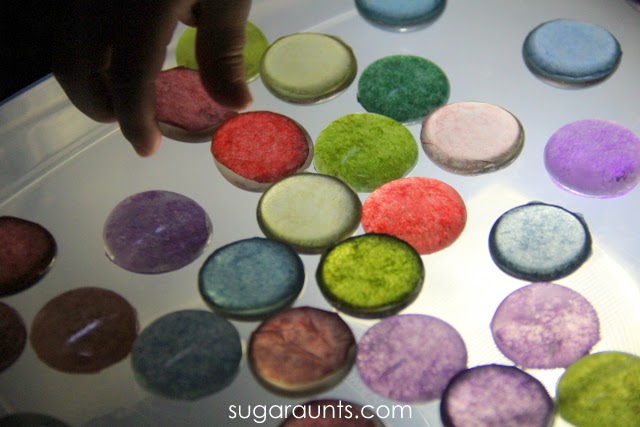
DIY light box for kids to learn and play

Pop the lid on the plastic bin, and your light box is done.  How easy is that??!  

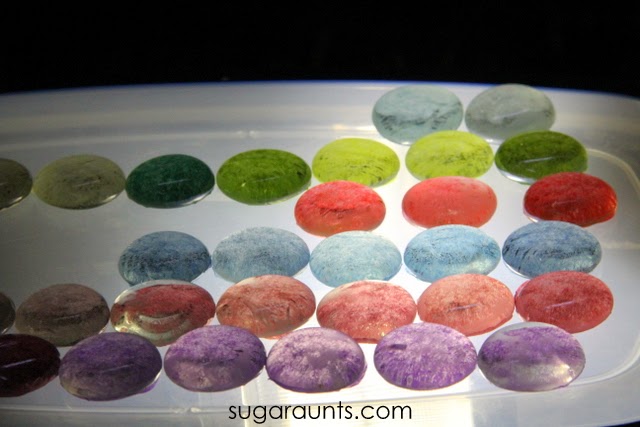
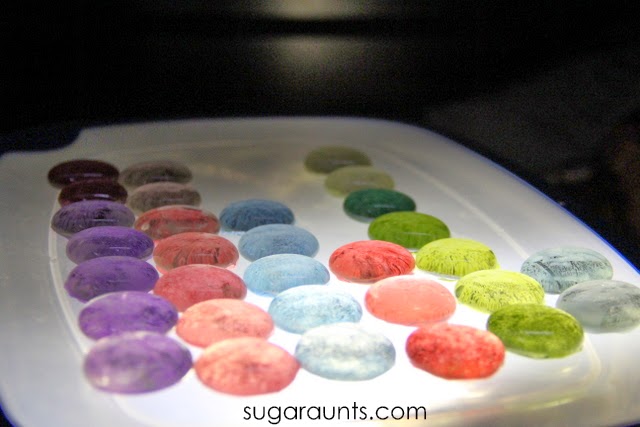
We used our DIY colored glass gems on the light box for sensory play.  These things are so easy to make and we’ve used them all the time for all sorts of fun activities.

Use a DIY light box for easy learning activities


Sorting, color patterns, math patterns, counting, number place values, adding, subtracting…this is light and math and fun all in one activity.

Use colored gems to learn patterns, counting with a light box

These look so good on the light box!  The best part is when the kids want to play explorer Pirates again, you just need to pop the lid off the bin!


We’re planning to use our glitter letter manipulatives on the light box next!

Glitter Letter Manipulatives for Learning

letter manipulatives
These DIY letter manipulatives were very easy to make.  The kids and I have been playing with these letters for a few weeks now.  We love playing with learning elements and we’ve done a lot of letter identification activities.  This one was fun to make and for playing!
 

Letter Manipulatives

Letter manipulatives are a hands-on tool for supporting letter identification in young kids. This is a great preschool activity that can be used as a pre-writing activity. Helping kids to identify letters with alphabet manipulatives supports early literacy skills. 

Alphabet manipulatives like the ones we made below are fun for helping kids to match uppercase and lower case letters, too. 

They can be used in handwriting tasks or as a writing prompt while working on letter formation

Use these letter manipulatives in several ways:

  • In sensory bins
  • In an I Spy game
  • With writing trays
  • In play dough
DIY letter match manipulatives with glass gems.  These are great for letter identification, matching, memory games, pre-reading.


This post contains affiliate links. 


How to Make Letter Manipulatives

This letter learning activity was a lot like our DIY color glass gems.  They are so much fun for sorting, patterning, play on the DIY light box.  We used a similar manner to make these glitter letters. These large glass gems are great for play and learning.  We’ve written letters and shapes on them, and painted them, created art with them.

If you haven’t made your own DIY decoupage, this is one thing you need to try.  We use this stuff all the time.


Paint the flat side of the glass gems with decoupage.  Cover with glitter.


Shake off the excess glitter.  Coat with another layer of decoupage.


Stick on letter stickers and cover with another thin coat of decoupage.
 
 
Let those beauties dry.


When the letters were dry, we played letter memory, sounded out the sounds of the letters, and matched the letters.  This is a great way to play and learn letter identification, letter sounds, pre-reading, visual scanning skills, and more.


We haven’t tried putting the letter manipulatives on the light table yet, but I think they will look great!
 

More Ways to Use letter manipulatives


Work on letter formation, letter identification and handwriting skills with our Fine Motor Letter Kit! Perfect for hands-on letter learning.

Colleen Beck, OTR/L has been an occupational therapist since 2000, working in school-based, hand therapy, outpatient peds, EI, and SNF. Colleen created The OT Toolbox to inspire therapists, teachers, and parents with easy and fun tools to help children thrive. Read her story about going from an OT making $3/hour (after paying for kids’ childcare) to a full-time OT resource creator for millions of readers. Want to collaborate? Send an email to contact@theottoolbox.com.