Screen Time Checklist

free screen time checklist

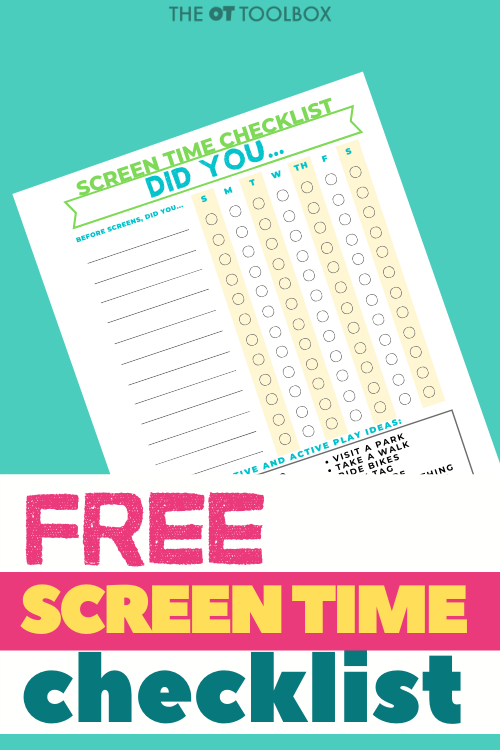
How to balance screen time in a digital age is a HUGE question that therapists, teachers, and parents wonder about. Our kids are struggling. They are impacted by increased time on screens in ways that we may have not ever imagined. The research on screen time is profound. So how do we balance screen time when it seems to be everywhere: schools, distance learning requirements, social media, communication apps, games, television and movie streaming, and so much more? Today, I’m excited to share with you screen time checklist to use to help kids balance screen use with activity and responsibilities. This is a great tool to have in your toolbox as a tech wise family.

free screen time checklist

Screen Time Checklist

This free printable checklist can be customized to include tasks each child needs to complete before they have access to screens.

Add chores, homework, or other responsibilities to the list.

Add reading time, creative play such as journaling or art creation to the screen checklist.

Add household responsibilities such as making the bed, getting dressed, brushing teeth, or cleaning up the breakfast plates.

Add physical activity requirements such as outdoor play, exercise, going for a walk, or playing in the yard.

Open ended checklist for screen time

The task requirements were intentionally left blank so that you can add the time constrictions and activity requirements. Perhaps you would like to see face-to-face interactions to work on emotional well being.

Maybe your specific child or client needs sensory play in the way of tactile exploration or vestibular input. These activities can be written on the checklist so they have exposure each day.

Maybe your child needs to have heavy work in their sensory lifestyle. This can be added in the form of heavy work chores or sensory coping activities.

If executive functioning is a concern, maybe adding a cooking activity for each day would be a good requirement before screens.

If reading is important to add to your child’s day, try adding a book related activity to the list.

I wanted to make this checklist a motivating way to accomplish individual goals while also adding balance to digital time.

Becoming more aware of how much time a child spends in the way of face-to-face interaction, creative play, physical activity compared to screen time is one of the first steps in helping kids balance screens and address some of those symptoms of too much screen time.

Screen Time Checklist for Home and therapy

Enter your email address below to access this free printable. If you are already on my newsletter list, you will still need to enter your email so the printable can be delivered to your inbox.

Grab the Screen Time Checklist

    We respect your privacy. Unsubscribe at anytime.
    Powered By ConvertKit

    Colleen Beck, OTR/L has been an occupational therapist since 2000, working in school-based, hand therapy, outpatient peds, EI, and SNF. Colleen created The OT Toolbox to inspire therapists, teachers, and parents with easy and fun tools to help children thrive. Read her story about going from an OT making $3/hour (after paying for kids’ childcare) to a full-time OT resource creator for millions of readers. Want to collaborate? Send an email to contact@theottoolbox.com.
    Goodnight Moon PDF Printable Memory Game

    Goodnight Moon activity and Goodnight Moon pdf printable

    Goodnight Moon is a classic book by Margaret Wise Brown that teaches so many skills, making it the perfect children’s book to use in therapy activities. We used this book activity and a DIY Goodnight Moon printable PDF memory game. It’s a calming book that inspires sleepy contentment with it’s rhyming text and simple images. The book is a fantastic tools to build visual perceptual skills including figure ground, form constancy, and visual memory. Those skills carryover with our memory game printable you can access below. However, for my own kids, I loved the calming tone that the book offers. It’s a great way to calm down before bed.

    For more calm down activities before bed, try these bedtime relaxation stretches.

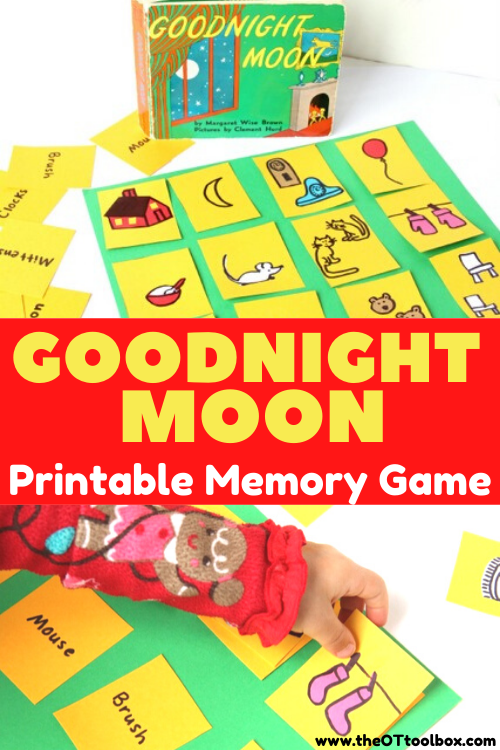
    Our Goodnight Moon activity has been played almost as many times as we’ve read the book!  We decided to create a free printable to go along with our memory skills game, so you can play, too.    

    Goodnight Moon activity for kids and Goodnight Moon pdf printable game.
    Goodnight Moon activity with a Memory game inspired by the book, Goodnight Moon by Margaret Wise Brown.

    Goodnight Moon Activity…Memory Game!

      Goodnight Moon teaches kids that fear can be caused my our imagination. I loved this explanation of what exactly Goodnight Moon teaches and how this book can be used to help kids build skills.

    This post contains affiliate links.

    Goodnight Moon by Margaret Wise Brown is one of those books that we read over and over again.  Each time, the kids will sit mesmerized as I read the quiet rhyming words.  This is definitely a bedtime book that is loved at all times of the day!  When we read through the book, my kids love to look for each item on the pages and find it’s rhyme.  It’s almost like a memory game as you read through the book, especially as the mouse moves around the room in the book.  

    Margaret Wise Brown Book, Goodnight Moon activity for kids.

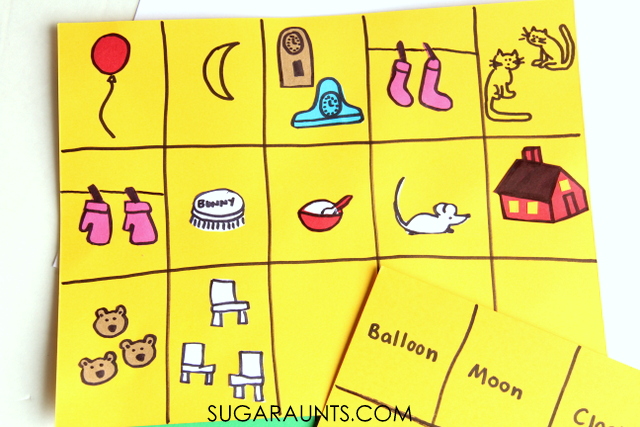
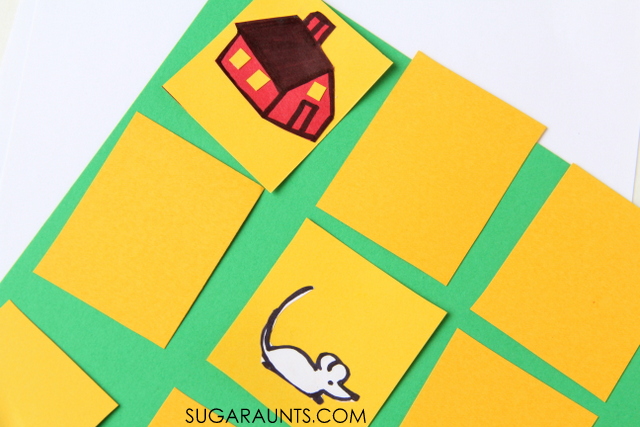
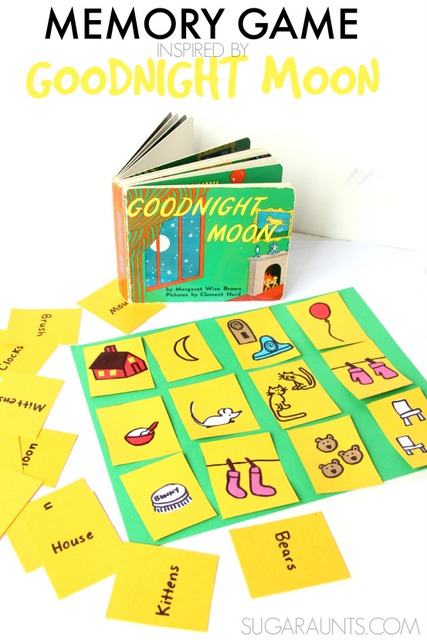
      To make your Goodnight Moon memory game, grab a couple of pieces of card stock.  We chose brightly colors based on the colors of the book.  Because the setting occurs in a green room, we used green paper for our playing board.  

    You could certainly play this memory game right on a table or floor, but my kids got a kick out of our “green room” and the green paper contained the game for our matches.  

    Goodnight Moon learning Activities

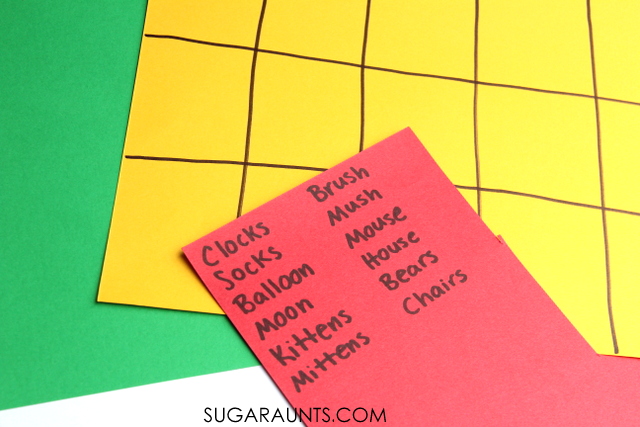
    Make a list of all of the rhyming words as you go through the book.  This is a great preschool book activity, but a powerful visual perception activity for all ages.  Kids can build visual memory skills as they recall each item and the way it looks throughout the book. Some objects change slightly, such as the position of the mouse. So, when kids look for that image on each page, they are building visual discrimination and form constancy. As you read the book, ask them what rhymes with each word.  They can use the book pages as a visual cue to the matching rhyme.    

    Goodnight Moon book activity for kids that builds visual perceptual skills.

    Goodnight Moon PDF 

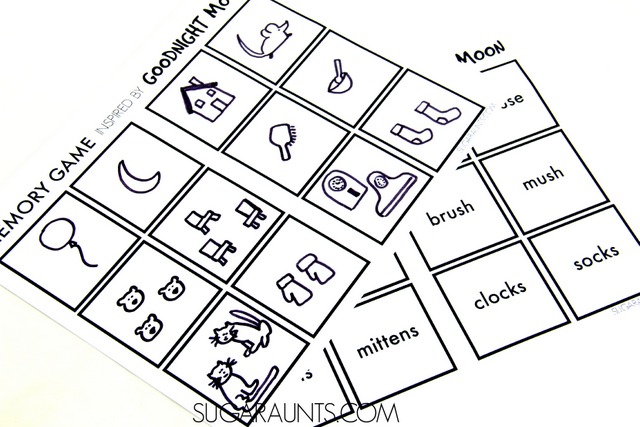
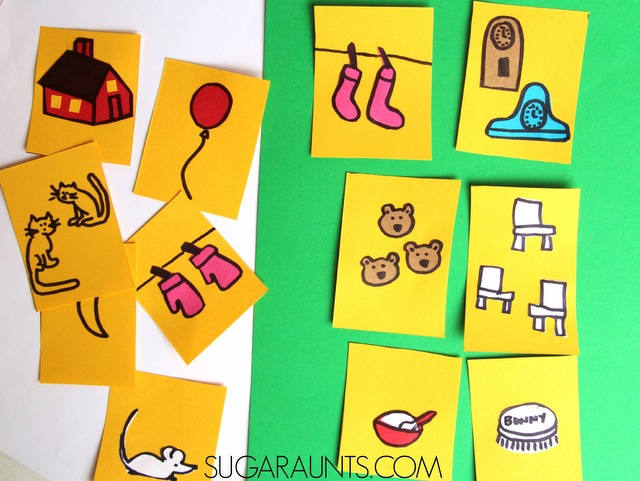
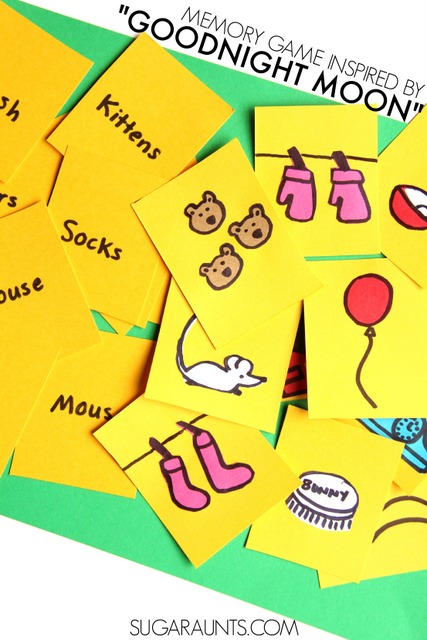
    Fill in your game pieces with your own drawings (or kid-drawings!) or use our free printable.  You’ll need these three sheets:

    >>Draw your own pictures on the blank picture card printable.

    >>OR, use our picture word card printable.

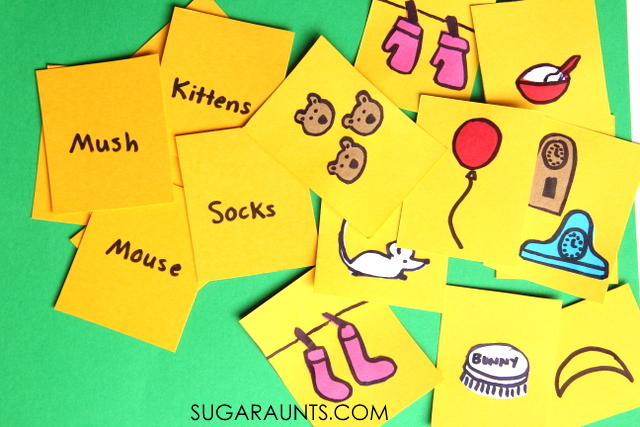
     >>Printable word cards here. We drew a picture for each rhyme and filled in another card sheet with the written words.  

    Memory game inspired by the book, Goodnight Moon
    Memory game inspired by the book, Goodnight Moon-FREE printable!
    Memory game inspired by the book, Goodnight Moon

      Cut out each block and get ready to play.

    Kids can play this Goodnight Moon activity and work on visual perceptual skills as well as other skills and learning opportunities in Goodnight Moon

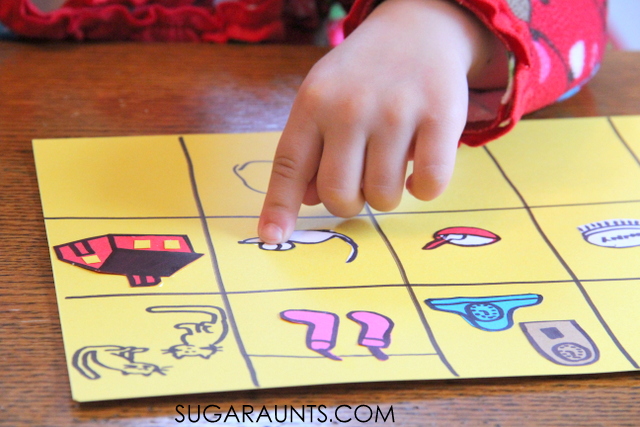
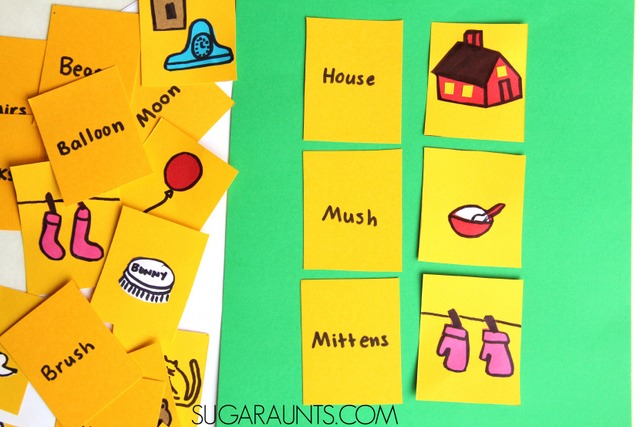
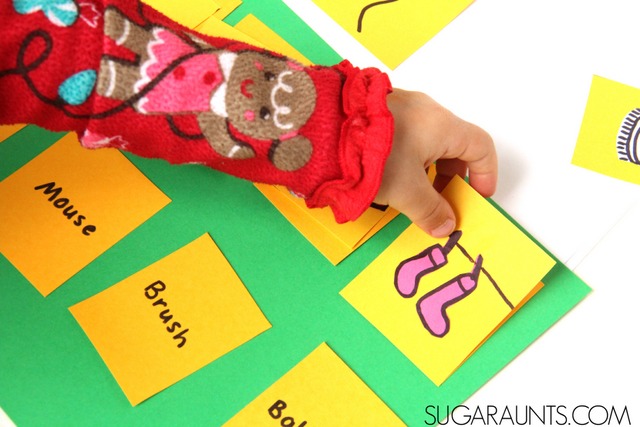
      We started with a few matching games.  I placed the written word on our green room paper and had the kids scan the pile of pictures for the matching image.  This is a great way to work on literacy skills as the child matches the picture to a written word, as well as on visual scanning.  Arrange the cards from left to right as a pre-reading skill.    

    Play this Memory Game for kids with the classic preschool book by Margaret Wise Brown.

      We also matched rhyming words.  Arrange a few pictures on the left side of the page and have your child place the rhyming match  to the right.    

      We then arranged the words in a block formation on the green paper.  The kids scanned the pile of pictures and placed the matches together.

    Goodnight Mouse activity for Goodnight Moon book.

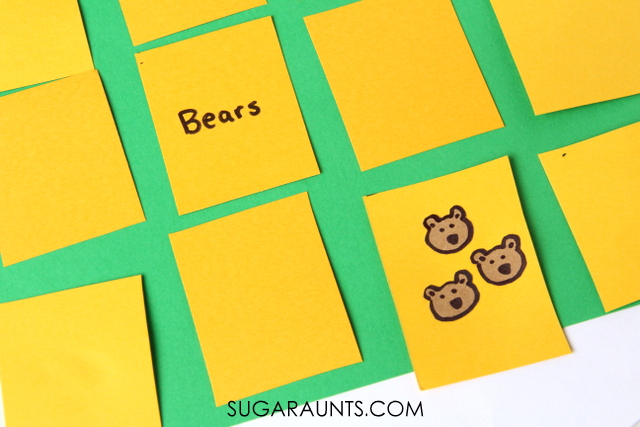
      After all of our rhyming games, we played an actual Memory game.  You can also modify the memory game to extend out the activity.  Match word to picture, rhyming pictures, and rhyming words.  This DIY Memory game can be played in so many ways!  

    This is such a fun book activity for kids based on the book, Goodnight Moon
    Memory game inspired by the book, Goodnight Moon

    GoodNight Moon Activities

    First, don’t forget to grab the Goodnight Moon pdf sheets to play this memory game.

    Goodnight Moon inspired memory game blank game pieces.

    Goodnight Moon inspired picture game pieces.

    Goodnight Moon inspired word game pieces.  

    Then, check out these other Goodnight Moon activities. They are great to help kids understand that sometimes scary things are in our minds and that the thoughts we think are not always as scary as things really are.

    Be sure to visit the other bloggers in the Preschool Book Club to see their takes on Goodnight Moon:  

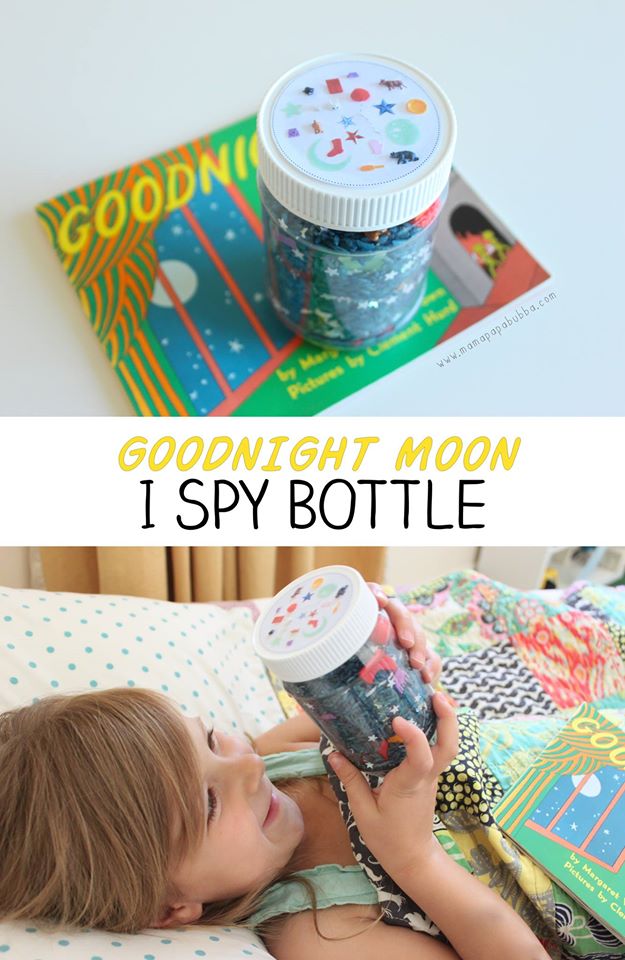
    This I Spy Bottle from Mama Pappa Bubba is another fantastic visual perceptual skills activity and a calming one at that. Check out these sensory bottles and WHY sensory bottles are so calming for kids as well as HOW to make sensory bottles that make an impact.

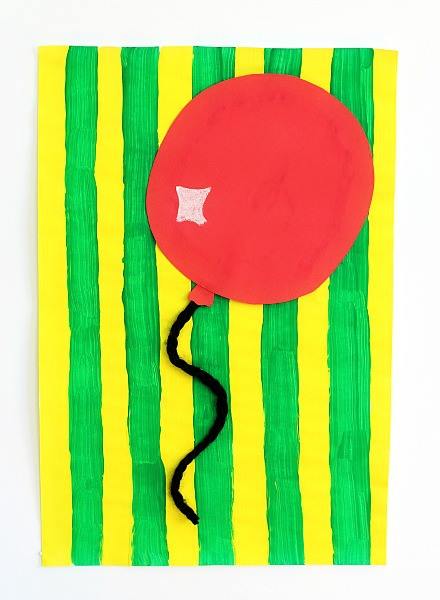
    This red balloon Art Activity from Buggy and Buddy uses Goodnight Moon’s red balloon with a creative painting activity. Kids can work on fine motor skills and tool use to paint a creative take on the book. Foster scissor use and scissor skills to, meeting therapy goals as well.

    Here are more scissor skills activities kids will love.

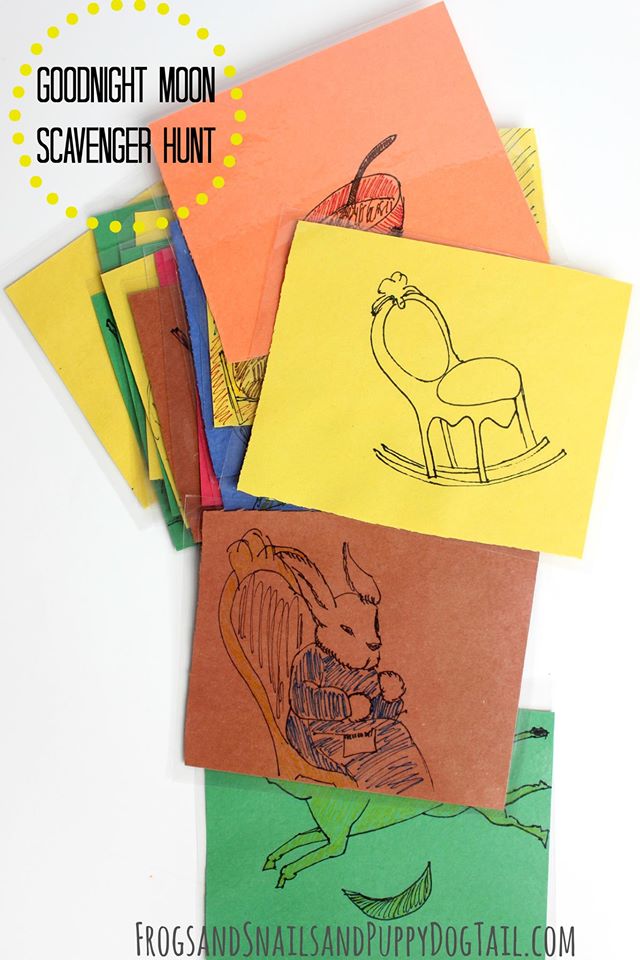
    This Goodnight Moon Scavenger Hunt from Frogs and Snails and Puppy Dog Tails is a gross motor activity that builds skills in visual perception and visual scanning. Love this idea to encourage core strength and stability!

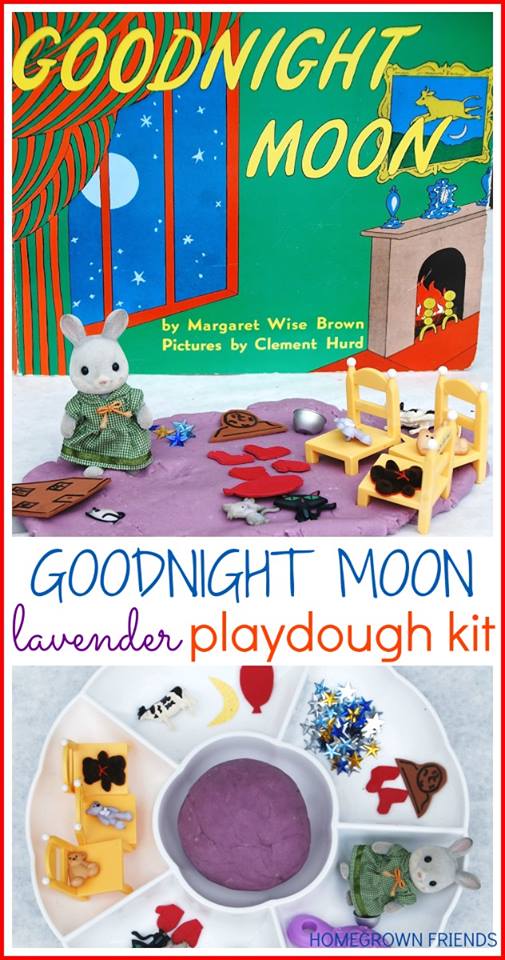
    This Goodnight Moon activity with a Lavender Play Dough kit from Homegrown Friends is a calming olfactory activity that adds sensory play and fine motor skills. Kids will love to pair the preschool book with a play dough activity.

    Here is another purple play dough recipe that use crayons. How fun!

    Books to Build Awareness Skills

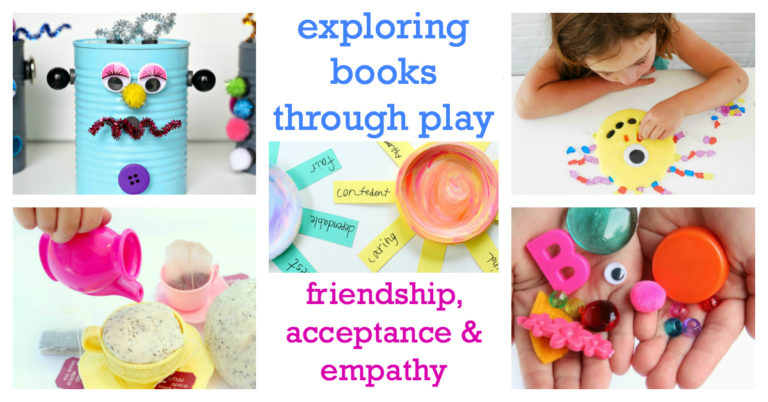
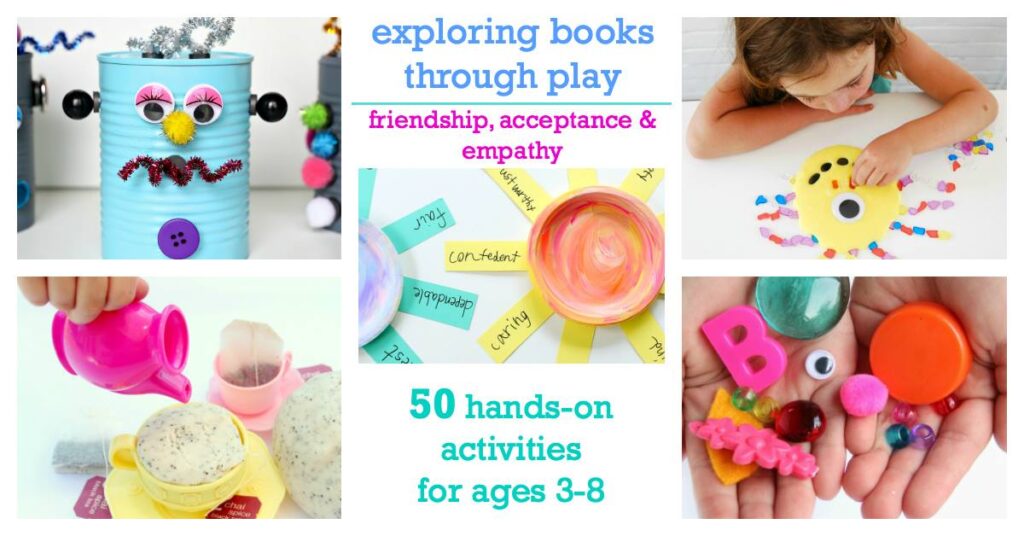
    Goodnight Moon and the concepts introduced in the book goes well with this resource for parents, teachers, and therapists. It’s a huge collection of 50 activities based on children’s books and it helps to teach children about empathy, acceptance, awareness of others, and friendship. The social emotional development that kids can gain through play based on popular children’s books is amazing!

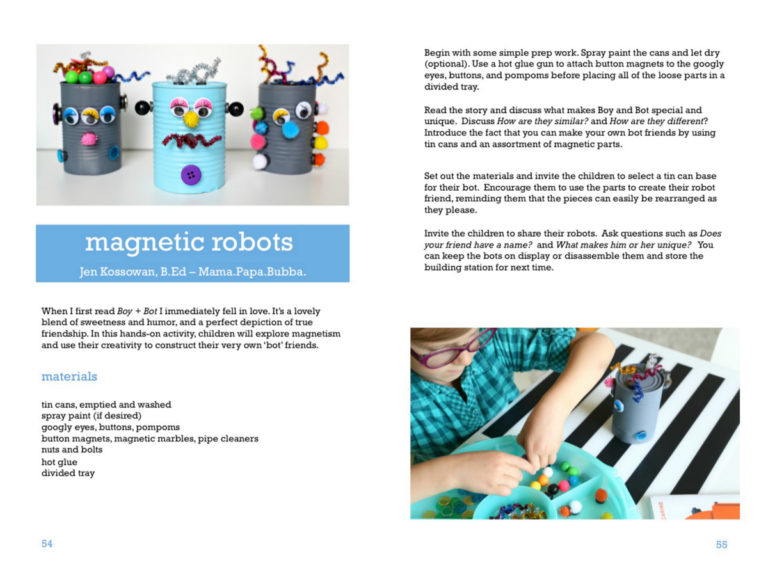
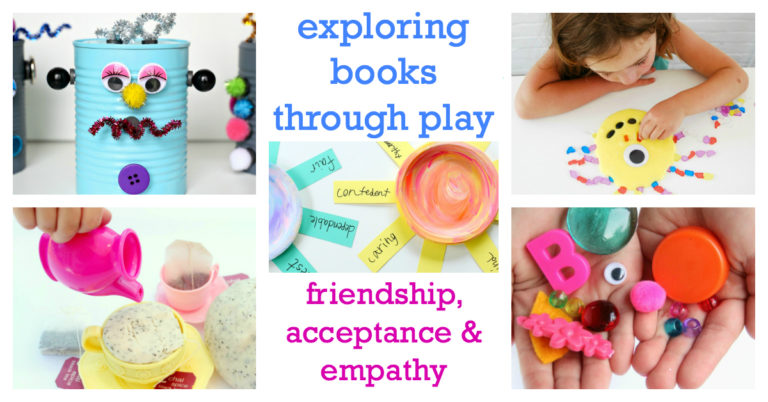
    Grab the resource, Exploring Books Through Play: 50 Activities based on Books About Friendship, Acceptance, and Empathy, that explores friendship, acceptance, and empathy through popular (and amazing) children’s books!  It’s 50 hands-on activities that use math, fine motor skills, movement, art, crafts, and creativity to support social emotional development.    

    GET THE DIGITAL E-BOOK

    Get the PRINT BOOK

    hands-on activities to explore social emotional development through children's books.

    Elmer the Elephant Activities

    Elmer the Elephant activities

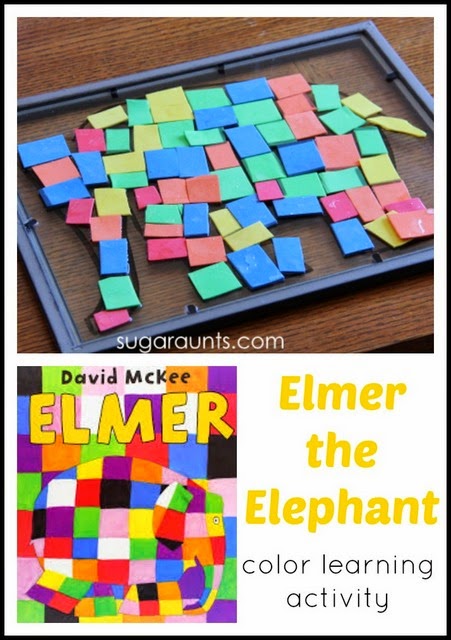
    Elmer the patchwork elephant looks different than his friends. Through stories and colorful pictures that depict everyday elephant life, Elmer the elephant teaches us about diversity and differences. Elmer teaches us about acceptance, friendship, and empathy. Check out the Elmer the Elephant activity below that builds a baseline for these important skills, but also helps kids with fine motor skills, visual perceptual skills, and visual motor skills.

    If you love the Elmer books as much as we do, then you will adore this Elmer the Elephant activity. We LOVE Elmer the Elephant…and all of the Elmer books. Every time we go to the library, we are sure to check the shelf for a new Elmer book that we may have missed. This week’s book activity was so much fun to do with the kids, because it involved one of our favorite books (ever) and a great visual perception activity. Add this book activity to your list of crafts based on children’s books that build skills through reading.

    Elmer the Elephant Activity

    This fine motor craft is a powerful one because it not only builds essential visual perceptual, visual motor, and fine motor skills, but it teaches as well. This Elmer the elephant activity can be used to illustrate differences, empathy, and friendship. Here are more books that teach empathy and friendship that can be used in therapy sessions or in the classroom or home.

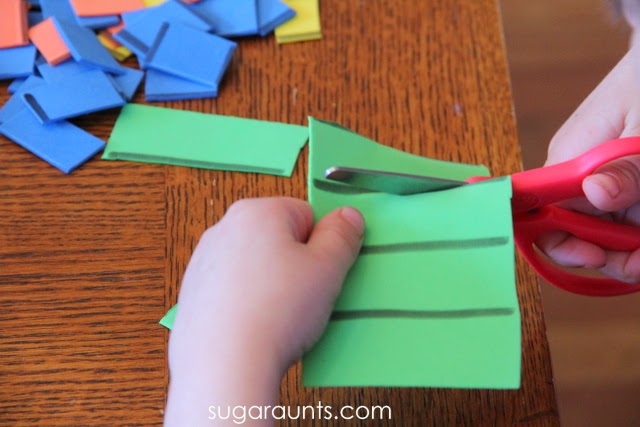
    They loved creating and building our very own Elmer craft. Elmer’s colors made for a great way to help kids build fine motor skills and visual motor skills, too. I loved throwing in the scissor work portion of the activity and working on a few important skills. My youngest daughter worked on her color identification and sorting.  The colors in Elmer’s patchwork skin are perfect for Toddlers to practice naming colors.  Little Guy was loving the puzzle-building portion of our activity.  The lines were a great way to work on a few visual perceptual skills needed for handwriting.  

    Elmer the elephant activity that uses the Elmer children's book as a guide and activity to help kids understand acceptance, differences, and diversity while building fine motor skills.

    Elmer the Patchwork Elephant Activity

    This post contains affiliate links.  

    If you haven’t read Elmer by David McKee, this is definitely a book you need to check out.  Elmer is a patchwork elephant with many colors.  He sticks out from the crowd of gray elephants. By exploring and interacting with his community of elephants, Elmer and the other elephants learn to accept and value his unique characteristics. Elmer is not only a colorful patchwork elephant. He is funny, smart, caring, and an individual. The book teaches us to accept differences because those differences are what make us who we are.

    Elmer teaches us about diversity. He teaches us about identity and tolerance. We all have different colors, shapes, interests, abilities, talents, and ideas. Those differences are what make us special. Let’s see those differences, accept them, and celebrate them!

    We made our own patchwork elephant with lots of colors and had a great time building and creating while talking about color names.  This was such a great activity for both Little Guy and Baby Girl.

    Try this Elmer the Elephant activity to teach children skills like scissor use and fine motor development with a wonderful children's book.


    We started with Foam Sheets in lots of different colors.  You might have seen our color sorting scissor activity post where we practiced our scissor skills.  These squares came in handy for this Elmer activity.

    Create an Elmer the Elephant activity using foam pieces to teach children about empathy and acceptance of differences in others while building fine motor and visual motor skills.

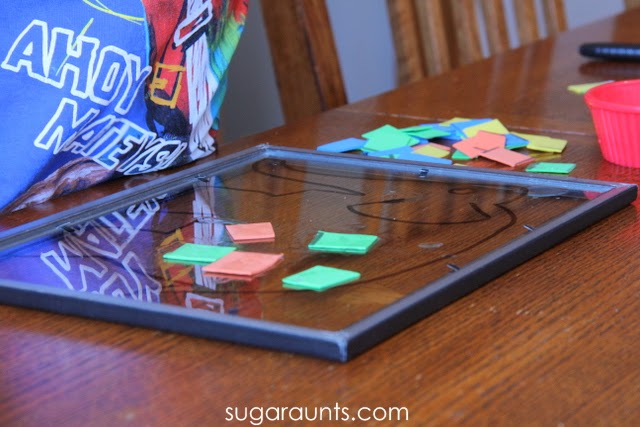
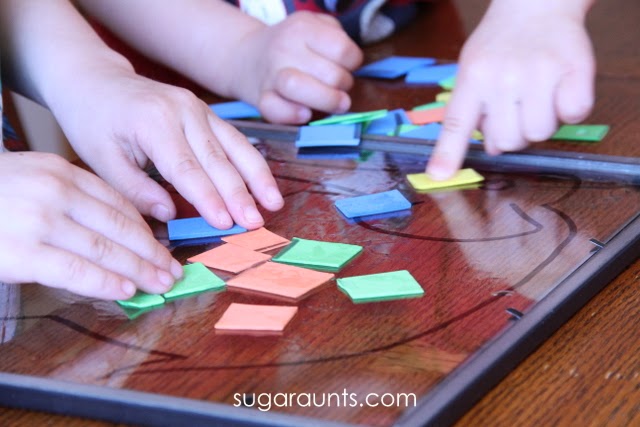
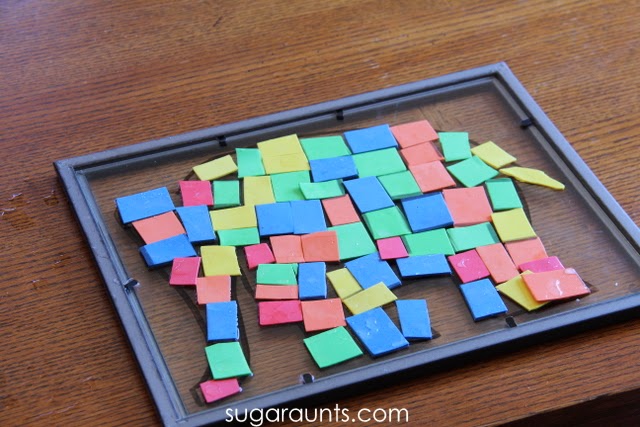
     I found a picture frame at the Dollar Store that has an acrylic front, instead of glass.  This is a great writing surface using a white board marker.  I drew an outline of Elmer with the marker.  We had a little bowl of water and started sticking the foam squares onto the surface to build our Elmer.  When the foam pieces are dunked into water, they stick really well to the picture frame surface.  We did a version of this way back when our blog began with our rainbow building activity.

    Fine motor activity for the book, Elmer the Elephant.

    Visual Perception Activity for Kids

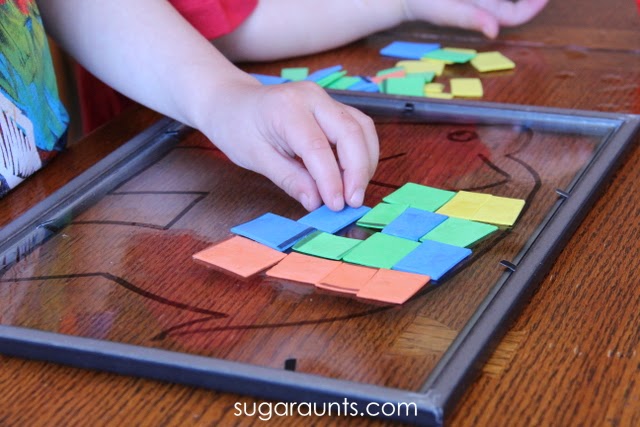
    There were fingers everywhere, adding patchwork squares!  Little Guy and I quizzed Baby Girl on her colors as we worked.  It was a fun puzzle to get the squares fitting into the outline.  What a great way to work on visual perceptual skills, fine motor precision, dexterity, and line awareness!

    Visual perceptual skills in kids are necessary for so many things…from self-care to fine motor skills, to gross motor skills…all parts of a child’s development require visual perception.  There are many pieces to the giant term of “visual perception”.  This Elmer building activity works on quite a few of these areas:

    Visual Discrimination is determining differences in color, form, size, shape…Finding different sized squares to fit into the outline of our Elmer, discriminating the different colors, and shapes are a great way to work on this area. 

    Visual Closure is the ability to fill in parts of a form in the mind’s eye to determine shape or a whole object.  Filling in the missing parts of our Elmer works on this area.

    Visual Spatial Relations is organizing the body in relation to objects or spatial awareness.  This is an important part of handwriting.  Spacing those pieces amongst the others and in relation to the lines is one way to work on this skill.

    Visual Figure Ground is the ability to locate objects within a cluttered area (think “I Spy”).  Finding a red square among the pile of foam pieces is one fun way to work on this area of visual perception.

    Use this fine motor activity with the book Elmer the Elephant to help kids learn abstract concepts while building visual perception.

      Little Guy was really into this activity.  He loved lining up the squares to make our Elmer.

    Elmer the Elephant puzzle that kids can do to build skills in occupational therapy sessions or in the classroom or home.

    We loved how our Elmer turned out!  We’ll be using our frame again, soon.  I can think of so many fun ways to learn and play with this dollar store frame and a marker!

    Elmer the Elephant book and Elmer activity for kids

    More Elmer the Elephant Activities

    Elmer the elephant activities for kids based on the children's book, Elmer the Elephant


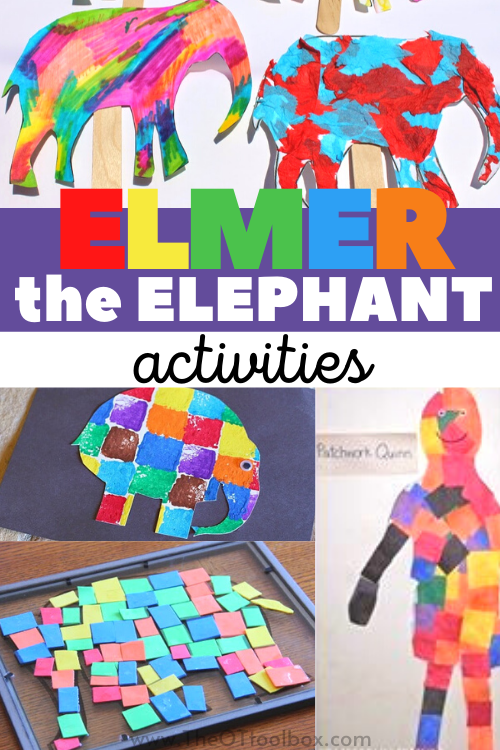
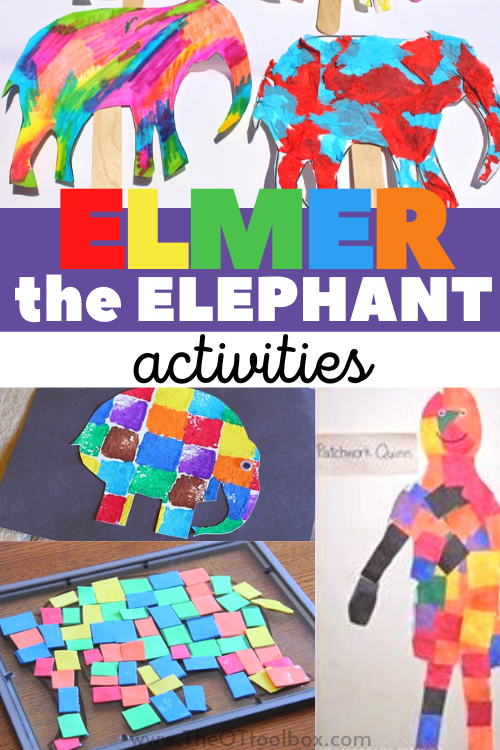
    Check out some of these Elmer the Elephant activities for kids. They are powerful ways to build awareness, acceptance, and friendship through the book and activity.

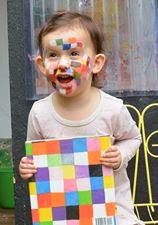
    Elmer the Elephant activity with facepaint

    Use face paint to celebrate friendship with a face painting party based on the Elmer the Elephant book.

    Elmer the elephant craft

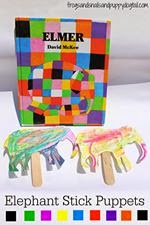
    Make an Elmer craft using puppets to celebrate differences, diversity, and uniqueness in a great lesson for kids, while building fine motor skills.

    Create an Elmer craft using stamp painting.

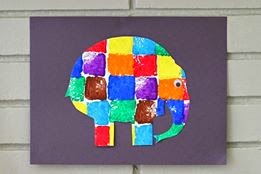
    Create an Elmer the patchwork elephant craft using paint to make a paint stamped elephant craft. What a great way to build fine motor skills!

    Elmer the elephant preschool craft

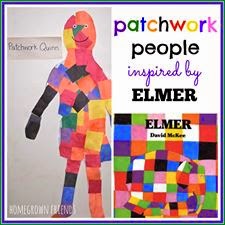
    Kids can trace their bodies with large pieces of paper and then fill the space with colorful paper squares to celebrate uniqueness in this Elmer the Elephant preschool activity.

    Teach Acceptance, Differences, and Diversity

    Want to take complex and abstract concepts like empathy, acceptance, uniqueness, and diversity to the next level with kids? This digital, E-BOOK, Exploring Books Through Play: 50 Activities Based on Books About Friendship, Acceptance and Empathy is filled with hands-on activities rooted in interactive, hands-on, sensory play that focus on creating a well-rounded early childhood education supporting growth in literacy, mathematics, science, emotional and social development, artistic expression, sensory exploration, gross motor development and fine motor skills.

    Kids can explore books while building specific skills in therapy sessions, as part of home programs, or in the home. is an amazing resource for anyone helping kids learn about acceptance, empathy, compassion, and friendship.

    In this book, you’ll find therapist-approved resources, activities, crafts, projects, and play ideas based on 10 popular children’s books. Each book covered contains activities designed to develop fine motor skills, gross motor skills, sensory exploration, handwriting, and more. Help kids understand complex topics of social/emotional skills, empathy, compassion, and friendship through books and hands-on play.

    Click here to get the book and add children’s books based on social emotional learning to your therapy practice, home activities, or classroom.

    Exploring books through play is a guide to using children's books in therapy and while building developmental skills.

    More books to teach social emotional skills

    Check out our other posts in the Preschool Book Club Series for activities based on favorite books:

    Colleen Beck, OTR/L has been an occupational therapist since 2000, working in school-based, hand therapy, outpatient peds, EI, and SNF. Colleen created The OT Toolbox to inspire therapists, teachers, and parents with easy and fun tools to help children thrive. Read her story about going from an OT making $3/hour (after paying for kids’ childcare) to a full-time OT resource creator for millions of readers. Want to collaborate? Send an email to contact@theottoolbox.com.
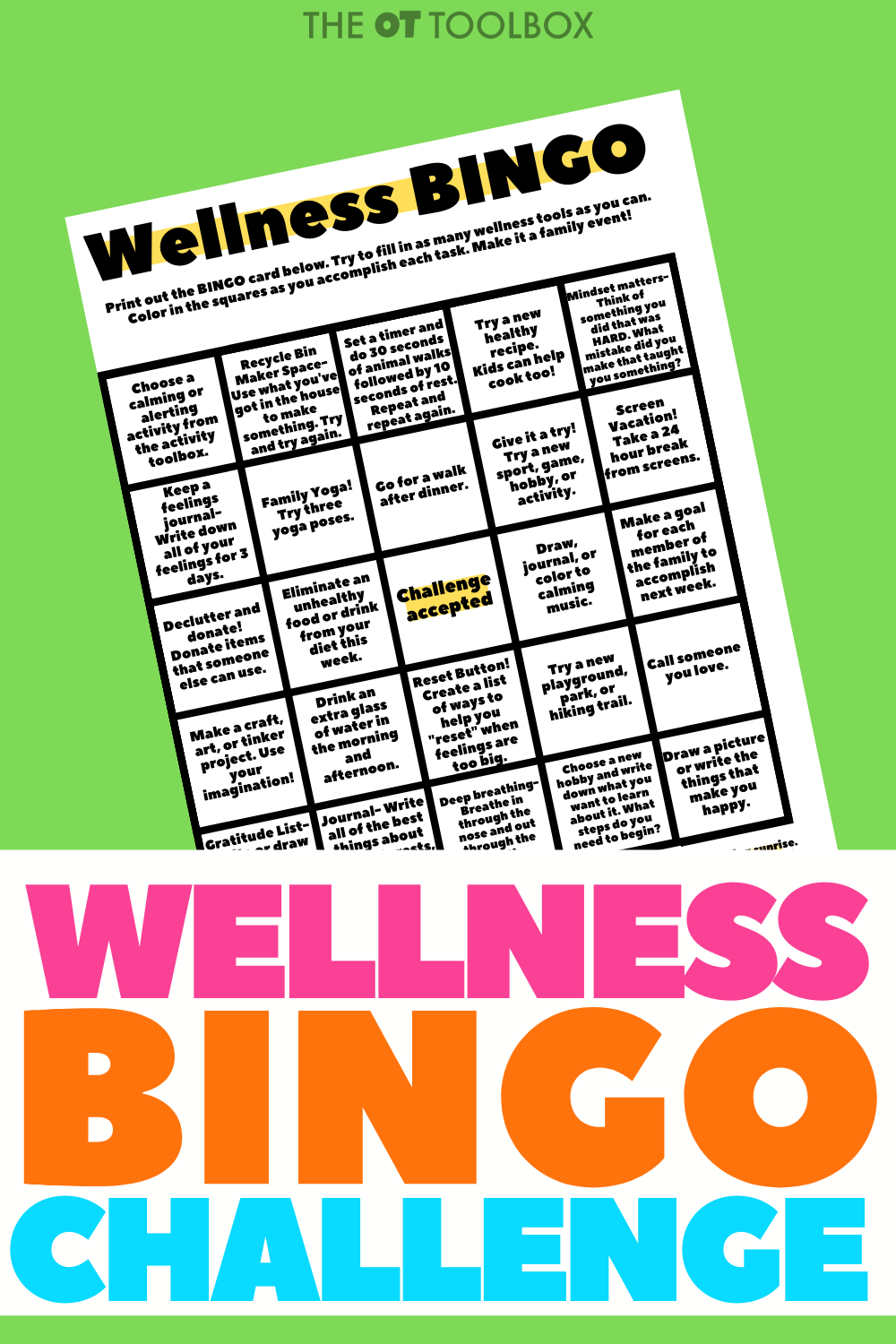
    Wellness Bingo

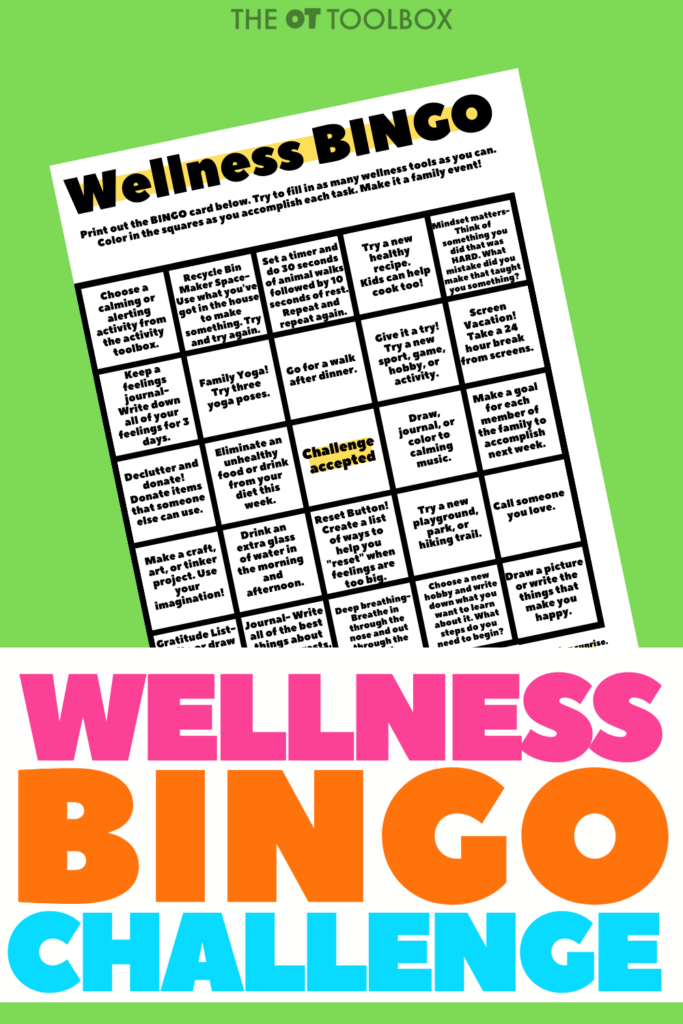
    Wellness bingo game to use to build overall well being and a balanced health and wellness state.

    When it comes to child wellness and family wellness, there can be a lot of work that needs done to maintain a healthy and balanced lifestyle. Child well being can be adversely impacted by myriad causes: childhood trauma, parent lifestyle, poverty, screen over-use, and other stressors. Here, you will find a Wellness Bingo activity to help with health and wellness in kids and families. This resource is one that can be used over and over again as a means to address occupational imbalance, or overload in one area of the wellness wheel.

    Wellness bingo game to use to build overall well being and a balanced health and wellness state.

    For help in promoting wellness as a therapy practitioner, as a parent, or as a teacher, please do join us in our Wellness Challenge.

    Wellness Bingo

    Research tells us that family dynamics such as parent interaction, family mental health, father involvement, and other concerns can have a major impact on child health and wellness. The wellness BINGO game below can be a tool to address challenges in emotional wellness, physical wellness, mental wellness, and all aspects of overall wellbeing.

    Use this Bingo game as a strategy during a wellness week or as part of a wellness program. I’ve tried to make this health and well being game one that works for children, families, and students. However, the tool can be adapted and used in the workplace or when looking for workplace wellness ideas.

    Wellness Bingo Card Topics

    The various wellness dimensions included in this BINGO game are based on the topics covered in our Wellness Challenge. You’ll find the following areas covered by completing the bingo board:

    Emotional Wellness- Emotional well being is a state of healthy emotions while managing challenges and coping effectively. Maintaining an awareness of self across environments and situations. Coping with stressors and allowing emotions to not impact function or tasks. Having an awareness of self and self-regard.

    Physical Wellness- Physical wellness refers to a healthy relationship with health, exercise, and nutrition. The ability to maintain a balance between physical activity (exercise), rest, nutrition, and overall health. Self-care in dealing with stress. Part of physical well being is the ability to recognize this balance and adjust when needed. Physical wellness can incorporate nutritional wellness which may be separated into it’s own wellness wheel pie piece.

    Social Wellness- The ability to maintain a healthy social network that can give support and in which you are able to provide support in return. The ability to establish a sense of belonging. Building and maintaining positive relationships with others. The ability to deal with conflict appropriately. Taking other’s opinions, experiences, and perspectives into consideration with empathy while maintaining a healthy level of love and respect for yourself. Having good communication skills.

    Occupational Wellness- Occupational wellness is an important concept for OTs. The balance of work, chores, play, hobbies, functional tasks like self-care or hygiene, home management, finances, etc. Maintaining fulfillment and balance between all of one’s occupations (or the things that occupy one’s time) is essential to well being and stress.

    Intellectual Wellness- Being open to new ideas and new concepts is important in the area of intellectual wellness. Learning new things with an open mind in order to gain knowledge and learn new skills. Fostering hobbies and taking the time to read to acquire information based on hobbies, interests, or work. Recognizing that others have different backgrounds and experiences that can be a learning opportunity.

    Spiritual Wellness- Spiritual awareness and wellness is a state of recognizing one’s beliefs, personal mission, and faith. A spiritual investment allows you to guide your decision based on ethics and purpose. Allows for peace and joy in making decisions while finding meaning in life. Understanding that you and others have purpose in life and that your own spiritual connection may be different than others.

    You can see how some of these wellness concepts blend into one another!

    Because of that interconnectedness, you will see that the Wellness Bingo has a mixed set of wellness challenges that can address different aspects of well being.

    Wellness Bingo Challenge

    This wellness bingo challenge is designed to make things easy on you. Why? Because adding more to our daily to-do lists can be the cause of lifestyle imbalance. Our goal here is to focus on occupational balance…or the ability to participate fully in daily task requirements at an optimal state. When occupational balance is off, there may be stress, anxiety, and a wellness wheel that is off kilter!

    So…to use this wellness bingo game, there are no rules!

    Try to do one of the squares each day or each week. Try to fill the whole game card or just one row. Allow the whole family to play together and fill the card in more quickly. It’s completely up to you!

    On the wellness bingo card, there are activities that boost many areas that improve the wellness components described above. Check out these resources to read more on the topics that are covered:

    self-regulation

    mindfulness

    self-awareness

    self care

    exercise

    healthy habits

    and so much more.

    Want this Wellness Bingo card to print off and use? It’s part of our Wellness Challenge. Join the challenge and gain access to this free printable.

    In the challenge, we’re talking all things wellness. The BINGO card is offered as a free resource on DAY 2 of the Wellness Challenge. Click here to join us!

    Self Awareness Activities Slide Deck

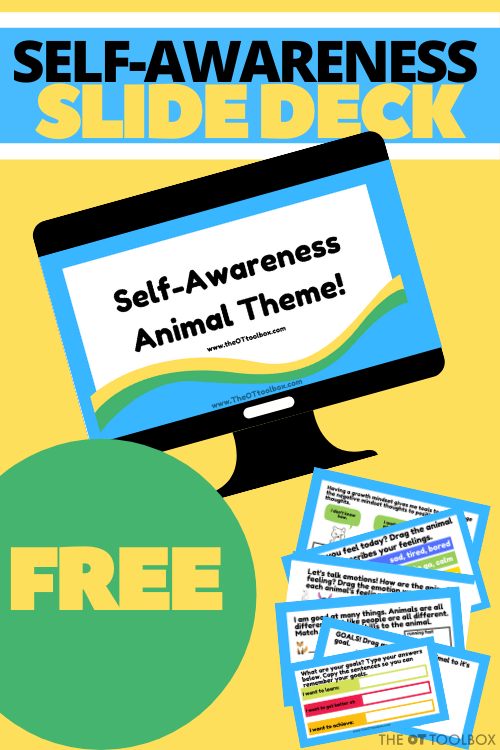
    Use this free self awareness activity slide deck in occupational therapy teletherapy

    Helping kids become more more self aware is a skill that can help with emotional regulation, goals, executive functioning skills, goal achievement, and so much more. Today, I’ve got self-awareness activities for kids in the form of a free Google slide deck. This resource goes really well with hands-on self-awareness games to target a variety of skills and abilities.

    This is a powerful social emotional development tool for kids. Use these awareness activities to help kids become more aware of how they feel, the things they are good at, personal goals, interests, and positive traits. You’ll find the animal themed activities below. First, let’s discuss awareness for kids.

    Self awareness activities for kids

    Self awareness for kids

    For kids and adults alike, self-awareness is a means to become more aware of how they are behaving and thinking. Using that awareness of self and applying the ability to self-monitoring through strategies can help with improved behavioral outcomes. When we respond to situations, most of us have a monitoring system or the ability to monitor how we feel, think, and act so that we can respond appropriately. Self monitoring leads to behavioral responses and functioning so we are able to complete tasks in a given situaion.

    Being aware of one’s needs, goals, emotional state, thoughts, behaviors, and responses can help within a situation. Awareness offers an opportunity for the need for self-care and self-advocacy.

    Self awareness is a metacognitive skill needed for higher level thinking

    All of our life experiences, including functioning in day-to-day tasks, learning, and social participation requires self-reflection or an awareness of self. Without self awareness, learning, participation, following rules, social interactions, lawfulness, and all aspects of occupational performance may be threatened.

    Self-awareness is a skill that allows for emotional regulation and behavioral regulaiton. For some, these are extremely difficult. When awareness of one’s preferences, tendencies, emotions, reactions, one can begin to understand their needs. Having a sensory diet in place as part of a sensory lifestyle is just one tool to address sensory needs. Using coping strategies to help with regulation needs can be a life-changer. Using stress reduction tools to address anxiety or anger can be powerful in adapting. There are tools to address specific needs of all kinds. One of the first steps in identifying needs is the understanding of self-awareness.

    For more information on integrating a sensory diet into a sensory lifestyle, try the Sensory Lifestyle Handbook, a comprehensive resource in integrating functional sensory diet based on individual interests in a motivating manner.

    Understand how self awareness skills develop in kids

    Development of self awareness

    For children, the ability to self-monitor and be aware of their thoughts, skills, abilities, interests, emotions, and behaviors, these skills may be challenges.g It takes practice and experience for a child to have the ability to self-reflect. Research tells us that self-awareness begins to develop in childhood, but involves metacognition, or interospection. Metacognition is a skill that is acquired later in childhood, in the adolescent years.

    One study of metcognition has found that the skill develops at a functional level for basic metacognitive skills around age 13 to 14. More generalized or advanced metacognition develops around age 15. This study also determined that between the age of 12 and 15 years teenagers develop in qualitiy of metacognitive skills, however this development varies between individuals. Aspects of higher level cognition skills such as those commonly discussed when covering executive functioning skills impact self-reflection: orientation, planning, evaluation, and elaboration. Like other aspects of executive functioning, self-awareness and reflection (metacognition) develops until at least the age of 22.

    Another aspect of executive functioning, working memory, is a skill that impacts metacognition and self-reflection. Younger teens have been observed to have a lower level metacognitive skills that are applied to single situations or limited transfer of skill. Older teens, as metacognition develops, are capable of transfer of metacognition across environments. This higher-level inference involves conscious formulation of abstractions in one situation that allows for making a connection to another situation.

    Self awareness examples and self reflection strategies for kids

    Self awareness examples

    In the self awareness slide deck you’ll find below, there are several main areas covered. These are essential pieces of the self reflection and self monitoring puzzle.

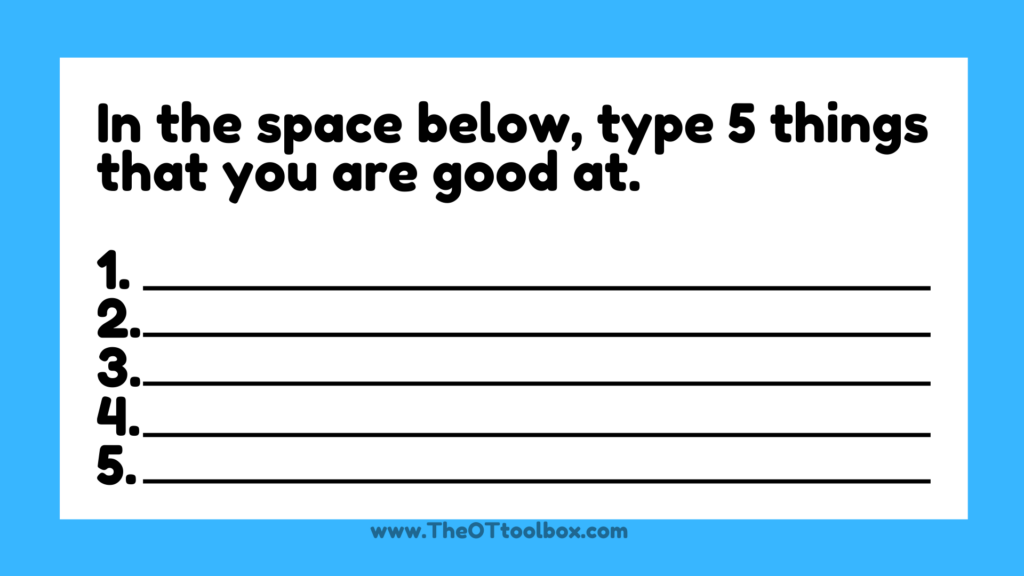
    Identification of positive traits- Knowing what they are good at. The slide deck prompts kids to identify 5 things they are good at. This exercise is a booster in self-esteem and can be a starting point for addressing goals.

    self awareness activities include self reflection

    Compliments- Learning to identify what others are good at and telling them is an important skill. Authentic compliments identify positive traits in others. Noticing these details about others builds an awareness of oneself as well as others.

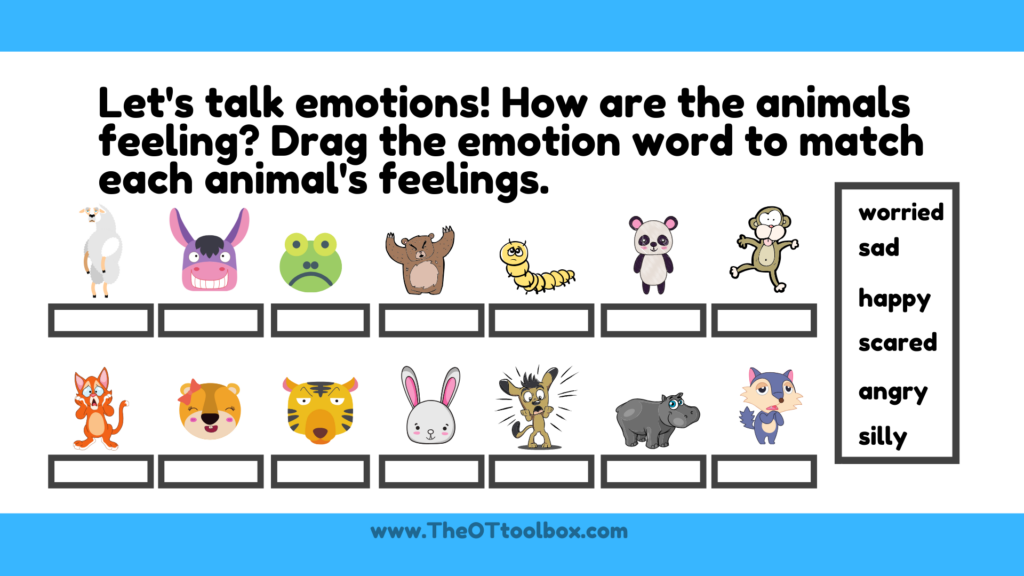
    Emotions- The first step of emotional development is identifying emotions. We can see by the faces someone makes how they are feeling. Putting a label to that emotion is a strong skill.

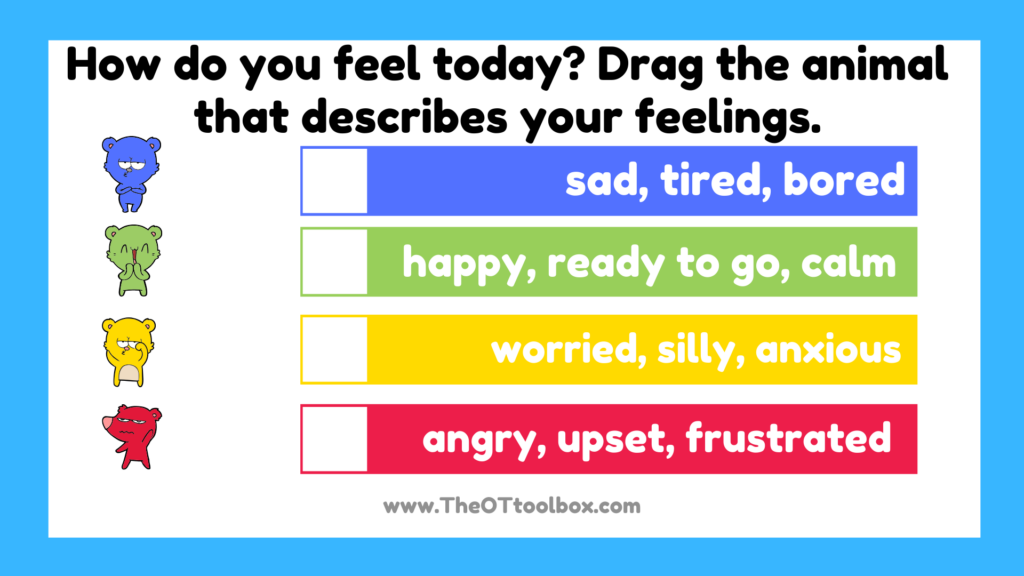
    Emotional self-awareness- Moving on, kids can describe how they are feeling at any given moment. They can identify how they might feel in a situation. Then, they can identify coping tools and put words into their feelings and emotions.

    Self awareness is an important part of social emotional skill development.

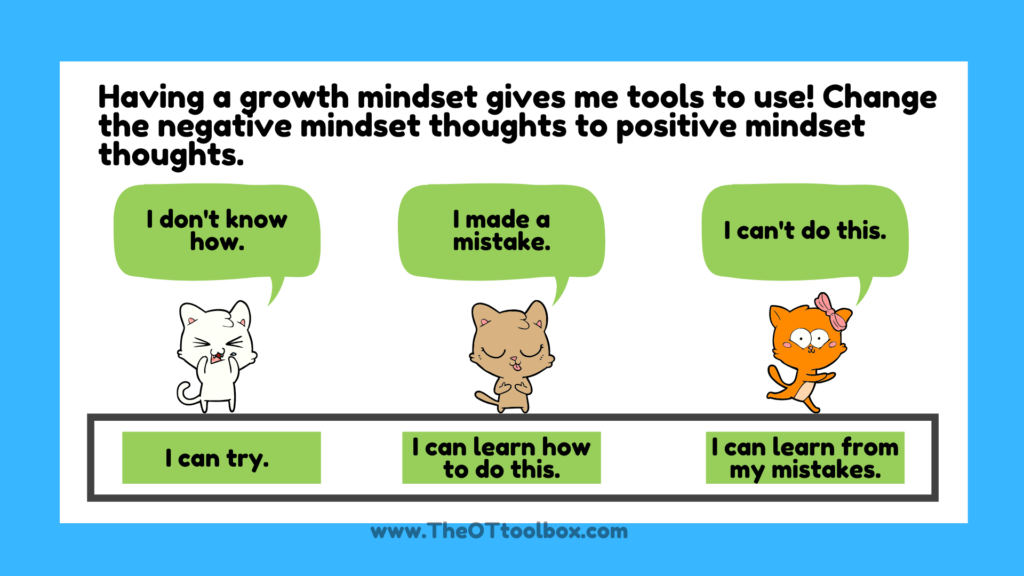
    Growth mindset- This skill is powerful in self-awareness and metacognition. Using a growth mindset allows room for development in your internal belief system. You have room to learn and develop as a person and understand that there is room for improvement regarding behaviors or actions. This mindset, when it comes to self awareness, limits self-judgement and hopelessness.

    Self awareness activities include a growth mindset

    Interests- Identifying interests is a first-step in self-awareness. Our Sensory Lifestyle Handbook covers interests and motivation in great detail. The research tells us that interests impact motivation and goal achievement. Looking deeper into oneself to identify interests is a great first step.

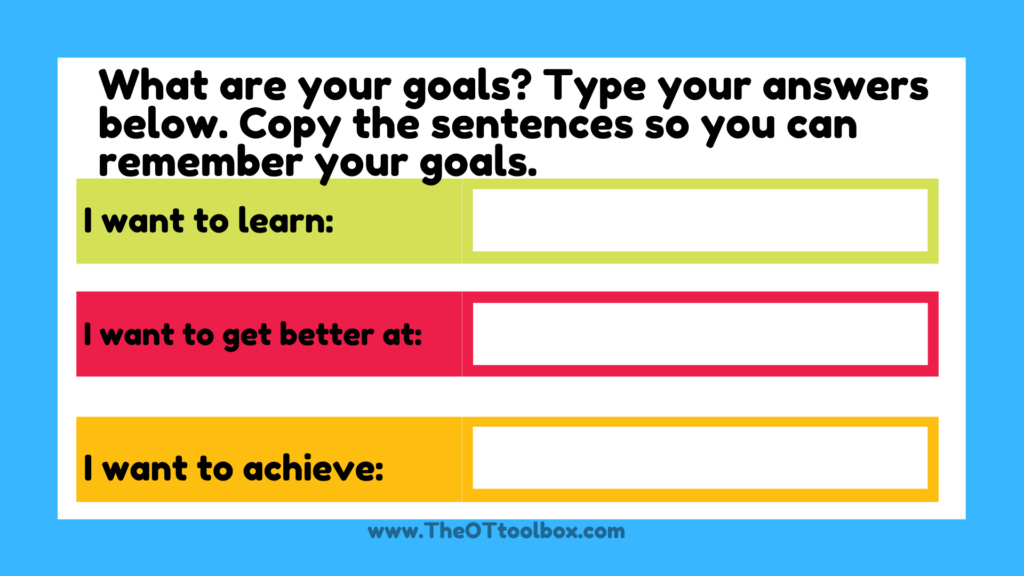
    Goals- Goals don’t need to be all about behaviors and actions. A beginning step can be identifying goals that others might have and the steps it takes to get there. A simple goal achievement path builds skills in planning, prioritization, organization, and other executive functioning skills.

    self awareness activities address goals

    Setting goals- A higher level task of setting goals covers self-reflection as well as those items covered in goal achievement. Kids can be guided to set goals that are important, achievable, satisfying, and motivating. Then, identifying milestones and the steps to get there can make it easier to achieve, making them motivating and a self-confidence booster.

    Self awareness activities

    Setting one’s own goals- Setting goals can be helpful for kids as they learn to work toward a meaningful goal. This process helps them learn focus, planning, prioritization, self-esteem and goal achievement. Setting goals and identifying goals impact self awareness. Part of goal setting includes getting super clear on what’s important to a child. Kids can examine their process and identity actions they’ve taken toward those goals. They can identify what’s working and what hasn’t worked. They can create a plan for moving forward. All parts of this process improves self-awareness through self-reflection.

    Provide opportunities for kids to self-reflect- Ask questions based on concrete acquisition of knowledge and open up conversations such as, “Before, I thought… Now, I think…”

    Role playing (role reversal)- Kids can sometimes “see” how their actions or reactions impact themselves and others when the situation is acted out. Coping tools or strategies can be used in the role play as a practice run.

    Zone of regulation activities- Using Zones of regulation activities to address self-awareness is an effective strategy for many children. The Zones program was developed to help kids learn a greater internal awareness while using self-regulatory behaviors and emotional adaptive skills for functional use.

    Keep a journal- Keeping a record of small wins, mini goals, struggles, efforts, and day-to-day progression can be so powerful for kids (and adults!) The Impulse Control Journal is a comprehensive resource that can be printed off and used over and over again as a journal for addressing and building executive functioning skills, including the essential component of self awareness.

    Goal Attainment Scaling- This AOTA article shares examples of how goal attainment scaling can be used to measure changes in individual behaviors using a self-rating scale for specific actions in response to goals. This self-awareness strategy offers a means for the child and their therapist to track progress on goals to help accomplish individual goals and accomplish a specific aspect of functioning, or occupation.

    Self-cuing- Using self cuing is a tool to help recall instructions, coping strategies, tactics, or even a visual prompt that delivers a step-by-step directive in a situation. Visual prompts can be as simple as a list, or a social story that is visible or accessible during a situation. These visual reminders can be a building block for self-awareness and reinforcement of strategies that have been determined to work for an individual.

    Video modeling- Making a video recording of a child within a treatment session can be another way to help the individual see how they are responding in a situation. They can then watch their actions, behaviors, and choices as well as use of coping tools or modulation strategies within a situation. The video should be reviewed with the child and discussed what they did well and what might work better next time.

    This free self awareness activity slide deck is great for kids to develop self reflection skills with an animal theme

    Self-Awareness Slides

    These self awareness slides use an animal theme to help kids become more aware of them self through self-reflection. The slides work through the aspects of self awareness that we outlined above. Beginning skills are covered and kids can work on each area in a fun and creative way.

    Enter your email into the form below and you can access this free therapy slide deck to help kids build self awareness skills.

    Self awareness activities include emotional regulation aspects

    Get a free Self-Awareness Animal Theme Slide Deck

      We respect your privacy. Unsubscribe at anytime.
      Powered By ConvertKit

      References:

      Foster L. and Lueger, K. (2014). Model Behavior: Helping Adolescents With Autism Through Goal Attainment Scaling and Video Self-Modeling. OT Practice 19(2), 79. http://dx.doi.org/10.7138/otp.2014.192f1.

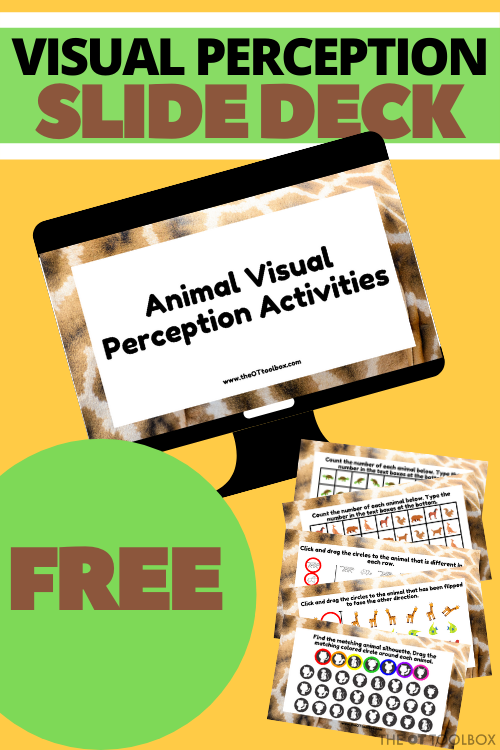
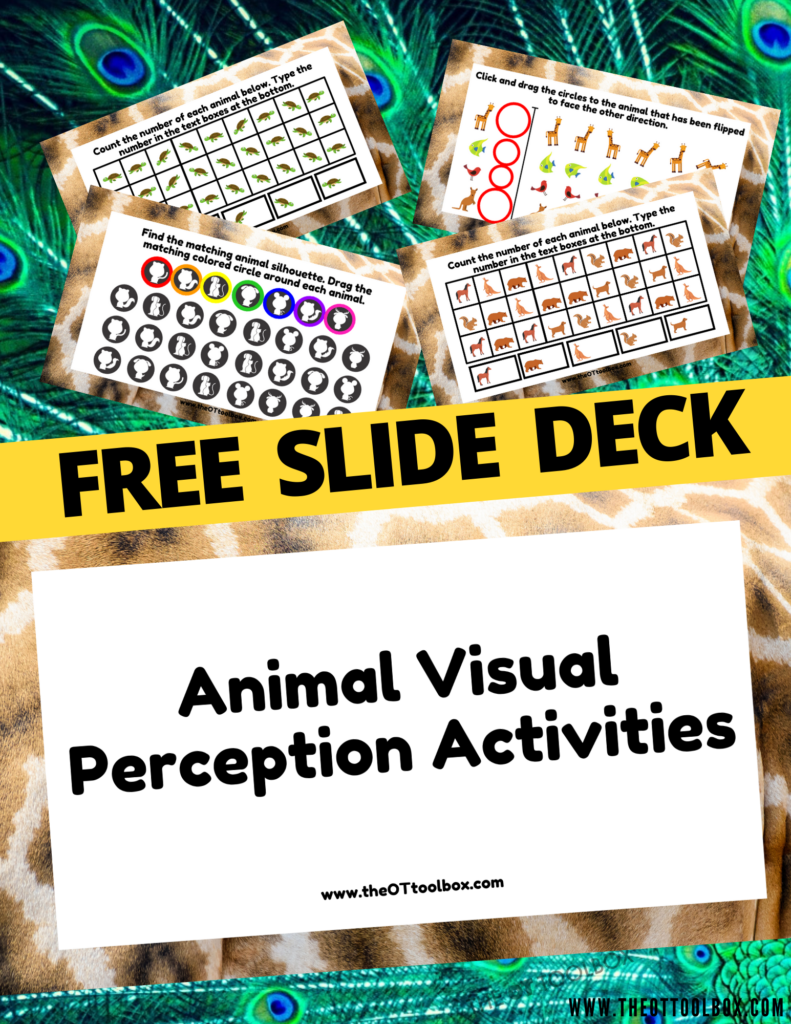
      Free Therapy Slide Deck- Animal Visual Perception

      This free slide deck is an animal visual perception activity

      It’s here! If you’ve been enjoying the free slide decks that I’ve been sharing here on the website, then you are in luck. Today, I’ve got another free therapy slide deck. This one is all about visual perceptual skills…the Animal Visual Perception therapy activities are here! Scroll to the bottom of this post, enter your email, and start working on visual perception in your teletherapy activities. Be sure to check out our other recent therapy slide decks, listed below.

      This free slide deck is an animal visual perception activity

      This visual perception slide deck covers various visual perceptual areas:

      Visual discrimination

      Form constancy

      Form constancy

      Visual memory

      Visual attention

      The animal theme therapy slide deck also covers oculomotor skills:

      Visual scanning

      Visual tracking

      Eye-hand coordination

      Free Therapy Slide Decks

      This animal theme set of visual perception activities are just one of the recent slide decks that I’ve created. Be sure to grab some of the other free slide decks on the site:

      Space theme activities Slide Deck

      Monster Movement Slide Deck

      Letter Activity Slide Deck

      Strait Line Letters Slide Deck

      Scribble Theme Letter Formation Slide Deck

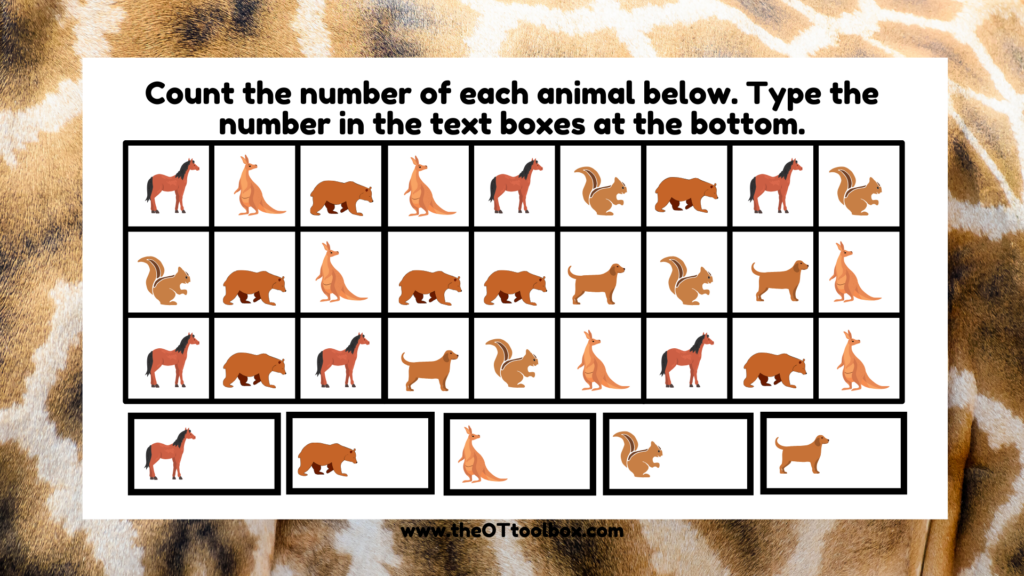
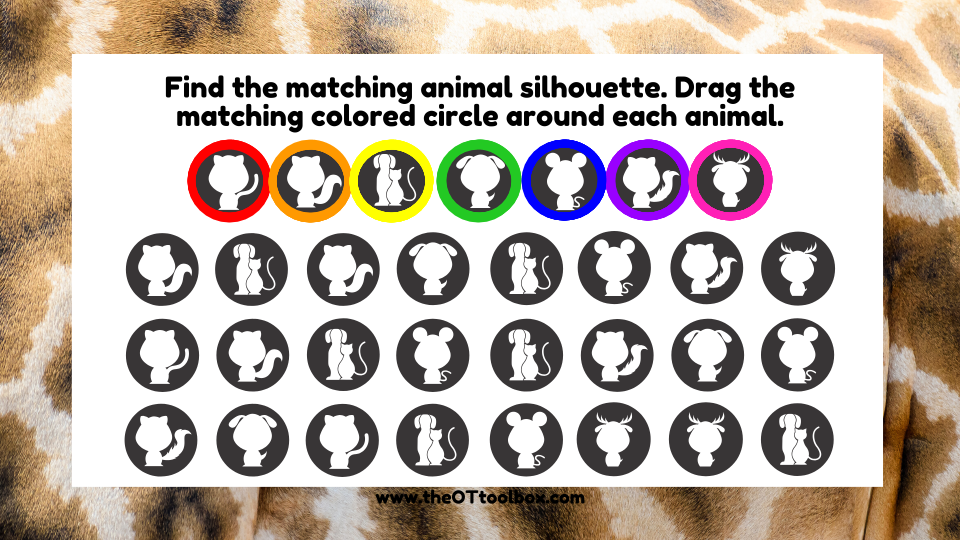
      The slide decks in this set are interactive. Kids can click on parts and either type in answers to the visual perception activities or they can click on parts of the slide and move pieces to complete the visual perception task.

      Free therapy slide deck activities to work on visual perceptual skills with kids.

      Work on specific areas such as visual memory and visual discrimination. Visual discrimination plays a large part in visual memory. Visual Memory is one part of a large arena known as visual perceptual skills. Visual memory focuses on one’s ability to recall visual information that has been seen.  Visual memory is also a critical factor in reading and writing.  

      When a child is writing a word, he must recall the formation of parts of the letter from memory.  It can be terribly frustrating for one with a visual memory deficit to perform a handwriting, spelling, or word copying exercise.  Children with difficulty in visual memory will have trouble copying letters, words, and sentences from a chalkboard or book.  

      Difficulties with visual discrimination or visual memory skills may present as very slow handwriting, trouble forming letters, and mixing up letters or words within sentences.  

      Producing written work on worksheets and tests may be difficult when visual memory is an issue. Recalling sight words in reading exercises can be hard as well as following along in a reading activity during stop and start tasks, due to comprehension and difficulty recalling what was read.

      Kids with visual memory deficits can demonstrate difficulty with formation of letters and numbers and appear “lazy” in their written work.

      Animal visual perception activities

      Users can click on the colored circles and move them to cover different forms. With more and more teletherapy sessions and digital activities being used in therapy, children are having to click and drag. This development of eye-hand coordination skills can be a difficult task for some children. Work on practicing with a visual perception component to build skills.

      Get a free Animal Theme Visual Perception Slide Deck

        We respect your privacy. Unsubscribe at anytime.
        Powered By ConvertKit

        More visual perception activities

        Try some of these resources in your therapy activities:

        Free visual perception packet

        Free Visual Processing Lab

        Visual Motor Activities

        Kids Craft Supplies for Building Skills

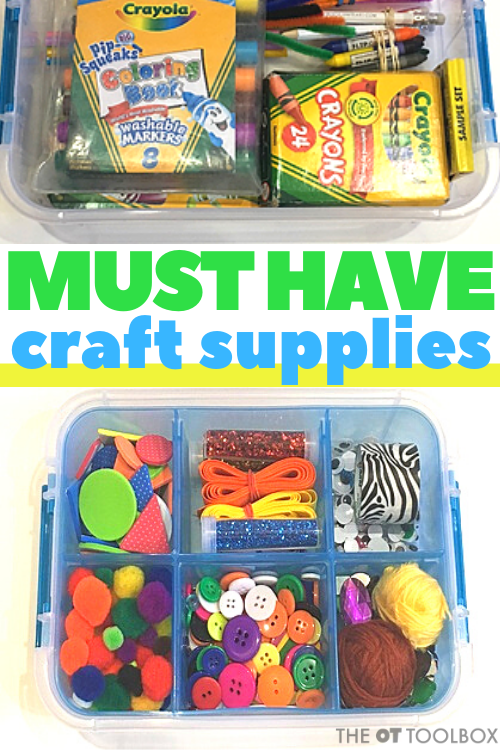
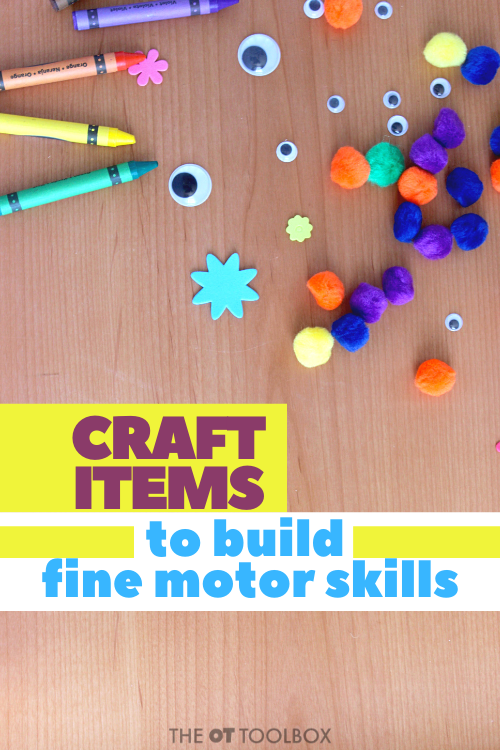
        These must have craft supplies are great for making a craft kit for kids

        While kids crafts offers children the chance to create through art or an opportunity to be creative, the fact is that crafting is a means to help children build skills. Because of that, I wanted to put together a resource detailing kids craft supplies and how simple craft items can be used to help kids improve fine motor skills, executive functioning, motor planning, and other developmental skills. There’s more; Kids can use crafts as a coping strategy. Crafts are one of the therapeutic activities for teens or children of all ages that not only allow children to express their selves, but to create. Let’s talk more about the specific craft supplies for kids and how they can be used as a therapy tool.

        These must have craft supplies are great for making a craft kit for kids

        Kids Craft Supplies In Therapy

        The therapeutic use of crafts has been the history of occupational therapy since the very beginning. The use of crafts began in mental health with a huge focus on basket weaving. Therapeutic crafts have sustained their relevance and continue to be utilized in many occupational therapy settings today to include pediatrics, mental health, outpatient and skilled nursing, among others.

        Why? Because crafts can work on many skills with a focus on functional skills, or meaningful activities. Most all craft activities have some type of motoric and cognitive skill component. Individuals can work on their fine motor control and manipulation, bilateral coordination, tool use, hand strength, visual motor and perception, motor planning, and grasping skills. Crafts allow for work on executive functioning skills to include attention, focus to task at hand, task initiation and completion, planning, sequencing, organizing, following multi-step directions, and problem solving. Craft activities can also provide a fun time for therapists to connect with clients and develop a special rapport.

        Crafts have recently regained their popularity and are back in style with increased vigor and emphasis across all populations.  Children and adults are participating in craft activities both available on social media as well as at craft events in local craft stores and art studios. Adults meet with friends to create and engage in social interaction while learning new skills and creating works of art from their own hands. For many, crafts are a form of occupation. Children likewise enjoy crafts for similar reasons as they are able to use their skills to create something they can share with others and take home to enjoy while having a sense of accomplishment and success.

        Children love to make crafts both in school and during their own time. They have fun exploring different materials and using them to create unique and original items which they can then share with others and display.  To see the smile on the face of a child when they have completed a craft, no matter the end product, is simply priceless.  Precious smiles with development of skills are the reward to pediatric therapists as they work with children every day. Perfection is not the goal, but the process. 

        use craft supplies in therapy

        Art Therapy for Children

        Art therapy for children is a powerful therapeutic activity. There is an entire profession dedicated to the use of art and crafts in therapy. In the occupational therapy profession, the use of arts and crafts offers a meaningful occupation to build essential skills for function. While it may seem like play, there is much happening behind craft activities! Crafts and art in OT sessions are the tools or the medium to improve functional skills in patients.

        Craft Kits for Kids

        Craft kits are one of the best tools for pediatric therapists.  These craft sets are a set of kids craft supplies selected to help kids build skills. Craft kits for kids can come in any shape or size and they offer a sense of intrigue and possibility for children.  Therapists use these motivational materials to address therapeutic goals while children develop confidence in their skills along with self-esteem and ultimately, product production.

        craft kits for kids to build skills in therapy

        Activity Kits for Kids

        When therapists choose a craft they are targeting specific child goals. Using craft supplies, selected activity kit for kids allow users to build skills through creating art or crafts. They address improving skills with scissor manipulation, grasp, fine motor coordination and manipulation, tactile tolerance and stimulation, organization, sequencing, or following multi-step directions.  Craft projects in a group lead to an opportunity for socialization and social skills development too.  Crafts can easily be downgraded or upgraded to address multiple skill levels. Furthermore, therapists can position materials during the process of crafting to facilitate crossing midline, hand dominance, left and right awareness, postural control, range of motion, and motor planning.  Again to reiterate, it is the process of the activity with skills addressed rather than the complete end product.

        Using craft kits can be so much fun and taking them a step further by creating themed kits are always the best!  Craft kit themes can include food items, craft items, sensory items, holiday items, or seasonal items.  Decide the craft kit theme you want to create and start off to the store to gather your materials. A simple, easily replenished, go-to craft kit should be a part of the pediatric therapist’s bag, cart, therapy room, or clinic. So many wonderful skills can be practiced and addressed with craft kit items while also allowing for child creativity and freedom to explore. Let’s take a peek at two fun craft kits that are cheap to create using everyday craft supplies for kids and use easy to find items. 

        Kids craft supplies in a craft kit

        Kids Craft Supplies Kit

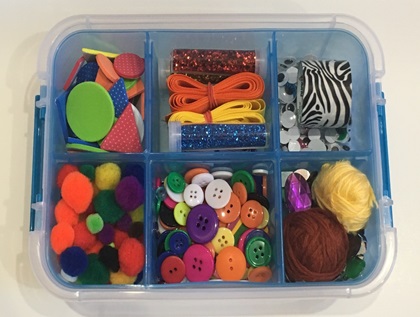
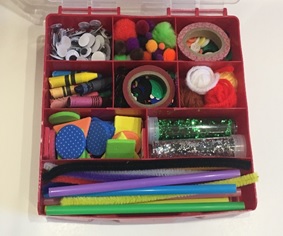
        This small craft kit contains simple items for use in craft and art activities which can be found at a local dollar store, chain store, or craft store. It contains only the items for art pieces and crafts, but not the necessities such as paper, glue, and scissors.  This craft supply set may be more useful in the clinic setting as the other necessities are readily available for use. However, locating a set of must-have craft supplies for kids is as easy as an internet search.

        craft supplies for kids to use in art activities

        Below is a list of craft supplies that build skills. Click on the links to purchase the craft items.

        Amazon affiliate links are included below.

        Buttons – addresses size relations and fine motor coordination and manipulation. Buttons can also be used to string onto pipe cleaners for crafts which addresses fine motor control and precision, eye-hand coordination, perception, and bilateral coordination.

        Colored craft sticks – addresses fine motor coordination and manipulation. Adding other craft elements such as googly eyes, stickers, washi tape, etc. addresses fine motor precision, bilateral coordination, and eye-hand coordination.

        Crayons – broken pieces of crayon addresses grasp and distal control while the child colors or draws.

        Doilies – addresses fine motor manipulation, bilateral coordination, and patience as the child works to separate the doilies to obtain just one.

        Foam sticker shapes – addresses shape recognition, tactile tolerance, fine motor manipulation and coordination, pincer grasp and bilateral coordination. Removing sticker backs and applying to a surface are key components. In fact, stickers build a lot of skills in occupational therapy goal areas.

        Googly eyes – addresses fine motor manipulation and coordination and pincer grasp. Googly eyes can sometimes be challenging to pick up from a flat surface.

        Pipe cleaners – addresses bilateral coordination, fine motor precision, in-hand manipulation, eye-hand coordination, pincer grasp, and visual motor and perceptual skills. Pipe cleaners can be used for lacing straw pieces and buttons and creating shapes.

        Pom-pom balls – provides a tactile experience and works on pinch and eye-hand coordination for placement. Patterning can also be addressed.

        Regular craft sticks – these are great for creating fun “buddy” crafts.Use crayons to color and other elements for decoration such as googly eyes, sequins, and stickers which addresses fine motor coordination and manipulation, fine motor precision, visual motor, bilateral coordination, and grasp.

        Sequins – addresses fine motor control and manipulation. They are challenging to pick up and manipulate for placement onto glue dots. Patterning can be addressed.

        Small glitter tubes – addresses graded control for sprinkling. Tactile tolerance can be addressed if the glitter is sprinkled with a pincer grasp.

        Straw pieces – addresses bilateral coordination, scissors skills, fine motor coordination and precision, and pincer grasp. Cut straws into pieces for art an activity or for stringing onto pipe cleaners.

        Washi tape – addresses tactile tolerance, bilateral coordination, scissor skills, pincer grasp, size relations and pre-writing skills if used for shape formation.

        Yarnprovides tactile tolerance especially when placing onto glue and addresses fine motor manipulation and coordination, scissors skills, and prewriting skills if used for shape formation.

        craft supplies to help kids build skills in therapy

        Craft Kit for Kids

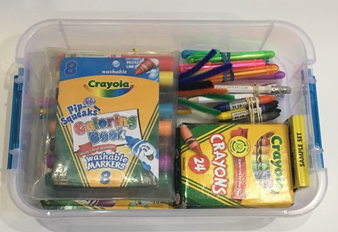
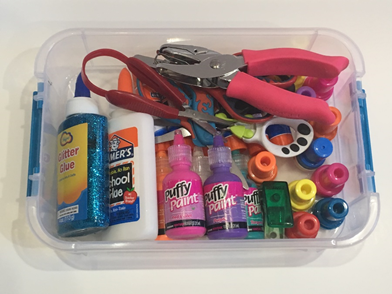
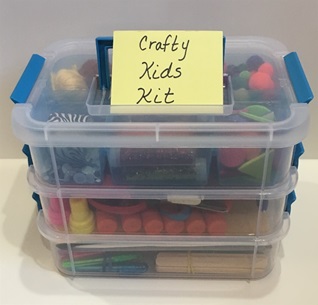
        This larger, three tier craft kit contains ALL that you need to work on art and craft activities with kids.  It houses all of the craft and art items found in the smaller craft kit with a few more additions.  It also allows storage for scissors, glue, paper, and more drawing and writing tools. With this kit, you simply grab and go as all items are there for use in completing the entire art piece or craft.  This kit would serve itinerant or traveling therapists well as they do not always have the necessities readily available in the settings they may be working. 

        Must have craft supplies to add to your therapy tools

        Here is a list of the additional craft supplies in the kit and the skills they can promote:

        Bottle and glitter glue – addresses school tool use, fine motor manipulation, hand/finger strength, bilateral coordination, graded control, and tactile tolerance. Partially closing the twist top can promote an opportunity for increased hand strength.

        Glue sticks – addresses school tool use, fine motor coordination, bilateral coordination, graded pressure, and tactile tolerance.

        Hole punches (thumb and hand) – addresses grasp, bilateral hand use, hand and finger strength, and eye-hand coordination. These small hole punchers are great for building thumb stability and strength in the arches. This reduced effort hole punch strengthens the hand and are ideal for children.

        Ink stampers – addresses fine motor coordination and manipulation, bilateral coordination, and graded control. Patterning can be addressed.

        Markers, pens, pencils, and colored pencils – provides options for color as well as drawing and addresses grasp, distal control, eye-hand coordination, and pressure regulation.

        Paper – a variety including construction paper, card stock paper, doilies, foam sheets, paper plates, and paste board (which can be recycled paste board food boxes).

        Puffy paint – addresses fine motor manipulation, hand and finger strength, bilateral coordination, graded control, and tactile tolerance.

        Ribbon – addresses fine motor manipulation and coordination, bilateral coordination, scissor skills, and eye-hand coordination.

        Scissors – regular and adaptive scissor options addresses scissor skills, grasp, bilateral hand use, hand strength, and eye-hand coordination.

        Using craft supplies to build skills is easy with a quick trip to the dollar store or online shopping session. What craft supplies do you have in your home already? Many times, thinking outside of the box can expand your craft supply. Try using these recycled materials to make crafts and build skills.

        Make a craft kit for kids to use in therapy or at home to build skills

        A final word on Kids Craft Supplies in Therapy

        With these two craft kit examples, you have a better understanding of what type of craft supplies to add to your home or therapy practice. Use the craft supply list to build kids craft kits you would find most beneficial according to your needs and the needs of your clients or children.

        Enjoy creating your craft kit for kids and have fun exploring the items with kids while building important skills and providing opportunities to build child self-esteem and confidence.

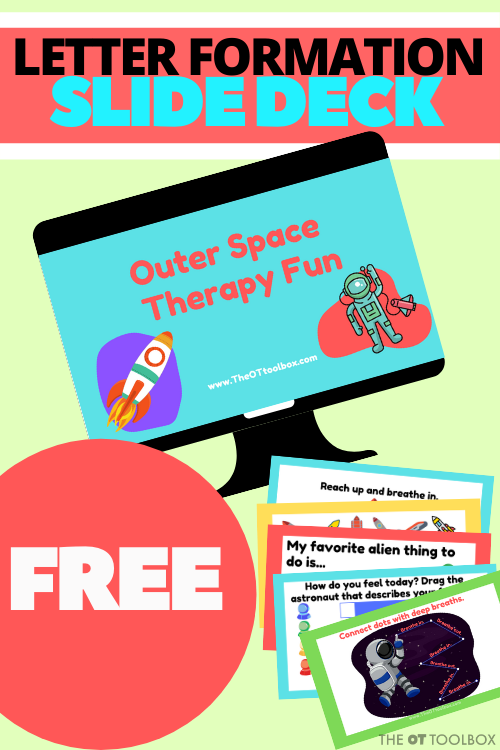
        Space Theme Activities Therapy Slide Deck

        space activities for kids to use in occupational therapy activities.

        Have you been enjoying the occupational therapy slide decks available here on The OT Toolbox? In case you’ve missed them, the virtual therapy slide decks have been a hit with therapists seeking out OT activities that can easily be used in occupational therapy teletherapy sessions or distance learning sessions using little to no equipment. Today, I’ve got a space theme activities therapy slide deck to share…perfect for the kiddo that loves a space theme in learning or therapy sessions and a therapist or parent who loves to see goal progress! Below, you’ll find access to a free OT slide deck to use in addressing specific OT goals. Just modify the activities to meet the needs of your clients or students. This slide deck is a lot like some of my other recent therapy slide decks...you’re going to love this one!

        The outer space activities cover a variety of areas: Fine Motor skills, visual perception, handwriting, and self-regulation…all with a space theme. Each activity in the collection involves movement activities that build specific skills. Scroll to the bottom of this post to enter your email to access the latest free occupational therapy slide deck.

        Space Activities for Kids

        This space theme activity set is great for younger kids who love all things rocket ships, astronauts, planets, and outer space. I know that there has been a lot of difficulty with getting some kids to pay attention during teletherapy sessions. Some kiddos run off during virtual therapy. Others turn off the screen or refuse to work on the session tasks. This space theme slide deck is great for the kids that need help focusing to work on various skill areas.

        Pair this free slide deck with some hands-on, multisensory activities for a space theme:

        AND, a new resource has been added to the shop: Outer Space Fine Motor Mini-Kit.

        Space Therapy Slide Deck

        This slide deck is interactive, too making it a fun way for kids to stay engaged during teletherapy sessions. Here’s what’s included:

        space activities for kids to use in OT activities

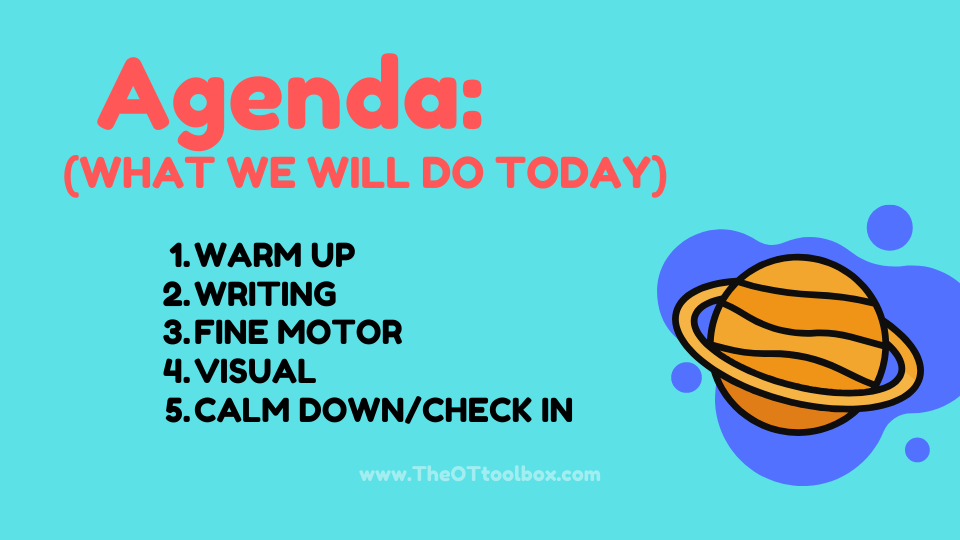
        The slides in this space themed virtual session include a warm up, a writing activity, a fine motor task, a visual perception session, and a calm down/self-regulation check in.

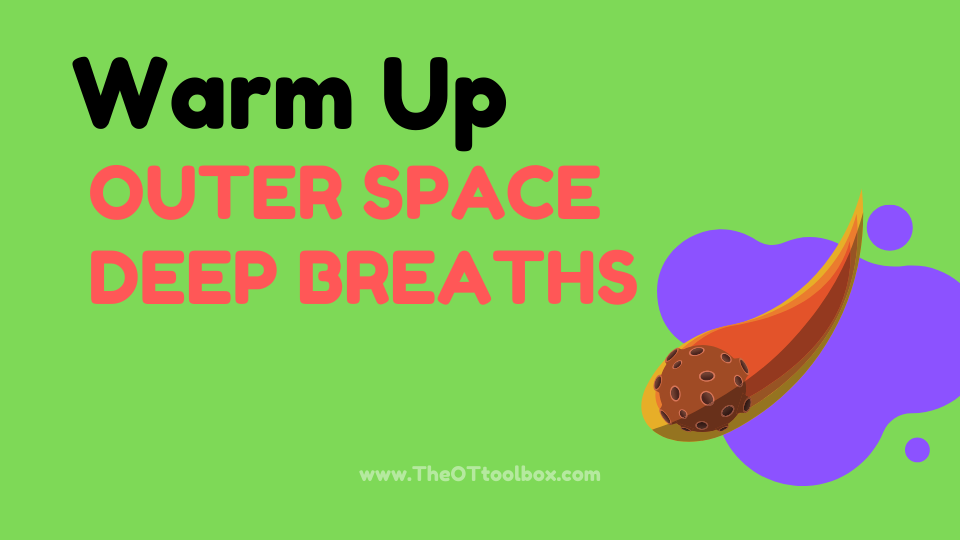
        Outer space deep breaths for kids

        Warm Up Activity- Kids can start the session with outer space deep breaths. This is one of my favorite slides on the slide deck because children can drag an interactive star along a path, working on visual motor skills, motor planning, eye-hand coordination AND deep breathing skills to help with worries or anxiety. This slide is a great way to start off a therapy session or a distance learning session.

        Space activities to work on handwriting with kids

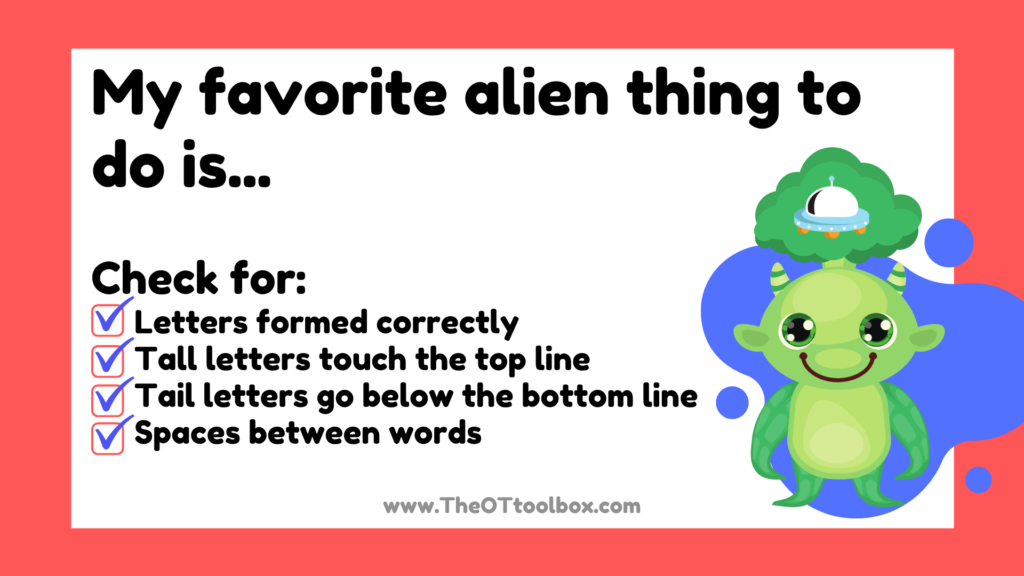
        Space Writing Activity- The handwriting portion of this OT slide deck includes three space themed writing prompts. There is a self-check component so children can assess their handwriting for each prompt. Kids working on letter formation, line awareness, spacing, and legibility will benefit from this section of the slide deck.

        Space handwriting activity for kids
        Space activities for kids to work on fine motor skills

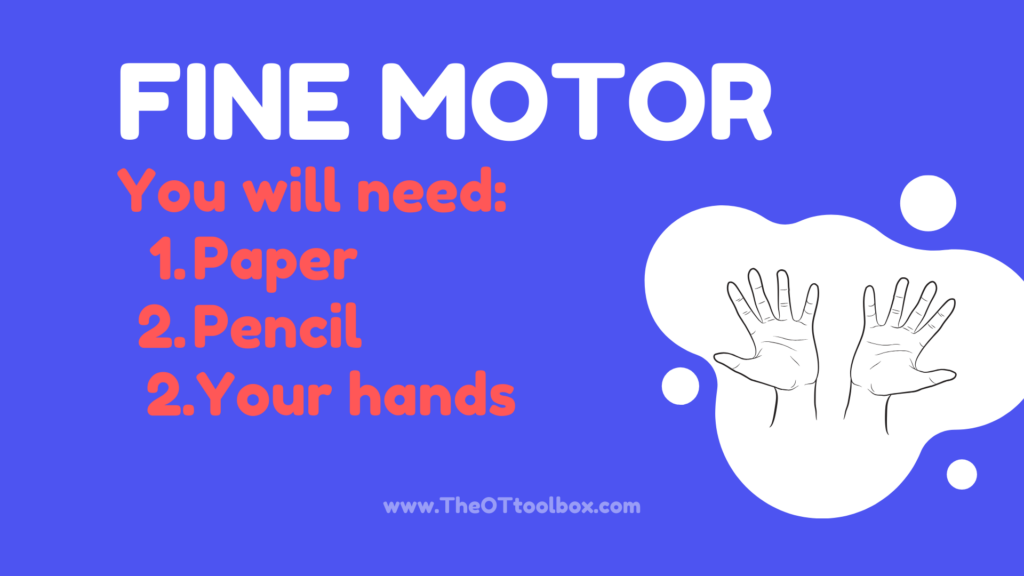
        Fine Motor Space Activity- This activity is a fun one, and it uses only a couple of items that children should already have in the home: paper, a pencil, and their hands. Children can follow the directions on the slides along with the therapist to complete a fine motor activity that builds hand strength, coordination, bilateral coordination, arch development, motor planning, precision, an open thumb web-space, and more.

        Visual motor activities for kids
        Rocket ship activities for kids to work on visual perception

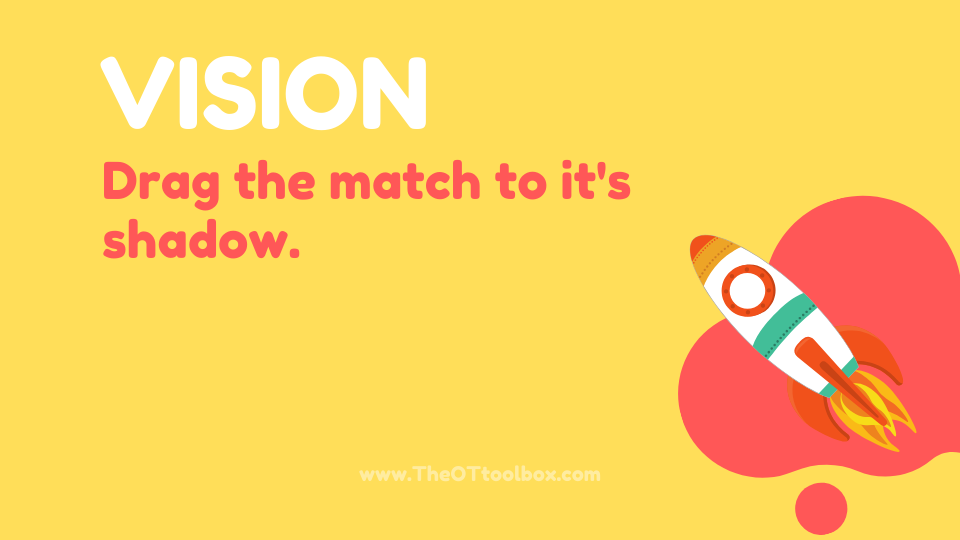
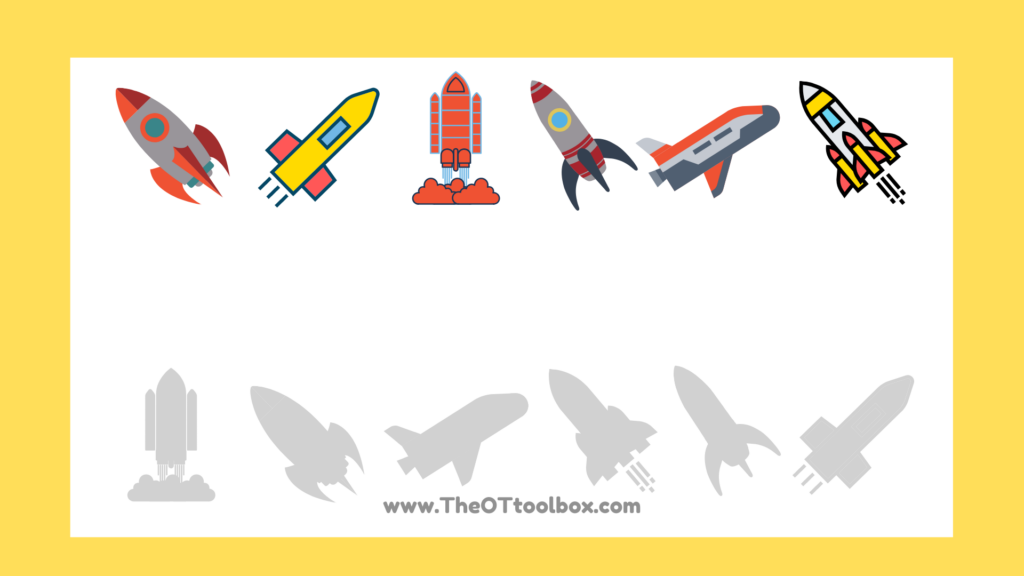
        Space Visual Perceptual Skills- The next section of the slide deck includes two slides designed to build visual perceptual skills including form constancy, visual discrimination, figure-ground. Visual processing skills such as visual scanning and visual tracking, and eye-hand coordination are challenged with these slides as children can click on the colored images and drag it to to the shaded shadow match. There are two separate slides in the vision section.

        space activities for calming down and coping strategies for kids

        Calm Down- This coping tools section of the outer space slide deck includes deep breathing tools to help kids focus on effective breathing and positioning.

        space activities for self-regulation

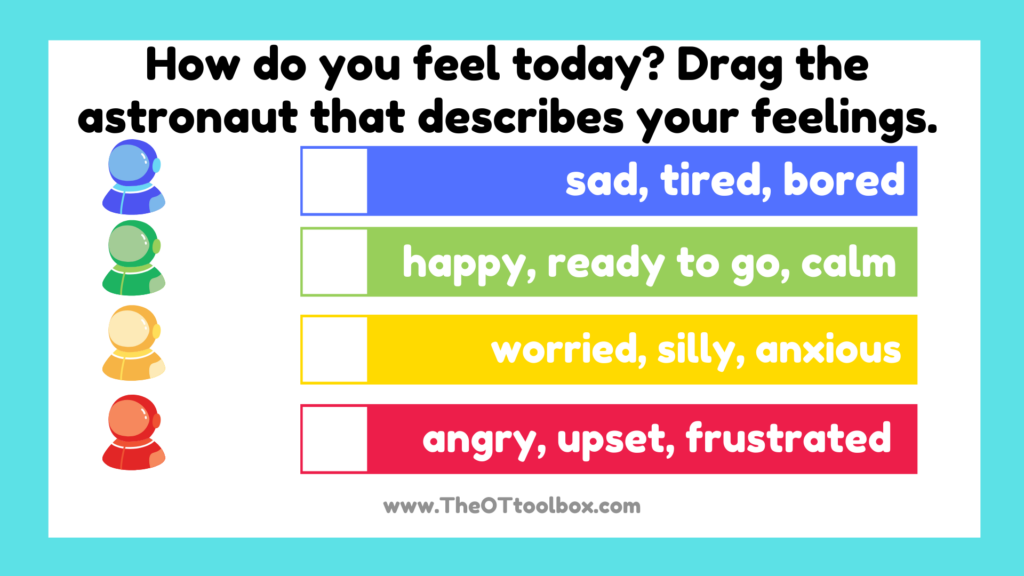
        Check-In- Lastly, you’ll find a calm down slide that incorporates the colors of the Zones of Regulation program. Children can complete the calm down movement activities shown on the slides and then choose a color to check in for their state of feelings. They can click on the colored astronauts and drag it to identify their current state.

        This free slide deck uses space activities and an outer space theme for kids

        Want this Space Theme Activity Set?

        Enter your email below. If you are currently on The OT Toolbox newsletter list, this will not add you a second time. It will simply send the slides your way. Enjoy!

        Get a free Outer Space Theme Slide Deck

          We respect your privacy. Unsubscribe at anytime.
          Powered By ConvertKit

          HERE ARE MORE MOVEMENT ACTIVITIES TO USE IN VIRTUAL OT SESSIONS

          Heavy work movement activity cards

          Monthly movement activities

          Teletherapy activities for kids

          Monster Movement Slide Deck

          Colleen Beck, OTR/L has been an occupational therapist since 2000, working in school-based, hand therapy, outpatient peds, EI, and SNF. Colleen created The OT Toolbox to inspire therapists, teachers, and parents with easy and fun tools to help children thrive. Read her story about going from an OT making $3/hour (after paying for kids’ childcare) to a full-time OT resource creator for millions of readers. Want to collaborate? Send an email to contact@theottoolbox.com.
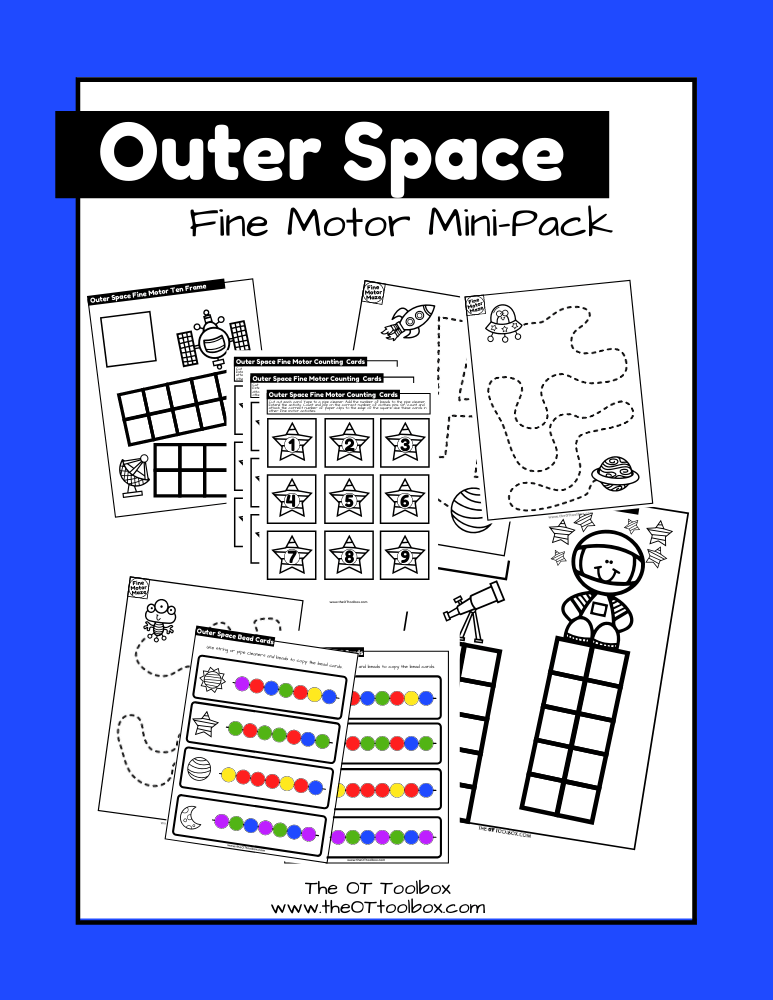
          Know a kiddo that loves all things space, astronauts, and planets? The Outer Space Fine Motor Kit is your chance to develop fine motor strength, dexterity, and coordination skills.
          Addressing hand strength, endurance, and precision is out of this world fun! The Outer Space Fine Motor Kit includes:

          • Fine Motor Mazes
          • Fine Motor Ten Frames for motor activities
          • 1-20 Star Counting Cards
          • Bead Copying Strips
          • Space Alien Directed Drawing Sheets

          This fine motor kit includes 24 pages of printable resources. Included in this printable pack are:

          1. Two pages of color coded bead copying strips
          2. Two pages of blank bead copying strips
          3. Four pages of “draw and write” directed drawing activities with a space theme (Includes 3 styles of handwriting lines: highlighted lines, single rule, and double rule)
          4. Nine pages of fine motor mazes
          5. 1-20 Outer Space Counting Cards
          6. Four pages of fine motor ten frames activities

          These printable activities extend to work on a variety of other functional areas, too: handwriting skills, numbers, math, adding, subtracting, one-to-one correspondence, scissor skills, coloring, and more.

          Click HERE to grab the Outer Space Fine Motor Mini-Kit.

          Outer Space Fine Motor Kit

          Easter Egg Game- Color Scavenger Hunt

          Easter egg game that kids will love while working on color matching, color identification, visual perception.

          If you are looking for a fun Easter egg game that the kids will love, then you are in luck. Add this activity to your Easter activities and use up a few of those plastic eggs. This color scavenger hunt uses plastic Easter eggs, and it’s a very fun way to play and learn!

          Use those plastic eggs to encourage gross motor skills, visual perception, and color learning in a way that kids won’t forget. While the kiddos are playing this Easter game, they are building cognitive skills AND underlying skill areas like visual scanning and other visual perceptual skills.

          Easter egg game that kids will love while working on color matching, color identification, visual perception.

          Easter Egg game

          We set this Easter activity up years and years ago. (2013 to be exact!) However, it’s one of those activities that stands the test of time. If you’ve got plastic Easter eggs on hand, use them to build skills like the ones we worked on here!

          This Easter egg activity helps kids learn colors and learning with a color scavenger hunt gross motor activity

          COLOR SCAVENGER HUNT

          This color scavenger hunt is so easy to set up…and so much fun. Kids can work on identifying color names, and color matching. I wrote different colors on slips of paper and put them into plastic eggs.  The kids got to pick an egg from the bowl and “sound out” the color on the slip of paper.  Ok, my 5 year old sounded out the color with help.  The other two said the first letter of the word and guessed the color.  They were pretty excited to “read” the color on their slip of paper!  

          Another idea to expand this activity is to write words and do an Easter egg version of our word scavenger hunt.

          Kids will love this Easter egg game using plastic Easter eggs in a color scavenger hunt activity.
          Use this color scavenger hunt with easter eggs to work on color matching and color identification with kids.

          An Easter Game Kids will Love

          Now for the egg game…So then, they had to run off and find something that was the color of the written word on their slip of paper…and it had to FIT inside the egg.    I sat and waited for them to run back and show me what they found while they tried to fit it in their egg.   (completely genius way for this mom to finish a cup of coffee!)  

          Kids can look for objects that match plastic Easter eggs in a color scavenger hunt that allows them them move and play with learning, too.

          They had a little trouble with some things, but this was a fun and different way to work on visual perceptual skills.  Will that little doll fit in the egg?  We weren’t sure by looking at it, but with a little fiddling, she did!   Fitting the eggs together with the little objects inside was a great fine motor exercise.

          Kids can look for matching colors in this plastic Easter egg game that helps them with color matching and visual scanning.

          Color Identification for Kids  

          They found something for each color!  

          Putting items into the eggs and then matching colors was a great way to work on color identification skills.

          Matching colors requires visual motor skills to match colors and use that recognition in identifying the name of the color. It’s a skill that requires visual memory as well as working memory. This skill then carries over to so many other areas like letter recognition, and so much more.

          Learning colors is a building block for learning in kids!

          Kids can play this color scavenger hunt game with plastic Easter eggs for a fun Easter game that can be played indoors or outdoors.
          Kids can learn color names and work on learning skills like visual scanning, fine motor skills, and gross motor skills with this Easter game.

          This Easter themed play activity could be modified in so many ways for learning words, colors…have fun with it 🙂

          Want more ways to play and learn this time of year?

          One resource we love is our $5 therapy kit…the Plastic Egg Therapy Kit! It has 27 printable pages of activities with an Easter egg theme. In the kit, you’ll find fine motor activities, handwriting prompts, letter formation pages, pencil control sheets, plastic egg activities, matching cards, graphing activities, STEM fine motor task cards, and more. There are several pages of differentiated lines to meet a variety of needs. This therapy kit has everything done for you.

          Get your copy of the Easter Egg Therapy Kit here.

          This time of year, one of our more popular products here on The OT Toolbox is our Spring Occupational Therapy packet. The best news is that, this packet has had a major upgrade from it’s previous collection of spring sensory activities.

          Another great tool for supporting skills is the Spring OT packet…

          In the Spring OT packet, you’ll now find:

          • Spring Proprioceptive Activities
          • Spring Vestibular Activities
          • Spring Visual Processing Activities
          • Spring Tactile Processing Activities
          • Spring Olfactory Activities
          • Spring Auditory Processing Activities
          • Spring Oral Motor Activities
          • Spring Fine Motor Activities
          • Spring Gross Motor Activities
          • Spring Handwriting Practice Prompts
          • Spring Themed Brain Breaks
          • Occupational Therapy Homework Page
          • Client-Centered Worksheet
          • 5 pages of Visual Perceptual Skill Activities

          All of the Spring activities include ideas to promote the various areas of sensory processing with a Spring-theme. There are ways to upgrade and downgrade the activities and each activities includes strategies to incorporate eye-hand coordination, bilateral coordination, body scheme, oculomotor control, visual perception, fine and gross motor skills, and more.

          THE BEST THING ABOUT THE SPRING ACTIVITY PACKET:

          One of my favorite parts of the Spring Occupational Therapy Packet is the therapist tool section:

          • Occupational Therapy Homework Page
          • Client-Centered Worksheet

          These two sheets are perfect for the therapist looking to incorporate carryover of skills. Use the homework page to provide specific OT recommended activities to be completed at home. This is great for those sills that parents strive to see success in but need more practice time for achieving certain skill levels.
          This activity packet is 26 pages long and has everything you need to work on the skills kids are struggling with…with a Spring theme!

          Here’s the link again to grab that packet.

          Use this Spring Occupational Therapy Activities Packet to work on occupational therapy goals and functional skills with a spring theme.

          Colleen Beck, OTR/L has been an occupational therapist since 2000, working in school-based, hand therapy, outpatient peds, EI, and SNF. Colleen created The OT Toolbox to inspire therapists, teachers, and parents with easy and fun tools to help children thrive. Read her story about going from an OT making $3/hour (after paying for kids’ childcare) to a full-time OT resource creator for millions of readers. Want to collaborate? Send an email to contact@theottoolbox.com.