Working on Fine Motor Skills in Teletherapy

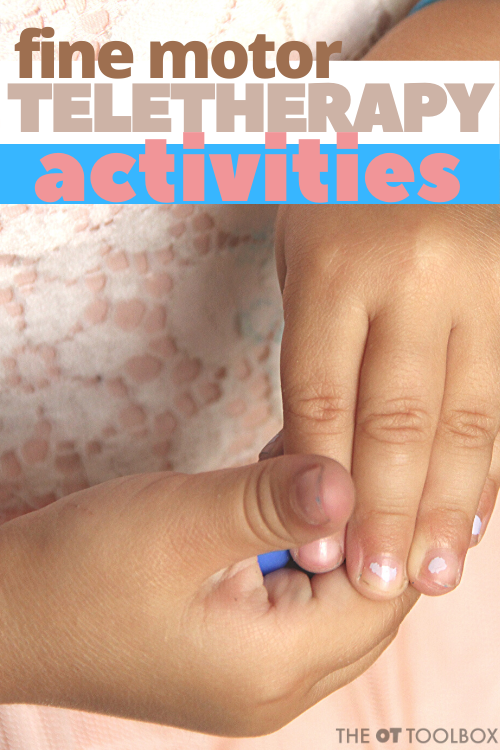
these fine motor activities for teletherapy require items already in the home

Working on fine motor skills in teletherapy services can be a strange thing to consider if you re used to face to face occupational therapy intervention. Helping a child to engage in fine motor activities in a virtual setting may seem downright strange. How to do you help kids work on areas like hand strength, dexterity, or other fine motor skill needs? The use of teletherapy fine motor activities, also known as manipulatives, may at first overwhelm therapists who do not understand how this would work virtually.

these fine motor activities for teletherapy require items already in the home

However, there are a range of ways to incorporate fine motor activities into teletherapy occupational therapy treatment sessions. Therapists can use extra creativity to develop fine motor activities for teletherapy sessions, but they can also use some of the same activities they would use in-person (with a bit of preparation and/or assistance from an “e-helper”).

A recent post here on The OT Toolbox explains the basics of understanding teletherapy and what this looks like. You’ll also want to check out this piece on occupational therapy activities in teletherapy for easy-to-implement ideas for children of all ages. What about the child who needs to work on fine motor skills?

Today, we’re discussing some popular, but effective fine motor activities for teletherapists.

Use these fine motor activities to help students improve fine motor skills during teletherapy services.

How to work on Fine Motor skills in teletherapy

Using a teletherapy platform to provide therapy services doesn’t mean children can’t work on essential skill areas. Here are some ideas to get your creative brain started.

One everyday item found in most homes is paper clips. Use these games with paper clips to target specific skills.

Theraband Activities in telehealth

As you may already know, theraband or resistive bands are a trusty therapy tool that can be used by therapists to treat a variety of populations in a range of settings. Teletherapists can use theraband to strengthen a child’s fine motor skills in preparation for tasks such as handwriting, dressing, eating, play, and other self-care tasks. What’s more is that resistive band exercises can be included in a sensory diet that helps children to regulate themselves so they are able to participate in fine motor activities.

Some of the following theraband activities can assist with fine motor strength and coordination in children:

  • Grab each end of the theraband, make a fist, and pull the band apart at the same time (this works on general digit and wrist strength)
  • With smaller theraband elastics, place the band around the tips of all of your fingers, then spread all your fingers apart, and repeat (this works on digit abduction and adduction)
  • Rest your hand flat on the table, wrap a theraband elastic around one finger at a time while using your other hand to pull on the opposite end of the band; resist the pressure of the band by trying to move each finger to its resting state, which is flat on the table (this works on digit isolation and coordination)

Therapists can find more detailed videos that guide children through these exercises, or they can demonstrate for them during sessions. This often works best when children have “e-helpers” to assist in getting theraband and possibly helping children learn to use it during the first several times or as part of their home programs.

Here is a resistive band home program for kids that lends itself well to telerehab.

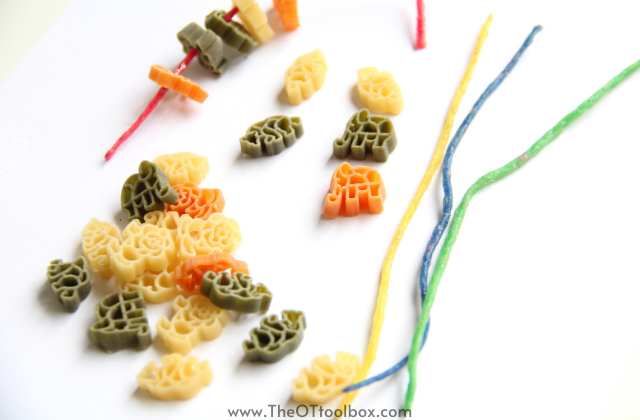
Use noodles and string or pipe cleaners to work on fine motor skills in teletherapy occupational therapy sessions

Use Pipe Cleaners in Fine Motor Activities during teletherapy sessions

Children can use pipe cleaners to work on fine motor strengthening during a variety of tasks during teletherapy sessions. Pipe cleaners may most easily be utilized during treatment sessions to string beads or other small objects on them. This helps children develop fine motor precision, coordination, strength, digit isolation, and more.

Children can also use scissors to cut pipe cleaners into smaller pieces and make into certain objects, fill in pictures to add color, and more.

Another good way to use pipe cleaners in teletherapy sessions is to ask children to be creative and bend them into certain shapes, objects, or letters.

This is another example of materials that parents, guardians, and other loved ones can obtain and provide for their children to use during therapy sessions.

Use simple and everyday items to work on fine motor skills during occupational therapy teletherapy sessions

Use Tweezers during fine motor activities in teletherapy sessions

Therapists can have children use tweezers to improve their grasp pattern, fine motor coordination, and fine motor strength. This will help children form an improved grasp pattern and overall greater range of motion in the hand as preparation for handwriting tasks. Therapists can utilize tweezers along with small objects in a variety of ways:

  • Have children pick up beads or cotton balls with tweezers
  • Ask children to use tweezers to place small perler beads on glue or within a picture to add color or texture
  • Use tweezers to move small objects around on a table, but not pick them up

Therapists who use their creativity can easily incorporate manipulatives into teletherapy treatment. Again, the intermittent assistance of e-helpers can really improve a child’s performance and engagement in the teletherapy treatment process.

Here are additional ways to work on fine motor skills during teletherapy using items that are commonly found in the home:

Fine Motor Activities using clothespins

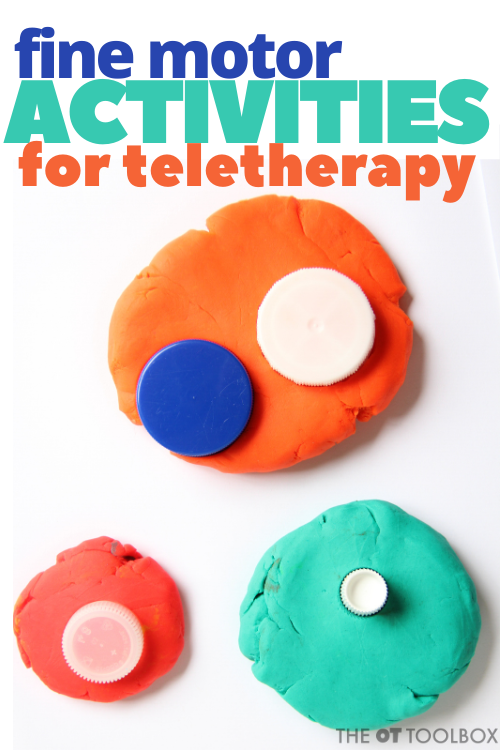
FIne Motor Activities with Play Dough

Fine Motor Activities with Paper Clips

Fine Motor Activities with Craft Pom Poms or Cotton Balls

Fine Motor Activities with Playing Cards

Fine Motor Activities with Beads

Fine Motor Activities with Chalk

Crafts for Kids to work on various fine motor areas.

Helping kids understand teletherapy

Children who have previously received occupational therapy services in a face-to-face setting may feel a little confused or out of sorts when they now need to complete fine motor tasks at home (and with items that are way less fun than what they are used to their OT playing with alongside them. Here is a fun book to help explain why they are now working on hard things like fine motor skills with their therapist through a computer screen.

Affiliate links are included below.

Free Parent Handout for Teletherapy Materials

This free printable and handout will help parents understand basic, everyday materials that kids can use in their therapy sessions. Use this to help kids come to therapy sessions with just a handful of household materials.

List of OT Teletherapy Materials- Parent Handout

    We respect your privacy. Unsubscribe at anytime.

    Colleen Beck, OTR/L has been an occupational therapist since 2000, working in school-based, hand therapy, outpatient peds, EI, and SNF. Colleen created The OT Toolbox to inspire therapists, teachers, and parents with easy and fun tools to help children thrive. Read her story about going from an OT making $3/hour (after paying for kids’ childcare) to a full-time OT resource creator for millions of readers. Want to collaborate? Send an email to contact@theottoolbox.com.

    This blog post was written by Brittany Ferri. Brittany is an occupational therapist, author, and teletherapy professional. She is passionate about education, health promotion, and disease prevention for all. Brittany currently practices in community-based teletherapy for two platforms, one that serves pediatrics (geared toward mental health diagnoses and developmental delays) and one that serves adults. For more information, visit her company’s website at www.simplicityofhealth.com

    Teletherapy Platforms for Occupational Therapy

    Which telehealth platform is the best for occupational therapy telemedicine delivery?

    Many therapists are becoming more interested in telemedicine, given the current circumstances of our healthcare system. How do you know where to begin when researching teletherapy platforms? Today, we’re discussing various telehealth options for occupational therapy.

    To get you started with actual activities that you can apply to virtual OT sessions, here are teletherapy activities to help you get started with virtual occupational therapy services.

    Which telehealth platform is the best for occupational therapy telemedicine delivery?

    Some existing companies are looking to incorporate the use of telemedicine into their business by converting current clients to teletherapy services. On the other hand, there are teletherapy platforms that provide solely virtual care to their patients.

    While other healthcare disciplines, such as nursing and medicine, are more widespread in the telehealth realm, occupational therapists are a growing presence in this up-and-coming practice area.

    how to chose a telehealth platform for occupational therapy.

    TELETHERAPY Platforms

    Speech therapists were perhaps some of the first therapists to enter the world of pediatric teletherapy, perhaps due to the nature of much of their treatment. Unsurprisingly, many of the teletherapy roles for occupational therapists are within school-based therapy settings for similar reasons. These platforms can easily address fine motor skills, developmental milestones, emotion management, behavior modification, executive functioning, sensory regulation strategies, and more.

    For those therapists who are interested in providing occupational therapy for a teletherapy platform, there are a variety of platforms available. The following companies offer technology to serve virtual medicine:

    Global Teletherapy– As a school-based teletherapy platform that provides care from disciplines such as OT, SLP, LPC, LMHC, and SW, Global Teletherapy is a prominent provider in the telemedicine realm. As an established platform, Global Teletherapy helps therapists gain clinical experience in this arena while providing resources to parents of children who receive teletherapy.

    Presence Learning– Presence Learning provides speech-language pathology, occupational therapy, early childhood services, special education, and psychoeducational assessments to children within the school system. This platform provides individualized consultations with schools to determine their suitability for teletherapy services. Many therapists may be familiar with the idea of needs assessments, which Presence Learning completes to ensure best fit for all of the children they serve.

    eLuma– This company provides online speech-language pathology, occupational therapy, physical therapy, special education, and mental health counseling from licensed therapists and counselors. Not only has this company been providing therapy services to schools who are in need of online therapy and mental health services, but eLuma also provides ample resources to therapists transitioning into teletherapy. Through blogs, webinars, and online publications, therapists and other professionals can learn more about how to provide effective teletherapy services while facilitating progress in the children they treat. 

    TinyEYE– TinyEYE has been providing school- and home-based teletherapy services for children since 2005. Not only is this teletherapy platform consistently growing, but they are committed to providing focused care by providing occupational therapy and speech therapy services to the clients they serve. TinyEYE also provides therapists with treatment ideas, free activities, a wide range of technology-based exercises to use with children to address various concerns during any treatment.

    DotCom Therapy– DotCom Therapy employs a diverse range of school-based professionals, including audiologists, mental health counselors, occupational therapists, and speech-language pathologists. With a comprehensive range of services, DotCom Therapy is able to provide extensive IEPs with continual reviews, personalized needs assessments, staff training for school professionals, and ongoing team meetings and parent conferences.

    Other Telehealth Platforms

    Zoom for Healthcare– In the recent changes to public health and therapeutic service delivery, finding a quick and compliant means of connecting with clients is needed. Zoom for Healthcare is one such platform ahta is easy to set up and get moving with. The video conferencing platform is HIPPA compliant and offers resources to help with setting up virtual communications.

    Google Classrooms– With this online classroom platform, therapists are able to connect with and engage with students in a virtual setting. A group classroom setting may not be appropriate for confidentiality reasons, as classmates and parents can view others in a group video setting or in the comments section. However, therapists may choose to use the technology to set up individual classrooms for each student they serve as a way to deliver documents, files, and recommended home programs.

    Teletherapy platforms for occupational therapy delivery of virtual therapy services.

    Teletherapy Staffing Companies

    Some therapists may be familiar with staffing agencies, which are poised to connect therapists of many disciplines with therapy positions. Sunbelt Staffing and ProCare Therapy are unique in that they recruit therapists for contracted (short-term) or permanent (long-term) teletherapy roles within school systems across the country. Some of these roles are part-time and some are full-time, but each position allows physical therapists, physical therapy assistants, occupational therapists, occupational therapy assistants, and speech-language pathologists the opportunity to build connections in valuable technology-based roles in a range of locations.

    Occupational therapy and teletherapy

    Amazon affiliate links are included below.

    For occupational therapists who are interested in making a difference in the world of teletherapy, there are many options for them to consider. For the time being, occupational therapy is still a relatively new discipline within this type of platform, but that can easily change as more parents, families, schools, and communities see the benefit of online occupational therapy services.

    This service initially developed to provide essential care for individuals who are in rural areas and cannot access standard, in-person treatment. However, virtual occupational therapy can increase the skills, quality of life, and occupational performance of children in areas with a shortage of therapists, time constraints, or concerns related to recent public health issues.

    With the rise of telemedicine, the concept of teletherapy may be difficult for some children to grasp, especially those living with disabilities and those who are accustomed to traditional school-based therapy or outpatient rehab. Thankfully, there are resources available to guide children through this process and learn skills that make them stronger and more confident.

    Why is there a person in my computer? is a child’s guide to understanding what teletherapy is and how it can help with a variety of medical concerns. This story follows Andrew, a child with visual deficits who is having difficulty playing hockey, performing well in school, and working on his art. He meets a therapist named Brittany who guides him through his first teletherapy session, and he loves it! This picture book helps children understand what teletherapy is, what makes it different from other therapies, and how it can help them live better lives. Children may also enjoy the supplemental activity guide complete with coloring pages, fact sheets, and more!

    This blog post was written by Brittany Ferri. Brittany is an occupational therapist, author, and teletherapy professional. She is passionate about education, health promotion, and disease prevention for all. Brittany currently practices in community-based teletherapy for two platforms, one that serves pediatrics (geared toward mental health diagnoses and developmental delays) and one that serves adults. For more information, visit her company’s website at www.simplicityofhealth.com

    Teletherapy Activities for Occupational Therapy

    Occupational therapy teletherapy activities

    In this article on teletherapy activity ideas for kids, you will learn how to enhance a variety of skills through basic, fun activities. OT is online more than ever in recent days and therapy services may be scrambling to identify occupational therapy activities that can serve children and families in the OT telehealth format. Children and therapists may both be familiar with some of these teletherapy activities, whereas others may be learning experiences for the entire family unit.

    We will provide some teletherapy activities broken down by age range so that therapists can best enable functional performance and occupational engagement in the children they serve. To better understand teletherapy start with out recent post that explains the online therapy service.

    Occupational therapy teletherapy activities

    How to plan occupational therapy teletherapy sessions

    One of the hardest parts of OT telehealth can be the planning. Week after week, it is difficult to come up with occupational therapy activities that meet the needs of your clients.

    Over the past year, I’ve created many free slide decks that help alleviate some of the stress of consistently creating new therapy activities for digital services. These Google slide decks are completely free and can be used to meet a variety of needs and ages in OT services. Pair the slide decks with weekly occupational therapy themed activities for a combination of hands-on activities and digital resources.

    Using the slide decks makes therapy planning easier because you can make a copy for each client and modify the slides to meet the specific goals and needs for each individual on your caseload.

    Then, add in some of the age-specific activities listed below.

    Teletherapy Activities for Early Intervention

    Let’s start with teletherapy for birth to three. Many therapists may struggle with understanding how early intervention services (also known as EI, or “birth to three”) can be provided virtually. The truth is, there is not much difference between teletherapy EI and standard EI programming, since both services are provided within the home and each place a heavy focus on family education.

    teletherapy activities for birth to 3 and early intervention

    Early intervention therapists can provide training, health information, and in-home strategies to assist with the care of children who demonstrate developmental delays, medical, concerns, or behavioral issues.

    Intervention at the early intervention stage can involve a lot of parent coaching. You can address parent concerns regarding child development, addressing difficult behaviors, occupations for the client and family as a support. Parent education can involve occupations of self-care, feeding, sleep, anxiety or worries, attention, executive functioning skills, or any aspect of occupational performance that comes up within the home.

    Therapists should ideally provide education that is unique to the child (and their family unit) covering topics such as positioning (for sleep, car seats, and play time), ways to enhance fine motor development and gross motor development, facilitating participation in self-care tasks, productive play, and more. Here are ways to work on fine motor skills in teletherapy.

    In this way, the majority of the content that therapists provide families with will mimic traditional home training or home exercise programs (HEPs) that are provided as part of EI treatment.

    Therapists in this setting can also provide children with exercises in some of the following areas, depending on their specific concern(s): 

    • Shape and object identification games
    • Letter and number tracing
    • Counting, sorting, and early comparing activities with animals, superheros, cartoons, shapes, etc.
    • Pattern recognition activities
    • Simple digital jigsaw puzzles
    • Online games and apps
    • Bingo activities with numbers, letters, and shapes
    • Holiday-themed activities involving drawing shapes and forming them into objects
    • Counting coins, playing shopping/store-related games
    • Target games involving planning/aiming, throwing, and picking up
    • Gross motor obstacle courses or chalk sensory walks

    Here are some quick activity ideas that lend themselves nicely to teletherapy in early intervention:

    Backhoe Shapes Craft

    Easy Shapes Salt Truck Craft

    Preschool Activities

    Teach Nose Blowing

    Pre-Writing Lines Activities

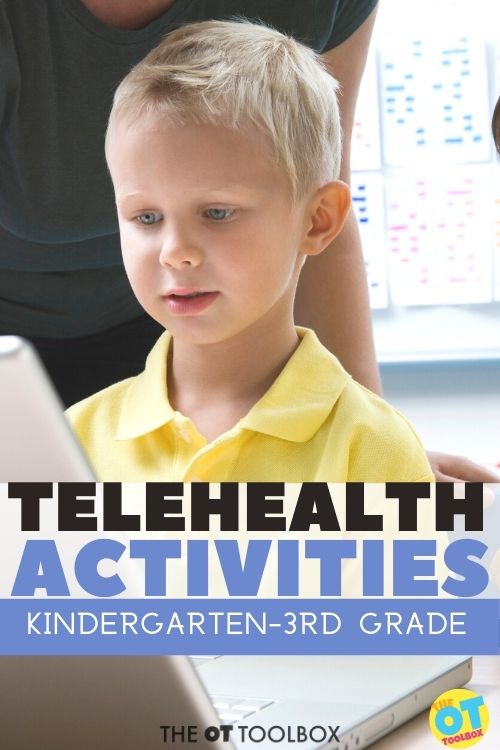
    Teletherapy Activities for Kindergarten-3rd Grade

    Next, let’s talk teletherapy activities for Kindergarten through third grade. Children between the ages of 5 and 9 can also benefit from teletherapy activities to build and strengthen skills related to sensory regulation, behavior management, handwriting, self-care, and effective communication.

    teletherapy activities for kindergarten through 3rd grade

    Teletherapy activities for kindergarten through 3rd grade can focus on addressing these concerns may include some of the following:

    • Digital coloring pages
    • “Find the differences” exercise involving comparisons between two similar images
    • Object matching games
    • Handwriting exercises
    • Interactive versions of basic games such as Connect Four, tic-tac-toe, 
    • Cause-and-effect games to encourage early understanding of problem solving and right vs. wrong
    • Worksheets prompting sequencing for basic activities (going to the movies, eating dinner, etc.)
    • Basic human body educational activities (coloring pages, identification charts, and functional purpose)
    • Education on “How does your engine run?” levels to assist in regulating emotions
    • Traditional draw and cut activities
    • Theraband and theragrip for basic strengthening
    • Gross motor obstacle courses or sensory walks

    Here are more quick OT telehealth ideas for primary grades:

    Therapy Band Exercise Program

    Zones of Regulation Activities

    Kids Crafts for Occupational Therapy

    Motivating Handwriting Activities

    Indoor Balance Beams

    TELeTherapy Activities for Grades 4-8

    Occupational therapy telehealth for older grades can expand into further topics. While many of the K-3 activities can be modified for some older children, there are multiple teletherapy activities that can be used for children in this age range.  Teletherapy activities for these children may focus on topics such as communication, behavior management, relationships, rule-following, self-care skills, and more.

    teletherapy activities for grades 4-8

    Try some of these ideas in planning online therapy services for grades 4th through 8th grade:

    • Word searches, jumbles, or crosswords
    • Mazes
    • More complex jigsaw puzzles and strategy-based games
    • Story-based cause-and-effect activities
    • Creative writing prompts to explore emotions
    • Role identification
    • Sports-based games and exploration of hobbies

    Here are a few quick activity ideas for teletherapy in the older grades:

    Games to Work on Executive Functioning Skills

    Organization Activities and Strategies

    Cursive Activities

    Occupational therapy teletherapy activities

    Areas That Therapists May Struggle to Address

    There are certain areas that teletherapists may struggle to incorporate into teletherapy activities. The good news is, with a little creativity, therapists can ensure that the children they treat are receiving the well-rounded treatment they need to advance their skills in a range of areas.

    Force modulation: Some games require the use of a tablet and stylus, which allows children to practice force modulation that cannot be addressed by typical point-and-click activities. Therapists can also encourage the use of alternative activities covering force modulation, such as clapping or hi-fives (if another person is present in the room). Therapists might provide prompts such as, “If it’s loud enough for me to hear – you are doing okay! If it makes your hand turn red and hurt – you are hitting too hard! If the two hands are barely touching – you aren’t hitting hard enough!”

    Sensory regulation: This is best addressed when you have an e-helper present to aid during the session. However, with some simple planning ahead from a parent or teacher’s assistant, therapists can make sure their kiddo has the materials needed to work on this skill during the session. These e-helpers can provide children with a variety of sensory input (per therapist recommendation and supervision) including soothing music or nature sounds, various textured fabrics, weighted blankets, essential oils, brushing protocols, visually soothing colors, and much more.

    Other strategies, such as brushing protocols, can even be trialed or implemented with children per therapist demonstration and instruction. All of this is, of course, best supplemented by educating parents, teachers, and other loved ones on the use of a sensory diet to maximize a child’s tolerance and regulation of sensory input.

    If you are searching for additional resources to serve as inspiration or reference for teletherapy activities, check out some of the following websites:

    OT Teletherapy ACTIVITIES by area

    Pair popular children's books with hands on activities to help kids build skills, perfect addition to occupational therapy sessions.

    Children’s books activities


    Need an idea to keep the kiddos busy AND building skills like fine motor work or executive functioning? Need an activity for teletherapy sessions that cover a variety of areas like scissor skills, bilateral coordination, eye-hand coordination, and more?

    Grab one of these popular children’s books and activities (OR find a reading of them online) and then make the craft or activity outlined on The OT Toolbox

    Have fun exploring books through play!

    Handwriting ideas for telehealth that can be used in OT virtual sessions.

    Handwriting activities for teletherapy

    Ohhh, it’s tricky to get the kids to do the hard things in the place they feel safe and loved. Handwriting work they may have had in the classrooms might be a foot stomping “NO!” In the dining room classroom! Here are ways to make handwriting fun:

    Easy handwriting activities can be sent as home programs or used in virtual OT sessions via a screen.

    These irresistible handwriting activities can work for kids who hate to write.

    Natural writing experiences (it’s not about the writing…or is it??? ??) can make handwriting practice at home fu,.

    Use these handwriting tips & tricks in fun ways as part of home programs.

    Teletherapy resources for occupational therapists and other telemedicine practice.

    Many therapists and medical providers have moved to virtual telehealth services recently. Many more will transition to this type of service delivery next week. Here are teletherapy resources to better help understand and deliver virtual therapy:

    Understanding teletherapy to get a better vision of what teletherapy actually looks like in action.

    Additionally, diving into various Occupational therapy teletherapy platforms can be helpful to know where to begin.

    sensory diet activities for home to use in OT teletherapy sessions

    Sensory Diet activities for home programs

    “A sensory diet is a group of activities that are specifically scheduled into a child’s day to assist with attention, arousal and adaptive responses. The activities are chosen for that child’s needs based on sensory integration theory. … These activities are designed to produce a positive effect on a child.” Here are sensory diet tools I’ve got on the website. Use them in parent education and conferencing or as recommended reading.

    Part of virtual teletherapy sessions can involve parent education and explaining the specific Goals of a sensory diet.

    These backyard slide and swing activities can be done at home using Sensory diet activities in backyard playground equipment.

    These fine motor activities for telehealth and be used in OT sessions with kids.

    Fine Motor Activities in telehealth

    I’ve had a few requests for this fine Motor Activities using items commonly found in the home.

    These fine motor activities and exercises with parents needing tools to build strength and dexterity. Or, use these ideas in teletherapy services:

    Playing cards

    Craft Pom poms/cotton balls

    Paper clips

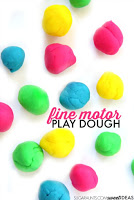
    Play dough

    More regular home item activity lists coming. These are completed but on the backlog in getting them up on the site.

    Cooking with kids is a great way to build skills and help kids learn, add these ideas to teletherapy sessions.

    Cooking Activities for virtual therapy

    Need some ways to build skills, inspire learning, connect with the kiddos, AND take a minute to reflect on everything? Use that kitchen! Cooking with kids is a great way to build many sill areas.

    Cooking is such a great way to build motor skills, sensory experiences, build self-confidence, open up opportunities for conversation, work on math concepts, executive functioning…there are so many areas of learning and growth in cooking tasks.

    Here are some resources on kid-friendly recipes that can be graded to make them easier or more difficult for younger/older kids:

    These kid-friendly recipes build skills. Send them as home programs or make them along with the child and an E-helper.

    You can teach direction-following with cooking with these recipes.

    Cooking builds motor skills. Use these recipes and simulated cooking activities (GREAT for virtual therapy sessions!) while building motor skills.

    Add brain breaks to occupational therapy telehealth with kids.

    Brain breaks in OT teletherapy

    ? Brain Breaks! ?
    These themed activities are quick wins, and (many times) the re-set button that we can all use at one time or another. Brain breaks can be movement-based actions, whole-body breathing strategies, or just a mental reprise. These are perfect ?? for an afternoon re-set or during schooling at home activities.

    Themes and brain break activities galore can be found here.

    OTs can use crafts to build skills in helping kids develop motor skills.

    Use crafts in OT teletherapy

    Crafts that build skills
    Need a craft or two that doubles as a tool to build fine motor skills, eye-hand coordination, scissor skills, bilateral coordination, midline crossing, hand strength, tactile exploration, and more?

    Here are TONS of kids craft ideas to get you started (therapist-approved!)

    These executive functioning activities are great for OT teletherapy.

    Executive Function activities in teletherapy

    Ok…with schooling at home, managing the laundry pile, working with kids playing under the table, trying to get them to read a real, live book…are you running into trouble with prioritization, planning, impulse control, working memory, organization? ? All of these skills are executive functioning! Impulse control, prioritization, planning, working memory…executive functioning skills can be worked on at home. Here are activities, along with information on how and why these areas impact functioning.

    What are EF skills

    Attention

    Games to improve EF

    Working memory

    motor skills activities occupational therapy teletherapy activities

    Ok…the kids are on screens A TON now, right? Here are creative ways to build motor skills, motor planning, and coordination using everyday, household items that you probably have in the home right now. Add these to your teletherapy line-up for hands-on activities that don’t involve apps, videos, or computer slides:

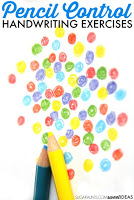
    Pencil control exercises with paper and pencil– Use just a pencil and paper to work on pencil control, hand strength, and visual motor skills. We used colored pencils, but this activities works with a regular pencil, too. Practice shading in the circles with more or less pencil pressure to work on proprioception.

    Grasp development and in-hand manipulation with recycled containers– Use recycled water bottles, plastic containers with lids, and other upcycled items to work on grasp strength, and translation to remove caps and lids. Washing out the containers is a GREAT functional task, too. Then, kids can throw the recycled containers right into the recycle bin when they are finished with this activity.

    DIY tongs with craft sticks/pencils– One of our oldest posts here on the website, you can use craft sticks and craft pom poms OR, if those items are available in the home, no problem. Substitute them for a pair of pencils and rolled up pieces of paper to make DIY tongs.

    Balance beam ideas using household items– Kids can work on coordination, motor planning, balance, and core strength in the home using regular, household items in DIY indoor balance beams.

    Intrinsic hand strength/motor planning, coordination with an egg carton & straw– Use what you’ve got! An empty egg carton, and pieces of straws, (or any other small item) can be a powerful way to work on hand stregth and intrinsic strength needed for pencil grasp and fine motor dexterity.

    Fine motor with playing cards– Playing with items found in the home can build big skills in a low-tech manner. Playing cards can be used to build visual motor skills, visual perception, fine, motor and more.

    Extended wrist/fine motor/eye-hand coordination with a
    Colander & toothpick
    s- Head to the kitchen for this fine motor activity that builds big motor skills and coordination.

    HELP KIDS UNDERSTAND TELETHERAPY

    Amazon affiliate links are included below.

    With the rise of telemedicine, the concept of teletherapy may be difficult for some children to grasp, especially those living with disabilities and those who are accustomed to traditional school-based therapy or outpatient rehab. Thankfully, there are resources available to guide children through this process and learn skills that make them stronger and more confident.

    Why is there a person in my computer? is a child’s guide to understanding what teletherapy is and how it can help with a variety of medical concerns. This story follows Andrew, a child with visual deficits who is having difficulty playing hockey, performing well in school, and working on his art. He meets a therapist named Brittany who guides him through his first teletherapy session, and he loves it! This picture book helps children understand what teletherapy is, what makes it different from other therapies, and how it can help them live better lives. Children may also enjoy the supplemental activity guide complete with coloring pages, fact sheets, and more!

    For more resources, be sure to join our Occupational therapy teletherapy mini course. You’ll receive resources and loads of information in this 5 day email course to guide OT teletherapy sessions and keep you on track to helping kids thrive in your teletherapy services.


    Understanding Teletherapy

    Occupational therapy teletherapy tips

    There have been many questions in recent days about teletherapy and how to incorporate telemedicine into occupational therapy interventions. Today, I’m excited to share resources and information explaining what is teletherapy, strategies to help kids understand teletherapy (when they are used to their OT seeing them in the classroom or clinic…), what exactly teletherapy looks like, and more resources. Here are specific occupational therapy teletherapy activities for early intervention, kindergarten, early elementary, upper elementary, and middle school ages.

    Broadly speaking, telemedicine (also known as telehealth) refers to the use of technological tools within medical treatment. This general definition includes computer programs that create home exercise programs (HEPs) for patients, shared portals for electronic medical records (EMRs), and secure messaging systems where patients can communicate with their therapists or healthcare providers. Telemedicine has now been used with a variety of populations, health disciplines, and diagnoses. Disciplines such as nursing, medicine, pharmacy, psychiatry, and psychology are all able to provide a variety of medical and mental health care for individuals without seeing them in person.

    Occupational therapy teletherapy tips

    What is teletherapy?

    When technology is used within the therapy world, these services are called teletherapy. Teletherapy involves therapists providing care virtually over a computer platform. Occupational therapists in particular are an integral part of the teletherapy movement, as these professionals can provide virtual care for pediatric, adult, and geriatric patients with a variety of physical and mental health conditions.

    Here is an explanation of the various teletherapy platforms for occupational therapy services that may work for delivery.

    Occupational therapists working with children in both school-based and outpatient settings can use telehealth to deliver many of the same treatments they would use during in-person treatments. These interventions include activities, exercises, and testing to help children who have difficulty in some of the following areas:

    • Fine motor skills (such as using buttons, manipulating scissors, or holding a pencil)
    • Writing, reading, or learning
    • Gross motor skills (such as using muscles in the neck, arms, hands, and torso)
    • Assisting with self-care, such as dressing, eating, and grooming
    • Managing their emotions or behaviors
    • Playing or engaging in leisure activities
    • Organizing, planning, and completing tasks
    • Interacting or communicating with other children, adults, teachers, etc.
    What is teletherapy? This resource explains occupational therapy virtual therapy sessions with kids.

    help children understand teletherapy

    How can you help children understand teletherapy? When kids are used to seeing their occupational therapist in the classroom setting, clinic, or therapy, room, the transition to teletherapy can be a strange and difficult thing. Here are tips to help kids understand virtual occupational therapy sessions:

    While the core aspects of therapy remain the same when sessions are completed virtually, this change can be difficult to explain to children, especially children with disabilities. If children have received in-person therapy services before, you can explain to them that the computer will be their “learning portal” to help them participate in all the fun and educational activities that they would typically do in therapy.

    For children who have no experience participating in any kind of therapy services, you can call the computer their “creativity helper” through which they can play games, talk with their therapist, learn new things, and strengthen their bodies and minds! For younger kids, it may help for you to mention that there will be games with animals, superheros, their favorite cartoon characters, sports, and more.

    Parents, guardians, and teachers can explain to children that this type of therapy helps everyone learn and practice what they need. Many children particularly love hearing that they could be talking with a therapist from anywhere in the country, and parents can say that teletherapy is taking them to a whole new world with new and exciting experiences!

    The success and ease of a child’s transition to teletherapy is often dependent on their prior experience with technology, specifically computers or tablets. Children who use these devices will likely have a more intuitive understanding of programs, since they probably have used some similar programs to play games or work on certain school assignments. Some children may even view teletherapy as more exciting than traditional therapy, since they get to play games on the computer (something that is often viewed as a reward or leisure activity after their homework is done).

    How to start teletherapy with kids that are receiving occupational therapy services at home.

    Tips to make teletherapy easier for children and their families

    Moving from in-person therapy services to teletherapy can be a difficult transition. If you are looking for tips on how to make teletherapy easier for children (and their families), read on.

    Therapists and other healthcare professionals can test the computer programs and teletherapy platforms out with parents and children before they begin their first session. Some situations are time-sensitive, such as many children moving from in-person therapy to teletherapy due to sudden concerns surrounding coronavirus, and may not allow for this level of facilitation. However, this type of guidance will ease the implementation process and make all parties more comfortable with these types of therapy services. 

    Therapists should educate parents, guardians, and teachers about the type of environment that is most conducive to success in teletherapy. Children should be set up at a desktop computer with a properly working webcam and in-computer microphone along with noise-cancelling headphones. When using this computer, children should be stationed at an ergonomic workstation with a desk and chair that are the appropriate height for them. An appropriate height desk and chair will allow a child to sit up straight with their hips, knees, and feet at a 90° angle. 

    A child’s back and knees should both be flush with the back of the chair, and their feet should rest flat on the ground. If you do not have a chair that allows for this, you can place some books or a box under their feet to reduce strain.

    Additionally, the computer screen should be eye-level to prevent them from craning their neck or using poor posture. Not only will these tips prevent a child from experiencing unnecessary injury or muscle aches, but this position also helps children to remain alert and attentive to focus on the task at hand.

    Getting Started with teletherapy activities

    Here are a few ways to help with the implementation of teletherapy:

    Many children can benefit from teletherapy services, and most aspects of teletherapy are not all that different from traditional therapies. Children in both types of therapy complete evaluations, participate in games, activities, and tests, and receive feedback about the work they do. Teletherapy applications contain games to strengthen a child’s ability to see, write, learn, express emotion, communicate, behave in a socially appropriate manner, and more.

    To start a teletherapy session, children will typically log in to a “school building” or something similar. Once in this building, children can enter various “rooms”, each representing places they can access such as, “homework”, “reports”, “therapist’s office ”, and more. Once children are ready to begin their session, they will access the therapist’s office and video chat rooms should pop up so they can see a small image of themselves and a similar image of their therapist.

    Once the session begins, therapists may need to guide children to click certain buttons to engage with the program and play games. The focal point of the screen will be the games, tests, and lessons, but the screen may switch back to a larger image of the therapist throughout the session if they need to demonstrate something to the child or get their attention. 

    Similarly to the rest of the session, children will access their homework by entering a certain room. Much of their homework will resemble or be the same as some of the lessons they complete during therapy sessions. These lessons will be provided by the therapist, who determines skills that children must further develop through additional practice. Children will receive particular guidance if they are assigned new games or activities to complete for homework.

    Using hands-on Activities in teletherapy

    In the classroom or clinical settings, occupational therapists work with kids in hands-on activities. Moving to the virtual setting can be a big question for therapists who are wondering how to use manipulatives and hands-on activities in a virtual setting. Here are some strategies on how to work with manipulatives and activities during teletherapy. In other words, this is what teletherapy “looks like”:

    Many children must get used to the absence of many of the arts and crafts supplies, handheld games, and other toys that they are used to using in traditional therapy. However, teletherapy is not entirely virtual. Many teletherapy sessions require some of these same objects to help strengthen a child’s fine motor skills and reach developmental milestones, such as manipulating scissors and drawing certain shapes. Here are specific ways to work on fine motor skills in teletherapy.

    However, some children with disabilities or learning impairments may have difficulty accessing and using these objects (also called manipulatives) throughout therapy sessions. For this and other reasons, most schools or outpatient clinics have “e-helpers”. These e-helpers are usually teaching assistants or rehab aides, who are present to assist with tasks and manage technology as needed. These professionals play an integral role in facilitating the teletherapy process for children who may struggle with the transition or the implementation.

    However, these e-helpers are not always present in schools or clinics that are understaffed or do not have the resources to assist with this step. In this case, additional resources are extremely helpful in preparing children for this sometimes new and overwhelming experience.

    How to explain teletherapy to kids

    resources to help kids understand teletherapy

    Amazon affiliate links are included below.

    With the rise of telemedicine, there may soon be a day when all people are receiving medical services virtually. Until then, this concept may be difficult for some children to grasp, especially those living with disabilities and those who are accustomed to traditional school-based therapy or outpatient rehab. Thankfully, there are resources available to guide children through this process and learn skills that make them stronger and more confident.

    Why is there a person in my computer? is a child’s guide to understanding what teletherapy is and how it can help with a variety of medical concerns. This story follows Andrew, a child with visual deficits who is having difficulty playing hockey, performing well in school, and working on his art. He meets a therapist named Brittany who guides him through his first teletherapy session, and he loves it! This picture book helps children understand what teletherapy is, what makes it different from other therapies, and how it can help them live better lives. Children may also enjoy the supplemental activity guide complete with coloring pages, fact sheets, and more!

    This blog post was written by Brittany Ferri. Brittany is an occupational therapist, author, and teletherapy professional. She is passionate about education, health promotion, and disease prevention for all. Brittany currently practices in community-based teletherapy for two platforms, one that serves pediatrics (geared toward mental health diagnoses and developmental delays) and one that serves adults. For more information, visit her company’s website at www.simplicityofhealth.com

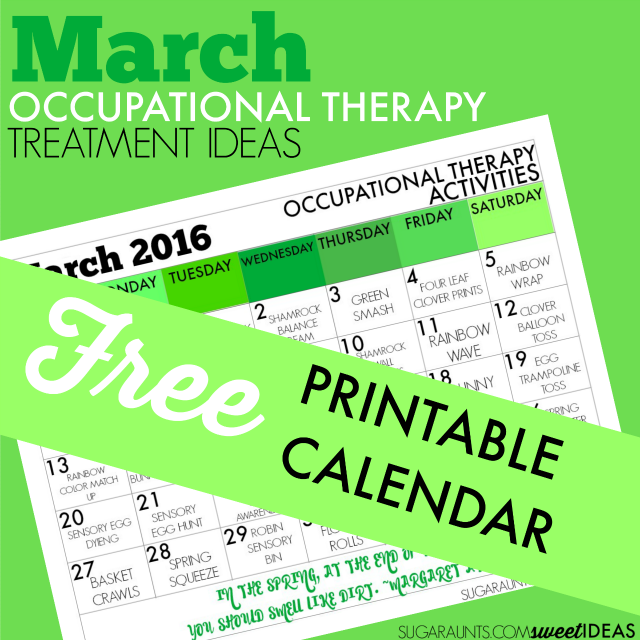
    March Occupational Therapy Calendar

    march occupational therapy activity calendar to build skills in kids

    It’s that time again!  Here is your March Occupational Therapy calendar for treatment ideas and themed activities designed to work on goal areas.  These ideas can be customized to meet the needs of your patient or client and modified as needed.  Add these St.Patrick’s Day activities, Spring activities, and shamrock activities to your occupational therapy activities toolbox.

    As always, consult an Occupational Therapist for a full assessment of your child as no two kids are alike and even with similar diagnoses or problem areas, unique treatment strategies are a must.  

    Disclaimer: This is intended to be a resource and not a replacement for occupational therapy treatment. You may print off this calendar and share it with your clients or direct contacts. You may not share this resource digitally or post it online.  

    march occupational therapy activity calendar to build skills in kids

      Full disclosure_This post contains affiliate links.

    IMPORTANT: Scroll to the bottom to access your free calendar. This page is your go-to resource on HOW TO do each activity on the calendar. Save this page.  

    March Occupational Therapy Activities

    1. Shamrock Stomp- Works on proprioception, gross motor, coordination, visual motor skills, visual scanning.  Spread out Shamrock cut outs on the floor.  Show your child how to stomp, hop, and jump on the shamrocks.  Looking for more info?  Read about proprioception here.  

    2. Shamrock Balance Beam– Use those same Foam Shamrocks from above to create a balance beam.  Use the same strategies as our snowflake balance beam.  

    3. Green Smash– Works on fine motor skills, hand eye coordination, proprioception, and visual scanning with baked cotton balls.  Dye them green for a March theme.  Read how to make baked cotton balls and how to use them in OT activities here.  

    4. Four Leaf Clover Prints– Make a clover shape from a pipe cleaner, sort of like we did here.  Add paint to make clover stamp art.  Works on tripod grasp.  

    5. Rainbow Wrap- Grab a bunch of colorful blankets, towels, and scarves.  Ask your kiddo to lay don on the floor as you roll them up in the colors of the rainbow!  Works on proprioception.  

    6. Rainbow Dance– Use colored paper sheets to create colored areas on the floor (one sheet per color is enough!).  Turn up the music and dance.  Assign each color to different gross motor movements like reaching down to the ground with head between legs. Have someone turn off the music and everyone runs to a color and does the motion.  This is a vestibular sensory input, gross motor, motor planning, listening, attention, and visual scanning activity.  

    7. Flower Threading Craft– Grab petals, leaves, and flowers (real or fake) and thread with a large embroidery needle.  Thread the flowers along the thread to work on fine motor skills, pincer grasp, tripod grasp, bilateral hand coordination, in-hand manipulation, visual scanning, hand-eye coordination, and crossing midline.  

    8. Shamrock Air Draw–  Ask your child to lay down on the floor on his back.  (Get down on the floor right beside him!) Raise your arm straight up in the air and draw a big shamrock in the air.  Now stand up and lean over, hanging your hands straight down to the ground and draw another large shamrock in the air. Works on gross motor, motor planning, crossing midline, and vestibular.  

    9. Rainbow Sensory Bin– Create a sensory bin based on the colors of the rainbow to work on fine motor skills, tactile sensory input, language development, self-confidence, hand-eye coordination, and in-hand manipulation.  

    10. Shamrock Wall Push-Ups– Tape Foam Shamrocks to the wall and show your child how to place their hands on the shamrocks.  Press away from the wall, doing a standing push-up.  Works on proprioception, upper body strengthening, core body strength.  

    11. Rainbow Wave– Grab a brightly colored sheet and play parachute with 2 or 3 other people.  Add small scraps of fabric or tissue paper to the top of the sheet.  Works on bilateral hand coordination, gross motor skills, problem solving, visual tracking.  

    12. Clover Balloon Toss–  Draw a four leaf clover on a balloon.  Practice batting the balloon from person to person, not letting it hit the ground.  Next, do this activity by walking on knees.  Finally, do this activity sitting on the floor.  Other ways to play: Use new fly swatters to hit the balloons.  Add more balloons to the game.  Works on visual scanning, visual tracking, hand-eye coordination, bilateral coordination, and crossing midline.  

    13. Rainbow Color Match Up– Use colored clothes pins to match up to items around the home.  Try to find all of the colors of the rainbow.  Works on fine motor skills: pinch grasp, tripod grasp, hand strength.  

    14. Oral Motor Bunny Sensory Play– Work on oral motor sensory skills with a DIY bunny craft and a straw.  Works on oral motor skills, mouth musculature, visual scanning, coordination, motor planning, and problem solving.  

    15. I Spy Visual Perception Activity– Make your own real life “I Spy” game using spring, Easter, or St. Patrick’s Day toys, items, stickers, plastic eggs, beads, etc.  Spread them all out on a table and ask your child to search and find certain items. This is similar to this I Spy activity we’ve done.  Works on visual memory, visual scanning,  and language development.  

    16. Pot of Gold Sensory Bin– Grab gold coins, yellow checker pieces, or even real money and put them all into a big bin.  Add tweezers and tongs to work on fine motor skills as your child scoops and places the coins into a bowl.  Works on tripod grasp, open thumb web space, intrinsic muscle strength, and hand-eye coordination. Here is more information on the fine motor benefits of playing with coins.  

    17. Shamrock Bean Bag Toss–  Cut shamrocks from felt (or use these ones) and pin them onto bean bags.  Toss them into bowls, pans, and other target areas.  Try playing hopscotch with the bean bags, too.  This is similar to our snowflake bean bag toss activity. Works on motor planning, proprioception, hand-eye coordination.    

    18. Bunny Hop– Find some friends and do the bunny hop. Such a classic Easter activity is a great way to incorporate bilateral hand coordination, motor planning, proprioception, listening skills, direction following, and problem solving.    

    19. Egg Trampoline Toss–  This is an activity to use with a mini trampoline or a full size outdoor trampoline.  Tape plastic eggs shut with tape,  Throw them on  the trampoline and try to catch them as they bounce back up. This is and activity for vestibular sensory input, hand-eye coordination, and motor planning. Don’t have a trampoline? No problem! Use plastic eggs in a tossing game, or a color scavenger hunt.  

    20. Rainbow Write- Place a piece of paper on the floor. Have a big piece like a roll of wrapping paper? Even better! Use crayons or markers to write words in one color. Then trace over those words or letters in another color. Work your way through the colors for a beautiful way to practice letter formation. This activity works on proprioceptive input, core strengthening, letter formation, wrist and shoulder stability, visual motor skills, and more.  

    21. Sensory Egg Hunt– Create an egg hunt in a confined area with a sensory twist: Use a blindfold and a leader who needs to describe the directions the blindfolded person needs to go.  Provide an arm support to avoid injuries! Works on visual imagery, teamwork, and problem solving.   

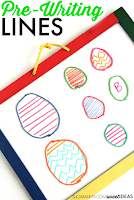
    22. Easter Egg Line Awareness–  Practice pre-writing line awareness with an Easter theme.  Working on more advanced skills? Try writing words on the lines of the eggs.  Can’t do an Easter theme in your school?  Adapt this activity to become a Spring flower line awareness activity.   

    23. Dirt Dig– Start turning dirt for a Sensory Garden.  Not growing a garden this year?  Try some indoor gardening with flowers or herbs.  Works on sensory input, proprioception, problem solving, and executive functioning skills.  

    24. Visual Scanning Color Search– Look for the colors of Spring (go through the rainbow) in an outdoor color hunt.  Gather items from nature in each color of the rainbow.  Works on visual scanning, motor planning,   

    25. Proprioception Egg Squeeze–  Use balloons to make sensory squeeze balls for stress relief through proprioception to the hands.  Add other items to the balloons like flour for differing resistances.  Works on proprioception, hand strengthening.  

    26. Spring Scooter Maze– Use a floor scooter, skateboard, or even a regular scooter as a wheeled seat to go through a maze drawn in chalk on a driveway. Kids can use their legs to pull along the path drawn with flowers and spring raindrops.  Works on core muscle strength, proprioception, motor planning, problem solving, and visual perception.  

    27. Basket Crawls– Crawl across the floor crab walk/bear walk/wheelbarrow style.  The only problem is, you’ve got to carry a basket with you!  How can you get it across the room?  Maybe it’s on your belly or attached to a foot.  Works on motor planning, problem solving, bilateral coordination, gross motor skills, proprioception. Try these brain breaks for more ideas.  

    28. Spring Squeeze–  Grab the cushions from the couch and make a big pile to squeeze out the winter blahs.  Try adding more or less pillows. Works on proprioception.  

    29. Robin Sensory Bin– Use an egg carton to make a robin busy bag and add it to a Spring themed sensory bin for tactile play. Works on fine motor skills, tactile sensory.  

    30. Flower Roll– Roll across a room or down a hill while naming types of flowers. Works on vestibular input, proprioception, motor planning.  

    31. Seed Fine Motor Names– Use squeeze glue to write a name, letters, or words. Use seeds (or small pieces of paper torn up into bits) and sprinkle them on the glue letters.    

    March, Spring, St. Patricks Day, and Easter themed Occupational Therapy ideas

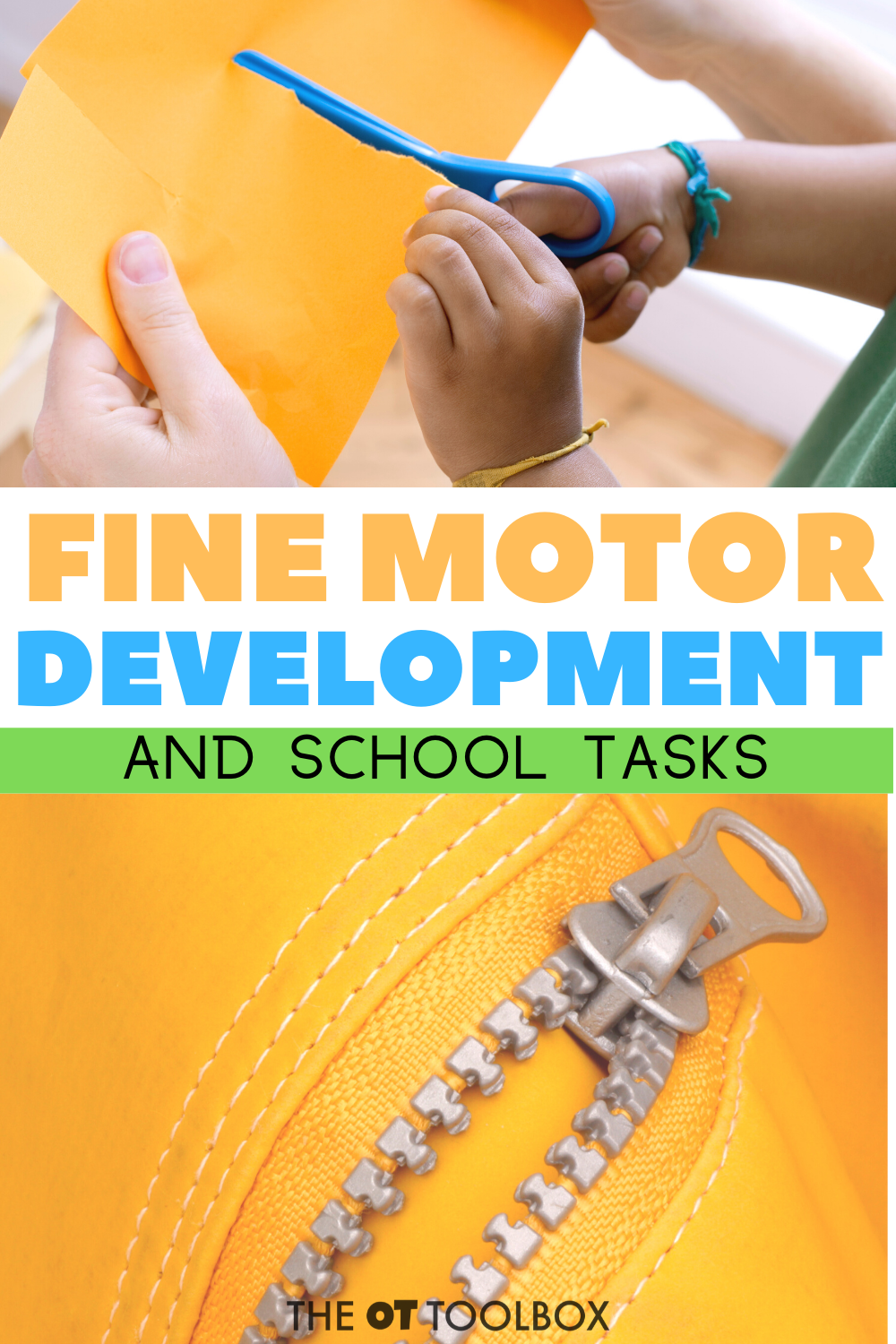
    Fine Motor Skills Needed at School

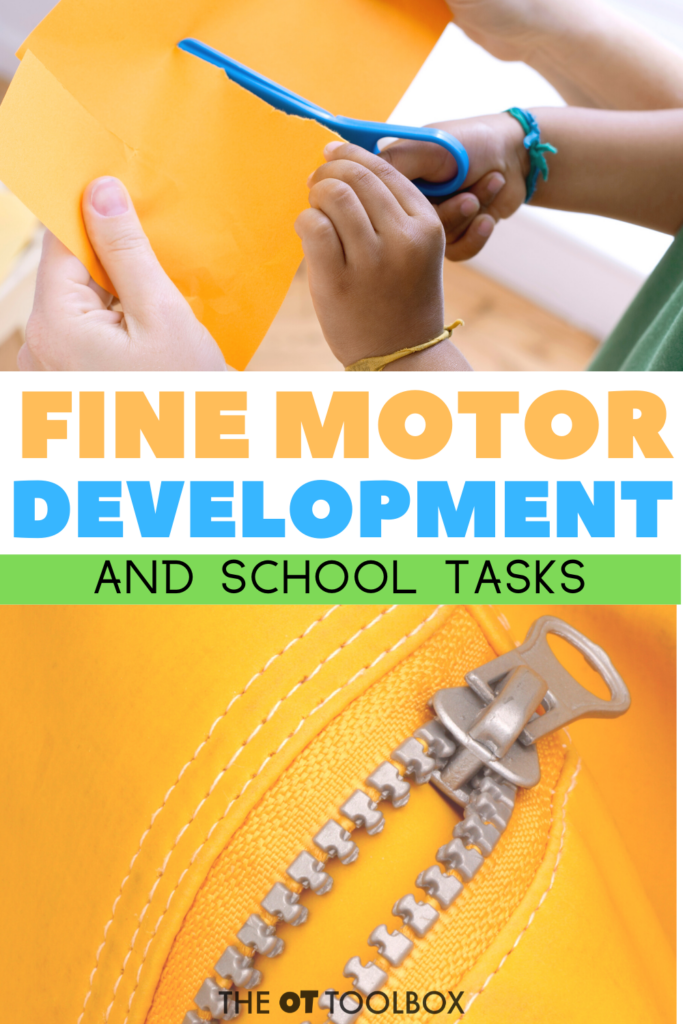
    fine motor development and school tasks

    Occupational Therapists are often times consulted to assess a child for their fine motor skills that are needed in school and for resources to build fine motor skills in the classroom.  When a child’s fine motor skills are lacking, classroom tasks can be difficult and result in delays in many aspects that are necessary for learning and functioning in the school environment.  


    Today, I’m sharing a breakdown of fine motor skills in the school environment and how to build these skills during the school day through simple strategies. One of these strategies is Finger Aerobics.  Read on to learn more about finger aerobics exercises for a fine motor writing warm-up exercise.

    Fine Motor skills needed at school and classroom activities to help


    Fine Motor Skills Needed at School

    A recent article in the American Journal of Occupational Therapist called Fine Motor Activities in Elementary School Children: A Replication Study examined the motor and technology requirements of kindergarten, second-, and fourth-grade general education classrooms.

    The study found that students spend between 37.1% to 60.2% of the school day performing fine motor activities, with handwriting accounting for 3.4%–18.0% of the day. Does that surprise you? We are talking about all of the fine motor tasks students complete during the school day in this post, but it certainly makes sense that a large portion of the school day includes fine motor work.

    The study provides an updated information on the amount of handwriting, technology requirements, and fine motor work that children are taking part in during the school day.

    The study also found that fine motor skills were integrated into tasks throughout the day, including transitions to and from the classroom and between activities. tasks like unzipping a backpack to get out paperwork for the teacher,  gathering materials, managing writing utensils such as pencils and markers, activities of daily living (e.g., zipping and buttoning jackets for recess), and technology use (e.g., using a finger to complete a maze on the Smartboard) all are included in the school day. These tasks require development and integration of fine motor skills. It should be noted that students who struggle with fine motor skills will likely struggle throughout the day.

    When you stop and think about all of the contributing factors that impact fine motor development and strength, it is no wonder that kids are struggling more than they seemed to in the past (this is coming from personal experience, but I think most of you might agree that kids seem to struggle more with fine motor, pencil grasp, and visual motor skills than they did years ago.) There are so many considerations that play a part in fine motor woes. Check out the fine motor development considerations listed below.

    Fine Motor Development Considerations

    These are areas of childhood that impact the development of fine motor skills.

    • Skip crawling and move straight to walking
    • More time being rushed around in baby carriers
    • Time spent in “baby positioners”
    • Less “free play” and more scheduled activities
    • Less exposure to small parts and creative play (More structured and planned play)
    • Less movement-based and developmentally appropriate learning in preschool, kindergarten, and the younger grades
    • More time on screens
    • Early screen-time exposure
    • Less outdoor time and strengthening through heavy work/outdoor play

    What would you add to this list?

    Knowing all of this, we can empower our kiddos with support and fine motor activities integrated right into their classrooms and play. Here are some tools and resources to help with those fine motor struggles:

    Spring Fine Motor Activities

    Improve Pencil Grasp with Fine Motor

    Fine Motor Skills, Defined

    DIY Fine Motor Activity Kits

    Fine motor examples at school for understanding how motor development impacts learning in kids.

    Fine Motor Examples at School

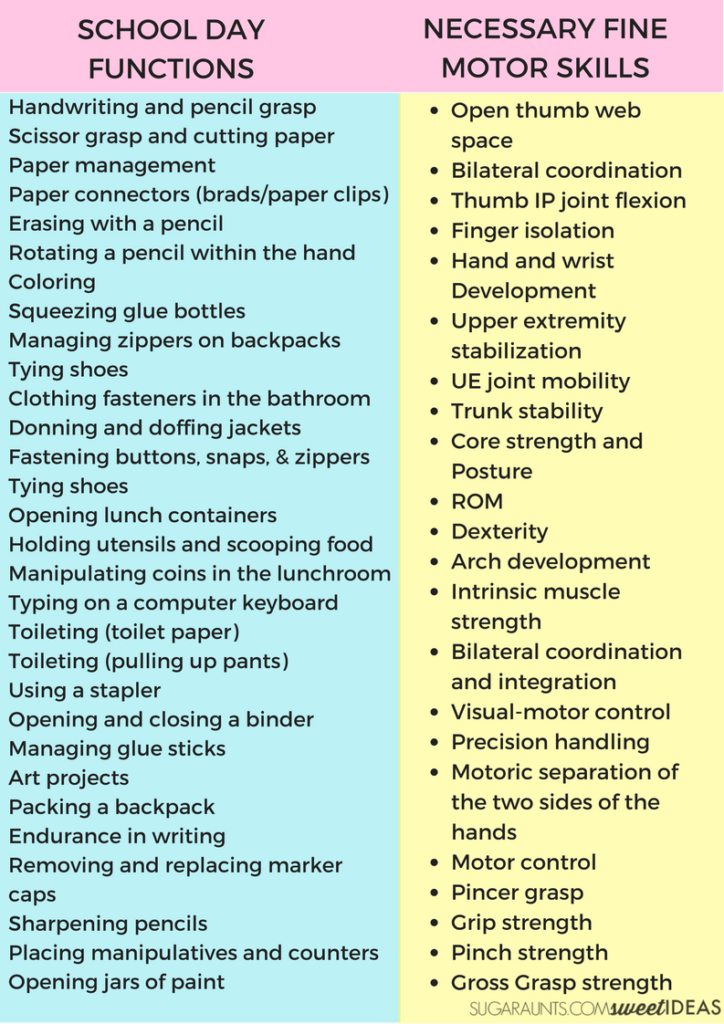
    Fine motor skills are essential for independence and functioning within the classroom environment. Consider all of the areas where fine motor skills are needed for ease during the school day:


    Handwriting and pencil grasp
    Scissor grasp and cutting paper
    Paper management including placing papers into folders
    Paper clip management
    Paper connectors (brads) management
    Erasing with a pencil
    Rotating a pencil within the hand
    Coloring
    Squeezing glue bottles
    Removing glue caps from squeeze bottles or glue sticks
    managing zippers on backpacks
    Tying shoes
    Managing clothing and clothing fasteners during bathroom breaks
    Donning and doffing jackets and coats
    Managing buttons, snaps, and zippers on coats and jackets
    Tying shoes
    Opening containers in the lunch room
    Holding utensils and scooping food to eat
    Picking up small pieces of food
    Manipulating coins in the lunchroom
    Typing on a computer keyboard
    Toileting (tearing toilet paper and wiping)
    Toileting (pulling up pants)
    Using a stapler
    Opening and closing a three ring binder
    Managing glue sticks
    Art projects
    Packing a backpack
    Endurance in writing
    Removing and putting on caps on markers
    Sharpening pencils
    Placing manipulatives and counters accurately in hands-on math activities
    Opening jars of paint

    Fine Motor Skills Examples

    Fine motor skills play a huge part of a student’s day! So what are fine motor skills? I explained in detail the various aspects of and examples of fine motor skills. For more examples of fine motor skills, check out the list below. These are the aspects of motor work that play a part in fine motor tasks during a child’s school day. All of these skill areas are types of fine motor skills that impact function, in big ways.

    These daily functions within the school environment require many fine motor skills.  Each daily task requires many fine motor skills: 

    • Open thumb web space
    • Bilateral coordination
    • Thumb IP joint flexion
    • Finger isolation
    • Hand and wrist Development
    • Upper extremity stabilization
    • UE joint mobility
    • Trunk stability
    • Core strength and Posture
    • ROM
    • Dexterity
    • Arch development
    • Intrinsic muscle strength
    • Bilateral coordination and integration
    • Visual-motor control
    • Precision skills and graded fine motor skills in handling objects
    • Motoric separation of the two sides of the hands
    • Motor control
    • Pincer grasp
    • Grip strength
    • Pinch strength
    • Gross Grasp strength

    Fine motor skills definitions for use in understanding fine motor development in kids

    Definition of Fine Motor Skills

    Occupational therapists know the definition of fine motor skills. It’s an integral part of every therapy evaluation.

    For a layman’s definition of fine motor, the Medical Dictionary defines fine motor skills as: “Any of the motor skills that require greater control of the small muscles than large ones, especially for hand eye coordination or for precise hand and finger movement. Fine motor skills include handwriting, sewing, and fastening buttons. Most movements require both large and small muscle groups, and there is considerable overlap between fine and gross motor skills, but distinguishing between the two is useful in rehabilitation settings, special education, adapted physical education tests, motor development tests, and aptitude tests in industry and in the military.”

    When fine motor skills are delayed, a student’s success in the classroom can be greatly impaired.


    There are many reasons that fine motor skills might be lacking, resulting in delays in functional skills:
    Muscle weakness
    Dysgraphia
    Low tone
    Delayed wrist and hand development
    Poor posture and core strength
    Insufficient somatosensory input with failure to develop kinesthesia
    Insufficient visual control
    Incomplete bilateral integration
    Incomplete utilization of proximal joints of the upper extremity including poor support
    Inadequate spatial analysis and or synthesis skills
    Insufficient visual-motor control 
    Delayed or inadequate arch development
    Underdeveloped precision handling
    Difficulty with Motoric separation of the two sides of the hands.

    These school day tasks are impacted by fine motor skill development.
    Development of fine motor skills in kids

    Fine Motor Development

    Fine motor development and successful use of refined motor skills in functional tasks relies on a sensorimotor foundation of trunk and arm stability, strength, manipulation, ability to motor plan, and effective coordination of visual motor information.  

    When kids are required to perform classroom and school activities without these foundations in place, difficulties arise, resulting in frustration, feelings of failure, and behaviors. So many times, there is a question of whether a student should be referred to the school-based OT for evaluation and assessment of fine motor skills for improved success in the classroom.

    Teachers, parents, and school support staff should consider a referral to the school-based Occupational Therapist if the following fine motor conditions are observed and are effecting school occupations and learning.


    Signs a Student Needs Occupational Therapy in the School for Fine Motor Skill Development:
    Difficulty holding scissors and cutting shapes when age-appropriate
    Trouble with letter/number formation or reverses letters
    Avoids fine motor activities
    Trouble using an effective pencil grasp
    Fatigue when coloring
    Difficulty erasing without tearing paper
    Writes too lightly or too dark and written work is illegible
    Difficulty putting on coat, managing buttons/zippers/snaps, or tying shoes (from what is age appropriate)
    Switches hands during activities

    There are some easy ways to build fine motor skills right in the classroom.  Try some of these strategies to accommodating for poor fine motor skills that might impact a student’s success in the classroom:

    fine motor development and school tasks

    Classroom strategies for addressing fine motor skills at school

    Try various writing utensils.
    Work on various writing surfaces (chalkboard, slant board, easel).
    Use a kneaded eraser for less required effort when erasing.
    Evaluate pencil grasp and try various pencil grips to modify for efficiency.
    Utilize techniques for organizing papers when motor planning is an issue.
    Manage papers and bilateral coordination by taping paper to the desk.

    Finger Aerobics for Building Fine Motor Skills

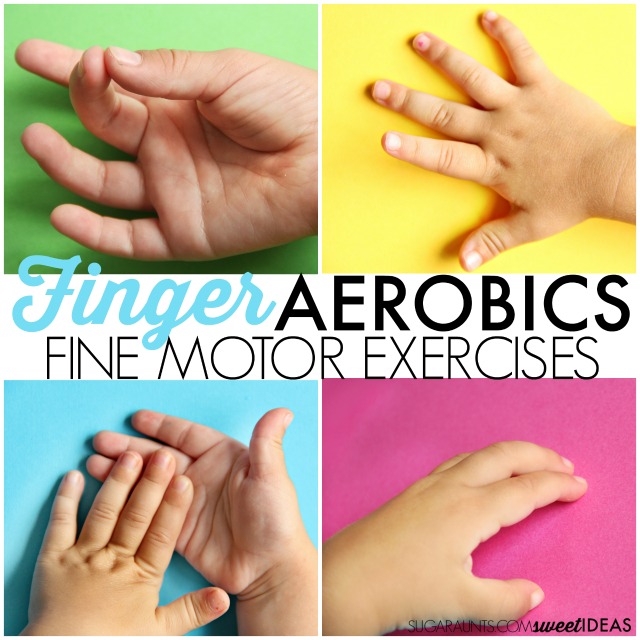
    One strategy that is helpful in building fine motor skills in the classroom is finger aerobics.  These finger motor movement exercises are activities that can be used by the whole classroom as part of a handwriting warm-up exercise.  Kids with poor fine motor skills can oftentimes struggle with hand functions and tool use in the classroom.  Finger dexterity activities like finger aerobics promote sensorimotor awareness and manipulation of the hands.  Finger aerobics are ideal as a transitional movement activity for the whole classroom or a brain break type of activity.

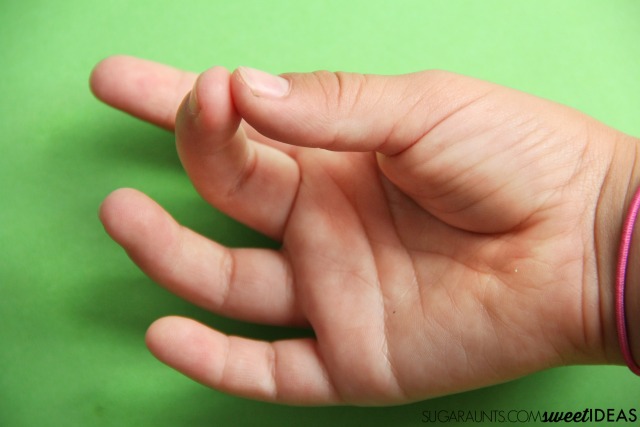
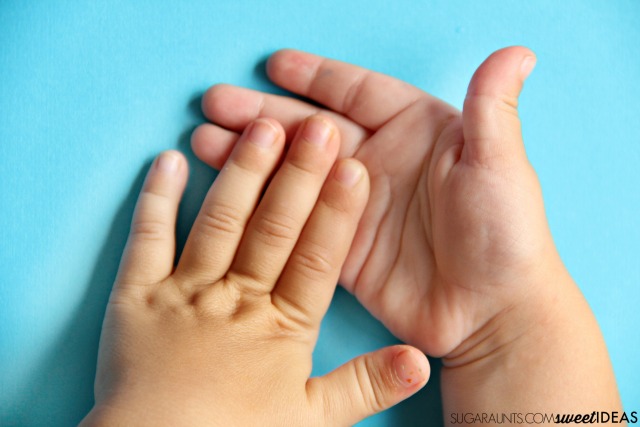
    Check out the finger aerobics in the images and descriptions below:

    Fine Motor skills needed for school and classroom and activities to help build those skills, including finger aerobics exercises.

    Spider Push-Ups:  Show the students how to place both hands together with palms and fingers touching.  Then, show them how to push the hands away from each other at the palm.  The fingertips should remain in contact.


    Fine Motor skills needed for school and classroom and activities to help build those skills, including finger aerobics exercises.

    Finger Pick-Ups:  The students should stand at their desk and place their hands flat on the desk surface.  They can then pick up each finger in isolation.  Ask them to raise each finger from the desk surface 3 times and then pick up and hold each finger individually for several seconds.


    Fine Motor skills needed for school and classroom and activities to help build those skills, including finger aerobics exercises.

    Fingertip Touch:  Ask the students to touch their thumbs to the tips of each of the fingers.  They can do both hands at the same time or one hand at a time. Then, ask them to touch the tip of their thumb to the base of each finger.  They can touch the tip or base of each finger at different speeds, as they spell words, or count in various increments.  Next, ask them to touch the tips or bases of each finger with their hands held behind their back or out of their field of vision. 


    Finger Sounds:  Ask the students to close their eyes.  Then, the teacher or group leader can ask the students to listen carefully as she makes sounds with her hands.  The teacher can make one sound and then ask the students to repeat the sound using their hands.  Ideas include: rubbing the hands together to make a soft swishing sound, snapping, clapping, thigh slapping, finger tapping, or patting the desk. The students should keep their eyes closed as they repeat each individual sound.


    Fist Squeeze: Ask the students to make a fist with both hands.  Then, they should try placing their thumb in different positions and squeezing as hard as they can.  Try the thumb at the side of the fingers, wrapped over the knuckles, and tucked under the fingertips.  Show them how to stretch out the fingers and then repeat.


    Spider Crawl:  Ask the students to stand up behind their desks.  They can then place both hands with the palm and fingers flat on the desk surface.  Show the students how to make their hands “crawl” across the desk like spiders.  They can move both hands together symmetrically and individually in different directions.  Keep the palm lightly positioned on the desk surface.


    Fine Motor skills needed for school and classroom and activities to help build those skills, including finger aerobics exercises.

    Finger Muscles:  Show the students how to use their other hand to provide resistance for squeezing.  They can place their pointer finger or their pointer and middle finger of one hand on the outstretched fingers of the other hand.  Ask them to squeeze their fingers and then to try to push against the fingers.


    Writing Gloves:  Ask the students to pretend to put a glove on their hands, slowly moving the glove over each finger.  They should push each finger down individually.  Then, they can remove that pretend glove, one finger at a time.  This is an especially calming activity that provides proprioceptive input through joint compressions.


    Finger Ducks:  Ask the students to straiten the fingers and thumbs to create a “duck” puppet with just their fingers.  They can make the duck open and close it’s mouth to spell words, count, or read.  Then, ask them to pretend that the duck ate a lemon as they pull the finger tips into the palm.  This is a great activity that strengthens the lumbrical muscles of the hands. 

    You can view all of the exercises here: 


    Finger aerobics for fine motor strengthening and handwriting warm up.


    Be sure to visit the other Occupational Therapists and Physical Therapists who are writing about School Day Functions this month in the Functional Skills for Kids series.

    Fine motor skills needed in the classroom and finger aerobics ideas

    More Fine Motor Activities that will build skills needed for Function and Learning in School:

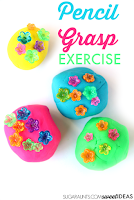
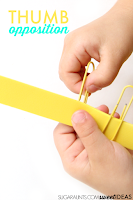
     fine motor writing activity Pencil Grasp Activity Pencil Grasp Exercise Thumb opposition activity
    References:
    Sierra Caramia, Amanpreet Gill, Alisha Ohl, David Schelly; Fine Motor Activities in Elementary School Children: A Replication Study. Am J Occup Ther 2020;74(2):7402345010. https://doi.org/10.5014/ajot.2020.035014

    Therapy Tools Giveaway

    Hi there friends! For a while now, I’ve wanted to organize a massive therapy giveaway of some kind to just say thank you for your support over the years. This week, (plus a few extra days…) I’ve got some really awesome therapy tools to give away as part of a Holiday Therapy celebration! This giveaway celebrates you and all you do for others. The items are therapy tools and resources that you can use in your clinic, classroom, or home. NOTE: This giveaway has now ended. Stay tuned for next year’s Annual Therapy Tools Giveaway occuring in November 2020.

    Therapy Tools Giveaway

    These therapy giveaway items are perfect for occupational therapists and anyone working in pediatrics.

    Stop back each day to enter the daily giveaway and catch up on the ones you may have missed. Each giveaway opens on the day specified and will remain open for the duration of the giveaway period. Share this page with others you think may benefit from the item or items.

    Thankful for You

    I am so grateful and incredibly proud of the readers of The OT Toolbox. You are professionals, advocates, and servants, defenders, and counselors. You are leaders, educators, and supporters of those looking for their ability to do and be. You are the manager of function and the chief of ability. By using your sincere empathy, insight, judgement, and expertise, you are the means for guiding those you serve towards capability. The profession is proud to have you. You are an instrument to build up others and the system to establish function.

    You are the reason that so many flourish with their daily occupations. You are the roadmap to ability in the day to day skills that make up our classrooms, clinics, and communities. You deserve so much more than these items. These giveaways are just a simple way to express gratitude for you and all you do on a daily basis.

    Therapy Tools Giveaway

    So, to kick off the holiday season with gratitude and thanks, I’m excited to announce the first (hopefully annual) Therapy Giveaway!

    Scroll down to find and enter the therapy tools being given away this week. You will find items for the classroom, sensory tools, fine motor tools, and therapy resources designed to promote function and ability in a variety of occupations. Enter each giveaway once per day! Each giveaway may have additional rules or stipulations, depending on the brand or company offering the therapy item. This giveaway is hosted on The OT Toolbox but may offer additional giveaway

    THERAPY GIVEAWAYS

    This is the place you will need to come back to each day over the course of the next 10 days. Each day, you will find a new therapy giveaway item “turned on”. If you missed entering any of the past giveaways, don’t worry! Just go back and enter those giveaways. All giveaways end on December 4th at 11:59 pm PST. Winners will be notified by email. Prizes will be fulfilled by the brand or company offering the giveaway. For some prizes, a full name and physical mailing address will need to be obtained via email so the prize can be mailed out.

    Scroll through the images below and enter each one beginning on the day indicated. I’m excited to share each of the items below. In total, giveaway prizes add up to over $1,000! You’ll find therapy items that you can use in your practice, in the clinic, classroom, or home. There are sensory tools, handwriting products, massive therapy resource bundles, amazing therapeutic toys, and so much more. You are going to love each item!

    Here we go!

    Therapy Giveaway Item #1

    Therapy giveaway Harkla sensory swing
    Win a Harkla sensory swing for sensory input in the home or classroom! Valued at $80.00! Includes swing, all installation hardware, and cushion.

    CLICK HERE to enter to win the Harkla Sensory Swing.

    Therapy Giveaway Item #2

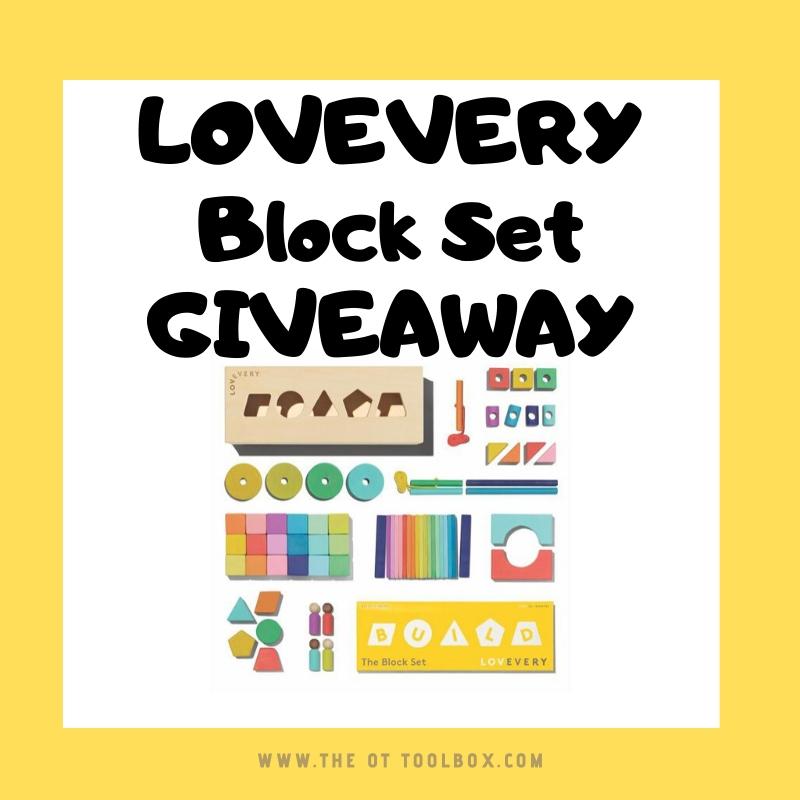
    Lovevery blocks giveaway to win a set of blocks for kids
    This 70 piece wooden block set from LOVEVERY is valued at $90 and includes over 20 block activities designed to promote skills, learning, and development.

    Click HERE for a chance to win a LOVEVERY block set!

    Therapy Giveaway Item #3

    Free AOTA membership therapy giveaway
    One occupational therapy professional will win a year-long membership to AOTA. Open to current and new (not currently a member) OTs, OTAs, OT students, and retired OT/OTAs.

    Click HERE to enter to win a year-long membership to AOTA!

    Therapy Giveaway Item #4

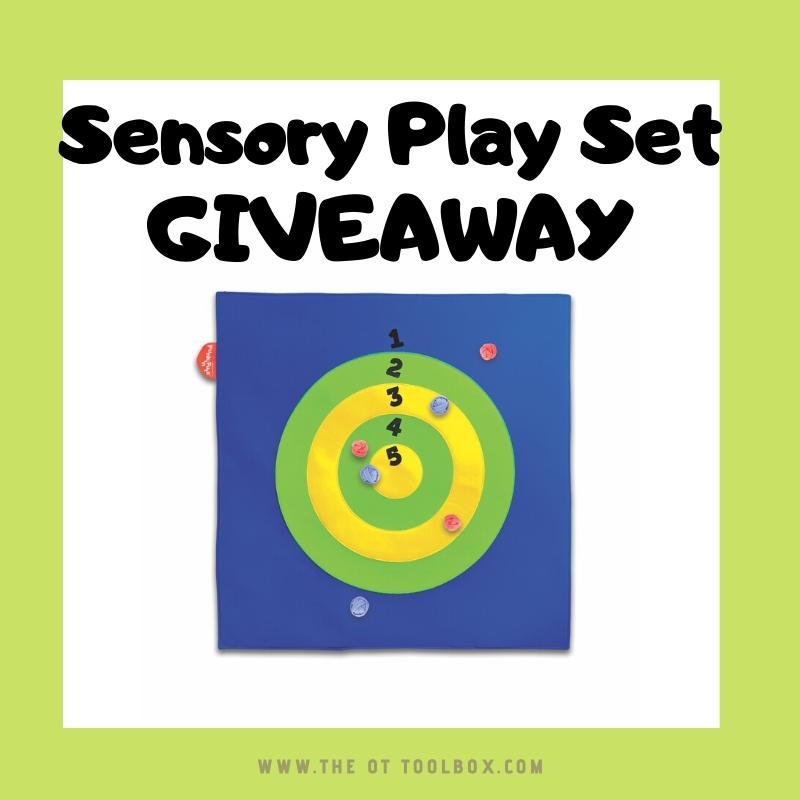
    play and learn set giveaway for therapy giveaway
    One PunkinFutz PlaySet, valued at $95.00. This multi-purpose therapeutic toy that offers endless learning and play activity opportunities and has a play-based curriculum available.

    Click HERE to enter to win a PunkinFutz PlaySet!

    Therapy Giveaway ITem #5

    sensory friendly pajama set therapy giveaway
    Win one pair of Lovey & Grink sensory friendly pajamas, valued at $42.00.

    Click HERE to enter to win a pair of sensory friendly pajamas!

    Therapy Giveaway Item #6

    letter builder kit giveaway for therapy giveaway prize
    Win one Lowercase Letter Builder Kit from Fundanoodle, valued at $74.99.

    Click HERE to enter to win a Lowercase Letter Builder Fun Kit!

    THerapy Giveaway #7

    fine motor toy giveaway for week of therapy giveaways
    Fine motor toy designed to promote fine motor strength, bilateral coordination, eye-hand coordination and more. Valued at $21.00

    Click HERE to enter to win this fine motor toy!

    Therapy Giveaway #8

    therapy resources available online
    Win a massive digital resource containing e-books, occupational therapy worksheets, activities, and therapy resources, valued at over $220!

    Click HERE to enter to win a massive therapy resource bundle!

    Therapy Giveaway #9

    Win a Mightier Professional Kit, valued at $395 and includes a Mighty band & dedicated Mightier tablet, 1-on-1 onboarding and customized setup for your practice, Access to Professional Development Trainings and Mightier Certification Program, Unlimited player profiles, Monthly clinical consultation with a dedicated Mightier Certified OT

    Click HERE to enter to win the Mightier Annual Professional Kit!

    Therapy Giveaway Item #10

    Pitchkit giveaway for therapy giveaway prize
    Win a PunkinFutz Pitch Kit Set, to work on bilateral coordination, core strength, motor planning, eye-hand coordination, and more. Valued at $80.00

    Click HERE to enter to win a PunkinFutz Pitch Kit Set!

    Be sure to stop back each day to find out the details of each giveaway item!

    Therapy tools giveaway items

    Halloween Occupational Therapy Activities

    It’s that time of year! Halloween is just around the corner and so in your therapy clinic or school-based OT sessions, or even OT teletherapy, you may be thinking up Halloween occupational therapy activities that work on specific functional goals. Here, you’ll find a collection of Halloween fine motor activities, pumpkin occupational therapy activities, Halloween sensory play, and more. Use all of these ideas to help kids work on a variety of OT goals using a Halloween craft or ghost activity. This pumpkin deep breathing exercise is just one idea!

    For activities and ideas to address all needs, check out these occupational therapy activities.

    Here are occupational therapy themes that we’ve covered so far. Use them to make therapy planning a breeze…and make your life easier!

    These halloween occupational therapy activities are great for working on skills in OT like fine motor skills, eye-hand coordination, scissor use, and more!

    Halloween Occupational Therapy Activities

    We LOVE to create and come up with fun crafts and activities that double as a tool for addressing specific skills!

    Here you will find a variety of Fall and Halloween activities that can address skills such as fine motor, visual motor, visual perception, scissor skills, hand strength, dexterity, core stability and strength, executive functioning, and so much more.

    Check out the variety of ghost crafts, pumpkin art, Halloween games, and other ideas. It just might be the perfect addition to your therapy plans this month!

    One of our favorite activities for this time of year is our pumpkin deep breathing exercise. I love using this in every therapy session as a self regulation tool and warm up activity!

    Ghost Occupational Therapy Activities

    We’ve come up with some fun ghost activities here on The OT Toolbox! Try some of these ideas in your therapy clinic or as a home program recommendation this Fall. I love that these ideas can be done on an individual basis or as a small group. Use them in a classroom Halloween party planning or as a fun Fall fest activity.

    This ghost craft is an easy way to work on scissor skills. Kids can also address skills such as bilateral coordination, hand strength with a simple halloween craft that uses just paper, crayon, scissors, and a hole punch. Use these ghosts to decorate for Halloween and monitor scissor skills.

    This ghost craft for sensory play is a fun one for kids to make but also use in sensory bins or fine motor activities.

    This ghost craft uses recycled materials and can be a tool for working on dexterity, precision of grasp, in-hand manipulation, bilateral coordination, hand strength, and more! These ghosts would make a fun addition to the therapy clinic, OT doorway, or even a bulletin board decoration.

    This gross motor ghost game can be played over and over again while working on eye-hand coordination, visual tracking, visual convergence, core stability, reach, and other skills. Kids will participate in vestibular and proprioceptive input with a ghost theme!

    Bat Occupational Therapy Activities

    These bat activities will be an easy way to work on specific skills while making Halloween fun and not spooky for kids.

    This bat Halloween craft is a fun on skills like scissor skills, bilateral coordination, fine motor skills, sensory input, and letter formation.

    Looking to pair a Halloween book and activity for a party or small group? This Stellaluna activity can help kids with specific and purposeful skills such as sight word recognition or math skills while working on visual scanning, visual tracking, visual discrimination, figure-ground, bilateral coordination, crossing midline, and more.

    Pumpkin occupational therapy activities for kids to build skills in fine motor skills, gross motor skills, sensory exploration, and mindfulness, using a pumpkin theme.

    Pumpkin Occupational Therapy Activities

    Be sure to check out the many pumpkin activities are to be found here on The OT Toolbox! Use these fall ideas all season long from Halloween through Thanksgiving!

    The Pumpkin Activity Kit covers tons of fine motor skills, visual motor skills, coordination, and more.

    Kids can make pumpkin stamp art using a paper tube while working on bilateral coordination, crossing midline, eye-hand coordination, visual motor skills, visual perception, and fine motor grasp. You can also make pumpkin stamps with a foam curler or other stamp.

    Pushing into the classroom? Work on English Language Arts, math, or other classroom lessons by using small pumpkin stickers right in the classroom. This pumpkin activity can be a big boost to fine motor skills, visual scanning, eye-hand coordination, precision, distal mobility, and more.

    We know how awesome carving a pumpkin is for fine motor, gross motor, and sensory needs. Once you carve that pumpkin, use the pumpkin seed in sensory play by dying the pumpkin seeds. It’s a great addition to Halloween sensory bins, fall fine motor activities, and other seasonal activities.

    Love Halloween sensory bins? Make a set of pumpkins from an egg carton to work on fine motor skills. We’ve used these pumpkins in so many ways over the years.

    Spider Occupational Therapy Activities

    Spiders don’t need to be spooky! These spider activities and games can be a powerful way to work in some much-needed skills!

    Work on bilateral coordination, motor planning, fine motor work, heavy work, vestibular input, and gross motor strengthening with this giant spider web activity.

    Make a spider craft using recycled materials to work on fine motor skills such as hand strength, in-hand manipulation, separation of the sides of the hand, pincer grasp, and scissor skills.

    Helping out with math or other classroom lessons? This math spider craft that we did addresses doubles and near doubles but you could use it to work on any math facts or ELA lessons. Sneak in bilateral coordination, scissor skills and more with this fun spider activity.

    Make a noodle spider craft and help kids with fine motor skills such as in-hand manipulation, separation of the sides of the hand, and more.

    Halloween Sensory ACTIVITIES

    Recommending a sensory task for kids at home as part of a home program? This Frankenstein smoothie recipe is an awesome way to encourage calming proprioceptive input through oral motor work. Kids can get in on the recipe creation action to sneak in a few executive functioning skills, too.

    Halloween Fine Motor Activities

    So many of the activities we shared above work on and strengthen fine motor skills. Here are more Fall fine motor activities that use items such as fall leaves, scarecrows, or other Harvest items.

    We’ve included many Halloween fine motor activities in this blog post. They are great for building hand strength.

    Support finger strength by using bat mini erasers in theraputty exercises. Include some Halloween dexterity activities like the fingerer yoga activities we show in the video below. The Halloween dexterity exercises are fun as a handwriting warm up or as a fun way to get those fingers moving. Check out our video below…or you can catch it over on YouTube.

    These Halloween fine motor exercises would be a great warm up to a writing task or gross motor activity.

    Fall Sensory Activities

    We’ve shared a lot of Fall sensory activities here on The OT Toolbox! You can find all of the posts here:

    Choosing Wisely Occupational Therapy Activities

    Remember that the craft or activity is the means to working on specific underlying areas, but also, so often kids really struggle with completing aspects of play or crafts. Addressing certain skills right in the craft can make it meaningful and purposeful. When we talk about “Choosing Wisely“, we are occupation-based activities. AOTA has guided us in Choosing Wisely recommendations that we can consider when coming up with OT activities and ideas. Using scissors to work on a Halloween craft with kids is something they need help to become more independence (scissor use) via a fun activity that they are proud to complete and show off (a ghost craft for example). Consider the occupational performance components in crafts and activities that meet the specific needs of the child or individual.

    In that way, using a craft in occupational therapy can address a variety of different skills, with different levels of accommodation or modification, input, cues, or difficulty, based on the specific needs as determined by the occupational therapy professional.

    Use a Halloween occupational therapy activity in therapy planning in October with a ghost craft, spider activity, or pumpkin centers!

    Halloween Activities for Occupational Therapy

    What are your favorite Halloween Occupational Therapy activities? Is there something you do each year with the kids you work with? Let us know in the comments below!

    Halloween Cutting Activities

    Many times, occupational therapy practitioners work on the functional skill of cutting with scissors.

    Snipping paper, cutting shapes, and making crafts require cutting straight lines and multi-angular shapes with scissors. We can use the Halloween cutting activities in occupational therapy sessions to work on this motor skill:

    • You’ll LOVE these free pumpkin scissor skills pages that allow kids to “cut the pumpkin” and work on line awareness, cutting curved and angled lines, and even coloring. It’s free to print and go!
    • Use this ghost craft to work on scissor skills this time of year.
    • Or, snip strips of paper to make a spider, pumpkin sensory bin filler, or squares of paper to fill a pumpkin template.

    PUMPKIN ACTIVITIES KIT

    For more pumpkin fun this Fall, grab the Pumpkin Fine Motor Kit!

    Work on underlying fine motor and visual motor integration skills so you can help students excel in handwriting, learning, and motor skill development.

    • 7 digital products that can be used any time of year- has a “pumpkins” theme
    • 5 pumpkin scissor skills cutting strips
    • Pumpkin scissor skills shapes- use in sensory bins, math, sorting, pattern activities
    • 2 pumpkin visual perception mazes with writing activity
    • Pumpkin “I Spy” sheet – color in the outline shapes to build pencil control and fine motor strength
    • Pumpkin Lacing cards – print, color, and hole punch to build bilateral coordination skills
    • 2 Pumpkin theme handwriting pages – single and double rule bold lined paper for handwriting practice
    Pumpkin activity kit
    Pumpkin Fine Motor Kit– perfect for building skills with a pumpkin theme!

    Halloween Play Dough Mats

    I wanted to add a quick and easy Halloween fine motor activity that I love, because you need one interactive Halloween worksheet that can be used in so many different ways. It’s actually a Halloween play dough mat and I love using this as a therapy tool to support many different skills.

    You can see in the video below how we used this play dough mat. I have this printable inside The OT Toolbox Membership Club.

    You’ll print off the play dough mat. Then slide it into a page protector sleeve. Then, you can start building skills:

    • You can place craft pom poms on the mat.
    • You can roll small balls of play dough and then press them onto the circles on the mat.
    • You can write letters with a dry erase marker and then use a code to work on visual perceptual skills as you place colored craft pom poms onto the play dough mat to match letters. This is great for letter reversals.
    • Then, you can use a pickle picker to pick up and sort the craft pom poms.

    It’s a great way to work on many OT goal areas at once! Here are more of our play dough mats we have on the website that you can use in similar ways.

    Colleen Beck, OTR/L has been an occupational therapist since 2000, working in school-based, hand therapy, outpatient peds, EI, and SNF. Colleen created The OT Toolbox to inspire therapists, teachers, and parents with easy and fun tools to help children thrive. Read her story about going from an OT making $3/hour (after paying for kids’ childcare) to a full-time OT resource creator for millions of readers. Want to collaborate? Send an email to contact@theottoolbox.com.

    Flexible Seating in the Classroom

    THese flexible seating in the classroom ideas are helpful to improve attention, focus, and learning in students.

    It’s that time again when we are heading back into the school year. Teachers are getting into the classrooms and setting up room arrangements. School-based OTs are gearing up for the back-to-school chaos. When the thoughts of classroom organization and caseloads come into mind, flexible seating in the classroom ideas may not be the first thing you think of. Seating options may even be a part of a classroom sensory diet. But here’s the thing: Flexible seating ideas are always good to keep in mind! There are so many benefits to flexible seating arrangements. From DIY flexible seating ideas to types of seating ideas that can be used in classrooms…there is a lot to think about!

    flexible seating in the classroom with out of the box ideas that kids will love for learning.

    Flexible Seating Ideas for the CLassroom

    There is so much to think about when it comes to accommodating to various seating needs. Positioning and specific student needs are just part of the puzzle. Facilitating learning while encouraging collaborations among students is important and the primary concern when it comes to out-of-the-box seating arrangements. Below, you will find various flexible seating for the classroom and information on the benefits of flexible seating ideas…as well as how to adapt to this classroom sensory strategy.

    Things to consider about Flexible Seating

    When considering flexible seating ideas for the classroom, there is a lot to think about. These considerations include a variety of needs including behavior, cognitive needs, physical abilities, posture, and more.

    Many times therapists are consulted regarding specialized seating as a result of postural needs. In these cases, an individualized assessment may be warranted and aspects of seating should be analyzed before addressing specific seating needs:

    Posture and seating needs may be a result of sensory issues such as physical limitations, weakness, range of motion as a result of tone issues or spasticity, sensory impairments,or other needs.

    Physical limitation or deformities may impact seating posture and positioning. These may include posterior pelvic tilt, pelvic rotation, scoliosis, joint contractures, leg length discrepancies, head and neck positioning, extremity limitations, or other concerns. Each of these may impact learning and attention in the classroom.

    When providing a new or novel seating option in the classroom, there are considerations to keep in mind as well. A flexible seating option may not be the primary classroom seating situation. In other words, it may be the best situation for the classroom learning to occur in traditional desks. Flexible seating in the classroom can be provided for supplemental learning, small groups, independent reading, or other similar activities.

    In some cases, it’s important to consider optimal support in seating options including for those students with physical needs. As a result, some situations may not warrant a full classroom of flexible seating. Chairs and surfaces may not provide optimal postural alignment in order to provide adequate trunk support. Upper extremity mobility and positioning is important to consider if students will be using the seating arrangements for writing tasks. Additionally, considerations such as correct height/depth of the seat and the placement of both feet on the floor is needed for writing tasks.

    Flexible seating in the classroom, ideas to help kids with sensory needs.

    Benefits of Flexible Seating in the Classroom

    A primary benefit of alternative seating options is the improvement to learning and attention that can occur. There may be several reasons that various seating options offer in the classroom.

    • Opportunities for Choices- Students may find that the ability to make a choice in their seating situations makes all the difference in learning and attention. Some students may really like the option to pick where they sit!
    • Something for Everyone- When there are several options for seating in the classroom, it can be one way to meet the needs of a whole classroom. Some teachers may find that kids change in their activity or attention levels throughout the day. When additional movement or proprioceptive input is needed, an alternative seating method may be just the ticket to learning.
    • Heavy Work Opportunities- Use of various flexible seating techniques in the classroom can offer occasional or scheduled use of flexible seating options can provide opportunities for heavy work input by moving desks, bean bag seats, or other seating set-ups as students or a specific team of students move furniture from determined positions. Don’t forget the sensory benefits of moving desks and chairs!
    • No Singling Out- When there are various flexible seating options in the classroom, no child is singled out. This is important for the child with sensory issues or self-regulation needs. Some students may need extra movement or heavy input to facilitate learning, and when the whole classroom has the option to choose a beanbag for reading time, the flexible seating methods are there for everyone…and no student feels singled out based on needs.

    Flexible Seating Ideas for the Classroom

    Now that we’ve covered considerations and a few benefits of flexible seating ideas, let’s cover some specifics! Below are alternative seating methods that may work in the classroom.

    You’ll find a list of options for adding proprioceptive input to the seating system, as well as a large list of alternative seating ideas. Some of these are able to be purchased (Amazon affiliate links are included below). Other options are quite frugal or are DIY ideas. Have fun exploring and considering the flexible seating ideas!

    Flexible seating and proprioception input

    Sensory benefits play a big part of choosing the best flexible seating option. While some alternative seating options provide sensory input or feedback via the positioning, others provide heavy input by hugging the student. There are many ways to add weight that provides a calming benefit into seating ideas. Consider some of the options below in adding to a seating system:

    Tips for adding proprioceptive input or weight to a alternative seating system:

    • Add a weighted lap pad
    • Try a therapy band or bungee cord to the chair legs
    • Use a body sock or fabric tube to the legs of the chair. Done in a non-restricting way, this tube can be a place to slide legs into while sitting in a regular chair
    • Bean bag for under/over the child
    • Computer lap desk over the child’s legs (Can be used as a writing station)
    • Homemade bean bags over legs or feet. Slide these into tube socks or knee-high socks and knot two socks together to create a weighted tube to drape over legs or the shoulders.
    • Under-the-table sling
    • Therapy swing in the classroom or outdoor space
    • Add velcro wrist weights to the inside of a 4 inch binder. Use the binder as a lap writing surface.
    • Encourage tummy time writing. (Write, draw, or read while lounging on bellies on the floor. Make this a fun reading experience by asking students to bring in a flashlight from home.)
    • Try a weighted fidget tool that can be used while seated at a desk.
    • Try some of the additions listed and described below.

    Remember that finding an ideal seating system can require a lot of investigation and trial and error. Some students may benefit from one of the ideas listed here and others may require a mix of several options. Keep it individualized and remember to consult your child’s occupational therapists regarding seating ideas.

    Flexible Seating Ideas

    Bean bag chair is a flexible seating idea for the classroom

    Bean Bag Chairs- Use these on the floor or at a low table. Consider lowering a table to 2-3 feet off the ground for a low writing and reading surface. Other times, bean bags can be used in small group work or for quiet reading. Consider using a bean bag as a cover for legs to provide heavy input through the legs. There are some inexpensive bean bag seat options available. There are also a few varieties of stuffed animal bean bag covers that create seats using old stuffed animals.

    Stuffed Animal Bean Bag Seat- Ask around for stuffed animal donations from family and friends! This bean bag cover creates a bean bag seat using old stuffed animals as a seating option and can be adjusted as needed. Add more stuffed animals to fill the seat or take some out depending on the child’s sensory needs. This stuffed animal cover comes in a larger size that can be used as a lounger chair.

    Use a duvet lounger as a flexible seating idea in school.

    Duvet Lounger- Using the same concept of filling a bean bag with upcycled stuffed animals is the DIY version of using a duvet cover as a method to create a lounger seat. Fill a duvet cover with cushions, pillows, or stuffed animals and create a crash pad that can be used as a lounger seat for the classroom or home.

    A t-stool is a great flexible seating idea for the classroom.
    The Stability Tube Chair is a T-Stool seat for the classroom or home.

    T-Stools- A T-stool is a common seat seen in classrooms. The stool allows students to wobble, move, and wiggle just as their bodies need, while reading, writing, learning, and listening! You’ll find a variety of T-Stools available: The Kore Wobble Chair is great for grades K-3 and provides a larger base of support. The Stabili-T Tool Tube provides less support but requires more core contraction and work, allowing for more movement. A T-Stool Single Leg stool offers more vestibular input given a much smaller base of support and an adjustable height option.

    Single leg T-Stool offers a flexible seating option for classrooms.

    Milk Crate with a Ball Inside– Going for a multi-option flexible seating arrangement in the classroom? Adding a large kickball or small therapy ball inside a milk crate is a great option for the frugal. This is one way to create several seats for a lower cost. Line the milk create up under a low table for a centers activity or small group.

    A therapy ball makes a great flexible seating option in classrooms.

    Therapy Ball– Another frugal means of offering opportunities for movement and sensory input in the classroom is using therapy balls. There are many options available on the market and in stores. Search for yoga balls or exercise balls to find the best prices, in many cases. Worried about them rolling away or becoming massive projectiles in the classroom? Make a “station” using a hula hoop as a base.

    The peanut ball seat is a flexible seating idea for classrooms.

    Peanut Seat- A different version of the therapy ball is the peanut ball seat. Kids can use these seats in a variety of ways, sitting or lying prone on the ball. The peanut ball allows for only unidirectional rolling so they can be easier to contain in the classroom setting when compared to a round therapy ball.

    Use a sensory swing indoors or outdoors, a great alternative seating idea for the classroom

    Sensory Swing- A sensory swing is a versatile seating option for reading, small group work, individual work, or a much-needed sensory break. We’ve tried and loved the Harkla Sensory Pod Swing for it’s cozy support and use as a calm-down space. The great thing about Harkla sensory swings is the easy-to install ability to place them in a classroom. We tried ours outdoors too, for an outdoor sensory swing option. Kids love the outdoor sensory swing in a shaded area such as under a patio deck or even hanging from a tree limb.

    A portable laptop stand is a fun idea for flexible seating in the classroom.

    Portable Laptop Stand- This portable laptop stand doesn’t need to be used for just laptops! Use it as a writing station or for a small reading center. I would love to see a DIY version of this…wonder if an awesome school janitor could whip one together using scrap materials? P.S. If you have one of these stands made…or you make one yourself…let me know! I would LOVE to see it!

    Teachers can use a futon in the classroom as a flexible seating idea.

    Futon- An easy way to incorporate flexible seating options in the classroom is to add a futon. You can grab one at a big box store or on Amazon and have it shipped directly to where you need it to go. The benefits of using a futon in the classroom are endless- A “job” can be to open the futon and replace pillows after quiet reading time, adding opportunities for heavy work. Add a few weighted throw pillows and a weighted lap blanket if it’s appropriate. Sometimes lounging during instruction may be just what is needed.

    A scoop rocker chair is a great way to add flexible seating options to the classroom.

    Scoop Rocker Chairs- Kids love these scoop rocker chairs! They are versatile in that they can be used at a lowered table or during circle time. The light-weight and handle make them easy to carry from class to class or to special classes, if needed. There is a special deal on Amazon offering a set of 6 scoop rocker chairs for $48 right now. Who knows how long that price will last!

    Use a scooter board for seating needs in the classroom to add sensory input as part of a sensory diet at school.

    Scooter Board- Have a scooter board in your car trunk (If you are a mobile therapist, this totally applies to you…) or in the physical education gym/supply closet at school? Scooter boards make awesome foot fidgets for when sitting at a desk. Kids can also use them during circle time. (Provide a hoola hoop boundary!) Or to sit on at a low table or when working in a small group. You can find them at great prices on Amazon!

    Use a reading pillow or bed reading pillow  as a flexible seating idea in the classroom.

    Cushions or Pillows- Super easy to get, and at a very inexpensive cost, pillows and cushions are a fantastic way to create a cozy corner or crash area. Kids will love quiet reading time or group work when sitting on a pillow or cushion. Stalk your local resale shops for great prices. You can also ask parents to send in a small pillow or chair pad cushion (the kind you use on kitchen chairs) that can be used at desks for seated work. A reading pillow (the kind you typically use on a bed) works really well in a calm-down space, too.
    Body Pillow- A body pillow can be an inexpensive way to add movement and positioning to the classroom or home. Add it to a futon or couch in the classroom or include it in a calm-down space.

    Rocking Chair- An old-fashioned porch rocker is a wonderful addition to the classroom. There’s just something about rocking back and forth that brings back memories of quieting fussy babies during the night for this mama…but perhaps the calming effects of slow linear rocking can be just the thing to turn classroom fidgeting into focused learning. If the price tag of a traditional wooden rocking chair is a problem, consider adding a camp rocking chair or an upcycled nursery glider. You can find these baby nursing chairs on Facebook marketplace or in consignment shops for a great price.

    Use a balance cushion as a flexible seating tool in the classroom.

    Balance Cushion- Balance cushions can be used on a traditional desk seat or for floor seating. Adding this to your flexible seating line-up promotes an opportunity for attention and balance by adding movement to learning. Add more air or remove some from the cushion to provide more or less movement and stability required.

    Use a beach chair as a cheap flexible seating option in classrooms.

    Beach Chair- A beach chair is a super inexpensive way to add flexible seating options to a classroom. Set up an area with a few beach chairs for group activities or use them in circle time or morning meetings.

    Use a camp chair as a cheap flexible seating idea for the classroom.

    Camp Chair– A camp chair is another inexpensive option for alternative seating. The curved base provides a cozy and calming space for reading or listening to read alouds in the classroom or home. There are a lot of options on the market in the ways of camping chairs. From the basic camp chair to those with rockers, recliners, or loungers, the choice is yours based on needs in the classroom or home.

    Stools- There are a lot of stool options out there. Using a stool in a flexible seating arrangement provides a variety of use for addressing various needs while making arranged seating easier to change out without much effort. Some ideas for stool use in the classroom include high-stools. These can be used at a high top table which also offers an opportunity for standing. They can be arranged into circle time or small groups while offering vestibular input. Other stool ideas include a small foot stools. These can be used at low tables, in circle time, in a small group circle, or at a low table. Try using them while writing on a paper hanging on a wall or at an easel for vertical writing, which offers more proprioceptive input and movement challenges. Stackable stools are still another option. These are great in place of traditional desk chairs in some cases. The great thing about using stools as part of an alternative seating system is that students can move and set up seating options, offering built-in heavy work.

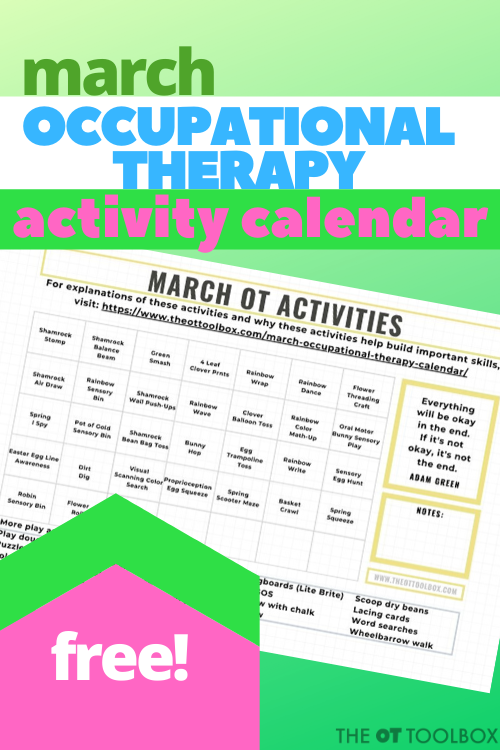
    Use a papasan chair in the classroom as a sensory seating idea for students.

    Papasan Chair– A papasan chair or a lounger seat is great for the classroom. Quiet reading or group learning can be calm and focused with a supportive and cozy seat. You can find a great price on these chairs in big box stores or on Amazon.

    A cube chair is a seating option that meets sensory needs in the classroom.

    Cube Seat- This cube seat is an option that provides support for the back and trunk while containing and providing a boundary for seated activities. This cube seat option is nice because it can be used in one direction as a low seat and flipped over to allow for a higher height or for use as a table writing surface with visual blocks when visual attention is an issue.

    Partially Inflated Beach Ball- Yes, it’s true. Grab a dollar store beach ball and blow it up just a little, so that the air in the beach ball provides a movable cushion. This seating system is appropriate for younger children, but it’s an option for testing out movement in the seat. You’ll find more about using a beach ball cushion in a previous The OT Toolbox blog post.

    Cheap flexible seating ideas for the classroom include  camp chairs, beach chairs, bean bags, and pillows.

    More Flexible seating ideas

    What are your best tricks and tips for adding movement to the classroom while meeting the needs of various students? Flexible seating in the classroom doesn’t need to be complicated. It doesn’t need to be expensive either! Stop back soon, because we’ll have a line-up of DIY flexible seating ideas coming your way very soon.

    Some of the ideas listed above are very budget-friendly, especially if you are able to find items second-hand or by upcycling items. Other budget-friendly seating options include using a cardboard box, cushions, or stadium seats, for example. We’ll have more budget-friendly seating ideas for you coming up soon!

    Budget-friendly flexible seating ideas include camp chairs, beach chairs, carpet spots, and more.