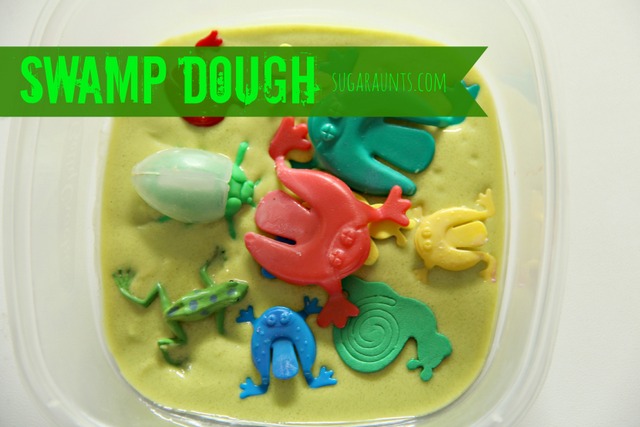
One morning we had some fun with our Goopy Dough and some swamp creatures. I added a green tint to the uncolored dough and threw in a handful of frogs, bugs, foam stickers. We also added the alligator from our Little People A to Z Learning Zoo Playset.
This goopy dough is great for hiding the little creatures and working on fine motor strengthening to uncover them. What a great sensory experience. This dough sticks to your fingers like goop does, but molds too. SO cool!
We had a fun morning before we were off to the park to continue our #parktour.
(Follow along on Instagram to see all of the stops on our parktour!)
This post contains affiliate ads for your convenience.
In case you missed last week’s post, we are teaming up with Jaime from Frogs and Snails and Puppy Dog Tailsin a Water Bin play series for the month of July. Did you see our Relaxing Lavender Water Bin we enjoyed last week? You can see all of ours and Jaime’s water bins and themes each week by checking back for more water play ideas.
We were very excited to play with the water bin from this week’s theme…
Island Water Play Activity
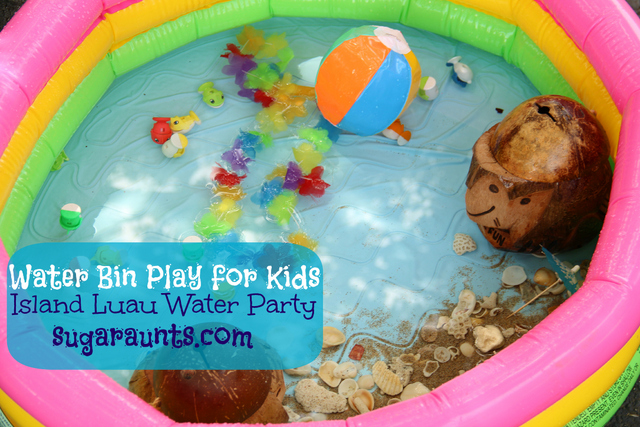
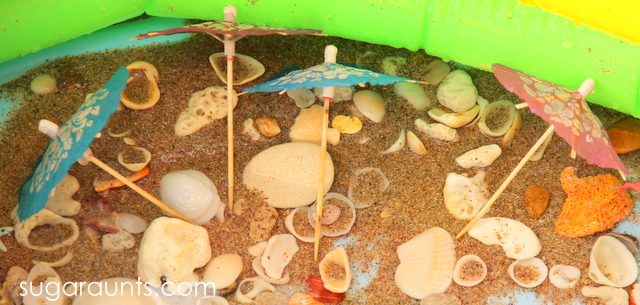
We used our mini blow up baby pool for this water bin. We added sand and seashells from our beach combing collection. I stuck in a few drink umbrellas. (Watch the little kids with these…or leave them out…) We have a couple of coconut piggy banks from a cruise we took years back. They added an island-y feel to our luau in the baby pool! Throw in a lei, a mini beach ball, and fish from an old (no longer working) fishing game.
Little Guy loved the addition of the coconut piggy banks. He thought of putting the seashells into the coin slot of the bank. Great fine motor fun and manipulation work!
We had fun playing with the shells, exploring the colors/textures/ sizes/features of the different shells. This was very relaxing and Big Sister, Little Guy, and I sat for a long time playing with this water bin.
This water bin really got us in the mood for the beach!
It was so much fun to catch the fish. Because the fish need the battery operated game to make their little mouths open and shut around the magnet, we needed to put the fish on the end of the rod. But we could still “catch” the fish and pull them up out of the water. Little Guy loved doing this.
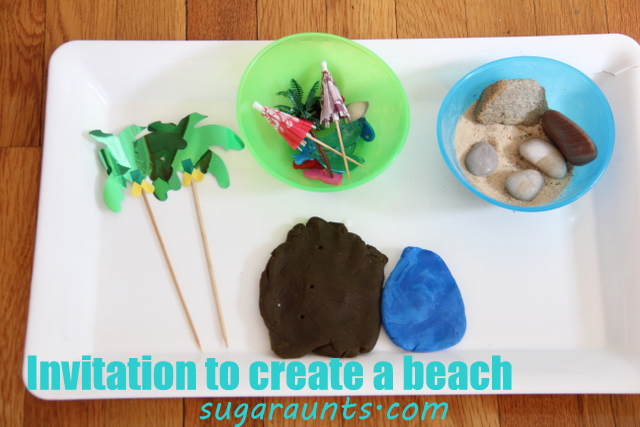
A little mini beach!
We had some water in fun glasses. And straws (straws always make drinks more fun, right??) The perfect addition to our little Luau Island Party 🙂
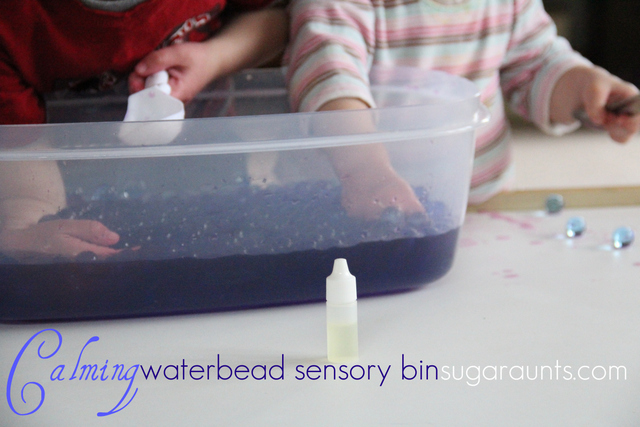
When it comes to playing outside, my kids seem to really love the basics. Some water, dirt, and flowers are the ingredients to messy sensory play that is just…fun! Here is one simple activity idea that uses what you’ve got in your yard. We used some dandelion flowers for a sensory activity that the kids couldn’t keep their hands out of. This tactile sensory idea is one that may challenge the sensory system, but one that is awesome for it’s fine motor benefits too. We added water beads to this sensory play idea but you could add whatever you’ve got in the house or keep it simple and use flowers, grass clippings, and water! Get ready to explore the senses right in the backyard!
Sensory Play with DandeLions
One Spring day, we used up a few of the thousands of dandelions that were growing in our yard and had a little (messy) fun.
We had water beads in a covered bin from a few other recent play activities:
…and added a bit of water, dandelions…instant spontaneous messy play.
The kids had fun running out to the yard, picking the flowers, and bringing them back to add to our “Dandelion Soup”.
Add a paper tube and empty water bottle and you get a little bonus fine motor play! And even though we did this back in the Springtime, this is totally a Summer activity too.
Disclosure: This post contains an affiliate link for your convenience.
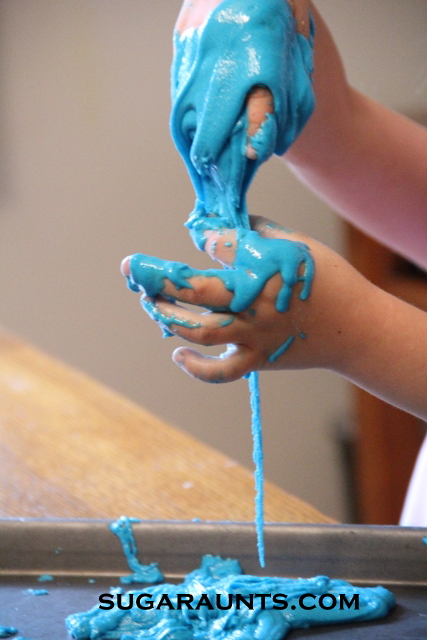
This was the coolest sensory play! It was play dough. And it was Goop. Combined!
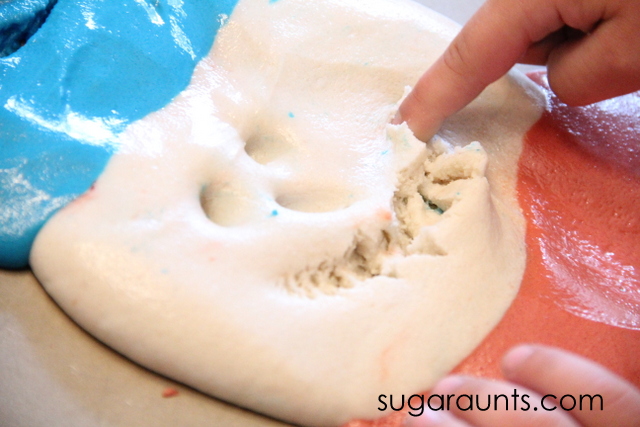
We were given a HUGE (uncolored) bag of extra homemade play dough one day after our day at Vacation Bible School. One of the VBS volunteers made this and I got a little information about it. It had flour and corn starch in it. I am on the mission to figure out the recipe for this one, so I can share with you…it was so much fun to play with!
The dough would stick together and mold, but slime apart like goop does. So neat!
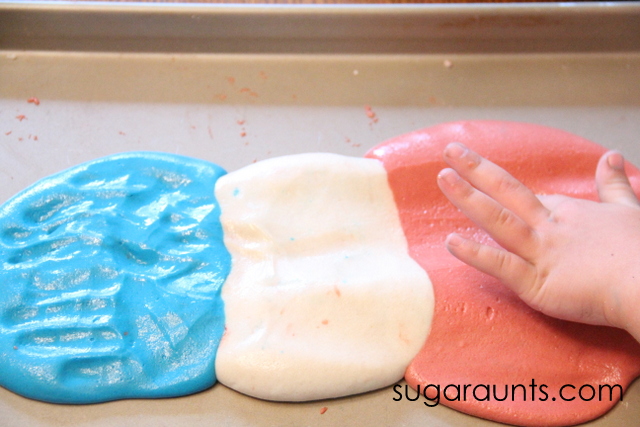
We added the red and blue colors to some of it and had a little
Patriotic Sensory Play!
We took the fine motor play a little further and cut up some patriotic looking straws into little bits. Perfect for tripod grasp!
We still have SO much of this stuff uncolored and ready for play ideas…Watch for another goopy dough post soon 🙂
We have big plans for our Summer Play series this month! You may have seen our post Play The Summer Away: Water Bin Play by The Sugar Aunts post last week where we let everyone know we are joining Jaime over at Frogs and Snails and Puppy Dog Tails in this fun water bin play series. Each Monday in July we are planning a different themed water bin. You will be able to see Jaime’s version and ours. We are very excited to see the two different versions of a same theme and by the end of July, share 10 different water bins with you.
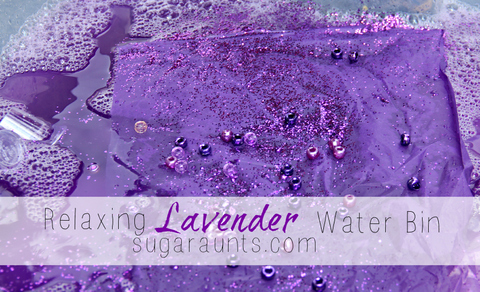
Relaxing Lavender Water Bin
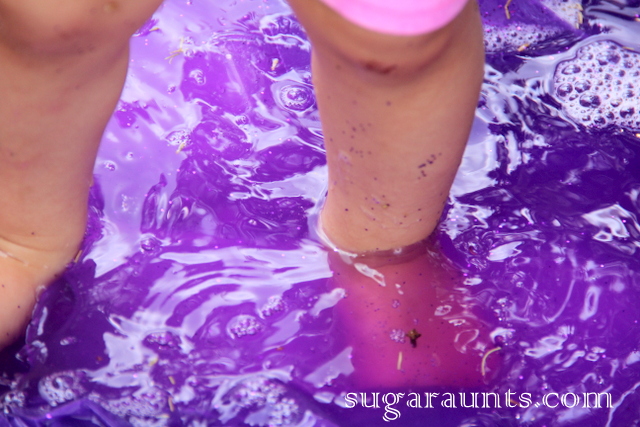
We started July off right with a Relaxing Lavender Water Bin.
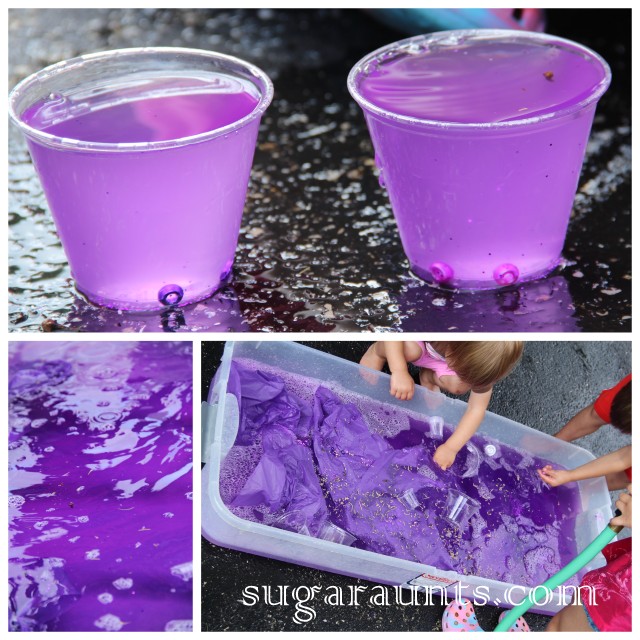
This was very easy to throw together:
water
purple finger paint
purple glitter
beads
scraps of purple plastic table cloths
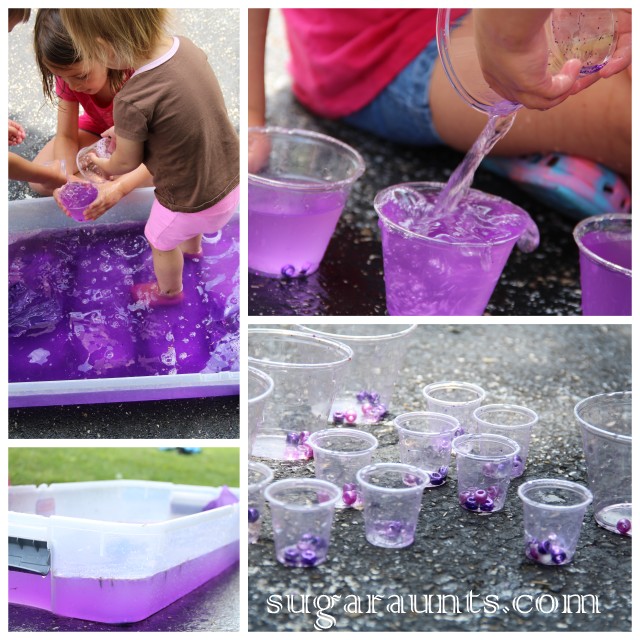
clear plastic cups for pouring and transferring…and scooping, and dumping…
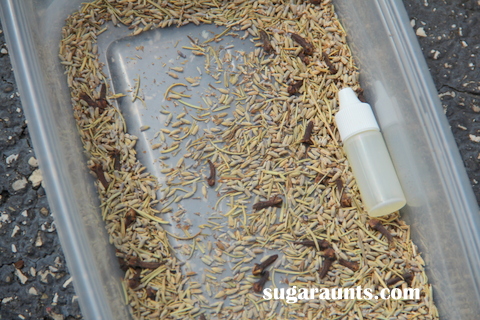
dried lavender/cloves/rosemary
and a few drops of lavender oil
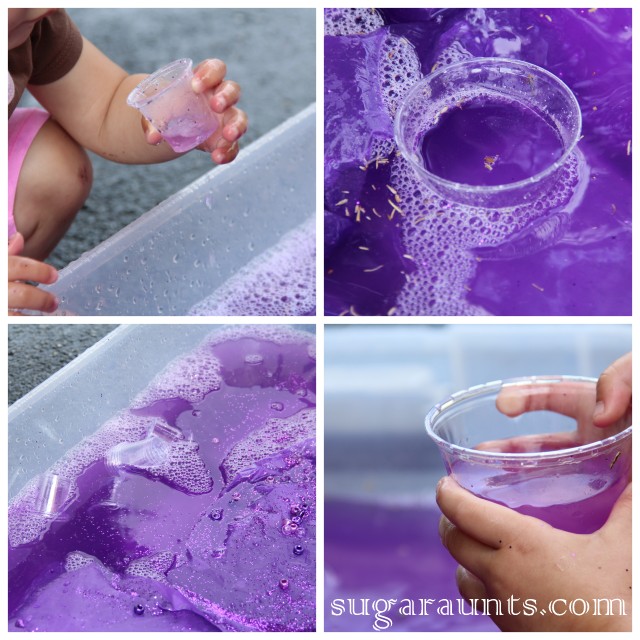
The scent was the best touch for this! Completely relaxing and we all played in the water loving the smell of lavender and cloves! We just used an under the bed storage bin and it was perfect for scooping and pouring the water. Baby Girl loved dumping the water, scooping it up, and pouring the purple water into cups.
We’ve used this storage bin before for water play and Baby Girl knows where the fun is…getting right in the water!
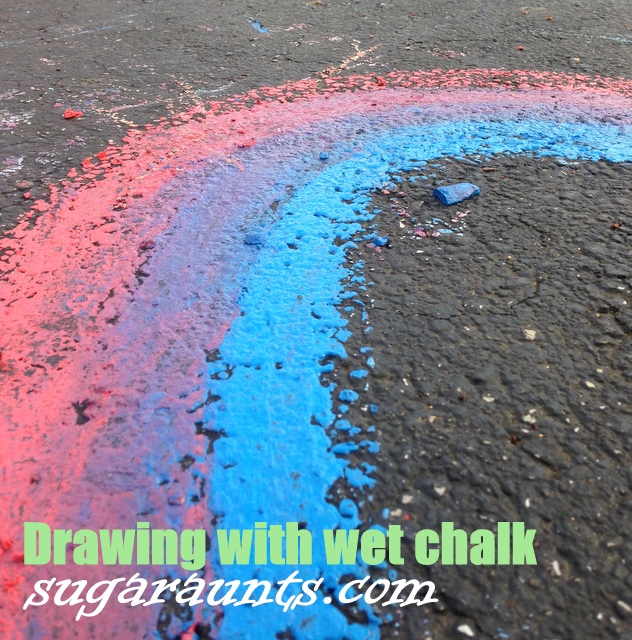
Drawing with wet chalk on a driveway is such a fun sensory experience for outdoor play and one that develops so many areas of gross motor skills, fine motor skills, and visual motor skills through sensory play. Drawing milestones like coloring with chalk is part of childhood but this driveway chalk activity builds many skills!
Wet Chalk
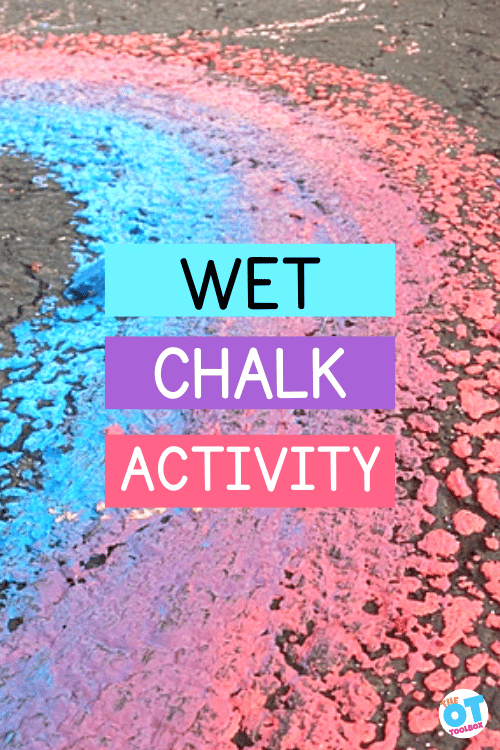
We played outside one cool morning and discovered something really fun…We had left a couple of pieces of chalk outside during an overnight rainstorm.
The texture of wet chalk is so cool! It smears on the driveway so easily and is the neatest texture. For children struggling with tactile defensiveness wet chalk is a great sensory experience because you can grade the dryness or the wetness of the chalk texture.
There was only red and blue that were soaked through, but they combined to make a pretty nice rainbow!
How to make wet chalk
There are several ways to make wet chalk to use on a driveway.
Soak driveway chalk in a bucket of water overight or for a few hours.
Draw with chalk on a wet driveway. After a rain works or spray the driveway with water from the hose.
Crush chalk into a powder and mix water into the chalk dust to create a messy, thick chalk paint. This liquid chalk paint recipe explains more on this strategy.
You can select the wet chalk method that works best for you!
Once you have your wet chalk created, you can get started with the chalk art.
Wet Chalk Activities
We’ve created a list of chalk activities here on the website before so any of those ideas would work. But if you want to explore development of other skills, try these wet chalk activities:
Make a chalk rainbow
Make a driveway obstacle course
Create letters and use a wet-dry-try method of writing the letters
We played with this for a while…the chalk drawing even started to dry on the driveway.
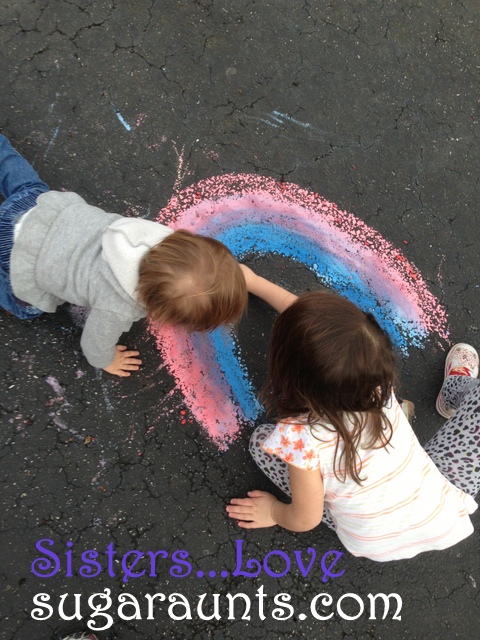
I LOVE this picture!
Baby Girl loved this messy play. She got her hands right in there and covered them with the chalky mess.
Outdoor Sensory Play
What a great sensory experience! Check out how Baby Girl is on her hands and knees…She’s putting weight through her upper body and down to the hands, and strengthening her shoulder girdle which is so important for fine motor dexterity. All this while exploring the texture of the chalk, manipulating little pieces of chalk, and having fun with her sister!
We kept tracing over the rainbow lines until the chalk became so small…great for working on that tripod grasp!
Big Sister was really aware of the lines of the rainbow when she was tracing. This is fun for a new hand writer who is learning to place letters on the lines of paper ((line awareness)).
Tracing the big arch of the rainbow allowed her to cross midline on a fun activity. Why do kids need to cross midline?? One reason is so that hand writers efficiently allow the dominant hand to do the work during handwriting while moving left to right across the page in a smooth manner.
And of course, you MUST add raindrops to the rainbow 😉
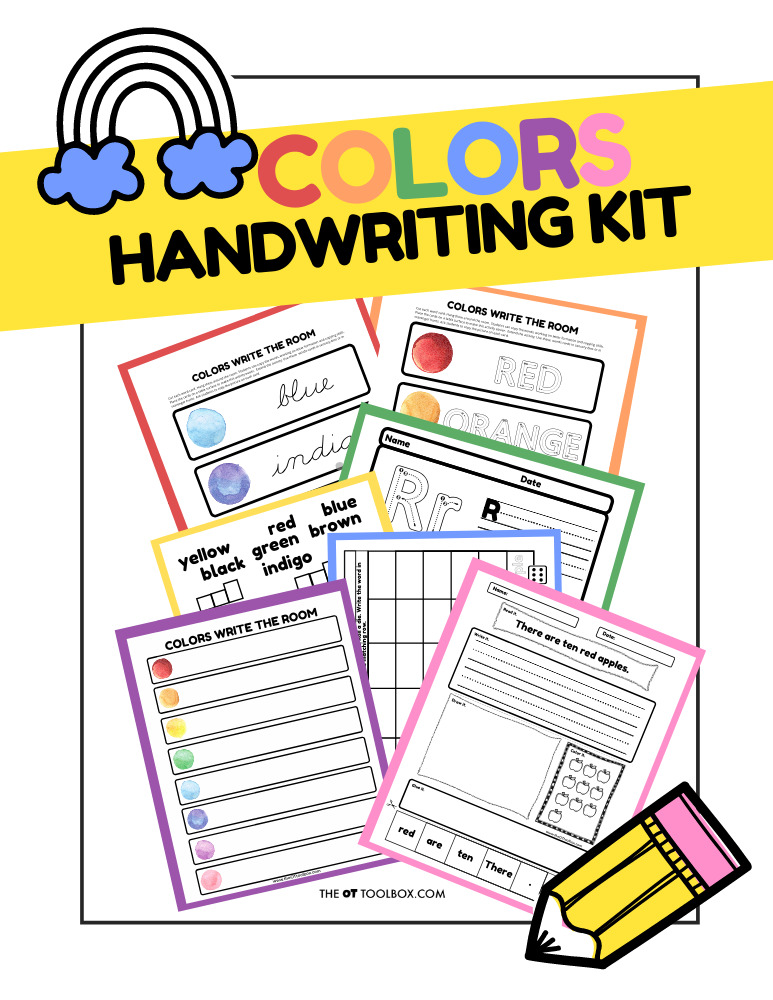
Rainbow Handwriting Kit– This resource pack includes handwriting sheets, write the room cards, color worksheets, visual motor activities, and so much more. The handwriting kit includes:
Write the Room, Color Names: Lowercase Letters
Write the Room, Color Names: Uppercase Letters
Write the Room, Color Names: Cursive Writing
Copy/Draw/Color/Cut Color Worksheets
Colors Roll & Write Page
Color Names Letter Size Puzzle Pages
Flip and Fill A-Z Letter Pages
Colors Pre-Writing Lines Pencil Control Mazes
This handwriting kit now includes a bonus pack of pencil control worksheets, 1-10 fine motor clip cards, visual discrimination maze for directionality, handwriting sheets, and working memory/direction following sheet! Valued at $5, this bonus kit triples the goal areas you can work on in each therapy session or home program.
Many years ago, we made a creative ocean and beach small world play activity and it was a Summer hit! Whether you are looking for activities to keep the kids busy at home through hands-on, sensory play, OR if you need Summer occupational therapy activities to use in skill-building, a beach small world is a fun way to play!
Beach Small World Play
Creating a beach small world using miniature animal forms and homemade colored sand can be a fantastic sensory activity for children.
It doesn’t take much to create a small world, and the benefits are huge:
Imagination and Creativity: Small world play encourages children to use their imagination and create their own narratives and scenarios. They can invent stories, develop characters, and build unique worlds, fostering their creative thinking skills.
Language Development: Small world play often involves storytelling and dialogue, which helps children enhance their vocabulary, expressive language skills, and communication abilities. They can practice describing objects, expressing emotions, and engaging in role-play, leading to improved language development.
Problem-Solving and Critical Thinking: When engaging in small world play, children encounter various challenges and obstacles. They learn to think critically, problem-solve, and find solutions to overcome these challenges, fostering their cognitive skills.
Fine Motor Skills: Manipulating and arranging small objects in a small world setting requires precise hand-eye coordination, dexterity, and fine motor skills. Children practice grasping, pinching, and manipulating objects, which can enhance their fine motor abilities.
Social Skills and Cooperation: Small world play often involves collaboration and cooperation when children engage in shared storytelling or role-playing scenarios. They learn to take turns, negotiate roles, and collaborate with others, promoting social skills and teamwork.
Emotional Expression: Small world play provides a safe and controlled environment for children to express their emotions and explore different feelings through their play narratives. They can process and make sense of complex emotions, develop empathy, and practice emotional regulation.
Sensory Stimulation: Small world play often incorporates sensory elements, such as sand, water, or different textures. Engaging with these sensory materials stimulates children’s senses, promotes sensory exploration, and contributes to their sensory development.
Knowledge Acquisition: Small world play can be a great tool for learning about different concepts and subjects. Children can explore nature, geography, history, and various themes as they create their miniature worlds, leading to knowledge acquisition in a fun and engaging way.
How to make a beach small world
With a bit of imagination, parents can transform a small tray or container into a mini seaside paradise.
You’ll need to first gather just a few items to make a beach small world activity:
Animal figures: seagulls, crabs, and dolphins, fish, or other animals
Tray or Container: Select a shallow tray or container that is large enough to hold the materials and provide a play space for your child. It can be a plastic tray, a wooden box, or any other suitable container.
Sand: Use play sand or kinetic sand to create the beach or ocean floor. You can also dye the sand using food coloring like we did to make our homemade colored sand
Water: Incorporate a small amount of water into your small world setup to represent the ocean. You can use a separate container for the water or create a section within the main tray for a shoreline or shallow water area.
Rocks and Shells: Gather some small rocks and seashells to create a more realistic beach or coastal environment. You can collect these from a local beach or purchase decorative ones from a craft store.
Plants and Foliage: Consider adding some greenery or beach vegetation to enhance the sensory setup. You can use fake or dried plants, small artificial trees, or even real seaweed (if available and safe to use).
Tools and Utensils: Provide some child-friendly tools and utensils for scooping, digging, and creating patterns in the sand. Small shovels, spoons, sieves, and rakes can be used to enhance the sensory experience and encourage fine motor skills.
Optional Accessories: Depending on your preference and the space available, you can include additional accessories like toy boats, small beach umbrellas, mini beach chairs, or even a small plastic container to mimic a tidal pool.
As children manipulate the sand, feeling its texture and watching it flow through their fingers, they enhance their sensory development.
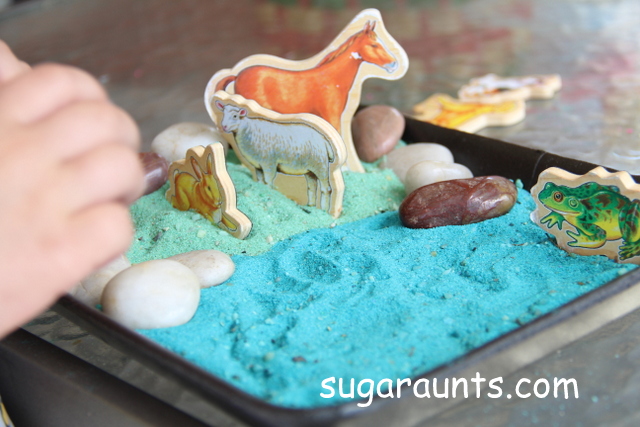
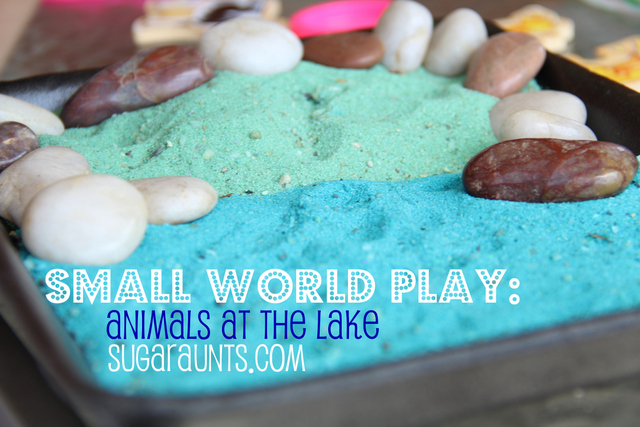
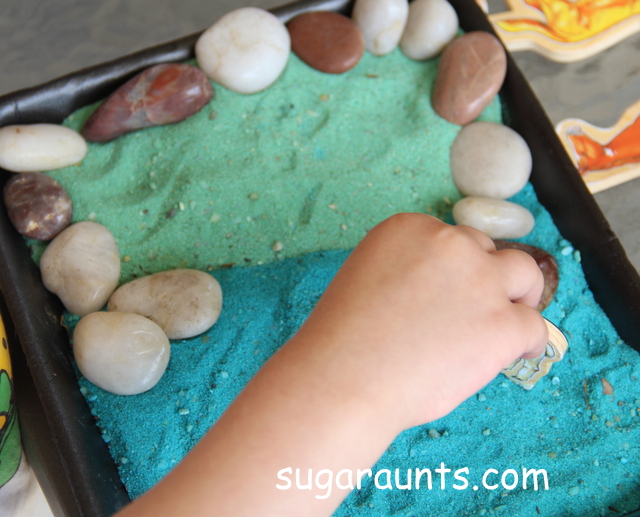
We used our DIY Colored Sand to do a little pretend play one rainy afternoon.
We used our refrigerator farm animal magnets and had fun with our pretend lake. Once you know how to make colored sand, you can use it for so many sensory bin activities!
It was a fun day at the lake 🙂
The bunny went swimming…
And the temptation was too great…we HAD to mix the two colors of sand together.
Looking for more ways to have fun this Summer? Grab a copy of the Summer Kit!
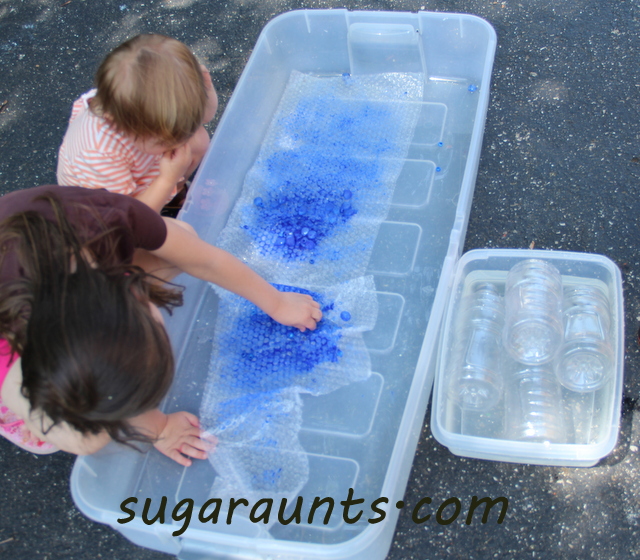
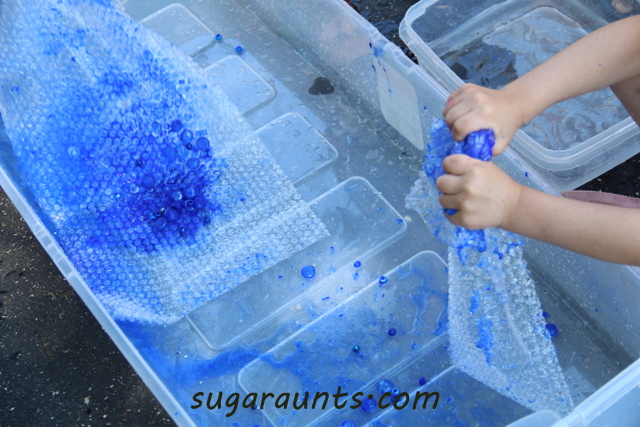
This is part 2 of a two-part outdoor messy play activity. If you missed part one, Sensory Paint Play(Part1) was very fun…Check it out! We left the bubble wrap/blue paint dry right in the bins overnight.
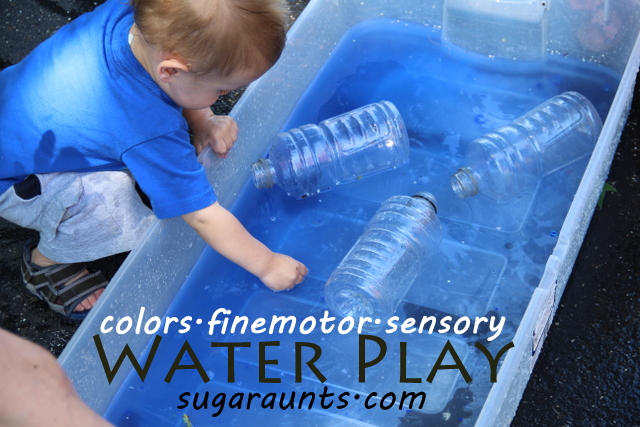
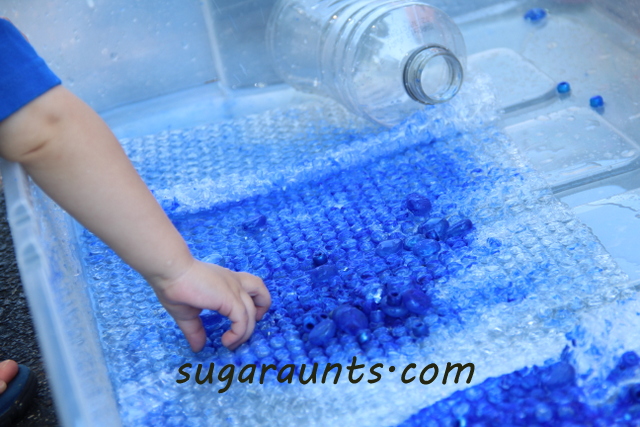
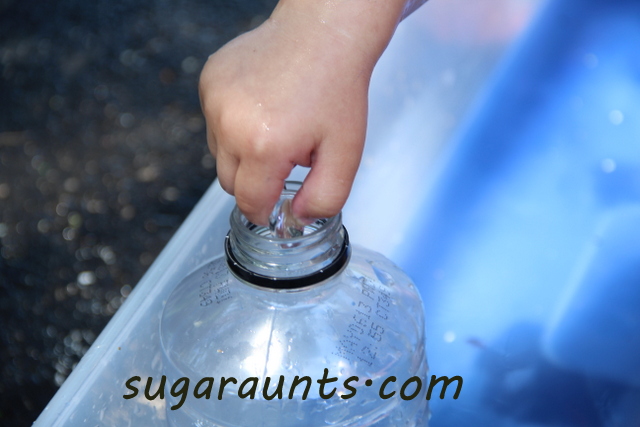
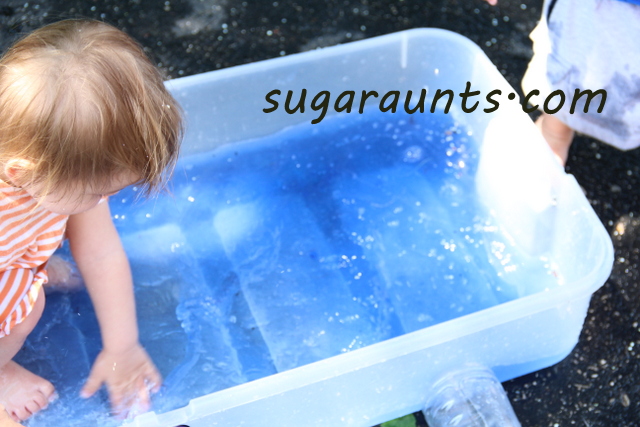
The next day was another super hot and sunny day. Add a bin of water and some empty plastic bottles, and let the fun begin.
Sensory Play
The paint-y, texture-y, messy play returned when the water was added.
Plus, it’s just fun to pour water from bottles.
And put the bottles on your head, of course.
What a fun sensory play experience!
Fine Motor Play
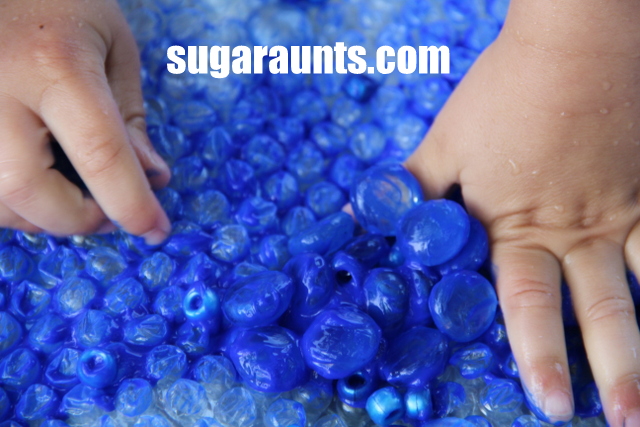
Baby Girl thought it would be pretty fun to drop the gems and beads into the plastic bottles. She did this for a LONG time. That little ‘bonk’ sound was pretty cool!
and, such a great fine motor task.
{{LOVE this picture!}}
Colors
When all of the water was added, we had a blast on this 85 degree day in our BLUE water bin!
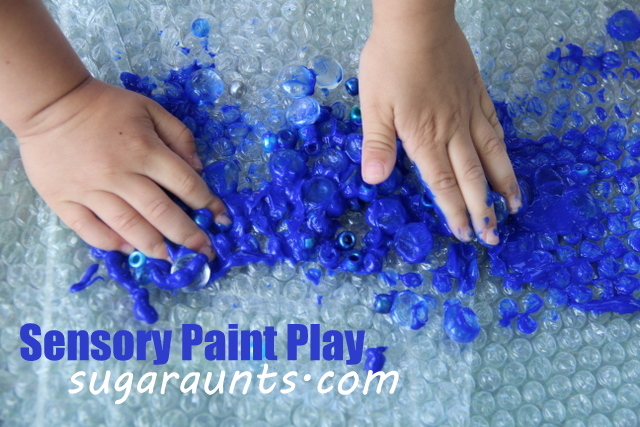
This sensory paint activity used bubble wrap for a wonderful tactile experience. We loved to feel the bubble wrap sensory activity. Kids can use this as a way to work on sensory touch and tactile defensiveness, or just for fun, creative painting!
Sensory Paint
This sensory paint idea is easy. You’ll need just a couple of items:
Paint
Bubble wrap
Paper to press onto the bubble wrap
How to do this bubble wrap sensory play
When you get a package in the mail that has bubble wrap, it’s a special day! After some jumping and a little popping, we used the bubble wrap in a fun sensory play activity.
Finger paint, and a handful of beads, and glass gems made this extra special.
This sensory painting activity is a great activity for sensory exploration. Add it, along with this rubber duck painting activity to your painting ideas!
This was SO much fun! Perfect outdoor play for a hot day.
Don’t you just want to get messy and play with this???
It was such a neat sensory experience…and very BLUE. After we were done playing, we squirted the kids off with the hose. I left the blue bubble wrap, beads, and everything right in the bin until the next day. I had plans…
*stop back tomorrow to see what we did the next day after the whole mess dried!*
UPDATE: Here is the post for the next part of this two-day sensory play activity…PERFECT for a hot, sunny, outdoor messy play day! Fine Motor/Sensory/Water Play (Part 2)
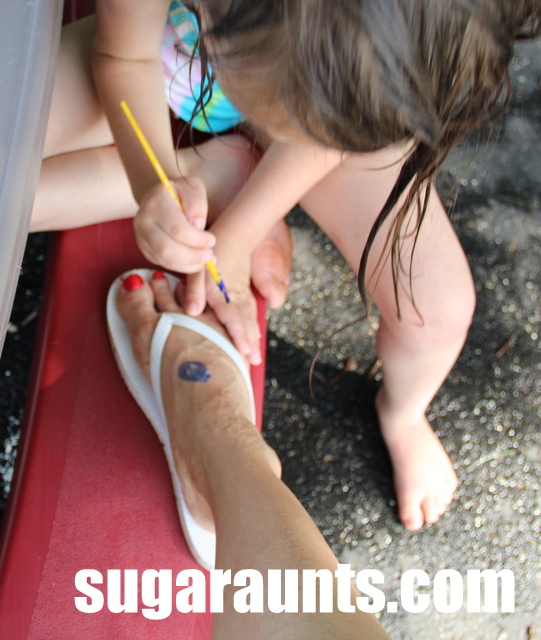
We did use a little of that wet blue paint for some face painting. Big Sister gave me a nice smiley face on my foot 🙂