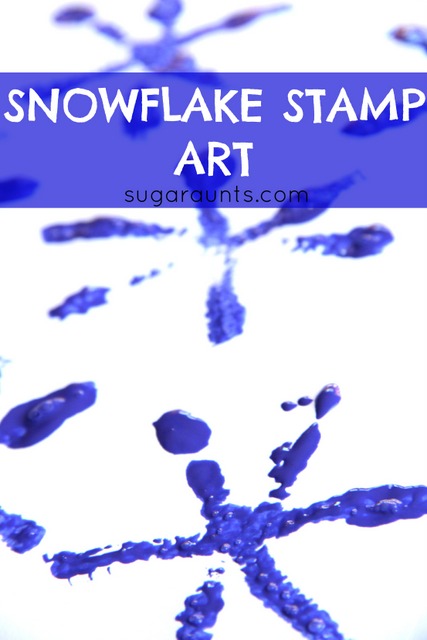
Winter Snowflake Stamp Art

snowflake art
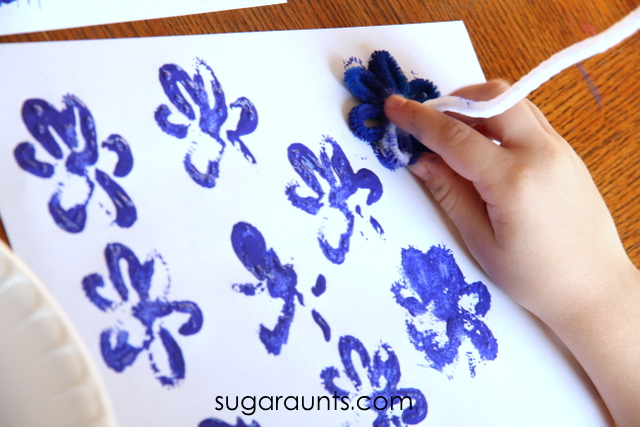
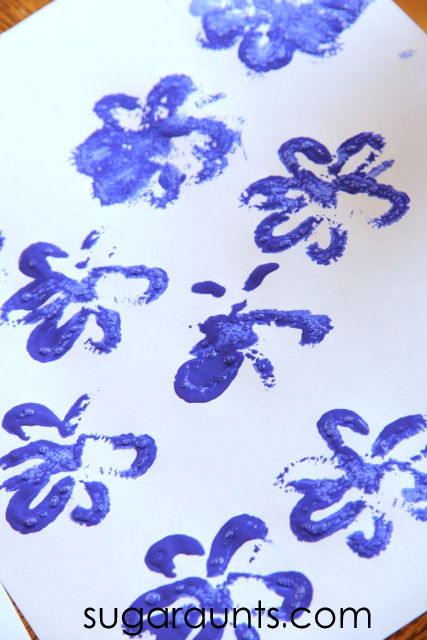
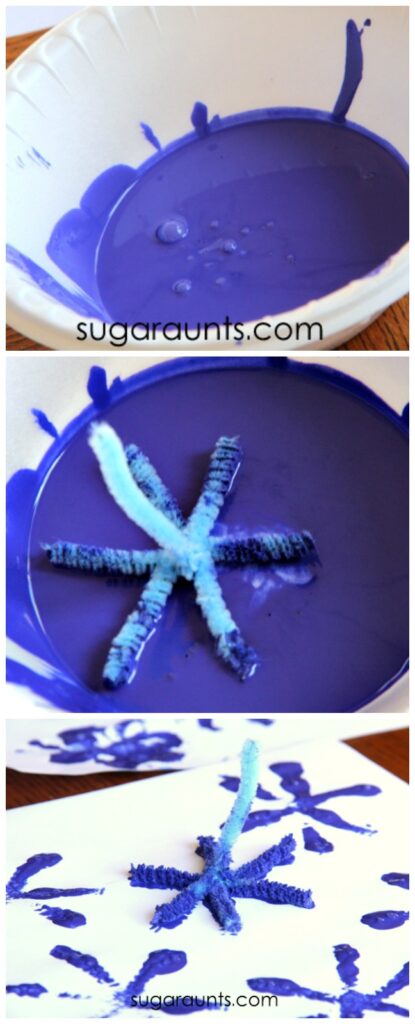
Kids love stamp art.  Using a tool to press paint onto a surface is therapeutic and creative.  You can press down hard or lightly, overlap stamps, add colors, or just make a simple stamp.  There’s a lot of process to creating with stamps and you can use so many objects!  We’ve stamped with potatoestoilet paper tubesstyrofoam, and even hair rollers.  These winter snowflakes use pipe cleaners and the result is wintry and beautiful!
 
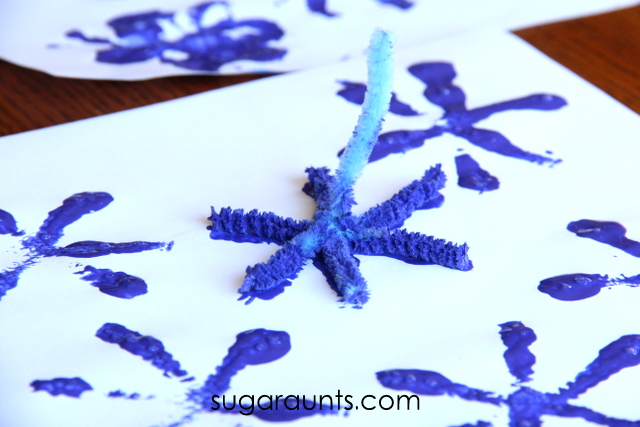
Snowflake stamp art with pipe cleaners and blue paint. This is a great winter craft!


Winter Snowflake Art with Pipe Cleaner Stampers

 This post contains affiliate links.  

 
This is a pretty easy set up for an art project.  We used just a few materials:
easel paper (this pad gives you a nice big surface for creating)
bowl for the paint
 
 
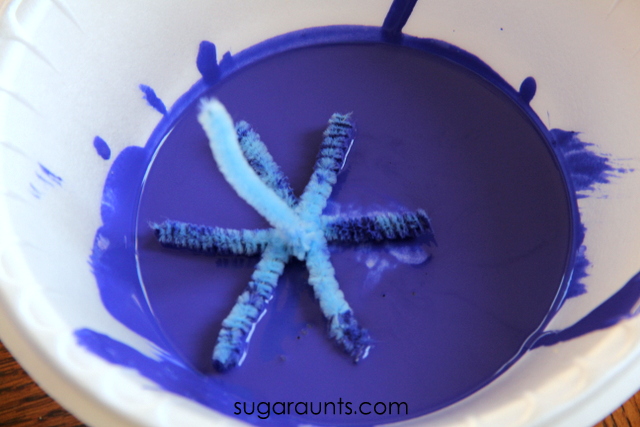
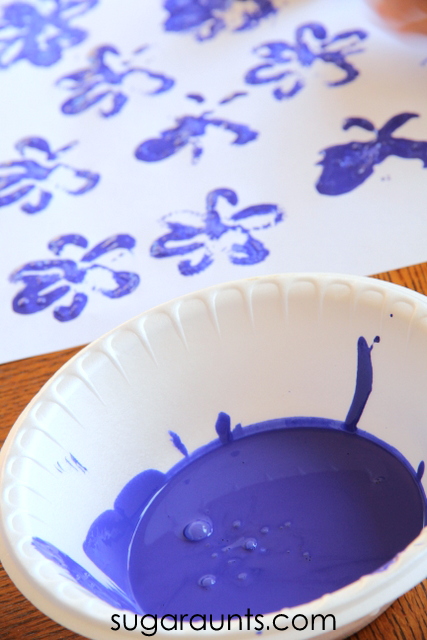
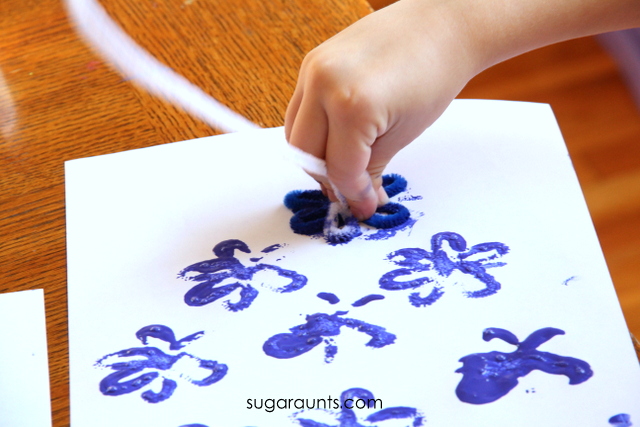
I twisted a couple of pipe cleaners into a snowflake shape with one piece sticking up for a handle.  You can experiment with the shapes.  We did a flowery shaped snowflake, too.  (This would also make a great spring craft in a few months!)
 
 
Pour the blue paint into a bowl.  I LOVE this paint for it’s bright colors that don’t fade or flake once they dry.  It’s a great paint for preserving little one’s works of art.
 

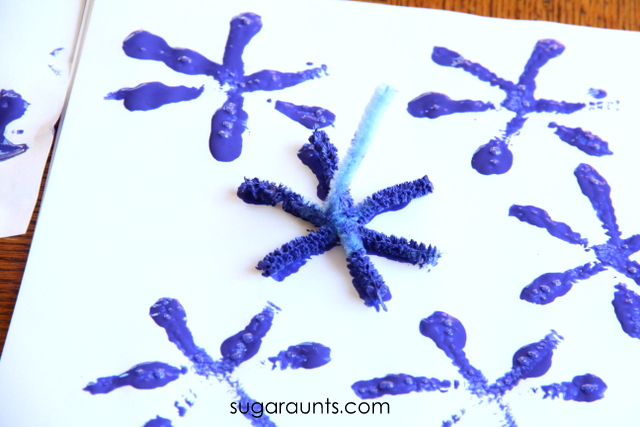
And now it’s time for stamping.


Big Sister was so happy that she had a day off from school and got to do a craft with us.  We need to do more after school art work as a wind down from full days at school.  She loved making this stamp art and did page after page after page…

Make snowflakes art with pipe cleaner stamps.


Be sure to let us know if you make this snowflake art project.  You might be interested in more stamping activities:


What to Do With the Kids in Winter

The cold weather is upon us!  If you’re in the freezing temps with scarves and gloves or in warmer environments, winter play and learning is fun for the kids!  We love the ideas shared in Share It Saturday this week, from snowman books to crafts, to science and art. This round up of ideas will keep you occupied all winter long!


winter learning and play activites for kids.

Winter Activities for Kids

Snowman Picnic from Growing Book by Book

Snowman Books from Planet Smarty Pants
Snowman Listening Game from Pre-K Pages
Non-Fiction Snowflake Books from Brain Power Boy
Marshmallow Snowman Craft from Krafts and Kiddos
Winter Craft ideas for Middle Schoolers from Tina’s Dynamic Homeschool Plus


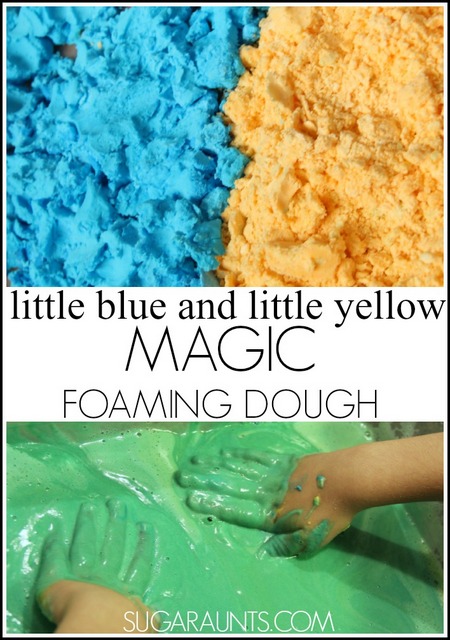
Little Blue Little Yellow Magic Foaming Dough

Oh, how we love sensory play activities!  From water bin play to soda dough, we love to get messy and learn through the senses.  We decided to give magic foaming dough a try, and oh boy.  Was this ever fun!  This crumbly dough is moldable, soft, and the best part is the magic.  It brings a little science into the sensory play while entrancing the kids with the foaming, goopy, messy fun.  (This post contains affiliate links.  We received a free book to complete this post. Our opinions are our own.)
 
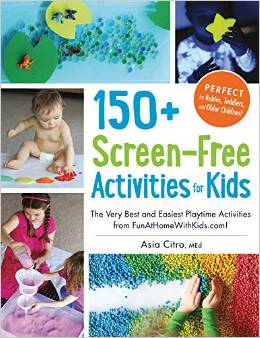
We were honored to review Asia Citro’s new book, 150+ Screen-Free Activities for Kids and check out all of the best and easiest play time activities.  We really had a blast with our Magic Foaming Dough, but the pictures in this book really drew us in.  The kids kept pointing at each page  and saying, “OOOOh, let’s do that!” There are over 150 activities in the book that help develop creativity and skills…all without a screen.  I loved the easy directions and the fact that activities were budget friendly.  This would be a great gift idea for parents to keep kids engaged, entertained, and learning.


Magic Foaming Dough Activity for the book, Little Blue and Little Yellow:

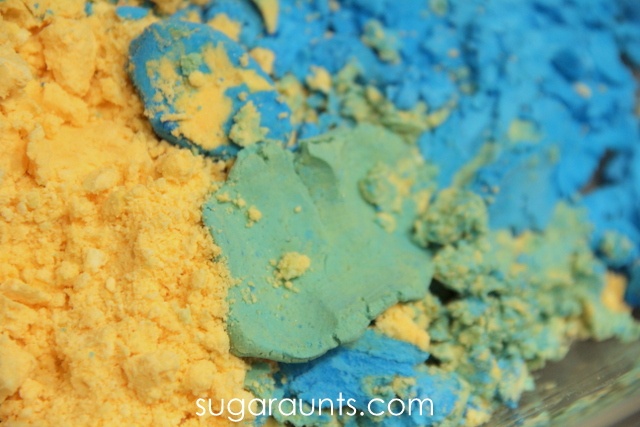
Magic foaming dough to explore the book, Little Blue and Little Yellow
We’ve done a sensory activity to explore Little Blue and Little Yellow using Kool Aid puffy paint before so when we made this foaming dough, we were ready for the color mixing fun.

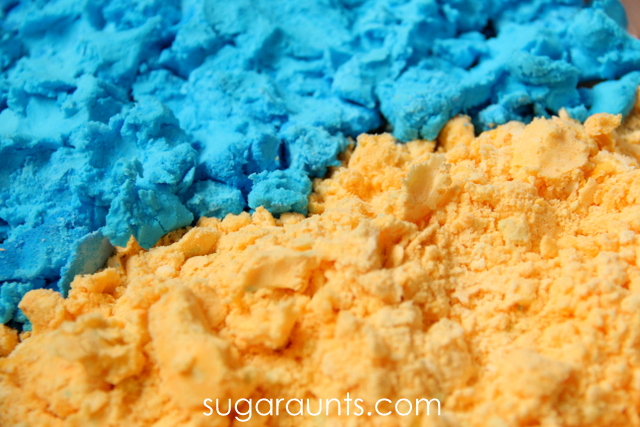
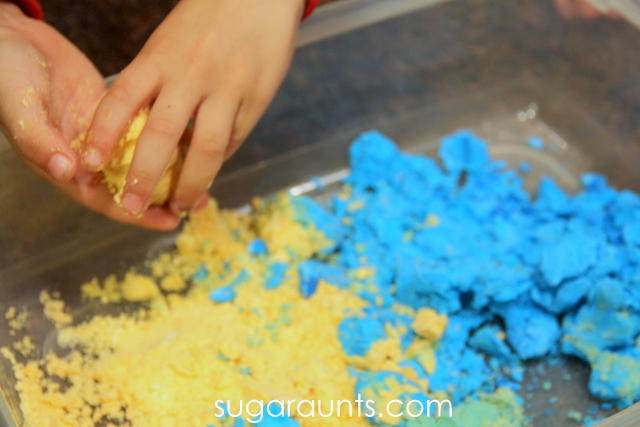
We whipped up a batch of magic foaming dough, following the easy directions in the book.  We separated the dough into two bowls and added blue food coloring to one bowl and yellow food coloring to the second bowl.   These colors looked great next to each other.

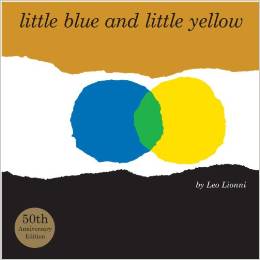
Like the directions said, it was dry and crumbly, but completely moldable.  We explored the colors and like in  Little Blue and Little Yellow, we pretended some of the yellow moved over to the blue, and vise versa.

The kids had fun guessing what color blue and yellow make when combined. (Baby Girl’s guess of It makes PINK!” was received by groans from Big Sister and Little Guy.  ((Guess we need to work on the color mixing with Baby Girl…haha!))

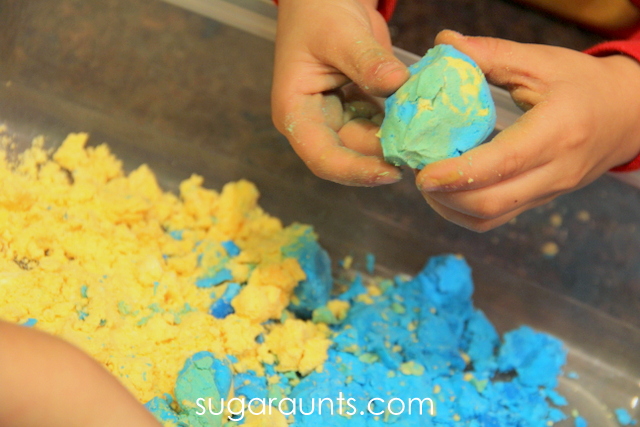
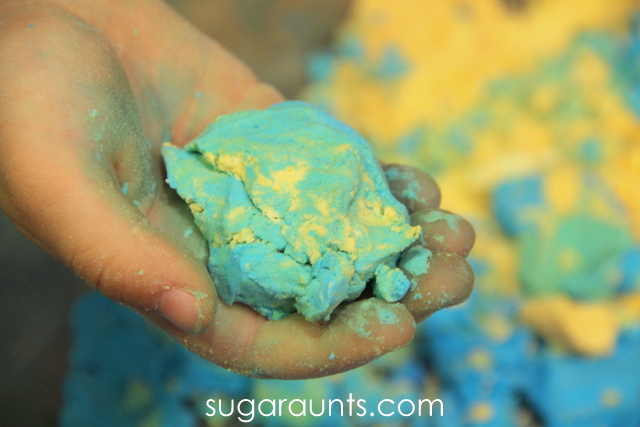
“Look it makes GREEN!”

Little Blue and Little Yellow made Little Green.

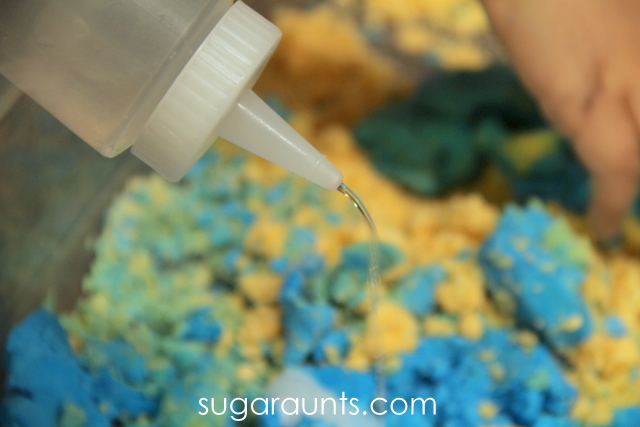
After the kids played for a while, I told them I had a surprise to make this dough magic.  They were SO completely excited!  I gave them a squirt bottle of vinegar.  (Icing squeeze bottles work really well for this part!) …and the magic begins!

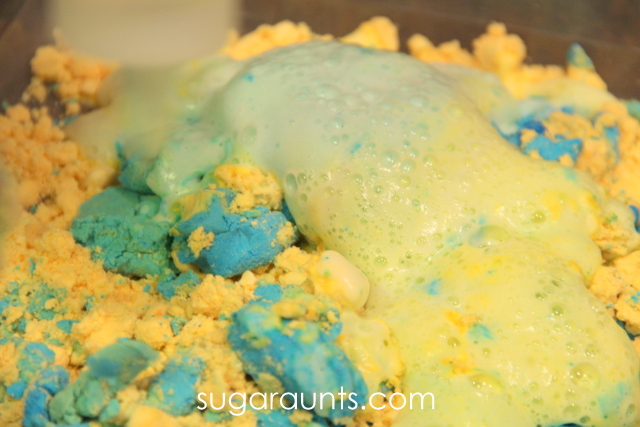
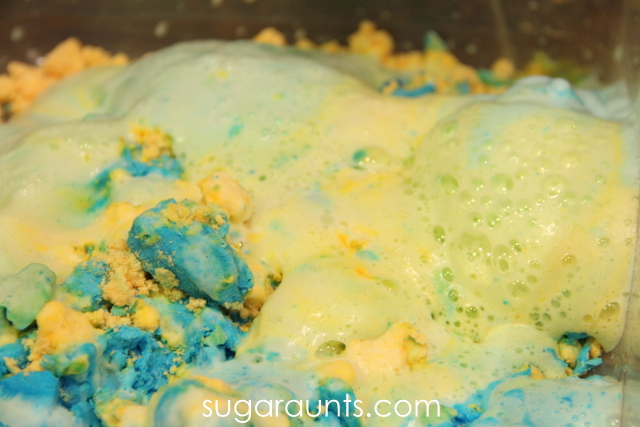
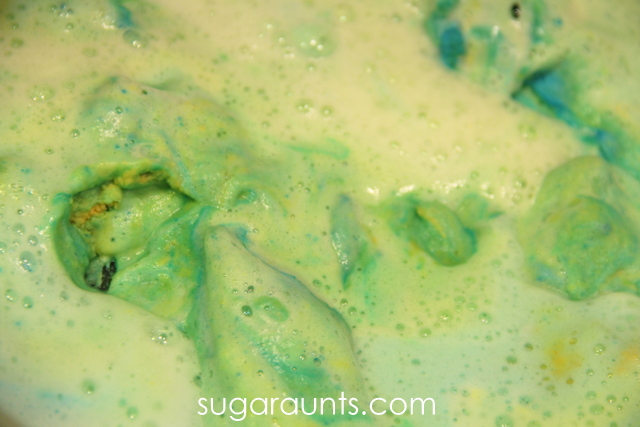
It was really neat to see how much this dough foams up.  I wasn’t quite expecting such a reaction, but it turned out to be pretty magic for mom, too 😉

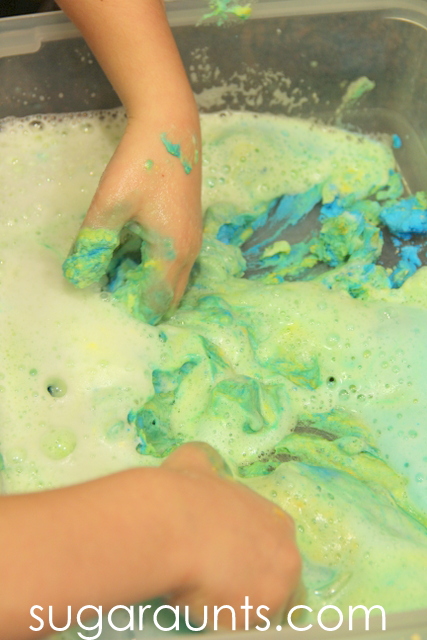
It was pretty cool to see the foaming yellow, blue, and green in different areas of our bin.


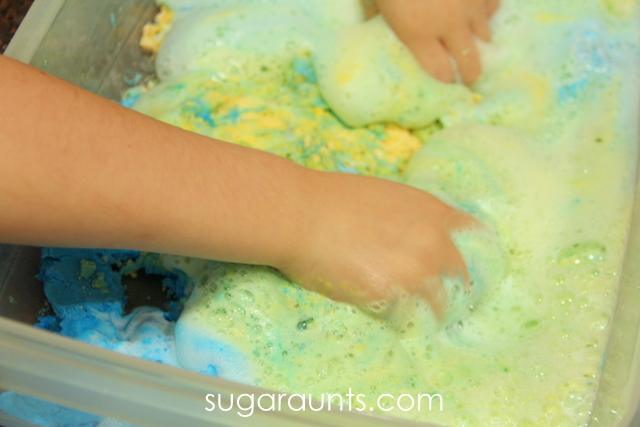
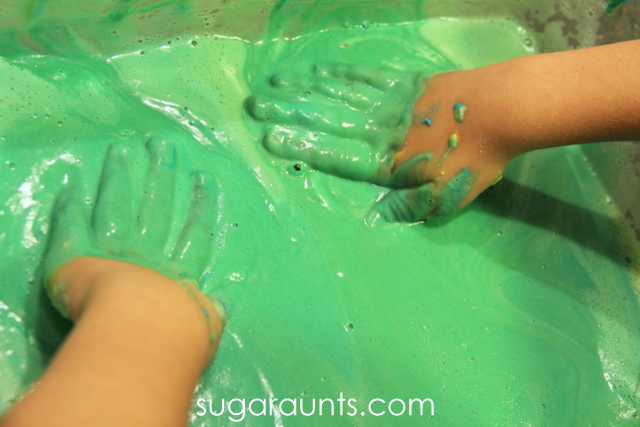
We had to get our hands in there to play.  Big Sister looooooved this!  She mixed up the colors even more to make a vivid green color.

She kept saying, “I love this stuff! I love this stuff!”


Even when the bubbles died down, it was still super fun to play with.  The mixture turned into a silky smooth goopy sensory bin.  We really found out what happened when little blue and little green gave each other a hug.  Just like in the book 🙂


For the recipe to make Magic Foaming Dough, get the 150+ Screen-Free Activities for Kids book.  You won’t regret it!

Mix It Up Fingerprint Candle Craft

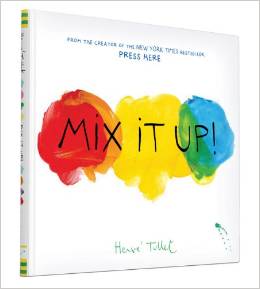
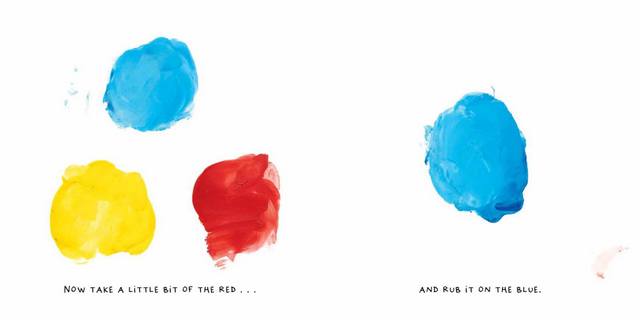
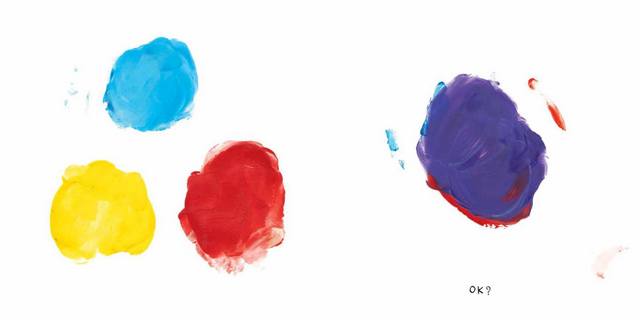
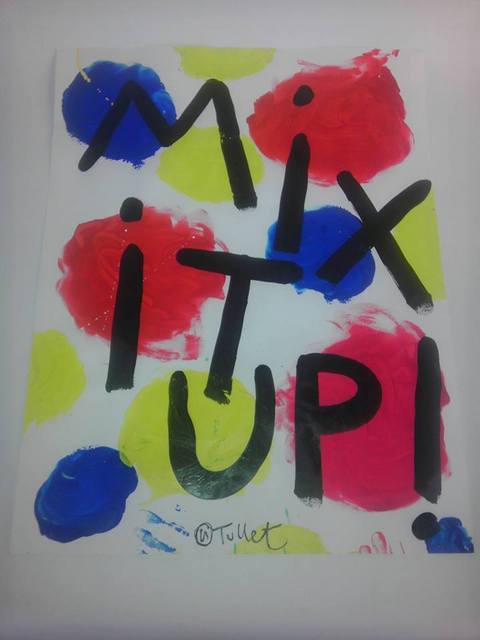
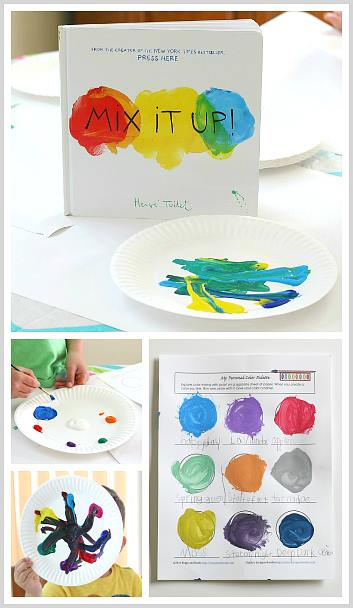
Have you introduced the kids to books by Herve Tullet?  Not too long ago, we read Press Here and made a fun sensory shaving cream bin to go along with the colors and active interaction the book inspires.  When we were given the chance to review Herve Tullet’s newest book, Mix It Up!, we jumped at the chance.  Tullet’s books are colorful, bright, inspiring, and FUN!
Take a peek inside Mix It Up!  :
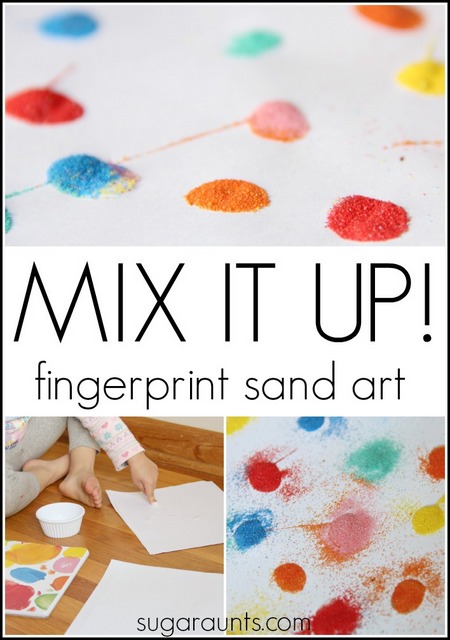
We loved the active learning and color mixing in Mix It Up!  The pages inspire readers to get involved with the book, mixing colors to make new colors, and then to go off and create.   We decided to make sand fingerprint art and mix up our own colors using colored sand.  We made art and a colorful candle holder craft that would make a great DIY gift.


Mix It Up!
Art and Craft

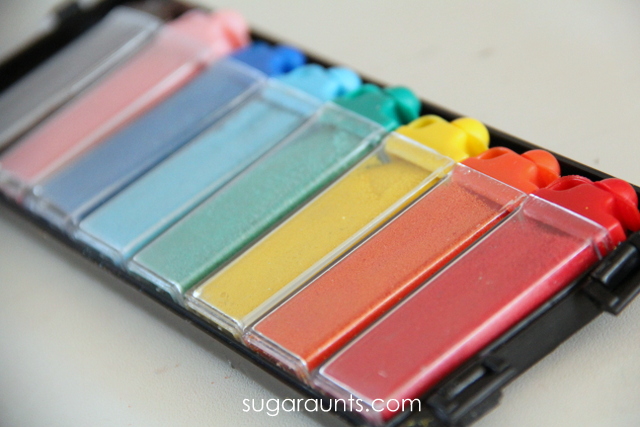
The book has colors everywhere, so when we pulled out our rainbow of sand.  We were handed down this set, but any rainbow sand set would work for this activity.

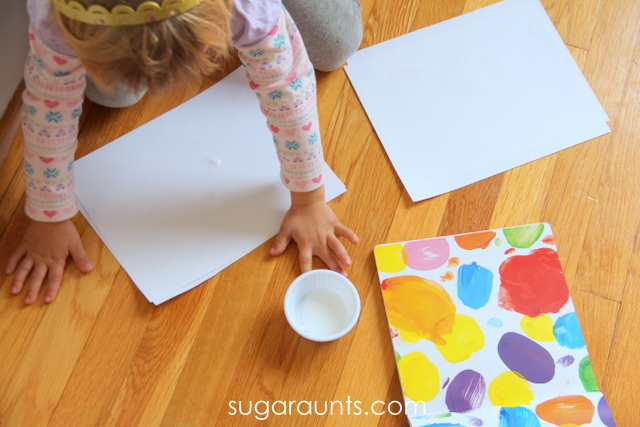
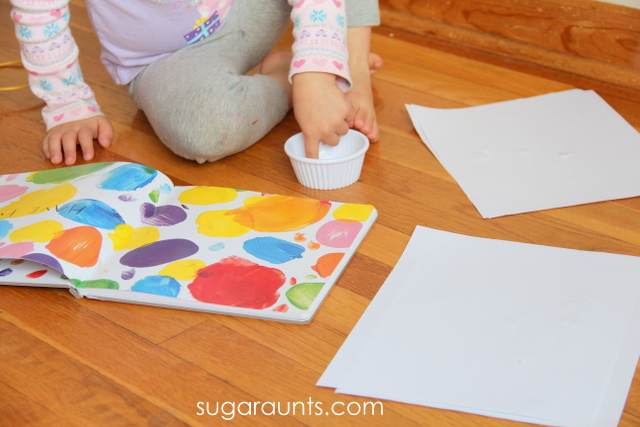
We spread out the book on the floor as inspiration and got started.  Baby Girl used a little tub of glue to make glue fingerprints on white paper.

This part of the activity alone was mesmerizing for her.  She made dots all over the page just like the dots and fingerprints in the book.

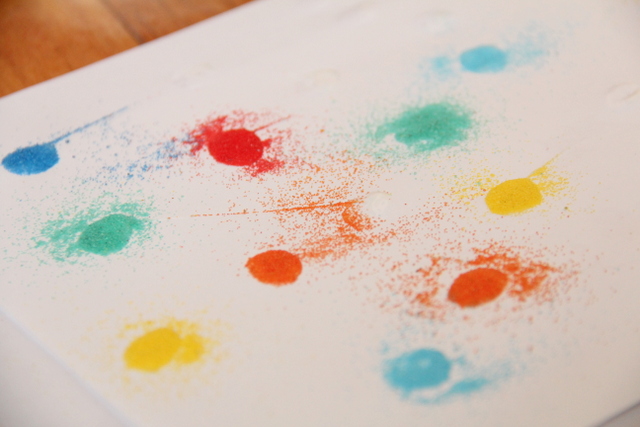
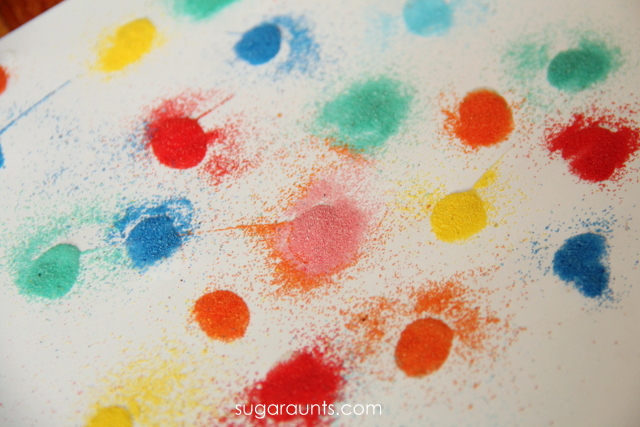
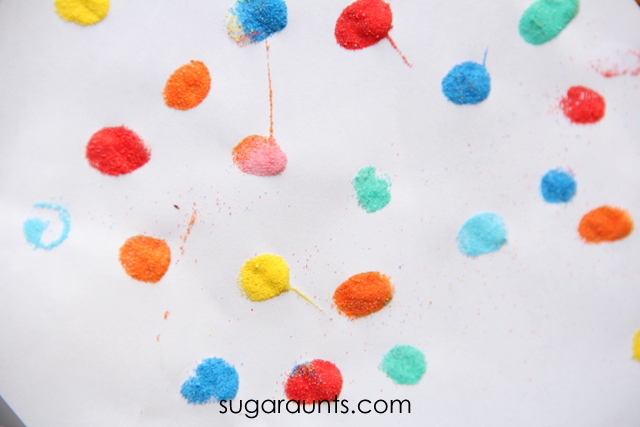
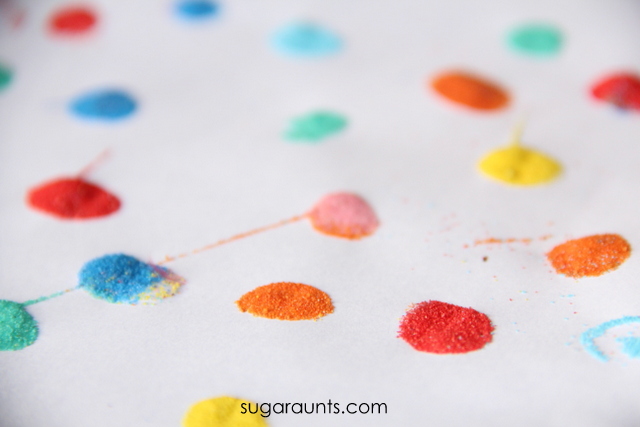
Now for the fun part!  We added color to the glue fingerprints and started with solid colors.  How beautiful is this rainbow of fingerprints?

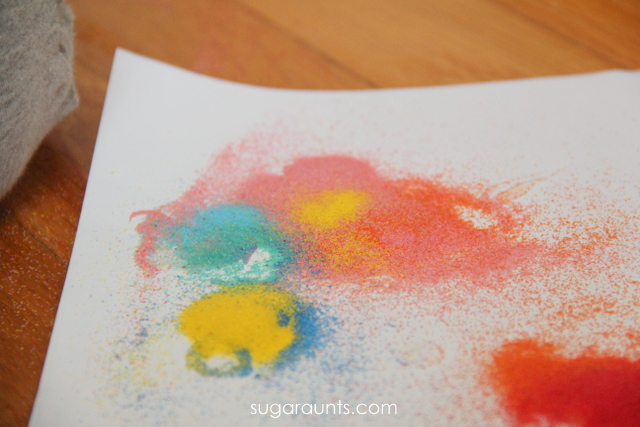
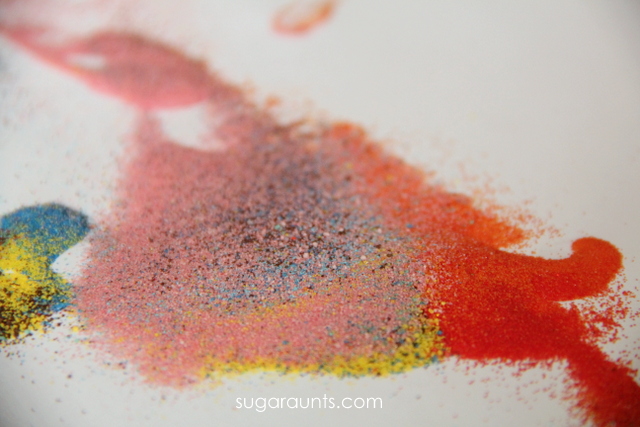
Then things got interesting!  We added dabs of color and mixed up the different colored sands to make different colors.

We really did Mix It Up!


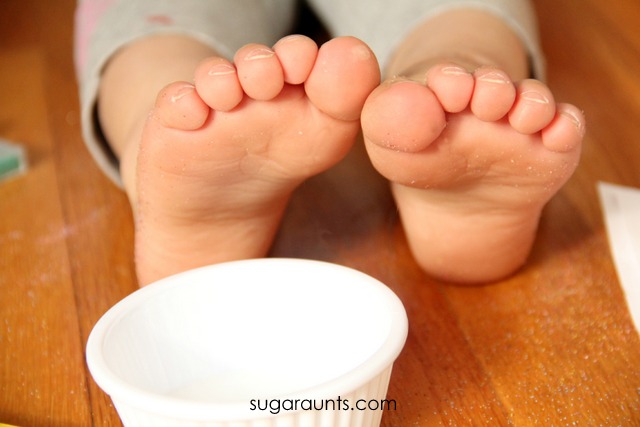
Baby Girl wanted to do footprints with glue, too but we decided our glue tub was too little for whole feet.  She ended up making toe prints with glue instead.

After practicing with fingerprints on paper, we moved onto our candle holder craft.


Fingerprint Candle Holder Craft


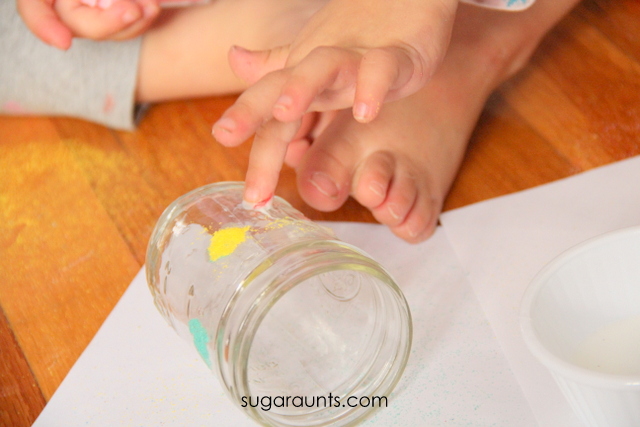
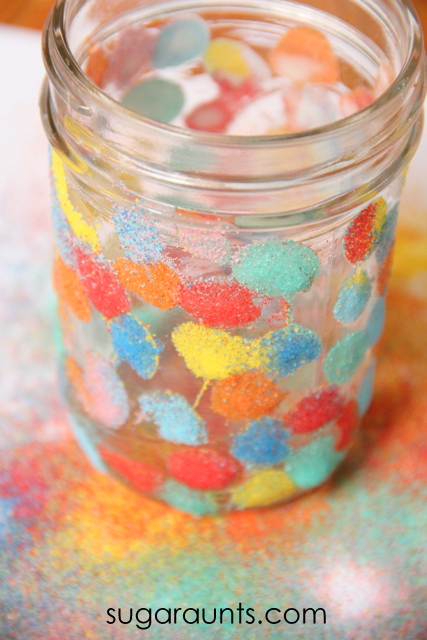
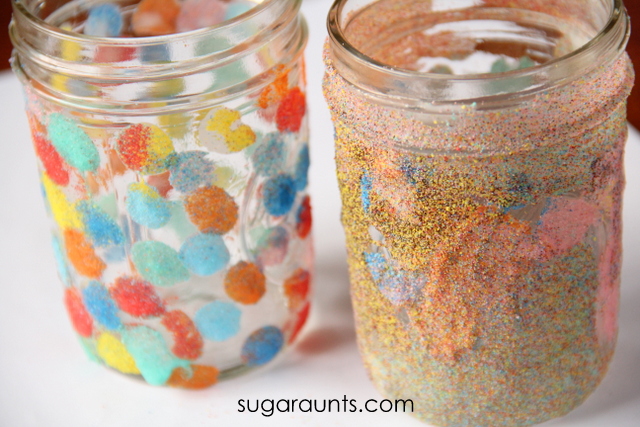
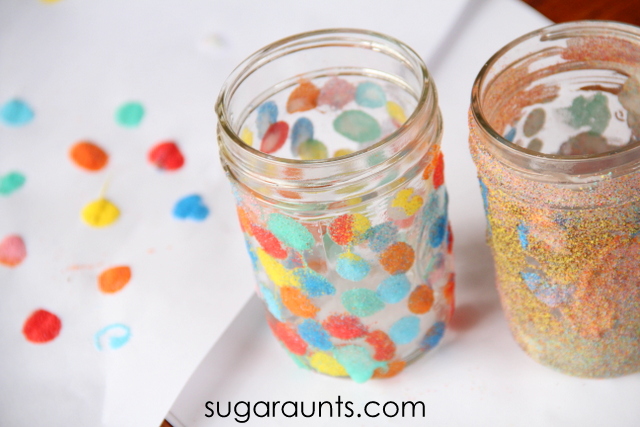
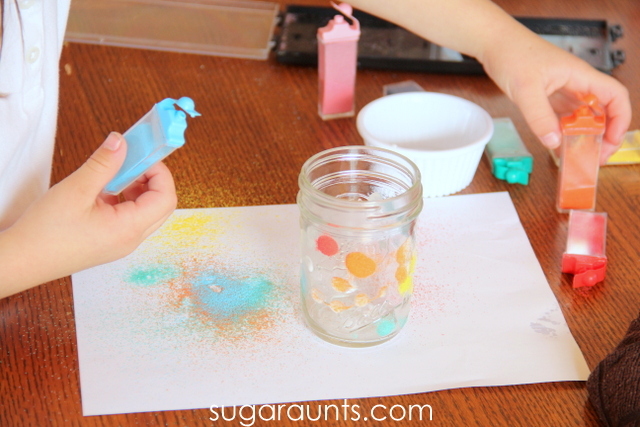
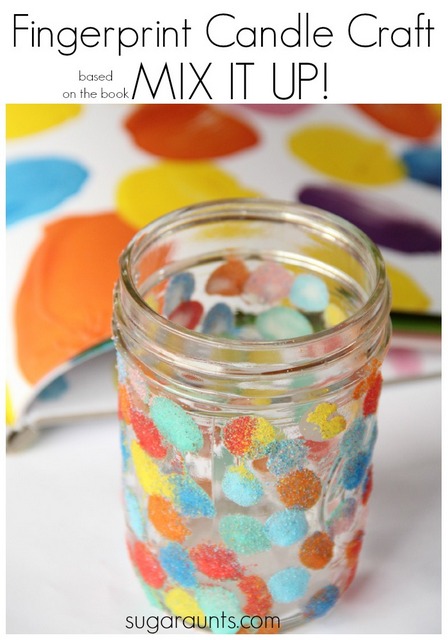
I showed Baby Girl how to make her glue fingerprints onto the side of a mason jar.  We carefully poured the colored sand onto the fingerprints, keeping the jar over white paper to catch the excess sand.

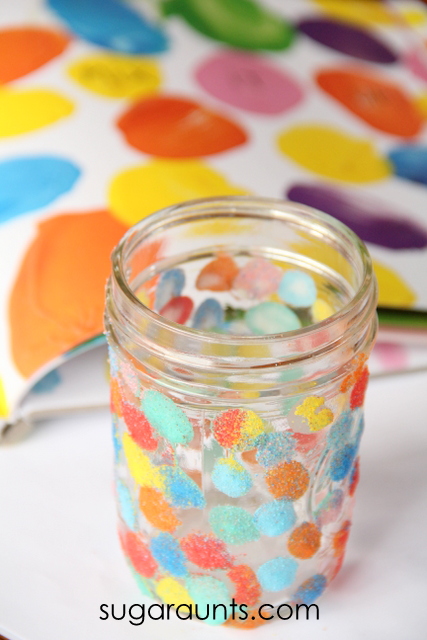
We covered all of the glue fingerprints with sand.

 
It started to look just like the colorful pages from the book.

We made a few candle holders and some ended up more mixed up than others.  I love how the colored sand mixed together.

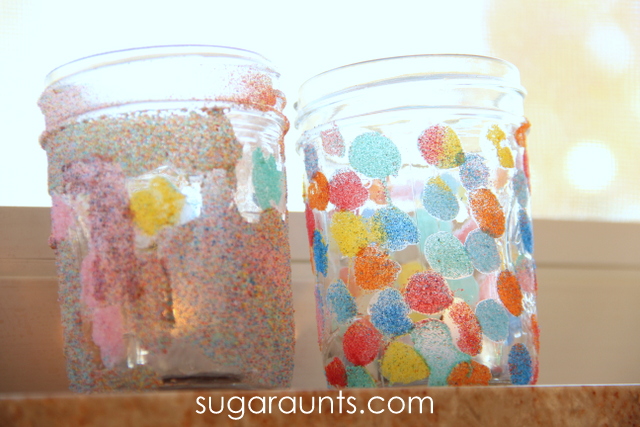
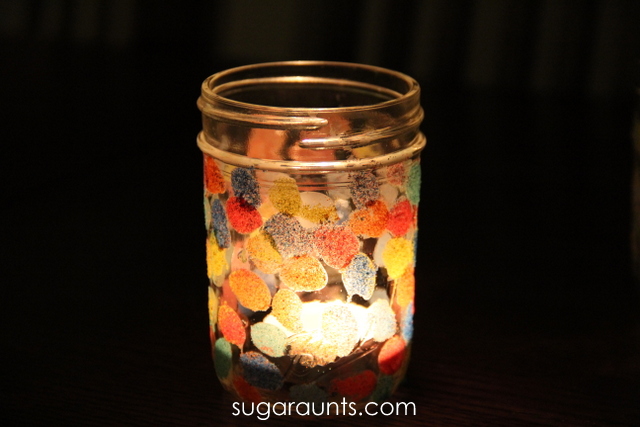
These candle holders look great in the sunlight…

…and by candlelight!  We’ll be gifting a few of these candle holders to friends and family.  They make a great DIY gift made by kids.

 
This was one fun book and we are so happy that we got to enjoy it and create along with it.
 
 
The best news is that you can enter on each of our Preschool Book Club bloggers websites to increase your odds.  
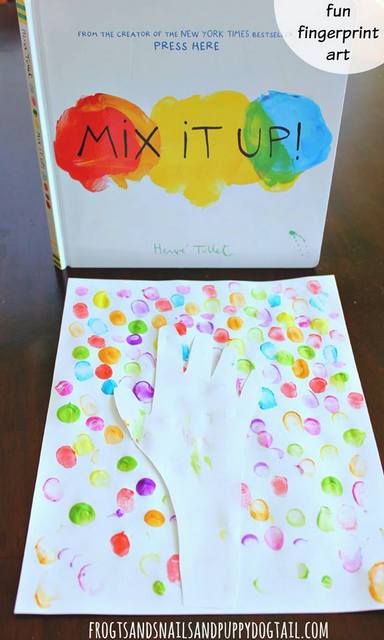
 Frogs and Snails and Puppy Dog Tails: Fingerprint Art
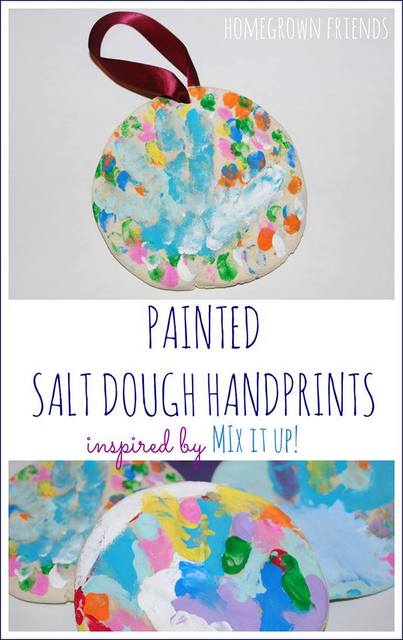
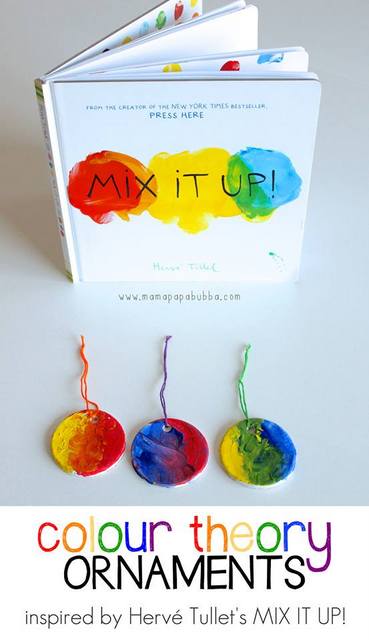
Homegrown Friends: Painted Salt Dough Ornaments
Mama. Papa. Bubba. blog: Color Theory Ornaments
Buggy and Buddy: Mixing Colors

You can see all of our posts in the Preschool Book Club here:

hands-on activities to explore social emotional development through children's books.

Love exploring books with hands-on play?  

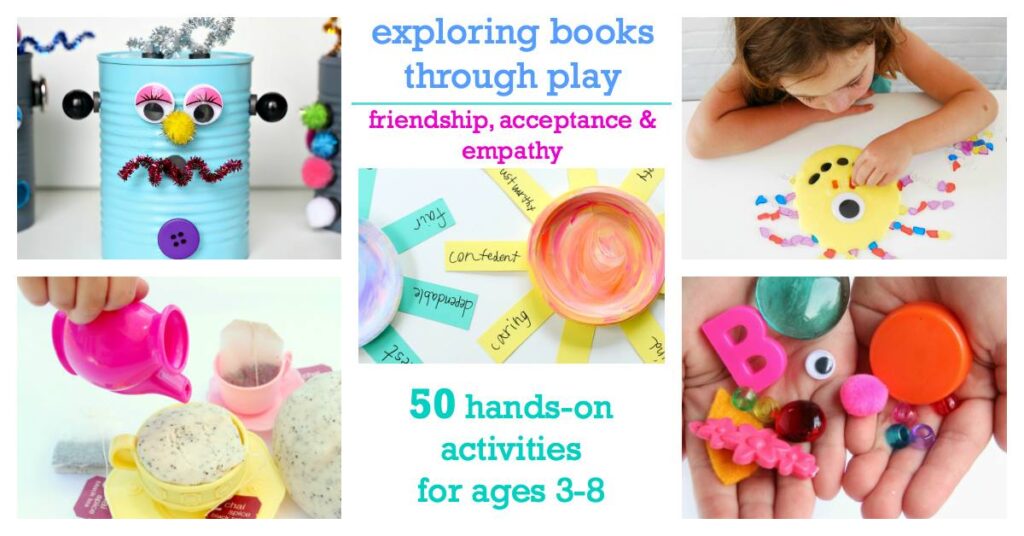
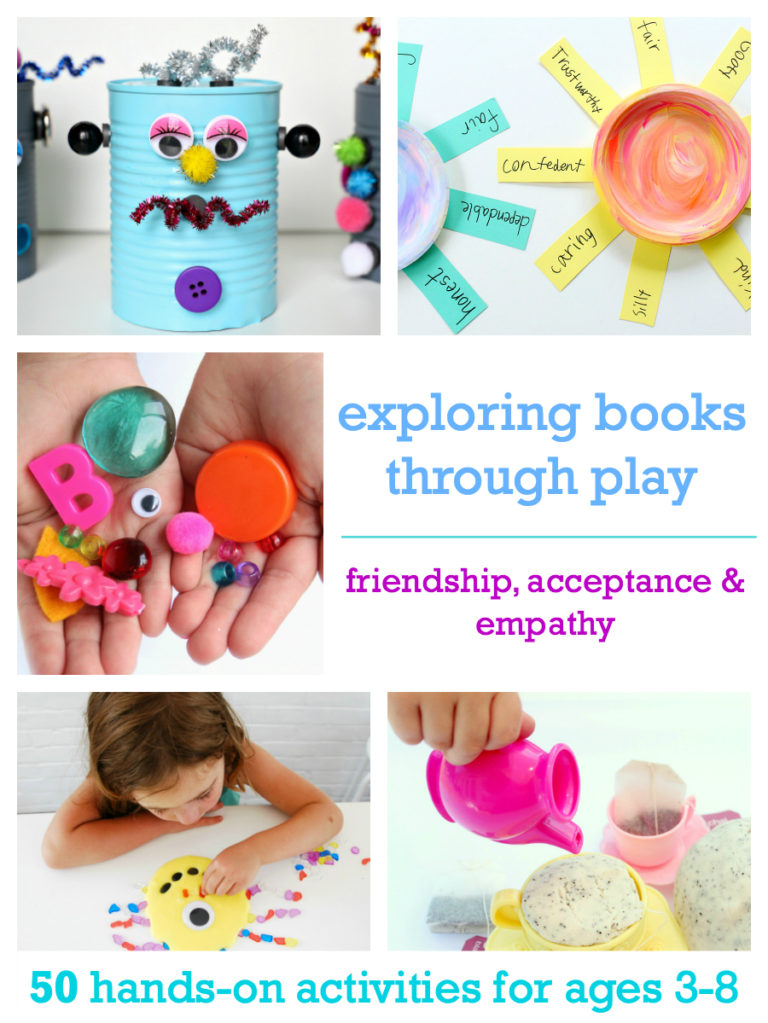
Grab our NEW book, Exploring Books Through Play: 50 Activities based on Books About Friendship, Acceptance, and Empathy, that explores friendship, acceptance, and empathy through popular (and amazing) children’s books!  It’s 50 hands-on activities that use math, fine motor skills, movement, art, crafts, and creativity to support social emotional development.

Science and Discovery Activities for Kids

Discovery activities

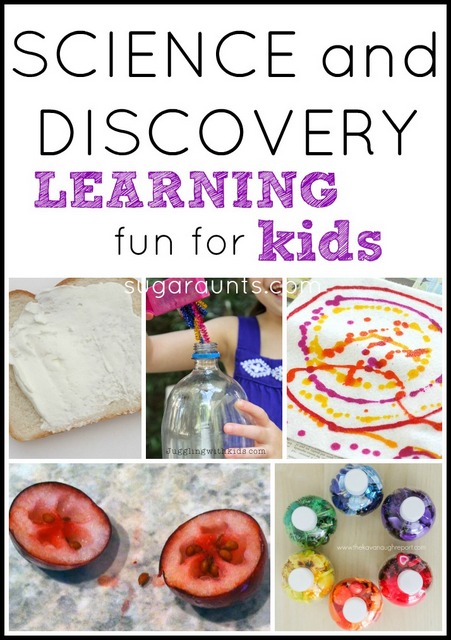
Watching kids discover through science, art, and creativity is fun!  The learning that happens through discovery is pretty neat to watch.  These ideas have great opportunity for discovery and learning for kids.


Discovery Activities


Science and discovery activities for kids

These discovery activities support science, technology, art, engineering, and math, or STEAM! Not only that, but the hands-on activity ideas are great for getting kids involved in project completion from start to finish. 

By participating in these discovery learning activities, kids can challenge themselves in executive functioning skills (planning, prioritization, task completion) as well as social emotional skills such as self-awareness and self-confidence.

Check out these discover and learning ideas for kids:

Explore evaporation with this hands-on science activity.

Discover how to make butter from There’s Just One Mommy.
Discover and learn science in cranberries from Stir the Wonder.

Experiment with air drag and streamlined shapes.
Discover absorption with watercolors on felt from Buggy and Buddy.

Discover STEM with lemon experiments.
Discover colors with sensory bottles from The Kavanaugh Report.

Discover levers and a fulcrum.
Discover geysers from Teach Beside Me.
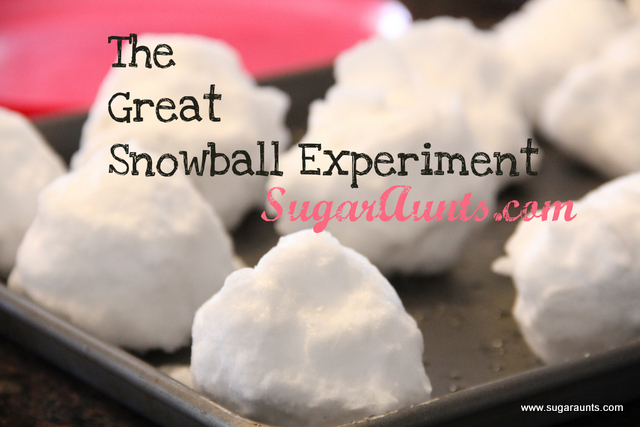
Discover snowball experiments from us!
Discover polar bear science from us!


Exploring Books Through Play is loaded with 50 hands-on exploring and discovering activities based on books! Kids love to explore books and the world around them!

Colleen Beck, OTR/L has been an occupational therapist since 2000, working in school-based, hand therapy, outpatient peds, EI, and SNF. Colleen created The OT Toolbox to inspire therapists, teachers, and parents with easy and fun tools to help children thrive. Read her story about going from an OT making $3/hour (after paying for kids’ childcare) to a full-time OT resource creator for millions of readers. Want to collaborate? Send an email to contact@theottoolbox.com.

Unique Uses for Baby Wipes

baby wipe uses in occupational therapy

This is an old blog post on unique wipe uses for baby wipes and we’ve given it an update. Occupational therapists use some unique materials in occupational therapy sessions. Toys, games, and even recycled materials can help to support OT goals! Here, we’re covering ways to use wipes in OT!

Why Use Baby wipes in occupational therapy?

OTs work on many different skills. We help individuals develop skills in any functional task. That’s why there are so many different tools to the trade!

When it comes to baby wipes, you can get a large quantity for a pretty inexpensive price and use them in so many different ways.

From self-care to crafts and activities, baby wipes can be used for every aspect of functional skills.

Let’s take a look at ways to use baby wipes in occupational therapy sessions:

Baby Wipe Uses in OT

Use baby wipes in self-care-

Occupational therapy practitioners help individuals develop independence and functioning skills in self-care. This includes bathing, toileting, grooming and hygiene, perineal hygiene, and more. Use baby wipes to support goal development in all of these areas.

  • Use baby wipes to practice perineal hygiene. Wipes offer a softer material to teach individuals about wiping completely after toileting.
  • Use baby wipes for a “sponge bath”. For individuals following a surgery or injury, a traditional shower or bath may not be safe or allowed. Use baby wipes to clean under the arms or all over the whole body in a “dry shower”.
  • Use wipes for grooming- From makeup removal to washing the face, baby wipes are a great tool.
  • Teach handwashing with baby wipes. OTs can work with individuals on how to wash hands. Wipes are a great addition to handwashing activities.
  • Teach about germs with baby wipes. Use a little paint or glitter on the hands and add a baby wipe to clean to teach kids about germs and stopping the spreading of germs by handwashing.

Use baby wipes for fine motor skills-

Occupational therapy practitioners get creative with therapy materials, and baby wipes are a useful tool for strengthening fine motor skills.

  • Use baby wipes for finger flexion and extension. Place a wipe on the table surface. The learner can extend and flex the fingers over the wipe to scrunch up the baby wipe. This is a great workout for the fingers and the hands. Because of the wipe’s consistency and the fluid surface, there is less resistance. This is a good hand therapy workout for grading down a hand and range of motion exercise.
  • Use baby wipes to strengthen the arches of the hands. A user can crumble up a baby wipe into a ball. Then, hold the wipe between the thumb and pointer fingers. Use the wipe to wipe off certain areas of a table or a chalkboard. This positioning on the wipe supports development of an open thumb web space and arch development by strengthening the intrinsic muscles of the hand.
  • Make baby wipe art using washable markers. Write and color right on the baby wipe to create tie dye art. This is a great fine motor activity that requires use of the assisting hand to hold the wipe as a pre-writing skill.

Use baby wipes for gross motor skills-

Hold a wipe in the hand and use it to develop gross motor skills including shoulder strength, core strength and stability, gross motor coordination, and posture.

  • Wipe down a wall while standing or sitting. This exercise is a functional task (home management) that supports development of neuro motor skills including range of motion of the shoulder and arm through a full range, while offering proprioceptive feedback by pressing against the wall.
  • Use a wipe to clean a chalkboard. This gross motor task requires full arm motions and can be done in a classroom setting. It’s a great heavy work activity that is functional, too.

Use baby wipes in handwriting-

Occupational therapy practitioners often work with students on handwriting skills. You can use wipes as a therapy tool to work on letter formation.

  • Write letters on a dry erase board. Use the wipe to erase the handwriting. You can work on letter formation, letter size, and line use.
  • Write letters on a small chalkboard using the Handwriting Without Tears method of wet-dry-try. Use the baby wipe to write the letter to make a “wet” letter. Then they can write over the wet letter with chalk in the wet letter. Then write over it with a dry paper towel. After students form the letter with the baby wipe and the towel, they can use chalk to form the letter. Then, use the baby wipe to clear off the chalkboard.
  • Try rainbow writing with different colors of chalk. Then erase the letter over the letter lines with the baby wipe.

Other Ways to use baby wipes

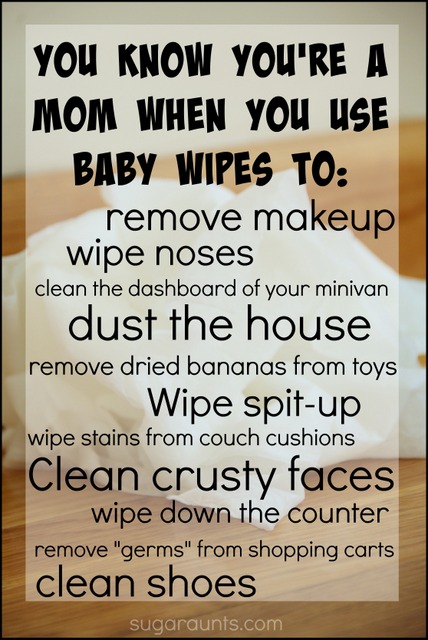
Things get a little crazy when you’re a mom.  Whether you’re a mom to young kids, life is messy.  There are always stains, crust, and dust. And don’t even mention the laundry!  So when you’ve got all of these messes happening, you need easy assurance that the little things are taken care of. With four kids ages 7 and under, I’ve got a lot of messes most of the time.  And the bigger kids are my helpers.  But let’s be honest…the helpers make a lot of messes too, even when they are trying to help!

You know you're a Mom when you use baby wipes for crazy things! dusting, cleaning, germ removal...

  It seems like there is ALWAYS something to wipe, swipe, scrub, and clean. From stains on the couch to dust on the lamps (And oh boy, there’s a lot of dust!), life with kids gets messy.  

Most moms I know keep a pack of wipes handy for easy clean up.    

I’ve found myself wearing the ultimate Mom badge of honor during preschool drop off (and only an hour after my morning shower) with the baby’s spit up.   Wipes! 

When you’re sitting at a red light and you see the dust all over the mini van’s dashboard? Wipes! 

When your daughter runs into the house with dirt and mud all over her dance jazz shoes?  Wipes! 

When the two year old wears the (hand-wash-only) Princess dress-up gown for a week strait? Wipes!  

I love that when I’m using all of these wipes for kiddo crusty noses, chocolaty little cheeks, and bums, the natural wipes layers stand up to the grunge with their layers that are thick enough to handle any mess and a texture soft enough for baby’s smooth skin.    

We like the designer tubs that the wipes come in and the pop up tubs.  Because a mom needs quick access to mess clean-up!  You’re also able to get baby wipes in big refill packs, on the go containers, and convenient soft packs of wipes.    

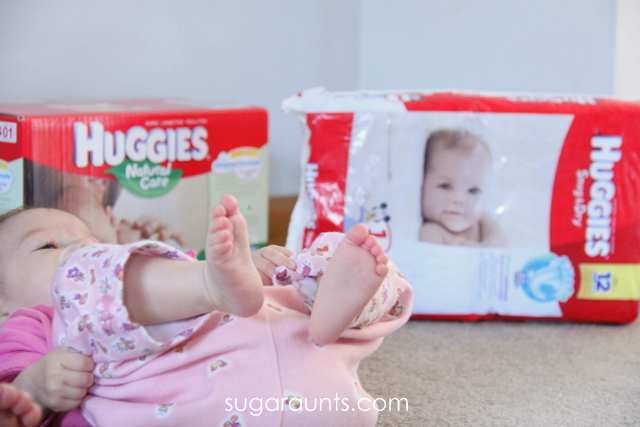
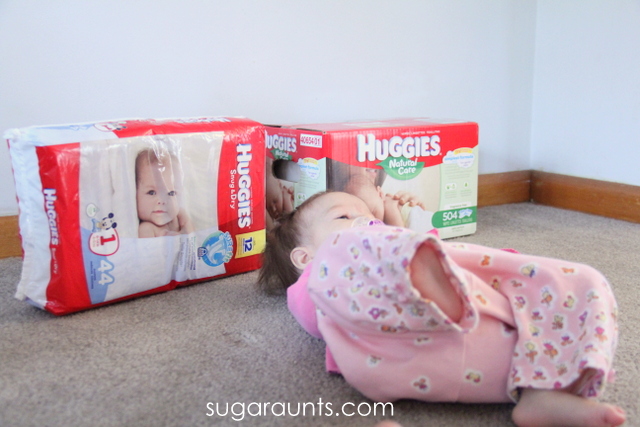
Any new package that comes into our house is usually inspected by the older kids (when they “help”) and our diaper and wipes purchases were no different.

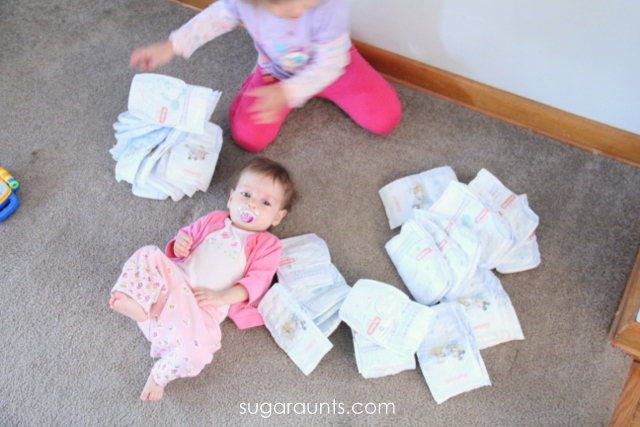
Of course, diapers need to be stacked, counted, and sorted.  This little helper loved the designs on our diapers.  And needed to put her touch on our storage system.  I mean, it’s a great idea to keep all of your new diapers in a pile in the living room 😉


DIY Cardboard Bricks

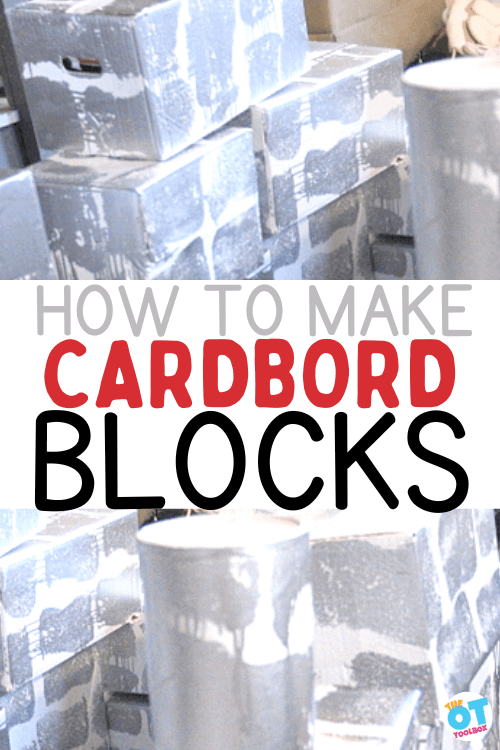
How to make cardboard bricks

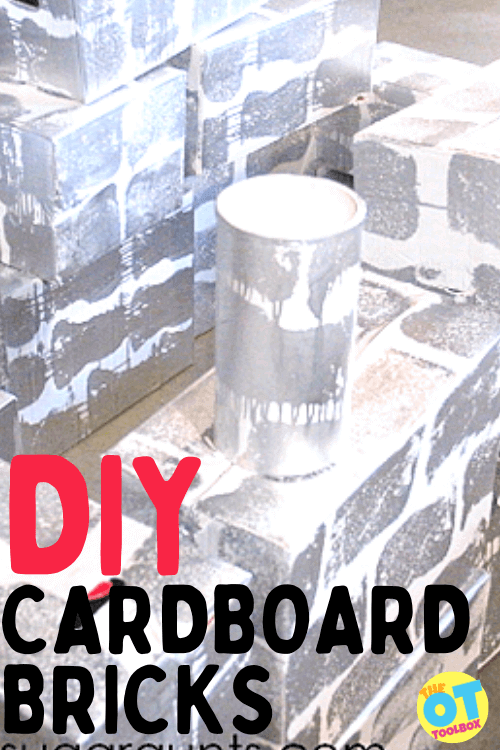
If you’ve ever found yourself with a stack of empty Amazon boxes, then this DIY cardboard bricks project is for you. We made giant cardboard blocks many years ago and the creativity that resulted was enormous! As a pediatric occupational therapist, I love to recommend toys that support development. Block activities and building bricks are always on therapy toy lists. So, when my own kids were involved with the creating process to actually make these cardboard blocks, we took the skill-building of fine motor blocks to a whole new level. Let’s take a look at how to make cardboard bricks and various ways to play with them.

Cardboard bricks

DIY Cardboard Bricks

When it comes to children’s imagination, there are certain toys that inspire creativity…building blocks are one of those creative toys!

And, you’ve probably seen large cardboard blocks in toy stores or as an option. But did you ever stop to think about the developmental benefits of playing with large cardboard building blocks?

Skills developed by playing with Cardboard Blocks

There are so many skills that are developed in the young child by playing with just this one type of toy:


You can see by looking at that list of areas of development, why pediatric therapists have blocks on their list of toy recommendations!

How to make DIY cardboard bricks

How to make DIY Cardboard Bricks


Now that we know the benefits of playing with cardboard block toys, let’s break down the steps to make your own DIY cardboard bricks!

These big clocks are very easy to make, and it’s a creative painting activity you may want to get the kids involved with.

MATERIALS:

(Amazon affiliate links included below)

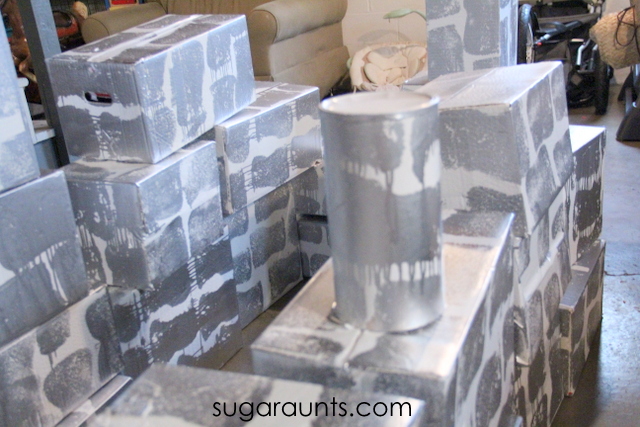
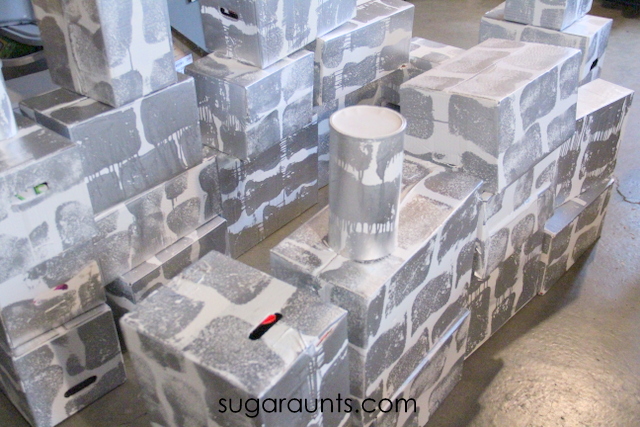
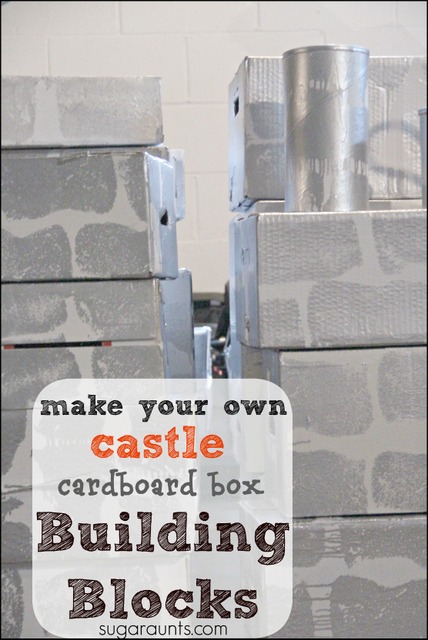
We used silver paint to create a fairy tale type of cardboard brick, but you could use red paint to create a brick house type of building brick.

1. Save boxes of various sizes- First, save a collection of cardboard boxes. When collecting boxes to upcycle, think about durable cardboard building blocks because these toys will be used over and over again by children. They will get beat up!

Some ideas for boxes that make great DIY bricks include:

  • Diaper boxes
  • Amazon delivery boxes
  • Tissue boxes
  • Cardboard tubes (paper towel tube or cardboard toilet paper roll)
  • Cardboard oatmeal cylinders
  • Empty cereal boxes
  • Any rectangle, square, or cylinder shaped box!

I started by gathering up a bunch of cardboard boxes. Between a couple of sisters and sisters-in-law, I had enough diaper boxes to make this giant stack. (There are a lot of cousins in diapers around these parts).

Next, it’s time to turn those boxes into giant cardboard building blocks.

Use cardboard boxes to make giant building blocks

Amazon affiliate links are included below.

2. Paint the boxes- I used left over white wall paint to cover all of the diapers. This was a quick job with a paint roller brush. Lay the boxes out on a large tarp in the yard and paint the top and two sides. When the paint has dried, rotate the boxes and paint the other three sides.

As an alternative to painting, you could also wrap the boxes in white wrapping paper. Rolls of white paper are available at many dollar stores. Or, you can sometimes grab holiday wrapping paper on clearance after holidays, as a very inexpensive option. Just wrap them up like a package.

3. Add details to the big blocks- Once the white paint has dried, use a large bone sponge dipped in a tray of silver paint. Dab the sponge shape onto the white boxes to make “bricks” of the castle walls. Our silver paint dripped a TON at first. Once I got the hang of how much paint to use on the sponge, it went much better. Too much paint, and you’ll have lots of drips.

If you opt to wrap the blocks up in white paper over painting, you can draw on details like vines. Stamp the white wrapping paper with grey paint using the sponge.

Build a castle with DIY cardboard bricks

4. Start playing- After the blocks are created, it’s time for the fun part: building with the giant blocks!

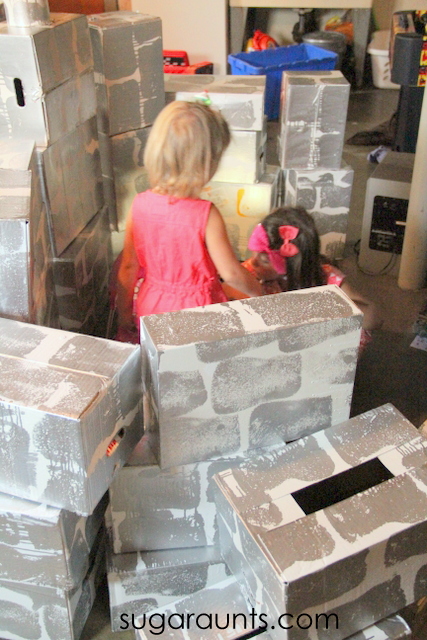
Your young construction workers and little architects will love the creative options to stack the cardboard bricks, create walls, towers, and houses. Then, talk about cause and effect when the block towers inevitably fall down. 

These DIY toys are a great addition to playtime!

Use the bricks with toddlers, preschoolers, and older kids too. I personally would love a small calm down space to support self-regulation in young learners, too.

Inspire creative play with cardboard bricks

DIY GIANT BUILDING BOCKS

These castle blocks were used at the party for princesses and knights.  We’ve been using them ever since in daily play in our basement.  We even have a booby trap set up by Little Guy right now. 

One of the activities we had planned for the kids were these giant castle blocks made from diaper boxes. These were fun for the cousins to play with, imagine with, build, knock down, and build again! I hope this DIY cardboard brick idea is an inspiration to you!

Build a cardboard castle with DIY cardboard bricks

Colleen Beck, OTR/L has been an occupational therapist since 2000, working in school-based, hand therapy, outpatient peds, EI, and SNF. Colleen created The OT Toolbox to inspire therapists, teachers, and parents with easy and fun tools to help children thrive. Read her story about going from an OT making $3/hour (after paying for kids’ childcare) to a full-time OT resource creator for millions of readers. Want to collaborate? Send an email to contact@theottoolbox.com.

N is for Napkin Newt Craft

We love making cute crafts and our dining room wall can attest for that.  There’s a nice gallery of kid art going on on all four walls (and the ceiling, too!) and this cute newt craft is sure to make the wall!  


We’re joining bloggers from all over in the 31 days of ABCs series hosted by All Done Monkey.   Each day, a blogger has been publishing a blog post based on a letter.  We’re up next with N and our napkin newt.  
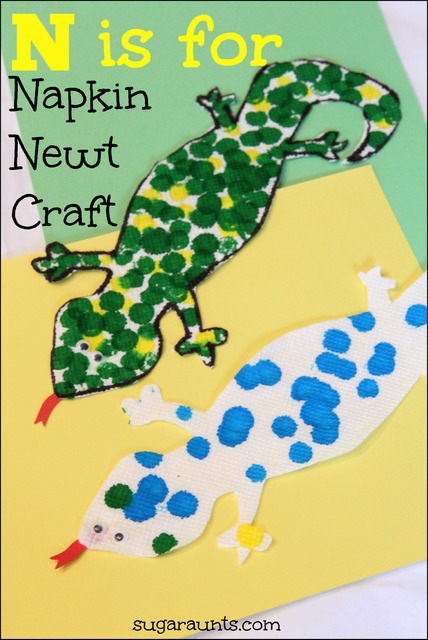
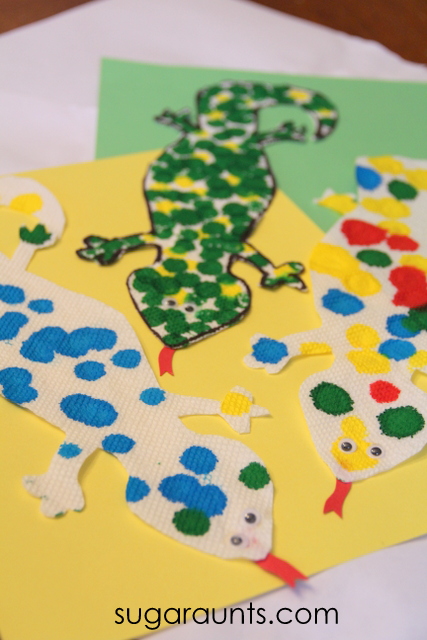
N is for Napkin and Newt!  Make a napkin newt with the kids.  So cute!

Newt Craft:

To make your newt, you’ll need a few supplies.  We used napkins, googly eyes, paint dab markers, glue, and red card stock.  We received the googly eyes and paint dab markers from www.craftprojectideas.com.  
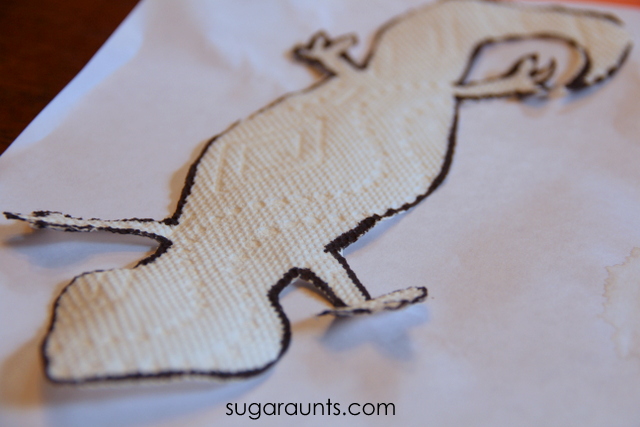


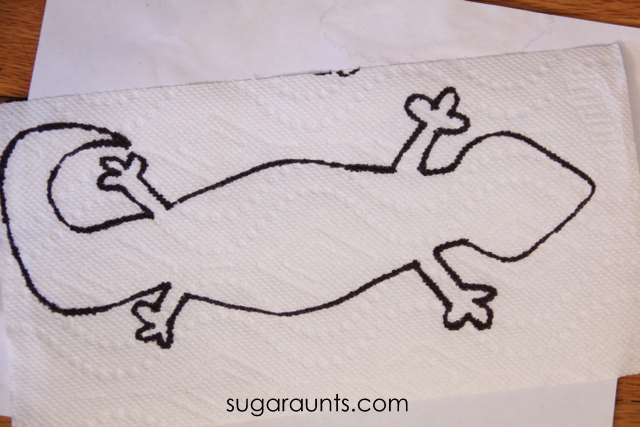
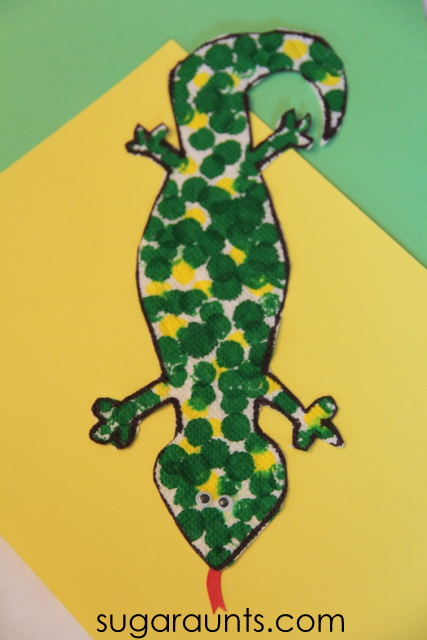
Start by drawing a simple newt shape on the napkin.  I used a marker, but a pen would work, too.

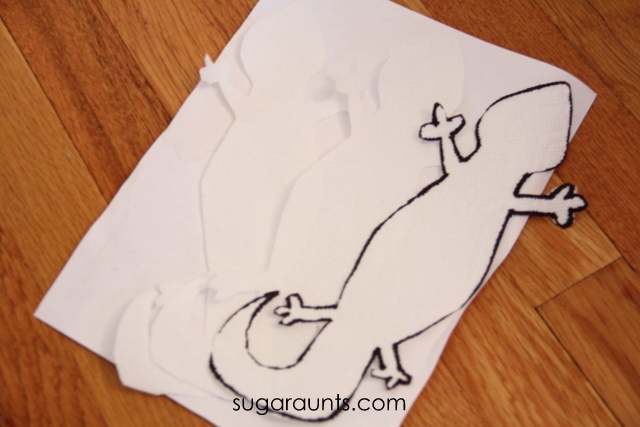
If you have a bunch of newts to make for a preschool class or siblings, stack up a few sheets of napkins.  Grab your sharpest scissors and cut out the newts.  This is a job for a parent, but an older child could cut this complex shape.  Hold the napkins together tightly as you cut around the toes.
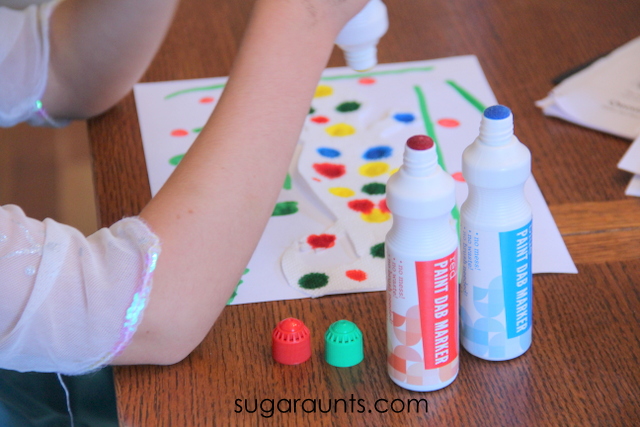
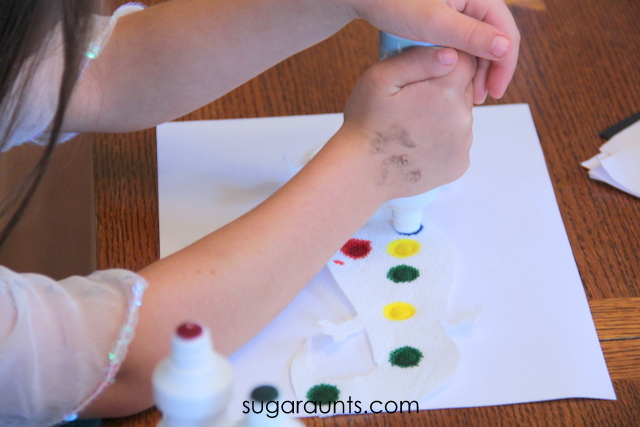
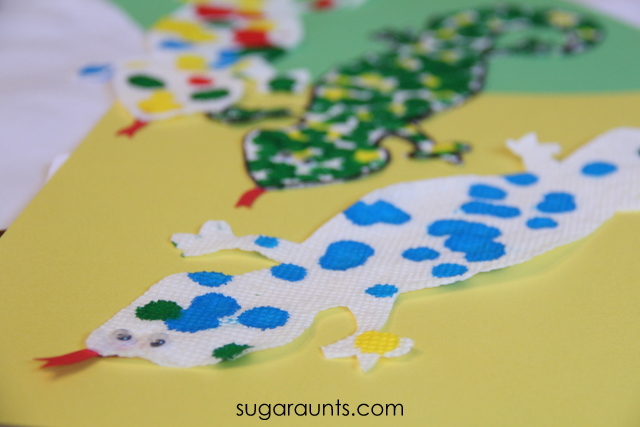
We liked how our napkin newt’s texture looked like scales.
Next, use your paint dab markers to dab on spots.  We went with different colors, and each child made their newt differently.

It was fun to see my daughter’s personalities coming out in their craftiness.  Big Sister was deliberate and colorful with her painting.  

Baby Girl painted in typical Baby Girl fashion…fast and furious and with STYLE!

Next, glue on googly eyes.
These newts are almost done.  We talked about the letter N and how Newt and Napkin both start with “N”.  We said a bunch of other words that start with “n” as we crafted.
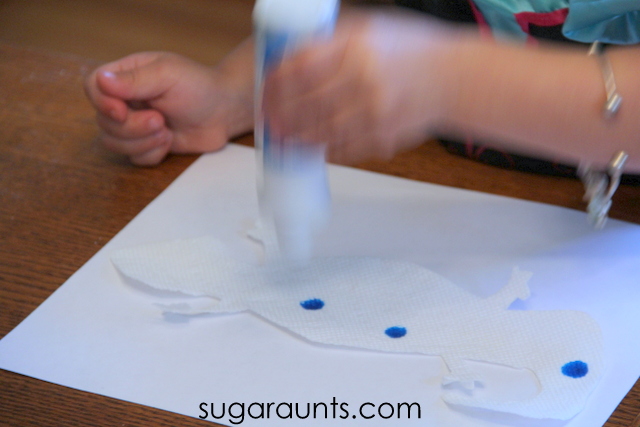
Snip tongues from the red card stock and glue to the back of the newts.  Super cute newt!
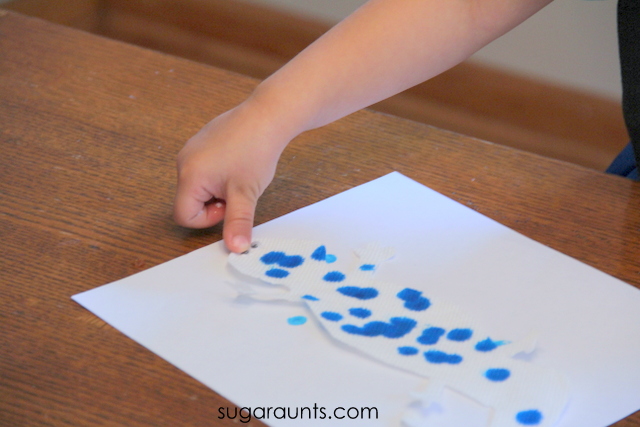
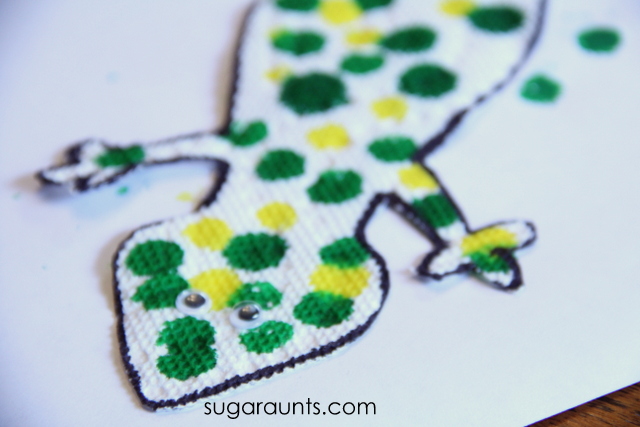
Paint Dabber Newt Craft.


Let us know if you make this craft.  We would love to see your version!  Stop by our Facebook page and tell us all about it.

Corn and Cookie Cutter Simple Sensory Bin

We are on a simple sensory bin kick around here.  We’re working our way through the alphabet (although, not necessarily in ALPHABETICAL order…) with simple sensory bin ideas that focus on two or three items that you’ve got around the house.  These sensory bin items have one letter in common.  So far, we’ve played with a B sensory bin and an S sensory bin.  (yup, definitely no organized order happening here…)  Today we explore Letter C with Corn and Cookie Cutters!


 Letter C Sensory Bin

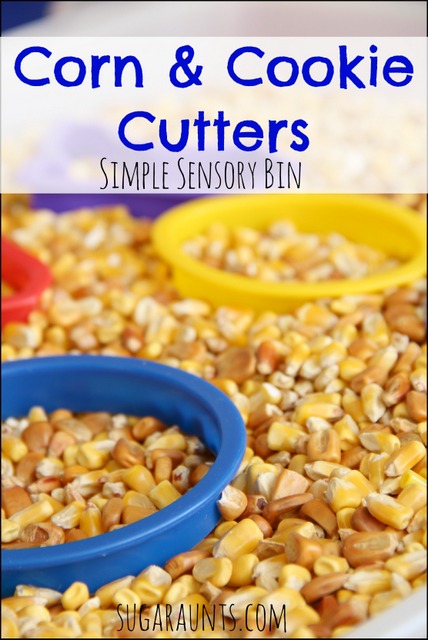
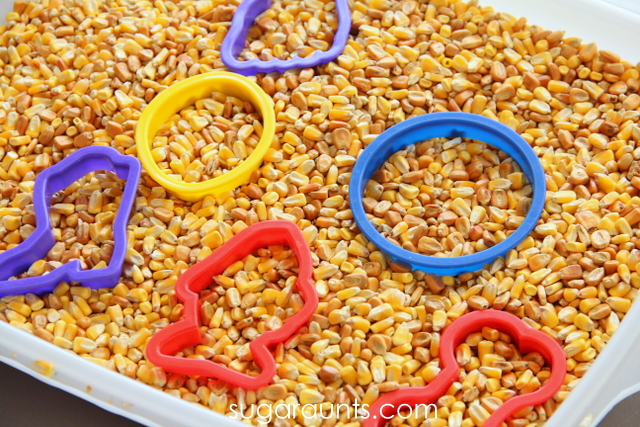
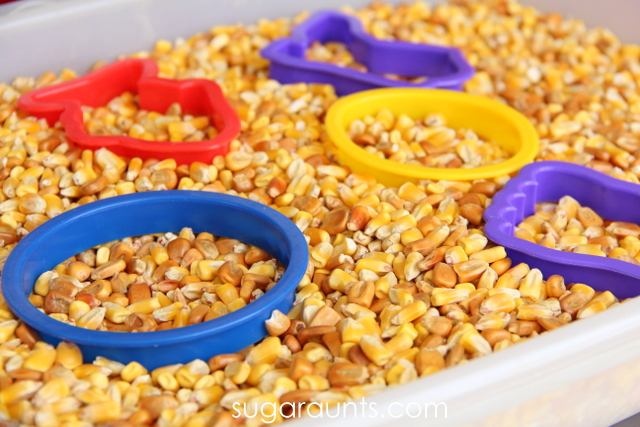
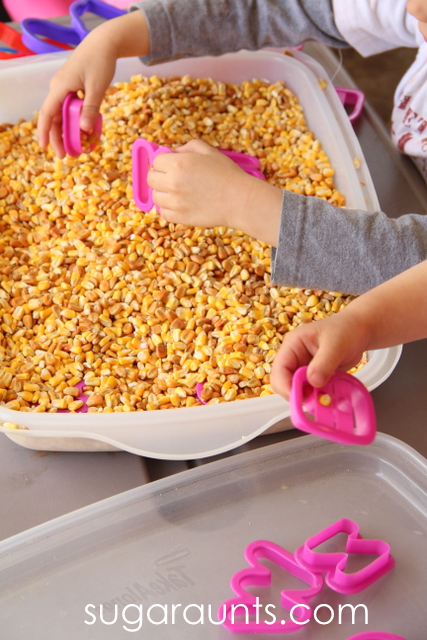
Corn sensory bin with cookie cutters

For a Corn and Cookie Cutter Sensory Bin, you will need:

((This post contains affiliate links for your convenience.))
A large shallow bin

We have a bin that is filled with field corn at all times.  Little Guy will ask to play with corn at least once a week.  We fill it with random things…

Today, it’s cookie cutters!

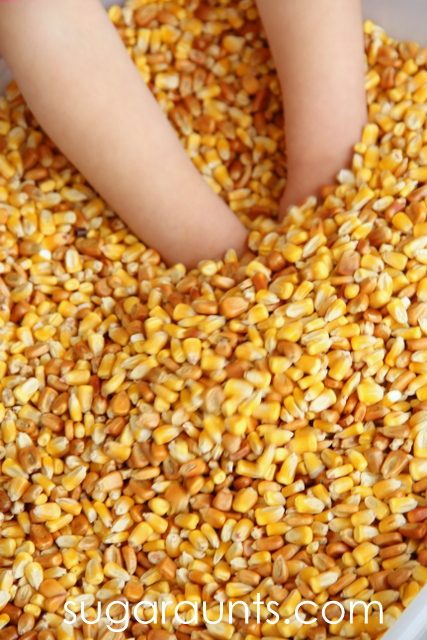
Field corn is a larger kernel that is used to feed livestock.  The texture of field corn in a sensory bin is great for tactile play.  It makes a great sensory bin base, and we’ve used it in lots of different sensory activities. 

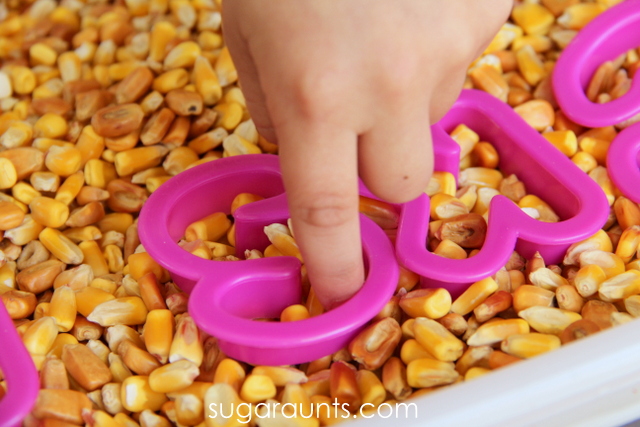
The cookie cutters in the corn are great for sensory play.  Pushing the cookie cutters down into the corn was such a neat sensory experience.  We talked about shapes, colors while we buried the cutters and found them again.

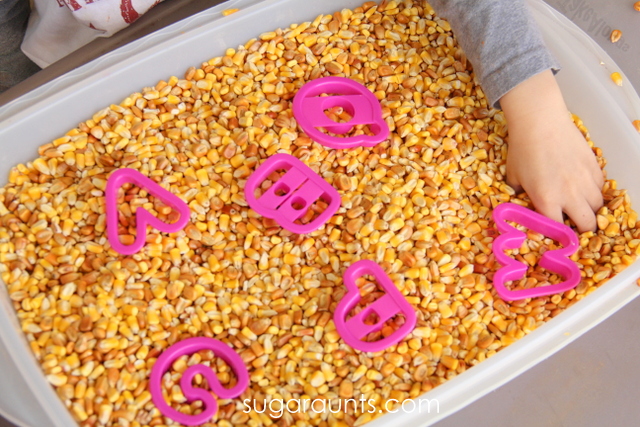
letter learning with a simple sensory bin

We took the shapes out and replaced them with letters.  Little Guy is working on identifying letters. 

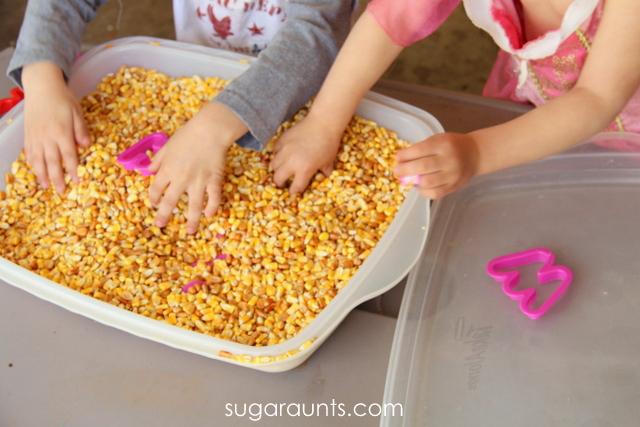
Baby Girl and Little Guy couldn’t keep their hands out of there!

Child playing in a simple sensory bin
Such a great sensory activity…just corn kernels in a bin.  Simple and perfect!

Sensory Handwriting Practice

The ABC cookie cutters were great for practicing letter formation.  The corn kernels gave great tactile feedback when tracing the letters.

Little Guy has been practicing his letter “S”, and this was fun for him.
letter tracing for pre-handwriting activity
Looking for more sensory bin ideas?  Be sure to follow our Sensory Bins Pinterest Board.