Mindfulness WorkSheet Football Theme

free mindfulness worksheet with a football theme

This mindfulness worksheet has a football theme, making it a fun mindfulness exercise for kids, especially those who love all things football. You will find a lot of these mindfulness worksheets here on the website, as well as mindfulness activities. All of these printable mindfulness handouts are designed as tools for deep breathing as a coping strategy for kids. Today’s coping tool fits in perfectly with our recent football activities and football therapy slide deck. Be sure to add this mindfulness activity to these other football theme ideas for themed therapy activities.
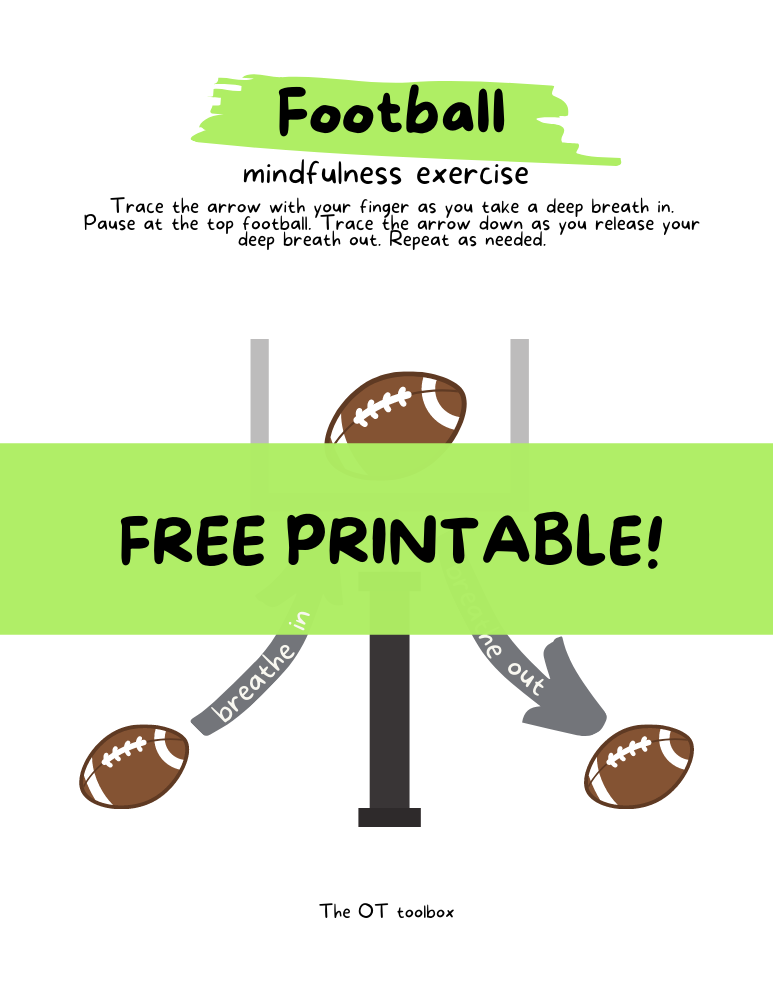
Mindfulness worksheet with a football theme, for helping kids use deep breathing as a coping tool. This free printable is perfect for kids who love football!

Mindfulness Worksheet

There are many benefits of mindfulness that support the needs of children in a therapeutic sense for addressing behavioral needs, sensory needs, emotional needs so they can function and complete daily tasks. There are also benefits of mindfulness worksheets and strategies to cope with feelings, emotions, and responses to the world around us.

This fun mindfulness activity is a simple worksheet designed around a football theme.

It provides a visual grounding exercise to allow children to move as they use deep breathing strategies to self-reflect and become more aware of their body and how it’s responding in any given moment.

This football themed worksheet actually can be printed off and used as a coping tool at home, at school, or in the therapy clinic.

What’s nice about this mindfulness exercise is that children who love football and all things sports can picture the football and the deep breathing actions during situations even if they don’t have the mindfulness worksheet in front of them.

The ideal process would be to show students how they can take deep breaths in difficult siduations by using the football worksheet as a visual cue. Then, students can work toward imagingin the visual during times when they experience big feelings or emotions. This way, they can become more independent in using deep breathing as a coping strategy any time!

Free Football Theme Mindfulness Worksheet

Want to print off this mindfulness worksheet and use it with children on your therapy caseload?

Want to grab this free printable and use with your own child at home?

Want to use this football themed mindfulness worksheet in your classroom?

Enter your email address below. The worksheet will then be sent directly to your email inbox. If you are already a newsletter subscriber, simply head to the free subscriber-only library and enter the password.

FREE Mindfulness Worksheet with a Football Theme!

    We respect your privacy. Unsubscribe at anytime.

    More mindfulness worksheets you will love:

    Click the images below to access each free mindfulness worksheet.
    mindfulness exercise for kids with a spider theme
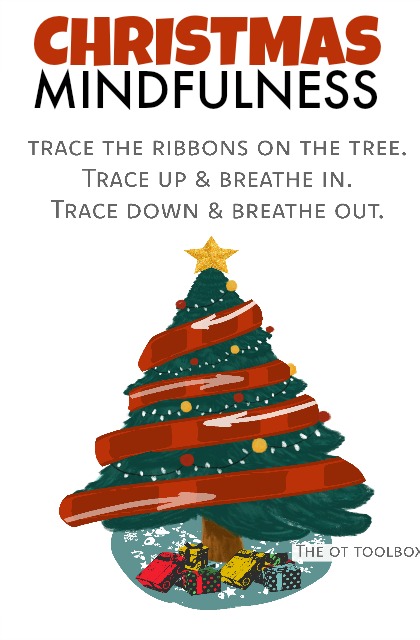
    Use this Christmas mindfulness activity as a coping strategy for kids during the holidays.
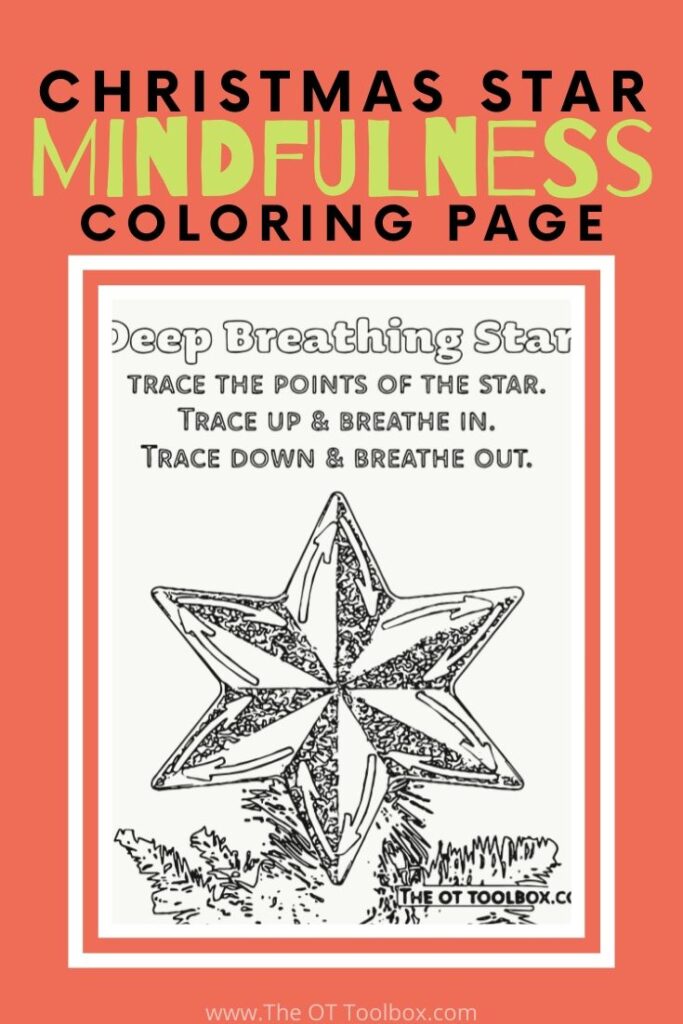
    mindfulness-for-kids-christmas-coloring-page
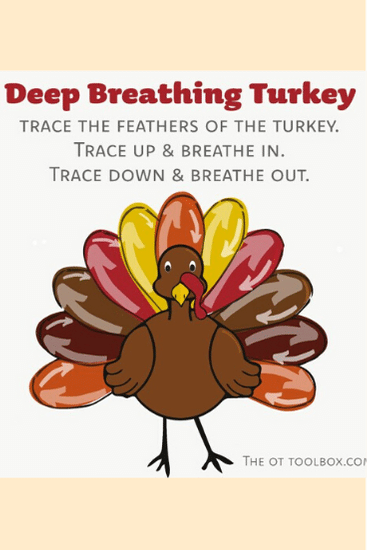
    Thanksgiving mindfulness activity with deep breathing exercise to use as a coping strategy with kids.
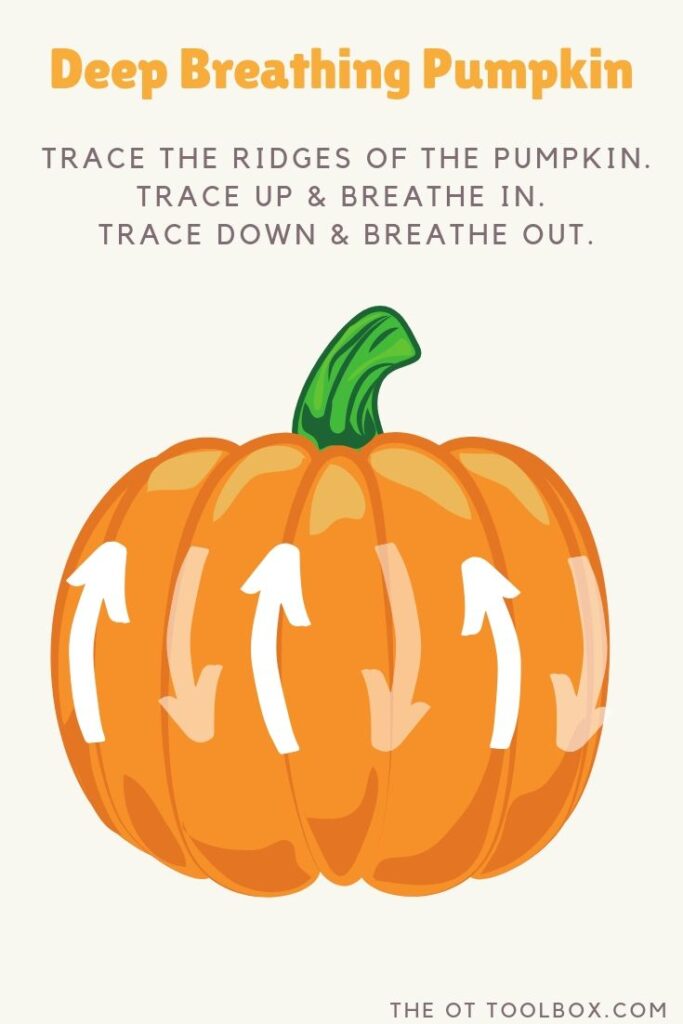
    deep breathing mindfulness activity for halloween
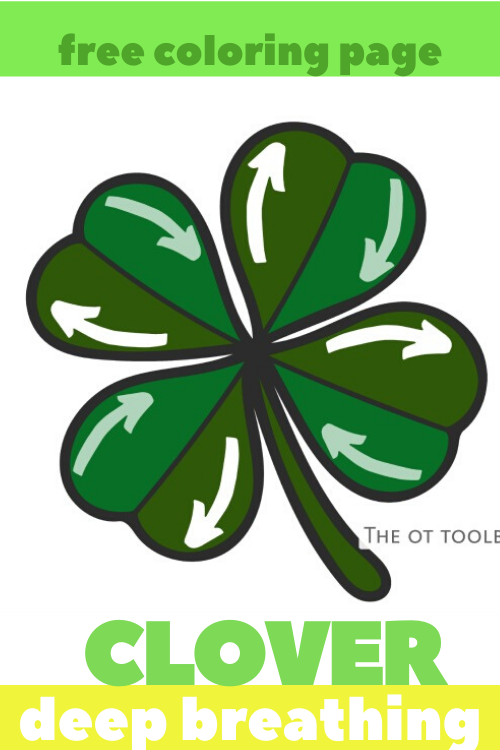
    Clover deep breathing activity

    Colleen Beck, OTR/L has been an occupational therapist since 2000, working in school-based, hand therapy, outpatient peds, EI, and SNF. Colleen created The OT Toolbox to inspire therapists, teachers, and parents with easy and fun tools to help children thrive. Read her story about going from an OT making $3/hour (after paying for kids’ childcare) to a full-time OT resource creator for millions of readers. Want to collaborate? Send an email to contact@theottoolbox.com.
    Football Theme Therapy Slides

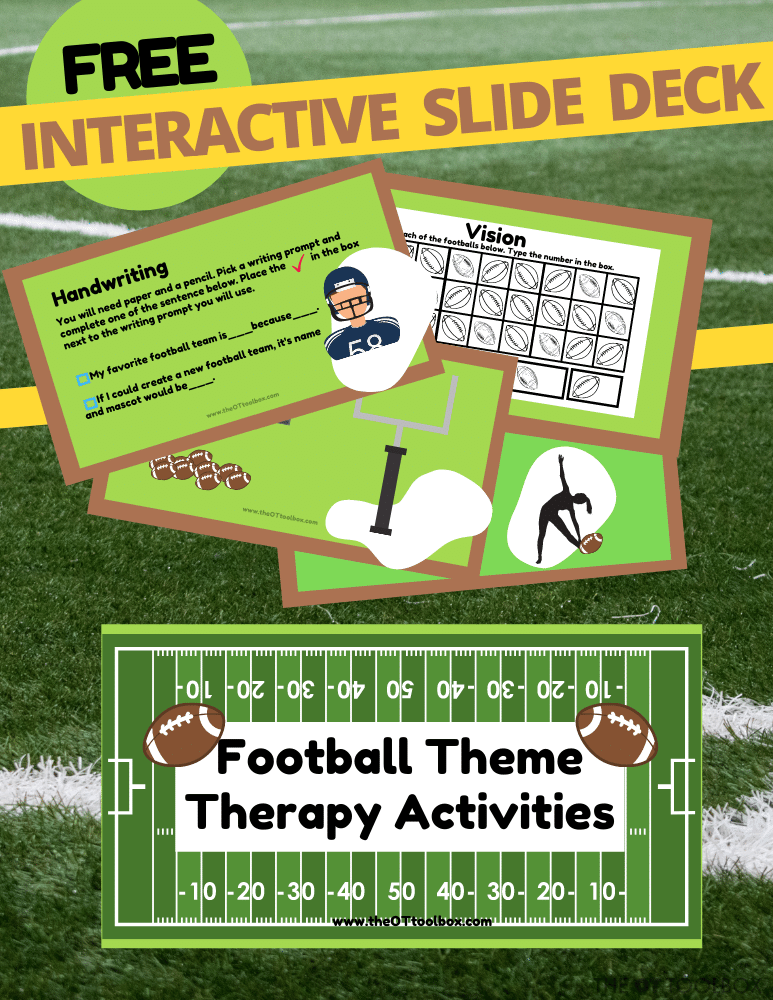
    Football theme activities slide deck for therapy

    Here it is… another free therapy slide deck, this time with a football theme! Recently, I shared a football activities blog post here on the website. It’s perfect for your football-loving therapy clients that need to build motor skill development in OT sessions. Today’s free occupational therapy slide deck with a football theme therapy slide deck that is just one more football themed set of activities that you can add to your pediatric occupational therapy intervention toolbox!

    Football theme activities slide deck for therapy

    Football Theme Therapy Slide Deck

    This slide deck is another free resource that you can use in teletherapy interventions using an interactive slide deck designed to boost skills in fine motor, gross motor, vision, mindfulness, self-regulation, and more.

    Use these slides to run a whole therapy session, based on the individual needs of your clients…OR, use just a slide or two to work on specific skills.

    The nice thing about using a football theme is that you can pair the occupational therapy theme of the week (football activities in this case), with lots of different hands-on activities that build specific skills in the areas of motor planning, bilateral coordination, sensory input, regulation, and more.

    Kids can work through the interactive slides and move the movable parts of the slides to practice various occupational therapy interventions. The slides are designed to build skills in the following developmental areas:

    • Fine Motor Skills: In-hand manipulation, separation of the sides of the hand, precision
    • Gross Motor Skills: core strength, stability, strengthening, proximal stability
    • Visual Perceptual Skills: Visual discrimination, visual discrimination
    • Mindfulness: awareness, deep breathing, focus, attention

    Below, you’ll find a form to enter your email to grab this free interactive slide. But first, I wanted to explain how this slide deck works.

    Football theme activity for occupational therapy interventions to work on mindfulness with kids.

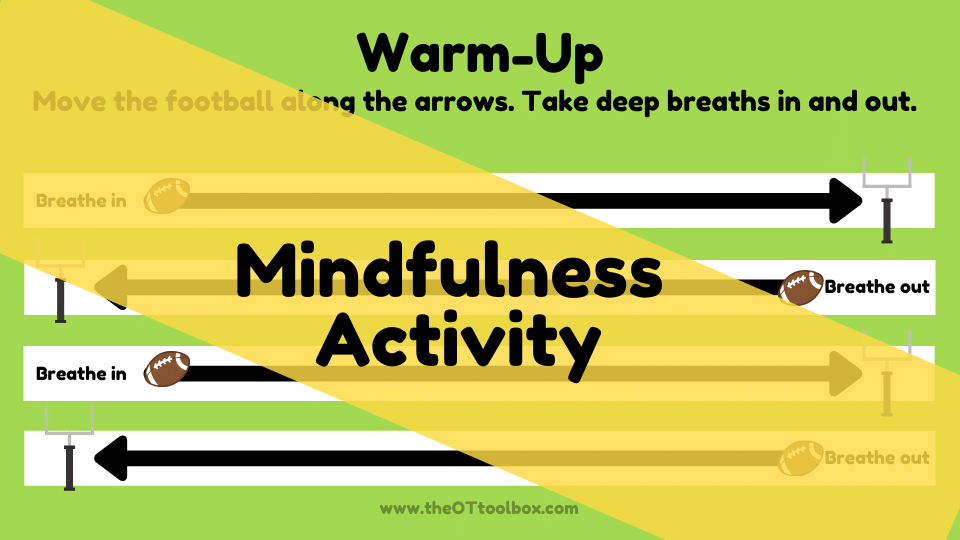
    Mindfulness Activity- Move the interactive football piece along the arrow to the field goal as students breathe a deep breath in and a deep breath out in a football themed mindfulness activity. This mindful breathing can act as a coping tool and a strategy to help kids with focused breathing so they are more aware off breath as a strategy for awareness, worries, or stress. Moving the football along the arrow line is also a good exercise in eye-hand coordination.

    football theme therapy slide deck

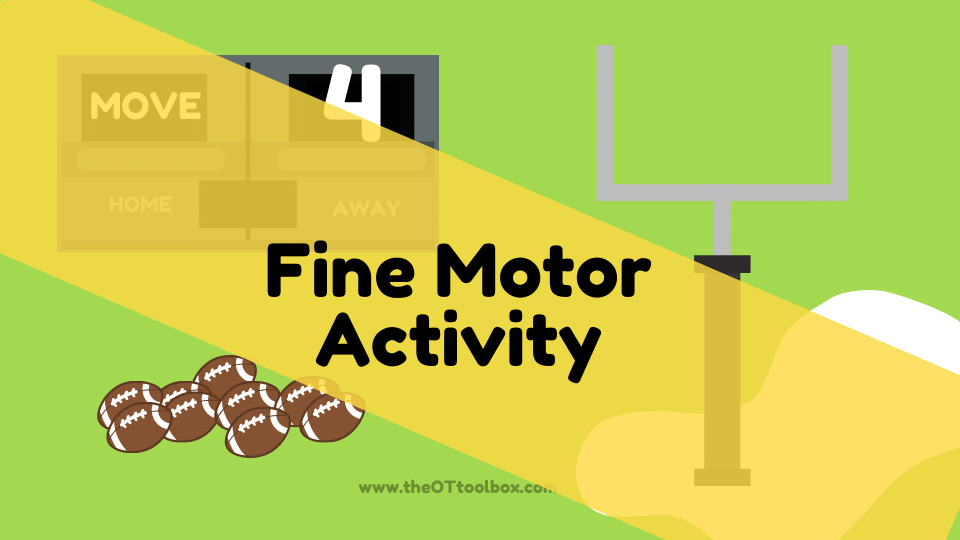
    Football Fine Motor Activity– with this slide, you are prompted to move the interactive football pieces over the football goal post. Then, students can follow the instructions on the slides to complete a hands-on activity with small pieces of paper. This fine motor activity works a variety of areas and gets those little hands moving.

    Here’s another football fine motor activity that you can pair with this slide deck.

    Football theme slide deck to work on visual perception with kids.

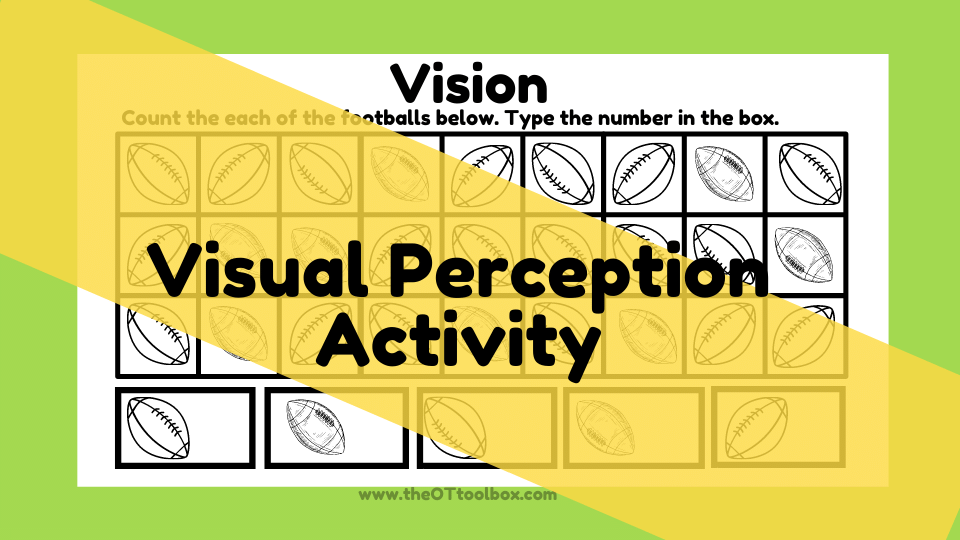
    Visual Perception Activity- Count the number of each type of football. Then, type the number that is found into the text box. This is a great way to work on a variety of visual perceptual skills with a football theme.

    Football theme slide deck to help kids work on handwriting.

    Football Theme Writing Prompts- Students can choose one writing prompt and write out their response on paper. They can do a mini-self assessment for accuracy of letter formation, letter and word spacing, and line use.

    Football theme gross motor activities for kids

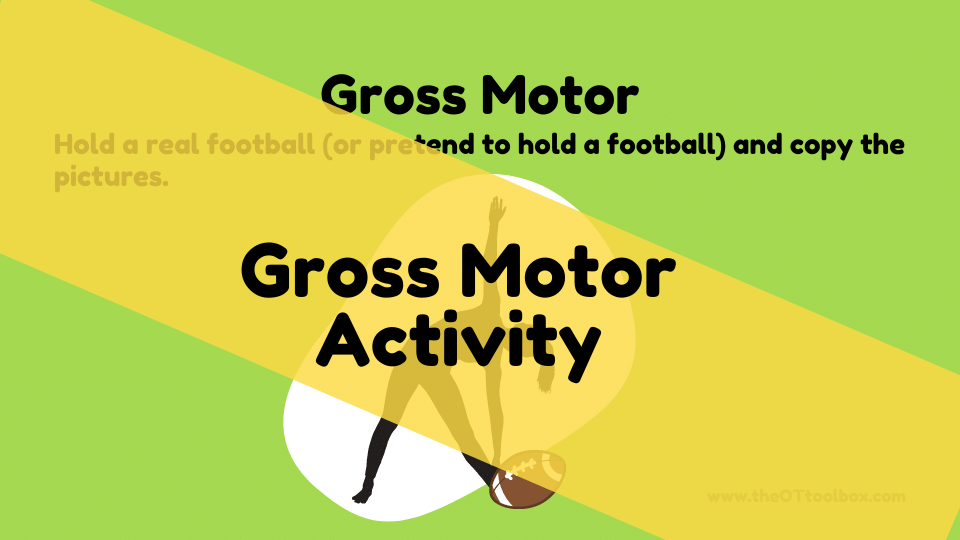
    Football Gross Motor Activities- There are several different core body stretches and movements. Students can use a real football or pretend to use one as they go through each pose. Some students can benefit from going through this section of the slide deck several times.

    Football activity to work on self regulation with kids.

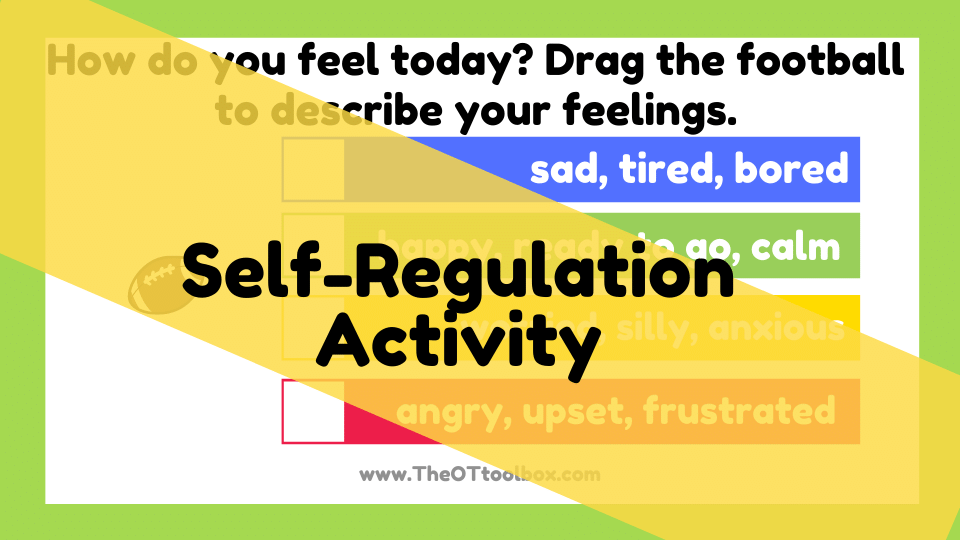
    Self-Regulation Check-In- Finally, students can move the interactive piece to slide the football marker to describe their feelings, emotions, and behaviors. This is a good chance to talk about coping tools they have available to help with self-regulation.

    Handwriting: Use writing prompts to practice letter formation, spacing, sizing, and legibility with football theme writing prompts

    FREE Football Theme SLIDE DECK

    Here’s how you can get the interactive slide deck to work on occupational therapy goals with a football theme:

    Enter your email address in the form below. Check your email and click on the button to grab your resource. Save that page so you can access these slide decks again.

    Sign into your Google account. Click on the big button in that PDF that you just accessed. It will prompt you to make a copy of the slide deck. That will be your master copy of this slide deck.

    Now the slide deck is on your Google account.

    Share the slide deck with students. You can make a copy for each student and upload it to their Google classroom or use it in Zoom. Here is a post on FAQ for troubleshooting any issues you might run across with using or accessing the slide deck.

    Football Theme Therapy Activities Delivered to your Inbox

    Get this Football Theme OT Slide Deck

      We respect your privacy. Unsubscribe at anytime.

      One resource we love is our $5 therapy kit…the Plastic Egg Therapy Kit! It has 27 printable pages of activities with an Easter egg theme. In the kit, you’ll find fine motor activities, handwriting prompts, letter formation pages, pencil control sheets, plastic egg activities, matching cards, graphing activities, STEM fine motor task cards, and more. There are several pages of differentiated lines to meet a variety of needs. This therapy kit has everything done for you.

      Get your copy of the Easter Egg Therapy Kit here.

      Colleen Beck, OTR/L has been an occupational therapist since 2000, working in school-based, hand therapy, outpatient peds, EI, and SNF. Colleen created The OT Toolbox to inspire therapists, teachers, and parents with easy and fun tools to help children thrive. Read her story about going from an OT making $3/hour (after paying for kids’ childcare) to a full-time OT resource creator for millions of readers. Want to collaborate? Send an email to contact@theottoolbox.com.
      Football Activities

      Football activities for OT interventions

      It’s Fall and time for football fun! Football is an American tradition. You can find football in middle school, high school, college, and professionally. It’s EVERYWHERE in the Fall, and if you are looking for an autumn activity that offers gross motor and proprioceptive sensory input, a game of football is it! If you’re not playing it, you’re watching it from the stands or sitting in front of the television set cheering on your favorite team.

      Football activities for a football theme occupational therapy interventions.

      Football Activities

      Football is also a fun time theme for therapy sessions. If you want to score a touchdown during your therapy sessions take a look at these football themed activities that help to build fine motor, gross motor, bilateral coordination, and visual motor skills. These fun and engaging football activities can provide you hours of therapy exercise and skill building fun.

      Add these football theme ideas to your therapy line-up or use them as part of therapy games to get kids interested in working on specific skills in themed therapy sessions. Using a fun theme like football can keep kids motivated and working in therapy!

      So, scroll through these football crafts, football games, and football ideas and let’s get kids moving and building therapy skills!

      Football theme

      Football theme slide deck– Grab this free interactive football themed slide deck. Use it to guide therapy sessions through a football theme with fine motor, gross motor, mindfulness, handwriting, visual perceptual activities, and self-regulation.

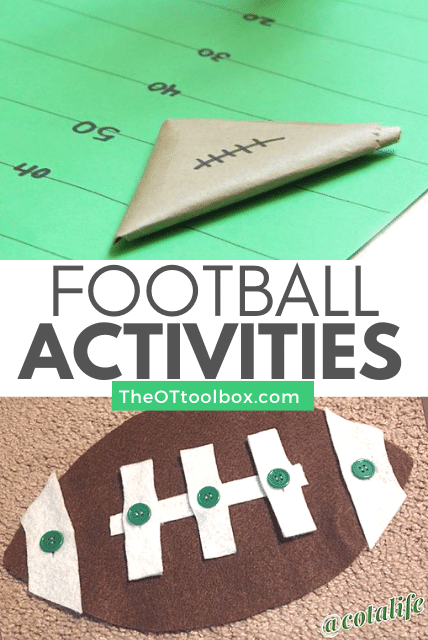
      Fine Motor Activity– Make paper footballs and use them in learning like we did with this Paper Football Sight Words activity. You not only work on creating the paper football and field, you can write sight words on the field lines and then have the child read the words, and after reading the words, have them write a sentence with that word. While you’re having them write, you can address letter size, letter placement, spacing, and letter formation.

      Fine Motor Craft- This Football Craft for Preschool is a fun way to get younger kiddos involved in the Fall football season by having them lace their own football. A great way to work on bilateral coordination, eye-hand coordination, and fine motor precision skills.

      Motor Planning and Eye-Hand Coordination Activity- Make this Turkey Football Craft. It’s a festive way for kiddos to work on cutting and drawing skills not to mention those much needed sequencing and pasting skills too by combining a turkey for Thanksgiving and footballs for the Fall season.  Be sure to use bottle glue as that makes for an automatic incorporation of grading of force or pressure so kiddos don’t create puddles of glue, but dots or simple outlines.

      Football Brain Breaks- Use these Football Brain Break Cards in therapy or in the classroom or at home. These gross motor, heavy work activities provide a fun opportunity to work on gross motor and motor planning skills with kiddos throughout therapy sessions or even during transitions while at home.

      Bilateral Coordination Football Craft- This Woven Football Craft  works on cutting skills, visual motor integration, sequencing, bilateral hand use and the repetitive movement of weaving that can also be calming and engaging for some children.

      Visual Convergence and Eye-Hand Coordination Activity- Take throwing a football to a different level with this Paper Football. It’s a flying cylinder that you simply grasp and throw like a football. How do you make it? You only need a manila file folder, some tape, scissors, and paperclips.

      Self-Care Activity- Work on buttoning skills with this Felt Football Button Activity – an easy and fun way to work on fastener manipulation skills whether it be to address buttoning or unbuttoning or both! 


      Football Game –
      makes for a great way to work on a variety of skills. YOU DECIDE the skill you want the child to work on and write it on the football when you play the game. It can be gross motor, handwriting, fine motor strengthening, core strengthening, or crossing midline. It’s a great way to work on turn taking and coping skills with a peer as they take turns choosing a card and performing the activity as well as coping with winning or not winning.

      Now, “Hut, hut, hike!” Go grab a few materials or print a few sheets so you can easily prepare your football-themed therapy sessions or activities.

      Regina Allen

      Regina Parsons-Allen is a school-based certified occupational therapy assistant. She has a pediatrics practice area of emphasis from the NBCOT. She graduated from the OTA program at Caldwell Community College and Technical Institute in Hudson, North Carolina with an A.A.S degree in occupational therapy assistant. She has been practicing occupational therapy in the same school district for 20 years. She loves her children, husband, OT, working with children and teaching Sunday school. She is passionate about engaging, empowering, and enabling children to reach their maximum potential in ALL of their occupations as well assuring them that God loves them!

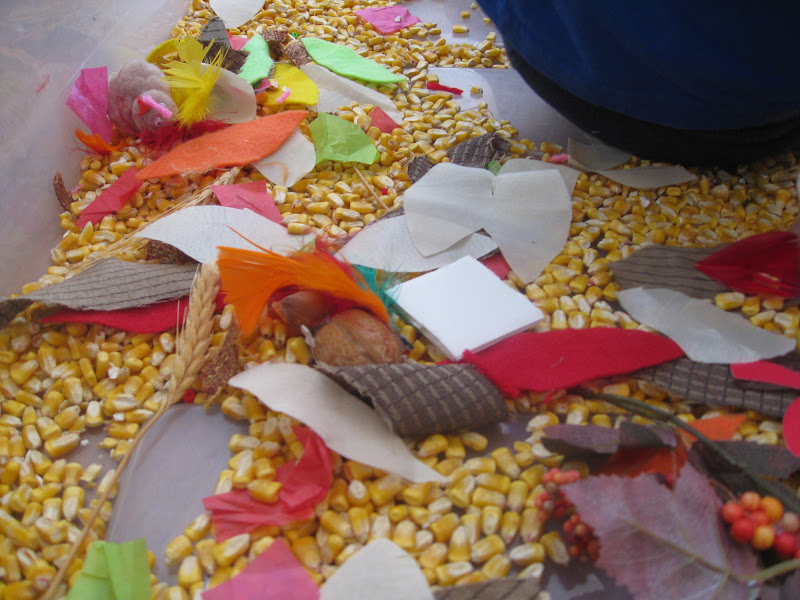
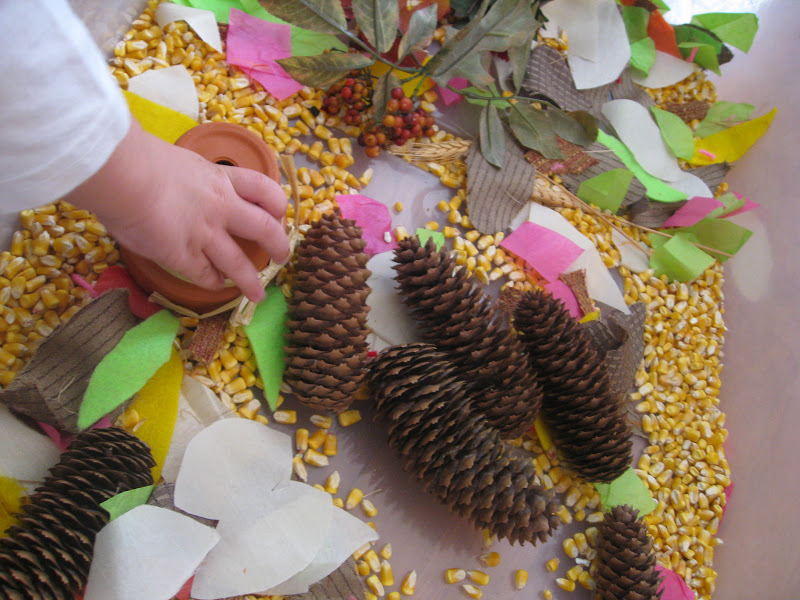
      Thanksgiving Sensory Bin

      Thanksgiving sensory bin

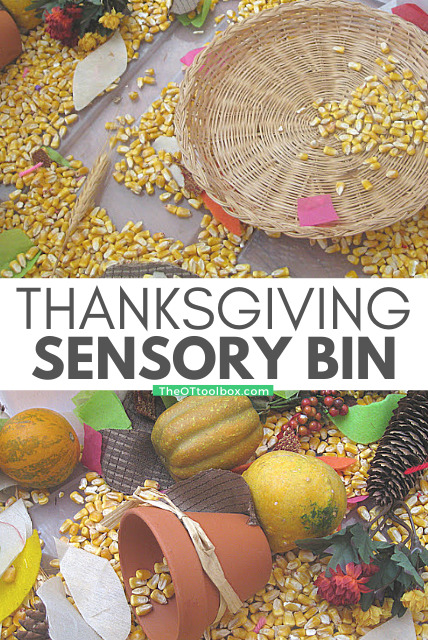
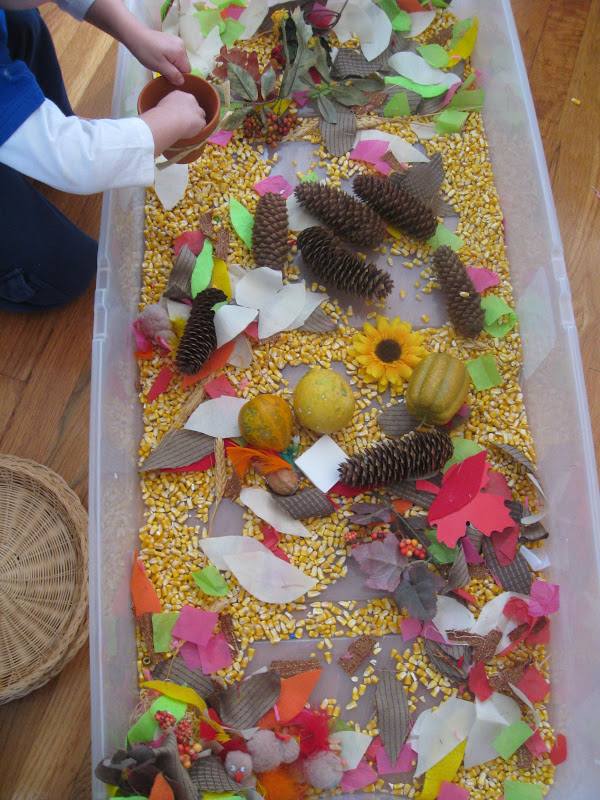
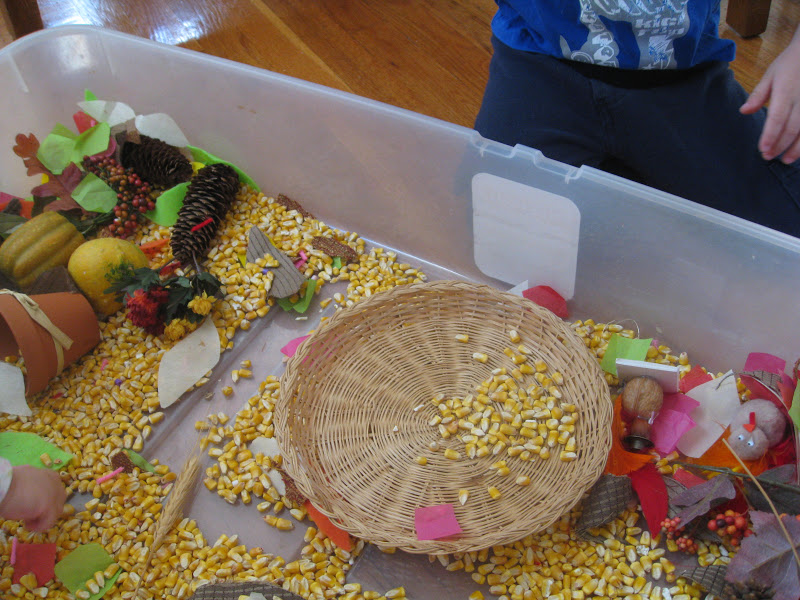
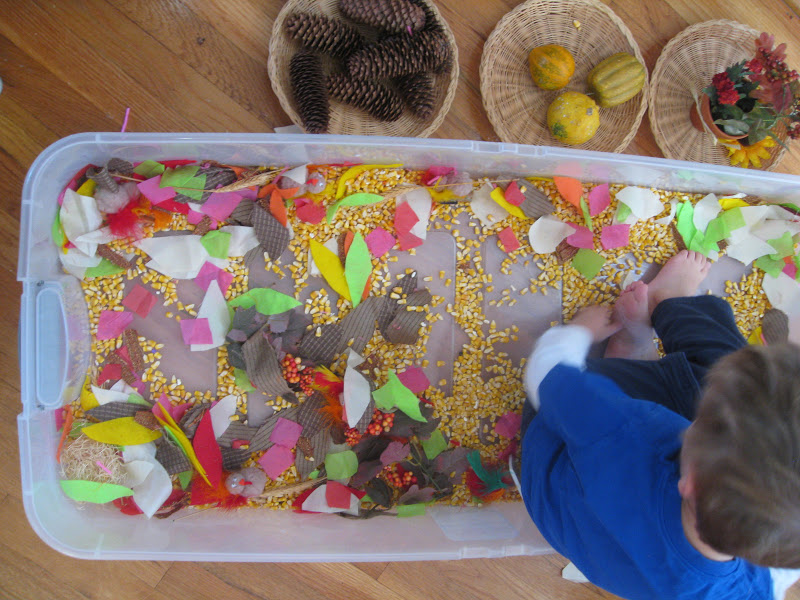
      This Thanksgiving Sensory Bin was a fun way to foster imaginative play and develop motor skills through a sensory, textural experience. The sensory bin is a Thanksgiving activity that we enjoyed, but it would make a fun Fall sensory bin too, as it used many colors and textures of Fall. Adding in field corn, dry leaves, feathers, textured materials adds opportunities for scooping, pouring, and exploring with a Thanksgiving theme!

      Thanksgiving sensory bin for kids to play and explore textures while building fine motor skills.

      Thanksgiving Sensory Bin

      Sensory Bins are so great for exploring textures and fostering imaginative play.  They are so easy and inexpensive to make up  and can go in any theme…If your son loves superheroes, throw Spiderman figures into a bin of rice with a couple of Halloween spider rings, and you have an instant play area that can last all day long!  Use items and toys that interest your child’s passions for a sensory play experience that can also build skills.

      While the kids are exploring, imagining, fostering creativity, they are learning so much…building their confidence,  language skills, fine motor dexterity…and SO much more!    

      This holiday sensory bin offers a chance for kids to talk about Thanksgiving and discover items that foster thought, creative thinking, or family-centered materials. Items in the Thanksgiving Sensory bin can inspire gratitude and can be centered on what’s important to your family.

      Thanksgiving sensory ideas for sensory play and exploration, using many Fall materials.

      Thanksgiving Sensory Bin Base Materials

      Sensory bins can be made from any dry or wet material, water, shredded paper, packing peanuts…The possibilities are endless. Here are sensory base ideas to start with.

      To make this Thanksgiving sensory bin, you can use materials that you find around your home or outdoors. Other items can be found at the dollar store.

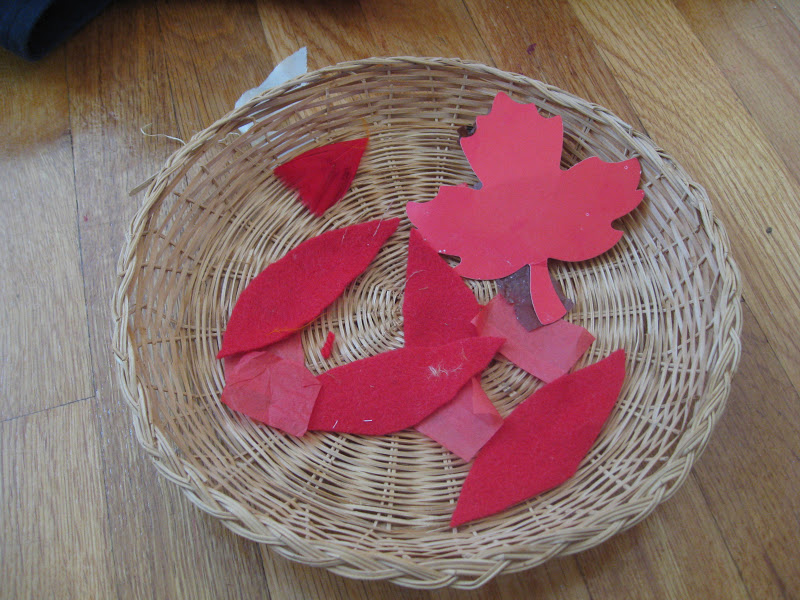
      Start with your Thanksgiving sensory play base material. Some ideas include dry field corn or regular popcorn, rice, dry beans, split peas. Non-food sensory bin materials can include shredded paper, feathers, or Fall leaves from outside. Dump the sensory bin base material into an under-the-bed-storage bin or other large, low bin or tray.  

      NOTE: Be prepared for corn/rice/split peas to scatter all over the floor.  Ignore it. Play with the kids, they can help clean up later…working that pincer grasp to pick up grains of corn from the floor 😉   Or not… Either way, enjoy the play/learning/growth experience with your kids and don’t worry about the mess. Brooming up corn into a dustpan is another fantastic occupation for kids. 🙂

      If keeping the spill factor to a minimum is a must, try using a tablecloth under the sensory bin. Or, take the sensory bin outdoors if you like.

      Thanksgiving sensory play ideas for kids include making a sensory bin with turkeys, wheat stalks, gourds, and more.

      Add Thanksgiving Items

      Next, add materials to manipulate, find, hide, scoop, and pour.

      Make the Thanksgiving sensory play meaningful by adding items that foster gratitude and thankfulness. One sensory bin item can include gratitude leaves like we made for our Thanksgiving tree. Cut paper leaves and each family member can write what they are thankful for. Scatter the leaves in the sensory bin. Best of all, you can reuse those gratitude leaves after the sensory play is done. Make a Thanksgiving tree like we did, or hang them on a Thanksgiving garland.

      Other Thanksgiving Sensory Bin materials include:

      • Fabric scraps
      • Gratitude leaves
      • Fake leaves
      • Real leaves
      • Paper leaves
      • Fall décor
      • Feathers
      • Acorns
      • Scraps of paper
      • Gourds
      • Decorations
      • Turkey figures
      • Wheat sprigs
      • Pine cones
      • Acorns
      This Thanksgiving sensory bin offers opportunities for fine motor skills.

      ADD Sensory Bin Scoops

      One final piece to a sensory bin are tools to scoop, pour, and sort. These items help to develop areas like fine motor skills, dexterity, eye-hand coordination, and bilateral coordination.

      Pouring and scooping are an oppourtunity to work on refined motor skills as kids pour the materails without spilling. They can explore how much to tilt the container or how much precision is needed to scoop the materials they want to manipulate.

      Some manipulating items to consider for a Thanksgiving sensory bin include:

      • Cups
      • Tongs
      • Tweezers
      • Baskets
      • Small cups
      • Spoons
      • Small bowls

        And baskets for sorting!  

      Use baskets, cups, and scoops to help kids build fine motor skills in a Thanksgiving sensory bin.

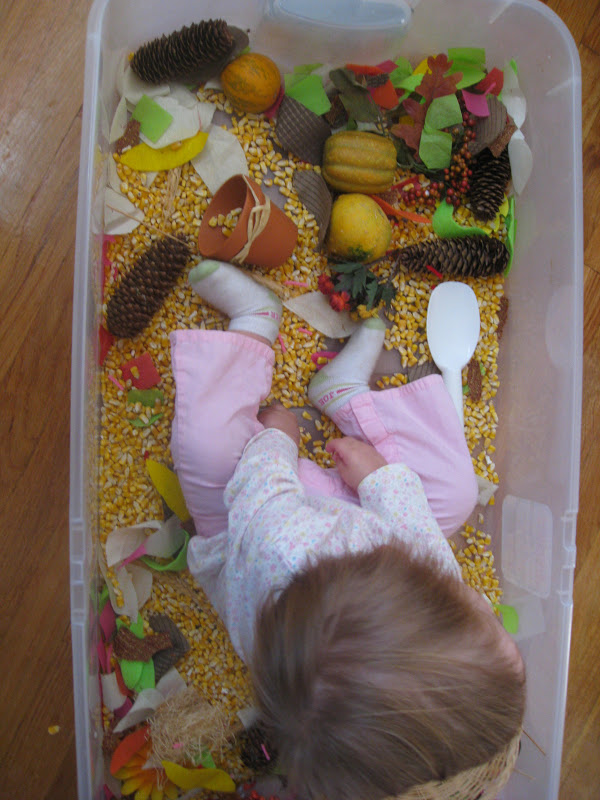
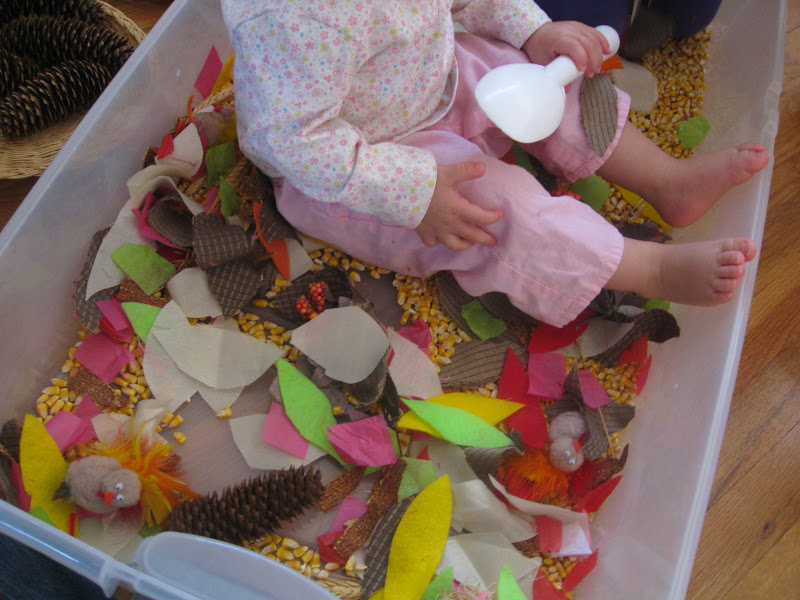
        Baby Girl thought it would be more fun to climb INTO the corn bin!  

      Sensory bin ideas for toddlers

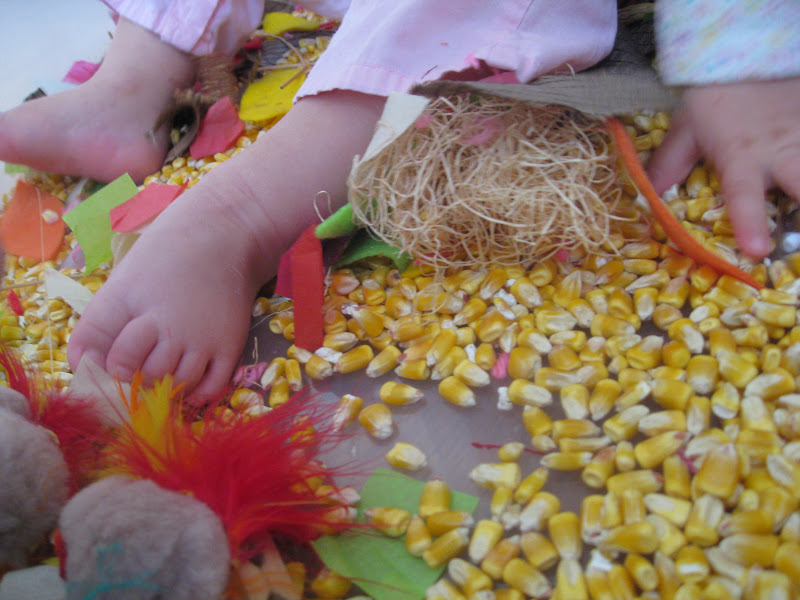
        It feels great on the toes!    (Yes, I stuck my toes in the corn with the kiddos… NO, I will not harm your eyes with THAT picture!)  

          Cute baby toes, YES, we need more pictures of those!   

      Thanksgiving sensory bin for toddlers using materials to explore sensory.

          Big Sister started the sorting game.  She collected all of the flowers into this pot.  

      Thanksgiving Sensory Bin for Learning

      Work on specific concepts with your sensory bin, including:

      • Sorting by colors
      • Adding or subtracting
      • Sorting by patterns or textures
      • Sort by type of object
      • Spatial awareness
      • Size awareness
      • Sort by texture
      • Shapes

      Use a sensory bin to help kids learn to sort by color.

      Sorting by Color…

      Sorting by Object…

      Little Guy thought we needed to sort the socks… 🙂

      Sensory bin ideas for Thanksgiving include sorting items by texture, shape, and color.
      Thanksgiving sensory ideas include this sensory bin with items to scoop and manipulate.

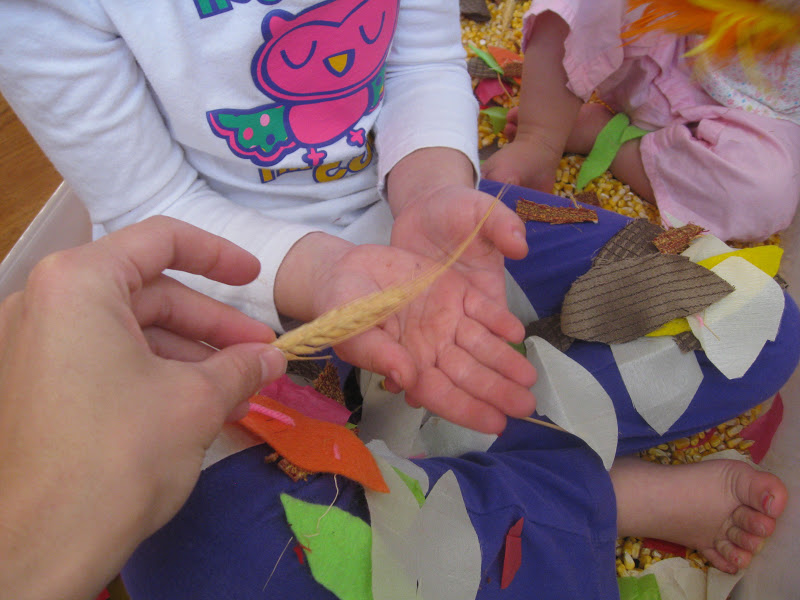
        Everyone enjoyed talking about and feeling the objects… Scratchy wheat stalks:  

          Soft feathers (these were cut from scraps of fabric I had around the house):  

      A toddler sensory bin can include different materials and items to explore.

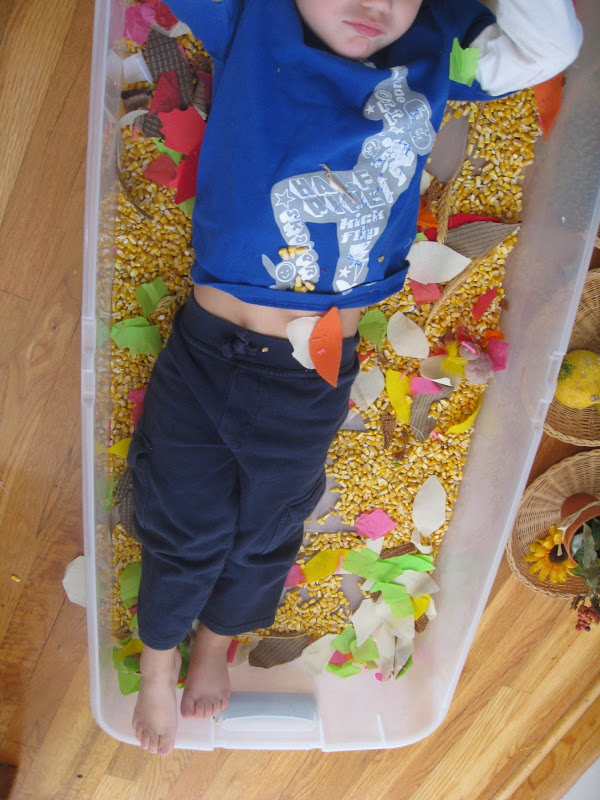
       Little Guy thought it would be pretty fun to lay IN the cool corn to see how that felt: “It’s pretty comfy, Mom”!  

            How many kids can you fit into a bin? It looks like the answer is three. 🙂  

      Sensory bin materials include dry corn, fabric swatches, feathers.

            There were lots of colors and textures to explore in this sensory bin!    

      Thanksgiving theme sensory bin for exploring colors and textures.
      Thanksgiving sensory bin to manipulate and build fine motor skills.


       Scooping, sorting, exploring the senses, fostering creativity, building language skills, working on fine motor skills…We did so much more than just playing with this fun Thanksgiving Sensory Bin! I am Thankful for Today!    

      Have you made a fall themed sensory bin? 

      More Thanksgiving activities

      Colleen Beck, OTR/L has been an occupational therapist since 2000, working in school-based, hand therapy, outpatient peds, EI, and SNF. Colleen created The OT Toolbox to inspire therapists, teachers, and parents with easy and fun tools to help children thrive. Read her story about going from an OT making $3/hour (after paying for kids’ childcare) to a full-time OT resource creator for millions of readers. Want to collaborate? Send an email to contact@theottoolbox.com.
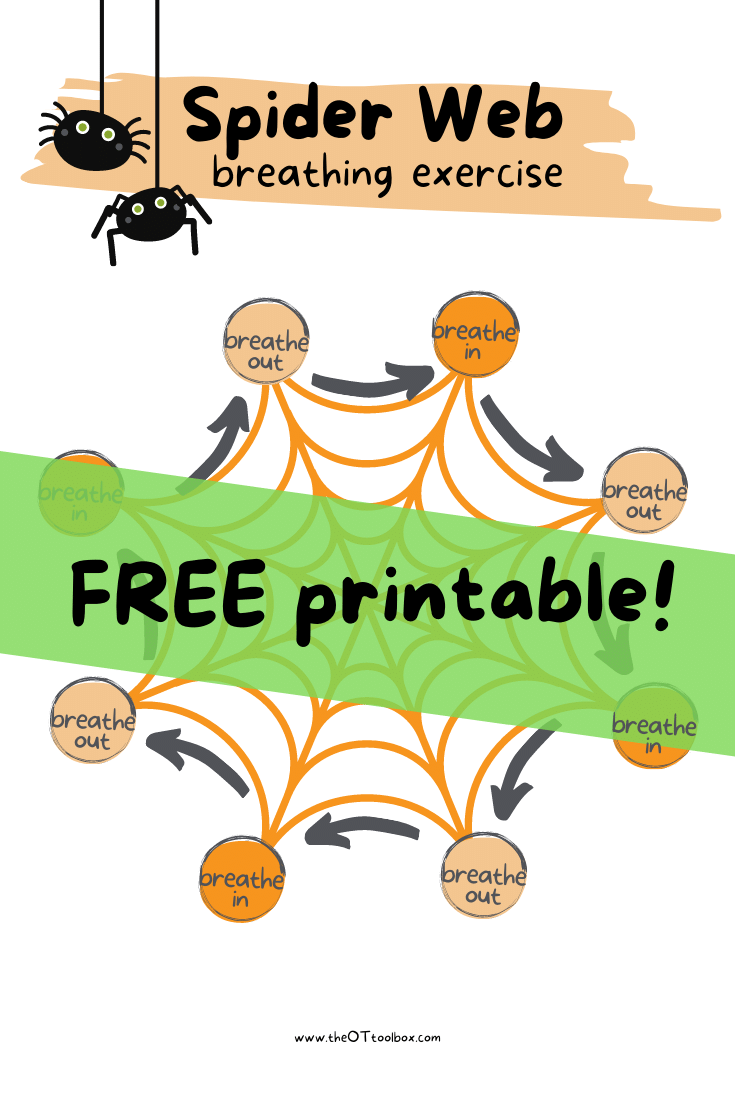
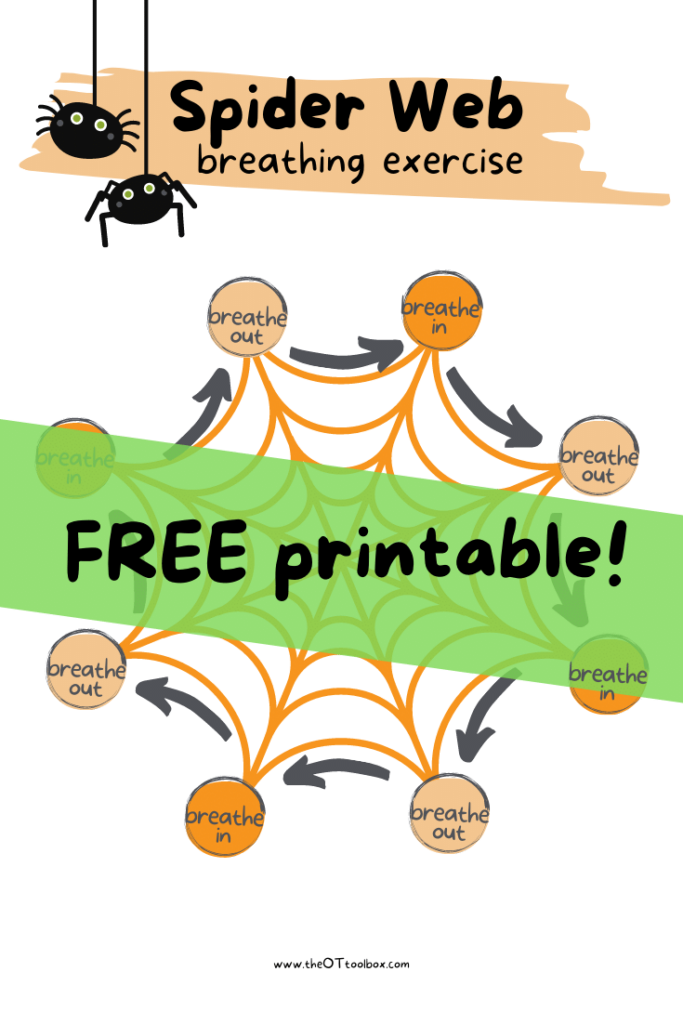
      Spider Mindfulness Exercise

      mindfulness exercise for kids with a spider theme

      This mindfulness exercise uses a spider activities theme, making it great for Halloween activities with kids that need a moment to stop and breathe. I wanted to create a spin on some of our popular mindfulness for kids activities and exercises from the past. (You can access these mindfulness worksheets below).

      mindfulness exercise for kids with a spider theme

      Mindfulness Exercise for Kids

      This mindfulness activity focuses on deep breathing. When children focus on a steady point, trace lines with their finger, and focus on deep breathing, it can help them to re-center and refocus other thoughts.

      There are many benefits of mindfulness strategies, and mindfulness tools like this one can be very helpful for children, especially during the unpredictable nature of a classroom Halloween party or during trick-or-treating.

      From addressing mood, regulation, and cognitive functioning, this Halloween activity can be a big help in classrooms or learning at home during the weeks leading up to Halloween.

      Other children may benefit from the mindfulness strategy as a coping tool or to address stress or worries this time of year.

      Still others can practice listening skills and auditory awareness as they complete the deep breathing exercise and focus on the lines of the spider web.

      Use this spider theme activity at Halloween time, or even in the midst of a Halloween party or trick-or-treating with children who need a moment to reset. Print off the deep breathing worksheet, slip it into a page protector, and you are ready to rock this Halloween!

      How to use this mindfulness worksheet

      To use the deep breathing worksheet, simply ask students to use their pointer finger to start anywhere on the edge of the spider web. They can then trace along the outside border of the web to meet each colored dot. When they “land” at a dot, they can read the directions and deeply breathe in or breathe out. Then, they can follow the along the spiderweb path to the next dot as they continue breathing in or out.

      This spider web deep breathing exercise would be a great addition to a spider web obstacle course!

      Click here to access this free mindfulness worksheet.

      Reminder, please do not share this worksheet with others. Instead, direct them to this website for access. Thank you!

      More mindfulness exercises

      Here are other mindfulness exercises for kids that you will want to grab:

      Pumpkin Deep Breathing Exercise

      Thanksgiving Deep Breathing Activity

      Christmas Mindfulness Activity

      Colleen Beck, OTR/L has been an occupational therapist since 2000, working in school-based, hand therapy, outpatient peds, EI, and SNF. Colleen created The OT Toolbox to inspire therapists, teachers, and parents with easy and fun tools to help children thrive. Read her story about going from an OT making $3/hour (after paying for kids’ childcare) to a full-time OT resource creator for millions of readers. Want to collaborate? Send an email to contact@theottoolbox.com.

      Pumpkin activity kit
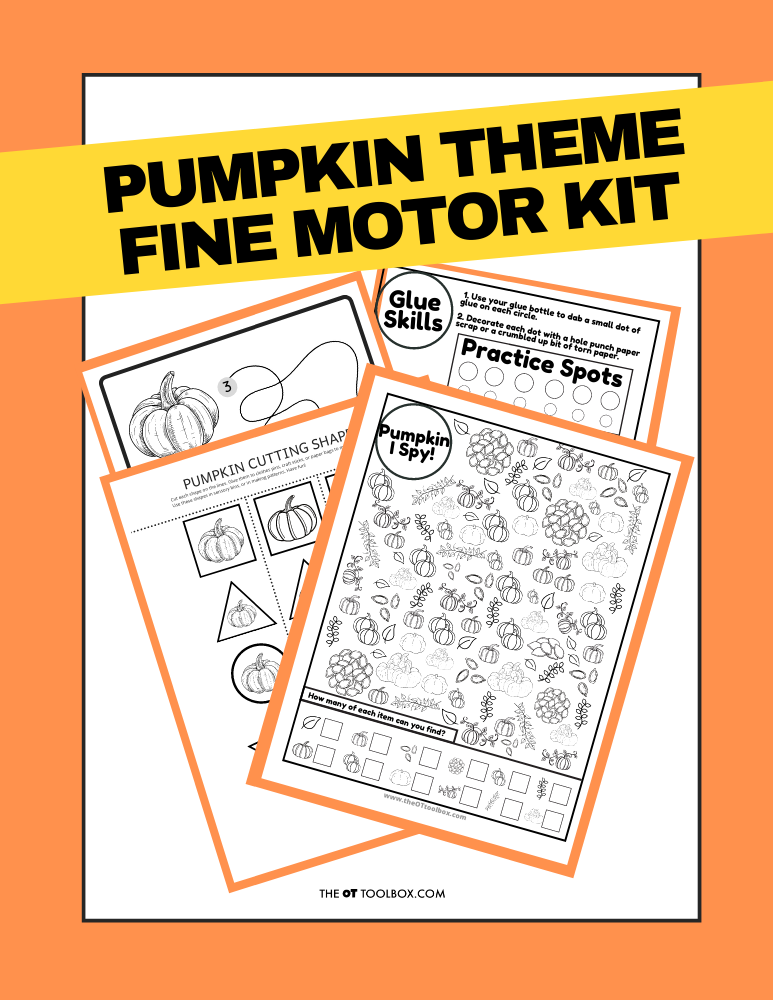
      Pumpkin Fine Motor Kit

      Grab the Pumpkin Fine Motor Kit for more coloring, cutting, and eye-hand coordination activities with a Pumpkin theme! It includes:

      • 7 digital products that can be used any time of year- has a “pumpkins” theme
      • 5 pumpkin scissor skills cutting strips
      • Pumpkin scissor skills shapes- use in sensory bins, math, sorting, pattern activities
      • 2 pumpkin visual perception mazes with writing activity
      • Pumpkin “I Spy” sheet – color in the outline shapes to build pencil control and fine motor strength
      • Pumpkin Lacing cards – print, color, and hole punch to build bilateral coordination skills
      • 2 Pumpkin theme handwriting pages – single and double rule bold lined paper for handwriting practice

      Work on underlying fine motor and visual motor integration skills so you can help students excel in handwriting, learning, and motor skill development.

      You can grab this Pumpkin Fine Motor kit for just $6!

      Colleen Beck, OTR/L has been an occupational therapist since 2000, working in school-based, hand therapy, outpatient peds, EI, and SNF. Colleen created The OT Toolbox to inspire therapists, teachers, and parents with easy and fun tools to help children thrive. Read her story about going from an OT making $3/hour (after paying for kids’ childcare) to a full-time OT resource creator for millions of readers. Want to collaborate? Send an email to contact@theottoolbox.com.
      Pumpkin Craft to Build Fine Motor SKills

      pumpkin craft that builds fine motor skills.

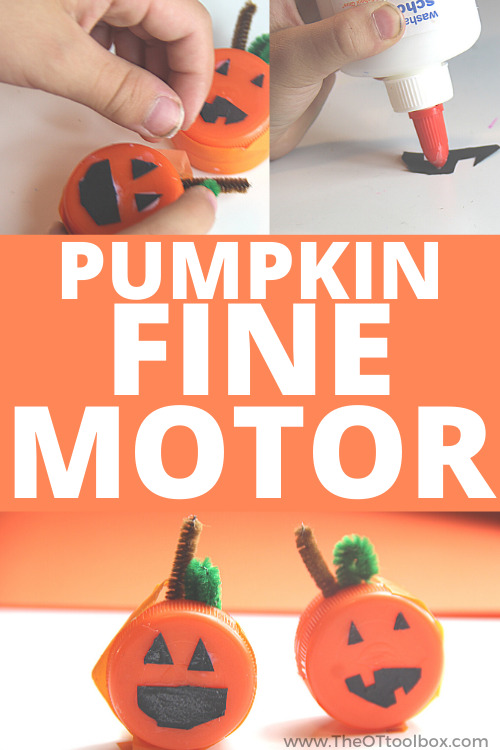
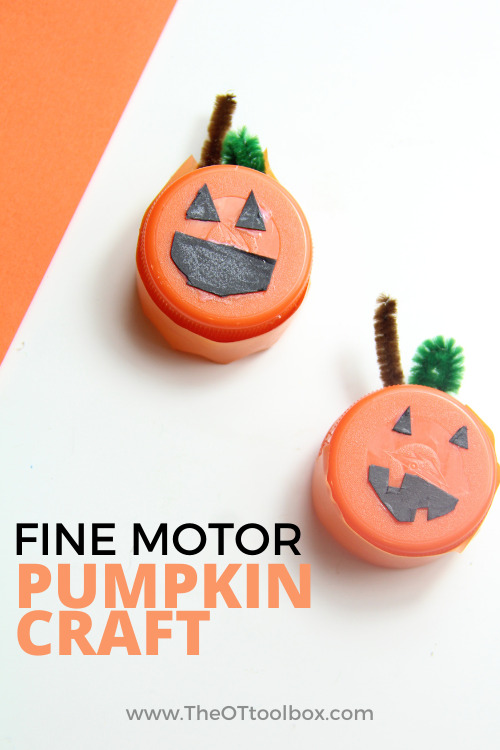
      This pumpkin craft is a fun way to build fine motor skills and to use recycled materials at the same time. This cute pumpkin craft was actually designed, created, and photographed by my daughters! I love to see them doing what they love: creating homemade crafts while fostering occupational balance and helping others build skills by sharing such a fun Fall craft.

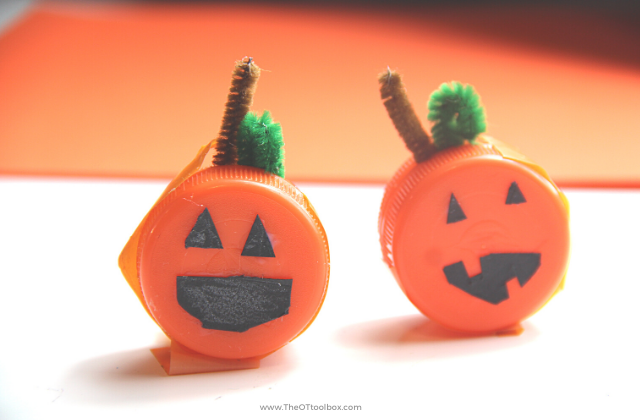
      Pumpkin craft that helps kids build fine motor skills, using recycled bottle caps.

      Pumpkin Fine Motor Activity

      By making this mini pumpkin craft, kids can build many fine motor skills. It’s a pumpkin fine motor activity without the goopy mess of pumpkin guts and seeds!

      This is a great Halloween occupational therapy activity to add to your toolbox…Just by making this Halloween craft, kids can build dexterity, refined grasp, and precision. Let’s break down how this craft builds fine motor skills:

      Precision– The pumpkin craft is a miniature pumpkin, just sized right for a bottle cap. Working on a small scale, kids can work on precision of grasp as they pick up and manipulate the materials.

      Pincer grasp- In fact, that tip to tip grasp that uses the pads of the pointer finger and they thumb, pincer grasp is used. This refined grasp is needed to pick up the googly eyes, pinch and place tape, maneuver the pipe cleaner piece.

      Neat pincer grasp– When that pincer grasp requires even more precision and the tips of the pointer finger and the thumb bend at the last joint, a neat pincer grasp is used. This grasp is needed to pick up very small items such as a mini-jack-o-lantern eyes and cutouts.

      Separation of the sides of the hand– Manipulating tape, picking up small items, and cutting with scissors fosters the fine motor skill of separation of the sides of the hand. This skill is essential for a functional pencil grasp.

      Bilateral coordination– Pulling and ripping tape is a great bilateral coordination task. Kids can use coordinated use of both hands throughout this pumpkin craft activity. Working on a small scale in a craft like this one pulls concentrated near-point work at the midline, making it a nice pre-cursor activity to refine skills needed for reading, writing, and other tasks requiring fine motor coordination skills.

      Gross grasp– Hand strength is built through the power side of the hand, or the ulnar side. When the power side is strengthened through gross grasp activities like squeezing a glue bottle, kids can gain more stability in the hand as they complete fine motor tasks. Squeezing the glue bottle in a small space requires a refined grasp, so glue is stopped when appropriate and there isn’t a giant pool of glue all over the table. This ability to squeeze a glue bottle in a small spot with accuracy isn’t easy for some kiddos! Here is more information on gross grasp.

      Scissor skills– This fine motor Halloween activity has very small scissor work, making it a nice way to work on precision and graded scissor skills.

      Work on fine motor skills with kids using this fine motor pumpkin craft.

      Let’s make a Cute Pumpkin Craft for Kids!

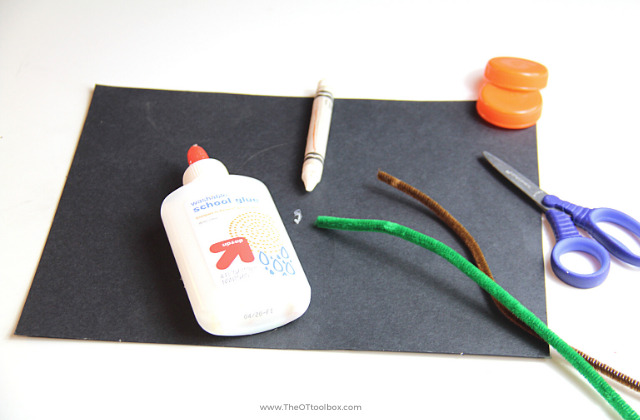
      Craft supplies to make a pumpkin craft with kids.

      First step is to gather all of your materials. Your materials for this pumpkin craft are: (Amazon affiliate links included below)

      How to make a pumpkin craft

      Let’s get started with making this cutie mini pumpkin craft.

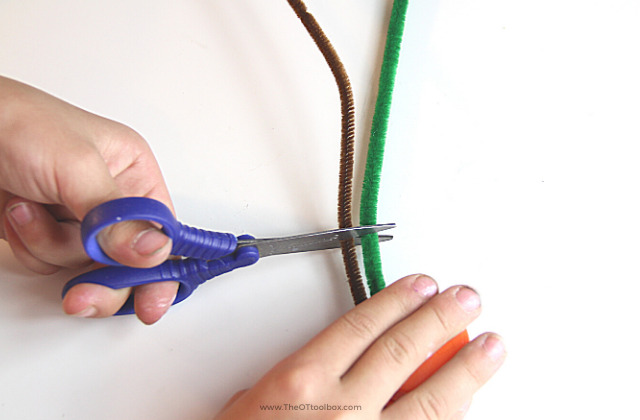
      Cut green and brown pipe cleaners to make the pumpkin craft.
      1. First, cut the pipe cleaners to a length of about one inch. Put the pipe cleaners on the edge of one bottlecap. When you have it in a good spot add orange tape on the sides so it will stick.
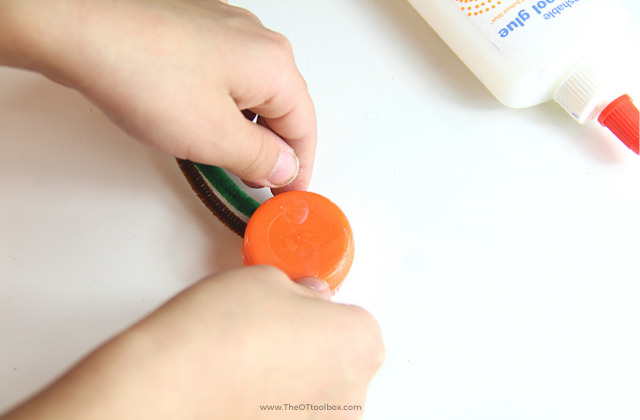
      Use recycled bottle caps to make a pumpkin craft with kids.

      2. Place the second bottle cap on the edge of the first bottle cap so the rims are touching and sandwiching the pipe cleaners. Add a strip of orange tape around the outside of both bottle caps for a 3D pumpkin craft!

      3. Cut a small piece of the green pipe cleaner and bend it into a leaf shape.

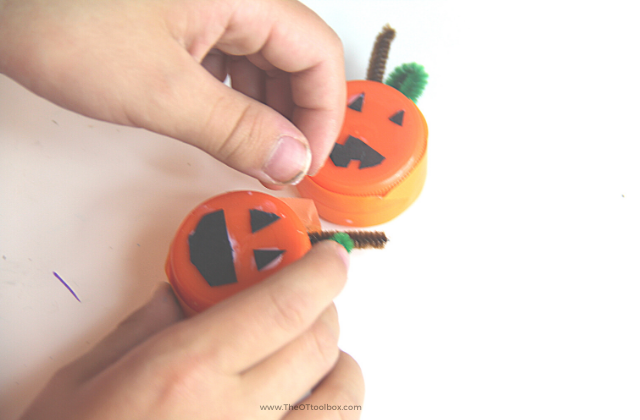
      4. Then cut out your black construction paper to make a small jack-o-lantern face.

      Use orange washi tape to make a mini pumpkin craft.

      5. Next, glue the small construction paper pieces in the position you would like it to be on one of the bottle caps.

       Have fun building fine motor skills with this mini pumpkin craft!

      Cute mini pumpkin craft using recycled bottle caps.

      More Halloween Crafts you will love

      Pumpkin Thumbprint craft
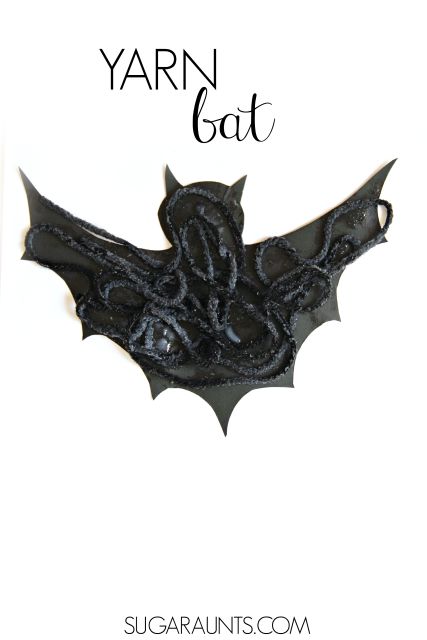
      Bat craft for halloween
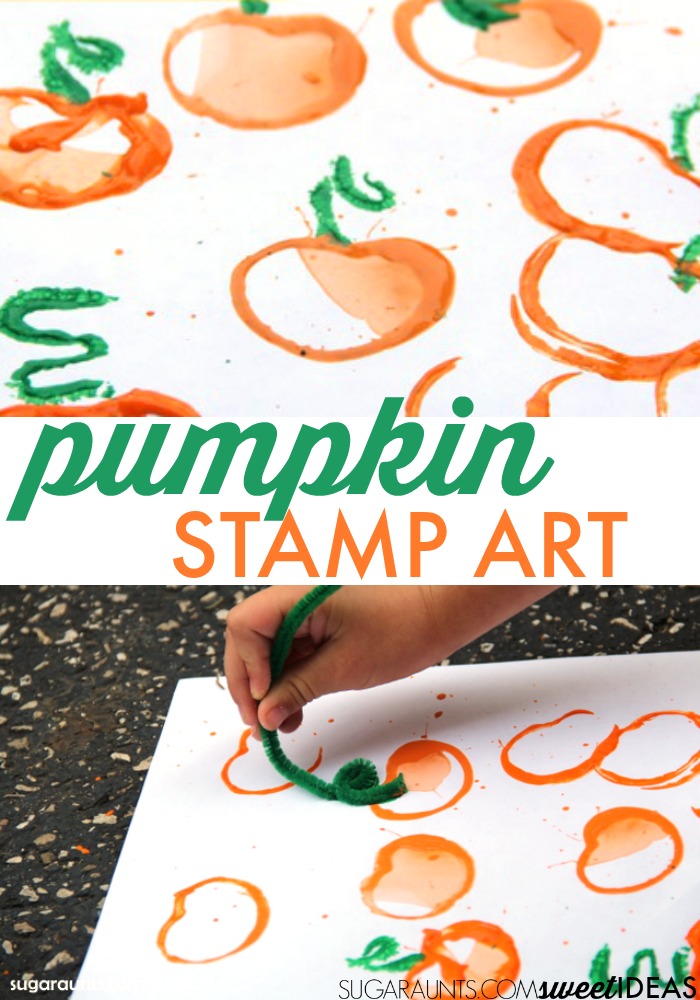
      Pumpkin stamp craft
      Pumpkin activity kit
      Pumpkin Fine Motor Kit

      Grab the Pumpkin Fine Motor Kit for more coloring, cutting, and eye-hand coordination activities with a Pumpkin theme! It includes:

      • 7 digital products that can be used any time of year- has a “pumpkins” theme
      • 5 pumpkin scissor skills cutting strips
      • Pumpkin scissor skills shapes- use in sensory bins, math, sorting, pattern activities
      • 2 pumpkin visual perception mazes with writing activity
      • Pumpkin “I Spy” sheet – color in the outline shapes to build pencil control and fine motor strength
      • Pumpkin Lacing cards – print, color, and hole punch to build bilateral coordination skills
      • 2 Pumpkin theme handwriting pages – single and double rule bold lined paper for handwriting practice

      Work on underlying fine motor and visual motor integration skills so you can help students excel in handwriting, learning, and motor skill development.

      You can grab this Pumpkin Fine Motor kit for just $6!

      Tiny Pumpkin Crafts

      We loved making this mini pumpkin craft for building precision and neat pincer grasp. By cutting the mini pumpkin faces from paper, you really work on refined motor skills.

      You can expand this activity by pairing it with our pumpkin emotions activity. Ask the child/student to identify emotions and then make that pumpkin face with the tiny pumpkins.

      Or, include more self-regulation concepts by using the tiny pumpkins along with our free pumpkin deep breathing exercise. Trace the deep breathing arrows with the tiny pumpkins! You can even discuss how small changes (and mini pumpkins!) make a big difference.

      Colleen Beck, OTR/L has been an occupational therapist since 2000, working in school-based, hand therapy, outpatient peds, EI, and SNF. Colleen created The OT Toolbox to inspire therapists, teachers, and parents with easy and fun tools to help children thrive. Read her story about going from an OT making $3/hour (after paying for kids’ childcare) to a full-time OT resource creator for millions of readers. Want to collaborate? Send an email to contact@theottoolbox.com.
      Community Helpers Slide Deck

      Community helper activity with a themed slide deck for occupational therapy virtual therapy sessions.

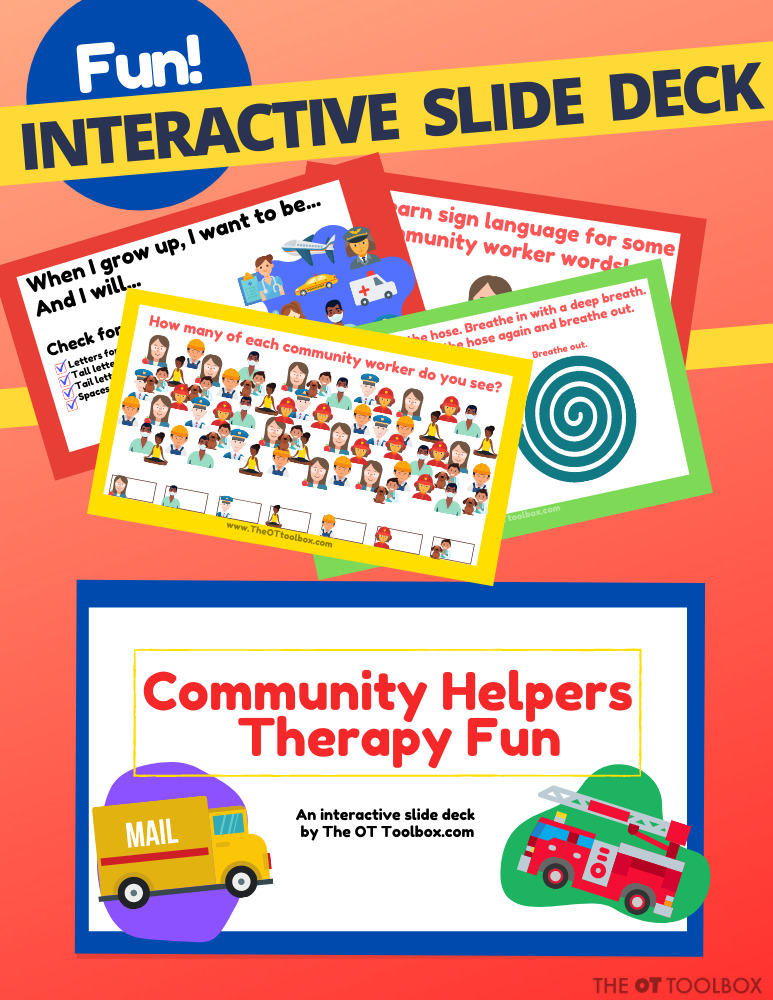
      Today, I’ve got another virtual OT slide deck coming your way, featuring community helpers! These interactive activities are perfect for occupational teletherapy teletherapy or virtual lesson plans. This community helpers theme includes fine and gross motor based activities, handwriting prompts, a visual perception activity, mindfulness activities, a self-regulation check-in, and an eye-hand coordination activity.

      This is a fun addition to our weekly therapy themes for themed occupational therapy sessions.

      Activity to teach kids about community helpers in a themed interactive slide deck for occupational therapy.

      Community Helpers

      Community worker themes are popular in lesson plans in schools and homeschooling. Occupational therapists can compliment educational studies with this community helper lesson plan that offers movement and functional tasks that go along with the theme.

      Community helpers might include:

      • Firefighters
      • Police officers
      • Postal workers
      • Transportation employees
      • Trash collectors
      • Nurses
      • Doctors
      • Teachers
      • Occupational therapists!
      • Physical therapists
      • Speech therapists
      • Construction workers
      • Any worker in the community!

      Use this list and the community helper writing prompts in the slide deck to come up with the neighborhood helpers kids strive to be when they grow up!

      Community Helpers Slide Deck

      If you’ve been following The OT Toolbox, then you may have seen a few of our other interactive slide decks. Therapists are LOVING these therapy slide decks for their themed activities that help kids build skills, while in virtual or hybrid environments.

      Community helpers activity for occupational therapy.

      You can grab the other free slide decks here on our teletherapy and free resources page.

      Today’s slide deck includes several community helpers activities:

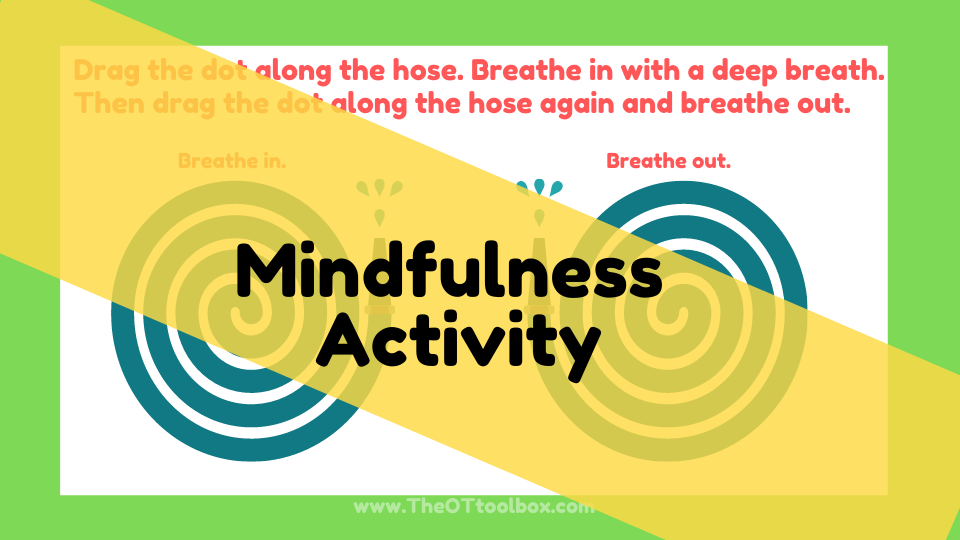
      This community helper activity fosters mindfulness and deep breathing for a coping strategy.

      Community Helpers Warm-Up Activity- Use the firefighter’s firehoses to work on deep breathing as a mindfulness and coping tool to warm-up for this activity. Kids can move the interactive portion of the slide along the firehose to work on eye-hand coordination and visual tracking, too.

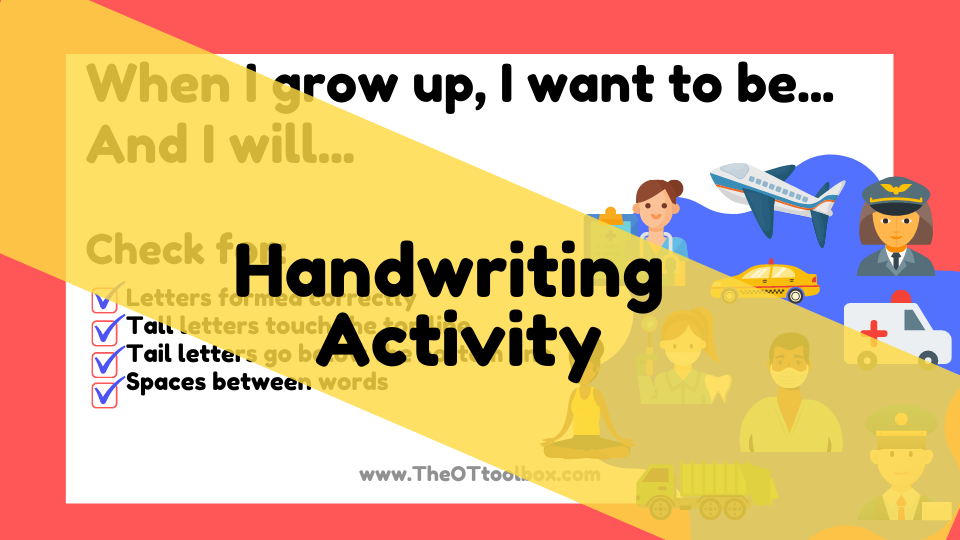
      Community helpers writing prompts for working on handwriting.

      Community Helpers Writing Prompts– Use the community workers writing prompts for creative writing and handwriting practice. Kids can use the self-check writing list to check their written work for accuracy with letter formation, line use, spacing, and size.

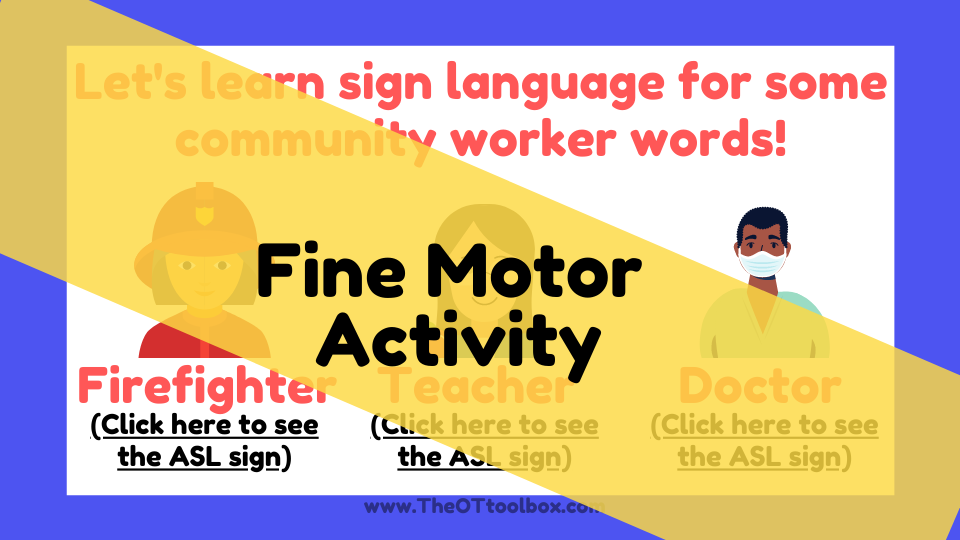
      Community helper theme slide deck with a fine motor activity using sign language.

      Community Helpers Sign Language– This fine motor workout is pretty fun! Click through the links to learn sign language for some community workers. This activity works on fine motor skills, bilateral coordination, finger isolation, motor planning, and eye-hand coordination.

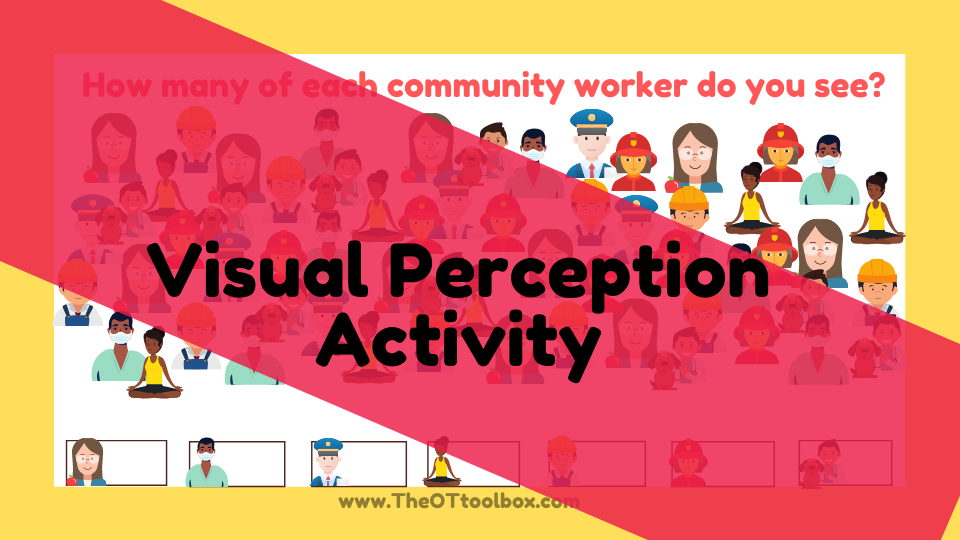
      A fun visual perception activity with a community helper theme.

      Community Helpers Visual Perception Activity– Count the different helpers on the community workers puzzle page and type the number in the text box. This activity works on visual perceptual skills such as form constancy, visual discrimination, and figure ground, visual scanning.

      Gross motor activity for the community helper theme slide deck.

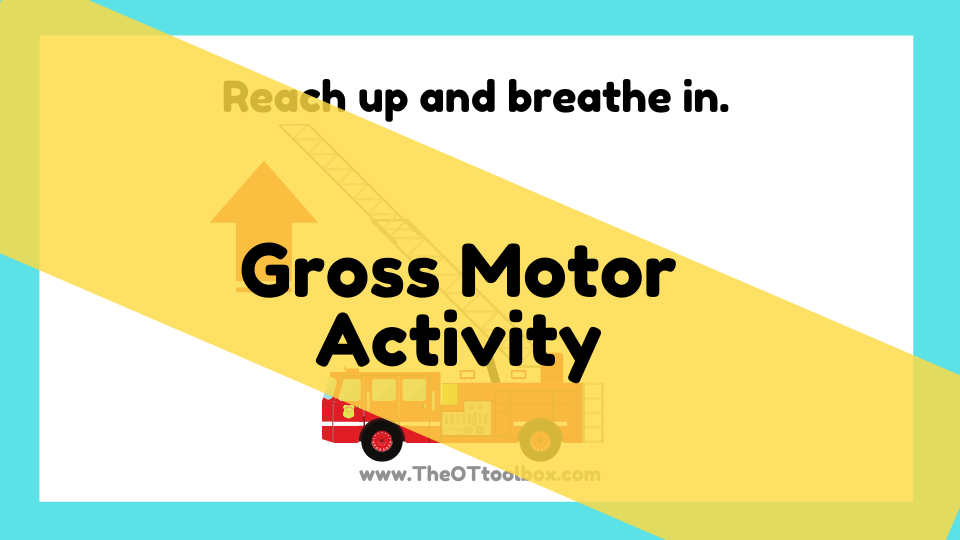
      Community Helpers Gross Motor Activity– Use the deep breathing and movement prompts to integrate mindfulness with gross motor as kids gain a big breath in with extended lung and rib cage/shoulder girdle expansion. Then, reach far down to push out that deep breath. This slide uses a community worker theme with common trucks found in the community.

      Self regulation activity for the community helper theme slide decks.

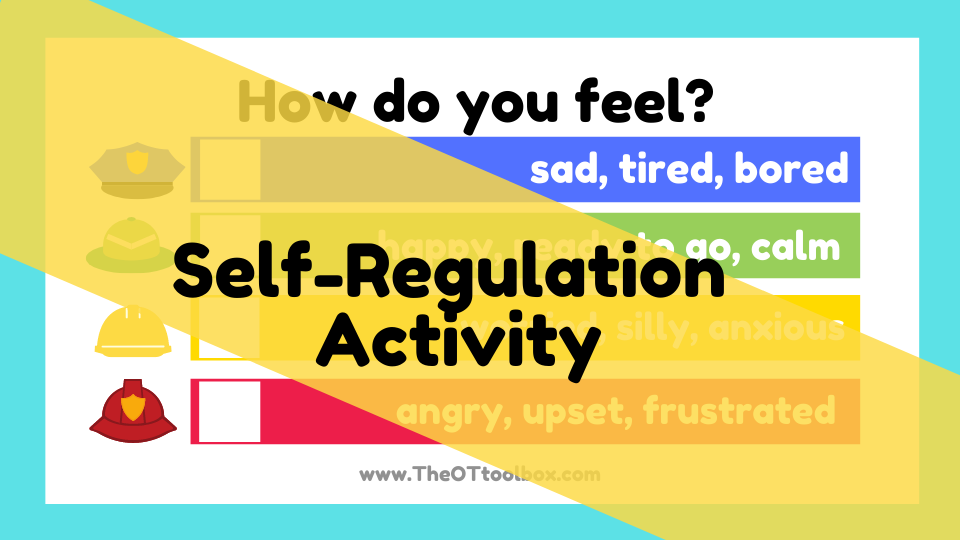
      Community Helper Activity for Self-Regulation– The final slide in this activity deck is a self-regulation check-in that can be used to close the session. Check in on how your child’s body feels and acts, as well as their emotions. This is a good time to work on some coping tools or strategies that can carry out of the session, too.

      Does this looks like a fun way to spend a therapy session while working on skills?

      You can grab a copy of this Google slide deck and use it to work on specific skills.

      Enter your email address below and you will receive a PDF containing a link to copy the slide deck onto your Google drive. Save that PDF file, because you can come back to it again and again and send it to the kids on your caseload (or classroom) so they can make their own copy on their Google drive.

      Get this Community Helpers Slide Deck

        We respect your privacy. Unsubscribe at anytime.

        One resource we love is our $5 therapy kit…the Plastic Egg Therapy Kit! It has 27 printable pages of activities with an Easter egg theme. In the kit, you’ll find fine motor activities, handwriting prompts, letter formation pages, pencil control sheets, plastic egg activities, matching cards, graphing activities, STEM fine motor task cards, and more. There are several pages of differentiated lines to meet a variety of needs. This therapy kit has everything done for you.

        Get your copy of the Easter Egg Therapy Kit here.

        Fall Gross Motor Activities

        Fall gross motor activities

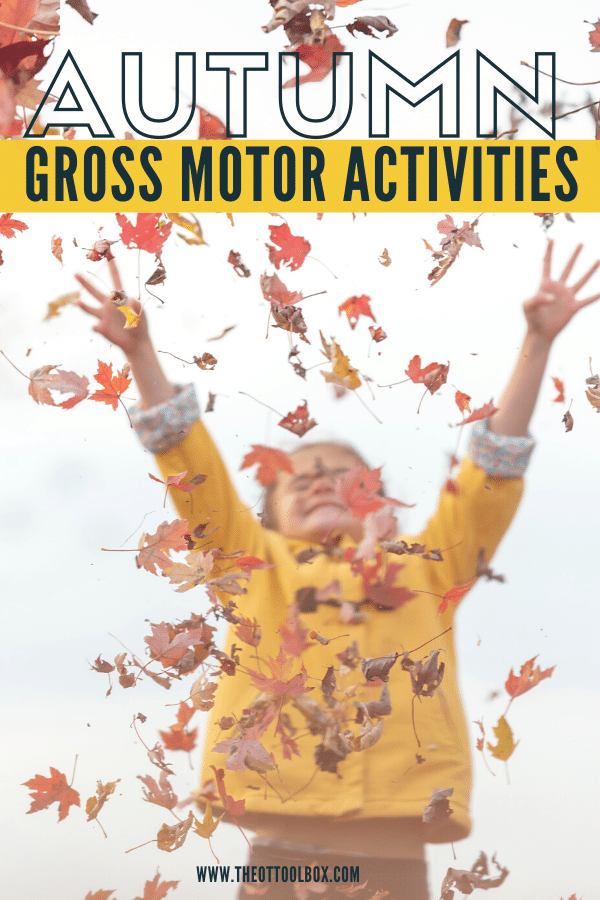
        Adding to the fun of autumn are these Fall gross motor activities. There is so much about this time of year that offers opportunities for heavy work activities and gross motor play, all using a Fall theme!

        Use these Fall activities for family fun or ways to offer different movement challenges. Many of these ideas use all that Autumn has to offer: cooler weather, piles of leaves, hay bales, pumpkins, and apples. Other gross motor ideas listed here are gross motor ideas that can be done indoors. Either way, they are perfect for gross motor preschool activities, gross motor activities for toddlers, and whole-body activities to help kids build core strength, balance, coordination, and endurance.

        Fall Gross Motor Activities

        Isn’t Fall the perfect time to get outside, enjoy the season and the crisp air while getting active?  There are so many great active and gross motor activities you and your family can do even with little prep or planning.  Jump in leaves, go on a nature walk, collect leaves and fall items…just get moving! 

        Fall gross motor activities

        Fall Activities

        Collect fall leaves with Leaf Identification Cards.

        Print off this free Fall Tic Tac Toe board. Try to fill the board by doing all of the fall activities.

        Talk a walk and enjoy nature. What do you see? Smell? Hear?

        Get active with a Ghost Catch Game.

        Go on a hunt with Halloween Scavenger Hunt

        Rake leaves as a family.

        Then, JUMP in the leaves!

        Spending time time indoors doesn’t mean there’s no room for gross motor activities. Creep and crawl like a spider with this Motor Planning Spider Web Maze.

        Explore apples and red while balancing a tree trunk with Learning Apples/Red.

        Sing and dance this season with Red and Yellow and Orange and Brown Songs for Autumn (and dance).

        Get those shoulder girdles activated with Easy Indoor Halloween Obstacle Course.

        For sensory input, try these Fall Vestibular Activities that will add movement.

        You’ll love the calming heavy work that these Fall Proprioception Activities offer.


        Colleen Beck, OTR/L has been an occupational therapist since 2000, working in school-based, hand therapy, outpatient peds, EI, and SNF. Colleen created The OT Toolbox to inspire therapists, teachers, and parents with easy and fun tools to help children thrive. Read her story about going from an OT making $3/hour (after paying for kids’ childcare) to a full-time OT resource creator for millions of readers. Want to collaborate? Send an email to contact@theottoolbox.com.
        125 Writing Prompts for Kids

        Writing prompts for kids

        Handwriting prompts, also known as writing prompts, are a great way to inspire kids to write creatively and express themselves through their handwriting. Writing is an essential skill that kids must develop as it helps them to communicate effectively, build their imagination, and develop critical thinking. For kids that struggle with bad handwriting, practicing legibility is often a real challenge. Having a set of writing prompts for kids to use to guide handwriting practice can help, especially if it’s a motivating writing prompt topic that peaks the child’s interest!

        Handwriting Prompts

        Handwriting prompts, also known as writing prompts, provide kids with ideas and topics to write about, encouraging them to explore their thoughts and emotions. There are various types of writing prompts for kids, including journal prompts, writing picture prompts, and fun writing prompts. In this article, we will explore how to write a prompt and introduce some fun journal prompts for kids and picture prompts for kids to spark their creativity and make writing a fun activity for them.
        Then, teachers and therapists can use that writing prompt exercise as a handwriting practice or creative writing activity. Occupational therapists often work on letter formation, line awareness, margin use and other parts of writing that impact legibility and efficiency. A kid-friendly writing prompt offers a natural writing opportunity to impact carryover of handwriting skills.
        Writing prompts for kids to use for handwriting practice and creative writing ideas.

        Writing Prompts for Kids

        Using a writing prompt or creative writing idea that is fun can be one way to work on legibility and hand writing tips without feeling like kids are fighting the hand writing process. Writing about fun things or areas of interest is one way to work on legibility without rote copying or simply forming letters over and over again.

        Here are lists of  writing prompts and writing prompt  ideas to help kids work on handwriting using their interests in order to improve carryover. The goal with these writing prompts are to work on handwriting practice without the struggle.

        Writing prompt ideas

        Before getting started with these writing prompts for kids, be sure to encourage kids to create short lists. Writing short lists rather than typical writing prompts offers a chance for kids to practice the specifics of handwriting:

        • Line use
        • Margin use
        • Letter formation
        • Size awareness
        • Spacing between letters

        When writing in small spurts, kids get the chance to work on areas like line awareness, spacing, letter size, and letter formation without fatigue. 

        Many times, writing prompts are opportunities for kids to write complete sentences and to use creative writing, while practicing the parts of a sentence, use of figurative language, complete thoughts, etc. And creative writing journal prompts are great to use for these learning needs!

        Today, however, I am going to share writing prompts in list format so that handwriting tasks can be completed in short spurts, while focusing on the mechanics of handwriting.

        When working on handwriting, be sure to use a self-check list so that children can look over their work and self-analyze their written work. A writing posture check can be helpful to use as well. These self-assessment checks improve carryover and learning of skills. 

        How to Write a Prompt

        Creating a writing prompt that focuses on a child’s interests can be a great way to engage them in writing and encourage their creativity. Here are some steps you can follow to create such a prompt:

        1. Identify the child’s interests: Start by observing the child and identifying what they enjoy. This could be anything from their favorite TV show to their favorite sport or hobby.
        2. Brainstorm writing topics: Once you know the child’s interests, brainstorm some writing topics that relate to those interests. For example, if the child loves soccer, you could create a prompt about a soccer game they played in or a famous soccer player they admire.
        3. Use descriptive language: When creating the prompt, use descriptive language to make it more engaging and interesting. For example, instead of simply asking the child to write about their favorite animal, you could ask them to describe the animal’s appearance, habitat, and behavior in detail.
        4. Make it open-ended: Avoid creating prompts that are too narrow or prescriptive. Instead, make the prompt open-ended so that the child has the freedom to explore their own ideas and imagination.
        5. Make it age-appropriate: Consider the child’s age and writing level when creating the prompt. Younger children may need simpler prompts that focus on basic writing skills, while older children may be ready for more complex prompts that require critical thinking and analysis.
        6. Make it fun: Finally, make sure the prompt is fun and engaging for the child. You can use humor, fantasy, or adventure to make the prompt more exciting and enjoyable to write about.
        Writing prompt ideas for kids

         Creative Journal Prompts

        Use the writing prompts for kids as creative journal prompt ideas to write either lists of words or creative writing in a journal. Some ideas are open-ended questions and others are lists.

        Sometimes a fun writing prompt as simple as ice cream writing is all it takes for meaning and motivation to kick in!

        Animal Writing Prompts for kids

        1. Write about a favorite animal. 
        2. Write animals in alphabetical order.
        3. List an animals for each letter of the alphabet.
        4. What animal is most like you? Why?
        5. If you could be any animal, it would be…
        6. Imagine you have a pet tiger. What would your daily routine look like? Describe a day in the life of you and your pet tiger.
        7. Write a story about a group of penguins who discover a new continent.
        8. Pretend you are a squirrel preparing for winter. Describe how you would gather and store food for the cold months ahead.
        9. Write about a day in the life of a dolphin. What do they do all day in the ocean?
        10. Imagine you are a bird flying south for the winter. Describe the journey and the things you see along the way.
        11. Write about a mischievous monkey who escapes from the zoo and causes chaos in the city.
        12. Imagine you are a kangaroo hopping through the Australian outback. What would you see and do?
        13. Write a story about a group of ants working together to gather food for their colony.
        14. Imagine you are a lion living in the savanna. Describe a typical day, from hunting to sleeping.
        15. Write a story about a group of animals who band together to save their habitat from destruction by humans.

        Writing Prompts About My Favorite Things

        1. Your favorite way to spend time on the weekends
        2. Favorite snacks
        3. Things that are your favorite color
        4. Favorite foods
        5. Favorite shows and movies
        6. What are your favorite pizza toppings?
        7. Write about your favorite food. What makes it so delicious to you? What are some memories you have associated with it?
        8. Describe your favorite place to go on vacation. Why do you enjoy it there? What do you like to do when you visit?
        9. Write about your favorite hobby. What do you enjoy about it? How did you get started with it?
        10. Describe your favorite book. What do you like about the story and the characters? What did you learn from reading it?
        11. Write about your favorite movie. What do you like about it? Who are your favorite characters and why?
        12. Describe your favorite season. What do you like about it? What activities do you enjoy doing during that season?
        13. Write about your favorite animal. What do you like about it? What makes it special to you?
        14. Describe your favorite game to play. Why do you enjoy playing it? Who do you like to play it with?
        15. Write about your favorite song. What do you like about the lyrics and the melody? What memories do you have associated with it?
        16. Describe your favorite memory. What happened? Why was it special to you? How did it make you feel?

        Writing Prompts about the Perfect Things

        1. Describe your perfect day.
        2. Describe your perfect vacation.
        3. Describe the ultimate ice cream sundae toppings.
        4. Describe the all-time best sleepover.
        5. Imagine your perfect day. Write about what you would do, where you would go, and who you would spend time with.
        6. Describe your ideal job. What would you do, and what would your workplace look like? What skills would you need to succeed in your ideal job?
        7. Write about your perfect meal. What would you eat, and who would you share it with? Describe the setting and ambiance of your ideal dining experience.
        8. Imagine your perfect vacation. Write about where you would go, what you would do, and who you would go with. Describe the scenery and the activities you would participate in.
        9. Describe your perfect weekend. What would you do, and who would you spend time with? What would make your ideal weekend special?
        10. Write about your ideal home. What would it look like, and where would it be located? What features and amenities would it have?
        11. Imagine your perfect outfit. Write about what you would wear, and where you would go dressed in your ideal outfit. Describe how you would feel wearing it.
        12. Write about your ideal relationship. What qualities would your partner have, and what would your relationship look like? What would you do together, and how would you support each other?
        13. Describe your perfect day off. What would you do to relax, recharge, and enjoy yourself? Who would you spend time with, and where would you go?
        14. Write about your ideal self. What qualities and traits would you possess, and how would you develop and maintain them? What would your life look like as your ideal self?

        “Which is better” writing prompts for kids

        1. Which is better: summer or winter? Why?
        2. Which is better: spring or fall? Why?
        3. Which is better: the mountains or the beach. Why?
        4. Which is better: the city or the country? Why?
        5. Which is better: football or soccer? Why?
        6. Write an argumentative essay on which is better: reading books or watching movies. Support your position with reasons and examples.
        7. Compare and contrast living in a big city versus living in a small town. Which is better, and why?
        8. Write about which is better: eating at home or eating out at restaurants. Consider factors such as cost, convenience, and health benefits.
        9. Compare and contrast online learning versus traditional classroom learning. Which is better, and why?
        10. Write about which is better: having a big family or a small family. Consider the benefits and drawbacks of each.
        11. Compare and contrast public transportation versus driving a car. Which is better, and why?
        12. Write about which is better: exercising outdoors or at the gym. Consider factors such as convenience, social interaction, and exposure to nature.
        13. Compare and contrast working for a large corporation versus a small startup. Which is better, and why?
        14. Write about which is better: owning a pet or not owning a pet. Consider the benefits and responsibilities of pet ownership.
        15. Compare and contrast traveling alone versus traveling with a group. Which is better, and why?

        List Writing Prompts for kids

        1. Days of the week
        2. Months of the year
        3. Kinds of fruit
        4. Hamburger toppings
        5. Animals at the zoo
        6. Sports played with a ball
        7. Write a list of 10 things you want to accomplish in the next year. Be specific and set measurable goals.
        8. Make a list of your favorite books of all time. Write a brief summary of each book and explain why you love it.
        9. Write a list of your favorite songs for different moods or occasions, such as songs for working out, relaxing, or partying.
        10. Make a list of 10 things that inspire you, whether it’s nature, art, or people you admire.
        11. Write a list of your favorite quotes and explain why they resonate with you.
        12. Make a list of 10 things you’re grateful for, whether it’s people, experiences, or personal qualities.
        13. Write a list of your favorite foods from different cultures. Explain what you love about each dish and how you discovered it.
        14. Make a list of 10 things you do to take care of your mental health, such as meditation, exercise, or talking to a friend.
        15. Write a list of 10 things you would do if you had unlimited time and resources. Dream big and be creative!
        16. Make a list of 10 ways you can make a positive impact on your community, whether it’s through volunteering, activism, or simply spreading kindness.

        Sports Writing Prompts for Kids

        1. Write about your favorite sport and why you love it.
        2. Describe the most exciting game you have ever watched or played.
        3. Write about your favorite athlete and why they inspire you.
        4. Describe the equipment and gear you need to play your favorite sport.
        5. Write about the history of your favorite sport, including how it originated and how it has evolved over time.
        6. Describe the rules of your favorite sport and explain how they are enforced.
        7. Write about the benefits of playing sports, including physical fitness, teamwork, and sportsmanship.
        8. Describe the different positions in your favorite sport and the roles each player has.
        9. Write about your favorite sports moment, either from your own experience or from watching a professional game.
        10. Describe the training and preparation you need to do to play your favorite sport.
        11. Write about the importance of warm-up exercises and stretching before playing sports.
        12. Describe the different types of exercises you can do to improve your athletic performance.
        13. Write about the role of coaches and how they help players improve.
        14. Describe the different types of competitions and tournaments in your favorite sport.
        15. Write about the challenges and obstacles you face when playing sports, and how you overcome them.
        16. Describe the different types of sportsmanship and fair play, and why they are important in sports.

        Mermaid writing Prompts

        1. Write a story about a mermaid who falls in love with a human. What challenges do they face in their relationship?
        2. Describe a day in the life of a mermaid, from swimming through the ocean to interacting with other sea creatures.
        3. Write about a mermaid who discovers a lost treasure on the ocean floor. What is the treasure, and why is it important?
        4. Describe a mermaid’s favorite underwater hiding spot. What does she do there, and why does she enjoy it?
        5. Write a story about a mermaid who goes on a quest to find a rare and valuable sea plant. What obstacles does she face, and what does she learn along the way?
        6. Describe a mermaid’s home in detail, including its structure, decor, and furnishings.
        7. Write about a mermaid who becomes friends with a sea turtle. What adventures do they have together?
        8. Imagine a world where mermaids and humans coexist. Write a story about a mermaid who must navigate this new world.
        9. Describe a mermaid’s magical powers, such as the ability to control the ocean’s tides or communicate with sea creatures.
        10. Write about a mermaid who discovers an underwater city. Who lives there, and what secrets does it hold?

        Unicorn Writing Prompts

        1. Write a story about a young girl who discovers a unicorn in her backyard. What adventures do they have together?
        2. Describe the appearance and personality of your ideal unicorn. What qualities do you value most in this mythical creature?
        3. Write about a unicorn who goes on a journey to find a lost member of their herd. What obstacles do they face along the way?
        4. Imagine a world where unicorns are real and humans can communicate with them. Write about a human who becomes friends with a unicorn and what they learn from each other.
        5. Write a poem about a unicorn’s magical powers, such as the ability to heal, fly, or create rainbows.
        6. Describe the landscape of a magical unicorn kingdom, including its forests, rivers, and mountains.
        7. Write about a unicorn who befriends a group of woodland animals. What adventures do they have together?
        8. Imagine a world where unicorns are hunted for their magical horns. Write a story about a group of humans and unicorns who work together to stop the hunters.
        9. Write about a unicorn who discovers a hidden underground cave. What secrets does the cave hold, and what adventures does the unicorn have inside?
        10. Describe a day in the life of a unicorn, from grazing on grassy fields to exploring enchanted forests. What do unicorns do all day?

        Space Writing Prompts

        1. Write about what it would be like to live on a planet other than Earth. What kind of environment would it have, and how would people adapt to living there?
        2. Imagine that you are an astronaut on a mission to explore a distant planet. Write about what you see and discover on your journey.
        3. Write about the history of space exploration, including famous missions and the people who made them happen.
        4. Describe the different planets in our solar system and their unique features. Which planet would you most like to visit, and why?
        5. Write about the challenges of living and working in space, such as zero gravity, radiation, and isolation.
        6. Imagine that you are traveling through a black hole. What do you experience, and what do you discover on the other side?
        7. Write about the possibility of life on other planets. What kind of life forms could exist, and how might they be different from those on Earth?
        8. Describe the different types of stars and galaxies in the universe. What makes each one unique?
        9. Write about the different ways that humans have used space technology, such as communication satellites, weather monitoring, and GPS.
        10. Imagine that you are a space tourist, traveling to different planets and galaxies for fun. What sights do you see, and what adventures do you have?
        11. Write about the future of space exploration. What kind of missions might be possible in the coming years, and how might they benefit humanity?
        12. Describe the role of space agencies such as NASA and ESA in exploring space. What challenges do they face, and how do they work to overcome them?
        13. Write about the mysteries of space, such as dark matter, black holes, and the origins of the universe. What do scientists know about these phenomena, and what questions still need to be answered?

        Hopefully, these writing prompt ideas give you some ideas to get started on working on handwriting skills!

        Want more motivating writing prompts to work on handwriting practice, and get that pencil to paper? Grab your copy of the Interest Lists Writing Prompts. You’ll get 150 interest-based lists that can be printed off and used to work on handwriting skills.

        Each writing list is provided on bold lined paper. Use these lists as a data collection tool, a morning work activity, or for early finishers. Great for virtual therapy or home programs, too.

        Print off these writing lists and use them over and over again.

        Interest lists writing prompts

        Meaningful HandWriting Prompts

        Handwriting is a fundamental skill that children need to develop for academic success and lifelong communication. However, as occupational therapy practitioners who many times focus mainly on handwriting, especially in the school-based OT setting, we know that many children who struggle with handwriting and may find it frustrating or boring. This is where meaningful handwriting prompts can be a powerful tool to motivate and engage children in handwriting practice. Here are some reasons why:

        1. Relevance: Meaningful handwriting prompts are related to the child’s interests and experiences, making the practice more relevant and engaging. When children write about topics they care about, they are more likely to put in the effort to improve their handwriting.
        2. Creativity: Handwriting prompts that encourage creativity and imagination can be a fun and exciting way to practice writing. Children can use their creativity to come up with interesting ideas and stories, and then use their handwriting skills to bring them to life on the page.
        3. Motivation: Handwriting prompts that are challenging but achievable can boost children’s motivation and self-esteem. When children see that they are making progress and achieving their goals, they are more likely to continue practicing and improving their handwriting.
        4. Practice: Handwriting prompts provide a structured way for children to practice their handwriting skills. By providing a specific topic or task to write about, children can focus on the mechanics of writing without getting distracted or bored.
        5. Confidence: Meaningful handwriting prompts can also build children’s confidence in their writing abilities. By providing positive feedback and encouragement, parents and teachers can help children feel proud of their progress and motivated to continue practicing.

        Overall, meaningful handwriting prompts can be a valuable tool for improving children’s handwriting skills. By making the practice more engaging, creative, and relevant, children are more likely to enjoy writing and develop the skills they need for academic and personal success.

        Colleen Beck, OTR/L has been an occupational therapist since 2000, working in school-based, hand therapy, outpatient peds, EI, and SNF. Colleen created The OT Toolbox to inspire therapists, teachers, and parents with easy and fun tools to help children thrive. Read her story about going from an OT making $3/hour (after paying for kids’ childcare) to a full-time OT resource creator for millions of readers. Want to collaborate? Send an email to contact@theottoolbox.com.