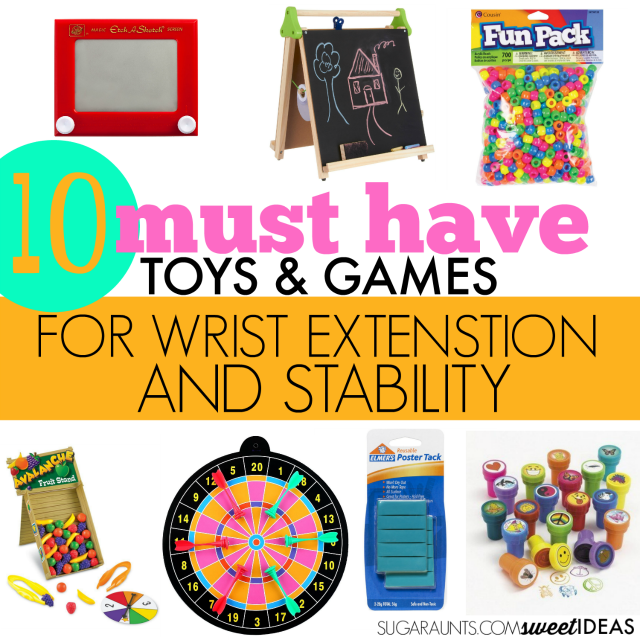
Finger Strength Exercises

finger strength activities

Finger strength exercises need to be addressed on an occupational therapy blog, because let’s face it, we need our hands and fingers for so many tasks. Here, you’ll find finger strengthening activities and exercises that can be used along with finger games and hand strengthening activities to build stronger and more functional hands for use in daily activities.

Our fingers are used for this activity and that activity. Just think about how much we use our hands and fingers throughout the day. Would you say it is morning, noon, and night? Probably so. We use our fingers for leisure, chores, personal needs, work, and many other tasks. Our hands AND fingers need to be strong and ready to go so that we can accomplish all of our to-do list tasks for the day, week, or month. 

finger strength exercises

Finger strengthening exercises can be integrated in play! When it comes to building stronger fingers, occupational therapy supports this need.

Finger Strength Exercises

Children need well-functioning hands and fingers with good overall strength and endurance too as they are constantly on the move with activity involvement throughout the day.

They are playing with siblings or friends, attending school, taking care of their personal needs, and hopefully taking on a few chores too.

Children know when things are easy for them and when they are difficult. They know whether their fingers are strong or weak. They know when they can or cannot open and close a container, button or unbutton a shirt, and when they need a little extra help to play with toys. They know if something is going to be fun and easy or if it’s going to be hard and dreaded with no way to achieve without help.

This blog post will provide some fun and important finger strengthening exercises and activities that can be used to help a child build their finger strength and endurance whether it be in the clinic, classroom, or at home.

Some exercises may be for the older kiddo population while some of the fun play-like activities or exercises are for the younger kiddos as we know they need a little more motivation to build their finger strength and endurance.

As mentioned in a previous hand strengthening post, don’t forget that gross motor activities also help to build hand and finger strength too! That’s right, keep having children do animal walks, heavy work exercises, scooter board activities, therapy ball weight-bearing activities, and encourage them to continue playing on the playground equipment

The reason to encourage gross motor coordination and whole body play is that children need that proximal stability and strength in order to foster distal mobility, including functional strength and use of the fingers.

FINGER STRENGTHENGING EXERCISES

The finger strength exercises listed below can be used along with manual dexterity goals to support functional skills. One type of finger strengthening exercise that is rooted in play is the use of theraputty exercises.

You can purchase (Amazon affiliate link) theraputty from various vendors, and use this finger strengthening tool in different ways that involves play.

Some finger strength Therapy putty exercises:

  • finger pinch is simply taking small balls of therapy putty and pinching them into small flat pancakes, repeat multiple times with each hand
  • log pinch is rolling the therapy putty between the hands to create a putty log and placing on the table top, then take each finger to the thumb to pinch the putty as flat as possible, one finger at a time, repeat with all fingers each hand
  • pancake spread is taking a flat pancake pile of therapy putty and placing all fingertips of one hand into the putty to attempt to spread the fingers out as far as possible, repeat multiple times with each hand
  • pancake pull is taking a flat pancake pile of therapy putty and placing all fingertips of one hand into the putty to attempt to gradually pull the putty upward into a pyramid shape, repeat multiple times with each hand
  • thumb press is taking a ball of putty placed in the palm (near the base of the thumb) and then pressing the thumb deeply into the ball, multiple times with each hand

Thumb Strength

The main component of pinch and grip requires opposition of the thumb. The bulky “meat” of the thumb, also known as the thenar eminence is the bas of the thumb which provides the power behind the pinch, or where we see the real strength of a precision grasp.

Strength in the thumb is explained in the dexterity of the thumb joints and the rotation of the CMC joint at the base of the thumb. We explain this in our blog post that focuses on a thumb wrap grasp.

Squeeze ball exercises

One tool to strengthen the thumb is by using a squeeze ball. In addition to the thumb strength is the arches of the hand and the hypothenar eminence, or the bulk of the hand at the base of the pinkie finger.

Squeeze ball exercises offer a single squeeze that encourages a cupped position of the palm and fingers.

Try these squeeze ball exercises:

  • power pinch is squeezing the ball and holding for a count of 5 or 10 repeatedly with each finger opposed to the thumb, one finger at a time, repeating multiple times
  • fingertip pinch is placing the squeeze ball between the fingertips opposed to the thumb and then squeezing and holding as long as possible with all fingertips working together, repeating multiple times with each hand

Finger Grip Strengthener

Another tool found in an occupational therapy bag is the finger grip strengthener. There are many types of these tools on the market, but one that is often used is the (Amazon affiliate link) digiflex. We have many other hand gripper workouts here on The OT Toolbox that can be used as finger strengtheners, too.

Try these Digiflex exercises:

  • using the appropriate pound Digiflex tool, depress each button of the device using one finger at a time, repeat multiple times with each hand.
  • Tap the buttons of a Digiflex grip strengthener to a song

Finger Stretcher Exercises

A finger stretcher is a finger strengthening tool for flexing and extending the fingers. This is a great tool for finger isolation and individual joint isolation.

  • using the appropriate resistance level tool, place the device onto the fingertips and stretch each finger outward as far as possible, repeat multiple times with each hand
  • Use the finger stretcher to work on finger flexion or finger extension. Tap out letters to spell words. Or tap out words of a song or phrase.

Rubber band exercises

Rubber band exercises are another finger exercise tool.

  • wrap rubber bands around the fingers, including the thumb, and then stretch the fingers and thumb outward spreading them as far out as possible, repeat multiple times with each hand
  • wrap a rubber band around each finger opposed to the thumb and then stretch out the finger and thumb as far as possible, repeat multiple times with each finger and each hand
  • wrap a rubber band around a neighboring finger (two fingers max) and then spread the fingers apart (spreading left to right as far as possible), repeating multiple times 
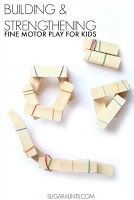
  • Use rubber bands to stretch around blocks.

Finger Exercises without equipment

There are many finger strengthening exercises you can do without strengthening equipment or weights. The ideas listed below require just your own hands and body weight or simple items you probably already have in the home.

When it comes to finger exercises, there are several aspects that will improve overall pinch strength and grip strength. These include:

  • Eccentric muscle contraction
  • Concentric muscle contraction
  • Isometric muscle contraction

Isometric Finger exercises

Isometric contractions refers to contraction of a muscle that does not produce joint motion. In other words, the joint does not move and the finger pushes against something as it is still and in one place.

An isometric exercise provides force where the internal and external forces are in a state of equilibrium. For example, holding a pencil while writing requires isometric force of the fingers.

  • Place the fingertips of both hands together and push the palms of the hands together, repeat and hold multiple times.
  • Hook both thumbs together and attempt to pull apart, hook both index fingers together and pull apart, hook both middle fingers together and pull apart, hook both ring fingers together and pull apart, and hook pinky fingers together and pull apart, repeat multiple times
  • Place both hands together in a hook grasp. Hook all the fingers together, at one time, and attempt to pull apart, and then repeat.
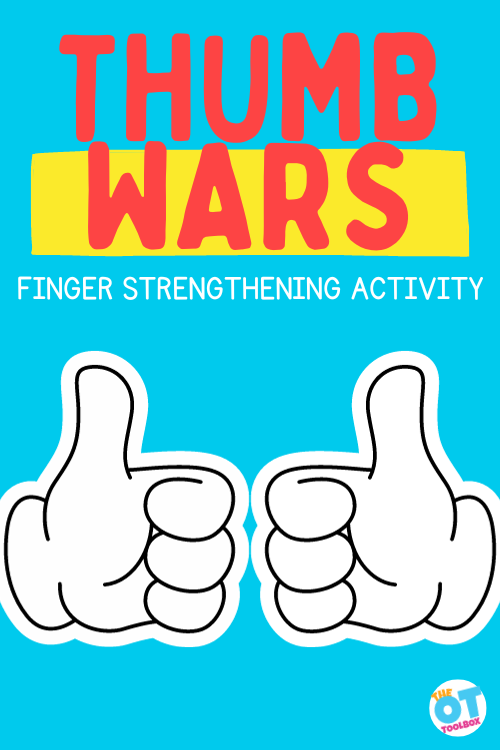
thumb war activity

Thumb wars Activity

One thumb strengthening activity that most of us are familiar with is a thumb war. Do you remember saying, “I declare a thumb war”? When you have a thumb wrestling battle with a friend, there are many strengthening opportunities happening.

While we might not recognize the thumb war as a finger strengthening activity, there are several components here that build finger and hand strength:

Holding the fingers in a grasped position with the thumb war partner is an isometric strengthening activity. The thumb is free to be mobile, allowing for full range of motion.

When engaged in a thumb war, both participants experience strengthening resistance from various planes: flexion, extension, adduction, and abduction.

  • Play a few rounds of thumb wars with a partner, each hand should give it a try 

Other Finger Strengthening Exercises include:

Piano push 

  • slightly curl the fingers like playing the piano and then push against a wall or table top, repeat multiple times

 Spider finger walk

  • lie a hand towel flat on a tabletop surface and then place a weighted object on the end farthest away, use the fingers of both hands to spider walk the weighted object toward self, pulling and scrunching the towel up within the hands, repeat

Crumple and roll tissue paper balls 

  • cut small squares of tissue paper and then crumple them into small balls using a pinch pattern and finger rotation, follow with rolling the ball out while pressing into a flat worm using a backward and forward rolling movement 

Pinching water out of small sponge squares

  • wet small sponge squares and squeeze water out using the thumb opposed to each finger individually, repeat multiple times

Water dropper

  • use a water dropper to squeeze water out into a container using the thumb opposed to each finger, individually, using both hands repeating multiple times

Milk the latex glove 

  • this one is one that I found online where you fill a latex glove with water and use a pin to poke a small hole into the tip of each finger then a child will work on squeezing the water out of each finger, have the child finger pinch each finger of the glove to make it work more appropriate for total finger strengthening

Pool noodle finger popper

  • cut pieces of a pool noodle and create small finger poppers and have individuals pinch to pop the finger popper and see how far they can make it soar, repeat

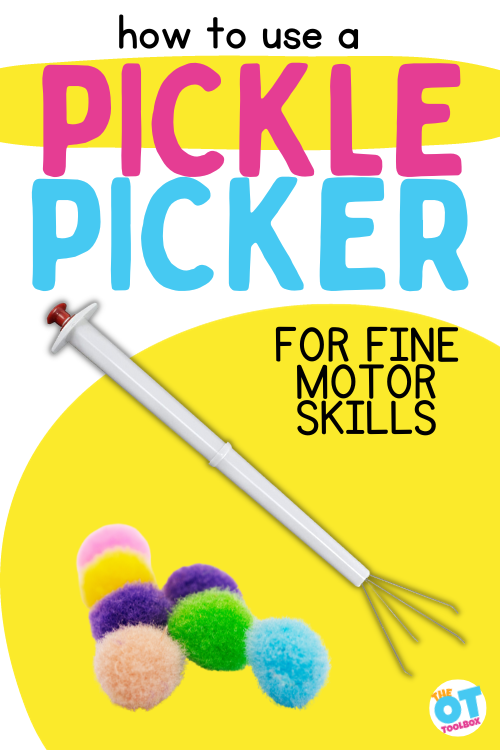
Strawberry finger pickers– these mini tongs are a great size to engage the intrinsic muscles of the hands.

  • Use strawberry pickers with thumb opposed to each finger and attempt to pick up and sort various colored pom-pom balls into containers

Household tools to promote finger strength when in use:

  • Seal Plastic Sandwich Bags – Pinching a plastic baggie closed to seal the bag is a great functional task. Pinch baggie to pinch it closed using the thumb opposed to each finger with each finger working individually, complete with both hands, and repeat. This is an activity that can be incorporated into lunch time or snack time.
  • Pinch clothes pins- Grab clothes pins from the dollar store for a low-cost finger strengthening tool. Pinch open and closed using the thumb opposed to each finger with each finger working individually. Here are more clothes pin exercises.
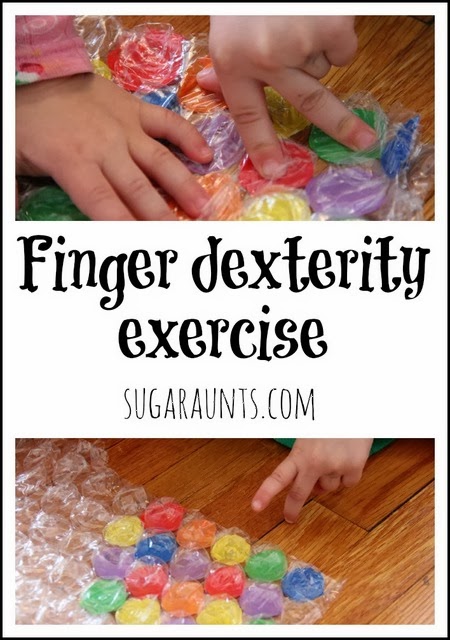
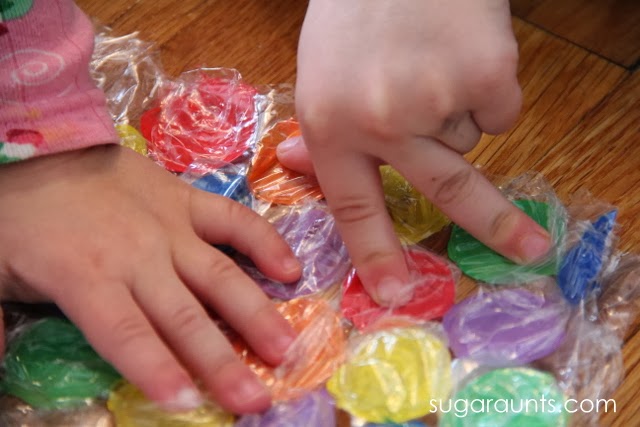
  • Pop bubble wrap- Oppose the bubbles of bubble wrap with a thumb and finger. Try to encourage the child to keep their thumb in a neutral position or slight joint flexion at the thumb IP joint.

Use commercially available tools and games to promote finger strength:

  • Squeeze stretchy toys – pull apart for poses, stretches, and molding  
  • Oppose Mini Squishies-Squash and squeeze the squeezies with fingers opposed to the thumb, each hand, repeatedly 
  • Place beads onto a Light finger ball– This is a great activity because the wrist is placed into slight wrist extension which puts the extrinsic muscles and tendons into an ideal position to enable full strength and mobility of the intrinsic muscles. Pinch and pull individual caps on the ball (you can call it ‘snap the caps’) and attempt the pinch and pull with all fingers opposed to the thumb
  • Squeeze toys like a Kitty hairball poppers are great because the arches are positioned in an ideal position for strengthening while the fingers are opposed to the thumb.
  • Oppose Boinks with a wide opposition to work on graded precision skills. Kids love these because they can squeeze and release to see how far they fly across the room
  • Pop beads-This classic toy is a fine motor powerhouse. Push the beads together and pull them apart to create a necklace, chain, or bracelet. We love this set because it includes beads of different sizes and you can grade the activity to meet the needs of each individual.
  • Marble maze – play a marble maze from beginning to end
  • Build and destruct with Lego blocks- Pinch and pull the bricks while building simple towers or even buildings or objects with the use of picture cards
  • Build and destruct Cootie Bugs using the fun game to work on hand and finger strengthening. This one is a little tricky for younger kiddos as the legs must go in at a slight angle which may make them more appropriate for older kiddos. 
  • Velcro ball and catch- roll the ball from the top to the bottom of the mitt using a finger spider walk. Pulling a tennis ball or other smaller ball off the velcro is a great strengthening activity.
  • Use pop toobs to strengthen fingers by conecting the tubes.

Want some fun resources for hand and finger warm-ups or strengthening? Take a look at these fun game boards Finger and Hand Exercises and Year-Round Play Dough.

These resources include 10-12 no-prep game boards that you can print and play to practice finger isolation, left and right hand discrimination, overall fine motor coordination, finger dexterity, and build hand and finger strength.

Grab them and immediately ramp up any warm-up routine. They are engaging for kids and are a great tool to use before any prewriting, handwriting, coloring, or cutting work. 

Want to add more ideas and tools to your therapist toolkit for finger strengthening? Take a look at the other posts found right here at The OT Toolbox:

Hand Strengthening Activities | The OT Toolbox

Clay Fine Motor Strengthening Exercises | The OT Toolbox

Intrinsic Hand Muscle Strengthening with Tongs | The OT Toolbox

Slime Hand Strength Exercises | The OT Toolbox

Hand and Finger Game Boards | The OT Toolbox

Handwriting Warm-Up Exercises for Little Hands | The OT Toolbox

Play Dough Hand Strength Astronaut Activity | The OT Toolbox

Finger Aerobics | The OT Toolbox

Hand Gripper Workout | The OT Toolbox

Working on fine motor skills, visual perception, visual motor skills, sensory tolerance, handwriting, or scissor skills? Our Fine Motor Kits cover all of these areas and more.

Check out the seasonal Fine Motor Kits that kids love:

Or, grab one of our themed Fine Motor Kits to target skills with fun themes:

Want access to all of these kits…and more being added each month? Join The OT Toolbox Member’s Club!

Victoria Wood, OTR/L is a contributor to The OT Toolbox and has been providing Occupational Therapy treatment in pediatrics for more than 25 years. She has practiced in hospital settings (inpatient, outpatient, NICU, PICU), school systems, and outpatient clinics in several states. She has treated hundreds of children with various sensory processing dysfunction in the areas of behavior, gross/fine motor skills, social skills and self-care. Ms. Wood has also been a featured speaker at seminars, webinars, and school staff development training. She is the author of Seeing your Home and Community with Sensory Eyes.

Wrist Range of Motion Exercises

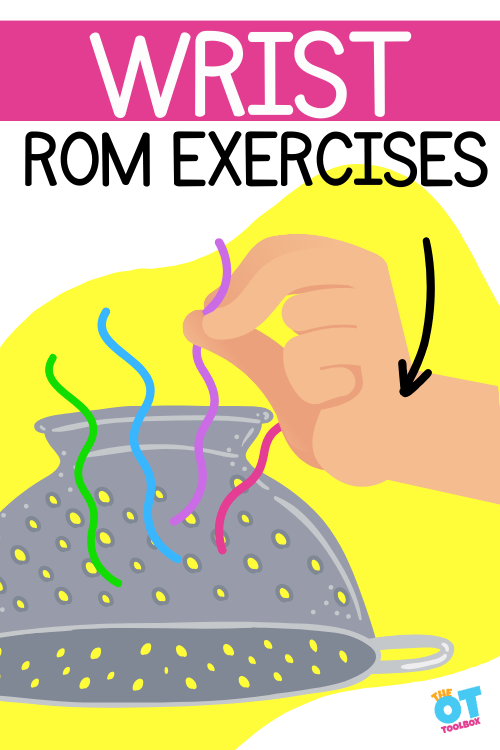
hand placing pipe cleaners into the holes of a colander. Text reads "wrist range of motion exercises"

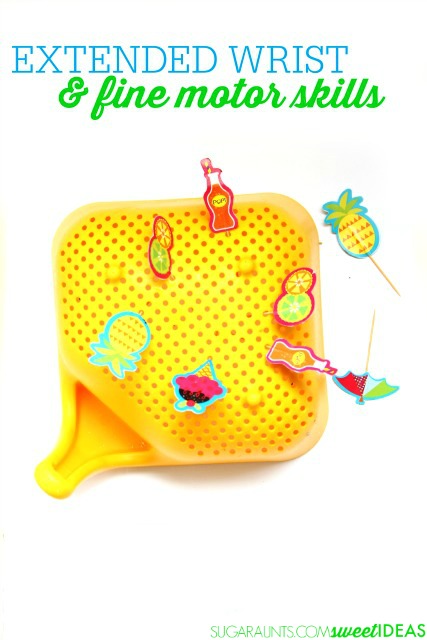
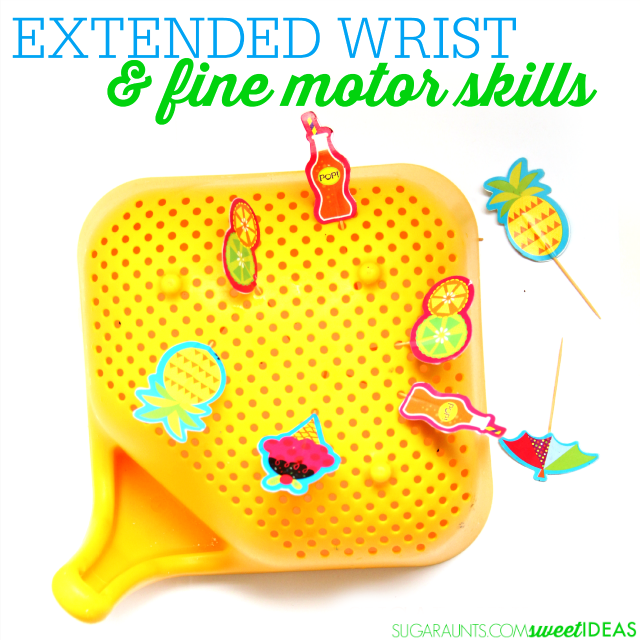
This colander and toothpicks activity is a powerful wrist extension fine motor task. You can use this activity idea as range of motion exercises for wrist. You’ve probably seen (or tried) a colander and pipe cleaner activity. We’ve also used pipe cleaners and a cardboard box to achieve the same effect.

Let’s explore what’s happening with this activity…You’ll also want to check out our blog post on finger strength exercises, which includes fun fine motor strengthening activities.

Colander and Toothpicks Activity

You might have seen a recent post here on the blog that shared the importance of an extended wrist in fine motor activities.  If you check out that post, you’ll see why it’s important for kids to position their wrist in a functional position.  
 
Today, I’m adding a simple fine motor activity for improving an extended wrist. This is a low-prep busy bag type of activity that kids can play with at home or at the OT clinic while building fine motor skills needed for tasks like handwriting, scissor use, clothing management, tool use (like spoons, knives, and forks), and so much more.

Super easy fine motor activity for improving an extended wrist and tripod grasp for kids, using household items like a colander and toothpicks.


This post contains affiliate links.
 
For this activity, you’ll need a (Amazon affiliate link) colander.  We used a plastic one that is as bright as it is perfect for rinsing garden lettuce.  I love that this one has one curved handle that makes using it for fine motor activities like this one perfect for developing bilateral coordination.  Kids can hold onto the curved handle while doing this easy fine motor activity.
 
We also used summer themed party toothpicks similar to these (affiliate links) that we’ve had in our party supplies forever.  I’m really not even sure where these toothpicks came from, but it has to be true that everyone needs a pineapple party toothpick in their life, right??
 

Fine Motor Toothpick Activity

I showed my preschooler and toddler how to poke the toothpicks into the overturned colander.  As easy as that, our activity was on it’s way.
 
Super simple activities make moms and kids happy.
 
When my kiddos were stabbing the colander with summer-themed toothpicks, I was watching the positioning of their wrist and hand.  (Observation skills are ingrained in an Occupational Therapist…it might be something about those long OT school lab sessions and years of clinicals…)
 
Poking the toothpicks into the holes of the overturned colander allows the wrist to be in an extended position while the fingers are positioned in a tripod or pincer grasp as they hold the toothpick.  Be sure to position the colander in an effective place.  If the child is on the floor they may ulnarly deviate (bend the wrist toward their pinkie finger) or flex the wrist.  
 
Super easy fine motor activity for improving an extended wrist and tripod grasp for kids, using household items like a colander and toothpicks.


More range of motion exercises for wrist

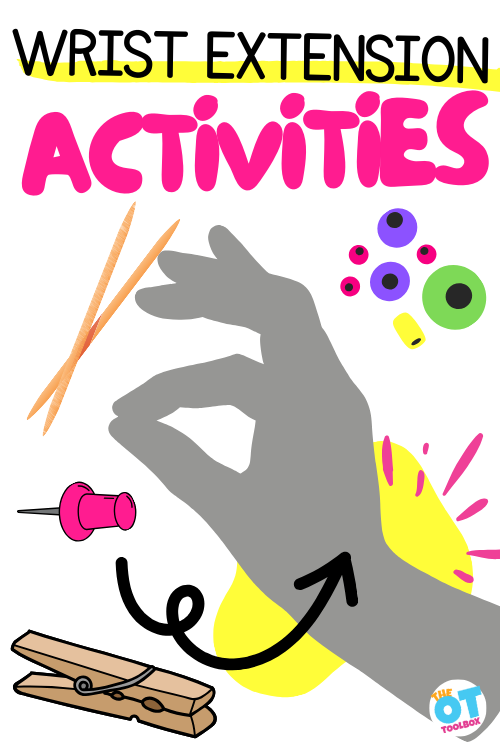
Looking for more wrist extension activities? Try these: 

Working on fine motor skills, visual perception, visual motor skills, sensory tolerance, handwriting, or scissor skills? Our Fine Motor Kits cover all of these areas and more.

Check out the seasonal Fine Motor Kits that kids love:

Or, grab one of our themed Fine Motor Kits to target skills with fun themes:

Want access to all of these kits…and more being added each month? Join The OT Toolbox Member’s Club!

Wrist range of motion

The activities described in this blog post are fun ways to support wrist range of motion through play.

Typical range of motion of the wrist is as follows:

  • Wrist Flexion: 0-90 degrees
  • Wrist Extension: 0-70 degrees
  • Radial Abduction: 0-20 degrees
  • Ulnar Abduction: 0-30 degrees

These wrist range of motion degrees are rounded to the nearest numbers and some sources may include slight variances in ROM which is considered the average normal motion.

We made this image to show hand and wrist range of motion. These movement ranges are a general depiction. SO when we measure a client or a patient, there can actually be a range of normal movement. One person might have 80 degrees of wrist flexion and another might have 90 degrees of wrist flexion. Both are within the normal range. What matters is the function. If the client can perform their daily tasks and have 70 degrees of wrist flexion because of various reasons, that’s completely normal, too!

All of this is to say that the range of motion measurements can vary slightly. This goes for the wrist, forearm, fingers, and thumb.

hand and wrist range of motion

Wrist Range of Motion Exercises

These Range of Motion Exercises for the Wrist are functional but also move the wrist through the full range of motion. We tried to include both strictly ROM exercises for wrist movements, but also functional wrist movements too.

wrist ROM exercises

For example, using the colander and toothpick activity (or a colander and pipe cleaner activity), you can set out a certain number of toothpicks or pipe cleaners. Ask the individual to place that number into the holes of the colander while moving the wrist through wrist extension to position the item into the colander holes.

Wrist ROM exercises include these for each motion of the wrist:

  1. Wrist Flexion- Holding objects and bending the wrist forward are great ROM exercises for wrist flexion.
    • Hold your forearm out with your palm facing down.
    • Use your opposite hand to gently push your hand and fingers downward. Hold for a few seconds and release.
    • Hold a hammer or something heavy and let the weight of the hammer pull the wrist into full flexion.
  2. Wrist Extension- Wrist extension ROM exercises can include holding objects like a stress ball and pulling the wrist back into an extended position.
    • Hold your forearm out with your palm facing up.
    • Use your opposite hand to gently push your hand and fingers upward.
    • Hold for a few seconds and release.
    • Use a hammer to pull the wrist into extension by flipping the forearm over into a supinated position on a table.
  3. Wrist Supination- Turning the forearm over so the palm is up.
    • Extend your arm in front of you with your palm facing down.
    • Slowly rotate your wrist to turn your palm upward.
    • Hold briefly, then return to the starting position.
    • Add repetitions with a hammer. Allow the hammer head to pull the wrist into more supination.
  4. Wrist Pronation: Turning the wrist toward the midline so the palm is facing down.
    • Extend your arm in front of you with your palm facing up.
    • Slowly rotate your wrist to turn your palm downward.
    • Hold briefly, then return to the starting position.
    • Use a hammer with the weight of the hammer head pulling the forearm into pronation.
  5. Wrist Circles- Gently rotate your wrist in a circular motion, first clockwise and then counterclockwise.
    • Start with small circles and gradually increase the size. This exercise improves overall wrist mobility.
  6. Ulnar Deviation: Turning the wrist toward the midline, moving toward the pinkie side of the hand
    • Hold your arm out with your palm facing up.
    • Tilt your wrist toward your little finger while keeping your hand and fingers straight.
    • Return the middle finger to midline.
  7. Radial Deviation: Turning the wrist away from midline, moving toward the thumb side of the hand.
    • Hold your arm out with your palm facing up.
    • Tilt your wrist toward your thumb while keeping your hand and fingers straight.

Specific Wrist Range of Motion Exercises include:

  • Picking up small objects and placing them into containers, especially those on an inclined surface
  • Using hand gripper workout exercises with a stable wrist positioning.
  • Moving through wrist mobility exercises while saying the alphabet or counting
  • Using theraputty exercises
  • Pushups or wall push ups
  • Playing with a ribbon wand or a fairy wand
  • Making a letter rainbow exercise
  • Tendon glide range of motion exercises
  • Using rubber band traction to pull the wrist into full range of motion (PROM)

Colleen Beck, OTR/L has been an occupational therapist since 2000, working in school-based, hand therapy, outpatient peds, EI, and SNF. Colleen created The OT Toolbox to inspire therapists, teachers, and parents with easy and fun tools to help children thrive. Read her story about going from an OT making $3/hour (after paying for kids’ childcare) to a full-time OT resource creator for millions of readers. Want to collaborate? Send an email to contact@theottoolbox.com.

Toys for Wrist Extension and Stability

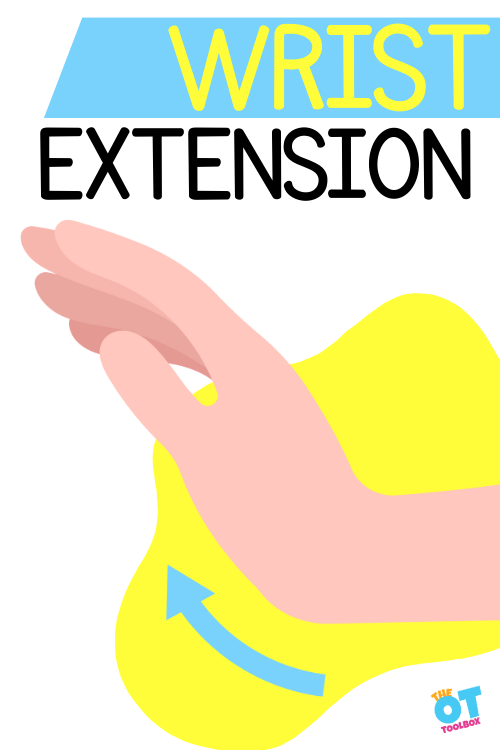
Wrist bending up with an arrow showing the direction the wrist is bending back. Text reads "wrist extension"

In this blog post, we’re covering wrist extension and wrist stability…and wrist extension toys that support these motor skills through play. You’ll want to check out our wrist range of motion exercises for another hands-on wrist extension activity that kids love. The fine motor skills happening with these activities are huge. And, when the wrist is in optimal positioning, we can support the manual dexterity goals needed for functional skills.

wrist extension

Wrist extension plays a big role in functional tasks, including manipulating objects, ROM, and strength.

Wrist Extension

Before we get to the wrist extension activities, let’s talk about what wrist extension means and how an extended wrist is needed for wrist stability (both as an active muscle group AND as a stabilizer against wrist flexion).

Wrist extension refers to the movement of the wrist as it bends back toward the back of the hand. When the wrist moves, there is a large range of motion and the tendons of the wrist provide great strength that offer structural stability for use of the fingers in grasping.

There are several distinct joints that make up the wrist (did you realize that there were more than one joint in the wrist?!) The joints that make up the wrist include:

  • Radiocarpal joint- this is the joint at the end of the radius which articulates against carpal bones, as well as the end of the ulna bone.
  • Midcarpal joint- This joint space is between the proximal and distal carpal bones in the base of the hand. While the carpal bones might seem like they are part of the hand and not involved with the wrist, these bones actually attach to ligaments which play a role in wrist motions (flexion, extension, and radial and ulnar abduction)
  • Carpometacarpal joints- The base of the carpometacarpals articulate with one another and with the distal carpal bones. The ligaments that attach here play a role in hand and wrist stability. However, the CMC joint of the base of the thumb has a bigger role in wrist extension and stability.

Range of motion in the wrist is dependent on the motion of the hand and fingers. This is because when the hand and fingers are relaxed, the wrist can fully flex (bend at the wrist toward the palm). The wrist can only reach full extension when the fingers are flexed into a fist. This is called close-packed. When this position is achieved, the wrist is in it’s most stable position.

Wrist Extension in Grasping

The strongest grasp will occur when the wrist is extended. If the hand is grasped when the wrist is flexed, you’ll notice a much weaker grip strength.

Why?

Because of the way the muscles in the forearm cross over the wrist. The long finger flexor muscles have an attachment in the forearm and pass over the the wrist. This is where we see wrist stability.

If the wrist flexes while the hand grasps into finger flexion, it’s actually impossible to fully flex the fingers.

You might have seen a child who holds their pencil with a bent wrist and curled up fingers. Maybe you see a kiddo who struggles to hold a fork or spoon.

They’ve probably got their elbow super flexed and their shoulder forward.  
Maybe you have a kiddo who fumbles with buttons and zippers or shows weakness in grasping items.  Perhaps you have an OT client who bends their wrist forward when they are lacing beads or other fine motor tasks.

When the wrist is flexed (bent forward towards curved fingers in a grasp), there is little chance of fine motor dexterity.  A flexed wrist in functional tasks limits use of the fingers due to the tendons of the fingers being shortened as they work to stabilize the wrist.  The fingers just can’t move like they are supposed to.

An example of this in action is when we snap our fingers. It’s possible, but it’s much harder to snap your fingers when your wrist is flexed forward. When you extend your wrist back into extension, it’s much easier to make a loud and crisp snapping sound with your fingers.

Wrist stability toys

Did you know you can support proximal stability and distal mobility through wrist extension toys? It’s true! There are toys and games that target wrist stability so the distal fingers and thumb can manipulate objects with coordination and dexterity.

A pediatric Occupational Therapist knows that with function comes FUN.  And these wrist stability toys are powerful occupational therapy toys that build development and support coordination.

So, when your child’s OT is looking for activities to build the skills needed for development, they know how to add in creative activities that promote independence.  Today, I’ve got fun ways to work on fine motor skills with a functional grasp, specifically the extended wrist.


There are many exercises and activities that can be done to build the stability of the wrist so that it maintains a slightly extended position during fine motor activities.  

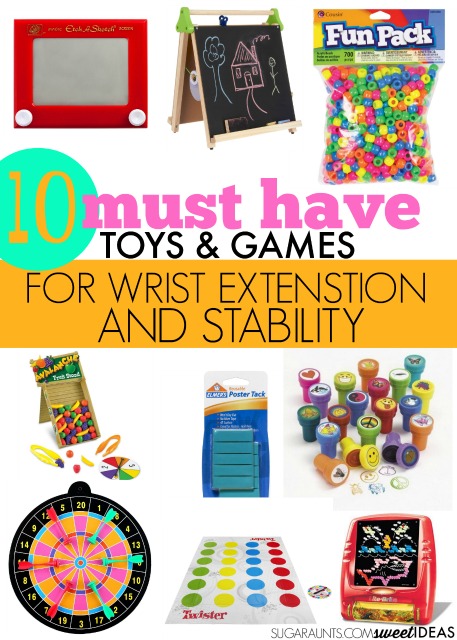
I’ll be sharing some DIY creative ideas soon (so stay tuned!) but for now, here are 10 Must Have toys to build wrist stability and extended wrist:

These toys and games are perfect for building wrist stability and strengthening the wrist extension muscles needed for a functional grasp with dexterity in activities like handwriting.


Toys to Promote an Extended Wrist and Functional Grasp During Fine Motor Activities

These wrist extension toys support a stable wrist. For the child that writes with a flexed wrist, or tries to tie their shoes with bent, flexed wrists, you’ll see less dexterity and mobility in the fingers. Using wrist extension activities with toys can make this strengthening task more fun…and functional! 

1. Lite Brite (affiliate link) Position this old school toy on a slightly elevated surface to promote an extended wrist while managing the small pegs within the hand and with a tripod grasp.


2. Table Top Easel– (affiliate link) This one is double sided to allow for chalk, dry erase markers, and has a clip for attaching paper.  Use the easel for writing, drawing, painting, coloring, chalking, and games like Hand Man to make strengthening fun.


3. Avalanche Fruit Stand Game– (affiliate link) This game is a fun way to build fine motor skills with an extended wrist. 

4. Dartboard– (affiliate link) Tossing darts encourages an extended wrist while holding the darts.  This set comes with magnetic darts, which is great for kids.


5. Pop Beads– (affiliate link) The small size of pop beads promotes dexterity of the fingers as well as resistance to push the beads together.  Encouraging the child to do this task with both elbows on a table surface encourages an extended wrist.


6. Stamps– (affiliate link)  Grab a set of small rubber stamps or any stamp that has a small handle.  Tape a piece of paper to the wall or clip it to an easel.  Holding the handle while stamping on a vertical surface promotes a functional wrist position.


7. Twister game– (affiliate link) Any game or activity that is done with the child extending their wrist as the press their upper body weight through the arm is a great strengthening exercise for wrist stability.  


8. Beads– (affiliate link) Threading beads with a string or plastic cord encourages and extended wrist with fine motor dexterity. Beads can be found in various sizes to meet the needs of the child.


9. Wall Sticky Tack– (affiliate link) Sticky tack?  Really!  Use it to hand paper, mazes, tic tack toe boards, connect the dot pages, and coloring sheets right to the wall!  You can hang paper on the windows, like we did to really work on handwriting with a see-through effect. Writing on the wall is a great way to build wrist stability and promote an extended wrist.


10. Etch-A Sketch– (affiliate link) Another classic toy, the Etch-A Sketch is perfect for building an extended wrist.  Prop it up on a slanted position and be sure to place it upside down so the knobs are at the top.

 
These toys and games are perfect for building wrist stability and strengthening the wrist extension muscles needed for a functional grasp with dexterity in activities like handwriting.


More Fine Motor Skills you will love:

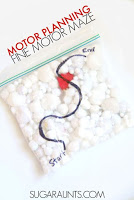
 Motor Planning Fine Motor Maze hand strengthening activity
 
wrist extension activities

Wrist Extension Activities

The toys we listed above are fun ways to build and develop wrist extension. You can also try these activities to support wrist stability through extension:

Working on fine motor skills, visual perception, visual motor skills, sensory tolerance, handwriting, or scissor skills? Our Fine Motor Kits cover all of these areas and more.

Check out the seasonal Fine Motor Kits that kids love:

Or, grab one of our themed Fine Motor Kits to target skills with fun themes:

Want access to all of these kits…and more being added each month? Join The OT Toolbox Member’s Club!

Wrist Extension Exercises Handout

We have put together a nice resource for you…a free handout on wrist extension exercises. These activities are designed to improve wrist stability and strength needed for fine motor dexterity and handwriting.

Enter your email address into the form below. We’ll send you a copy of this handout. The printable is also found in The Membership Club under therapy tools.

FREE GUIDE: Wrist Exercises Handout

    We respect your privacy. Unsubscribe at anytime.

    Let us know how you use this printable list of exercises for wrist mobility and stability!

    Colleen Beck, OTR/L has been an occupational therapist since 2000, working in school-based, hand therapy, outpatient peds, EI, and SNF. Colleen created The OT Toolbox to inspire therapists, teachers, and parents with easy and fun tools to help children thrive. Read her story about going from an OT making $3/hour (after paying for kids’ childcare) to a full-time OT resource creator for millions of readers. Want to collaborate? Send an email to contact@theottoolbox.com.

    Halloween Math Activities

    Halloween math activities

    What if you could take the excitement and fun of Halloween and combine it with writing numbers, counting, and all things math? These Halloween math activities are a great way to use fine motor math with all that this time of year offers. We’ve shared Halloween occupational therapy activities before, but these ideas are designed to boost math through play! Spooky learning ideas, ghost math, pumpkin adding…there is a lot of fun to be had!  What a fun way to learn and play!  

    Halloween Math activities

    Halloween math activities are a fun way to build math skills leading up to Halloween!

    Halloween Math Activities

    We’ve included Halloween Math Activities to target a variety of skills:

    • fine motor math
    • pumpkin math
    • ghost counting
    • spider addition
    • scarecrow place value activity

    However, we wanted to share a few other ideas that support math skills…

    Combine these activities with a group therapy session, push in therapy, or even a Classroom Halloween party for building skills AND learning this month.

    Gather a few items for Halloween math…

    • pumpkin seeds
    • Halloween mini erasers
    • mini plastic pumpkins or cauldrons
    • tongs, tweezers, etc.
    • candy corn
    • spider rings
    • bat stickers
    • glow in the dark stars
    • candy wrappers
    • monster eyes (googly eyes)

    Each of these items can be used to count, do math, use in number lines, fraction activities, and much more.

    Fine Motor Halloween Math

    There is much research telling us that fine motor skills predict math skills in kids, so why not add the fun of Halloween with fine motor activities? Studies show that motor skills are significantly related to their mathematical ability.

    Here are Halloween fine motor activities that double as math activities for counting, sorting, patterns, and more.

    Halloween math activities to work on addition, subtraction, fact families, near doubles, and other math skills with a Halloween theme.

    Pumpkin Math

    In this fine motor pumpkin sticker activity, we made our own pumpkin stickers, and used them in a Halloween literacy activity. But, they are perfect pumpkins for math skills too. Use the small pumpkins to count, add, work on place value, and to sort into arrays for multiplication and division.

    This is a great Halloween math activity for pushing into the classroom or to use in home occupational therapy via OT teletherapy sessions. Kids will need only three materials:

    • Orange construction paper
    • Hole puncher
    • Pencil or marker

    Ask kids to use the hole punch to punch orange circles onto their desk surface. They can use their pencil or marker to add a small stem to each pumpkin. Then, it’s time to sort, count, add, subtract, and arrange into piles of ten.

    fine motor pumpkin stickers to count and build motor skills for math

    Ghost Counting

    This ghost craft is one of my favorite Halloween crafts here on the site. Save up a handful of bread ties and use them for math activities, sorting, counting, and adding/subtracting. The cute spooky manipulative is fun and not scary!

    You’ll need just one material for this, but you can add them to any sensory tray like we did, using dry black beans:

    • White bread ties

    Slide them onto pipe cleaners to count and sort by groups for counting and multiplying.

    ghost counting activity

    Spider Addition

    Use this spider math craft to work on adding, subtracting, and fact families. You’ll need just a couple of materials:

    • Black construction paper
    • Scissors
    • White chalk, crayon, or colored pencil

    Make the spider by following the directions in the spider math craft tutorial and then work on the math skills that your child needs to address. We used the creepy crawly craft to work on near doubles, but you could use this for any math facts!

    Spider math craft

    Scarecrow Place Value Activity

    This scarecrow math activity is one way to work on place value math, but you could use it to build skills in understanding any addition, subtraction, multiplication, or division skills. Work on fact families, or writing numbers in different forms on each strand of the scarecrow’s hair. The options are pretty limitless! Be sure to check out the scarecrow craft tutorial for this activity.

    There are a lot of fine motor skills happening with this Halloween craft, too!

    scarecrow craft for a farm activities theme

    More Halloween Learning Activities

    Looking for more fun Halloween math activities? Check out the activities from other bloggers in the list below.

    halloween learning activities for preschool and toddlers. Math, science, literacy activities with a fall or Halloween theme.

    Here are more Halloween learning ideas that build skills, including monster math, candy corn counting, fall math, and more!

    Pumpkin Hunt Math– Make a Halloween scavenger hunt that adds visual memory, visual attention, and working memory skills. These are underlying skill areas that can impact math.

    Monster Math is a fun math and fine motor activity. I love counting googly eyes to match the number of dots on a monster, especially because neat precision skills are needed to pick up small items like googly eyes in a craft activity.


    Candy Corn Literacy Games has some fun Halloween learning ideas, too. I love the candy corn cones that are a great tool for gross motor work like balance, coordination, and other motor planning tasks.


    Pumpkin Name Game uses mini pumpkins to work on letter recognition and skills like visual figure ground, visual discrimination, and visual memory. These are great tools to have in your toolbelt when it comes to math and reading.


    Candy Corn Math is a fun Halloween math activity that works on visual attention and visual memory skills. Plus, occupational therapy practitioners LOVE using puzzles in OT sessions for all of the visual perceptual skills that impact learning.


    Fall Counting Activities involves hands-on one-to-one correspondence with a fine motor math component. There are so many ways to expand this activity to build sensory motor skills needed for writing with a pencil.


    Fall Tree Number Matching builds the visual perceptual skills needed for number recognition with a fun Halloween or Fall theme.

    fun Halloween math activities

    Fun Halloween math activities don’t need to involve a themed worksheet! You can definitely support the underlying skills needed for math, using a pencil to complete math problems, and the visual perceptual skills that impact math skills with learning.

    Use manipulatives like:

    • pumpkin mini erasers
    • pumpkin seeds
    • candies
    • small Halloween pumpkins to sort and count
    • pumpkin or Halloween play dough mats

    All of these items can be used to work on fine motor math skills with a fun Halloween theme!

    Colleen Beck, OTR/L has been an occupational therapist since 2000, working in school-based, hand therapy, outpatient peds, EI, and SNF. Colleen created The OT Toolbox to inspire therapists, teachers, and parents with easy and fun tools to help children thrive. Read her story about going from an OT making $3/hour (after paying for kids’ childcare) to a full-time OT resource creator for millions of readers. Want to collaborate? Send an email to contact@theottoolbox.com.

    Pumpkin activity kit
    Pumpkin Fine Motor Kit

    Grab the Pumpkin Fine Motor Kit for more coloring, cutting, and eye-hand coordination activities with a Pumpkin theme! It includes:

    • 7 digital products that can be used any time of year- has a “pumpkins” theme
    • 5 pumpkin scissor skills cutting strips
    • Pumpkin scissor skills shapes- use in sensory bins, math, sorting, pattern activities
    • 2 pumpkin visual perception mazes with writing activity
    • Pumpkin “I Spy” sheet – color in the outline shapes to build pencil control and fine motor strength
    • Pumpkin Lacing cards – print, color, and hole punch to build bilateral coordination skills
    • 2 Pumpkin theme handwriting pages – single and double rule bold lined paper for handwriting practice

    Work on underlying fine motor and visual motor integration skills so you can help students excel in handwriting, learning, and motor skill development.

    You can grab this Pumpkin Fine Motor kit for just $6!

    Colleen Beck, OTR/L has been an occupational therapist since 2000, working in school-based, hand therapy, outpatient peds, EI, and SNF. Colleen created The OT Toolbox to inspire therapists, teachers, and parents with easy and fun tools to help children thrive. Read her story about going from an OT making $3/hour (after paying for kids’ childcare) to a full-time OT resource creator for millions of readers. Want to collaborate? Send an email to contact@theottoolbox.com.

    Occupational Therapy Gifts

    occupational therapy gifts

    One question that comes up quite often is the topic of occupational therapy gifts. In this blog post, we’re including some of our favorite occupational therapy gift ideas for new grads, fieldwork instructors, OT mentors, or retiring OT professionals. Let’s dive into the gifting!

    occupational therapy gifts

    Be sure to check out our list of ideas over on Amazon…we have a full page dedicated to gifts for OT providers. (Paid link) As an Amazon Influencer, I earn from qualifying purchases.

    Occupational Therapy Gifts

    Occupational therapy gifts can be thoughtful gestures for a variety of individuals in the occupational therapy field. whether you are purchasing a gift for a future OT new graduate, or a gift for a Level 2 student who is completing their fieldwork, or a as a way to thank your fieldwork instructor, these gift ideas are great ways to advocate for the profession with an OT gift!

    The links in this blog post are Amazon affiliate links.

    OT Gifts for New Graduates

    Parents, grandparents, siblings, and friends may want to celebrate the accomplishments of new occupational therapy graduates by giving them a meaningful gift that marks the beginning of their career.

    It’s a good idea to consider items that the new occupational therapy grad can use in their future.

    Some ideas include:

    These links are paid links. As an Amazon Influencer, I earn from qualifying purchases.

    Commissions earned on each of these links below.

    Gifts for Experienced Occupational Therapists

    Occupational therapy providers who have reached significant milestones in their careers, such as achieving certifications or advancing in their field, may appreciate thoughtful gifts.

    Consider gifts such as:

    These links below are Amazon affiliate links in which commissions are earned from qualifying purchases.

    Gifts for Occupational Therapy Assistants

    While occupational therapy assistants would love any of the other gifts listed in this post, there are many gift items out there that are specifically designed for the OTA in your life.

    Try some of these:

    These links below are Amazon affiliate links in which commissions are earned from qualifying purchases.

    Occupational Therapy Gifts for All OT Providers

    Then there are the mentors, co-workers, instructors, retiring OTs or OTAs, and occupational therapy advocates that would love an occupational therapy gift.

    Some of these ideas are suitable:

    These links below are Amazon affiliate links in which commissions are earned from qualifying purchases.

    A variety of OT apparel and cute tote bags that will make any colleague happy that you thought of them and frankly, what OT practitioner can’t use a tote bag for their OT paraphernalia?

    Other OT gift ideas

    Maybe you don’t want to give them anything related to OT, but just a considerate gift that you have decided to give them to show them how much you appreciate and care for them. Take a look at some of these ideas below:

    • Thank-you cards
    • framed motivational quotes
    • pictures
    • heartfelt letter
    • gift cards
    • donations to a personal cause
    • Coffee Gift Card – They can get their morning pick-me-up to boost their day all on you!
    • Journal (commissions earned) Check out journals on Amazon and you will find several journal designs that will make the perfect gift for any colleague or friend. They can end their day by journaling and help lessen any feelings of anxiety and set up a peaceful night’s sleep.
    • Dinner Gift Card – They can get a meal on you and make it the perfect end to any day!
    • Awareness T-Shirt or Socks – Get the OT practitioner in your life that is passionate about a particular group of individuals such as those with Autism or Down Syndrome a t-shirt or socks designed to spread awareness and demonstrate their passion. Take a look at John’s Crazy Socks which has socks for every occasion and is owned and operated by a father and his son who has Down Syndrome. They even offer a sock of the month! These Down Syndrome awareness socks (commissions earned) are fun, too.
    • Gas Card – Right now this card can be golden for your OT besties and colleagues! A gas card can support their travel to and from work and maybe support any traveling they do for work. Who knows maybe they can use it to travel on a family trip to get a much-needed break!
    • Relaxation or Pamper Gift Box– (commissions earned) Pack a gift box or basket to the brim with as many self-care goodies you can find including bath, spa, and calming items such as a candle, bubble bath, lotion, essential oils, chocolate, face mask, and fuzzy socks. Let your creativity soar here!
    • Treat Basket – (commissions earned) Pack a colorful basket full of as many quick treats as you can think of including cookies, candy, gum, chips, snack bars, fruit, water, or energy drinks. These can provide that quick snack when the workday is pure chaos!
    • Office Supply Container – Pack an office storage container or organizer with necessary supplies such as post-it notes, paper clips, tape, writing utensils, index cards, Sharpies, scissors, and rubber bands. These are always needed and oftentimes you run out of them when you need them the most!
    • Book or Bookstore Gift Card – Do you know the type of books that an OT colleague or bestie likes to read? Simply purchase a book from their favorite author, they’ll have an excuse to take a break. Maybe you don’t know the type of books they like; you can simply purchase a bookstore gift card and they can peruse the books they are interested in and make their own choice.
    • Retail Store Gift Card – Simply purchase a retail store or Amazon gift card and your OT bestie can use it however they need or want to…maybe it’s for work or maybe it’s for personal needs. They just use it when they need it and think of you as they do it knowing you cared enough to think of them!

    A little OT love to show off just how wonderful the profession of occupational therapy is and share how occupational therapy is changing lives and helping others build the life they really want to live!


    Certainly, occupational therapy practitioners do make a difference in the lives of so many children and families everyday. Why not show some appreciation by giving a gift of OT love! Frankly, an OT gift can come in all shapes and sizes and
    in many forms…read on below to see exactly how this really can be. Whether you think they need a physical gift, a gift they can use outside of work, or something for their job as an OT practitioner, we’ve covered it all right here.

    OT Gift Cards or Certificates

    When you work in the field of pediatric and school-based occupational therapy, those resources, products, and continuing education courses are essential in your daily practice. Whether it be for client activities or tools for gaining skills or advancing your practice knowledge and gathering further information on topics of interest, these are all necessary for practice. Also, let’s face it, it can get expensive.

    Maybe a membership for Medbridge Continuing Education would make your favorite OT practitioner smile. Use our coupon code, THEOTTOOLBOX to save $150 off this subscription that supports the clinician’s licensure requirements. This is a great gift idea for the therapy provider that’s been in the field for many years AND the OT professional that’s just starting out. There are courses to meet every need.

    So, why not purchase a gift card for an OT friend or colleague? There are many OT sites online where you can purchase a gift card for those you want to show appreciation for this OT month and what could make a person happier than that, they get to choose what they want!

    The OT Toolbox gift cards are available to use on resources on the website, including membership club. The OT Toolbox is owned and operated by an occupational therapist and offers online tools, resources, activities, and ideas for therapists, teachers, and parents.

    If you decide a gift of occupational therapy resources is for your special OT provider, reach out to use about The OT Toolbox membership. You can purchase on the website and let us know via email. We can transfer the membership to the occupational therapy rockstar in your life!

    We hope you have found fun or functional gift ideas for that special OT someone in your life that could use a little OT bump this month!

    Colleen Beck, OTR/L has been an occupational therapist since 2000, working in school-based, hand therapy, outpatient peds, EI, and SNF. Colleen created The OT Toolbox to inspire therapists, teachers, and parents with easy and fun tools to help children thrive. Read her story about going from an OT making $3/hour (after paying for kids’ childcare) to a full-time OT resource creator for millions of readers. Want to collaborate? Send an email to contact@theottoolbox.com.

    How to Use Medbridge Education in OT

    Medbridge education

    In this blog post, we’re covering how to use Medbridge Education to support your professional licensure needs, and how to support clients using Medbridge as a tool and resource.

    Occupational therapy providers (and for the PTs and SLT who read this site!) we know that continuing education is a must for keeping licensure up to date. That’s why we wanted to highlight a tool that supports continuing education for professional therapy providers with more options and benefits than your typical weekend conferences has to offer!

    Medbridge education

    For occupational therapy providers looking for support in their continuing education needs, MedBridge is a dynamic online platform that has rapidly become a cornerstone resource in the healthcare industry. Renowned for consistently producing top-quality educational content, MedBridge is on a mission to enhance the lives of both patients and caregivers…and the therapy providers that use the services.

    So, what exactly is MedBridge, and who can benefit from it? In this blog post, we’re hoping to provide in-depth insights into MedBridge, its diverse components, available subscription plans, pricing details, and what sets MedBridge apart as an exceptional tool for healthcare practitioners, patients, and organizations.

    What is MedBridge?

    MedBridge Education is a comprehensive online platform that specializes in providing continuing education and professional development resources for healthcare and therapy professionals.

    It offers a wide range of educational content, tools, and resources to help healthcare practitioners (OT, PT, ST, AT…and more) to stay up-to-date with the latest industry knowledge, improve their clinical skills, and meet their continuing education requirements.

    How does MedBridge work?

    There is a lot to get to know about using Medbridge Education as a resource.

    You can access courses, videos, and other resources on specific topics or area of intervention (school-based therapy, outpatient, inpatient) or in regards to specific diagnoses or functional needs.

    MedBridge is an online platform designed to provide healthcare and therapy professionals with access to a wide range of continuing education resources, tools, and features.

    Let’s go over how MedBridge works

    1. Subscription Access: Healthcare practitioners, subscribe to MedBridge to gain access to its extensive library of educational content and resources. Subscriptions can be tailored to individual needs or organizational requirements. Click here for subscription fee info.
    2. Registration and Account Creation: New Medbridge users start by registering for a MedBridge account, which typically requires providing basic information and selecting a subscription plan based on their professional goals and interests.
    3. Dashboard: Once logged in, users are greeted by a personalized dashboard. This dashboard serves as a central hub for accessing all the features and resources available on MedBridge. There, you’ll find course options, upcoming webinars, and more.
    4. Course Selection: Users can browse MedBridge’s vast course library, which includes over 2,000 accredited courses covering a wide range of healthcare disciplines, specialties, and topics. These courses are designed to meet continuing education requirements and enhance clinical knowledge. The course selections offer resources for occupational therapy, physical therapy, speech-language pathology, nursing, and more.
    5. Course Completion: Healthcare professionals can select and enroll in courses of interest. Courses often include video lectures, written materials, quizzes, and assessments. Users can progress through courses at their own pace and complete them as required.
    6. CEU Credits: Many of MedBridge’s courses are eligible for Continuing Education Units (CEUs), which are essential for maintaining professional licenses and certifications. Users can earn CEUs upon successful course completion.
    7. Live Webinars: MedBridge offers live webinars conducted by experts in the field. Users can participate in real-time, ask questions, and interact with presenters during these webinars.
    8. Home Exercise Program (HEP) Builder: Clinicians can use MedBridge’s HEP Builder to create customized home exercise programs for their patients. The platform includes a library of over 8,000 exercise videos that can be integrated into customized exercise programs based on the needs of the individual clients.
    9. Patient-Oriented App (MedBridge GO): MedBridge GO is an app designed specifically for patients. Clinicians can prescribe exercises and educational content to their patients through this app, allowing for improved patient engagement and compliance. The patients can then access their prescribed exercises and educational content that their therapy provider has selected for them.
    10. Certification Programs: Occupational therapy providers (and other professionals) who are interested in advancing their expertise can pursue certification programs offered by MedBridge. These programs typically involve comprehensive training and assessments and allows them to demonstrate advanced expertise in their chosen areas.
    11. Progress Tracking: Users can track their course progress, CEU completion, and overall professional development through their MedBridge accounts. The platform often provides certificates of completion for courses and certifications.
    12. Support and Resources: MedBridge offers customer support to assist users with any questions or technical issues. The platform also provides supplementary resources, such as compliance training, non-accredited courses, and patient feedback systems.
    13. Accessibility: MedBridge is accessible online through web browsers and also provides dedicated apps for smartphones and tablets, catering to the convenience and mobility needs of users.

    Medbridge Education Subscription Levels

    Because there is so much in the way of tools and resources available on Medbridge education, the service offers three subscription levels tailored to users’ specific needs:

    1. Education Plan: Geared towards clinicians seeking CEUs, certifications, and access to reference materials.
    2. Premium Plan: Designed for clinicians who desire all the benefits of the Education plan along with the capability to create home exercise programs for their patients and provide access to educational videos.
    3. Enterprise Plan: Intended for larger therapy organizations seeking the features of the Premium plan, plus additional customization, branding, patient feedback systems, patient outcome tracking, and ongoing staff training. The Enterprise package is not typically suited for individuals.

    Most clinicians find the MedBridge Premium plan to be an ideal choice, given its robust Home Exercise Program (HEP) Builder, particularly beneficial for outpatient therapists.

    The comprehensive exercise video library serves as a valuable reference tool, even for those who may not frequently create home exercise programs.

    Medbridge Coupon

    I have exciting news…if you would like to access thousands of educational resources to meet your professional development needs, Medbridge is the source for you.

    And, you can use a special Medbridge coupon code, just for readers of The OT Toolbox.

    Use the Medbridge coupon code: THEOTTOOLBOX to save $150 off all individual subscriptions.

    This means that the discounted prices for a subscription to Medbridge Education are:

    1. $225 for Education (access to our entire course library)
    2. $275 for Premium (Education, plus access to the HEP and patient education library and builder) 
    3. $120 for SLP Education (SLP courses only)
    4. $170 for SLP Premium (SLP Education, plus access to the SLP HEP and patient education library and builder) 

    Thinking about joining? Click here for more information on joining Medbridge for continuing education needs!

    Colleen Beck, OTR/L has been an occupational therapist since 2000, working in school-based, hand therapy, outpatient peds, EI, and SNF. Colleen created The OT Toolbox to inspire therapists, teachers, and parents with easy and fun tools to help children thrive. Read her story about going from an OT making $3/hour (after paying for kids’ childcare) to a full-time OT resource creator for millions of readers. Want to collaborate? Send an email to contact@theottoolbox.com.

    Process Art Monster Cupcake Liner Craft

    monster craft made from cupcake liners, googly eyes, and craft pom poms. Hands squeezing glue to add craft items to cupcake liner

    These cupcake liner monsters are a fun monster craft and all you need are craft supplies from your recycle bin, googly eyes, and cupcake liners! We love this cupcake liner art for building fine motor skills through play! It’s a great kids craft that is perfect for building underlying skills through crafting…and having fun!

    As an Amazon Influencer, I earn from qualifying purchases.

    This cupcake liner craft is great for Halloween. Making cupcake liner monsters works on many fine motor skills.

    Cupcake Liner Monsters

    These cupcake liner monsters are not just fun to make. They build skills, too.

    Use a variety of craft materials to make process art with a monster theme, perfect for Halloween occupational therapy activities.

    Manipulating the materials for this cupcake liner monster craft builds several underlying skill areas:

    Process Art Craft for Kids

     
    Process focused play is a great way to create and explore.  What is process art?  It’s creative and open-ended art that focuses on the child’s thought processes.  
     
    We made these super cute monsters with a pile of crafting supplies and no clear end in mind.  We went with the flow of creativity all while working on fine motor skills, language, creativity, and more.


    Cupcake liner monster craft made with process art.
     
    This post contains affiliate links. 


    Start with Wilton mini cupcake liners (Amazon affiliate link) in primary colors.

     
    Glue them flat onto a piece of  black construction paper (Amazon affiliate link).  Add googly eyes.  Monsters need lots of googly eyes.
     

    Pile up a bunch of craft items.  Pom poms, feathers, colored paper, glitter, string, pipe cleaners…This looks like fun, right??!


    It was fun to watch the kids as they created.  Each made their monsters in their own way, and it suited their personalities.  We let the creativity flow!


    Little Guy needed a lot of spikes for his monsters.  We told a few jokes.  
    Who is the messiest monster? 
    Slopzilla


    Hilarious!

    These monsters took a ride on their feather taxi. 

    Create, imagine, explore.  We did that!  What a fun way to practice fine motor skills, textures, and materials.  If you make process art monsters, share them with us! We’d love to see them!

    Colleen Beck, OTR/L has been an occupational therapist since 2000, working in school-based, hand therapy, outpatient peds, EI, and SNF. Colleen created The OT Toolbox to inspire therapists, teachers, and parents with easy and fun tools to help children thrive. Read her story about going from an OT making $3/hour (after paying for kids’ childcare) to a full-time OT resource creator for millions of readers. Want to collaborate? Send an email to contact@theottoolbox.com.

    Indoor Balance Beam Ideas for a Rainy Day

    DIY balance beams

    Some of our favorite ways to work on gross motor skills are with a simple balance beam, and having indoor balance beam ideas on hand is key to throwing together a therapy plan or movement activity on the go. With the start of cooler weather, the kids may not get a chance to be outdoors so this is when gross motor coordination tasks is a must for self-regulation and movement needs. 

    As an Amazon Influencer, I earn from qualifying purchases.

    We have many balance activities here on The OT Toolbox, and one of our favorites is a DIY balance beam that targets interests to making things meaningful and motivating through play.

    You’ll also want to check out our outdoor balance beam ideas for more information and inspiration.

    However, sometimes, it’s impossible to get outside when the weather is rainy.  Other times, kids need a break from very hot temperatures.  It’s a great idea to work those core muscles as well as balance with sensory vestibular input through play with balance beam play weather the kids are playing indoors or out. These ideas would work for rainy indoor days, too!

    You’ll want to check out our blog post on crossing midline for preschoolers because the balance beam can be a tool for supporting sensory motor needs and abilities such as maneuvering over a balance beam.

    Indoor Balance Beam Ideas

    Kids love balance beams!  There is a good reason to promote them, too. Balance, core strength, and bilateral coordination are all addressed with just a simple balance beam.  You can find out more about these areas in our How Balance Beams Help Kids.

    One thing to be aware of is how balance develops. For younger children a balance beam may be more difficult than it is beneficial in building strength or coordination.

    If you are looking for more information on how core strength helps with attention in kids, read this Core Strength and Attention activity that we did previously.

    Related, this Brain Gym Bilateral Coordination activity is a great way to get both sides of the body moving in a coordinated manner through play. 

    Balance beams are a great activity for preschool because of the development happening at this age. You can start with a floor balance beam and then move on to a raised beam. A 2×4 wooden beam is all it takes. Read about indoor gross motor activities for preschool for more ideas and information.

    Indoor balance beam ideas for a rainy day


    Indoor Balance Beam Ideas for a Rainy Day

    Indoor balance beams are a great way to encourage vestibular and proprioceptive movement through play and gross motor work. 

    This post contains affiliate links. 

    Cut paper or cardboard into shapes. You could also use pieces of contact paper that sticks to the floor or shelf liner paper so the targets won’t slip when stepped on.

    Kids can cut out these shapes and tape them to the floor to create an indoor balance beam on a rainy day.  

    Some of these ideas would work:

    Another idea is to use the theme of a playground balance beam in an indoor setting. Our playground balance beam therapy slide deck does just that and it’s great for indoor play or in a virtual therapy setting, too.

    Rainy day ideas including indoor balance beams for kids
     

    Let’s take a look at some DIY balance beams…these are great indoor balance beam ideas!

    Some of our favorite DIY balance beams use items found around the home.

    DIY balance beam ideas

    There are so many DIY balance beam ideas that you can use indoors or even outdoors.

    One tip is to consider the space between steps that a child has to make. You can move the surface that they are walking on closer together or further apart.

    Mix up the surfaces. Use pillows or foam mixed with hard surfaces like cardboard or a wooden board.

    Encourage students to bend, crouch, or swing their feet along the side of the balance beam to encourage the user to challenge more balance and gross motor work.

    • Make a DIY balance beam using foam cutouts like these flowers.
    • Stick painters’ tape to the floor in a balance beam, using zig zag lines.
    • Rope balance beam- Use a jump rope on the floor. Balance along the jump rope. You can also use thread, twine, yarn, or other forms of string.
    • Paper plates- Tape them down so they don’t slide, or use them on a carpet for a sliding balance beam challenge!
    • Pillow Balance Beam- Place a line of pillows across the floor. You can easily grade this by using bigger pillows or smaller pillows. Even couch cushions would work.
    • Use a Sheet- Make a path using a sheet for a wide balance beam. Fold a bed sheet into a long strip and use to to walk across the floor.
    • Roll up a blanket or sheet as a balance beam like this Gross Motor Apple Tree Balance Beam.
    • Use a 2 by 4 piece of wood. You can place this right on the ground for a low DIY balance beam, or raise it up by using two other small pieces of wood.
    • Make a chalk balance beam outside on the driveway or on the sidewalk. Here are more ideas for an outdoor sensory diet using a driveway.
    • Get creative and make a Wikki Stix obstacle course like we did with our wikki stix race car path. While this is not the traditional balance beam, it is a huge skill-builder because crawling on the floor on all fours or on three points (two knees and one arm as the child pushes a car along a path) develops core strength and stability.
    • Pool Noodle Balance Beam:
      1. Cut pool noodles in half lengthwise.
      2. Place the pool noodle halves in a straight line on the ground.
      3. Duct tape them together to form a stable balance beam.
    • Cardboard Box Balance Beam:
      1. Cut cardboard boxes into strips or squares.
      2. Tape the cardboard pieces together to make a path along the floor.
    balance beam toys

    Balance beam toys are another way to develop core strength, stability, and balance, and they can be graded to meet the needs of each child.

    Balance Beam Toys

    Other balance beam toys are out there on the market, that are inexpensive tools for developing balance, coordination, visual convergence, body scheme, crossing midline, and more.

    These skills can be challenged by changing the balance surface, encouraging stepping down and up from the balance beam toy, or using a variety of different balancing toys in a series.

    Occupational therapy obstacle courses do this really well.

    As an Amazon Influencer, I earn from qualifying purchases. The links below are Amazon affiliate links.

    • This Folding Beam (affiliate link) is great for storage concerns. Add creative balance beam activities like transferring items from a bucket at one end to a bucket at the other end.
    • Balance Pods (affiliate link) can be positioned in any room or activity. Encourage big and little steps by spacing them closely and further apart.
    • Stepping Buckets Balance (affiliate link) challenge motor planning. Place obstacles in between the buckets for more visual tracking while working on vestibular sensory integration.
    • The BSN Gymnastics Curve-A-Beam (affiliate link) can be reconfigured in many patterns and directions.
    • Gonge Riverstones (affiliate link) are a great challenge to the vestibular system with various sloped sides.
    • Connected Balance Beams– (affiliate link) This balance beam toy encourages different balance motor plans, including stepping across an open space.
    • Balance Pods (affiliate link) can be used in many different ways. Position them close together to make a beam, or space them apart to challenge the child with a more difficult balance path.

    Looking for more ways to move and play indoors?  Try these ideas:

    Indoor Tee Pee

    3 Ingredient Kinetic Sand

    Colleen Beck, OTR/L has been an occupational therapist since 2000, working in school-based, hand therapy, outpatient peds, EI, and SNF. Colleen created The OT Toolbox to inspire therapists, teachers, and parents with easy and fun tools to help children thrive. Read her story about going from an OT making $3/hour (after paying for kids’ childcare) to a full-time OT resource creator for millions of readers. Want to collaborate? Send an email to contact@theottoolbox.com.

    The Tech Wise Family

    tech wise

    Today, we are talking about an important concept: the “tech wise” family. This is such an important concept for families. Technology is here to stay.  It is the wave of the future. While it definitely has benefits, media can also be problematic.  In this post you will learn how to be “tech wise” with kids and the family. This is more than considering the effects of screentime. Helping families to be tech wise is a newer IADL that OT practitioners may need to add to their toolbox.

    tech wise

    Being tech wise as a family supports regulation, brain development, learning and motor skills.

    What does it mean to be Tech Wise?

    This post not only addresses young children and their viewing habits, but their caregivers as well.  Being tech wise means many things:

    • Limiting exposure to certain technology
    • Setting screen time limitations
    • Creating a technology plan as a family
    • Considering the impact of digital advertising on children
    • Privacy considerations
    • Inappropriate content
    • Cyberbullying
    • Sexting or online solicitation
    • Mental health concerns
    • SO much more!

    The Tech Wise Family

    Media is in schools, a part of socialization, in the community, in the living room, and a part of every aspect of daily life. As parents, it can be tough to manage all of this virtual input.

    The American Academy of Pediatrics (AAP) has a lot to say about how to be “tech wise” with kids and the family. 

    When your children are viewing media of any kind, are you attending to the commercials and advertising that are being shown?   According to the American Academy of Pediatrics: 

    Evidence suggests that exposure to advertising is associated with unhealthy behaviors, such as intake of high-calorie, low-nutrient food and beverages; use of tobacco products and electronic cigarettes; use of alcohol and marijuana; and indoor tanning. Children are uniquely vulnerable to the persuasive effects of advertising because of immature critical thinking skills and impulse inhibition. School-aged children and teenagers may be able to recognize advertising but often are not able to resist it when it is embedded within trusted social networks, encouraged by celebrity influencers, or delivered next to personalized content.”

    Let’s go through some things to consider about steps you can take to be tech wise as a family.

    A Tech Wise Family Media Plan

    Creating a Family Media Plan can help you and your children set media priorities that matter most to your family. It is important to be tech wise, so your children are not in danger or being exposed to the wrong content.

    Another thing to consider is digital advertising. This article describes research that shows that children aged 12 an under have limited abilities to understand advertising and marketing as a persuasive intent. The research shows that children 7 years and younger have limited ability to understand that someone else is trying to change their thoughts and behavior.

    It says that from ages 7 to 11 years, children can start to recognize television advertising and persuasive intent with their parents’ assistance but lack the abstract thinking skills that help individuals recognize advertising as a larger commercial concept. This tells us that a tech wise family should have conversations about the influence of marketing that children might see in their everyday entertainment.

    Children are exposed to advertising and marketing in so many different places: on social media, in TikTok videos, YouTube videos, through gaming apps and video games, and by their favorite influencers online. It can be hard for kids to filter through all of this to see that their favorite celebrities or characters are trying to influence them to buy or do something.

    A tech wise family can have a plan for the amount of time spent on screens. A tool like a screen time check list is one option to support the whole family.

    Additionally, talking through the things that kids see in their games or entertainment videos is so helpful for parents or guardians.

    Media and Young Minds 

    The American Academy of Pediatrics has been researching the dangers and effectiveness of media on the young developing mind. 

    These are specific strategies a tech wise family can use.

    1. Children younger than 2 years need hands-on exploration and social interaction with trusted caregivers to develop their cognitive, language, motor, and social-emotional skills
    2. They believe children under 18-24 months should have NO exposure to media, except perhaps Skype or Facetime with a live person on the other end.  This includes passive exposure while a parent or sibling has electronics on in the background, or in their presence
    3. Children ages 2-5 can safely be exposed to one hour of media per day.  This is more effective when adults are actively engaging with their child
    4. Young children can not transfer what they learn on a video screen to 3D real life.  A child may be able to do block designs or puzzles on an iPad, but will be unable to transfer this to real puzzles
    5. Well designed programs such as Sesame Street and other PBS programs have consistently shown merit. Again these should be viewed with your child
    6. Digital books are acceptable when viewed and interacted with an adult caregiver
    7. Young children do not understand facts versus fiction. I had a student who wanted to go to heaven like in the movie Coco, so he tried to lie down in the road to get run over. He was too young to understand it is fiction, and that he would not magically come back to life. Another student tried to stab his mother with a butter knife, and said she would still have four lives left if she died. These are frightening stories.
    8. Population-based studies continue to show associations between excessive television viewing in early childhood and cognitive, language, and social/emotional delays, likely secondary to decreases in parent–child interaction when the television is on.
    9. Pediatricians should be asking families about their media use, as well as educating them about the importance of early brain development
    10. Choose high quality programming (such as PBS, Sesame Street, or Common Sense Media)
    11. Recommend no screens during mealtimes and stop all media one hour or more before bedtime (due to the negative influence of visual stimuli on the sleep cycle)
    12. Avoid fast-paced programs (young children do not understand them as well), apps with lots of distracting content, and any violent content.
    13. Turn off televisions and other devices when not in use.
    14. Avoid using media and technology as the only way to calm your child. Although there are intermittent times (e.g., medical procedures, airplane flights) when media is useful as a soothing strategy, there is concern that using media as strategy to calm could lead to problems with limit setting or the inability of children to develop their own emotion regulation.
    15. Monitor children’s media content and what is downloaded. Test apps first.  Some apps appear child friendly, however there is questionable content
    16. Lock devices out of certain apps, limit access to certain tv channels, purchase a device or app that monitors the amount of media use per day.  Here is a list of the 10 best parental control apps.

    Parental Media Use 

    Part of being a tech wise family is the parents or guardians being a model for their children.

    According to the AAP, parents’ background television use distracts from parent–child interactions and child play.  Heavy parent use of mobile devices is associated with fewer verbal and nonverbal interactions between parents and children, and may be associated with more parent-child conflict.

    To support parents and children together as a tech wise family, be sure to keep bedrooms, mealtimes, and parent-child interactions free from digital content.

    Family and Technology Use: Benefits of Media

    Despite all of the warnings, and negativity surrounding technology, it does have some benefits for children of school age and higher:

    • Both traditional and social media can provide exposure to new ideas and information, raising awareness of current events and issues.
    •  Interactive media also can provide opportunities for the promotion of community participation and civic engagement. 
    • Students can collaborate with others on assignments and projects on many online media platforms. 
    • The use of social media helps families and friends who are separated geographically communicate across the miles.
    • Social media can enhance access to valuable support networks, which may be particularly helpful for patients with ongoing illnesses, conditions, or disabilities.
    • Research about screentime also supports the use of social media to foster social inclusion among users who may feel excluded.
    • Social media may be used to enhance wellness and promote healthy behaviors, such as smoking cessation and balanced nutrition.

    Risks of Media

    • A first area of health concern is media use and obesity. People are often sedentary and prone to snacking while watching television
    • Evidence suggests that media use can negatively affect sleep hygiene. Exposure to light (particularly blue light) and activity from screens before bed affects melatonin levels and can delay or disrupt sleep
    • Children who overuse online media are at risk of problematic Internet use, and heavy users of video games are at risk of Internet gaming disorder. The Diagnostic and Statistical Manual of Mental Disorders, Fifth Edition, lists both as conditions in need of further research. Symptoms can include a preoccupation with the activity, decreased interest in offline or “real life” relationships, unsuccessful attempts to decrease use, and withdrawal symptoms. 
    • The prevalence of problematic Internet use among children and adolescents is between 4% and 8%,and up to 8.5% of US youth 8 to 18 years of age meet criteria for Internet gaming disorder
    • the use of media while engaged in academic tasks has negative consequences on learning
    • There is some evidence of a newer condition termed virtual autism linking media use with autistic type symptoms
    • Evidence gathered over decades supports links between media exposure and health behaviors among teenagers such as early drug, alcohol, and tobacco use
    • Cyberbullying, sexting, and online solicitation
    • Mental health concerns – students who browse and follow media versus interacting with people online have a higher chance of depression
    • Privacy – young people do not understand what information to keep private. Once information is on the internet, it is hard to erase it.
    • Some parents can be distracted by media use, and miss important opportunities for emotional connections that are known to improve child health. When a parent turns his or her attention to a mobile device while with a young child, the parent is less likely to talk with the child.

    Monitoring Media as a Tech Wise Family

    One of the most important ways to support children in their development and learning as a technology wise family is by monitoring the technology use. Because technology is such an ingrained part of everyday life, there is simply no getting around it in most cases. What we can do as families, is support our children’s development by monitoring the usage of technology on a daily basis.

    As parents in a tech wise family, we can offer balance. We can support our kids’ minds and nervous systems through play, learning, sensory motor input and regulation so learning, emotions, behaviors, and mental well-being flourishes. Much of this can be impacted by another crucial aspect, the parents’ co-regulation abilities.

    The following are some recommendations for supervising and monitoring media within the family:

    • Develop, consistently follow, and routinely revisit a Family Media plan
    • Address what type of and how much media are used and what media behaviors are appropriate for each child or teenager, and for parents. 
    • Place consistent limits on hours per day of media use as well as types of media used.
    • Promote that children and adolescents get the recommended amount of daily physical activity (1 hour) and adequate sleep (8–12 hours, depending on age).
    • Recommend that children not sleep with devices in their bedrooms, including TVs, computers, and smartphones. Avoid exposure to devices or screens for 1 hour before bedtime.
    • Discourage entertainment media while doing homework, designate media free times together.
    • Promote activities that are not technology related. Make non-tech activities a part of every day. Some ideas include reading, talking, hiking, board games, mini golf, etc.
    • Communicate guidelines to other caregivers, such as babysitters or grandparents, so that media rules are followed consistently.
    • Engage in selecting and co-viewing media with your child to insure it’s safety.
    • Have ongoing communication with children about online citizenship and safety, including treating others with respect online and offline, avoiding cyberbullying and sexting, being wary of online solicitation, and avoiding communications that can compromise personal privacy and safety.
    • Actively develop a network of trusted adults who can engage with your children.
    • Have young students use their technology in the presence of adults. Move the computer to the kitchen table, no media in the bedroom, or on the bus.
    • Use spyware and other apps to limit and control viewing access. PC Mag has a list of recommendations
    • Last, but not least, engage in fun, non-technology activities with the whole family. Try these service ideas for ways to support the community.

    When I see the amount of young babies sitting in strollers watching an iPhone video, it makes me cringe. I have to restrain myself from commenting to them, or reciting facts and figures. I think there are some people who know and don’t care, however I believe there is an equal number who follow the crowd and have no ideas of the dangers out there on both mental and physical development.

    I am thankful my girls grew up in the early 2000’s before media and internet use exploded.  We stuck to VHS tapes, PBS, and Disney Classics.  No television in the bedroom, and no phones until middle to high school. The three of us shared 4 GB of data a month, which would last a teenager a day or two now. Be mindful and wise about family and technology use.

    Tech Wise Solutions: Use a Screen Time Checklist

    One tool at your disposal is to use a checklist as a tool to monitor screentime. Set up limits by requiring certain non-screen activities be completed prior to entertainment on screens.

    Here is a printable tool you can use. Enter your email address into the form below and the printable checklist will be emailed to your inbox. You can then print it from any device.

    This resource is also available inside our Membership Club. Log in and access the tool.

    Grab the Screen Time Checklist

      We respect your privacy. Unsubscribe at anytime.

      Victoria Wood, OTR/L is a contributor to The OT Toolbox and has been providing Occupational Therapy treatment in pediatrics for more than 25 years. She has practiced in hospital settings (inpatient, outpatient, NICU, PICU), school systems, and outpatient clinics in several states. She has treated hundreds of children with various sensory processing dysfunction in the areas of behavior, gross/fine motor skills, social skills and self-care. Ms. Wood has also been a featured speaker at seminars, webinars, and school staff development training. She is the author of Seeing your Home and Community with Sensory Eyes.