Christmas Mindfulness

Picture of Christmas tree with arrows on ribbons and text reading "Christmas mindfulness activity"

If Christmas mindfulness is something you would like to achieve this holiday season, we’ve got a seasonal strategy for you. This deep breaths Christmas tree is a deep breathing exercise that is sure to be a go-to Christmas season mindfulness activity that supports self-regulation needs for kids and families. Use this holiday sensory tool along with our breathing star.

Christmas mindfulness

Christmas Mindfulness

This time of year, most of us knee deep in holiday planning, prep work, and to-do lists! Having a few mindfulness for kids tools up your sleeve is a good idea this time of year. Today, I wanted to provide some tips on mindfulness during the holidays.

For our kids with self-regulation needs or emotional regulation challenges that impact learning, emotions, anxiety, or worries, the holiday season can be a time of even more concern.

Over the holidays, school and routines are off. There may be late nights at holiday parties, parents out for work events, unfamiliar family and friends visiting, new sights and sounds. All of this sensory input and environmental input can put a regulation system on overdrive.

Then, in the school environment, there may be school parties, special events, and special themed days. The classroom Christmas party (or winter party) can be cause for sensory overload for some kids. Picture a classroom full of excited children at the end of a semester. The noises, sights, and environmental input can be just too much.

In the community, there is holiday music, crowds, and a sense of excitement in the air. This can be a reason all its own for Christmas mindfulness tools.

Then imagine the child with regulation needs at a family party with unfamiliar guests, a scratchy sweater, strange smells, and lots of noise. A Christmas mindfulness tool that the child can pull out and use to ease worries or stressors can be a great strategy for this time of year.

Kids are barraged by schedule changes, anticipation of holiday events, later bedtimes, holiday travel, parent/teacher stress, increased sugar…and more. They feel these big feelings and can “lose it”, seemingly at the drop of a hat. Children can melt down in front of our eyes. This time of year perhaps especially, there is SO much going on inside those little bodies and minds. Focusing on mindfulness and coping strategies can help.

I mean, think about it this way: We as adults are totally stressed out by deadlines, shopping lists, travel, extended family, holiday budgets, and the never-ending to-do lists.

Our kids see that stress and anxiety.

Think about our kiddos with sensory struggles. They are bombarded by lights and music, hustle and bustle in the grocery store, shopping mall, and even by the neighborhood lights. The later bedtimes and influx of sensory input is a challenge to process for them. It’s overwhelming and exhausting.

Think about our students with praxis or motor issues. There are crowds to navigate, auditorium stages to maneuver and they need to do it FAST. There are schedules to maintain and growing to-do lists!

And that’s just the beginning. All of our kids…no matter what their strengths or needs be…struggle with the change in routines, the adult stress, anticipation, holiday projects, gift giving issues, that extra sugar from holiday sweets, itchy holiday sweaters and scratchy tights, or mom’s stress from holiday traffic.

That “iceberg” of underlying issues and concerns is a holiday version that leads to emotional breakdowns, poor coping skills, and sensory meltdowns.

Now, think about the kiddo with executive functioning challenges. They can’t plan ahead or prioritize tasks when they have a holiday letter to write, a classroom sing-along to practice for, and Grandma’s house to visit next weekend. It’s hard for them to function when their routine is off kilter and anticipation is high.

There are so many benefits to mindfulness, and supporting kids in this way makes a huge impact. Having a few Christmas themed mindfulness strategies on hand could make all the difference when it comes to experiencing all that this season has to offer.

Christmas Mindfulness Activity

Below, you will find a Christmas mindfulness activity and some coping strategies to address the holiday stress. This mindfulness tool goes along well with our Pumpkin deep breathing exercise, and Thanksgiving mindfulness activity.

Christmas mindfulness activity for kids during the holiday season.

When we think about the holidays from the perspective of a child. Having a set of mindfulness activities for kids is a great way to fill their toolbox with strategies they can use each day.

Essentially, the post urges us to be mindful of the child’s thought process, emotions, and coping strategies this time of year.

Holiday Mindfulness

Below, you’ll find a printable Deep breathing Christmas tree printable that kids can use to support regulation needs. It offers relaxation breathing as a sensory tool.

Print off the sheet and trace along the arrows as the user breathes deeply in and out. This calm and centering visual tracking paired with deep breathing can help the user to focus with mindful breathing.

Mindful breathing is helpful in calming heart rate, easing anxious thoughts, and helping the user to focus on one thought rather than the many thoughts that may be running through their head.

You can even pair the visual Christmas mindfulness breathing tool with visualizations.

  • Ask the user to visualize a calm space with a lit Christmas tree in a dimly lit room.
  • Ask the user to visualize a calm space rather than the hustle and bustle that may be happening around them.
  • Invite the user to imagine deeply breathing in the scent of a Christmas tree and breathing out the same scent as they empty their lungs.
  • Invite the user to picture the worry and anxiety slowly releasing from their body as they move down the slopes of the Christmas tree.
  • Pair the deep breathing with thoughts of things that remind you of peace and love (for example) for with each breath.
  • For each layer of the tree, kids can concentrate on one thing, person, or aspect of the holidays that they are grateful for. Thinking about whatever it is that you are grateful for is a simple way to pair the benefits of slow deep breaths with intentional thoughts.

Focus on breath control as the user breaths in and out.

Then, show the user how to carry over this Christmas mindfulness strategy using a real Christmas tree.

  1. After using the printable Christmas tree deep breathing exercise, they can look at a real Christmas tree and trace the lines of the tree’s sides with their eyes as they breathe in and breathe out.
  2. Ask them to trace an imaginary Christmas tree, or triangle shape on the palm of their hand using the pointer finger of their other hand.

This becomes a Christmas mindfulness tool that they can use any where and any time even without the printable exercise.

Christmas mindfulness activity

Christmas COping Tools

This holiday season, I wanted to fill your toolbox with the tools your little one (or client/student) needs to thrive.

These are the strategies and tips we can use to slow down, take a deep breath, and recognize the underlying issues going on behind behaviors, meltdowns, and frustrations.

Because when you have the tools in place, you have a blueprint for success in the child.

Here are some holiday tools that can help both YOU and a CHILD struggling with all that this time of year brings…

Christmas Mindfulness

This is a coloring page. Use it as a handout or home program. Kids can color it in and work on fine motor skills, too!

Use the Christmas mindfulness handout with kids as a group or individually. You can set this up in several ways. Ask them fist to list out some things they are grateful for. Then, quietly say an item with each breath break.

As a mindfulness group activity, use the Christmas tree graphic and explain that they will be pairing deep breathing with a focus on love or peace. Come up with a list of things the group loves about the holidays. As you work through he deep breathing exercise, the children in the group can focus on things that brings them peace personally.

Or, you could invite the child to think in their head about some things that remind them of the holidays and then with each breath in, they intentionally concentrate on that thing/person/idea.

More Christmas Mindfulness Strategies

Here are more coping tools for kids that focus on addressing underlying needs so that kids can function. Use these strategies as part of a sensory diet or within the day.

The thing about mindfulness is that the tools that support needs will differ for every individual. During the holiday season, there are ways to support mindful needs with the holidays in mind:

All of these are self-regulation strategies with a holiday theme and can be a powerful tool when it comes to supporting emotional and sensory needs during the holidays.

Mindful Christmas

Having a mindful Christmas can mean being aware of stressors or things that add a sense of dysregulation.

During the holiday season, the connection between mindfulness and self-regulation becomes even more crucial, especially for children and therapy providers navigating the potential stress, anxiety, and worries associated with this time. Mindfulness practices offer a valuable toolkit for managing these challenges:

Stress Reduction: The holiday season can bring added stress, but mindfulness provides a means to cultivate a calm and centered state, helping both children and therapy providers navigate and mitigate holiday-related stressors.

Emotional Regulation: Mindfulness practices, tailored for children and therapy providers, become essential tools for recognizing and regulating emotions heightened by holiday-related pressures. This contributes to a more emotionally balanced experience.

Anxiety Management: Mindfulness techniques, such as mindful breathing or guided imagery, can be powerful allies in managing anxiety. They provide a practical and accessible way for children and therapy providers to alleviate anxiety during the holiday hustle.

Worry Coping Strategies: The mindfulness approach of observing thoughts without judgment is particularly helpful in addressing worries. Children and therapy providers can utilize mindfulness to create a mental space to acknowledge concerns and develop effective coping strategies.

Enhanced Focus and Presence: Mindfulness helps maintain focus on the present moment, preventing holiday-related worries from overwhelming the joy of the season. This is especially beneficial for therapy providers supporting children, ensuring they are fully present during sessions.

Cultivating Resilience: Mindfulness fosters resilience by promoting adaptability and acceptance. This quality becomes crucial during the holiday season, where unexpected changes or challenges may arise for both children and therapy providers.

Empathy and Connection: Mindfulness practices that emphasize compassion and empathy contribute to a sense of connection. Therapy providers can incorporate these practices to create a supportive and understanding environment for children navigating holiday stressors.

By integrating mindfulness into therapeutic approaches, therapy providers can empower children with valuable self-regulation tools, fostering a positive and mindful experience during the holiday season. The practices not only address immediate stressors but also contribute to building resilience and coping skills for the long term.

Free printable Christmas Mindfulness Printable

Want to grab our Christmas tree mindfulness deep breathing exercise? Enter your email address into the form below. This printable is also available inside The OT Toolbox Member’s Club. Members can log in and head over to our Mindfulness Toolbox where we have this and other Christmas mindfulness printable exercises.

Print off this Christmas breathing activity and start supporting skills. This Christmas coping skills activity can be used on the go while out and about this holiday season, at a family get together, or during school assemblies for the holiday season.

Get a Christmas Tree Mindfulness Coloring Page

    We respect your privacy. Unsubscribe at anytime.
    Powered By ConvertKit

    Wishing you a thriving, stress-free, and functional holiday season for you and those kiddos you serve!

    You will also want to grab a copy of our breathing star, which can be paired with our Christmas mindfulness tool.

    Colleen Beck, OTR/L has been an occupational therapist since 2000, working in school-based, hand therapy, outpatient peds, EI, and SNF. Colleen created The OT Toolbox to inspire therapists, teachers, and parents with easy and fun tools to help children thrive. Read her story about going from an OT making $3/hour (after paying for kids’ childcare) to a full-time OT resource creator for millions of readers. Want to collaborate? Send an email to contact@theottoolbox.com.

    Looking for done-for you therapy activities this holiday season?

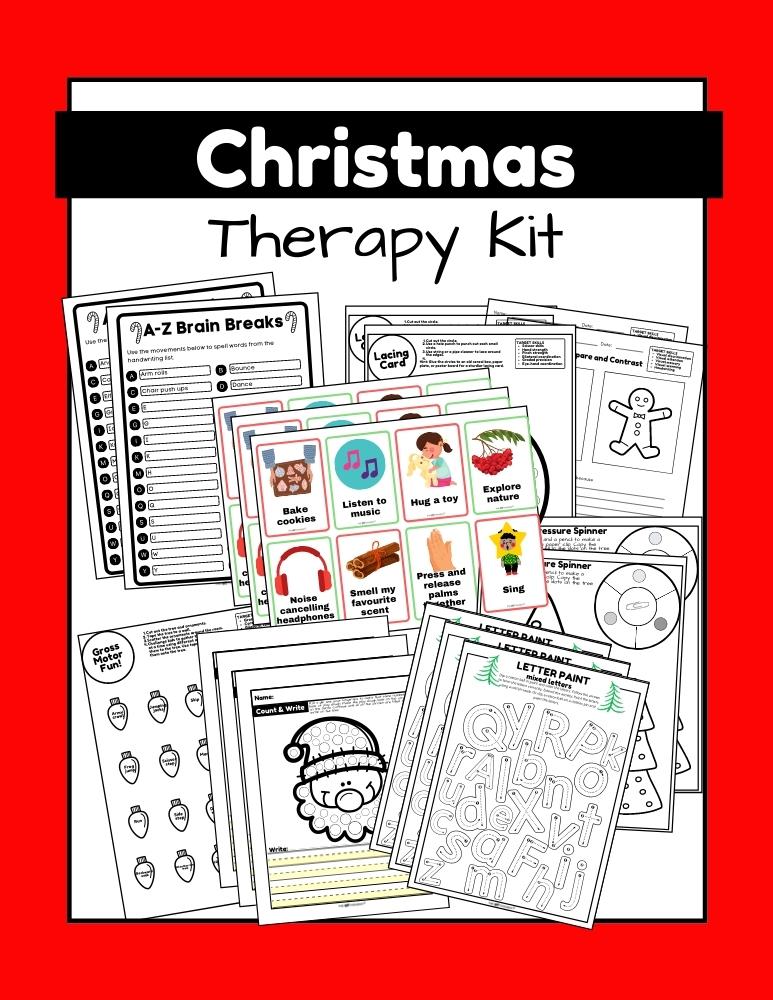
    This print-and-go Christmas Therapy Kit includes no-prep, fine motor, gross motor, self-regulation, visual perceptual activities…and much more… to help kids develop functional grasp, dexterity, strength, and endurance. Use fun, Christmas-themed, motor activities so you can help children develop the skills they need.

    This 100 page no-prep packet includes everything you need to guide fine motor skills in face-to-face AND virtual learning. You’ll find Christmas-themed activities for hand strength, pinch and grip, dexterity, eye-hand coordination, bilateral coordination, endurance, finger isolation, and more. 

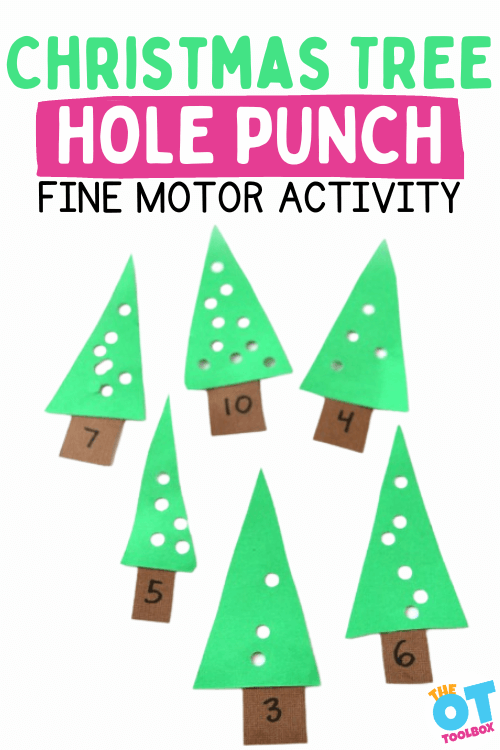
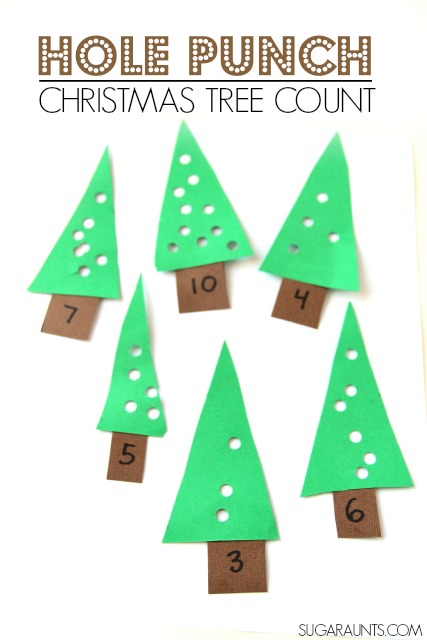
    Christmas Tree Hole Punch Activity

    Christmas tree hole punch

    This hole punch Christmas tree craft was originally published 11-19-2015 and was updated 11-8-2023.

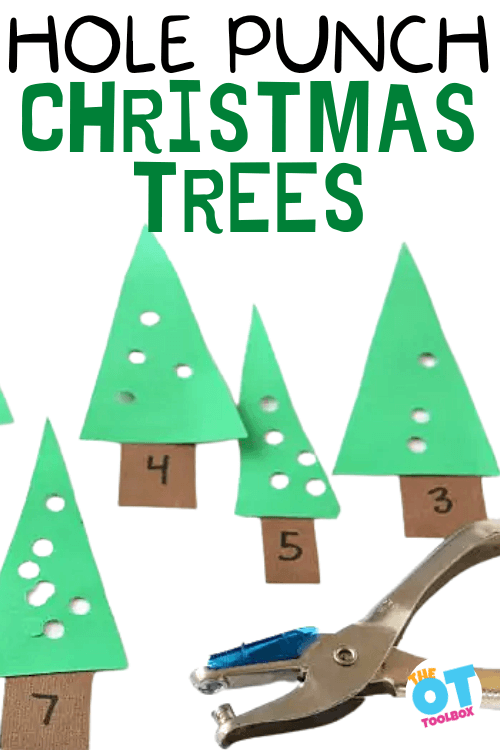
    This Christmas Tree Hole Punch activity is an OLD fine motor activity on our site, but it’s one you’ll want to add to your Christmas occupational therapy activity line up. Why? Because the simple Christmas tree activity is easy to set up and builds many skills all at once: fine motor, bilateral coordination, eye-hand coordination, hand strength, and much more are all developed with one fun activity. All of this skill-building makes it a Christmas craft for kids that is a must this time of year!

    There are many benefits to doing hole punch activities with kids and this Christmas tree counting task has big benefits.

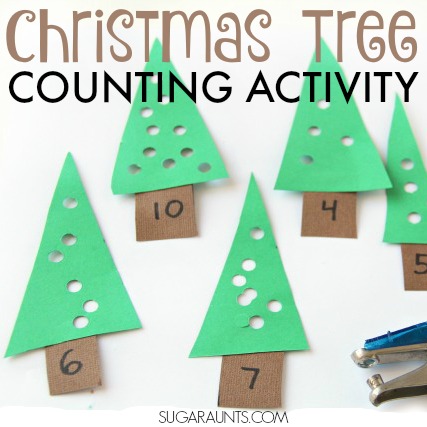
    Christmas tree hole punch fine motor activity

    Christmas Tree Hole Punch for Therapy

    This Christmas Tree Fine Motor Activity is a Christmas themed busy bag that will hopefully help some of that hectic holiday craze that happens this time of year.  Give the kiddos this proprioception powerhouse punching activity and be assured that the kids will be learning, getting out a little holiday wiggles, and you, Mama, can cross off an item from that post-it note.  

    Or grab a cup of coffee and just relax for a second.  Both are equally important.

    Check out these Christmas Fine Motor Activities for more creative ways to work on fine motor skills and address development of skills this Christmas season. 

    This activity will help your child with:

    Christmas Tree hole punch activity

    Affiliate links are included in this blog post.


    Christmas Tree Hole Punch

    This activity is perfect for an Occupational Therapist‘s treatment bag in the days leading up to Christmas.  Kids get a little bit excited (right?) and the wiggles and giggles may end up leading to sensory overload.  A proprioception activity like punching holes is perfect to provide heavy work input to the hands and add calming input.  

    Using a hole punch provides a gross hand grasp strengthening work to the hands.  This activity is perfect for a Christmas themed warm-up activity before handwriting this season.

    A busy bag is intended to keep little hands busy, while learning, exploring, and getting stronger through fine motor play!  And, what does a mom need on occasion for little ones, but busy activities for quiet time.

    RELATED POST: CHRISTMAS JINGLE BELL SORT BUSY BAG

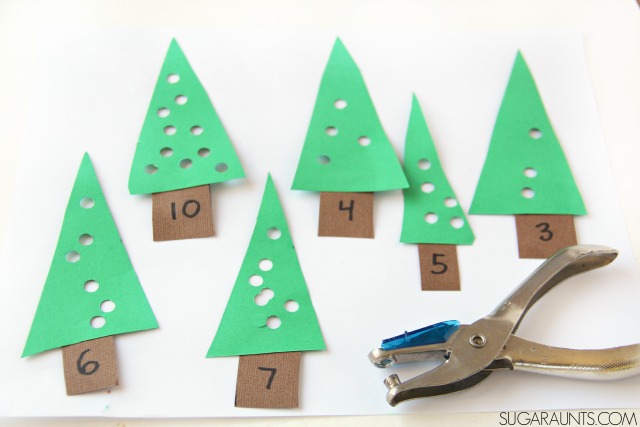
    Christmas tree hole punch and punching holes each each tree


    Materials Needed for a Christmas Tree Hole Punch

    This Christmas Tree activity is easy to put together.  We used just a few items:

    Amazon affiliate links:

    How to make the Hole Punch Christmas Tree


    To make the Christmas tree counting busy bag:

    1. Cut the Green Cardstock into tree shapes.  
    2. Add trunks with the Brown Cardstock.  Glue these in place at the base of each triangle.  
    3. Use the black marker to write a number on each tree trunk.
    4. Next, show your child how to name the number on the Christmas tree and then to punch the corresponding number of holes into the branches of the tree.

    Christmas Tree Busy Bag Counting and proprioception activity

    RELATED POST: EGG CARTON CHRISTMAS TREE FINE MOTOR CRAFT

    hole punch Christmas tree

    Christmas Hole Punch Activity

    Enjoy this time as your kiddo counts, hole punches, and works on so many skills.  And rest assured that they will be doing a productive activity…and not adding more to that to-do list!

    As mentioned above, this Christmas hole punch task covers a variety of skills, but we should go into more detail on the hand strengthening component when using a hole punch to create holes in each Christmas tree.

    Squeezing a hole puncher challenges a grasp pattern with an open thumb web space to strengthen grip strength.

    Finger strength is developed by squeezing a hole puncher. Plus, when the hole punch is held, wrist stability is needed to hold the hole punch in an optimal position to squeeze it completely.

    Then, when you have the holes punched in the trees, you can use them to create a hole punch Christmas tree craft!

    Colleen Beck, OTR/L has been an occupational therapist since 2000, working in school-based, hand therapy, outpatient peds, EI, and SNF. Colleen created The OT Toolbox to inspire therapists, teachers, and parents with easy and fun tools to help children thrive. Read her story about going from an OT making $3/hour (after paying for kids’ childcare) to a full-time OT resource creator for millions of readers. Want to collaborate? Send an email to contact@theottoolbox.com.
    Looking for done-for you therapy activities this holiday season?

    This print-and-go Christmas Therapy Kit includes no-prep, fine motor, gross motor, self-regulation, visual perceptual activities…and much more… to help kids develop functional grasp, dexterity, strength, and endurance. Use fun, Christmas-themed, motor activities so you can help children develop the skills they need.

    This 100 page no-prep packet includes everything you need to guide fine motor skills in face-to-face AND virtual learning. You’ll find Christmas-themed activities for hand strength, pinch and grip, dexterity, eye-hand coordination, bilateral coordination, endurance, finger isolation, and more. 

    Sensory Benefits of Oobleck

    Text reads "oobleck sensory benefits" Icons include hands, ear, nose, muscle, and eye"

    This blog post on the sensory benefits of oobleck was originally published 9-12-2015 and updated on 11-8-2023.

    There are many sensory benefits of oobleck and playing with this sensory material is a powerful therapy tool! In this blog post, we’re sharing why we love to use oobleck as a sensory tool for building skills. Plus, you can see how we used a marble run for a sensory play activity with oobleck. This is just one of our favorite oobleck activities that support occupational therapy goals.

    oobleck sensory benefits

    Sensory benefits of oobleck

    We covered a bit about the sensory benefits of oobleck and other sensory materials in our blog post on goop painting. The thing is that kids LOVE these messy sensory activities…but they may not realize all of the therapeutic benefits of the messy play experience.

    Oobleck can be a tool to support sensory needs. Let’s look at this a bit closer…

    Sensory play with a material like oobleck gets the hands very messy and dirty, and this can be a way to support skill development.

    Oobleck has a consistency that is partially solid and liquid at the same time. This means that it might lead to messy hands and a challenge for sensory touch.

    For kids that are tactile defensive, they might demonstrate an exaggerated or aversive response to tactile (touch) sensory input. People with tactile defensiveness may be hypersensitive to various textures, temperatures, or sensations on their skin, and they may react with discomfort, avoidance, or distress when exposed to certain touch stimuli.

    This can look like:

    1. Being selective about the fabrics of clothing they wear.
    2. Displaying strong reactions to messy play or activities involving substances like glue, paint, sand, or mud.
    3. Food texture issues, or avoiding certain foods due to texture sensitivities.
    4. Experiencing heightened emotional responses to tactile sensations, such as anxiety or frustration.
    5. Avoiding physical contact, such as hugging or handshakes.
    6. Expressing discomfort or irritation when clothing tags or seams touch their skin.

    Oobleck offers numerous benefits for children’s development:

    Sensory Exploration: It provides a rich sensory experience, allowing children to explore different textures, temperatures, and consistencies, which can enhance their sensory processing skills.

    Fine Motor Development: Manipulating and squishing messy materials like mud, clay, or finger paints helps strengthen hand muscles and improve fine motor skills.

    Creativity and Imagination: Messy play encourages creative thinking and imaginative play as children use their hands to mold, shape, and create.

    Emotional Expression: Children can express emotions, reduce stress, and release tension through messy play, helping with emotional regulation.

    Problem-Solving: Figuring out how to mold, shape, or mix messy materials involves problem-solving and critical thinking skills.

    Language and Communication: Discussing the textures, colors, and sensations during messy play supports language development and communication.

    Social Interaction: Messy play can be a social activity, promoting collaboration, sharing, and turn-taking among children.

    Body Awareness: Playing with messy materials increases children’s awareness of their bodies and the sensory feedback they receive, contributing to better self-regulation.

    Relaxation: Engaging in messy play can be soothing and calming for some children, reducing anxiety and promoting relaxation.

    Therapeutic Benefits: Occupational therapists often use messy sensory play to work on specific sensory processing or fine motor goals, making it a valuable tool for therapy.

    Oobleck Self Regulation Tool

    In addition to the benefits listed above, oobleck can be a great sensory coping tool for kids. Just like the power of fidget toys or a calm down corner, oobleck has a calming and relaxing component…for the right individual. For some individuals, the messy tactile nature of oobleck’s consistency may be too much and lead to a dysregulated state. For this reason, it’s important to individualize sensory input based on the needs of the individual.

    can be a helpful tool for supporting self-regulation needs, especially for individuals who benefit from sensory-based calming techniques.

    Heavy Work Input: Oobleck provides a unique resistive sensory experience with its variable viscosity that adds heavy work to the fingers. Resistive sensory input can help individuals self-regulate by engaging their proprioceptive sensory system. You can modify the oobleck to have the desired texture (thicker or runnier) to suit the individual’s preferences.

    Plus, oobleck can offer deep pressure input when squeezed or molded. The resistive feedback through the hands can be calming for individuals who have sensory regulation needs. Encourage them to manipulate the oobleck with their hands, providing proprioceptive input.

    Mindful Play: Encourage the individual to engage in mindful play with oobleck. Focus on the sensations, textures, and movements. Mindfulness activities like playing in a sensory bin or a container of oobleck can help reduce anxiety and promote self-regulation.

    Breathing Exercises: Combine oobleck play with deep breathing exercises. Inhale deeply as you squeeze or lift the oobleck, and exhale slowly as you release it. This synchronized breathing can promote relaxation breathing for regulation.

    Sensory Breaks: Integrate oobleck play into sensory breaks, or a sensory diet, throughout the day, especially in educational or therapeutic settings. These breaks can help individuals reset and improve focus.

    It’s essential to tailor the use of oobleck to the individual’s specific sensory needs and preferences. Always be attentive to their comfort and boundaries, and encourage them to communicate their experiences and feelings during the activity. Oobleck can be a versatile and enjoyable tool for promoting self-regulation and sensory well-being.

    Incorporating messy sensory play into a child’s routine offers a holistic approach to learning and development, addressing physical, sensory, emotional, and cognitive aspects in an enjoyable and engaging way.

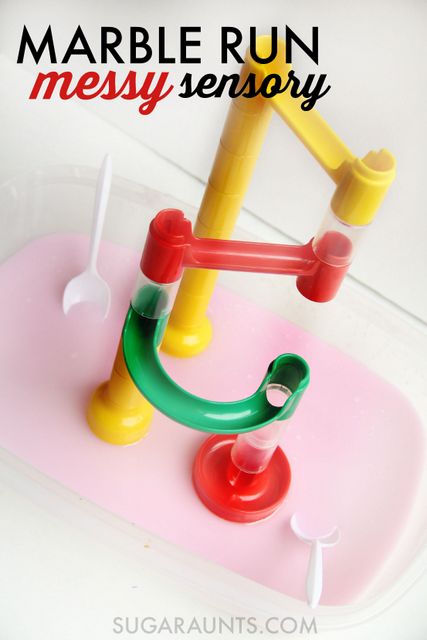
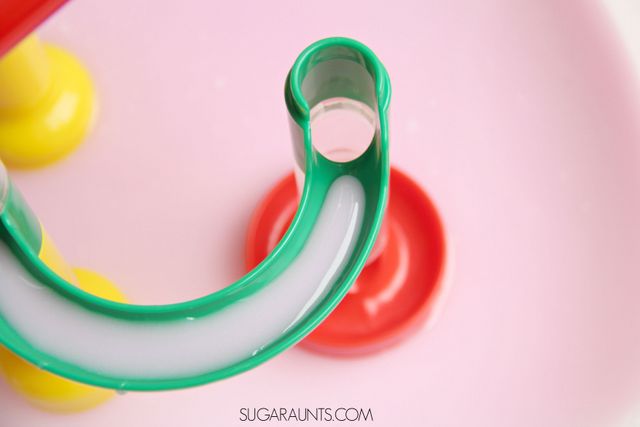
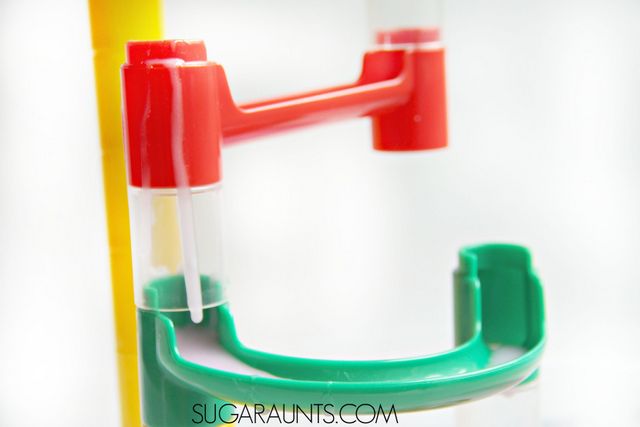
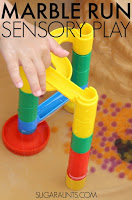
    Oobleck in the marble run for sensory play, Oh Yes! Oobleck is such a cool sensory material.  What is Oobleck?  It’s a non-Newtonian material that has characteristics of liquids and solids.  We made a batch of Oobleck and played with in in our marble run set.  We have tried sensory play with our marble run before and knew that we had to try oobleck in the marble run for messy, sensory mesmerizing play.  This was FUN!
     
    Ooobleck recipe and sensory play with a marble run! This is awesome sensory play and creative fine motor work when kids scoop and pour the oobleck into the marble run.  Watching the oobleck slowly run down the marble run is so mesmerizing and calming!


    Oobleck for Sensory Play

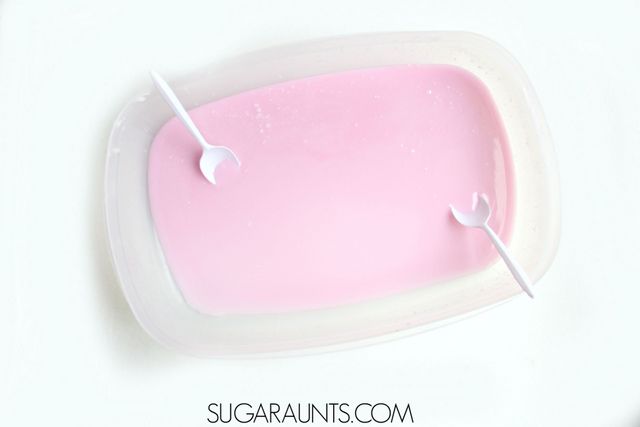
    (This post contains affiliate links.)  We used a typical Oobleck recipe , using a little less cornstarch to make a runnier version.  To make oobleck, you’ll need a few ingredients:
     
    • 1 cup water
    • 1.5 to 2 cups (Amazon affiliate link) Corn Starch (We used a little more than 1 and a 1/4 cup to get a liquidy oobleck material)
    • A few drops of liquid food coloring
     
    Mix the water and (Amazon affiliate link) Corn Starch together with your hands.  Don’t be afraid to get messy.  This is a sensory experience!  You can make the oobleck material in a large shallow bin like (Amazon affiliate link) this one.
     
    If you are worried about the mess with this activity, play outside or lay down a sheet or tablecloth before playing.  It will get messy!
     
    Oobleck is a fun activity on it’s own (and don’t forget to read Dr. Seuss’ Bartholomew and the Oobleck!) (Amazon affiliate link)
     
    Ooobleck recipe and sensory play with a marble run! This is awesome sensory play and creative fine motor work when kids scoop and pour the oobleck into the marble run.  Watching the oobleck slowly run down the marble run is so mesmerizing and calming!
     
    This stuff looks pretty cool, right??
     
    Now, you can play with the Oobleck in many ways (draw letters on the bottom of the bin, squish and drop the liquid-solid, get messy…but even more fun, is adding a (Amazon affiliate link) Marble Run to the sensory play!
     
    Ooobleck recipe and sensory play with a marble run! This is awesome sensory play and creative fine motor work when kids scoop and pour the oobleck into the marble run.  Watching the oobleck slowly run down the marble run is so mesmerizing and calming!
     
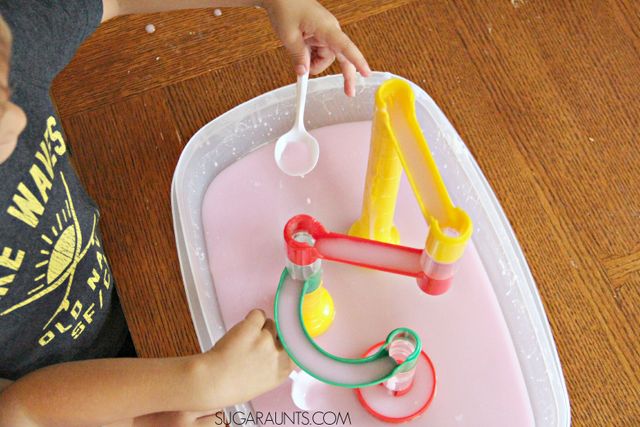
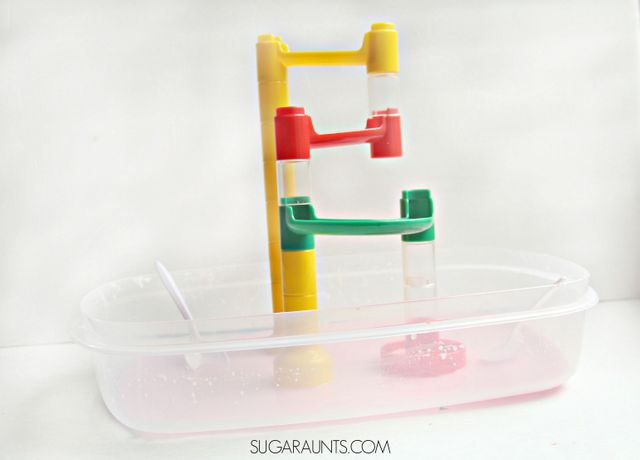
    Start by building your marble run on the table and NOT in the bin of oobleck.  Then, carefully transport the marble run into the bin.  Add spoons or scoops, and get ready to get messy!


    Ooobleck recipe and sensory play with a marble run! This is awesome sensory play and creative fine motor work when kids scoop and pour the oobleck into the marble run.  Watching the oobleck slowly run down the marble run is so mesmerizing and calming!


    Ooobleck recipe and sensory play with a marble run! This is awesome sensory play and creative fine motor work when kids scoop and pour the oobleck into the marble run.  Watching the oobleck slowly run down the marble run is so mesmerizing and calming!
     
    Transfer, scoop, and pour the oobleck as you watch it slide down the run.  It is mesmerizing and calming to watch!  I was surprised to see that the kids scooped and poured very carefully as they watched the oobleck slowly slide down the marble run.  This is one activity that we will be doing again soon!


    Ooobleck recipe and sensory play with a marble run! This is awesome sensory play and creative fine motor work when kids scoop and pour the oobleck into the marble run.  Watching the oobleck slowly run down the marble run is so mesmerizing and calming!
     
    Next up is using the marble run in a big sink of soapy bubbles.  (Not joking! Watch for that post from us, soon!)


    A few more sensory play ideas you may like:

    Tips for using Oobleck for sensory needs

    Using materials like oobleck or messy painting in a controlled and supportive environment can help individuals with tactile defensiveness gradually desensitize their sensitivity to tactile sensations and develop a more positive relationship with touch.

    There are certain tips that support these challenges, however.

    Some things you’ll want to consider about using a sensory material like oobleck to support sensory needs include:

    Offer Gradual Exposure: Start with brief and controlled exposure to the material. Allow the individual to observe, touch, or interact with the material at their own pace.

    This includes desensitization. Encourage the individual to touch the material with their fingertips or a paintbrush. Gradually progress to using their hands or fingers to explore and manipulate the substance. When you offer the oobleck or other sensory material in this way, you give the child control over their sensory input.

    When they have a sense of control in the sensory experience, it can help to reduce anxiety and resistance.

    One powerful strategy is to make the activity meaningful and motivating. This means to present the oobleck experience as play or an experiment rather than a sensory therapy exercise. Make it enjoyable and fun to reduce anxiety.

    Short Sessions: Keep the sessions short initially to prevent overwhelming the individual. Gradually increase the duration as their comfort level grows.

    Offer tools like brushes, sponges, or plastic utensils to interact with the material. These tools can act as intermediaries to reduce direct skin contact.

    Colleen Beck, OTR/L has been an occupational therapist since 2000, working in school-based, hand therapy, outpatient peds, EI, and SNF. Colleen created The OT Toolbox to inspire therapists, teachers, and parents with easy and fun tools to help children thrive. Read her story about going from an OT making $3/hour (after paying for kids’ childcare) to a full-time OT resource creator for millions of readers. Want to collaborate? Send an email to contact@theottoolbox.com.
    Oobleck Activities

    oobleck activities

    Today we’re covering oobleck activities as a fun sensory material to challenge tactile sensory input and inspire messy sensory play. Oobleck is the non-Newtonian fluid that shifts from liquid to solid and back again, all at a person’s fingertips, just by the pressure applied to it, and it’s a great sensory material! Let’s cover some oobleck sensory play!

    oobleck activities

    What is Oobleck

    Have you ever whipped up a batch of Oobleck, the goo that defies all rules? This magical substance goes by many names – Oobleck, goop, glop, goo, slime, or even magic mud – and it’s the ultimate fascinating substance for kids and adults alike.

    This captivating mixture that most people call Oobleck, is one that children simply can’t keep their hands off of when presented with it. And do you want to know the best part? It only takes a few ingredients to conjure up this magical hands-on glop.

    Recipe for Oobleck

    Oobleck recipes are a great multi-step direction activity for kids to problem solve and use in direction following tasks. It’s a great visual motor task for pouring and scooping as well.

    To make oobleck, all you need is 2 cups of cornstarch and 1 cup of water. This means, it’s a great simple sensory recipe that kids can get help to mix.

    Simple Oobleck recipe ingredients

    • Water 
    • Cornstarch
    • Mixing bowl
    • Measuring cups
    • Spoon
    • Towel or plastic tablecloth
    • Tray or tub for sensory play
    • A copy of the(Amazon affiliate link) Bartholomew and the Oobleck by Dr. Suess (optional) 

    To add some vibrant colors, simply just mix in a few drops of food coloring, and viola, you’ve got colorful Oobleck!

    If you’re out of cornstarch, some folks have successfully experimented with substitutes like baby powder, tapioca, and arrowroot instead (although I haven’t personally tested these options), but they say it works great! 

    Ingredients to make the simple oobleck recipe:

    • 2 cups cornstarch
    • 1 cup water
    • Food coloring or approx. 3 Tbsp. of tempera paint (optional) – use the amount you desire based on how much color you want the Oobleck to have – less is lighter, more is darker. 

    Instructions:

    1. Initially mix the cornstarch, water and food coloring or tempera paint in bowl with a spoon.
    2. Next, get your hands in it and begin mixing and scrunching together. Add more cornstarch or water as needed. Note: You may need to use more cornstarch at higher altitudes. The right consistency is when it reaches the feel of honey, but will rip as you pull your fingers across the surface. 
    3. Place the Oobleck in a play tray or in a bin for kids to explore. Hint: You can use a plastic shower curtain or plastic tablecloth underneath it to make clean up a little bit easier. 
    4. To store the Oobleck, use a container that has a good closing lid. When using the Oobleck again, if the cornstarch and water have separated just squish and mix together again. 

    This is important – safety always comes first! Adults should always supervise children using Oobleck to prevent accidental ingestion and keep the little ones safe while playing. 

    Oobleck Recipes

    You can also change the oobleck recipe a bit with an alternative to cornstarch. For even more sensory fun, explore alternative Oobleck recipes that target scents, sounds, textures, or colors.

    Oobleck recipe with baby powder:

    • 1 cup water
    • 2 cups baby powder

    Oobleck recipe with baking soda:

    • ½ cup baking soda
    • ½ cup water

    Note: A little extra stirring with this recipe is required to thoroughly mix it together.

    Oobleck recipe with chocolate:

    • ¼ cup cocoa
    • 2 cups cornstarch
    • 1 cup plus 2 Tbsp. water

    Oobleck recipe with Kool-Aid:

    • 3 cups of water
    • 9 cups of cornstarch 
    • 2 packages of Kool-Aid 
    • food coloring (if a more vibrant color is desired)

    Oobleck Recipe with lemonade:

    • 1 cup of cornstarch
    • 1/2 cup of water
    • 2 Tbsp. of powdered lemonade mix

    Jello Oobleck Recipe:

    • 1 cup of water
    • 2 cups of cornstarch
    • 1 packet of Jell-O (your choice of the color and/or flavor)

    Oobleck recipe with tapioca:

    • 2 ¼ cups of tapioca flour
    • 1 cup of water

    Oobleck Activities

    Make the Oobleck recipe of your choice and then think about the following senses to add a unique sensory addition to create oobleck activities that also build skills.

    • Tactile- You can also add in different materials to make the oobleck more interesting and to vary the sensory experience. Make it more tactilely interesting by adding either sand, glitter, or sequins as the sensory add-ins can add a unique feel to your Oobleck mixture.

    You can also let the kiddos experiment with creating their own fun and unique tactile Oobleck – just make everything available and let them go! 

    • Visual- Make the Oobleck more visually appealing by adding colorful items or change the color of the Oobleck with a glow-in-the dark pigment, food coloring, glittery craft beads, confetti, gems, or sequins. Again, let the kiddos experiment with colorful items that make the Oobleck more visually engaging to them. 
    • Auditory- Boost the sound experience during Oobleck play by using various objects that create sound when interacting with Oobleck such as bells, plastic necklaces, sound-producing objects inside plastic eggs, squeaky toys, and musical instrument toys. By integrating these fun sound elements, it will add a multisensory experience coupled with any other sensory element you have chosen, be it texture, visual, or olfactory.
    • Olfactory- Enhance the Oobleck sensory experience by adding a few drops of scented essential oils such peppermint, lavender, mint, citrus, or cinnamon. It will create a delightful aroma as children play with it and considering a scent to match the season can provide a festive approach.
    • Movement- Give the Oobleck exciting and dynamic movement by adding the use of scoops, containers, or washable toys. You can also add some kitchen tools like spoons, strainers, forks, cookie cutters, a whisk or a potato masher.

    Oobleck Activities for Therapy

    There are many sensory benefits of oobleck, and some of those include targeting goal areas:

    One way to work on these skills is by using plastic gloves on the hands. Grade the activity by cutting out just the fingertips of the gloves. Then, work on touching the oobleck with just a fingertip.

    Another oobleck activity to target sensory motor skills is with goop painting. We created a thinner oobleck consistency and painted with the messy material.

    You can foster fine motor and visual motor skills by using mixing utensils or paintbrushes to mix the oobleck. We created a flour oobleck recipe and used paint brushes to combine the colors for sensory painting and creative painting fun.

    Utensil use- For those who have goals to improve independence with utensil use, you can incorporate a spoon to scoop and stir the materials.

    Oobleck Activities for each season

    The use of Oobleck during therapy and at home is abundant and included below are some fun and creative ideas for Oobleck recipes or designs for each holiday and season to help give you a little bit of inspiration and motivation to create your own version of Oobleck fun!

    Pair these oobleck activities with therapy themes for skill-building.

    *Just remember that adding other elements to Oobleck may change the recipe amounts and you may need to adjust the amount of cornstarch and water accordingly to maintain the consistency that you desire for play. 

    Oobleck Tips

    Caring for your Oobleck and knowing when it’s time to part ways and be tossed out is important. Here are some key points to consider: 

    1. To clean up Oobleck, warm water works wonders, but be cautious about letting excessive amounts go down the sink drain, as it can potentially clog your pipes.
    2. The easiest way to cleanup is to let Oobleck dry out, which transforms it into a powder that can be safely tossed into the trash. 
    3. Emphasize always having clean hands when playing with Oobleck, and for added safety, check it before each play session to ensure there is no sign of mold growing. 
    4. While you can store Oobleck in the fridge and freezer, remember not to store in the refrigerator for more than one week or in the freezer for longer than 3 months.
    5. Always clearly label the Oobleck when storing it so there is not a chance of it being mistaken for actual food. 

    *Note: Emphasizing again, adult supervision should always be provided when children are working with Oobleck in any form or with any materials as it can be very dangerous if consumed or in some cases, deadly depending on the substances used. The best practice is to simply not allow children to consume any type of Oobleck even if it is consumable as it can be confused as edible when it is not! Additionally, small objects in the Oobleck can pose a choking hazard. 

    Regina Allen

    Regina Parsons-Allen is a school-based certified occupational therapy assistant. She has a pediatrics practice area of emphasis from the NBCOT. She graduated from the OTA program at Caldwell Community College and Technical Institute in Hudson, North Carolina with an A.A.S degree in occupational therapy assistant. She has been practicing occupational therapy in the same school district for 20 years. She loves her children, husband, OT, working with children and teaching Sunday school. She is passionate about engaging, empowering, and enabling children to reach their maximum potential in ALL of their occupations as well assuring them that God loves them!

    Sensory Goop Painting

    goop painting with pink goop and cookie cutters

    This blog on sensory goop painting was originally published 1-23-14 and updated 11-8-23.

    This goop painting activity is a creative painting idea that uses messy sensory play to build skills in a creative way. Pair this goop activity with one of our oobleck activities for more ways to foster skill-building through messy play.

    You can add utensils to scoop and pour to build hand eye coordination, work on handwashing hands, or just be creative!

    goop painting

    Goop Painting

    There are many sensory benefits of oobleck, and goop painting activities support those skills.

    When you use goop painting as a therapy tool, you can support a variety of needs. Whether you are focusing on the tactile benefits listed above, or using the goop paint activity as a calming or alerting sensory medium, you can support regulation needs.

    How to make Goop Paint

    The goop paint that we used in the activity below actually used left over moon sand that we made using cornstarch and lotion.

    The cool thing about “goop” is that as a sensory material, you can basically mix up any ingredients to get a messy sensory material.

    To make this type of goop paint, use these ingredients:

    • 2 cups cornstarch (or baking soda or flour would work as well)
    • 1 cup water
    • 1/4 cup glue
    • food coloring

    To make the goop paint, mix all of the ingredients together. Use a spoon or craft stick to stir until they are combined.

    You will need to adjust the ingredients, depending on the type of glue used and the type of dry material. You’ll want the goop mixture to be liquidly, but not too runny.

    Then, you are ready to paint!

    Paint with Goop

     
    Valentine’s Day is just around the corner.  We don’t normally do holiday crafts and activities this far ahead, but our Valentine’s Day Goop Painting came about from a previous material…and it was so much fun, that I was excited to share, haha! This Valentine’s Day activity is perfect to add to occupational therapy plans this time of year.
     
    Sensory Play is so much fun.  We do a ton of sensory activities, crafts, and play every day. 
     
    Whether the kids are messing around in the sink, exploring textures in a bin of toys and “stuff”, or crawling under blankets and cushions…sensory play happens ALL the time in a child’s daily play.  Inviting a child to try new experiences like with this goopy Valentine’s day play activity is just another way to learn through play.
     
     
    Valentine's Day Goop Painting
     

    Valentine’s Day Goop Painting

    You may have seen our Candy Cane Scented Moon Dough post back around Christmas-time.  That post turned into this Valentine’s Day Goop activity (and sensory-tastic painting fun!).   When we finished up that activity back in December, I saved the red and white (turned pink once we were done playing!) moon dough in a gallon sized baggie.  This was the perfect shade of pink for a Valentine’s’ Day themed sensory activity!

    Note: This post contains affiliate links.  

    Valentine’s Day Sensory Activity

    The powdered left-overs from our Candy Cane Moon Dough and a little water were all that we needed to make this goopy fun. 

    We had about 2 cups of the powdered material…Check out the post here to see how we made it.  I added a half cup of water and got a nice goopy, messy, sensory texture to play with.  The peppermint scent was still really strong and when we were playing, Baby Girl said it “smells like candy canes, Mom”! 

    I threw in a few (Amazon affiliate link) heart cookie cutters
    and Baby Girl got to playing.  She liked to have a wet washcloth right next to her to wipe her hands off every once in a while.  This was some messy stuff!

    We had paper and a felly roll pan next to the bin of goop and did some goop painting by stamping the cookie cutters onto the paper.  It was so meant to paint like this!  Baby Girl sat there for a LONG time stamping, and stamping, and stamping some more. 

    (seriously…we had 14 pages filled with hearts!!)

    Messy, sensory, goopy fun!
     
     
    The goop made the heart stamps a big lumpy texture.  So much fun to stamp!  I joined Baby Girl and stamped a bunch of hearts too…
     

    When the hearts dried, they were a pretty stamp.  However, this is not something that can be saved to decorate cards or hung on the wall.  The hearts flaked away if you touched them.  Maybe a little glue added would help to preserve these pretty hearts?  We’ll try that next time!

    Let us know if you try this activity.  We would love to see your play in action!


    Colleen Beck, OTR/L has been an occupational therapist since 2000, working in school-based, hand therapy, outpatient peds, EI, and SNF. Colleen created The OT Toolbox to inspire therapists, teachers, and parents with easy and fun tools to help children thrive. Read her story about going from an OT making $3/hour (after paying for kids’ childcare) to a full-time OT resource creator for millions of readers. Want to collaborate? Send an email to contact@theottoolbox.com.
    Development of Hand Arches

    lines on the palm of the hand to show three arches . Text reads "hand arches"

    Did you know there are several hand arches that make up the curve of the palm of your hand? It’s true! And, did you know that the arches of the hand and the shape of your hand affects fine motor skills, specifically hand strength, and supports finger dexterity, and endurance in daily life tasks? Hands have something we call “hand arches” and they are part of what allow us to use our hands in a variety of ways. That’s right – just as you have arches in your feet, you have arches in your hands! In this blog post, we’re covering arch development!

    diagram of hand arches

    What are hand arches?

    Hand arches refer to the curved surfaces of the palm of the hand, in three distinct planes, or curved places on the hand. The ability to control the hand arches allows the hand to mobilize and hold a variety of objects of different sizes. Refined hand arches allow the hand to cup water, hold a few coins, gently hold a small firefly, or curve the hand on a golf ball or basketball.

    These hand arches are called:

    • Proximal transverse arch- formed by the metacarpophalangeal joints (MCP joints) These are the joints at the base of each fingers. This arch does not mobilize as much as the other two arches, and offers stability.
    • Distal transverse arch- formed by the distal row of carpal bones. These bones make up the wrist.
    • Longitudinal arch- follows the curve of the fingers of the hand, from wrist to MCP joints.

    Cup your hand into a position that would hold water. When you look at your hand, you can see a curved arch at the joints, closer to the thenar eminence, or bulk at the base of the thumb. These two transverse arches of the hand cross the hand and form a cupped position.

    The longitudinal arch runs proximally to distally. This arch forms as the MCP joints of the fingers move closer to the wrist in a flexed, or curved position of the hand.

    All three arches of the hand work together.

    Arch development

    Arch Development

    Arch development progresses from infancy. Refined arch development allows us to do so many things with the hands. The list below shows a progression of refined motor skills.

    • Pinch small objects
    • Pinch small objects while separating the sides of the hand to hold items within the palm of the hand
    • Curve around balls or curved objects of various sizes
    • Cup and hold items in the hand (several coins, small items like beads, etc.)
    • Cup the hand to hold coins
    • Create a curved surface to hold water in the hand

    Refined arch development also lends itself to motoric control and precision in everyday tasks:

    • pencil grasp
    • tying shoes
    • engaging zippers
    • managing buttons
    • opening small lids like toothpaste
    • using a toothpick
    • manipulating a paperclip
    • threading a needle
    • many other small motor tasks!

    You can see there is a developmental progression at work here! Let’s go through Arch Development from infancy to preschool age:

    Arches of the Hands- Birth to Toddlerhood

    From the moment a child is born, their hands are on a journey of growth and grasp development. When we are first born, we use reflexive movements, or movements out of our control, to interact with the world. In the hands, the most well-known reflex is called the palmar grasp reflex. This is where their fingers curl around objects that are placed in their hands.

    This is moving along the direction of one arch (the longitudinal arch); from fingertips to the bottom of the palm. You may do this same movement of opening and closing your fingers when you wave “hello”. As a baby grows, they gradually transition to voluntary grasping and releasing along this same path.

    As toddlerhood approaches, you may notice children be able to hold and control items more and more. This is concurrent with the arches in their hands starting to develop, and their grasp becoming more refined.

    In other words, the big palmar grasp that holds onto a rattle in infancy becomes more delicate to hold a piece of cereal in toddlerhood. This precision grasp is described as a pincer grasp.

    As babies turn into toddlers, they no longer are moving just along that one arch to open and close the fingers- they are now forming and using the transverse arches.

    These two arches run horizontally across the top and bottom of the palms. You can see all three arches in action while holding a tennis ball. This refined grasp pattern is known as a spherical grasp.

    Arch Development in the Preschool Years

    The development of the hand arches during the preschool years are a pre-writing skill needed for early handwriting and manipulation skills.

    As children enter their preschool years, they should have a great baseline of arch development to build on. It’s time to refine and strengthen what they started as babies! This is an exciting time to build fine motor skills, hand control, and coordination. Preschoolers are able to use tools like crayons, markers, and scissors with increasing precision. They can string beads and pull zippers and take pride in their skills!

    But all this play is really important work: proper arch development is essential for efficient pencil grasp and fluid handwriting without discomfort. This will one day impact their abilities and confidence as a student.

    Encouraging a variety of activities that promote finger isolation and arch formation is crucial during this phase. That means limiting screen time and promoting purposeful play time!

    To support refined arches of the hand, incorporating meaningful, play-based arch development activities is key.

    Arch Development Activities

    There are fine motor activities that foster intrinsic muscle strength which refine the arches of the hands.

    How to encourage arch development in infancy:

    Encourage exploration by providing various textures and shapes for them to grasp and manipulate. Blankets, books, balls, you name it! Just always be aware of safety when giving your infant any objects to explore.

    Craft and Play Activity: Finger Painting Fun

    Engage your little one in a finger painting session using non-toxic, washable paints. Encourage them to poke, smush, and smear with their hands. Offering a paint brush or paint stamps will engage different muscles of the hand, too!

    This activity also promotes finger dexterity, hand-eye coordination, sensory development, and overall hand strength. Plus, you get to have an adorable piece of art in the end – talk about a win-win!

    Craft and Play Activity: Playdough Party

    Playing with play dough offers excellent opportunities for arch development. Encourage your child to roll, squish, poke, cut, and shape the dough using their fingers. Ask them to make tiny balls or create imaginative sculptures.

    These activities promote finger strength, coordination, and the development of the intrinsic muscles that support the arches in the hands.

    School Age: Handwriting Mastery and Beyond

    As children progress into school age, their arches continue to mature, enhancing their ability to perform more intricate tasks. Handwriting becomes a focus, and proper arch development contributes to a stable pencil grasp, increased writing speed, and improved endurance.

    This is what we mentioned in the preschool phase – where the arches can be a factor in academic success. Beyond that though, we may see development of the arches being used to play the violin, flute, or piano!

    Craft and Play Activity: Lacing Adventures

    Engage your child in lacing activities using lacing cards or threading beads onto a string. These tasks require finger manipulation, bilateral coordination, and arch support, helping strengthen hand muscles and promoting proper arch development.

    This stage is usually where parents start to see the real strength of a child’s hands come into play – when their teachers note that they often struggle to open their lunch, zip their coat, or write for more than a few moments.

    While things like increased screen time and decreased access to fine motor toys and tools can reduce hand strength, there are certain medical conditions that impact the development of the hands, too.

    Medical Conditions and Arch Development:

    Hypotonia: Low muscle tone can affect hand arch development, making fine motor tasks challenging. Common conditions with low muscle tone are Down Syndrome and Autism.

    Hypermobility: Excessive joint mobility may lead to weak arches and difficulty with fine motor control.

    Developmental Coordination Disorder (DCD): Children with DCD often experience difficulties with fine motor skills, limited strength of arch formation.

    Occupational therapy interventions can support hand function and promote arch development in everyone! 

    The development of arches in children’s hands is a remarkable process that lays the foundation for fine motor skills and hand function throughout their lives. By understanding this journey, we can actively support and promote optimal arch development. It’s always easier than it sounds – just by engaging craft and play activities, we can nurture their hand muscles all while having fun!

    Sydney Thorson, OTR/L, is a new occupational therapist working in school-based therapy. Her
    background is in Human Development and Family Studies, and she is passionate about
    providing individualized and meaningful treatment for each child and their family. Sydney is also
    a children’s author and illustrator and is always working on new and exciting projects.

    Working on fine motor skills, visual perception, visual motor skills, sensory tolerance, handwriting, or scissor skills? Our Fine Motor Kits cover all of these areas and more.

    Check out the seasonal Fine Motor Kits that kids love:

    Or, grab one of our themed Fine Motor Kits to target skills with fun themes:

    Want access to all of these kits…and more being added each month? Join The OT Toolbox Member’s Club!

    Pickle Picker Therapy Tool

    pickle picker and craft pom poms Text reads "pickle picker for fine motor skills"

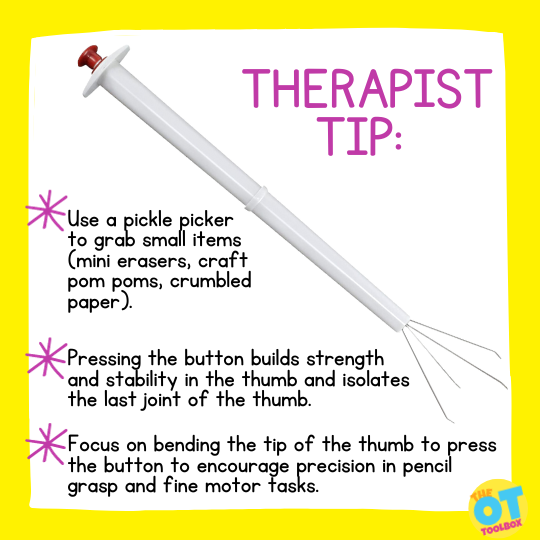
    One of the favorite items in my collection of occupational therapy tools is a pickle picker. We’ve shared how to use a pickle picker to support fine motor skills over on our social media channels in the past, but we wanted to put all of that information together in one place for building those skills!

    pickle picker

    Ok, when we pull a pickle picker out of our fine motor kit from our collection of occupational therapy supplies, the typical response is…”what is that?” But if you have ever used a pickle picker to grab pickles from a jar in the kitchen, then you know how beneficial this kitchen tool is. Let’s explain…

    What is a Pickle Picker?

    A pickle picker, also known as a pickle grabber, is a kitchen tool that has found it’s way into occupational therapy supplies because of the fine motor benefits of using the small kitchen gadget. The utensil’s original use is to retrieve pickles or other items from a jar or container without getting one’s fingers or hands wet.

    A pickle picker (Amazon affiliate link) is a long grabber that has a plunger that when pressed, moves long metal prongs from inside the hollow tube. As the plunger is pressed, it pushes the prongs out of the pickle picker tube to grab items (pickles, olives, or other items in a tall jar or container).

    When I started out as a school-based occupational therapist, a pickle grabber was a therapy tool that I loved to have in my therapy toolbox.

    While we don’t use the pickle picker to pick up pickles, we do use it to grab small objects:

    • craft pom poms in different sizes
    • mini erasers
    • small objects like mini koosh balls
    • crumbled paper
    • anything that is small and grabbable!

    The point to using this tool is to sort, foster fine motor work, and to us the tool as a manipulative while building underlying skills.

    As a functional task, the pickle picker makes fine motor work and finger strengthening tasks fun and engaging. But, you can also use the pickle picker in learning, too:

    Use a Pickle Picker for Fine Motor Skills

    While this under-rated kitchen tool has so many benefits, it actually has fine motor benefits as well. The pickle picker (affiliate link) is a powerhouse when it comes to fine motor skills!

    Pickle pickers, or pickle grabbers can strengthen hands, develop eye-hand coordination skills, promote motor planning, add heavy work to the hands, and be used to facilitate so many more skills. Occupational therapy providers LOVE the pickle grabber as a therapy tool! There are may reasons to have a pickle picker or two in your therapy bag.

    Just some of the ways that a pickle picker builds skills:

    Let’s break these down…

    Use a Pickle Grabber for Heavy work.

    When you press down on the plunger of the pickle picker, the spring inside the device pushes back against the thumb. This resistance offers proprioceptive input that alerts the muscles of how much pressure is needed to grab objects.

    You can grade this task and require more force to push the plunger all the way to the bottom of the tube in order to open the grabber’s tongs all the way open. This is necessary for grabbing larger items such as extra large craft pom poms.

    To grab and pick up smaller items like mini craft pom poms or mine erasers, less force is required to push the prongs open. Knowing the difference between the force required and the resulting heavy work input against the thumb offers proprioceptive input through the thumb.

    Facilitate thumb IP joint flexion by pressing the plunger of a pickle grabber.

    In order to press the red plunger down on a pickle picker, you need to hold the tube steady. When you move the plunger down, one needs to stabilize the fine motor tool at the base of the thumb. You also need to have flexion at the MP joint and the IP joint of the thumb.

    Read about this concept in our blog post on thumb wrap grasp.

    This joint mobility is important because it promotes precision in fine motor tasks. We see this especially, with tasks that require neat pincer grasp.

    Use a pickle picker for separation of the sides of the hand.

    Separation of the sides of the hand is so important for fine motor tool manipulation and dexterity in fine motor skills. The pickle picker is an ideal tool for this skill work because the ulnar side of the hand is used to stabilize the tool while the thumb presses against the pickle picker tool with a lateral key pinch.

    Pickle picker tool for crossing midline.

    There are many ways to use this therapy tool to foster midline crossing.

    Place objects in different locations and planes and use matching colored containers to place the objects. You can position the materials across the midline, or use the materials in an occupational therapy obstacle course.

    Target eye-hand coordination using a pickle grabber tool.

    Positioning the materials and using the pickle grabber to pick up and move objects fosters eye-hand coordination skills as well. Target motor planning and use games to improve motor skill speed to pick up the objects and move them to targets.

    Wrist stability with a pickle picker-

    Another nice benefit of using a pickle picker in play is the wrist stability. So often, we see a flexed, or bent wrist which doesn’t put the wrist and hand in an optimal position for precision skills.

    Holding a pickle grabber tool requires the wrist to be in a stable position, improving hand and grasp strength.

    How to use a pickle picker in occupational therapy

    Now that you know the various ways a pickle picker can support hand strength and finger strength, let’s go over a few ways to use this tool in OT sessions.

    1. Grab craft pom poms Scatter craft pom poms onto a table surface. Use the pickle grabber to pick up the craft pom poms and sort them by color. We show how to do this activity in the video below.
    2. Use mini erasers You can pick up the erasers and stack them to work on precision skills.

    We shared many ways to target specific skills through play in the descriptions above, but sometimes it helps to see the skills in action. Check out our video where we share how to use a pickle picker in fine motor work. You can also check out this pickle picker video on The OT Toolbox YouTube channel.

    A pickle picker, or pickle grabber, is a great fine motor tool for occupational therapy!

    Want to get your hands (literally) on a pickle picker? Here are our top picks from Amazon (affiliate links):

    Working on fine motor skills, visual perception, visual motor skills, sensory tolerance, handwriting, or scissor skills? Our Fine Motor Kits cover all of these areas and more.

    Check out the seasonal Fine Motor Kits that kids love:

    Or, grab one of our themed Fine Motor Kits to target skills with fun themes:

    Want access to all of these kits…and more being added each month? Join The OT Toolbox Member’s Club!

    Colleen Beck, OTR/L has been an occupational therapist since 2000, working in school-based, hand therapy, outpatient peds, EI, and SNF. Colleen created The OT Toolbox to inspire therapists, teachers, and parents with easy and fun tools to help children thrive. Read her story about going from an OT making $3/hour (after paying for kids’ childcare) to a full-time OT resource creator for millions of readers. Want to collaborate? Send an email to contact@theottoolbox.com.

    Indoor Gross Motor Activities for Preschool

    indoor gross motor activities for preschool

    Today, we wanted to get you loaded up on the best indoor gross motor activities for preschoolers. This time of year, the weather starts to turn in some areas and colder days and mornings can mean a preschool classroom isn’t always able to get outdoors during the preschool day. That’s not always the case however, especially in nature-based preschool settings, but in many preschool classrooms, the students need to adjust to the weather and turn to indoor activities.

    indoor gross motor activities for preschool

    Indoor Gross Motor Activities for Preschool

    Developing gross motor skills in early childhood is known to be one of the most foundational skills that support all other areas of learning. As children grow, if they can’t sit in a chair, they are unable to attend for school.

    We do have recommendations for gross motor toys that are great for the preschool-aged child as they build skills through their primary occupation: play. These toys and suggestions can improve strength and offer input in the contributing factors, or underlying skills impacting gross motor progression and functional performance of tasks requiring gross motor work.

    In this blog, I’ll share with you the best indoor gross motor activities that you can do at home or in the classroom that supports all area of gross motor development. 

    Indoor Gross Motor Activities Foster Development

    During the preschool years, any components of gross motor skills develop through play and learning exploration. This includes the development of balance and coordination. This progression supports the skills and abilities that foster learning and functional participation in every aspect of daily activities as the child grows.

    Depending on where you live, there many be lots of activities to do outdoors, but with every season, (whether it be extreme heat, humidity or extreme cold) the ability to complete those activities change.

    There are many components to gross motor development. These include:

    As soon as an infant opens their eyes, they see the wonderful world around them. Their drive to get to everything they see takes over their purpose. Infants develop quickly, developing skills such as rolling over, transitioning from laying down to sitting, crawling, pulling to stand, and eventually to walking independently. As they gain new skills, their coordination and muscle development changes.

    But walking isn’t the “final step” in gross motor development.

    Toddlers are known for the  “toddler waddle” as they gain more balance in their walking. As children grow, each new age provides them new gross motor milestones to master. This blog explains all the gross motor milestones that children work on from ages birth through five, which a great for an overall picture of development.

    Let’s break down when gross motor skills typically develop for the two to five year age range.

    They include:

    gross motor skills for 2 year olds

    Some preschool classrooms begin at the two year age range. Because of this, we’re including two year gross motor milestones.

    • Walks with coordination
    • Runs
    • Can run with quick stopping and direction changes, may struggle with direction changes
    • Kicks a ball
    • Throws a ball overhand
    • Jumps in place with both feet off the ground
    • Walks up and down stairs alone or with assistance

    For the 2 year old preschool class, gross motor activities might include walking on a line, simple obstacle courses, rolling and kicking a ball, crawling tunnels, simple climbing structures, throwing a ball at a large target or to a teacher, and position changes such as getting down on the floor.

    All of these activities should be rooted in play.

    Gross motor skills for 3 year olds

    Preschool for three year-olds includes more gross motor coordination and balance skills as the child gains more strength and coordination of the large muscles of the body.

    • Balance on one foot  
    • Jump forward   
    • Walks on tiptoe
    • Catches a large ball   
    • Rides a tricycle

    For the three year old preschool classroom, gross motor activities may include standing on target spots, balancing on balance beams, climbing structures or playground equipment, riding toys, throwing and catching balls of different sizes, hopping, playing Simon Says with gross motor commands, and play that fosters gross motor movement.

    gross motor skills for 4 year olds

    Preschool gross motor tasks for the 4 year old classroom start to offer more refined and coordinated work. You might see kids at a variety of levels at this age, especially determined by the child’s home and life experiences, outdoor time, and interests.

    • Can run, jump and climb well, is beginning to skip  
    • Hops proficiently on one foot  
    • Can do hopscotch  
    • Catches a ball reliably  
    • Begins somersaults

    For the 4 year old preschool classroom, gross motor activities might include more riding toys, running games, tag games, more refined and coordinated balance activities, playground equipment with more climbing and movements, lawn games, etc.

    gross motor skills for 5 year olds

    Preschool for five year olds, or even Pre-K classes will see more refined gross motor skills, coordination, and skill development. Many preschoolers at this age will begin to play sports like T-ball or soccer (among other sports and gross motor activities). Some things to consider about gross motor skills for five year preschool:

    • Skips on alternate feet and jump rope  
    • Begins to skate and swim  
    • Rides bicycle with/without training wheels    
    • Climbing playground equipment

    For the 5 year old in preschool, or Pre-K classes, gross motor activities might include more climbing equipment, ride on toys with more balance requirements such as bikes and scooters, ball and bat games, target games like basketball, and more complex gross motor games.

    Gross Motor Indoor Activities

    Providing children with the opportunity to move when stuck indoors is critical. Little ones are built to move. According to two pediatricians in this article, “Keeping your toddler moving daily is key to a healthy development.”

    Daily play activities and movement experiences foster development.

    Although it’s important for children to have gross motor activities always available for them, it’s not always easy to provide, especially when you are indoors.  

    Here are my 5 favorite playful activities to foster development of gross motor skills to preschoolers:

    1. Games with painters tape.

    I love painters tape, not only because it is cheap but it can easily be placed on any flooring or wall and removed with ease! Painters tape is perfect for indoor gross motor games, as it encourages balance, coordination, and more. You can even form circles and numbers to complete this snowman bowling and jumping game. Here’s a visual for that activity.  

    1. Games with cardboard squares.

    Do you have any Amazon boxes lying around? Cut those boxes up into squares of all sizes to play some amazing games. Place them on the floor in a line and have children “jump” over them. Write numbers on them and place them in a circle for a freeze dance! When you stop the music, have your child find a square and say the number they found. You can even create an indoor hopscotch game for hours of hopping and jumping fun!

    1. Children’s Yoga Games

    If you have a small space, you can still encourage gross motor games with some children’s yoga! Yoga is an amazing activity for people of all ages, but is exceptional for young children. Yoga has many benefits that include increasing attention span, encouraging connection between body and mind, boots immunity, increases flexibility and strength and other benefits.

    Try this unicorn yoga, penguin yoga, or even partner yoga for working on balance and strength with a friend or in small groups.

    1. Empty Plastic Bottle Games

    Recycling doesn’t always mean that we need to put our used containers in a recycle bin. As a preschool teacher, I know that all objects can be used for some type of learning activity. Empty plastic bottles are one of my favorite things to collect. Do you have any empty plastic bottles laying around? These can be any size that held any type of drink. There are so many movement games that we can do with empty bottles, including bowling or a water bottle ring toss game.

    1. Activity Jars

    If you have some popsicle sticks, a die and an empty cup, you have everything you need to make an activity jar! Write one action word on each popsicle stick and place them in the jar…or use our free list of Simon Says commands that fit on craft sticks. Roll one or two die and count the total number that was rolled. Pick out a stick from the cup and now your child knows how many times to do that movement activity! Here are some examples of movement activities to add to the popsicle sticks:

    • Spin
    • Jump
    • Hop on Right Foot
    • Hop on Left Food
    • Tap your nose
    • Walk on Tip Toes
    • Touch your Right elbow to your Left knee 

    6. Make an indoor balance activities

    There are many way to make an indoor balance beam and you don’t need special equipment. Use a blanket roll balance beam or use pillows, string, or other items.

    Providing young children with safe movement games is crucial to their development, not only to support their gross motor development, but also to encourage a healthy lifestyle. Kids can learn all sorts of new skills while they move.

    Even if you are stuck indoors for a while, using these simple movement games will keep your kids engaged and give you some piece of mind.

    Jeana Kinne is a veteran preschool teacher and director. She has over 20 years of experience in the Early Childhood Education field. Her Bachelors Degree is in Child Development and her Masters Degree is in Early Childhood Education. She has spent over 10 years as a coach, working with Parents and Preschool Teachers, and another 10 years working with infants and toddlers with special needs. She is also the author of the “Sammy the Golden Dog” series, teaching children important skills through play.

    Finger Dexterity Exercises

    Hand holding coins by the fingertips and dropping one at a time into a stack of coins. Text reads "finger dexterity"

    Fine motor skills are a complex thing, but one thing that plays a major role in fine motor coordination is finger dexterity. The precision movements and endurance in small motor activities is driven by the ability to maneuver fingers and isolate the joints in holding and manipulating small objects. Let’s explore the role of manual dexterity in fine motor skills.

    The finger dexterity activities and exercises in this post can be used along with manual dexterity goals to support functional tasks.

    finger dexterity

    Fine Motor Dexterity

    Fine Motor Skills in kids are so important for independence in self care tasks.  Children need to develop the ability to manipulate their fingers in a coordinated manner in order to skillfully maneuver buttons, zippers, shoe laces, pencils…and the tools of learning and play…TOYS! 

    Dexterous movements are used in everyday activities throughout our day.

    What is finger dexterity?

    Finger dexterity refers to the ability to use coordination and manipulation of objects in the hands with precision. Dexterous motor skills can be broken down into areas: grasp and release, coordination with in the hand (in-hand manipulation), and proprioception (knowing how much effort is needed to manipulate objects without dropping them). There are many other contributions that impact finger dexterity and we list these below.

    Together, these precision skills enable us to pick up an object with the right amount of pressure and motor dexterity so you can grasp the object accurately taking eye-hand coordination skills into consideration.

    After grasping the object without overshooting or missing the item, it is necessary to position or rotate the object within the hand. Isolation of the joints of the fingers and thumb allow for precise movements and coordination when manipulating objects in functional tasks.

    The nine hole peg test is a good way to assess for finger dexterity.


    Finger Dexterity Examples

     
    Fine motor dexterity also looks like:
    • manipulating coins
    • picking up small beads
    • opening a tube of toothpaste
    • threading a needle
    • holding items in the palm of the hand and putting them down one at a time
    • crafts with small objects
    • peeling stickers off a page
    • opening or closing a clasp on a necklace
    • tying shoes
    • opening a bread tie
    • putting a pony tail holder in hair
    • braiding hair
    • maneuvering a pencil within the hand (rotating the pencil, erasing a small spot on the page)
    • turning a pencil in a handheld pencil sharpener
    • zippering– inserting a zipper into the zipper carriage
    • buttoning a shirt
    • lacing up shoes
    • stacking coins
    • holding playing cards in your hands
    • any other task that requires small motor tasks
     
     
    We’ve got lots of posts dedicated to fine motor skills.  Finger Dexterity is a necessary step in development of fine motor skills


    Kids will love to play this finger dexterity activity to work on fine motor skills.


    Skills needed for Finger Dexterity

    Children develop their hand skills from infancy. Hand strength develops from the time a small baby is placed in tummy time. You’ll start to see finger dexterity in action when a baby picks up cereal pieces using a pincer grasp.
     
    Finger dexterity requires components such as: 
     
    The terms that make up finger dexterity are explained in each of the blog posts in the list.
     
    There are developmental milestones for fine motor development that are necessary for independence each stage of childhood. When kids struggle with handwriting, manipulating small objects, hand fatigue in small motor tasks, finger dexterity and the underlying contributions should be considered.
     
    Children also need to demonstrate dexterity in order to manipulate objects.  They need to maneuver their fingers independently of one another (this is called finger isolation) and with separation of the two sides of the hand
     
    Without these skills, modifications or adjustments are often made by the child. We’ll cover more specifics about the relationship of finger dexterity and these components below.


    Finger Dexterity and Separation of the two sides of the hand

    When using the small muscles of the hands in dexterity tasks, one uses the side of the thumb-side of the hand. 
     
    The precision side of the hand is the thumb, pointer finger, and middle finger.  These are the fingers needed for dexterity tasks and fine motor skills. 
     
    The ring finger and pinkie finger are involved in providing stability during precision tasks.  When the index and thumb are involved in a small motor activity, the ring finger and pinkie finger are tucked into the palm and proved a support during handwriting and shoe tying
     
    They also provide power during grip and the force behind a gross grasp
     
    So when will you see the two sides of the hand separated during activities?? Tying shoes, pulling a zipper, fastening a button, and manipulating small pegs into a pegboard are some examples of separation of the two sides of the hand.


    Finger Dexterity and Finger Isolation

    Finger isolation is a key part of finer dexterity and begins when an infant begins to point at objects with one finger. 
     
    Using the fingers independent of one another is needed for tasks like turning a page in a book, typing, molding dough, sign language, and finger plays (“where is Thumbkin” and other fingerplay songs are great ways to practice finger isolation and dexterity!) 
     
    Kids can identify colors by playing this fine motor game.


    Finger dexterity Activity

     
    This finger strength exercise is actually a game, which makes it a great activity for developing precision in those little muscles of the hands, isolating fingers, and separating the two sides of the hand…all SO important in independence and play.
     
    Try this activity to work on separating the two sides of the hand with a fun activity for kids. 

    This post contains affiliate links.

    Our finger dexterity activity began with a little prep work.  We used acrylic paints to paint circles on the back of bubble wrap paper. 

    Kids will explore colors in this finger dexterity game.


    I painted the back side of large bubble wrap with different colors.   We let these dry (and it was slightly difficult to remain patient!!)

    Kids will love to play "Twister" in this fine motor exercise.


    Once our paints were dry, we got our fingers ready to play some finger dexterity games!  I had Little Guy get his fingers ready by making “legs”. 

    This is a great way to encourage use of the two sides of the hand.  He tucked his pinkie and ring fingers into the palm of his hand and got his pointer and middle finger busy as they “walked” around.

    Fun fine motor game for kids.


    We played a color matching game with the colored bubbles.  I called out a color and he had to “walk” his fingers to the color and pop the color.  He was working on color awareness at the same time as we practiced finger dexterity.

    kids can work on fine motor skills needed for independence in many tasks.


    As I called out different colors, he had to “walk” his fingers around to the different colors.  He really worked on those finger isolation skills as he searched for a bubble that was not yet popped. 

    Other ways to work on finger isolation and separation of the two sides of the hand include using small objects in manipulation like crafting pom poms.

    The index, middle finger, and thumb are needed to manipulate items in fine motor tasks. This activity is a great way to encourage dexterity in kids.


    Even Baby Girl wanted to get in on the fun!  This finger dexterity exercise is a great way to “warm up” the hands before a handwriting or typing task for older children. Using handwriting warm ups prepares the hands for tasks like writing with a pencil.

    When there is weakness in the small muscles of the hands, it is often times, difficult for children to write, color, or type with appropriate grasp and positioning of the fingers and wrist. 

    A dexterity exercise like this one is a fun way to play and get those muscles of the hand moving and strengthened in order to improve endurance and positioning.

    Manual Dexterity Activities

    Looking for more fun ways to practice manual dexterity of the fingers?  These are some fun games and activities you may want to try:

    Finger dexterity exercises

    Using the activities listed above are great ways to build fine motor skills. You can also improve manual dexterity with the following exercises:

    • Pinch putty or playdough 10 times, with 3 repetitions (find more reps in our theraputty exercises blog post)
    • Place pegs into a pegboard- time the student to see how many they can place in 30 seconds. Try to beat that time.
    • Hand gripper workouts to improve proximal stability
    • Stack 10 coins or game tokens into a pile. Then pick them up one at a time and place them into the palm of the hand
    • Deal a deck of cards
    • Creating a fine motor home exercise program
    • Using the exercises described in the Weekly Fine Motor Program
    • Finger aerobics shown in the video below.

    Working on fine motor skills, visual perception, visual motor skills, sensory tolerance, handwriting, or scissor skills? Our Fine Motor Kits cover all of these areas and more.

    Check out the seasonal Fine Motor Kits that kids love:

    Or, grab one of our themed Fine Motor Kits to target skills with fun themes:

    Want access to all of these kits…and more being added each month? Join The OT Toolbox Member’s Club!

    Colleen Beck, OTR/L has been an occupational therapist since 2000, working in school-based, hand therapy, outpatient peds, EI, and SNF. Colleen created The OT Toolbox to inspire therapists, teachers, and parents with easy and fun tools to help children thrive. Read her story about going from an OT making $3/hour (after paying for kids’ childcare) to a full-time OT resource creator for millions of readers. Want to collaborate? Send an email to contact@theottoolbox.com.