Instant Results With Multi Sensory Strategies For B And D Reversals

b and d reversals

A common challenge for many children is letter b and d reversals. When kids first learn to write, is is very common for them to reverse letter b and d. Here, we are talking specific multisensory strategies to address reversal of these tricky letters.
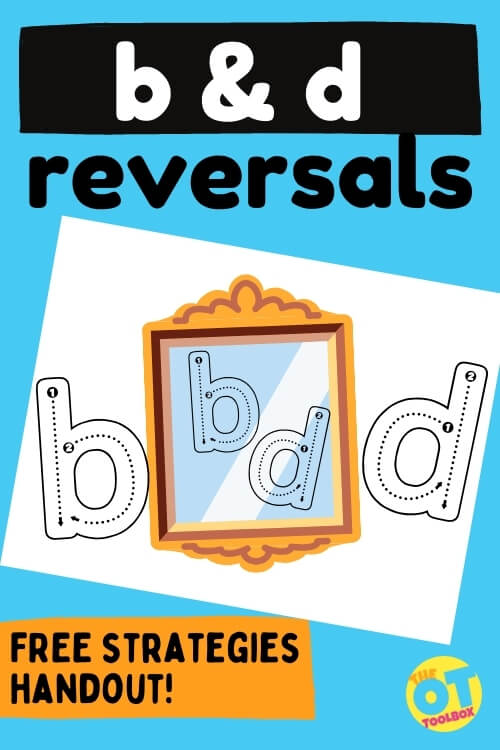
Letter b and d reversals and multisensory strategies for teaching letter reversals.

b and d reversals

Letter b-d reversals are very common among children. We see these letters interchanged in reading, in writing, in isolation, and in words or sentences that contain both letters. But why are the letters b and d reversed so often?

Oh, those dreaded letter reversals and the need to change them, what to do, what to do, what to do.

Why are b and d reversals so common?

These two letters are the most commonly reversed letters, and it can even be a normal part of development.

It’s important to know that it is common for young children such as preschoolers and kindergartens to reverse some letters.  However, by age seven and at the latest age 8, children should be infrequently or not reversing letters at all. If they are doing it frequently and with little success despite remediation, you should consider testing to determine if there are other issues that need to be addressed first. 

If b and d letter reversal is an issue for a student consistently above the age of 8, a visual processing problem, or dyspraxia, dysgraphia or dyslexia may be present, impacting letter confusion in written work or reading.

Read about more information on dyslexia and occupational therapy.

How to Correct b and d letter reversals

Let’s go over various ways to help young learners by correcting letter b and letter d reversals. 

Children need to always be taught HOW to form letters, not given worksheets to trace and left to figure it out on their own as this just leads to them piecing letters together with no instruction in proper sequence or stroke direction.  

This is a PROBLEM! 

Lowercase b is formed from the top down with a vertical line. Then the round part of the letter is formed. Kids typically get that process. 

But then, lowercase d is introduced. Sometimes, children also form letter d from the top, down, by starting at the top of the line. They make the vertical line down because that motor plan is established. Then, they need to add the curved portion of lower case d and they have confusion about which way to go. That’s when you see a letter reversal. 

Part of the issue with common letter reversals like the b/d issue is that the motor plan for each letter isn’t established fully. This occurs in young children as they begin writing and learning correct letter formation. 

Another issue is that letters are not formed correctly (starting letter d at the top rather than forming the “c” part of the letter first. You can get a better understanding of letter formation in our blog post on how to teach letters and the order of letter formation.

Children need to be TAUGHT from the beginning how to form each letter with the correct start point, sequence, and stroke directionality. Repeated errors in formation only further reinforce reversals and leads to more difficulty with repairing them down the road.  Don’t allow repeated formation errors, but do seek to work toward good habits in formation.  

Multi-sensory strategies for b and d  Reversals

But if you need ideas to assist a child in repairing learned reversal behaviors, take a look at this varied list of ideas and pick what you think will work best for your children. 

Some intervention strategies will work better for one child while other strategies will work better for another, so always use the one that works best for each child.

Choose a multi-sensory activity and work on letter recognition as well as formation using visual cues, verbal cues (auditory cues), and kinesthetic input to practice lower case b and lower case d in isolation as well as together.

  • Ensure a child first has solid left and right discrimination on themselves, others, and in space. Incorporate visual spatial relations with movement. Understand that spatial awareness impacts handwriting in many ways. Letter reversals are just one aspect.
  • Teach letters in groups. For example, teach the letter that have similar stroke patterns.  Take a look at how the Learning without Tears™ program does this. For example, they call the first group the “magic ‘c’ letters” this includes: ‘c’, ‘a’, ‘d’, ‘g’, ‘o’, and ‘q’. They all begin with a letter ‘c’ stroke. Then they have a group called the “diver letters” and this group includes: ‘b’, ‘h’, ‘r’, ‘n’, ‘m’, and ‘p’. They all begin with a line down and then swim up and over strokes. Using this approach coupled with the visuals provided helps a child to build a better mental image of some commonly reversed letters. 
  • Connect a frequently reversed letter to another letter of the alphabet that is similarly formed and that the child never reverses, like letter c. Lower case c can be connected to lower case d in formation.
  • Use your finger and form the letter on a child’s back. Have the child guess what letter it is. Follow with having the child air write the letter. End with the child writing the letter on paper. You can place a textured material under the paper such as sandpaper, plastic canvas, window screen material, etc.
  • Create textured letter cards for letter d and letter b. Have child finger trace over the letter forming with correct sequence and directionality. Have them try to do so with their eyes closed and then their eyes open. This builds the motor plan and muscle memory of each letter for the child. 
  • Use the Handwriting without Tears materials to include a small chalkboard with boundaries and have child begin forming letters under the smiley face located in the top left corner. 
  • Mark all of the p’s and b’s red to show that the loop is formed on right (both red and right start with the letter ‘r’) and then mark all of the q’s and d’s green to show that the loop is formed on the left. 
  • Develop consistent use of left and right direction using a variety of media and intervention activities. 
  • Have child first trace a really large letter on the board, form the letter independently, write the letter with eyes closed, and write the letter with eyes open. This increases interest and provides increased feedback. 
  • If a child reverses multiple letters such as: b/d, m/w, p/q, u/n then be sure to address one discrimination at a time. Be sure one set is solid before moving to the next. Note: Be sure to over-teach one letter in each set before addressing the next letter in the set.
  • Use multisensory materials to teach letter formations such as play dough, shaving cream, wikki sticks, puffy paint, hair gel, glitter glue, rice, sand, and yarn.  Be sure the child associates letter forms with the actual letter name so as they form the letter have them state the letter name. 

Cognitive Cues to addressing b and d reversals

Use cognitive cues to help a child distinguish letters such as:

  1. The lowercase letter ‘b’ is formed like the uppercase letter ‘B’, but without the top loop.
  2. The lowercase letter ‘d’ is formed with the lowercase letter ‘c’ first and the lowercase letter ‘c’ comes before the letter ‘d’ in the alphabet.
  3. The lowercase letter ‘d’ is formed with the lowercase letter ‘c’ and then add a line to form the letter ‘d’.
  4. The uppercase letter ‘E’ faces the number 3. 
  5. For letters ‘a’, ‘d’, ‘g’, and ‘q’ and the number 9, cue the child to use “c up down” as the method to form these letters and this number. 
  6. Use the b e d image. Show children how the b starts the word bed and d ends the word bed. This can be a positioning imagery that helps with adding a visual to correct reversals.
  7. Use the imagery of lowercase d having a diaper and lowercase b as a ball and bat. This can be confusing for some children as the images can be reversed, but for other children, these images can be motivating. After all diapers can be funny for some kids. Other kids are motivated by the sport of baseball. In this case, it’s about using what motivates the child.
  8. For the number 3, cue the child to use “around the tree, around the tree”.
  9. Consider ‘b’ and ‘d’ eyeglasses formed with fingers (like o.k. signs with final three fingers closed and standing up straight) or draw a ‘b’ and ‘d’ headboard and footboard of a bed as a fun visual cue. This is the order they come in the alphabet as well, ‘b’ before ‘d’. 
  10. Consider using a thumbs down sign on both hands to refer to the letters ‘p’ and ‘q’ as this is how they come in the alphabet, ‘p’ before ‘q’.

Struggling readers may revers b and d when reading. And, studies have shown that children who made more errors in the letter writing task went on to become poorer readers.

In this case, continue to work on the multisensory strategies listed above, but also use some of these tips during reading tasks:

  • Show the student how to make a letter b with their left hand by pointing their index finger up and making the round part of the letter with their closed fist. They can then use their right hand to make a lowercase letter d by pointing their pointer finger up and making the round part of the letter d with their closed fist. Then, when reading, show the reader how to use their left hand to point to letter b and to use their right hand to point to the lower case letter d’s. They can do this throughout the reading passage.
  • Encourage the reader to correct sounds when they read a letter incorrectly. Go back and re-read the word and feel the positioning of their lips and tongue as they say the word with the correct letter. Ask them to repeat the sound of letter b and the sound of letter d. This auditory practice will help to instill writing the letters correctly. It’s all about repetition and handwriting practice.

How to correct b and d reversals

If a child is still reversing letters after the age of 8, or continues to reverse letters no matter the visuals or tricks that you’ve tried, try some of these strategies listed below to correct letter confusion: 

Offering visual cues can help!

  • Provide a model of frequently reversed letters on the desktop for the child to reference in the classroom.
  • Provide an index card with straight line down the middle and then write the letters on the card based on where the straight line is positioned within the letter. 

For example:

  b d p q

  • Provide visual cue cards for the desktop that has pictures of fun reminders such as hands for a pair of eyeglasses or a bed for the letters ‘b’ and ‘d’ or a thumbs down sign with both hands for the letters ‘p’ and ‘q’. 
  • Try multisensory activities like rainbow writing with different materials.

Take your time to teach the formation of letters and numbers as well as using a multi-sensory approach when teaching the letters. It will always pay off in the end for the child!  

letter reversal strategies Handout

Want a free PDF of multi-sensory letter reversal strategies? Enter your email address into the form below to access this printable handout. Use it in your handwriting toolbox to help kids write b & d!

Letter b and d Reversals Strategies

    We respect your privacy. Unsubscribe at anytime.
    Regina Allen

    Regina Parsons-Allen is a school-based certified occupational therapy assistant. She has a pediatrics practice area of emphasis from the NBCOT. She graduated from the OTA program at Caldwell Community College and Technical Institute in Hudson, North Carolina with an A.A.S degree in occupational therapy assistant. She has been practicing occupational therapy in the same school district for 20 years. She loves her children, husband, OT, working with children and teaching Sunday school. She is passionate about engaging, empowering, and enabling children to reach their maximum potential in ALL of their occupations as well assuring them that God loves them!
    Problem Solving Activities for Preschoolers

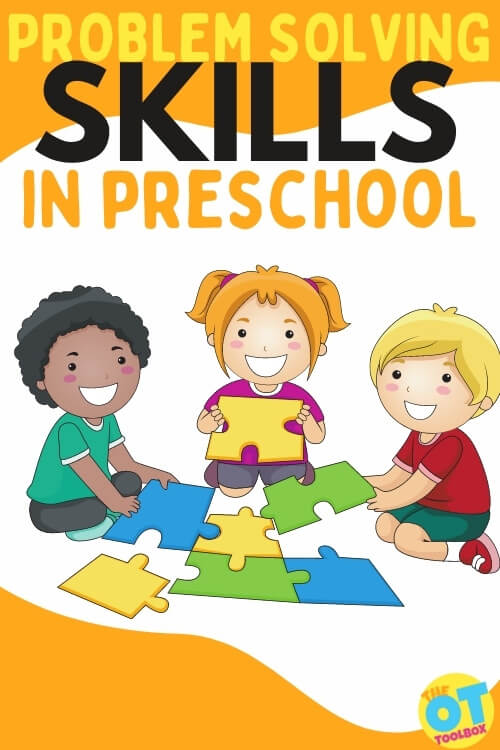
    Problem solving skills in preschool

    It can be frustrating when children act without thinking of the consequences. In this blog post, you’ll learn about the development of problem solving in specific parts of our brain, discover important aspects of executive functioning that impact problem solving abilities, how to teach problem solving to preschoolers, and problem solving activities for preschoolers and young children so they can use words instead of the preschooler’s behaviors or tantrums.

    Best of all, many of our favorite fine motor activities for preschoolers support problem solving skills in early childhood.

    Problem solving skills in preschool

    Problem Solving Activities for Preschoolers

    Before we get into the problem solving activities for preschoolers, and specific strategies to use in early childhood, it’s important to understand the development of the problem-solving process in kids. Supporting small children by giving them the skills to be problem solvers takes time and practice. We’ll get to those specific strategies below.

    But first, does this scenario sound familiar at all…

    I just don’t understand why Johnny keeps throwing the ball in the house. Doesn’t he realized that he could break the window? Johnny is three and he loves to play with his tennis ball in the house. Even though I have told him over and over again that we don’t throw them in the house, I still catch him sneaking them indoors at least once a week. 

    Before we can address problem solving by helping kids look at the big picture and coming up with creative solutions for problem solving issues, we need to understand what is happening developmentally. Self-reflection is a challenging cognitive skill, and for young learners! 

    Let’s take a better look at the development of problem solving skills…

    Development of problem solving skills in preschoolers

    Development of Problem Solving Skills

    It’s through play, observation of others, and practice that young learners are developing problem solving skills in early childhood.

    Problem solving, rational thinking and reasoning are all skills that are controlled by a part of our brain called the prefrontal cortex. Our brains grow exponentially over the first five years of life, but not the part of our brain that helps us with critical thinking and problem solving skills. This part of our brain, called the prefrontal cortex, isn’t fully developed until we turn 25 years old! 

    As babies, we are exposed every day to new experiences, but at this age we don’t comprehend how these experiences affect us and those around us. If only children could think through their problems. This resource on executive functioning skills offers more information.

    Have you noticed that it can be a bit scary when teenagers get their drivers licenses? They don’t always think of “what might happen.” This is due to their prefrontal cortex not being fully developed. 

    But what about our three and four year olds? We know they can count, ask questions and get the cookie off the counter in a very sneaky way when we aren’t looking. In the Early Years study of 2011 called Making decisions, Taking action, they describe the prefrontal cortex entering a rapid period of development, making critical interconnections with our limbic system. (link: )

    This study states “The prefrontal cortex pathways that underlie these capacities are unique to human brains and take a long time to mature. Early connections begin in infancy. Between age 3 and 5 years, the prefrontal cortex circuits enter a rapid period of development and make critical interconnections with the limbic system. During adolescence and early adulthood, the neural pathways are refined and become more efficient.”

    What is so great about this part of the brain anyway? 

    As the prefrontal cortex (that is located behind out eyes) develops over the years, we are able to engage with situations differently, assessing our surroundings in a new way. As we develop these new executive functioning skills, we are able to keep ourselves safe, build friendships and become successful in our careers.

    Related, these friendship activities for preschoolers offers ideas and strategies to support social emotional development.

    This peer reviewed report competed by Merve Cikili Utyun, called Development Period of Prefrontal Cortex, discusses how amazing this part of our brain is, and how each of the three sections control different aspects of our functioning. It states that: 

    “ PFC includes the following Broadman Areas (BA): 8, 9, 10, 11, 12, 44, 45, 46, 47. “The dorsolateral frontal cortex (BA) 9/46 has been functioned in many cognitive process, including processing spatial information, monitoring and manipulation of working memory, the implementation of strategies to facilitate memory, response selection, the organization of material before encoding, and the verification and evaluation of representations that have been retrieved from long-term memory. 

    The mid-ventrolateral frontal cortex (BA 47) has implicated cognitive functions, including the selection, comparison, and judgment of stimuli held in short-term and long-term memory, processing non-spatial information, task switching, reversal learning, stimulus selection, the specification of retrieval cues, and the ‘elaboration encoding’ of information into episodic memory.

    BA 10, the most anterior aspect of the PFC, is a region of association cortex known to be involved in higher cognitive functions, such as planning future actions and decision-making. BAs 44 and 45, include part of the inferior frontal and these regions’ functions are language production, linguistic motor control, sequencing, planning, syntax, and phonological processing.

    Finally, the orbitofrontal cortex mostly (BA 47, 10, 11, 13) in the orbitofrontal cortex has been implicated in processes that involve the motivational or emotional value of incoming information, including the representation of primary (unlearned) reinforcers such as taste, smell, and touch, the representation of learnt relationships between arbitrary neutral stimuli and rewards or punishments, and the integration of this information to guide response selection, suppression, and decision making.” 

    Wow! No wonder it takes so long for this part of our brain to fully develop. Problem solving skills in preschoolers take time to develop!

    When Johnny is throwing the ball inside the house, he is thinking about what is happening now, in the present. Not what has happened in the past (when he broke the window at grandmas house a year ago) or that breaking a window might happen in the future. 

    What are some problem solving techniques?

    Solving problems is a skill that all preschoolers need support with. This critical skill doesn’t happen overnight. It takes time and practice to become second nature.

    It’s hard for us, as adults, to remember that children ages 3-5 (preschool-aged) don’t yet have the brain capacity to problem solve on their own, or remember what they learned from a situation a week ago. 

    Just like when Andrew was painting at the easel and his paintbrush got stuck in the container. Instead of asking for help or trying to “unstick” the brush, he screamed.  Or when Sally and Samantha ran outside to grab the red bouncy ball, Samantha screamed when Sally grabs it first. She didn’t see the other red bouncy ball in the bucket next to the bikes. 

    Try some of these problem solving activities for kids:

    Observation- Children need problem solving strategies that they can observe, and then practice in their everyday lives. Let kids see you talk through problems as you “figure out” a solution. This gives children a chance to see a problem-solving approach in real life situations. They get to see problem solving scenarios in action.

    Repetition- Repetition supports brain growth in every area of development including problem solving, executive functioning, motor development, language skills and social development.

    Multisensory Activities- Children learn best with multi-sensory cues, learning new skills through seeing, touching, hearing and experiencing the skills they are learning. In 2013, the US National Library of Medicine published an article titled Neuropsychiatr Dis Treat. stating “The prefrontal cortex acquires information from all of the senses and orchestrates thoughts and actions in order to achieve specific goals.” (link: https://www.ncbi.nlm.nih.gov/pmc/articles/PMC3621648/)

    Creative Activities- Solving problems is a skill that all preschoolers need support with. It’s hard for us, as adults, to remember they don’t yet have the brain capacity to problem solve on their own. The best way to teach children how to problem solve, it to create activities that support these new skills in a positive way, that their developing brain understands. This letter to future self is one activity to work on goal achievement even at a young age. Preschoolers can draw a picture of what they would like to do or be as an older child or as a teenager or adult.

    Problem Solving Activities for Preschool

    Here are 3 Simple Ways to Teach Preschoolers to Solve Problems

    1.Teaching executive functioning and problem solving skills in everyday situations will support the growth of a child’s prefrontal cortex. For example, these activities that teach executive functioning at the beach show how much thought and preparation goes into building a simple sand castles.

    • Children have to think about how much sand to use, how to keep it standing, how to prevent sand from getting into their eyes and how to create another one if the one they are building falls down.
    • They must create, plan ahead, problem solve when things get tough and communicate to adults and peers for help.

    What other activities does your child do on a regular basis that requires all areas of the prefrontal cortex to activate?

    2.When children become upset, their emotions become so overwhelming that they can’t think. In order to calm down and problem solve, they need to access a multi sensory way to help them remember how to do that.

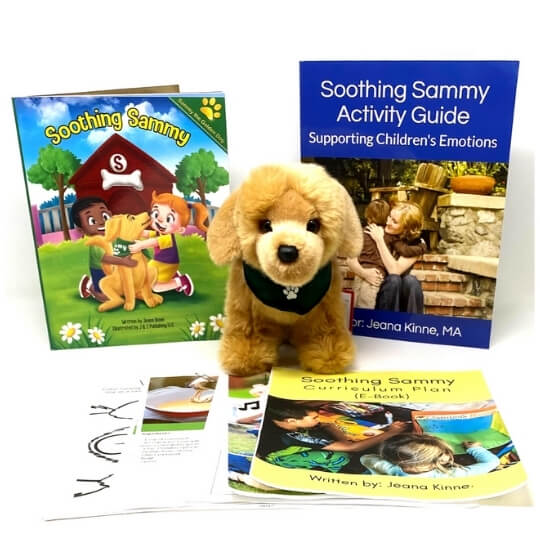
    Soothing Sammy gives children tactile and visual cues that remind them how to calm down and problem solve in a developmentally appropriate way. They can be reminded of this positive reinforcement with two words “Sammy Time!”

    By reading the book about the sweet golden retriever, who understands that everyone feels upset sometimes, children are encouraged to use all of the sensory strategies to calm down. They can talk to Sammy about what is happening and think through their problem to create a solution.

    Ashlie’s four year old daughter did just this. She reports: “When Molly was having some big emotions about coloring a picture and needed to calm down, she visited Sammy and returned with a solution to the problem she came up with all on her own (well with Sammy’s help).”

    Click here for more information on the Soothing Sammy resources.

    3.Problem solving requires us to remember what just happened, what is happening now and what do we want to happen next. A preschoolers brain tends to blend all three of these situations together, not able to communicate any of them until prompted by an adult. And as an adult, we are left “guessing” what our children are thinking about. Visual cues are a wonderful sensory communication tool to support both children and adults in the realm of solving problems.

    Using tools like “First/Then” cards to support routine and common situations like transitions and completing tasks. Using visuals clearly communicates what needs to be done, especially if using pictures of real children doing these tasks.

    A Final note about problem solving skills in preschool

    Solving problems are hard for young children, even teenagers, as their prefrontal cortex isn’t fully developed yet. Using multisensory teaching tools to support brain development, practicing tasks that teach executive functioning skills and using developmentally appropriate tools to help children calm down, will help even the most frustrating moments become a bit less stressful for children and adults. 

    As we learn to be more patient with children, understanding that the part of their brain needed to solve problems is just beginning to develop, repeating the same directions over and over again may not be so frustrating. Our children are doing the best they can. It’s up to us to provide them with experiences to help their brains grow and develop. 

    Jeana Kinne is a veteran preschool teacher and director. She has over 20 years of experience in the Early Childhood Education field. Her Bachelors Degree is in Child Development and her Masters Degree is in Early Childhood Education. She has spent over 10 years as a coach, working with Parents and Preschool Teachers, and another 10 years working with infants and toddlers with special needs. She is also the author of the “Sammy the Golden Dog” series, teaching children important skills through play.

    Emotions Monster I Spy Page

    emotions monster I spy worksheet

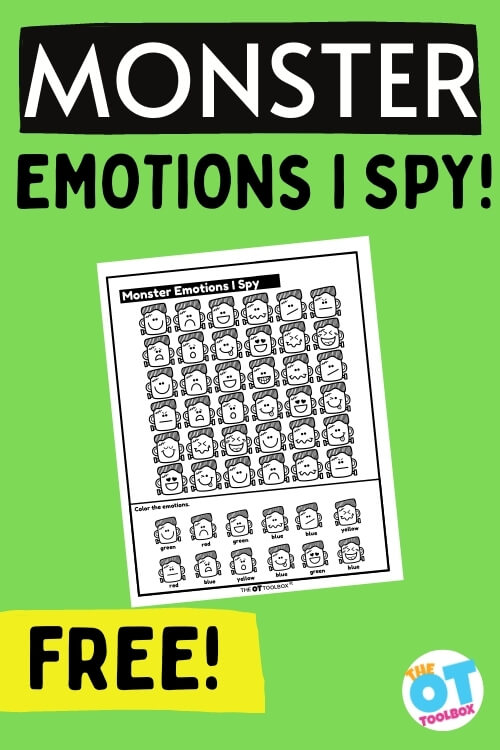
    Working on social emotional learning with kids? This emotions monster I Spy page is a frightfully fun activity for developing an awareness of emotions with a monster theme. Use the printable page to identify emotions and facial expressions. This emotions monster worksheet uses Frankenstein faces, but it’s a hit for all monster fans! Add this emotions worksheet to your Halloween occupational therapy activities.

    This emotions monster I Spy worksheet helps kids identify emotions and work on visual perceptual skills using a monster theme.

    This monster emotions printable is a great identifying emotions printable.

    Emotion Monsters

    During the weeks leading up to Halloween, all things monsters are a fun theme for kids. These emotion monsters are a friendly way to develop social emotional learning with kids and make a great addition to social emotional learning in children.

    You can add this printable Halloween worksheet to our list of Halloween occupational therapy activities.

    How to use this emotion monsters worksheet

    This worksheet is a fun way to develop several skills. First, print off the PDF below. You can enter your email address into the form and grab the PDF from your email inbox.

    Next, either print off pages for each child OR laminate the emotion monsters worksheet and use dry erase markers to complete the page. Another alternative is to slide the page into a page protector sheet.

    Then, get ready to help children develop social emotional skills!

    When developing emotional growth in children, engaging activities are key! The basic emotions used in this worksheet can give you a starting point to cover so many emotional skills and coping strategies.

    Show students the various emotions that the Frankenstein faces are expressing. You can use this worksheet in various ways to work on a variety of skills that develop self-awareness in children:

    Self-Regulation Monsters

    You’ll notice that this monster I Spy page has a top portion with monster faces showing a variety of facial expressions. Then at the bottom is a color coded key.

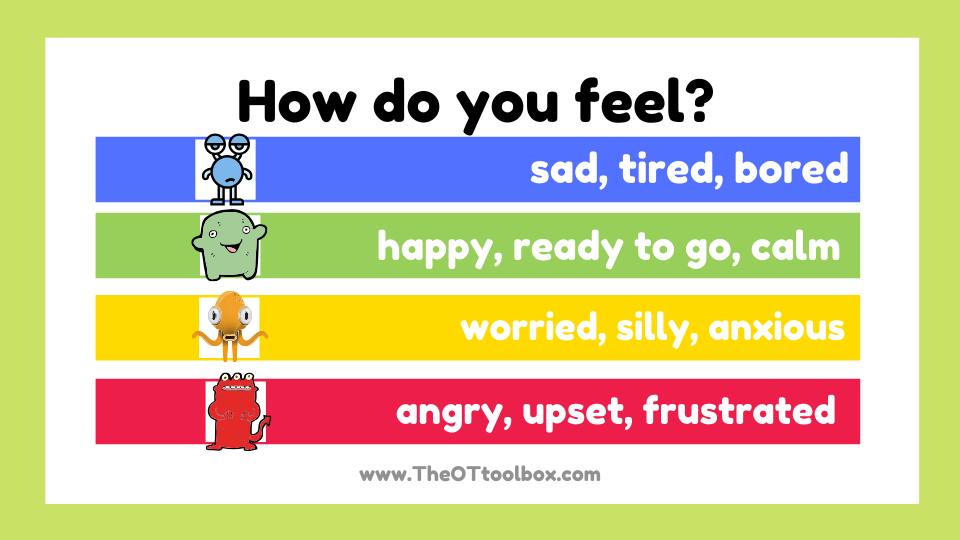
    Users can find the matching facial expressions and then color them in as they find matches. The facial expressions try to follow the Zones of Regulation self-regulation color themes and color concepts of the popular self-regulation program.

    This free worksheet builds an exploration of colors in the zones program through repetition as they look for and color in the emotion monsters.

    This is a great opportunity to talk to children about feelings, identifying how they feel in different scenarios, and coming up with self-regulation tools to address various emotions that impact functioning.

    Emotions such as frustration, anger, sadness aren’t “wrong”, and it’s important to teach children that they will feel all kinds of emotions and it’s ok! Try using terms like calm monster, angry monster, sad monster, or glad monster to give children terms when using this emotional skills worksheet.

    These identifying terms (and seeing them used in a fun and low-stress manner) can help with impulse control, frustration, and acting out at home and in the classroom.

    Then, take the emotional regulation strategies a step further and ask kids: How do you deal with the emotional monsters inside of you? (Emphasizing that emotional monsters are not bad, it’s just a way to give feelings a name.)

    Monster Feelings I Spy Activity

    Use the worksheet to work on visual perceptual skills to find matching facial expressions. This Monster I Spy activity addresses a variety of skills:

    • Visual discrimination
    • Visual form constancy
    • Visual memory
    • Visual attention
    • Visual scanning

    Practice facial expressions with monster emotions

    Use the monster emotions activity to work on practicing facial expressions. Children can find all of the monster emotions and color in the matching monsters. Then they can copy the facial expression and identify a time they have felt that feeling.

    This is a good way to practice communication or self-regulation strategies, too. When children can read the expressions of others around them, it builds awareness, empathy skills, and even school readiness. Kids can better understand that we all have a lot of emotions and big feelings happen all the time. This fun monster theme makes it fun to explore those various emotions.

    Identify feelings with a monster theme

    Use the monster emotions worksheet to work on identifying feelings. Ask children to find the matching images and then ask them to name the emotion that the facial expression represents. Kids will love this fun way to work on emotional vocabulary!

    This monster worksheet is a creative way to get kids talking about emotions. When we teach children how to figure out WHAT they are feeling, WHY they are having that emotion, and HOW to make better choices, we build their self-regulation, or emotional regulation skills so they can make appropriate choices and manage emotions in a given situation.

    Or, just use the printable Halloween activity as an identifying emotions worksheet.

    Ask the user to move through the monster faces and identify emotions across the page. You can ask them to find all of the monsters who are showing a sad face, for example.

    Fine Motor Emotion Monsters Activity

    The nice thing about this worksheet is that it can be used to work on so many areas. Fine motor skills is no exception! Rather than coloring, ask students to place a marker on the monster’s face that matches the emotion they are looking for. Try using these items:

    • Coins to work on in-hand manipulation skills
    • Beads to work on separation of the sides of the hand skills
    • Small pieces of paper to work on scissor skills and neat pincer grasp skills

    Even coloring is a fine motor skill that is addressed with this creative worksheet. Asking children to color in the lines and fill in all of the given areas addresses pencil control and endurance in fine motor skill work.

    Free Emotions Monster Worksheet

    Want to add this printable monsters worksheet to your therapy toolbox for an approachable way to cover emotional growth in kids? Just enter your email address into the form below. You’ll receive access to the printable PDF so you can work on these areas today!

    Emotion Monsters I Spy!

      We respect your privacy. Unsubscribe at anytime.

      Colleen Beck, OTR/L has been an occupational therapist since 2000, working in school-based, hand therapy, outpatient peds, EI, and SNF. Colleen created The OT Toolbox to inspire therapists, teachers, and parents with easy and fun tools to help children thrive. Read her story about going from an OT making $3/hour (after paying for kids’ childcare) to a full-time OT resource creator for millions of readers. Want to collaborate? Send an email to contact@theottoolbox.com.

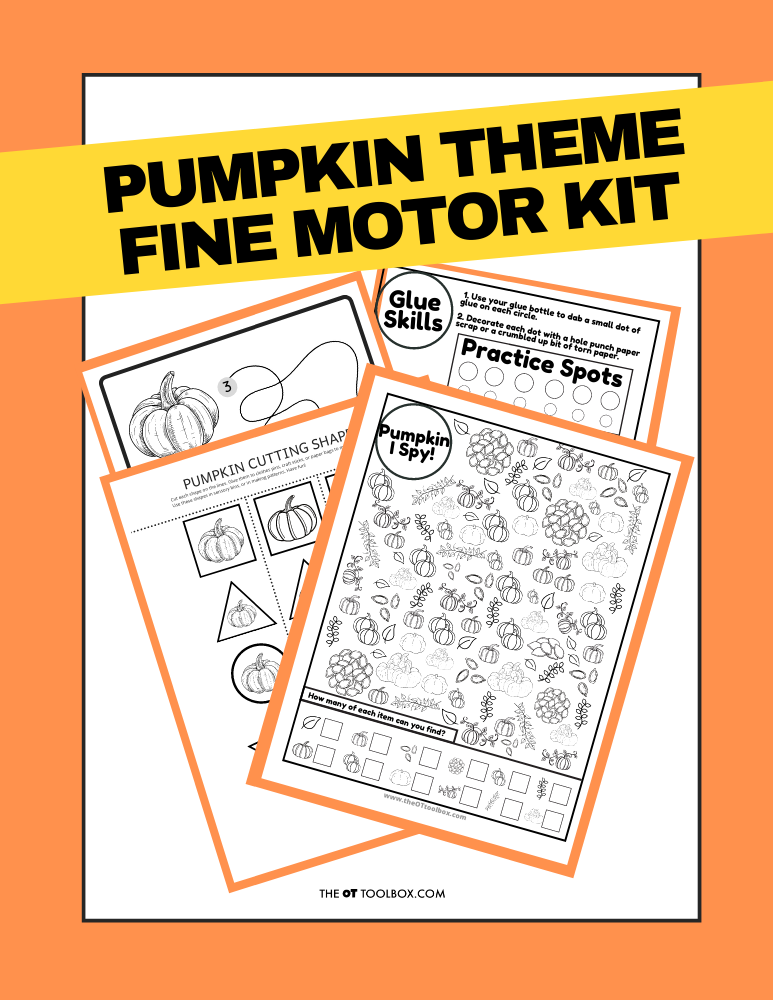
      Add this monster emotion worksheet to our Pumpkin theme fine motor kit to round out the skill-building!

      Pumpkin activity kit
      Pumpkin Fine Motor Kit

      Grab the Pumpkin Fine Motor Kit for more coloring, cutting, and eye-hand coordination activities with a Pumpkin theme! It includes:

      • 7 digital products that can be used any time of year- has a “pumpkins” theme
      • 5 pumpkin scissor skills cutting strips
      • Pumpkin scissor skills shapes- use in sensory bins, math, sorting, pattern activities
      • 2 pumpkin visual perception mazes with writing activity
      • Pumpkin “I Spy” sheet – color in the outline shapes to build pencil control and fine motor strength
      • Pumpkin Lacing cards – print, color, and hole punch to build bilateral coordination skills
      • 2 Pumpkin theme handwriting pages – single and double rule bold lined paper for handwriting practice

      Work on underlying fine motor and visual motor integration skills so you can help students excel in handwriting, learning, and motor skill development.

      You can grab this Pumpkin Fine Motor kit for just $6!

      Colleen Beck, OTR/L has been an occupational therapist since 2000, working in school-based, hand therapy, outpatient peds, EI, and SNF. Colleen created The OT Toolbox to inspire therapists, teachers, and parents with easy and fun tools to help children thrive. Read her story about going from an OT making $3/hour (after paying for kids’ childcare) to a full-time OT resource creator for millions of readers. Want to collaborate? Send an email to contact@theottoolbox.com.

      Movement Activities Monster OT Slides

      Recently, I’ve been sharing some occupational therapy slide decks with you. These slide decks are OT activities that can be used in teletherapy sessions as part of distance OT or distance learning. Today, I’ve got movement activities with a monster theme to share. These are monster themed occupational therapy activities that cover a variety of areas. When you access the OT slide deck, use in to work on OT activities like a therapy warm-up, gross motor skills, fine motor skills, visual perceptual skills, visual motor skills, and finally, a self-regulation check-in. Each activity in the collection involves movement activities that build specific skills. Scroll to the bottom of this post to enter your email to access the latest free occupational therapy slide deck.

      Movement activities for occupational therapy sessions with a free OT slide deck that incorporates fine motor, gross motor, coordination, visual motor skills, regulation and other movement in monster theme activities.

      Movement activities

      As always, my mission here at The OT Toolbox is to help you help kids thrive through the use of easily accessible tools and resources.

      try these monster activities for a lesson plan for writing, letter identification through movement.

      The slides included in this set are acceptable movement activities for preschoolers because they use letters, helping preschoolers to recognize and identify letters. The slides would also work as a movement activity for kids in older grades as well, using the handwriting and visual motor activities to build specific skills like visual motor skills needed for handwriting tasks, copying lists of words, and visual perceptual skills needed for reading.

      Monster Movement Activities for Kids

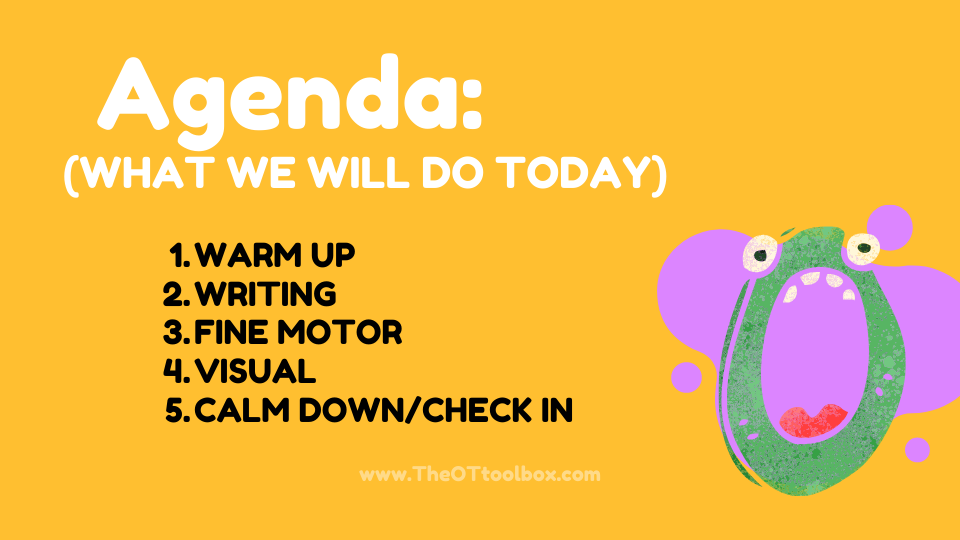
      The slide deck promotes movement activities for kids in several ways. These are the slides and an agenda of activities to use in therapy sessions:

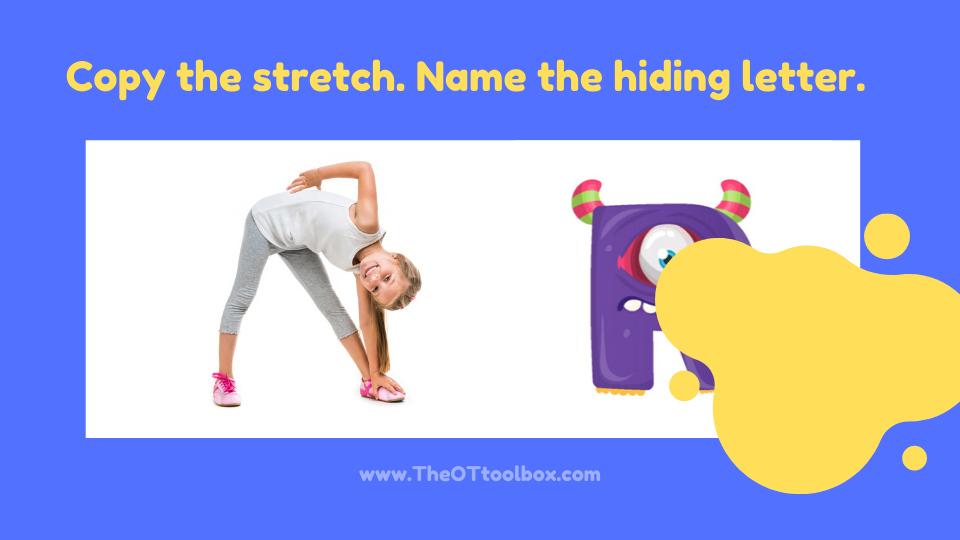
      Warm-Up– Use the gross motor movement activities as a warm up to help with body awareness and a sensory tool to add proprioceptive and vestibular input. Kids can copy the body positioning to challenge balance and coordination, as well as motor planning. I’ve added a visual perceptual component to the warm-up movement slides by asking children to identify a partially hidden letter as they do the whole-body movements. This challenges visual perceptual skills including visual discrimination, visual figure-ground, visual closure, form constancy, and visual memory. Read more about these skills that are needed to complete hidden pictures activities, for example.

      Monster activity with movement activities for preschool and movement activities for kids of all ages.

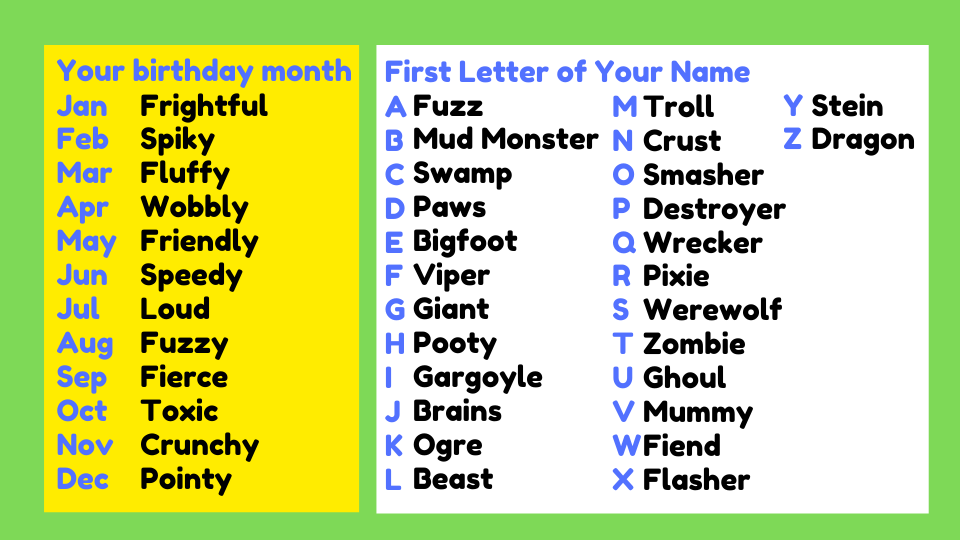
      Writing- The writing slides in this slide deck ask kids to identify the month they are born and the first letter of their name to create a wacky monster name. They can write this word phrase to practice handwriting. The visual scanning and tracking involved in this activity really challenges the visual processing skills and visual efficiency of the eyes. The movement activity of writing their name incorporates a functional task that they may be working on in their OT goals.

      Kids will love to work on handwriting with this monster name activity.

      Fine Motor- The fine motor portion of this movement activity slide deck involves tearing paper into small pieces. By ripping paper, kids are building hand strength, bilateral coordination, eye-hand coordination, and efficiency of grasp. I’ve added a visual motor component to this activity by asking the child to use those paper scraps in shaping and copying specific shapes. The whole fine motor activity adds much-needed fine motor movement and eye-hand coordination to a shape building activity.

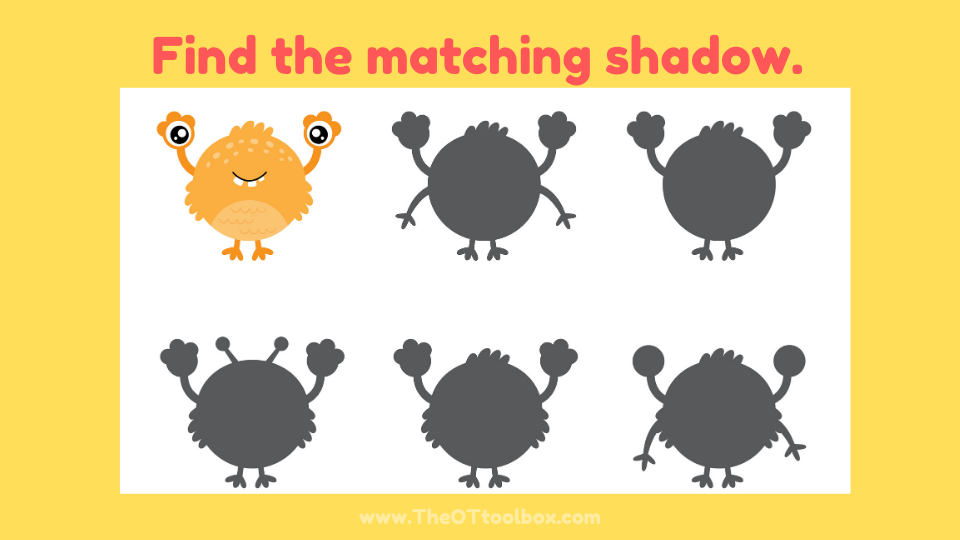
      Visual- The visual portion of this occupational therapy slide deck is a favorite for some kids (My own kids included!) Use the slides to work on visual perceptual skills as they find matching shadows for the monster figures in a series of three slides. After the child completes each slide, ask them to jump and and cheer!

      A monster visual perception activity for ot sessions.

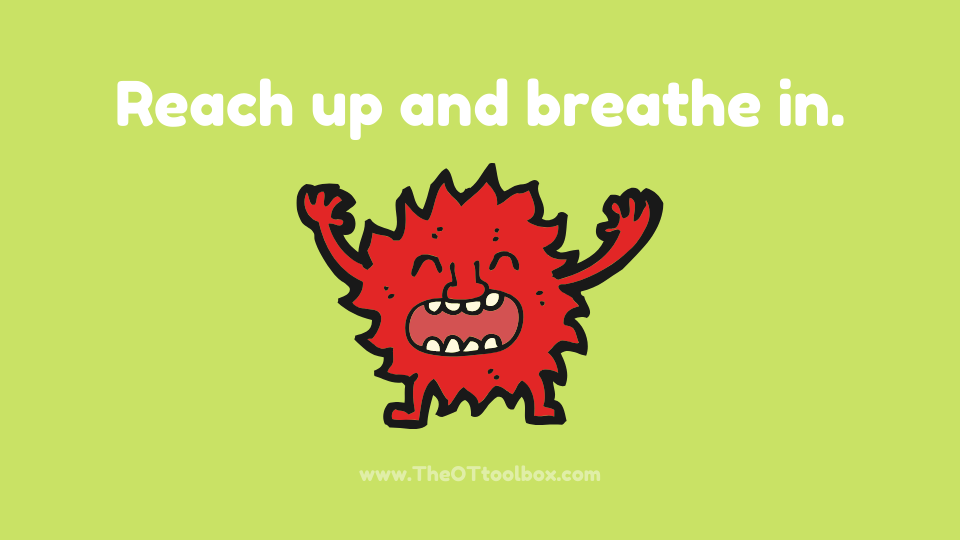
      Calm Down/Check-In- Lastly, you’ll find a calm down slide that incorporates the colors of the Zones of Regulation program. Children can complete the calm down movement activities shown on the slides and then choose a color to check in for their state of feelings.

      Work on self-regulation activities with a monster theme.
      Use the zones of regulation with a monster theme

      Want these movement activity slides?

      Enter your email below. If you are currently on The OT Toolbox newsletter list, this will not add you a second time. It will simply send the slides your way. Enjoy!

      Get this Movement Activities slide deck

        We respect your privacy. Unsubscribe at anytime.

        HERE ARE MORE Movement ACTIVITIES TO USE IN VIRTUAL OT SESSIONS

        Heavy work movement activity cards

        Monthly movement activities

        Teletherapy activities for kids

        Work on fine motor skills in teletherapy

        Colleen Beck, OTR/L has been an occupational therapist since 2000, working in school-based, hand therapy, outpatient peds, EI, and SNF. Colleen created The OT Toolbox to inspire therapists, teachers, and parents with easy and fun tools to help children thrive. Read her story about going from an OT making $3/hour (after paying for kids’ childcare) to a full-time OT resource creator for millions of readers. Want to collaborate? Send an email to contact@theottoolbox.com.

        Pumpkin activity kit
        Pumpkin Fine Motor Kit

        Grab the Pumpkin Fine Motor Kit for more coloring, cutting, and eye-hand coordination activities with a Pumpkin theme! It includes:

        • 7 digital products that can be used any time of year- has a “pumpkins” theme
        • 5 pumpkin scissor skills cutting strips
        • Pumpkin scissor skills shapes- use in sensory bins, math, sorting, pattern activities
        • 2 pumpkin visual perception mazes with writing activity
        • Pumpkin “I Spy” sheet – color in the outline shapes to build pencil control and fine motor strength
        • Pumpkin Lacing cards – print, color, and hole punch to build bilateral coordination skills
        • 2 Pumpkin theme handwriting pages – single and double rule bold lined paper for handwriting practice

        Work on underlying fine motor and visual motor integration skills so you can help students excel in handwriting, learning, and motor skill development.

        You can grab this Pumpkin Fine Motor kit for just $6!

        Colleen Beck, OTR/L has been an occupational therapist since 2000, working in school-based, hand therapy, outpatient peds, EI, and SNF. Colleen created The OT Toolbox to inspire therapists, teachers, and parents with easy and fun tools to help children thrive. Read her story about going from an OT making $3/hour (after paying for kids’ childcare) to a full-time OT resource creator for millions of readers. Want to collaborate? Send an email to contact@theottoolbox.com.

        Free Halloween Visual Scanning Worksheet

        Halloween find and color worksheets

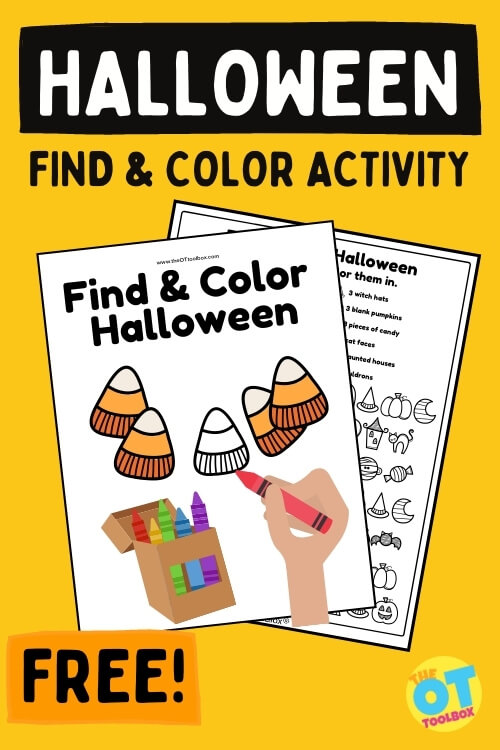
        Today I have a free Halloween visual scanning worksheet. This one is a find and color activity that develops visual processing skills. Just print off this visual scanning worksheet to include in your Halloween occupational therapy activities. If you’re looking for a low-prep Halloween printable that builds skills, this freebie is the way to go!

        Halloween find and color worksheets are a great Halloween visual scanning worksheet activity for visual perception and fine motor skills.

        Kids love this Halloween visual perceptual worksheet…and you’ll also want to grab our Halloween monsters I Spy printable.

        Halloween Visual Scanning Worksheet

        Therapists will love this Halloween visual scanning worksheet for the visual perceptual skills and visual scanning skills that it develops. Just print off this worksheet and grab some crayons to work on visual scanning skills with kids.

        The free Halloween worksheet set comes in two sizes. One is a very small set of coloring images. This can be used with colored pencils to work on pencil control and precision of the small muscles of the hands. For kids that are working on small motor movements of the fingers, this is a great page to use.

        You’ll also see a larger set of Halloween images in the PDF. These larger images can be used with crayons or markers to color within the lines while working on hand strength using crayons or accuracy of line awareness when using markers.

        This not-so-spooky activity goes well with our Halloween I Spy activity and all of the Halloween Occupational Therapy activities.

        To better understand what is visual scanning, you can read more here on the website.

        Visual scanning is a visual processing skill needed for so many functional tasks! Check out this resource on visual motor skills to read more.

        For more visual scanning fun, try this DIY visual scanning worksheet activity.

        Find and Color Activities

        When kids complete find and color activities like in this printable Halloween coloring page, they are developing many areas needed for functional tasks:

        Plus, when asking children to color in a small area like the mini pumpkins, ghosts, spiders, and bats on this Halloween worksheet, they are working on pencil control, eye-hand coordination, and fine motor skills.

        Related, you’ll love these spider activities for building skills in therapy during the Halloween season.

        More ways to use this Halloween Visual Scanning Worksheet

        I love to offer creative materials that can be used in a variety of ways to develop many skills. Try using the Halloween find and color worksheet in these ways:

        Fine Motor Play

        Cover the items on the coloring page with a small object like a coin, beads, or craft pom poms. This encourages fine motor control, eye-hand coordination, motor planning, in-hand manipulation, and more.

        We also love using Halloween fine motor exercises shown in the video below. Use the ghost, pumpkin, witch, and other Halloween themed dexterity exercises as a warm up to pencil and paper tasks. You can also view the video on YouTube.

        These Halloween dexterity exercises build fine motor skills, finger isolation, and motor planning.

        Work on eye-hand coordination

        Use a BINGO dabber to add a dot of paint on each of the objects as the child finds them.

        Handwriting Activity

        Work on visual perceptual skills and handwriting- Ask the child to count the number of other Halloween objects on the page and write out each word and number to work on handwriting skills.

        How would you use this Halloween visual scanning worksheet in your therapy toolbox?

        Print off this free Halloween worksheet and use it in your therapy practice or classroom during the weeks leading up to Halloween. Or, print off a bunch and use it as a fine motor and visual perceptual activity during Halloween parties this year. However you use this free worksheet, it’s sure to be a hit!

        More Halloween Ideas

        Add this Halloween find and color pages to these ideas:

        Halloween visual perceptual worksheets

        This Halloween visual perceptual worksheet is a great addition to your therapy toolbox this time of year.

        Want to get a copy?

        Enter your email address into the form below and we’ll email you the Halloween visual perception sheet. You’ll find many more Halloween activity pages in The OT Toolbox membership club.

        Halloween Visual Scanning Worksheets

          We respect your privacy. Unsubscribe at anytime.

          Colleen Beck, OTR/L has been an occupational therapist since 2000, working in school-based, hand therapy, outpatient peds, EI, and SNF. Colleen created The OT Toolbox to inspire therapists, teachers, and parents with easy and fun tools to help children thrive. Read her story about going from an OT making $3/hour (after paying for kids’ childcare) to a full-time OT resource creator for millions of readers. Want to collaborate? Send an email to contact@theottoolbox.com.

          Grab the Pumpkin Fine Motor Kit for more coloring, cutting, and eye-hand coordination activities with a Pumpkin theme! It includes:

          • 7 digital products that can be used any time of year- has a “pumpkins” theme
          • 5 pumpkin scissor skills cutting strips
          • Pumpkin scissor skills shapes- use in sensory bins, math, sorting, pattern activities
          • 2 pumpkin visual perception mazes with writing activity
          • Pumpkin “I Spy” sheet – color in the outline shapes to build pencil control and fine motor strength
          • Pumpkin Lacing cards – print, color, and hole punch to build bilateral coordination skills
          • 2 Pumpkin theme handwriting pages – single and double rule bold lined paper for handwriting practice

          Work on underlying fine motor and visual motor integration skills so you can help students excel in handwriting, learning, and motor skill development.

          You can grab this Pumpkin Fine Motor kit for just $6!

          Fun Dinosaur Activities for Building Skills

          dinosaur activities

          Do you know a child that is obsessed with dinosaurs? If so, these dinosaur activities are perfect for developing skills through play. Or, use the dino activities to teach dinosaurs to preschoolers, kindergarteners, and older students learning about the dinosaur age. If your kiddos are anything like mine, then dinosaurs are a year round theme that never disappoints! Finding new and engaging activities to meet that “just right” challenge, while staying on-theme, can be quite the task. We have collected a variety of free dinosaur-themed activities to add to your repertoire for all the aspiring paleontologists in your life. Use these to satisfy fine motor, gross motor, handwriting, vision, and sensory integration interventions. 

          These fun dinosaur activities develop fine motor skills, gross motor skills, and more.

          Best of all, when kids are interested in learning about dinosaurs, these ideas can use these ideas to encourage multi-sensory play through learning! Add these movement and play activities to introduce a dinosaur theme in the classroom or home.

          Dinosaur FINE MOTOR ACTIVITIES

          For kids that love all thing dinosaurs, these dinosaur fine motor activities develop motor skill dexterity and coordination through play. Whether it’s tracing dinosaurs, creating a dinosaur craft, or handling tools in a dinosaur dig, these fine motor activities are fun!

          Here’s the thing: fine motor skills are used every single day! They are integral to just about every occupation and a big part of what occupational therapists work on in their treatment sessions. Use the activities below to increase skills like handwriting, buttoning, zipping, typing, and more! Why NOT incorporate dinosaur fun into fine motor development?!

          Dinosaur GROSS MOTOR ACTIVITIES

          Stomping like brontosaurus, crashing like a T-Rex, and running like a velociraptor means that dinosaur gross motor skills encourage coordination, balance, endurance, and motor planning skills! 

          Gross motor movements are made by the “big” muscles in the body. Gross motor control allows for walking, running, bending, stooping, balance, and many other skills that we use every day. Not only are these movements great for a child’s development of strength and coordination, but they also strengthen the connection between the brain and the body – so, get those bodies moving with dinosaur fun! 

          • Use these ideas to have Dinosaur Brain Break. This activity encourages various gross motor movements: stomping, crashing, jumping, balancing, and more.
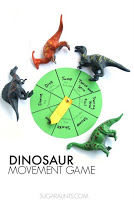
          • Develop your own movements, or use the options provided, to meet therapy goals in a Dinosaur Movement Game. These free printables can be used in so many ways to develop gross motor skills.
          • Use dinosaur feet to stomp, sneak, crawl, or tiptoe! Draw dinosaur feet onto paper. Place them around the room to create a dinosaur footprints path where kids can look for the next prehistoric footprint. They can hop, crawl, creep, or tiptoe along the dino footprint path!
          • Change up your wording for these exercises to dinosaur-themed ones:
            • Tight-rope walking → Velociraptor Tip Toe 
            • Boat Pose → Fallen Over T-Rex 
            • Frog Jumps → Dinosaur Jumps 
            • Flamingo/tree pose → Flying Pterodactyl 
            • Bear Crawl → Creeping Stegosaurus

          Dinosaur Crafts

          The beauty of dinosaur crafts is that they build fine motor skills, bilateral coordination, eye-hand coordination, motor planning, executive functioning skills, visual motor skills, and more. All of these skills are developed through the process of creating. Best of all, when a child prefers dinosaurs as an interest, they have ownership and a sense of self-confidence with a dinosaur craft that they are proud of!

          Try adding these ideas to your dinosaur theme:

          • Make a cupcake liner dinosaur craft. Fold the cupcake liner in half. Then use it as a dinosaur head or back. Cut out smaller pieces of paper to add details like legs, scales, a long neck, or a long tail.
          • Draw dinosaur feet. Cut them out and trace onto paper. Then, you can use those dinosaur feet to make a path for gross motor play such as a balance beam.
          • Make a handprint dinosaur craft. Press the hand into green paint. Press the handprint onto paper. Then add details like an eye, long legs, a long neck, and googly eyes.
          • Make a dinosaur paper plate craft. Cut a paper plate in half to make a dinosaur’s back. Then add legs and triangles along the back. Add a small face and tail and you’ve got a stegosaurus craft that develops scissor skills.

          Dinosaur HANDWRITING Activities

          For older kids, a dinosaur theme still works! There are many ways to incorporate dinosaur literacy activities, dino letter recognition, and letter formation into handwriting tasks. Some of these include dinosaur worksheets, but others do not. That’s the beauty of these ideas: you can use what you’ve got on hand to meet the individual needs of a child or classroom. 

          Handwriting is one of the most important skills of a child. Legible handwriting is integral to the success of a student, as so much of their work is presented through written material. Occupational therapists in the schools often assist students and teachers on this subject, including working on visual and motor skills to perfect the skill of handwriting. 

          • To develop visual discrimination skills and letter form constancy, check out this Dinosaur Letter Tracing activity idea – so cute!
            • Form constancy is one skill that is necessary to understand letters and use them to write words and sentences (and to read!). Form constancy is the idea that any given letter or shape continues to be the same even when written in another environment or at an angle. For example, the letter “A” is still the letter “A” when written in a different font, on a piece of paper, or on the chalkboard. 
          • Matching uppercase to lowercase letters is a great way to assess a child’s understanding in preparation for writing with the correct letter case. It can be hard to remember – especially for letters that aren’t obvious. These Dinosaurs can help make the hard work fun!  
          • This on-theme printable handwriting book gives kids the opportunity to trace, copy, and independently write upper and lower case letters. 

          Dinosaur VISION Activities

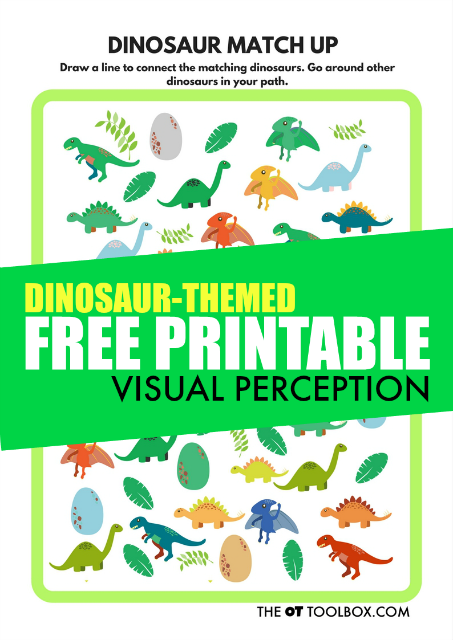
          When it comes to adding dinosaur visual perceptual skills to play, the theme can go many ways. Use one of our dino worksheets, OR create a table-top vision activity using toy dinosaurs. These ideas are open-ended!

          Vision is a highly complex skill –  it is not just about if you need to wear glasses or not! Visual processing is the connection between the brain and the visual environment. Sometimes the way that the brain processes that visual information is not very clear, that’s where an OT can step in! Use these activities to challenge visual processing skills.

          Dinosaur SENSORY Activities

          Dinosaur sensory bins, messy fossil digs, dino small world play, and sculpting dinosaur eggs…these sensory play ideas build skills!

          Sensory processing skills are used to define the world around us – we explore our environment through sight, feel, taste, smell, and our body position. Increasing sensory awareness can improve body awareness and understanding of our environment, which can in turn help us adjust and feel comfortable. Below are some great options to explore our senses!

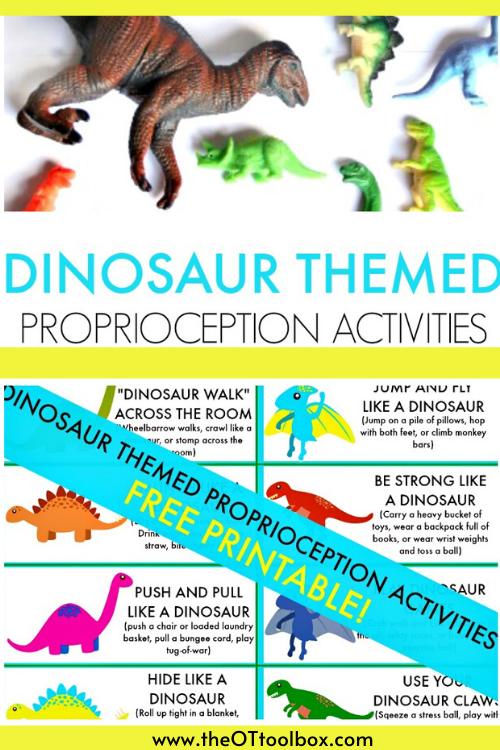
          • Add heavy work for body awareness, self-regulation, attention, and whole body movements with these dinosaur proprioception activities. They are great for sensory seekers and addressing interoception needs.
          • These Egg Carton Dinosaurs use bumpy muffin cups, smooth googly eyes, soft and sharp pipe cleaners, and of course, an egg carton (so many different textures possible here) to give a multi-textured experience while defining fine motor skills. 
          • Make a paper mache dinosaur egg- Mix up messy, textural paper mache with paper, flower, and water and sculpt an egg around a balloon. Let it dry and then pop the balloon. Now you can decorate your dinosaur egg!
          • Have dinosaur figures, or mini dino toys? Use them to create a dinosaur small world for pretend play, self-confidence, self-talk, and problem solving.
          • Tearing paper has always been one of my go-to activities to address fine motor and sensory concerns. This easy Tissue Paper Dinosaur activity can increase texture tolerance in a way your dinosaur-lover will appreciate.  
          • Make a dinosaur sensory bin on a train table, or in a large bin. Add materials like dry beans, corn, or shredded paper. Or add messy wet materials like slime, water beads, water, or shaving cream.
          • Use a fossil dig activity for dry sensory play. Kids can chisel and chip away at a chalky substance to find dinosaur bones. Then, use the pieces to trace and make their own fossils for more fine motor, sensory fun.
          • Can’t forget the sensorimotor activities! Dinosaur dance parties, dinosaur stomping, dinosaur copycat, the options are endless. 
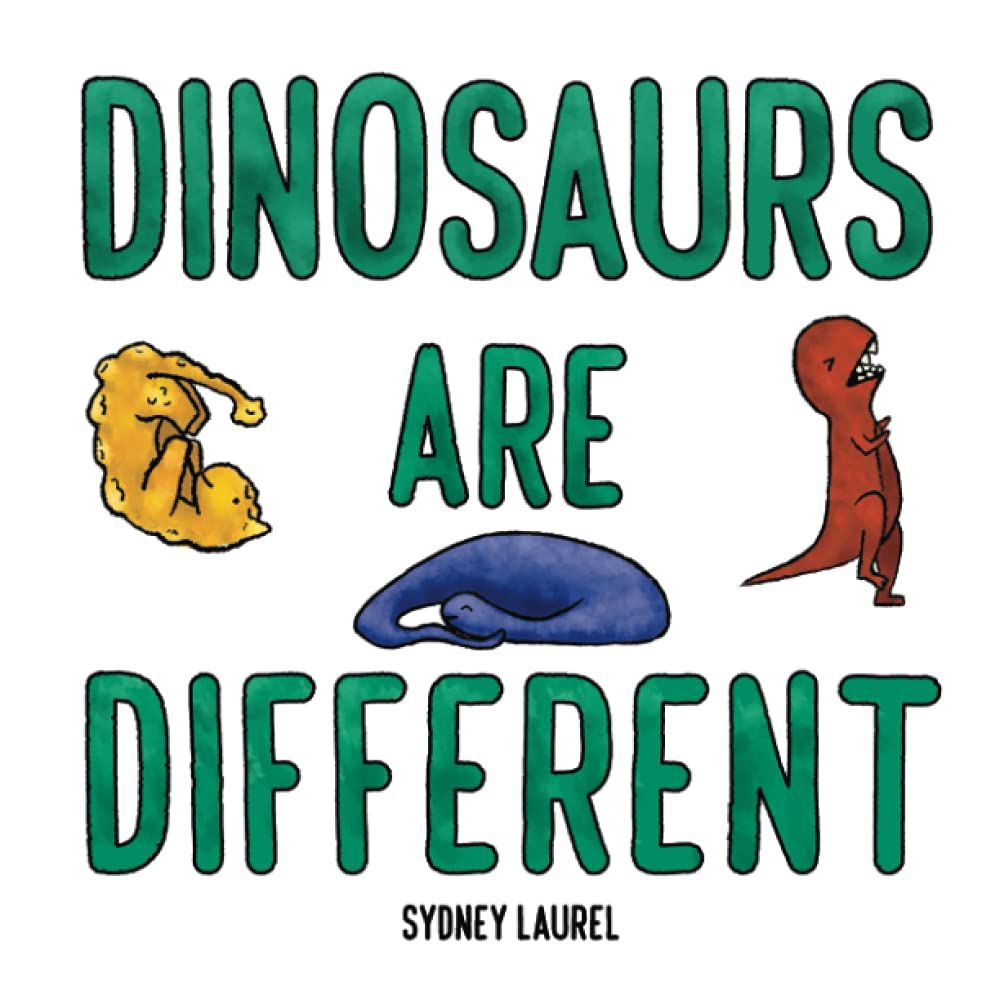
          https://www.amazon.com/Dinosaurs-Are-Different-Sydney-Laurel/dp/B09HG58QDV?dchild=1&keywords=dinosaurs+are+different&qid=1633626263&s=books&sr=1-7&linkCode=ll1&tag=sugaun-20&linkId=dd1a7f4156a98354c65ad540aa9b4b57&language=en_US&ref_=as_li_ss_tl

          Dinosaur Self-Awareness Activities

          Some of the previously highlighted activities incorporate a sense of self-awareness, including the heavy work activities, and sensory play ideas. But to take self-awareness and celebrating the differences among us, is this book, Dinosaurs are Different.

          The book is a silly take that celebrates all of our differences and can be a fun dinosaur tool to address skills such as self-awareness, body awareness, internal differences and external differences in all of us.

          Use this book to incorporate into mindfulness with kids, grounding techniques, discussions on emotional awareness, social skill development, and responsibility exercises with kids.

          Dinosaur Books

          I always love to include books in our themed activities, as a way to encourage an early love of reading, but also to further develop the understanding of our topic. As you can imagine, there are TONS of dinosaur books available to further explore your dinosaur theme. 

          Here are some dinosaur books and related activities to get started:

          Sydney Thorson, OTR/L, is a new occupational therapist working in school-based therapy. Her
          background is in Human Development and Family Studies, and she is passionate about
          providing individualized and meaningful treatment for each child and their family. Sydney is also
          a children’s author and illustrator and is always working on new and exciting projects.

          5 Fun Ways to Support Emotional Vocabulary

          teach emotion words and support emotional vocabulary development in preschoolers

          It can be a challenge to teach develop emotional vocabulary in children and teaching emotion words to preschoolers. In this blog post, you’ll find out how our bodies react to our emotions in threatening situations, how to teach the most common emotion words to preschoolers and strategies to help young children understand emotions by giving them tools to support their emotional development.

          Oh no! There Suzy goes again. She’s crying and I don’t know why. She seems hurt. Or maybe she’s nervous. Or is she sensitive to the classroom surroundings. Is she irritated or annoyed? All I did was hand her the red cup of water. I wish she knew the emotion words to communicate so I knew what the problem is.

          How to teach emotion words in preschool to support emotional literacy and emotional vocabular development through play.

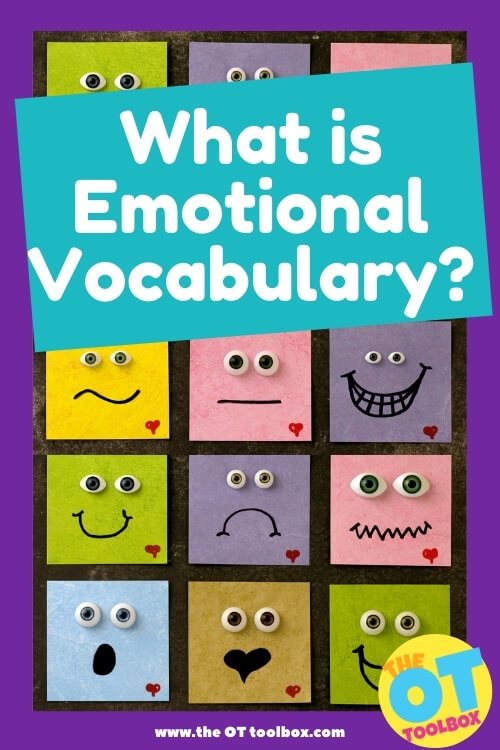
          What is Emotional Vocabulary?

          Do you ever find yourself confused to why your child is screaming? 

          Did you know that there are over 34,000 different emotions?

          Dr. Robert Plutchik was able to create an emotion wheel that categorized emotional vocabulary into these 8 areas, making a comprehensive list of emotions. 

          1. Joy
          2. Sadness
          3. Trust
          4. Disgust
          5. Fear
          6. Anger
          7. Anticipation
          8. Surprise

          If there are over 34,000 emotions, you can imagine how children with only 300-600 words may feel when trying to communicate them. 

          Tantrums and meltdowns usually occur because children don’t have the emotional vocabulary to communicate their emotions in a way that others would understand. There may be a component of personal experiences or an affective states that impacts how a child expresses their feelings in a given situation.

          Think back to Suzy from the beginning of this blog. It turned out she was scared of the blender noise making the smoothie that was going to fill her red cup. In the moment of irritation/tenseness, she was too scared to remember the words she needed, so she started screaming instead. She didn’t know the emotions words to tell me the problem. 

          Emotional vocabulary, or emotional literacy is essential to a child's social emotional development.

          Why is Emotional Vocabulary Important?

          And, why is it so hard  for children to use emotion words to communicate while they are upset?

          It is very difficult for young children to express words that they are feeling. 

          Emotional vocabulary like feeling impatient, helpless, uneasiness, hopelessness, nervousness, anxious feelings, fury, or apprehensive feelings contain a lot of meaning that aren’t part of the preschooler’s vocabulary just yet. Negative emotions that “take over” a situation in the way of a tantrum, breakdown, or other behavior can impact mood, learning, and personal relationships.

          Similarly, positive emotions such as feelings of happiness, optimism, excitement, and euphoric behaviors can result in difficulty paying attention, silliness that interferes with learning or safety, or other strains on self-regulation.

          Those are feelings that we definitely see expressed in the child’s body language, facial expressions, and behavior!

          When a child has words to express their emotions, they develop resilience. They improve emotional literacy so that they can verbally express how they are feeling. Children move from feeling misunderstood to feeling certain of their situation. 

          And, when we understand components of emotion, we can help a child develop their emotional literacy by giving them words that they can recall and use even in the heat of the moment.

          Developing emotional skills by building a library of emotion terms also helps children to navigate social environments in the school, home, classroom, and community. This emotional competence carries over with experience and practice in using and understanding emotional terms, especially in the thick of big feelings. Having words for the feelings children feel fosters positive interactions with others. Improving emotional vocabulary even impacts physical health. A robust emotional vocabulary comes with time and practice, but developing experience helps in so many ways.

          All of this is related to emotional competence! 

          We all have an emotional vocabulary. Preschoolers need help to learn emotional terms.

          Emotional Literacy

          On January 15, 2021, Carolyn MacCann Ph.D., Psychology Today explained psychology Professor James Gross’ four components of feeling an emotions and Professor Klaus Scherre’s process model of emotions. She states:

          “Having emotions is a universal experience, and every person in the world has felt angry, shy, scared, or embarrassed at some point in their lives. According to psychology Professor James Gross, there are four components of feeling and emotion:

          1. The situation you are in (whatever is happening to you at that moment)
          2. The details you pay attention to
          3. Your appraisal of what the situation means for you personally
          4. Your response, including the physical changes (like blushing or shaking), and your behaviors (like shouting or crying).”

          She goes on to explain Professor Klaus Scherer’s component-process model of emotion that includes the following 5 components to emotions:

          1. Feelings (subjective feelings, like “I feel scared”)
          2. Appraisals (though patterns, like “I am under threat”)
          3. Expressions (facial and bodily expressions of emotions, like being wide-eyed with fright)
          4. Action tendencies (the tenancy to prefer certain actions like freezing or hiding); and
          5. Physical changes (physical symptoms of emotion, such as butterflies in the stomach).”

          Imagine what a small child must be feeling as they interpret the situation around them, processing what they are physically experiencing and trying to come up with a solution to the situation – all at the same time! Let’s look at Suzy, the little girl who is afraid of the blender. 

          Using Professor James Gross’s four components of feeling and emotion, she is likely feeling the following:

          1. The situation you are in – mom just handed me a red cup but I can’t hear what she is saying because there is a loud, grumbling sound coming from the counter.
          2. The details you pay attention to – I hear chopping and grumbling sounds that are deep and scary.
          3. Your appraisal of what the situation means for you personally – The blender is so loud that I can’t hear mom talking, or even hear myself telling her to stop.
          4. Your response, including the physical changes – I feel my heart beating faster, my hands are shaking a little and I’m closing my eyes because all my senses are on overload. Nothing is helping so I scream and cry, hoping mom will turn the blender off. 

          Now let’s look at Professor Klaus Scherer 5 emotional components as Suzie processes her emotions:

          1. Feelings – I am scared.
          2. Appraisals – I am in danger. My mom is in danger.
          3. Expressions – I’m closing my eyes really hard and have my hands over my ears.
          4. Action tendencies – I’m screaming because mom can’t hear me.
          5. Physical changes – I feel my heart beating faster, my hands are shaking a little and I’m closing my eyes because all my senses are on overload.

          Wow! How do you feel after experiencing first hand what Suzy is experiencing? If only she would tug on mom’s shirt and say “turn off the blender, I’m scared of the loud noise.”

          What Can You Do to Increase Children’s Emotional Vocabulary?

          Adults have had years of experience processing their emotions and learning how to communicate them, but children need help. Learning emotion words is how preschoolers can reach out to us for help. 

          Activities that teach emotional vocabulary and specific emotion words to young children in a way that they understand and remember, will make it easier for them to recall the correct words to use to describe their feelings, even when they are in a stressful situation. Emotion word lessons are best taught through an active approach. Here are five fun ways to teach emotion words to preschoolers.

          These are hands-on, multisensory activities to support emotional development in young children. They are tools for Developing and Using Emotional Vocabulary. They are fun ways to develop personal experience in developing emotional vocab!

          Fun Ways to Teach Emotion Words to Preschoolers

          1.Practice emotional vocabulary with Emotion face paper plates! 

          Tackle those fine motor skills while teaching emotion words. Understanding the facial expressions that match feelings help children identify and describe how others are feeling, so they know how to respond. 

          Using play based crafts, like paper plates, will reinforce how different expressions mean different things. When a child is upset, have them look in the mirror and see if they can tell you what their face is saying. Is their face happy, sad, angry or mad? Once they respond with the emotional vocabulary, you can ask “why does your face feel that way?”

          Activities like this one offers children the opportunity to practice facial expressions and body language while practicing emotion words.

          2. Use Calming down with sensory supports to improve emotional vocabulary.

          These amazing fall themed calm down ideas will help children regulate so they can remember all those feelings words that we teach them. While using the fall animal walk, have your child make a feeling face while they “leap like a squirrel” such as “leap like an angry squirrel!”

          Activities like these emotions playdough mats can offer calming and organizing heavy work through the hands and fingers, while supporting emotional vocabulary, including emotion names.

          Children remember new emotional vocabulary while they are moving!

          3. Read books about calming down and talking about emotions. 

          Soothing Sammy creates a positive spin on calming down and talking about feelings. This three step program uses tactile prompts and visual cues from a friendly golden retriever named Sammy!

          Soothing Sammy is a book and curriculum created to develop a child’s emotional vocabulary and to teach them how to calm down in a positive way.

          As children read through the story, the simple images reinforce the lessons, ones even 2 year-olds will understand. After, allow your child to build Sammy’s house out of an empty box, and place sensory calm down items in.

          Encourage them to visit Sammy’s house and read his book when they become overwhelmed. Once they are calm, talk with your preschooler about emotions and how to communicate what they are feeling. 

          Emotional literacy is the ability to identify, understand and respond to emotions in oneself and others in a healthy manner, and using books is a powerful way to practice these skills.

          Learn more about Soothing Sammy here. 

          Use Soothing Sammy to teach emotions through play.

          4. Play emotion pattern mirror games.

          Teaching children about patterns doesn’t only have to be on paper or with objects, we can use play patterns to teach preschoolers about their feelings.

          Children learn so much by looking at themselves in the mirror. Turn on the light in the bathroom or grab a foldable mirror and place it on the floor. 

          Ask your child to make the feeling face you say, when you say it (happy, sad, happy, sad). Work on turn taking by making the faces your kids name. This game is bound to bring some laughter! Repeat with more emotions words. Learn more about this activity here.

          5. Play emotion memory card games.

          Repetition is the foundation of memory! What better way to learn new emotion words then emotion flashcards.

          My favorite way to do this is with real pictures of children making different emotion faces. Print out 2 copies of your child making each of the following faces: mad, sad, scared, surprised, annoyed and excited. Place the images upside down (all mixed up) and see if your child can match them together!

          As your child learns these words, create some more picture faces of new emotions to create a more advanced emotion word lesson.

          *Note – if your child is under 4 year old, start by placing the cards face up for them to match!

          A final note on emotional vocabulary

          Emotions don’t have to get the best of us, or our children. As long as we learn the words to pair with our emotions, we are able to problem solve with family and friends. Learning emotional language will help our children as toddlers, preschoolers and all the way into adulthood.

          These five super fun emotion activities make learning emotion words enjoyable and entertaining! After repeating these games several times, little Suzy will be able to tell me that she is scared because of the noisy blender, instead of screaming at me when I’m trying to make her a healthy treat. 

          Jeana Kinne is a veteran preschool teacher and director. She has over 20 years of experience in the Early Childhood Education field. Her Bachelors Degree is in Child Development and her Masters Degree is in Early Childhood Education. She has spent over 10 years as a coach, working with Parents and Preschool Teachers, and another 10 years working with infants and toddlers with special needs. She is also the author of the “Sammy the Golden Dog” series, teaching children important skills through play.

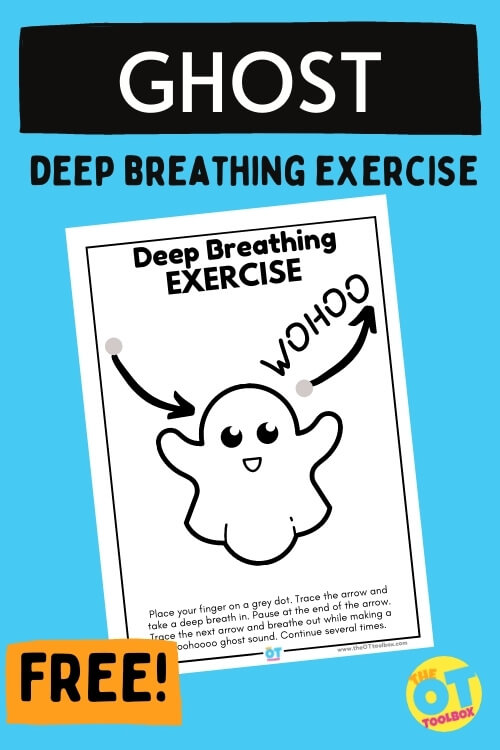
          Ghost Deep Breathing Exercise

          Today I have a fun mindfulness exercise for kids…a ghost deep breathing exercise! This deep breathing exercise is great for Halloween or adding to a ghost theme in therapy, the classroom, or home during the month of October, when self-regulation can use the fun of Halloween and ghosts with major calming benefits. You can grab this free mindfulness printable below!

          This ghost themed activity is a powerful self-regulation activity for kids this time of year!

          ghost deep breathing exercise for self-regulation for kids with a ghost theme

          Ghost Deep Breathing Exercise

          If you’ve been reading The OT Toolbox for long, you may have seen our pumpkin deep breathing exercise printable and our spider web deep breathing exercise. Both are fun ways to add a holiday theme to self-regulation needs.

          Related: You’ll love our spider activities for developing skills in therapy sessions around the Halloween season.

          Today’s Ghost Breathing Exercise is another fun Halloween themed therapy tool to use with kids!

          For more mindfulness exercises, you can check out the other deep breathing exercises here on the site.

          I love this deep breathing tool because it has a fun ghostly “woooo-hoooo” addition where kids can add their own fun and non-spooky ghost noises as they slowly breathe out.

          Add this resource to ghost themed therapy activities or calming exercises all during the month of October. It may even be a good way to get excited ghosts and goblins to calm down before a big classroom Halloween party!

          More ghost activities

          This self-regulation tool is a great addition to these other ghost activities that build skills:

          • Ghost sensory bin (make bread ties into ghosts for fine motor sensory play!)
          • Ghost craft– This simple ghost craft develops scissor skills, bilateral coordination, eye-hand coordination, and more.
          • Ghost Catch Game– All you need is a recycled milk carton and an old sock for bilateral coordination, crossing midline, gross motor skills, eye-hand coordination, core strength, and more.
          • Ghost Cookies– Baking with kids is such an awesome way to develop executive functioning skills. These ghost cookies are spooky fun!

          Free Deep Breathing Exercise

          You can print off this ghost deep breathing printable and use it in therapy sessions all month long!

          Enter your email address into the form below to access this freebie.

          Free Ghost Deep Breathing Exercise

            We respect your privacy. Unsubscribe at anytime.

            Colleen Beck, OTR/L has been an occupational therapist since 2000, working in school-based, hand therapy, outpatient peds, EI, and SNF. Colleen created The OT Toolbox to inspire therapists, teachers, and parents with easy and fun tools to help children thrive. Read her story about going from an OT making $3/hour (after paying for kids’ childcare) to a full-time OT resource creator for millions of readers. Want to collaborate? Send an email to contact@theottoolbox.com.

            Don’t miss this pumpkin activity kit for fine motor skill work all month long!

            Pumpkin activity kit
            Pumpkin Fine Motor Kit

            Preschool Occupational Therapy

            preschool occupational therapy

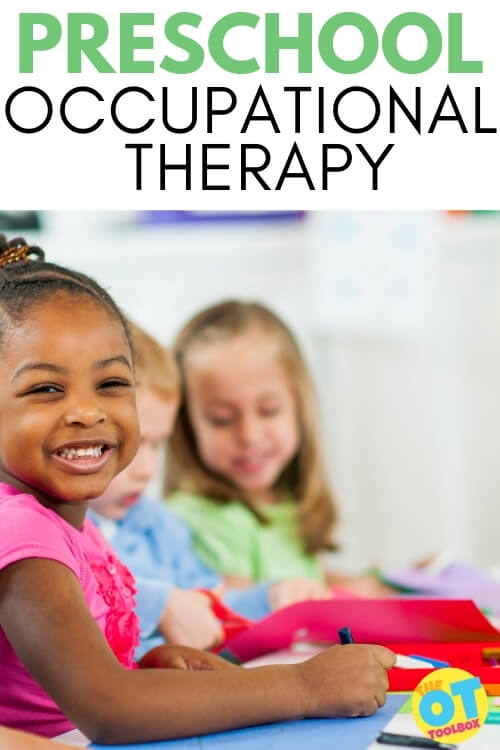
            For parents of preschool children that require occupational therapy services, there can be a lot of questions. Here, we’ll try to cover preschool occupational therapy services. OT for preschoolers and early intervention occupational therapy services can be a whole new world for parents of preschoolers! Play age and stage of development makes a difference in the occupational therapy provider’s use of play as a tool and an area of development. Be sure to check out our resource on fine motor activities for preschoolers, too.

            Preschool occupational therapy information, including what OT looks like in preschool settings, and early intervention occupational therapy

            Preschool Occupational Therapy

            From 3-5, children are developing in so many ways. From motor skills to cognition, to language…the preschool age is a time of massive changes. Be sure to check out these preschool activities for hands-on strategies to impact learning and development during the preschool years.

            For the youngest of learners, classroom concerns tend to be centered around achieving developmental milestones, learning proper social practices, and creating an environment that all children can learn and grow in.

            What does OT Look Like in the Preschool?

            Occupational therapists can work with teachers to improve and sustain an environment that will support the growth during this very important time in childhood.

            What they learn in preschool partially determines their future success – particularly when it comes to social, emotional, and cognitive skills. In fact, studies over the years continue to show that socio-emotional intelligence in preschool and kindergarten is a great predictor of future academic success (Rhoadesa et al., 2011).

            Early Intervention Occupational therapy

            Typically early intervention is a service that works with children aged 3 and under. For some states in the United States, early intervention continues through age 5. For children in those states, early intervention occupational therapy can occur in preschool settings.

            Early intervention occupational therapists focus on functional participation of tasks at home, in the school, and in naturally occurring environments such as daycares.

            An occupational therapist working with a preschool may:

            • Complete assessments of skills of ability to achieve age-appropriate levels, developmental progression, etc.
            • Support parents, teachers, and the family unit of the child through a family-centered model.
            • Set-up the overall environment for occupational success.
            • Offer recommendations for sensory play to boost sensory integration skills.
            • Offer developmentally appropriate activities.
            • Create a library of books that promote the development of social and emotional skills.
            • Work collaboratively with preschool teachers to support the preschooler’s needs and offer support and suggestions to meet student’s needs
            • Adapt daily activities to support development.
            • Create a self-calming area and visuals such as class schedule, individual schedule, or task schedules within the home or classroom, or school-wide environment.
            • Encourage use of transition tools to help preschoolers move from one task to another.
            • Build a fine motor “gym” where students can develop fine motor skills while they play.
            • Recommend sensory deprivation materials like a tent, headphones, or sunglasses to calm an overwhelmed student. 
            • Or develop a program to boost core strength and trunk stability – both very important for sitting at a desk throughout the day.  
            • Push-into the preschool setting and incorporate activities into circle time or other centers.
            • Incorporate All About Me preschool activities into therapy sessions to foster a relationship between the client and the therapy provider.

            OT Assessments in Preschool

            In preschools, occupational therapists may ask parents and teachers to complete a quick check list (with space to add comments). They will complete an evaluation and document observations made during the evaluation. They may complete a sensory profile either preschool or via a caregiver form. Evaluation may occur at the preschool, in the home, or in various locations within the school, home, or other natural settings such as daycare.

            A play-based assessment will be completed to note the preschoolers abilities and levels using a variety of toys and items. Some common preschool OT assessments include the Peabody Developmental Motor Scales (PDMS–2), the Developmental Assessment of Young Children-2 (DAYC-2), the Miller Function and Participation Scales, and the Battelle Developmental Inventory, Second Edition (BDI-2).

            Occupational therapy evaluations in preschool assess areas such as:

            • Reflexes- A child’s ability to automatically react to environmental events.
            • Functional Skills- A child’s ability to complete daily tasks required in the home and school as well as identify the amount of assistance the child needs.
            • Positioning, balance, posture- A child’s ability to sustain control of his or her body within its center of gravity and retain equilibrium.
            • Sensory Processing- Sensory processing abilities, baselines, and regulation during activities in the home, classroom, or other natural setting.
            • Social Emotional Development- A child’s ability to regulate emotions impact the preschool behaviors we see in tasks and learning at age-appropriate abilities. This can include peer interaction, adult interaction, and family interaction. This resource on friendship activities for preschoolers is another great source of information and activity ideas.
            • Locomotion- A child’s ability to move from one place to another. The actions measured include crawling, walking, running, hopping, and jumping forward.
            • Object Manipulation- A child’s ability to hold and manipulate objects, toys, and materials of various sizes. Examples of the actions measured include catching, throwing, and kicking.
            • Grasping- A child’s ability to use his or her hands.
            • Visual-Motor Integration- A child’s ability to use his or her visual perceptual skills to perform complex eye-hand coordination tasks such as reaching and grasping for an object, building with blocks, and copying designs.

            It might even be as simple as working on the underlying skills that impact a preschooler’s ability to learn colors.

            One thing that comes up a lot when it comes to the preschool years and development, is the question of whether preschoolers should write or even write their name.

            Occupational therapy providers promote developmentally appropriate activities. Watch the video for information on what happens when preschoolers are asked to write:

            For more resources and tools on preschool occupational therapy and early intervention, check out this resource on OT Early Intervention.

            Colleen Beck, OTR/L has been an occupational therapist since 2000, working in school-based, hand therapy, outpatient peds, EI, and SNF. Colleen created The OT Toolbox to inspire therapists, teachers, and parents with easy and fun tools to help children thrive. Read her story about going from an OT making $3/hour (after paying for kids’ childcare) to a full-time OT resource creator for millions of readers. Want to collaborate? Send an email to contact@theottoolbox.com.