Beginning Reading for Kindergarten

Stack of books, letters ABCD, and drawing of a sun. Text reads "beginning reading for kindergarten"

Today, we are covering something I love to talk about…beginning reading for kindergarten, from the perspective of an occupational therapist. Kindergarten is a time to begin the educational process that lasts for at least another 12 or more years. It’s during kindergarten that we establish a love for learning, and beginner readers will become exposed to all of the wonders of reading at this young age!

beginning reading for kindergarten

Beginning Reading for Kindergarten

Beginning reading in kindergarten is the start of an essential foundation for future academic success and lifelong learning. Traditionally, the path to teaching young learners how to read involved rote memorization of sight words, a method aimed at promoting basic recognition skills. Our own children were thriving in kindergarten when sight words were used as the primary focus, and because of that, we have many creative sight word activities here on the website.

Some of our favorites that can still be used today, in a different way to foster research-backed Science of Learning include:

  • Sight word manipulatives– a great hands-on learning activity for building fine motor skills and recognition of common words. This could be used with letter recognition as well.
  • Sight word sensory bin– combine the learning of words, ability to read as a kindergartener, and sensory play. Instead of a sight word sensory bin, try using letters and build words.
  • Sight word sensory tray– work on letter identification and word reading in kindergarten. Foster learning by matching letters or words.

Science of Reading and Beginning Readers in Kindergarten

As our understanding of the Science of Reading has evolved, educators moved from strictly sight word memorization and now recognize the immense value of adopting research-backed, multisensory approaches to foster genuine reading skills in kindergarteners.

This is great as an occupational therapist, because we can involve motor skills and multisensory learning into reading skill development.

Occupational therapy providers love play-based learning and hands-on activities that are seamlessly integrated with kindergarten books, while simultaneously nurturing fine motor skills and cultivating a love for reading.

One component to beginning reading in kindergarten is tapping out sounds, or orthographic mapping. For occupational therapists, we LOVE this hands-on approach to reading for kindergarten and beyond!

Why?

Tapping out sounds offers:

What a great way to build those fine motor skills needed for handwriting! These are just one component of fine motor skills needed at school.

We know that each child is a unique learner, with individual interests, motivators, and unique learning styles. Kinesthetic learners or auditory learners are two examples. Play-based learning taps into the curiosity of young minds, paving the way for a more profound understanding of language and communication. We can do this through sensory bins, centers, and fine motor manipulatives in reading.

Reading in kindergarten also fosters skills:

  • Comprehension skills
  • Critical thinking skills
  • Fine motor skills- drawing, coloring, turning pages, pointing to words and letters on the page, all of these skills develop pencil grasp through play. Add in book-related crafts and you’ve got more fine motor development!
  • Emotional development
  • Self-confidence as reading becomes easier
  • Empathy

Sensory components

Furthermore, the advent of the Science of Reading has shed light on the efficacy of multisensory methods in early literacy development.

By incorporating multiple senses like sight, touch, and sound, children create a neural connections with language, leading to enhanced retention and comprehension.

Multisensory learning experiences, often facilitated through interactive play, empower young readers to decode words, understand phonics, and develop an intuitive grasp of language rules.

By harnessing the power of play-based learning, intertwining hands-on activities with reading materials, and nurturing fine motor skills, children are equipped with a comprehensive toolkit that extends far beyond the confines of the classroom.

Beginning Reading Kindergarten Activities

Try these beginner reader activities for kindergarteners:

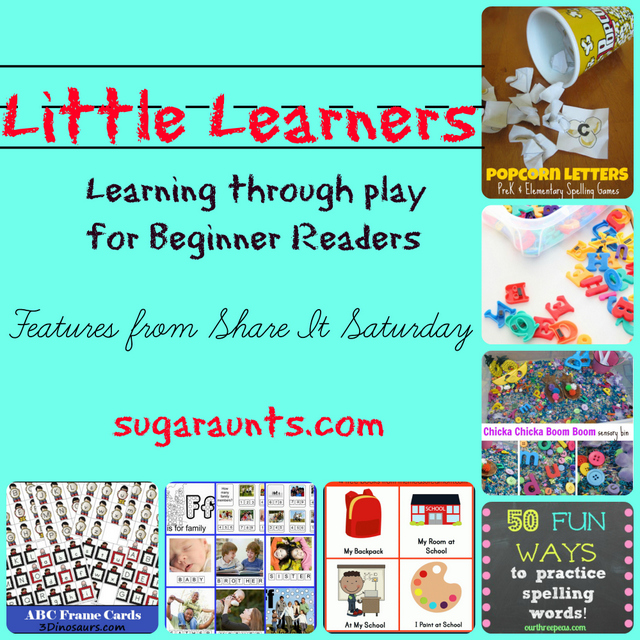
Letter Bin

Sight Word Sensory Bottle 

Window No-Mess Sensory Spelling

Chicka Chicka Boom Boom Alphabet Bin from Rubber Boots and Elf Shoes

ABC Frame Cards from 3 Dinosaurs

Pop Corn Letters from Relentlessly Fun, Deceptively Educational

F is for Family Unit from Chestnut Grove Academy


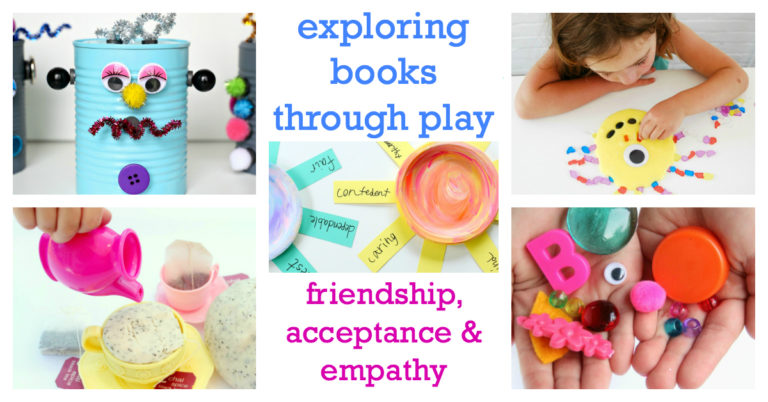
Exploring books through play is a guide to using children's books in therapy and while building developmental skills.

Exploring Books Through Play is one resource for fostering many skills through reading.

Colleen Beck, OTR/L has been an occupational therapist since 2000, working in school-based, hand therapy, outpatient peds, EI, and SNF. Colleen created The OT Toolbox to inspire therapists, teachers, and parents with easy and fun tools to help children thrive. Read her story about going from an OT making $3/hour (after paying for kids’ childcare) to a full-time OT resource creator for millions of readers. Want to collaborate? Send an email to contact@theottoolbox.com.

Birthday Party Themes for Kids

 We’re continuing on with our round-up of our favorite posts from the last year of blogging.  We’ve did a few round-ups of our favorite Messy Play posts, Fine Motor Play posts, and Pretend Play posts. (Each with a great giveaway!!) Today we’re talking Parties!

Birthday Party Themes for Kids

There’s no doubt we love planning parties.  These are some of our favorites:

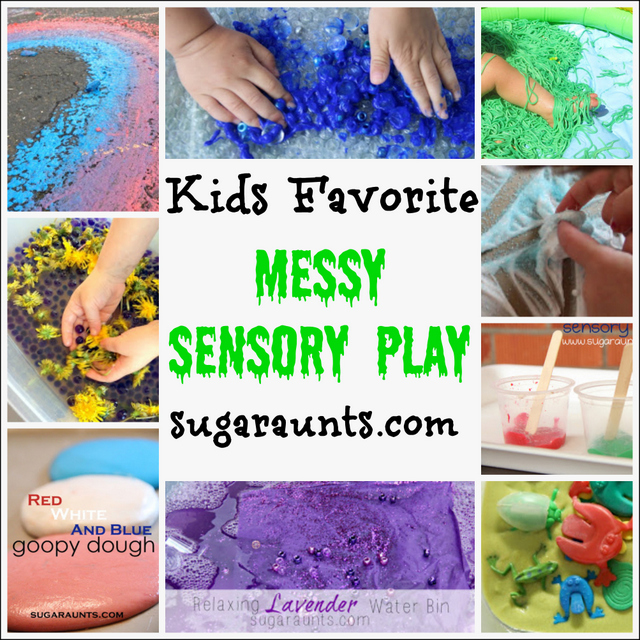
Why Kids Need Messy Play Ideas

We’ve done lots of messy play ideas and this is a round-up of our favorites.  Sensory play is great for kids to explore textures, their senses, and have fun.  Not only that, but through sensory touch, messy play activities support development in several areas: tactile sensory exploration, tactile challenges, problem solving, communication and language development, fine motor skills, self-care skills (washing hands and putting on a cover-up, etc.) We love messy play! 

Messy Play Ideas

The messy activities listed blow include both sensory recipes, and general sensory activities designed to offer textural input from a variety of textures and consistencies. Young children thrive in this environment, because messy play is fun! 

Not only that, but messy play is a change from the usual routine. When you bring out a sensory bin or a tray of shaving cream and let the children go wild, you’ve just created a stress-free area for learning through play.

Messy Play doesn’t need to be complicated. Some quick ways to incorporate messy play ideas into your day to day (or preschool setting, occupational therapy interventions, classroom, or home) include:

  • Play Dough- Try frozen play dough for a temperature twist on this sensory idea. We have many play dough recipes here on the website that use a variety of ingredients.
  • Cloud Dough
  • Sensory bins- Pour dry rice, beans, chickpeas, flour, sand, rainbow rice, or other dry material into a bin. Add manipulatives or small toys and a few scoops and cups. This is a great sensory motor task to work on scooping and pouring as a hand-eye coordination task. Use some of these sensory bin base materials. This is a great opportunity for creative play!
  • Make oobleck for a sensory fun experience. 
  • Shaving cream on a table and adding in toys like dinosaurs, cars, trucks, etc.
messy play ideas

Why Messy Play?

Exploring and playing using the senses with out of the box play materials is a way to engage so many skill areas in young children. 

I am a big advocate for sensory play with kids.  There is so much learning that takes place during sensory experiences.  Exploring textures, manipulating items, scents…the list can go on and on!  When a child explores the world through their senses, they develop fine motor skills, gross motor skills, language abilities, self-confidence, and so much more. 

Take a look at all of the ways messy fun supports child development:

  • Fine motor skills
  • Gross motor skills
  • Strength 
  • Visual motor skills
  • Balance and coordination
  • Vestibular input
  • Proprioceptive input
  • Interoception awareness
  • Eye-hand coordination
  • Curiosity and creativity
  • Problem solving
  • Communication and language development

While play definitely is based on the body’s senses, there are also the vestibular and proprioception senses that provide input to a child.  Any experience involves the body’s ability to take in sensory input, process it, and provide appropriate responses.  During all of this learning is happening!  

Messy activities support tactile discrimination, as a way to learn through touch exploration. 

Sensory discrimination is defined as the ability to discriminate (or identify) sensory input, sensory differences, quantities, and qualities of sensory stimuli. When we discriminate sensory input, we use our sensory systems to taste, touch, hear, feel, smell, and perceive sensory information

For the individual with tactile defensiveness, this sensory input is perceived with hypersensitivity.

Discrimination  of the tactile sensory system allows for safety and functional participation in everyday tasks. Sensory discrimination can mean smelling smoke from the stove vs. smoke from a backyard firepit, hearing an alarm sounding, tasting spoiled food, knowing when to go to the bathroom, knowing when to stop spinning on the swing, and so many other aspects of daily life! 

Messy play and the Tactile Sensory System

There are three sensory systems that have a primary influence in sensory-related responses. When these sensory systems are incorporated into messy play, we see a real vehicle for therapeutic interventions. 

 The sensory systems described below include all of the systems of the body despite the primary influences of the proprioceptive, vestibular, and tactile systems.  

In general, the child who experiences a need for a sensory diet has differences in sensory responsiveness from one or more of the systems that results in poor modulation, perception, or discrimination of sensory information.

The Tactile Sensory System is one of the earliest developed senses of the body.  The skin is the largest and the most prevalent organ. The skin performs unique duties for the body.  Most importantly, the skin protects and alerts us to danger and discriminates sensation with regard to location and identification. These two levels of sensation work together yet are distinctively important.  

Discrimination of touch allows us to sense where a sensation is felt on the body.  With discrimination, we are able to discern a fly that lands on our arm.  The second level of the tactile system alerts us to danger.  It allows us to jump in response to the “fight or flight” response when we perceive a spider crawling on our arm. The information received from the tactile system also includes light touch, pain, temperature, and pressure.

When either of these levels of sensation are disrupted, tactile dysfunction can result.  This presents in many ways, including hypersensitivity to tags in clothing, a dislike of messy play, difficulty with fine motor tasks, a fear of being touched by someone without seeing that touch, a high tolerance of pain, or a need to touch everything and everyone. 

When the tactile system is immature or impaired, the brain can become overly stimulated with resulting poor organization and regulation of input.  Children can then experience difficulty with behavior and concentration as a result. 

Treatment for the child with an impaired tactile sensory system focuses on providing a variety of deep- and light-touch experiences (Koomar & Bundy, 1991).  Additionally, resistance activities, much like those indicated for decreased discrimination of vestibular and proprioceptive information, may be used in the therapeutic sensory diet.

When it comes to the tactile sensation of foods, hyper-responsiveness to certain textures of foods or drinks can interfere with an individual’s ability to tolerate certain foods or liquids. Trial desensitization strategies to food. 

A qualified occupational therapist should intervene with these strategies. Promote a positive attitude during mealtimes. Allow the individual to eat preferred foods and drinks at mealtimes while introducing new foods at different times during the day. 

Messy Play with Soap

But messy play doesn’t need to be “messy” or the type of sensory experience that involves a huge mess to clean up! Just add soap!

  • Get the kids involved with washing dishes in a sink full of soapy water. Add sponges, a dish cloth, and scrubbers for a functional mess that actually cleans!
  • Pull out some kitchen supplies like a potato peeler. Kids can scrape soap bars and use soap shavings to make designs on bookmarks.
  • Make soap foam for a hand strengthening activity.

Messy play is a fun and creative way for kids to learn and explore new things. Here are some great messy play ideas for kids:

  1. Finger painting: Set up a large piece of paper or canvas, and let your child use their fingers to paint with different colors. You can use washable paint, which makes clean-up easier.
  2. Messy painting- There are many creative painting ideas here on the site that incorporate the senses.
  3. Play dough: Make your own play dough or buy it from a store. Your child can use it to make shapes, sculptures, or even their own little worlds.
  4. Water play: Set up a water table or fill a large container with water and provide cups, spoons, and other items for pouring and splashing.
  5. Sensory bins: Fill a bin or container with various materials such as rice, beans, sand, or water beads. Let your child explore and play with different textures and objects.
  6. Mud kitchen: Set up an outdoor space with old pots, pans, and utensils, and let your child create their own mud pies and meals.
  7. Shaving cream art: Spread shaving cream on a table or tray, and let your child draw designs or patterns with their fingers.
  8. Ice painting: Freeze colored water in ice cube trays, and let your child use the ice cubes to create colorful designs on paper.
  9. Slime: Make your own slime or buy it from a store, and let your child stretch, squeeze, and mold it into different shapes.
  10. Bubble play: Blow bubbles and let your child pop them or use a bubble machine for more bubbles.
  11. Food play: Let your child explore different foods and textures by creating a “food play” station with items like cooked spaghetti, Jello, and pudding.
  12. Baby-Safe Finger Paint- During the middle of the first year, baby begins his or her journey with food. About 9 months is a great time to encourage sensory play using baby safe paint. All it takes is a couple of pureed foods such as sweet potatoes, carrots, or prunes. Allow baby to touch, manipulate, and smear that paint on a high chair surface or even paper. Moving the texture in their hands provides a tactile sensory challenge, and has its fine motor benefits, too. Baby will be able to isolate their pointer finger to point and smear, will be able to separate the thumb side of the hand from the stability side of the hand (SO important in higher level fine motor tasks!), and will develop the arches of the hand which is helpful in more refined fine motor activities. A little water play at the end of this activity is great for cleaning up AND has sensory benefits of its own!
  13. Water Play- There are so many ways to engage, explore, and build skills using water play. A small dish and some crushed ice is a great way to encourage grasp wth sensory benefits. A gallon sized baggie filled with colored water and some water beads can be sealed up with duct tape and used as a floor tummy time activity. A scoop and some large balls can be used to introduce scooping and pouring. The sky is the limit when it comes to baby safe water play. Just be sure to keep a close eye on your little one and trust your gut when it comes to setting up play activities. 

Remember to always supervise your child during messy play, and use materials that are safe for their age group. Additionally, it’s a good idea to have a designated messy play area that can be easily cleaned up afterward.

Messy Play Ingredients

Messy play ingredients can include materials you have around the home in the pantry. One thing to be aware of is the use of food in messy play fun. Always consider using expired materials first, as these items are headed for the trash anyway. Consider how to use recycled materials or non-food ingredients when coming up with messy activities. Sometimes a garden hose and a pile of dirt in the garden is enough for a sensory play experience! 

Add these materials to your toolbox to have on hand for messy play at a moment’s notice:

  • Shaving cream
  • Flour
  • Soap
  • Cornflour
  • Rice
  • Dirt
  • Cornstarch
  • Glitter
  • Vinegar
  • Baking Soda
  • Glue
  • Balloons
  • Scoops and cups
  • Shaving foam
  • Warm water
  • Dry pasta
  • Kinetic sand

Baby-Safe Finger Paint- During the middle of the first year, baby begins his or her journey with food. About 9 months is a great time to encourage sensory play using baby safe paint. All it takes is a couple of pureed foods such as sweet potatoes, carrots, or prunes. Allow baby to touch, manipulate, and smear that paint on a high chair surface or even paper. Moving the texture in their hands provides a tactile sensory challenge, and has its fine motor benefits, too. Baby will be able to isolate their pointer finger to point and smear, will be able to separate the thumb side of the hand from the stability side of the hand (SO important in higher level fine motor tasks!), and will develop the arches of the hand which is helpful in more refined fine motor activities. A little water play at the end of this activity is great for cleaning up AND has sensory benefits of its own!

Water Play- Speaking of water play, there are so many ways to engage, explore, and build skills using water play. A small dish and some crushed ice is a great way to encourage grasp wth sensory benefits. A gallon sized baggie filled with colored water and some water beads can be sealed up with duct tape and used as a floor tummy time activity. A scoop and some large balls can be used to introduce scooping and pouring. The sky is the limit when it comes to baby safe water play. Just be sure to keep a close eye on your little one and trust your gut when it comes to setting up play activities. 


We’ve done lots of messy play activities and this is a round-up of our favorites.  Sensory play is great for kids to explore textures, their senses, and have fun.  We love messy play!


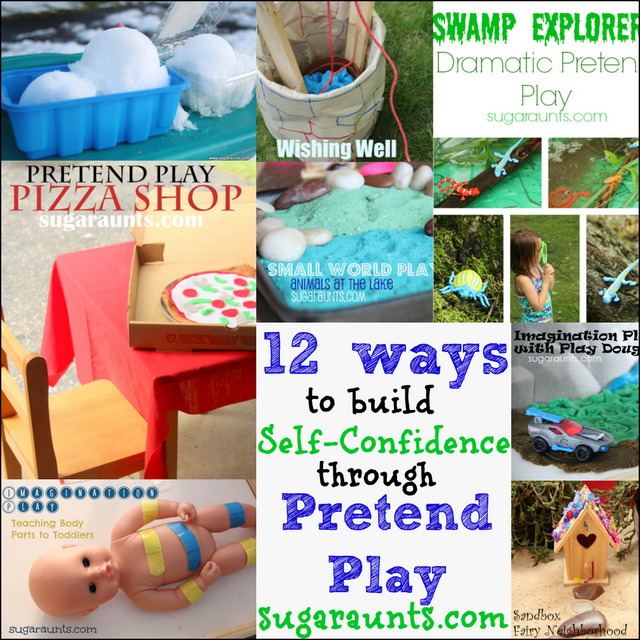
Building Self-Confidence Through Pretend Play

Happy ONE YEAR blog anniversary to Sugar Aunts! Thanks for joining us in our first year of blogging.  What a crazy, fun year this has been full of blogging ups and downs!  We’ve learned so much in this year about blogging and have big plans for our next year!  We wanted to put together a list of our favorite posts for you all about Imagination and Pretend Play…geared toward boosting kids’ Self-Confidence. 


And on to our Pretend Play Round-Up!
We’ve been doing a lot of pretend play this year:

Building Self-Confidence in Children Through Pretend Play

Teaching Body Parts to Toddlers We had so much fun with our little Boo-Boo Baby 🙂 The kids played doctor while working on their fine motor skills to apply the band-aides.  The littler kids were able to practice their language and awareness of body parts.  Taking care of this little sick one can remind the bigger kids of how it feels to go to the doctor and allow them to express their feelings and concerns.

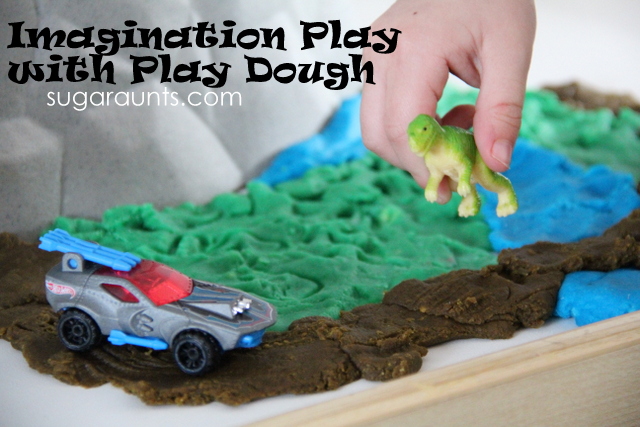
Imagination Play With Play Dough  We used play dough in this small world to work on fine motor strength and dexterity.  Developing hand strength in a fun way allows a child to pick up and use utensils like pencils, scissors, and even clothing fasteners with more confidence.  This fun pretend play activity allowed us to practice language development and expose Little Guy to new words like magma, lava, molten hot, and more.  The possibilities for new vocabulary are endless with pretend play!

We have pretended a lot with play dough: Play Dough Small World Farm, Play Dough Cupcakes, Beach Play Dough, & Scented Snow Man Play Dough

Outdoor Invitation to Play Snow Restaurant  Big Sister had fun pretending to be a chef in our outdoor snow restaurant. An unstructured invitation allows kids to develop confidence in their ability to create, pretend, and express themselves.  They can explore environments and situations with the ability to develop their imagination. 
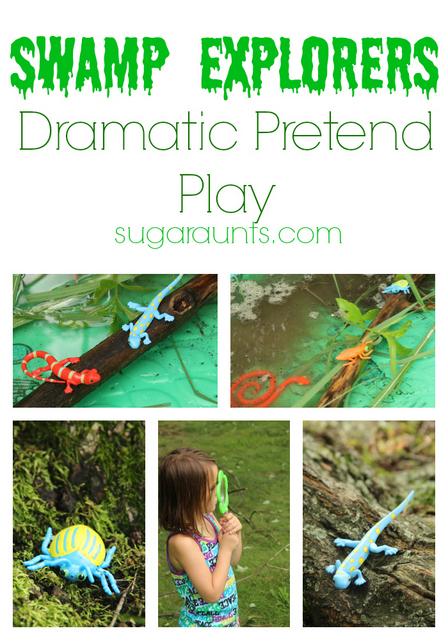
Swamp Explorers Dramatic Pretend Play  We pretended to be Swamp Explorers and searched for lizards, snakes, and insects in a swamp sensory bin and in our backyard.  Finding and seeking objects and the success and difficulty with harder-to-find items builds confidence and kids’ ability to “keep trying”!  Plus, we worked on handwriting with our swamp pretend play activity.  Adding practice to a fun play activity can make handwriting practice fun!

Small World Fairy Neighborhood Introducing Pretend Play with your children their own backyard allows them to see things in a new light.  You can use an area typically used for something else (“The sandbox is where I build sandcastles”) and gives it a new twist! Now the child can use their imagination in a new light, allowing them to develop their ability to think creatively with the things around them.

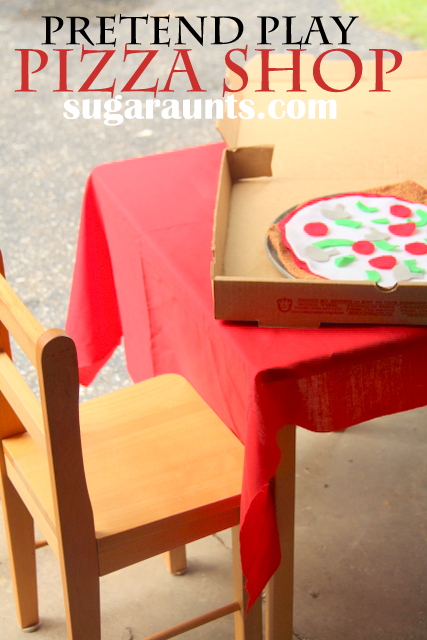
Pizza Shop Pretend Play  This was such a fun pretend play week/month for us 🙂  Creating out Pizza Shop was a group effort between re-doing our outdoor play structure with the kids, and pretending to order pizzas, and playing Pizza Shop owners!  Pretending to make (fuzzy) pizzas from felt, playing with money and a play cash register involved multiple levels of pretend.  All of the kids could get involved in pretend in different aspects.

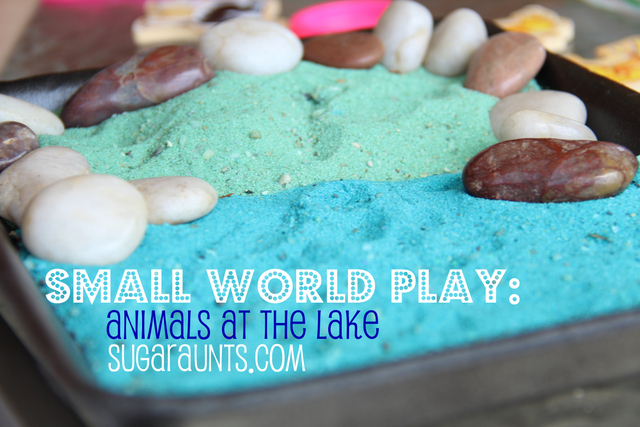
Small World Pretend: Animals at the Lake  We used and explored lots of different textures for this small world.  Baby Girl got to know some different animals while we pretended the animals were at the lake.  Big Sister and Little Guy helped Mom make colored sand to use in our small world.  Pretend Play can involve multiple steps including creating and direction following.  Kids can develop a sense that they are capable of creating and fun ideas. 

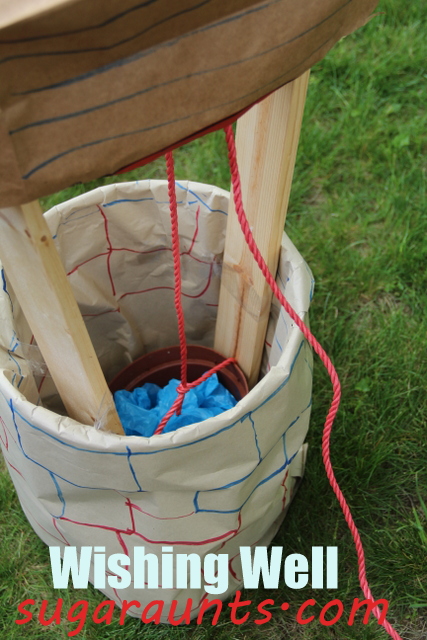
Create A Wishing Well  Kids can come up with pretty amazing ideas.  So when Big Sister said she wanted to make a wishing well…we did! She helped come up with the ideas and we tried a few ways to make it happen.  A few ideas worked and a few didn’t.  We kept trying!  Big Sister got to express her thoughts and come up with new ideas.

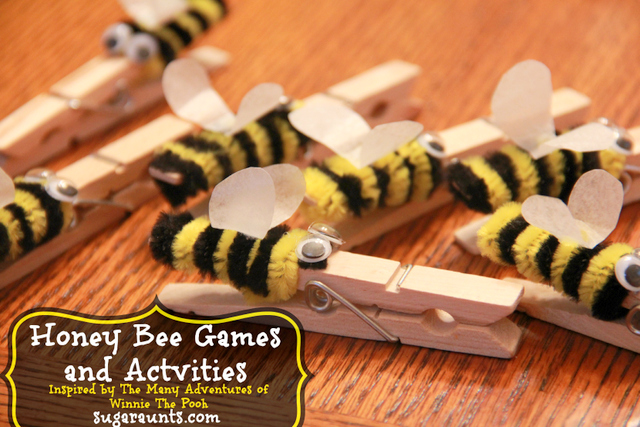
Honey Bee Games and Activities Inspired by The Many Adventures of Winnie The Pooh

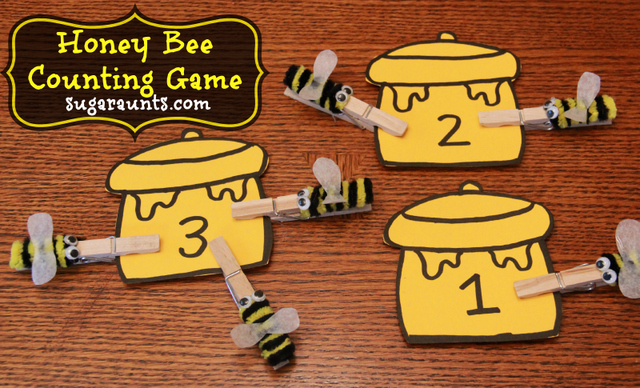
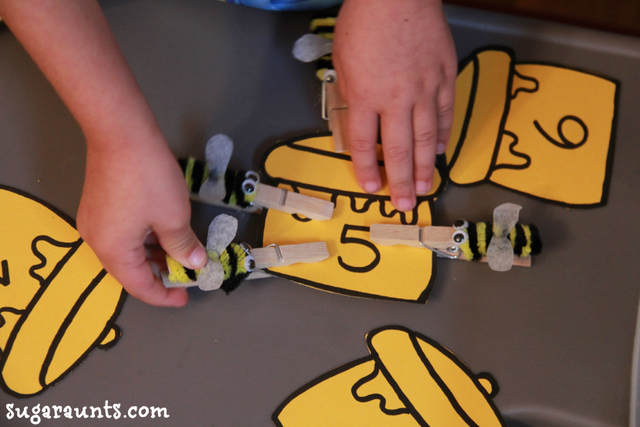
We used our honey bees in a fine motor game where we matched the number of bees to the number on a honey pot.  The pinching motion to open the clothes pin is great for strengthening the muscles in little hands.  It really develops the arches of the hands and allows the child to improve his or her tripod grasp and handwriting.  This was a great activity for Little Guy (age 4), who is learning one-to-one correspondence in counting and number awareness. 

When we were given the opportunity to work on a Winnie The Pooh post, the three of us Aunts were SO excited!  We (and our kids) are huge fans of Pooh Bear and all of his friends. 
 
Did you watch this video as a child like we did?  You might remember the catchy songs and the cute and cuddly friends.  Now you can experience again (and with your own children), the friendships, imagination, and adventure of the Hundred Acre Woods when all of your favorite characters come alive in this timeless motion picture.
My kids were delighted with the bee scene in the movie, when Winnie The Pooh is trying his hardest to stop the “rumbly in his tumbly” with a little honey.  Little Guy has been singing this tune over and over again.  We decided to make some honey bee games and activities to go along with this scene.  We love to encourage fine motor, gross motor, and sensory development with our kid’s activities and crafts, and had to include those skills here, too!
I created honey bee pinch pins that were perfect for our little screening party and could be used in so many ways.
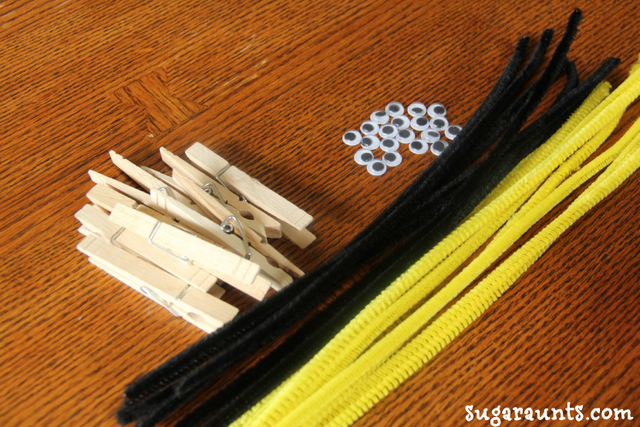
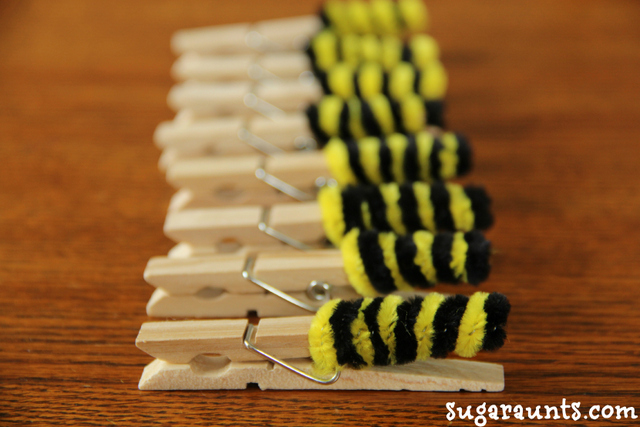
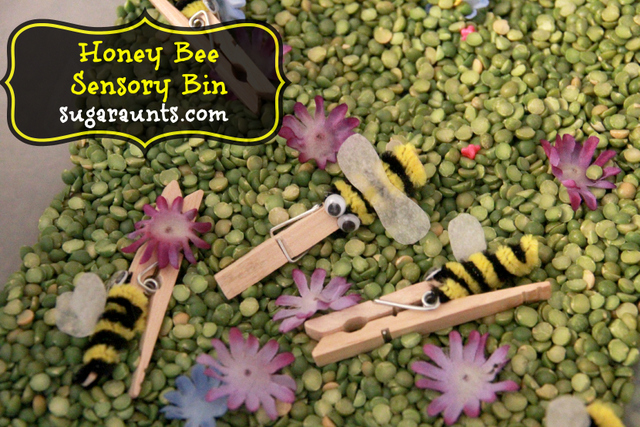
Materials: clothes pins, yellow and black pipe cleaners, googly eyes, wax paper, hot glue gun and glue.
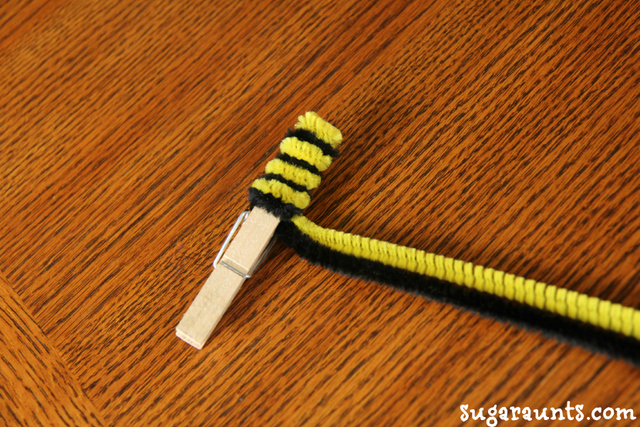
Directions: 1. Pinch together one black and one yellow pipe cleaner.  Wrap these around the end of a clothes pin.  We used about half of each color pipe cleaner and cut the excess off.

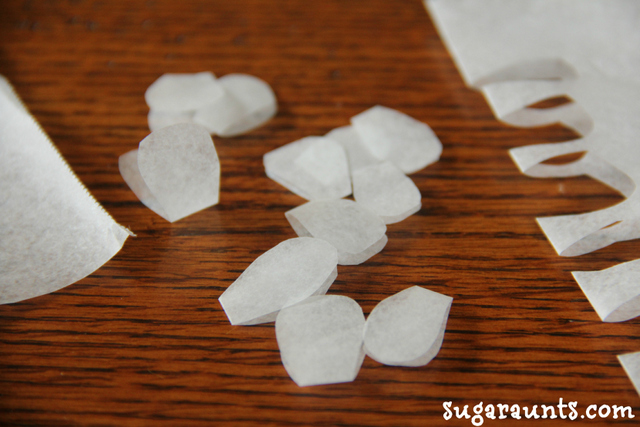
2. Cut wings from wax paper.  Use the hot glue gun to glue the wings to the backs of the bees. 

3.  Hot glue the googly eyes to the front of the bee.  Your bee is now ready for play!
Honey Bee Fine Motor Game

We used our honey bees in a fine motor game where we matched the number of bees to the number on a honey pot.  The pinching motion to open the clothes pin is great for strengthening the muscles in little hands.  It really develops the arches of the hands and allows the child to improve his or her tripod grasp and handwriting.  This was a great activity for Little Guy (age 4), who is learning one-to-one correspondence in counting and number awareness. 

Honey Bee Gross Motor Activity

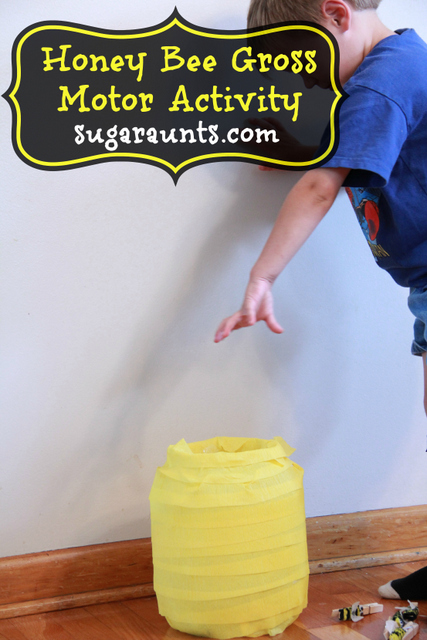
The honey pots were used again when we played a faster paced gross motor game, encouraging the kids to use their large muscle groups.  This time, I spread the honey pots out all over our living room floor.  I called out a number and the kids would have to race off to find the honey pot with that number.  Once they found their honey pot, they then had to run over to a large bee hive that we created from a recycled snack container and crepe paper.  I asked them to count out the number of bees to match the number on their honey pot, and drop them into the large bee hive.  To make it harder for my preschooler and kindergartener, I had them close their eyes.  This gross motor activity was just what they needed to get some energy out on a rainy afternoon!  As a bonus, they were developing their eye-hand coordination, and visual scanning skills as they scanned for numbers and counted out the bees.  They have already asked to play this game again!  This would be such a fun game for a Winnie The Pooh themed birthday party…and I have two little ones to attest for it being fun!

Honey Bee Sensory Play

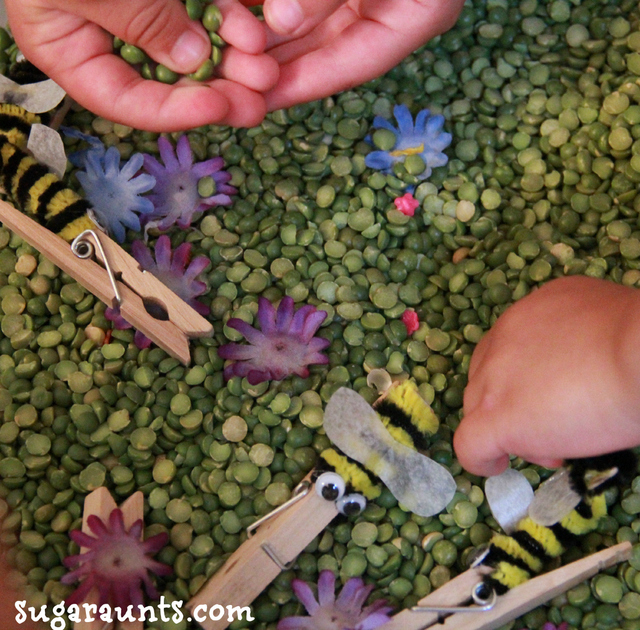
Our honey bees were really loved when they were added into a themed sensory bin.  I poured in a bag of dried split peas, a few fake flower petals, and a handful of plastic flower beads for fun sensory exploration.  A sensory bin is such a great way to explore different textures, manipulate small objects, and develop language with little ones.  My kids loved using the honey bees to pinch the flower petals and buzzzzz around, only to drop the petal back into the bin.  This sensory bin stayed out in our dining room for a few days and was played with quite often!

Honey Bee Treat

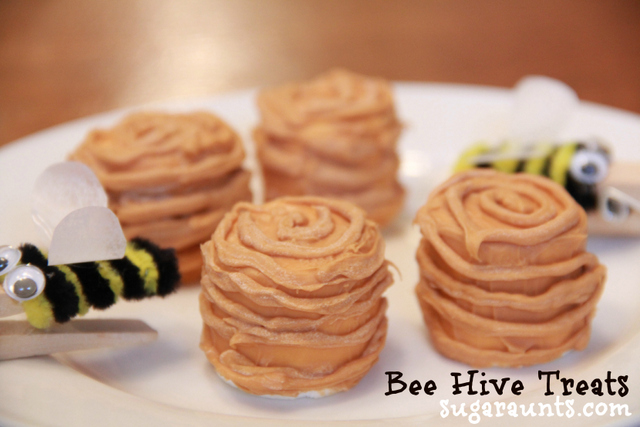
We had such a great time watching The Adventures of Winnie The Pooh and then playing all of our honey bee games and activities, that we worked up an appetite.  I threw together a quick bee hive snack made from a marshmallow and melted butterscotch chips.  This was the perfect ending to a fun day.  If you are planning a Winnie The Pooh party or movie play date, I hope you will use some of our ideas!

Fairy Small World

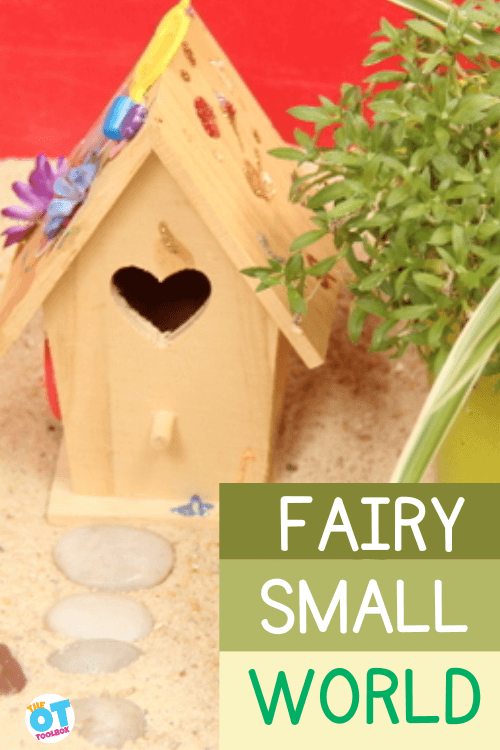
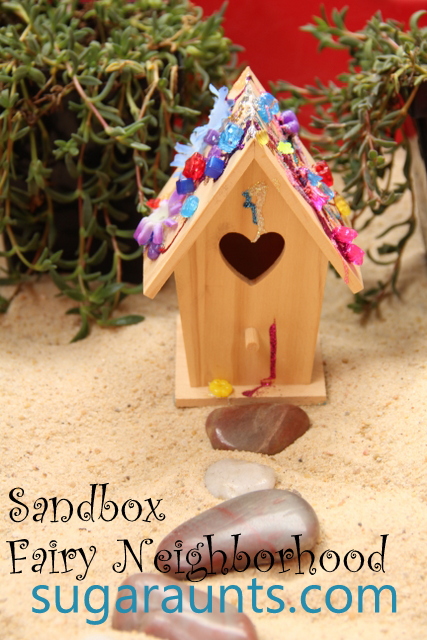
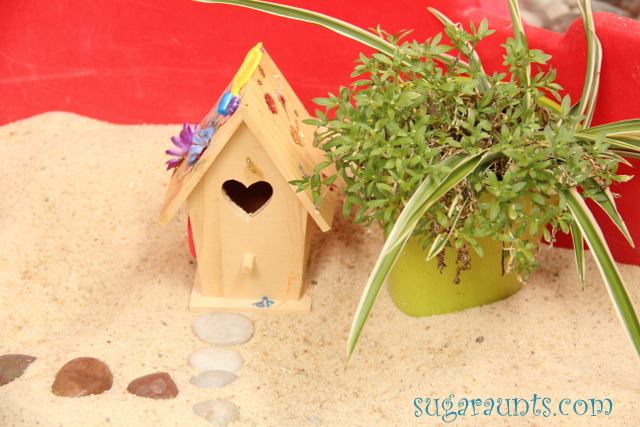
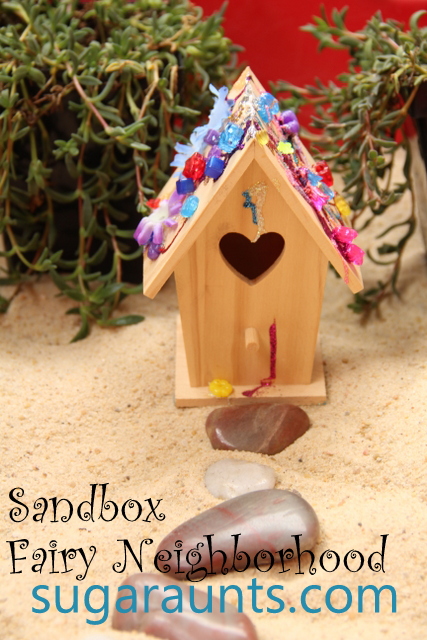
Wooden birdhouse decorated with flowers, glitter, and beads, in a sandbox with small steps made from pebbles. Text reads fairy small world

This fairy small world activity is an old one on our blog, but do you believe we still have the small world fairy house that we made many moons ago? I love that the small world fairy garden was a sensory bin activity using materials we had around the home, including our sand box! This is a great small world play idea for occupational therapy, because you can foster the skills needed by each child: fine motor, sensory, self-regulation, etc.

Using your sandbox as a space for a fairy small world is such an easy sensory bin idea. The dramatic play benefits that happens in a miniature fairy world is unlimited, especially when you use small things like sticks to create paths, or rocks to make fairy furniture.

How to make a Fairy Small World

While we used our sandbox for the sensory space, you could recreate a fairy world of your own in any sensory bin, around the base of a tree, or even in a potted plant. Here are sensory bin base ideas to get you started, if you go that route.

Once you have your place space in mind, you can gather other items to create a fairy small world:

  • Miniature house (this can be anything from a DIY fairy house made of leaves, bark, and seashells, to a store-bought fairy house)
  • Small items: feathers, leaves, gems, pebbles, sticks, acorns, etc.
  • Nature items: plants, pieces of bark, twigs, rocks, etc.

Create your fairy small world!

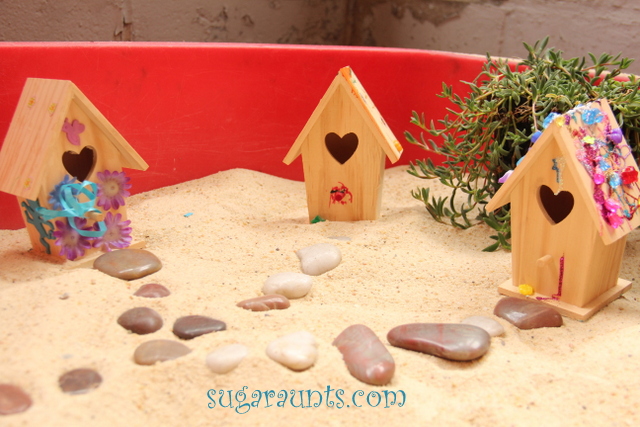
Set up your space and start playing. The possibilities are endless, and depending on your play space, you can make the fairy small world as elaborate or as simple as you like. We went simple and fun with our sandbox fairy neighborhood.


We made these sweet little fairy houses at Big Sister’s Tinkerbell Fairy Birthday party.  You can read the post and all of the party details here.  The fairy houses have been decorating our porch table since the party and involved in lots of pretend play activities.


Big Sister had the fairy houses in the sandbox one afternoon while the younger kids napped. 
 
She had her La La Loopsy dolls all set up with a neighborhood and all kinds of fun going on.


I added a few stones for sidewalks and Big Sister thought we needed more decorations added. 
We pulled a few potted plants from the porch and made our little fairy neighborhood quite pretty!


Balls in the Baby Pool

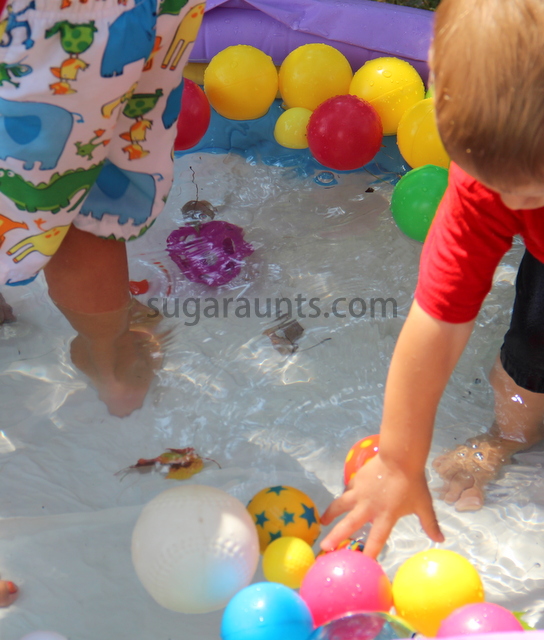
Putting ball pit balls in a baby pool is a great sensory room DIY ball pit that kids love. Whether you play inside or outside with the baby pool full of water, this sensory play activity is one of our favorite ball pit activities!

Baby Pool Sensory Play

 
We’ve been loving these last days of summer before the school starts up again.  One super nice and sunny day, we had the baby pool out and added a colorful twist…all kinds and shapes, and colors of different balls.


Baby Pool with Balls

 
We threw in ball pit balls, ping pong balls, whiffle balls, and every other kind we could find.  This was such a fun way to play in the pool.  Everyone had fun throwing them in and out of the baby pool and grabbing at the different colors. 
 
We had all preschool-aged and toddlers at our house today, but, this would be great for sitting babies too!  The eye-hand coordination and visual tracking skills really develop with this one. 
 
They can visually track the different colored balls as they scoot around in the water and grasp at them.  We had so much fun with this. Let us know if you try this activity, we would love to hear how it goes in your house!
 
 
Try putting something different in your baby pool while the weather is still warm, or pin it for next summer 🙂
 
 
Looking for more eye-hand coordination activities?  Try one of these:
 

Colleen Beck, OTR/L has been an occupational therapist since 2000, working in school-based, hand therapy, outpatient peds, EI, and SNF. Colleen created The OT Toolbox to inspire therapists, teachers, and parents with easy and fun tools to help children thrive. Read her story about going from an OT making $3/hour (after paying for kids’ childcare) to a full-time OT resource creator for millions of readers. Want to collaborate? Send an email to contact@theottoolbox.com.

Clay Nature Art Sculptures

We’ve been enjoying some beautiful weather and having TONS of outside play.  We’ll hang out in our back yard and get into all kinds of ball throwing, tree climbing, water playing fun.  One morning we pulled out some lumps of clay.  They were combined into pretty swirls of colors.  Ad a few leaves and sticks and we had


Nature Art Sculptures from Clay!
This clay is reeeeally hard, so we put it into a bin of water and pressed and pulled the clay until it became softer.  The warm sun didn’t hurt either.  What better fine motor strengthening play than messing with clay!
The sticks and colorful leaves
(HOW are the leaves falling already!?!)
made pretty little sculptures  for our driveway.
 
Pushing those sticks into the hard, resistive clay was great fine motor dexterity work, including tripod grasp for the smaller trigs, and tip to tip grasp to push the leaf stems into the clay lump.
 
These lumps of clay turned into something else not long after our sculpture fun…wait until you see what happened next 😉
Looking for more ways to work on tripod grasp?  Start here:

Messy Sensory Play for Kids

Messy and Sensory Play for Kids!
We love getting messy with sensory play with our kids.  There is so much learning.  And fun to be had!  We’ve featured sensory play before and we just couldn’t help doing it again!  These features are a great way to explore colors and textures with a lot of learning mixed in.  Wouldn’t it be an AWESOME line up for a messy play date?  Stop by and check out what these bloggers did to get messy.  You’ve got all the recipes right here!


Radioactive Slime by Adventures At Home With Mum
Mixing Colors By Hand by Teaching 2 and 3 Year Olds
Frozen Watercolours by Munchkin and Bean

Cornflour Slime by Learn With Play at Home