Sensory Handwriting Practice Letter Formation

Practicing handwriting doesn’t have to involve paper!   This sensory handwriting practice activity works on letter formation and line awareness with proper tool grasp and typical writing motor movements (unlike many sensory writing activities that use a writing tray or over-sized letters–while those sensory writing activities DO add to the tactile sense, they prevent the child from becoming accustomed to holding the pencil and the small motor advancements made by a writing utensil.  The child IS working on letter formation but they are not doing so in a typical motor pattern, and this can actually be quite confusing for some children.) 


This creative handwriting task, however DOES use a writing utensil-one that is appropriately sized to what the child typically grasps when writing on paper–and adds a bit of proprioceptive input.  We do love creative handwriting activities around here, and this one is one of our all time favorites!


Practicing Handwriting with shaving cream

Practice Handwriting with Sensory Input

 
This post contains affiliate links.
 

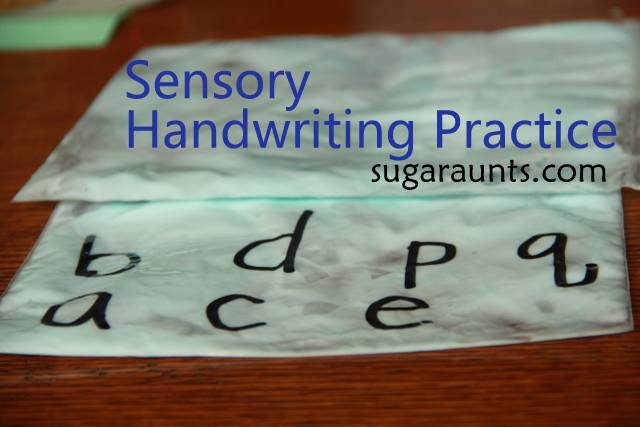
We practiced writing letters one day last week and this was a super fun way to do it!  I filled a couple of bags with shaving cream (not much, just a little worked great).  I used a permanent black marker to write a few letters that sometimes confuse Big Sister…common reversals: ‘b, d, p, q, and g’. 


Letter Formation with Sensory

 We also practiced ‘a’ and ‘c’ to begin.  When you make a “little curve” to make a ‘c’, you can continue with simple verbal cues to make the ‘c’ into other letters like a ‘d’…”little curve, big line down” makes a ‘d’.

sensory handwriting with shaving cream
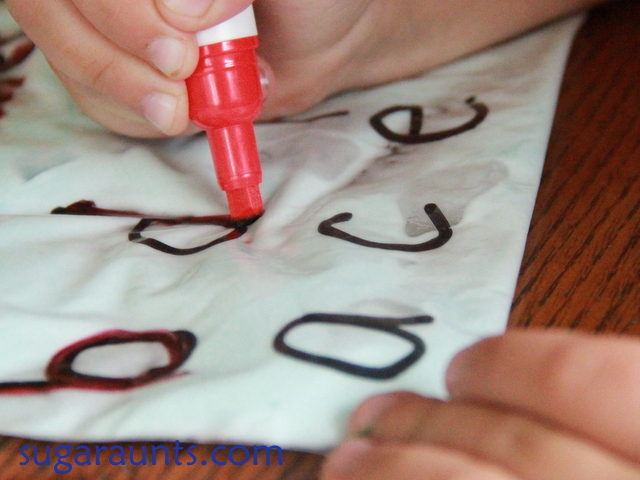
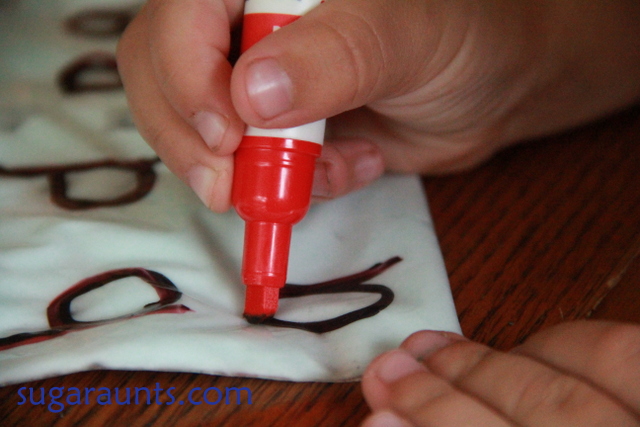
Big Sister used a dry erase board marker to trace the lower case letters.  She could wipe the dry erase board marks off over and over again.  You can use a smaller sized dry erase marker or a fine tip marker to make this more similar to the  motor movements needed for writing with a pencil. 
We also practiced writing our address on the sensory bags.  This activity was a fun way to practice letter formation with verbal and visual cues with an added sensory input.  Plus, Big Sister just really loves writing with the dry erase board makers 🙂
This would be a fun way to practice shapes, numbers, and even beginning pencil stokes for the younger kids.
Looking for more creative handwriting activities?  My friend Erica has some great ideas on this post.  You’ll love to dive into some of our all-time favorite creative handwriting ideas:
http://www.sugaraunts.com/2015/10/visual-tracking-tips-and-tools-for.html 

Sight Word Manipulatives

This sight word manipulatives activity is a great multisensory learning activity for hands-on learning sight words. Use this and all of our sight word activities to support learning with play!

Sight Word Manipulatives

A sight word manipulative is a learning tool designed to help children recognize and memorize sight words, which are common words that are frequently used in reading and writing. These manipulatives are typically physical objects that can be moved and arranged, such as flashcards, word blocks, or word wheels.

Sight word manipulatives are designed to make the process of learning sight words more interactive and engaging for children. By providing a hands-on, tactile experience, these tools can help children better understand the spelling and meaning of sight words, as well as improve their reading fluency and comprehension.

Examples of sight word manipulatives

Examples of sight word manipulatives include:

  1. Flashcards: Cards with a single sight word printed on them that children can read and memorize.
  2. Word blocks: Small wooden or plastic blocks with sight words printed on them that children can arrange and manipulate to create sentences.
  3. Word wheels: Rotating wheels with sight words printed on them that children can spin to create new word combinations.
  4. Magnetic letters: Letters that children can arrange on a magnetic board to create sight words and sentences.
  5. Play Dough Words like the ones below!


Sight Word manipulatives
 

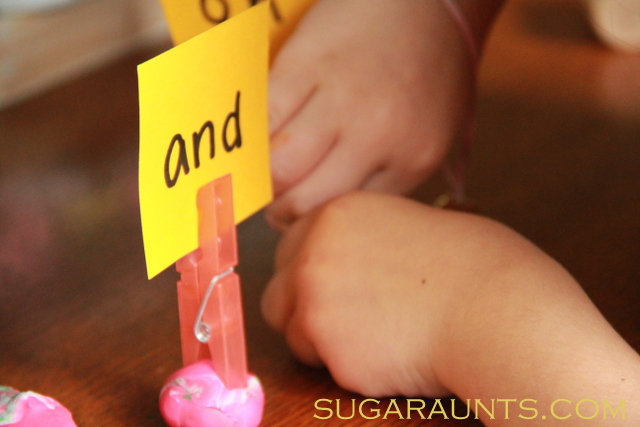
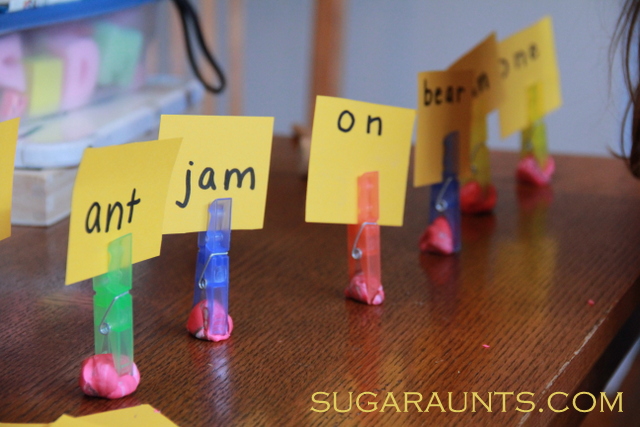
Clothes Pin Sight Words

 
We love clothes pin activities because of the fine motor benefits. For young children who are working on handwriting for the first time, getting all of the pinch strength and grip strength through play is essential for developing pencil grasp and the underlying components of handwriting. 
 
For this age, overall hand strength is often suffering. That’s where activities like this one help in more than one way.
 
This clothes pin sight word activity fits the bill!
 
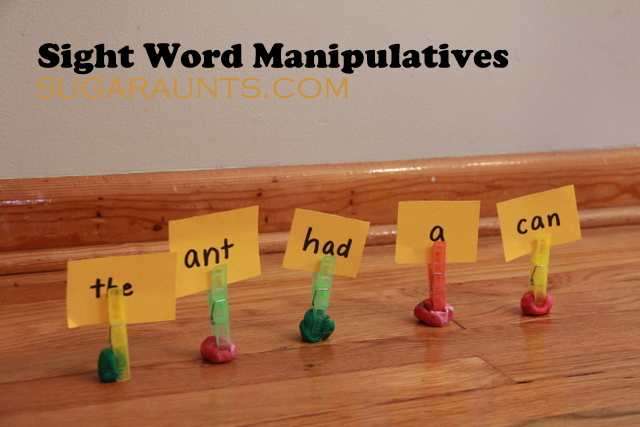
For this sight word manipulative activity, you’ll need just a few items:
  1. Play dough
  2. Clothes pins
  3. Marker
  4. Cardstock or thick paper (like an index card)
To set up the activity, you’ll need to:
  1. Cut small pieces of paper.
  2. Write the sight words on each piece of paper.
  3. Clip a clothes pin onto the piece of paper.
  4. Press the clothes pin into a ball of play dough.
 
We’ve been playing a lot with our sight word cards. Did you see our Sight Word Scavenger Hunt post?
 
One day we had the play dough out and we did a little playful learning with sight words.
 
Big Sister worked those fine motor skills to pinch and pull little bits of play dough from a big lump.  She rolled little balls of dough…all great activities for strengthening the small muscles of the hands.
 
Sigh Word Manipulatives
 
After she had little balls of play dough formed, we pinched the sight word cards and stuck them into the dough.
 
Big Sister loved this!  She would read the cards as we moved them around and she loved making crazy sentences.  It got a little silly 🙂
 
 
This was such a fun way to practice our sight words.  
 

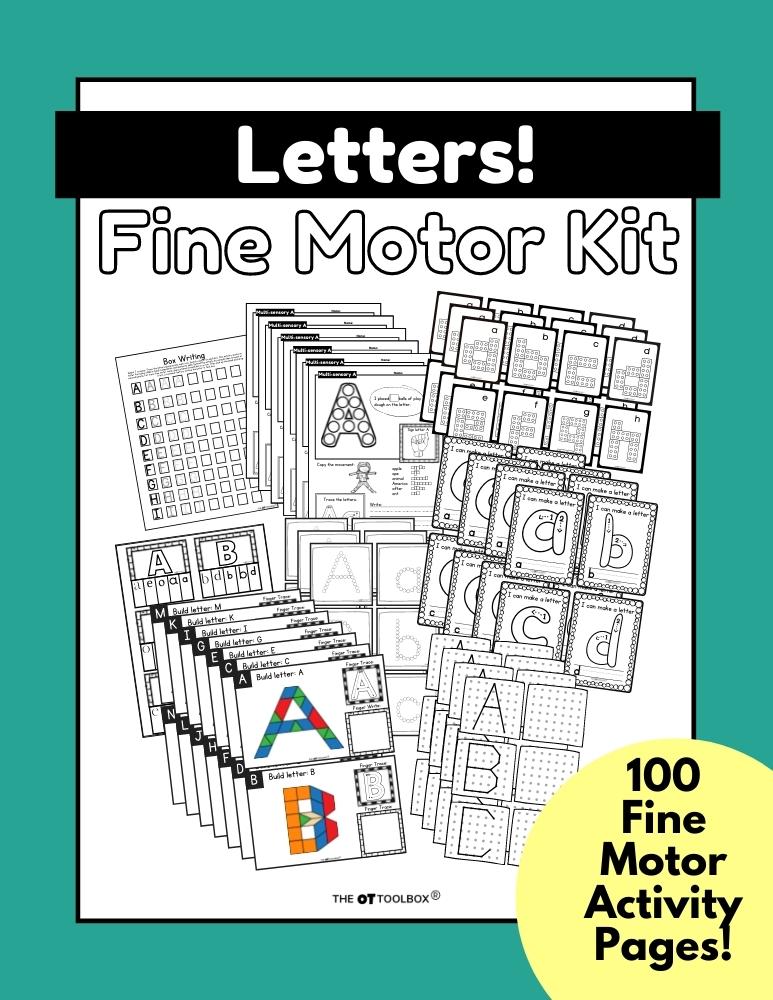
Working on fine motor skills, visual perception, visual motor skills, sensory tolerance, handwriting, or scissor skills? Our Fine Motor Kits cover all of these areas and more.

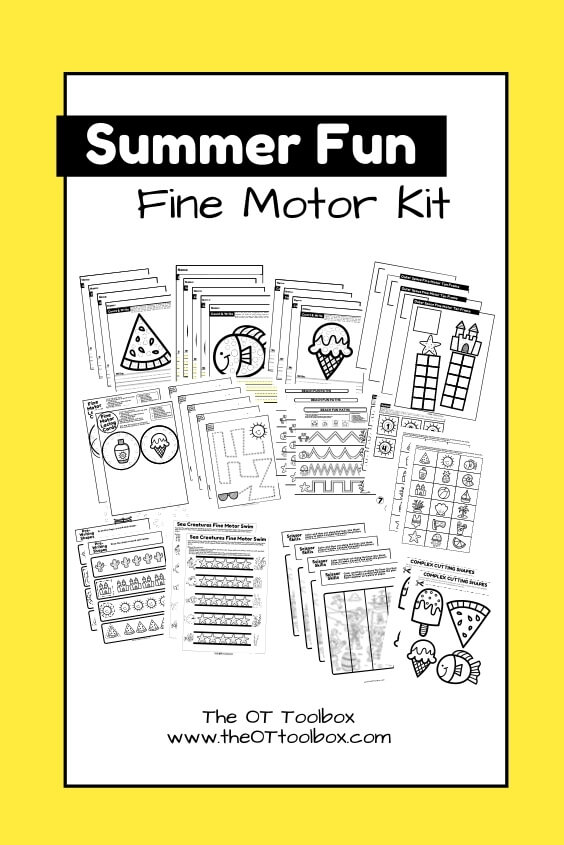
Check out the seasonal Fine Motor Kits that kids love:

Or, grab one of our themed Fine Motor Kits to target skills with fun themes:

Want access to all of these kits…and more being added each month? Join The OT Toolbox Member’s Club!

Colleen Beck, OTR/L has been an occupational therapist since 2000, working in school-based, hand therapy, outpatient peds, EI, and SNF. Colleen created The OT Toolbox to inspire therapists, teachers, and parents with easy and fun tools to help children thrive. Read her story about going from an OT making $3/hour (after paying for kids’ childcare) to a full-time OT resource creator for millions of readers. Want to collaborate? Send an email to contact@theottoolbox.com.

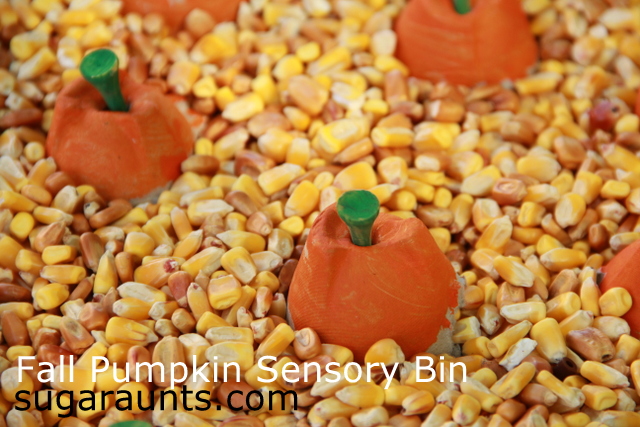
Egg Carton Pumpkins Fall Sensory Bin

We made these fun pumpkins one day and have been playing with them a lot lately. 

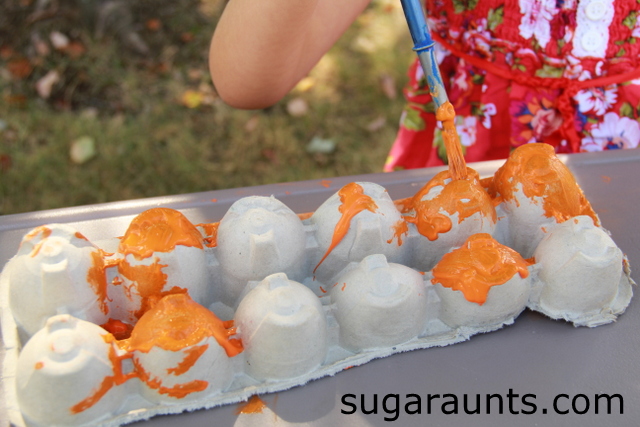
We started by painting an egg carton orange.  
Big Sister then helped me paint 12 golf tees a nice shade of green.


Egg Carton Pumpkins

 
Fall Pumpkin Sensory Bin
 
Painting Egg Cartons
 
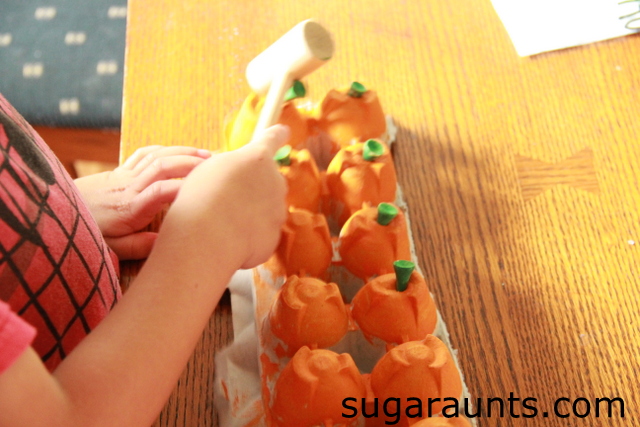
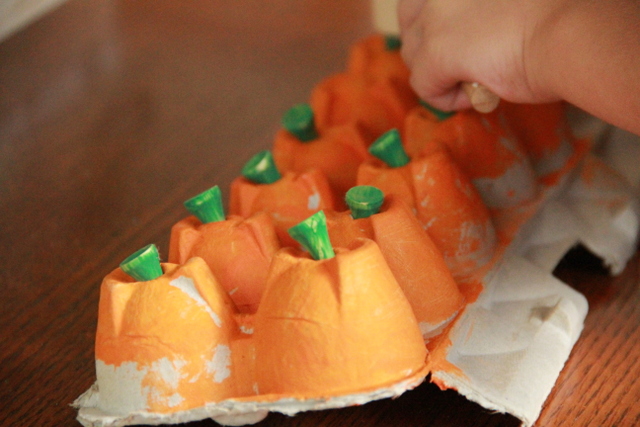
Once the paint dried, Little Guy got busy hammering the golf tees into the egg carton.
 
He is a huge fan of hammering golf tees into egg cartons.  We first did it here.  It’s such a great fine motor activity and just SO much fun 🙂
Hammering Golf tees into egg carton

I cut the pumpkins apart and we got busy playing!  They went first into a fall sensory bin.  Perfect for hiding in corn, counting, seeking, and exploring!  I think we’ll be using our little pumpkins a lot this fall 🙂


Egg Carton Pumpkins and Fine Motor Play

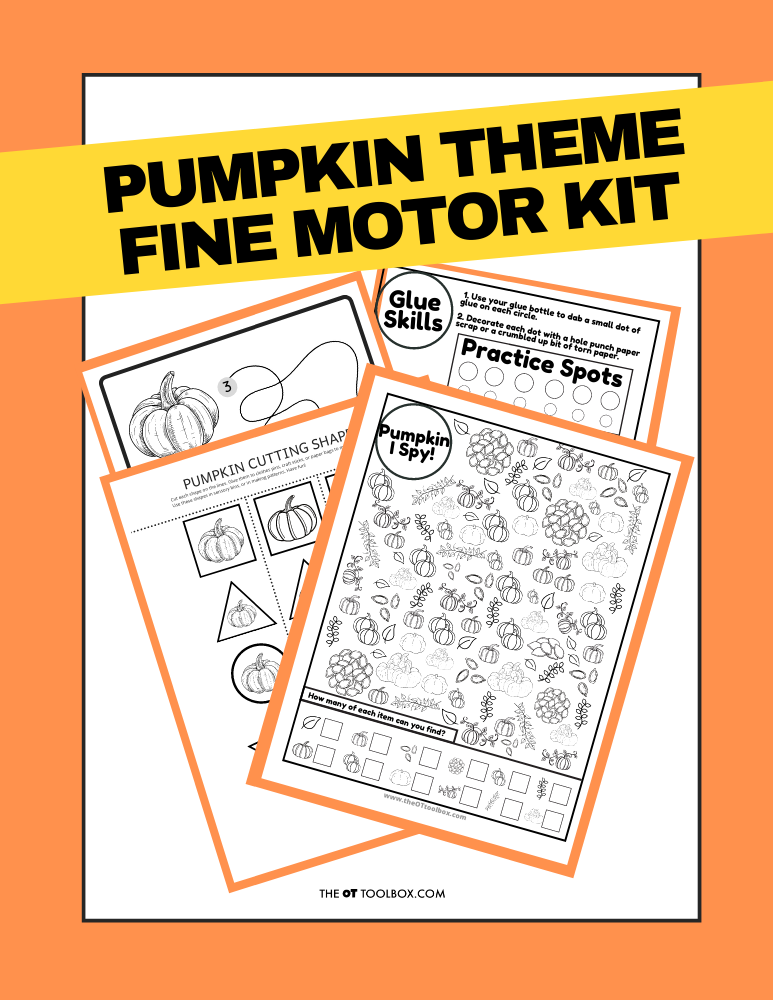
These egg carton pumpkins are a great addition to our Pumpkin Theme Fine Motor Kit.

Pumpkin activity kit
Pumpkin Fine Motor Kit

Grab the Pumpkin Fine Motor Kit for more coloring, cutting, and eye-hand coordination activities with a Pumpkin theme! It includes:

  • 7 digital products that can be used any time of year- has a “pumpkins” theme
  • 5 pumpkin scissor skills cutting strips
  • Pumpkin scissor skills shapes- use in sensory bins, math, sorting, pattern activities
  • 2 pumpkin visual perception mazes with writing activity
  • Pumpkin “I Spy” sheet – color in the outline shapes to build pencil control and fine motor strength
  • Pumpkin Lacing cards – print, color, and hole punch to build bilateral coordination skills
  • 2 Pumpkin theme handwriting pages – single and double rule bold lined paper for handwriting practice

Work on underlying fine motor and visual motor integration skills so you can help students excel in handwriting, learning, and motor skill development.

You can grab this Pumpkin Fine Motor kit for just $6!

Colleen Beck, OTR/L has been an occupational therapist since 2000, working in school-based, hand therapy, outpatient peds, EI, and SNF. Colleen created The OT Toolbox to inspire therapists, teachers, and parents with easy and fun tools to help children thrive. Read her story about going from an OT making $3/hour (after paying for kids’ childcare) to a full-time OT resource creator for millions of readers. Want to collaborate? Send an email to contact@theottoolbox.com.

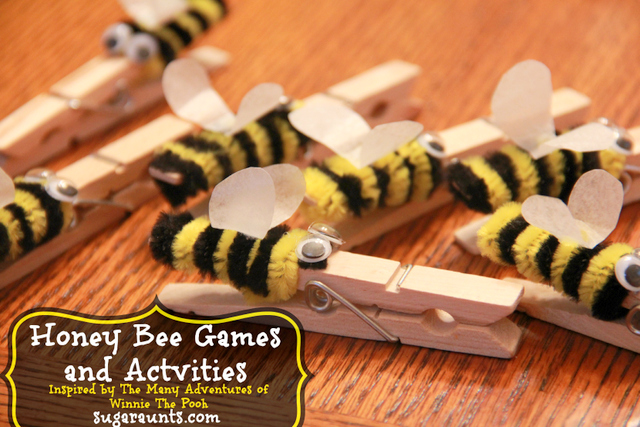
Honey Bee Games and Activities Inspired by The Many Adventures of Winnie The Pooh

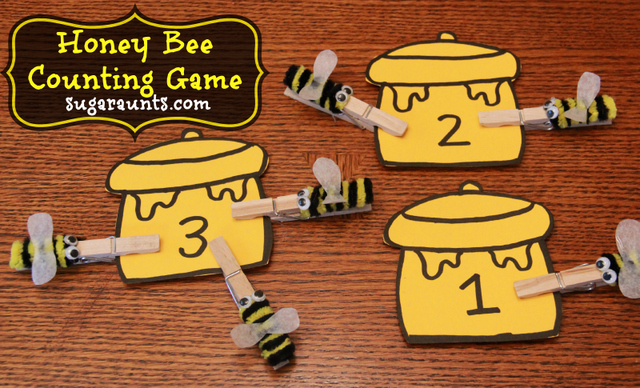
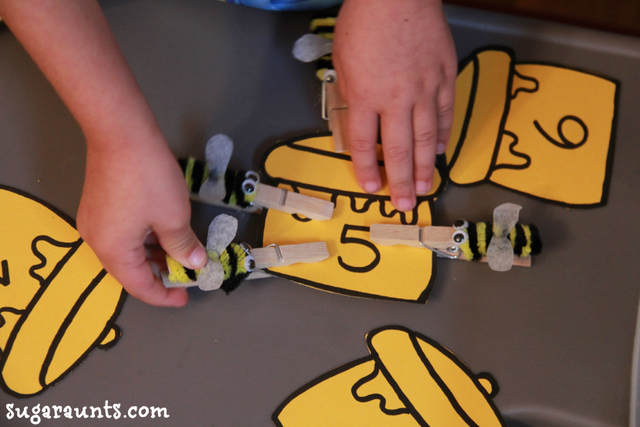
We used our honey bees in a fine motor game where we matched the number of bees to the number on a honey pot.  The pinching motion to open the clothes pin is great for strengthening the muscles in little hands.  It really develops the arches of the hands and allows the child to improve his or her tripod grasp and handwriting.  This was a great activity for Little Guy (age 4), who is learning one-to-one correspondence in counting and number awareness. 

When we were given the opportunity to work on a Winnie The Pooh post, the three of us Aunts were SO excited!  We (and our kids) are huge fans of Pooh Bear and all of his friends. 
 
Did you watch this video as a child like we did?  You might remember the catchy songs and the cute and cuddly friends.  Now you can experience again (and with your own children), the friendships, imagination, and adventure of the Hundred Acre Woods when all of your favorite characters come alive in this timeless motion picture.
My kids were delighted with the bee scene in the movie, when Winnie The Pooh is trying his hardest to stop the “rumbly in his tumbly” with a little honey.  Little Guy has been singing this tune over and over again.  We decided to make some honey bee games and activities to go along with this scene.  We love to encourage fine motor, gross motor, and sensory development with our kid’s activities and crafts, and had to include those skills here, too!
I created honey bee pinch pins that were perfect for our little screening party and could be used in so many ways.
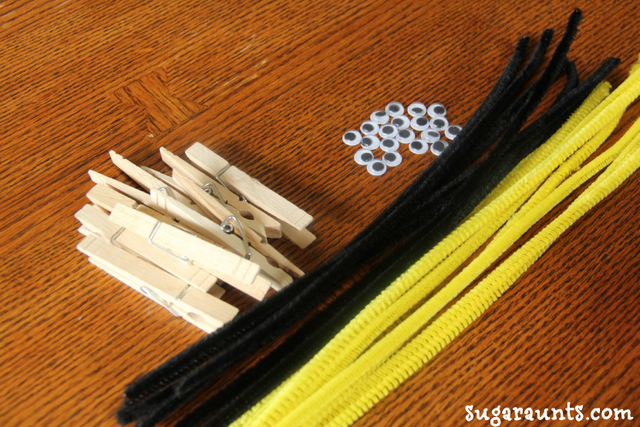
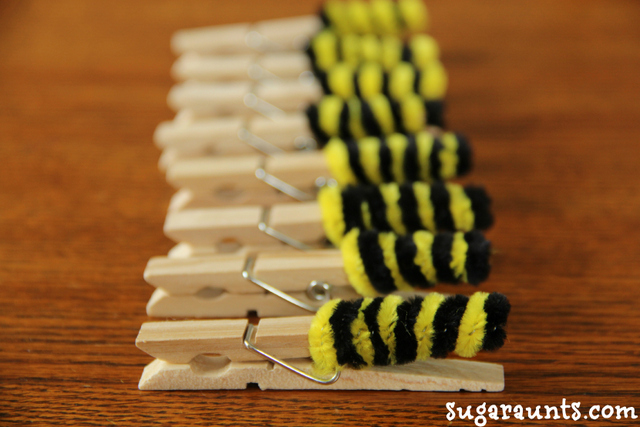
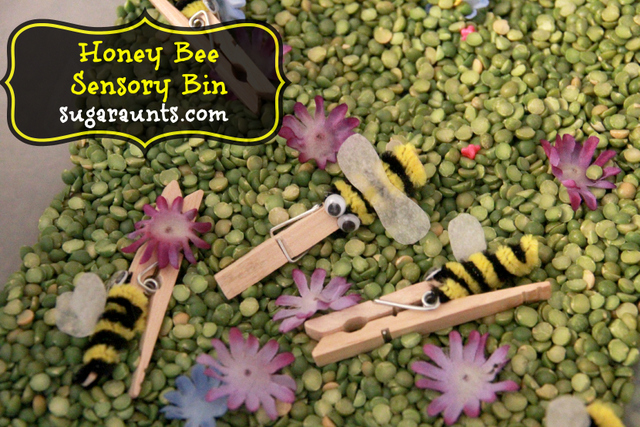
Materials: clothes pins, yellow and black pipe cleaners, googly eyes, wax paper, hot glue gun and glue.
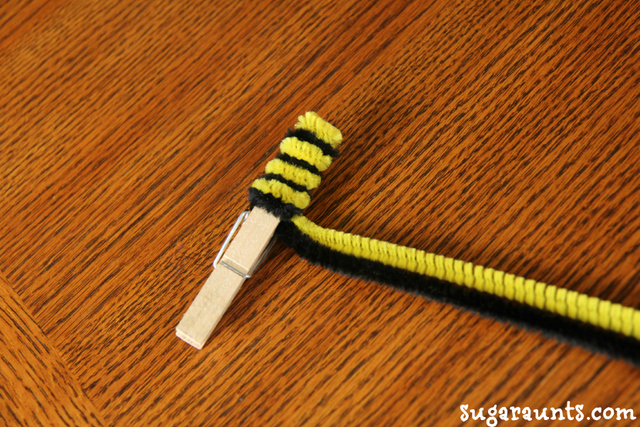
Directions: 1. Pinch together one black and one yellow pipe cleaner.  Wrap these around the end of a clothes pin.  We used about half of each color pipe cleaner and cut the excess off.

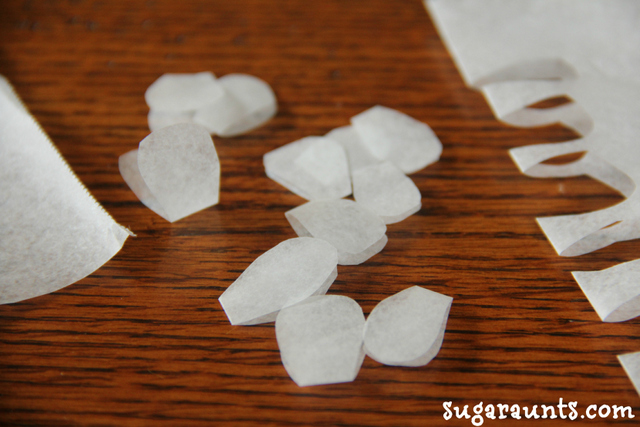
2. Cut wings from wax paper.  Use the hot glue gun to glue the wings to the backs of the bees. 

3.  Hot glue the googly eyes to the front of the bee.  Your bee is now ready for play!

Honey Bee Fine Motor Game

We used our honey bees in a fine motor game where we matched the number of bees to the number on a honey pot.  The pinching motion to open the clothes pin is great for strengthening the muscles in little hands.  It really develops the arches of the hands and allows the child to improve his or her tripod grasp and handwriting.  This was a great activity for Little Guy (age 4), who is learning one-to-one correspondence in counting and number awareness. 

Honey Bee Gross Motor Activity
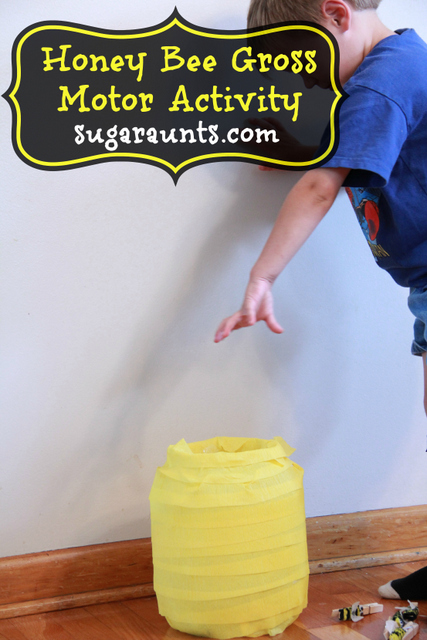
The honey pots were used again when we played a faster paced gross motor game, encouraging the kids to use their large muscle groups.  This time, I spread the honey pots out all over our living room floor.  I called out a number and the kids would have to race off to find the honey pot with that number.  Once they found their honey pot, they then had to run over to a large bee hive that we created from a recycled snack container and crepe paper.  I asked them to count out the number of bees to match the number on their honey pot, and drop them into the large bee hive.  To make it harder for my preschooler and kindergartener, I had them close their eyes.  This gross motor activity was just what they needed to get some energy out on a rainy afternoon!  As a bonus, they were developing their eye-hand coordination, and visual scanning skills as they scanned for numbers and counted out the bees.  They have already asked to play this game again!  This would be such a fun game for a Winnie The Pooh themed birthday party…and I have two little ones to attest for it being fun!

Honey Bee Sensory Play

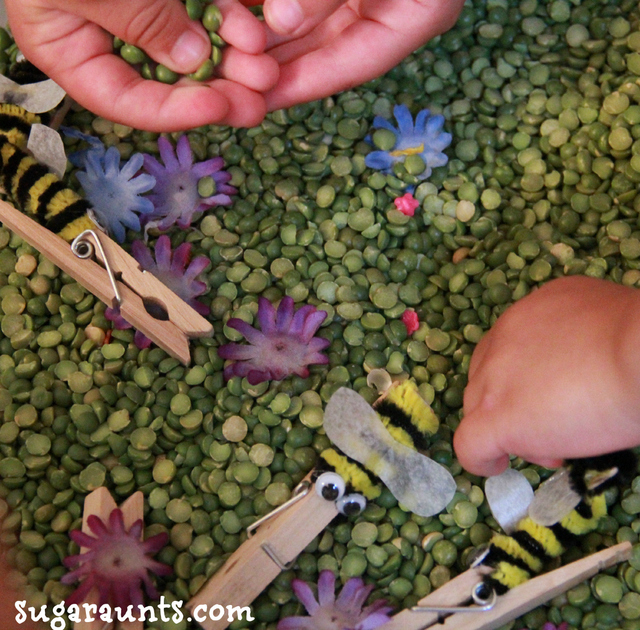
Our honey bees were really loved when they were added into a themed sensory bin.  I poured in a bag of dried split peas, a few fake flower petals, and a handful of plastic flower beads for fun sensory exploration.  A sensory bin is such a great way to explore different textures, manipulate small objects, and develop language with little ones.  My kids loved using the honey bees to pinch the flower petals and buzzzzz around, only to drop the petal back into the bin.  This sensory bin stayed out in our dining room for a few days and was played with quite often!

Honey Bee Treat

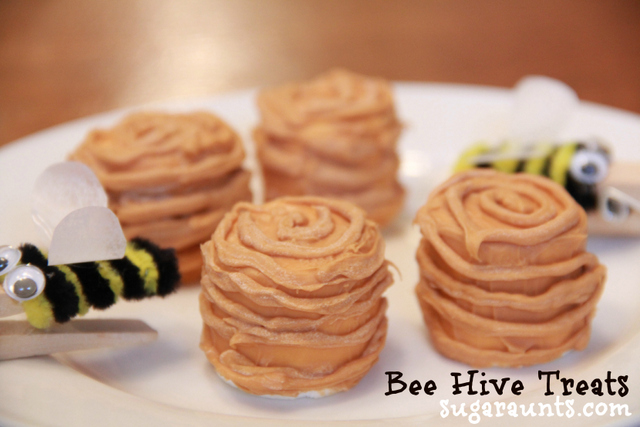
We had such a great time watching The Adventures of Winnie The Pooh and then playing all of our honey bee games and activities, that we worked up an appetite.  I threw together a quick bee hive snack made from a marshmallow and melted butterscotch chips.  This was the perfect ending to a fun day.  If you are planning a Winnie The Pooh party or movie play date, I hope you will use some of our ideas!

Balls in the Baby Pool

Putting ball pit balls in a baby pool is a great sensory room DIY ball pit that kids love. Whether you play inside or outside with the baby pool full of water, this sensory play activity is one of our favorite ball pit activities!
Baby Pool Sensory Play

 
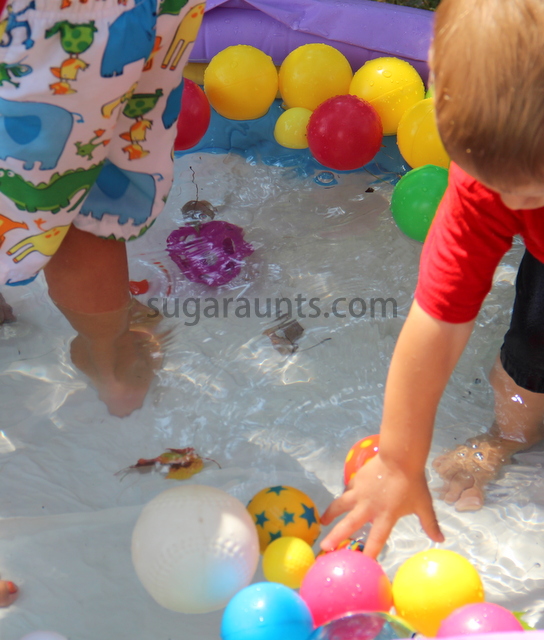
We’ve been loving these last days of summer before the school starts up again.  One super nice and sunny day, we had the baby pool out and added a colorful twist…all kinds and shapes, and colors of different balls.


Baby Pool with Balls

 
We threw in ball pit balls, ping pong balls, whiffle balls, and every other kind we could find.  This was such a fun way to play in the pool.  Everyone had fun throwing them in and out of the baby pool and grabbing at the different colors. 
 
We had all preschool-aged and toddlers at our house today, but, this would be great for sitting babies too!  The eye-hand coordination and visual tracking skills really develop with this one. 
 
They can visually track the different colored balls as they scoot around in the water and grasp at them.  We had so much fun with this. Let us know if you try this activity, we would love to hear how it goes in your house!
 
 
Try putting something different in your baby pool while the weather is still warm, or pin it for next summer 🙂
 
 
Looking for more eye-hand coordination activities?  Try one of these:
 

Colleen Beck, OTR/L has been an occupational therapist since 2000, working in school-based, hand therapy, outpatient peds, EI, and SNF. Colleen created The OT Toolbox to inspire therapists, teachers, and parents with easy and fun tools to help children thrive. Read her story about going from an OT making $3/hour (after paying for kids’ childcare) to a full-time OT resource creator for millions of readers. Want to collaborate? Send an email to contact@theottoolbox.com.

Clay Nature Art Sculptures

We’ve been enjoying some beautiful weather and having TONS of outside play.  We’ll hang out in our back yard and get into all kinds of ball throwing, tree climbing, water playing fun.  One morning we pulled out some lumps of clay.  They were combined into pretty swirls of colors.  Ad a few leaves and sticks and we had


Nature Art Sculptures from Clay!

This clay is reeeeally hard, so we put it into a bin of water and pressed and pulled the clay until it became softer.  The warm sun didn’t hurt either.  What better fine motor strengthening play than messing with clay!
The sticks and colorful leaves
(HOW are the leaves falling already!?!)
made pretty little sculptures  for our driveway.
 
Pushing those sticks into the hard, resistive clay was great fine motor dexterity work, including tripod grasp for the smaller trigs, and tip to tip grasp to push the leaf stems into the clay lump.
 
These lumps of clay turned into something else not long after our sculpture fun…wait until you see what happened next 😉
Looking for more ways to work on tripod grasp?  Start here:

Color Matching Lego Matching

 Legos and Play Dough to Match Colors

This was a super easy and very fun fine motor activity we did one day.  Perfect for the littlest ones who find dinner-prep time is time for Mom to hold her while sautéing chicken
…cough, Baby Girl, cough…
Pull out one color of play dough and one matching color of Legos.  Baby Girl loves her mega blocks and we play with them daily.  This was perfect for her because she could press the blocks into the dough and see an imprint of squares and circles.  Great for language development, as well as color identification. 
She liked that she could press the little circle “buttons” (and this works those little muscles of the hand and index isolation). 


We’ll be pulling out the play dough and Lego blocks again, for sure!

Window No-Mess Sensory Spelling

No-Mess Sensory Spelling:

 We’ve done the no-mess window painting a few times before (Seek-and-find, and Colored gel mixing to name a couple) and had a lot of fun with it.  This time we added a spelling component to add a few Kindergarten sight words to the fun.
This is so easy and Big Sister had fun moving the letters around in the paint to work on some fine motor skills, too.
Pour a little bit of paint into a sandwich baggie.  Add a few foam letters.  Seal the baggie closed.  Tape it to a window and start to play!  We had a really rainy day recently and this was a fun indoor learning activity.  (You can see the raindrops on the picture!)
You’ll also love our diagraph spelling word poem that helps children with learning commonly misspelled words.

Fine Motor Letter Learning

Moving the foam letters around in the baggie is resistive and a really great fine motor strengthening activity to work the fingers.  The child is able to isolate her index finger to move the letters around. 
Add a few extra letters to work on rhyming words.  This is also great for just placing right on the table surface and better for smaller kids that way, too.  Littler ones can just move the letters around and address letter identification and colors.

String Beads Upside Down

Do you have a preschooler or kindergarten aged child who loves fine motor activities with beads?  We have evidence of our little bead lover all over the house:  beaded necklaces, bracelets, and bent beaded pipe cleaners can be found in almost every room!  We’ve beaded noodles, cereal, plastic beads, small glass beads…every type and option there is has been strung on string of all sizes and types. 

String Beads under the table

So, once you’ve done it all with an activity or means, what else is there to do? 
Change it up a little bit!


I taped a string to the underside of our dining room table and put out some beads for Big Sister.  She loved this!  The slight variation in the beading activity gave her something to really concentrate on.  She had to hold the string in a way that the beads wouldn’t slide down off of the string while she went to grab and thread additional beads. 
This type of variation on a typical activity really makes the brain work.  Have you ever tried writing with your non-dominant hand?  Your pace of writing really slows as your brain tries to right and then compensate for the variation.  In the young child, there are so many brain connections being made with novel tasks every day.  Beading this string was a real brain work-out for her!
Managing the string with both hands allows the child to use both hands together in a coordinated manner. 
Bilateral coordination is an important skill children need for many tasks.  While handwriting, they mush hold the paper with their non-dominant hand while writing with their dominant hand. 
Together, both arms must work together to move the paper while writing and erasing.  Other examples of bilateral coordination in functional skills of the child is cutting with scissors, tying shoes, and zippering a coat. 
Beading is such a wonderful tool for fine motor development.  Holding the bead requires precise tip-to-tip grasp and ability to manipulate the beads within the hand.  A small object like a bead can be transferred from the finger tips to the palm without use of the other hand, working on in-hand manipulation skills.  When a bead is held in the fingertips, the arches of the hands are strengthened. 
If you see a child managing beads with a closed space between the thumb and index finger, they are compensating for weakness and attempting to stabilize their thumb against their index finger.  They may fumble with the beads and give up quickly into the activity as the small muscles of their hands become fatigued.  This child most likely, will have sloppy handwriting and an inefficient pencil grasp when writing.
We had fun with our new variation to beading.  Try it, and let us know how it goes for you!